• Trade
  • Markets
  • Copy
  • Contests
  • News
  • 24/7
  • Calendar
  • Q&A
  • Chats
Trending
Screeners
SYMBOL
LAST
BID
ASK
HIGH
LOW
NET CHG.
%CHG.
SPREAD
SPX
S&P 500 Index
6827.42
6827.42
6827.42
6899.86
6801.80
-73.58
-1.07%
--
DJI
Dow Jones Industrial Average
48458.04
48458.04
48458.04
48886.86
48334.10
-245.98
-0.51%
--
IXIC
NASDAQ Composite Index
23195.16
23195.16
23195.16
23554.89
23094.51
-398.69
-1.69%
--
USDX
US Dollar Index
97.950
98.030
97.950
98.500
97.950
-0.370
-0.38%
--
EURUSD
Euro / US Dollar
1.17394
1.17409
1.17394
1.17496
1.17192
+0.00011
+ 0.01%
--
GBPUSD
Pound Sterling / US Dollar
1.33707
1.33732
1.33707
1.33997
1.33419
-0.00148
-0.11%
--
XAUUSD
Gold / US Dollar
4299.39
4299.39
4299.39
4353.41
4257.10
+20.10
+ 0.47%
--
WTI
Light Sweet Crude Oil
57.233
57.485
57.233
58.011
56.969
-0.408
-0.71%
--

Community Accounts

Signal Accounts
--
Profit Accounts
--
Loss Accounts
--
View More

Become a signal provider

Sell trading signals to earn additional income

View More

Guide to Copy Trading

Get started with ease and confidence

View More

Signal Accounts for Members

All Signal Accounts

Best Return
  • Best Return
  • Best P/L
  • Best MDD
Past 1W
  • Past 1W
  • Past 1M
  • Past 1Y

All Contests

  • All
  • Trump Updates
  • Recommend
  • Stocks
  • Cryptocurrencies
  • Central Banks
  • Featured News
Top News Only
Share

USA Embassy In Lithuania: Maria Kalesnikava Is Not Going To Vilnius

Share

USA Embassy In Lithuania: Other Prisoners Are Being Sent From Belarus To Ukraine

Share

Ukraine President Zelenskiy: Five Ukrainians Released By Belarus In US-Brokered Deal

Share

USA Vilnius Embassy: USA Stands Ready For "Additional Engagement With Belarus That Advances USA Interests"

Share

USA Vilnius Embassy: Belarus, USA, Other Citizens Among The Prisoners Released Into Lithuania

Share

USA Vilnius Embassy: USA Will Continue Diplomatic Efforts To Free The Remaining Political Prisoners In Belarus

Share

USA Vilnius Embassy: Belarus Releases 123 Prisoners Following Meeting Of President Trump's Envoy Coale And Belarus President Lukashenko

Share

USA Vilnius Embassy: Masatoshi Nakanishi, Aliaksandr Syrytsa Are Among The Prisoners Released By Belarus

Share

USA Vilnius Embassy: Maria Kalesnikava And Viktor Babaryka Are Among The Prisoners Released By Belarus

Share

USA Vilnius Embassy: Nobel Peace Prize Laureate Ales Bialiatski Is Among The Prisoners Released By Belarus

Share

Belarusian Presidential Administration Telegram Channel: Lukashenko Has Pardoned 123 Prisoners As Part Of Deal With US

Share

Two Local Syrian Officials: Joint US-Syrian Military Patrol In Central Syria Came Under Fire From Unknown Assailants

Share

Israeli Military Says It Targeted 'Key Hamas Terrorist' In Gaza City

Share

Rwanda's Actions In Eastern Drc Are A Clear Violation Of Washington Accords Signed By President Trump - Secretary Of State Rubio

Share

Israeli Military Issues Evacuation Warning In Southern Lebanon Village Ahead Of Strike - Spokesperson On X

Share

Belarusian State Media Cites US Envoy Coale As Saying He Discussed Ukraine And Venezuela With Lukashenko

Share

Belarusian State Media Cites US Envoy Coale As Saying That US Removes Sanctions On Belarusian Potassium

Share

Thai Prime Minister: No Ceasefire Agreement With Cambodia

Share

US, Ukraine To Discuss Ceasefire In Berlin Ahead Of European Summit

Share

Incoming Czech Prime Minister Babis: Czech Republic Will Not Take On Guarantees For Ukraine Financing, European Commission Must Find Alternatives

TIME
ACT
FCST
PREV
U.K. Trade Balance Non-EU (SA) (Oct)

A:--

F: --

P: --

U.K. Trade Balance (Oct)

A:--

F: --

P: --

U.K. Services Index MoM

A:--

F: --

P: --

U.K. Construction Output MoM (SA) (Oct)

A:--

F: --

P: --

U.K. Industrial Output YoY (Oct)

A:--

F: --

P: --

U.K. Trade Balance (SA) (Oct)

A:--

F: --

P: --

U.K. Trade Balance EU (SA) (Oct)

A:--

F: --

P: --

U.K. Manufacturing Output YoY (Oct)

A:--

F: --

P: --

U.K. GDP MoM (Oct)

A:--

F: --

P: --

U.K. GDP YoY (SA) (Oct)

A:--

F: --

P: --

U.K. Industrial Output MoM (Oct)

A:--

F: --

P: --

U.K. Construction Output YoY (Oct)

A:--

F: --

P: --

France HICP Final MoM (Nov)

A:--

F: --

P: --

China, Mainland Outstanding Loans Growth YoY (Nov)

A:--

F: --

P: --

China, Mainland M2 Money Supply YoY (Nov)

A:--

F: --

P: --

China, Mainland M0 Money Supply YoY (Nov)

A:--

F: --

P: --

China, Mainland M1 Money Supply YoY (Nov)

A:--

F: --

P: --

India CPI YoY (Nov)

A:--

F: --

P: --

India Deposit Gowth YoY

A:--

F: --

P: --

Brazil Services Growth YoY (Oct)

A:--

F: --

P: --

Mexico Industrial Output YoY (Oct)

A:--

F: --

P: --

Russia Trade Balance (Oct)

A:--

F: --

P: --

Philadelphia Fed President Henry Paulson delivers a speech
Canada Building Permits MoM (SA) (Oct)

A:--

F: --

P: --

Canada Wholesale Sales YoY (Oct)

A:--

F: --

P: --

Canada Wholesale Inventory MoM (Oct)

A:--

F: --

P: --

Canada Wholesale Inventory YoY (Oct)

A:--

F: --

P: --

Canada Wholesale Sales MoM (SA) (Oct)

A:--

F: --

P: --

Germany Current Account (Not SA) (Oct)

A:--

F: --

P: --

U.S. Weekly Total Rig Count

A:--

F: --

P: --

U.S. Weekly Total Oil Rig Count

A:--

F: --

P: --

Japan Tankan Large Non-Manufacturing Diffusion Index (Q4)

--

F: --

P: --

Japan Tankan Small Manufacturing Outlook Index (Q4)

--

F: --

P: --

Japan Tankan Large Non-Manufacturing Outlook Index (Q4)

--

F: --

P: --

Japan Tankan Large Manufacturing Outlook Index (Q4)

--

F: --

P: --

Japan Tankan Small Manufacturing Diffusion Index (Q4)

--

F: --

P: --

Japan Tankan Large Manufacturing Diffusion Index (Q4)

--

F: --

P: --

Japan Tankan Large-Enterprise Capital Expenditure YoY (Q4)

--

F: --

P: --

U.K. Rightmove House Price Index YoY (Dec)

--

F: --

P: --

China, Mainland Industrial Output YoY (YTD) (Nov)

--

F: --

P: --

China, Mainland Urban Area Unemployment Rate (Nov)

--

F: --

P: --

Saudi Arabia CPI YoY (Nov)

--

F: --

P: --

Euro Zone Industrial Output YoY (Oct)

--

F: --

P: --

Euro Zone Industrial Output MoM (Oct)

--

F: --

P: --

Canada Existing Home Sales MoM (Nov)

--

F: --

P: --

Euro Zone Total Reserve Assets (Nov)

--

F: --

P: --

U.K. Inflation Rate Expectations

--

F: --

P: --

Canada National Economic Confidence Index

--

F: --

P: --

Canada New Housing Starts (Nov)

--

F: --

P: --

U.S. NY Fed Manufacturing Employment Index (Dec)

--

F: --

P: --

U.S. NY Fed Manufacturing Index (Dec)

--

F: --

P: --

Canada Core CPI YoY (Nov)

--

F: --

P: --

Canada Manufacturing Unfilled Orders MoM (Oct)

--

F: --

P: --

Canada Manufacturing New Orders MoM (Oct)

--

F: --

P: --

Canada Core CPI MoM (Nov)

--

F: --

P: --

Canada Manufacturing Inventory MoM (Oct)

--

F: --

P: --

Canada CPI YoY (Nov)

--

F: --

P: --

Canada CPI MoM (Nov)

--

F: --

P: --

Canada CPI YoY (SA) (Nov)

--

F: --

P: --

Canada Core CPI MoM (SA) (Nov)

--

F: --

P: --

Q&A with Experts
    • All
    • Chatrooms
    • Groups
    • Friends
    Connecting
    .
    .
    .
    Type here...
    Add Symbol or Code

      No matching data

      All
      Trump Updates
      Recommend
      Stocks
      Cryptocurrencies
      Central Banks
      Featured News
      • All
      • Russia-Ukraine Conflict
      • Middle East Flashpoint
      • All
      • Russia-Ukraine Conflict
      • Middle East Flashpoint
      Search
      Products

      Charts Free Forever

      Chats Q&A with Experts
      Screeners Economic Calendar Data Tools
      Membership Features
      Data Warehouse Market Trends Institutional Data Policy Rates Macro

      Market Trends

      Market Sentiment Order Book Forex Correlations

      Top Indicators

      Charts Free Forever
      Markets

      News

      News Analysis 24/7 Columns Education
      From Institutions From Analysts
      Topics Columnists

      Latest Views

      Latest Views

      Trending Topics

      Top Columnists

      Latest Update

      Signals

      Copy Rankings Latest Signals Become a signal provider AI Rating
      Contests
      Brokers

      Overview Brokers Assessment Rankings Regulators News Claims
      Broker listing Forex Brokers Comparison Tool Live Spread Comparison Scam
      Q&A Complaint Scam Alert Videos Tips to Detect Scam
      More

      Business
      Events
      Careers About Us Advertising Help Center

      White Label

      Data API

      Web Plug-ins

      Affiliate Program

      Awards Institution Evaluation IB Seminar Salon Event Exhibition
      Vietnam Thailand Singapore Dubai
      Fans Party Investment Sharing Session
      FastBull Summit BrokersView Expo
      Recent Searches
        Top Searches
          Markets
          News
          Analysis
          User
          24/7
          Economic Calendar
          Education
          Data
          • Names
          • Latest
          • Prev

          View All

          No data

          Scan to Download

          Faster Charts, Chat Faster!

          Download App
          English
          • English
          • Español
          • العربية
          • Bahasa Indonesia
          • Bahasa Melayu
          • Tiếng Việt
          • ภาษาไทย
          • Français
          • Italiano
          • Türkçe
          • Русский язык
          • 简中
          • 繁中
          Open Account
          Search
          Products
          Charts Free Forever
          Markets
          News
          Signals

          Copy Rankings Latest Signals Become a signal provider AI Rating
          Contests
          Brokers

          Overview Brokers Assessment Rankings Regulators News Claims
          Broker listing Forex Brokers Comparison Tool Live Spread Comparison Scam
          Q&A Complaint Scam Alert Videos Tips to Detect Scam
          More

          Business
          Events
          Careers About Us Advertising Help Center

          White Label

          Data API

          Web Plug-ins

          Affiliate Program

          Awards Institution Evaluation IB Seminar Salon Event Exhibition
          Vietnam Thailand Singapore Dubai
          Fans Party Investment Sharing Session
          FastBull Summit BrokersView Expo

          US Stocks Decline as Powell Dampens Expectations for Rate Cuts

          Ukadike Micheal

          Economic

          Stocks

          Summary:

          US stocks declined as Federal Reserve Chair Jerome Powell hinted at a delay in interest rate cuts, adding pressure on corporate earnings to maintain the recent market upswing. The upcoming week's corporate reports will play a crucial role in determining market direction.

          The ebb and flow of the US stock market exhibited a downturn on Monday as Federal Reserve Chair Jerome Powell's comments about delaying potential rate cuts injected an element of uncertainty into the financial landscape. The S&P 500 and Dow Jones, which had been riding a wave of optimism, experienced declines, prompting traders to recalibrate their expectations for rate cuts. This market reaction occurred amid a backdrop of anticipation for corporate earnings reports scheduled throughout the week, following the recent surge fueled by robust performances from Meta and Amazon.
          The S&P 500, represented by the (^GSPC) index, registered a 0.7% decline, signaling a retracement from the benchmark's record-setting streak. Simultaneously, the Dow Jones Industrial Average (^DJI) witnessed a drop of over 400 points, while the Nasdaq Composite (^IXIC), dominated by tech stocks, experienced a 0.8% decline.
          The retreat in stock prices unfolded against the backdrop of a tumultuous week that had concluded with overall weekly gains. Positive momentum had been sustained following the release of an impressive January jobs report and strong earnings updates from prominent companies. However, the optimistic sentiment received a setback after Powell, during a "60 Minutes" interview aired on Sunday, reiterated his cautious stance on the central bank's approach to rate cuts. Powell emphasized the risks of premature actions, stating that the "danger of moving too soon is the job's not quite done" in terms of taming inflation.
          This reinforced the notion that the Federal Reserve would exercise prudence in determining the timing of rate cuts. Traders, responding to Powell's comments, scaled back their expectations not only for rate cuts in March but also for May, as indicated by the CME FedWatch Tool. The bond market also witnessed a shift, with the 10-year Treasury yield (^TNX) rising approximately six basis points to 4.08%.
          Investors now find themselves eagerly awaiting corporate earnings reports, which are anticipated to provide direction to the market. The previous week had seen a surge in stock prices, driven in part by stellar performances from Meta and Amazon. However, the subsequent market dynamics unfolded with little economic data on the docket, placing the spotlight squarely on quarterly results.
          As the week unfolds, companies such as McDonald's (MCD) are stepping into the earnings limelight. McDonald's reported disappointing sales figures that fell short of Wall Street estimates. This outcome added an additional layer of complexity to the market environment, prompting investors to reassess their strategies in light of evolving economic and corporate developments.
          The recent fluctuations in the US stock market, fueled by Powell's remarks and corporate earnings expectations, underscore the delicate balancing act facing investors. The interplay between central bank policies, economic indicators, and corporate performances continues to shape market dynamics. As traders navigate these nuances, the broader financial landscape remains susceptible to shifts in sentiment, reinforcing the importance of a measured and informed approach to investment decisions.

          Source: Yahoo Finance

          To stay updated on all economic events of today, please check out our Economic calendar
          Risk Warnings and Disclaimers
          You understand and acknowledge that there is a high degree of risk involved in trading. Following any strategies or investment methods may lead to potential losses. The content on the site is provided by our contributors and analysts for information purposes only. You are solely responsible for determining whether any trading assets, securities, strategy, or any other product is suitable for investing based on your own investment objectives and financial situation.
          Comments
          Add to Favorites
          Share

          China Strengthens Certain Trading Restrictions for Domestic and Overseas Investors

          Ukadike Micheal

          Economic

          Stocks

          China is taking significant steps to address the ongoing stock market turmoil, with a focus on restricting trading activities and stabilizing investor sentiment. In response to a deepening stock rout, Chinese authorities have imposed various measures targeting both domestic and offshore investors, as well as specific trading strategies.
          Officials have placed caps on certain brokerages' cross-border total return swaps with clients, limiting the ability of China-based investors to short Hong Kong stocks. Additionally, some Chinese brokers using this channel to buy mainland shares for their offshore units have been instructed not to reduce their positions. Furthermore, quantitative hedge funds have faced bans on placing sell orders and cutting stock positions in their leveraged market-neutral funds.
          These actions come as China grapples with a stock market that has reached a five-year low, prompting concerns about the broader economic impact. The recent moves by policymakers add to a series of measures aimed at ending a three-year rout that has wiped out trillions of dollars in market value and dented confidence in the country's economy.
          Amid simmering geopolitical tensions, a worsening property crisis, and an opaque crackdown on the financial sector, weak economic data has further weighed on investor sentiment. As a result, margin calls and forced liquidation have emerged as key pressure points, causing significant market volatility.
          In response to the escalating situation, the China Securities Regulatory Commission (CSRC) has pledged to act swiftly to address illegal behavior that disrupts stable stock market operations and harms investors. The regulator has also highlighted cases of stock market manipulation and "malicious short selling," underscoring the urgency of the situation.
          Despite these efforts, concerns persist about the effectiveness of the measures and the potential impact on market dynamics. While some believe that restrictions on selling could offer short-term relief, others worry about the implications for investors seeking to exit the market. Analysts have suggested that Beijing may resort to large-scale stock purchases, but the feasibility and urgency of such a move remain uncertain.
          The recent market turmoil has particularly affected Chinese stocks with small- and medium-sized market capitalizations, leading to a series of curbs aimed at limiting short selling and stabilizing market conditions. However, skepticism remains about the government's piecemeal approach to stimulus and its ability to address the underlying technical selling pressure triggered by margin calls and derivative activities.
          In a bid to address the mounting concerns, the CSRC has announced additional measures to guide brokerages in adjusting margin call levels and maintaining "flexible" liquidation lines to alleviate pressure on the stock market and limit forced liquidations. Nevertheless, doubts persist about the sufficiency of these measures to assuage traders who have been disillusioned by the government's incremental approach to addressing market challenges.
          The ongoing market turmoil has also prompted a notable public response, as evidenced by the surge in social media engagement on topics related to the economy and stock prices. This outpouring of frustration reflects the challenges faced by Chinese internet users in finding avenues to voice their concerns about the economy and government performance.
          The current state of China's stock market reflects a complex interplay of regulatory measures, market dynamics, and investor sentiment. While policymakers are taking steps to address the immediate challenges, doubts linger about the long-term effectiveness of these measures and their ability to restore confidence in the market. As the situation continues to evolve, it remains to be seen how China will navigate the delicate balance between market stability and investor expectations.

          Source: Bloomberg

          To stay updated on all economic events of today, please check out our Economic calendar
          Risk Warnings and Disclaimers
          You understand and acknowledge that there is a high degree of risk involved in trading. Following any strategies or investment methods may lead to potential losses. The content on the site is provided by our contributors and analysts for information purposes only. You are solely responsible for determining whether any trading assets, securities, strategy, or any other product is suitable for investing based on your own investment objectives and financial situation.
          Comments
          Add to Favorites
          Share

          Business Activity in the UK Grows at a Quicker Rate Than Initially Estimated

          Ukadike Micheal

          Economic

          Forex

          The recent upswing in business activity in the United Kingdom, as indicated by the final S&P Global UK services PMI business activity index, has significant implications from both a technical and economic standpoint. The January surge to a reading of 54.3 on the index, surpassing the prior month's 53.4 and the initial projection of 53.8, marks a significant uptick within the services sector.
          From an analysis perspective, the breach of the 54 threshold assumes particular significance, indicating a substantial expansion in business activity and the potential for sustained growth. The sector's resilience and adaptability, evident in the consistent positive trend since May 2023, denote a noteworthy economic shift.
          The intricacies introduced by easing inflation and the potential for Bank of England interest rate cuts add layers of complexity to the technical analysis. A prospective reduction in interest rates could act as a catalyst for heightened economic activity, influencing key economic indicators. Vigilantly monitoring the repercussions of these policy decisions on inflation and business activity becomes imperative for gauging the durability of the observed growth.
          A thorough technical analysis requires a meticulous examination of the components within the services PMI. Sub-indices such as new business orders, employment trends, and business expectations provide nuanced insights into the specific drivers propelling overall growth. Unraveling these granular details contributes to a more comprehensive understanding of the economic landscape.
          Considering the broader economic context, the potential ripple effects of the surge in business activity extend beyond the services sector. Employment trends, investment patterns, and consumer confidence are interconnected elements that respond to the overall economic momentum. A thriving services sector can contribute positively to these aspects, creating a cascading effect on the broader economy.
          The ongoing shifts in the global economic landscape, influenced by factors such as trade agreements, geopolitical tensions, and technological advancements, contribute to the overall environment in which the UK's economic dynamics unfold. A nuanced examination of these global trends allows for a more comprehensive perspective on the forces influencing the economy.
          The potential impact of easing inflation and expectations of Bank of England interest rate cuts adds a layer of complexity to the analysis. Lower inflation often translates to increased purchasing power for consumers and reduced operational costs for businesses. However, the balance between inflation and interest rates is delicate, and careful consideration must be given to how these factors interact with business activity.
          The surge in UK business activity involves a thorough analysis of the PMI index and its components. This scrutiny aims to unravel the intricacies of the current economic momentum and the factors steering it.

          Source: Financial Times

          To stay updated on all economic events of today, please check out our Economic calendar
          Risk Warnings and Disclaimers
          You understand and acknowledge that there is a high degree of risk involved in trading. Following any strategies or investment methods may lead to potential losses. The content on the site is provided by our contributors and analysts for information purposes only. You are solely responsible for determining whether any trading assets, securities, strategy, or any other product is suitable for investing based on your own investment objectives and financial situation.
          Comments
          Add to Favorites
          Share

          U.S Markit Services PMI Rose More Than Previous

          Zi Cheng

          Traders' Opinions

          Economic

          In January, the U.S. services sector exceeded expectations by demonstrating a faster acceleration, attributed to improved employment trends and a rebound in demand, according to survey data released on Monday. The Institute for Supply Management reported that its services-activity index climbed to 53.4 in January from the previous month's 50.5.
          U.S Markit Services PMI Rose More Than Previous_1
          An index reading above 50 signifies expansion in the services sector, which has maintained growth for the last 13 months and 43 of the past 44, as per the ISM. The employment index surged into expansionary territory at 50.5, up from December's 43.8, while the new orders index rose to 55.0 in January from 52.8. The survey's business activity measure remained steady at 55.8.
          Anthony Nieves, the chair of the ISM Services Business Survey Committee, noted that most respondents indicated a steady business environment. They expressed optimism about the economy due to potential impacts of interest rate cuts, but also conveyed caution due to inflation, associated cost pressures, and ongoing geopolitical conflicts.
          The prices index increased by 7.3 points to 64.0, reflecting underlying inflationary pressures that may concern Federal Reserve policymakers. In January, ten out of 17 sub-industries measured by ISM reported growth, with healthcare and agriculture leading the way.
          A respondent from the retail-trade sector mentioned mixed signals in the economy, with some sectors booming, such as healthcare and agriculture, while others like solar and wind power, shipbuilding, and electric vehicles are slowing down. Despite this, the overall sentiment conveyed was that the economy is in good shape, with no imminent threat of a recession.
          This news is very important for the future decision on interest rates as from the PMI itself, we can understand how well is the economy performing with the current interest rate. Judging from current performance, it is going to reduce the chances of Fed reducing the interest rates because it seems like the current interest rate is working well with the US economy.

          Market Reaction

          DXY increased aggressively the moment when the news was released at 22:00 PM (GMT +8) time. The reason why DXY increased is because with good news coming from PMI, it is going to reduce the probability of reducing interest rates soon. With that means, the interest rates will stay high and with higher interest rates, the currency value will remain strong which is why DXY strengthened when the news was released.
          U.S Markit Services PMI Rose More Than Previous_2
          To stay updated on all economic events of today, please check out our Economic calendar
          Risk Warnings and Disclaimers
          You understand and acknowledge that there is a high degree of risk involved in trading. Following any strategies or investment methods may lead to potential losses. The content on the site is provided by our contributors and analysts for information purposes only. You are solely responsible for determining whether any trading assets, securities, strategy, or any other product is suitable for investing based on your own investment objectives and financial situation.
          Comments
          Add to Favorites
          Share

          Will China’s Relaxed Share Buyback Rules Help Or Hinder The Market?

          Cohen

          Economic

          Will China’s Relaxed Share Buyback Rules Help Or Hinder The Market?_1
          China’s new rules on listed companies’ share buybacks were introduced supposedly to shore up the sagging stock market. But skeptical voices are growing, warning the changes might in fact amplify market risks, deter additional investment, and enable more self-serving share repurchases.
          Stock buybacks in theory give prices a quick boost by removing some shares from circulation and injecting capital into the market. However, the vast majority of repurchase proposals released last year were designed for equity incentives or employee stock ownership plans, which would redirect funds designated for universal cash dividends to instead benefit company executives and employees.
          Insider trading poses another concern about the relaxed rules. The ban on listed companies repurchasing shares before the announcements of earnings reports, which are sensitive periods, has been lifted.
          Because listed companies have access to all relevant information about themselves, eliminating these restrictions has fueled concerns that they may create additional avenues for insider trading and market manipulation.
          But share buybacks have a solid track record of boosting market confidence and stabilizing share prices in the short term during downturns in China. And the regulator has assured that it will heighten monitoring of repurchasing transactions to root out any illegal activity.

          Relaxed rules

          The updates, published by the China Securities Regulatory Commission (CSRC) on Dec. 15, include a provision enabling share buybacks when the closing price of a company’s stock falls below 50% of its highest closing price within the past year. The newly added rule is part of the optimization to encourage buybacks to safeguard a company’s value and shareholder rights and interests.
          In addition, the threshold for triggering repurchases after a cumulative decline in the closing value of a company’s stock within 20 consecutive trading days has been reduced to 20% from 30%.
          The new rules also shorten the so-called blackout period when newly listed companies cannot buy back shares to six months from one year. The CSRC has also shifted the ban on initiating repurchases from within the 30 minutes before the close of trading to during the three-minute closing call auction, extending the amount of time available for daily repurchases.

          Potential market benefits

          Buybacks usually have a positive effect on the market in the short term, as they take some publicly traded shares out of circulation and in turn add more capital to the stock market.
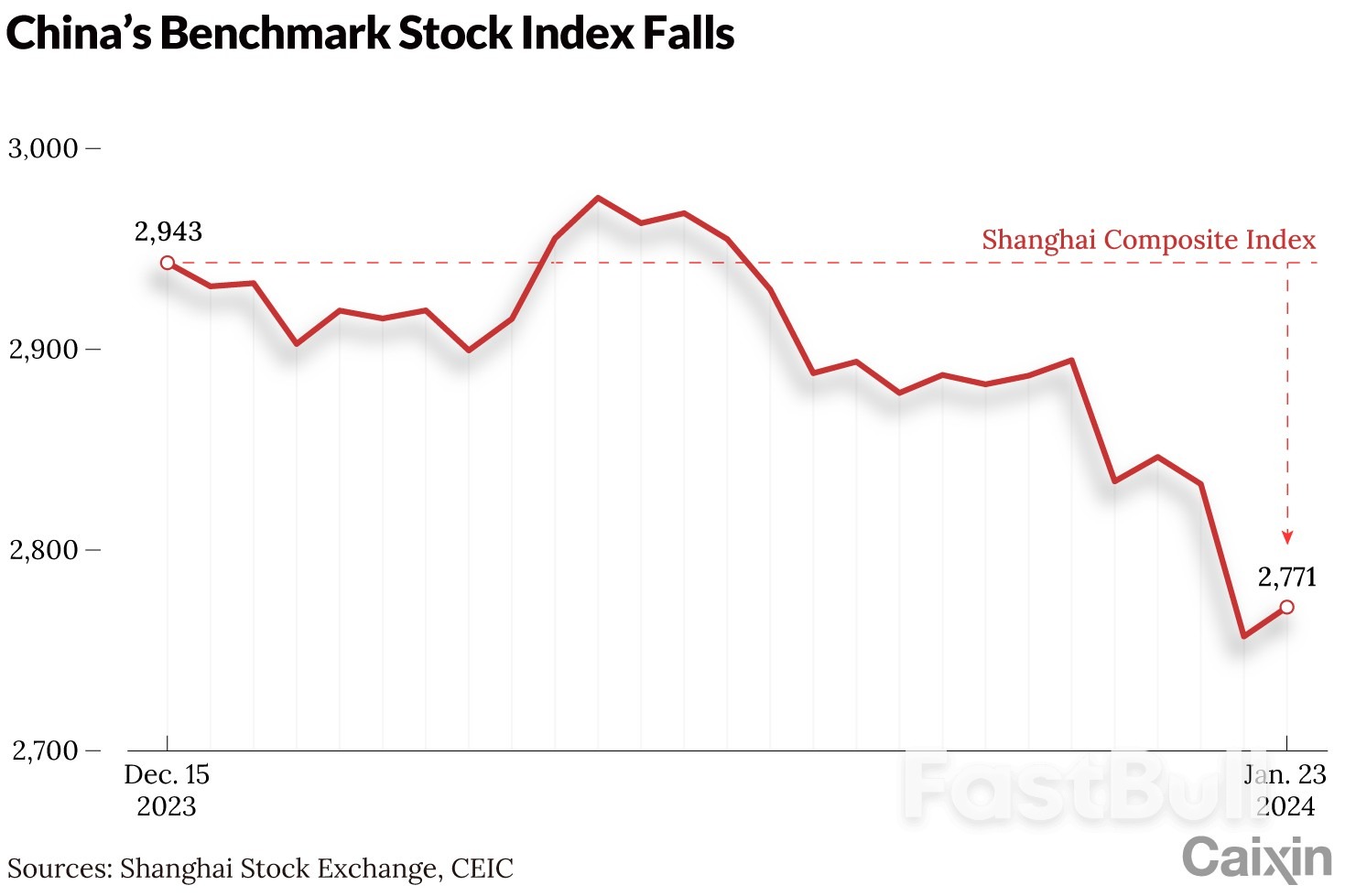
          As such, the updated rules on share buybacks are regarded as a “market rescue” measure, given the disappointing performance of China’s stock market, with the benchmark Shanghai Composite Index sliding 3.7% last year.
          The number of listed companies releasing share buyback plans hit a decade-high last year, exceeding 1,700, according to data compiled by financial information provider East Money Information Co. Ltd. Buybacks surged after the CSRC said on Aug. 18 they would relax rules around share repurchasing.

          Self-serving

          However, a breakdown of reasons for share buyback plans released in the first 11 months of last year shows that more than 90% were designed for equity incentives or employee stock ownership plans, according to financial data provider Wind Information Co. Ltd. This means most of the shares bought back would not be canceled.
          This practice could undermine the interests of small and midsize shareholders, according to law experts. Funds that could have been designated for universal cash dividends are redirected to share repurchases, benefiting company executives and employees at the expense of small and midsize shareholders, they say.
          Buybacks used to cancel shares, on the other hand, will increase the earnings per share of the company by reducing the number of existing shares, and therefore serve as a form of cash dividend.
          “If a listed company genuinely aims to boost market confidence, they should cancel the repurchased shares,” a law professor specializing in investor protection told Caixin. Buybacks intended for employee stock ownership plans infringe upon the interests of ordinary shareholders, as this stock is typically acquired by employees at a low price and sold at a higher price, undermining investor confidence, he added.
          Li Weifeng, a senior partner at Seven Dimension Law Firm, echoed the view, suggesting that regulations for share buybacks should be differentiated. If repurchases are employed to decrease registered capital, benefiting investor interests, they can be subject to relaxed restrictions, he continued. However, adopting a blanket approach that opens the door to buybacks, encompassing those for equity incentives and employee stock ownership plans, could create room for manipulation, added Li.Will China’s Relaxed Share Buyback Rules Help Or Hinder The Market?_2

          Insider trading concerns

          The relaxed rules have also sparked concerns over increased opportunities for insider trading. The ban on listed companies repurchasing shares within 10 trading days before the announcements of yearly, half-year or quarterly reports, or performance forecasts has been lifted in the updated rules.
          In a supplementary explainer of the revised regulations, the CSRC has acknowledged the risk of insider trading and said it will strengthen the monitoring mechanism for repurchase transactions, double down on regulatory efforts throughout the trading process, and crack down on illegal activities including insider trading and market manipulation.
          Professor Peng Bing of Peking University Law School said that, intentionally or not, any trading of a company’s stocks by insiders before insider information is publicly disclosed may lead to insider trading.
          This is because, theoretically, listed companies have access to all relevant information about themselves. Such shortcomings cannot be fully avoided even when the ban on repurchasing during sensitive periods was in place, Peng said.
          Nonetheless, the elimination of the ban has fueled concerns that it might create additional avenues for listed companies to exploit opportunities for insider trading and market manipulation, which would pose a significant threat to investor confidence and fall short of giving the stock market the boost it needs.

          Source:CaiXin

          To stay updated on all economic events of today, please check out our Economic calendar
          Risk Warnings and Disclaimers
          You understand and acknowledge that there is a high degree of risk involved in trading. Following any strategies or investment methods may lead to potential losses. The content on the site is provided by our contributors and analysts for information purposes only. You are solely responsible for determining whether any trading assets, securities, strategy, or any other product is suitable for investing based on your own investment objectives and financial situation.
          Comments
          Add to Favorites
          Share

          Gold Tumbles in Response to Disappointing NFP Numbers

          Chandan Gupta

          Traders' Opinions

          Economic

          Commodity

          Funndamental Analysis

          Gold prices took a hit for the second consecutive session as investors reevaluate the possibility of a Federal Reserve rate cut after spring. The strong demand for workers has tempered expectations for such a move.
          The upbeat United States Nonfarm Payrolls (NFP) data for January triggered a sell-off in the Gold price (XAU/USD) during Monday's European session. Investors now anticipate the Federal Reserve (Fed) maintaining interest rates at the current 5.25% range in March, given the robust labor market data supporting the case for sustained higher interest rates until the end of spring.
          The buoyant labor demand and increased wage offerings by US employers to attract or retain workers signal a positive demand outlook. This, in turn, suggests a persistent inflationary environment, necessitating the continuation of higher interest rates to prevent further escalation.
          While Gold faces pressure, the outlook for US bond yields and the US Dollar Index (DXY) has significantly improved. The USD Index has reclaimed the 104.00 resistance level for the first time in two months. Meanwhile, the focus is on the US Institute of Supply Management (ISM) Services PMI for January, representing the service sector, which accounts for two-thirds of the economy.
          As the Gold price extends its downside to around $2,023, the latest employment data has diminished expectations of early rate cuts by the Federal Reserve. The positive labor demand and robust wage growth in January suggest a resilient inflation outlook. This upbeat employment data strengthens the argument of Fed policymakers advocating for keeping interest rates higher for a longer duration than market expectations.
          According to the United States Bureau of Labor Statistics (BLS), payrolls surged by 353K in January, nearly doubling the consensus of 180K, and surpassing the upwardly revised December figures of 333K. Average Hourly Earnings also posted strong growth, exceeding expectations at 0.6%, compared to the anticipated 0.3%, and the previous increase of 0.4%. Annual wage growth was higher at 4.5%, surpassing the estimated 4.1% and the prior reading of 4.4%. Annual Average Hourly Earnings for December were revised from 4.1% to 4.4%.
          In contrast to other Group of Seven economies struggling with labor market stability, the US economy is outperforming, providing Fed policymakers with room to emphasize the narrative of maintaining higher interest rates at least for the first half of this year.
          Fed Governor Michelle Bowman, on Friday, acknowledged the encouraging decline in price pressures but cautioned against premature rate cuts. She emphasized that such cuts could impede the decline in price pressures toward the 2% target, potentially forcing policymakers to raise interest rates again.
          Meanwhile, the USD Index has marked a fresh seven-week high at 104.20 ahead of the US ISM Services PMI for January, scheduled for publication at 15:00 GMT. Investors anticipate an increase in Services PMI to 52.0 from 50.6 in December.
          In summary, Gold's recent decline is attributed to the strong US NFP data, shifting expectations away from early Fed rate cuts. The robust labor market performance and wage growth underscore a positive economic outlook, supporting the Fed's commitment to maintaining higher interest rates. As market dynamics continue to evolve, investors closely monitor indicators like the USD Index and ISM Services PMI for further insights into the economic landscape.

          Technical Analysis

          Looking at the technical side of things, if Gold slips below the 50-day Simple Moving Average and dips below Friday's swing low, around the $2,028-2,027 range, we might see it heading towards the $2,012-2,010 area. The $2,000 range is a crucial level, and a decisive break might favor bearish traders, exposing the 100SMA support near the $1,983-1,982 region. Thereafter, the Gold price could potentially challenge the important 200-day SMA around the $1,965 mark.
          On the optimistic side, if momentum picks up inn Asian session, approximately at $2,042, it could face resistance around the $2,054-2,055 zone before reaching the $2,065 area or last week's swing high. Daily chart oscillators hovering in the positive territory suggest that continued buying momentum may push the Gold price towards the $2,078-2,079 range, or even revisit the Year-To-Date (YTD) peak set in January. A sustained upward move could pave the way for Gold to reclaim the $2,100 mark and aim for the $2,020 resistance.
          Breaking above the $2,075 threshold could potentially shift the market dynamics into a more long-term, buy-and-hold scenario. Currently, it seems that market participants are driven by short-term considerations, often overlooking anything beyond the immediate minutes. Gold, with its various supporting factors, remains an appealing asset, and the $2,000 level acts as a critical support.
          In this scenario, it appears that Gold might fluctuate within a defined range, primarily oscillating between $2,000 and $2,075. However, a significant drop below the $1,980 mark would carry strongly negative implications, potentially leading to a more substantial downturn.Gold Tumbles in Response to Disappointing NFP Numbers_1
          To stay updated on all economic events of today, please check out our Economic calendar
          Risk Warnings and Disclaimers
          You understand and acknowledge that there is a high degree of risk involved in trading. Following any strategies or investment methods may lead to potential losses. The content on the site is provided by our contributors and analysts for information purposes only. You are solely responsible for determining whether any trading assets, securities, strategy, or any other product is suitable for investing based on your own investment objectives and financial situation.
          Comments
          Add to Favorites
          Share

          China’s Three-Year Stock Slump Resists Policy Prescriptions For Rebound

          Alex

          Economic

          Stocks

          Chinese investors began 2023 full of optimism that an economic rebound fueled by resilient export growth, relaxed real estate policies and other regulatory prescriptions would lead to a turnaround for the nation’s bear market in stocks. Instead, China ended the year with the world’s worst-performing equity market and its blue-chip CSI 300 Index down for the third straight year, losing 35% over 36 months.
          The bear market for equities – triggered by the pandemic – now reminds investors of the 2015 stock market crash when A-shares lost a third of their value in one month and a series of government interventions did little to quell investor fears.
          Since August, the authorities have launched a series of support measures, such as lowering the stamp duty on stock trades, tightening regulations on initial public offerings to limit the number of IPOs and reducing the minimum margin ratio for stock purchases through margin financing. Since October, China’s $1.24 trillion sovereign wealth fund, Central Huijin Investment Ltd., has repeatedly bought ETFs and shares of state-owned banks.
          In December, the country’s securities watchdog released new rules for listed companies’ share buybacks and cash dividends, aiming to boost market confidence. The measures failed to reignite investor optimism. The CSI 300 benchmark continued its decline in the first three weeks of January ,the index was down 10% for the new year.
          Experts have diverging views on the current regulatory policies to stabilize the stock market. Some call for a halt to IPOs, limits on selling by large shareholders and the rapid establishment of a stabilization fund to buy shares. Others say it is necessary to respect the laws of the market and that government shouldn’t place too many restrictions on stock trading.
          “Rescuing the market is not a long-term solution,” Hu Zuliu, who also goes by Fred Hu, founder and chairman of private equity firm Primavera Capital and a former economist at the International Monetary Fund, told Caixin this month in Davos, Switzerland. “The focus should be improving fundamentals and improving confidence.”

          Snowball-triggered selloff

          Different from previous A-share slumps, in which heavy-leveraged institutional investors suffered the worst losses, the current bear market has hurt individual investors the most.
          Among the more than 10 listed brokerages that have posted 2023 results, all but one reported increased net profit, and most cited gains from investments.
          Chinese retail investors who loaded up on derivative products known as “snowballs” have been hit particularly hard, further undermining market confidence.
          Snowballs are derivatives which promise sizeable interest payments as long as the underlying stock indices trade within a certain range. Once the index breaches a pre-set lower limit, it will trigger a so-called knock in that leaves holders with substantial losses.
          The protracted A-shares rout has led to many snowball products, especially those tracking the CSI Smallcap 500 Index and the CSI 1000 Index, breaching the knock-in level, triggering forced sales of the futures contracts.
          A screenshot of a snowball investor’s online chat that went viral online recently showed that the investor bought 8 million yuan ($1.11 million) of snowball products tracking the CSI 500 Index. After the index dropped more than 25%, the investor’s investment was wiped out, the screenshot showed. China’s Three-Year Stock Slump Resists Policy Prescriptions For Rebound_1
          As snowball products are traded in the over-the-counter market, there is no public data on the scale of their use. China Futures Co. Ltd. and Cinda Securities estimated the value of snowball products tracking the CSI 500 Index and the CSI 1000 Index at 200 billion yuan. Sinolink Securities estimated the market at more than 327 billion yuan. Multiple brokerages estimate that the decline in stocks has pushed 100 billion yuan of snowball products near their knock-in level.
          But some analysts say the snowball-triggered selloff is not enough to move the whole market. “The concentration of snowball knock-ins is at most just one of the reasons for the recent market decline, and one that is easy to be seen on the surface, but it can’t play a decisive role in terms of quantity,” a public fund manager in Shanghai told Caixin on Jan. 24. Many people ignore that the fundamentals of A-shares since last year are not very good and a large number of listed companies have posted worse-than-expected financial results, the fund manager said.
          “The problem is not just the stock market,” a person close to the regulators told Caixin. “The root cause is the macroeconomic and external environment.” The person cited the weak economic recovery, a sluggish real estate market and a “decoupling” between China and the U.S.
          Although China managed to generate 5.2% growth in 2023 GDP, many challenges at the microeconomic level remain and many listed companies are under financial pressure, Hu said.
          One market veteran said in August: “Buying stocks is buying the future. How can you expect the stock market to rise when listed companies generally have poor earnings and no revenue growth?”
          During last year’s third quarter, 5,279 Chinese listed companies reported total revenue of 53.27 trillion yuan, an increase of only 2.22% from the 2022 third period. Among them, 1,041 companies reported net losses for the first three quarters, and almost half of them posted profit declines ranging between 13.3% to 37.5%, according to their financial reports.
          Northbound funds, mainly consisting of foreign capital by offshore investors flowing back to the A-share market through Hong Kong, are often referred to as smart money and have long been seen as a bellwether for foreign investor sentiment.
          Since August, foreign holders have sold net 213.8 billion yuan of A-shares as of January 24, according to data from Wind Information Co. Ltd.
           China’s Three-Year Stock Slump Resists Policy Prescriptions For Rebound_2

          Call off IPOs

          Some experts say Chinese regulators should suspend IPOs again, as they did in previous stock market routs. China suspended IPOs in 2013 and for about five months in 2015.
          Since the sharp drop in stock prices in August, the China Securities Regulatory Commission (CSRC) has gradually slowed the pace of IPOs. At that time, many investors expected the tightening period to last longer than the previous suspension. There speculation was that the regulator would apply the brakes for at least a year by tightening the listing threshold.
          At a press conference in September, the CSRC responded to reporters’ questions on the matter cautiously, saying such speculation was incomplete or inaccurate.
          In July, August, October and November, the Shanghai and Shenzhen stock exchanges and their Nasdaq-like tech boards didn’t process any IPO applications. Then the exchanges reviewed 20 IPO applications in the last week of December.
          In 2023, Shanghai and Shenzhen stock exchanges approved 245 IPOs, 38% fewer than in the previous year. Only 32 new listings occurred from September through December amid efforts to temporally slow IPOs in response to market fluctuations, Yan Bojin, head of the CSRC’s department of public offering supervision, said at a press conference Jan. 12.
          “The CSRC and stock exchanges will continue to uphold stringent IPO standards, enhance the quality of listed companies from the start and perform counter-cyclical adjustments,” Yan said.
          Hong Hao, chief economist at Grow Investment Group, believes the suspension of IPOs can temporarily reduce the capital that IPOs divert from existing stocks, but it won’t cure the market’s decline.
          “It is normal to see more IPOs when the market is good and less when the market is down,” said a managing director at a brokerage. But manually controlling the number of IPOs is not in line with the concept of the IPO registration system, which is to return the power to the market and investors, he said.
          Historical data also shows that the suspension of IPOs won’t rescue the market, but creates backlog of initial offerings that flood the market later.
          In the last market slump in 2015, the CSRC suspended IPOs between July and November of that year, during which the Shanghai Stock Exchange Composite Index still fell 3%.
          From 1994 to 2015, the CSRC suspended or tightened IPO approvals nine times, with the duration ranging from three months to 15 months, according to data from Topsperity Securities. During the nine suspensions, the Shanghai Stock Exchange Composite Index fell five times and rose four times, suggesting that IPO suspensions aren’t co-related to subsequent market moves.
          “Instead of calling for calling off IPOs, it is better to think about why there are still a large number of new issues when the stock market has been depressed for so many years,” a former analyst at ArrowGrass, Deutsche Bank’s hedge fund, told Caixin.
          While A-share IPOs and financing decreased in 2003, the Shanghai and Shenzhen Stock Exchanges still rank first and second in the world respectively in terms of fundraising, according to a report by PwC. The consulting firm expects China’s A-share IPOs will outpace all other markets this year.
          China has never established an effective price mechanism for IPOs, according to an executive at a small brokerage. No matter which company is going public, retail investors rush to buy their new shares, the executive said.
          Regulators should try to maintain a certain pace for IPOs because a suspension could build up the demand for shell buying and boost speculation for small cap and junk stocks, which will cause further chaos in A-share prices, the executive said.
          Despite the current macro and micro economic challenges and the wavering of investor confidence, many economists have pointed out that the fundamentals of China’s economy have not reversed. To stabilize the stock market, the key is to formulate appropriate policies and promoting necessary structural reforms to help get the economy back on track to its potential growth rate, they said.

          Source:CaiXin

          To stay updated on all economic events of today, please check out our Economic calendar
          Risk Warnings and Disclaimers
          You understand and acknowledge that there is a high degree of risk involved in trading. Following any strategies or investment methods may lead to potential losses. The content on the site is provided by our contributors and analysts for information purposes only. You are solely responsible for determining whether any trading assets, securities, strategy, or any other product is suitable for investing based on your own investment objectives and financial situation.
          Comments
          Add to Favorites
          Share
          FastBull
          Copyright © 2025 FastBull Ltd

          728 RM B 7/F GEE LOK IND BLDG NO 34 HUNG TO RD KWUN TONG KLN HONG KONG

          TelegramInstagramTwitterfacebooklinkedin
          App Store Google Play Google Play
          Products
          Charts

          Chats

          Q&A with Experts
          Screeners
          Economic Calendar
          Data
          Tools
          Membership
          Features
          Function
          Markets
          Copy Trading
          Latest Signals
          Contests
          News
          Analysis
          24/7
          Columns
          Education
          Company
          Careers
          About Us
          Contact Us
          Advertising
          Help Center
          Feedback
          User Agreement
          Privacy Policy
          Business

          White Label

          Data API

          Web Plug-ins

          Poster Maker

          Affiliate Program

          Risk Disclosure

          The risk of loss in trading financial instruments such as stocks, FX, commodities, futures, bonds, ETFs and crypto can be substantial. You may sustain a total loss of the funds that you deposit with your broker. Therefore, you should carefully consider whether such trading is suitable for you in light of your circumstances and financial resources.

          No decision to invest should be made without thoroughly conducting due diligence by yourself or consulting with your financial advisors. Our web content might not suit you since we don't know your financial conditions and investment needs. Our financial information might have latency or contain inaccuracy, so you should be fully responsible for any of your trading and investment decisions. The company will not be responsible for your capital loss.

          Without getting permission from the website, you are not allowed to copy the website's graphics, texts, or trademarks. Intellectual property rights in the content or data incorporated into this website belong to its providers and exchange merchants.

          Not Logged In

          Log in to access more features

          FastBull Membership

          Not yet

          Purchase

          Become a signal provider
          Help Center
          Customer Service
          Dark Mode
          Price Up/Down Colors

          Log In

          Sign Up

          Position
          Layout
          Fullscreen
          Default to Chart
          The chart page opens by default when you visit fastbull.com