• Trade
  • Markets
  • Copy
  • Contests
  • News
  • 24/7
  • Calendar
  • Q&A
  • Chats
Trending
Screeners
SYMBOL
LAST
BID
ASK
HIGH
LOW
NET CHG.
%CHG.
SPREAD
SPX
S&P 500 Index
6921.45
6921.45
6921.45
6931.27
6899.71
+0.52
+ 0.01%
--
DJI
Dow Jones Industrial Average
49266.10
49266.10
49266.10
49357.74
48792.34
+270.03
+ 0.55%
--
IXIC
NASDAQ Composite Index
23480.01
23480.01
23480.01
23558.17
23353.46
-104.26
-0.44%
--
USDX
US Dollar Index
98.570
98.650
98.570
98.700
98.390
+0.090
+ 0.09%
--
EURUSD
Euro / US Dollar
1.16617
1.16626
1.16617
1.16618
1.16522
+0.00037
+ 0.03%
--
GBPUSD
Pound Sterling / US Dollar
1.34394
1.34410
1.34394
1.34421
1.34243
-0.00004
0.00%
--
XAUUSD
Gold / US Dollar
4479.48
4479.92
4479.48
4483.85
4479.10
+1.69
+ 0.04%
--
WTI
Light Sweet Crude Oil
58.246
58.276
58.246
58.263
58.185
-0.002
0.00%
--

Community Accounts

Signal Accounts
--
Profit Accounts
--
Loss Accounts
--
View More

Become a signal provider

Sell trading signals to earn additional income

View More

Guide to Copy Trading

Get started with ease and confidence

View More

Signal Accounts for Members

All Signal Accounts

Best Return
  • Best Return
  • Best P/L
  • Best MDD
Past 1W
  • Past 1W
  • Past 1M
  • Past 1Y

All Contests

  • All
  • Trump Updates
  • Recommend
  • Stocks
  • Cryptocurrencies
  • Central Banks
  • Featured News
Top News Only
Share

Colombia 12-Month Inflation Was +5.10% In December -Government Statistics Agency (Reuters Poll: +5.2%)

Share

Peru's Central Bank Sets Benchmark Interest Rate At 4.25% (4.25% Previous)

Share

South Korea Jan-Nov 2025 Current Account Balance At Provisional $+101.82 Billion Versus$+86.68 Billion Year Earlier -Central Bank

Share

South Korea Nov 2025 Current Account Balance At Provisional $+12.24 Billion Versus$+6.81 Billion In Oct -Central Bank

Share

Carney, Lula Affirmed Their Support For A Peaceful, Negotiated, And Venezuelan-Led Transition Process - Canada Prime Minister Office

Share

[Government Funds Running Out Again: US House Passes Three Appropriations Bills] On January 8, The US House Of Representatives Passed Three Government Appropriations Bills, Taking Another Step Towards Providing Funding For The Federal Government Before The January 30 Government Shutdown Deadline. These Three Bills, Known As The "Minibus," Will Provide Funding For The Department Of Energy, The Department Of Commerce, The Department Of Justice, As Well As Water Projects, The Environmental Protection Agency (EPA), And Federal Research Projects, Covering The Remainder Of The Fiscal Year. The Bills Are Expected To Be Submitted To The Senate For Consideration Next Week. Senate Majority Leader John Thune Stated That The Appropriations Package Could Be Considered As Early As Next Week

Share

[Report: Openai Plans To Acquire Core Team Of Executive Coaching AI Tool Convogo] According To Media Reports, Artificial Intelligence Giant Openai Has Launched Another Talent Acquisition At The Beginning Of The New Year, Bringing The Core Team Of Its Enterprise Software Platform Convogo Under Its Wing. The Convogo Platform Primarily Targets Executive Coaches, Consultants, Talent Development Managers, And Human Resources Teams, Helping Them Automate Leadership Assessment And Feedback Reporting While Optimizing Related Processes

Share

[Russian And US Lawmakers Expected To Meet In Washington Soon] According To A Report By CCTV On The 9th, The Office Of US Republican Congresswoman Anna Paulina Luna Said That Members Of The US Congress Will Hold Consultations In January With Russian State Duma Lawmakers Who Have Been Invited To Washington To Discuss Issues Such As Resolving The Conflict In Ukraine, US-Russian Trade, And Bilateral Relations

Share

[Trump Threatens Iran Again Over Riots] US President Donald Trump On March 8th Again Threatened To "strike Hard" Against Iran If Further Deaths Occur. In A Radio Interview That Day, Trump Said The US Was Closely Monitoring The Unrest In Iran And He Was Unsure "whether It Was Necessary To Hold Any One Person Accountable," But If Iranian Authorities Bore Direct Responsibility For The Deaths, "they Will Pay A Heavy Price."

Share

Mayor: Russian Drone Attack On Kyiv Causes Explosions, Triggers Fire

Share

Panama Says It Canceled Flag Of US-Seized Oil Tanker A Year Ago

Share

Regional Governor: Russian Attack Hits Infrastructure Target In Lviv Region In Western Ukraine

Share

On Thursday (January 8), In Late New York Trading, S&P 500 Futures Closed Up 0.15%, Dow Jones Futures Rose 0.70%, And NASDAQ 100 Futures Fell 0.47%. Russell 2000 Futures Rose 1.37%

Share

[On The Eve Of The Supreme Court's Ruling On Trump's Tariffs, The Treasury Secretary Claims That A Loss Would Not Affect Tariff Revenue] U.S. Treasury Secretary Scott Bessant Stated That If The Supreme Court Rules Against President Trump's Use Of Emergency Powers To Impose Tariffs, He Is Confident That He Can Obtain Additional Legal Authorization To Impose Tariffs, Thereby Compensating For Any Potential Loss Of Tariff Revenue. However, He Also Acknowledged That Such An Outcome Would Weaken Trump's Flexibility And Negotiating Leverage On Tariffs. Bessant Made These Remarks At An Event Hosted By The Economic Club Of Minnesota

Share

Israeli Forces Kill 11 In Gaza, Say They Hit Rocket Launch Site

Share

[Venezuela Establishes High-Level Committee To Push For Maduro And His Wife's Release] On The Evening Of July 7th Local Time, Jorge Rodríguez, President Of The Venezuelan National Assembly, Announced That Interim President Delcy Rodríguez Had Spearheaded The Establishment Of A High-level Committee To Push For The Release Of President Maduro And His Wife, Flores. The United States Launched A Large-scale Military Operation Against Venezuela In The Early Hours Of July 3rd, Raiding The Venezuelan Capital, Caracas, And Other Locations, Forcibly Taking President Maduro And His Wife Into Custody And Bringing Them To The United States. This Action Has Drawn Widespread Condemnation From The International Community

Share

Spot Silver Fell 1.6%, Testing The $77 Mark. In Late New York Trading On Thursday (January 8), Spot Silver Fell 1.59% To $76.94 Per Ounce, Fluctuating At Low Levels For Most Of The Day, Hitting A Daily Low Of $73.8534 At 22:31 Beijing Time. Comex Silver Futures Fell 1.19% To $76.690 Per Ounce. Comex Copper Futures Fell 0.90% To $5.8075 Per Pound, Hitting A Daily Low Of $5.6955 At 22:43. Spot Platinum Fell 1.29% To $2271.61 Per Ounce; Spot Palladium Rose 1.48% To $1788.38 Per Ounce

Share

Prime Minister: Senegal Will Not Need Debt Restructuring

Share

On Thursday (January 8), Spot Gold Rose 0.37% To $4,473.13 Per Ounce In Late New York Trading, Showing A V-shaped Reversal. Comex Gold Futures Rose 0.48% To $4,483.30 Per Ounce, After Hitting A Daily Low Of $4,415 At 20:16 Beijing Time

Share

Mexico Central Bank Governor Rodriguez: She Met With Chinese Ambassador To Venezuela - Post On Telegram

TIME
ACT
FCST
PREV
France 10-Year OAT Auction Avg. Yield

A:--

F: --

P: --

Euro Zone Consumer Inflation Expectations (Dec)

A:--

F: --

P: --

Euro Zone Unemployment Rate (Nov)

A:--

F: --

P: --

Euro Zone PPI MoM (Nov)

A:--

F: --

P: --

Euro Zone Selling Price Expectations (Dec)

A:--

F: --

P: --

Euro Zone PPI YoY (Nov)

A:--

F: --

P: --

Euro Zone Industrial Climate Index (Dec)

A:--

F: --

P: --

Euro Zone Economic Sentiment Indicator (Dec)

A:--

F: --

P: --
Euro Zone Services Sentiment Index (Dec)

A:--

F: --

P: --
Euro Zone Consumer Confidence Index Final (Dec)

A:--

F: --

P: --

Mexico 12-Month Inflation (CPI) (Dec)

A:--

F: --

P: --

Mexico Core CPI YoY (Dec)

A:--

F: --

P: --

Mexico PPI YoY (Dec)

A:--

F: --

P: --

Mexico CPI YoY (Dec)

A:--

F: --

P: --

U.S. Challenger Job Cuts MoM (Dec)

A:--

F: --

P: --

U.S. Challenger Job Cuts (Dec)

A:--

F: --

P: --

U.S. Challenger Job Cuts YoY (Dec)

A:--

F: --

P: --

U.S. Exports (Oct)

A:--

F: --

P: --

U.S. Trade Balance (Oct)

A:--

F: --

P: --
U.S. Initial Jobless Claims 4-Week Avg. (SA)

A:--

F: --

P: --
Canada Imports (SA) (Oct)

A:--

F: --

P: --
U.S. Weekly Initial Jobless Claims (SA)

A:--

F: --

P: --
U.S. Weekly Continued Jobless Claims (SA)

A:--

F: --

P: --
Canada Exports (SA) (Oct)

A:--

F: --

P: --
Canada Trade Balance (SA) (Oct)

A:--

F: --

P: --
U.S. Unit Labor Cost Prelim (SA) (Q3)

A:--

F: --

P: --

U.S. Wholesale Sales MoM (SA) (Oct)

A:--

F: --

P: --

U.S. EIA Weekly Natural Gas Stocks Change

A:--

F: --

P: --

U.S. Consumer Credit (SA) (Nov)

A:--

F: --

P: --
U.S. Weekly Treasuries Held by Foreign Central Banks

A:--

F: --

P: --

Japan Foreign Exchange Reserves (Dec)

--

F: --

P: --

China, Mainland CPI YoY (Dec)

--

F: --

P: --

China, Mainland PPI YoY (Dec)

--

F: --

P: --

China, Mainland CPI MoM (Dec)

--

F: --

P: --

Japan Leading Indicators Prelim (Nov)

--

F: --

P: --

Germany Industrial Output MoM (SA) (Nov)

--

F: --

P: --

Germany Exports MoM (SA) (Nov)

--

F: --

P: --
France Industrial Output MoM (SA) (Nov)

--

F: --

P: --

Italy Retail Sales MoM (SA) (Nov)

--

F: --

P: --

Euro Zone Retail Sales MoM (Nov)

--

F: --

P: --

Euro Zone Retail Sales YoY (Nov)

--

F: --

P: --

Italy 12-Month BOT Auction Avg. Yield

--

F: --

P: --

India Deposit Gowth YoY

--

F: --

P: --

Brazil IPCA Inflation Index YoY (Dec)

--

F: --

P: --

Mexico Industrial Output YoY (Nov)

--

F: --

P: --

Brazil CPI YoY (Dec)

--

F: --

P: --

U.S. Building Permits Revised YoY (SA) (Sept)

--

F: --

P: --

U.S. Building Permits Revised MoM (SA) (Sept)

--

F: --

P: --

U.S. U6 Unemployment Rate (SA) (Dec)

--

F: --

P: --

U.S. Manufacturing Employment (SA) (Dec)

--

F: --

P: --

U.S. Labor Force Participation Rate (SA) (Dec)

--

F: --

P: --

U.S. Private Nonfarm Payrolls (SA) (Dec)

--

F: --

P: --

U.S. Unemployment Rate (SA) (Dec)

--

F: --

P: --

U.S. Nonfarm Payrolls (SA) (Dec)

--

F: --

P: --

U.S. Average Hourly Wage YoY (Dec)

--

F: --

P: --

Canada Full-time Employment (SA) (Dec)

--

F: --

P: --

Canada Part-Time Employment (SA) (Dec)

--

F: --

P: --

Canada Unemployment Rate (SA) (Dec)

--

F: --

P: --

Canada Labor Force Participation Rate (SA) (Dec)

--

F: --

P: --

Canada Employment (SA) (Dec)

--

F: --

P: --

Q&A with Experts
    • All
    • Chatrooms
    • Groups
    • Friends
    Sanjeev Ku flag
    Sanjeev Ku
    if a candle close above 4445.98 we may see good upmove in gold CMP 4438
    at 4438 breakout point was detected on chart 4445.98 was breakout point and above it high made 4479
    ethane flag
    favour
    what's y'all's bias on gold
    @favour I believe that gold is currently bullish
    Sanjeev Ku flag
    SNYPPER_TRADES™️
    @SNYPPER_TRADES™️ bro mainly swing trader
    Perseverance flag
    ethane
    @ethaneit's currently bullish but reversing from A Zone ... yu should think of selling now
    favour flag
    ethane
    @ethanehmm ok am seeing some little bearish movement yet to happen before the bulls more like a counter trade
    favour flag
    Ntus_03 flag
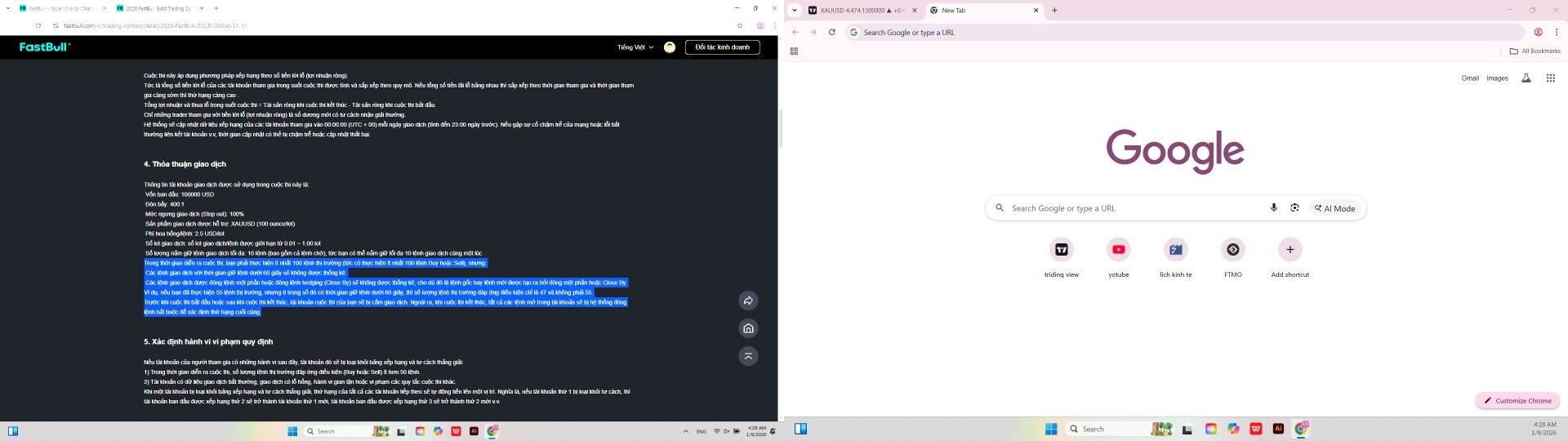
    Hello everyone, I noticed that the trading section of the upcoming competition has a minimum requirement of 50 or 100 trades. So, I'd like to ask if trading more than 100 trades will count?
    Ntus_03 flag
    Sanjeev Ku flag
    Ntus_03
    Hello everyone, I noticed that the trading section of the upcoming competition has a minimum requirement of 50 or 100 trades. So, I'd like to ask if trading more than 100 trades will count?
    @Ntus_03 no you can take as many trades you want but at least 100 trades should be taken on market orders and should hold for minimum 60 seconds
    Ntus_03 flag
    Sanjeev Ku
    Thank you for answering my question <3
    Sanjeev Ku flag
    Ntus_03
    @Ntus_03 welcome bro
    EuroTrader flag
    Ntus_03
    Hello everyone, I noticed that the trading section of the upcoming competition has a minimum requirement of 50 or 100 trades. So, I'd like to ask if trading more than 100 trades will count?
    @Ntus_03Yes it would still count. You can take as much trades as possible but there is a minimum
    EuroTrader flag
    ethane
    ETHUSD: An opportunity like never before
    @ethaneAre you gonna be buying this eth on the spot markets or on the futures markets
    EuroTrader flag
    SNYPPER_TRADES™️
    XAUUSD INTERNAL BO →$4,494 that's were it's heading to..
    @SNYPPER_TRADES™️It's gonna breach 4500 and even trade higher than that price level. That's my expectations for Xauusd
    luigi flag
    gold he need to come to fill the gap 4330, and after can brake 4500
    luigi flag
    I just sell till 4330
    Riswanda Nurrohman flag
    morning how is Xauusd trading today?
    luigi flag
    Riswanda Nurrohman
    morning how is Xauusd trading today?
    @Riswanda Nurrohmannobady can know how market will react
    luigi flag
    weit to see nfp
    luigi flag
    is the big economic event
    Type here...
    Add Symbol or Code

      No matching data

      All
      Trump Updates
      Recommend
      Stocks
      Cryptocurrencies
      Central Banks
      Featured News
      • All
      • Russia-Ukraine Conflict
      • Middle East Flashpoint
      • All
      • Russia-Ukraine Conflict
      • Middle East Flashpoint
      Search
      Products

      Charts Free Forever

      Chats Q&A with Experts
      Screeners Economic Calendar Data Tools
      Membership Features
      Data Warehouse Market Trends Institutional Data Policy Rates Macro

      Market Trends

      Market Sentiment Order Book Forex Correlations

      Top Indicators

      Charts Free Forever
      Markets

      News

      News Analysis 24/7 Columns Education
      From Institutions From Analysts
      Topics Columnists

      Latest Views

      Latest Views

      Trending Topics

      Top Columnists

      Latest Update

      Signals

      Copy Rankings Latest Signals Become a signal provider AI Rating
      Contests
      Brokers

      Overview Brokers Assessment Rankings Regulators News Claims
      Broker listing Forex Brokers Comparison Tool Live Spread Comparison Scam
      Q&A Complaint Scam Alert Videos Tips to Detect Scam
      More

      Business
      Events
      Careers About Us Advertising Help Center

      White Label

      Data API

      Web Plug-ins

      Affiliate Program

      Awards Institution Evaluation IB Seminar Salon Event Exhibition
      Vietnam Thailand Singapore Dubai
      Fans Party Investment Sharing Session
      FastBull Summit BrokersView Expo
      Recent Searches
        Top Searches
          Markets
          News
          Analysis
          User
          24/7
          Economic Calendar
          Education
          Data
          • Names
          • Latest
          • Prev

          View All

          No data

          Scan to Download

          Faster Charts, Chat Faster!

          Download App
          English
          • English
          • Español
          • العربية
          • Bahasa Indonesia
          • Bahasa Melayu
          • Tiếng Việt
          • ภาษาไทย
          • Français
          • Italiano
          • Türkçe
          • Русский язык
          • 简中
          • 繁中
          Open Account
          Search
          Products
          Charts Free Forever
          Markets
          News
          Signals

          Copy Rankings Latest Signals Become a signal provider AI Rating
          Contests
          Brokers

          Overview Brokers Assessment Rankings Regulators News Claims
          Broker listing Forex Brokers Comparison Tool Live Spread Comparison Scam
          Q&A Complaint Scam Alert Videos Tips to Detect Scam
          More

          Business
          Events
          Careers About Us Advertising Help Center

          White Label

          Data API

          Web Plug-ins

          Affiliate Program

          Awards Institution Evaluation IB Seminar Salon Event Exhibition
          Vietnam Thailand Singapore Dubai
          Fans Party Investment Sharing Session
          FastBull Summit BrokersView Expo

          US Says It Will Control Venezuela Oil Exports Indefinitely

          Manuel

          Commodity

          Political

          Summary:

          The US has already begun marketing Venezuelan crude, White House Press Secretary Karoline Leavitt said during a briefing Wednesday.

          The Trump administration plans to control future sales of Venezuelan oil and hold the proceeds in US accounts, Energy Secretary Chris Wright said, making the clearest statement yet on Washington’s strategy to bring the impoverished nation’s crude to market and manage its most valuable resource.
          Wright, who spoke at a Goldman Sachs Group Inc. conference in Miami Wednesday, said initially the barrels would come from crude Venezuela is holding in storage, which has been filling up amid the US blockade and threatening to force some production off line.
          “We’re just going to get that crude moving again and sell it,” Wright said. “We’re going to market the crude coming out of Venezuela – first this backed-up stored oil and then indefinitely going forward we will sell the production that comes out of Venezuela.”
          The plan comes as the Trump administration is pushing for US energy companies to rebuild Venezuela’s decaying oil infrastructure and revive its flagging production. The US is also selectively rolling back sanctions on Venezuela’s oil sector as part of the effort, the Energy Department said.
          President Donald Trump said Tuesday evening that Venezuela would relinquish as much as 50 million barrels of its oil for the US to sell, valued at about $2.8 billion at current market prices.
          The US has already begun marketing Venezuelan crude, White House Press Secretary Karoline Leavitt said during a briefing Wednesday.
          Revenue from the sales will be held in US Treasury accounts, a move that would protect the proceeds from Venezuela’s creditors, a person familiar with the matter said. The funds will benefit the American and Venezuelan people, Leavitt said.
          “All proceeds from the sale of Venezuelan crude oil and products will first settle in US-controlled accounts at globally recognized banks to guarantee the legitimacy and integrity of the ultimate distribution of proceeds,” Leavitt said. “Those funds will be dispersed for the benefit of the American people and the Venezuelan people at the discretion of the United States.”
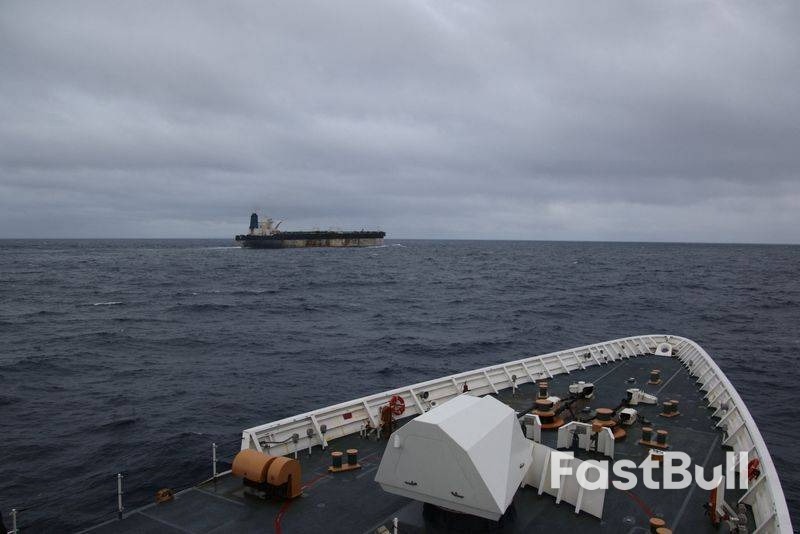
          Earlier, US forces seized two more sanctioned oil tankers, including one flying a Russian flag, as the Trump administration pushes to control all exports of Venezuelan crude. One was seized in the Atlantic Ocean south of Iceland, and the other was apprehended in the Caribbean region.
          Trump is pushing for US oil companies such as Chevron Corp., ConocoPhillips and Exxon Mobil Corp. to rebuild Venezuela’s infrastructure and revive production now that the US has removed former President Nicolás Maduro. The administration has already had conversations with multiple oil companies, according to an official. The president is set to meet with energy executives on Friday, Leavitt said.
          US oil companies have so far said little publicly about their willingness to take on such an endeavor.
          Venezuela sits atop some of the world’s largest crude reserves, but companies will want to ensure there’s a stable government in place before making any long-term investments. They will also want some degree of confidence Washington will support their presence in Venezuela even after Trump is no longer in office.
          Chevron is the only US major operating in Venezuela, working under a special license from Washington. Exxon and ConocoPhillips previously operated inside the country but left after their assets were nationalized by Maduro’s predecessor, Hugo Chávez, in the mid-2000s.
          Global oil futures slipped 1.3% Wednesday, trading at around $60 a barrel.
          “It’s just a meeting to discuss, obviously, the immense opportunity that is before these oil companies right now,” she said.
          Secretary of State Marco Rubio also may attend the sit-down that’s being planned, according to people familiar with the matter.
          Venezuela’s oil sector has suffered from years of corruption, underinvestment and neglect, and its production is less than 1 million barrels a day. Wright estimated that output could be increased by several hundred thousand barrels a day in the short to medium term.
          Restoring the industry to its former glories would be a huge undertaking, costing an estimated $10 billion per year over the next decade, according to estimates from Francisco Monaldi, director of Latin American energy policy at Rice University’s Baker Institute for Public Policy.

          Source: Bloomberg

          Risk Warnings and Disclaimers
          You understand and acknowledge that there is a high degree of risk involved in trading. Following any strategies or investment methods may lead to potential losses. The content on the site is provided by our contributors and analysts for information purposes only. You are solely responsible for determining whether any trading assets, securities, strategy, or any other product is suitable for investing based on your own investment objectives and financial situation.
          Add to Favorites
          Share

          Trump's Greenland Threat: Negotiation or NATO Crisis?

          King Ten

          Remarks of Officials

          Political

          President Donald Trump's suggestion of military action to annex Greenland is being framed by his Republican allies on Capitol Hill as a hardball negotiation tactic, echoing the deal-making style he championed in his 1987 book. This defense comes as Trump refuses to rule out force, a stance that has alarmed European leaders and many in Washington.

          The GOP has largely supported Trump following a recent strike he ordered to capture Venezuelan leader Nicolas Maduro without congressional approval. Now, as attention shifts to Greenland, some Republicans argue the president's aggressive posture is merely a bluff to secure greater U.S. influence over the strategic Arctic island.

          The "Art of the Deal" Defense

          Supporters of the former president claim his threats are part of a calculated strategy to bring Denmark to the negotiating table.

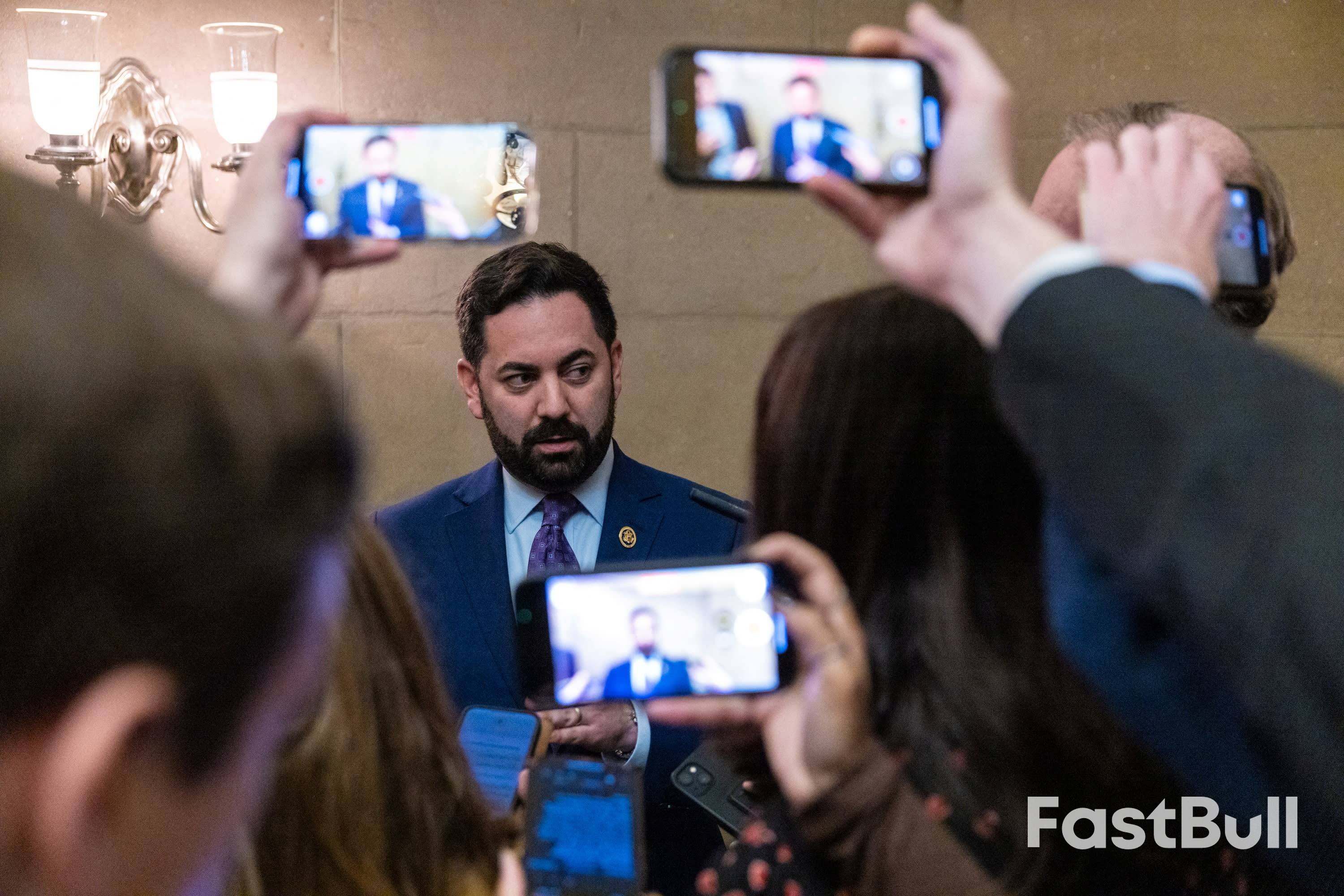
          "He's from New York, he's one of the best negotiators and how he negotiates sometimes is everything is on the table," Rep. Ryan Zinke, a Montana Republican who served as Trump's first-term Secretary of the Interior, told CNBC.

          Zinke added that he believes Secretary of State Marco Rubio is correct to downplay the idea of a military invasion. "I'd be supportive of negotiating a deal with Denmark to make sure that it stays influenced in the West," he said.

          This perspective is shared by other Republicans who believe Trump's rhetoric is primarily about leverage.

          "To Trump, everything is a deal, everything is a negotiation, a lot of things come down to leverage," said Rep. Nick LaLota, a New York Republican. "I think his administration is comfortable with the term about not taking any options off the table, I hope we don't read too much into that."

          Rep. Mike Lawler (R-NY) argues that while Greenland is strategically important, there is strong bipartisan opposition to using force.

          Rep. Mike Lawler, another New York Republican, acknowledged the island's importance but drew a clear line against military action. "Obviously there is strategic national security importance to it with respect to the Arctic, with respect to NATO, with respect to combating Russia," he said. "If you can enter into negotiations with Denmark, with Greenland, great. The idea of taking it by force, no... there is strong bipartisan opposition to any use of force with respect to Greenland."

          White House Keeps Military Option Open

          Trump has long expressed interest in Greenland, a self-governing territory of Denmark, a NATO ally. He argues that U.S. control is a national security imperative for countering Russian and Chinese ambitions in the Arctic. His focus on the island has intensified following the raid that captured Maduro, who now faces drug charges in New York.

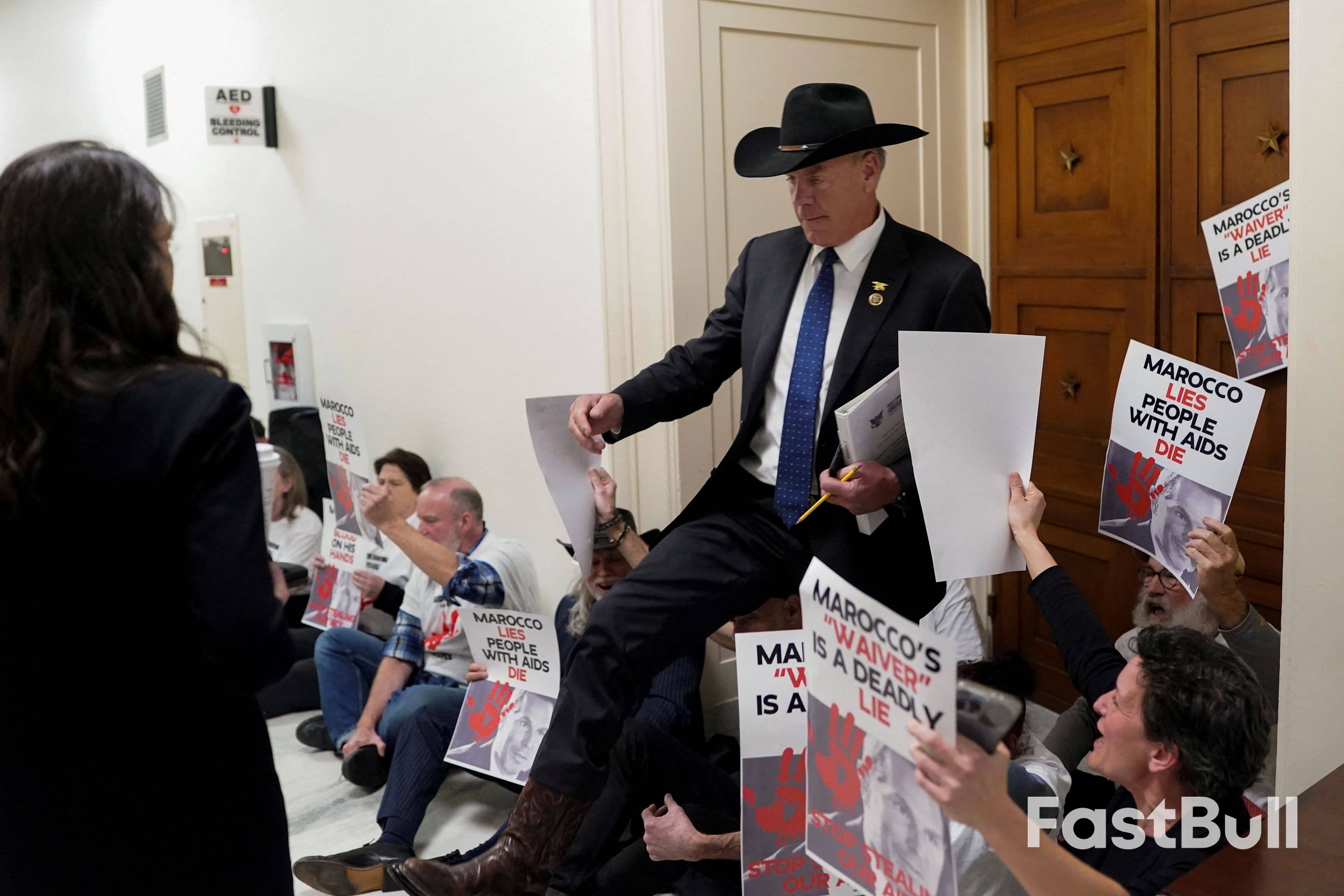
          Former Interior Secretary Ryan Zinke, a Trump ally, suggests the President's aggressive posture on Greenland is a negotiation tactic.

          The White House has not dismissed the possibility of using force.

          "The President and his team are discussing a range of options to pursue this important foreign policy goal, and of course, utilizing the U.S. Military is always an option at the Commander in Chief's disposal," White House Press Secretary Karoline Leavitt said in a statement Tuesday.

          Bipartisan Backlash and European Alarm

          The administration's stance has rattled European leaders and angered Denmark, which, along with Greenland, has consistently rejected Trump's proposals.

          "Greenland belongs to its people. It is for Denmark and Greenland, and them only, to decide on matters concerning Denmark and Greenland," Danish Prime Minister Mette Frederiksen, French President Emmanuel Macron, German Chancellor Friedrich Merz, British Prime Minister Keir Starmer, and the leaders of Italy, Spain, and Poland declared in a joint statement.

          In Washington, Democrats have warned that an invasion of Greenland would shatter the NATO alliance.

          • Sen. Ruben Gallego (D-AZ) announced he plans to introduce a War Powers Resolution to block Trump from ordering military action.

          • Rep. Jim McGovern (D-MA) stated he is working on a similar resolution in the House, telling CNBC, "The people around him need to stage an intervention... He wants to destroy and blow up our NATO alliances."

          Some Republicans have joined Democrats in condemning the rhetoric.

          • Rep. Don Bacon (R-NE) called Trump's actions "appalling," adding, "It's creating a lot of long-term anger and hurt with our friends in Europe. I feel like we have a bunch of high school kids playing Risk."

          • Sen. Thom Tillis (R-NC) and Sen. Jeanne Shaheen (D-NH) issued a joint statement affirming that any suggestion of coercion against a NATO ally "undermines the very principles of self-determination that our Alliance exists to defend."

          The Stakes for NATO

          Even Trump's allies concede that military action against Greenland would require congressional approval, unlike the Venezuela operation, which they characterized as a law enforcement function. "This would require congressional authorization," Zinke said.

          Trump himself cast doubt on the alliance's value in a Truth Social post on Wednesday, writing, "RUSSIA AND CHINA HAVE ZERO FEAR OF NATO WITHOUT THE UNITED STATES, AND I DOUBT NATO WOULD BE THERE FOR US IF WE REALLY NEEDED THEM." He added, "We will always be there for NATO, even if they won't be there for us."

          For now, influential House Republicans are standing by the president, maintaining that his threats are a means to an end. House Foreign Affairs Committee Chair Rep. Brian Mast, R-Fla., insisted the "post World War 2 order is not over in any way whatsoever."

          "There's not a goal to break up NATO right now," Mast said. "There's looking to say, is there a good deal that can be made for what is a very strategic location, not just for the United States of America, but for others."

          Risk Warnings and Disclaimers
          You understand and acknowledge that there is a high degree of risk involved in trading. Following any strategies or investment methods may lead to potential losses. The content on the site is provided by our contributors and analysts for information purposes only. You are solely responsible for determining whether any trading assets, securities, strategy, or any other product is suitable for investing based on your own investment objectives and financial situation.
          Add to Favorites
          Share

          Canada's Oil Dilemma: Pipelines vs. Refineries

          Michael Ross

          Economic

          Remarks of Officials

          Commodity

          Political

          Energy

          A long-standing debate over Canada's oil export strategy has taken a sharp turn. British Columbia Premier David Eby recently argued that Ottawa should focus on building domestic refineries instead of new export pipelines, reframing a conversation that has dominated the nation's energy politics for years.

          Eby’s proposal comes as U.S. policy shifts regarding Venezuela create new uncertainties in global oil markets, highlighting Canada's heavy reliance on the United States as its primary customer for crude. The premier suggests that rather than simply shipping raw oil to the coast for export, Canada should invest in its own refining capacity to capture more value and reduce its dependence on foreign fuel processors.

          Currently, Canada is not self-sufficient in refined fuels. The country exports most of its oil as raw crude while importing much of the fuel consumed in Eastern Canada and British Columbia. Building new refineries, Eby argues, would keep more jobs and revenue within Canada and make its energy system more resilient to external disruptions.

          The Unresolved Pipeline Question

          This push for domestic refining clashes with ongoing efforts by Ottawa and Alberta to develop a privately financed pipeline to the Pacific Coast. This plan, introduced late last year, aims to diversify Canada's trade away from the U.S. but has struggled to gain traction.

          So far, no private company has committed to building the pipeline. Furthermore, opposition from Indigenous groups and coastal communities remains a significant obstacle, particularly concerning the potential increase in oil tanker traffic.

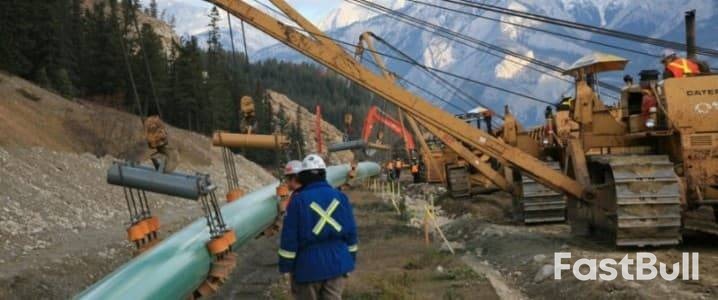
          Figure 1: Pipeline projects remain a central, yet contested, part of Canada's energy export strategy.

          Analyzing the Market: Profits and Pitfalls

          Globally, refining has become more profitable. Margins in North America, Europe, and Asia have climbed as refinery closures, outages, and sanctions have tightened the supply of processed fuels. While crude oil supply is expected to be sufficient into 2026, the availability of gasoline and diesel is much tighter, boosting the value of refining capacity.

          However, Canada's existing refining infrastructure is aging and primarily designed to serve the domestic market, not global exports.

          Building new refineries presents its own set of substantial challenges:

          • High Upfront Costs: New facilities would require billions in initial investment.

          • Regulatory Hurdles: The permitting process would likely take years and involve navigating complex regulations.

          • Political Coordination: Such projects demand a level of political alignment rarely seen in Canadian energy policy.

          • Market Risk: Critics warn that Canada could invest heavily only to face weaker-than-expected demand or intense competition from newer, low-cost refineries in the Middle East and Asia.

          The Venezuela Factor: A New Competitive Threat

          The situation is further complicated by U.S. policy toward Venezuela. The Trump administration has signaled its intention to help revive Venezuelan oil production, with much of that volume potentially heading to U.S. refiners.

          Many of these American facilities, particularly on the Gulf Coast, are already configured to process heavy crude—the same type produced in Canada's oil sands. A flood of Venezuelan oil into this market would directly compete with Canadian exports, potentially putting downward pressure on prices and sales volumes.

          Federal officials in Canada have downplayed this risk, expressing confidence that Canadian oil will stay competitive even if Venezuelan output recovers. Ottawa continues to support the oil sands industry through initiatives like carbon capture projects and regulatory adjustments, all while maintaining its commitment to climate targets.

          Canada's Strategic Crossroads

          Ultimately, Canada faces a decision that goes beyond a simple choice between pipelines and refineries. The core question is whether the country can successfully move up the energy value chain in a way that withstands political shifts, market cycles, and trade volatility.

          With refining markets tight, U.S. trade policy unpredictable, and Venezuelan oil potentially re-entering the picture, Canada's next move will be critical. It will determine not only its economic future but also its long-term position in the global energy system.

          To stay updated on all economic events of today, please check out our Economic calendar
          Risk Warnings and Disclaimers
          You understand and acknowledge that there is a high degree of risk involved in trading. Following any strategies or investment methods may lead to potential losses. The content on the site is provided by our contributors and analysts for information purposes only. You are solely responsible for determining whether any trading assets, securities, strategy, or any other product is suitable for investing based on your own investment objectives and financial situation.
          Add to Favorites
          Share

          Russia Says US Seizure Of Oil Tanker Is Illegal, Lawmaker Calls It Piracy

          Justin

          Political

          Jan 7 (Reuters) - Russia said on Wednesday that the U.S. seizure of a Russian-flagged oil tanker in the Atlantic was a violation of maritime law, and a senior lawmaker described it as "outright piracy".

          Russia's Transport Ministry said contact with the vessel, the Marinera, had been lost after U.S. naval forces boarded it near Iceland as part of efforts to block oil exports from Venezuela.

          "In accordance with the 1982 U.N. Convention on the Law of the Sea, freedom of navigation applies in the high seas, and no state has the right to use force against vessels duly registered in the jurisdictions of other states," the ministry said in a statement.

          Russia is demanding that the United States ensure humane and decent treatment of the Russian crew members and their swift return home, state news agency TASS quoted the Foreign Ministry as saying.

          The Marinera, originally known as the Bella-1, had previously slipped through a U.S. maritime blockade of sanctioned tankers in the Caribbean.

          U.S. WAGING PRESSURE CAMPAIGN AGAINST VENEZUELA

          The blockade was part of a U.S. pressure campaign against Venezuela that culminated when President Donald Trump sent in U.S. special forces on January 3 to capture Venezuelan President Nicolas Maduro and bring him to New York to face drug trafficking charges, which he has denied.

          "After a 'law enforcement operation' that killed several dozen people in Venezuela, the U.S. has engaged in outright piracy on the high seas," Andrei Klishas, a lawmaker from the ruling United Russia party, posted on Telegram.

          Two U.S. officials, speaking on condition of anonymity, told Reuters that Wednesday's operation was carried out by the Coast Guard and U.S. military.

          They said Russian military vessels, including a submarine, were in the general vicinity. There were no indications of any confrontation between U.S. and Russian military forces.

          Relations between Moscow and Washington plunged to their worst state since the Cold War after Russia invaded Ukraine in February 2022, though they have become more cordial since Trump began his second term last year and started engaging with President Vladimir Putin to seek an end to the conflict.

          Military incidents between the nuclear-armed powers are rare. In March 2023, a U.S military surveillance drone crashed into the Black Sea after being intercepted by Russian fighter jets, prompting Washington to protest and warn of the risk of an escalation.

          Venezuelan leader Maduro was the second close ally of Russia to be ousted in just over a year, following the toppling of Syrian President Bashar al-Assad in December 2024.

          Russia has said it backs Delcy Rodriguez, sworn in on Monday as interim president, and will continue to support Venezuela in the face of what Moscow has called "blatant neocolonial threats and foreign armed aggression".

          With Russians still in the midst of an extended New Year holiday period, Putin has yet to comment publicly on the U.S. action to remove Maduro.

          Source: Investing

          Risk Warnings and Disclaimers
          You understand and acknowledge that there is a high degree of risk involved in trading. Following any strategies or investment methods may lead to potential losses. The content on the site is provided by our contributors and analysts for information purposes only. You are solely responsible for determining whether any trading assets, securities, strategy, or any other product is suitable for investing based on your own investment objectives and financial situation.
          Add to Favorites
          Share

          China Hits Japan with Trade Curbs Over Taiwan Tensions

          James Riley

          Remarks of Officials

          Economic

          Commodity

          Political

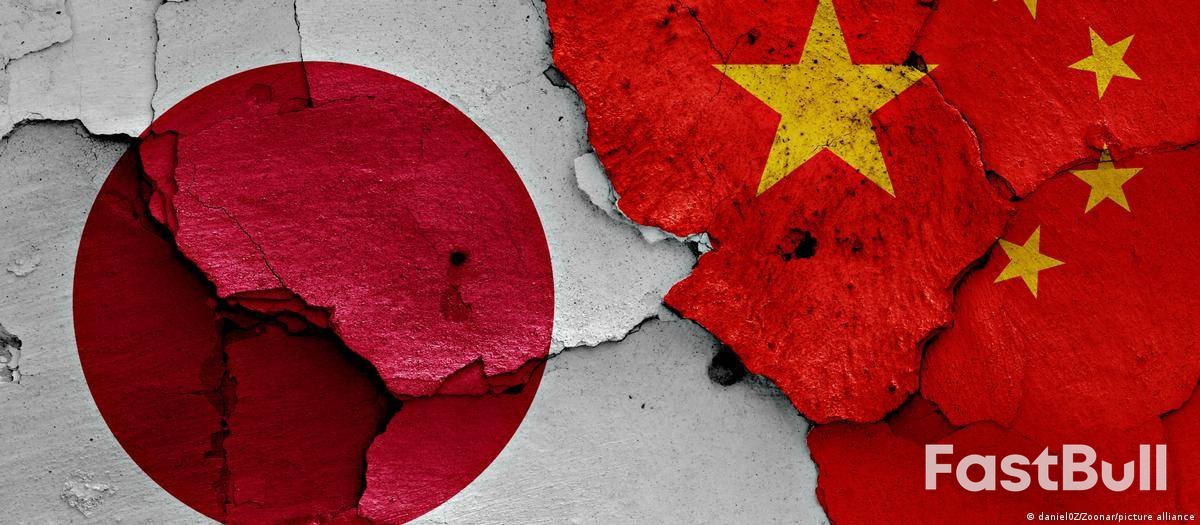
          Japan has sharply criticized new Chinese export restrictions targeting its industries, a move widely seen as retaliation for Tokyo's recent comments on Taiwan's security. Beijing's measures focus on dual-use goods, which are items that have both civilian and military applications.

          "A measure such as this, targeting only our country, differs significantly from international practice, is absolutely unacceptable and deeply regrettable," stated Minoru Kihara, Japan's Chief Cabinet Secretary and top government spokesman.

          Beijing's New Export Controls

          The trade restrictions apply to a range of goods, software, and technologies classified as dual-use. This category can include critical materials like rare earths, which are essential for manufacturing advanced products such as computer chips and drones.

          China followed up its initial announcement by launching an investigation into imported dichlorosilane, a chemical gas vital for semiconductor production. The probe came after China's domestic industry complained that the price of the chemical imported from Japan had fallen by 31% between 2022 and 2024.

          China's Commerce Ministry alleged on Wednesday that "the dumping of imported products from Japan has damaged the production and operation of our domestic industry."

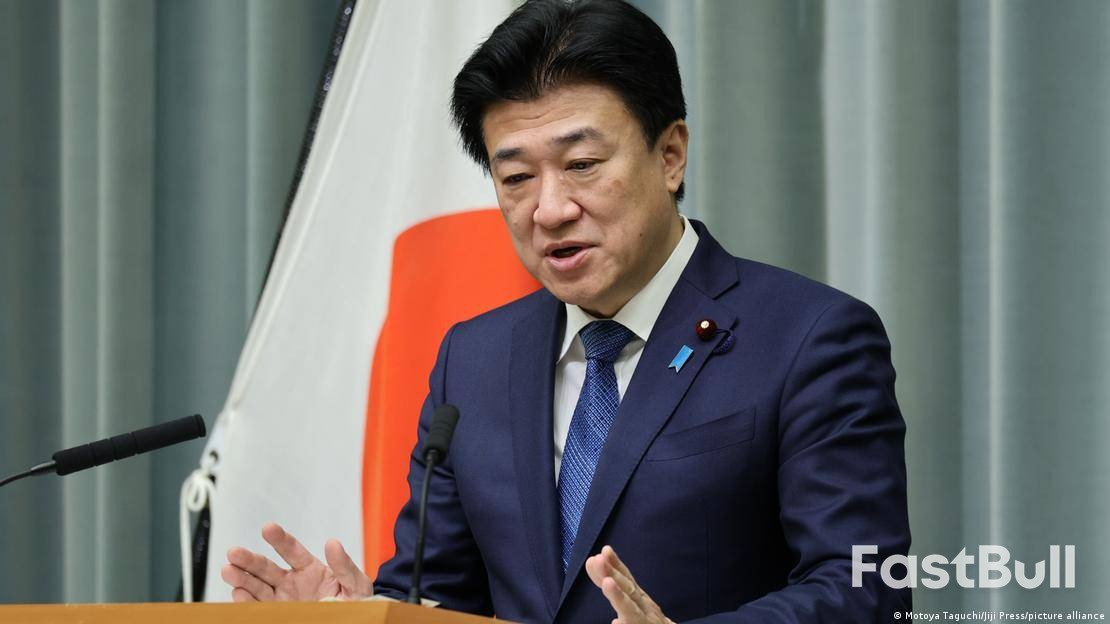
          Figure 1: Japan's Chief Cabinet Secretary Minoru Kihara condemned China's trade restrictions as 'deeply regrettable.' His government has yet to announce any retaliatory measures.

          How Comments on Taiwan Sparked the Dispute

          The trade friction follows growing displeasure in Beijing over recent statements from Japan’s new government regarding Taiwan.

          On November 7, just weeks after taking office, Japanese Prime Minister Sanae Takaichi suggested to parliament that a Chinese attack on Taiwan would represent an existential threat to Japan. She hinted that Japan's military might even mobilize to support the United States if it acted to protect Taipei. This comes as Japan increases its defense budget and redefines its military's role away from a purely defensive force.

          Beijing, which views Taiwan as its own territory, has demanded Takaichi retract her comments. While she has not done so, she stated on Monday that her government remains "open to various opportunities for dialogue with China and has never closed the door."

          Tensions escalated further on Tuesday when Japanese lawmaker Hei Seki visited Taipei and declared Taiwan an independent country. Seki, who was sanctioned by China last year for "spreading fallacies," said his visit was intended to show that China and Taiwan were "different countries."

          When asked about the visit, Chinese Foreign Ministry spokesman Mao Ning dismissed the lawmaker, stating, "The nasty words of a petty villain like him are not worth commenting on."

          Officially, Japan, like the U.S. and many Western nations, adheres to the "One China" principle, which does not formally recognize Taiwan as an independent state. However, it simultaneously provides support to the island and opposes any forceful change to the status quo.

          A Tale of Two Neighbors: South Korea's Approach

          China's actions against Japan stand in stark contrast to its warming ties with South Korea. The trade restrictions coincided with the first state visit by a South Korean president since the COVID-19 pandemic.

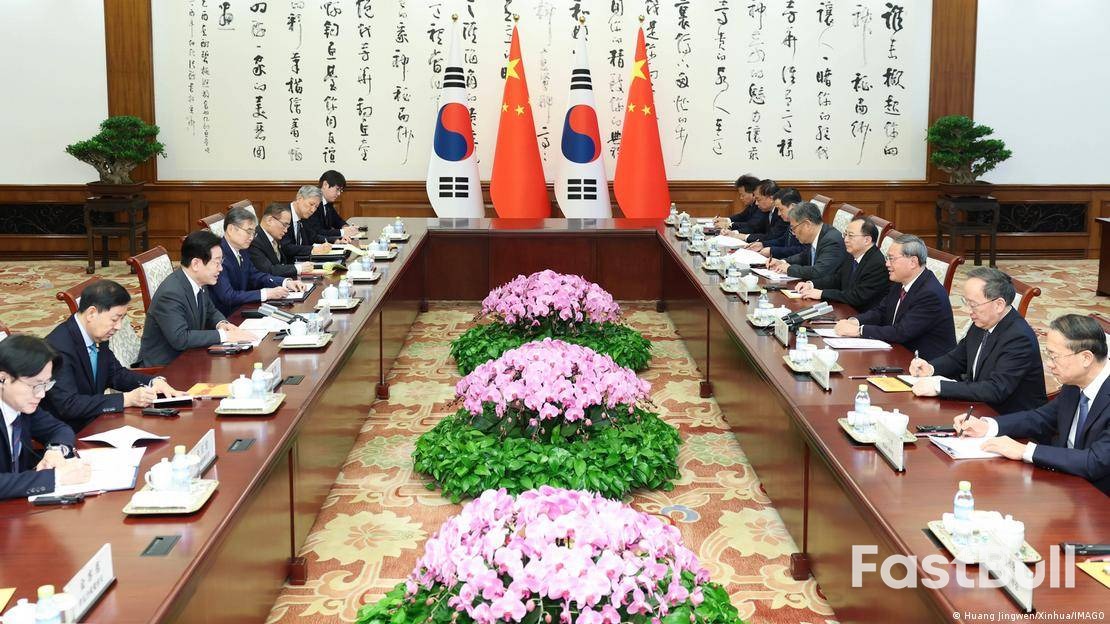
          President Lee Jae Myung concluded a four-day trip on Wednesday, during which he and Chinese President Xi Jinping signed several cooperation agreements covering technology, trade, transportation, and environmental protection.

          Crucially, Lee’s government did not join Japan in condemning China's military drills near Taiwan in late December, signaling a different diplomatic strategy.

          Figure 2: Chinese President Xi Jinping and South Korean President Lee Jae Myung oversaw the signing of several cooperation agreements, highlighting a different diplomatic path compared to Japan.

          To stay updated on all economic events of today, please check out our Economic calendar
          Risk Warnings and Disclaimers
          You understand and acknowledge that there is a high degree of risk involved in trading. Following any strategies or investment methods may lead to potential losses. The content on the site is provided by our contributors and analysts for information purposes only. You are solely responsible for determining whether any trading assets, securities, strategy, or any other product is suitable for investing based on your own investment objectives and financial situation.
          Add to Favorites
          Share

          Mexico Vows to Keep Oil Flowing to Cuba

          Dark Current

          Economic

          Daily News

          Remarks of Officials

          Commodity

          Political

          Energy

          Mexican President Claudia Sheinbaum confirmed that the country will continue to supply Cuba with crude oil, framing the shipments as essential humanitarian aid. The announcement comes after the U.S. seizure of Venezuelan leader Nicolas Maduro, a development that puts Cuba's traditional energy supply at risk.

          Sheinbaum stressed Mexico's heightened importance as a supplier in light of the situation in Venezuela. "With the current situation in Venezuela, Mexico has become an important supplier," she told reporters. "Previously it was Venezuela, but it's part of what has historically been sent."

          A Long-Standing Energy Partnership

          Mexico's state-owned oil company, Petroleos Mexicanos (Pemex), has been shipping oil to Cuba for decades. In 2024, these shipments grew by nearly 20%, reaching an average of approximately 20,000 barrels per day. This policy finds support within segments of Sheinbaum's Morena party, which sympathizes with Cuba's government as it grapples with severe energy shortages.

          Sheinbaum clarified that the oil exports are driven by a mix of factors, not just political goodwill. "For many years, oil has been sent to Cuba for various reasons, some of which are contracts, some of which are humanitarian aid," she explained. She also pointed out that the administration of former President Enrique Peña Nieto used oil to settle outstanding debts owed by the Mexican government to Cuba.

          Shipment Volumes Under Scrutiny

          When asked about the scale of the oil exports, President Sheinbaum denied that shipments had increased in recent months. She also declined to comment on whether Mexico plans to send more or larger oil deliveries in the future.

          Shipping data tracked by Bloomberg aligns with the president's statement on recent volumes. According to vessel-tracking reports, Mexico's oil shipments to Cuba have not risen since last September, when Pemex sent 400,000 barrels. Another shipment of the same size is expected this month.

          Broader Ties Between Mexico and Cuba

          Venezuela has historically been a key ally for Cuba, providing oil in exchange for services from Cuban doctors and security personnel. With potential U.S. control over Venezuelan oil, it remains uncertain if Cuba will lose access to this vital supply line entirely.

          Mexico has also deepened its relationship with Cuba through other means. In recent years, including during the pandemic, Mexico has welcomed Cuban doctors to work in its healthcare system. According to a report from the newspaper El Universal, the Mexican government paid over 2 billion pesos ($111 million) for Cuban physicians between 2022 and 2025.

          To stay updated on all economic events of today, please check out our Economic calendar
          Risk Warnings and Disclaimers
          You understand and acknowledge that there is a high degree of risk involved in trading. Following any strategies or investment methods may lead to potential losses. The content on the site is provided by our contributors and analysts for information purposes only. You are solely responsible for determining whether any trading assets, securities, strategy, or any other product is suitable for investing based on your own investment objectives and financial situation.
          Add to Favorites
          Share

          North Korea's 2026 Riddle: Succession, Nukes, and US Focus

          James Riley

          Remarks of Officials

          Political

          Kim Jong Un’s New Year's address on December 31 offered few clues about North Korea's policy direction for 2026. In a notable departure from tradition, his speech made no mention of either South Korea or the United States, focusing instead on domestic themes of patriotism, loyalty, and economic growth.

          More detailed domestic and foreign policy objectives are expected to be unveiled at the Ninth Party Congress of the Workers' Party of Korea, which is scheduled for early this year. In the meantime, two critical questions are set to define North Korea's trajectory in 2026.

          Succession and Dialogue: The Two Core Questions for 2026

          The first major uncertainty revolves around who will eventually succeed Kim Jong Un. His 13-year-old daughter, Kim Ju Ae, has made increasingly frequent public appearances, fueling speculation that she is being positioned as his heir. However, it remains far too early to draw any firm conclusions about a future leadership transition.

          The second key question is whether Pyongyang will restart dialogue with Seoul and Washington. Both South Korean President Lee Jae-myung and US President Donald Trump have expressed a desire to revive talks. Yet, Kim has drawn a clear red line, stating he will not return to the negotiating table unless the US abandons its "obsession with denuclearization."

          The prospects for productive talks between the US and North Korea appear significantly lower than they were during the first Trump administration. Pyongyang also shows far less interest in engaging with Seoul than with Washington, a stance reinforced by its decision in December 2023 to remove the peaceful reunification of the Korean peninsula as an official policy goal.

          A Shifting US Strategy: From Pyongyang to Beijing

          The new US national security strategy, published in December 2025, signals a significant pivot in Washington's priorities. Unlike the 2017 strategy from the first Trump administration, which heavily emphasized the threat from North Korea and the US alliance with South Korea, the new document omits North Korea entirely.

          Instead, the strategy mentions China 21 times. It calls for greater burden-sharing from allies, explicitly stating that South Korea and Japan must increase their defense spending "to deter adversaries and protect the First Island Chain," which includes Japan, Taiwan, the Philippines, and Borneo.

          While the US is not disengaging from East Asia, its primary focus has clearly shifted from deterring Pyongyang to countering Beijing, particularly on the economic front. The omission of North Korea could also be a strategic move to avoid antagonizing Kim, given President Trump's stated goal of resuming dialogue.

          This shift did not go unnoticed in Pyongyang. A pro-North Korean newspaper in Japan with close ties to the regime commented that "mentioning North Korea would mean the US is admitting a complete failure in its policy to denuclearize the Korean peninsula."

          The Nuclear Submarine Factor in Korean Peninsula Tensions

          North Korea's own strategic calculus has evolved, driven by a growing alignment with Moscow and the failure of the 2019 Hanoi summit with Trump. Since then, Pyongyang's interest in diplomacy has waned while its nuclear program has accelerated.

          In late December 2025, North Korean state media reported that Kim had inspected a new 8,700-tonne nuclear-powered submarine. He described the vessel as an "epoch-making crucial change" in the country's deterrence capabilities. Although details about the submarine are scarce, its existence underscores Pyongyang’s unwavering commitment to advancing its nuclear and missile technologies.

          This development follows a key decision made in November when Presidents Lee and Trump met, and the US gave its approval for South Korea to build its own nuclear-powered submarines. On December 19, Seoul and Washington finalized a standalone agreement to advance this cooperation. The deal allows South Korea to enrich low-enriched uranium for submarine fuel and permits the US to transfer nuclear materials for military use—a framework similar to the AUKUS security pact with Australia.

          Kim Jong Un responded sharply, declaring that any such cooperation between the US and South Korea would be viewed as "an aggressive act" and a "security threat that must be countered." China has also weighed in, urging Seoul to "handle the matter with prudence."

          Seoul's Diplomatic Gambit: Engaging China for a Breakthrough

          While the submarine agreement strengthens the US–South Korea alliance, it also raises questions about Washington's long-term commitment. Allowing Seoul to develop this capability could be part of a broader US strategy to shift the burden of deterring Pyongyang onto its ally, freeing up American resources to focus on Beijing.

          Against this backdrop, President Lee is currently in Beijing for a four-day state visit. In talks with Chinese President Xi Jinping, Lee hailed a "new phase" in relations and asked Xi to act as a mediator on the Korean peninsula, including on the nuclear issue.

          Pyongyang, however, appears unimpressed. Just before Lee’s arrival in Beijing, North Korea test-fired several missiles, including hypersonic ones, in response to what it termed the "recent geopolitical crisis," an apparent reference to the US attack on Venezuela.

          President Trump is also scheduled to visit Beijing in 2026. It remains uncertain whether either leader can persuade China to apply pressure on North Korea, especially after Beijing reaffirmed its "friendly" relationship with Pyongyang last year.

          The Path Forward: Deterrence in an Era of Shifting Alliances

          If dialogue with North Korea is revived, Kim Jong Un will demand tangible concessions. These could include:

          • The easing of international sanctions.

          • A halt to US–South Korea joint military exercises.

          • Official recognition of North Korea as a nuclear-armed state.

          Even if talks do not materialize, Washington and Seoul must maintain a strong, unified front to deter Pyongyang. This requires continued joint military exercises, including trilateral drills with Japan, robust enforcement of sanctions, and a refusal to offer unconditional dialogue. As North Korea strengthens its ties with China and Russia, the US and South Korea must not lose sight of the threat it poses, even as Beijing emerges as a more pressing challenge.

          Risk Warnings and Disclaimers
          You understand and acknowledge that there is a high degree of risk involved in trading. Following any strategies or investment methods may lead to potential losses. The content on the site is provided by our contributors and analysts for information purposes only. You are solely responsible for determining whether any trading assets, securities, strategy, or any other product is suitable for investing based on your own investment objectives and financial situation.
          Add to Favorites
          Share
          FastBull
          Copyright © 2026 FastBull Ltd

          728 RM B 7/F GEE LOK IND BLDG NO 34 HUNG TO RD KWUN TONG KLN HONG KONG

          TelegramInstagramTwitterfacebooklinkedin
          App Store Google Play Google Play
          Products
          Charts

          Chats

          Q&A with Experts
          Screeners
          Economic Calendar
          Data
          Tools
          Membership
          Features
          Function
          Markets
          Copy Trading
          Latest Signals
          Contests
          News
          Analysis
          24/7
          Columns
          Education
          Company
          Careers
          About Us
          Contact Us
          Advertising
          Help Center
          Feedback
          User Agreement
          Privacy Policy
          Personal Information Protection Statement
          Business

          White Label

          Data API

          Web Plug-ins

          Poster Maker

          Affiliate Program

          Risk Disclosure

          The risk of loss in trading financial instruments such as stocks, FX, commodities, futures, bonds, ETFs and crypto can be substantial. You may sustain a total loss of the funds that you deposit with your broker. Therefore, you should carefully consider whether such trading is suitable for you in light of your circumstances and financial resources.

          No decision to invest should be made without thoroughly conducting due diligence by yourself or consulting with your financial advisors. Our web content might not suit you since we don't know your financial conditions and investment needs. Our financial information might have latency or contain inaccuracy, so you should be fully responsible for any of your trading and investment decisions. The company will not be responsible for your capital loss.

          Without getting permission from the website, you are not allowed to copy the website's graphics, texts, or trademarks. Intellectual property rights in the content or data incorporated into this website belong to its providers and exchange merchants.

          Not Logged In

          Log in to access more features

          FastBull Membership

          Not yet

          Purchase

          Become a signal provider
          Help Center
          Customer Service
          Dark Mode
          Price Up/Down Colors

          Log In

          Sign Up

          Position
          Layout
          Fullscreen
          Default to Chart
          The chart page opens by default when you visit fastbull.com