

Markets
News
Analysis
User
24/7
Economic Calendar
Education
Data
- Names
- Latest
- Prev



Signal Accounts for Members
All Signal Accounts
All Contests
 U.K. Retail Sales MoM (SA) (Dec)
A:--
F: --
P: --
 France Manufacturing PMI Prelim (Jan)
A:--
F: --
P: --
France Services PMI Prelim (Jan)A:--
F: --
P: --
France Composite PMI Prelim (SA) (Jan)A:--
F: --
P: --
 Germany Manufacturing PMI Prelim (SA) (Jan)
A:--
F: --
P: --
Germany Services PMI Prelim (SA) (Jan)A:--
F: --
P: --
Germany Composite PMI Prelim (SA) (Jan)A:--
F: --
P: --
 Euro Zone Composite PMI Prelim (SA) (Jan)
A:--
F: --
P: --
Euro Zone Manufacturing PMI Prelim (SA) (Jan)A:--
F: --
P: --
Euro Zone Services PMI Prelim (SA) (Jan)A:--
F: --
P: --
U.K. Composite PMI Prelim (Jan)A:--
F: --
P: --
U.K. Manufacturing PMI Prelim (Jan)A:--
F: --
P: --
U.K. Services PMI Prelim (Jan)A:--
F: --
P: --
 Mexico Economic Activity Index YoY (Nov)
A:--
F: --
P: --
 Russia Trade Balance (Nov)
A:--
F: --
P: --
 Canada Core Retail Sales MoM (SA) (Nov)
A:--
F: --
P: --
Canada Retail Sales MoM (SA) (Nov)A:--
F: --
 U.S. IHS Markit Manufacturing PMI Prelim (SA) (Jan)
A:--
F: --
P: --
U.S. IHS Markit Services PMI Prelim (SA) (Jan)A:--
F: --
P: --
U.S. IHS Markit Composite PMI Prelim (SA) (Jan)A:--
F: --
P: --
U.S. UMich Consumer Sentiment Index Final (Jan)A:--
F: --
P: --
U.S. UMich Current Economic Conditions Index Final (Jan)A:--
F: --
P: --
U.S. UMich Consumer Expectations Index Final (Jan)A:--
F: --
P: --
U.S. Conference Board Leading Economic Index MoM (Nov)A:--
F: --
P: --
U.S. Conference Board Coincident Economic Index MoM (Nov)A:--
F: --
P: --
U.S. Conference Board Lagging Economic Index MoM (Nov)A:--
F: --
P: --
U.S. UMich 1-Year-Ahead Inflation Expectations Final (Jan)A:--
F: --
P: --
U.S. Conference Board Leading Economic Index (Nov)A:--
F: --
P: --
U.S. Weekly Total Rig CountA:--
F: --
P: --
U.S. Weekly Total Oil Rig CountA:--
F: --
P: --
Germany Ifo Business Expectations Index (SA) (Jan)--
F: --
P: --
Germany IFO Business Climate Index (SA) (Jan)--
F: --
P: --
Germany Ifo Current Business Situation Index (SA) (Jan)--
F: --
P: --
U.S. Dallas Fed PCE Price Index YoY (Nov)--
F: --
P: --
 Brazil Current Account (Dec)
--
F: --
P: --
Mexico Unemployment Rate (Not SA) (Dec)A:--
F: --
P: --
Canada National Economic Confidence Index--
F: --
P: --
U.S. Non-Defense Capital Durable Goods Orders MoM (Excl. Aircraft) (Nov)--
F: --
P: --
U.S. Durable Goods Orders MoM (Excl. Defense) (SA) (Nov)--
F: --
P: --
U.S. Durable Goods Orders MoM (Excl.Transport) (Nov)--
F: --
P: --
U.S. Durable Goods Orders MoM (Nov)--
F: --
P: --
U.S. Chicago Fed National Activity Index (Nov)--
F: --
P: --
U.S. Dallas Fed New Orders Index (Jan)--
F: --
P: --
U.S. Dallas Fed General Business Activity Index (Jan)--
F: --
P: --
U.K. BRC Shop Price Index YoY (Jan)--
F: --
P: --
 China, Mainland Industrial Profit YoY (YTD) (Dec)
--
F: --
P: --
Mexico Trade Balance (Dec)--
F: --
P: --
U.S. S&P/CS 20-City Home Price Index YoY (Not SA) (Nov)--
F: --
P: --
U.S. S&P/CS 20-City Home Price Index MoM (SA) (Nov)--
F: --
P: --
U.S. FHFA House Price Index MoM (Nov)--
F: --
P: --
U.S. FHFA House Price Index (Nov)--
F: --
P: --
U.S. Richmond Fed Manufacturing Composite Index (Jan)--
F: --
P: --
U.S. Conference Board Present Situation Index (Jan)--
F: --
P: --
U.S. Conference Board Consumer Expectations Index (Jan)--
F: --
P: --
U.S. Richmond Fed Manufacturing Shipments Index (Jan)--
F: --
P: --
U.S. Richmond Fed Services Revenue Index (Jan)--
F: --
P: --
U.S. Conference Board Consumer Confidence Index (Jan)--
F: --
P: --
 Australia RBA Trimmed Mean CPI YoY (Q4)
--
F: --
P: --
Australia CPI YoY (Q4)--
F: --
P: --
Australia CPI QoQ (Q4)--
F: --
P: --













Kung Fu
ID: 4603470
 Chart
Chart
No matching data

Latest Views
Latest Views
Trending Topics
Top Columnists
Latest Update
White Label
Data API
Web Plug-ins
Affiliate Program
View All
No data
U.S. private employers added fewer jobs than anticipated in December, although the figure was a reversal from a steep decline in the preceding month.
U.S. private employers added fewer jobs than anticipated in December, although the figure was a reversal from a steep decline in the preceding month.
Private payrolls rose by 41,000 in the last month of 2025, compared to a dip of 29,000 in November, according to monthly figures from ADP. Economists had anticipated a reading of 49,000.
In a statement, ADP said there was a rebound in hiring in December, led by education and health services, as well as leisure and hospitality.
"Small establishments recovered from November job losses with positive end-of-year hiring, even as large employers pulled back," said Nela Richardson, Chief Economist at ADP.
Wednesday's data comes as policymakers at the Federal Reserve are attempting to suss out the state of the American labor market. Fed officials have cited a weakening jobs picture as a major motive behind a string of interest rate reductions last year, with some members of the U.S. central bank arguing for a need to prioritize employment over signs of sticky inflation.
ADP gathers the report in conjunction with the Stanford Digital Economy Lab. Later this week, the monthly nonfarm payrolls report from the Labor Department's Bureau of Labor Statistics is due to released. Economists widely view the report as a more comprehensive gauge of the job market.
Forecasts see the BLS's nonfarm payrolls number for December coming in at 57,000, versus 64,000 in November.
Prime Minister Mark Carney will travel to China next week for an official visit, a strategic move aimed at rebuilding relations with the economic superpower and reducing Canada's deep-seated economic dependence on the United States.
Carney is scheduled to meet with Chinese President Xi Jinping to discuss a wide-ranging agenda that includes trade, energy, agriculture, and international security. The visit marks the first trip to China by a Canadian prime minister in nearly a decade, signaling a significant shift after years of diplomatic tension.
The relationship between Ottawa and Beijing has been strained, hitting a low point after a series of high-profile disputes.
The Meng Wanzhou Affair and its Fallout
In 2018, Canada's arrest of Huawei Technologies Co. executive Meng Wanzhou on a US extradition warrant sparked a diplomatic crisis. Shortly after, China detained two Canadians, Michael Kovrig and Michael Spavor. The standoff lasted until 2021, when a deal was reached with US prosecutors to secure Meng's release, leading to the return of the two men.
A Modern Trade War in Miniature
More recently, the two countries have engaged in a tit-for-tat tariff battle. In 2024, Canada increased import taxes on Chinese electric vehicles, steel, and aluminum, a move made partly to align its trade policies with Washington. China responded with new duties on Canadian agricultural products, including canola, a vital crop for Canada's prairie provinces.
This trade conflict has created internal friction within Canada. Some political leaders in the west have accused the federal government of sacrificing canola exports to protect the auto and steel industries concentrated in Ontario.
Despite the tensions, China remains Canada's second-largest trading partner, with total merchandise trade reaching C$118 billion ($85.8 billion) in 2024, according to Canadian government data.
The urgency to strengthen ties with China and other nations stems directly from trade pressures from the United States. Tariffs imposed by US President Donald Trump on Canadian steel, aluminum, autos, and lumber have created a consensus in Canada that the country must diversify its export markets.
In response, Carney has set an ambitious goal: to double Canada's non-US exports over the next decade.
Since taking office last March, Prime Minister Carney has deliberately steered Canada onto a different path with China, seeking to de-escalate tensions.
A pivotal moment occurred in October when Carney and Xi held a formal meeting during the Asia-Pacific Economic Cooperation (APEC) summit in South Korea. Carney later called the discussion "a turning point in the relationship" and accepted Xi's invitation to visit Beijing.
This approach marks a clear departure from the final years of the previous government under Justin Trudeau. In 2022, Trudeau's foreign affairs minister released an Indo-Pacific strategy that described China as an "increasingly disruptive" global force. A year later, his government launched a judicial inquiry into allegations of Chinese meddling in Canadian elections, which ultimately concluded that the overall results were not affected.
Carney has framed his strategy as a gradual rebuilding process. "We're starting from a very low base and we can move quite substantially before we start to get to sensitive areas," he said after his October meeting with Xi.
While no tariffs were lifted following that discussion, Carney described it as a first step toward deeper bilateral ties. His long-term goal is to open up "a much bigger set of opportunities for a broader range of Canadian businesses" in the Chinese market, citing retailers like Lululemon Athletica Inc. and Canada Goose Holdings Inc. as examples.
Key areas of focus for the upcoming visit include:
• Energy and Agriculture: Carney sees opportunities to boost exports, particularly with the expanded Trans Mountain pipeline enabling record oil shipments to China.
• Travel and Tourism: The two sides aim to roll back mutual travel restrictions. In a positive step, China announced in November that it would resume allowing group tourism to Canada, which had been halted since 2020.
Ukrainian President Volodymyr Zelenskiy visited Nicosia on Wednesday to press for faster European Union membership talks and tougher sanctions against Russia, capitalizing on the moment Cyprus assumed the EU's rotating presidency.
Zelenskiy met with Cypriot President Nikos Christodoulides as the nation began its six-month term leading the council. The visit underscores Ukraine's strategy to secure its political and economic future with the West.
"We are working to make as much progress as possible during this period on opening negotiating clusters and on Ukraine's accession to the European Union," Zelenskiy stated after the meeting.

Ukraine formally applied to join the European Union just days after Russia’s full-scale invasion in February 2022. Since then, Kyiv has been working to advance its bid, though the ongoing war presents significant challenges, and EU member Hungary has opposed a fast-track process.
During his meeting with Christodoulides, Zelenskiy emphasized the need for continued economic pressure on Moscow. "The President and I talked about strengthening sanctions against Russia, which must remain in place as long as Russia's aggression and occupation continue," he said.
Further discussions are planned with European Commission chief Ursula von der Leyen and European Council President Antonio Costa.
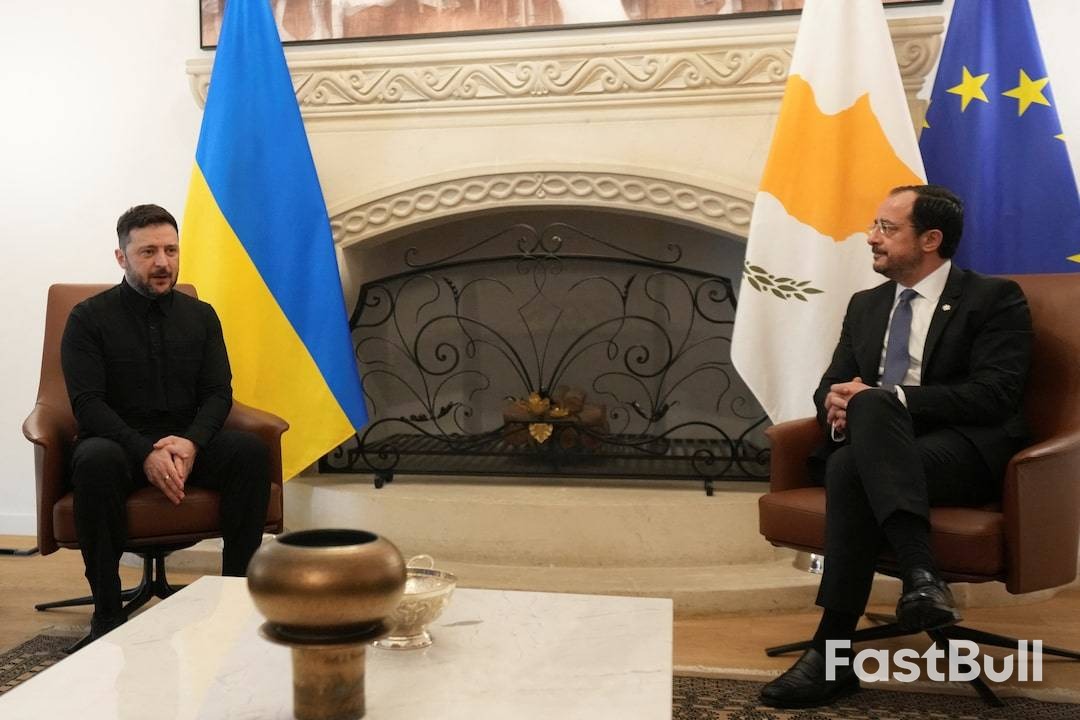
Beyond political and economic goals, the two leaders also discussed critical defense needs. Talks covered reinforcing Ukraine's air defense capabilities as well as the production and supply of drones. "We hope that support for Ukraine will remain strong," Zelenskiy added.
The Nicosia meeting also served as an opportunity to follow up on a summit in Paris on Tuesday. There, a coalition of Ukraine's allies, backed by the United States, promised to provide security guarantees to support the country against future Russian attacks in the event of a ceasefire.
Cyprus, a nation with historical political and cultural ties to Russia, has unequivocally backed the EU's sanctions against Moscow. Many Cypriots see a direct parallel between Russia's actions in Ukraine and Turkey's 1974 invasion and ongoing occupation of northern Cyprus.
President Christodoulides affirmed his country's position after the meeting. "Cyprus reaffirms its steadfast commitment to Ukraine's sovereignty and territorial integrity. As a country that still lives with the consequences of illegal invasion and ongoing military occupation, we fully understand what is at stake," he posted on X.
He confirmed that Kyiv's cause would be a major focus for his government over the next six months. "Ukraine will be a central priority of our Presidency, and will work to ensure sustained support at all levels," he wrote.
The official ceremony in Nicosia marking the start of Cyprus's presidency is set to include leaders from the Middle East, such as Lebanese President Joseph Aoun, reflecting the island's ambition to act as a diplomatic bridge between Europe and the wider region.
Germany reduced its carbon dioxide emissions last year, but this development was driven more by a struggling industrial sector than by successful climate policy. The decline highlights the economic challenges facing Europe's largest economy as it attempts a green transition.
The country's economy has faced a difficult period, with gross domestic product falling in 2023 and 2024 before narrowly avoiding a recession in 2025. This economic weakness appears to be the primary cause of the recent drop in emissions.
According to a report from the climate think tank Agora Energiewende, Germany’s manufacturers cut their CO2 output by 11 million tons compared to 2024. However, the country's total emissions only fell by 9 million tons to 640 million tons.
The smaller overall reduction was due to rising pollution from the building and transport sectors, which offset some of the industrial decline.
"Germany's goal must be to get industry growing again," said Julia Bläsius, Germany Director at the think tank. "We should not rely on industry to reduce emissions." She stressed the need for a "sustainable, structural emissions-reduction that is based on climate-neutral modernization and not on declines in production."
While industry's emissions fell, other key areas of the economy moved in the wrong direction.
• Building Sector: Emissions rose by 3.2%, driven by increased heating demand during a period of cold weather.
• Transport Sector: Emissions increased by 1.4%, a rise attributed to the slow adoption of electric vehicles.
This mixed performance shows that Germany's progress toward its climate goals is uneven and currently dependent on an unsustainable economic slowdown.
As the central bank forecasts a gradual economic recovery this year, an industrial rebound could make climate targets harder to achieve. A rise in factory output would likely reverse the recent emissions decline, putting Germany's 2030 goal—a two-thirds reduction in emissions compared to 1990 levels—at greater risk.
According to Bläsius, if emissions from the transport, building, and industrial sectors are merely contained, the nation's energy sector would have to become fully climate-neutral by 2030 to meet the overall target.
"This means that by 2030, there should not be a single gas-fired power plant left on the grid," Bläsius explained.
This presents a direct conflict with current government strategy. Berlin plans to fund the construction of new gas-fired power plants, with the goal of bringing a new fleet online by 2031. The report from Agora Energiewende also warned against any policies that could slow the expansion of renewable energy sources.
The German government is scheduled to present its official climate program in March, when the Environment Agency will also release its official emissions data.
The United Kingdom’s reliance on fossil fuels for electricity generation rose in 2025, marking the first annual increase in four years. This reversal was driven by a surge in natural gas power, which was called upon to compensate for the lowest nuclear energy output in decades.
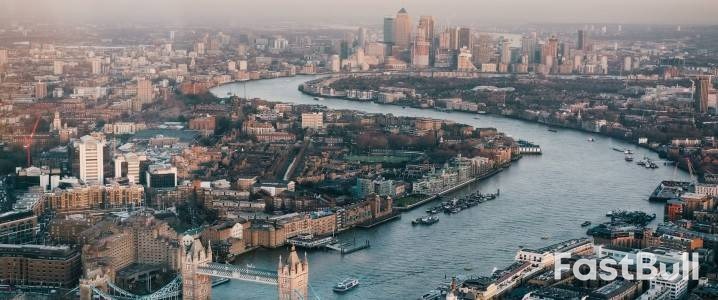
As a result, the carbon intensity of the UK's power grid also increased for the first time since 2021. According to data from the National Energy System Operator (NESO), compiled by Bloomberg, this development highlights a significant challenge to Britain's goal of achieving a clean power grid by 2030.
The government's stated ambition is for 95% of all UK electricity to come from low-carbon sources, including renewables and nuclear, by the end of the decade. However, the unexpected need for more gas-fired generation moves the country further away from this target.
The primary catalyst for the increased use of natural gas was a sharp decline in nuclear power generation in 2025. With nuclear reactors, a key source of baseload power, operating at their lowest levels in half a century, the grid required a reliable alternative to maintain stability.
An analysis from Carbon Brief identified several converging factors:
• Nuclear Downtime: Ongoing maintenance and refueling at nuclear facilities were the main reasons for the slump in output.
• End of Coal: The UK phased out coal-fired power generation in late 2024, leaving natural gas as the primary fossil fuel to fill supply gaps.
• Electricity Trade: A simultaneous increase in electricity exports and a drop in imports further tightened domestic supply, increasing the demand for local gas generation.
The UK’s long-term clean energy strategy is heavily dependent on new nuclear capacity. The planned Hinkley Point C reactor, being developed by EFD, is central to these plans. However, potential delays could push its start date beyond 2030, putting additional strain on the national target. If new nuclear power isn't available, the country may have to continue relying on gas to offset any shortfalls.
In response to these challenges, the UK government released a five-year plan last month aimed at doubling down on efforts to reduce carbon dioxide emissions.
To support this vision, NESO confirmed in December a new pipeline of "shovel-ready" energy projects. These prioritized projects are expected to accelerate connection to the electricity network, unlocking an estimated £40 billion ($54 billion) in annual clean energy investment and driving progress toward the 2030 objective.
728 RM B 7/F GEE LOK IND BLDG NO 34 HUNG TO RD KWUN TONG KLN HONG KONG


White Label
Data API
Web Plug-ins
Poster Maker
Affiliate Program
The risk of loss in trading financial instruments such as stocks, FX, commodities, futures, bonds, ETFs and crypto can be substantial. You may sustain a total loss of the funds that you deposit with your broker. Therefore, you should carefully consider whether such trading is suitable for you in light of your circumstances and financial resources.
No decision to invest should be made without thoroughly conducting due diligence by yourself or consulting with your financial advisors. Our web content might not suit you since we don't know your financial conditions and investment needs. Our financial information might have latency or contain inaccuracy, so you should be fully responsible for any of your trading and investment decisions. The company will not be responsible for your capital loss.
Without getting permission from the website, you are not allowed to copy the website's graphics, texts, or trademarks. Intellectual property rights in the content or data incorporated into this website belong to its providers and exchange merchants.
Not Logged In
Log in to access more features


Log In
Sign Up


