Markets
News
Analysis
User
24/7
Economic Calendar
Education
Data
- Names
- Latest
- Prev



Signal Accounts for Members
All Signal Accounts
All Contests


U.S. Weekly Continued Jobless Claims (SA)A:--
F: --
U.S. Initial Jobless Claims 4-Week Avg. (SA)A:--
F: --
U.S. Real Personal Consumption Expenditures Final QoQ (Q3)A:--
F: --
P: --
Canada New Housing Price Index MoM (Dec)A:--
F: --
P: --
U.S. Weekly Initial Jobless Claims (SA)A:--
F: --
U.S. Real GDP Annualized QoQ Final (Q3)A:--
F: --
P: --
U.S. PCE Price Index Final QoQ (AR) (Q3)A:--
F: --
P: --
U.S. PCE Price Index MoM (Nov)A:--
F: --
P: --
U.S. PCE Price Index YoY (SA) (Nov)A:--
F: --
P: --
U.S. Real Personal Consumption Expenditures MoM (Nov)A:--
F: --
P: --
U.S. Personal Income MoM (Nov)A:--
F: --
P: --
U.S. Core PCE Price Index MoM (Nov)A:--
F: --
P: --
U.S. Personal Outlays MoM (SA) (Nov)A:--
F: --
P: --
U.S. Core PCE Price Index YoY (Nov)A:--
F: --
P: --
Euro Zone Consumer Confidence Index Prelim (Jan)A:--
F: --
P: --
U.S. EIA Weekly Natural Gas Stocks ChangeA:--
F: --
P: --
U.S. Kansas Fed Manufacturing Composite Index (Jan)A:--
F: --
U.S. Kansas Fed Manufacturing Production Index (Jan)A:--
F: --
P: --
U.S. EIA Weekly Crude Stocks ChangeA:--
F: --
P: --
U.S. EIA Weekly Crude Demand Projected by Production--
F: --
P: --
U.S. EIA Weekly Cushing, Oklahoma Crude Oil Stocks ChangeA:--
F: --
P: --
U.S. EIA Weekly Gasoline Stocks ChangeA:--
F: --
P: --
U.S. EIA Weekly Crude Oil Imports ChangesA:--
F: --
P: --
U.S. EIA Weekly Heating Oil Stock ChangesA:--
F: --
P: --
U.S. 10-Year TIPS Auction Avg. YieldA:--
F: --
P: --
Argentina Retail Sales YoY (Nov)A:--
F: --
P: --
U.S. Weekly Treasuries Held by Foreign Central BanksA:--
F: --
P: --
Australia Manufacturing PMI Prelim (Jan)A:--
F: --
P: --
Australia Services PMI Prelim (Jan)A:--
F: --
P: --
Australia Composite PMI Prelim (Jan)A:--
F: --
P: --
Japan CPI YoY (Excl. Fresh Food & Energy) (Dec)--
F: --
P: --
Japan National CPI YoY (Excl. Food & Energy) (Dec)--
F: --
P: --
Japan National CPI MoM (Excl. Food & Energy) (Dec)--
F: --
P: --
Japan National CPI MoM (Not SA) (Dec)--
F: --
P: --
Japan National Core CPI YoY (Dec)--
F: --
P: --
Japan National CPI MoM (Dec)--
F: --
P: --
Japan National CPI YoY (Dec)--
F: --
P: --
Japan CPI MoM (Dec)--
F: --
P: --
U.K. GfK Consumer Confidence Index (Jan)--
F: --
P: --
Japan Manufacturing PMI Prelim (SA) (Jan)--
F: --
P: --
Japan Benchmark Interest Rate--
F: --
P: --
BOJ Monetary Policy Statement
BOJ Press Conference
U.K. Retail Sales MoM (SA) (Dec)--
F: --
P: --
U.K. Core Retail Sales YoY (SA) (Dec)--
F: --
P: --
U.K. Retail Sales YoY (SA) (Dec)--
F: --
P: --
Turkey Consumer Confidence Index (Jan)--
F: --
P: --
France Manufacturing PMI Prelim (Jan)--
F: --
P: --
France Services PMI Prelim (Jan)--
F: --
P: --
France Composite PMI Prelim (SA) (Jan)--
F: --
P: --
Germany Manufacturing PMI Prelim (SA) (Jan)--
F: --
P: --
Germany Services PMI Prelim (SA) (Jan)--
F: --
P: --
Germany Composite PMI Prelim (SA) (Jan)--
F: --
P: --
Euro Zone Composite PMI Prelim (SA) (Jan)--
F: --
P: --
Euro Zone Manufacturing PMI Prelim (SA) (Jan)--
F: --
P: --
Euro Zone Services PMI Prelim (SA) (Jan)--
F: --
P: --
U.K. Composite PMI Prelim (Jan)--
F: --
P: --
U.K. Manufacturing PMI Prelim (Jan)--
F: --
P: --
U.K. Services PMI Prelim (Jan)--
F: --
P: --
India Deposit Gowth YoY--
F: --
P: --
Mexico Economic Activity Index YoY (Nov)--
F: --
P: --


No matching data
Latest Views
Latest Views
Trending Topics
Top Columnists
Latest Update
White Label
Data API
Web Plug-ins
Affiliate Program
View All

No data
On Wednesday, Trump said he hoped there would not be further U.S. military action in Iran, but said the United States would act if Tehran resumed its nuclear program.
The European Union is preparing to resume work on a major trade deal with the United States after President Donald Trump withdrew a recent tariff threat, according to European Parliament President Roberta Metsola.
"We are happy to see that the escalation is off the table for now," Metsola stated on Thursday. She explained that the development allows for the continuation of internal EU discussions on the trade agreement, which had been paused.
Earlier this week, the European Parliament decided to suspend its work on the transatlantic trade deal. The move was a direct response to fresh tariff threats issued by the Trump administration, reportedly connected to the U.S. president's attempt to acquire Greenland.
With that specific threat now removed, lawmakers are optimistic about restarting the legislative process.
The trade deal in question focuses on removing numerous EU import duties on U.S. goods. The framework for the agreement was established in Turnberry, Scotland, at the end of July.
A key component of the pact is the continuation of zero duties for U.S. lobsters, a policy first agreed upon with President Trump in 2020. The proposals require final approval from both the European Parliament and the governments of EU member states.
Lawmaker Concerns and Conditions
The deal has faced criticism from many lawmakers who argue it is lopsided. Their primary complaint is that the EU is expected to cut most of its import duties while the U.S. largely maintains a broad 15% tariff rate.
Despite these reservations, parliamentarians had previously seemed willing to accept the agreement, provided certain conditions were met. These included adding an 18-month sunset clause and establishing measures to counteract any potential surges of U.S. imports.
The European Parliament's trade committee had been scheduled to vote on its official position on January 26-27 before the process was paused.
President Metsola noted that lawmakers are hopeful that discussions can resume soon, putting the trade deal back on its original track for approval.
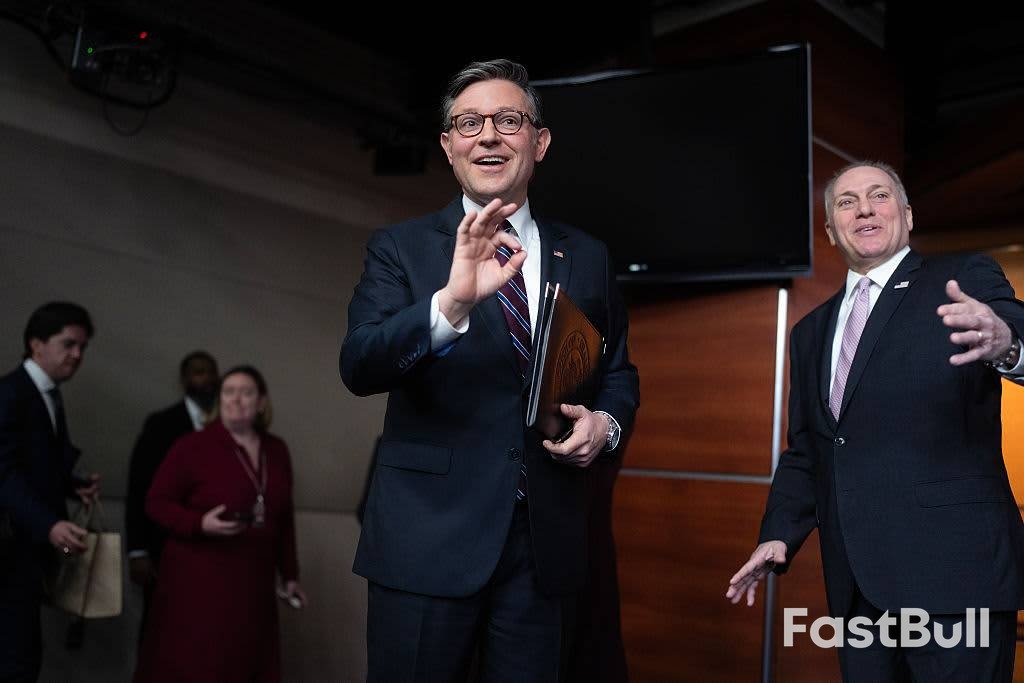
The U.S. House of Representatives is set for a critical vote on Thursday to pass the last major government funding bills, racing against a January 30 deadline to prevent a partial federal shutdown.
Momentum for the package grew after it narrowly passed a key procedural hurdle earlier in the day. The 214-213 vote to establish rules for consideration suggests the measures have enough support to clear the chamber, with a final vote expected Thursday afternoon.

This legislative package represents the largest portion of government spending, totaling approximately $1.2 trillion. The four bills are the final pieces of the 12 annual appropriations bills required to keep the government fully operational.
The funding covers several key federal departments, including:
• Defense
• Health and Human Services
• Homeland Security
• Labor
• Housing and Urban Development
• Transportation
• Education
Even if the bills pass the House, they must still be approved by the Senate, which does not return until next week, before heading to President Donald Trump for his signature. Lawmakers from both parties are eager to avoid a repeat of last year's record-setting 43-day shutdown.
Despite a general consensus to prevent a shutdown, specific provisions within the bills have created significant political friction, forcing leadership to navigate delicate compromises.
Homeland Security Funding Under Fire
Democrats have voiced strong opposition to the bill funding the Department of Homeland Security. The resistance follows the fatal shooting of a U.S. citizen in Minnesota by an Immigration and Customs Enforcement (ICE) agent earlier this month. Due to this political sensitivity, the Homeland Security bill is being considered separately from the other three.
Midwest Republicans Demand E15 Concession
Meanwhile, a group of Midwestern Republicans has been pushing for a provision to allow the year-round sale of gasoline with a high ethanol blend, known as E15. This fuel is typically restricted during summer months over concerns about smog, though waivers are common.
To secure their votes, House Republican leadership agreed to create a congressional "E-15 Rural Domestic Energy Council" to address their concerns, avoiding a direct change in the spending bill itself.
Looking ahead, President Trump commented to Fox Business on Thursday that he "think[s] we're going to probably end up in another Democrat shutdown," though he did not clarify if he was referring to the imminent January 30 deadline.
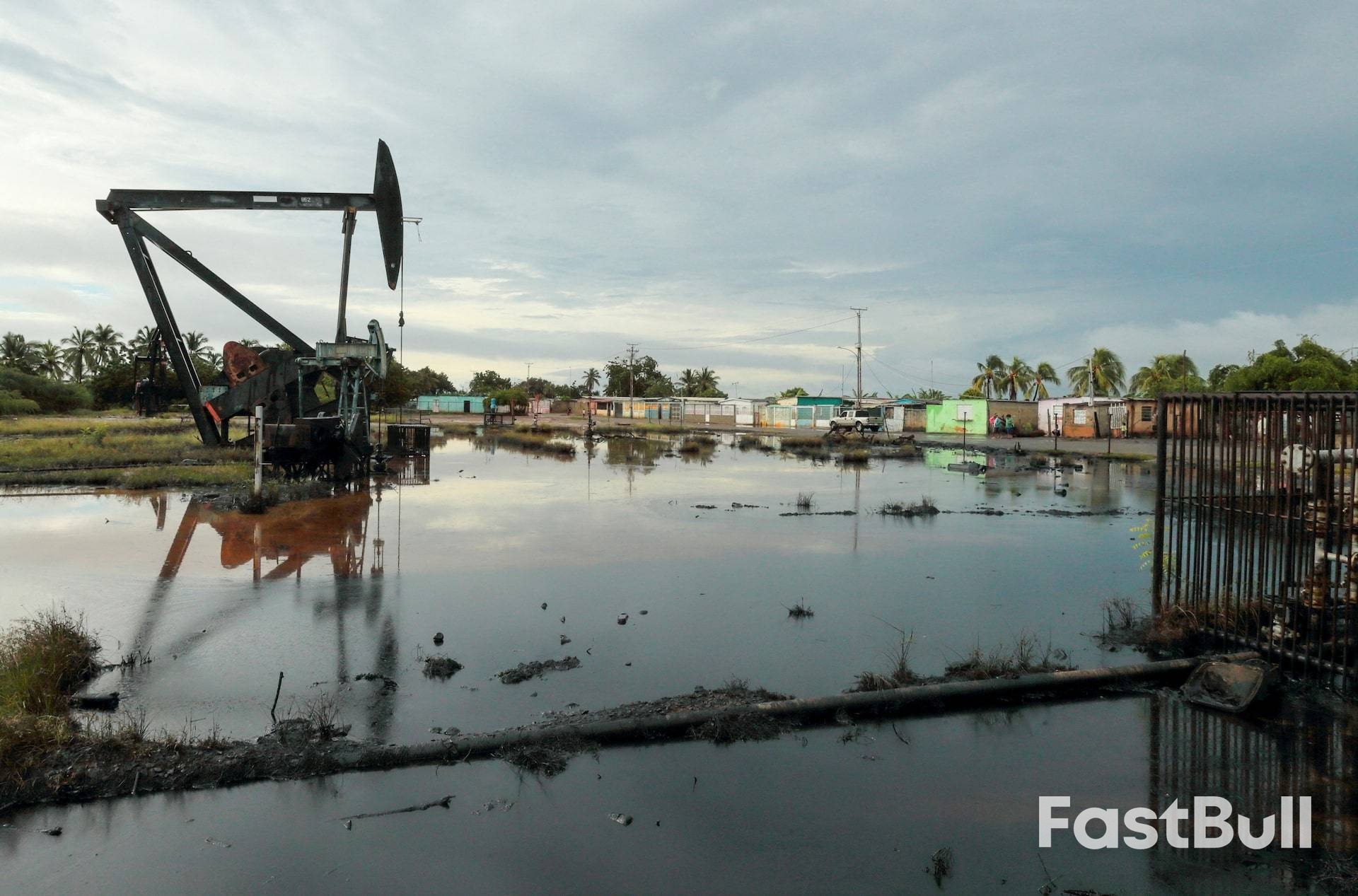
The Trump administration will not deploy troops to provide on-the-ground security for oil companies operating in Venezuela, according to Energy Secretary Chris Wright. This clarification dismisses any speculation that the U.S. military would be used to safeguard corporate assets in the nation.
In an interview Thursday, Secretary Wright outlined the administration's strategy, emphasizing financial controls over direct intervention. "We are not going to get involved in providing on-the-ground security," he stated.
Instead, the U.S. aims to use its influence over financial flows to stabilize the country. "The US involvement right now in controlling the flow of funds in Venezuela gives us huge leverage to reduce the criminality in that country, reestablish peace and better business conditions," Wright explained.
He argued that these financial measures have already made Venezuela a more secure environment for businesses. He also noted that major oil companies have extensive experience operating in challenging regions globally.
The energy industry has been clear about its prerequisites for committing capital to Venezuela. Executives have highlighted the need for:
• Comprehensive political and legal reforms
• Certainty and stability in contracts
• Guarantees for physical security
This comes after the apprehension of former President Nicolás Maduro, which has opened discussions about future investment. While President Donald Trump has previously pledged to provide "total safety" for companies in Venezuela, the specifics of that promise have remained unclear.
According to Wright, a full-scale return of investment will require fundamental changes, including a representative government, new laws, and constitutional amendments.
Wright acknowledged that rebuilding Venezuela's political and legal framework will not happen overnight. "But that will take time," he said, predicting a phased return of foreign capital.
He expects more agile, risk-tolerant operators to move in first. "There's always different risk and reward situations in time, which is why the wildcatters will move first," Wright commented.
However, major corporations planning substantial, long-term projects will remain on the sidelines. "The bigger, longer-term, tens of million of dollars of investment, they're going to wait until there's more clarity in that environment," he added.
To facilitate this process, Wright announced plans to travel to Venezuela within the next few weeks. His agenda includes meetings with government officials, including acting President Delcy Rodríguez, and an assessment of the country's oil infrastructure.
He anticipates that American energy firms will soon follow. "We will definitely see a number of American oil and gas companies going down as well and investigating opportunities on the ground," he said. To support these efforts, the administration will expedite OFAC approvals for any company wishing to explore opportunities in Venezuela.
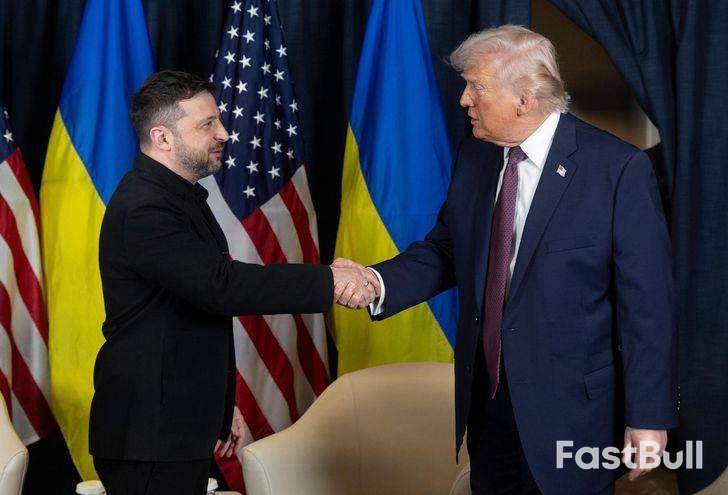
Ukrainian President Volodymyr Zelensky has announced that "trilateral" talks involving Ukrainian, U.S., and Russian officials will take place in the United Arab Emirates this week. The announcement was made on Thursday following his address at the World Economic Forum in Davos, Switzerland.

Speaking to journalists, Zelensky confirmed the upcoming meeting but offered limited details on its exact format, including whether Ukrainian and Russian officials would negotiate directly.
"It will be the first trilateral meeting in the Emirates. It will be tomorrow and the day after tomorrow," he stated, adding a condition for progress: "Russians have to be ready for compromises."
Zelensky described the event as a "trilateral meeting at the level of negotiators," and said, "We'll see what the result will be." His office did not provide further clarification on the structure of the talks.
The Ukrainian team will be led by Rustem Umerov, Secretary of the National Security and Defence Council. The delegation will also include a military presence, represented by Lieutenant General Andriy Gnatov.
The United Arab Emirates has consistently played a mediating role between Moscow and Kyiv throughout the nearly four-year war, most notably in facilitating prisoner exchanges.
Despite several rounds of face-to-face meetings since Russia's full-scale invasion began, previous talks have failed to produce a breakthrough to end the conflict, which has resulted in tens of thousands of casualties.

The Trump administration has given China the green light to purchase Venezuelan oil, but under a strict new pricing policy, a U.S. official confirmed on Thursday. This development follows the removal of President Nicolas Maduro on January 3, after which the U.S. assumed control over the country's oil sales.
According to an administration official who spoke on the condition of anonymity, China is now permitted to buy Venezuelan crude at "fair market prices." This directive explicitly ends the practice of selling oil at "unfair, undercut prices," which Caracas previously used to service its massive debts to Beijing.
For years, China has been Venezuela's primary oil buyer, with sales structured as debt-for-oil deals. The official stated that the U.S. will maintain control over Venezuela's oil sales indefinitely. While the crude will enter the global marketplace, a key stipulation is that the majority of it must be sold to the United States.
The official credited President Donald Trump's "decisive and successful law enforcement operation" for the policy shift, arguing it ensures "the people of Venezuela will collect a fair price for their oil from China and other nations rather than a corrupt, cheap price."
The financial impact of the new arrangement is already clear. U.S. Energy Secretary Chris Wright said last week that the U.S. is receiving approximately $45 per barrel for Venezuelan oil.
This price point is a significant increase from the roughly $31 per barrel Venezuela received before Maduro’s capture, underscoring the end of the previous discount-based sales model.
Leading trading houses have stepped in to manage the first wave of transactions under the new U.S.-led framework. Trafigura and Vitol have successfully sold around 11 million barrels of stranded crude in an initial supply deal. This volume accounts for roughly a quarter of a $2 billion agreement between Venezuela and the United States.
Trafigura has already completed its first sale to a customer, Spanish energy company Repsol. At the same time, Vitol has negotiated cargo shipments to U.S. refiners, including Valero and Phillips 66, as well as to its own refinery in Italy, according to sources.
Despite these initial deals, traders and analysts project that China's oil imports from Venezuela will likely decline starting in February. The expected slump is attributed to the logistical constraints imposed by U.S. control over the OPEC nation's oil sales, which has limited the number of tankers able to leave port.
White Label
Data API
Web Plug-ins
Poster Maker
Affiliate Program
The risk of loss in trading financial instruments such as stocks, FX, commodities, futures, bonds, ETFs and crypto can be substantial. You may sustain a total loss of the funds that you deposit with your broker. Therefore, you should carefully consider whether such trading is suitable for you in light of your circumstances and financial resources.
No decision to invest should be made without thoroughly conducting due diligence by yourself or consulting with your financial advisors. Our web content might not suit you since we don't know your financial conditions and investment needs. Our financial information might have latency or contain inaccuracy, so you should be fully responsible for any of your trading and investment decisions. The company will not be responsible for your capital loss.
Without getting permission from the website, you are not allowed to copy the website's graphics, texts, or trademarks. Intellectual property rights in the content or data incorporated into this website belong to its providers and exchange merchants.
Not Logged In
Log in to access more features

FastBull Membership
Not yet
Purchase
Log In
Sign Up