• Trade
  • Markets
  • Copy
  • Contests
  • News
  • 24/7
  • Calendar
  • Q&A
  • Chats
Trending
Screeners
SYMBOL
LAST
BID
ASK
HIGH
LOW
NET CHG.
%CHG.
SPREAD
SPX
S&P 500 Index
6944.46
6944.46
6944.46
6979.35
6937.94
+17.86
+ 0.26%
--
DJI
Dow Jones Industrial Average
49442.43
49442.43
49442.43
49581.18
49224.30
+292.81
+ 0.60%
--
IXIC
NASDAQ Composite Index
23530.01
23530.01
23530.01
23721.11
23502.18
+58.27
+ 0.25%
--
USDX
US Dollar Index
99.100
99.180
99.100
99.160
99.020
-0.020
-0.02%
--
EURUSD
Euro / US Dollar
1.16079
1.16086
1.16079
1.16140
1.16019
-0.00013
-0.01%
--
GBPUSD
Pound Sterling / US Dollar
1.33814
1.33824
1.33814
1.33910
1.33701
+0.00007
+ 0.01%
--
XAUUSD
Gold / US Dollar
4605.18
4605.61
4605.18
4620.79
4591.26
-10.77
-0.23%
--
WTI
Light Sweet Crude Oil
58.861
58.891
58.861
59.262
58.830
-0.273
-0.46%
--

Community Accounts

Signal Accounts
--
Profit Accounts
--
Loss Accounts
--
View More

Become a signal provider

Sell trading signals to earn additional income

View More

Guide to Copy Trading

Get started with ease and confidence

View More

Signal Accounts for Members

All Signal Accounts

Best Return
  • Best Return
  • Best P/L
  • Best MDD
Past 1W
  • Past 1W
  • Past 1M
  • Past 1Y

All Contests

  • All
  • Trump Updates
  • Recommend
  • Stocks
  • Cryptocurrencies
  • Central Banks
  • Featured News
Top News Only
Share

USA Customs And Border Protection: USA Will No Longer Detain At Ports Of Entry Palm Oil And Palm Oil Products Produced By Fgv

Share

Chinese President Xi, To Canada Prime Minister Carney: Willing To Strengthen Communication And Coordination With Canada To Jointly Address Global Challenges

Share

Chinese President Xi, To Canada Prime Minister Carney: China, Canada Trade Of Mutually Beneficial Nature

Share

Chinese President Xi, To Canada Prime Minister Carney: Both Sides Should Respect Each Other's Sovereignty, Territorial Integrity

Share

Monetary Policy Committee's Kotecki: Poland May Cut Rates Already In February

Share

Vietnam Targets $5.5 Billion In Foreign Loans For 2026 To Boost Infrastructure Development

Share

India's Nifty 50 Index Last Up 0.75%

Share

India's BSE Sensex Last Up 0.54%

Share

Hsi Closes Midday At 26851, Down 71 Pts, Hsti Closes Midday At 5815, Down 12 Pts, Ali Health Down Over 5%, Shk Ppt, Ckh Holdings, Chilean Peso Holdings, BOC Hong Kong, Conant Optical Hit New Highs

Share

Kazmunaygaz: Kazakhstan Plans To Increase Oil Exports To Germany In 2026 To 2.5 Million T

Share

Kazakhstan's Oil Exports Via Btc Pipeline Down 11% To 1.263 Million T In 2025 - Kaztransoil

Share

Malaysia 2025 GDP Likely Grew By 4.9% On Year - Statistics Dept, Citing Early Estimates

Share

Malaysia Q4 GDP Likely Grew By 5.7% On Year - Statistics Dept, Citing Early Estimates

Share

Exports Of Kazakhstan's Oil To Germany Via Druzhba Pipeline Up 44% To 2.146 Million T In 2025 - Kaztransoil

Share

US State Department: Upcoming Bilateral Engagements With Mexico Will Require Concrete, Verifiable Outcomes To Dismantle Narcoterrorist Networks And Deliver A Real Reduction In Fentanyl Trafficking

Share

US State Department Says, In Call With Mexican Foreign Minister, US Made Clear That Incremental Progress In Facing Border Security Challenges Is Unacceptable - X

Share

India's Nifty Bank Futures Up 0.09% In Pre-Open Trade

Share

GFZ: Earthquake Of Magnitude 6.2 Strikes Off Coast Of Oregon

Share

India's Nifty 50 Index Up 0.12% In Pre-Open Trade

Share

Indian Rupee Opens At 90.3725 Per USA Dollar, Down 0.1% From Previous Close

TIME
ACT
FCST
PREV
Euro Zone Industrial Output MoM (Nov)

A:--

F: --

P: --
Euro Zone Trade Balance (SA) (Nov)

A:--

F: --

P: --
Euro Zone Trade Balance (Not SA) (Nov)

A:--

F: --

P: --
Euro Zone Industrial Output YoY (Nov)

A:--

F: --

P: --
South Africa Refinitiv/Ipsos Primary Consumer Sentiment Index (PCSI) (Jan)

A:--

F: --

P: --

U.K. Refinitiv/Ipsos Primary Consumer Sentiment Index (PCSI) (Jan)

A:--

F: --

P: --

Brazil Retail Sales MoM (Nov)

A:--

F: --

P: --

U.S. NY Fed Manufacturing Prices Received Index (Jan)

A:--

F: --

P: --

U.S. NY Fed Manufacturing New Orders Index (Jan)

A:--

F: --

P: --

U.S. NY Fed Manufacturing Employment Index (Jan)

A:--

F: --

P: --

U.S. Export Price Index YoY (Nov)

A:--

F: --

P: --

U.S. NY Fed Manufacturing Index (Jan)

A:--

F: --

P: --
U.S. Initial Jobless Claims 4-Week Avg. (SA)

A:--

F: --

P: --
U.S. Export Price Index MoM (Nov)

A:--

F: --

P: --

Canada Manufacturing Unfilled Orders MoM (Nov)

A:--

F: --

P: --

Canada Manufacturing New Orders MoM (Nov)

A:--

F: --

P: --

U.S. Philadelphia Fed Manufacturing Employment Index (Jan)

A:--

F: --

P: --

Canada Wholesale Inventory YoY (Nov)

A:--

F: --

P: --

Canada Manufacturing Inventory MoM (Nov)

A:--

F: --

P: --

Canada Wholesale Sales YoY (Nov)

A:--

F: --

P: --

Canada Wholesale Inventory MoM (Nov)

A:--

F: --

P: --

U.S. Import Price Index YoY (Nov)

A:--

F: --

P: --
U.S. Import Price Index MoM (Nov)

A:--

F: --

P: --

U.S. Weekly Continued Jobless Claims (SA)

A:--

F: --

P: --
Canada Wholesale Sales MoM (SA) (Nov)

A:--

F: --

P: --

U.S. Weekly Initial Jobless Claims (SA)

A:--

F: --

P: --
U.S. Philadelphia Fed Business Activity Index (SA) (Jan)

A:--

F: --

P: --

U.S. EIA Weekly Natural Gas Stocks Change

A:--

F: --

P: --

Richmond Federal Reserve President Barkin delivered a speech.
U.S. Weekly Treasuries Held by Foreign Central Banks

A:--

F: --

P: --

Germany CPI Final MoM (Dec)

--

F: --

P: --

Germany CPI Final YoY (Dec)

--

F: --

P: --

Germany HICP Final MoM (Dec)

--

F: --

P: --

Germany HICP Final YoY (Dec)

--

F: --

P: --

Brazil PPI MoM (Nov)

--

F: --

P: --

Canada New Housing Starts (Dec)

--

F: --

P: --

U.S. Capacity Utilization MoM (SA) (Dec)

--

F: --

P: --

U.S. Industrial Output YoY (Dec)

--

F: --

P: --

U.S. Manufacturing Capacity Utilization (Dec)

--

F: --

P: --

U.S. Manufacturing Output MoM (SA) (Dec)

--

F: --

P: --

U.S. Industrial Output MoM (SA) (Dec)

--

F: --

P: --

U.S. NAHB Housing Market Index (Jan)

--

F: --

P: --

Russia CPI YoY (Dec)

--

F: --

P: --

U.S. Weekly Total Rig Count

--

F: --

P: --

U.S. Weekly Total Oil Rig Count

--

F: --

P: --

Japan Core Machinery Orders YoY (Nov)

--

F: --

P: --

Japan Core Machinery Orders MoM (Nov)

--

F: --

P: --

U.K. Rightmove House Price Index YoY (Jan)

--

F: --

P: --

China, Mainland GDP YoY (YTD) (Q4)

--

F: --

P: --

China, Mainland Industrial Output YoY (YTD) (Dec)

--

F: --

P: --

Japan Industrial Output Final MoM (Nov)

--

F: --

P: --

Japan Industrial Output Final YoY (Nov)

--

F: --

P: --

Euro Zone Core HICP Final MoM (Dec)

--

F: --

P: --

Euro Zone HICP Final MoM (Dec)

--

F: --

P: --

Euro Zone HICP Final YoY (Dec)

--

F: --

P: --

Euro Zone HICP MoM (Excl. Food & Energy) (Dec)

--

F: --

P: --

Euro Zone Core CPI Final YoY (Dec)

--

F: --

P: --

Euro Zone Core HICP Final YoY (Dec)

--

F: --

P: --

Euro Zone CPI YoY (Excl. Tobacco) (Dec)

--

F: --

P: --

Euro Zone Core CPI Final MoM (Dec)

--

F: --

P: --

Q&A with Experts
    • All
    • Chatrooms
    • Groups
    • Friends
    Toash Jean flag
    SlowBear ⛅
    @SlowBear ⛅Markets in Japan are entering a sensitive period as Prime Minister Sanae Takaichi prepares to dissolve parliament ahead of a snap election expected early next month, while the Bank of Japan is also due to hold a policy meeting. The prospect of expanded fiscal stimulus under a dovish government has weighed on the yen, reflecting investor concern that looser fiscal policy could undermine currency stability.
    SlowBear ⛅ flag
    KingSot_06 🇸🇿
    @KingSot_06 🇸🇿 Oh yes the emiji is not shwing though
    ppc explor flag
    @SlowBear ⛅1 hour
    SlowBear ⛅ flag
    Toash Jean
    @Toash Jean Oh yes i read about that, but i still do not see how that impact the Gold market
    Toash Jean flag
    SlowBear ⛅
    @SlowBear ⛅bith gold and jpy are reserves
    SlowBear ⛅ flag
    Toash Jean
    @Toash Jean I also think this data is highly impacted on the yen pairs as BoJ ready for some stiulus (intervention) but nothimg in paticular about gold
    SlowBear ⛅ flag
    ppc explor
    @ppc explorOjat now i think that is very clear bearish or even a range if you ask me
    Toash Jean flag
    SlowBear ⛅
    @SlowBear ⛅they do say like that for over years but nothing happens so it is just speculations and market manupulation against jpy for them not be intervene
    Toash Jean flag
    BTC
    SlowBear ⛅ flag
    Toash Jean
    @Toash Jean Well, BoJ dunping Dollar and switching to Gold as their reserve is a cath and i like the idea esecially when there is a lots of uncertainties surround the FEDs and the Dollar
    Toash Jean flag
    SlowBear ⛅
    @SlowBear ⛅YES
    Shreshth B flag
    Sell silver now
    SlowBear ⛅ flag
    SlowBear ⛅
    @Toash Jean With the knoweledge of this and knowing Japan hold over 1.1trilion worth of US debt - so yes they have influence but not sure they will back off like that! US will fight them hard
    Shreshth B flag
    And run away you you you you
    SlowBear ⛅ flag
    Toash Jean
    @Toash JeanThat is what i am saying boss, BoJ always talk but with no action - i think this could be as a result of the power that be at Wallstreet
    SlowBear ⛅ flag
    Shreshth B
    Sell silver now
    @Shreshth BWell i think i sure need to sheck on silver
    SlowBear ⛅ flag
    Shreshth B
    And run away you you you you
    @Shreshth B Lol, selll without stop los or do you have the stop los in view?
    SlowBear ⛅ flag
    Toash Jean
    BTC
    @Toash JeanSO what about BTC my friend? i think BTC also is getting smacked right this moment
    SlowBear ⛅ flag
    SlowBear ⛅ flag
    SlowBear ⛅
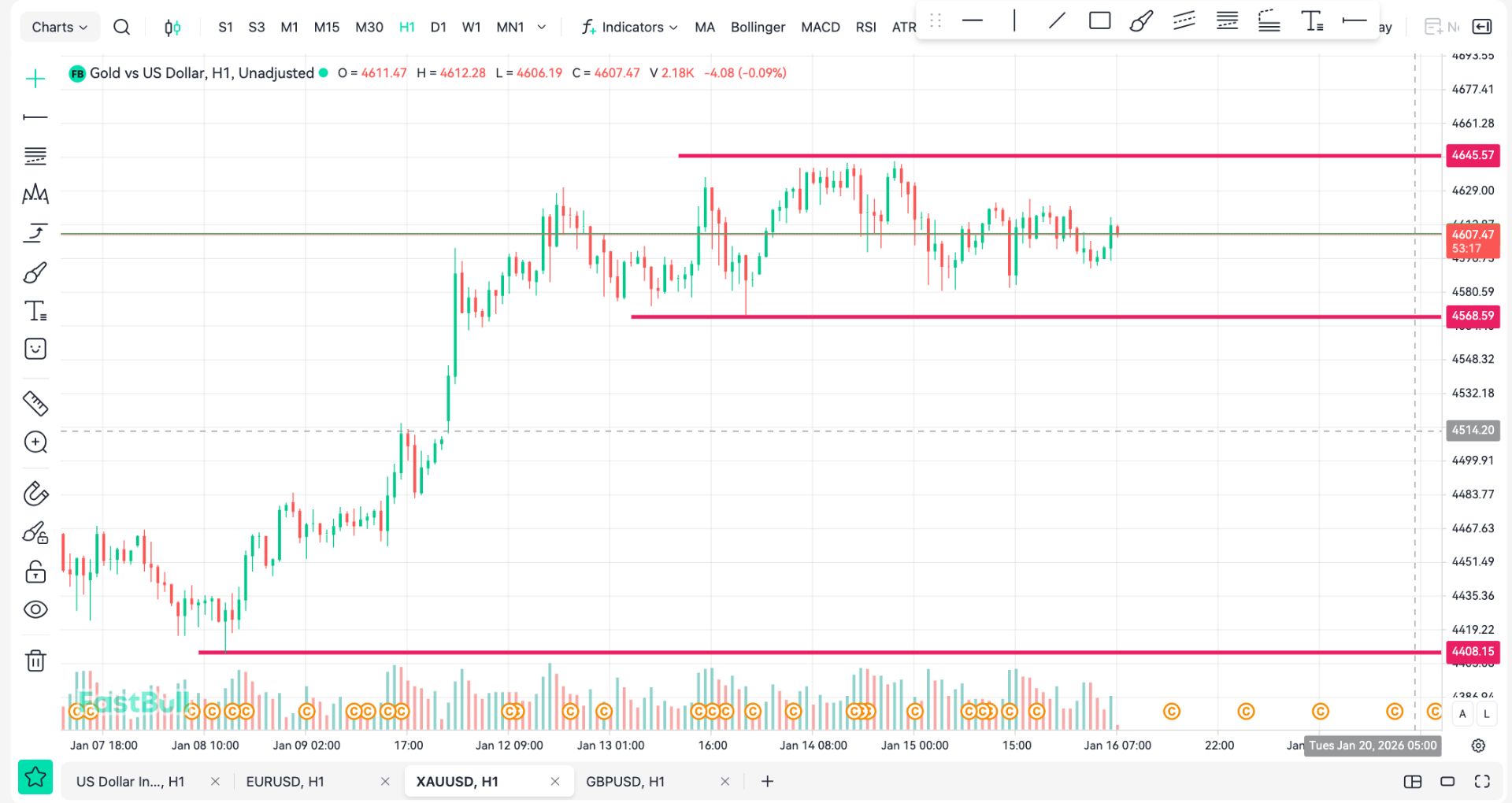
    @ppc explor Here we have Gold on 1hour timeframe, it is still bt large in a range
    Type here...
    Add Symbol or Code

      No matching data

      All
      Trump Updates
      Recommend
      Stocks
      Cryptocurrencies
      Central Banks
      Featured News
      • All
      • Russia-Ukraine Conflict
      • Middle East Flashpoint
      • All
      • Russia-Ukraine Conflict
      • Middle East Flashpoint
      Search
      Products

      Charts Free Forever

      Chats Q&A with Experts
      Screeners Economic Calendar Data Tools
      Membership Features
      Data Warehouse Market Trends Institutional Data Policy Rates Macro

      Market Trends

      Market Sentiment Order Book Forex Correlations

      Top Indicators

      Charts Free Forever
      Markets

      News

      News Analysis 24/7 Columns Education
      From Institutions From Analysts
      Topics Columnists

      Latest Views

      Latest Views

      Trending Topics

      Top Columnists

      Latest Update

      Signals

      Copy Rankings Latest Signals Become a signal provider AI Rating
      Contests
      Brokers

      Overview Brokers Assessment Rankings Regulators News Claims
      Broker listing Forex Brokers Comparison Tool Live Spread Comparison Scam
      Q&A Complaint Scam Alert Videos Tips to Detect Scam
      More

      Business
      Events
      Careers About Us Advertising Help Center

      White Label

      Data API

      Web Plug-ins

      Affiliate Program

      Awards Institution Evaluation IB Seminar Salon Event Exhibition
      Vietnam Thailand Singapore Dubai
      Fans Party Investment Sharing Session
      FastBull Summit BrokersView Expo
      Recent Searches
        Top Searches
          Markets
          News
          Analysis
          User
          24/7
          Economic Calendar
          Education
          Data
          • Names
          • Latest
          • Prev

          View All

          No data

          Scan to Download

          Faster Charts, Chat Faster!

          Download App
          English
          • English
          • Español
          • العربية
          • Bahasa Indonesia
          • Bahasa Melayu
          • Tiếng Việt
          • ภาษาไทย
          • Français
          • Italiano
          • Türkçe
          • Русский язык
          • 简中
          • 繁中
          Open Account
          Search
          Products
          Charts Free Forever
          Markets
          News
          Signals

          Copy Rankings Latest Signals Become a signal provider AI Rating
          Contests
          Brokers

          Overview Brokers Assessment Rankings Regulators News Claims
          Broker listing Forex Brokers Comparison Tool Live Spread Comparison Scam
          Q&A Complaint Scam Alert Videos Tips to Detect Scam
          More

          Business
          Events
          Careers About Us Advertising Help Center

          White Label

          Data API

          Web Plug-ins

          Affiliate Program

          Awards Institution Evaluation IB Seminar Salon Event Exhibition
          Vietnam Thailand Singapore Dubai
          Fans Party Investment Sharing Session
          FastBull Summit BrokersView Expo

          US Firms Regain Optimism On China After Trump-Xi Trade Truce

          Samantha Luan

          Political

          Economic

          Summary:

          US companies are more upbeat about doing business in China after a trade truce between President Donald Trump and Chinese leader Xi Jinping, according to a survey by the American Chamber of Commerce in China.

          US companies are more upbeat about doing business in China after a trade truce between President Donald Trump and Chinese leader Xi Jinping, according to a survey by the American Chamber of Commerce in China.

          About 48% of respondents said they're optimistic about China's market growth over the next two years, up 11 percentage points from the previous year. Another 27% remained neutral.

          Relations between Washington and Beijing have steadied after Trump and Xi met in South Korea on Oct. 30, where they struck a trade truce and agreed to pause tariffs on each other for a year. The two leaders are slated to meet four times in 2026, including a likely visit by Trump to China in April, though his recent tariff threats over Iran risk triggering new tensions.

          Most surveyed firms remained downbeat about US-China relations over the next two years, but the level of pessimism moderated to 52% from 65% in the previous report, AmCham said.

          The survey also challenges the idea that multinationals are rushing to move operations out of China amid concerns over US tariffs. About 71% of respondents said they have no intention to relocate their business overseas, citing China's strategic importance as a key reason for staying.

          About 57% of US companies said they plan to increase investment in China, driven by the country's long-term market potential and strategic value. Those looking to scale back cited uncertainty in bilateral relations and worries about economic growth.

          Companies' financial performance improved in 2025 as well. About 52% of firms reported being profitable or very profitable, up six percentage points compared to the previous year. The services sector recorded the strongest gains, with 61% of companies reporting profitability.

          Still, many firms reported continued non-tariff barriers over the past year, including slower customs clearance, delays in licensing and approvals, as well as tighter export control regulations as a result of trade tensions.

          The survey was conducted from Oct. 22 to Nov. 20, and drew responses from 368 member companies.

          Source: Bloomberg Europe

          To stay updated on all economic events of today, please check out our Economic calendar
          Risk Warnings and Disclaimers
          You understand and acknowledge that there is a high degree of risk involved in trading. Following any strategies or investment methods may lead to potential losses. The content on the site is provided by our contributors and analysts for information purposes only. You are solely responsible for determining whether any trading assets, securities, strategy, or any other product is suitable for investing based on your own investment objectives and financial situation.
          Add to Favorites
          Share

          Electric Vehicles Reshape UK Car Preferences As Green Gains Momentum

          Gerik

          Economic

          Changing Tastes In A Traditionally Neutral Market

          Car colour is rarely treated as a core commercial indicator, yet it often mirrors broader shifts in consumer sentiment. In recent years, UK buyers have gravitated toward muted tones such as grey, narrowing the visual diversity of the market. This prompted public calls from industry leaders, including Fiat chief executive Olivier Francois in 2023, to reintroduce more expressive colour options.
          The transition toward electric vehicles has added a new layer to these preferences. According to the Society of Motor Manufacturers and Traders, green tinted cars sold in 2025 reached their highest volume in 20 years, marking a notable departure from the long standing dominance of neutral shades.

          Electric Vehicles And The Rise Of Green

          British motorists purchased 99,793 green cars in 2025, an increase of 46.3 percent compared with 2024. These vehicles accounted for almost 5 percent of total car sales during the year. The SMMT noted that many buyers increasingly associate the colour green with the country’s broader decarbonisation push, suggesting that visual identity is becoming intertwined with environmental intent.
          This shift has unfolded alongside rapid electrification of the UK car market. Electrified vehicles, including battery electric, hybrid electric and plug in hybrid models, reached a combined market share of more than 48 percent last year. This expansion has been supported by a national framework targeting net zero carbon emissions by 2035, reinforcing the link between policy direction and consumer behaviour without implying a direct one step outcome.

          Battery Electric Models Drive The Trend

          Within the green segment, battery electric vehicles showed particularly strong growth. Sales of green tinted battery electric cars almost doubled to 23,249 units, according to the SMMT. This development reflects how EV adoption is influencing not only drivetrain choices but also aesthetic decisions, as buyers align product appearance with perceived environmental values.
          While colour alone does not alter emissions performance, the coincidence of rising EV adoption and increased demand for green vehicles suggests a broader cultural alignment taking shape within the market.

          Manufacturers Respond To Evolving Demand

          Automakers are adjusting to these changes by broadening their offerings. SMMT chief executive Mike Hawes said manufacturers are expanding model ranges, colour palettes and finishes to match shifting consumer preferences. This response reflects a recognition that design choices can reinforce brand positioning in an increasingly competitive EV landscape.
          Taken together, the surge in green car sales illustrates how the electric transition is influencing consumer expression as well as technology uptake. As electrified vehicles approach half of all UK car sales, subtle markers such as colour are becoming part of the narrative of change shaping Britain’s automotive market.

          Source: Reuters

          To stay updated on all economic events of today, please check out our Economic calendar
          Risk Warnings and Disclaimers
          You understand and acknowledge that there is a high degree of risk involved in trading. Following any strategies or investment methods may lead to potential losses. The content on the site is provided by our contributors and analysts for information purposes only. You are solely responsible for determining whether any trading assets, securities, strategy, or any other product is suitable for investing based on your own investment objectives and financial situation.
          Add to Favorites
          Share

          Dollar Advances For A Third Week As Strong US Data Delays Fed Easing

          Gerik

          Economic

          Forex

          Stronger Data Reinforces Dollar Momentum

          The US dollar extended its recent strength and was positioned to secure a third weekly advance, supported by economic indicators that suggest the US economy remains resilient. The greenback rose earlier in the week following an unexpected decline in weekly jobless claims and then held steady during Asian trading hours. These developments have contributed to a reassessment of how soon the Federal Reserve may begin easing policy.
          Initial claims for state unemployment benefits fell by 9,000 to a seasonally adjusted 198,000 for the week ended January 10, significantly below the Reuters survey forecast of 215,000. This data point has been interpreted as evidence of labor market stability. The link between stronger employment indicators and reduced expectations for rate cuts reflects a causal transmission channel through monetary policy expectations rather than a simple statistical coincidence.

          Rate Cut Expectations Shift Further Out

          Fed funds futures have pushed expectations for the next interest rate cut to June, reversing earlier assumptions that easing could begin sooner. This shift follows not only the improvement in employment related data but also comments from central bank officials emphasizing lingering inflation risks.
          Chicago Fed President Austan Goolsbee stated that the central bank should prioritize lowering inflation, citing ample signs of stability in the labor market. Kansas City Fed President Jeff Schmid described inflation as still too hot, while San Francisco Fed President Mary Daly said recent US economic data appeared encouraging. Together, these remarks have reinforced the perception that policymakers remain cautious about easing too quickly. The relationship between hawkish rhetoric and dollar strength reflects correlation through market expectations rather than direct policy action.

          Currency Performance Across Major Markets

          The dollar index, which tracks the US currency against a basket of major peers, was little changed at 99.36 but remained on course for a weekly gain of 0.2 percent. The euro traded steadily at 1.1607 dollars, showing limited reaction to the shifting US outlook.
          The Japanese yen strengthened slightly by 0.05 percent to 158.58 per dollar, though it was still set to weaken around 0.5 percent over the week. Current levels continue to raise the risk of intervention by Japanese authorities, who have repeatedly warned against one way moves in foreign exchange markets. Brief rebounds in the yen have tended to coincide with such warnings, a pattern that reflects correlation rather than a lasting shift in currency fundamentals.

          Japan Policy Uncertainty Adds Pressure On The Yen

          The yen has been under pressure as investors factor in the possibility that Prime Minister Sanae Takaichi could gain greater scope to pursue fiscally expansionist policies, depending on the outcome of a snap election expected early next month. At the same time, expectations of near term tightening by the Bank of Japan remain limited. According to a Reuters poll published on Thursday, economists expect the BOJ to wait until July before raising its key interest rate again.
          This divergence between US and Japanese policy expectations continues to weigh on the yen through a causal interest rate differential channel, reinforcing demand for the dollar.

          ECB Stability And Global Policy Context

          Elsewhere, European Central Bank chief economist Philip Lane said the ECB would not debate interest rate changes in the near term if the euro zone economy remains on track. However, he cautioned that new shocks, including a potential deviation by the Federal Reserve from its mandate, could disrupt the outlook. The ECB has held rates steady since ending a rapid easing cycle in June and has signaled little urgency to adjust policy again.
          The contrast between a steady ECB stance and a Fed perceived as firmly focused on inflation control has contributed to ongoing dollar support, reflecting relative policy expectations across jurisdictions.

          Other Currencies And Digital Assets

          The Australian dollar was little changed at 0.6699 dollars, while the New Zealand dollar edged up 0.05 percent to 0.5745 dollars. In cryptocurrency markets, bitcoin rose 0.2 percent to 95,760.92 dollars and ether gained 0.8 percent to 3,323.82 dollars.
          Overall, the dollar’s advance continues to be underpinned by data that challenge assumptions of imminent Fed easing, with market pricing increasingly reflecting a higher for longer interest rate environment.

          Source: Reuters

          To stay updated on all economic events of today, please check out our Economic calendar
          Risk Warnings and Disclaimers
          You understand and acknowledge that there is a high degree of risk involved in trading. Following any strategies or investment methods may lead to potential losses. The content on the site is provided by our contributors and analysts for information purposes only. You are solely responsible for determining whether any trading assets, securities, strategy, or any other product is suitable for investing based on your own investment objectives and financial situation.
          Add to Favorites
          Share

          China Clamps Down On High-Speed Traders, Removing Data Servers

          Winkelmann

          Stocks

          China is pulling the plug on a key advantage held by high-frequency traders, removing servers dedicated to those firms out of local exchanges' data centers, according to people familiar with the matter.

          Commodities futures exchanges in Shanghai and Guangzhou are among those that have ordered local brokers to shift servers for their clients out of data centers run by the bourses, according to the people, who said the move was led by regulators. The change doesn't only affect high-frequency firms but they are likely to feel the biggest impact. The Shanghai Futures Exchange has told brokers they need to get equipment for high-speed clients out by the end of next month, while other clients need to do so by April 30, the people said.

          The clampdown will hit China's army of domestic high-frequency firms but will also impact a swathe of global firms that are active in the country. Citadel Securities, Jane Street Group and Jump Trading are among the foreign firms whose access to servers is being affected, the people said, declining to be named as the matter is private.

          The changes threaten a speed advantage that high-frequency traders, made famous by Michael Lewis' bestseller Flash Boys, and quant hedge funds have long used to beat rivals. By using servers located in the exchanges' own data centers, these firms can get slightly quicker execution than others — an edge in markets where every millisecond counts.

          Trading firms don't directly place their servers within the exchanges but they can do so with the help of local brokerages, who offer the service as a way of securing business. Some Chinese brokers are shifting high-frequency clients' servers out of the Shenzhen Stock Exchange's data centers, one person said.

          Representatives for China's securities regulator and Citadel Securities didn't respond to requests for comment. Jane Street, Jump and Hudson River declined to comment.

          The move is the latest sign that officials are focused on levelling the playing for investors and ensuring market stability after stocks rallied to multi-year highs this month. Regulators tightened rules on margin trading earlier this week in a bid to cool leveraged bets. They have also scrutinized some ETF trades by foreign market makers.

          Futures exchanges have made preliminary plans to add two milliseconds of latency to any servers that connect from third-party computer rooms, two of the people said. It's not clear if other exchanges are considering the same approach.

          The delay will be in addition to the time lag trading firms experience from moving servers away from exchanges, the people said.

          A delay of just a few milliseconds would be imperceptible to most investors but it could be enough to impact global firms' high-frequency trading in stock index futures, convertible bonds and commodities. Some of their trading strategies may not be viable without the fastest access, though it's unclear how the firms might adapt as they try to stay a step ahead of rivals.

          It's unclear whether the timing and details of the changes will apply uniformly across brokers and exchanges.

          Chinese quants had assets under management of around 1.7 trillion yuan ($244 billion) by June, according to estimates by Citic Securities Co., a local investment bank. But global giants like Tower Research Capital, Jump and Optiver Holding BV have regularly managed to beat local players, especially in the futures market, according to the people. Optiver declined to comment. Tower didn't respond to requests for comment.

          China's stock exchanges define high-frequency trading as more than 300 orders and cancellations per second through one account or more than 20,000 requests in a single day. Such accounts dropped 20% in 2024 to about 1,600 as of June 30 that year, the China Securities Regulatory Commission has said.

          The attempt to shift high-frequency traders away from exchanges comes after Beijing's years of unease with these firms, who add liquidity to markets but also enjoy execution advantages that are unthinkable for mom-and-pop investors.

          Two years ago, regulators imposed tighter rules on automated stock trading. Officials have also threatened to raise fees on high-frequency traders, although so far they haven't done so.

          Officials elsewhere have also made moves to curb the advantages of high-speed traders. Last year, Thailand's stock exchange said it would tighten rules on high-frequency trading, part of a wider move to restore market confidence.

          Source: Bloomberg Europe

          Risk Warnings and Disclaimers
          You understand and acknowledge that there is a high degree of risk involved in trading. Following any strategies or investment methods may lead to potential losses. The content on the site is provided by our contributors and analysts for information purposes only. You are solely responsible for determining whether any trading assets, securities, strategy, or any other product is suitable for investing based on your own investment objectives and financial situation.
          Add to Favorites
          Share

          US Jobless Claims Dip Masks A Labor Market Losing Momentum

          Gerik

          Economic

          A Headline Decline Shaped By Seasonal Noise

          New applications for US unemployment benefits fell unexpectedly last week, offering a superficially positive signal that contrasts with broader labor market dynamics. Initial claims for state unemployment benefits declined by 9,000 to a seasonally adjusted 198,000 for the week ending January 10, undershooting the Reuters consensus forecast of 215,000. Continuing claims, which track the number of people receiving benefits after an initial week and often serve as a proxy for hiring conditions, also dropped by 19,000 to 1.884 million for the week ending January 3.
          However, this decline appears closely associated with persistent difficulties in adjusting the data for seasonal fluctuations at the turn of the year. Unadjusted claims actually rose by 31,984 to 330,684, while the government’s seasonal adjustment model had anticipated an increase of 45,652. This divergence highlights a statistical correlation between calendar effects and reported claims rather than a clear signal of improved labor demand.

          Low Hire Low Fire Dynamics Remain Entrenched

          Economists continue to characterize the US labor market as operating in a low hire, low fire equilibrium. According to Nancy Vanden Houten, lead US economist at Oxford Economics, the claims data, despite recent volatility, still points to broadly stable employment conditions. This stability reflects limited layoffs alongside restrained hiring, leaving overall labor market momentum subdued.
          Several structural forces are shaping this pattern. Aggressive trade and immigration policies under President Donald Trump have reduced both the demand for workers and the available labor supply. At the same time, businesses are investing heavily in artificial intelligence, introducing uncertainty around future staffing needs. The relationship here reflects correlation rather than direct transmission, with technological adoption coinciding with cautious hiring behavior rather than uniformly replacing jobs.

          Seasonal Patterns And Short Term Interpretation Risks

          Economists caution that seasonally adjusted claims data often follow a predictable pattern, typically bottoming out in January before rising into the summer months. Gisela Young of Citigroup noted that this pattern could repeat in the coming weeks, suggesting limited scope for further declines in initial claims. She added that some residual seasonality may only be corrected later in the spring when seasonal factors are updated.
          This reinforces the view that the latest drop in claims should not be interpreted as a definitive improvement in labor market health. Instead, it underscores how statistical adjustments can temporarily distort short term signals without altering the underlying employment trajectory.

          Federal Reserve Signals Reinforce Labor Market Stasis

          Additional evidence of labor market inertia emerged from the Federal Reserve’s Beige Book report released on Wednesday. The report indicated that employment levels were mostly unchanged in early January. Several districts reported increased reliance on temporary workers, a strategy firms described as a way to maintain flexibility in an uncertain environment.
          When hiring did occur, it was largely directed toward filling existing vacancies rather than creating new positions. This behavior suggests a stabilizing mechanism rather than an expansionary one, reflecting correlation with broader economic uncertainty rather than a renewed growth impulse.

          Job Growth Slows As Job Search Becomes Harder

          Recent employment data further illustrate the lack of momentum. Nonfarm payrolls increased by just 50,000 jobs in December. Over the entirety of 2025, the economy added 584,000 jobs, the weakest annual gain in five years, averaging roughly 49,000 new positions per month. The unemployment rate edged down to 4.4 percent from 4.5 percent in November, yet long term unemployment remains elevated.
          Job market perceptions among consumers have deteriorated, particularly for recent college graduates and new entrants who are not eligible for unemployment benefits. According to Stuart Hoffman, senior economic advisor at PNC Financial, finding a job has become more difficult than during the early post pandemic recovery period through the first quarter of 2025. This reflects a disconnect between low layoffs and limited hiring, rather than a tightening labor market.

          Market Reaction And Monetary Policy Outlook

          Financial markets responded calmly to the data. US equities traded higher, the dollar strengthened against a basket of currencies, and Treasury yields showed mixed movements. These reactions suggest that investors view the claims data as consistent with a stable but unexciting economic backdrop.
          Economists broadly expect the Federal Reserve to keep its benchmark overnight interest rate in the 3.50 percent to 3.75 percent range at its January 27 to 28 meeting. Rate cuts are anticipated later in the year as a precaution to support the labor market. Inflation pressures remained stable in December, although consumers continued to face higher food prices and rents.
          Oxford Economics expects the Fed to hold policy steady until June, when the first of two rate cuts in its baseline scenario is projected. As inflation risks gradually ease, policymakers appear increasingly attentive to labor market conditions, giving them greater flexibility to respond should employment weakness intensify.

          Source: Reuters

          To stay updated on all economic events of today, please check out our Economic calendar
          Risk Warnings and Disclaimers
          You understand and acknowledge that there is a high degree of risk involved in trading. Following any strategies or investment methods may lead to potential losses. The content on the site is provided by our contributors and analysts for information purposes only. You are solely responsible for determining whether any trading assets, securities, strategy, or any other product is suitable for investing based on your own investment objectives and financial situation.
          Add to Favorites
          Share

          Weak Yen Puts Bank of Japan's Slow Rate Hikes on Notice

          Alice Winters

          Data Interpretation

          Political

          Forex

          Remarks of Officials

          Economic

          Central Bank

          Most economists watching the Bank of Japan believe Governor Kazuo Ueda is raising interest rates too slowly, with baseline forecasts placing the next hike several months away. However, a falling yen is emerging as a critical X-factor that could force the central bank to act much sooner.

          A Bloomberg survey of 52 economists highlights this tension. A weaker currency threatens to amplify price pressures in Japan, where inflation has already averaged above the BOJ's 2% target for the last four years.

          Economists See BOJ Lagging on Normalization

          Despite the BOJ raising its benchmark rate to a three-decade high on December 19, the consensus is that its policy normalization, which began in March 2024, is not keeping pace.

          More than 60% of economists surveyed described the central bank's rate-hike cycle as either too slow or on the slow side. In contrast, only 35% viewed the cadence as appropriate. Looking ahead, about 68% of respondents expect the BOJ to settle into a rhythm of raising rates roughly once every six months.

          The Yen: The Wild Card Forcing the BOJ's Hand

          The Japanese yen is the single biggest variable that could upend the BOJ's cautious timeline. Three-quarters of the poll respondents said they see a growing risk of yen weakness prompting an earlier-than-expected rate increase.

          "I expect the BOJ to wait about six months before its next rate hike," said Junki Iwahashi, an economist at Sumitomo Mitsui Trust Bank. "However, that timeline could be brought forward if the yen weakens beyond 160 per dollar, pushing up inflation expectations."

          As of Friday morning in Tokyo, the yen was trading around 158.50 per dollar, just 2% shy of the low it hit in July 2024—its weakest level since 1986. The currency's decline has accelerated since October, when Prime Minister Sanae Takaichi, a long-time advocate for monetary and fiscal stimulus, took office.

          Recent pressure has intensified amid news that Takaichi is planning a snap election next month. Market speculation is growing that a victory would give her a stronger mandate to implement expansionary fiscal measures, further weighing on the yen.

          "The number of rate hikes will be largely determined by exchange-rate movements," noted Hiroshi Namioka, chief strategist at T&D Asset Management Co. "As long as the yen continues to weaken or remains persistently weak, the BOJ is likely to continue raising rates."

          Survey Breakdown: When Will the Next Hike Arrive?

          While the future pace is uncertain, the immediate outlook is clear. All 52 economists predict policymakers will keep the benchmark rate unchanged at 0.75% during the upcoming meeting on January 22-23.

          For the next rate hike, the consensus points to the summer:

          • July: The most popular choice, selected by 48% of economists.

          • April & June: Each month was chosen by 17% of respondents.

          Economic Outlook and Rising Terminal Rate

          Reflecting expectations of a more active BOJ, the median projection for the terminal rate—the point where economists expect the hiking cycle to end—has climbed to 1.5%. This marks the highest estimate since the survey began asking the question at the end of 2023.

          A key focus of next week's policy meeting will be the BOJ's updated quarterly economic outlook. This report will be the first to incorporate the economic stimulus package Takaichi's government compiled in November, offering potential clues about the central bank's stance.

          Economists' median forecasts suggest the BOJ will maintain its current inflation outlook of 2.7% for the fiscal year ending in March and 1.8% for the following year. Meanwhile, growth forecasts are expected to see minor upward revisions to 0.9% and 0.8% for this fiscal year and the next, partly due to the stimulus.

          Takeshi Minami, chief economist at Norinchukin Research Institute, argued that the central bank must shift gears. "In managing monetary policy in 2026, as the underlying inflation rate approaches 2%, the BOJ will be required to move away from its traditionally slow pace of rate hikes," he said. "Given current concerns about upside risks to inflation, it remains essential for the BOJ to maintain a 'fighting stance' that signals its willingness to continue raising rates."

          To stay updated on all economic events of today, please check out our Economic calendar
          Risk Warnings and Disclaimers
          You understand and acknowledge that there is a high degree of risk involved in trading. Following any strategies or investment methods may lead to potential losses. The content on the site is provided by our contributors and analysts for information purposes only. You are solely responsible for determining whether any trading assets, securities, strategy, or any other product is suitable for investing based on your own investment objectives and financial situation.
          Add to Favorites
          Share

          Ford In Talks To Use BYD Batteries For Overseas Factories

          Samantha Luan

          Stocks

          Ford Motor Co. is in talks with China's BYD Co. about potentially supplying batteries for hybrid vehicles to the American automaker's overseas factories, according to people familiar with the negotiations.

          BYD, the world's top seller of electric vehicles, is among several battery suppliers Ford is talking to, said the people, who asked not to be identified revealing internal discussions. No deal is imminent, they said.

          The discussions are aimed at supplying Ford's international factories with batteries for the automaker's expanding line of hybrids, the people said.

          The hybrids built in Ford's overseas factories would be exported worldwide, including to the US, the people said. But most hybrids Ford sells in the US would continue to come from factories in North America.

          BYD didn't immediately respond to a request for comment. A spokesperson for Ford said the automaker "talks to lots of companies about many things. We don't comment on rumors or speculation about our business."

          Ford has sourced batteries from BYD since 2020 for its joint-venture Chinese factories with state-owned Changan Automobile Co.

          Hybrid sales have grown worldwide as the market for pure electric vehicles has slowed. Ford is ramping up hybrid production and has plans to roll out more gas-electric models.

          At the Detroit Auto Show earlier this week, the American automaker revealed plans to introduce a plug-in hybrid version of its Bronco sport utility vehicle in China. It will utilize extended-range electric vehicle, or EREV, technology, where an internal combustion engine acts as an on-board generator to recharge the battery when the car is in use.

          Chief Executive Officer Jim Farley told reporters on the sidelines of the auto show that there are no plans yet to bring the EREV Bronco to the US, but added, "you should expect a lot of exciting powertrains for Bronco."

          "We're really accelerating our investment in EREVs and hybrids," Farley said. "We've been really successful with the F-150 hybrid. Now we want to go across the range with hybrids and EREVs."

          News of Ford's talks with BYD, first reported by the Wall Street Journal, sent ADRs of the Chinese automaker up 3.6% Thursday. Ford shares fell less than 1% to close at $13.81.

          The potential deal drew immediate political blowback, with House China Panel Chair John Moolenaar saying Ford "should work with our allies, not our adversaries."

          "If reports that Ford is in discussions to potentially partner with a second Chinese battery company were to come true, it would diminish Ford's status as an iconic American company," Moolenaar said in an emailed statement.

          Ford also has a battery deal with China's Contemporary Amperex Technology Co. Ltd.

          Source: Bloomberg Europe

          Risk Warnings and Disclaimers
          You understand and acknowledge that there is a high degree of risk involved in trading. Following any strategies or investment methods may lead to potential losses. The content on the site is provided by our contributors and analysts for information purposes only. You are solely responsible for determining whether any trading assets, securities, strategy, or any other product is suitable for investing based on your own investment objectives and financial situation.
          Add to Favorites
          Share
          FastBull
          Copyright © 2026 FastBull Ltd

          728 RM B 7/F GEE LOK IND BLDG NO 34 HUNG TO RD KWUN TONG KLN HONG KONG

          TelegramInstagramTwitterfacebooklinkedin
          App Store Google Play Google Play
          Products
          Charts

          Chats

          Q&A with Experts
          Screeners
          Economic Calendar
          Data
          Tools
          Membership
          Features
          Function
          Markets
          Copy Trading
          Latest Signals
          Contests
          News
          Analysis
          24/7
          Columns
          Education
          Company
          Careers
          About Us
          Contact Us
          Advertising
          Help Center
          Feedback
          User Agreement
          Privacy Policy
          Personal Information Protection Statement
          Business

          White Label

          Data API

          Web Plug-ins

          Poster Maker

          Affiliate Program

          Risk Disclosure

          The risk of loss in trading financial instruments such as stocks, FX, commodities, futures, bonds, ETFs and crypto can be substantial. You may sustain a total loss of the funds that you deposit with your broker. Therefore, you should carefully consider whether such trading is suitable for you in light of your circumstances and financial resources.

          No decision to invest should be made without thoroughly conducting due diligence by yourself or consulting with your financial advisors. Our web content might not suit you since we don't know your financial conditions and investment needs. Our financial information might have latency or contain inaccuracy, so you should be fully responsible for any of your trading and investment decisions. The company will not be responsible for your capital loss.

          Without getting permission from the website, you are not allowed to copy the website's graphics, texts, or trademarks. Intellectual property rights in the content or data incorporated into this website belong to its providers and exchange merchants.

          Not Logged In

          Log in to access more features

          FastBull Membership

          Not yet

          Purchase

          Become a signal provider
          Help Center
          Customer Service
          Dark Mode
          Price Up/Down Colors

          Log In

          Sign Up

          Position
          Layout
          Fullscreen
          Default to Chart
          The chart page opens by default when you visit fastbull.com