• Trade
  • Markets
  • Copy
  • Contests
  • News
  • 24/7
  • Calendar
  • Q&A
  • Chats
Trending
Screeners
SYMBOL
LAST
BID
ASK
HIGH
LOW
NET CHG.
%CHG.
SPREAD
SPX
S&P 500 Index
6847.92
6847.92
6847.92
6878.28
6841.15
-22.48
-0.33%
--
DJI
Dow Jones Industrial Average
47793.39
47793.39
47793.39
47971.51
47709.38
-161.59
-0.34%
--
IXIC
NASDAQ Composite Index
23535.95
23535.95
23535.95
23698.93
23505.52
-42.17
-0.18%
--
USDX
US Dollar Index
99.110
99.190
99.110
99.160
98.730
+0.160
+ 0.16%
--
EURUSD
Euro / US Dollar
1.16245
1.16252
1.16245
1.16717
1.16162
-0.00181
-0.16%
--
GBPUSD
Pound Sterling / US Dollar
1.33175
1.33183
1.33175
1.33462
1.33053
-0.00137
-0.10%
--
XAUUSD
Gold / US Dollar
4195.00
4195.34
4195.00
4218.85
4175.92
-2.91
-0.07%
--
WTI
Light Sweet Crude Oil
59.046
59.076
59.046
60.084
58.837
-0.763
-1.28%
--

Community Accounts

Signal Accounts
--
Profit Accounts
--
Loss Accounts
--
View More

Become a signal provider

Sell trading signals to earn additional income

View More

Guide to Copy Trading

Get started with ease and confidence

View More

Signal Accounts for Members

All Signal Accounts

Best Return
  • Best Return
  • Best P/L
  • Best MDD
Past 1W
  • Past 1W
  • Past 1M
  • Past 1Y

All Contests

  • All
  • Trump Updates
  • Recommend
  • Stocks
  • Cryptocurrencies
  • Central Banks
  • Featured News
Top News Only
Share

France's CAC 40 Down 0.2%, Spain's IBEX Up 0.1%

Share

Europe's STOXX Index Up 0.1%, Euro Zone Blue Chips Index Flat

Share

Germany's DAX 30 Index Closed Up 0.08% At 24,044.88 Points. France's Stock Index Closed Down 0.19%, Italy's Stock Index Closed Down 0.13% With Its Banking Index Up 0.33%, And The UK's Stock Index Closed Down 0.32%

Share

The STOXX Europe 600 Index Closed Down 0.12% At 578.06 Points. The Eurozone STOXX 50 Index Closed Down 0.04% At 5721.56 Points. The FTSE Eurotop 300 Index Closed Down 0.05% At 2304.93 Points

Share

Israeli Prime Minister Netanyahu: Hamas Has Violated The Ceasefire Agreement, And We Will Never Allow Its Members To Re-arm Themselves And Threaten US

Share

Israeli Prime Minister Netanyahu: We Are Working To Return The Body Of Another Detainee From The Gaza Strip

Share

Iraq's West Qurna 2 Oil Field Will Increase Oil Production Beyond Normal Levels To Compensate For The Production Stoppage Caused By The Trump Administration's Sanctions Against Russia

Share

Israeli Prime Minister Netanyahu: We Are Close To Completing The First Phase Of Trump’s Plan And Will Now Focus On Disarming Gaza And Seizing Hamas Weapons

Share

Moody's Affirmed Burberry's Long-term Rating Of Baa3 And Revised Its Outlook (from Negative) To Stable

Share

The Trump Administration Supports Iraq's Plan To Transfer Russian Oil Company Lukoil Pjsc's Assets In The West Qurna 2 Oil Field To An American Company

Share

JMA: Tsunami Of 70 Centimetres Observed In Japan's Kuji Port In Iwate Prefecture

Share

The U.S. Bureau Of Labor Statistics Plans To Release A Press Release On January 15, 2026, For November 2025, Along With Data For October

Share

Tiger Global Has Established A New Fund, Aiming To Raise $2 Billion To $3 Billion

Share

The U.S. Bureau Of Labor Statistics Announced That It Will Not Release A Press Release Regarding The U.S. Import And Export Price Index (MXP) For October 2025

Share

The U.S. Bureau Of Labor Statistics (BLS) Will Not Release U.S. October CPI Data

Share

Government Negotiator: Dutch Political Center And Center Right Parties D66,  Cda And Vvd Advised To Start Talks On Possible Government

Share

New York Fed: November Home Price Rise Expectation Steady At 3%

Share

New York Fed: US Households' Personal Finance Worries Grew In November

Share

New York Fed: November Five-Year-Ahead Expected Inflation Rate Unchanged At 3%

Share

New York Fed: Households More Pessimistic On Current, Future Financial Situations In November

TIME
ACT
FCST
PREV
France Trade Balance (SA) (Oct)

A:--

F: --

P: --
Euro Zone Employment YoY (SA) (Q3)

A:--

F: --

P: --
Canada Part-Time Employment (SA) (Nov)

A:--

F: --

P: --

Canada Unemployment Rate (SA) (Nov)

A:--

F: --

P: --

Canada Full-time Employment (SA) (Nov)

A:--

F: --

P: --

Canada Labor Force Participation Rate (SA) (Nov)

A:--

F: --

P: --

Canada Employment (SA) (Nov)

A:--

F: --

P: --

U.S. PCE Price Index MoM (Sept)

A:--

F: --

P: --

U.S. Personal Income MoM (Sept)

A:--

F: --

P: --

U.S. Core PCE Price Index MoM (Sept)

A:--

F: --

P: --

U.S. PCE Price Index YoY (SA) (Sept)

A:--

F: --

P: --

U.S. Core PCE Price Index YoY (Sept)

A:--

F: --

P: --

U.S. Personal Outlays MoM (SA) (Sept)

A:--

F: --

P: --
U.S. 5-10 Year-Ahead Inflation Expectations (Dec)

A:--

F: --

P: --

U.S. Real Personal Consumption Expenditures MoM (Sept)

A:--

F: --

P: --
U.S. Weekly Total Rig Count

A:--

F: --

P: --

U.S. Weekly Total Oil Rig Count

A:--

F: --

P: --

U.S. Consumer Credit (SA) (Oct)

A:--

F: --

P: --
China, Mainland Foreign Exchange Reserves (Nov)

A:--

F: --

P: --

Japan Trade Balance (Oct)

A:--

F: --

P: --

Japan Nominal GDP Revised QoQ (Q3)

A:--

F: --

P: --

China, Mainland Imports YoY (CNH) (Nov)

A:--

F: --

P: --

China, Mainland Exports (Nov)

A:--

F: --

P: --

China, Mainland Imports (CNH) (Nov)

A:--

F: --

P: --

China, Mainland Trade Balance (CNH) (Nov)

A:--

F: --

P: --

China, Mainland Exports YoY (USD) (Nov)

A:--

F: --

P: --

China, Mainland Imports YoY (USD) (Nov)

A:--

F: --

P: --

Germany Industrial Output MoM (SA) (Oct)

A:--

F: --

P: --
Euro Zone Sentix Investor Confidence Index (Dec)

A:--

F: --

P: --

Canada National Economic Confidence Index

A:--

F: --

P: --

U.K. BRC Like-For-Like Retail Sales YoY (Nov)

--

F: --

P: --

U.K. BRC Overall Retail Sales YoY (Nov)

--

F: --

P: --

Australia Overnight (Borrowing) Key Rate

--

F: --

P: --

RBA Rate Statement
RBA Press Conference
Germany Exports MoM (SA) (Oct)

--

F: --

P: --

U.S. NFIB Small Business Optimism Index (SA) (Nov)

--

F: --

P: --

Mexico 12-Month Inflation (CPI) (Nov)

--

F: --

P: --

Mexico Core CPI YoY (Nov)

--

F: --

P: --

Mexico PPI YoY (Nov)

--

F: --

P: --

U.S. Weekly Redbook Index YoY

--

F: --

P: --

U.S. JOLTS Job Openings (SA) (Oct)

--

F: --

P: --

China, Mainland M1 Money Supply YoY (Nov)

--

F: --

P: --

China, Mainland M0 Money Supply YoY (Nov)

--

F: --

P: --

China, Mainland M2 Money Supply YoY (Nov)

--

F: --

P: --

U.S. EIA Short-Term Crude Production Forecast For The Year (Dec)

--

F: --

P: --

U.S. EIA Natural Gas Production Forecast For The Next Year (Dec)

--

F: --

P: --

U.S. EIA Short-Term Crude Production Forecast For The Next Year (Dec)

--

F: --

P: --

EIA Monthly Short-Term Energy Outlook
U.S. API Weekly Gasoline Stocks

--

F: --

P: --

U.S. API Weekly Cushing Crude Oil Stocks

--

F: --

P: --

U.S. API Weekly Crude Oil Stocks

--

F: --

P: --

U.S. API Weekly Refined Oil Stocks

--

F: --

P: --

South Korea Unemployment Rate (SA) (Nov)

--

F: --

P: --

Japan Reuters Tankan Non-Manufacturers Index (Dec)

--

F: --

P: --

Japan Reuters Tankan Manufacturers Index (Dec)

--

F: --

P: --

Japan Domestic Enterprise Commodity Price Index MoM (Nov)

--

F: --

P: --

Japan Domestic Enterprise Commodity Price Index YoY (Nov)

--

F: --

P: --

China, Mainland PPI YoY (Nov)

--

F: --

P: --

China, Mainland CPI MoM (Nov)

--

F: --

P: --

Q&A with Experts
    • All
    • Chatrooms
    • Groups
    • Friends
    Connecting
    .
    .
    .
    Type here...
    Add Symbol or Code

      No matching data

      All
      Trump Updates
      Recommend
      Stocks
      Cryptocurrencies
      Central Banks
      Featured News
      • All
      • Russia-Ukraine Conflict
      • Middle East Flashpoint
      • All
      • Russia-Ukraine Conflict
      • Middle East Flashpoint
      Search
      Products

      Charts Free Forever

      Chats Q&A with Experts
      Screeners Economic Calendar Data Tools
      Membership Features
      Data Warehouse Market Trends Institutional Data Policy Rates Macro

      Market Trends

      Market Sentiment Order Book Forex Correlations

      Top Indicators

      Charts Free Forever
      Markets

      News

      News Analysis 24/7 Columns Education
      From Institutions From Analysts
      Topics Columnists

      Latest Views

      Latest Views

      Trending Topics

      Top Columnists

      Latest Update

      Signals

      Copy Rankings Latest Signals Become a signal provider AI Rating
      Contests
      Brokers

      Overview Brokers Assessment Rankings Regulators News Claims
      Broker listing Forex Brokers Comparison Tool Live Spread Comparison Scam
      Q&A Complaint Scam Alert Videos Tips to Detect Scam
      More

      Business
      Events
      Careers About Us Advertising Help Center

      White Label

      Data API

      Web Plug-ins

      Affiliate Program

      Awards Institution Evaluation IB Seminar Salon Event Exhibition
      Vietnam Thailand Singapore Dubai
      Fans Party Investment Sharing Session
      FastBull Summit BrokersView Expo
      Recent Searches
        Top Searches
          Markets
          News
          Analysis
          User
          24/7
          Economic Calendar
          Education
          Data
          • Names
          • Latest
          • Prev

          View All

          No data

          Scan to Download

          Faster Charts, Chat Faster!

          Download App
          English
          • English
          • Español
          • العربية
          • Bahasa Indonesia
          • Bahasa Melayu
          • Tiếng Việt
          • ภาษาไทย
          • Français
          • Italiano
          • Türkçe
          • Русский язык
          • 简中
          • 繁中
          Open Account
          Search
          Products
          Charts Free Forever
          Markets
          News
          Signals

          Copy Rankings Latest Signals Become a signal provider AI Rating
          Contests
          Brokers

          Overview Brokers Assessment Rankings Regulators News Claims
          Broker listing Forex Brokers Comparison Tool Live Spread Comparison Scam
          Q&A Complaint Scam Alert Videos Tips to Detect Scam
          More

          Business
          Events
          Careers About Us Advertising Help Center

          White Label

          Data API

          Web Plug-ins

          Affiliate Program

          Awards Institution Evaluation IB Seminar Salon Event Exhibition
          Vietnam Thailand Singapore Dubai
          Fans Party Investment Sharing Session
          FastBull Summit BrokersView Expo

          Ukraine Updates: Orban To Meet Putin In Moscow

          Justin

          Political

          Economic

          Summary:

          Hungarian Prime Minister Viktor Orban said he will travel to Moscow to meet with Russian President Vladimir Putin.
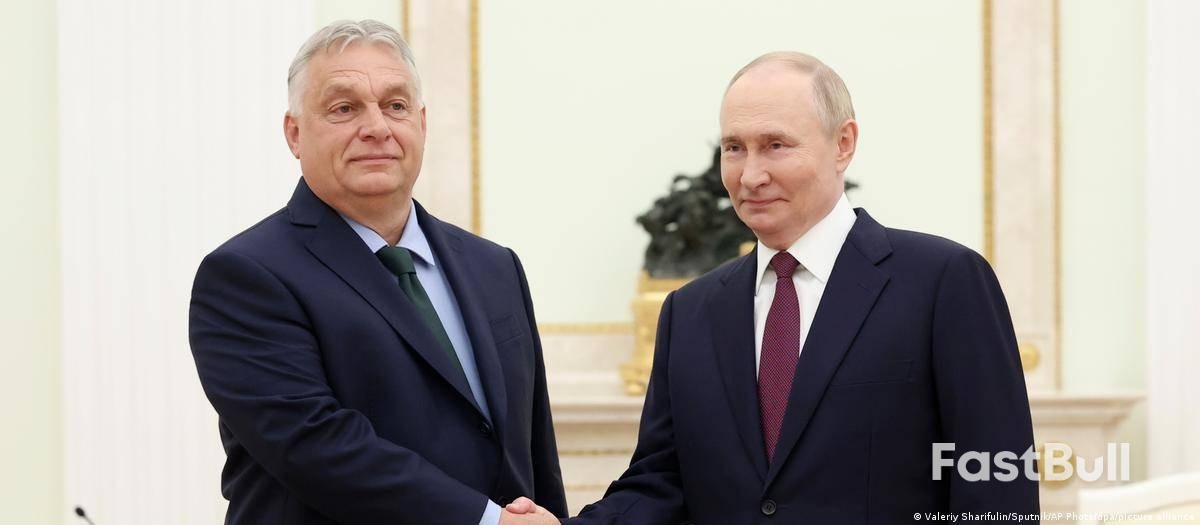
          Orban has kept friendly ties with Putin despite the ongoing Russian invasion of Ukraine [File photo: July 2024]

          Hungarian Prime Minister Viktor Orban said he will travel to Moscow to meet with Russian President Vladimir Putin.

          Orban, a right-wing populist and close ally of US President Donald Trump, has frequently blocked efforts to impose more sanctions on Russia, as the Russian military continues its yearslong invasion of Ukraine.

          Meanwhile, US Army Secretary Dan Driscoll is expected in Kyiv this week, as the Trump administration pushes for an end to the war in Ukraine.

          Here's a look at the latest in Russia's war on Ukraine for Thursday, November 28:

          Orban to meet Putin in Moscow

          Hungarian Prime Minister Viktor Orban is heading to Moscow for talks with Russian President Vladimir Putin on crude oil and gas supplies for Hungary. Orban said he also intended to address peace efforts in Ukraine.

          Orban remains Putin's closest ally in the 27-member European Union despite the Russian full-scale invasion of Ukraine nearly four years ago. Hungary is reliant on Russian energy. Despite EU efforts to cut dependence, nearly 19% of the bloc's gas imports came from Russia in 2025.

          "Energy security and affordable, low energy prices in the winter in Hungary," he wrote in a Facebook post. "That's why we went to Washington, and that's why I'm going to Moscow now."

          Asked if peace efforts in Ukraine would also come up, Orban said, "We can hardly avoid that."

          Orban has previously said he wants to revive plans for a"peace summit" in Budapest between US President Donald Trump and Putin on Ukraine, which was shelved this year as fighting continued.

          In contrast to most NATO and European Union leaders, Orban has kept up cordial relations with Russia while questioning the logic of Western military aid for Kyiv.

          Hungary has imported 8.5 million tons of crude oil and more than 7 billion cubic meters of natural gas from Russia this year, its Foreign Ministry said in a statement on Friday.

          Source: DW

          To stay updated on all economic events of today, please check out our Economic calendar
          Risk Warnings and Disclaimers
          You understand and acknowledge that there is a high degree of risk involved in trading. Following any strategies or investment methods may lead to potential losses. The content on the site is provided by our contributors and analysts for information purposes only. You are solely responsible for determining whether any trading assets, securities, strategy, or any other product is suitable for investing based on your own investment objectives and financial situation.
          Add to Favorites
          Share

          Euro Area And Scandies In Spotlight As Investors Assess Outlook

          Winkelmann

          Forex

          Economic

          In focus today

          In the euro area, the inflation flash estimates are released for Germany, France, Italy, and Spain which together will reveal almost entirely how inflation in the euro area fared ahead of the aggregate data next week. We expect headline inflation remained at 2.1% y/y in November and core inflation remained at 2.4% y/y as in October.

          In Sweden, the Q3 GDP statistics are announced. Preliminary estimates indicate growth of 1.1% q/q (2.4% y/y) and although the GDP indicator is highly unreliable and prone to revisions, broader activity data supports the notion of a tentative recovery. Private consumption increased in September and appeared to be the main driver of Q3 growth, which we expect to print at 0.9% and 1.7% y/y.

          In Norway, we expect the seasonally adjusted unemployment rate to be unchanged at 2.2% in November, but the number of unemployed to increase, signalling a gradually weaker labour market. We also keep an eye on new vacancies, as they can act as an indicator of labour demand. We expect retail sales grew 0.5% m/m in October after a couple of weak months. High real wage growth, lower mortgage rates and still low unemployment should support private consumption going forward, and we see some upside risk to our estimate.

          Economic and market news

          What happened overnight

          In Japan, Tokyo November CPI released at 2.8% y/y (cons: 2.7%) and CPI excl. fresh food and fuel remained at 2.8%. October retail sales surpassed expectations at 1.7% y/y (cons: 0.8%) and marked the strongest uptick in four months. The largest increase in sales was seen in machinery and equipment (8%), pharmaceuticals and cosmetics (5.1%) and automobiles (4.8%). Additionally, the unemployment rate held steady at 2.6% in October and it appears the economy is weathering the impact of higher US tariffs. Markets are now pricing in slightly more than a 50% chance of an interest rate hike from the Bank of Japan at the December meeting.

          What happened yesterday

          In the euro area, the ECB minutes from the October meeting did not reveal much new information and the wording was very balanced. The ECB GC members are clearly in no rush to change policy rates and continue to see "a high option value in waiting for additional data." Most members saw inflation risks as two-sided and balanced.

          On the data side, credit growth for October released above expectations with adjusted loans to non-financial corporations increasing by 2.9% y/y. Loan growth to households increased to 2.8% y/y from 2.6% in September. The readings were above expectations of a slowing momentum which we expected would result in a smaller reading.

          In Denmark, retail sales for October surprised to the upside, with a reading of 0.9% m/m and 4.9% y/y in October, marking the highest monthly gain since February 2024. The main driver can be found in other consumer goods, which increased by 8.6%, up from 7.6% in September, and food and other groceries which were up 0.9% vs -2.0% in September.

          In Sweden, the NIER survey showed overall sentiment improving to 101.7 in November from 100.9 in October. Consumer confidence disappointed and declined following six months of positive gains. The decline appears to be driven by a slightly more negative view of the domestic economy.

          The Swedish National Debt Office (NDO) presented an updated forecast and borrowing plan. The borrowing requirement for 2026 was revised up by SEK 89bn, bringing the total deficit- or net borrowing requirement to SEK 173bn. The NDO stated that the increase "is mainly due to expansionary fiscal policy".

          Equities: Thursday was a quiet day in markets, as US was closed for Thanksgiving. European equities edged slightly higher, with the Stoxx 600 up 0.1% and the MSCI Nordics up 0.4%. As Nordics have lagged in the recent rebound, it would make sense if Nordics outperformed on the coming trading days. Beneath the surface, the tone was risk-on, with global cyclicals and small caps outperforming. It is unclear if this continues today, as futures markets are closed this morning due to technical issues. However, Asian markets are little changed, which gives a hint of another slow trading day today. US markets will reopen today, but only for a half-day session.

          FI and FX: Small to no moves in the rates and equity space as US is closed for Thanksgiving. US10y flat at 4%, equity futures in green. Scandi FX traded modestly higher yesterday. EUR/SEK is just below 11.00 ahead of month-end, which we estimate could generate a small need to sell SEK for rebalancing purposes. Focus on today's Swedish GDP data, a well. EUR/NOK trades around 11.88 going into the Norwegian data releases this morning.

          Source: ACTIONFOREX

          To stay updated on all economic events of today, please check out our Economic calendar
          Risk Warnings and Disclaimers
          You understand and acknowledge that there is a high degree of risk involved in trading. Following any strategies or investment methods may lead to potential losses. The content on the site is provided by our contributors and analysts for information purposes only. You are solely responsible for determining whether any trading assets, securities, strategy, or any other product is suitable for investing based on your own investment objectives and financial situation.
          Add to Favorites
          Share

          Waiting For A Peace Deal Breakthrough

          ING

          Forex

          Political

          Economic

          Waiting For A Peace Deal Breakthrough_1

          USD: Staying on tight ranges

          Dollar crosses have traded in tight ranges as the Thanksgiving holiday dried up flows. Volatility shouldn't pick up materially today, even though the dollar remains vulnerable to a convergence lower towards short-term swap rates.

          Our short-term fair value model continues to display some short-term dollar overvaluation against most of the G10, and risks remain skewed towards a return to the 99.0 50-day moving average in DXY.

          Geopolitical news remains closely monitored, even though the impact on FX has been contained so far. President Putin said yesterday that the draft discussed in Geneva could form the basis of a future deal with Ukraine, and US peace envoy Steve Witkoff is confirmed to visit Moscow next week. We could see some build-up in expectations of a breakthrough in negotiations ahead of that Witkoff trip.

          While there is considerable caution in markets about the prospects of a peace deal, any material progress from here should weigh on the dollar and support high-beta European currencies.

          EUR: Inflation numbers shouldn't be a game changers

          France, Spain, Italy and Germany publish their flash CPI estimates for November today. We doubt the inflation picture is set to change dramatically in the near term, and our call on the ECB remains unchanged and in line with pricing: no changes for the whole of 2026.

          However, yesterday's ECB minutes confirmed that any shift would – if anything – be on the dovish side. Evidence of persistent inflation undershooting in the forecasting horizon could prompt a more vocal reaction by the ECB doves, and put another cut back on the table.

          Our call remains bullish on EUR/USD into year-end, but until some US data is published, or the Fed delivers a cut in December, it's mostly up to positive developments on the Ukraine peace deal that can drive the euro sustainably higher.

          CEE: Market watches Hungary's rating reviews after fiscal target revision

          In Hungary, PPI figures will be published, which will show month-on-month declines this year, dragging down the year-on-year figures. More interesting will be the rating review after the end of trading today. Moody's has a negative outlook on Hungary's rating (Baa2) from November 2024. Moody's expects a 4.6% GDP deficit for this year and 5.1% for next year. Therefore, the government's recent revision to 5% in both cases does not change the picture much, and a downgrade is less likely, but the market will certainly watch this move. More interesting may be Fitch's rating review next week on Friday, where the outlook is still "Stable" and the agency forecasts a 4.5% and 4.0% deficit.

          In the Czech Republic, detailed GDP figures for the third quarter will be published today. The earlier flash estimate, at 0.7% quarterly and 2.7% annually, surprised both the market and the CNB to the upside. The Statistical Office should confirm these figures and show household consumption and investment as the main drivers of growth. However, there is some risk of a downward revision in our opinion due to the weaker monthly figures.

          PLN: The market is waiting for a signal that is pricing in too many rate cuts

          November inflation should show a further decline in headline inflation from 2.8% to 2.5% in our forecast, one-tenth below market expectations. Core inflation should also fall slightly from 3.0% to 2.9% YoY. This should pave the way for another rate cut by the National Bank of Poland next week. However, we believe that the market in the current conditions may be more sensitive to potential surprises than usual. The last two weeks have seen the market move rates down, outperforming CEE peers, triggering some stop-losses due to paid positioning in the PLN market. The market has thus quickly moved to price in a terminal rate of 3.50%, which is in line with our forecast but above market consensus.

          If the inflation print surprises upwards, we could see new payers in rates as the view is that more rate cuts cannot be priced in and potentially higher inflation in the future. On the other hand, weaker inflation would simply confirm the current dovish trend. The market is therefore asymmetric, in our opinion, towards higher rates and potentially support for FX. Therefore, PLN has a good chance of further gains, especially if we see some progress in peace talks between Ukraine and Russia. The 4.230 levels are the bottom of the current range, but we have already seen testing lower levels in previous days and especially an upside surprise in inflation would be key to breaking lower.

          Source: ING

          To stay updated on all economic events of today, please check out our Economic calendar
          Risk Warnings and Disclaimers
          You understand and acknowledge that there is a high degree of risk involved in trading. Following any strategies or investment methods may lead to potential losses. The content on the site is provided by our contributors and analysts for information purposes only. You are solely responsible for determining whether any trading assets, securities, strategy, or any other product is suitable for investing based on your own investment objectives and financial situation.
          Add to Favorites
          Share

          Trump Intensifies Immigration Agenda With Call for “Reverse Migration” and Expanded Restrictions

          Gerik

          Economic

          A New Escalation in U.S. Immigration Policy

          President Donald Trump has amplified his hardline immigration stance through late‑night statements outlining an agenda that seeks to sharply restrict migration, revoke benefits for non‑citizens and reexamine immigration pathways established under prior administrations. His rhetoric marks a significant escalation in the administration’s ongoing effort to reshape the U.S. immigration system, reflecting a continued attempt to frame migration as a national security threat rather than an economic or humanitarian issue.
          In his Truth Social posts, Trump advocated “reverse migration,” a term he used to describe a reduction of both unauthorized and legally admitted individuals. The president claimed he would terminate “millions” of admissions made under the Biden administration, denaturalize migrants deemed harmful to “domestic tranquility,” and halt all federal benefits for non‑citizens. He also proposed a “permanent pause” on immigration from what he termed “Third World Countries,” though the term lacks a precise definition and carries historical and political stigma.
          These declarations create a causal link in Trump’s messaging between the presence of migrants and perceived threats to national stability, though no specific mechanisms or legal frameworks were detailed. The absence of procedural clarity suggests the proposals are more political signaling than imminent policy, especially given Congress’s long‑standing gridlock on immigration legislation and previous court rulings that limited Trump-era executive orders.

          A Violent Incident Accelerates Policy Messaging

          The statements came on the heels of an attack on two National Guard members in Washington by an Afghan national, an event that Trump used to reinforce his administration’s previous decisions to tighten immigration vetting. The president announced the death of 20‑year‑old Specialist Sarah Beckstrom and linked the incident to broader security concerns, seeking to establish a causal narrative between crime and immigration.
          In the immediate aftermath, the White House suspended reviews of Afghan immigration cases and ordered reexamination of individuals already residing in the U.S. This reflects a rapid policy reaction aligned with the administration’s pattern of using high‑profile incidents to justify enforcement measures.

          Policy Infrastructure Already in Motion

          Even before Trump’s latest declarations, the administration had begun implementing extensive checks on migrants. A memo reviewed earlier in the month revealed plans to reassess all refugees admitted under Biden and freeze their green card applications. Joseph Edlow, head of U.S. Citizenship and Immigration Services, confirmed a “full scale, rigorous reexamination” of green cards issued to individuals from “countries of concern.”
          Existing restrictions already prohibit immigration from 12 countries, including Afghanistan, Haiti, Somalia, and Sudan, with additional limits applied to seven more. These moves parallel Trump’s previous term, when travel bans targeted countries such as Iran, Libya, North Korea, Somalia, Syria, Venezuela, and Yemen. The continuity illustrates a consistent policy logic: using national security framing to justify categorical entry restrictions.

          Legal and Constitutional Challenges Ahead

          While Trump continues to push for aggressive enforcement, his administration remains constrained by judicial oversight. Upon returning to office, he signed an executive order halting all refugee admissions a directive that courts immediately challenged. Although an appeals court allowed a pause in new entries, it compelled the government to continue providing services to refugees already admitted.
          Efforts to revoke temporary protected status, impose a sharply increased $100,000 fee for H‑1B visas, and challenge the constitutional right to birthright citizenship likewise reveal a strategy that tests the boundaries of presidential authority. These initiatives demonstrate correlation rather than direct causation between policy ambition and actual legal outcomes, as many measures remain entangled in ongoing litigation.

          Afghan Migration and the Legacy of U.S. Involvement

          A major point of contention involves the more than 190,000 Afghans admitted to the U.S. following the Taliban’s 2021 takeover. Many assisted American forces during the war, and their presence highlights the ethical obligations embedded in U.S. foreign policy. Trump’s renewed scrutiny of their cases illustrates the tension between national security claims and historical alliances, raising questions about how commitments to wartime partners intersect with domestic political priorities.
          Trump’s push for “reverse migration” underscores an increasingly maximalist immigration agenda intended to dramatically reshape demographic and legal structures in the United States. While the rhetoric captures heightened political emotion, implementation remains uncertain due to constitutional constraints, legislative deadlock, and the legal protections afforded to many migrants. The coming months will clarify whether these statements foreshadow enforceable policy or function primarily as strategic communication aimed at consolidating political support in a deeply polarized landscape.

          Source: AP

          To stay updated on all economic events of today, please check out our Economic calendar
          Risk Warnings and Disclaimers
          You understand and acknowledge that there is a high degree of risk involved in trading. Following any strategies or investment methods may lead to potential losses. The content on the site is provided by our contributors and analysts for information purposes only. You are solely responsible for determining whether any trading assets, securities, strategy, or any other product is suitable for investing based on your own investment objectives and financial situation.
          Add to Favorites
          Share

          Asian Markets Trade Mixed in Quiet Session as Tech Weakens and Fed Expectations Loom

          Gerik

          Economic

          Stocks

          Muted Activity Amid U.S. Holiday Closure

          With Wall Street closed for Thanksgiving, Asian trading was subdued on Friday, characterized by light volume and localized economic signals. While some benchmarks edged higher, the region offered no clear direction, reflecting investor uncertainty as global markets await signals from the Federal Reserve’s December meeting.
          Despite recent optimism fueled by artificial intelligence developments and softening inflation data in the U.S., traders appear to be reassessing the durability of the rally. The pause follows a four-day winning streak for major U.S. indexes, including a 0.8% gain for the Nasdaq and 0.7% rises in both the Dow and S&P 500 on Wednesday.

          Tokyo Inflation Holds, Reinforcing Rate Shift Expectations

          Japan’s Nikkei 225 finished flat at 50,172.60, with notable weakness in AI-related shares such as Kioxia Holdings, Fujikura, and Lasertec. These losses highlight a reversal in speculative interest around AI, which had previously boosted valuations. Meanwhile, Tokyo’s core inflation for November remained at 2.8% year-on-year above the Bank of Japan’s 2% target for a second straight month. This persistent inflation reinforces a potential policy shift, though a rate hike at the December BOJ meeting is still viewed as unlikely. The inflation trend, while stable, suggests a long-term causal relationship with rising rate expectations, which may gradually pressure equity valuations.
          South Korea’s Kospi dropped 1.4% to 3,930.95, dragged lower by a 26.5% month-on-month collapse in semiconductor production in October. The fall in chip output contributed to a broader 4% decline in industrial production, more severe than September’s 1.1% drop. Major tech names like LG Energy Solutions, SK Hynix, and Samsung Electronics led the slide. The data reinforces a direct causative link between weakening production activity and market underperformance in tech-heavy indices.

          China and Hong Kong Diverge Slightly

          In Greater China, Hong Kong’s Hang Seng Index slipped 0.2% to 25,896.33, weighed by property and tech names. Meanwhile, the Shanghai Composite inched up 0.2% to 3,883.46, supported by marginal buying in domestic-focused sectors. The divergence between the two markets reflects differing investor perceptions: while Hong Kong’s globally exposed firms face foreign capital outflows and regulatory risk, Shanghai’s relative insulation offers modest resilience.
          Australia’s ASX 200 fell 0.1% to 8,608.90, as resource-related sectors failed to offset broader weakness. In contrast, Taiwan’s Taiex rose 0.9%, benefiting from renewed interest in electronics exports. India’s Sensex added 0.1%, supported by stable domestic conditions ahead of upcoming GDP data releases.

          Currency and Commodity Moves Provide Little Direction

          In currency markets, the U.S. dollar rose slightly against the Japanese yen to 156.34, while the euro edged lower to $1.1584. Oil prices nudged higher, with Brent crude gaining 21 cents to $63.08 per barrel and U.S. crude adding 43 cents to $59.08. The modest uptick in crude reflects both technical correction and tentative geopolitical calm as oil markets await the weekend’s OPEC+ meeting.
          Friday’s session reflects a moment of hesitation in global equity markets. With no definitive macro signal and Wall Street on pause, Asian markets responded primarily to local data and sector-specific weakness, especially in tech. Inflation readings in Japan and industrial output in Korea reveal potential structural strains, while broader expectations of a dovish Fed continue to support longer-term risk appetite. As trading volume normalizes next week, the sustainability of this optimism will likely face fresh tests from central bank policy signals, earnings forecasts, and geopolitical developments.

          Source: AP

          To stay updated on all economic events of today, please check out our Economic calendar
          Risk Warnings and Disclaimers
          You understand and acknowledge that there is a high degree of risk involved in trading. Following any strategies or investment methods may lead to potential losses. The content on the site is provided by our contributors and analysts for information purposes only. You are solely responsible for determining whether any trading assets, securities, strategy, or any other product is suitable for investing based on your own investment objectives and financial situation.
          Add to Favorites
          Share

          Oil Heads for Longest Monthly Losing Streak Since 2023 Amid Market Surplus, Technical Glitch, and Geopolitical Shifts

          Gerik

          Economic

          Commodity

          Oil Suffers Longest Decline Since 2023 as Market Sentiment Weakens

          Crude markets are bracing for their worst monthly performance in over two years. Brent crude is hovering just above $63 a barrel, while West Texas Intermediate (WTI) remains near $59, both benchmarks reflecting a fourth consecutive monthly drop in November. The last time oil suffered such a prolonged downturn was in the first half of 2023, indicating a significant divergence from the typical seasonal strength expected in the final quarter of the year.
          The primary driver behind this sustained weakness is the growing imbalance between supply and demand. Analysts at JPMorgan estimate a surplus of 2.8 million barrels per day in 2026 and 2.7 million in 2027, fueled by both OPEC+ members restoring capacity and increased output from non-OPEC nations. This forecasted oversupply represents a clear causal factor in declining prices, as excess inventory weighs heavily on near-term market expectations.

          OPEC+ Meeting Looms with Limited Surprise Potential

          As OPEC+ prepares for a virtual meeting on Sunday, market participants are expecting the alliance to maintain its decision to pause output increases into early 2026. With this consensus already priced in, attention may shift toward long-term discussions on capacity reviews among member states.
          Unless the meeting delivers unexpected production cuts, its impact on prices could be muted. The correlation between OPEC+ policy stability and sustained price stagnation is evident, as repeated announcements without aggressive action fail to counteract the bearish supply outlook.

          Trading Disrupted as CME Glitch Freezes Futures Activity

          In a rare technical disruption, trading of WTI crude on the New York Mercantile Exchange (Nymex) was halted Friday morning in Asia due to a system glitch reported by the CME Group. While the freeze had no lasting price impact, it briefly obscured real-time market response and highlighted the fragility of digital infrastructure in highly reactive commodity markets.
          The pause in trading reflects a correlation not a causal effect on prices, but nonetheless illustrates the sensitivity of the oil market to information flow disruptions, particularly during pivotal geopolitical or policy moments.

          Geopolitical Winds Shift: Peace Talk Signals from Moscow

          A potentially game-changing geopolitical variable re-entered the oil market equation this week. Russian President Vladimir Putin signaled openness to U.S.-led peace negotiations concerning Ukraine, noting that former President Trump’s proposals could serve as a foundation. U.S. envoy Steve Witkoff is scheduled to visit Moscow, raising the possibility of early-stage diplomatic momentum.
          If realized, a de-escalation in the Ukraine conflict could trigger a relaxation of Western sanctions on Russian oil flows. This outcome would introduce significant downward pressure on global prices by enabling restricted volumes to re-enter markets, particularly in Asia. However, Mukesh Sahdev of XAnalysts warns that Russia may stockpile crude initially to manage price impact, creating a brief bullish blip before longer-term bearish effects materialize.

          Russian Oil Storage Surges Amid Sanctions Stress

          In a sign of mounting logistical strain under sanctions, Russia’s oil field storage levels have risen above 16 million barrels a level observed only twice since the invasion of Ukraine began in 2022. This increase points to production outpacing exports, which may stem from both logistical bottlenecks and reduced access to shipping and insurance services.
          The buildup is a direct consequence of sanctions, representing a cause-effect dynamic that could distort supply flows and complicate price forecasts in the months ahead.
          Oil’s weak performance in November is the result of a confluence of structural oversupply, muted OPEC+ policy intervention, and tentative diplomatic developments. While the technical glitch at CME underscores the market’s volatility, the broader trajectory is shaped by fundamentals and geopolitics. Whether December brings relief or further declines will depend largely on whether OPEC+ shifts strategy, sanctions on Russian oil ease, and demand surprises emerge. For now, the market remains in a fragile equilibrium, with bearish pressure holding firm.

          Source: Bloomberg

          To stay updated on all economic events of today, please check out our Economic calendar
          Risk Warnings and Disclaimers
          You understand and acknowledge that there is a high degree of risk involved in trading. Following any strategies or investment methods may lead to potential losses. The content on the site is provided by our contributors and analysts for information purposes only. You are solely responsible for determining whether any trading assets, securities, strategy, or any other product is suitable for investing based on your own investment objectives and financial situation.
          Add to Favorites
          Share

          China Seeks French Support Amid Rising Diplomatic Tensions with Japan Over Taiwan

          Gerik

          Economic

          Diplomatic Realignment in the Taiwan Strait Dispute
          China’s latest diplomatic initiative underscores a deepening rift with Japan over Taiwan and signals Beijing’s attempt to recalibrate international support. On Thursday, China’s top diplomat Wang Yi held a call with Emmanuel Bonne, diplomatic adviser to French President Emmanuel Macron, urging mutual backing on “core interests,” a veiled reference to Taiwan and sovereignty concerns. The appeal comes just days before Macron’s scheduled state visit to China and reflects growing urgency from Beijing to secure European neutrality or even tacit support as geopolitical competition in East Asia intensifies.
          The current dispute was sparked by Japanese Prime Minister Sanae Takaichi’s November 7 remarks that explicitly connected Japan’s national security to a potential Taiwan Strait crisis. This marked a historical first from a sitting Japanese leader, intensifying Beijing’s perception of strategic encirclement. In Beijing’s view, this linkage elevates the Taiwan issue from rhetorical ambiguity to an actionable military contingency involving a key regional rival.
          Beijing has characterized the comments as a direct affront to Chinese sovereignty. The Chinese Communist Party’s official newspaper, People’s Daily, condemned the remarks as a “serious provocation,” indicating a cause-effect relationship between Takaichi’s language and China’s escalated diplomatic posture. This escalation includes a formal letter to UN Secretary-General António Guterres, in which China accused Takaichi of violating international law.

          France’s Role: A Strategic Buffer or a Symbolic Ally?

          China’s outreach to France carries both symbolic and strategic weight. Macron’s upcoming visit is expected to focus on trade and commercial cooperation, but Beijing is clearly aiming to extend the agenda into the geopolitical arena. Wang Yi’s request for France to "firmly support each other on core interests" is a direct test of whether France’s diplomatic engagement with China can remain purely economic or will inevitably drift toward strategic alignment.
          France has not publicly responded to the request. However, the context is complicated by Macron’s own recent conversation with Takaichi on November 23, during which both sides reaffirmed their bilateral partnership and advanced talks on a Reciprocal Access Agreement for joint military training. This reflects a growing trend of strategic alignment between Japan and fellow G7 democracies, driven by mutual concern over any unilateral attempts especially by China to alter the status quo in the Taiwan Strait.

          China’s Escalating Strategy: Diplomatic, Economic, and Rhetorical Pressure

          China’s response to Takaichi’s statement has not been limited to diplomatic engagement. It includes economic reprisals and a coordinated media narrative aimed at isolating Japan’s position internationally. This multi-pronged strategy signals that Beijing views Tokyo’s remarks not as isolated rhetoric but as part of a broader shift in Japan’s security doctrine one that could justify future regional defense cooperation or even intervention.
          Although causality between Japan’s public remarks and potential troop deployment has not been established, the Chinese government’s framing suggests that it views even hypothetical linkages as threats requiring preemptive diplomatic countermeasures.
          Despite calls from Beijing to retract her comments, Takaichi has refused. She clarified this week that her remarks were not intended to signal any specific Taiwan policy but were in line with Japan’s broader contingency planning, which evaluates threats based on real-time intelligence and context. This clarification retains an element of strategic ambiguity a traditional pillar of Japan’s security stance while asserting a right to respond to regional instability.
          China’s move to involve France in its dispute with Japan reflects the increasingly global dimension of the Taiwan issue. It is no longer confined to cross-strait dynamics but intersects with broader alliances, multilateral institutions, and global norms. Whether France responds to Beijing’s overture may set a precedent for how European powers engage with the U.S.-led alliance network in Asia. The coming weeks, particularly around Macron’s state visit, will reveal whether Europe leans toward economic pragmatism with China or strategic solidarity with democratic allies in Asia.

          Source: Bloomberg

          To stay updated on all economic events of today, please check out our Economic calendar
          Risk Warnings and Disclaimers
          You understand and acknowledge that there is a high degree of risk involved in trading. Following any strategies or investment methods may lead to potential losses. The content on the site is provided by our contributors and analysts for information purposes only. You are solely responsible for determining whether any trading assets, securities, strategy, or any other product is suitable for investing based on your own investment objectives and financial situation.
          Add to Favorites
          Share
          FastBull
          Copyright © 2025 FastBull Ltd

          728 RM B 7/F GEE LOK IND BLDG NO 34 HUNG TO RD KWUN TONG KLN HONG KONG

          TelegramInstagramTwitterfacebooklinkedin
          App Store Google Play Google Play
          Products
          Charts

          Chats

          Q&A with Experts
          Screeners
          Economic Calendar
          Data
          Tools
          Membership
          Features
          Function
          Markets
          Copy Trading
          Latest Signals
          Contests
          News
          Analysis
          24/7
          Columns
          Education
          Company
          Careers
          About Us
          Contact Us
          Advertising
          Help Center
          Feedback
          User Agreement
          Privacy Policy
          Business

          White Label

          Data API

          Web Plug-ins

          Poster Maker

          Affiliate Program

          Risk Disclosure

          The risk of loss in trading financial instruments such as stocks, FX, commodities, futures, bonds, ETFs and crypto can be substantial. You may sustain a total loss of the funds that you deposit with your broker. Therefore, you should carefully consider whether such trading is suitable for you in light of your circumstances and financial resources.

          No decision to invest should be made without thoroughly conducting due diligence by yourself or consulting with your financial advisors. Our web content might not suit you since we don't know your financial conditions and investment needs. Our financial information might have latency or contain inaccuracy, so you should be fully responsible for any of your trading and investment decisions. The company will not be responsible for your capital loss.

          Without getting permission from the website, you are not allowed to copy the website's graphics, texts, or trademarks. Intellectual property rights in the content or data incorporated into this website belong to its providers and exchange merchants.

          Not Logged In

          Log in to access more features

          FastBull Membership

          Not yet

          Purchase

          Become a signal provider
          Help Center
          Customer Service
          Dark Mode
          Price Up/Down Colors

          Log In

          Sign Up

          Position
          Layout
          Fullscreen
          Default to Chart
          The chart page opens by default when you visit fastbull.com
