Markets
News
Analysis
User
24/7
Economic Calendar
Education
Data
- Names
- Latest
- Prev



Signal Accounts for Members
All Signal Accounts
All Contests


US Treasury Says To Borrow $574 Billion In Q1, Sees End Cash Balance Of $850 Billion (Removes Extraneous Word "It")
US Treasury Says It Expects To Borrow $109 Billion In Q2, Sees End Cash Balance Of $900 Billion
[The Carlyle Group Joins Europe's Top Ten Oil Refiners] As Major Oil Companies Streamline Their Portfolios, The Carlyle Group Has Joined The Ranks Of Europe's Top Ten Fuel Manufacturers. The Private Equity Giant Holds A Two-thirds Stake In Varo Energy, Which Completed Its Acquisition Of The Lysekil And Gothenburg Refineries In Sweden In January. According To Data Compiled By Bloomberg, This Move, Combined With Its Existing Holdings, Elevates Carlyle To Ninth Place Among European Fuel Manufacturers
WTI Crude Oil Futures For March Delivery Closed At $62.14 Per Barrel. Nymex Natural Gas Futures For March Delivery Closed At $3.2370 Per Million British Thermal Units (MMBtu). Nymex Gasoline Futures For March Delivery Closed At $1.8514 Per Gallon, And Nymex Heating Oil Futures For March Delivery Closed At $2.3598 Per Gallon
Ukraine Designates Iran's Islamic Revolutionary Guard Corps As A "terrorist Organization" On February 2nd. Ukrainian President Volodymyr Zelenskyy Announced That Ukraine Has Designated Iran's Islamic Revolutionary Guard Corps As A "terrorist Organization." Iran Has Not Yet Responded
Intercontinental Exchange (ICE), The Owner Of Nasdaq (NYSE), Has Received Approval From The U.S. Securities And Exchange Commission (SEC) To Provide U.S. Treasury Clearing Services
Swiss National Bank Chairman: Expects Swiss Inflation To Rise In Coming Months, Sees Monetary Conditions In Switzerland As Appropriate
Rubio: US Looks Forward To Working Closely With Costa Rica's President-Elect Laura Fernández Delgado's Administration After Electoral Victory
German Chancellor Merz: Transatlantic Relationship Has Changed And No One Regrets It More Than Me
New York Fed Accepts $10.415 Billion Of $10.415 Billion Submitted To Reverse Repo Facility On Feb 02

China, Mainland NBS Non-manufacturing PMI (Jan)A:--
F: --
P: --
South Korea Trade Balance Prelim (Jan)A:--
F: --
Japan Manufacturing PMI Final (Jan)A:--
F: --
P: --
South Korea IHS Markit Manufacturing PMI (SA) (Jan)A:--
F: --
P: --
Indonesia IHS Markit Manufacturing PMI (Jan)A:--
F: --
P: --
China, Mainland Caixin Manufacturing PMI (SA) (Jan)A:--
F: --
P: --
Indonesia Trade Balance (Dec)A:--
F: --
P: --
Indonesia Inflation Rate YoY (Jan)A:--
F: --
P: --
Indonesia Core Inflation YoY (Jan)A:--
F: --
P: --
India HSBC Manufacturing PMI Final (Jan)A:--
F: --
P: --
Australia Commodity Price YoY (Jan)A:--
F: --
P: --
Russia IHS Markit Manufacturing PMI (Jan)A:--
F: --
P: --
Turkey Manufacturing PMI (Jan)A:--
F: --
P: --
U.K. Nationwide House Price Index MoM (Jan)A:--
F: --
P: --
U.K. Nationwide House Price Index YoY (Jan)A:--
F: --
P: --
Germany Actual Retail Sales MoM (Dec)A:--
F: --
Italy Manufacturing PMI (SA) (Jan)A:--
F: --
P: --
South Africa Manufacturing PMI (Jan)A:--
F: --
P: --
Euro Zone Manufacturing PMI Final (Jan)A:--
F: --
P: --
U.K. Manufacturing PMI Final (Jan)A:--
F: --
P: --
Turkey Trade Balance (Jan)A:--
F: --
P: --
Brazil IHS Markit Manufacturing PMI (Jan)A:--
F: --
P: --
Canada National Economic Confidence IndexA:--
F: --
P: --
Canada Manufacturing PMI (SA) (Jan)A:--
F: --
P: --
U.S. IHS Markit Manufacturing PMI Final (Jan)A:--
F: --
P: --
U.S. ISM Output Index (Jan)A:--
F: --
P: --
U.S. ISM Inventories Index (Jan)A:--
F: --
P: --
U.S. ISM Manufacturing Employment Index (Jan)A:--
F: --
P: --
U.S. ISM Manufacturing New Orders Index (Jan)A:--
F: --
P: --
U.S. ISM Manufacturing PMI (Jan)A:--
F: --
P: --
South Korea CPI YoY (Jan)--
F: --
P: --
Japan Monetary Base YoY (SA) (Jan)--
F: --
P: --
Australia Building Approval Total YoY (Dec)--
F: --
P: --
Australia Building Permits MoM (SA) (Dec)--
F: --
P: --
Australia Building Permits YoY (SA) (Dec)--
F: --
P: --
Australia Private Building Permits MoM (SA) (Dec)--
F: --
P: --
Australia Overnight (Borrowing) Key Rate--
F: --
P: --
RBA Rate Statement
Japan 10-Year Note Auction Yield--
F: --
P: --
Saudi Arabia IHS Markit Composite PMI (Jan)--
F: --
P: --
RBA Press Conference
Turkey PPI YoY (Jan)--
F: --
P: --
Turkey CPI YoY (Jan)--
F: --
P: --
Turkey CPI YoY (Excl. Energy, Food, Beverage, Tobacco & Gold) (Jan)--
F: --
P: --
U.S. Weekly Redbook Index YoY--
F: --
P: --
U.S. JOLTS Job Openings (SA) (Dec)--
F: --
P: --
Mexico Manufacturing PMI (Jan)--
F: --
P: --
U.S. API Weekly Refined Oil Stocks--
F: --
P: --
U.S. API Weekly Gasoline Stocks--
F: --
P: --
U.S. API Weekly Cushing Crude Oil Stocks--
F: --
P: --
U.S. API Weekly Crude Oil Stocks--
F: --
P: --
Japan IHS Markit Services PMI (Jan)--
F: --
P: --
Japan IHS Markit Composite PMI (Jan)--
F: --
P: --
China, Mainland Caixin Services PMI (Jan)--
F: --
P: --
China, Mainland Caixin Composite PMI (Jan)--
F: --
P: --
India HSBC Services PMI Final (Jan)--
F: --
P: --
India IHS Markit Composite PMI (Jan)--
F: --
P: --
Russia IHS Markit Services PMI (Jan)--
F: --
P: --
South Africa IHS Markit Composite PMI (SA) (Jan)--
F: --
P: --
Italy Services PMI (SA) (Jan)--
F: --
P: --
Italy Composite PMI (Jan)--
F: --
P: --


No matching data
Latest Views
Latest Views
Trending Topics
Top Columnists
Latest Update
White Label
Data API
Web Plug-ins
Affiliate Program
View All

No data
Russia largely halted energy strikes on Ukraine as peace talks loom, yet other attacks and a disputed truce persist.
Russia has largely halted its attacks on Ukraine's energy infrastructure, President Volodymyr Zelenskyy confirmed on Monday, providing a crucial reprieve as Kyiv prepares for trilateral peace talks with Russian and U.S. officials.
While energy facilities in frontline areas continue to take fire, Zelenskyy noted a 24-hour pause in targeted missile and drone strikes on the national grid. This lull comes as Ukraine struggles to repair its power system amid a harsh winter and Russia appears to be shifting its military focus to transport logistics.
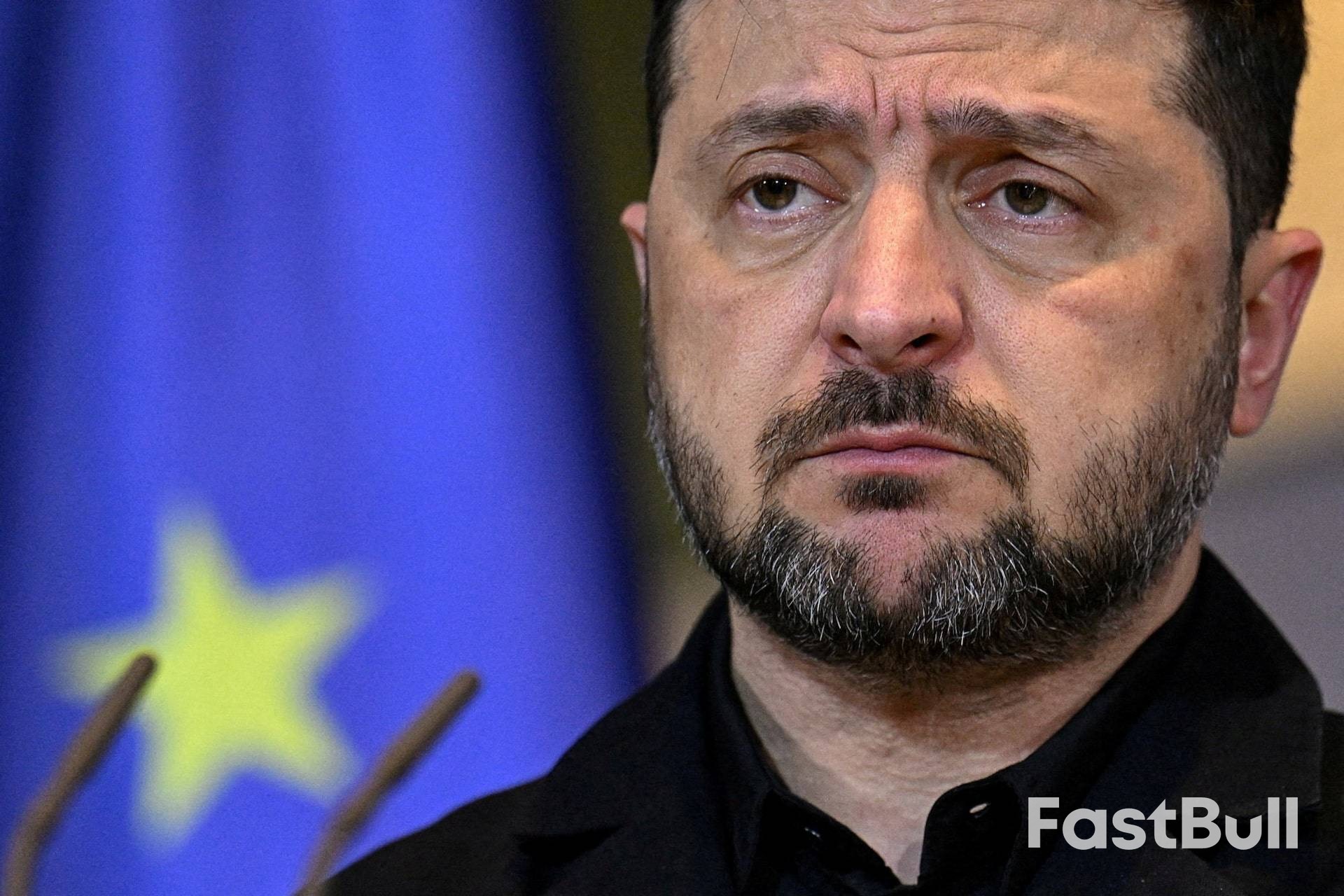
"The de-escalation measures... are helping to build public trust in the negotiation process and its possible outcome," Zelenskyy said after meeting his negotiating team. "The war needs to be ended."
Looking ahead to peace talks scheduled this week in Abu Dhabi, he added, "Ukraine is ready for real steps. We believe it is realistic to achieve a dignified and lasting peace."
While both Russia and Ukraine acknowledged a halt to strikes on each other's energy infrastructure last week, they disagree on the ceasefire's duration.
The Kremlin stated that U.S. President Donald Trump personally asked Russian President Vladimir Putin to avoid striking Kyiv until February 1. However, Zelenskyy maintained the truce was intended to last for one week, beginning on January 30.
For Ukraine, the pause is critical. The country is scrambling to restore its battered energy system and ensure stable electricity and heating following several major Russian attacks this month. Repair efforts have been severely hampered by freezing temperatures.
"Today we are coming to the critical point. We need some time to recover what is destroyed for the last three months," explained Maxim Timchenko, CEO of private energy company DTEK. He stressed that an "energy ceasefire is extremely important for us to recover partly and avoid any tragic consequences because of no power supply."
Despite the lull in energy strikes, other attacks persist. DTEK reported on Monday that one of its coal mining operations in the Dnipropetrovsk region was attacked for the second time in 24 hours. A previous strike on Sunday killed 12 miners at a different coal mine in the same region.
President Zelenskyy also noted that Russian forces are now concentrating on transport logistics, particularly railway infrastructure.
The human cost remains high in frontline regions. Officials in the Donetsk region reported that a Russian strike killed a father and son, while wounding two other children and their mother.
A statement posted on OPEC's website on February 1 revealed that, in a meeting held on Sunday, Saudi Arabia, Russia, Iraq, UAE, Kuwait, Kazakhstan, Algeria, and Oman "reaffirmed their decision on 2 November 2025 to pause production increments in March 2026 due to seasonality".
According to a table accompanying the statement, "required production" in March this year is 10.103 million barrels per day for Saudi Arabia, 9.574 million barrels per day for Russia, 4.273 million barrels per day for Iraq, 3.411 million barrels per day for the UAE, 2.580 million barrels per day for Kuwait, 1.569 million barrels per day for Kazakhstan, 971,000 barrels per day for Algeria, and 811,000 barrels per day for Oman.
The statement highlighted that the eight OPEC+ countries, "which previously announced additional voluntary adjustments in April and November 2023", met virtually on February 1 "to review global market conditions and outlook". It said the eight participating countries "reiterated that the 1.65 million barrels per day may be returned in part or in full subject to evolving market conditions and in a gradual manner".
"The countries will continue to closely monitor and assess market conditions, and in their continuous efforts to support market stability, they reaffirmed the importance of adopting a cautious approach and retaining full flexibility to continue pausing or reverse the additional voluntary production adjustments, including the previously implemented voluntary adjustments of the 2.2 million barrels per day announced in November 2023," the statement said.
"The eight countries reiterated their collective commitment to achieve full conformity with the Declaration of Cooperation, including the additional voluntary production adjustments that will be monitored by the Joint Ministerial Monitoring Committee," it added.
"They also confirmed their intention to fully compensate for any overproduced volume since January 2024," it continued.
The statement went on to note that the eight OPEC+ countries will hold monthly meetings "to review market conditions, conformity, and compensation", adding that the eight countries will meet on March 1.
A separate statement posted on OPEC's site on Sunday announced that the 64th Meeting of the Joint Ministerial Monitoring Committee (JMMC) took place via videoconference that day, adding that the JMMC reviewed the crude oil production data for the months of November and December 2025 "and noted the overall conformity for OPEC and non-OPEC countries participating in the Declaration of Cooperation".
"The committee reiterated the critical importance of achieving full conformity and compensation, and reviewed the updated compensation schedules," the statement said.
"The committee also reaffirmed that it will continue to monitor adherence to the production adjustments decided upon at the 38th OPEC and non-OPEC Ministerial Meeting (ONOMM) held on 5 December 2024, and the additional voluntary production adjustments announced by some participating OPEC and non-OPEC countries as agreed upon in the 52nd JMMC held on 1 February 2024," it added.
"The JMMC retains the authority to convene additional meetings or to request an OPEC and non-OPEC Ministerial Meeting, as established during the 38th ONOMM held on 5 December 2024," it continued.
The next meeting of the JMMC is scheduled for April 5, according to the statement.
In another statement posted on OPEC's site on February 2, the OPEC Secretariat announced that it had received updated compensation plans from Iraq, the United Arab Emirates (UAE), Kazakhstan, and Oman.
A table accompanying this statement showed that these compensation plans amount to a total of 659,000 barrels per day in January 2026, 789,000 barrels per day in February, 665,000 barrels per day in March, 706,000 barrels per day in April, 707,000 barrels per day in May, and 807,000 barrels per day in June.
"As agreed during the virtual meeting held by the eight countries with additional voluntary adjustments, including Saudi Arabia, Russia, Iraq, the United Arab Emirates, Kuwait, Kazakhstan, Algeria, and Oman on 4 January 2026, the OPEC Secretariat received updated compensation plans," the OPEC Secretariat said in the statement.
The European Union faces a major struggle to reduce its dependence on China and other nations for the critical minerals and rare earths essential for modern technology, from smartphones and wind turbines to military hardware.
A stark report from the European Court of Auditors (ECA) concludes that the bloc's 2030 self-sufficiency targets are "out of reach." The auditors point to a severe lack of progress in developing domestic production, refining capacity, and recycling programs.
"It is therefore vital for the EU to up its game and reduce its vulnerability in this area," said Keit Pentus-Rosimannus, the ECA member who led the audit.
The report highlights a wide gap between the EU's goals—such as generating 42.5% of its energy from renewables by 2030—and the reality of its insecure supply chains.
The ECA's findings on the EU's internal capacity are particularly damning. The report states that mining and exploration within the bloc are "underdeveloped."
Even when new mineral deposits are discovered, the process is painfully slow. According to the audit, "it can take 20 years for an EU mining project to become operational." This timeline makes any significant contribution by the 2030 deadline difficult to imagine.

As the EU's internal efforts lag, Western nations are coordinating to diversify their mineral sources and de-risk their supply chains from China.
US Secretary of State Marco Rubio convened a summit of approximately 20 countries in Washington to address the sourcing of lithium, nickel, cobalt, copper, and rare earth elements—all vital for solar panels, wind turbines, and electric car batteries. The summit is viewed as an effort to mend transatlantic relations after friction with Donald Trump.
Separately, UK Prime Minister Keir Starmer and his Japanese counterpart, Sanae Takaichi, agreed during talks in Tokyo to accelerate cooperation on critical minerals.
An analysis of the EU's supply chains reveals a heavy reliance on a few key countries, particularly China and Russia. Russia, for example, supplies 29% of the nickel used in the EU's automotive and aerospace industries.
Reliance on China
The EU is heavily dependent on China for at least seven of the 26 critical minerals studied. Key imports include:
• Magnesium: 97% (used in hydrogen production)
• Gallium: 71% (used in smartphones and satellite communications)
• Tungsten: 31% (used in drilling and mining)
China also dominates the market for rare earths, controlling between 69% and 74% of six crucial elements. This includes neodymium and praseodymium, which are essential for the permanent magnets found in everything from car locking systems to wind turbines. In 2024 alone, 17,000 of the 20,000 tonnes of permanent magnets used by EU industry came from China.
Other Key Suppliers
The EU's dependency extends beyond China. Chile is a major source of lithium for electric car batteries, while Turkey supplies 99% of the bloc's boron, a material used in solar panels.
The ECA warns that the EU may be "trapped in a vicious circle." Without a secure supply of these materials, its strategic goals are at risk.
"Without critical raw materials, there will be no energy transition, no competitiveness, and no strategic autonomy," said Pentus-Rosimannus. "Unfortunately, we are now dangerously dependent on a handful of countries outside the EU for the supply of these materials."
This sentiment was echoed by EU industry commissioner Stéphane Séjourné, who stated that Europe was "doomed to be just a playground for its competitors" if it fails to develop an "ambitious, effective and pragmatic industrial policy."
The auditors concluded that the EU's "efforts to diversify imports have yet to produce tangible results." In fact, partnerships established with seven countries to boost supplies actually saw deliveries fall between 2020 and 2024.
The statistics paint a stark picture: 10 of the 26 main critical minerals are entirely imported, none of the 17 rare earth metals are mined within the EU, and only 16 critical raw materials are currently recycled in the bloc.
Greenland’s government has accused Washington of continuing to pursue control over the strategic Arctic island, asserting that the U.S. objective remains unchanged even after President Donald Trump ruled out military action.

In a speech to the island's parliament in Nuuk, Prime Minister Jens-Frederik Nielsen delivered a stark warning about Washington's intentions. "The view upon Greenland and the population has not changed: Greenland is to be tied to the U.S. and governed from there," Nielsen stated, adding that the U.S. continues to seek "paths to ownership and control over Greenland."
Earlier this year, President Trump intensified calls for the U.S. to take control of Greenland, citing national security concerns related to Russia and China. The move drew criticism from some European NATO allies, who defended Denmark's sovereignty over the territory and warned that Trump's pressure could fracture the alliance.
While the U.S. president later stepped back from any threats of force, he claimed to have secured "total U.S. access" to Greenland through a NATO deal, though the specifics of this arrangement have not been clarified.
The sustained pressure from the U.S. has taken a toll on the island's population. The Greenlandic government recently launched a survey to assess the mental health of its citizens, citing an environment of "extraordinary pressure."
"Some of our compatriots have severe sleep problems, children feel the worry and anxiety of adults, and we all live with constant uncertainty about what may happen tomorrow," Nielsen said. "We want to say it very clearly: This is completely unacceptable."
In response to the escalating situation, diplomatic talks involving the United States, Denmark, and Greenland commenced last week. According to Denmark's foreign ministry, senior officials met to "discuss how we can address American concerns about security in the Arctic while respecting the Kingdom's red lines."
Throughout the crisis, Nielsen has praised Denmark as a close and reliable partner. He has previously said that if Greenlanders were forced to choose between the U.S. and Denmark, they would unequivocally choose Denmark. His latest speech made no reference to independence for Greenland.
The debate over ownership directly conflicts with the cultural values of Greenland's native Inuit population. Under Greenlandic law, which reflects the Inuit concept of collective land stewardship, individuals can own houses but not the land on which they are built. This foundational principle stands in sharp contrast to the U.S. approach to land ownership, adding another layer of complexity to the diplomatic standoff.

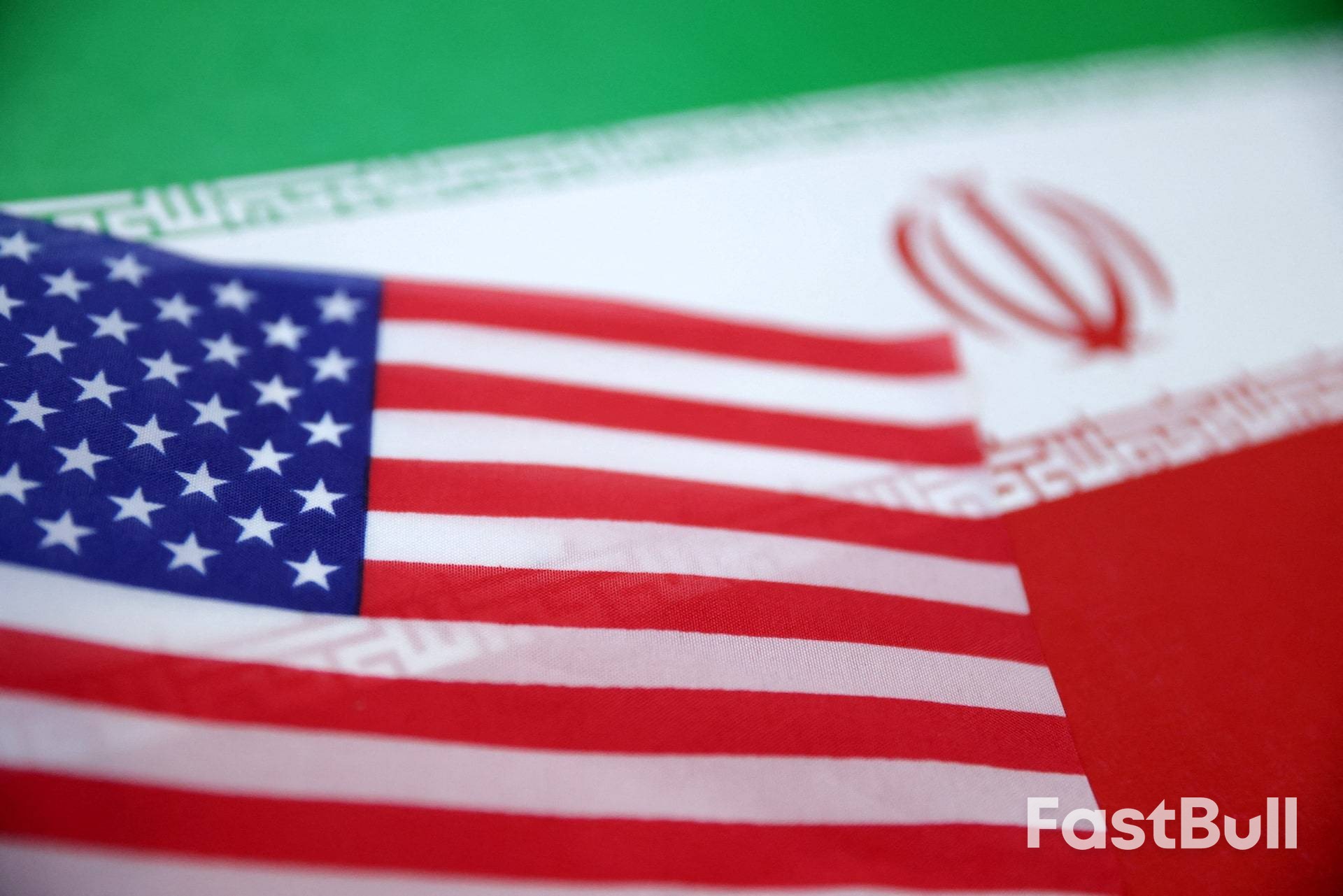
Iran and the United States are scheduled to resume nuclear negotiations in Turkey on Friday, according to officials from both nations. The talks, which will also include representatives from countries such as Saudi Arabia and Egypt, aim to revive diplomacy over Iran's nuclear program and ease fears of a new war in the region.
The meeting in Istanbul will bring together U.S. Special Envoy Steve Witkoff and Iranian Foreign Minister Abbas Araqchi. Regional allies, including Turkey, have been pushing for de-escalation. A regional diplomat confirmed that Qatar, Saudi Arabia, the UAE, and Egypt would attend the meeting, which will involve bilateral and trilateral discussions.
The talks are happening under a cloud of high tension, marked by a U.S. naval buildup near Iran. This follows a deadly crackdown on anti-government protests in Iran last month, the most severe domestic unrest since the 1979 revolution.
U.S. President Donald Trump, who held back from military intervention during the protests, has since dispatched a flotilla to Iran's coast while demanding nuclear concessions. Last week, Trump stated that Iran was "seriously talking," a sentiment echoed by Tehran's top security official, Ali Larijani, who confirmed that arrangements for negotiations were underway.
Iranian sources report that President Trump has laid out three conditions for restarting talks:
• Zero uranium enrichment in Iran.
• Limits on Tehran's ballistic missile program.
• An end to Iran's support for regional proxy groups.
Iran has consistently rejected these demands as infringements on its sovereignty. However, two Iranian officials indicated that the country's clerical leadership considers the ballistic missile program a more significant obstacle to a deal than the issue of uranium enrichment.
Iranian Foreign Ministry spokesperson Esmaeil Baghaei said Tehran was evaluating "the various dimensions and aspects of the talks," adding that "time is of the essence for Iran as it wants the lifting of unjust sanctions sooner." A Turkish ruling party official confirmed that both Washington and Tehran had agreed to refocus on diplomacy, a move that could avert potential U.S. military action.
Ahead of the talks, U.S. envoy Witkoff is expected to visit Israel to meet with Prime Minister Benjamin Netanyahu and the country's military chief.
An Iranian official stated that diplomacy is active but emphasized that for talks to resume, there should be no preconditions. He added that Iran is prepared to show flexibility on uranium enrichment, including handing over 400 kg of highly enriched uranium and accepting a zero-enrichment solution under a consortium arrangement. In return, Tehran wants U.S. military assets moved away from its vicinity before talks begin.
"Now the ball is in Trump's court," the official said.
Iran's regional influence has been weakened by Israeli attacks on its proxies—including Hamas, Hezbollah, and the Houthis—and the ousting of its key ally, former Syrian President Bashar al-Assad.
In June of last year, the United States joined an Israeli bombing campaign, striking Iranian nuclear targets over a 12-day period. Since then, Tehran has claimed its uranium enrichment activities have stopped. However, recent satellite images of two targeted sites, Isfahan and Natanz, show some repair work has been undertaken since December, with new roofing visible on two previously destroyed buildings.
According to Washington-based think tank ISIS, satellite imagery from late January shows construction at tunnel entrances at the Isfahan site. The think tank noted this could "indicate a preparation for additional military strikes," similar to activity seen before last year's U.S. attacks, or it could signal the movement of assets from other facilities.
Stalled Negotiations and Uranium Stockpiles
After five rounds of talks stalled in May 2023, several major issues remain unresolved. Key sticking points include Iran's insistence on enriching uranium on its own soil and its refusal to ship its entire stockpile of highly enriched uranium abroad.
The UN's nuclear watchdog has repeatedly asked Iran to account for its highly enriched uranium stock since the June attacks. While Western nations worry the material could be used for a warhead, Iran maintains its nuclear program is for peaceful purposes like electricity generation.
Iranian sources suggest Tehran might be willing to ship its highly enriched uranium abroad and pause enrichment as part of a deal that also includes the lifting of economic sanctions.
President Donald Trump has announced he would welcome investment from China and India in Venezuela's crucial oil industry, signaling a new phase in the country's energy politics.
"China is welcome to come in and will make a great deal on oil," Trump told reporters. He also confirmed that the United States is actively working with India on a plan for it to purchase Venezuelan crude.
"India's coming in and they're going to be buying Venezuelan oil, as opposed to buying it from Iran," he stated, adding, "We've already made the deal, the concept of that deal."
This shift follows historic changes to Venezuela's nationalist oil policy approved by the country's acting president. The reforms, designed to attract foreign capital, include reduced taxes and greater ownership stakes for international oil companies.
These changes were implemented less than a month after U.S. forces captured former leader Nicolas Maduro. In a related move, the U.S. Treasury Department issued a general license that expands the ability of American companies to export, sell, and refine crude oil from the sanctioned South American nation.
The United States is now on track to import the most Venezuelan oil in a year as the Trump administration works to control the country's energy supply. Part of this strategy involves pressing oil companies to invest $100 billion to rebuild Venezuela's deteriorating oil infrastructure.
While the U.S. is becoming the primary destination for Venezuelan oil, shipments to China have collapsed. After averaging 400,000 barrels a day last year, exports to China dropped to zero in January. This halt is the direct result of a U.S. naval crackdown on the "dark fleet" of tankers used to transport sanctioned oil.
The majority of Venezuelan crude now arriving in the U.S. is handled by Chevron Corp., which operates under a specific license to sell the sanctioned oil. Commodity trading giants Trafigura Group and Vitol Group account for about 20% of the supply.
The Trump administration tapped these two firms to help sell up to 50 million barrels of oil following Maduro's ouster in early January. According to Bloomberg data, Vitol and Trafigura are currently on course to lift 14 million barrels of Venezuelan crude. Much of this oil was loaded onto ships originally bound for China before January. The traders have since placed about 9 million barrels in Caribbean storage, with the remainder heading to markets in the U.S. and Europe.
High-stakes diplomatic talks between Ukraine, Russia, and the United States are scheduled for February 4-5 in the United Arab Emirates. However, this push for negotiation is unfolding against a backdrop of relentless and deadly Russian air assaults on Ukrainian civilian sites.

In a video address on February 1, Ukrainian President Volodymyr Zelenskyy confirmed the upcoming trilateral meeting. The announcement followed a period of uncertainty after the talks, originally planned for February 1, were postponed.
Zelenskyy stated his team was prepared for the negotiations and would meet with Kyiv's main negotiator, Rustem Umerov, to finalize the framework before heading to Abu Dhabi. "February will be a period of quite intense foreign policy activity on our part," Zelenskyy said, emphasizing the importance of the American role in de-escalation.
"We expect that the American side will be just as active, and in particular this applies to de-escalation measures -- reducing strikes," he noted.
The Kremlin also confirmed the new dates. Spokesman Dmitry Peskov explained that the initial postponement was due to a scheduling issue requiring "additional coordination" among the three parties. "Now, on Wednesday-Thursday, the second round will indeed take place. It will be held in Abu Dhabi," Peskov affirmed.
These discussions follow a recent resumption of direct contact. Representatives from Moscow, Kyiv, and Washington previously met in Abu Dhabi on January 23-24. Additionally, U.S. special envoy Steve Witkoff held what he called "productive and constructive meetings" with Kremlin negotiator Kirill Dmitriev in Miami on January 30. That meeting also included U.S. Treasury Secretary Scott Bessent, Jared Kushner, and government adviser Josh Gruenbaum.
Despite diplomatic efforts, Russian air attacks have continued to batter Ukraine's infrastructure as the country faces temperatures as low as minus 30 degrees Celsius.
Drone Strikes Kill Miners and Civilians
On February 1, Ukrainian officials reported that separate drone strikes killed at least 14 people and injured seven more in the southeastern Dnipropetrovsk region. Twelve of the victims were miners returning from their shift when their bus was struck near Pavlohrad, according to DTEK, Ukraine's largest private utility company. Two others died when a drone hit a house in the regional capital, Dnipro. Local authorities declared February 2 a day of mourning for the miners.
Maternity Hospital and Cities Attacked
In the neighboring city of Zaporizhzhya, air raids struck a maternity hospital, injuring at least six people. Regional Governor Ivan Fedorov said two of the women were undergoing medical examinations at the time of the impact, calling the attack "yet more proof of a war directed against life." A later strike on another neighborhood injured three more people, including a young boy.
Ukrainian Air Forces reported on February 2 that Russia had launched an Iskander-M ballistic missile and 171 drones overnight. In central Cherkasy, a massive drone attack injured four people.
The attacks have crippled energy infrastructure, causing power outages across the Sumy, Kharkiv, Dnipropetrovsk, and Cherkasy regions, according to the national electricity company Ukrenergo. Emergency blackouts were also implemented in Kyiv, where Mayor Vitaliy Klitschko reported that 244 buildings remained without heat.
The ongoing assaults drew sharp criticism. The attacks continued even after former U.S. President Donald Trump claimed on January 29 that Russian President Vladimir Putin had personally promised him a week-long pause in air strikes.
Katarina Mathernova, the EU ambassador to Ukraine, questioned the Kremlin's actions in a Facebook post. "Is this what a 'cease-fire' is supposed to look like?" she asked. "Like explosions. Like dead civilians. Like destroyed energy and transport infrastructure."
A recent nationwide survey by the Kyiv International Institute of Sociology (KIIS) found that 88% of Ukrainians believe Russia's strikes are intended to leave them without electricity and heating to force a capitulation.
Meanwhile, Russian officials reported on February 2 that a Ukrainian drone strike in Russia's Belgorod region killed two civilians, while another drone injured one person in the Bryansk region. Russia's Defense Ministry stated it had destroyed or intercepted 31 Ukrainian drones.
White Label
Data API
Web Plug-ins
Poster Maker
Affiliate Program
The risk of loss in trading financial instruments such as stocks, FX, commodities, futures, bonds, ETFs and crypto can be substantial. You may sustain a total loss of the funds that you deposit with your broker. Therefore, you should carefully consider whether such trading is suitable for you in light of your circumstances and financial resources.
No decision to invest should be made without thoroughly conducting due diligence by yourself or consulting with your financial advisors. Our web content might not suit you since we don't know your financial conditions and investment needs. Our financial information might have latency or contain inaccuracy, so you should be fully responsible for any of your trading and investment decisions. The company will not be responsible for your capital loss.
Without getting permission from the website, you are not allowed to copy the website's graphics, texts, or trademarks. Intellectual property rights in the content or data incorporated into this website belong to its providers and exchange merchants.
Not Logged In
Log in to access more features
Log In
Sign Up