Markets
News
Analysis
User
24/7
Economic Calendar
Education
Data
- Names
- Latest
- Prev



Signal Accounts for Members
All Signal Accounts
All Contests


U.K. Retail Sales MoM (SA) (Dec)A:--
F: --
P: --
France Manufacturing PMI Prelim (Jan)A:--
F: --
P: --
France Services PMI Prelim (Jan)A:--
F: --
P: --
France Composite PMI Prelim (SA) (Jan)A:--
F: --
P: --
Germany Manufacturing PMI Prelim (SA) (Jan)A:--
F: --
P: --
Germany Services PMI Prelim (SA) (Jan)A:--
F: --
P: --
Germany Composite PMI Prelim (SA) (Jan)A:--
F: --
P: --
Euro Zone Composite PMI Prelim (SA) (Jan)A:--
F: --
P: --
Euro Zone Manufacturing PMI Prelim (SA) (Jan)A:--
F: --
P: --
Euro Zone Services PMI Prelim (SA) (Jan)A:--
F: --
P: --
U.K. Composite PMI Prelim (Jan)A:--
F: --
P: --
U.K. Manufacturing PMI Prelim (Jan)A:--
F: --
P: --
U.K. Services PMI Prelim (Jan)A:--
F: --
P: --
Mexico Economic Activity Index YoY (Nov)A:--
F: --
P: --
Russia Trade Balance (Nov)A:--
F: --
P: --
Canada Core Retail Sales MoM (SA) (Nov)A:--
F: --
P: --
Canada Retail Sales MoM (SA) (Nov)A:--
F: --
U.S. IHS Markit Manufacturing PMI Prelim (SA) (Jan)A:--
F: --
P: --
U.S. IHS Markit Services PMI Prelim (SA) (Jan)A:--
F: --
P: --
U.S. IHS Markit Composite PMI Prelim (SA) (Jan)A:--
F: --
P: --
U.S. UMich Consumer Sentiment Index Final (Jan)A:--
F: --
P: --
U.S. UMich Current Economic Conditions Index Final (Jan)A:--
F: --
P: --
U.S. UMich Consumer Expectations Index Final (Jan)A:--
F: --
P: --
U.S. Conference Board Leading Economic Index MoM (Nov)A:--
F: --
P: --
U.S. Conference Board Coincident Economic Index MoM (Nov)A:--
F: --
P: --
U.S. Conference Board Lagging Economic Index MoM (Nov)A:--
F: --
P: --
U.S. UMich 1-Year-Ahead Inflation Expectations Final (Jan)A:--
F: --
P: --
U.S. Conference Board Leading Economic Index (Nov)A:--
F: --
P: --
U.S. Weekly Total Rig CountA:--
F: --
P: --
U.S. Weekly Total Oil Rig CountA:--
F: --
P: --
Germany Ifo Business Expectations Index (SA) (Jan)--
F: --
P: --
Germany IFO Business Climate Index (SA) (Jan)--
F: --
P: --
Germany Ifo Current Business Situation Index (SA) (Jan)--
F: --
P: --
U.S. Dallas Fed PCE Price Index YoY (Nov)--
F: --
P: --
Brazil Current Account (Dec)--
F: --
P: --
Mexico Unemployment Rate (Not SA) (Dec)A:--
F: --
P: --
Canada National Economic Confidence Index--
F: --
P: --
U.S. Non-Defense Capital Durable Goods Orders MoM (Excl. Aircraft) (Nov)--
F: --
P: --
U.S. Durable Goods Orders MoM (Excl. Defense) (SA) (Nov)--
F: --
P: --
U.S. Durable Goods Orders MoM (Excl.Transport) (Nov)--
F: --
P: --
U.S. Durable Goods Orders MoM (Nov)--
F: --
P: --
U.S. Chicago Fed National Activity Index (Nov)--
F: --
P: --
U.S. Dallas Fed New Orders Index (Jan)--
F: --
P: --
U.S. Dallas Fed General Business Activity Index (Jan)--
F: --
P: --
U.K. BRC Shop Price Index YoY (Jan)--
F: --
P: --
China, Mainland Industrial Profit YoY (YTD) (Dec)--
F: --
P: --
Mexico Trade Balance (Dec)--
F: --
P: --
U.S. S&P/CS 20-City Home Price Index YoY (Not SA) (Nov)--
F: --
P: --
U.S. S&P/CS 20-City Home Price Index MoM (SA) (Nov)--
F: --
P: --
U.S. FHFA House Price Index MoM (Nov)--
F: --
P: --
U.S. FHFA House Price Index (Nov)--
F: --
P: --
U.S. Richmond Fed Manufacturing Composite Index (Jan)--
F: --
P: --
U.S. Conference Board Present Situation Index (Jan)--
F: --
P: --
U.S. Conference Board Consumer Expectations Index (Jan)--
F: --
P: --
U.S. Richmond Fed Manufacturing Shipments Index (Jan)--
F: --
P: --
U.S. Richmond Fed Services Revenue Index (Jan)--
F: --
P: --
U.S. Conference Board Consumer Confidence Index (Jan)--
F: --
P: --
Australia RBA Trimmed Mean CPI YoY (Q4)--
F: --
P: --
Australia CPI YoY (Q4)--
F: --
P: --
Australia CPI QoQ (Q4)--
F: --
P: --


No matching data
Latest Views
Latest Views
Trending Topics
Top Columnists
Latest Update
White Label
Data API
Web Plug-ins
Affiliate Program
View All

No data
"Zombie" firms' demise in 2026 portends UK job losses, yet could signal a significant productivity revival.
The UK is heading for a significant rise in unemployment in 2026 as financially weak "zombie" companies face a wave of failures, according to a new report from the Resolution Foundation.
These struggling businesses, which have barely managed to cover their costs for years, are now confronting a "triple whammy" of rising interest rates, higher energy prices, and an increased minimum wage. The thinktank warns that while the collapse of these firms could ultimately boost the economy's productivity, the immediate consequence will likely be a sharp increase in job losses.
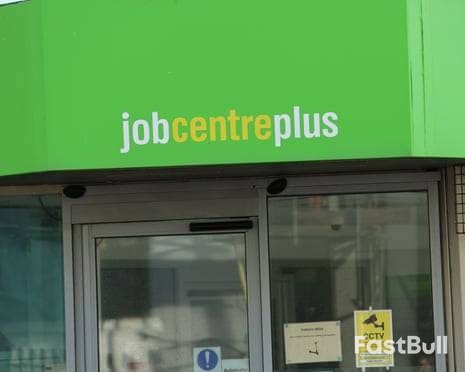
The unemployment rate already hit 5.1% in October, its highest level in a decade outside of the pandemic period, as employers grew cautious about hiring ahead of the autumn budget.
For years, economists have pointed to so-called "zombie firms" as a drag on the UK economy. These companies generate just enough revenue to service their debt but lack the profits to invest or grow, tying up resources that could be used more productively elsewhere. Their survival was largely enabled by the era of low interest rates following the 2008 financial crisis, which made borrowing cheap.
That era is over. Businesses have been squeezed by 14 consecutive interest rate hikes from the Bank of England between December 2021 and August 2023. Although the central bank has since cut its base rate six times from a peak of 5.25% to 3.75%, operating costs for most firms remain elevated. This new economic reality, combined with high energy costs and rising wage bills, could be the final straw for many underperforming companies.
While the short-term outlook is painful, the Resolution Foundation suggests 2026 could be a crucial "turning point" for the UK's stagnant productivity. The failure of less efficient firms could pave the way for a process of "creative destruction," where new, more innovative companies emerge to take their place.
"There are early and encouraging signs of a mild zombie apocalypse," said Ruth Curtice, chief executive of the Resolution Foundation. She noted that higher interest rates and minimum wages are helping to "kill off struggling firms and leave the door open for new, more productive ones to replace them." The adoption of artificial intelligence could also contribute to this productivity revival.
However, Curtice stressed the immediate downside. "The short-term impact could be job displacement and higher unemployment," she warned. "Policymakers will need to redouble efforts to address this problem."
The pressure on businesses is already visible in recent data. A separate report from the British Chambers of Commerce (BCC) found that business confidence fell to a three-year low in the final quarter of 2025.
A survey of over 4,600 firms conducted between November 10 and December 8 revealed a pessimistic outlook:
• Top Concerns: Tax was the biggest worry for businesses, followed closely by inflation.
• Turnover Expectations: Less than half (46%) of companies expected their turnover to increase in the next year, while 24% anticipated a decrease.
• Investment Plans: Only 19% of firms had increased their investment, while 27% had scaled back their plans.
"Our data shows more clouds have gathered over business confidence, and the outlook for SMEs in 2026 is unsettled," said David Bharier, head of research at the BCC.
The Resolution Foundation urged the government to focus on the human impact of this economic shift. While the potential for long-term productivity growth is welcome, the immediate challenge is to support households through job losses and stagnant income growth.
"Amidst this change one thing that isn't changing enough is disposable income growth, which is set to grow at mediocre rates for the rest of the parliament," said Curtice.
She concluded that while there is hope for an economic turning point, action is needed to ensure it translates into better living standards for everyone.
Chinese President Xi Jinping met with Irish Prime Minister Micheál Martin in Beijing, signaling a clear intent to deepen economic and trade ties with Ireland as a strategic gateway to improving strained relations with the European Union.
In their meeting at the Great Hall of the People, Xi framed the future of China-Ireland relations around mutual respect and win-win outcomes. This engagement is part of a broader Chinese strategy to connect with individual EU member states amid ongoing friction with Brussels.
By strengthening bilateral partnerships, Beijing aims to indirectly convey its policy positions and objectives to the wider European bloc.
President Xi urged the EU to adopt a long-term, objective perspective on its relationship with China, emphasizing cooperation over conflict. He directly appealed to Ireland to leverage its influence for the stable development of China-EU relations.
This request carries significant weight, as Ireland is set to assume the rotating presidency of the EU Council in the latter half of this year.
China expressed specific interest in collaborating with Ireland across several key sectors, including:
• Artificial intelligence
• The digital economy
• Pharmaceuticals
• Tourism
Xi also called for greater coordination on the world stage to uphold multilateralism and international justice.
Prime Minister Martin, the first Irish Taoiseach to visit Beijing in 14 years, acknowledged China's "indispensable role" in global affairs, particularly in peacekeeping operations. He also firmly reiterated Ireland's commitment to open trade.
"We believe it's fundamental that we try and work towards open trade, recognising the interdependence of the world," Martin stated regarding economic ties with China.
His visit, which concludes with a trip to Shanghai, occurs under the shadow of escalating trade disputes. Just two weeks prior, Beijing imposed provisional tariffs of up to 42.7% on dairy products from the European Union. This move is widely interpreted as retaliation against the EU's decision to levy tariffs on Chinese electric vehicles.
The situation places Ireland in a complex position. As one of Europe's largest dairy exporters, with annual shipments valued at approximately €6 billion, it is directly affected by the new tariffs. At the same time, Ireland was among the EU nations that voted in favor of the tariffs on Chinese EVs, highlighting the intricate economic and political pressures at play.
Violent confrontations between protesters and security forces have erupted across Iran, marking the second week of nationwide demonstrations fueled by a severe cost-of-living crisis. Rights groups and local media reported escalating unrest over the weekend, signaling a significant challenge to the country's leadership.

The protests, which began on December 28 with a shopkeepers' strike in Tehran, have since spread to over 220 locations across 26 of Iran's 31 provinces.
The unrest has become the most serious wave of protest in Iran since the 2022 demonstrations following the death of 22-year-old Jina Mahsa Amini in police custody. While smaller in scale, the current protests present a new test for Supreme Leader Ayatollah Ali Khamenei, especially after a brief war with Israel in June that damaged the nation's nuclear facilities.
According to an AFP tally of official reports, at least 12 people have been killed since the demonstrations began, including members of the security forces. Human rights organizations provide further details on the scope of the crackdown:
• Arrests: The US-based Human Rights Activists News Agency (HRANA) reports that more than 990 people have been arrested.
• Fatalities: Norway-based groups Hengaw and Iran Human Rights stated that four Kurdish protesters were killed in Malekshahi county on Saturday, with dozens more wounded.
• Official Reports: Iranian state media, which has provided limited coverage of the events, reported that one member of the security forces was killed by "rioters."
HRANA confirmed overnight protests in major cities, including Tehran and Shiraz, as well as in western regions of the country.
The escalating situation has drawn a sharp response from the United States. President Donald Trump issued a direct threat to Iran on Sunday, stating the regime would get "hit very hard" by the US if more protesters are killed.
"We're watching it very closely," Trump told reporters. "If they start killing people like they have in the past, I think they're going to get hit very hard by the United States."
This statement followed a warning from the previous week, in which Trump cautioned that US intervention was possible if Iran "violently kills peaceful protesters."
The demonstrations are rooted in a deep economic crisis, exacerbated by United Nations sanctions that triggered a sharp currency collapse. The Iranian rial has plummeted, with one US dollar now worth approximately 1.4 million rials.
This has contributed to a staggering inflation rate of around 40%, causing the prices of essential goods like meat and rice to rise significantly. What began as a protest by traders in Tehran has now evolved into widespread calls for fundamental change across the nation.
In an effort to quell the unrest, the government announced a temporary monthly allowance for citizens, equivalent to about $7, to be distributed for four months.
Thailand's central bank is preparing to review how it calculates inflation, acknowledging that official figures showing persistently low price growth fail to capture the high cost of living felt by households across the country.
The plan was revealed in the minutes from the Bank of Thailand's latest policy meeting, signaling a potential overhaul of a key economic indicator.
According to the Bank of Thailand's Monetary Policy Committee, the country's official inflation statistics do not fully align with the financial pressures ordinary people face. The committee noted a significant gap between the low inflation numbers and the "elevated cost of living faced by households."
This disconnect has prompted discussions with relevant government agencies to address the shortcomings in the current inflation basket.
The central bank identified several categories within the inflation basket that exhibit "persistent rigidity," meaning their prices in the official data do not move in a way that reflects real-world costs. These areas include:
• Residential rents
• Automobiles
• Telecommunication services
Improvements are now planned for both the data inputs and the calculation methodology used to measure price changes in these and other sectors. The central bank did not provide a specific timeline for the review. According to its website, the Commerce Ministry typically updates inflation calculations every four to five years.
The move comes as Thailand grapples with weak price pressures. The nation's consumer price index has been in negative territory since April, driven largely by supply-side factors.
More broadly, the Bank of Thailand has struggled to keep inflation within its target range of 1% to 3% for most of the past decade. Despite this history of undershooting, the Cabinet approved a decision last month to maintain the same inflation target for the current year.
Indonesia’s trade surplus widened to $2.66 billion in November, but the figure fell short of market expectations amid a significant drop in key commodity exports. At the same time, inflation in December accelerated to its highest level in 20 months, creating a mixed economic outlook for the nation.
The November trade surplus marked an increase from October's $2.39 billion but missed the $3.06 billion forecast in a Reuters poll. This outcome reflects underlying weakness in the country's export sector.
Exports fell 6.60% year-on-year in November to $22.52 billion, a much steeper decline than the 0.53% drop analysts had anticipated. According to Statistics Indonesia, the slump was driven by lower export values for top commodities, including coal, palm oil, nickel, and copper.
Meanwhile, imports rose by a modest 0.46% from a year earlier to $19.86 billion. This was also below the 3.2% increase that had been forecast. For the January to November 2025 period, Southeast Asia's largest economy has maintained an expanding trade surplus, partly because manufacturers front-loaded shipments earlier in the year to get ahead of U.S. tariffs.

On the domestic front, annual inflation picked up to 2.92% in December, climbing above the median analyst forecast of 2.73%. This marks the highest inflation rate since April 2024.
The price surge was attributed to several factors:
• Higher prices for gold and select food items.
• Distribution channel disruptions in northern Sumatra caused by floods and landslides.
Despite the increase, the inflation rate remains within the central bank's target range of 1.5% to 3.5%. Core inflation, which excludes volatile food and government-controlled prices, was recorded at 2.38% in December, just under the 2.40% expected in the poll.
According to Permata Bank economist Faisal Rachman, Indonesia's trade surplus is expected to persist but will likely narrow gradually. He predicts that import growth will eventually outpace exports as the government adopts an increasingly pro-growth policy stance.
Rachman also noted that with inflation contained within Bank Indonesia's target, the central bank has room to maintain its accommodative monetary policy.
To strengthen its global trade position, Indonesia is actively diversifying its export markets. The government has finalized free trade negotiations with the European Union and signed a deal with the Russian-led Eurasian Economic Union. Additionally, Jakarta has set a target to sign a U.S. tariff deal by the end of this month.
White Label
Data API
Web Plug-ins
Poster Maker
Affiliate Program
The risk of loss in trading financial instruments such as stocks, FX, commodities, futures, bonds, ETFs and crypto can be substantial. You may sustain a total loss of the funds that you deposit with your broker. Therefore, you should carefully consider whether such trading is suitable for you in light of your circumstances and financial resources.
No decision to invest should be made without thoroughly conducting due diligence by yourself or consulting with your financial advisors. Our web content might not suit you since we don't know your financial conditions and investment needs. Our financial information might have latency or contain inaccuracy, so you should be fully responsible for any of your trading and investment decisions. The company will not be responsible for your capital loss.
Without getting permission from the website, you are not allowed to copy the website's graphics, texts, or trademarks. Intellectual property rights in the content or data incorporated into this website belong to its providers and exchange merchants.
Not Logged In
Log in to access more features
Log In
Sign Up