Markets
News
Analysis
User
24/7
Economic Calendar
Education
Data
- Names
- Latest
- Prev


Signal Accounts for Members
All Signal Accounts
All Contests


Norway Sovereign Wealth Fund's Holdings In USA Treasuries Worth $199 Billion At December 31 Versus$181 Billion At June 30, Fund Data Shows
Bessent Says 'Independence Does Not Mean No Accountability' In Defending Justice Department Probe Of Fed Chief
Spot Gold Broke Through $5,380 Per Ounce, Up 3.8% On The Day. Spot Silver Extended Its Gains To 4%, Currently Trading At $116.49 Per Ounce
Jeff Rosenberg Of BlackRock: The Federal Reserve's Response Mechanism (compared To Its Focus On Price Stability) Is More Focused On The Labor Side
Chicago Wheat Futures Rose About 2.3%, Corn Rose 1%. In Late New York Trading On Wednesday (January 28), The Bloomberg Grains Index Rose 1.19% To 29.3655 Points, Reaching A Daily High Of 29.5851 Points At 23:06 Beijing Time. CBOT Corn Futures Rose 1.00%, And CBOT Wheat Futures Rose 2.29%. CBOT Soybean Futures Rose 0.70% To $10.7475 Per Bushel, Reaching A Daily High Of $10.8475 At 22:41; Soybean Meal Futures Rose 1.22%, And Soybean Oil Futures Fell 0.11%
"New Bond King" Gundlach: He Believes That Federal Reserve Chairman Powell Will Not Cut Interest Rates Again During His Term
Powell: The Message Is Simply Not About Our Credibility, Inflation Expectations Show We Have Credibility
Powell: Also Advice For The Next Fed Chair Is The Need To Earn Democratic Legitimacy With Congressional Overseers
Powell: Has Been A Divide Between Solid Growth And Weakning Labor Market, Which May Be Explained By Rising Productivity

U.S. 5-Year Note Auction Avg. YieldA:--
F: --
P: --
U.S. API Weekly Refined Oil StocksA:--
F: --
P: --
U.S. API Weekly Crude Oil StocksA:--
F: --
P: --
U.S. API Weekly Gasoline StocksA:--
F: --
P: --
U.S. API Weekly Cushing Crude Oil StocksA:--
F: --
P: --
Australia RBA Trimmed Mean CPI YoY (Q4)A:--
F: --
P: --
Australia CPI YoY (Q4)A:--
F: --
P: --
Australia CPI QoQ (Q4)A:--
F: --
P: --
Germany GfK Consumer Confidence Index (SA) (Feb)A:--
F: --
P: --
Germany 10-Year Bund Auction Avg. YieldA:--
F: --
P: --
India Industrial Production Index YoY (Dec)A:--
F: --
P: --
India Manufacturing Output MoM (Dec)A:--
F: --
P: --
U.S. MBA Mortgage Application Activity Index WoWA:--
F: --
P: --
Canada Overnight Target RateA:--
F: --
P: --
BOC Monetary Policy Report
U.S. EIA Weekly Crude Stocks ChangeA:--
F: --
P: --
U.S. EIA Weekly Cushing, Oklahoma Crude Oil Stocks ChangeA:--
F: --
P: --
U.S. EIA Weekly Crude Demand Projected by ProductionA:--
F: --
P: --
U.S. EIA Weekly Crude Oil Imports ChangesA:--
F: --
P: --
U.S. EIA Weekly Heating Oil Stock ChangesA:--
F: --
P: --
U.S. EIA Weekly Gasoline Stocks ChangeA:--
F: --
P: --
BOC Press Conference
Russia PPI MoM (Dec)A:--
F: --
P: --
Russia PPI YoY (Dec)A:--
F: --
P: --
U.S. Interest Rate On Reserve BalancesA:--
F: --
P: --
U.S. Target Federal Funds Rate Lower Limit (Overnight Reverse Repo Rate)A:--
F: --
P: --
U.S. Federal Funds Rate TargetA:--
F: --
P: --
U.S. Target Federal Funds Rate Upper Limit (Excess Reserves Ratio)A:--
F: --
P: --
FOMC Statement
FOMC Press Conference
Brazil Selic Interest Rate--
F: --
P: --
Australia Import Price Index YoY (Q4)--
F: --
P: --
Japan Household Consumer Confidence Index (Jan)--
F: --
P: --
Turkey Economic Sentiment Indicator (Jan)--
F: --
P: --
Euro Zone M3 Money Supply (SA) (Dec)--
F: --
P: --
Euro Zone Private Sector Credit YoY (Dec)--
F: --
P: --
Euro Zone M3 Money Supply YoY (Dec)--
F: --
P: --
Euro Zone 3-Month M3 Money Supply YoY (Dec)--
F: --
P: --
South Africa PPI YoY (Dec)--
F: --
P: --
Euro Zone Consumer Confidence Index Final (Jan)--
F: --
P: --
Euro Zone Selling Price Expectations (Jan)--
F: --
P: --
Euro Zone Industrial Climate Index (Jan)--
F: --
P: --
Euro Zone Services Sentiment Index (Jan)--
F: --
P: --
Euro Zone Economic Sentiment Indicator (Jan)--
F: --
P: --
Euro Zone Consumer Inflation Expectations (Jan)--
F: --
P: --
Italy 5-Year BTP Bond Auction Avg. Yield--
F: --
P: --
Italy 10-Year BTP Bond Auction Avg. Yield--
F: --
P: --
France Unemployment Class-A (Dec)--
F: --
P: --
South Africa Repo Rate (Jan)--
F: --
P: --
Canada Average Weekly Earnings YoY (Nov)--
F: --
P: --
U.S. Nonfarm Unit Labor Cost Final (Q3)--
F: --
P: --
U.S. Initial Jobless Claims 4-Week Avg. (SA)--
F: --
P: --
U.S. Weekly Continued Jobless Claims (SA)--
F: --
P: --
U.S. Trade Balance (Nov)--
F: --
P: --
U.S. Weekly Initial Jobless Claims (SA)--
F: --
P: --
Canada Trade Balance (SA) (Nov)--
F: --
P: --
U.S. Exports (Nov)--
F: --
P: --
Canada Imports (SA) (Nov)--
F: --
P: --
Canada Exports (SA) (Nov)--
F: --
P: --
U.S. Unit Labor Cost Revised MoM (SA) (Q3)--
F: --


No matching data
Latest Views
Latest Views
Trending Topics
Top Columnists
Latest Update
White Label
Data API
Web Plug-ins
Affiliate Program
View All

No data
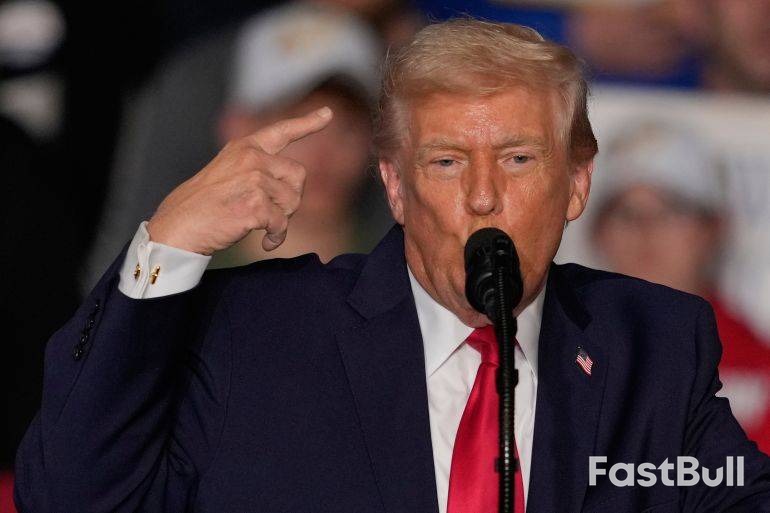
Trump welcomes a weaker dollar, but investors fear it signals eroding confidence and rising debt costs.
President Donald Trump isn't losing sleep over a weaker U.S. dollar, but investors are finding reasons to be concerned. The dollar recently posted its most significant one-day slide since April after the president declined to comment on its 10% slump over the past year. While it saw a slight rebound, Trump’s position remains clear.
When asked about the falling greenback, he said, "I think it's great," echoing a long-held view that a weaker dollar makes American goods more competitive abroad. This is often seen as a boon for U.S. multinationals, but it carries a hidden cost: it can signal eroding international confidence in the country's fiscal and economic stability.
A declining dollar isn't just about trade advantages; it's a measure of global sentiment. "A weak dollar is not the weather, it's the barometer," explained Steve Englander, head of global G10 FX research at Standard Chartered.
While a lower currency provides a "narrow sort of way" to boost competitiveness, Englander cautions that it also reflects deeper anxieties. It suggests "that investors are more concerned about your economy, more concerned about the range of policies that they see you might be implementing." In short, foreign investors are growing wary.
One of the most significant risks of a weakening dollar lies in the U.S. Treasury market. A sustained decline could force investors to demand a higher risk premium for holding U.S. government bonds. This would make it more expensive for the government to finance its massive federal deficit, which is projected to hit $1.8 trillion by fiscal year 2025.
Signs of this pressure may already be emerging in the bond market. This month alone, the yield on the U.S. 10-year Treasury note climbed above 4.25%, up from around 4.16% at the start of the year.
Peter Corey, chief market strategist at Pave Finance, warns of the potential consequences. "If foreign investors believe that the dollar is about to enter a more sustained second leg down, they clearly will pull away from future Treasury purchases," he wrote.
The dollar's slide may not be limitless. Several factors could provide a floor for the currency and prevent a freefall.
• Bond Yields: Corey notes that the 10-year Treasury yield has been trading within a range of 3.85% to 4.60%. A move above this range would be a "tripwire" that could trigger a more significant market reaction.
• Global Alternatives: The dollar could regain its appeal if other major economies falter. Should Europe or China show signs of economic weakness, the U.S. greenback could become the "least objectionable" alternative for investors seeking a safe haven.
Another critical factor that could mitigate the risks of a soft dollar is a pickup in productivity. Standard Chartered's Englander is closely watching whether corporate productivity gains can fuel enough economic expansion to help the government manage its deficit.
"If we're right that productivity growth is picking up, then GDP is going to pick up, federal government revenues are going to pick up, and the deficit picture won't be as dire as it looks right now," Englander said.
However, he also warned of the alternative. "If we're wrong, then we're kind of in trouble, because we're just another country that spends too much."
As he aptly concluded, "Ultimately, the chickens come home to roost."
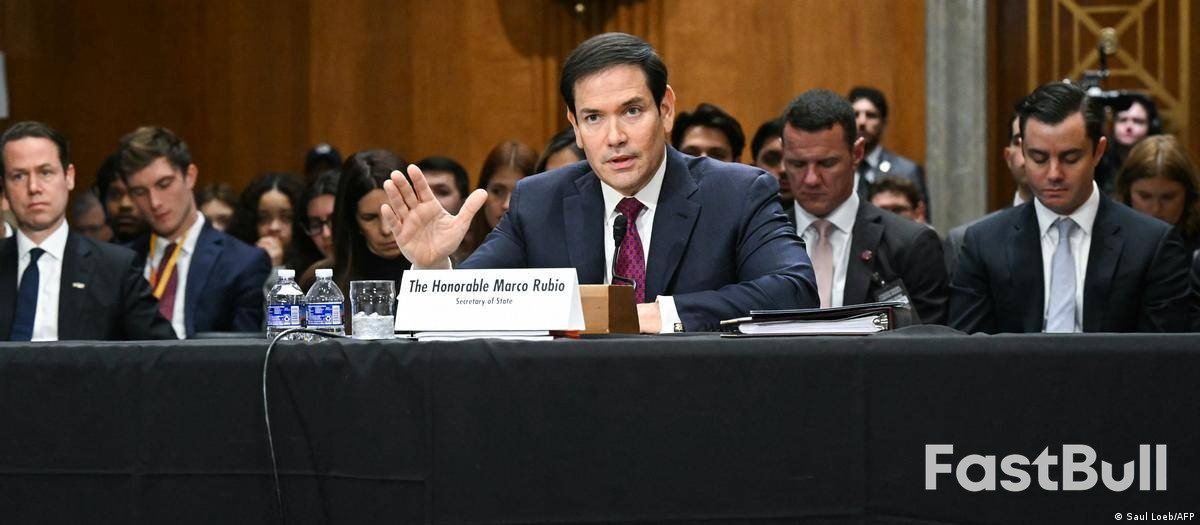
U.S. Secretary of State Marco Rubio laid out the Trump administration's strategy for Venezuela in testimony before the Senate Foreign Relations Committee, outlining a plan that combines diplomatic engagement with the threat of military intervention following the ouster of Nicolas Maduro.
The hearing comes after a U.S. military operation in Caracas that resulted in the capture of the former Venezuelan leader, who was taken to New York for a criminal trial. Venezuela's first lady, Cilia Flores, was also taken into custody during the operation.

With former Vice President Delcy Rodriguez now serving as Venezuela's acting president, Rubio stated that the U.S. will be watching the new leadership closely.
"We will closely monitor the performance of the interim authorities as they cooperate with our stage-based plan to restore stability to Venezuela," Rubio testified. "Make no mistake, as the president has stated, we are prepared to use force to ensure maximum cooperation if other methods fail."
Despite the explicit threat, Rubio asserted that there is "good and decent progress in Venezuela," adding that "we are certainly better off today in Venezuela than we were four weeks ago."
As part of its diplomatic strategy, the U.S. plans to increase its presence in the country. Rubio announced that steps are underway to reopen the U.S. Embassy in Caracas, which closed in 2019. He noted this would provide "real-life information" and enhance engagement with both the Venezuelan government and opposition. Following the hearing, Rubio is scheduled to meet with Venezuelan opposition leader and Nobel Prize Laureate Maria Corina Machado.
A central point of the new U.S. policy involves managing the revenue from Venezuela's oil sales. Rubio detailed a plan where money generated from the country's oil—the largest reserves in the world—will be deposited into a bank account controlled by the U.S. Treasury. From there, he said, the Venezuelan government would "spend that money for the benefit of the Venezuelan people."
This arrangement has drawn sharp criticism. Senator Chris Murphy of Connecticut challenged Rubio directly, referencing President Trump's previous statement that "Venezuela is going to get some, and we're going to get some." Both Venezuelan officials and U.S. Democrats have accused the administration of attempting to seize the country's oil wealth.
"The scope of the project that you are undertaking in Venezuela is without precedent," Murphy told Rubio. "You are holding and selling that oil, putting for now the receipts in an offshore bank account... You're deciding how and for what purposes that money is going to be used in a country of 30 million people. I think a lot of us believe that is destined for failure."
During the hearing, Rubio also addressed other foreign policy priorities for the Trump administration.
On Greenland, a territory of NATO ally Denmark that President Trump has threatened to take over, Rubio signaled a diplomatic path forward. "There'll be some technical level meetings between us and our partners in Greenland and Denmark on this issue," he said, expressing confidence in a process that will lead to "a good outcome for everybody."
Regarding Iran, Rubio commented on the ongoing protests against the government. He characterized the Iranian regime as exceptionally vulnerable, stating it is "probably weaker than it has ever been." He argued that the core driver of the protests is economic collapse, a complaint the government cannot easily address. His comments come as President Trump threatens military action if Iran does not agree to a new nuclear deal.
U.S. President Donald Trump has issued a stark warning to Iran, stating that time is running out to negotiate a new agreement and avoid potential military action. Tehran quickly retorted, promising to respond to any attack "like never before."
The escalating rhetoric comes after a deadly crackdown on widespread protests within Iran. Trump has not ruled out an attack, and a U.S. naval strike group, led by the aircraft carrier USS Abraham Lincoln and described by Trump as an "armada," is currently positioned in Middle Eastern waters.
This follows a previous U.S. military operation last June, when American forces conducted a night of strikes against Iranian nuclear sites during Israel's 12-day war with the Islamic republic.

In a post on his Truth Social platform, Trump bypassed the recent protests and focused directly on Iran's nuclear program, which Western powers believe is aimed at developing an atomic bomb.
"Hopefully Iran will quickly 'Come to the Table' and negotiate a fair and equitable deal — NO NUCLEAR WEAPONS — one that is good for all parties. Time is running out, it is truly of the essence!" Trump wrote.
He referenced the American strikes in June, which he claimed resulted in "major destruction of Iran," and added, "The next attack will be far worse! Don't make that happen again."
In a direct reply, Iran's mission to the United Nations posted a screenshot of Trump's post on X, stating: "Iran stands ready for dialogue based on mutual respect and interests — BUT IF PUSHED, IT WILL DEFEND ITSELF AND RESPOND LIKE NEVER BEFORE!"
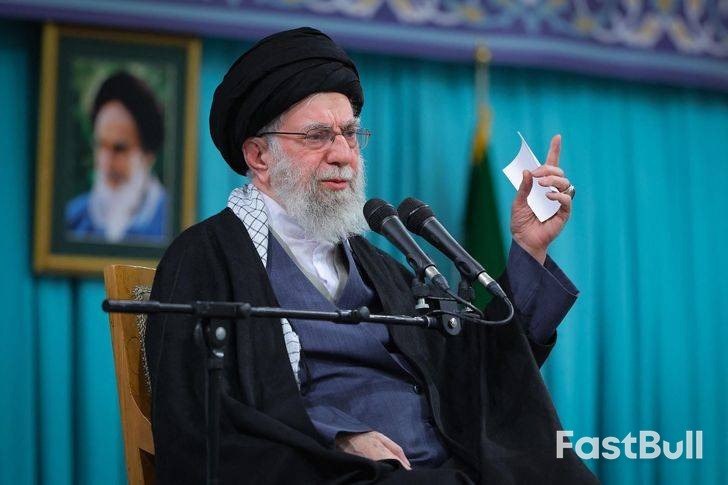
Analysts suggest that potential U.S. military options could range from strikes on military facilities to targeted operations against the leadership under Ayatollah Ali Khamenei, in an effort to destabilize the regime that has governed Iran since the 1979 Islamic revolution.
Before Trump's comments were published, Iranian Foreign Minister Abbas Araghchi dismissed the idea of negotiating under duress. "Conducting diplomacy through military threat cannot be effective or useful," he said in a televised statement, adding that the U.S. must "set aside threats, excessive demands and raising illogical issues." Araghchi also stated that he has had "no contact" with U.S. Middle East envoy Steve Witkoff and that "Iran has not sought negotiations."
Echoing this defiant tone, Iranian armed forces chief of staff Habibollah Sayyari warned the U.S. against any "miscalculation," asserting that "they too would suffer damage."
In an apparent bid to rally regional support, Iran has engaged in a flurry of diplomatic activity:
• Iranian President Masoud Pezeshkian held a call with Saudi Arabia's de facto leader, Crown Prince Mohammed bin Salman.
• Ali Larijani, Secretary of Iran's Supreme National Security Council, spoke with Qatari Prime Minister Sheikh Mohammed bin Abdulrahman Al Thani.
• Egyptian Foreign Minister Badr Abdelatty held separate calls with both Araghchi and Witkoff to stress the need for de-escalation.
• Turkey's Foreign Minister Hakan Fidan told Al-Jazeera, "It's wrong to attack Iran. It's wrong to start the war again," and urged Washington to resume nuclear talks.
The international standoff is unfolding against the backdrop of a brutal domestic crackdown in Iran. A wave of demonstrations that began in late December and peaked on January 8 and 9 has been met with lethal force.
The U.S.-based Human Rights Activists News Agency (HRANA) released an updated toll, detailing the scale of the violence:
• Verified Deaths: 6,221 people killed, including 5,856 protesters, 100 minors, 214 security force members, and 49 bystanders.
• Arrests: At least 42,324 people have been arrested.
• Under Investigation: HRANA is still investigating another 17,091 potential fatalities, suggesting the actual death toll could be much higher.
The group warned of "new dimensions of the continued security crackdown," reporting that security forces were actively searching hospitals to find and arrest wounded protesters.
Meanwhile, Iran's judicial system is moving against those arrested. HRANA reported that the trial of a man accused of killing a police officer, which began Tuesday in Malard, is the "starting point for a broad series of trials" expected to impose "severe penalties on protesters." These fears were amplified when Iran's judiciary announced on Wednesday the execution of a man arrested last year, who was charged with spying for Israel's Mossad agency, raising concerns that protesters could also face the death penalty.
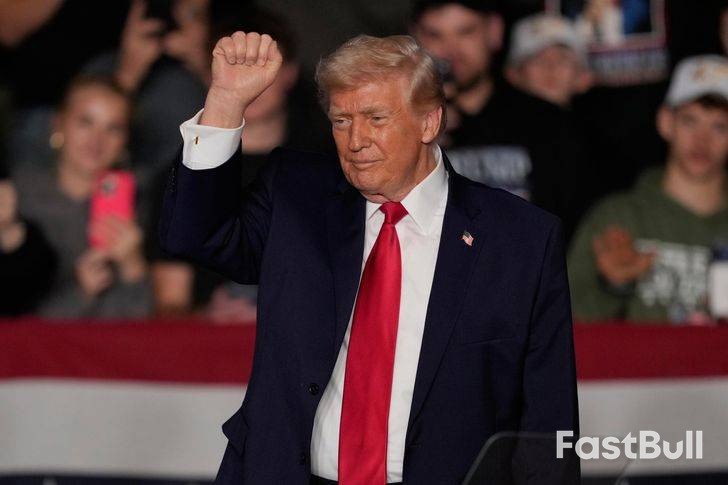
Facing backlash over fatal shootings by U.S. border and immigration agents, President Donald Trump delivered a speech in Iowa aimed at redirecting public attention to the economy. In a pitch tailored for midterm voters, he framed his first year in office as the most successful start to any presidential administration in American history.

Speaking in the Republican stronghold on Tuesday, Trump painted a picture of broad prosperity. "Today, after just one year of President Trump, our economy is booming, incomes are rising, investment is soaring, inflation has been defeated," he declared. "Our border is closed – totally closed – and America is respected all over the world."
To support his claims, Trump pointed to several key indicators:
• Stock Market: He highlighted the U.S. stock market's performance, which has reached record highs, as direct evidence of his tax cuts and tariffs succeeding.
• Corporate Investment: He cited a $70 million investment by farm-equipment manufacturer Deere & Co. in North Carolina.
"I made a lot of people rich that I don't even like… I've doubled their net worth," the president added.
The speech also served as a stark warning about the upcoming November midterm elections. With a growing backlash to his immigration policies in neighboring Minnesota, Trump argued that a Democratic victory would unravel his administration's progress.
"If we lose the midterms, you'll lose so many of the things that we're talking about, so many of the assets that we're talking about, so many of the tax cuts that we're talking about," he cautioned.
Trump also took aim at criticism over cost-of-living issues, accusing Democrats of manufacturing the problem for political gain. "It's a word that they came up with: 'affordability'. Every time you hear the word, remember, they are the ones who caused the problem," he said, while falsely claiming his administration had lowered grocery prices and had inherited the highest inflation in history.
Despite Trump's confident rhetoric, his economic pitch arrives amid signs of public disillusionment. His handling of the economy is considered one of his strongest issues for the 2024 election campaign, yet a New York Times/Siena poll released last week found that only 32 percent of Americans believe the economy is better than it was a year ago.
While the U.S. economy has outperformed many analysts' expectations, economists note that headline figures mask underlying weaknesses. Gross domestic product (GDP) recorded an annualized growth of 4.3 percent in the final quarter of 2025—the strongest performance in two years and significantly ahead of other advanced economies.
However, the benefits of this growth have not been evenly distributed. According to estimates from Moody's Analytics, the economic gains have disproportionately flowed to wealthier Americans, with the top 10 percent of earners accounting for approximately half of all spending.
Iran's mission to the United Nations issued a stark warning on Wednesday, promising an "unprecedented" retaliation against any potential U.S. attack in a direct response to military threats from President Donald Trump.

In a social media post, the Iranian mission stated that while the country "stands ready for dialogue based on mutual respect and interests," it will take decisive action if pressured.
"IF PUSHED, IT WILL DEFEND ITSELF AND RESPOND LIKE NEVER BEFORE!" the mission wrote on X. The statement was published alongside a screenshot of Trump’s earlier threat that a "massive Armada" was moving toward the Islamic Republic.
To underscore its warning against U.S. intervention, the Iranian mission referenced the human and financial toll of America's recent wars.
"Last time the U.S. blundered into wars in Afghanistan and Iraq, it squandered over $7 trillion and lost more than 7,000 American lives," the mission stated, framing any new conflict as a potential misstep for Washington.
The exchange followed President Trump's renewal of threats to attack Iran, asserting that "time is running out" for a deal on nuclear weapons.
"As I told Iran once before, MAKE A DEAL! They didn't, and there was 'Operation Midnight Hammer,' a major destruction of Iran," Trump said. "The next attack will be far worse!"
Trump has consistently kept the possibility of new military action on the table. This stance comes after a 12-day war in June where Washington joined Israel in operations aimed at degrading Iran's nuclear and ballistic missile programs.
Upon returning to office in January 2025, Donald Trump began to reshape U.S. policy in Asia with unprecedented authority, sidelining Congress and installing a loyalist administration. This second term saw Trump exert extraordinary control over the federal government, the Republican-led Congress, and a Supreme Court dominated by Republican appointees, including three of his own. Unlike his first term, dissent within the White House was virtually nonexistent, giving him a free hand to pursue his agenda with China and Taiwan.
The year began with friction. The Trump administration engaged in two brief but intense standoffs with Beijing in April and October, with both sides threatening massive tariffs and severe export controls. However, the confrontations quickly gave way to compromise, culminating in an amicable in-person summit between Trump and President Xi Jinping on October 28.
This meeting set a new tone. In the months that followed, both Washington and Beijing focused on maintaining stability and securing positive outcomes for Trump's planned visit to China in April and a reciprocal visit by Xi to the U.S. later in the year.
The summit with Xi was the capstone of a successful week-long tour of East Asia. Despite his general unpopularity in the region, Trump's meetings with ASEAN leaders in Malaysia and summits with Japanese and South Korean counterparts were positive. An earlier meeting in Washington with Australia's prime minister also went smoothly.
This trend of rapprochement left officials in Taiwan concerned. The Taiwanese government struggled to secure a tariff-reduction agreement with the United States. Adding to the anxiety, the Trump administration reportedly took several actions in deference to Beijing ahead of the October summit:
• A planned U.S. visit by Taiwan's defense minister was halted.
• A U.S. stopover by Taiwan's President Lai Ching-te was blocked.
• Public announcements of U.S. warships transiting the Taiwan Strait ceased.
• Key arms sales to Taiwan were delayed.
After the summit, Trump stated that Taiwan was not discussed. However, the administration later sent reassuring signals. In November, two arms sales packages worth over $1 billion were confirmed. On December 2, Trump signed the Taiwan Assurance Implementation Act into law. This was followed by a December 17 announcement of an $11 billion sale of sophisticated arms to Taiwan. By January 15, 2026, the U.S. and Taiwan announced a trade deal that lowered tariffs to 15% and promised $250 billion in Taiwanese investment in American semiconductor and technology manufacturing.
Despite these positive developments, the mixed signals fueled fears in Taiwan that Trump's focus on deal-making could lead to a compromise with Beijing at Taiwan's expense. The administration's November 30 National Security Strategy did little to clarify matters, notably omitting China as a specific danger. The National Defense Strategy, released on January 23, prioritized the Western Hemisphere over the Indo-Pacific but emphasized a "strong denial defense along the first Island Chain," a strategic area where Taiwan is central.
While Trump pursued diplomacy with Beijing, Congress operated on a different track. Despite Trump's influence over Republicans, a strong bipartisan consensus remained to counter Chinese government actions and support Taiwan. This congressional activism, a consistent feature since 2018, continued unabated.
Led by Republicans and the House Select Committee on the CCP, Congress focused primarily on defending U.S. interests from Chinese challenges. By August 2025, 564 pieces of legislation mentioning China had been introduced, with 247 containing substantive provisions on issues including:
• Technology decoupling
• Rare earth supply chains
• Higher education oversight
• Strengthening U.S. commitments to Taiwan
Bipartisan Pushback on Trump's Overtures
Though some Democrats criticized Trump's tariffs and sought to open communication with Beijing—as seen in a September visit to China by a delegation led by Representative Adam Smith—this did not signal a collapse of the "Washington Consensus." In practice, bipartisanship consistently prevailed in hardening U.S. policy.
Often, Democratic criticism was that the administration's policies were not tough enough on China. For example, Democrats opposed the end of U.S. support for Voice of America and international climate change measures, arguing these moves weakened U.S. resolve.
A sharp, bipartisan rebuke came in December after Trump allowed the sale of advanced Nvidia AI chips to China. Ahead of the decision, Senate Intelligence Committee Chair Tom Cotton introduced a bill with bipartisan support to block such sales. In January, the House Foreign Affairs Committee voted 42-2 for a bill to give Congress greater control over AI chip exports to China, directly challenging White House AI czar David Sacks.
Trump's tight grip on the Republican party showed its limits. He failed to convince Senate Republicans to eliminate the filibuster or end the practice allowing home-state senators to block judicial nominees.
By early 2026, congressional resistance was growing. Bipartisan majorities began to push back on several of Trump's initiatives, including a military attack in Venezuela and threats against Greenland. Seventeen House Republicans joined Democrats to extend Affordable Care Act subsidies. Furthermore, Congress passed several spending bills that explicitly rejected the president's proposed budget cuts, wording them to limit the administration's ability to make unilateral funding decisions.
These developments underscore a critical reality: a powerful, bipartisan congressional majority focused on countering China serves as a significant check on the Trump administration. This dynamic acts as a crucial brake, restricting any potential compromises with Beijing that might come at Taiwan's expense.
White Label
Data API
Web Plug-ins
Poster Maker
Affiliate Program
The risk of loss in trading financial instruments such as stocks, FX, commodities, futures, bonds, ETFs and crypto can be substantial. You may sustain a total loss of the funds that you deposit with your broker. Therefore, you should carefully consider whether such trading is suitable for you in light of your circumstances and financial resources.
No decision to invest should be made without thoroughly conducting due diligence by yourself or consulting with your financial advisors. Our web content might not suit you since we don't know your financial conditions and investment needs. Our financial information might have latency or contain inaccuracy, so you should be fully responsible for any of your trading and investment decisions. The company will not be responsible for your capital loss.
Without getting permission from the website, you are not allowed to copy the website's graphics, texts, or trademarks. Intellectual property rights in the content or data incorporated into this website belong to its providers and exchange merchants.
Not Logged In
Log in to access more features
Log In
Sign Up