• Trade
  • Markets
  • Copy
  • Contests
  • News
  • 24/7
  • Calendar
  • Q&A
  • Chats
Trending
Screeners
SYMBOL
LAST
BID
ASK
HIGH
LOW
NET CHG.
%CHG.
SPREAD
SPX
S&P 500 Index
6857.13
6857.13
6857.13
6865.94
6827.13
+7.41
+ 0.11%
--
DJI
Dow Jones Industrial Average
47850.93
47850.93
47850.93
48049.72
47692.96
-31.96
-0.07%
--
IXIC
NASDAQ Composite Index
23505.13
23505.13
23505.13
23528.53
23372.33
+51.04
+ 0.22%
--
USDX
US Dollar Index
98.760
98.840
98.760
98.980
98.750
-0.220
-0.22%
--
EURUSD
Euro / US Dollar
1.16672
1.16679
1.16672
1.16692
1.16408
+0.00227
+ 0.19%
--
GBPUSD
Pound Sterling / US Dollar
1.33594
1.33603
1.33594
1.33601
1.33165
+0.00323
+ 0.24%
--
XAUUSD
Gold / US Dollar
4227.30
4227.71
4227.30
4230.62
4194.54
+20.13
+ 0.48%
--
WTI
Light Sweet Crude Oil
59.393
59.430
59.393
59.469
59.187
+0.010
+ 0.02%
--

Community Accounts

Signal Accounts
--
Profit Accounts
--
Loss Accounts
--
View More

Become a signal provider

Sell trading signals to earn additional income

View More

Guide to Copy Trading

Get started with ease and confidence

View More

Signal Accounts for Members

All Signal Accounts

Best Return
  • Best Return
  • Best P/L
  • Best MDD
Past 1W
  • Past 1W
  • Past 1M
  • Past 1Y

All Contests

  • All
  • Trump Updates
  • Recommend
  • Stocks
  • Cryptocurrencies
  • Central Banks
  • Featured News
Top News Only
Share

Shanghai Aluminium Warehouse Stocks Up 8353 Tons

Share

Shanghai Copper Warehouse Stocks Down 9025 Tons

Share

Equinor: Preliminary Estimates Indicate Reservoirs May Contain Between 5 -18 Million Standard Cubic Meters Of Recoverable Oil Equivalents

Share

Japan Chief Cabinet Secretary Kihara: Government To Take Appropriate Steps On Excessive And Disorderly Moves In Foreign Exchange Market, If Necessary

Share

[Report: Amazon Pays €180 Million To Italy To End Tax And Labor Investigations] Amazon Has Paid A Settlement And Dismantled Its Monitoring System For Delivery Drivers In Italy, Ending An Investigation Into Alleged Tax Fraud And Illegal Labor Practices. In July 2024, The Group's Logistics Services Division Was Accused Of Circumventing Labor And Tax Laws By Relying On Cooperatives Or Limited Liability Companies To Supply Workers, Evading VAT, And Reducing Social Security Payments. Sources Say The Group Has Now Paid Approximately €180 Million To Italian Tax Authorities As Part Of A €1 Billion Settlement Involving 33 Companies

Share

Airbus - Booked 797 Gross Aircraft Orders In January-November

Share

[Market Update] Spot Gold Broke Through $4,230 Per Ounce, Up 0.51% On The Day

Share

Reserve Bank Of India Chief Malhotra: There Will Be Ample Liquidity As Long As We Are In An Easing Cycle

Share

Reserve Bank Of India Chief Malhotra: Quantum Of System Liquidity Will Be Managed To Ensure Monetary Transmission Is Happening

Share

China's Foreign Ministry: World Bank, IMF, WTO Top Officials To Join

Share

China's Foreign Ministry: China To Hold 1+1 Dialogue With International Economic Orgs On Dec 9

Share

Reserve Bank Of India Chief Malhotra: 5% Of Inr Depreciation Leads To 35 Bps Of Inflation

Share

Eurostoxx 50 Futures Up 0.14%, DAX Futures Up 0.12%, CAC 40 Futures Up 0.26%, FTSE Futures Up 0.03%

Share

Getlink - Over 1 Million Trucks Crossed Channel Since January 2025

Share

Malaysia International Reserves At $124.1 Billion On November 28 Versus$124.1 Billion On November 14 - Central Bank

Share

Reserve Bank Of India Chief Malhotra: Conscious Effort On Diversifying Gold Reserves

Share

Russian President Putin Thanks Indian Prime Minister Modi For Attention To Ukraine Peace Efforts

Share

Russian President Putin: India-Russia Relations Should Grow And Touch New Heights

Share

Russian President Putin: India Is Not Neutral, India Is On The Side Of Peace

Share

Russian President Putin: We Support Every Effort Towards Peace

TIME
ACT
FCST
PREV
Euro Zone IHS Markit Construction PMI (Nov)

A:--

F: --

P: --

Italy IHS Markit Construction PMI (Nov)

A:--

F: --

P: --

U.K. Markit/CIPS Construction PMI (Nov)

A:--

F: --

P: --

France 10-Year OAT Auction Avg. Yield

A:--

F: --

P: --

Euro Zone Retail Sales MoM (Oct)

A:--

F: --

P: --

Euro Zone Retail Sales YoY (Oct)

A:--

F: --

P: --

Brazil GDP YoY (Q3)

A:--

F: --

P: --

U.S. Challenger Job Cuts (Nov)

A:--

F: --

P: --

U.S. Challenger Job Cuts MoM (Nov)

A:--

F: --

P: --

U.S. Challenger Job Cuts YoY (Nov)

A:--

F: --

P: --

U.S. Initial Jobless Claims 4-Week Avg. (SA)

A:--

F: --

P: --

U.S. Weekly Initial Jobless Claims (SA)

A:--

F: --

P: --

U.S. Weekly Continued Jobless Claims (SA)

A:--

F: --

P: --

Canada Ivey PMI (SA) (Nov)

A:--

F: --

P: --

Canada Ivey PMI (Not SA) (Nov)

A:--

F: --

P: --

U.S. Non-Defense Capital Durable Goods Orders Revised MoM (Excl. Aircraft) (SA) (Sept)

A:--

F: --

P: --
U.S. Factory Orders MoM (Excl. Transport) (Sept)

A:--

F: --

P: --

U.S. Factory Orders MoM (Sept)

A:--

F: --

P: --

U.S. Factory Orders MoM (Excl. Defense) (Sept)

A:--

F: --

P: --

U.S. EIA Weekly Natural Gas Stocks Change

A:--

F: --

P: --

Saudi Arabia Crude Oil Production

A:--

F: --

P: --

U.S. Weekly Treasuries Held by Foreign Central Banks

A:--

F: --

P: --

Japan Foreign Exchange Reserves (Nov)

A:--

F: --

P: --

India Repo Rate

A:--

F: --

P: --

India Benchmark Interest Rate

A:--

F: --

P: --

India Reverse Repo Rate

A:--

F: --

P: --

India Cash Reserve Ratio

A:--

F: --

P: --

Japan Leading Indicators Prelim (Oct)

A:--

F: --

P: --

U.K. Halifax House Price Index YoY (SA) (Nov)

A:--

F: --

P: --

U.K. Halifax House Price Index MoM (SA) (Nov)

A:--

F: --

P: --

France Current Account (Not SA) (Oct)

--

F: --

P: --

France Trade Balance (SA) (Oct)

--

F: --

P: --

France Industrial Output MoM (SA) (Oct)

--

F: --

P: --

Italy Retail Sales MoM (SA) (Oct)

--

F: --

P: --

Euro Zone Employment YoY (SA) (Q3)

--

F: --

P: --

Euro Zone GDP Final YoY (Q3)

--

F: --

P: --

Euro Zone GDP Final QoQ (Q3)

--

F: --

P: --

Euro Zone Employment Final QoQ (SA) (Q3)

--

F: --

P: --

Euro Zone Employment Final (SA) (Q3)

--

F: --

P: --
Brazil PPI MoM (Oct)

--

F: --

P: --

Mexico Consumer Confidence Index (Nov)

--

F: --

P: --

Canada Unemployment Rate (SA) (Nov)

--

F: --

P: --

Canada Labor Force Participation Rate (SA) (Nov)

--

F: --

P: --

Canada Employment (SA) (Nov)

--

F: --

P: --

Canada Part-Time Employment (SA) (Nov)

--

F: --

P: --

Canada Full-time Employment (SA) (Nov)

--

F: --

P: --

U.S. Personal Income MoM (Sept)

--

F: --

P: --

U.S. Dallas Fed PCE Price Index YoY (Sept)

--

F: --

P: --

U.S. PCE Price Index YoY (SA) (Sept)

--

F: --

P: --

U.S. PCE Price Index MoM (Sept)

--

F: --

P: --

U.S. Personal Outlays MoM (SA) (Sept)

--

F: --

P: --

U.S. Core PCE Price Index MoM (Sept)

--

F: --

P: --

U.S. UMich 5-Year-Ahead Inflation Expectations Prelim YoY (Dec)

--

F: --

P: --

U.S. Core PCE Price Index YoY (Sept)

--

F: --

P: --

U.S. Real Personal Consumption Expenditures MoM (Sept)

--

F: --

P: --

U.S. 5-10 Year-Ahead Inflation Expectations (Dec)

--

F: --

P: --

U.S. UMich Current Economic Conditions Index Prelim (Dec)

--

F: --

P: --

U.S. UMich Consumer Sentiment Index Prelim (Dec)

--

F: --

P: --

U.S. UMich 1-Year-Ahead Inflation Expectations Prelim (Dec)

--

F: --

P: --

U.S. UMich Consumer Expectations Index Prelim (Dec)

--

F: --

P: --

Q&A with Experts
    • All
    • Chatrooms
    • Groups
    • Friends
    Connecting
    .
    .
    .
    Type here...
    Add Symbol or Code

      No matching data

      All
      Trump Updates
      Recommend
      Stocks
      Cryptocurrencies
      Central Banks
      Featured News
      • All
      • Russia-Ukraine Conflict
      • Middle East Flashpoint
      • All
      • Russia-Ukraine Conflict
      • Middle East Flashpoint
      Search
      Products

      Charts Free Forever

      Chats Q&A with Experts
      Screeners Economic Calendar Data Tools
      Membership Features
      Data Warehouse Market Trends Institutional Data Policy Rates Macro

      Market Trends

      Market Sentiment Order Book Forex Correlations

      Top Indicators

      Charts Free Forever
      Markets

      News

      News Analysis 24/7 Columns Education
      From Institutions From Analysts
      Topics Columnists

      Latest Views

      Latest Views

      Trending Topics

      Top Columnists

      Latest Update

      Signals

      Copy Rankings Latest Signals Become a signal provider AI Rating
      Contests
      Brokers

      Overview Brokers Assessment Rankings Regulators News Claims
      Broker listing Forex Brokers Comparison Tool Live Spread Comparison Scam
      Q&A Complaint Scam Alert Videos Tips to Detect Scam
      More

      Business
      Events
      Careers About Us Advertising Help Center

      White Label

      Data API

      Web Plug-ins

      Affiliate Program

      Awards Institution Evaluation IB Seminar Salon Event Exhibition
      Vietnam Thailand Singapore Dubai
      Fans Party Investment Sharing Session
      FastBull Summit BrokersView Expo
      Recent Searches
        Top Searches
          Markets
          News
          Analysis
          User
          24/7
          Economic Calendar
          Education
          Data
          • Names
          • Latest
          • Prev

          View All

          No data

          Scan to Download

          Faster Charts, Chat Faster!

          Download App
          English
          • English
          • Español
          • العربية
          • Bahasa Indonesia
          • Bahasa Melayu
          • Tiếng Việt
          • ภาษาไทย
          • Français
          • Italiano
          • Türkçe
          • Русский язык
          • 简中
          • 繁中
          Open Account
          Search
          Products
          Charts Free Forever
          Markets
          News
          Signals

          Copy Rankings Latest Signals Become a signal provider AI Rating
          Contests
          Brokers

          Overview Brokers Assessment Rankings Regulators News Claims
          Broker listing Forex Brokers Comparison Tool Live Spread Comparison Scam
          Q&A Complaint Scam Alert Videos Tips to Detect Scam
          More

          Business
          Events
          Careers About Us Advertising Help Center

          White Label

          Data API

          Web Plug-ins

          Affiliate Program

          Awards Institution Evaluation IB Seminar Salon Event Exhibition
          Vietnam Thailand Singapore Dubai
          Fans Party Investment Sharing Session
          FastBull Summit BrokersView Expo

          Trump Says August Tariff Deadline ’not 100% Firm’; Open To Further Talks

          Hannah Ellis

          China–U.S. Trade War

          Summary:

          U.S. President Donald Trump said on Monday that the August 1 deadline for imposing reciprocal tariffs is "not 100% firm,” adding that he’s open to alternate proposals if trade partners request changes.

          U.S. President Donald Trump said on Monday that the August 1 deadline for imposing reciprocal tariffs is "not 100% firm,” adding that he’s open to alternate proposals if trade partners request changes.

          "I would say firm, but not 100% firm. If they call up and they say we’d like to do something a different way, we’re going to be open to that,” Trump told reporters when asked if the deadline for the tariffs was firm.

          Earlier in the day, Trump signed an executive order extending the July 9 deadline to Aug. 1.

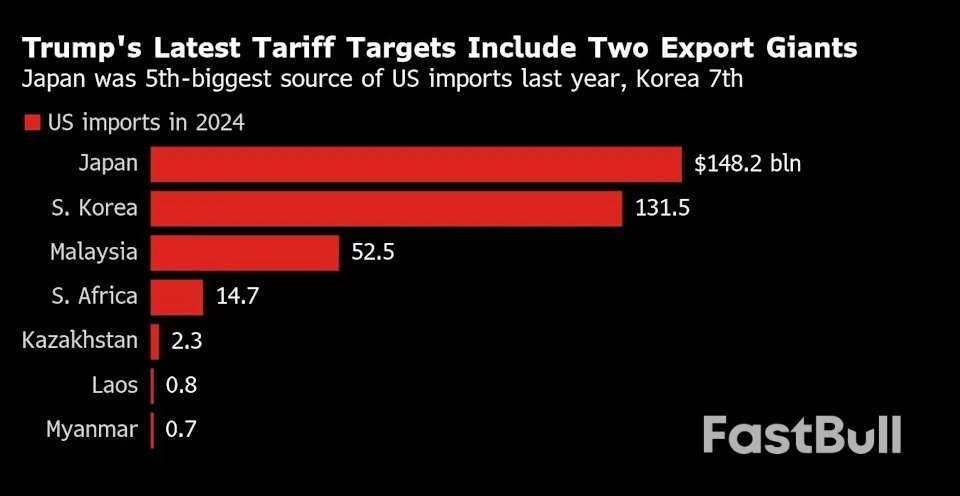
          He also announced new tariff rates on 14 nations, including Japan, Indonesia, South Korea, Serbia, and Tunisia, warning that duties of 25% on key allies such as Japan and South Korea will take effect if no deals are struck.

          Notably, the higher tariffs will not combine with previously announced sector tariffs such as those on automobiles, steel, and aluminum.

          Source: Investing

          Risk Warnings and Disclaimers
          You understand and acknowledge that there is a high degree of risk involved in trading. Following any strategies or investment methods may lead to potential losses. The content on the site is provided by our contributors and analysts for information purposes only. You are solely responsible for determining whether any trading assets, securities, strategy, or any other product is suitable for investing based on your own investment objectives and financial situation.
          Add to Favorites
          Share

          Japan, South Korea Hit With 25% Tariffs As Trump Ramps Up Trade War In Letters To Leaders

          James Whitman

          Economic

          U.S. President Donald Trump on Monday began telling trade partners – from powerhouse suppliers like Japan and South Korea to minor players – that sharply higher U.S. tariffs will start August 1, marking a new phase in the trade war he launched earlier this year.

          The 14 countries sent letters so far, which included smaller U.S. exporters like Serbia, Thailand and Tunisia, hinted at opportunities for additional negotiations while at the same time warning that any reprisal steps would be met with a like-for-like response.

          "If for any reason you decide to raise your Tariffs, then, whatever the number you choose to raise them by, will be added onto the 25% that we charge," Trump said in letters, released on his Truth Social platform, to Japan and South Korea.

          The higher tariffs, levied on U.S. importers of foreign goods, take effect August 1, and notably will not combine with previously announced sector tariffs such as those on automobiles and steel and aluminum.

          That means, for instance, that Japanese vehicle tariffs will remain at 25%, rather than the existing 25% auto sector tariff climbing to 50% with the new reciprocal rate as has occurred with some of Trump's tariffs.

          The clock has been ticking for countries to conclude deals with the U.S. after Trump unleashed a global trade war in April that has roiled financial markets and sent policymakers scrambling to protect their economies.

          Trading partners got another reprieve as Trump signed an executive order on Monday extending the Wednesday deadline for negotiations to August 1.

          Trump has kept much of the world guessing on the outcome of months of talks with countries hoping to avoid the hefty tariff hikes he has threatened.

          The rate for South Korea is the same as Trump initially announced, while the rate for Japan is 1 point higher than the one announced on April 2. A week later, he capped all of the so-called reciprocal tariffs at 10% until Wednesday. Only two agreements have so far been reached, with Britain and Vietnam.

          Wendy Cutler, vice president of the Asia Society Policy Institute, said it was unfortunate Trump was hiking tariffs on imports from two of the closest U.S. allies, but there was still time for a breakthrough in negotiations.

          "While the news is disappointing, it does not mean the game is over," Cutler said.

          Trump said later Monday that the United States would impose 25% tariffs on goods from Tunisia, Malaysia and Kazakhstan; 30% on South Africa, Bosnia and Herzegovina; 32% on Indonesia; 35% on Serbia and Bangladesh; 36% on Cambodia and Thailand and 40% on Laos and Myanmar.

          South Korea said it planned to intensify U.S. trade talks and considers Trump's plan for a 25% tariff from August 1 as effectively extending a grace period on implementing reciprocal tariffs.

          "We will step up negotiations during the remaining period to reach a mutually beneficial result to quickly resolve the uncertainties from tariffs," the country's Industry Ministry said.

          There was no response from the Japanese embassy in Washington.

          MARKET DROP

          U.S. stocks fell in response, the latest market turmoil as Trump's trade moves have repeatedly whipsawed financial markets and sent policymakers scrambling to protect their economies.

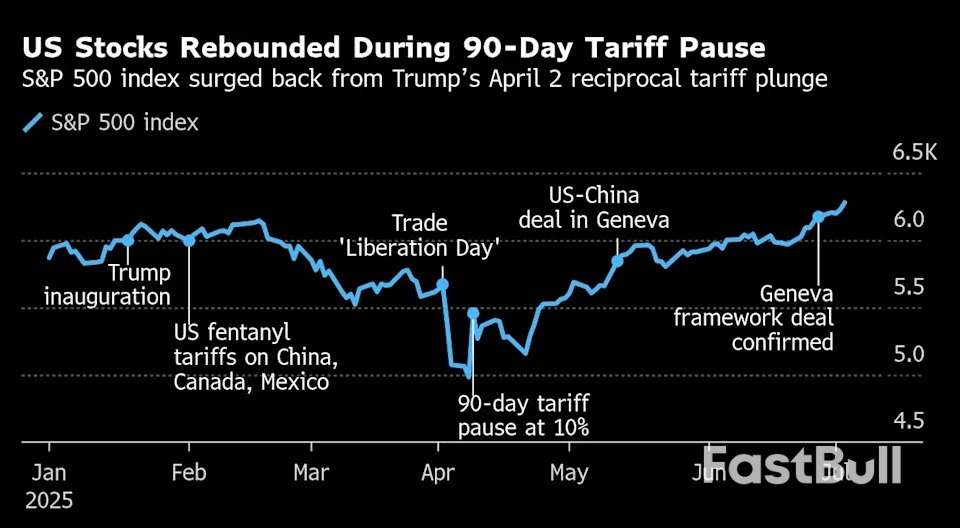
          U.S. stocks were driven to near bear-market territory by his cascade of tariff announcements through the early spring but quickly rebounded to record highs in the weeks after he put the stiffest levies on hold on April 9.

          The S&P 500 closed down about 0.8%, its biggest drop in three weeks. U.S.-listed shares of Japanese automotive companies fell, with Toyota Motor closing down 4.0% and Honda Motor off by 3.9%. The dollar surged against both the Japanese yen and the South Korean won.

          "Tariff talk has sucked the wind out of the sails of the market," said Brian Jacobsen, chief economist at Annex Wealth Management. Most of the announced tariff rates have been rounded down, he added, and the letters come across as "take it or leave it" offers.

          U.S. Treasury Secretary Scott Bessent said earlier on Monday he expected several trade announcements in the next 48 hours, adding that his inbox was full of countries' last-ditch offers.

          TRADING BLOCS

          The European Union will not be receiving a letter setting out higher tariffs, EU sources familiar with the matter told Reuters on Monday.

          The EU still aims to reach a trade deal by July 9 after European Commission President Ursula von der Leyen and Trump had a "good exchange," a commission spokesperson said.

          It was not clear, however, whether there had been a meaningful breakthrough in talks to stave off tariff hikes on the United States' largest trading partner.

          The EU has been torn over whether to push for a quick and light trade deal or leverage its economic clout to negotiate a better outcome. It had already given up hopes for a comprehensive trade agreement before the July deadline.

          Trump has also said he could impose a 17% tariff on EU food and agriculture exports.

          The president also threatened leaders of developing nations in the BRICS group, who are meeting in Brazil, with an additional 10% tariff if they adopt "anti-American" policies.

          The group includes Brazil, Russia, India and China among others.

          Source: Reuters

          To stay updated on all economic events of today, please check out our Economic calendar
          Risk Warnings and Disclaimers
          You understand and acknowledge that there is a high degree of risk involved in trading. Following any strategies or investment methods may lead to potential losses. The content on the site is provided by our contributors and analysts for information purposes only. You are solely responsible for determining whether any trading assets, securities, strategy, or any other product is suitable for investing based on your own investment objectives and financial situation.
          Add to Favorites
          Share

          Netanyahu Meets Trump At White House As Israel, Hamas Discuss Ceasefire

          James Whitman

          Political

          Palestinian-Israeli conflict

          President Donald Trump hosted Israeli Prime Minister Benjamin Netanyahu for White House talks on Monday, while Israeli officials held indirect negotiations with Hamas aimed at securing a U.S.-brokered Gaza ceasefire and hostage-release deal.

          Netanyahu's visit follows Trump's prediction, on the eve of their meeting, that such an agreement could be reached this week. Before heading to Washington, the right-wing Israeli leader said his discussions with Trump could help advance negotiations under way in Qatar between Israel and the Palestinian militant group.

          It was Trump's third face-to-face encounter with Netanyahu since returning to office in January, and came just over two weeks after the president ordered the bombing of Iranian nuclear sites in support of Israeli air strikes. Trump then helped arrange a ceasefire in the 12-day Israel-Iran war.

          Trump and his aides appeared to be trying to seize on any momentum created by the weakening of Iran, which backs Hamas, to push both sides for a breakthrough in the 21-month Gaza war. He said he also wants to discuss with Netanyahu the prospects for a "permanent deal" with Iran, Israel's regional arch-foe.

          The two leaders were scheduled to have a private dinner instead of formal talks in the Oval Office, where the president usually greets visiting dignitaries. It was not immediately clear why Trump was taking a lower-key approach with Netanyahu this time.

          After arriving overnight in Washington, Netanyahu met earlier on Monday with Trump’s Middle East special envoy Steve Witkoff and Secretary of State Marco Rubio in preparation for his talks with the president. He planned to visit the U.S. Capitol on Tuesday to see congressional leaders.

          Ahead of the visit, Netanyahu told reporters he would thank Trump for the U.S. air strikes on Iranian nuclear sites, and said Israeli negotiators were driving for a deal on Gaza in Doha, Qatar's capital.

          Israeli officials also hope the outcome of the conflict with Iran will pave the way for normalisation of relations with more of its neighbors such as Lebanon, Syria and Saudi Arabia, another issue expected to be on the agenda with Trump.

          SECOND DAY OF QATAR TALKS

          Witkoff, who played a major role in crafting the 60-day ceasefire proposal at the centre of the Qatar negotiations, will travel to Doha this week to join discussions there, White House press secretary Karoline Leavitt told reporters on Monday.

          In a sign of continued gaps between the two sides, Palestinian sources said Israel's refusal to allow the free and safe entry of humanitarian aid into Gaza remains the main obstacle to progress in the indirect talks. Israel insists it is taking steps to get food into Gaza but seeks to prevent militants from diverting supplies.

          On the second day of negotiations, mediators hosted one round and talks were expected to resume in the evening, the Palestinian sources told Reuters.

          The U.S.-backed proposal envisages a phased release of hostages, Israeli troop withdrawals from parts of Gaza and discussions on ending the war entirely.

          Hamas has long demanded a final end to the war before it would free remaining hostages; Israel has insisted it would not agree to halt fighting until all hostages are released and Hamas dismantled.

          Trump told reporters last week that he would be “very firm” with Netanyahu on the need for a speedy Gaza deal and that the Israeli leader also wanted to end the war.

          Some of Netanyahu's hardline coalition partners oppose halting military operations but, with Israelis having become increasingly weary of the Gaza war, his government is expected to back a ceasefire if he can secure acceptable terms.

          A ceasefire at the start of this year collapsed in March, and talks to revive it have so far been fruitless. Meanwhile, Israel has intensified its military campaign in Gaza and sharply restricted food distribution.

          Gazans were watching closely for any sign of a breakthrough. “I ask God almighty that the negotiating delegation or the mediators pressure with all their strength to solve this issue, because it has totally became unbearable,”said Abu Suleiman Qadoum, a displaced resident of Gaza city.

          The Gaza war erupted when Hamas attacked southern Israel in October 2023, killing around 1,200 people and taking 251 hostages. Some 50 hostages remain in Gaza, with 20 believed to be alive.

          Israel's retaliatory war in Gaza has killed over 57,000 Palestinians, according to the enclave's health ministry. Most of Gaza's population has been displaced by the war and nearly half a million people are facing famine within months, according to United Nations estimates.

          Trump has been strongly supportive of Netanyahu, even wading into domestic Israeli politics last month by lashing out at prosecutors over a corruption trial against the Israeli leader on bribery, fraud and breach-of-trust charges that Netanyahu denies.
          Source: Reuters

          Risk Warnings and Disclaimers
          You understand and acknowledge that there is a high degree of risk involved in trading. Following any strategies or investment methods may lead to potential losses. The content on the site is provided by our contributors and analysts for information purposes only. You are solely responsible for determining whether any trading assets, securities, strategy, or any other product is suitable for investing based on your own investment objectives and financial situation.
          Add to Favorites
          Share

          Bitcoin Remains Stuck in $100k-$110k Band as Retail and Whales Enter Potential Standoff

          Manuel

          Cryptocurrency

          Bitcoin (BTC) continued to trade between $100,000 and $110,500 for a second consecutive week as smaller investors replaced whales on the buy side, Bitfinex Alpha reported on July 7.
          The report noted that BTC spent most of July so far within a 10% channel, capped by the January high of $109,590 and floored near the Short-Term Holder Realized Price (STH-RP) of $99,474.
          Despite a brief fall beneath the STH-RP last week to touch a low of $98,220, Bitcoin rebounded to the upper boundary after buyers stepped in near the six-figure mark.
          The report characterized the zone as a near-term equilibrium, where unrealized profits remain large but below the levels that fueled heavier distribution in prior record attempts.
          That mix of lighter profit-taking and muted breakout momentum indicates that the market is waiting for a catalyst to break out of the range.
          STH-RP continues to drift higher as newer participants, including exchange-traded-fund allocators, add coins. The report compared the pattern with 2024 when exchange-traded funds (ETFs) inflows repeatedly defended STH-RP during the climb to earlier peaks.
          The report stated that the metric’s overlap with current price lows reinforces it as the range’s structural floor. The price action above this level suggests an upward bias until macroeconomic data or shifts in liquidity break the deadlock.

          Positioning shifts toward smaller holders

          Derivatives traders show less conviction at the upper limit. The report flagged a $1.8 billion (5%) drop in aggregate open interest on July 4, erasing two days of gains and signaling that futures accounts closed longs rather than chase higher prints.
          On-chain cohort data corroborate the distribution. Wallets holding 1,000 to 10,000 BTC shed roughly 14,000 BTC since June 30, while short-term holders added about 382,000 BTC in the same window.
          The report noted that the supply transfer reflects mid-sized whales trimming exposure as retail and institutional newcomers step in around spot dips. It further stated that this is a replay of late-cycle handoffs seen in previous rallies.
          Seasoned wallets reduce weight amid uncertainty, but steady inflows from ETFs, balance sheet allocations, and smaller buyers offset the outflow, keeping price compression orderly.
          In this scenario, the report cautioned that reliance on fresh entrants amplifies sensitivity to any future volatility because these holders lack historical anchoring above $100,000.
          The report also observed weakening short-term momentum after multiple failures to clear $110,500. Each rejection coincided with futures liquidation waves and a decline in open interest, indicating limited follow-through strength.
          Even so, bulls retained structural control by defending STH-RP and preventing sustained closes below it. The report framed the standoff as a “balanced market,” with neither side possessing enough leverage to force a decisive break. A macro driver, such as changes in rate expectations, liquidity shifts, or an ETF flow spike, would likely dictate the direction when it arrives.

          Source: Cryptoslate

          Risk Warnings and Disclaimers
          You understand and acknowledge that there is a high degree of risk involved in trading. Following any strategies or investment methods may lead to potential losses. The content on the site is provided by our contributors and analysts for information purposes only. You are solely responsible for determining whether any trading assets, securities, strategy, or any other product is suitable for investing based on your own investment objectives and financial situation.
          Add to Favorites
          Share

          US Warns of Blackouts in Precursor to Help Coal

          Manuel

          Commodity

          Energy

          Blackouts in the US could skyrocket by 2030 amid an expected increase in power demand brought on by AI, according to a Trump administration report seen as a precursor to a broader intervention to help keep coal-fired power plants from closing early.
          The Energy Department report blames the expected shortfall on the closures of coal and natural gas power plants and the over-reliance on renewable energy. The analysis, which comes in response to an executive order from the White House on strengthening grid reliability and security, provides a methodology to identify areas vulnerable to outages to allow for “Federal reliability interventions.”
          Blackouts could increase 100 times within five years if planned power plant closures remain on schedule without new units to replace them, the Energy Department said in the report. “Staying on the present course would undermine U.S. economic growth, national security, and leadership in emerging technologies,” it said.
          The report backs President Donald Trump’s pro-coal and anti-renewable approach to energy generation, painting wind and solar as unreliable and part of a “radical green agenda of past administrations.” It also comes as the Energy Department has been using emergency authority to extend the life of coal and other plants, citing concerns about shortages of electricity as data centers, which power artificial intelligence models, require more supply.
          “If we are going to keep the lights on, win the AI race, and keep electricity prices from skyrocketing, the United States must unleash American energy,” Energy Secretary Chris Wright said in a statement.
          The department noted the analysis could inform use of the emergency authority in the Federal Power Act to order coal and natural gas plants to keep operating, which the administration has already used to save two plants that were slated to retire. Trump administration officials considered using similar authority during the president’s first term to help struggling coal plants from shutting down, but ultimately decided against the effort.
          The report also comes on the heels of Trump’s $3.4 trillion fiscal package, which marked a deep setback to the US shift to clean energy by phasing out tax credits wind turbines and solar panels. Renewables were positioned to be leading providers of energy supply in coming years, with utility-scale solar last year accounting for 61% of US capacity additions, or 30 gigawatts, according to the Energy Information Administration.
          Solar was primed for further growth because it’s the cheapest domestic electric source, batteries capable of deploying excess power in the evening have become mainstream, and it’s quicker to build than natural gas-fired plants or atomic reactors.
          “It’s ironic that the Energy department is warning about reliability just days after Republicans in Congress repealed the clean energy tax credits,” said Kit Kennedy, managing direct for power at the Natural Resources Defense Council. “More clean energy will make the U.S. grid stronger, more reliable and more resilient – all while saving consumers money on their electricity bills. Bailing out old, dirty fossil-fuel plants would mean higher costs and a less reliable grid.”
          Another group, Earth Justice, said the Department of Energy report “systematically undercounts the contributions of clean energy.”
          “Coal, gas and oil fired power plants spew millions of pounds of health-harming and climate-warming pollution into the air each year, and cost consumers millions of dollars more than cleaner energy sources. Extending the lives of aging fossil fueled power plants usurps the judgment of state regulators, the utility, state Attorneys General, and numerous other parties who negotiate and approve the settlements to retire these plants,” the group said in an emailed statement.
          According to the Energy Department, the rough equivalent of 100 nuclear reactors are set to retire by 2030 which could lead “to significant outages when weather conditions do not accommodate wind and solar generation.”
          (Updates with responses to the DOE report starting in paragraph 9. In a previous version of this story, the Energy Department corrected the magnitude of blackout risk detailed in first and third paragraphs.)

          Source: Bloomberg

          Risk Warnings and Disclaimers
          You understand and acknowledge that there is a high degree of risk involved in trading. Following any strategies or investment methods may lead to potential losses. The content on the site is provided by our contributors and analysts for information purposes only. You are solely responsible for determining whether any trading assets, securities, strategy, or any other product is suitable for investing based on your own investment objectives and financial situation.
          Add to Favorites
          Share

          Trump Announces Set of Tariff Rates With New August Deadline

          Manuel

          Economic

          Political

          President Donald Trump unveiled the first in a wave of promised letters that threaten to impose higher tariffs rates on key trading partners, including levies of 25% on goods from Japan and South Korea beginning Aug. 1.
          Trump also announced 25% rates on Malaysia and Kazakhstan, while South Africa would see a 30% tariff and Laos and Myanmar would face a 40% levy. The nations were the first in what the president promised would be a flurry of unilateral warnings and trade deals announced on Monday, two days before agreements are due from trading partners facing his April 2 so-called reciprocal levies.
          “Our relationship has been, unfortunately, far from Reciprocal,” Trump wrote in the letters.
          Trump’s second-term rush to overhaul US trade policies has served as a steady source of uncertainty for markets, central bankers and executives trying to game out the effect on production, inventories, hiring, inflation and consumer demand — routine planning that’s hard enough without costs like tariffs that are on one day, off the next.Trump Announces Set of Tariff Rates With New August Deadline_1
          The letters issued Monday so far appeared to largely be a novel method of once again punting a looming July 9 deadline for his so-called “reciprocal” tariffs until at least the beginning of August. Most of the tariff rates, shared on his Truth Social platform, were largely in line with what Trump had already announced nations were likely to face.
          White House Press Secretary Karoline Leavitt said there would be around a dozen countries that receive notifications about their tariffs Monday directly from the president. Additional letters will arrive in the coming days, she said.
          The episode was the latest turn of the screw for a program that has roiled markets and trade across the globe. One week after announcing the tariffs at a prominent Rose Garden event, Trump offered a 90-day reprieve, lowering duties to 10% to allow time for negotiations.
          Few nations successfully negotiated deals in the short time given. In the interim, Trump announced framework agreements with the United Kingdom and Vietnam and a trade truce with China.
          Trump is set to sign an executive order later Monday that will hold off new rates until August 1 for all nations facing the reciprocal tariffs, Leavitt said.Trump Announces Set of Tariff Rates With New August Deadline_2
          At the same time, Trump warned nations against retaliation over his latest gambit.
          “If for any reason you decide to raise your Tariffs, then, whatever the number you choose to raise them by will be added” to the threatened levels, Trump wrote.
          He also said that the rates did not include any sectoral-specific tariffs that the administration had or would separately implement on goods imported in key industries. Both Japan and South Korea are major auto exporters, and are also facing US tariffs on steel.
          Other nations in Trump’s early barrage have less significant trading relationships. US imports from Myanmar — where relations have been strained by the 2021 military coup — totaled just over $656 million in 2024, according to the US Trade Representative.
          The US imports crude oil from Kazakhstan occasionally. The most recent purchase, according to government data, was in April, when the US shipped in about 33,000 barrels a day. Last year, cargoes from Kazakhstan averaged about 38,000 barrels a day, the highest in at least two decades of intermittent buying.
          Asked why Trump had chosen to hit Japan and South Korea first, Leavitt said it was “the president’s prerogative.”
          “Those are the countries he chose,” she added.
          Leavitt said the administration is “close” to securing agreements with some other trading partners, adding that Trump “wants to ensure these are the best deals possible.”

          Markets Fall

          Following a rally to all-time highs last week, the S&P 500 was down about 1.1% as of 2:39 p.m. New York time, while the Nasdaq 100 Index fell 1.1%. The Cboe VIX Index edged about 18, while a gauge of expected volatility in technology stocks traded at the highest level in two weeks.
          The dollar extended gains after Trump’s announcement, hitting the highest level in more than a week against a basket of peers. The currencies of South Korea, South Africa and Japan all fell more than 1% against the greenback.
          Japanese automakers’ American depository receipts fell to session lows after Trump’s announcement. Toyota ADRs fell 4.3% to session lows, while Honda’s fell 3.9% to session lows. The South African rand fell 1.5% to a session low.
          For many of the nations, engaging Trump in trade negotiations on his accelerated timeline has proved difficult.
          Even though Japan and Korea are two of the US’s closest allies in Asia, they’re both dealing with domestic situations where cutting trade deals might be risky politically. South Korea President Lee Jae-myung only took office on June 4, and elections in Japan’s upper house later this month made the government of Prime Minister Shigeru Ishiba reluctant to offer too much in concessions.
          The European Union is not expecting to receive a letter setting tariff rates today, according to a person familiar with those discussions, who spoke on condition of anonymity.
          Trump has also threatened to slap an additional 10% levy on “any country aligning themselves with the Anti-American policies of BRICS,” targeting the bloc of developing nations led by Brazil, Russia, India, China and South Africa as they gathered for a meeting in Rio de Janeiro.
          Leavitt on Monday said Trump would “take any action necessary to prevent countries from taking advantage of the United States and our people.”
          Trump’s levies will help fill the Treasury’s coffers at a time when investors are worried about the nation’s mounting debt, particularly after Congress passed much of the president’s economic agenda in a $3.4 trillion tax cut and spending package last week. The dollar has slumped and longer-term borrowing costs remain elevated.
          Despite Trump’s contention that foreign countries pay his tariffs directly, the burden actually falls to American importers, which must contend with tighter profit margins, weigh raising prices on consumers or seek discounts from their foreign suppliers.
          “All of that new revenue is just a tax on US businesses,” Jonathan Gold, vice president of supply chain and customs policy at the National Retail Federation, wrote in a LinkedIn post Friday.
          On April 2, Trump held a Rose Garden ceremony announcing steeper levies on more than 50 trading partners ranging as high as 50% – a shock to the economic outlook that sent financial markets into a tailspin and sparked fears of a recession. A week later, he suspended those peak rates.
          The negotiating tracks have been different for the US’s three largest trading partners — Mexico, Canada and China. Beijing and Washington have negotiated truces that lowered tariffs on Chinese products that soared to 145% and eased export controls on key supplies. As partners in the US-Mexico-Canada Agreement, the two US neighbors aren’t subject to the reciprocal tariffs and instead are trying to negotiate lower rates on sectoral levies.
          Bloomberg Economics’ US trade uncertainty index has come off its April peak, but it is still higher than it was when Trump was elected in November.
          On top of market jitters and economic headwinds, legal challenges offer a potential check on the reciprocal tariffs, which Trump declared under executive authority known as the International Emergency Economic Powers Act, or IEEPA.
          The US Court of International Trade ruled on May 28 that the vast majority of Trump’s levies were issued illegally under IEEPA and ordered them blocked. A day later, an appeals court gave the Trump administration a temporary reprieve from the ruling and decided that the tariffs can remain in place until it hears the case, scheduling the arguments for July 31.
          Yet the Trump administration is using another presidential power to impose tariffs – Section 232 of the Trade Expansion Act – on specific sectors so far including autos, steel and aluminum.
          Other 232 sectoral cases are in the works, potentially allowing Trump to cover a wide range of US imported raw materials as well as finished consumer goods should the IEEPA levies get struck down by the courts. Trump described the latest levies as “separate from all Sectoral Tariffs.”
          Another friction point for Trump on tariffs is the Federal Reserve. Jerome Powell, the chair of the US central bank, has held off on lowering rates this year — despite intense pressure and name-calling from Trump — in part to determine whether tariff-driven price hikes might evolve into more persistent cost-of-living pressures.
          Bloomberg Economics estimates that if all reciprocal tariffs are raised to their threatened level on July 9, average duties on all US imports could climb to around 20% from less than 3% before Trump’s inauguration in January. That would add to growth and inflation risks for the US economy.
          Between higher tariffs, oil prices and immigration restrictions in the US, “the bottom line is that we should see inflation move higher over the coming months,” Torsten Slok, chief economist with Apollo Global Management, wrote in a note Sunday.

          Source: Bloomberg

          To stay updated on all economic events of today, please check out our Economic calendar
          Risk Warnings and Disclaimers
          You understand and acknowledge that there is a high degree of risk involved in trading. Following any strategies or investment methods may lead to potential losses. The content on the site is provided by our contributors and analysts for information purposes only. You are solely responsible for determining whether any trading assets, securities, strategy, or any other product is suitable for investing based on your own investment objectives and financial situation.
          Add to Favorites
          Share

          Tesla Stock Drops on Musk's Battle With Trump Over New Political 'America Party,' Loss of EV Tax Credits

          Manuel

          Stocks

          Political

          Tesla (TSLA) stock is sliding on Monday after CEO Elon Musk's latest foray into politics once again challenges President Trump. Separately, Wall Street is growing concerned over the loss of EV tax credits and regulatory credits stemming from Trump's "One Big Beautiful Bill."
          Over the weekend, Musk polled users on X about whether he should start an independent party called the America Party to challenge the government's status quo. Musk continued his complaints that Trump's bill would do nothing to rein in the deficit and offers little in terms of benefits to the American people.
          "By a factor of 2 to 1, you want a new political party and you shall have it!" Musk said. "Today, the America Party is formed to give you back your freedom."
          Tesla stock closed down roughly 6.8% in Monday trading.
          Trump and Musk supporters hoped a recent detente would settle the matter, but it erupted again with Musk's latest foray.
          "I am saddened to watch Elon Musk go completely 'off the rails,' essentially becoming a TRAIN WRECK over the past five weeks," Trump responded in a Truth Social post. "He even wants to start a Third Political Party, despite the fact that they have never succeeded in the United States - The System seems not designed for them."
          Musk's past strong critiques of the bill led to a massive falling out with Trump, with Tesla and Musk's other businesses like SpaceX caught in the crosshairs.
          The battle between the two was too much for even Tesla bulls and investors to bear, who saw the stock pummelled a few weeks back before recovering.
          "Very simply Musk diving deeper into politics and now trying to take on the Beltway establishment is exactly the opposite direction that Tesla investors/shareholders want him to take," Wedbush analyst Dan Ives wrote. "After leaving the Trump Administration and DOGE there was initial relief from Tesla shareholders and big supporters ... That relief lasted a very short time and now has taken a turn for the worst with this latest announcement."
          As if the political battles weren't enough, Trump also responded to a feature of the bill Musk privately groused over.
          "It is a Great Bill but, unfortunately for Elon, it eliminates the ridiculous Electric Vehicle (EV) Mandate, which would have forced everyone to buy an Electric Car in a short period of time," Trump said on Truth Social. "I have been strongly opposed to that from the very beginning."

          Source: Yahoo Finance

          Risk Warnings and Disclaimers
          You understand and acknowledge that there is a high degree of risk involved in trading. Following any strategies or investment methods may lead to potential losses. The content on the site is provided by our contributors and analysts for information purposes only. You are solely responsible for determining whether any trading assets, securities, strategy, or any other product is suitable for investing based on your own investment objectives and financial situation.
          Add to Favorites
          Share
          FastBull
          Copyright © 2025 FastBull Ltd

          728 RM B 7/F GEE LOK IND BLDG NO 34 HUNG TO RD KWUN TONG KLN HONG KONG

          TelegramInstagramTwitterfacebooklinkedin
          App Store Google Play Google Play
          Products
          Charts

          Chats

          Q&A with Experts
          Screeners
          Economic Calendar
          Data
          Tools
          Membership
          Features
          Function
          Markets
          Copy Trading
          Latest Signals
          Contests
          News
          Analysis
          24/7
          Columns
          Education
          Company
          Careers
          About Us
          Contact Us
          Advertising
          Help Center
          Feedback
          User Agreement
          Privacy Policy
          Business

          White Label

          Data API

          Web Plug-ins

          Poster Maker

          Affiliate Program

          Risk Disclosure

          The risk of loss in trading financial instruments such as stocks, FX, commodities, futures, bonds, ETFs and crypto can be substantial. You may sustain a total loss of the funds that you deposit with your broker. Therefore, you should carefully consider whether such trading is suitable for you in light of your circumstances and financial resources.

          No decision to invest should be made without thoroughly conducting due diligence by yourself or consulting with your financial advisors. Our web content might not suit you since we don't know your financial conditions and investment needs. Our financial information might have latency or contain inaccuracy, so you should be fully responsible for any of your trading and investment decisions. The company will not be responsible for your capital loss.

          Without getting permission from the website, you are not allowed to copy the website's graphics, texts, or trademarks. Intellectual property rights in the content or data incorporated into this website belong to its providers and exchange merchants.

          Not Logged In

          Log in to access more features

          FastBull Membership

          Not yet

          Purchase

          Become a signal provider
          Help Center
          Customer Service
          Dark Mode
          Price Up/Down Colors

          Log In

          Sign Up

          Position
          Layout
          Fullscreen
          Default to Chart
          The chart page opens by default when you visit fastbull.com
