Markets
News
Analysis
User
24/7
Economic Calendar
Education
Data
- Names
- Latest
- Prev



Signal Accounts for Members
All Signal Accounts
All Contests


U.K. CPI MoM (Dec)A:--
F: --
P: --
U.K. Input PPI MoM (Not SA) (Dec)A:--
F: --
U.K. Core CPI MoM (Dec)A:--
F: --
P: --
U.K. Retail Prices Index MoM (Dec)A:--
F: --
P: --
U.K. Input PPI YoY (Not SA) (Dec)A:--
F: --
P: --
U.K. CPI YoY (Dec)A:--
F: --
P: --
U.K. Output PPI MoM (Not SA) (Dec)A:--
F: --
P: --
U.K. Output PPI YoY (Not SA) (Dec)A:--
F: --
P: --
U.K. Core Retail Prices Index YoY (Dec)A:--
F: --
P: --
U.K. Core CPI YoY (Dec)A:--
F: --
P: --
U.K. Retail Prices Index YoY (Dec)A:--
F: --
P: --
Indonesia 7-Day Reverse Repo RateA:--
F: --
P: --
Indonesia Loan Growth YoY (Dec)A:--
F: --
P: --
Indonesia Deposit Facility Rate (Jan)A:--
F: --
P: --
Indonesia Lending Facility Rate (Jan)A:--
F: --
P: --
South Africa Core CPI YoY (Dec)A:--
F: --
P: --
South Africa CPI YoY (Dec)A:--
F: --
P: --
IEA Oil Market Report
U.K. CBI Industrial Output Expectations (Jan)A:--
F: --
U.K. CBI Industrial Prices Expectations (Jan)A:--
F: --
P: --
South Africa Retail Sales YoY (Nov)A:--
F: --
P: --
U.K. CBI Industrial Trends - Orders (Jan)A:--
F: --
P: --
Mexico Retail Sales MoM (Nov)A:--
F: --
P: --
U.S. MBA Mortgage Application Activity Index WoWA:--
F: --
P: --
Canada Industrial Product Price Index YoY (Dec)A:--
F: --
Canada Industrial Product Price Index MoM (Dec)A:--
F: --
U.S. Weekly Redbook Index YoYA:--
F: --
P: --
U.S. Pending Home Sales Index YoY (Dec)A:--
F: --
P: --
U.S. Pending Home Sales Index MoM (SA) (Dec)A:--
F: --
P: --
U.S. Construction Spending MoM (Oct)A:--
F: --
U.S. Pending Home Sales Index (Dec)A:--
F: --
P: --
U.S. API Weekly Refined Oil Stocks--
F: --
P: --
U.S. API Weekly Gasoline Stocks--
F: --
P: --
U.S. API Weekly Cushing Crude Oil Stocks--
F: --
P: --
U.S. API Weekly Crude Oil Stocks--
F: --
P: --
South Korea GDP Prelim YoY (SA) (Q4)--
F: --
P: --
South Korea GDP Prelim QoQ (SA) (Q4)--
F: --
P: --
Japan Imports YoY (Dec)--
F: --
P: --
Japan Exports YoY (Dec)--
F: --
P: --
Japan Goods Trade Balance (SA) (Dec)--
F: --
P: --
Japan Trade Balance (Not SA) (Dec)--
F: --
Australia Employment (Dec)--
F: --
P: --
Australia Labor Force Participation Rate (SA) (Dec)--
F: --
P: --
Australia Unemployment Rate (SA) (Dec)--
F: --
P: --
Australia Full-time Employment (SA) (Dec)--
F: --
P: --
Turkey Consumer Confidence Index (Jan)--
F: --
P: --
Turkey Capacity Utilization (Jan)--
F: --
P: --
Turkey Late Liquidity Window Rate (LON) (Jan)--
F: --
P: --
Turkey Overnight Lending Rate (O/N) (Jan)--
F: --
P: --
Turkey 1-Week Repo Rate--
F: --
P: --
U.K. CBI Distributive Trades (Jan)--
F: --
P: --
U.K. CBI Retail Sales Expectations Index (Jan)--
F: --
P: --
U.S. Weekly Continued Jobless Claims (SA)--
F: --
P: --
U.S. Initial Jobless Claims 4-Week Avg. (SA)--
F: --
P: --
U.S. Real Personal Consumption Expenditures Final QoQ (Q3)--
F: --
P: --
Canada New Housing Price Index MoM (Dec)--
F: --
P: --
U.S. Weekly Initial Jobless Claims (SA)--
F: --
P: --
U.S. Real GDP Annualized QoQ Final (Q3)--
F: --
P: --


No matching data
Latest Views
Latest Views
Trending Topics
Top Columnists
Latest Update
White Label
Data API
Web Plug-ins
Affiliate Program
View All

No data
At Davos, Trump's economic policy speech was overshadowed by a sharp critique of Europe and a surprising Greenland acquisition bid.
Speaking at the World Economic Forum in Davos, Switzerland, U.S. President Donald Trump delivered a sharp critique of the European continent, stating it is "not heading in the right direction." The address on Wednesday, intended to highlight his economic policies, was largely overshadowed by fraying transatlantic relations and his administration's surprising push to acquire Greenland.
"I love Europe and I want to see Europe go good," Trump remarked during his speech at the annual global summit.
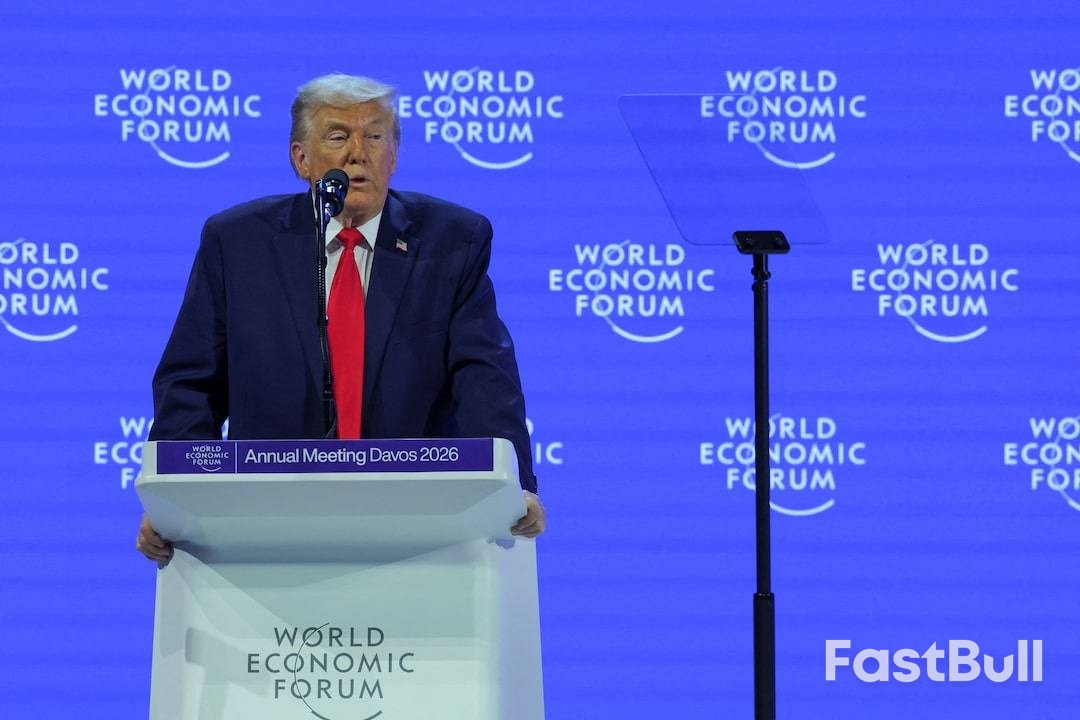
While the speech was slated to focus on Trump's "America First" economic agenda, his interest in Greenland became a central topic. A senior White House official confirmed that Trump might also touch on Greenland and Venezuela, with a more detailed foreign policy discussion scheduled for Thursday.
Trump, who marked the end of a turbulent first year in office, confirmed his intentions at a news conference on Tuesday. He stated he would hold meetings in Davos concerning the Danish territory and expressed optimism that a deal could be reached.

National Security Cited as Primary Motive
The president framed the potential acquisition as a strategic necessity. "I think we will work something out where NATO is going to be very happy and where we're going to be very happy," he said. "But we need it for security purposes. We need it for national security."
This move has generated significant international reaction:
• NATO Concerns: Leaders within the alliance have warned that Trump's Greenland strategy could potentially upend the military coalition.
• Danish Response: In contrast, the leaders of Denmark and Greenland have proposed various ways to accommodate a larger U.S. presence on the strategically vital island, which has a population of 57,000.
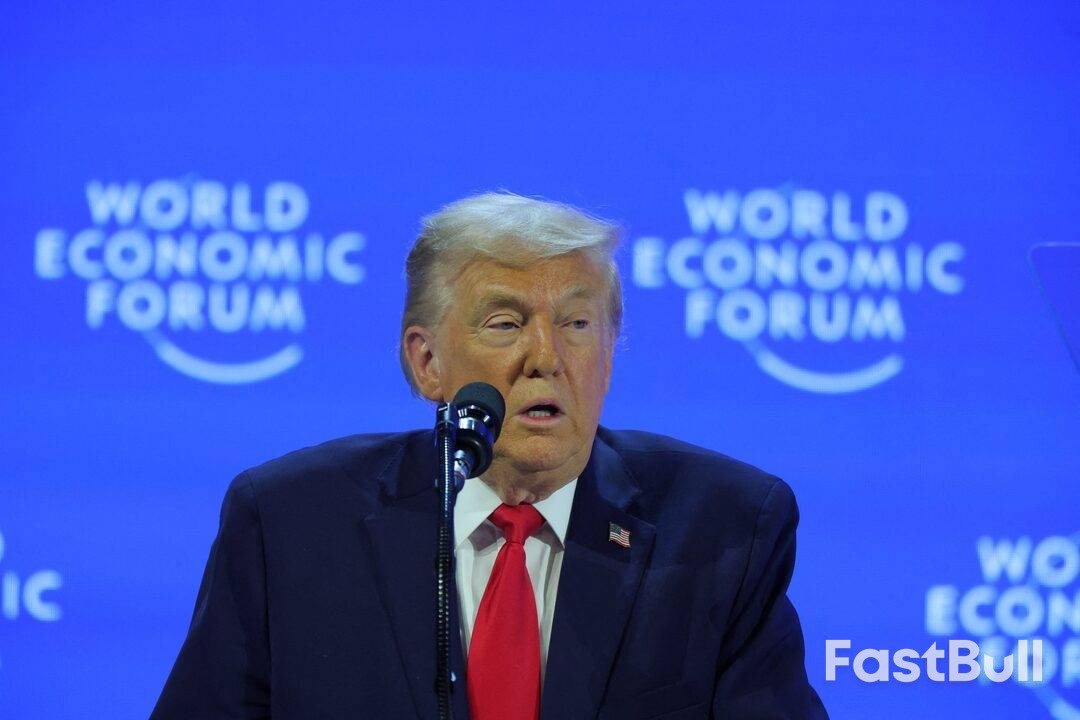
When pressed on how far he was willing to pursue the acquisition—a topic Trump has previously linked to his frustration over not receiving a Nobel Peace Prize—he offered a simple reply: "You'll find out." His presence and agenda are set to overshadow the traditional discussions among global elites at the WEF, focusing on economic and political trends.
The S&P 500 has returned approximately 15% year to date (YTD) while Korea's Kospi surged nearly 70% from its 2022 lows on the back of artificial intelligence (AI)-driven semiconductor demand. The KLCI, meanwhile, has delivered single-digit gains and Bursa Malaysia continues to see more delistings than new entrants.
The conventional justification points to dollar strength and emerging market risk aversion. But the USD is down almost 10% this year against a basket of global currencies. A more structural reason deserves attention: the research coverage gap that leaves most Malaysian stocks invisible to institutional capital — and Singapore's aggressive policy response that Malaysia has yet to match.
Of the approximately 1,050 companies listed on Bursa Malaysia, almost three-quarters have zero analyst coverage, based on data from Refinitiv I/B/E/S. This is not a Malaysian problem alone. Across Asean, around the same proportion of listed companies lack coverage.
Singapore is receptive to this issue. In July 2025, the Monetary Authority of Singapore committed S$50 million (RM157 million) to enhance its Grant for Equity Market Singapore (GEMS) scheme, specifically targeting research coverage of mid- and small-cap companies. The enhanced programme pays research firms up to S$6,000 per published report on under-covered stocks, up from S$4,000 previously. Importantly, it allows both sell-side and buy-side firms to submit reports. The former can generate flows and commissions from trading (even if their recommendations do not perform well) and the latter typically put their money where their mouth is through direct fund allocations aligned with their views. The grant also extends to pre-initial public offering (IPO) companies to build coverage pipelines before listings. This sits within a broader S$5 billion Equity Market Development Programme, Singapore's most aggressive capital markets intervention in a generation.
Malaysia's equivalent is Bursa RISE+, launched in April 2025 as a successor to Bursa RISE. The programme aims to enhance the visibility of 60 publicly listed companies over two years, plus 40 private or pre-IPO firms annually. The earlier Bursa RISE initiative, which ran from 2022 to 2024, covered 60 companies and reported that a little more than two-thirds continued receiving research coverage after the programme ended.
But the maths is on a different scale. At 30 public companies per year, and even assuming only half of Malaysia's uncovered stocks merit institutional research, the current approach would take over a decade to meaningfully close the gap. Singapore's model, direct per-report funding that scales with output, can expand coverage as research capacity grows.
The coverage gap creates a cycle that Malaysian capital markets practitioners know well. Companies without analyst coverage struggle to attract institutional attention, regardless of their fundamentals. Fund managers face career risk buying stocks without third-party validation and risk flying blind, especially international investors without boots on the ground. Lower institutional interest reduces trading volumes, widens spreads and depresses valuations. Not to mention that, typically, institutional investors also provide another form of corporate governance.
The coverage gap matters particularly for Malaysia's ambitions as a global hub for Islamic finance. The Securities Commission Malaysia lists 850 shariah-compliant securities on Bursa Malaysia, approximately 80% of all listings. Many lack analyst coverage.
For Islamic fund managers, this can create an uncomfortable constraint: restrict portfolios to the 80 to 100 large-cap shariah stocks with coverage, sacrificing diversification, or venture into uncovered names. International Islamic funds from the Gulf states often filter for analyst coverage as a first screen, excluding most of Malaysia's compliant universe before fundamental analysis begins.
Analysis of Asean equity returns over the past five years shows that covered and uncovered stocks delivered nearly identical average returns of approximately 40%. But the dispersion tells a different story. Return volatility among uncovered stocks runs 48% higher than covered names. The 10th to 90th percentile range of YTD returns spans -33% to +122% for uncovered stocks, versus -15% to +114% for covered ones. Both the upside and downside are amplified in the parts of the market that institutional capital cannot see. It reflects the scant information infrastructure and where both risks and opportunities lie.
The approximately 750 uncovered companies on Bursa Malaysia are not all penny stocks or shell companies. They include manufacturers, technology firms, consumer businesses and service providers. Many are profitable, growing and reasonably valued. They remain invisible not because they lack quality but because traditional research economics cannot reach them.
The economics that created this gap are structural and understanding why matters for any policy response. Research coverage follows liquidity. Academic research documents this relationship as an illiquidity premium, meaning less liquid stocks must offer higher expected returns to compensate investors for trading costs and information asymmetry.
Brokerages generate revenue from trading commissions, which are positively affected by institutional order flow. A stock trading RM10 million daily attracts coverage because the research pays for itself through commissions. A stock trading RM1 million daily does not, regardless of whether the underlying business is sound.
This creates a size threshold. Employing a single equity research analyst can run from RM700,000 to RM900,000 annually once you factor in salary, support staff, data subscriptions and compliance overhead. Each analyst covers 10 to 15 stocks. For a mid-cap Malaysian company with RM500 million market capitalisation and RM1 million to RM2 million average daily trading value, commission revenue from institutional activity rarely exceeds RM30,000 annually, a fraction of coverage cost. The economics only work above roughly RM1 billion market cap, which excludes most of Bursa Malaysia.
This structural unprofitability worsened after Europe's MiFID II regulations forced the unbundling of research from trading commissions in 2018. Global research budgets fell 20%-30%, with analyst coverage declining 6%-10% overall and disproportionately more for emerging market and small-cap stocks where economics were already marginal.
The coverage that disappeared is not coming back through market forces alone and is worth incentivising. Research coverage generates positive externalities beyond the private returns to brokerages and fund managers. Analysts serve as external monitors, flagging accounting irregularities and governance lapses that might otherwise go unnoticed. Covered companies face more scrutiny, which deters fraud and self-dealing. These are public goods — benefits that accrue to the market as a whole, not just to the parties producing or consuming the research — and contribute to overall capital formation in the region.
Singapore's GEMS enhancement offers several design features worth examining. First, per-report funding that scales with output rather than curating a fixed list of companies. This allows coverage to expand as research capacity grows. Second, talent co-funding that builds analyst capacity rather than just redistributing existing coverage among the same companies. Third, pre-IPO coverage that builds the research ecosystem before companies need it, reducing the information asymmetry that disadvantages new entrants. This spills over into supporting the venture capital market as well.
Singapore's scheme also now includes digital platforms and systematic research providers, a nod towards technology-assisted coverage. The premise is that algorithmic approaches might extend research at lower marginal cost. Machine learning systems can process financial statements and flag anomalies across large universes of companies, and there is genuine value in automating routine monitoring tasks. But the application of AI to equity research faces significant challenges: large language models are prone to numerical errors (particularly problematic for financial data); the signal-to-noise ratio in financial markets is far lower than in domains where AI has succeeded; and the feedback loops required to train effective systems are slow and ambiguous. Reinforcement learning, which has transformed game-playing and robotics, struggles in financial applications precisely because market outcomes provide noisy, delayed signals that make learning difficult. And that is a feature of the financial markets, not a bug.
Bursa RISE+ represents a step in the right direction. The question is whether the current programme is sufficient and whether Malaysia will consider the design elements that give Singapore's approach more room to grow. The current divergence in policy designs between Singapore and Malaysia will likely widen the information gap between the two markets. For Malaysian investors and policymakers, the question is not whether the coverage gap matters — the academic evidence is clear that it does. The question is whether the current response matches the scale of the problem.


A key meeting of G7 finance officials, intended to address US President Donald Trump's recent tariff threats, has been postponed by France, which currently holds the group's presidency.
The video conference, organized by French Finance Minister Roland Lescure, was originally scheduled for Wednesday. However, an official from the minister's office confirmed the meeting has been moved to the following week.
The delay is attributed to scheduling constraints, with many officials attending the World Economic Forum in Davos and managing conflicting ministerial agendas.
France announced its plan for the G7 meeting on Monday, directly following a threat from President Trump to impose 10% tariffs on certain European countries. The move was reportedly conditioned on the US being allowed to acquire Greenland.
Paris assumed the rotating G7 presidency at the start of January but has yet to outline its main priorities. The postponement comes just after the United States gathered ministers from G7 and other nations in Washington to discuss strategies for countering China's control over the rare earths market.
The French government is leading a push for a strong European response to the escalating threats from Washington. Speaking in Davos on Tuesday, French President Emmanuel Macron criticized Trump's strategy, calling the proposed tariffs "fundamentally unacceptable."
In response, France is advocating for Europe to deploy its most powerful trade retaliation measure, known as the anti-coercion instrument.
Fabio Panetta, the governor of Italy's central bank, predicts a future where commercial bank money becomes fully digital, operating alongside digital central bank currency.
In a recent address to Italy's banking association, Panetta outlined a vision where both digital commercial and central bank money remain the bedrock of the monetary system. He stated that stablecoins, by contrast, are destined to play a merely complementary role.
According to Panetta, the inherent weakness of stablecoins is their reliance on a peg to traditional currencies, which limits their ability to function as an independent pillar of the financial system. His comments underscore a prevailing view among European policymakers: the digitalization of finance should be a structural trend led by established banks and central institutions, not by privately issued crypto assets.
Panetta emphasized that payments have evolved into a strategic arena for banks, describing the sector as a core competitive battleground in a global economy being reshaped by technology and politics.
He argued that traditional economic indicators like investment, trade, and interest rates are increasingly swayed by political decisions rather than pure market dynamics. In this new landscape, the global economy's center of gravity is shifting toward technological power.
However, Panetta noted that this tech-driven transformation is unfolding in a far less cooperative global environment than previous industrial revolutions. For banks, this positions digital finance as a major pressure point in an increasingly fragmented geopolitical world.
Panetta's remarks align with the Bank of Italy's consistently cautious approach toward stablecoins and other forms of privately issued digital money.
This institutional skepticism was previously articulated on September 19, 2025, when the bank's Vice Director, Chiara Scotti, warned about the risks associated with multi-issuance stablecoins—tokens issued across multiple jurisdictions under a single brand. Scotti identified several potential threats to the European Union, including:
• Significant legal risks
• Operational vulnerabilities
• Risks to financial stability
To mitigate these dangers, Scotti proposed that such stablecoins should be restricted to jurisdictions with equivalent regulatory standards. She also called for strict mandates on reserves and redemption processes, citing concerns that cross-border issuance could undermine the EU's oversight frameworks.
Despite these warnings, Scotti acknowledged that stablecoins could offer benefits, such as lowering transaction costs and improving the efficiency of payments.
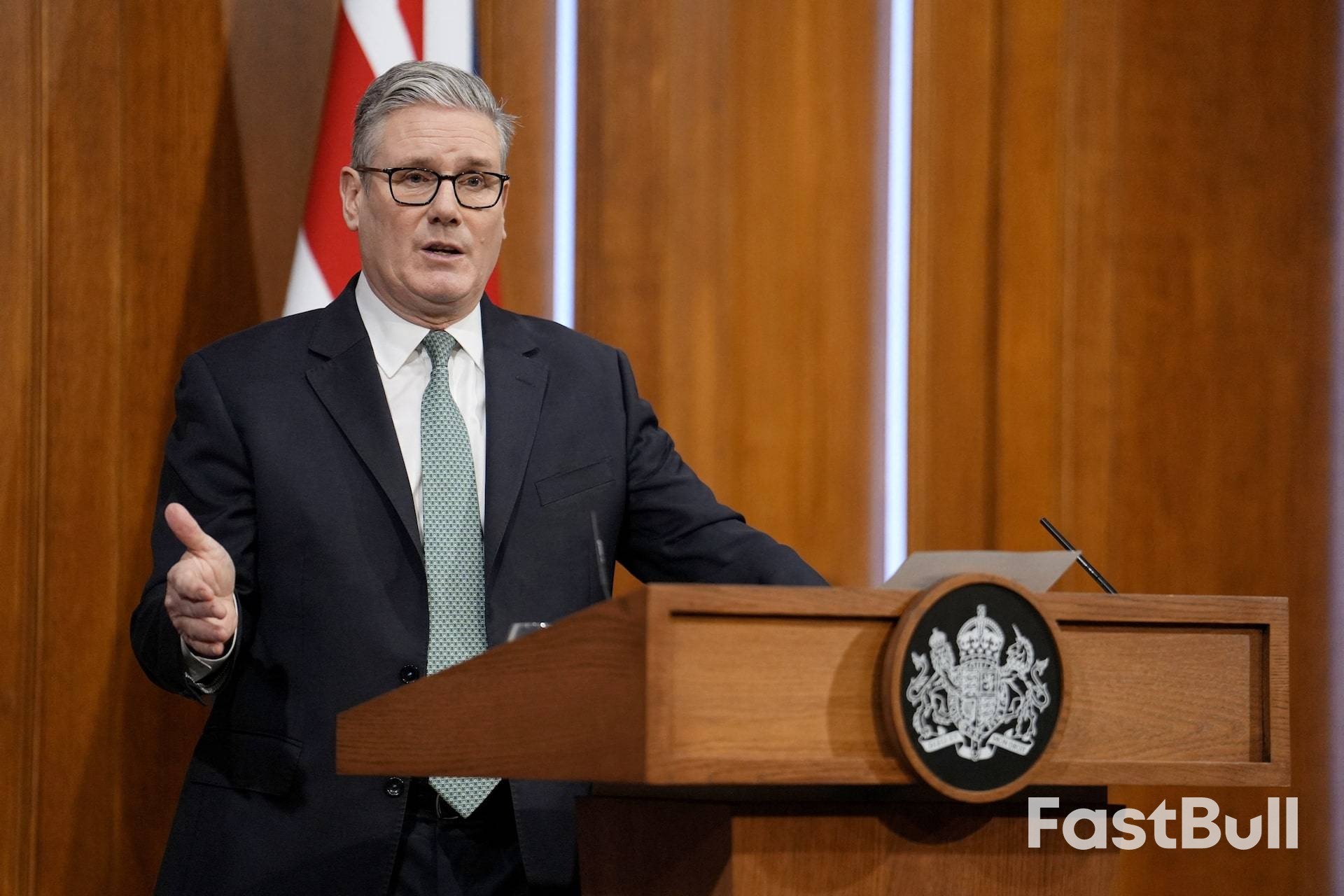
UK Prime Minister Keir Starmer has publicly stated he will not yield to Donald Trump’s demands regarding a potential U.S. acquisition of Greenland, escalating a diplomatic rift between the two nations. Starmer asserts that the U.S. president is leveraging a separate deal over the Chagos Islands to pressure Britain into compliance.

The conflict ignited after Trump threatened to impose tariffs on Britain and other European countries unless a deal for the U.S. to purchase Greenland was reached. In response, Starmer initially called for a "calm discussion" on Monday, signaling a desire to avoid a trade war.
However, the Prime Minister has since hardened his stance, making it clear that Britain’s position is not for sale.
"I will not yield, Britain will not yield, on our principles and values about the future of Greenland under threats of tariffs, and that is my clear position," Starmer told lawmakers. He added that the Danish prime minister is scheduled to visit London on Thursday to discuss the matter.
Starmer emphasized that the future of Greenland must be decided by its own people and by Denmark.
The diplomatic tension intensified when Trump abruptly reversed his administration's position on a UK agreement concerning the Chagos Islands. The U.S. had previously supported the deal, which involves ceding sovereignty of the Indian Ocean territory to secure the future of a joint U.S.-UK air base. On Tuesday, Trump described Britain's move as "stupid and weak."
Starmer framed this sudden criticism as a deliberate tactic. He argued that Trump's change of heart was directly intended to force his hand on Greenland.
"President Trump deployed words on Chagos yesterday that were different from his previous words of welcome and support," Starmer explained. "He deployed those words yesterday for the express purpose of putting pressure on me and Britain."
Despite his firm opposition, Starmer has consistently worked to maintain close ties with the Trump administration to protect vital trade and security interests. When pressed by lawmakers to take an even stronger stand against the U.S. president, Starmer cautioned against severing the relationship.
He stressed the importance of continued cooperation with the United States on global security issues, including the situation in Ukraine.
"That does not mean we agree with the U.S. on everything," Starmer clarified. "But it is foolhardy to think that we should rip up our relationship with the U.S., abandon Ukraine and so many other things that are important to our defence, security and intelligence."
White Label
Data API
Web Plug-ins
Poster Maker
Affiliate Program
The risk of loss in trading financial instruments such as stocks, FX, commodities, futures, bonds, ETFs and crypto can be substantial. You may sustain a total loss of the funds that you deposit with your broker. Therefore, you should carefully consider whether such trading is suitable for you in light of your circumstances and financial resources.
No decision to invest should be made without thoroughly conducting due diligence by yourself or consulting with your financial advisors. Our web content might not suit you since we don't know your financial conditions and investment needs. Our financial information might have latency or contain inaccuracy, so you should be fully responsible for any of your trading and investment decisions. The company will not be responsible for your capital loss.
Without getting permission from the website, you are not allowed to copy the website's graphics, texts, or trademarks. Intellectual property rights in the content or data incorporated into this website belong to its providers and exchange merchants.
Not Logged In
Log in to access more features

FastBull Membership
Not yet
Purchase
Log In
Sign Up