• Trade
  • Markets
  • Copy
  • Contests
  • News
  • 24/7
  • Calendar
  • Q&A
  • Chats
Screeners
SYMBOL
LAST
ASK
BID
HIGH
LOW
NET CHG.
%CHG.
SPREAD
SPX
S&P 500 Index
6915.62
6915.62
6915.62
6932.95
6895.49
+2.26
+ 0.03%
--
DJI
Dow Jones Industrial Average
49098.70
49098.70
49098.70
49265.46
48963.05
-285.30
-0.58%
--
IXIC
NASDAQ Composite Index
23501.23
23501.23
23501.23
23610.74
23374.26
+65.22
+ 0.28%
--
USDX
US Dollar Index
97.230
97.310
97.230
98.250
97.200
-0.820
-0.84%
--
EURUSD
Euro / US Dollar
1.18281
1.18301
1.18281
1.18334
1.17280
+0.00736
+ 0.63%
--
GBPUSD
Pound Sterling / US Dollar
1.36430
1.36467
1.36430
1.36452
1.34817
+0.01433
+ 1.06%
--
XAUUSD
Gold / US Dollar
4986.45
4986.45
4986.45
4990.01
4899.61
+50.62
+ 1.03%
--
WTI
Light Sweet Crude Oil
61.105
61.357
61.105
61.253
59.453
+1.510
+ 2.53%
--

Community Accounts

Signal Accounts
--
Profit Accounts
--
Loss Accounts
--
View More

Become a signal provider

Sell trading signals to earn additional income

View More

Guide to Copy Trading

Get started with ease and confidence

View More

Signal Accounts for Members

All Signal Accounts

Best Return
  • Best Return
  • Best P/L
  • Best MDD
Past 1W
  • Past 1W
  • Past 1M
  • Past 1Y

All Contests

  • All
  • Trump Updates
  • Recommend
  • Stocks
  • Cryptocurrencies
  • Central Banks
  • Featured News
Top News Only
Share

Dollar/Yen Dips, Down 0.47% At 155.00 Yen

Share

[Bitcoin Dips Below $88,000, 24-Hour Change -1.47%] January 26Th, According To Htx Market Data, Bitcoin Fell Below $88,000, With A 24-Hour Decrease Of 1.47%

Share

Ukraine President Zelenskiy: Documenт Of Safety Guarantees From USA Is 100% Ready

Share

Ukraine President Zelenskiy: Russia Is Avoiding Committing To A Lasting And Just Peace And Is Not Accepting A Ceasefire As A Prelude

Share

CEO: Volkswagen Ag May Pull Plans For US Audi Plant Absent Tariff Cuts

Share

Canada Has No Intention Of Making Free Trade Deal With China- Prime Minister Mark Carney

Share

Canada Respects Our Commitments Under Usma- Prime Minister Mark Carney

Share

Trump Envoy Witkoff: USA Talks With Israeli Prime Minister Netanyahu On Peace Board Were Constructive, Positive

Share

102918 Number Of Power Outage Reported In Louisiana As Of 8:09 Am Et - Poweroutage.US Website

Share

523067 Number Of Power Outage Reported In US As Of 7:22 Am Et - Poweroutage.US Website

Share

107295 Number Of Power Outage Reported In Mississippi As Of 6:34 Am Et - Poweroutage.US Website

Share

Oil Ministry - Iraq's Total Oil Exports For December At 107.651 Million Barrels

Share

Airbus CEO Says Company Faced Significant Collateral Damage From Trade Tensions In 2025

Share

Kremlin: Russian Military Will Attentively Monitor US Plans For Golden Dome - Including In Context Of Greenland

Share

100765 Number Of Power Outages Reported In Texas As Of 6 Am Et - Poweroutage.US Website

Share

Russia Will Never Discuss Anything With EU's Kallas, Will Just Wait For Her To Leave Her Post - Interfax Cites Kremlin

Share

Statistics Bureau - Israel's Industrial Production 6.3% Seasonally Adjusted In November Versus 1.5% In October

Share

Israel Raised 207 Billion Shekels In Debt In 2025

Share

Israel Public Debt To GDP Ratio 68.6% In 2025 Versus 67.7% In 2024

Share

Around 1700 Kyiv Apartment Blocks Still Without Heating After Russian Strike

TIME
ACT
FCST
PREV
U.K. Retail Sales MoM (SA) (Dec)

A:--

F: --

P: --

France Manufacturing PMI Prelim (Jan)

A:--

F: --

P: --

France Services PMI Prelim (Jan)

A:--

F: --

P: --

France Composite PMI Prelim (SA) (Jan)

A:--

F: --

P: --

Germany Manufacturing PMI Prelim (SA) (Jan)

A:--

F: --

P: --

Germany Services PMI Prelim (SA) (Jan)

A:--

F: --

P: --

Germany Composite PMI Prelim (SA) (Jan)

A:--

F: --

P: --

Euro Zone Composite PMI Prelim (SA) (Jan)

A:--

F: --

P: --

Euro Zone Manufacturing PMI Prelim (SA) (Jan)

A:--

F: --

P: --

Euro Zone Services PMI Prelim (SA) (Jan)

A:--

F: --

P: --

U.K. Composite PMI Prelim (Jan)

A:--

F: --

P: --

U.K. Manufacturing PMI Prelim (Jan)

A:--

F: --

P: --

U.K. Services PMI Prelim (Jan)

A:--

F: --

P: --

Mexico Economic Activity Index YoY (Nov)

A:--

F: --

P: --

Russia Trade Balance (Nov)

A:--

F: --

P: --

Canada Core Retail Sales MoM (SA) (Nov)

A:--

F: --

P: --

Canada Retail Sales MoM (SA) (Nov)

A:--

F: --

P: --
U.S. IHS Markit Manufacturing PMI Prelim (SA) (Jan)

A:--

F: --

P: --

U.S. IHS Markit Services PMI Prelim (SA) (Jan)

A:--

F: --

P: --

U.S. IHS Markit Composite PMI Prelim (SA) (Jan)

A:--

F: --

P: --

U.S. UMich Consumer Sentiment Index Final (Jan)

A:--

F: --

P: --

U.S. UMich Current Economic Conditions Index Final (Jan)

A:--

F: --

P: --

U.S. UMich Consumer Expectations Index Final (Jan)

A:--

F: --

P: --

U.S. Conference Board Leading Economic Index MoM (Nov)

A:--

F: --

P: --

U.S. Conference Board Coincident Economic Index MoM (Nov)

A:--

F: --

P: --

U.S. Conference Board Lagging Economic Index MoM (Nov)

A:--

F: --

P: --

U.S. UMich 1-Year-Ahead Inflation Expectations Final (Jan)

A:--

F: --

P: --

U.S. Conference Board Leading Economic Index (Nov)

A:--

F: --

P: --

U.S. Weekly Total Rig Count

A:--

F: --

P: --

U.S. Weekly Total Oil Rig Count

A:--

F: --

P: --

Germany Ifo Business Expectations Index (SA) (Jan)

--

F: --

P: --

Germany IFO Business Climate Index (SA) (Jan)

--

F: --

P: --

Germany Ifo Current Business Situation Index (SA) (Jan)

--

F: --

P: --

U.S. Dallas Fed PCE Price Index YoY (Nov)

--

F: --

P: --

Brazil Current Account (Dec)

--

F: --

P: --

Mexico Unemployment Rate (Not SA) (Dec)

A:--

F: --

P: --

Canada National Economic Confidence Index

--

F: --

P: --

U.S. Non-Defense Capital Durable Goods Orders MoM (Excl. Aircraft) (Nov)

--

F: --

P: --

U.S. Durable Goods Orders MoM (Excl. Defense) (SA) (Nov)

--

F: --

P: --

U.S. Durable Goods Orders MoM (Excl.Transport) (Nov)

--

F: --

P: --

U.S. Durable Goods Orders MoM (Nov)

--

F: --

P: --

U.S. Chicago Fed National Activity Index (Nov)

--

F: --

P: --

U.S. Dallas Fed New Orders Index (Jan)

--

F: --

P: --

U.S. Dallas Fed General Business Activity Index (Jan)

--

F: --

P: --

U.K. BRC Shop Price Index YoY (Jan)

--

F: --

P: --

China, Mainland Industrial Profit YoY (YTD) (Dec)

--

F: --

P: --

Mexico Trade Balance (Dec)

--

F: --

P: --

U.S. S&P/CS 20-City Home Price Index YoY (Not SA) (Nov)

--

F: --

P: --

U.S. S&P/CS 20-City Home Price Index MoM (SA) (Nov)

--

F: --

P: --

U.S. FHFA House Price Index MoM (Nov)

--

F: --

P: --

U.S. FHFA House Price Index (Nov)

--

F: --

P: --

U.S. Richmond Fed Manufacturing Composite Index (Jan)

--

F: --

P: --

U.S. Conference Board Present Situation Index (Jan)

--

F: --

P: --

U.S. Conference Board Consumer Expectations Index (Jan)

--

F: --

P: --

U.S. Richmond Fed Manufacturing Shipments Index (Jan)

--

F: --

P: --

U.S. Richmond Fed Services Revenue Index (Jan)

--

F: --

P: --

U.S. Conference Board Consumer Confidence Index (Jan)

--

F: --

P: --

Australia RBA Trimmed Mean CPI YoY (Q4)

--

F: --

P: --

Australia CPI YoY (Q4)

--

F: --

P: --

Australia CPI QoQ (Q4)

--

F: --

P: --

Q&A with Experts
    • All
    • Chatrooms
    • Groups
    • Friends
    Form Forex lk flag
    https://mlk-trading-hub.base44.app
    Form Forex lk flag
    This message has been withdrawn
    FORMFOREXL flag
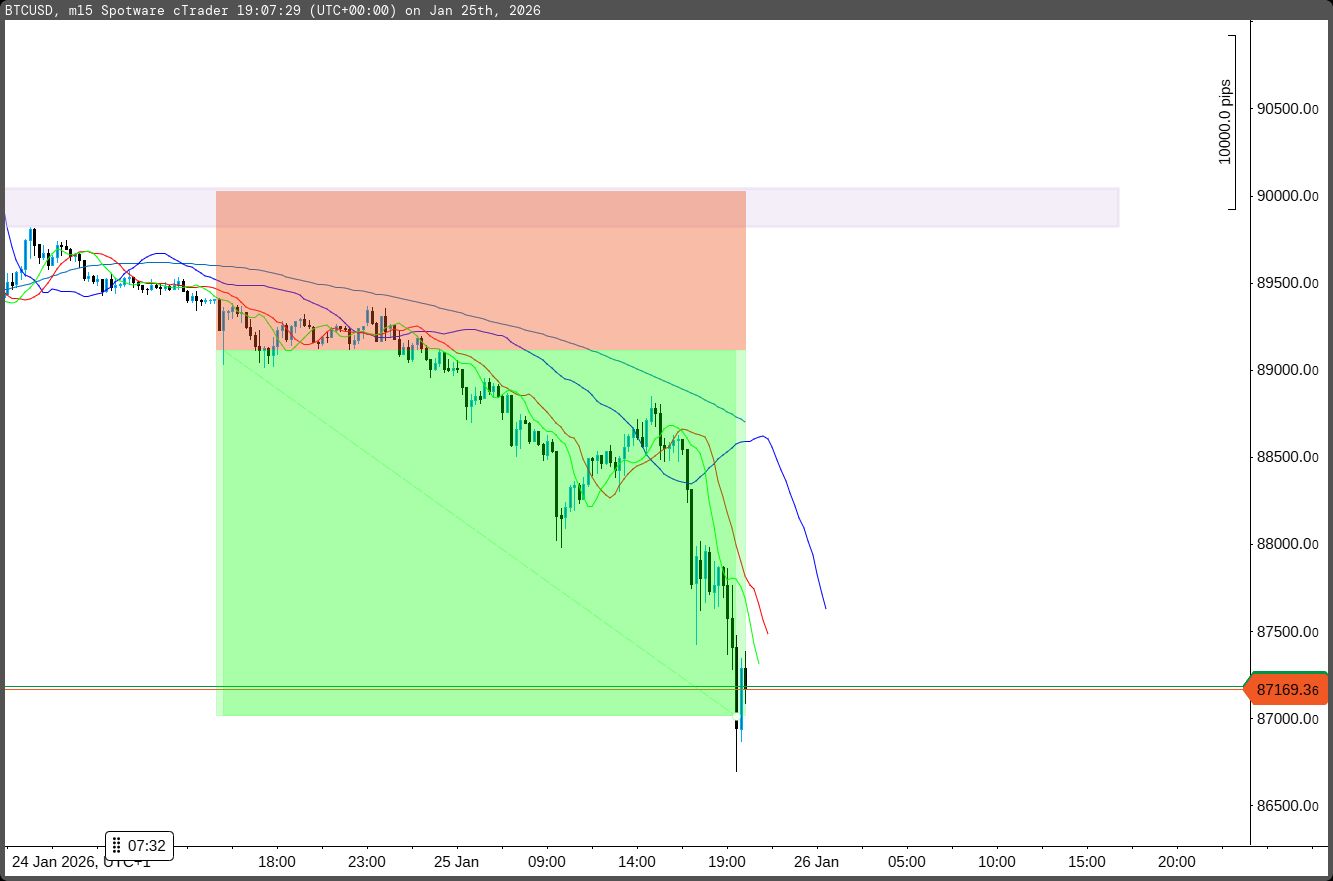
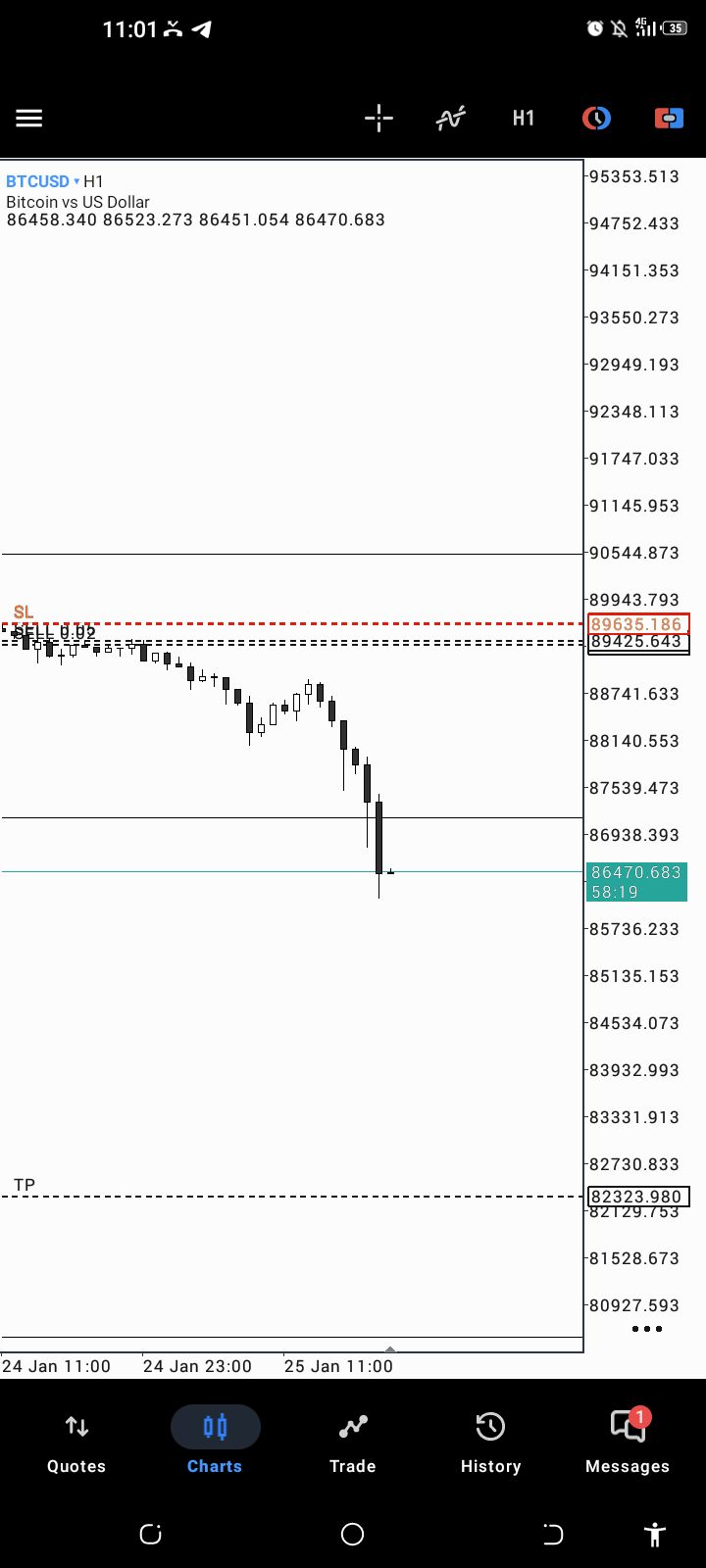
    That analysis was from (MLK TRADING HUB) on BTCUSD entry : 89000 stoploss: 90000 Tp 1: 88000 Tp2: 87000
    Sanjeev Ku flag
    Sanjeev Ku
    87951 to 86377. free fall
    Jon Jony flag
    BTc is beautiful
    Brandon Ki flag
    Jon Jony
    BTc is beautiful
    @Jon Jonyperhaps it's giving a chance to buy dips
    Jon Jony flag
    It's strange that BTC is dumped on Sundays before the market opens.
    Brandon Ki flag
    Jon Jony
    It's strange that BTC is dumped on Sundays before the market opens.
    @Jon Jonylikely to continue longing Gold to new ATH, but look this crazy crash on Sunday could be a warning
    Eurusdonly flag
    Eurusdonly flag
    Eurusdonly flag
    Eurusdonly
    i have been holding Shorts on Btcusd
    Eurusdonly flag
    Eurusdonly
    who got this ?
    Jon Jony flag
    Sundays and such obemas are sold, small ones are unlikely to make such discoveries next year if the whales don't buy it, then this will be a signal
    FORMFOREXL flag
    Brandon Ki flag
    Jon Jony
    Sundays and such obemas are sold, small ones are unlikely to make such discoveries next year if the whales don't buy it, then this will be a signal
    @Jon Jonysomething crazy is cooking
    Jon Jony flag
    How I love these moments like watching a movie
    "Jon Jony" recalled a message
    "Jon Jony" recalled a message
    "Jon Jony" recalled a message
    Type here...
    Add Symbol or Code

      No matching data

      All
      Trump Updates
      Recommend
      Stocks
      Cryptocurrencies
      Central Banks
      Featured News
      • All
      • Russia-Ukraine Conflict
      • Middle East Flashpoint
      • All
      • Russia-Ukraine Conflict
      • Middle East Flashpoint
      Search
      Products

      Charts Free Forever

      Chats Q&A with Experts
      Screeners Economic Calendar Data Tools
      Membership Features
      Data Warehouse Market Trends Institutional Data Policy Rates Macro

      Market Trends

      Market Sentiment Order Book Forex Correlations

      Top Indicators

      Charts Free Forever
      Markets

      News

      News Analysis 24/7 Columns Education
      From Institutions From Analysts
      Topics Columnists

      Latest Views

      Latest Views

      Trending Topics

      Top Columnists

      Latest Update

      Signals

      Copy Rankings Latest Signals Become a signal provider AI Rating
      Contests
      Brokers

      Overview Brokers Assessment Rankings Regulators News Claims
      Broker listing Forex Brokers Comparison Tool Live Spread Comparison Scam
      Q&A Complaint Scam Alert Videos Tips to Detect Scam
      More

      Business
      Events
      Careers About Us Advertising Help Center

      White Label

      Data API

      Web Plug-ins

      Affiliate Program

      Awards Institution Evaluation IB Seminar Salon Event Exhibition
      Vietnam Thailand Singapore Dubai
      Fans Party Investment Sharing Session
      FastBull Summit BrokersView Expo
      Recent Searches
        Top Searches
          Markets
          News
          Analysis
          User
          24/7
          Economic Calendar
          Education
          Data
          • Names
          • Latest
          • Prev

          View All

          No data

          Scan to Download

          Faster Charts, Chat Faster!

          Download App
          English
          • English
          • Español
          • العربية
          • Bahasa Indonesia
          • Bahasa Melayu
          • Tiếng Việt
          • ภาษาไทย
          • Français
          • Italiano
          • Türkçe
          • Русский язык
          • 简中
          • 繁中
          Open Account
          Search
          Products
          Charts Free Forever
          Markets
          News
          Signals

          Copy Rankings Latest Signals Become a signal provider AI Rating
          Contests
          Brokers

          Overview Brokers Assessment Rankings Regulators News Claims
          Broker listing Forex Brokers Comparison Tool Live Spread Comparison Scam
          Q&A Complaint Scam Alert Videos Tips to Detect Scam
          More

          Business
          Events
          Careers About Us Advertising Help Center

          White Label

          Data API

          Web Plug-ins

          Affiliate Program

          Awards Institution Evaluation IB Seminar Salon Event Exhibition
          Vietnam Thailand Singapore Dubai
          Fans Party Investment Sharing Session
          FastBull Summit BrokersView Expo

          Trump Hints Hassett to Stay, Shaking Up Fed Chair Race

          Kevin Morgan

          Remarks of Officials

          Economic

          Central Bank

          Political

          Summary:

          Kevin Hassett's Fed Chair bid falters as Trump prefers his current role, intensifying the search for a successor amidst probes.

          White House economic adviser Kevin Hassett’s potential candidacy for Federal Reserve Chair is now in doubt after President Donald Trump publicly indicated he prefers to keep Hassett in his current role.

          The President's reluctance complicates the search for a successor to current Fed Chair Jerome Powell. During a recent White House event, Trump directly told Hassett, "I actually want to keep you where you are, if you want to know the truth."

          Speaking on Fox News, Hassett confirmed the ongoing discussion. "From the beginning, he and I have talked about whether it's better for me to be here in the West Wing or over at the Fed," he said. "I don't think he's made a final call on that."

          The Shifting Field of Fed Candidates

          Hassett was once considered a frontrunner for the top job at the central bank. The race is now widely seen as a four-person contest, with the other key contenders being Fed Governor Christopher Waller, former governor Kevin Warsh, and BlackRock Inc. executive Rick Rieder.

          According to people familiar with the matter, Rieder's candidacy has recently gained significant momentum. Some believe he may face an easier path to confirmation in the Senate, a crucial factor in the current political climate.

          Political Headwinds and a Fed Investigation

          The nomination process is unfolding under a cloud of controversy. A criminal probe targeting the Federal Reserve and Jerome Powell over the remodeling of the central bank's headquarters has sparked political backlash.

          Powell has accused the Justice Department of initiating the investigation to pressure the Fed into cutting interest rates. The fallout has reached Congress, with influential lawmakers like Senate Banking Committee member Thom Tillis warning that any nominee from President Trump will be subjected to intense scrutiny.

          Hassett Defers to the President

          In his Sunday interview, Hassett acknowledged the situation and deferred to the President's judgment. "There are a lot of great candidates, and it could well be that the president's right to make the decision that this is the best place for me right now," he stated, referring to his post at the White House.

          Hassett added that he was "humbled and gratified" by Trump's comments, describing the president as "such a good guy."

          The search for the next Fed Chair is being led by Bessent, who Trump has confirmed has removed himself from consideration for the role. Jerome Powell's term as head of the central bank is set to end on May 15.

          To stay updated on all economic events of today, please check out our Economic calendar
          Risk Warnings and Disclaimers
          You understand and acknowledge that there is a high degree of risk involved in trading. Following any strategies or investment methods may lead to potential losses. The content on the site is provided by our contributors and analysts for information purposes only. You are solely responsible for determining whether any trading assets, securities, strategy, or any other product is suitable for investing based on your own investment objectives and financial situation.
          Add to Favorites
          Share

          Russia: Inflation Pressures Re-Emerge At The Start Of 2026

          Gerik

          Economic

          Inflation Trends And The 2025 Slowdown

          Russia entered 2026 following a notable moderation in inflation over the previous year. According to data from the Federal State Statistics Service Rosstat, headline inflation for 2025 stood at 5.59%, a substantial decline from 9.52% in 2024, 7.42% in 2023, and 11.94% in 2022. This outcome came in below earlier official projections, indicating that price pressures eased more quickly than policymakers had anticipated.
          Both major forecasting institutions adjusted their expectations during 2025. In October, the Central Bank of Russia projected inflation in the range of 6.5% to 7%, while the Ministry of Economic Development estimated 6.8% in its September forecast. The final outcome suggests that monetary tightening and weaker domestic demand were closely associated with slower price growth across much of the year.

          Early 2026 Signals A Rebound In Price Growth

          Despite the improvement recorded in 2025, inflationary pressure resurfaced at the start of 2026. Between January 1 and January 12, consumer prices rose by 0.62%. For the full month of January, the increase is estimated at 1.23%, which corresponds to an annualized pace of approximately 6.26%.
          A key factor influencing this early-year acceleration is the increase in the value-added tax, which rose from 20% to 22% effective January 1, 2026. The timing and magnitude of the price increases suggest a strong linkage between administrative tax adjustments and short-term inflation dynamics, rather than a purely demand-driven surge.

          Monetary Policy Shift And Inflation Targets

          On December 19, the Central Bank of Russia reduced its key policy rate by 50 basis points to 16%, marking a shift away from an extended period of tight monetary policy. The rate cut reflects confidence that inflation can be steered back toward target levels without maintaining maximum restraint.
          Looking ahead, the central bank projects inflation in 2026 to remain within a 4% to 5% range. The Ministry of Economic Development is slightly more optimistic, forecasting inflation at 4% based on its September outlook. These projections imply that policymakers view the early-2026 price spike as manageable within the existing policy framework rather than as a signal of sustained overheating.

          Food Prices And Persistent Cost Pressures

          Food prices continued to play a significant role in shaping inflation patterns. In December 2025, food prices rose by 0.43%, bringing the total increase for the year to 5.24%, compared with 11.05% in 2024. This deceleration aligns with broader inflation trends, although price levels remain elevated for many households.
          Within this category, fruit and vegetable prices increased by 1.56% in December and by 8.80% over the full year, down from a sharp 22.09% rise in 2024. Certain items recorded much stronger gains in 2025, including frozen fish, which rose by 16.98%, alcoholic beverages at 11.12%, and bread and bakery products, also up 11.12%. These increases indicate uneven price adjustment across food subcategories rather than a uniform slowdown.

          Non-Food Goods And Diverging Price Movements

          Prices for non-food goods rose by 0.34% in December 2025 and by 2.99% over the year, compared with a 6.12% increase in 2024. Fuel prices remained a notable source of upward pressure, with gasoline prices increasing by 10.78% in 2025. Pharmaceutical products rose by 9.88%, while tobacco products increased by 7.08%.
          At the same time, several durable goods categories experienced price declines. Television and radio products fell by 8.53%, and household appliances declined by 4.96% over the year. This divergence reflects differing supply conditions and consumer demand patterns, with discretionary goods showing weaker pricing power.

          Services Inflation And Core Price Dynamics

          Service prices rose by an average of 0.15% in December and increased by 9.30% over the course of 2025, down from 11.52% in 2024. While the pace has eased, services inflation remains elevated relative to goods, highlighting ongoing cost pressures in labor-intensive sectors.
          Core consumer price inflation, which excludes items affected by seasonal and administrative factors, reached 100.37% in December 2025 and 105.44% for the year as a whole, compared with 108.93% in 2024. The decline in core inflation suggests a broader moderation in underlying price momentum, even as headline figures fluctuate due to tax and policy changes.
          Russia’s inflation profile entering 2026 presents a mixed picture. The sharp deceleration achieved in 2025 demonstrates the effectiveness of prolonged monetary tightening, yet early-2026 data reveal renewed price pressure linked to fiscal adjustments and sector-specific dynamics. Whether inflation stabilizes within the official 4% to 5% target range will depend on the interaction between tax policy, monetary easing, and household demand over the coming months.
          To stay updated on all economic events of today, please check out our Economic calendar
          Risk Warnings and Disclaimers
          You understand and acknowledge that there is a high degree of risk involved in trading. Following any strategies or investment methods may lead to potential losses. The content on the site is provided by our contributors and analysts for information purposes only. You are solely responsible for determining whether any trading assets, securities, strategy, or any other product is suitable for investing based on your own investment objectives and financial situation.
          Add to Favorites
          Share

          China In 2026: Entering A New Phase Of Economic Adjustment

          Gerik

          Economic

          A Critical Turning Point For The World’s Second-Largest Economy

          The year 2026 represents a structural inflection point for China’s economic trajectory. As the world’s second-largest economy, China is facing the complex task of maintaining growth stability while stimulating domestic demand and preserving industrial capacity in a far more challenging global trade environment. The policy focus has shifted from rapid expansion to controlled recalibration, reflecting both internal structural pressures and external constraints.
          Over the past three years, China has consistently pursued GDP growth close to 5%. By the end of September 2025, the economy recorded growth of 5.2% for the January–September period, remaining broadly aligned with this objective. However, the official growth target for 2026 remains undecided and is expected to be announced at the National People’s Congress in March. Zhennan Li, Senior Asia Economist at Pictet Wealth Management, projects that policymakers may set a growth range of 4.5% to 5% to preserve feasibility in the long-term objective of doubling household income by 2035. A separate survey conducted by Nikkei similarly anticipates real GDP growth of around 4.5% in 2026.
          This year also marks the beginning of China’s 15th Five-Year Plan. While specific numerical targets have yet to be disclosed, the overarching direction emphasizes maintaining growth within a reasonable range while gradually increasing the share of household consumption. The relationship between growth moderation and consumption upgrading is structural rather than coincidental, as slower but more balanced growth is expected to reduce reliance on investment-led expansion.

          Property Market Stress And Consumer Confidence

          One of the central challenges facing China’s growth outlook lies in the continued weakness of the property sector. Housing sales are expected to decline further, and estimates suggest that new home inventory reached a record level equivalent to 27.4 months of sales by November of the previous year. This accumulation of unsold inventory has placed financial strain on major developers, exemplified by China Vanke’s negotiations to extend bond repayment schedules.
          At the same time, consumer confidence has yet to show meaningful recovery. The government has identified consumption stimulation as a top policy priority, although expectations for a large-scale stimulus package remain limited. In December 2025, Chinese leaders reaffirmed a commitment to proactive fiscal policy and moderately accommodative monetary policy. Larry Hu, China economist at Macquarie, noted that policymakers currently do not perceive an urgent need to significantly intensify stimulus efforts. This indicates a cautious policy stance, where limited intervention is preferred to avoid amplifying structural imbalances.

          Targeted Fiscal Tools And Monetary Support

          In practical terms, China’s stimulus approach in 2026 continues to favor targeted instruments over broad-based expansion. The Ministry of Finance has allocated 62.5 billion yuan from government bond issuance to support consumption, a figure lower than that of 2025. Direct support measures, such as childcare subsidies, are being rolled out alongside expectations of further interest rate reductions by the central bank.
          The policy logic reflects a clear correlation between narrowly focused fiscal tools and controlled demand support, rather than an attempt to reignite growth through large-scale spending. This strategy suggests a deliberate effort to preserve fiscal space while addressing specific demand-side weaknesses.

          Export Resilience Under Rising Protectionism

          Externally, China’s export sector has demonstrated notable resilience. From January to November 2025, the country recorded a record trade surplus of 1 trillion USD. Strong export growth to Europe, Southeast Asia, and Africa has offset declining shipments to the United States. HSBC analysis attributes this performance largely to China’s price competitiveness, with export prices falling by more than 20% over the past two years.
          However, the durability of this export momentum faces increasing pressure from renewed protectionist measures. Since January, Mexico has imposed tariffs of up to 50% on car imports from countries without free trade agreements, including China. Earlier, the French President warned in the Financial Times that Europe may adopt protective measures if China fails to address internal economic imbalances. These developments highlight a strong association between China’s export expansion and rising trade resistance in destination markets.

          Geopolitical Uncertainty And Industrial Capacity

          While a planned visit to China by former US President Donald Trump in April could offer an opportunity to ease bilateral tensions, broader global trade conflicts continue to cloud the outlook. J.P. Morgan forecasts that China’s export growth will slow in 2026 under these conditions.
          In response to deflationary pressures and intensified price competition, China has introduced several policy measures, yet there is no indication of a meaningful reduction in industrial capacity. The government has established three state-backed investment funds with a combined size of 150 billion yuan, targeting semiconductors, artificial intelligence, and energy sectors. Economists at Societe Generale have expressed doubts about the feasibility of capacity reduction in downstream industries, given the dominant role of private enterprises. This suggests that industrial expansion in strategic sectors remains a long-term priority, even as traditional sectors face oversupply.

          Investment Decline And Policy Redirection

          The most concerning structural signal in China’s current economic profile is the contraction in fixed asset investment. In 2025, fixed asset investment declined by 2.6%, marking the first annual decline since 1989. A 16% drop in real estate investment, combined with record-low credit growth, reflects exceptionally weak capital demand across the economy.
          In response, authorities have pledged to halt the investment downturn by redirecting capital toward consumption-oriented infrastructure, including electric vehicle charging stations and social welfare services. The China Development Bank and other state financial institutions have deployed financial instruments worth 500 billion yuan to support construction activity, with additional funding rounds likely. The link between infrastructure investment and consumption support here is complementary, as improved public infrastructure is expected to facilitate longer-term household spending rather than generate immediate output surges.

          Technology As A Strategic Anchor

          In his New Year address, President Xi Jinping did not directly reference the difficulties in the property market or consumer sentiment. Instead, he highlighted breakthroughs in domestic artificial intelligence and semiconductor development. This messaging reinforces the continuity of China’s high-technology strategy, signaling that innovation-led growth remains central despite headwinds in traditional sectors and an increasingly restrictive global trade environment.
          Overall, China’s economy in 2026 is set to operate within a demanding adjustment phase. Growth will rely less on large-scale stimulus and more on targeted policy interventions, while external trade pressures and internal structural constraints shape the pace of expansion. The capacity to balance domestic stabilization with geopolitical adaptability will be decisive in determining whether China can sustain a stable and credible growth path in the years ahead.
          To stay updated on all economic events of today, please check out our Economic calendar
          Risk Warnings and Disclaimers
          You understand and acknowledge that there is a high degree of risk involved in trading. Following any strategies or investment methods may lead to potential losses. The content on the site is provided by our contributors and analysts for information purposes only. You are solely responsible for determining whether any trading assets, securities, strategy, or any other product is suitable for investing based on your own investment objectives and financial situation.
          Add to Favorites
          Share

          Micro-Digital Work And The Emergence Of A New Economic Pattern In Southeast Asia

          Gerik

          Economic

          The Rise Of Micro-Digital Tasks In The Regional Economy

          A quiet yet significant economic shift is unfolding across Southeast Asia as workers in countries such as Indonesia, the Philippines, and Vietnam increasingly engage in micro-digital tasks. These activities include data labeling, image classification, and other small-scale digital operations that require limited time but high repetition. While each task generates modest earnings, their cumulative effect is substantial, creating an additional income stream that strengthens financial resilience at the household level.
          This trend has gained momentum alongside the rapid expansion of Southeast Asia’s internet economy, which has now surpassed a valuation of 300 billion USD. The growth of digital platforms and online marketplaces has expanded access to task-based digital work, making it easier for individuals to monetize short periods of available time throughout the day.

          Country-Specific Dynamics And Digital Adaptation

          The development of micro-digital work reflects local social and economic characteristics. In the Philippines, the long-standing cultural emphasis on adaptability, often described as diskarte, has transitioned into the digital sphere, where workers creatively combine online tasks with other forms of income. In Vietnam, the acceleration of e-commerce has widened opportunities for home-based digital work, particularly for those seeking flexible arrangements. Indonesia, supported by a large and youthful labor force, has become a major hub for data labeling activities, positioning itself as a key contributor to the global digital supply chain.
          These national patterns move in parallel with broader digitalization trends rather than emerging independently. Increased connectivity and platform accessibility are closely associated with higher participation in micro-digital tasks, although participation levels still vary according to infrastructure quality and digital skills.

          Global Scale And A Distinct Economic Layer

          According to the World Bank, an estimated 154 million to 435 million people worldwide are engaged in online work of this kind. This form of labor does not align neatly with traditional freelance models or the commonly referenced gig economy. Instead, it represents a separate economic layer characterized by flexibility, cumulative earnings, and increasing levels of standardization. Its structure allows workers to enter and exit with minimal barriers, which explains its appeal across different income and age groups.
          Empirical data highlights the growing importance of this income source. Recruitment firm Gini Talent reports that earnings from micro-digital tasks constitute the primary source of income for 44% of data labeling workers in Indonesia. In the Philippines, the Philippine Institute for Development Studies documented a 208% increase in income from digital freelance activities between 2019 and 2020. These figures suggest a strong association between platform-based digital work and income diversification, particularly during periods of economic uncertainty.

          Visibility Gaps In Labor Statistics

          Despite rising participation, the latest ASEAN Employment Outlook report indicates that these supplementary forms of online labor are not fully captured in official labor statistics. This underrepresentation creates a disconnect between observed economic behavior and formal employment data. While the activities are widespread and growing, their partial invisibility complicates policy design and social protection planning.
          Most participants view micro-digital work as a flexible addition rather than a replacement for formal employment. Workers typically allocate between one and three hours per day to these tasks, often during commuting time or in the evenings. Younger workers frequently use the income to pay for digital services, while older participants rely on it to offset daily living expenses. Many households are effectively adopting a portfolio approach, combining formal jobs with digital tasks to stabilize overall income flows.

          Implications For Advanced Economies In The Region

          In higher-income economies such as Singapore, participation rates in micro-digital work tend to be lower and more supplementary, which contributes to their limited statistical visibility. Even so, the social impact remains tangible. A 2022 survey in Singapore found that platform-based delivery drivers expressed strong demand for improved social security protections linked to their platform-derived income. This reflects a growing awareness of the gap between income generation and welfare coverage.
          Observers increasingly argue that governments and businesses should move beyond simple encouragement of platform work and focus on establishing fair micro-work standards. Key areas of concern include transparent compensation, clear task guidelines, and structured pathways for skill development. Such measures align the interests of firms and workers, enabling companies to access large, flexible labor pools while offering workers a more stable and equitable source of income.
          Taken together, micro-digital tasks are evolving into a meaningful economic component across Southeast Asia. Their expansion is closely associated with digital infrastructure growth and changing household income strategies, underscoring their role in shaping the future of work in the region.
          To stay updated on all economic events of today, please check out our Economic calendar
          Risk Warnings and Disclaimers
          You understand and acknowledge that there is a high degree of risk involved in trading. Following any strategies or investment methods may lead to potential losses. The content on the site is provided by our contributors and analysts for information purposes only. You are solely responsible for determining whether any trading assets, securities, strategy, or any other product is suitable for investing based on your own investment objectives and financial situation.
          Add to Favorites
          Share

          Canada And China Reach Preliminary Trade Deal To Ease Tariffs And Market Barriers

          Gerik

          Economic

          A Breakthrough Framework For Bilateral Trade

          Canada has secured what Prime Minister Mark Carney described as a preliminary yet transformative agreement with China, marking his first trade deal with another country since taking office last year. The arrangement is designed to lower trade barriers and reduce tariffs within the context of a broader strategic partnership between Ottawa and Beijing. While not a comprehensive free trade agreement, the deal establishes a framework that recalibrates market access on both sides and signals a willingness to stabilize economic relations after years of dispute.
          At the core of the agreement is Canada’s decision to introduce an annual import quota for Chinese electric vehicles. Under the terms outlined, Canada will allow up to 49,000 Chinese-made electric vehicles to enter its market each year, subject to a tariff of 6.1%. This concession is directly linked to China’s commitment to reduce or remove tariffs on a range of Canadian agricultural and seafood exports. The relationship here is explicitly conditional rather than coincidental, as expanded access for Chinese electric vehicles is exchanged for improved access for Canadian goods in the Chinese market.

          Tariff Reductions On Canadian Agricultural And Seafood Exports

          China is expected to reduce tariffs on Canadian canola seed to 15% starting in March, a move Prime Minister Carney characterized as a significant advance for Canadian exporters. In addition, canola meal, lobster, crab, and peas from Canada will no longer be subject to China’s discriminatory tariffs from March through at least the end of the year. These measures are closely tied to the negotiated quota on electric vehicles, indicating a clear policy linkage rather than a parallel policy shift driven by unrelated economic trends.
          The announcement came only hours after Prime Minister Carney met with Chinese President Xi Jinping during his official visit to China. The timing underscores the diplomatic dimension of the agreement and its role in closing a multi-year trade conflict that began when Canada imposed tariffs on imported electric vehicles to shield its domestic automotive industry. The deal reflects a negotiated recalibration rather than a unilateral policy reversal, with both sides adjusting trade restrictions in response to concessions made by the other.

          Alignment With Canada’s Export Strategy

          This agreement also fits within Canada’s broader ambition to double its exports to global markets by 2030. By reducing tariffs on high-value agricultural and seafood products, the deal strengthens Canada’s export capacity in sectors where it holds established competitive advantages. The connection between tariff relief and export growth is strategic and directional, as improved market access is expected to support higher export volumes, although the final outcomes will depend on market conditions and implementation over time.
          Taken together, the agreement represents a pragmatic step toward rebuilding economic ties between Canada and China, balancing domestic industry protection with export expansion, and replacing prolonged trade friction with a structured, negotiated pathway forward.
          To stay updated on all economic events of today, please check out our Economic calendar
          Risk Warnings and Disclaimers
          You understand and acknowledge that there is a high degree of risk involved in trading. Following any strategies or investment methods may lead to potential losses. The content on the site is provided by our contributors and analysts for information purposes only. You are solely responsible for determining whether any trading assets, securities, strategy, or any other product is suitable for investing based on your own investment objectives and financial situation.
          Add to Favorites
          Share

          Trump's Venezuelan Oil Gamble: A Global Climate Risk

          Catherine Richards

          Political

          Commodity

          Remarks of Officials

          Economic

          Energy

          President Trump's administration is exploring a plan to revive Venezuela's dormant oil industry, a move that could unlock vast crude reserves but has triggered serious warnings from climate scientists and environmental experts. Following U.S. intervention in the South American nation in early January, the focus has shifted to exploiting its oil wealth, raising questions about the severe environmental consequences.

          Venezuela sits on an estimated 300 billion barrels of oil, the largest proven reserves in the world. However, years of mismanagement and a lack of investment have crippled its production capabilities. Restoring the industry to its former strength would require billions of dollars and more than a decade of work.

          The Carbon Cost of "Dirty" Venezuelan Crude

          The primary environmental concern stems from the nature of Venezuelan oil itself. The country's crude is predominantly extra-heavy and sour, with a tar-like consistency and high sulfur content. This makes its extraction and refining processes incredibly carbon-intensive, earning it the label of the world's "dirtiest" oil—a stark contrast to the light, sweet crude from countries like Saudi Arabia.

          A study by S&P Global Platts Analytics highlights the extreme carbon footprint of Venezuelan oil. It found that deposits in the Orinoco Belt have a carbon intensity roughly 1,000 times higher than crude produced from Norway's Johan Sverdrup field. Investing in the expansion of this production would directly undermine global decarbonization goals.

          Draining the World's Carbon Budget

          The potential climate impact is staggering. According to a new analysis from carbon accounting firm ClimatePartner, a U.S.-led expansion of Venezuelan oil production could consume more than 10% of the world's entire remaining carbon budget for limiting global warming to 1.5 degrees Celsius.

          ClimatePartner's model was based on a projected output increase of 0.5 million barrels per day (bpd) by 2028, rising by 1.58 million bpd between 2035 and 2050. Even at these levels, production would remain below Venezuela's peak of 3.5 million bpd in the 1990s.

          Trump's Push for a $100 Billion Oil Revival

          President Trump has been actively encouraging U.S. oil companies to commit $100 billion to jump-start Venezuela's oil sector. "We're going to be extracting numbers in terms of oil like few people have seen," he stated, adding that he expects U.S. operations to be "up and running" within 18 months.

          The administration's plan involves selling between 30 and 50 million barrels of Venezuelan oil on the global market. Officials have noted that the revenues would be held in U.S.-controlled accounts, benefiting both nations.

          Reality Check: Venezuela's Crumbling Infrastructure

          Despite the administration's ambitious timeline, energy experts are skeptical that a rapid production increase is feasible. The country's energy infrastructure is in a state of extreme disrepair.

          Paasha Mahdavi, an associate professor at the University of California, Santa Barbara, described the dire situation: "You've got storage facilities literally sinking into the ground, broken wellheads and degraded infrastructure across the board."

          This decay already poses significant environmental hazards. Energy-intensive processing plants, which need heat, chemicals, and vast amounts of water, threaten Venezuela's fragile river systems. Several waterways have suffered severe pollution in recent years, a problem that persists even with diminished oil output due to poorly maintained equipment.

          Can US Investment Clean Up Venezuela's Oil Mess?

          Venezuela's oil industry already has one of the worst environmental and safety records globally. The Venezuelan Political Ecology Observatory documented nearly 200 oil spills between 2016 and 2021, many of which were never reported by authorities.

          Furthermore, a 2025 report from the International Energy Agency revealed that the industry's methane emissions intensity was alarmingly high. Upstream methane emissions were around six percent of the world's average, while gas flaring levels were approximately 10 times the global average.

          In response to these concerns, the U.S. Department of Energy (DoE) issued a statement claiming that American firms investing in Venezuela would adhere to the "highest environmental standards." The DoE added, "As American investment in Venezuela increases, you can expect environmental conditions to improve."

          However, these assurances are undermined by the Trump administration's own track record of disregarding environmental regulations, casting doubt on the likelihood of a clean-up. If the plan moves forward, it threatens not only Venezuela's local environment—its water, forests, and wildlife—but also represents a significant setback for the global fight against climate change.

          To stay updated on all economic events of today, please check out our Economic calendar
          Risk Warnings and Disclaimers
          You understand and acknowledge that there is a high degree of risk involved in trading. Following any strategies or investment methods may lead to potential losses. The content on the site is provided by our contributors and analysts for information purposes only. You are solely responsible for determining whether any trading assets, securities, strategy, or any other product is suitable for investing based on your own investment objectives and financial situation.
          Add to Favorites
          Share

          Shadow Fleet Tanker Abruptly Turns Back While En Route to Load Russian Oil

          Gerik

          Economic

          Political

          A sudden reversal in the Baltic

          The oil tanker Arcusat abruptly changed course after passing through Danish waters, despite earlier indications that it was heading toward the Gulf of Finland to load Russian crude. Instead, the vessel turned back toward Russia’s Arctic coastline, an unusual maneuver that immediately drew attention from maritime observers and energy traders.
          German media reported that the reversal followed intervention by authorities, making this the first known case in the Baltic Sea of a tanker suspected to be part of Russia’s “shadow fleet” being forced to abandon its voyage and return. If confirmed, the incident could mark a significant escalation in efforts to enforce sanctions on Russian oil exports.

          A tanker that “does not exist”

          What makes the Arcusat case particularly striking is the vessel’s murky identity. Shipbrokers and oil traders attempting to trace the tanker found that it does not appear in Equasis, the main global database for maritime vessels. The International Maritime Organization also has no record of any ship matching the IMO number transmitted by Arcusat.
          Confusion extends to the vessel’s flag as well. Some sources indicate it sails under the Tanzanian flag, while others list Cameroon. Such inconsistencies are characteristic of so-called “ghost tankers,” vessels that frequently change names, flags, and registrations to obscure ownership and evade sanctions.

          Links to China and unanswered technical questions

          According to some reports, Arcusat may have been built last year at a Chinese shipyard. Yet this claim raises further doubts. The Linhai Huajie shipyard in eastern China, cited as the builder, advertises a maximum construction capacity of 50,000 tons. By contrast, Aframax tankers, commonly used to transport Russian crude, typically have a deadweight of at least 80,000 tons.
          Adding to the mystery, the ship briefly appeared in global registries in March last year under the name “Linhai Huajie LH202313” with a status of “on order,” supposedly destined for Sempre Shipping Ltd. Just one month later, all records vanished, as if the vessel had never been completed or delivered.

          A broader tightening around Russian oil

          The Arcusat episode comes amid a sharp increase in enforcement actions targeting tankers linked to sanctioned oil trade. In December 2025, the United States imposed a comprehensive blockade on sanctioned tankers entering Venezuelan ports. In early 2026, U.S. forces seized the Russian-flagged tanker Bella 1, followed days later by the interception of the tanker Olina in the Caribbean.
          If incidents like Arcusat’s forced turnaround become more frequent, Russia’s ability to export crude via the Baltic Sea could be significantly impaired. The Baltic route remains one of Moscow’s most important outlets for maintaining oil flows under sanctions.
          The Arcusat case suggests that the confrontation over Russian oil exports is entering a new phase. The focus is no longer solely on restricting buyers or financing, but increasingly on the physical vessels themselves. As enforcement tightens, tankers operating in legal gray zones may find it harder to move freely, raising costs, delays, and uncertainty for Russia’s oil trade and for the global energy market more broadly.
          To stay updated on all economic events of today, please check out our Economic calendar
          Risk Warnings and Disclaimers
          You understand and acknowledge that there is a high degree of risk involved in trading. Following any strategies or investment methods may lead to potential losses. The content on the site is provided by our contributors and analysts for information purposes only. You are solely responsible for determining whether any trading assets, securities, strategy, or any other product is suitable for investing based on your own investment objectives and financial situation.
          Add to Favorites
          Share
          FastBull
          Copyright © 2026 FastBull Ltd

          728 RM B 7/F GEE LOK IND BLDG NO 34 HUNG TO RD KWUN TONG KLN HONG KONG

          TelegramInstagramTwitterfacebooklinkedin
          App Store Google Play Google Play
          Products
          Charts

          Chats

          Q&A with Experts
          Screeners
          Economic Calendar
          Data
          Tools
          Membership
          Features
          Function
          Markets
          Copy Trading
          Latest Signals
          Contests
          News
          Analysis
          24/7
          Columns
          Education
          Company
          Careers
          About Us
          Contact Us
          Advertising
          Help Center
          Feedback
          User Agreement
          Privacy Policy
          Personal Information Protection Statement
          Business

          White Label

          Data API

          Web Plug-ins

          Poster Maker

          Affiliate Program

          Risk Disclosure

          The risk of loss in trading financial instruments such as stocks, FX, commodities, futures, bonds, ETFs and crypto can be substantial. You may sustain a total loss of the funds that you deposit with your broker. Therefore, you should carefully consider whether such trading is suitable for you in light of your circumstances and financial resources.

          No decision to invest should be made without thoroughly conducting due diligence by yourself or consulting with your financial advisors. Our web content might not suit you since we don't know your financial conditions and investment needs. Our financial information might have latency or contain inaccuracy, so you should be fully responsible for any of your trading and investment decisions. The company will not be responsible for your capital loss.

          Without getting permission from the website, you are not allowed to copy the website's graphics, texts, or trademarks. Intellectual property rights in the content or data incorporated into this website belong to its providers and exchange merchants.

          Not Logged In

          Log in to access more features

          Connect Broker
          Become a signal provider
          Help Center
          Customer Service
          Dark Mode
          Price Up/Down Colors

          Log In

          Sign Up

          Position
          Layout
          Fullscreen
          Default to Chart
          The chart page opens by default when you visit fastbull.com