

Markets
News
Analysis
User
24/7
Economic Calendar
Education
Data
- Names
- Latest
- Prev



Signal Accounts for Members
All Signal Accounts
All Contests
The US Dollar Index Rose Approximately 0.7% In Late New York Trading On Monday (February 2nd), Reaching 97.641 Points. The Index Traded Between 97.008 And 97.733 Points During The Day, Maintaining A Slight Upward Trend And Hovering Around 97.100 Points Before Extending Its Gains. The Bloomberg US Dollar Index Rose 0.35% To 1192.42 Points, Trading Between 1187.02 And 1193.19 Points During The Day
US Treasury Says To Borrow $574 Billion In Q1, Sees End Cash Balance Of $850 Billion (Removes Extraneous Word "It")
US Treasury Says It Expects To Borrow $109 Billion In Q2, Sees End Cash Balance Of $900 Billion
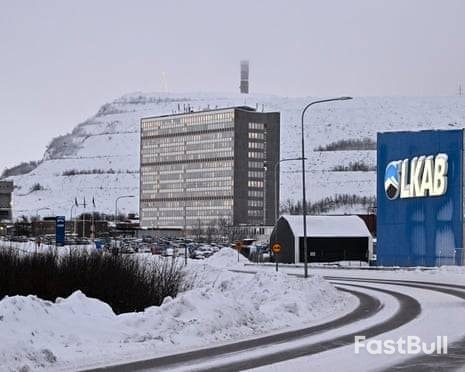
[The Carlyle Group Joins Europe's Top Ten Oil Refiners] As Major Oil Companies Streamline Their Portfolios, The Carlyle Group Has Joined The Ranks Of Europe's Top Ten Fuel Manufacturers. The Private Equity Giant Holds A Two-thirds Stake In Varo Energy, Which Completed Its Acquisition Of The Lysekil And Gothenburg Refineries In Sweden In January. According To Data Compiled By Bloomberg, This Move, Combined With Its Existing Holdings, Elevates Carlyle To Ninth Place Among European Fuel Manufacturers
WTI Crude Oil Futures For March Delivery Closed At $62.14 Per Barrel. Nymex Natural Gas Futures For March Delivery Closed At $3.2370 Per Million British Thermal Units (MMBtu). Nymex Gasoline Futures For March Delivery Closed At $1.8514 Per Gallon, And Nymex Heating Oil Futures For March Delivery Closed At $2.3598 Per Gallon
Ukraine Designates Iran's Islamic Revolutionary Guard Corps As A "terrorist Organization" On February 2nd. Ukrainian President Volodymyr Zelenskyy Announced That Ukraine Has Designated Iran's Islamic Revolutionary Guard Corps As A "terrorist Organization." Iran Has Not Yet Responded
Intercontinental Exchange (ICE), The Owner Of Nasdaq (NYSE), Has Received Approval From The U.S. Securities And Exchange Commission (SEC) To Provide U.S. Treasury Clearing Services
Swiss National Bank Chairman: Expects Swiss Inflation To Rise In Coming Months, Sees Monetary Conditions In Switzerland As Appropriate
Rubio: US Looks Forward To Working Closely With Costa Rica's President-Elect Laura Fernández Delgado's Administration After Electoral Victory
German Chancellor Merz: Transatlantic Relationship Has Changed And No One Regrets It More Than Me
 China, Mainland NBS Non-manufacturing PMI (Jan)
A:--
F: --
P: --
 South Korea Trade Balance Prelim (Jan)
A:--
F: --
 Japan Manufacturing PMI Final (Jan)
A:--
F: --
P: --
South Korea IHS Markit Manufacturing PMI (SA) (Jan)A:--
F: --
P: --
 Indonesia IHS Markit Manufacturing PMI (Jan)
A:--
F: --
P: --
China, Mainland Caixin Manufacturing PMI (SA) (Jan)A:--
F: --
P: --
Indonesia Trade Balance (Dec)A:--
F: --
P: --
Indonesia Inflation Rate YoY (Jan)A:--
F: --
P: --
Indonesia Core Inflation YoY (Jan)A:--
F: --
P: --
 India HSBC Manufacturing PMI Final (Jan)
A:--
F: --
P: --
 Australia Commodity Price YoY (Jan)
A:--
F: --
P: --
 Russia IHS Markit Manufacturing PMI (Jan)
A:--
F: --
P: --
 Turkey Manufacturing PMI (Jan)
A:--
F: --
P: --
 U.K. Nationwide House Price Index MoM (Jan)
A:--
F: --
P: --
U.K. Nationwide House Price Index YoY (Jan)A:--
F: --
P: --
 Germany Actual Retail Sales MoM (Dec)
A:--
F: --
 Italy Manufacturing PMI (SA) (Jan)
A:--
F: --
P: --
 South Africa Manufacturing PMI (Jan)
A:--
F: --
P: --
 Euro Zone Manufacturing PMI Final (Jan)
A:--
F: --
P: --
U.K. Manufacturing PMI Final (Jan)A:--
F: --
P: --
Turkey Trade Balance (Jan)A:--
F: --
P: --
 Brazil IHS Markit Manufacturing PMI (Jan)
A:--
F: --
P: --
 Canada National Economic Confidence Index
A:--
F: --
P: --
Canada Manufacturing PMI (SA) (Jan)A:--
F: --
P: --
 U.S. IHS Markit Manufacturing PMI Final (Jan)
A:--
F: --
P: --
U.S. ISM Output Index (Jan)A:--
F: --
P: --
U.S. ISM Inventories Index (Jan)A:--
F: --
P: --
U.S. ISM Manufacturing Employment Index (Jan)A:--
F: --
P: --
U.S. ISM Manufacturing New Orders Index (Jan)A:--
F: --
P: --
U.S. ISM Manufacturing PMI (Jan)A:--
F: --
P: --
South Korea CPI YoY (Jan)--
F: --
P: --
Japan Monetary Base YoY (SA) (Jan)--
F: --
P: --
Australia Building Approval Total YoY (Dec)--
F: --
P: --
Australia Building Permits MoM (SA) (Dec)--
F: --
P: --
Australia Building Permits YoY (SA) (Dec)--
F: --
P: --
Australia Private Building Permits MoM (SA) (Dec)--
F: --
P: --
Australia Overnight (Borrowing) Key Rate--
F: --
P: --
RBA Rate Statement Japan 10-Year Note Auction Yield--
F: --
P: --
 Saudi Arabia IHS Markit Composite PMI (Jan)
--
F: --
P: --
RBA Press Conference Turkey PPI YoY (Jan)--
F: --
P: --
Turkey CPI YoY (Jan)--
F: --
P: --
Turkey CPI YoY (Excl. Energy, Food, Beverage, Tobacco & Gold) (Jan)--
F: --
P: --
U.S. Weekly Redbook Index YoY--
F: --
P: --
U.S. JOLTS Job Openings (SA) (Dec)--
F: --
P: --
 Mexico Manufacturing PMI (Jan)
--
F: --
P: --
U.S. API Weekly Refined Oil Stocks--
F: --
P: --
U.S. API Weekly Gasoline Stocks--
F: --
P: --
U.S. API Weekly Cushing Crude Oil Stocks--
F: --
P: --
U.S. API Weekly Crude Oil Stocks--
F: --
P: --
Japan IHS Markit Services PMI (Jan)--
F: --
P: --
Japan IHS Markit Composite PMI (Jan)--
F: --
P: --
China, Mainland Caixin Services PMI (Jan)--
F: --
P: --
China, Mainland Caixin Composite PMI (Jan)--
F: --
P: --
India HSBC Services PMI Final (Jan)--
F: --
P: --
India IHS Markit Composite PMI (Jan)--
F: --
P: --
Russia IHS Markit Services PMI (Jan)--
F: --
P: --
South Africa IHS Markit Composite PMI (SA) (Jan)--
F: --
P: --
Italy Services PMI (SA) (Jan)--
F: --
P: --
Italy Composite PMI (Jan)--
F: --
P: --
















No matching data

Latest Views
Latest Views
Trending Topics
Top Columnists
Latest Update
White Label
Data API
Web Plug-ins
Affiliate Program
View All
No data
Trump proposes a US-India trade deal, offering tariff cuts if India halts Russian oil purchases, linking the move to resolving the Ukraine war.
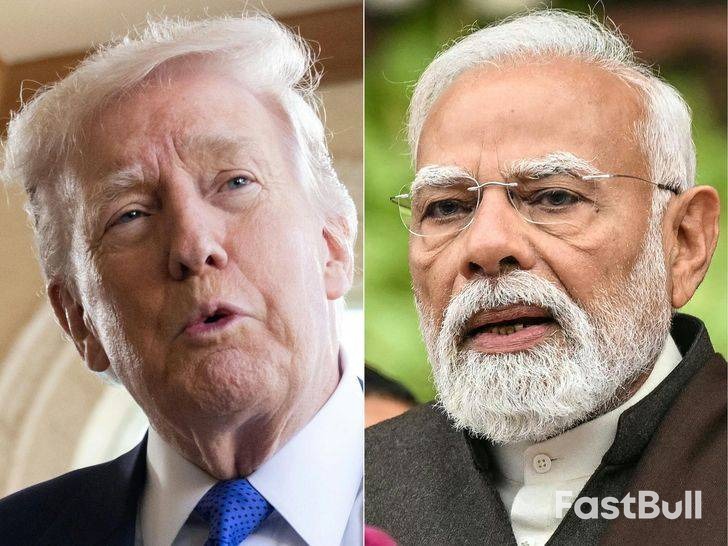
Former U.S. President Donald Trump announced on Monday that he plans to lower tariffs on Indian goods following a conversation with Prime Minister Narendra Modi. According to Trump, the deal hinges on India agreeing to stop purchasing Russian oil and instead potentially buying it from Venezuela.
The announcement marks a potential shift in trade policy, following months of pressure from Trump on India to reduce its reliance on discounted Russian crude.
Trump detailed the arrangement on his Truth Social platform, outlining specific commitments from both sides. The core components of the deal include:
• U.S. Tariff Reduction: The United States would lower its reciprocal tariff rate on Indian products from 25% down to 18%.
• India's Concessions: India would reportedly stop buying Russian oil, reduce its own import taxes on U.S. goods to zero, and purchase $500 billion worth of American products.
Trump presented the agreement as a gesture of goodwill, citing his "friendship and respect" for Prime Minister Modi.
Trump framed the deal as a strategic move aimed at resolving the conflict in Ukraine. In his social media post, he claimed the agreement would have a direct impact on the war.
"This will help END THE WAR in Ukraine, which is taking place right now, with thousands of people dying each and every week!" Trump wrote.
Since Russia's invasion of Ukraine in February 2022, India has become a significant buyer of discounted Russian oil. As many Western nations sought to isolate Moscow financially, India capitalized on the lower prices to build up its energy supplies, providing Russia with a critical source of revenue to fund its war effort.
Historically, the India-Russia relationship has been more focused on defense than energy. Russia has long been the primary supplier of military hardware to India, while accounting for only a small fraction of its oil imports before the war.
The recent energy trade has been a point of contention. In June, Trump announced a 25% tariff on goods from India, along with an additional import tax, directly citing the country's continued purchasing of Russian oil. This new deal, if realized, would reverse that policy, despite Trump and Modi having maintained a historically warm relationship.
Iran's President Masoud Pezeshkian has reportedly ordered the commencement of nuclear negotiations with the United States. The move comes as U.S. President Donald Trump balances threats of military action with public hopes for a diplomatic deal to de-escalate rising tensions in the Middle East.
The diplomatic signal from Tehran follows a period of intense pressure, including the deployment of a U.S. aircraft carrier group to the region and a deadly government crackdown on widespread anti-government protests within Iran. While Trump has expressed optimism about reaching an agreement, Tehran has maintained its desire for a diplomatic solution, even as it promises a powerful response to any military aggression.
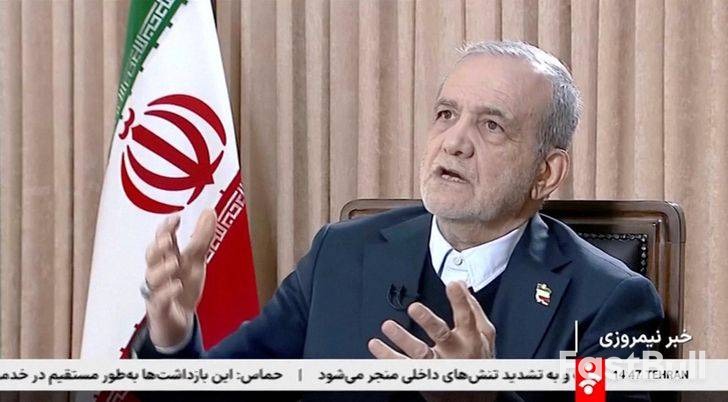
According to a Fars news agency report citing an unnamed government source, President Pezeshkian has officially ordered the opening of talks. The report was echoed by the government newspaper Iran and the reformist daily Shargh.
Adding to these reports, U.S. news outlet Axios cited two sources stating that Iranian Foreign Minister Abbas Araghchi is expected to meet with U.S. envoy Steve Witkoff in Istanbul on Friday to explore a potential deal.
The push for dialogue follows Trump’s warning that "time is running out" for Iran to negotiate on its nuclear program, which Western powers believe is intended to produce an atomic bomb—a claim Iran has consistently denied.
In a recent CNN interview, Araghchi appeared to outline a basis for a deal. "President Trump said no nuclear weapons, and we fully agree," he stated. "That could be a very good deal," he added, clarifying Iran's expectation for "sanctions lifting" in return.
Earlier, Iranian foreign ministry spokesman Esmaeil Baqaei confirmed that Tehran was developing a framework for negotiations, with messages being relayed through regional intermediaries.
Turkey has taken a leading role in diplomatic efforts to defuse the situation. Last week, Foreign Minister Araghchi visited Istanbul and held discussions with counterparts from Egypt, Saudi Arabia, and Jordan.
Following these talks, Jordan's top diplomat, Ayman Safadi, assured Araghchi that the kingdom would "not be a battleground in any regional conflict or a launching pad for any military action against Iran."
Despite these diplomatic overtures, Iran's leadership, including supreme leader Ayatollah Ali Khamenei, has issued stark warnings that any U.S. attack would ignite a "regional war."
The geopolitical maneuvering is set against a backdrop of severe domestic turmoil and economic hardship. Ali Hamidi, a 68-year-old pensioner and veteran in Tehran, expressed a mix of defiance and frustration. "I am not afraid of war," he said, adding, "America should mind its own business."
However, he also criticized the government's handling of the economy. "Iranian officials are also at fault for not providing for the people. The economic troubles are back-breaking... The officials should do something tangible, not just talk."
The protests, which began in late December over economic strain, rapidly intensified in early January. The Iranian government has characterized the demonstrations as "riots" instigated by the United States and Israel, with Khamenei calling them a "coup" attempt.
The human cost of the crackdown remains disputed. The presidency recently published the names of 2,986 of the 3,117 people it confirmed were killed, stating that most were security forces or innocent bystanders who died in "terrorist acts." In contrast, the U.S.-based Human Rights Activists News Agency reports it has confirmed 6,842 deaths, primarily protesters killed by security forces, and warns the true figure is likely much higher.
The atmosphere of fear has driven some to leave. Selina, a 25-year-old who traveled to Iraqi Kurdistan, described "living in fear." She told AFP, "It's not safe for us" in Iran. "We don't even dare to go out after 6:00 pm because soldiers are everywhere."
The brutal response to the protests has triggered a wave of international condemnation and punitive measures. The European Union has designated the Islamic Revolutionary Guard Corps (IRGC) as a terrorist organization. In retaliation, Iranian lawmakers passed a measure on Sunday applying the same label to European armies.
The EU has also imposed new sanctions on Iranian officials, including the interior minister. The UK followed suit on Monday, announcing sanctions on 10 individuals for their role in the "brutality against protesters."
In response, Iran's foreign ministry summoned all EU member state ambassadors in Tehran and has promised further action.
Meanwhile, arrests have continued. Iranian state television announced that four foreigners had been detained in Tehran for "participation in riots," though their nationalities were not disclosed. Rights groups estimate that at least 40,000 people have been detained in connection with the protests.
Tehran’s leadership is growing increasingly concerned that a U.S. military strike could shatter its hold on power by driving an enraged public back onto the streets, according to six current and former Iranian officials. The concern follows a brutal crackdown on anti-government protests that has left the nation on edge.
In a series of high-level meetings, officials have reportedly warned Supreme Leader Ayatollah Ali Khamenei that public anger is at a breaking point. Four officials briefed on these discussions stated that the leadership was told the fear that once deterred dissent is no longer effective after last month's crackdown—the deadliest since the 1979 Islamic Revolution.
The core message delivered to Khamenei was that many Iranians are prepared to confront security forces again. An external shock, such as a limited U.S. military strike, could embolden them and cause irreparable damage to the political establishment.
"An attack combined with demonstrations by angry people could lead to a collapse of the ruling system," one official told Reuters on the condition of anonymity. "That is the main concern among the top officials and that is what our enemies want."
This private anxiety marks a stark contrast to Tehran's defiant public stance toward both the protesters and the United States. While the sources did not disclose how Khamenei responded to the warnings, the internal discussions reveal deep-seated misgivings about the regime's stability.
The warnings come as U.S. President Donald Trump is reportedly weighing military options against Iran. These options are said to include targeted strikes on security forces and leaders, a move intended to inspire protesters. Meanwhile, a U.S. aircraft carrier and its supporting warships have moved into the Middle East, expanding Washington's capacity for military action.
A former senior official with a moderate stance said the political landscape has fundamentally changed since the crackdown in early January. "People are extremely angry," he said, noting a U.S. attack could trigger another popular uprising. "The wall of fear has collapsed. There is no fear left."
This sentiment is echoed by opposition figures who were once part of the establishment. They have warned that "boiling public anger" could result in the collapse of the Islamic system.
Former Prime Minister Mirhossein Mousavi, who has been under house arrest since 2011, issued a powerful statement from his confinement. "The river of warm blood that was spilled on the cold month of January will not stop boiling until it changes the course of history," he declared. "In what language should people say they do not want this system and do not believe your lies? Enough is enough. The game is over."
During the January protests, security forces used lethal force, killing thousands and wounding many more, according to witnesses and human rights groups. The Iranian government blamed the violence on "armed terrorists" linked to the U.S. and Israel.
While the streets are currently quiet, analysts and insiders say the deep-seated grievances fueling the protests have not disappeared. Public frustration continues to simmer over economic decline, political repression, corruption, and a widening gap between the rich and poor.
Officials fear that if protests resume amid heightened foreign pressure, demonstrators will be bolder and more determined, driven by the feeling they have little left to lose. One official warned that if the establishment comes under U.S. attack, it will respond to new protests with even harsher methods. The result, he said, would be a "bloodbath."
Ordinary Iranians also expect a severe response to any future demonstrations. However, for some, the risk is now worth taking.
A Tehran resident whose 15-year-old son was killed on January 9 said protesters were only seeking a normal life but were met "with bullets."
"If America attacks," she said, "I will go back to the streets to take revenge for my son and the children this regime killed."
Russia has largely halted its attacks on Ukraine's energy infrastructure, President Volodymyr Zelenskyy confirmed on Monday, providing a crucial reprieve as Kyiv prepares for trilateral peace talks with Russian and U.S. officials.
While energy facilities in frontline areas continue to take fire, Zelenskyy noted a 24-hour pause in targeted missile and drone strikes on the national grid. This lull comes as Ukraine struggles to repair its power system amid a harsh winter and Russia appears to be shifting its military focus to transport logistics.
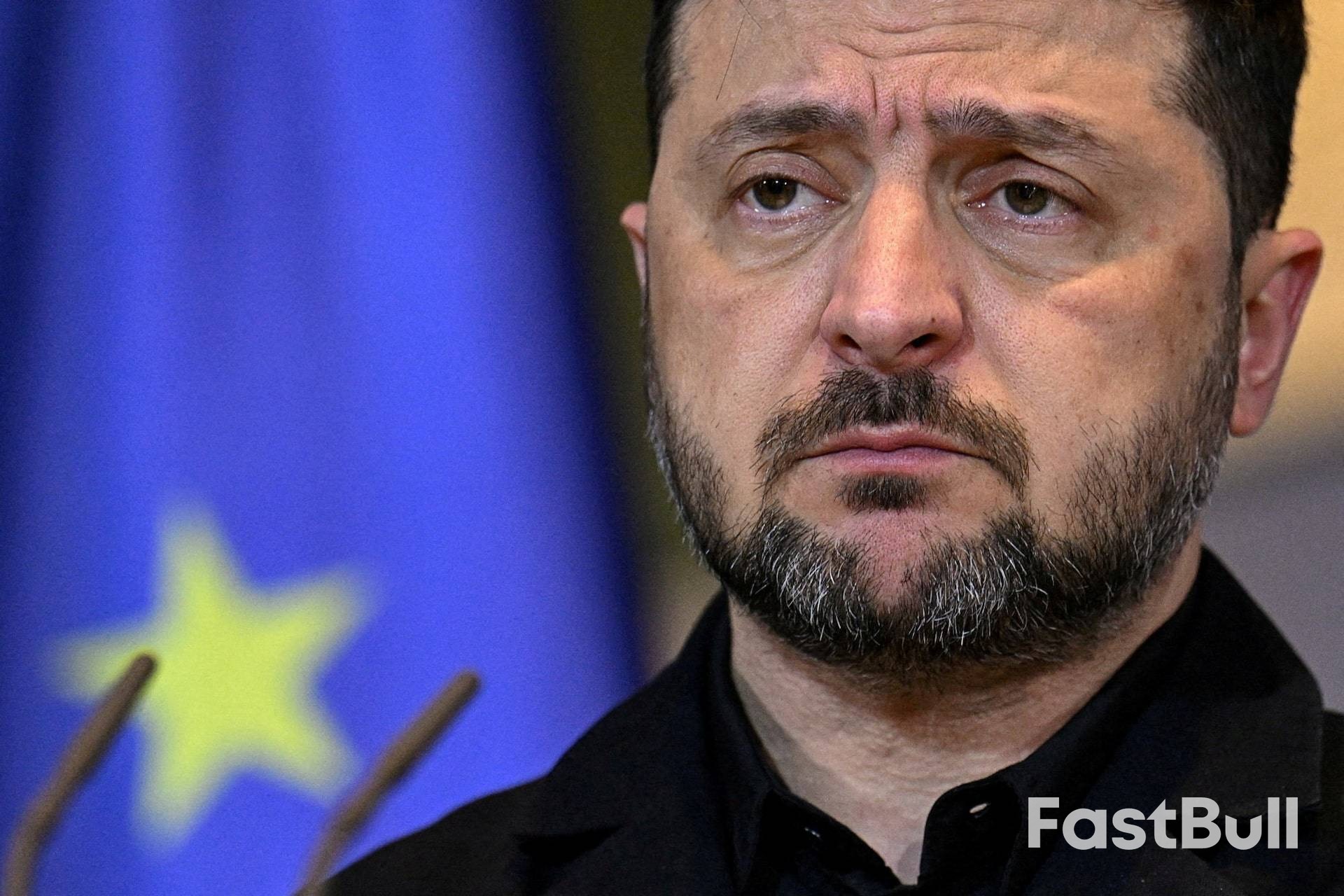
"The de-escalation measures... are helping to build public trust in the negotiation process and its possible outcome," Zelenskyy said after meeting his negotiating team. "The war needs to be ended."
Looking ahead to peace talks scheduled this week in Abu Dhabi, he added, "Ukraine is ready for real steps. We believe it is realistic to achieve a dignified and lasting peace."
While both Russia and Ukraine acknowledged a halt to strikes on each other's energy infrastructure last week, they disagree on the ceasefire's duration.
The Kremlin stated that U.S. President Donald Trump personally asked Russian President Vladimir Putin to avoid striking Kyiv until February 1. However, Zelenskyy maintained the truce was intended to last for one week, beginning on January 30.
For Ukraine, the pause is critical. The country is scrambling to restore its battered energy system and ensure stable electricity and heating following several major Russian attacks this month. Repair efforts have been severely hampered by freezing temperatures.
"Today we are coming to the critical point. We need some time to recover what is destroyed for the last three months," explained Maxim Timchenko, CEO of private energy company DTEK. He stressed that an "energy ceasefire is extremely important for us to recover partly and avoid any tragic consequences because of no power supply."
Despite the lull in energy strikes, other attacks persist. DTEK reported on Monday that one of its coal mining operations in the Dnipropetrovsk region was attacked for the second time in 24 hours. A previous strike on Sunday killed 12 miners at a different coal mine in the same region.
President Zelenskyy also noted that Russian forces are now concentrating on transport logistics, particularly railway infrastructure.
The human cost remains high in frontline regions. Officials in the Donetsk region reported that a Russian strike killed a father and son, while wounding two other children and their mother.
A statement posted on OPEC's website on February 1 revealed that, in a meeting held on Sunday, Saudi Arabia, Russia, Iraq, UAE, Kuwait, Kazakhstan, Algeria, and Oman "reaffirmed their decision on 2 November 2025 to pause production increments in March 2026 due to seasonality".
According to a table accompanying the statement, "required production" in March this year is 10.103 million barrels per day for Saudi Arabia, 9.574 million barrels per day for Russia, 4.273 million barrels per day for Iraq, 3.411 million barrels per day for the UAE, 2.580 million barrels per day for Kuwait, 1.569 million barrels per day for Kazakhstan, 971,000 barrels per day for Algeria, and 811,000 barrels per day for Oman.
The statement highlighted that the eight OPEC+ countries, "which previously announced additional voluntary adjustments in April and November 2023", met virtually on February 1 "to review global market conditions and outlook". It said the eight participating countries "reiterated that the 1.65 million barrels per day may be returned in part or in full subject to evolving market conditions and in a gradual manner".
"The countries will continue to closely monitor and assess market conditions, and in their continuous efforts to support market stability, they reaffirmed the importance of adopting a cautious approach and retaining full flexibility to continue pausing or reverse the additional voluntary production adjustments, including the previously implemented voluntary adjustments of the 2.2 million barrels per day announced in November 2023," the statement said.
"The eight countries reiterated their collective commitment to achieve full conformity with the Declaration of Cooperation, including the additional voluntary production adjustments that will be monitored by the Joint Ministerial Monitoring Committee," it added.
"They also confirmed their intention to fully compensate for any overproduced volume since January 2024," it continued.
The statement went on to note that the eight OPEC+ countries will hold monthly meetings "to review market conditions, conformity, and compensation", adding that the eight countries will meet on March 1.
A separate statement posted on OPEC's site on Sunday announced that the 64th Meeting of the Joint Ministerial Monitoring Committee (JMMC) took place via videoconference that day, adding that the JMMC reviewed the crude oil production data for the months of November and December 2025 "and noted the overall conformity for OPEC and non-OPEC countries participating in the Declaration of Cooperation".
"The committee reiterated the critical importance of achieving full conformity and compensation, and reviewed the updated compensation schedules," the statement said.
"The committee also reaffirmed that it will continue to monitor adherence to the production adjustments decided upon at the 38th OPEC and non-OPEC Ministerial Meeting (ONOMM) held on 5 December 2024, and the additional voluntary production adjustments announced by some participating OPEC and non-OPEC countries as agreed upon in the 52nd JMMC held on 1 February 2024," it added.
"The JMMC retains the authority to convene additional meetings or to request an OPEC and non-OPEC Ministerial Meeting, as established during the 38th ONOMM held on 5 December 2024," it continued.
The next meeting of the JMMC is scheduled for April 5, according to the statement.
In another statement posted on OPEC's site on February 2, the OPEC Secretariat announced that it had received updated compensation plans from Iraq, the United Arab Emirates (UAE), Kazakhstan, and Oman.
A table accompanying this statement showed that these compensation plans amount to a total of 659,000 barrels per day in January 2026, 789,000 barrels per day in February, 665,000 barrels per day in March, 706,000 barrels per day in April, 707,000 barrels per day in May, and 807,000 barrels per day in June.
"As agreed during the virtual meeting held by the eight countries with additional voluntary adjustments, including Saudi Arabia, Russia, Iraq, the United Arab Emirates, Kuwait, Kazakhstan, Algeria, and Oman on 4 January 2026, the OPEC Secretariat received updated compensation plans," the OPEC Secretariat said in the statement.
The European Union faces a major struggle to reduce its dependence on China and other nations for the critical minerals and rare earths essential for modern technology, from smartphones and wind turbines to military hardware.
A stark report from the European Court of Auditors (ECA) concludes that the bloc's 2030 self-sufficiency targets are "out of reach." The auditors point to a severe lack of progress in developing domestic production, refining capacity, and recycling programs.
"It is therefore vital for the EU to up its game and reduce its vulnerability in this area," said Keit Pentus-Rosimannus, the ECA member who led the audit.
The report highlights a wide gap between the EU's goals—such as generating 42.5% of its energy from renewables by 2030—and the reality of its insecure supply chains.
The ECA's findings on the EU's internal capacity are particularly damning. The report states that mining and exploration within the bloc are "underdeveloped."
Even when new mineral deposits are discovered, the process is painfully slow. According to the audit, "it can take 20 years for an EU mining project to become operational." This timeline makes any significant contribution by the 2030 deadline difficult to imagine.
As the EU's internal efforts lag, Western nations are coordinating to diversify their mineral sources and de-risk their supply chains from China.
US Secretary of State Marco Rubio convened a summit of approximately 20 countries in Washington to address the sourcing of lithium, nickel, cobalt, copper, and rare earth elements—all vital for solar panels, wind turbines, and electric car batteries. The summit is viewed as an effort to mend transatlantic relations after friction with Donald Trump.
Separately, UK Prime Minister Keir Starmer and his Japanese counterpart, Sanae Takaichi, agreed during talks in Tokyo to accelerate cooperation on critical minerals.
An analysis of the EU's supply chains reveals a heavy reliance on a few key countries, particularly China and Russia. Russia, for example, supplies 29% of the nickel used in the EU's automotive and aerospace industries.
Reliance on China
The EU is heavily dependent on China for at least seven of the 26 critical minerals studied. Key imports include:
• Magnesium: 97% (used in hydrogen production)
• Gallium: 71% (used in smartphones and satellite communications)
• Tungsten: 31% (used in drilling and mining)
China also dominates the market for rare earths, controlling between 69% and 74% of six crucial elements. This includes neodymium and praseodymium, which are essential for the permanent magnets found in everything from car locking systems to wind turbines. In 2024 alone, 17,000 of the 20,000 tonnes of permanent magnets used by EU industry came from China.
Other Key Suppliers
The EU's dependency extends beyond China. Chile is a major source of lithium for electric car batteries, while Turkey supplies 99% of the bloc's boron, a material used in solar panels.
The ECA warns that the EU may be "trapped in a vicious circle." Without a secure supply of these materials, its strategic goals are at risk.
"Without critical raw materials, there will be no energy transition, no competitiveness, and no strategic autonomy," said Pentus-Rosimannus. "Unfortunately, we are now dangerously dependent on a handful of countries outside the EU for the supply of these materials."
This sentiment was echoed by EU industry commissioner Stéphane Séjourné, who stated that Europe was "doomed to be just a playground for its competitors" if it fails to develop an "ambitious, effective and pragmatic industrial policy."
The auditors concluded that the EU's "efforts to diversify imports have yet to produce tangible results." In fact, partnerships established with seven countries to boost supplies actually saw deliveries fall between 2020 and 2024.
The statistics paint a stark picture: 10 of the 26 main critical minerals are entirely imported, none of the 17 rare earth metals are mined within the EU, and only 16 critical raw materials are currently recycled in the bloc.
Greenland’s government has accused Washington of continuing to pursue control over the strategic Arctic island, asserting that the U.S. objective remains unchanged even after President Donald Trump ruled out military action.
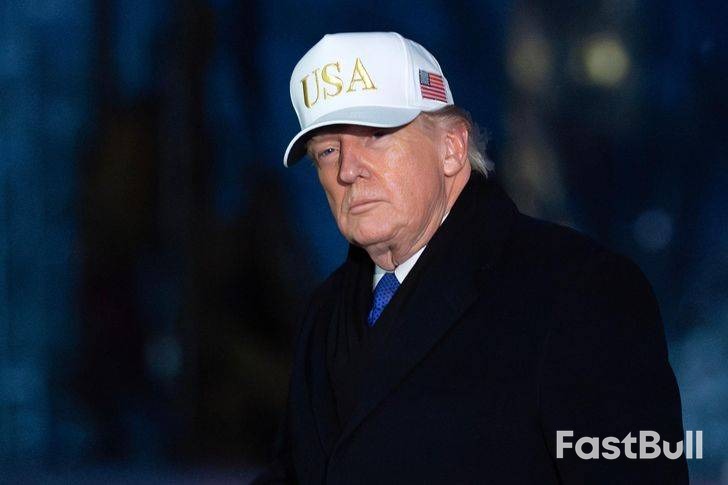
In a speech to the island's parliament in Nuuk, Prime Minister Jens-Frederik Nielsen delivered a stark warning about Washington's intentions. "The view upon Greenland and the population has not changed: Greenland is to be tied to the U.S. and governed from there," Nielsen stated, adding that the U.S. continues to seek "paths to ownership and control over Greenland."
Earlier this year, President Trump intensified calls for the U.S. to take control of Greenland, citing national security concerns related to Russia and China. The move drew criticism from some European NATO allies, who defended Denmark's sovereignty over the territory and warned that Trump's pressure could fracture the alliance.
While the U.S. president later stepped back from any threats of force, he claimed to have secured "total U.S. access" to Greenland through a NATO deal, though the specifics of this arrangement have not been clarified.
The sustained pressure from the U.S. has taken a toll on the island's population. The Greenlandic government recently launched a survey to assess the mental health of its citizens, citing an environment of "extraordinary pressure."
"Some of our compatriots have severe sleep problems, children feel the worry and anxiety of adults, and we all live with constant uncertainty about what may happen tomorrow," Nielsen said. "We want to say it very clearly: This is completely unacceptable."
In response to the escalating situation, diplomatic talks involving the United States, Denmark, and Greenland commenced last week. According to Denmark's foreign ministry, senior officials met to "discuss how we can address American concerns about security in the Arctic while respecting the Kingdom's red lines."
Throughout the crisis, Nielsen has praised Denmark as a close and reliable partner. He has previously said that if Greenlanders were forced to choose between the U.S. and Denmark, they would unequivocally choose Denmark. His latest speech made no reference to independence for Greenland.
The debate over ownership directly conflicts with the cultural values of Greenland's native Inuit population. Under Greenlandic law, which reflects the Inuit concept of collective land stewardship, individuals can own houses but not the land on which they are built. This foundational principle stands in sharp contrast to the U.S. approach to land ownership, adding another layer of complexity to the diplomatic standoff.
728 RM B 7/F GEE LOK IND BLDG NO 34 HUNG TO RD KWUN TONG KLN HONG KONG


White Label
Data API
Web Plug-ins
Poster Maker
Affiliate Program
The risk of loss in trading financial instruments such as stocks, FX, commodities, futures, bonds, ETFs and crypto can be substantial. You may sustain a total loss of the funds that you deposit with your broker. Therefore, you should carefully consider whether such trading is suitable for you in light of your circumstances and financial resources.
No decision to invest should be made without thoroughly conducting due diligence by yourself or consulting with your financial advisors. Our web content might not suit you since we don't know your financial conditions and investment needs. Our financial information might have latency or contain inaccuracy, so you should be fully responsible for any of your trading and investment decisions. The company will not be responsible for your capital loss.
Without getting permission from the website, you are not allowed to copy the website's graphics, texts, or trademarks. Intellectual property rights in the content or data incorporated into this website belong to its providers and exchange merchants.
Not Logged In
Log in to access more features


Log In
Sign Up


