Markets
News
Analysis
User
24/7
Economic Calendar
Education
Data
- Names
- Latest
- Prev


Signal Accounts for Members
All Signal Accounts
All Contests


U.K. Trade Balance Non-EU (SA) (Oct)A:--
F: --
P: --
U.K. Trade Balance (Oct)A:--
F: --
P: --
U.K. Services Index MoMA:--
F: --
P: --
U.K. Construction Output MoM (SA) (Oct)A:--
F: --
P: --
U.K. Industrial Output YoY (Oct)A:--
F: --
P: --
U.K. Trade Balance (SA) (Oct)A:--
F: --
P: --
U.K. Trade Balance EU (SA) (Oct)A:--
F: --
P: --
U.K. Manufacturing Output YoY (Oct)A:--
F: --
P: --
U.K. GDP MoM (Oct)A:--
F: --
P: --
U.K. GDP YoY (SA) (Oct)A:--
F: --
P: --
U.K. Industrial Output MoM (Oct)A:--
F: --
P: --
U.K. Construction Output YoY (Oct)A:--
F: --
P: --
France HICP Final MoM (Nov)A:--
F: --
P: --
China, Mainland Outstanding Loans Growth YoY (Nov)A:--
F: --
P: --
China, Mainland M2 Money Supply YoY (Nov)A:--
F: --
P: --
China, Mainland M0 Money Supply YoY (Nov)A:--
F: --
P: --
China, Mainland M1 Money Supply YoY (Nov)A:--
F: --
P: --
India CPI YoY (Nov)A:--
F: --
P: --
India Deposit Gowth YoYA:--
F: --
P: --
Brazil Services Growth YoY (Oct)A:--
F: --
P: --
Mexico Industrial Output YoY (Oct)A:--
F: --
P: --
Russia Trade Balance (Oct)A:--
F: --
P: --
Philadelphia Fed President Henry Paulson delivers a speech
Canada Building Permits MoM (SA) (Oct)A:--
F: --
P: --
Canada Wholesale Sales YoY (Oct)A:--
F: --
P: --
Canada Wholesale Inventory MoM (Oct)A:--
F: --
P: --
Canada Wholesale Inventory YoY (Oct)A:--
F: --
P: --
Canada Wholesale Sales MoM (SA) (Oct)A:--
F: --
P: --
Germany Current Account (Not SA) (Oct)A:--
F: --
P: --
U.S. Weekly Total Rig CountA:--
F: --
P: --
U.S. Weekly Total Oil Rig CountA:--
F: --
P: --
Japan Tankan Large Non-Manufacturing Diffusion Index (Q4)--
F: --
P: --
Japan Tankan Small Manufacturing Outlook Index (Q4)--
F: --
P: --
Japan Tankan Large Non-Manufacturing Outlook Index (Q4)--
F: --
P: --
Japan Tankan Large Manufacturing Outlook Index (Q4)--
F: --
P: --
Japan Tankan Small Manufacturing Diffusion Index (Q4)--
F: --
P: --
Japan Tankan Large Manufacturing Diffusion Index (Q4)--
F: --
P: --
Japan Tankan Large-Enterprise Capital Expenditure YoY (Q4)--
F: --
P: --
U.K. Rightmove House Price Index YoY (Dec)--
F: --
P: --
China, Mainland Industrial Output YoY (YTD) (Nov)--
F: --
P: --
China, Mainland Urban Area Unemployment Rate (Nov)--
F: --
P: --
Saudi Arabia CPI YoY (Nov)--
F: --
P: --
Euro Zone Industrial Output YoY (Oct)--
F: --
P: --
Euro Zone Industrial Output MoM (Oct)--
F: --
P: --
Canada Existing Home Sales MoM (Nov)--
F: --
P: --
Euro Zone Total Reserve Assets (Nov)--
F: --
P: --
U.K. Inflation Rate Expectations--
F: --
P: --
Canada National Economic Confidence Index--
F: --
P: --
Canada New Housing Starts (Nov)--
F: --
P: --
U.S. NY Fed Manufacturing Employment Index (Dec)--
F: --
P: --
U.S. NY Fed Manufacturing Index (Dec)--
F: --
P: --
Canada Core CPI YoY (Nov)--
F: --
P: --
Canada Manufacturing Unfilled Orders MoM (Oct)--
F: --
P: --
Canada Manufacturing New Orders MoM (Oct)--
F: --
P: --
Canada Core CPI MoM (Nov)--
F: --
P: --
Canada Manufacturing Inventory MoM (Oct)--
F: --
P: --
Canada CPI YoY (Nov)--
F: --
P: --
Canada CPI MoM (Nov)--
F: --
P: --
Canada CPI YoY (SA) (Nov)--
F: --
P: --
Canada Core CPI MoM (SA) (Nov)--
F: --
P: --


No matching data
Latest Views
Latest Views
Trending Topics
Top Columnists
Latest Update
White Label
Data API
Web Plug-ins
Affiliate Program
View All

No data
Weak US fundamentals could trigger a rally in Gold (XAUUSD) towards 3,185 USD. Discover more in our analysis for 10 April 2025.
XAUUSD forecast: key trading points
The Consumer Price Index reflects changes in consumer prices of goods and services, helping assess changes in buying trends and economic stagnation. A lower-than-expected reading typically has a negative effect on the national currency.
The XAUUSD forecast for 10 April 2025 suggests the CPI may come in below the previous reading of 2.8%, with forecasts around 2.5%. Today’s fundamental analysis for XAUUSD shows that a weaker CPI would likely weigh on the US dollar.
US initial jobless claims represent the number of people who claimed unemployment benefits for the first time during the previous week. This indicator measures the labour market climate, with an increase in initial jobless claims indicating rising unemployment.
The previous figure was 219 thousand, so today’s forecast is positive for XAUUSD prices, suggesting an increase to 223 thousand. Although the change is modest, any reading that meets or exceeds expectations could positively impact XAUUSD quotes.
On the H4 chart, XAUUSD prices have formed a Harami reversal pattern near the lower Bollinger band. A bullish wave is developing as this signal plays out. The uptrend will likely continue as prices remain within an ascending channel, with the potential upside target at the 3,185 USD resistance level.
However, the XAUUSD technical analysis for today also suggests an alternative scenario, where prices correct towards 3,100 USD before maintaining their upward trajectory.
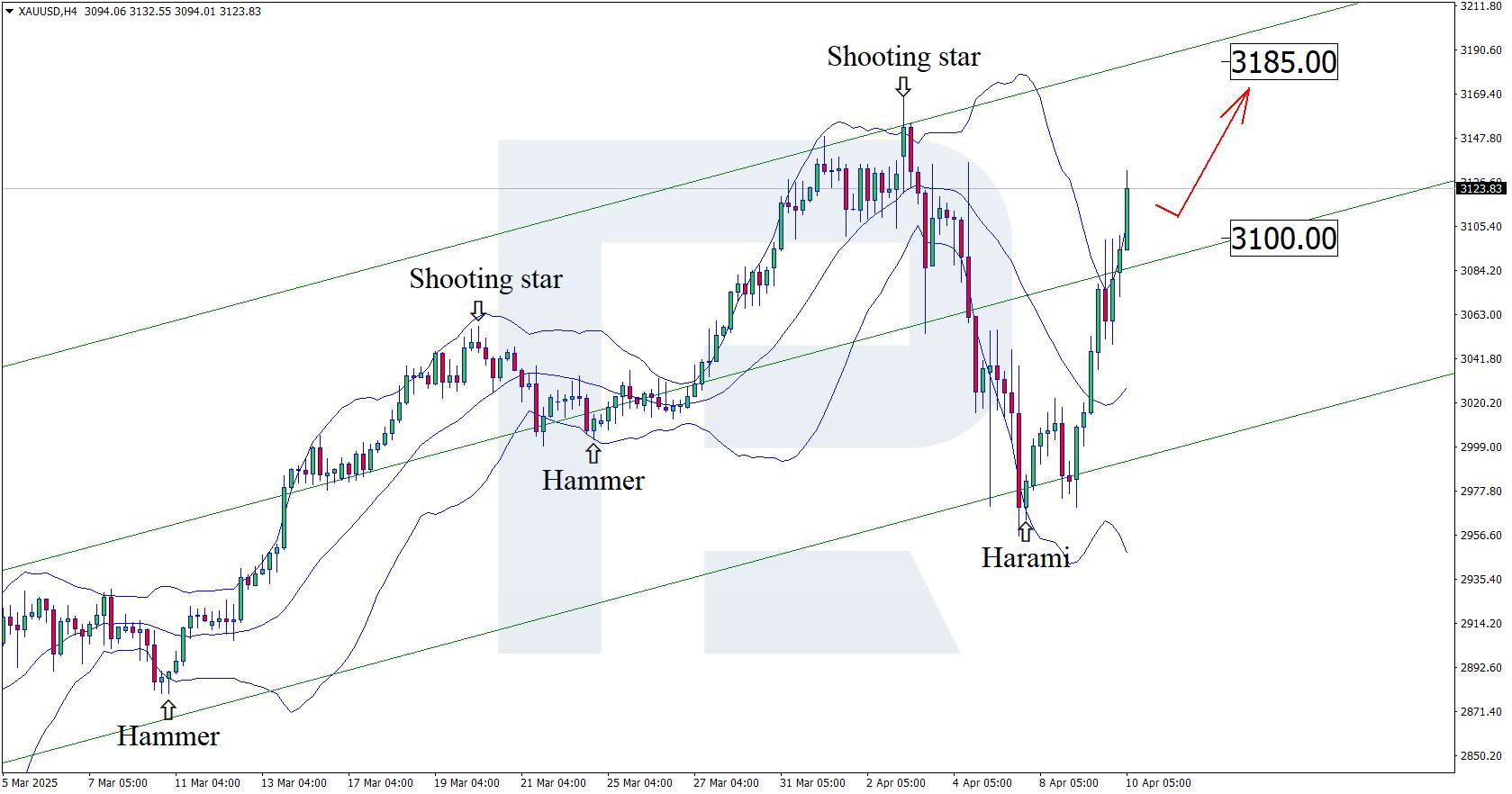

Amid weak forecasts for US economic data, XAUUSD prices continue their upward momentum. Technical analysis supports a move towards 3,185 USD, with a potential correction to 3,100 USD before testing the resistance level.
In the early hours today, the cryptocurrency market experienced a notable surge, with Bitcoin nearing the $82,000 mark. This uptick is largely credited to unexpected tariff adjustments introduced by U.S. President Donald Trump. The positive momentum in global markets has had a significant impact on the cryptocurrency sector.
Traders observed remarkable increases not only in Bitcoin but also across several major altcoins. Cryptocurrencies such as XRP, Ether, Cardano, BNB, Solana, and Dogecoin saw rises between 10% and 12%. Consequently, the total market capitalization surged by around 6%, with some mid-cap tokens climbing as much as 30%.
The suspension of high tariffs by the Trump administration on nations outside China has reverberated through global markets, setting new expectations among traders. Stock markets mirrored these gains, with the S&P 500 and Nasdaq 100 rising by 9.5% and 12%, respectively. Experts believe this could signal a potential restructuring in global trade dynamics.
Jeff Mei, COO of BTSE, noted that the market’s growth stems from the anticipation of renewed trade negotiations with key partners. Mei indicated that if tariffs against China are altered, it could fundamentally change trade relationships. HashKey Capital’s Jupiter Zheng mentioned that this recent rally might suggest that the challenging days for the market are fading.
Despite this optimistic trend, a cautious sentiment prevails among market participants. Investors are closely monitoring international trade talks and regulatory developments. Positive indicators from U.S. regulations are bolstering medium and long-term outlooks.
While a new rally in the cryptocurrency market seems probable, potential corrections should be kept in mind. Ongoing global uncertainties, inflation fears, and political risks will significantly shape future market movements. However, the current uptrend shows that traders are regaining their appetite for risk.
For long-term investors, the current climate may offer substantial opportunities. As regulatory clarity improves, institutional players may gain greater confidence to enter the market. Yet, the theme of cautious optimism prevails as the landscape evolves.
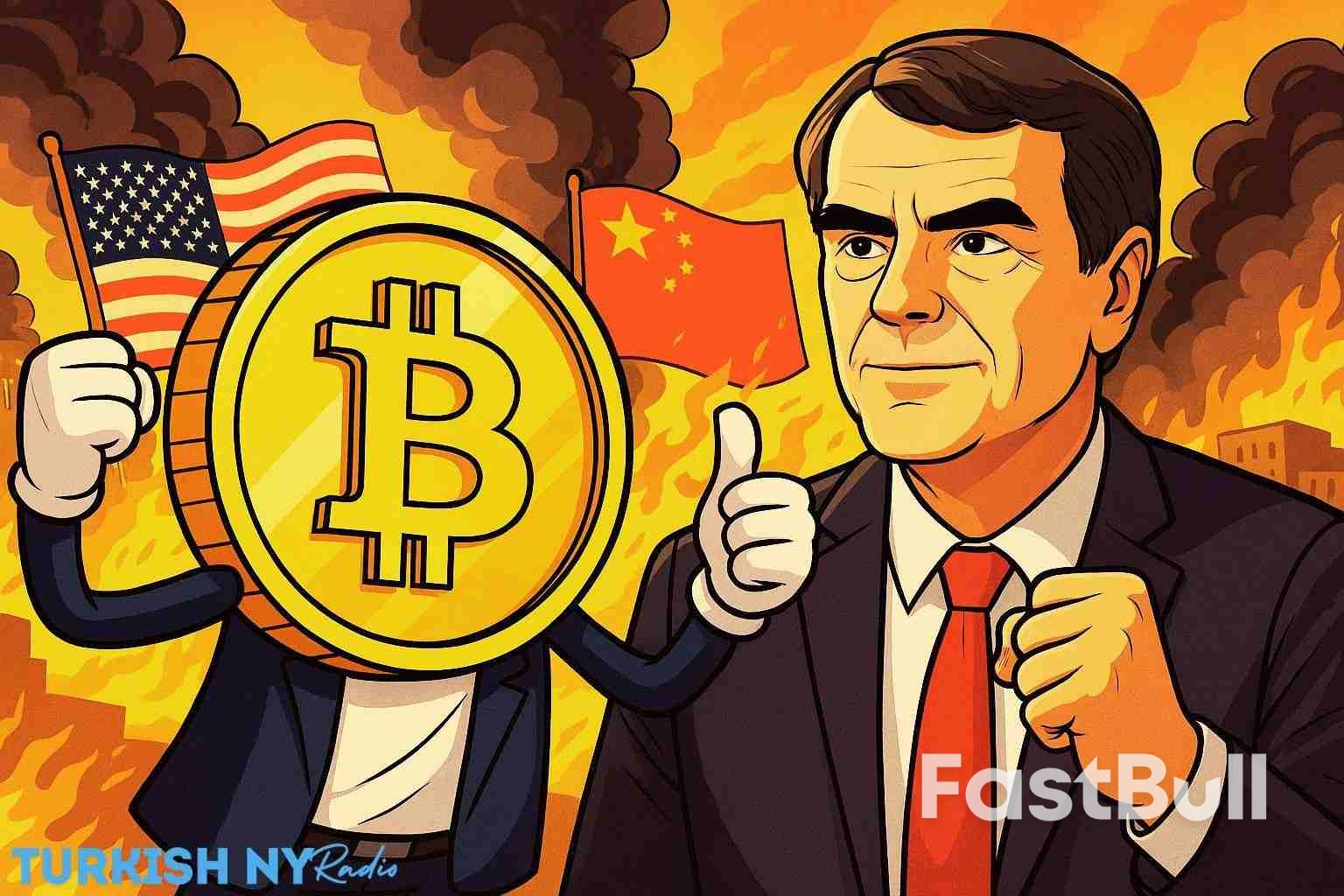
The tariffs remedy decades-old trade inequities in which other nations have exploited U.S. economic leniency, Draper said. Such steps could reinvigorate domestic industries and promote technological progress, he argues. Draper also argues that an environment like this makes Bitcoin an increasingly attractive hedge against inflation and bad monetary policy.
The veteran free trader Tim Draper has been uncharacteristically loud about what the Trump administration did to tariffs on U.S. imports. Draper said he generally favored open markets but recognized the necessity of time-sensitive action given that trade imbalances persist.
“Normally, I’m for free trade all the time, but I get it completely. President Trump is making the only move available. The other countries have been taking advantage of the decades of goodwill shown by the U.S.—and they must understand that it is a two-way street.”
he said. Draper also took aim at China’s leadership, saying that “weak leaders like socialist Xi” will allow their egos to cloud their nations’ successes.
Bitcoin to $150K? Draper Says Trade War Will Fuel Crypto SurgeImplications for Bitcoin
“U.S. tariffs are setting the stage for bitcoin.”
Tim Draper: All of those scenarios are favorable for Bitcoin buyers, he added. It is inflation-proof and innovation-forward. With inflationary pressures and policy uncertainty on the rise, Draper believes Bitcoin will continue to fester under these conditions.
He also took the Federal Reserve to task, saying it should be looking ahead to what new jobs might be coming rather than worrying about fears of stagflation. Reducing interest rates would favor innovation and reinforce the arguments for decentralized assets such as Bitcoin.
Bitcoin is trading at $77,267 by the exchange’s closing on April 9, 2025, down 2.6% from yesterday’s close. The cryptocurrency was highly volatile during the day, hitting an intraday low of $74,772 and an intraday high of $80,138.
This plunge demonstrates the volatility of the market, as investors closely monitor global economic events like trade tensions and interest rate decisions. Analysts monitor These fluctuations closely as investors weigh Bitcoin’s role as a hedge against inflation and macroeconomic uncertainty.
The current trade tensions and the ongoing tariff impositions have resulted in different predictions at the moment concerning Bitcoin’s future performance:
Short-Term Readings: According to analyst Tracy Jin, Bitcoin will likely see a drop to between $76,000 and $78,000 by late April 2025, with a possible drop to the $52,000–$56,000 range by the summer as the tariff disputes put economic pressure on the industry.
Long-Haul Predictions: On the other hand, a number of analysts have a more bullish view. For example, MarketVector Indexes’ Martin Leinweber asserts, based on the historical trend, that Bitcoin might form a cycle top of $150,000 in 2025.
Such forecasts highlight the uncertainty and volatility existent in the cryptocurrency market, driven by macroeconomic policy and geopolitical changes.
Bitcoin to $150K? Draper Says Trade War Will Fuel Crypto SurgeData through October 2023 On the economic policy side of the picture, President Trump has issued tariffs that have galvanized support for aggressive economic intervention from investors like Tim Draper, who think it further strengthens the case for Bitcoin.
The cryptocurrency market remains extremely unpredictable, though. Bitcoin’s next direction is the subject of both bullish and bearish analyses as global trade tensions move markets. Some consider these conditions to be supportive of Bitcoin’s store of value role, though others warn that increased volatility could still dominate in the shorter term.
Despite the prediction of a slowdown, Musalem does not foresee a recession. His outlook is based on a combination of factors including slipping confidence, higher prices, and a hit to household wealth.
Musalem noted that financial conditions have tightened, but he does not see any market dysfunction in the recent volatility. He indicated that markets are responding to reassessments of global growth. There is a growing tension between the Federal Reserve’s dual mandate goals as the risks of slower growth and higher inflation start to materialize.
While inflation expectations remain anchored, Musalem stressed the importance of the Federal Reserve’s role in keeping them that way. He warned that it would be risky to assume the Federal Reserve can overlook higher prices resulting from tariffs, suggesting that some effects could persist.
He emphasized the need for a balanced approach to monetary policy as long as inflation expectations remain anchored. Musalem also mentioned that businesses are not resorting to layoffs, but are instead adopting a wait-and-see approach to hiring and capital spending plans.
In the event of higher-than-anticipated tariffs, companies and households may need to adjust to increased prices, potentially leading to a rise in the unemployment rate. Musalem’s stance on monetary policy response will depend on the evolution of inflation and unemployment in the coming months, the persistence of the price shock, and the consistency of inflation expectations with the Federal Reserve’s 2% inflation target.
Musalem, who has a vote on interest rate policy this year, referred to anchored expectations as a necessary but not sufficient condition for the Federal Reserve to reach its 2% inflation target. He stressed vigilance regarding the risks associated with keeping unemployment low and inflation stable, and committed to maintaining a balanced approach as long as inflation expectations do not threaten to rise.
This decision highlights the increasing regulatory scrutiny and potential market volatility. The move could impact cryptocurrency exchanges and investors, prompting careful attention to the evolving policy landscape.
The European Union's decision to impose tariffs is linked to ongoing disputes in digital currency regulations. Recent regulatory challenges have accelerated the decision-making process, prompting a swift policy response to the growing market.
The policy shift involves several EU countries. Financial ministers and regulatory bodies spearheaded these actions to align cryptocurrency operations with regional standards. This marks a shift towards stricter oversight of digital currency exchanges and their international dealings.
Market participants have expressed concern over potential trade barriers hampering cryptocurrency circulation. Investors are assessing how the tariffs might affect exchange operations and trading volumes, possibly redirecting activities to more favorable jurisdictions.
These tariffs could usher in regulatory challenges and alter technological frameworks. Historical trends suggest traders might explore alternative pathways like decentralized platforms, adjusting strategies to circumvent policy constraints.
Past regulatory moves have seen shifts in market dynamics, such as when the EU adjusted commodity tariffs. Cryptocurrency stakeholders might compare current tariffs' effects to earlier policies, evaluating structural impacts and responses.
Experts, including those from Kanalcoin, predict tariffs may drive regional innovations within legal bounds. Historical data underscores the tendency for adaptive strategies to emerge, mitigating potential setbacks to traders and investors.
China announced plans to increase tariffs on all American goods to 84% after President Donald Trump raised duties on Chinese imports to 104%. During a smaller trade fight with Beijing during Trump’s first term, his administration used the Commodity Credit Corporation to offer US$28 billion to bail out US farmers. The government-owned and operated entity was created to boost farm income and prices.
“We are looking at that again,” Rollins told Bloomberg News Wednesday at the White House. “Obviously everything is on the table, but we’re in such a period of uncertainty in terms of what this looks like.”
The Agriculture secretary said, however, that no decisions have been made on whether to extend financial assistance to farmers.
“The goal is we won’t need to do it at all, that these changes and the realignment of the economy will result in an unprecedented air of prosperity for all Americans, but especially for our farmers and our ranchers,” Rollins said.
The discussions around a farm bailout indicate the Trump administration is concerned about the potential fallout of the trade war on farmers, a key political constituency for the president and his Republican Party.
The tit-for-tat responses from Washington and Beijing mark a rapid escalation that has unnerved global financial markets and sparked fears of an economic downturn.
The retaliatory tariffs are hitting farmers as other administration policies curb their ability to sell products. The Trump administration has dismantled the US Agency for International Development, whose programs purchased commodities from American producers. Trump has also threatened to scale back nutrition assistance programs that buy US agricultural products.
The risk of an escalated trade war comes as American farmers are struggling to regain their position as the leading exporters of staples from corn to wheat, after Brazil’s successes in seizing market share.
Trump’s tariffs have sent foreign governments racing to cut deals with the administration to avert or ease the levies. Rollins last week announced she would travel to Vietnam, which is looking to secure an agreement with the US, and on Wednesday she said she would visit the UK and Japan “in the next six weeks.”
The White House is also weighing the possibility of creating a tax credit for exporters, who could be hard hit by other nations’ moves to retaliate against Trump’s levies with their own trade barriers.
White Label
Data API
Web Plug-ins
Poster Maker
Affiliate Program
The risk of loss in trading financial instruments such as stocks, FX, commodities, futures, bonds, ETFs and crypto can be substantial. You may sustain a total loss of the funds that you deposit with your broker. Therefore, you should carefully consider whether such trading is suitable for you in light of your circumstances and financial resources.
No decision to invest should be made without thoroughly conducting due diligence by yourself or consulting with your financial advisors. Our web content might not suit you since we don't know your financial conditions and investment needs. Our financial information might have latency or contain inaccuracy, so you should be fully responsible for any of your trading and investment decisions. The company will not be responsible for your capital loss.
Without getting permission from the website, you are not allowed to copy the website's graphics, texts, or trademarks. Intellectual property rights in the content or data incorporated into this website belong to its providers and exchange merchants.
Not Logged In
Log in to access more features

FastBull Membership
Not yet
Purchase
Log In
Sign Up