Markets
News
Analysis
User
24/7
Economic Calendar
Education
Data
- Names
- Latest
- Prev



Signal Accounts for Members
All Signal Accounts
All Contests


U.S. Core CPI (SA) (Dec)A:--
F: --
P: --
U.S. Core CPI YoY (Not SA) (Dec)A:--
F: --
P: --
U.S. Weekly Redbook Index YoYA:--
F: --
P: --
U.S. New Home Sales Annualized MoM (Oct)A:--
F: --
U.S. Annual Total New Home Sales (Oct)A:--
F: --
U.S. Cleveland Fed CPI MoM (SA) (Dec)A:--
F: --
P: --
U.S. Cleveland Fed CPI MoM (Dec)A:--
F: --
P: --
China, Mainland Exports (Dec)--
F: --
P: --
China, Mainland Imports YoY (CNH) (Dec)--
F: --
P: --
China, Mainland Imports (CNH) (Dec)--
F: --
P: --
China, Mainland Trade Balance (CNH) (Dec)--
F: --
P: --
China, Mainland Imports YoY (USD) (Dec)--
F: --
P: --
China, Mainland Exports YoY (USD) (Dec)--
F: --
P: --
China, Mainland M0 Money Supply YoY (Dec)--
F: --
P: --
China, Mainland M1 Money Supply YoY (Dec)--
F: --
P: --
China, Mainland M2 Money Supply YoY (Dec)--
F: --
P: --
U.S. EIA Natural Gas Production Forecast For The Next Year (Jan)A:--
F: --
P: --
U.S. EIA Short-Term Crude Production Forecast For The Next Year (Jan)A:--
F: --
P: --
U.S. EIA Short-Term Crude Production Forecast For The Year (Jan)A:--
F: --
P: --
EIA Monthly Short-Term Energy Outlook
U.S. 30-Year Bond Auction Avg. YieldA:--
F: --
P: --
Argentina 12-Month CPI (Dec)A:--
F: --
P: --
U.S. Budget Balance (Dec)A:--
F: --
P: --
Argentina CPI MoM (Dec)A:--
F: --
P: --
Argentina National CPI YoY (Dec)A:--
F: --
P: --
Richmond Federal Reserve President Barkin delivered a speech.
U.S. API Weekly Cushing Crude Oil StocksA:--
F: --
P: --
U.S. API Weekly Crude Oil StocksA:--
F: --
P: --
U.S. API Weekly Refined Oil StocksA:--
F: --
P: --
U.S. API Weekly Gasoline StocksA:--
F: --
P: --
South Korea Unemployment Rate (SA) (Dec)--
F: --
P: --
Japan Reuters Tankan Non-Manufacturers Index (Jan)--
F: --
P: --
Japan Reuters Tankan Manufacturers Index (Jan)--
F: --
P: --
China, Mainland Exports YoY (CNH) (Dec)--
F: --
P: --
China, Mainland Trade Balance (USD) (Dec)--
F: --
P: --
China, Mainland Outstanding Loans Growth YoY (Dec)--
F: --
P: --
U.K. 10-Year Note Auction Yield--
F: --
P: --
Canada Leading Index MoM (Dec)--
F: --
P: --
U.S. MBA Mortgage Application Activity Index WoW--
F: --
P: --
U.S. Core PPI YoY (Nov)--
F: --
P: --
U.S. PPI MoM (SA) (Nov)--
F: --
P: --
U.S. PPI YoY (Nov)--
F: --
P: --
U.S. Current Account (Q3)--
F: --
P: --
U.S. Retail Sales YoY (Nov)--
F: --
P: --
U.S. Retail Sales (Nov)--
F: --
P: --
U.S. Core Retail Sales MoM (Nov)--
F: --
P: --
U.S. PPI YoY (Excl. Food, Energy & Trade) (Nov)--
F: --
P: --
U.S. PPI MoM Final (Excl. Food, Energy and Trade) (SA) (Nov)--
F: --
P: --
U.S. Core Retail Sales (Nov)--
F: --
P: --
U.S. Retail Sales MoM (Excl. Automobile) (SA) (Nov)--
F: --
P: --
U.S. Retail Sales MoM (Nov)--
F: --
P: --
U.S. Retail Sales MoM (Excl. Gas Stations & Vehicle Dealers) (SA) (Nov)--
F: --
P: --
U.S. Core PPI MoM (SA) (Nov)--
F: --
P: --
Philadelphia Fed President Henry Paulson delivers a speech
U.S. Commercial Inventory MoM (Oct)--
F: --
P: --
U.S. Existing Home Sales Annualized Total (Dec)--
F: --
P: --
U.S. Existing Home Sales Annualized MoM (Dec)--
F: --
P: --
U.S. EIA Weekly Cushing, Oklahoma Crude Oil Stocks Change--
F: --
P: --
U.S. EIA Weekly Crude Stocks Change--
F: --
P: --
U.S. EIA Weekly Gasoline Stocks Change--
F: --
P: --
U.S. EIA Weekly Crude Demand Projected by Production--
F: --
P: --


No matching data
Latest Views
Latest Views
Trending Topics
Top Columnists
Latest Update
White Label
Data API
Web Plug-ins
Affiliate Program
View All

No data
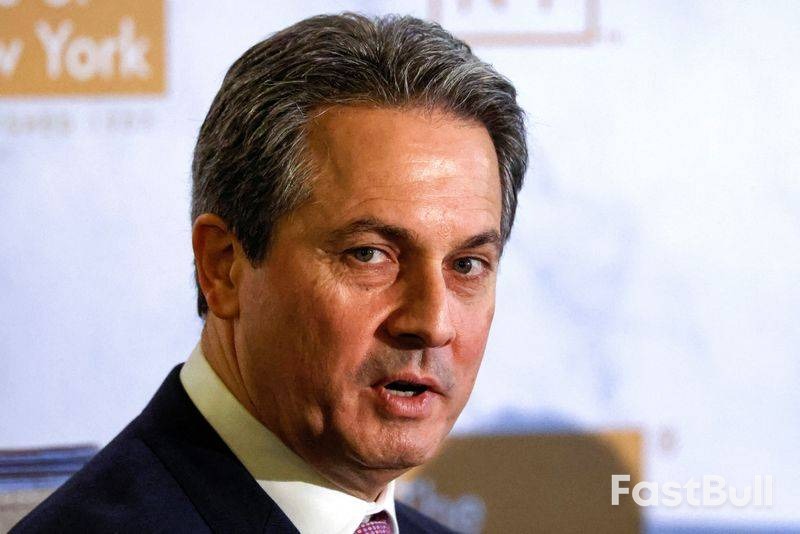
The one constant in my experience of the Fed is that once you walk in these doors, you understand that we have a very, very important responsibility to the American people,” Williams said.
Russia has launched one of its most advanced ballistic missiles against Ukraine, a move that analysts believe is driven as much by strategic messaging as by tactical goals. The weapon, an Oreshnik intermediate-range ballistic missile, was fired at the city of Lviv, marking only its second known use in the conflict.
This deployment suggests Russia is using its high-end munitions sparingly, likely due to a limited stockpile.
The Oreshnik missile, which traveled nearly 900 miles to its target, was not fired in isolation. The attack followed Russia's standard operational playbook, involving a massive, coordinated strike designed to saturate Ukrainian air defenses.
According to the Ukrainian Air Force, the assault included approximately 200 munitions in total, combining suicide drones, cruise missiles, and other ballistic missiles aimed at several cities. The strategy behind such a large-scale barrage is to overwhelm defense systems, increasing the likelihood that some weapons will penetrate and strike their targets.
Beyond its military impact, the Kremlin appears to have used the Oreshnik launch to send a political signal. The British Ministry of Defence assessed that the strike was almost certainly a form of "strategic messaging."
This message followed Russia's unsubstantiated public claims that Ukraine had attacked President Putin's residence in Novgorod on December 29, 2025. Western intelligence has disputed Moscow's narrative. A CIA assessment concluded that Russia fabricated the attack, likely in an attempt to undermine ongoing peace negotiations and erode international support for Ukraine.
In the wake of the missile strikes, British Defence Secretary John Healy visited Kyiv to discuss diplomatic efforts to end the war. He strongly condemned the attack.
"Russia's barrage of attacks on Ukraine overnight, including firing an Oreshnik ballistic missile at Lviv, are another attempt by Putin to terrorise Ukraine and threaten Europe's security," Healy stated. "My visit to Kyiv today underlines the UK's resolute support for a just and lasting peace."
Ukrainian President Volodymyr Zelenskyy thanked the United Kingdom for its support, emphasizing the urgent need for more air defense capabilities. "Moscow is trying to use cold weather as a tool of terror," he said. "We know which partners have the relevant missiles and equipment, and I am sincerely grateful to the United Kingdom for its readiness to help."
The United Kingdom has been a key provider of military and diplomatic aid to Ukraine throughout the war.
The attack comes amid sensitive peace negotiations. As part of these talks, several European nations, including the UK and France, have indicated a willingness to deploy troops to Ukraine as a security guarantee after the conflict ends.
President Zelenskyy confirmed discussions around this possibility. "We also discussed how a British contingent could be deployed to operate alongside French forces if diplomacy works to end the war," he added. "It is crucial that the framework for ending the war includes a clear response from the allies should Russian aggression be repeated."
Former President Donald Trump is set to interview BlackRock CIO Rick Rieder for the position of Federal Reserve Chair, a move that could signal a major shift in U.S. monetary policy and directly impact cryptocurrency markets like Bitcoin and Ethereum. The high-stakes meeting is scheduled to take place at the White House on Thursday.
Rieder has emerged as one of four finalists for the top job at the central bank, which will become vacant when current Chair Jerome Powell's term concludes in May. The other contenders for the position are Kevin Warsh, Kevin Hassett, and Christopher Waller.
The interview will involve key figures from Trump's inner circle, including chief of staff Susie Wiles, Treasury Secretary Scott Bessent, and deputy chief of staff Dan Scavino, who will join the discussion on the future of monetary policy.
A key focus of the discussion will be Rieder's public stance on interest rates. As the Chief Investment Officer of BlackRock, he has advocated for a less restrictive monetary policy.
"The Fed has got to get the rate down to 3% - I think that is closer to equilibrium," Rieder stated in a recent interview.
This position suggests a more dovish approach, aimed at easing financial conditions and potentially stimulating economic activity.
A pivot towards a 3% interest rate would have significant consequences for financial markets. Lower borrowing costs typically encourage investment in higher-risk assets. Analysts are closely watching this development for its potential to boost valuations for cryptocurrencies, particularly Bitcoin and Ethereum.
Any change in Fed leadership, especially one involving a figure with a clear policy preference like Rieder, is a critical event for traders and investors across both traditional and digital asset markets.
While Rieder is a serious contender, prediction markets still see his nomination as an outside shot. On the platform Kalshi, his chances of being nominated are currently priced at 8%.
Historically, the appointment of a new Federal Reserve Chair often precedes major shifts in financial and economic trends. If Rieder were to be nominated and confirmed, his advocacy for lower rates could herald a new chapter for global markets and cryptocurrency valuations.
Federal Reserve officials are signaling they will hold interest rates steady, pushing back against arguments that a recent surge in U.S. productivity is enough to justify a policy shift.
While higher productivity can allow companies to produce goods more cheaply and help cool inflation, top central bankers remain unconvinced that the trend is permanent. They reiterated this week that they need more conclusive evidence of easing price pressures before considering rate cuts.
This cautious stance puts the Fed at odds with the Trump administration, which sees the strong productivity numbers as a clear reason to lower borrowing costs. Administration officials, buoyed by hopes of further gains from artificial intelligence, argue that the central bank should act now.
However, Fed policymakers have made it clear they believe it is too early to factor a sustained productivity boom into their monetary policy outlook, suggesting rates will likely remain on hold.
St. Louis Fed President Alberto Musalem articulated the central bank's cautious view, stating that while he is hopeful for a new era of higher productivity, it is too soon to make that call.
"It's certainly too early to outsource our job of bringing inflation back towards 2%," Musalem said during a webcast. "I see little reason for near-term further easing of policy."
He described the Fed's current policy rate of 3.50%-3.75% as roughly neutral. In his view, a rate cut would only be necessary if the resilient labor market starts to weaken or if inflation falls back to the 2% target faster than anticipated.
Recent data shows underlying consumer inflation held steady at 2.6% year-over-year in December. However, the report also revealed a sharp monthly jump in food prices—the largest in over three years—alongside persistent housing inflation.
In response to the latest inflation data, President Donald Trump declared that there was "very low inflation" and urged the Federal Reserve to "cut interest rates, MEANINGFULLY."
This perspective is shared by key administration officials. Top economic adviser Kevin Hassett, a potential successor to Fed Chair Jerome Powell, and Fed Governor Stephen Miran have both publicly argued that the productivity trend will help moderate inflation and warrants lower borrowing costs. The productivity data itself is strong, showing a 4.9% year-over-year jump in the third quarter of last year, which helped drive down unit labor costs to nearly 2%.
The market does not expect the Fed to cut rates at its upcoming January 27-28 meeting. Speculation is growing that the central bank may keep rates on hold for the remainder of Powell's term, which ends in May. The policy debate has intensified amid mounting tension between Trump and Powell, who disclosed on Sunday that he had been threatened with a criminal indictment over congressional testimony from last June.
The current policy dilemma has drawn comparisons to the mid-1990s, when then-Fed Chair Alan Greenspan correctly anticipated that rising productivity would help contain inflation, allowing him to resist calls for rate hikes.
However, some Fed officials believe the parallel is imperfect. New York Fed President John Williams, who was an economist at the central bank's board during that period, acknowledged the similarities but pointed to key differences.

Williams noted that the 1990s benefited from other disinflationary forces, such as expanding globalization, which are not present today. "I love positive shocks and supply shocks," he said, "but I think there were other factors that were helping keep inflation low" that are not the same now.
"I do not think the parallels are complete," Williams concluded, aligning with Musalem's view that there is no compelling reason to cut rates in the near term.
Russia has drafted a new bill designed to integrate cryptocurrency into daily life and the broader national economy, according to Anatoly Aksakov, a senior lawmaker leading the country's digital asset regulation efforts.
The legislation, which will be a focus of the upcoming spring parliamentary session, aims to simplify crypto operations and is expected to provide a major boost to Russia's domestic crypto sector.
Anatoly Aksakov, who chairs the State Duma's Committee on Financial Markets, confirmed that the proposed law would exempt cryptocurrencies from special financial regulations, positioning them to become a commonplace tool for Russian citizens.
"A bill has already been drafted that would exempt cryptocurrencies from special financial regulation, meaning they will become commonplace in our lives," Aksakov stated.
He elaborated that the primary goal is to make digital currencies accessible to most Russians while weaving them into the country's economic fabric. The reforms are intended to create a powerful impetus for the development of the crypto industry under domestic rules.
Under the proposed framework, Russian residents could use digital coins for international settlements and to attract foreign capital by placing assets on international financial markets.
The legislation outlines a two-tiered system for market participation:
• Professional Participants: Financial market professionals will be able to work with cryptocurrencies without restrictions.
• Non-Qualified Investors: Everyday citizens will also have access, though it will be restricted.
This approach marks a significant liberalization from previous policies.
This legislative push is the latest step in a significant evolution of Russia's stance on cryptocurrency, largely driven by Western sanctions that have limited its access to traditional finance.
The year 2025 marked a turning point in the country's historically conservative attitude. Last spring, Russia introduced a special "experimental" legal regime that permitted the use of digital currencies for cross-border payments. That initial framework also allowed a small group of "highly qualified" investors to put money into crypto assets. By May, the Central Bank of Russia (CBR) authorized financial firms to offer crypto derivatives.
In late December, Russia's monetary authority released a new regulatory concept that recognized cryptocurrencies as "monetary assets" and aimed to expand investor access. Following this, in November, financial regulators began discussing the removal of strict requirements for crypto investors, such as minimum income thresholds and prior investment experience.
The new legislation is expected to be adopted by July 1, 2026. Once enacted, it will allow regular qualified investors and ordinary citizens to legally purchase cryptocurrencies like Bitcoin.
However, for non-qualified investors, annual crypto purchases will be capped at 300,000 rubles (approximately $3,800).

Rachel Reeves' fiscal rules are "among the loosest the UK has had in its history" and fail to control borrowing effectively compared to other advanced economies, according to the former head of the government's spending watchdog.
Richard Hughes, who resigned as chair of the Office for Budget Responsibility (OBR) in November, argued that the self-imposed rules do not constrain growth because they permit the government to run a "quite a big structural deficit."
In his first public appearance since stepping down, Hughes told a House of Lords committee that the UK is now much slower at correcting its finances after a major shock.
"The rules we have mean that righting the fiscal ship after a shock happens much more slowly at the moment in the UK compared to what other rules might have required had they remained in place or compared to other jurisdictions," he said.
Hughes' comments underscore a critical challenge for the UK economy. Despite Reeves acknowledging that 10% of government spending goes toward debt interest, the national debt is still rising. Currently at 95.6% of GDP, or £2.9 trillion, UK debt has reached levels not seen since 1963 and is projected to climb to 97% of GDP by 2029.
The criticism from Hughes follows a chaotic budget process last November. Reeves raised taxes by £26 billion, a move designed to more than double her buffer against her fiscal rules to £21.7 billion and reassure markets.
Hughes explained that Reeves' fiscal framework is not strong enough to stabilize the public finances. He pointed to a specific mandate that taxes must cover day-to-day spending by 2029-30, a rule he claims allows borrowing of as much as 3% of GDP annually.
Crucially, he noted, this target never actually needs to be met. Once 2029-30 becomes the third year of the forecast, the target date simply rolls forward each year.
"We are still piling up debt several years on from a shock," Hughes stated, referencing the impacts of Covid and the energy crisis. "We aim to get borrowing to 2.5% of GDP by the end of the decade. That's a level the average advanced economy reached two years ago. Other countries have been much faster at rebuilding fiscal resilience."
He added, "I don't see much evidence of the government being constrained in its ability to support the economy."
Hughes also pushed back against claims that the OBR has become too powerful and that its forecasts are overriding elected officials—an argument made by figures including former Bank of England governor Andy Haldane.
He insisted the problem is not the OBR's analysis but the "record low level of headroom" against the rules used by both Reeves and her Conservative predecessor, Jeremy Hunt.
"Having a combination of relatively loose rules and also setting aside relatively small amounts of headroom is one of the reasons why fiscal outcomes have drifted," Hughes argued.
He concluded that the true economic limitation is the debt itself, not the watchdog that measures it. "Fiscal policy in this country is constrained because we've got debt approaching 100% of GDP and a deficit of almost 5% of GDP. Not because of the OBR forecast... we are borrowing more than almost any other advanced economy at the moment."
White Label
Data API
Web Plug-ins
Poster Maker
Affiliate Program
The risk of loss in trading financial instruments such as stocks, FX, commodities, futures, bonds, ETFs and crypto can be substantial. You may sustain a total loss of the funds that you deposit with your broker. Therefore, you should carefully consider whether such trading is suitable for you in light of your circumstances and financial resources.
No decision to invest should be made without thoroughly conducting due diligence by yourself or consulting with your financial advisors. Our web content might not suit you since we don't know your financial conditions and investment needs. Our financial information might have latency or contain inaccuracy, so you should be fully responsible for any of your trading and investment decisions. The company will not be responsible for your capital loss.
Without getting permission from the website, you are not allowed to copy the website's graphics, texts, or trademarks. Intellectual property rights in the content or data incorporated into this website belong to its providers and exchange merchants.
Not Logged In
Log in to access more features

FastBull Membership
Not yet
Purchase
Log In
Sign Up