• Trade
  • Markets
  • Copy
  • Contests
  • News
  • 24/7
  • Calendar
  • Q&A
  • Chats
Screeners
SYMBOL
LAST
ASK
BID
HIGH
LOW
NET CHG.
%CHG.
SPREAD
SPX
S&P 500 Index
6976.45
6976.45
6976.45
6991.91
6916.63
+37.42
+ 0.54%
--
DJI
Dow Jones Industrial Average
49407.67
49407.67
49407.67
49484.95
48673.58
+515.21
+ 1.05%
--
IXIC
NASDAQ Composite Index
23592.10
23592.10
23592.10
23686.83
23356.40
+130.29
+ 0.56%
--
USDX
US Dollar Index
97.430
97.510
97.430
97.460
97.170
+0.020
+ 0.02%
--
EURUSD
Euro / US Dollar
1.17930
1.17939
1.17930
1.18241
1.17809
+0.00032
+ 0.03%
--
GBPUSD
Pound Sterling / US Dollar
1.36651
1.36660
1.36651
1.37061
1.36598
-0.00018
-0.01%
--
XAUUSD
Gold / US Dollar
4922.14
4922.55
4922.14
4949.73
4665.80
+263.54
+ 5.66%
--
WTI
Light Sweet Crude Oil
61.916
61.946
61.916
62.191
60.864
-0.166
-0.27%
--

Community Accounts

Signal Accounts
--
Profit Accounts
--
Loss Accounts
--
View More

Become a signal provider

Sell trading signals to earn additional income

View More

Guide to Copy Trading

Get started with ease and confidence

View More

Signal Accounts for Members

All Signal Accounts

Best Return
  • Best Return
  • Best P/L
  • Best MDD
Past 1W
  • Past 1W
  • Past 1M
  • Past 1Y

All Contests

  • All
  • Trump Updates
  • Recommend
  • Stocks
  • Cryptocurrencies
  • Central Banks
  • Featured News
Top News Only
Share

Russian Deputy Prime Minister Novak Expects Oil Demand To Pick Up In March, April

Share

Russia Deputy Prime Minister Novak: Our Commodity Resources Are In Demand

Share

Russian Deputy Prime Minister Novak On India Possibly Cutting Russian Oil Imports: We Have Only Seen Public Statements

Share

Russian Deputy Prime Minister Novak On Expectations Of OPEC+ Actions In April: We Are Seeing Oil Demand And Supply Balance

Share

Finance Minister: Tanzania's Spending To Rise 10% Next Fiscal Year

Share

Qatar's Foreign Ministry Spokesperson On Iran: There Are Regional Collaboration And Ongoing Efforts In Order To Ensure Deescalation

Share

Russian Investment In Northern Fleet, In Particular Subsurface Capabilities Is Undiminished - Royal Navy First Sea Lord

Share

French Finance Minister Lescure: Forex Volatility Is A Subject That I Can Put On The G7 Agenda Depending On Develeopments

Share

French Finance Minister Lescure: Joint Instruments Can Have A Sectoral Focus, Such As Rare Earths

Share

China - Uruguay Joint Declaration: Both Sides Hope To Begin Negotiations On Free Trade Agreement Between China And MERCOSUR As Soon As Possible

Share

Dubai - Bridgewater Associates Founder Ray Dalio: Change Of Regime In Iran Would Make Middle East Region More Investable

Share

India's Nifty 50 Index Provisionally Ends 2.49% Higher

Share

China - Uruguay Joint Declaration: Uruguay Approves Of Participation Of Chinese Companies In Uruguay's 5G Network

Share

Kremlin Says Looming Absence Of Nuclear Arms Limits Would Be Very Bad For Global Security

Share

Dutch Prime Minister Rutte: Purl Program Supplying 90% Of Ukraine's Air Defence Missiles

Share

Kremlin: We Intend To Develop Our Strategic Partnership With India

Share

Kremlin On New Start: Putin's Offer Is Still On The Table But We Have Received No Response From The US

Share

[Bitcoin Drops Below $78,000] February 3Rd, According To Htx Market Data, Bitcoin Fell Below $78,000, With A 24-Hour Growth Of 0.87%

Share

Regional Official: Format Of Istanbul Talks Unclear Still, But Priority Is To Avoid Conflict And De-Escalate

Share

Regional Official: Saudi Arabia, Qatar, Oman, Pakistan, Egypt, United Arab Emirates Have Been Invited To Talks In Istanbul On Iran

TIME
ACT
FCST
PREV
Italy Manufacturing PMI (SA) (Jan)

A:--

F: --

P: --

South Africa Manufacturing PMI (Jan)

A:--

F: --

P: --

Euro Zone Manufacturing PMI Final (Jan)

A:--

F: --

P: --

U.K. Manufacturing PMI Final (Jan)

A:--

F: --

P: --

Turkey Trade Balance (Jan)

A:--

F: --

P: --

Brazil IHS Markit Manufacturing PMI (Jan)

A:--

F: --

P: --

Canada National Economic Confidence Index

A:--

F: --

P: --

Canada Manufacturing PMI (SA) (Jan)

A:--

F: --

P: --

U.S. IHS Markit Manufacturing PMI Final (Jan)

A:--

F: --

P: --

U.S. ISM Output Index (Jan)

A:--

F: --

P: --

U.S. ISM Inventories Index (Jan)

A:--

F: --

P: --

U.S. ISM Manufacturing Employment Index (Jan)

A:--

F: --

P: --

U.S. ISM Manufacturing New Orders Index (Jan)

A:--

F: --

P: --

U.S. ISM Manufacturing PMI (Jan)

A:--

F: --

P: --

US President Trump delivered a speech
South Korea CPI YoY (Jan)

A:--

F: --

P: --

Japan Monetary Base YoY (SA) (Jan)

A:--

F: --

P: --

Australia Building Approval Total YoY (Dec)

A:--

F: --

P: --
Australia Building Permits MoM (SA) (Dec)

A:--

F: --

P: --
Australia Building Permits YoY (SA) (Dec)

A:--

F: --

P: --

Australia Private Building Permits MoM (SA) (Dec)

A:--

F: --

P: --
Australia Overnight (Borrowing) Key Rate

A:--

F: --

P: --

RBA Rate Statement
Japan 10-Year Note Auction Yield

A:--

F: --

P: --

The U.S. House of Representatives voted on a short-term spending bill to end the partial government shutdown.
Saudi Arabia IHS Markit Composite PMI (Jan)

A:--

F: --

P: --

RBA Press Conference
Turkey PPI YoY (Jan)

A:--

F: --

P: --

Turkey CPI YoY (Jan)

A:--

F: --

P: --

Turkey CPI YoY (Excl. Energy, Food, Beverage, Tobacco & Gold) (Jan)

A:--

F: --

P: --

Richmond Federal Reserve President Barkin delivered a speech.
U.S. Weekly Redbook Index YoY

--

F: --

P: --

Mexico Manufacturing PMI (Jan)

--

F: --

P: --

U.S. API Weekly Refined Oil Stocks

--

F: --

P: --

U.S. API Weekly Gasoline Stocks

--

F: --

P: --

U.S. API Weekly Cushing Crude Oil Stocks

--

F: --

P: --

U.S. API Weekly Crude Oil Stocks

--

F: --

P: --

Japan IHS Markit Services PMI (Jan)

--

F: --

P: --

Japan IHS Markit Composite PMI (Jan)

--

F: --

P: --

China, Mainland Caixin Services PMI (Jan)

--

F: --

P: --

China, Mainland Caixin Composite PMI (Jan)

--

F: --

P: --

India HSBC Services PMI Final (Jan)

--

F: --

P: --

India IHS Markit Composite PMI (Jan)

--

F: --

P: --

Russia IHS Markit Services PMI (Jan)

--

F: --

P: --

South Africa IHS Markit Composite PMI (SA) (Jan)

--

F: --

P: --

Italy Services PMI (SA) (Jan)

--

F: --

P: --

Italy Composite PMI (Jan)

--

F: --

P: --

Germany Composite PMI Final (SA) (Jan)

--

F: --

P: --

Euro Zone Composite PMI Final (Jan)

--

F: --

P: --

Euro Zone Services PMI Final (Jan)

--

F: --

P: --

U.K. Composite PMI Final (Jan)

--

F: --

P: --

U.K. Total Reserve Assets (Jan)

--

F: --

P: --

U.K. Services PMI Final (Jan)

--

F: --

P: --

U.K. Official Reserves Changes (Jan)

--

F: --

P: --

Euro Zone Core CPI Prelim YoY (Jan)

--

F: --

P: --

Euro Zone Core HICP Prelim YoY (Jan)

--

F: --

P: --

Euro Zone PPI MoM (Dec)

--

F: --

P: --

Euro Zone HICP Prelim YoY (Jan)

--

F: --

P: --

Euro Zone Core HICP Prelim MoM (Jan)

--

F: --

P: --

Italy HICP Prelim YoY (Jan)

--

F: --

P: --

Euro Zone PPI YoY (Dec)

--

F: --

P: --

Q&A with Experts
    • All
    • Chatrooms
    • Groups
    • Friends
    srinivas flag
    SlowBear ⛅
    @SlowBear ⛅it tells where volume is . take vwap thats equilibrium line. above that will be equal amount of sellers and below that will be equal amount of buyers
    ANDY flag
    Hi, good afternoon
    Mayor flag
    Nawhdir Øt
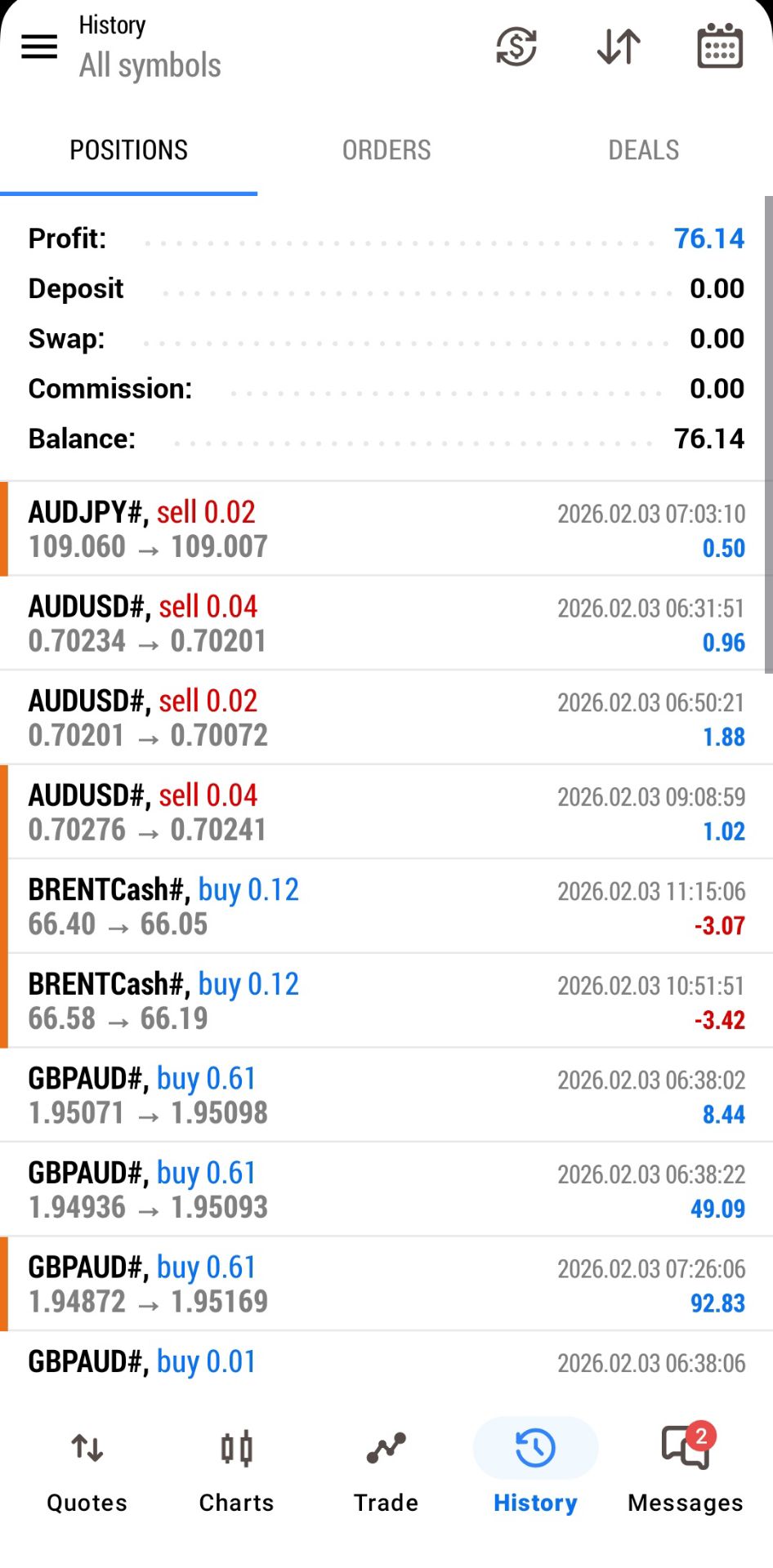
    + £76 !
    @Nawhdir Øtperfect 👌
    EuroTrader flag
    Nawhdir Øt
    + £76 !
    @Nawhdir ØtYou always know how to make money in the markets that's really a big skill
    EuroTrader flag
    Nawhdir Øt
    @Nawhdir ØtYou trade both sides of the markets and still manage to come out with some serious profits daily
    EuroTrader flag
    ANDY
    Hi, good afternoon
    @ANDYGood afternoon to you Andy. How you doing in the markets today?
    Nawhdir Øt flag
    EuroTrader
    @EuroTraderAUD RBA, was my saviors my cousin
    Visxa Benfica flag
    ling sun
    Will the US dollar index fall after Richmond Federal Reserve President Barkin's speech?
    @ling sunToday, Barkin of the Richmond Fed is giving a speech at 8 AM ET, so there won't be an immediate reaction yet because it's about to happen bro
    Nawhdir Øt flag
    Mayor
    @Mayor🫂🫂
    SlowBear ⛅ flag
    srinivas
    @srinivas Humm, that is insightful nto!
    Visxa Benfica flag
    ANDY
    Hi, good afternoon
    @ANDY Good afternoon man
    Visxa Benfica flag
    How are you today?
    SlowBear ⛅ flag
    ANDY
    Hi, good afternoon
    @ANDYHey bro, welcome back how are you doing today?
    Tomasodoma flag
    hello everyone’s
    "Visxa Benfica" recalled a message
    srinivas flag
    SlowBear ⛅
    @SlowBear ⛅if the market is below i don't short
    Visxa Benfica flag
    Nawhdir Øt
    @Nawhdir ØtOh, it seems more advantageous to trade XAU than that, bro
    Visxa Benfica flag
    Tomasodoma
    hello everyone’s
    @Tomasodoma yeah nice to meet you man
    SlowBear ⛅ flag
    Tomasodoma
    hello everyone’s
    @TomasodomaHi mate
    Visxa Benfica flag
    Tomasodoma
    hello everyone’s
    @TomasodomaAre you trading right now?
    Type here...
    Add Symbol or Code

      No matching data

      All
      Trump Updates
      Recommend
      Stocks
      Cryptocurrencies
      Central Banks
      Featured News
      • All
      • Russia-Ukraine Conflict
      • Middle East Flashpoint
      • All
      • Russia-Ukraine Conflict
      • Middle East Flashpoint
      Search
      Products

      Charts Free Forever

      Chats Q&A with Experts
      Screeners Economic Calendar Data Tools
      Membership Features
      Data Warehouse Market Trends Institutional Data Policy Rates Macro

      Market Trends

      Market Sentiment Order Book Forex Correlations

      Top Indicators

      Charts Free Forever
      Markets

      News

      News Analysis 24/7 Columns Education
      From Institutions From Analysts
      Topics Columnists

      Latest Views

      Latest Views

      Trending Topics

      Top Columnists

      Latest Update

      Signals

      Copy Rankings Latest Signals Become a signal provider AI Rating
      Contests
      Brokers

      Overview Brokers Assessment Rankings Regulators News Claims
      Broker listing Forex Brokers Comparison Tool Live Spread Comparison Scam
      Q&A Complaint Scam Alert Videos Tips to Detect Scam
      More

      Business
      Events
      Careers About Us Advertising Help Center

      White Label

      Broker API

      Data API

      Web Plug-ins

      Affiliate Program

      Awards Institution Evaluation IB Seminar Salon Event Exhibition
      Vietnam Thailand Singapore Dubai
      Fans Party Investment Sharing Session
      FastBull Summit BrokersView Expo
      Recent Searches
        Top Searches
          Markets
          News
          Analysis
          User
          24/7
          Economic Calendar
          Education
          Data
          • Names
          • Latest
          • Prev

          View All

          No data

          Scan to Download

          Faster Charts, Chat Faster!

          Download App
          English
          • English
          • Español
          • العربية
          • Bahasa Indonesia
          • Bahasa Melayu
          • Tiếng Việt
          • ภาษาไทย
          • Français
          • Italiano
          • Türkçe
          • Русский язык
          • 简中
          • 繁中
          Open Account
          Search
          Products
          Charts Free Forever
          Markets
          News
          Signals

          Copy Rankings Latest Signals Become a signal provider AI Rating
          Contests
          Brokers

          Overview Brokers Assessment Rankings Regulators News Claims
          Broker listing Forex Brokers Comparison Tool Live Spread Comparison Scam
          Q&A Complaint Scam Alert Videos Tips to Detect Scam
          More

          Business
          Events
          Careers About Us Advertising Help Center

          White Label

          Broker API

          Data API

          Web Plug-ins

          Affiliate Program

          Awards Institution Evaluation IB Seminar Salon Event Exhibition
          Vietnam Thailand Singapore Dubai
          Fans Party Investment Sharing Session
          FastBull Summit BrokersView Expo

          Russia Hits Ukraine Energy Grid as Fragile Ceasefire Ends

          King Ten

          Russia-Ukraine Conflict

          Remarks of Officials

          Political

          Energy

          Summary:

          Russia resumed large-scale strikes on Ukraine's energy infrastructure, ending a Trump-brokered pause before peace talks.

          Russia has resumed large-scale missile and drone strikes on Ukraine's energy infrastructure, ending a temporary halt just as a new round of peace negotiations is scheduled to begin. The attacks signal the expiration of a brief pause reportedly brokered by former U.S. President Donald Trump.

          Widespread Damage in Freezing Temperatures

          Early Tuesday, major cities including Kyiv, Kharkiv, Odesa, and Dnipro came under fire amid freezing conditions that saw temperatures drop below -20°C (-4°F).

          In Kharkiv, the attacks left at least 820 buildings, including multi-story apartment blocks, without heating, according to Mayor Ihor Terekhov.

          Ukraine’s largest private energy company, DTEK, confirmed that its thermal power plants sustained significant damage to critical equipment. Monitoring channels also reported that energy facilities in central and western Ukraine were targeted. The renewed aerial assault prompted neighboring Poland to scramble military jets as a standard precaution to secure its airspace.

          Diplomatic Context: A Pause Before Talks

          The escalation comes just before Ukrainian, Russian, and U.S. officials are set to resume trilateral peace talks in the United Arab Emirates on Wednesday. This follows a two-day meeting in Abu Dhabi last month.

          After those previous negotiations, Donald Trump stated that Russian President Vladimir Putin had agreed to his request for a weeklong pause in strikes on Kyiv and other cities due to the severe winter weather. In a reciprocal move, Ukraine said it would refrain from its own attacks on Russian oil refineries and other key facilities.

          Kremlin spokesman Dmitry Peskov confirmed on Friday that Putin had agreed to the pause until February 1. However, on Monday, Peskov gave no indication that the agreement would be extended. During this temporary halt on city strikes, Russian attacks on other targets, such as transportation infrastructure, continued.

          Future Risks and Energy Sector Vulnerability

          The fragility of Ukraine's energy system remains a critical concern. Maxim Timchenko, the CEO of DTEK, told Bloomberg on Monday that the company needs a ceasefire of at least two to three weeks to conduct necessary repairs and restore operations at its plants.

          He warned that without a longer period of calm, he could not rule out the possibility of further blackouts this winter in Kyiv and other major urban centers.

          Risk Warnings and Disclaimers
          You understand and acknowledge that there is a high degree of risk involved in trading. Following any strategies or investment methods may lead to potential losses. The content on the site is provided by our contributors and analysts for information purposes only. You are solely responsible for determining whether any trading assets, securities, strategy, or any other product is suitable for investing based on your own investment objectives and financial situation.
          Add to Favorites
          Share

          US Launches $12B Mineral Reserve to Counter China's Grip

          Isaac Bennett

          China–U.S. Trade War

          Remarks of Officials

          Economic

          Commodity

          Political

          The United States has announced a nearly $12 billion critical mineral reserve, a strategic move designed to reduce its dependence on China for materials vital to modern industry. Dubbed "Project Vault," the initiative aims to protect American manufacturers from supply chain disruptions.

          At the White House on Monday, Donald Trump introduced the project, explaining its goal is to "ensure that American businesses and workers are never harmed by any shortage." He drew a parallel between this new stockpile and the Strategic Petroleum Reserve, which was established in the 1970s following the disruptive Arab oil embargo.
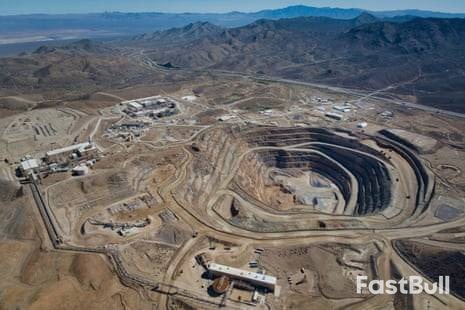
          Understanding Project Vault's Funding and Scope

          Project Vault will be financed through a combination of public and private funds, including a $10 billion loan from the U.S. Export-Import Bank and approximately $1.67 billion in private capital. The government-backed loan has a 15-year term, and the president expressed optimism that the government would profit from it.

          The reserve will stockpile minerals essential for producing a wide range of goods, including vehicles, electronics, jet engines, and radar systems. This is intended to shield U.S. industries from the kind of supply pressures experienced during past trade disputes.

          According to Secretary of the Interior Doug Burgum, 11 more countries will be announced as partners in the initiative later this week.

          Responding to China's Market Dominance

          The creation of the reserve is a direct response to China's overwhelming control of the global rare earths market. China currently controls about 70% of the world's rare earths mining and an estimated 90% of the processing capacity.

          This dominance gives Beijing significant leverage, which it has used before. During trade talks last year, China restricted exports of rare earths needed for everything from electric vehicles to smartphones. "We don't want to ever go through what we went through a year ago," Trump said, referencing the confrontation with China.

          This strategic vulnerability has prompted the U.S. to cultivate alternative sources and establish a national stockpile for these crucial elements. The U.S. government has previously supported the sector by taking stakes in miners like MP Materials and providing financial backing to firms such as Vulcan Elements and USA Rare Earth.

          A Diplomatic Push for Secure Supply Chains

          The strategic reserve is set to be a central topic at an upcoming ministerial meeting on critical minerals. Hosted by Secretary of State Marco Rubio at the State Department on Wednesday, the event will feature a keynote address from Vice President JD Vance.

          Officials from dozens of nations across Europe, Africa, and Asia are expected to attend. The meeting is also anticipated to feature the signing of several bilateral agreements aimed at improving and coordinating supply chain logistics. A statement from the State Department noted the gathering "will create momentum for collaboration" to secure reliable access to rare earths.

          The announcement of Project Vault was made in the Oval Office with General Motors CEO Mary Barra and mining billionaire Robert Friedland, alongside members of the administration and congressional leaders.

          To stay updated on all economic events of today, please check out our Economic calendar
          Risk Warnings and Disclaimers
          You understand and acknowledge that there is a high degree of risk involved in trading. Following any strategies or investment methods may lead to potential losses. The content on the site is provided by our contributors and analysts for information purposes only. You are solely responsible for determining whether any trading assets, securities, strategy, or any other product is suitable for investing based on your own investment objectives and financial situation.
          Add to Favorites
          Share

          Venezuela’s Oil Gambit Exposes the Limits of Trump’s Plan to Squeeze Russia

          Gerik

          Economic

          Commodity

          The Strategic Logic Behind The Deal

          U.S. President Donald Trump framed a new trade agreement with India around a straightforward idea: lower U.S. tariffs in exchange for India cutting off Russian oil purchases and turning instead to Venezuelan and American crude. In theory, this would deprive Russia of a critical revenue stream used to fund its war in Ukraine, particularly since India and China now account for the bulk of Russia’s oil exports following Western sanctions.
          The strategy rests on a simple chain of substitution. If India stops buying Russian oil and replaces it with Venezuelan supply, Russia loses both volume and pricing power. The logic is appealing, but the underlying market realities complicate execution.

          Why Venezuelan Crude Looks Attractive On Paper

          From a technical standpoint, Venezuela is one of the few producers capable of replacing Russian barrels for India. Venezuelan crude is heavy and sour, closely resembling Russia’s Urals blend. This matters because India’s refineries are configured to process exactly this type of oil into diesel, fuel oil, asphalt, and other industrial products vital to its fast-growing economy. By contrast, U.S. light sweet crude is better suited for gasoline and offers less flexibility for Indian refiners.
          Following the U.S. removal of sanctions and the capture of Venezuelan leader Nicolás Maduro, Caracas passed legal reforms aimed at reopening its oil sector to foreign investment. Analysts such as Homayoun Falakshahi of Kpler described the reforms as a positive step toward revitalizing the industry and attracting Western capital back into Venezuela’s oil fields.

          Production Reality Limits Venezuela’s Role

          Despite its vast reserves, Venezuela’s current production capacity is sharply constrained. The country produces just over 1 million barrels per day, and nearly two-thirds of that supply already goes to China. Even if Venezuela diverted all of its exports to India, it would still fall short of replacing the roughly 1.5 million barrels per day that India imports from Russia.
          Historically, Venezuela has demonstrated far greater capacity. Before the rise of Hugo Chávez’s socialist government in 1999, output exceeded 3 million barrels per day. However, decades of underinvestment, mismanagement, and infrastructure decay have left the industry unable to scale quickly. Restoring production to prior levels would require tens of billions of dollars annually for many years, along with deep involvement from major Western oil companies.
          Here, structural risk becomes decisive. Foreign firms remain wary of Venezuela’s political instability, unclear rule of law, unresolved debts, and high royalties. While sanctions have been lifted and oil laws revised, key investor safeguards remain absent, limiting how quickly capital and expertise can realistically return.

          India’s Economic Constraints And Inertia

          Even if Venezuelan supply expanded, India cannot abruptly abandon Russian oil. Logistics alone pose challenges, as shipping routes from Venezuela are longer and more complex than those from Russia. Refinery adjustments and supply chain reconfiguration would take time, making any transition gradual rather than immediate.
          Cost considerations are even more binding. Russian oil trades at a steep discount, roughly $16 per barrel below OPEC or U.S. benchmarks. This price advantage has been a central reason India continued buying Russian crude despite Western sanctions. Although falling global oil prices ease the burden slightly, replacing discounted Russian barrels with higher-priced alternatives would raise India’s import bill and strain domestic fuel economics.
          Analysts such as Robert Yawger of Mizuho Securities also note that India has repeatedly found ways to bypass sanctions using shadow fleets and alternative trading channels. There is little evidence that a single trade deal will instantly override these entrenched practices.

          Impact On Russia Likely Gradual, Not Decisive

          Russia’s economy has already been pressured by sanctions, lower oil prices, inflation, and rising debt. Yet it has adapted through shadow shipping, higher taxes, and expanded domestic manufacturing. Losing India as an oil customer overnight would be damaging, but not catastrophic.
          Still, Venezuelan oil introduces a new variable into the equation. Even partial and gradual reductions in Indian purchases of Russian crude could incrementally weaken Russia’s fiscal position over time. As Rob Haworth of U.S. Bank Asset Management noted, sustained erosion of oil revenues would create additional economic challenges for Russia and make prolonged war financing more difficult.

          A Long Game With Limited Short-Term Payoff

          Trump’s strategy does not fail outright, but its effectiveness depends on timelines measured in years, not months. Venezuela lacks the capacity to substitute Russian oil quickly, and India’s incentives to abandon discounted Russian supply remain weak. The outcome is less a decisive blow and more a slow pressure tactic, adding friction to Russia’s economic resilience rather than dismantling it.
          In a conflict of enormous human cost, even marginal constraints on funding matter. But the Venezuelan oil card, while symbolically powerful, is unlikely to deliver the swift geopolitical leverage its architects envision.

          Source: CNN

          To stay updated on all economic events of today, please check out our Economic calendar
          Risk Warnings and Disclaimers
          You understand and acknowledge that there is a high degree of risk involved in trading. Following any strategies or investment methods may lead to potential losses. The content on the site is provided by our contributors and analysts for information purposes only. You are solely responsible for determining whether any trading assets, securities, strategy, or any other product is suitable for investing based on your own investment objectives and financial situation.
          Add to Favorites
          Share

          India Markets Roar Back as U.S. Trade Breakthrough Unlocks Long-Suppressed Optimism

          Gerik

          Economic

          Stocks

          A Long-Awaited Deal Sparks A Powerful Market Repricing

          Indian equities staged a dramatic rebound after New Delhi and Washington announced a trade agreement that materially lowered U.S. tariffs on Indian exports. The benchmark Nifty 50 jumped 5% at the open before paring gains to around 4%, still marking its strongest single-day performance in nearly six years if the rally holds.
          U.S. President Donald Trump said the United States would cut reciprocal tariffs on Indian goods to 18% from 25% and that India would reduce tariff and non-tariff barriers against U.S. products to zero. While earlier U.S. measures had lifted total tariffs on India to as high as 50%, including a 25% penalty linked to India’s purchases of Russian oil, Reuters reported that the overall tariff burden has now been reduced to 18%, clarifying initial market confusion.
          This clarification proved crucial for sentiment, as markets rapidly repriced expectations for trade flows, earnings, and capital inflows.

          Energy Commitments And Geopolitical Realignment

          Trump also said that during a call with Indian Prime Minister Narendra Modi, India agreed to halt purchases of Russian oil and instead significantly increase imports from the United States. Modi confirmed that “made in India” products would now face reduced tariffs in the U.S. and framed the agreement as part of a broader effort to support global stability and prosperity.
          This energy shift represents a structural change in trade relationships rather than a short-term transaction. While it does not immediately alter global supply balances, it reshapes India’s external positioning and strengthens economic ties with its largest export market.

          Why The Market Reaction Was So Strong

          At the start of 2025, India had been widely expected to be among the first countries to reach a trade agreement with Washington. The prolonged absence of a deal became a growing drag on sentiment, creating what Citi Research described as a disconnect between India’s strong macroeconomic fundamentals and the weak performance of its financial assets.
          Foreign investors exited Indian equities in record volumes, leaving the Nifty with gains of just over 10% in local currency terms for 2025. In dollar terms, performance was even weaker due to rupee depreciation, with the MSCI India index gaining only 4.29% compared with a 33.57% rise in the MSCI Emerging Markets index. The rupee emerged as Asia’s worst-performing currency last year, weighed down by trade uncertainty and persistent capital outflows.
          Against this backdrop, the tariff reduction came in materially better than market consensus. Trideep Bhattacharya of Edelweiss Asset Management said the agreement exceeded expectations and, when combined with the recently concluded India–EU trade deal, could represent one of the strongest external growth impulses for India in 2026. The relationship here is causal rather than coincidental, as lower trade barriers directly improve export competitiveness, earnings visibility, and investor confidence.

          Currency Relief Reinforces The Equity Rally

          The trade breakthrough also triggered a sharp move in currency markets. The Indian rupee strengthened about 1% following the announcement, last trading near 90.29 per dollar. This rebound reflects easing concerns over India’s external balance and the potential for renewed foreign inflows now that a key source of policy uncertainty has been removed.
          Radhika Rao of DBS Bank described the agreement as unequivocally positive for exports, sentiment, and financial markets, noting that high tariffs had been a central drag on confidence over the past quarter. A stronger rupee, in turn, reinforces equity gains by improving dollar-based returns for international investors, creating a reinforcing loop between currency and stock market performance.

          A Structural Reset For Indian Assets

          The sharp rally in the Nifty 50 is best understood as a relief move layered on top of a deeper structural reset. Markets are not simply reacting to a headline, but reassessing India’s position in global trade, its attractiveness to foreign capital, and its earnings outlook in a lower-tariff environment.
          If implementation follows through, the deal has the potential to narrow the performance gap between Indian assets and the broader emerging market universe. After a year in which strong domestic fundamentals failed to translate into market returns, the trade agreement provides a clear mechanism for that gap to begin closing in 2026.

          Source: CNBC

          To stay updated on all economic events of today, please check out our Economic calendar
          Risk Warnings and Disclaimers
          You understand and acknowledge that there is a high degree of risk involved in trading. Following any strategies or investment methods may lead to potential losses. The content on the site is provided by our contributors and analysts for information purposes only. You are solely responsible for determining whether any trading assets, securities, strategy, or any other product is suitable for investing based on your own investment objectives and financial situation.
          Add to Favorites
          Share

          RBA Reverses Course With Surprise Tightening as Inflation Reignites

          Gerik

          Economic

          A Return To Tightening After Last Year’s Cuts

          Australia’s central bank raised its benchmark cash rate by 25 basis points to 3.85%, marking the first increase since November 2023 and a clear reversal after three rate cuts in February, May, and August last year. The decision came as inflation surprised to the upside, underscoring the bank’s assessment that price pressures have re-intensified following a period of moderation earlier in 2025.
          The move was widely anticipated after official data showed annual inflation rose to 3.8% in the 12 months through December, up from 3.4% in November. While inflation has eased significantly from its peak of 7.8% in late 2022, policymakers judged that the renewed pickup in the second half of 2025 altered the balance of risks.

          Inflation Outlook And Policy Rationale

          The Reserve Bank of Australia reiterated that its mandate is to steer inflation back into the 2% to 3% target band and warned that inflation is likely to remain above target for some time. The bank emphasized that domestic dynamics, particularly private demand driven by household spending and investment, have been stronger than expected, contributing to persistent price pressures.
          Global uncertainty remains elevated, but the bank noted that Australia has so far avoided any meaningful drag from external headwinds. Growth and trade among Australia’s major partners have surprised on the upside, reinforcing the case for tighter policy to prevent demand from running ahead of supply.

          Economic Conditions Running Hot

          Labor market data added weight to the decision. Unemployment fell from 4.3% in November to 4.1% in December, a development that suggested underlying momentum remains firm. This tightening in labor conditions strengthens wage dynamics and risks entrenching inflation if left unchecked, a relationship that is causal rather than merely coincidental in the bank’s framework.
          The unusual timing of the hike, coming only six months after the last cut, reflects how quickly the macro backdrop shifted. Inflation fell to as low as 2.1% in June last year before rebounding to 3.2% in September and accelerating further into year-end, challenging earlier assumptions that disinflation was firmly established.

          Political And Household Impact

          Treasurer Jim Chalmers described the decision as difficult news for households with mortgages and for businesses facing higher borrowing costs. He rejected claims that government spending was the primary driver of inflation, pointing instead to the central bank’s assessment that private demand has been the dominant force.
          The rate increase will flow through to variable mortgage rates, tightening financial conditions for millions of Australians. While the immediate effect is financial strain, policymakers appear to view this as necessary to prevent a more persistent inflation problem that would ultimately require even more aggressive tightening.

          Expert Views And The Road Ahead

          Economists noted the rarity of the policy reversal. Cherelle Murphy, Chief Economist at EY Oceania, said the hike raised the possibility that the last rate cut may have been premature, even if that was not evident at the time. She also highlighted the unexpectedly strong labor market as a sign the economy may be operating above its sustainable pace.
          Murphy added that another rate increase later in the year could not be ruled out if inflation remains sticky. Market pricing has already begun to reflect this risk, indicating that the central bank’s decision may mark the start of a renewed tightening phase rather than a one-off adjustment.
          By lifting rates to 3.85%, the Reserve Bank of Australia sent a clear message that the fight against inflation is not over. The decision underscores a willingness to act decisively when price stability is threatened, even at the cost of short-term pain for borrowers, and positions Australia among the few developed economies currently moving against the global easing trend.

          Source: AP

          To stay updated on all economic events of today, please check out our Economic calendar
          Risk Warnings and Disclaimers
          You understand and acknowledge that there is a high degree of risk involved in trading. Following any strategies or investment methods may lead to potential losses. The content on the site is provided by our contributors and analysts for information purposes only. You are solely responsible for determining whether any trading assets, securities, strategy, or any other product is suitable for investing based on your own investment objectives and financial situation.
          Add to Favorites
          Share

          China & Uruguay Deepen Partnership in High-Stakes Talks

          King Ten

          Economic

          Remarks of Officials

          Political

          Chinese President Xi Jinping met with his Uruguayan counterpart, Yamandu Orsi, in Beijing on Tuesday, calling for the two nations to jointly promote an "equal and orderly multipolar world." In remarks reported by a media pool, Xi also advocated for an inclusive and universally beneficial economic globalization, framing the cooperation as part of building a "community with a shared future for mankind."

          Orsi's trip marks the first visit to the Chinese capital by a South American leader since the United States' invasion of Venezuela in January, which involved the capture of then-President Nicolas Maduro.

          Geopolitical Context and Symbolism

          The high-level meeting follows a series of visits to China by Western leaders this year, including Britain's Prime Minister Keir Starmer, Canadian Prime Minister Mark Carney, and Finland's Prime Minister Petteri Orpo.

          According to Francisco Urdinez, a professor at the Pontifical Catholic University of Chile, the timing holds symbolic weight. "For Beijing, hosting Orsi signals that South American countries remain eager to engage, despite the increasingly polarized geopolitical environment," Urdinez explained.

          Orsi, who arrived in Beijing on Sunday, stated his visit aims to "empower Uruguay in the world and generate opportunities, investment and development." He is leading a 150-person delegation, which includes business leaders, on a tour that runs until February 7 and will also include a stop in the commercial hub of Shanghai.

          The Economic Bedrock of the Relationship

          The diplomatic push is built on a strong trade foundation. In 2025, China was the primary destination for Uruguayan exports, which are dominated by agricultural products such as wood pulp, soybeans, and beef.

          The economic data highlights a robust partnership:

          • Uruguay recorded a trade surplus of $187.1 million with China in the first half of 2025.

          • In return, the South American nation imports machinery, electronics, and chemicals from China.

          New Agreements Target Deeper Cooperation

          On Tuesday, the two countries signed a joint declaration to deepen their strategic partnership, alongside 12 other cooperation documents. These agreements cover a range of sectors, including science and technology, environmental cooperation, meat exports and imports, and intellectual property.

          Orsi expressed Uruguay's desire to intensify "trade in goods, especially through diversification, and to invest much more strongly in the area of trade in services and investment." He described the China-Uruguay strategic partnership as being in "its best moment," adding that both countries have a responsibility to "commit to raising it to a new level."

          Experts see significant room for growth beyond traditional exports. Dr. Diego Telias, a professor at Universidad ORT Uruguay and a researcher at ICLAC, noted that sectors like dairy hold considerable potential. He also pointed to a gap in service exports, an area "in which Uruguay has successfully engaged with markets such as the United States, the United Kingdom and Europe, but not yet with China."

          To stay updated on all economic events of today, please check out our Economic calendar
          Risk Warnings and Disclaimers
          You understand and acknowledge that there is a high degree of risk involved in trading. Following any strategies or investment methods may lead to potential losses. The content on the site is provided by our contributors and analysts for information purposes only. You are solely responsible for determining whether any trading assets, securities, strategy, or any other product is suitable for investing based on your own investment objectives and financial situation.
          Add to Favorites
          Share

          Takaichi's Yen Comments Undermine Japan's Currency Strategy

          Christopher Hayes

          Forex

          Economic

          Remarks of Officials

          Political

          Just as Japan seemed to be stabilizing its falling currency, Prime Minister Sanae Takaichi introduced a fresh wave of uncertainty with off-the-cuff remarks that appeared to favor a weaker yen.

          During a campaign speech this week, Takaichi—who is widely expected to win this Sunday's snap election—triggered a yen selloff by highlighting the benefits of a devalued currency. While she later retracted the comments, government officials privately worry the mixed signals could derail a coordinated effort with Washington to support the yen.

          The weak yen has become a major political issue. At home, it is blamed for driving up the cost of imports. Abroad, the Trump administration has voiced concerns that it could destabilize U.S. markets.

          Tokyo Scrambles for Damage Control

          Takaichi's remarks quickly caused alarm within her own administration. According to one official at the prime minister's office, a scramble ensued over the weekend to contain the market fallout.

          "Officials were scrambling to respond through Takaichi's X social media account to clarify her intentions," the official stated.

          In a post on her X account on Sunday, Takaichi clarified that she had no preference for the yen's direction. She explained that her earlier speech was meant to convey her goal of building an economy resilient to exchange-rate fluctuations.

          Another official confirmed that the government ensured U.S. authorities were informed of Takaichi's clarification. So far, Washington has not publicly commented on the matter.

          Contradicting Official Policy

          The prime minister's initial comments stood in stark contrast to the government's official stance. After weeks of heavy downward pressure, close coordination between Tokyo and Washington—including rare rate checks by the New York Federal Reserve—had finally helped steady the yen.

          Finance Minister Satsuki Katayama has repeatedly threatened market intervention to prop up the currency. She has also noted that U.S. Treasury Secretary Scott Bessent shares her concerns over the yen's excessive volatility.

          Masafumi Yamamoto, chief currency strategist at Mizuho Securities, said Takaichi's remarks exposed a deeper view. "It revealed a complete lack of a sense of crisis over the historically weak yen," he commented. "Instead, it laid bare that Takaichi's long-held belief that yen depreciation is beneficial to the economy remains unchanged."

          Following the prime minister's speech, the yen gave up approximately half of the 7-yen gain it had recently made on the prospect of joint U.S.-Japan intervention.

          Washington's Unwelcome Surprise

          U.S. officials have been wary of the side effects of yen weakness, particularly the surge in Japanese government bond yields. According to Tsuyoshi Ueno, a senior economist at the NLI Research Institute, Washington is concerned that rising Japanese yields could ripple through U.S. markets, pushing up Treasury yields and triggering selloffs in American assets.

          "From Washington's perspective, the remarks were also likely unwelcome," said Ueno.

          Japanese government sources revealed that at a meeting in Davos, Treasury Secretary Bessent told Finance Minister Katayama that Japan's rising debt yields had triggered a "triple selloff" in the United States and urged Tokyo to respond. This bond rout in Japan, initially sparked by Takaichi's campaign pledge to waive sales tax on food, added to market volatility already stirred by President Donald Trump's trade threats against Europe.

          The U.S. Treasury Department did not respond to a request for comment.

          A Pattern of Off-the-Cuff Remarks

          This is not the first instance of Prime Minister Takaichi making unscripted comments that diverge from carefully crafted policy. Weeks after taking office in October, her remarks in parliament on a hypothetical Chinese attack on Taiwan ignited a major diplomatic dispute with Beijing.

          However, this candid style is also a source of her popularity, particularly among younger voters. A recent Asahi newspaper survey shows Takaichi's Liberal Democratic Party is on track for a landslide victory in the upcoming election, suggesting her approach of pursuing significant spending and tax cuts is likely to continue.

          One government official, who wished to remain anonymous, expressed frustration with the prime minister's communication. "I read the whole of Takaichi's campaign speech, but I honestly wonder whether it needed to be said in the first place," he noted. "She rambled on, off the cuff without notes, but it's ultimately unclear what she was trying to say."

          To stay updated on all economic events of today, please check out our Economic calendar
          Risk Warnings and Disclaimers
          You understand and acknowledge that there is a high degree of risk involved in trading. Following any strategies or investment methods may lead to potential losses. The content on the site is provided by our contributors and analysts for information purposes only. You are solely responsible for determining whether any trading assets, securities, strategy, or any other product is suitable for investing based on your own investment objectives and financial situation.
          Add to Favorites
          Share
          FastBull
          Copyright © 2026 FastBull Ltd

          728 RM B 7/F GEE LOK IND BLDG NO 34 HUNG TO RD KWUN TONG KLN HONG KONG

          TelegramInstagramTwitterfacebooklinkedin
          App Store Google Play Google Play
          Products
          Charts

          Chats

          Q&A with Experts
          Screeners
          Economic Calendar
          Data
          Tools
          Membership
          Features
          Function
          Markets
          Copy Trading
          Latest Signals
          Contests
          News
          Analysis
          24/7
          Columns
          Education
          Company
          Careers
          About Us
          Contact Us
          Advertising
          Help Center
          Feedback
          User Agreement
          Privacy Policy
          Personal Information Protection Statement
          Business

          White Label

          Broker API

          Data API

          Web Plug-ins

          Poster Maker

          Affiliate Program

          Risk Disclosure

          The risk of loss in trading financial instruments such as stocks, FX, commodities, futures, bonds, ETFs and crypto can be substantial. You may sustain a total loss of the funds that you deposit with your broker. Therefore, you should carefully consider whether such trading is suitable for you in light of your circumstances and financial resources.

          No decision to invest should be made without thoroughly conducting due diligence by yourself or consulting with your financial advisors. Our web content might not suit you since we don't know your financial conditions and investment needs. Our financial information might have latency or contain inaccuracy, so you should be fully responsible for any of your trading and investment decisions. The company will not be responsible for your capital loss.

          Without getting permission from the website, you are not allowed to copy the website's graphics, texts, or trademarks. Intellectual property rights in the content or data incorporated into this website belong to its providers and exchange merchants.

          Not Logged In

          Log in to access more features

          Connect Broker
          Become a signal provider
          Help Center
          Customer Service
          Dark Mode
          Price Up/Down Colors

          Log In

          Sign Up

          Position
          Layout
          Fullscreen
          Default to Chart
          The chart page opens by default when you visit fastbull.com