Markets
News
Analysis
User
24/7
Economic Calendar
Education
Data
- Names
- Latest
- Prev


Signal Accounts for Members
All Signal Accounts
All Contests


U.K. Trade Balance (Oct)A:--
F: --
P: --
U.K. Services Index MoMA:--
F: --
P: --
U.K. Construction Output MoM (SA) (Oct)A:--
F: --
P: --
U.K. Industrial Output YoY (Oct)A:--
F: --
P: --
U.K. Trade Balance (SA) (Oct)A:--
F: --
P: --
U.K. Trade Balance EU (SA) (Oct)A:--
F: --
P: --
U.K. Manufacturing Output YoY (Oct)A:--
F: --
P: --
U.K. GDP MoM (Oct)A:--
F: --
P: --
U.K. GDP YoY (SA) (Oct)A:--
F: --
P: --
U.K. Industrial Output MoM (Oct)A:--
F: --
P: --
U.K. Construction Output YoY (Oct)A:--
F: --
P: --
France HICP Final MoM (Nov)A:--
F: --
P: --
China, Mainland Outstanding Loans Growth YoY (Nov)A:--
F: --
P: --
China, Mainland M2 Money Supply YoY (Nov)A:--
F: --
P: --
China, Mainland M0 Money Supply YoY (Nov)A:--
F: --
P: --
China, Mainland M1 Money Supply YoY (Nov)A:--
F: --
P: --
India CPI YoY (Nov)A:--
F: --
P: --
India Deposit Gowth YoYA:--
F: --
P: --
Brazil Services Growth YoY (Oct)A:--
F: --
P: --
Mexico Industrial Output YoY (Oct)A:--
F: --
P: --
Russia Trade Balance (Oct)A:--
F: --
P: --
Philadelphia Fed President Henry Paulson delivers a speech
Canada Building Permits MoM (SA) (Oct)A:--
F: --
P: --
Canada Wholesale Sales YoY (Oct)A:--
F: --
P: --
Canada Wholesale Inventory MoM (Oct)A:--
F: --
P: --
Canada Wholesale Inventory YoY (Oct)A:--
F: --
P: --
Canada Wholesale Sales MoM (SA) (Oct)A:--
F: --
P: --
Germany Current Account (Not SA) (Oct)A:--
F: --
P: --
U.S. Weekly Total Rig CountA:--
F: --
P: --
U.S. Weekly Total Oil Rig CountA:--
F: --
P: --
Japan Tankan Large Non-Manufacturing Diffusion Index (Q4)--
F: --
P: --
Japan Tankan Small Manufacturing Outlook Index (Q4)--
F: --
P: --
Japan Tankan Large Non-Manufacturing Outlook Index (Q4)--
F: --
P: --
Japan Tankan Large Manufacturing Outlook Index (Q4)--
F: --
P: --
Japan Tankan Small Manufacturing Diffusion Index (Q4)--
F: --
P: --
Japan Tankan Large Manufacturing Diffusion Index (Q4)--
F: --
P: --
Japan Tankan Large-Enterprise Capital Expenditure YoY (Q4)--
F: --
P: --
U.K. Rightmove House Price Index YoY (Dec)--
F: --
P: --
China, Mainland Industrial Output YoY (YTD) (Nov)--
F: --
P: --
China, Mainland Urban Area Unemployment Rate (Nov)--
F: --
P: --
Saudi Arabia CPI YoY (Nov)--
F: --
P: --
Euro Zone Industrial Output YoY (Oct)--
F: --
P: --
Euro Zone Industrial Output MoM (Oct)--
F: --
P: --
Canada Existing Home Sales MoM (Nov)--
F: --
P: --
Euro Zone Total Reserve Assets (Nov)--
F: --
P: --
U.K. Inflation Rate Expectations--
F: --
P: --
Canada National Economic Confidence Index--
F: --
P: --
Canada New Housing Starts (Nov)--
F: --
P: --
U.S. NY Fed Manufacturing Employment Index (Dec)--
F: --
P: --
U.S. NY Fed Manufacturing Index (Dec)--
F: --
P: --
Canada Core CPI YoY (Nov)--
F: --
P: --
Canada Manufacturing Unfilled Orders MoM (Oct)--
F: --
P: --
Canada Manufacturing New Orders MoM (Oct)--
F: --
P: --
Canada Core CPI MoM (Nov)--
F: --
P: --
Canada Manufacturing Inventory MoM (Oct)--
F: --
P: --
Canada CPI YoY (Nov)--
F: --
P: --
Canada CPI MoM (Nov)--
F: --
P: --
Canada CPI YoY (SA) (Nov)--
F: --
P: --
Canada Core CPI MoM (SA) (Nov)--
F: --
P: --
Canada CPI MoM (SA) (Nov)--
F: --
P: --


No matching data
Latest Views
Latest Views
Trending Topics
Top Columnists
Latest Update
White Label
Data API
Web Plug-ins
Affiliate Program
View All

No data
Bank of America warns gold’s rally near $4,000 looks overbought. Technical signals suggest risk of Q4 correction, with support at $3,790–$3,525, though long-term potential could still exceed $5,000–$7,000.
European Central Bank President Christine Lagarde renewed her call on Tuesday for a beefed-up global role for the euro currency, arguing that the bloc is now an innocent bystander, suffering shocks created in Washington and elsewhere.
The euro, the world's second most-used currency behind the dollar, has appreciated sharply this year as investors fled the U.S. currency on policy uncertainty, picking up safe assets, like gold and top-tier European bonds, among others.
But the 20-nation currency bloc's market for investment grade sovereign debt and stocks is relatively small compared to the U.S., putting it at risk of volatility in case of such flows.
"We are innocent bystanders of policy decisions made in Washington and of portfolio allocation decisions made worldwide, which we don’t have much influence over," Lagarde said in Paris. "It is not a sustainable position."
"We cannot remain a passive safe haven, absorbing the shocks created elsewhere," Lagarde said in a speech. "We need to be a currency that shapes its own destiny."
Critics argue that a larger market share would mean appreciation for the currency, an unwelcome trend putting exporters at a disadvantage.
The argument is that foreign demand for reserve assets would mean a steady inflow into the bloc and that would strengthen the currency and not just lower borrowing costs.
But Lagarde argued that there is no such mechanical relationship and the bloc could mitigate such risks by shifting more of its foreign trade to euros and expanding domestic trade.
In any case, many of Europe's economic difficulties were self-inflicted that could be resolved by bolder policy initiatives, she argued.
"Our weaker performance compared with the United States largely reflects internal barriers of our own making: including fragmented regulations, tax regimes, bankruptcy rules and incomplete capital markets," she said.
"Structural challenges such as high energy costs, low productivity and reluctance to finance common projects are also, to a large extent, within our own control."
The European Union unveiled fresh tariffs on Tuesday meant to shield its ailing steel sector, taking a page from Donald Trump’s protectionist playbook.
The European Commission, the EU’s executive arm, proposed 50% tariffs — twice the current rate — on all steel imports above a quota that will be cut by roughly 45%, confirming Bloomberg’s previous reporting.
“It is a very restrictive clause that does not have precedent in Europe,” EU industry commissioner Stephane Sejourne told Bloomberg News in an interview. He said that, once in place, only around 10% of the steel used in the EU market will be tariff-free.
The move is a response to mounting fears that traditional European industries like steel are fading, choked by a glut of subsidized Chinese competition, high energy prices and dwindling local demand.
The measures would align EU tariffs with a 50% US levy on most foreign steel and aluminum. The EU is trying to convince the US to lower its rate for EU steel and jointly target China instead.
Thus far, those talks have failed to make progress since the two sides struck a trade deal in July that limited US tariffs to 15% on most EU exports, including cars.
“We hope we can have talks as quickly as possible [with the US] that will get a result,” Sejourne said. “But we share the same industrial agenda as the US — we want more local production, more economic growth and protection for our industry.”
The EU currently places a 25% tariff on most steel imports once quotas are exhausted. But that mechanism is temporary and expires next year, prompting the commission to develop more permanent protections.
The new measures would cut the total quota for all steel categories to 18.35 million tons a year, about 45% lower than the current quota level. The plan sets quotas for specific product types based on historical averages.
EU member states and the European Parliament must still approve the proposal.
The EU executive argued that its plan is compatible with World Trade Organization rules. The commission will also discuss country-specific allocations with those affected, according to a press release.
The tariffs will hit the struggling British steel industry particularly hard, since the EU buys about two-thirds of the country’s iron and steel exports, according to Office for National Statistics data. The Labour government was forced to seize control of the UK’s last maker of virgin steel earlier this year after the plant’s Chinese owner moved to halt production.
The UK government last month shelved efforts to get the US to roll back a 25% levy on British-made steel, concluding it was better than the 50% tariff that the Trump administration had applied to other countries’ exports.
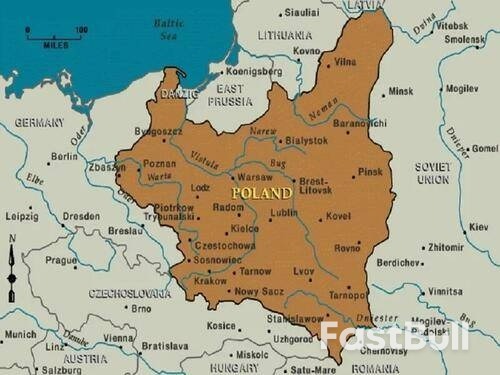
Putin commented on Poland’s pre-World War II policy during the Q&A session that followed his speech at the Valdai Club’s latest annual meeting. Before clarifying what he said, readers should review this piece here about why Putin spent so much time talking about Poland in last year’s interview with Tucker, this one here about whether he really justified the Nazis’ invasion of Poland, and this one here about the Molotov-Ribbentrop Pact.

With this context in mind, here are Putin’s latest words on this subject:
“Poland made many mistakes before World War II. After all, Germany offered them a peaceful resolution to the Danzig and Danzig Corridor issue, but the Polish leadership of the time categorically refused and ultimately fell first victim to Nazi aggression.
And Poland completely rejected something else—but historians probably know this—at that time, Poland refused the Soviet Union’s aid to Czechoslovakia. The Soviet Union was prepared to do so; we have documents in our archives, I’ve read them all myself. When the notes were written to Poland, Poland said it would under no circumstances allow Russian troops to aid Czechoslovakia, and if Soviet planes flew, Poland would shoot them down—and ultimately, it fell first victim to Nazi aggression.
If today’s top political family in Poland also remembers, understanding all the complexities and twists and turns of historical eras of various kinds, and it keeps these mistakes in mind when consulting with Pilsudski, then this would actually be a good thing.”
His reference to “consulting with Pilsudski” was due to him being asked about new Polish President Karol Nawrocki humorously going along with an interviewer playfully wondering whether he does this in the Belweder Palace where Poland’s famous independence hero and interwar leader resided. Russian media misunderstood the “infotainment” purpose of him participating in this gag, however, and unironically reported on it in full seriousness. With that out of the way, it’s now time to clarify Putin’s comments.
He’s arguably making two historical points that he then hopes his new Polish counterpart will generalize and consequently apply in the present. They’re that World War II might have been avoided had Poland allowed the Soviets to come to Czechoslovakia’s aid against Nazi Germany or then later peacefully resolved their own dispute without resisting and officially embroiling its formal British and French mutual defense allies in what ultimately became a continental tragedy. This is the Russian position.
As for the Polish one, they feared that the first scenario would lead to the Red Army seizing the Polish-controlled parts of Western Belarus and Ukraine that they partitioned after the Polish-Bolshevik War, thus coercing Poland into becoming a Soviet client state after the Nazis’ defeat. Regarding the second scenario, they feared that ceding Danzig would lead to more cessions of formerly Prussian-partitioned Poland, thus coercing Poland into becoming a Nazi client state. It’s unimportant whether one agrees.
Both schools of thought on this were only shared so that readers can make up their own minds. Moving along, the two historical points that Putin made from the Russian position can be generalized as Poland having made major mistakes by not letting Moscow preemptively deal with a latent security threat to Europe and then rejecting a political deal for preventing a larger war afterwards, despite how flawed it was. Again, one doesn’t have to agree, but this is arguably the essence of what Putin was conveying.
The first generalized point relates to contemporary times in the sense of Poland having made a major mistake by backing February 2014’s coup in Ukraine instead of letting the deal that it agreed to with France, Germany, and Ukraine with Russia’s blessing unfold for de-escalating growing East-West tensions. Regarding the second, it’s relevant with respect to Poland colluding with the UK to sabotage spring 2022’s peace talks, after which what could have otherwise been a minor war exploded into a larger one.
These complementary mistakes in contemporary times contributed to bringing Europe to the brink of another tragedy. Putin thus hopes that Nawrocki will understand the generalized points that he sought to convey via his critiques of Poland’s pre-World War II policy given the latter’s prior role as his country’s top historian. If he does, then he might apply them to the present by encouraging a political solution to the Ukrainian Conflict instead of helping the West escalate tensions at the risk of sparking World War III.
Nawrocki importantly didn’t rule out talking with Putin if Poland’s security depended on it when asked about this in an interview several days before his Russian counterpart’s comments. His predecessor Andrzej Duda, previous Prime Minister Mateusz Morawiecki, and his successor Donald Tusk had and have no interest whatsoever in talking to Putin about anything no matter the circumstances. For this reason, Nawrocki’s approach is pragmatic and even brave given the domestic Polish political context.
This doesn’t mean that he’ll soon call Putin, just that Putin was likely aware of what Nawrocki said and tried to convey – however wonkishly and indirectly – that he’d be receptive to any outreach from him. That’s what Putin’s comments on Poland’s pre-World War II policy aimed to achieve. They weren’t meant to blame Poland for World War II like some might imagine, but to prevent World War III given Poland’s central role in that prior tragedy and the one that might still happen if tensions spiral out of control.
White Label
Data API
Web Plug-ins
Poster Maker
Affiliate Program
The risk of loss in trading financial instruments such as stocks, FX, commodities, futures, bonds, ETFs and crypto can be substantial. You may sustain a total loss of the funds that you deposit with your broker. Therefore, you should carefully consider whether such trading is suitable for you in light of your circumstances and financial resources.
No decision to invest should be made without thoroughly conducting due diligence by yourself or consulting with your financial advisors. Our web content might not suit you since we don't know your financial conditions and investment needs. Our financial information might have latency or contain inaccuracy, so you should be fully responsible for any of your trading and investment decisions. The company will not be responsible for your capital loss.
Without getting permission from the website, you are not allowed to copy the website's graphics, texts, or trademarks. Intellectual property rights in the content or data incorporated into this website belong to its providers and exchange merchants.
Not Logged In
Log in to access more features

FastBull Membership
Not yet
Purchase
Log In
Sign Up