Markets
News
Analysis
User
24/7
Economic Calendar
Education
Data
- Names
- Latest
- Prev



Signal Accounts for Members
All Signal Accounts
All Contests


U.S. New Home Sales Annualized MoM (Oct)A:--
F: --
U.S. Annual Total New Home Sales (Oct)A:--
F: --
U.S. Cleveland Fed CPI MoM (SA) (Dec)A:--
F: --
P: --
U.S. Cleveland Fed CPI MoM (Dec)A:--
F: --
P: --
China, Mainland Exports (Dec)--
F: --
P: --
China, Mainland Imports YoY (CNH) (Dec)--
F: --
P: --
China, Mainland Imports (CNH) (Dec)--
F: --
P: --
China, Mainland Trade Balance (CNH) (Dec)--
F: --
P: --
China, Mainland Imports YoY (USD) (Dec)--
F: --
P: --
China, Mainland Exports YoY (USD) (Dec)--
F: --
P: --
China, Mainland M0 Money Supply YoY (Dec)--
F: --
P: --
China, Mainland M1 Money Supply YoY (Dec)--
F: --
P: --
China, Mainland M2 Money Supply YoY (Dec)--
F: --
P: --
U.S. EIA Natural Gas Production Forecast For The Next Year (Jan)A:--
F: --
P: --
U.S. EIA Short-Term Crude Production Forecast For The Next Year (Jan)A:--
F: --
P: --
U.S. EIA Short-Term Crude Production Forecast For The Year (Jan)A:--
F: --
P: --
EIA Monthly Short-Term Energy Outlook
U.S. 30-Year Bond Auction Avg. YieldA:--
F: --
P: --
Argentina 12-Month CPI (Dec)A:--
F: --
P: --
U.S. Budget Balance (Dec)A:--
F: --
P: --
Argentina CPI MoM (Dec)A:--
F: --
P: --
Argentina National CPI YoY (Dec)A:--
F: --
P: --
Richmond Federal Reserve President Barkin delivered a speech.
U.S. API Weekly Cushing Crude Oil StocksA:--
F: --
P: --
U.S. API Weekly Crude Oil StocksA:--
F: --
P: --
U.S. API Weekly Refined Oil StocksA:--
F: --
P: --
U.S. API Weekly Gasoline StocksA:--
F: --
P: --
South Korea Unemployment Rate (SA) (Dec)A:--
F: --
P: --
Japan Reuters Tankan Non-Manufacturers Index (Jan)A:--
F: --
P: --
Japan Reuters Tankan Manufacturers Index (Jan)A:--
F: --
P: --
China, Mainland Exports YoY (CNH) (Dec)--
F: --
P: --
China, Mainland Trade Balance (USD) (Dec)--
F: --
P: --
China, Mainland Outstanding Loans Growth YoY (Dec)--
F: --
P: --
U.K. 10-Year Note Auction Yield--
F: --
P: --
Canada Leading Index MoM (Dec)--
F: --
P: --
U.S. MBA Mortgage Application Activity Index WoW--
F: --
P: --
U.S. Core PPI YoY (Nov)--
F: --
P: --
U.S. PPI MoM (SA) (Nov)--
F: --
P: --
U.S. PPI YoY (Nov)--
F: --
P: --
U.S. Current Account (Q3)--
F: --
P: --
U.S. Retail Sales YoY (Nov)--
F: --
P: --
U.S. Retail Sales (Nov)--
F: --
P: --
U.S. Core Retail Sales MoM (Nov)--
F: --
P: --
U.S. PPI YoY (Excl. Food, Energy & Trade) (Nov)--
F: --
P: --
U.S. PPI MoM Final (Excl. Food, Energy and Trade) (SA) (Nov)--
F: --
P: --
U.S. Core Retail Sales (Nov)--
F: --
P: --
U.S. Retail Sales MoM (Excl. Automobile) (SA) (Nov)--
F: --
P: --
U.S. Retail Sales MoM (Nov)--
F: --
P: --
U.S. Retail Sales MoM (Excl. Gas Stations & Vehicle Dealers) (SA) (Nov)--
F: --
P: --
U.S. Core PPI MoM (SA) (Nov)--
F: --
P: --
Philadelphia Fed President Henry Paulson delivers a speech
U.S. Commercial Inventory MoM (Oct)--
F: --
P: --
U.S. Existing Home Sales Annualized Total (Dec)--
F: --
P: --
U.S. Existing Home Sales Annualized MoM (Dec)--
F: --
P: --
U.S. EIA Weekly Cushing, Oklahoma Crude Oil Stocks Change--
F: --
P: --
U.S. EIA Weekly Crude Stocks Change--
F: --
P: --
U.S. EIA Weekly Gasoline Stocks Change--
F: --
P: --
U.S. EIA Weekly Crude Demand Projected by Production--
F: --
P: --
U.S. EIA Weekly Crude Oil Imports Changes--
F: --
P: --
U.S. EIA Weekly Heating Oil Stock Changes--
F: --
P: --
U.S. Refinitiv/Ipsos Primary Consumer Sentiment Index (PCSI) (Jan)--
F: --
P: --


No matching data
Latest Views
Latest Views
Trending Topics
Top Columnists
Latest Update
White Label
Data API
Web Plug-ins
Affiliate Program
View All

No data
The Fed chairman said he would provide that information but maintained that the details being discussed were not the drivers for the cost overruns.

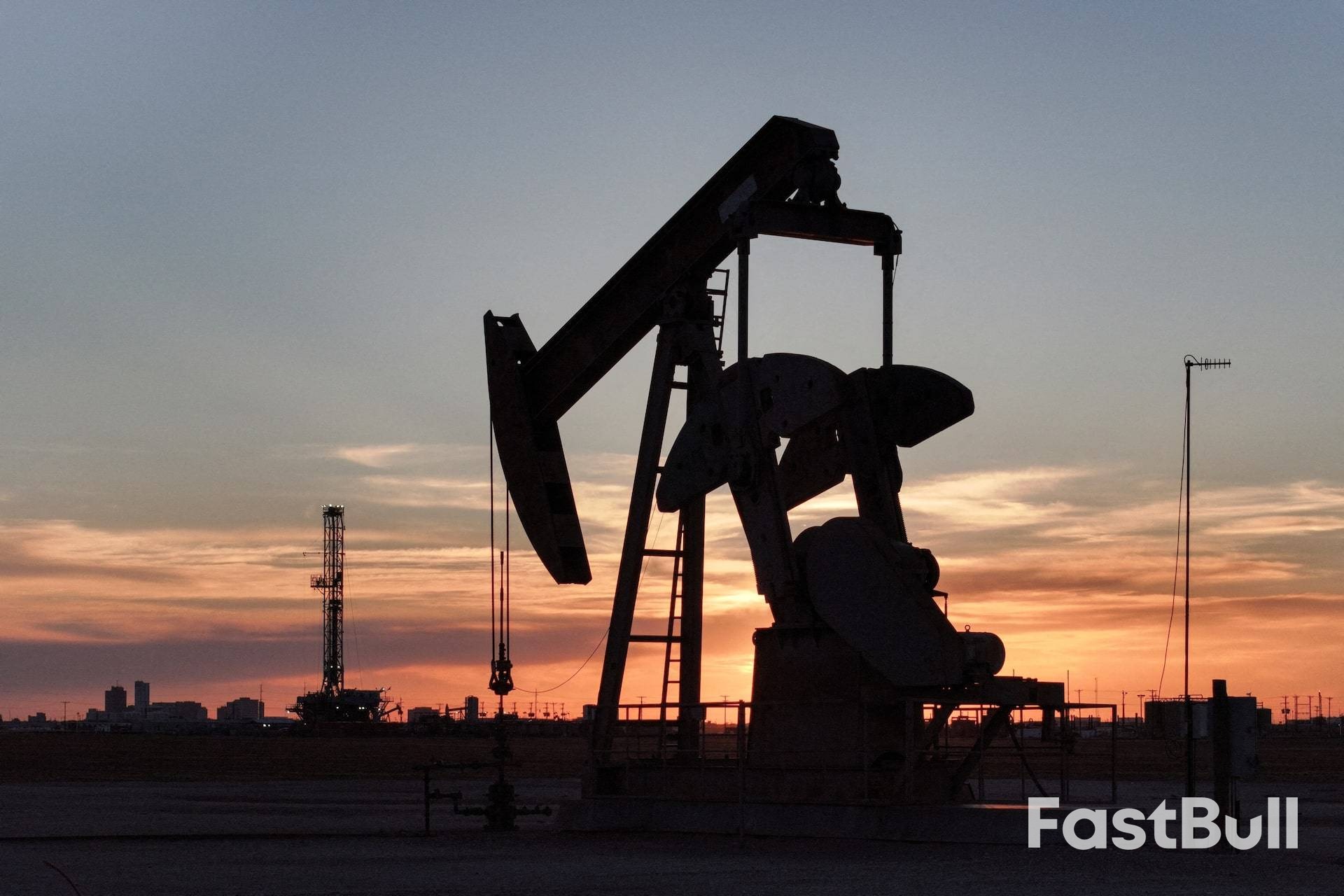
U.S. oil production is set to decline by 1% this year as lower prices curb drilling activity, according to a forecast from the Energy Information Administration (EIA). The government agency also warned that a potential increase in oil supply from Venezuela could exert even more downward pressure on the market.
This analysis from the EIA, the statistical arm of the Department of Energy, reflects concerns already voiced by American shale producers. They argue that President Donald Trump's push for U.S. companies to help restart Venezuelan output following the capture of President Nicolas Maduro would further harm their businesses, which are already struggling with low oil prices.
In its monthly Short Term Energy Outlook, the EIA projected that Brent crude prices will average $56 a barrel this year, a significant drop from last year's average of $69. The agency attributes this decline to global liquid fuels production outpacing demand, leading to a buildup in inventories.
This environment of sustained lower prices is expected to trigger a slowdown in U.S. operations. "Over the next two years, we expect sustained lower crude oil prices will result in a pullback in drilling and completion activity that is enough to outweigh ongoing increases in productivity," the EIA stated.
As a result, U.S. oil output is forecast to slip from a record 13.61 million barrels per day (bpd) in 2025 to an average of 13.59 million bpd this year. The EIA sees a further decline to 13.25 million bpd next year.
The EIA's current outlook was finalized under the assumption that U.S. sanctions against Venezuela will remain in effect through 2027. However, the agency noted that any policy changes could significantly alter the forecast.
If sanctions are eased, allowing more Venezuelan oil to enter the global market, prices could fall more steeply than currently projected. "Any change in sanctions or other U.S. government policy related to Venezuela that could result in more oil production than we assumed in this forecast would put additional downward pressure on oil prices," the report explained.
This possibility was highlighted by U.S. Treasury Secretary Scott Bessent, who recently told Reuters that more sanctions on Venezuela could be lifted as soon as this week to facilitate oil sales.
The head of BNY Mellon, a $2.2 trillion asset management firm, has issued a stark warning that challenges the market's consensus: the Federal Reserve might be forced to raise interest rates again, not cut them. This cautionary note comes as investors widely anticipate a shift toward easier monetary policy.
The CEO expressed concern that the central bank could be pushed into a corner by mounting economic and political pressure. If inflation remains a persistent threat, the Fed may have to tighten its policy further, a move that could slow economic growth or even trigger a recession.
Many investors have been positioning for interest rate cuts in 2024, fueled by signs that inflation is beginning to cool. However, the BNY Mellon chief suggests this optimism might be premature and that market expectations may be outpacing reality.
Several key factors could force the Fed’s hand:
• A Strong Labor Market: Resilient employment data continues to support the economy.
• Robust Consumer Spending: Consumers have continued to spend, which can keep upward pressure on prices.
• Sticky Inflation: If these elements prevent inflation from falling to the Fed's target, the case for rate cuts weakens significantly.
This analysis stands in sharp contrast to the more optimistic forecasts from analysts who predict the Fed could begin easing as early as mid-2024. If BNY Mellon's assessment is correct, markets could be unprepared for the jolt of another hike.
The underlying message is clear: investors should not get too comfortable. A surprise rate hike from the Federal Reserve would send shockwaves through global markets, triggering significant volatility.
Such a move would have broad implications for nearly every asset class, from equities and bonds to real estate and cryptocurrencies. For now, all eyes remain fixed on Fed Chair Jerome Powell and the upcoming FOMC meetings, where the central bank's next steps will be scrutinized more closely than ever.
A key group of House Republicans is advancing a plan to allocate up to $1.1 billion to buy discounted Venezuelan crude oil to refill the U.S. Strategic Petroleum Reserve (SPR).
The proposal is a central component of a larger budget framework released Tuesday by the Republican Study Committee, a caucus representing 190 of the 218 Republicans in the House of Representatives.
The committee’s plan aims to use a filibuster-proof budget reconciliation process to achieve $1 trillion in savings over the next decade. This is the same legislative tool Republicans used last year for major tax cuts and energy policy reforms.
"President Trump has supercharged our economy, and now it's our time in Congress to act to codify what he has done," said Republican Study Committee chairman August Pfluger of Texas.
Beyond the SPR provision, the framework calls for significant cuts to social programs, new limits on regulations, and "royalty-style fees" on environmental lawsuits. It also seeks to streamline permitting and make President Trump's deregulatory actions permanent.
The plan earmarks $1.1 billion to partially refill the SPR with what it calls "discounted Venezuelan oil made available by Operation Absolute Resolve," a U.S. military operation that took place in the South American country on January 3.
At a potential discounted price of $50 per barrel, the funding would purchase approximately 22 million barrels of crude. The SPR currently has 300 million barrels of available storage capacity.
U.S. Energy Secretary Chris Wright suggested that an increase in Venezuelan oil production could help fill the reserve by lowering global oil prices. "That makes it easier to fill our Strategic Petroleum Reserve back up, which the president is committed to do and we'll get done," Wright said in a January 11 interview on Fox News.
However, U.S. oil industry leaders have raised concerns about the technical suitability of Venezuelan crude for the SPR. The reserve stores oil in vast underground salt caverns, and the extra-heavy, high-sulfur crude produced in Venezuela may not be a good fit for long-term storage in this system.
"The grade of Venezuelan crude does have a higher sulfur content than the current SPR can take," noted Mike Sommers, president of the American Petroleum Institute. "There are some logistical issues about the SPR that make it difficult for it to just take in Venezuelan crude."
Industry officials suggest the oil could instead be stored at the Louisiana Offshore Oil Port or sent directly to refineries.
Passing a second major reconciliation bill could prove difficult. House Republicans hold a very narrow majority, and moderate members face a challenging political climate leading up to the November midterm elections.
The Trump administration has signaled it is exploring other options to replenish the reserve. On January 8, Secretary Wright stated he was looking at "creative" methods to refill the SPR that would not require additional appropriations from Congress.
Markets should prepare for a period of volatility as President Donald Trump tests the limits of his power, even though Congress is expected to block his most disruptive policy ambitions, according to analysis from BCA Research.
In a recent note, the firm predicted that while "Congress will ultimately limit Trump from acting on his worst impulses," the president's "efforts to bypass those limits will cause market volatility." This dynamic is creating a tense outlook for investors navigating the political landscape.
The primary flashpoint highlighted by BCA Research is the escalating conflict between the White House and the Federal Reserve. The latest development saw Fed Chairman Jerome Powell receive a Department of Justice subpoena related to an investigation into renovations at the central bank.
Analysts at BCA described this move as "another episode in President Trump's long-standing attempt to control the Fed and reshape it in his image." This follows last year's dismissal of Fed Governor Lisa Cook over allegations of mortgage fraud, a case that has since reached the Supreme Court.
Despite the pressure campaign, several factors may prevent a presidential takeover of the central bank.
The Legal Timeline
BCA Research emphasized that Chairman Powell "has not yet been officially charged" with any wrongdoing. The firm noted that a grand jury could choose not to issue an indictment, pointing to the DOJ's "dismal record on grand juries in DC and Virginia."
Even if an indictment were to occur, analysts believe a verdict is "extremely unlikely" before Powell’s term concludes in May.
The Senate's Veto Power
On the political front, BCA expects the Senate to serve as a crucial check on the president. Retiring and moderate Republicans have already demonstrated a willingness to break with Trump on key votes, and they are positioned to prevent the installation of an unconventional Fed chair.
As evidence, the research points to Senator Thom Tillis, who has already "vowed not to advance Trump's Fed nominees."
The pushback against the president is expected to extend beyond just Fed appointments. With government funding set to expire in January and divisions appearing among House Republicans, Congress is poised to constrain Trump’s policies more broadly.
According to BCA Research, lawmakers will likely move to "constrain President Trump's disruptive domestic and foreign policies" as they look toward the midterm elections in November and face their constituents.
Crude oil prices surged to their highest level since late October after U.S. President Donald Trump intensified his rhetoric over the escalating unrest in Iran, stoking market fears of a potential supply disruption from the major OPEC producer.
West Texas Intermediate (WTI) futures jumped 2.8% on Tuesday to settle at $61.15 a barrel, a peak not seen in over two months. The rally was fueled by Trump's remarks in Detroit, where he suggested it would be a "good idea" for U.S. citizens to leave Iran and reaffirmed his support for protesters challenging the country's regime.
Traders are now laser-focused on the political instability within Iran, which produces approximately 3.3 million barrels of oil per day. Any American intervention or escalation of internal conflict could threaten this significant volume of crude supply, tightening the global market.
The tensions have escalated quickly. In a post on Truth Social, Trump declared he had "cancelled all meetings" with Iranian officials and encouraged demonstrators to continue. In response, Iran's Defense Minister Aziz Nasirzadeh stated the nation would "defend the country with full force."
This sudden geopolitical flare-up has reversed a bearish trend in the oil market, which had seen five consecutive monthly losses on expectations of a supply glut. The rally, which also follows U.S. intervention in Venezuela, has caught many investors with bearish positions off guard.
The situation in Iran isn't the only factor pushing prices higher. Existing supply chain issues and shifts in market sentiment are creating a perfect storm for a price spike.
Caspian Pipeline Disruptions
Supply concerns were already mounting due to problems at the Caspian Pipeline Consortium (CPC) terminal, a key hub for Kazakh oil exports. A combination of bad weather, drone attacks, and maintenance has threatened operations, with loadings revised down by nearly half to around 900,000 barrels a day. While Kazakhstan has redirected some flows, the disruption adds to global supply anxiety.
Options Traders Bet on Higher Prices
Market activity signals a sharp turn towards bullishness. In the options market, traders are paying the highest premiums for bullish call contracts since the U.S. and Israel launched airstrikes on Iran last year. Monday saw a record volume of bullish Brent call options trade hands, indicating that major investors are making large wagers on further price increases.
Ryan McKay, a senior commodity strategist at TD Securities, noted that "Murban-Dubai spot differentials are creeping up, now trading at near $2.50 a barrel versus $1 a barrel to start 2026." He added, "This is a sign of some Iran risk pricing."
The sudden focus on supply risk has overshadowed persistent concerns about a global oil surplus. "Geopolitical risk is at an all-time high," said Jeff Currie, chief strategy officer of energy pathways at Carlyle, in a television interview. "That's a recipe for a spike in prices now."
However, the long-term outlook remains complex. Florence Schmit, an analyst at Rabobank, offered a nuanced view, suggesting that a potential regime change in Iran could ultimately add to global supply and "amplify the downtrend in crude markets." But before that happens, she warned, "there is a potential for another rally... if the unrest, directly or indirectly, targets energy flows."
By the close of trading, WTI for February delivery had climbed 2.8% to settle at $61.15 a barrel in New York. Brent crude for March delivery also saw strong gains, rising 2.5% to settle at $65.47 a barrel.
White Label
Data API
Web Plug-ins
Poster Maker
Affiliate Program
The risk of loss in trading financial instruments such as stocks, FX, commodities, futures, bonds, ETFs and crypto can be substantial. You may sustain a total loss of the funds that you deposit with your broker. Therefore, you should carefully consider whether such trading is suitable for you in light of your circumstances and financial resources.
No decision to invest should be made without thoroughly conducting due diligence by yourself or consulting with your financial advisors. Our web content might not suit you since we don't know your financial conditions and investment needs. Our financial information might have latency or contain inaccuracy, so you should be fully responsible for any of your trading and investment decisions. The company will not be responsible for your capital loss.
Without getting permission from the website, you are not allowed to copy the website's graphics, texts, or trademarks. Intellectual property rights in the content or data incorporated into this website belong to its providers and exchange merchants.
Not Logged In
Log in to access more features

FastBull Membership
Not yet
Purchase
Log In
Sign Up