• Trade
  • Markets
  • Copy
  • Contests
  • News
  • 24/7
  • Calendar
  • Q&A
  • Chats
Trending
Screeners
SYMBOL
LAST
BID
ASK
HIGH
LOW
NET CHG.
%CHG.
SPREAD
SPX
S&P 500 Index
6842.54
6842.54
6842.54
6861.30
6840.77
+15.13
+ 0.22%
--
DJI
Dow Jones Industrial Average
48556.61
48556.61
48556.61
48679.14
48544.57
+98.57
+ 0.20%
--
IXIC
NASDAQ Composite Index
23221.22
23221.22
23221.22
23345.56
23210.04
+26.06
+ 0.11%
--
USDX
US Dollar Index
97.800
97.880
97.800
98.070
97.790
-0.150
-0.15%
--
EURUSD
Euro / US Dollar
1.17588
1.17595
1.17588
1.17596
1.17262
+0.00194
+ 0.17%
--
GBPUSD
Pound Sterling / US Dollar
1.34000
1.34007
1.34000
1.34014
1.33546
+0.00293
+ 0.22%
--
XAUUSD
Gold / US Dollar
4323.33
4323.74
4323.33
4350.16
4294.68
+23.94
+ 0.56%
--
WTI
Light Sweet Crude Oil
56.731
56.761
56.731
57.601
56.688
-0.502
-0.88%
--

Community Accounts

Signal Accounts
--
Profit Accounts
--
Loss Accounts
--
View More

Become a signal provider

Sell trading signals to earn additional income

View More

Guide to Copy Trading

Get started with ease and confidence

View More

Signal Accounts for Members

All Signal Accounts

Best Return
  • Best Return
  • Best P/L
  • Best MDD
Past 1W
  • Past 1W
  • Past 1M
  • Past 1Y

All Contests

  • All
  • Trump Updates
  • Recommend
  • Stocks
  • Cryptocurrencies
  • Central Banks
  • Featured News
Top News Only
Share

Ukraine's Top Negotiator: Talks With USA Have Been Constructive And Productive

Share

The Nasdaq Golden Dragon China Index Fell 0.9% In Early Trading

Share

The S&P 500 Opened 32.78 Points Higher, Or 0.48%, At 6860.19; The Dow Jones Industrial Average Opened 136.31 Points Higher, Or 0.28%, At 48594.36; And The Nasdaq Composite Opened 134.87 Points Higher, Or 0.58%, At 23330.04

Share

Miran: Goods Inflation Could Be Settling In At A Higher Level Than Was Normal Before The Pandemic, But That Will Be More Than Offset By Housing Disinflation

Share

Miran, Who Dissented In Favor Of A Larger Cut At Last Fed Meeting, Repeats Keeping Policy Too Tight Will Lead To Job Losses

Share

Miran: Does Not Think Higher Goods Inflation Is Mostly From Tariffs, But Acknowledges Does Not Have A Full Explanation For It

Share

Toronto Stock Index .GSPTSE Rises 67.16 Points, Or 0.21 Percent, To 31594.55 At Open

Share

Miran: Excluding Housing And Non-Market Based Items, Core Pce Inflation May Be Below 2.3%, “Within Noise” Of The Fed's 2% Target

Share

Polish State Assets Minister Balczun Says Jsw Needs Over USD 830 Million Financing To Keep Liquidity For A Year

Share

Miran: Prices Are “Once Again Stable” And Monetary Policy Should Reflect That

Share

Fed's Miran: Current Excess Inflation Is Not Reflective Of Underlying Supply And Demand In The Economy

Share

Portugal Treasury Puts 2026 Net Financing Needs At 13 Billion Euros, Up From 10.8 Billion In 2025

Share

Portugal Treasury Expects 2026 Net Financing Needs At 29.4 Billion Euros, Up From 25.8 Billion In 2025

Share

Bank Of America Says With Indonesia's Smelter Now Ramping Up, It Expects Aluminium Supply Growth To Accelerate To 2.6% Year On Year In 2026

Share

Bank Of America Expects A Deficit In Aluminium Next Year And Sees Prices Pushing Above $3000/T

Share

Fed Data - USA Effective Federal Funds Rate At 3.64 Percent On 12 December On $102 Billion In Trades Versus 3.64 Percent On $99 Billion On 11 December

Share

Brazil's Petrobras Says No Impact Seen On Oil, Petroleum Products Output As Workers Start Planned Strike

Share

Statement: US Travel Group Warns New Proposed Trump Administration Requirements For Foreign Tourists To Provide Social Media Histories Could Mean Millions Of People Opting Not To Visit

Share

Blackrock: Kerry White Will Become Head Of Citi Investment Management At Citi Wealth

Share

Blackrock: Rob Jasminski, Head Of Citi Investment Management, Has Joined With Team

TIME
ACT
FCST
PREV
Japan Tankan Large Non-Manufacturing Outlook Index (Q4)

A:--

F: --

P: --

Japan Tankan Large Manufacturing Outlook Index (Q4)

A:--

F: --

P: --

Japan Tankan Small Manufacturing Diffusion Index (Q4)

A:--

F: --

P: --

Japan Tankan Large Manufacturing Diffusion Index (Q4)

A:--

F: --

P: --

Japan Tankan Large-Enterprise Capital Expenditure YoY (Q4)

A:--

F: --

P: --

U.K. Rightmove House Price Index YoY (Dec)

A:--

F: --

P: --

China, Mainland Industrial Output YoY (YTD) (Nov)

A:--

F: --

P: --

China, Mainland Urban Area Unemployment Rate (Nov)

A:--

F: --

P: --

Saudi Arabia CPI YoY (Nov)

A:--

F: --

P: --

Euro Zone Industrial Output YoY (Oct)

A:--

F: --

P: --

Euro Zone Industrial Output MoM (Oct)

A:--

F: --

P: --

Canada Existing Home Sales MoM (Nov)

A:--

F: --

P: --

Canada National Economic Confidence Index

A:--

F: --

P: --

Canada New Housing Starts (Nov)

A:--

F: --

P: --
U.S. NY Fed Manufacturing Employment Index (Dec)

A:--

F: --

P: --

U.S. NY Fed Manufacturing Index (Dec)

A:--

F: --

P: --

Canada Core CPI YoY (Nov)

A:--

F: --

P: --

Canada Manufacturing Unfilled Orders MoM (Oct)

A:--

F: --

P: --

U.S. NY Fed Manufacturing Prices Received Index (Dec)

A:--

F: --

P: --

U.S. NY Fed Manufacturing New Orders Index (Dec)

A:--

F: --

P: --

Canada Manufacturing New Orders MoM (Oct)

A:--

F: --

P: --

Canada Core CPI MoM (Nov)

A:--

F: --

P: --

Canada Trimmed CPI YoY (SA) (Nov)

A:--

F: --

P: --

Canada Manufacturing Inventory MoM (Oct)

A:--

F: --

P: --

Canada CPI YoY (Nov)

A:--

F: --

P: --

Canada CPI MoM (Nov)

A:--

F: --

P: --

Canada CPI YoY (SA) (Nov)

A:--

F: --

P: --

Canada Core CPI MoM (SA) (Nov)

A:--

F: --

P: --

Canada CPI MoM (SA) (Nov)

A:--

F: --

P: --

Federal Reserve Board Governor Milan delivered a speech
U.S. NAHB Housing Market Index (Dec)

--

F: --

P: --

Australia Composite PMI Prelim (Dec)

--

F: --

P: --

Australia Services PMI Prelim (Dec)

--

F: --

P: --

Australia Manufacturing PMI Prelim (Dec)

--

F: --

P: --

Japan Manufacturing PMI Prelim (SA) (Dec)

--

F: --

P: --

U.K. 3-Month ILO Employment Change (Oct)

--

F: --

P: --

U.K. Unemployment Claimant Count (Nov)

--

F: --

P: --

U.K. Unemployment Rate (Nov)

--

F: --

P: --

U.K. 3-Month ILO Unemployment Rate (Oct)

--

F: --

P: --

U.K. Average Weekly Earnings (3-Month Average, Including Bonuses) YoY (Oct)

--

F: --

P: --

U.K. Average Weekly Earnings (3-Month Average, Excluding Bonuses) YoY (Oct)

--

F: --

P: --

France Services PMI Prelim (Dec)

--

F: --

P: --

France Composite PMI Prelim (SA) (Dec)

--

F: --

P: --

France Manufacturing PMI Prelim (Dec)

--

F: --

P: --

Germany Services PMI Prelim (SA) (Dec)

--

F: --

P: --

Germany Manufacturing PMI Prelim (SA) (Dec)

--

F: --

P: --

Germany Composite PMI Prelim (SA) (Dec)

--

F: --

P: --

Euro Zone Composite PMI Prelim (SA) (Dec)

--

F: --

P: --

Euro Zone Services PMI Prelim (SA) (Dec)

--

F: --

P: --

Euro Zone Manufacturing PMI Prelim (SA) (Dec)

--

F: --

P: --

U.K. Services PMI Prelim (Dec)

--

F: --

P: --

U.K. Manufacturing PMI Prelim (Dec)

--

F: --

P: --

U.K. Composite PMI Prelim (Dec)

--

F: --

P: --

Euro Zone ZEW Economic Sentiment Index (Dec)

--

F: --

P: --

Germany ZEW Current Conditions Index (Dec)

--

F: --

P: --

Germany ZEW Economic Sentiment Index (Dec)

--

F: --

P: --

Euro Zone Trade Balance (Not SA) (Oct)

--

F: --

P: --

Euro Zone ZEW Current Conditions Index (Dec)

--

F: --

P: --

Euro Zone Trade Balance (SA) (Oct)

--

F: --

P: --

U.S. Retail Sales MoM (Excl. Automobile) (SA) (Oct)

--

F: --

P: --

Q&A with Experts
    • All
    • Chatrooms
    • Groups
    • Friends
    Connecting
    .
    .
    .
    Type here...
    Add Symbol or Code

      No matching data

      All
      Trump Updates
      Recommend
      Stocks
      Cryptocurrencies
      Central Banks
      Featured News
      • All
      • Russia-Ukraine Conflict
      • Middle East Flashpoint
      • All
      • Russia-Ukraine Conflict
      • Middle East Flashpoint
      Search
      Products

      Charts Free Forever

      Chats Q&A with Experts
      Screeners Economic Calendar Data Tools
      Membership Features
      Data Warehouse Market Trends Institutional Data Policy Rates Macro

      Market Trends

      Market Sentiment Order Book Forex Correlations

      Top Indicators

      Charts Free Forever
      Markets

      News

      News Analysis 24/7 Columns Education
      From Institutions From Analysts
      Topics Columnists

      Latest Views

      Latest Views

      Trending Topics

      Top Columnists

      Latest Update

      Signals

      Copy Rankings Latest Signals Become a signal provider AI Rating
      Contests
      Brokers

      Overview Brokers Assessment Rankings Regulators News Claims
      Broker listing Forex Brokers Comparison Tool Live Spread Comparison Scam
      Q&A Complaint Scam Alert Videos Tips to Detect Scam
      More

      Business
      Events
      Careers About Us Advertising Help Center

      White Label

      Data API

      Web Plug-ins

      Affiliate Program

      Awards Institution Evaluation IB Seminar Salon Event Exhibition
      Vietnam Thailand Singapore Dubai
      Fans Party Investment Sharing Session
      FastBull Summit BrokersView Expo
      Recent Searches
        Top Searches
          Markets
          News
          Analysis
          User
          24/7
          Economic Calendar
          Education
          Data
          • Names
          • Latest
          • Prev

          View All

          No data

          Scan to Download

          Faster Charts, Chat Faster!

          Download App
          English
          • English
          • Español
          • العربية
          • Bahasa Indonesia
          • Bahasa Melayu
          • Tiếng Việt
          • ภาษาไทย
          • Français
          • Italiano
          • Türkçe
          • Русский язык
          • 简中
          • 繁中
          Open Account
          Search
          Products
          Charts Free Forever
          Markets
          News
          Signals

          Copy Rankings Latest Signals Become a signal provider AI Rating
          Contests
          Brokers

          Overview Brokers Assessment Rankings Regulators News Claims
          Broker listing Forex Brokers Comparison Tool Live Spread Comparison Scam
          Q&A Complaint Scam Alert Videos Tips to Detect Scam
          More

          Business
          Events
          Careers About Us Advertising Help Center

          White Label

          Data API

          Web Plug-ins

          Affiliate Program

          Awards Institution Evaluation IB Seminar Salon Event Exhibition
          Vietnam Thailand Singapore Dubai
          Fans Party Investment Sharing Session
          FastBull Summit BrokersView Expo

          Nasdaq 100 Technical: Eyeing a new fresh all-time high, supported by momentum and flattening US Treasury yield curve

          Adam

          Stocks

          Economic

          Summary:

          AI-driven optimism lifted Nasdaq 100, now targeting 23,820–24,220 amid bullish momentum and a flatter yield curve. Holding above 22,945 confirms the uptrend; a break below risks a drop to 22,410.
          Risk-on sentiment was on full display since the start of this week, as optimism around the US technology boom driven by Artificial Intelligence (AI) once again overshadowed more worrisome global developments on tariffs and growth.

          AI optimism triggered another bullish impulsive move on US equities

          On Wednesday, 6 August, U.S. equities rallied on news that OpenAI—the creator of ChatGPT and a leading force in the ongoing AI boom—is considering a stock sale that could value the company at $500 billion, a significant leap from its current $300 billion valuation.
          Meanwhile, President Trump’s announcement of a proposed 100% tariff on semiconductor imports was largely shrugged off by investors. The impact was softened by incentives: U.S. corporations could be exempt from the levy if they commit to reshoring production. Apple Inc. was cited as a model example.
          The S&P 500 and Nasdaq 100 extended their short-term bullish momentum that began on Monday, 4 August, posting intraday gains of 0.7% and 1.3%, respectively. The Dow Jones Industrial Average underperformed slightly with a modest 0.2% gain.
          Asian markets followed the positive sentiment today, with bullish momentum persisting. S&P 500 and Nasdaq 100 E-mini futures advanced a further 0.7% by the end of the Asia trading session.
          Let’s now decipher the US Nasdaq 100 CFD Index from a technical analysis perspective and construct a medium-term (multi-week) trading set-up.
          Nasdaq 100 Technical: Eyeing a new fresh all-time high, supported by momentum and flattening US Treasury yield curve_1

          Fig. 1: US Nasdaq 100 CFD Index medium-term trend as of 7 Aug 2025

          Nasdaq 100 Technical: Eyeing a new fresh all-time high, supported by momentum and flattening US Treasury yield curve_2

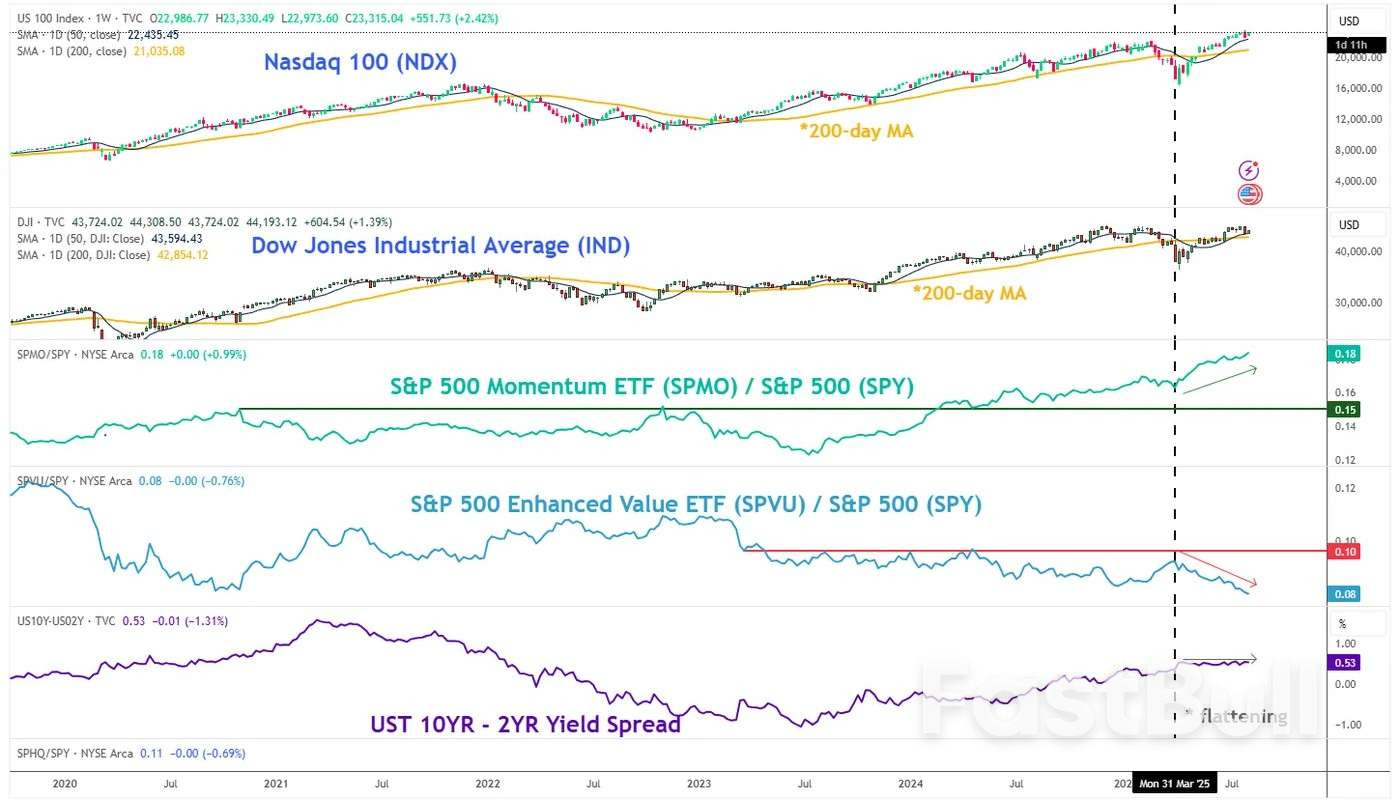
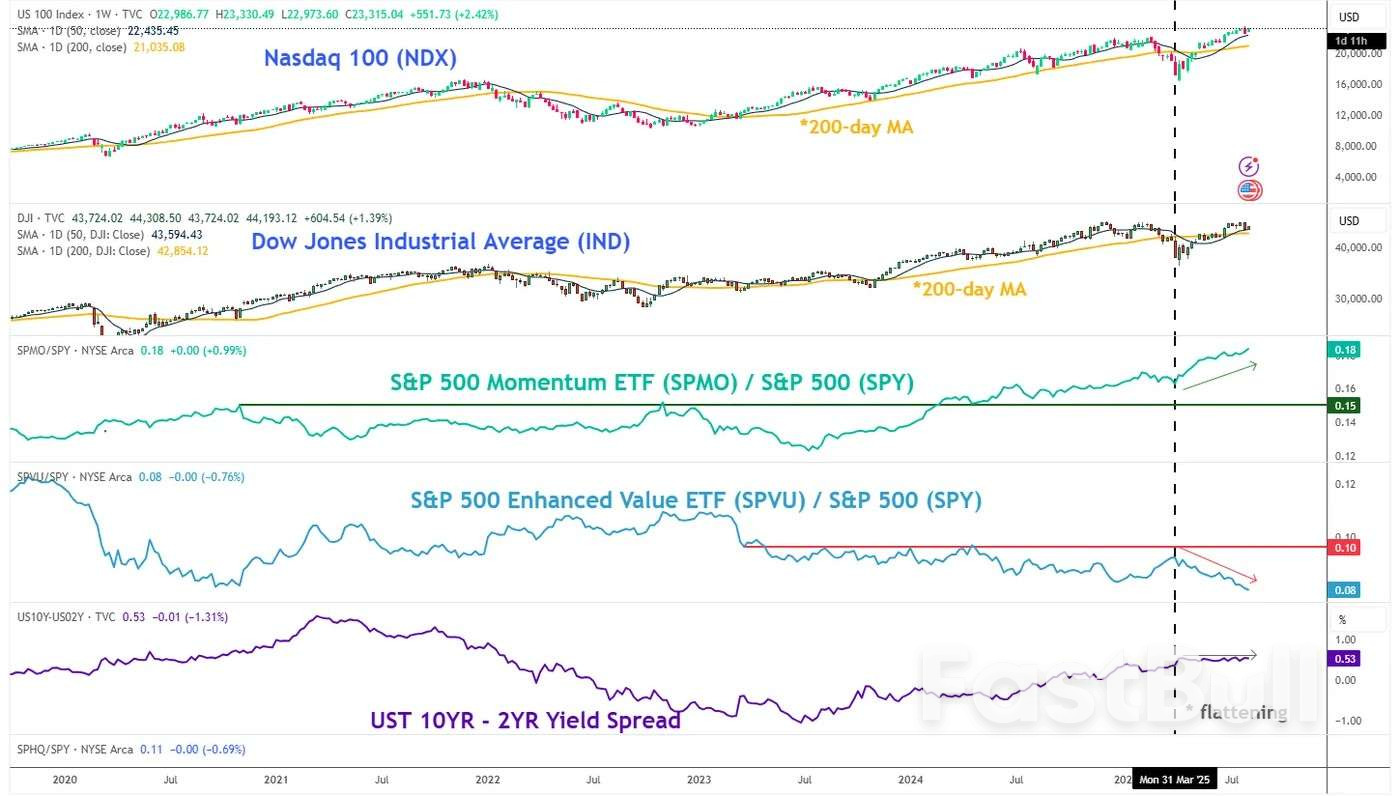
          Fig. 2: Nasdaq 100 major trend with S&P 500 momentum/S&P 500 relative strength & US Treasury yield curve as of 6 Aug 2025

          Preferred trend bias (1-3 weeks)
          The minor corrective decline of -4.4% from 31 July 2025 high to 1 August 2025 low is likely to have ended. The US Nasdaq 100 CFD Index is now in the process of shaping a potential bullish impulsive up move sequence within its medium-term uptrend phase.
          Bullish bias with key medium-term pivotal support at 22,945 for the next medium-term resistances to come in at 23,820 and 24,164/24,220 (Fibonacci extension cluster and upper boundary of a medium-term ascending channel in place since 19 June 2025 low) (see Fig. 1).

          Key elements

          Price actions of the US Nasdaq 100 CFD Index have reintegrated above and retested the 20-day moving average on Wednesday, 6 August 2025, indicating the potential start of another bullish impulsive up move sequence.
          The 4-hour MACD trend indicator of the US Nasdaq 100 has just trended upwards above its centreline, which suggests the potential start of a new medium-term (multi-week) uptrend phase.
          The S&P 500 Momentum factor exchange-traded fund (ETF) has continued to outperform the S&P 500 ETF since the end of March 2025. Based on past observations, this momentum outperformance has supported the medium-term and major uptrend phases of the US Nasdaq 100 CFD Index (see Fig. 2).
          The US Treasury yield curve (10-year yield of the US Treasury note minus the 2-year yield of the US Treasury note) has flattened since early April 2025. This observation suggests falling US interest rates, which directly increase bond prices and returns in the short run. However, higher bond prices mean lower yields and lower returns for bonds in the future, which in turn, drive investors into the US stock market. An indirect medium-term positive driver to support further potential upside in the US Nasdaq 100 CFD Index (see Fig. 2).

          Alternative trend bias (1 to 3 weeks)

          Failure to hold the 22,945 key support invalidates the bullish tone to open scope for another corrective decline to expose the next medium-term supports at 22,670 and 22,410 (also close to the 50-day moving average).

          Source: marketpulse

          To stay updated on all economic events of today, please check out our Economic calendar
          Risk Warnings and Disclaimers
          You understand and acknowledge that there is a high degree of risk involved in trading. Following any strategies or investment methods may lead to potential losses. The content on the site is provided by our contributors and analysts for information purposes only. You are solely responsible for determining whether any trading assets, securities, strategy, or any other product is suitable for investing based on your own investment objectives and financial situation.
          Add to Favorites
          Share

          Bank of England Cuts Interest Rates as It Warns Food Costs Could Push Inflation to 4%

          Warren Takunda

          Economic

          Central Bank

          The Bank of England has warned that rising food prices could drive inflation to 4% as it voted for a fifth cut in interest rates in a year, amid mounting concerns about the strength of the UK economy.
          In one of its closest decisions since its independence more than 25 years ago, the Bank’s monetary policy committee (MPC) voted by 5-4 to cut its key base rate by a quarter- point to 4%.
          The cut, taking borrowing costs to the lowest level since March 2023, was widely expected in financial markets. However, the decision was a close call, with the rate-setting panel for the first time in history holding two votes before reaching its verdict.
          Andrew Bailey, the Bank’s governor, said: “We’ve cut interest rates today, but it was a finely balanced decision. Interest rates are still on a downward path, but any future rate cuts will need to be made gradually and carefully.”
          City investors reacted to the decision by sending the pound higher on foreign exchanges, after Bailey warned that mounting inflation risks could delay further rate cuts. “I do think the path continues to be down … [But] the path has become more uncertain because of what we’re seeing,” he said.
          The chancellor, Rachel Reeves, welcomed the cut, which will ease some of the financial pressure on borrowers. Pressure is also mounting on the government over its management of the economy, and speculation is swirling about tax rises in her autumn budget.
          Ministers have sought to claim credit for the Bank’s rate cuts since its first reduction last August, with borrowing costs now down from a peak of 5.25%.
          “The stability we have brought to the public finances through our plan for change has helped make this [rate cut] possible,” Reeves said on Thursday.
          However, critics say the chancellor’s tax-raising autumn budget has added to the pressure on businesses and households amid global uncertainty from Donald Trump’s trade war.
          In a blow to the government, Threadneedle Street said tax rises were contributing to rising inflation and unemployment as it sounded the alarm over the country’s weak growth prospects.
          Publishing updated forecasts, the MPC singled out fast-rising food prices as it warned that food price inflation was on track to reach 5.5% before the end of the year. It attributed much of the rise to global factors, including increasingly extreme weather events hitting cocoa and coffee harvests, highlighting the dangers from the climate emergency.
          However, it also pointed to “material” rises in employment costs and new charges for recycling packaging, both driven by the government, that were being passed on to shoppers by UK supermarkets.
          “In addition to global agricultural commodity prices, domestic labour costs are currently an important driver of food price inflation,” the Bank said.
          Business leaders had warned that Reeves’s £25bn increase in employer national insurance contributions (NICs) and a 6.7% rise in the “national living wage” from April would force them to cut jobs and put up prices.
          Official figures show unemployment has crept higher in recent months, while the economy shrank in April and May. Inflation has also risen by more than expected, reaching 3.6% in June.
          Facing double-sided risk to the UK economy from weak growth yet mounting inflationary pressures, the split MPC decision in favour of cutting rates was swung by the external economist Alan Taylor.
          The independent MPC member, who has repeatedly backed deeper cuts in borrowing costs, had first voted for a half-point reduction before joining the narrow majority – including Bailey – supporting a quarter-point cut.
          Exposing tensions at the heart of Threadneedle Street, the four other members – including the Bank’s chief economist, Huw Pill, and one of its deputy governors, Clare Lombardelli – voted to keep rates unchanged.
          Inflation has fallen back substantially in the past two and a half years from a peak of more than 11% in late 2022 after Russia’s invasion of Ukraine. That progress has allowed the Bank to cut rates. However, it said lingering inflationary pressures could delay future rate cuts.
          “The MPC judges that the upside risks around medium-term inflationary pressures have moved slightly higher since May,” it said.

          Source: Theguardian

          To stay updated on all economic events of today, please check out our Economic calendar
          Risk Warnings and Disclaimers
          You understand and acknowledge that there is a high degree of risk involved in trading. Following any strategies or investment methods may lead to potential losses. The content on the site is provided by our contributors and analysts for information purposes only. You are solely responsible for determining whether any trading assets, securities, strategy, or any other product is suitable for investing based on your own investment objectives and financial situation.
          Add to Favorites
          Share

          US Expects $50 Billion A Month In Tariff Revenues, US Commerce Chief Lutnick Says

          James Whitman

          Economic

          Key points:

          ● US to announce new tariff rates for semiconductors, pharmaceuticals soon
          ● Trump's higher tariffs kicked in on Thursday
          ● Lutnick outlines exemption from chips duties

          U.S. Commerce Secretary Howard Lutnick said on Thursday he expects the country to collect $50 billion a month in tariff revenues or more - up from $30 billion last month - as higher levies on imports from dozens of countries kick in.

          "And then you're going to get the semiconductors, you're going to get pharmaceuticals, you're going to get all sorts of additional tariff money coming in," Lutnick said in an interview with Fox Business Network.

          U.S. President Donald Trump's higher tariffs on imports from dozens of countries took effect on Thursday, raising the average U.S. import duty to its highest in a century, with countries facing tariffs of 10% to 50%.

          Trump on Wednesday also announced plans to levy a tariff of about 100% on imported semiconductor chips unless manufacturers commit to produce in America, as well as a small tariff on pharmaceutical imports that would rise to 250% over time.

          Details of those sectoral tariffs are expected in coming weeks after the Commerce Department completes investigations into the impact of those imports on U.S. national security.

          Lutnick told Fox Business Network that companies could win exemptions from the expected semiconductor tariff if they filed plans to build plants in the United States, and those plans were overseen by an auditor.

          "His objective is to get semiconductor manufacturing done here," he said, predicting that the initiative would result in some $1 trillion in investment to bolster domestic manufacturing.

          Other exemptions have already been agreed, including with the European Union, which said its agreement to accept a 15% tariff on most EU exports includes chips, and with Japan, which has said the United States agreed not to give it a worse rate than other countries.

          The push to boost domestic chip manufacturing is not new.

          Congress created a $52.7 billion semiconductor manufacturing and research subsidy program in 2022 under former President Joe Biden, and all five leading-edge semiconductor firms agreed last year to locate chip factories in the U.S.

          Last year the department said the U.S. produced about 12% of semiconductor chips globally, down from 40% in 1990.

          Lutnick, asked about separate talks underway with China on extending a tariff truce that is due to end on August 12, said he felt an agreement was possible.

          "I think we're going to leave that to the trade team and to the president to make those decisions, but it feels likely that they're going to come to an agreement and extend that for another 90 days, but I'll leave it to that team."

          Source: Reuters

          To stay updated on all economic events of today, please check out our Economic calendar
          Risk Warnings and Disclaimers
          You understand and acknowledge that there is a high degree of risk involved in trading. Following any strategies or investment methods may lead to potential losses. The content on the site is provided by our contributors and analysts for information purposes only. You are solely responsible for determining whether any trading assets, securities, strategy, or any other product is suitable for investing based on your own investment objectives and financial situation.
          Add to Favorites
          Share

          Waller Is Favorite For Fed Chair Among Trump Team, Bloomberg News Reports

          Damon

          Central Bank

          Federal Reserve Governor Christopher Waller is emerging as a top candidate to serve as the central bank's chair among President Donald Trump's team, Bloomberg News reported on Thursday, citing people familiar with the matter.

          Trump has repeatedly criticized Fed Chair Jerome Powell for not cutting interest rates, and while he has backed off threats to try to oust Powell before his term ends on May 15, has accelerated the search for a replacement.

          Waller argued for an interest-rate cut at the Fed's July meeting, citing his worries about labor market deterioration, and dissented when the majority decided to leave short-term borrowing costs unchanged.

          Waller, who was appointed to the Fed board by Trump in 2020, has said he would accept the job of Fed chair if offered.

          Separately, the White House is interviewing candidates to fill the soon-to-be-open seat on the Fed board vacated by Governor Adriana Kugler.

          Source: Yahoo Finance

          Risk Warnings and Disclaimers
          You understand and acknowledge that there is a high degree of risk involved in trading. Following any strategies or investment methods may lead to potential losses. The content on the site is provided by our contributors and analysts for information purposes only. You are solely responsible for determining whether any trading assets, securities, strategy, or any other product is suitable for investing based on your own investment objectives and financial situation.
          Add to Favorites
          Share

          Silver (XAG) Forecast: Fed Rate Cut Bets Spark New Silver Rally—Can It Hit $39.53?

          Adam

          Commodity

          Silver Holding Firm as Fed Bets and Tariff Turmoil Drive Safe-Haven Flow
          Silver prices are tracking higher, riding the coattails of renewed safe-haven demand sparked by aggressive U.S. trade policy and rising expectations for Federal Reserve rate cuts. While gold remains the headline mover, silver’s correlation to the same macro forces—and its dual industrial-hedge appeal—makes it an essential trade in the current risk-off mood.
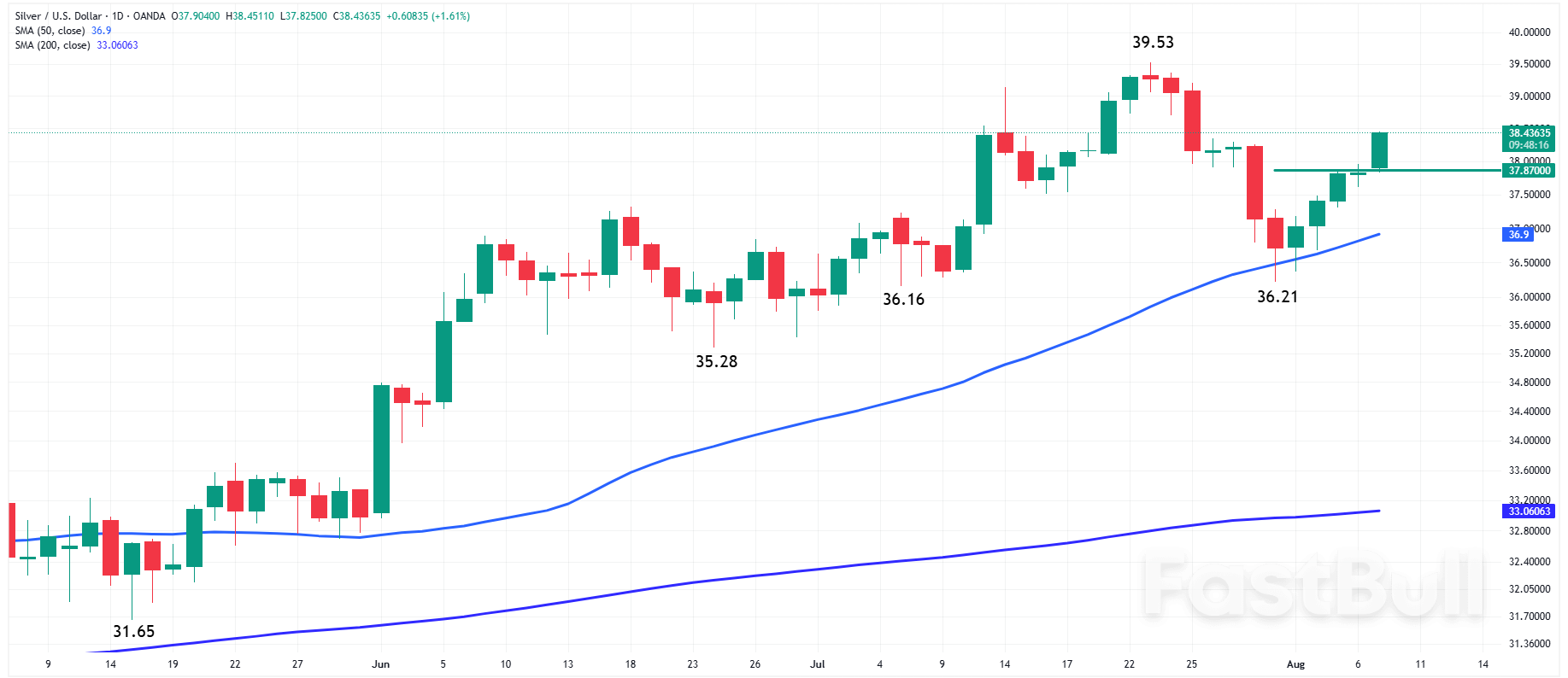
          At 11:20 GMT, XAG/USD is trading $38.44, up $0.61 or +1.62%.
          On Thursday, silver cleared a short-term pivot at $37.87, establishing a new base of support. This breakout follows several failed tests of resistance and signals a fresh push by bulls. A confirmed hold above this level opens the door to challenge the long-term resistance at $39.53, a 14-year high. If $37.87 fails, downside risk targets the 50-day moving average at $36.90, with secondary support at $36.21.
          Fed Rate Cut Odds Soar—What That Means for Silver
          Markets are now pricing in a 93% chance of a Fed rate cut in September, up sharply from just 48% last week, according to CME FedWatch data. The catalyst: dovish commentary from key Fed figures and signs of economic strain, particularly following President Trump’s announcement of wide-ranging tariffs. These include levies from 10% to 50% on multiple countries and a 100% tariff on semiconductors not produced domestically.
          This aggressive trade stance has rattled the U.S. dollar, with the Dollar Index (DXY) falling to a 1½-week low at 98.00. As a non-yielding asset priced in dollars, silver tends to benefit from both falling yields and a weaker greenback—making it attractive to global buyers.

          Gold’s Rally Provides a Strong Tailwind for Silver

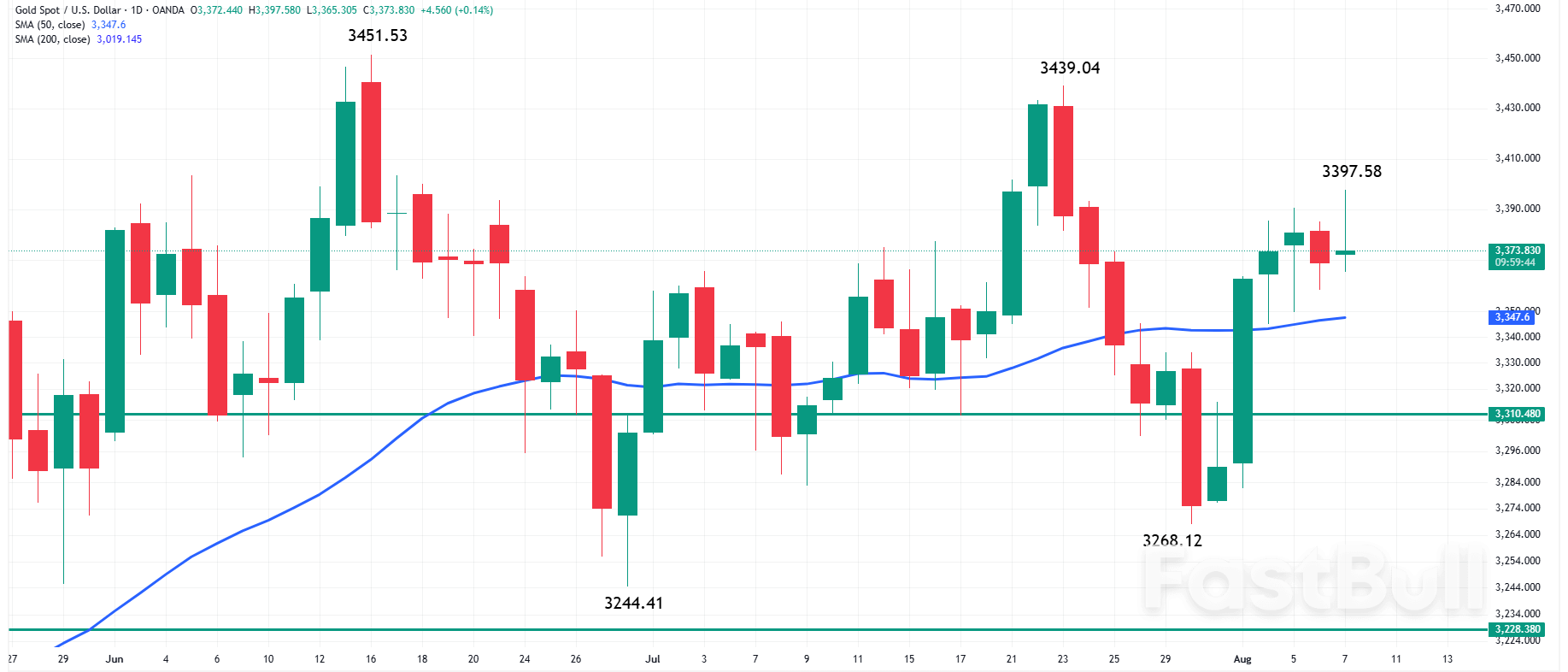
          Silver (XAG) Forecast: Fed Rate Cut Bets Spark New Silver Rally—Can It Hit $39.53?_1Daily Gold (XAU/USD)

          Gold’s surge to $3,397.58—driven by safe-haven demand and central bank dovishness—adds indirect fuel to silver. While gold holds the 50-day moving average at $3,347.60, silver is benefiting from spillover buying as traders seek relative value. Silver’s industrial side could also find support if lower rates eventually stimulate production, keeping silver demand resilient.

          Silver Price Forecast: Eyes on $39.53 with Support at $37.87

          Silver (XAG) Forecast: Fed Rate Cut Bets Spark New Silver Rally—Can It Hit $39.53?_2Daily Silver (XAG/USD)

          As long as silver holds above $37.87, the bias remains to the upside, with momentum favoring a test of $39.53. However, failure to hold this level could send prices down to $36.90, where the 50-day moving average provides the next technical floor.
          With the Fed leaning dovish and geopolitical tensions feeding safe-haven appetite, silver remains supported—but the path higher hinges on holding that $37.87 pivot.
          Traders should stay alert for any daily close below the 50-day moving average as an early sign of exhaustion. Until then, dips remain buyable within this bullish structure.

          Source: fxempire

          Risk Warnings and Disclaimers
          You understand and acknowledge that there is a high degree of risk involved in trading. Following any strategies or investment methods may lead to potential losses. The content on the site is provided by our contributors and analysts for information purposes only. You are solely responsible for determining whether any trading assets, securities, strategy, or any other product is suitable for investing based on your own investment objectives and financial situation.
          Add to Favorites
          Share

          RBNZ: Hawks, Doves, And Kiwis

          Samantha Luan

          Forex

          Political

          Economic

          Overview

          The winter of discontent has descended on the New Zealand economy since May. In some respects, business and consumer sentiment has soured, raising questions on exactly when the long-awaited pickup in the economy will become broader based and more sustainable. Parts of the economy are doing well and there is exuberance in the primary sector who are receiving the best returns seen for several years. The Government’s new “Investment Boost” policy might well bring forward some investment in some quarters.

          Outside of New Zealand, the trade war has continued to progress – but the degree of heat in the battle has been much lower than feared a few months ago as countries have largely chosen to deal as opposed to fight. Global growth forecasts have picked up as some of the worstcase scenarios have been discounted. Nevertheless, there is still water to go under the bridge as the details of some deals done are unclear, and negotiations continue between the US and some trading partners.

          Inflation remains too high, but the economy still has significant excess capacity. Hence there are divergent pressures on the Monetary Policy Committee as they chart the way forward.Against this backdrop, we expect the RBNZ will deliver another 25bp rate cut at this month’s policy review. It’s unlikely that the RBNZ will call time on the easing cycle just yet as the economy is yet to decisively and sustainably turn.With all that in mind, in this note we explore some of the hawkish and dovish arguments that might shape discussion regarding the outlook for policy over the coming months.

          The Hawk’s Eye View.

          Inflation has increased to 2.7% and looks set to reach 3% in the next couple of quarters. Easing further in this context would be unwise.

          ● A short-term increase in inflation might not be of concern if there is significant excess capacity in the economy. But inflation might not fall back either significantly or quickly, given that the rise in inflation in recent quarters was not envisaged when the easing cycle began a year ago.
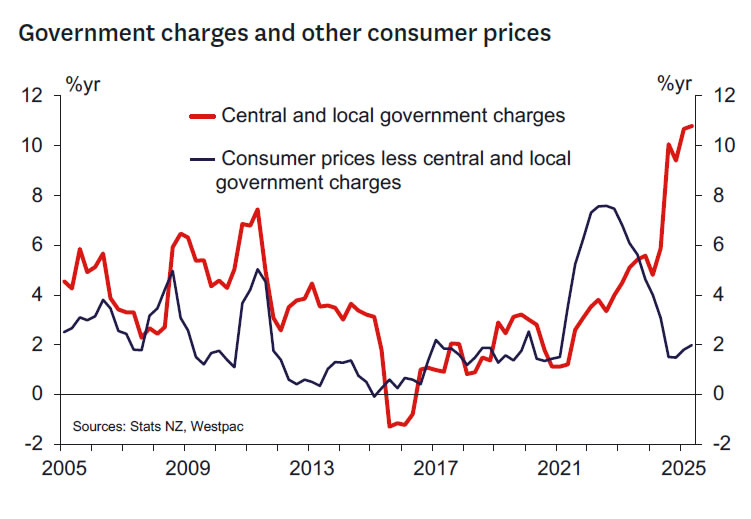
          ● It’s possible that large increases in a range of administered costs, like rates and electricity charges, will continue as there are ongoing cost pressures in those sectors. If correct, then non-tradables inflation and total inflation will only fall slowly.
          ● Future cost shocks could boost inflation from an elevated level.
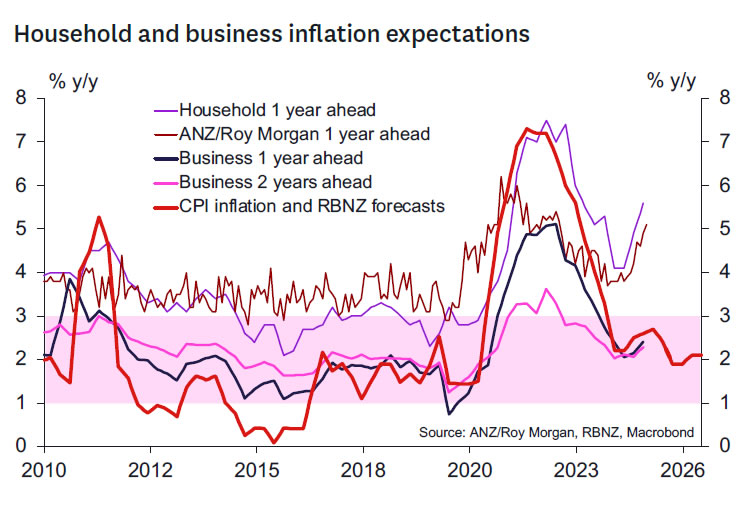
          ● Inflation expectations are already rising and could impede any sustained fall in inflation to 2%.

          The lagged impact of past easing is yet to fully work its way through.
          ● It is too soon to judge the impact of the OCR easing since August last year. While the OCR has declined by 225bps already, only half of the expected easing in mortgage rates has passed through to the rates paid by households.
          ● As households continue to refinance, the effective mortgage rate will continue to decline, further stimulating spending.
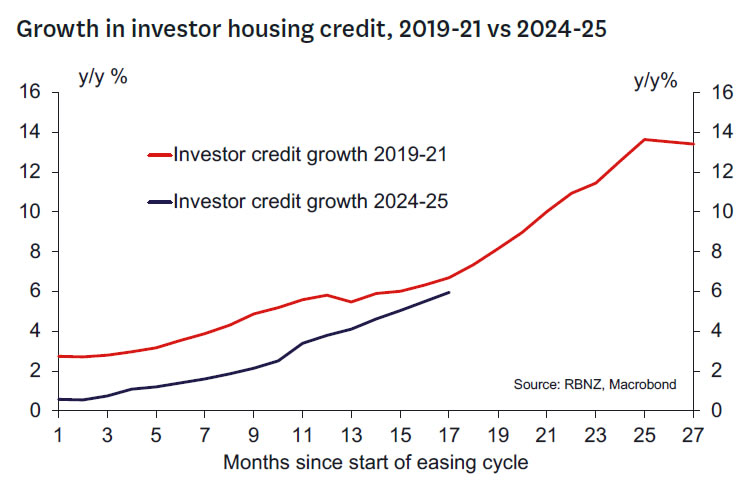
          ● Housing market investors are already responding to easy financial conditions and are scaling up investment. So far investor demand is not driving prices higher as the housing supply response has been significant. But supply has recovered to 2015 levels now and may be progressively eroded as demand continues, boosting prices as time goes on. We don’t want a repeat of the 2020-21 experience.

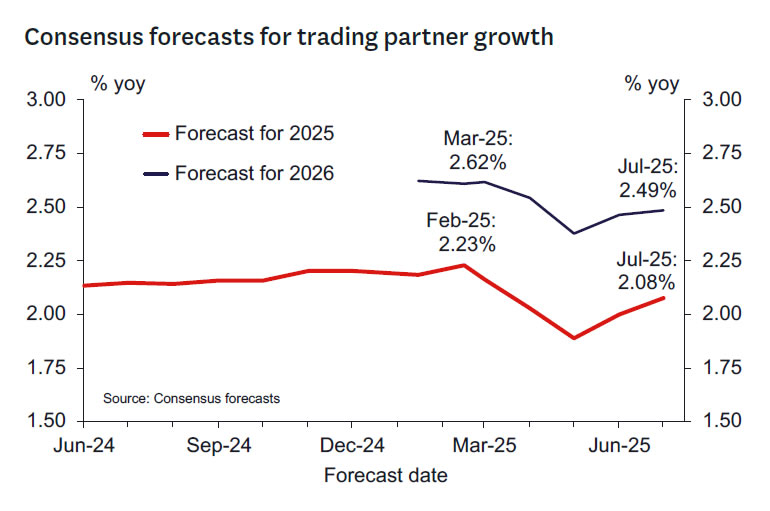
          The downside risks for global growth are receding and are less uncertain. Much of the case for additional easing in the April and May meetings rested on a weaker global economy.

          ● While increases in US tariffs will dampen global growth to a degree, they’re not likely to be the significant drag that was initially feared.
          ● Forecasts for global growth have been scaled back up as uncertainty has reduced. Consensus and IMF forecasts for global growth are only modestly lower than pre-April levels.
          ● The Chinese economic outlook seems firmer as policy stimulus is expected to support the economy.
          ● Prices for our key agricultural exports remain firm. That’s already boosting incomes and spending in rural regions.

          The Government’s Investment Boost policy will partially offset downside risks to the growth outlook.

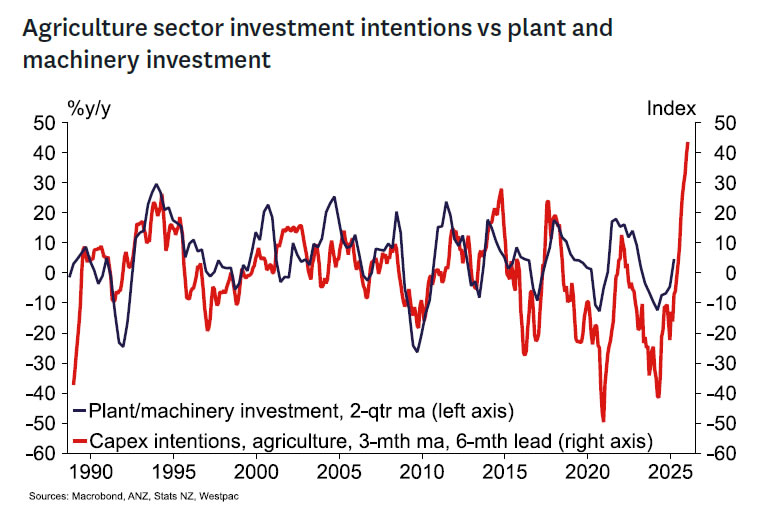
          ● The Budget included a very generous incentive for firms looking to invest in plant and equipment.
          ● It’s likely that the agriculture sector will take this golden opportunity with both hands given income levels are so strong.
          ● Credit growth in the agriculture sector has scaled up significantly as farmers have confidence to do sorely needed investment.
          ● The tractors are piling up on the dock as dealers scramble to meet orders.

          The Dove’s Tale.

          ● While non-core items like food have pushed inflation higher, medium-term inflation pressures are contained and indeed continue to weaken.
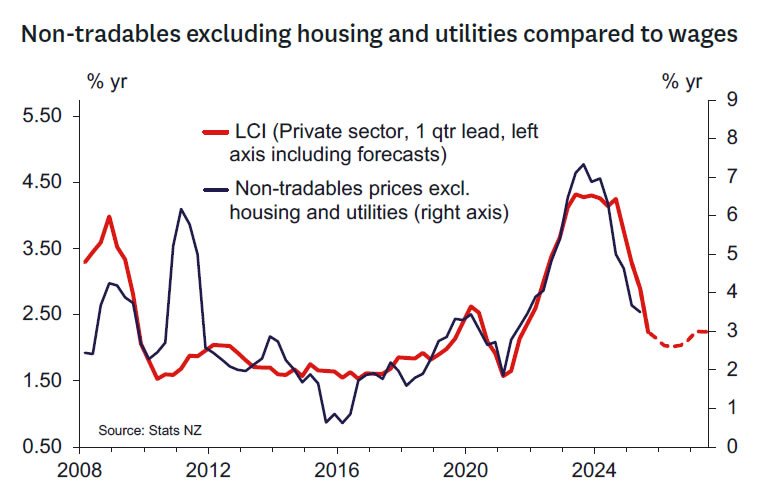
          ● Non-tradables inflation outside of the government sector is trending lower and already at or below average levels.
          ● Businesses in interest rate sensitive sectors like construction are reporting pressure on margins.
          ● Provided that inflation is expected to remain comfortably within the 1-3% target over the medium term, the RBNZ should use the flexibility provided by the Remit rather than try to fully offset “excess” inflation in the local government sector by forcing further disinflation in the private sector.

          Monetary policy needs to be clearly stimulatory to drive the period of above-trend growth needed to absorb spare capacity.
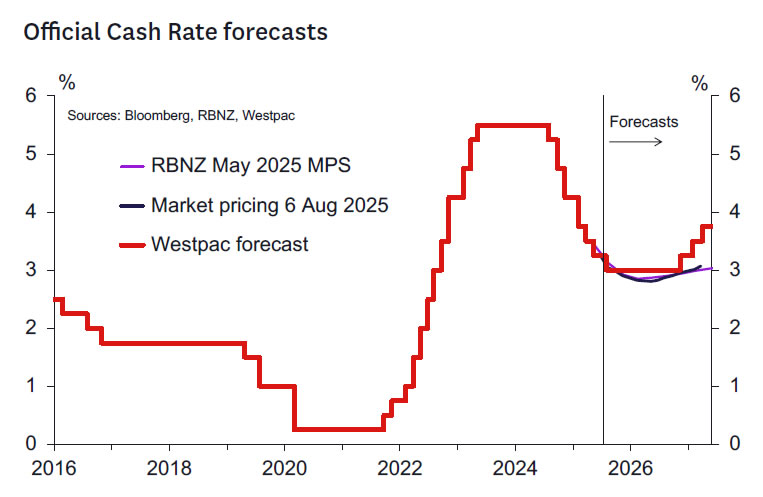
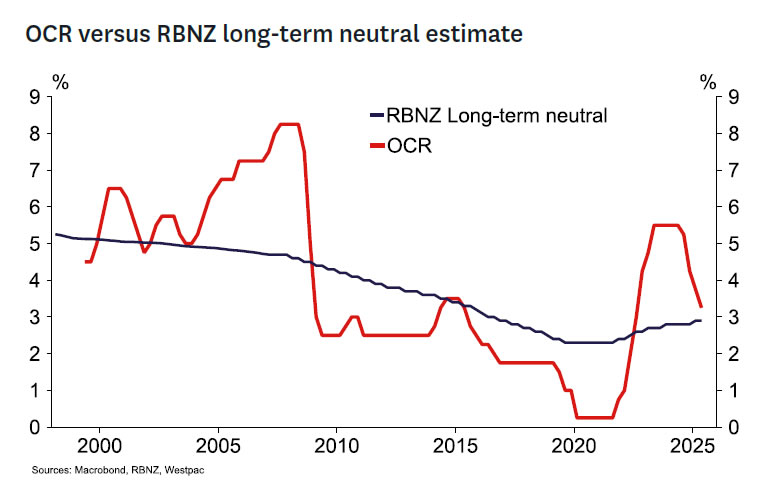
          ● The RBNZ’s best unbiased estimate is that the longrun neutral OCR is around 3.0% – still below the current OCR.
          ● Returning the OCR to broadly neutral levels is allowing the economy to grow again. However, until the OCR is moved to a clearly stimulatory level, growth is unlikely to reach the pace required to absorb existing spare capacity in the economy. Historically, outside of crises, the OCR has usually troughed around 50-100bp lower than neutral
          ● This is especially so with fiscal policy tightening to address the current structural fiscal deficit.
          Demand for labour remains especially weak suggesting that the unemployment rate could continue to rise for a while yet.
          ● Employment fell 0.1% q/q in the June quarter, compared with the 0.2% growth forecast by the RBNZ in May, and the unemployment rate rose to 5.2%.
          ● Job advertising is yet to turn higher. Firms may be extracting greater productivity gains from their existing labour force, delaying the upturn in hiring.
          ● If current trends continue, the unemployment rate will continue to rise, thus exceeding the peak forecast in the May MPS (and potentially earlier forecasts that the unemployment rate would peak as high as 5.4%).
          ● A prolonged period of above-trend unemployment means that wage growth could fall further putting additional downward pressure on non- tradables inflation.

          While uncertainty has declined, US trade policy continues to pose downside risks to NZ growth and inflation.
          ● Confirmation that New Zealand will face a 15% tariff on exports to the US has reduced uncertainty but is clearly unwelcome news for exporters.
          ● While uncertainty about the size of tariffs faced by key trading partners has reduced, it’s still high, which may restrain households and businesses from consuming and investing and delay the recovery.
          ● As the economy already has significant spare capacity, there’s room to ease further to insure against the risk of unexpectedly weak economic outcomes.

          Source: ACTIONFOREX

          To stay updated on all economic events of today, please check out our Economic calendar
          Risk Warnings and Disclaimers
          You understand and acknowledge that there is a high degree of risk involved in trading. Following any strategies or investment methods may lead to potential losses. The content on the site is provided by our contributors and analysts for information purposes only. You are solely responsible for determining whether any trading assets, securities, strategy, or any other product is suitable for investing based on your own investment objectives and financial situation.
          Add to Favorites
          Share

          Pound climbs after BoE cut in knife-edge vote

          Adam

          Forex

          Central Bank

          London's FTSE was on the decline on Thursday afternoon, while the pound moved above the USD1.34 mark, after the Bank of England cut rates in a decision that needed a second vote.
          The pound was quoted up at USD1.3431 just after midday on Thursday in London, surging from USD1.3343 at the equities close on Wednesday and from USD1.3377 just before the BoE decision.
          The FTSE 100 index was down 64.76 points, 0.7%, at 9,099.55. The FTSE 250 was up 13.78 points, 0.1%, at 21,939.66, and the AIM All-Share was down just 0.13 of a point at 764.22. The trio lost ground immediately after the BoE decision.
          The Cboe UK 100 was down 0.6% at 912.11, the Cboe UK 250 was up 0.3% at 19,313.53, and the Cboe Small Companies was slightly higher at 17,186.60.
          The BoE cut rates by 25 basis points to 4.00% in a decision that required a second vote.
          Andrew Bailey, Sarah Breeden, Swati Dhingra and Dave Ramsden had voted to reduce bank rate by 25 basis points, with Megan Greene, Clare Lombardelli, Catherine Mann and Huw Pill preferring to keep rates at 4.25%. Alan Taylor wanted a chunkier 50 basis point cut.
          However, "in order to secure a majority decision", the Monetary Policy Committee voted on whether to cut bank rate by 25 basis points or maintain at 4.25%. Taylor joined those voting for a 25 basis point cut, giving a 5-4 majority in their favour.
          "A gradual and careful approach to the further withdrawal of monetary policy restraint remains appropriate. The restrictiveness of monetary policy has fallen as bank rate has been reduced. The timing and pace of future reductions in the restrictiveness of policy will depend on the extent to which underlying disinflationary pressures continue to ease. Monetary policy is not on a pre-set path, and the committee will remain responsive to the accumulation of evidence," the BoE said.
          In European equities on Thursday, the CAC 40 in Paris advanced 1.2%, while the DAX 40 in Frankfurt gained 1.6%.
          The FTSE 100 failed to replicate the confident rally seen in European peers. Share price falls for index heavyweights AstraZeneca, Rolls-Royce and Barclays hit the index. The trio were among those to go ex-dividend, meaning new buyers do not qualify for the latest payout. Drugmaker Astra lost 1.5%, jet engine maker Rolls-Royce shed 1.5% and lender Barclays was down 0.5%.
          Gains in Paris and Frankfurt, meanwhile, were largely broad-based.
          The euro stood higher at USD1.1665 midday Thursday, against USD1.1639 at the time of the London equities close on Wednesday. Against the yen, the dollar was trading largely flat at JPY147.32 compared to JPY147.34.
          Stocks in New York were called higher. The Dow Jones Industrial Average was called up 0.6%, the S&P 500 index up 0.9%, and the Nasdaq Composite 0.8% higher.
          The yield on the US 10-year Treasury was quoted at 4.24%, widening from 4.22%. The yield on the US 30-year Treasury was quoted at 4.82%, stretching from 4.81%.
          Away from the Bank of England, tariffs remained in focus.
          "Today undoubtedly marks the beginning of a more disruptive period for global trade, with Trump's tariff rates coming into effect. For many this will be the beginning of a new normal, with businesses adjusting to rates around the 10-20% mark," said Rostro analyst Joshua Mahony.
          "However, there are others who face up to a harsher new reality, with Switzerland facing the highest rate of any developed country (39%). While the implications for Swiss businesses and the economy could be harsh, the strength seen today for stocks in the region does serve to highlight an optimism that efforts to renegotiate the tariff rate will soon bear fruit."
          Mahony continued: "Meanwhile, Trump has taken aim at the semiconductor industry, placing 100% tariffs on imports in a bid to bring manufacturing back into the US...Notably, the tariffs placed on semiconductors do not cover items which already contain chips within them, meaning that the vast majority of chips coming into the US will not be hit by this 100% levy."
          Morgan Advanced Materials was the biggest loser on the FTSE 250 around midday, down 14%.
          The Windsor England-based manufacturer of carbon and ceramic materials reported pretax profit of GBP30.4 million in the six months to June 30, slipping 47% from GBP57.5 million the year before, as revenue declined 8.7% to GBP522.6 million from GBP572.6 million.
          While the company left full year revenue guidance unchanged, it now expects adjusted operating profit to be around the bottom of the GBP115.6 million to GBP126.3 million consensus range. This is a result of "weak" market conditions, mix effects and foreign exchange headwinds, and would be down 10% at worst from GBP128.4 million in 2024.
          At the other end, Harbour Energy was the index's biggest winner, rising 14%.
          The North Sea-focused oil and gas producer declared a USD100 million share buyback and raised its interim dividend, as it raised its guidance for oil production and free cash flow.
          In 2024, it added a portfolio of assets in Norway, Germany, Denmark, Argentina, Mexico, Egypt, Libya and Algeria from Wintershall Dea. Reflecting that acquisition, production in the first half of 2025 was 488,000 barrels of oil equivalent per day, up from 159,000 daily a year before. Harbour on Thursday narrowed upward its production guidance for the full year to 460,000 to 475,000 boepd from 455,000 to 475,000.
          Pretax profit in the six months that ended June 30 was USD1.64 billion, up from USD392 million a year before, as revenue and other income multiplied to USD5.27 billion from USD1.92 billion.
          Elsewhere, Vanquis Banking shares advanced 12%. The Bradford, England-based lender said its turnaround "remains firmly on track and is gaining momentum".
          "The group delivered two consecutive quarters of profitability in the first half and has grown gross customer interest-earning balances over the last three quarters," Chief Executive Officer Ian McLaughlin said.
          Pretax profit in the six months to June 30 totalled GBP6.2 million, swinging from a loss of GBP46.1 million loss the year before.
          In addition, it noted a Supreme Court verdict on motor finance arrangements.
          "The recent Supreme Court judgment provides much-needed clarity, and we acknowledge the [UK Financial Conduct Authority's] decision to consult on a motor finance compensation scheme. Vanquis did not participate in discretionary commission arrangements. Our position is clearly differentiated from the unfair relationship decision in the Johnson case, supported by stronger disclosures, much lower average commissions and clear customer consent," the CEO said.
          Brent oil was quoted down at USD67.32 a barrel at midday in London on Thursday from USD68.31 late Wednesday. Gold was broadly flat at USD3,374.87 an ounce against USD3,375.48.

          Source: Alliance News

          Risk Warnings and Disclaimers
          You understand and acknowledge that there is a high degree of risk involved in trading. Following any strategies or investment methods may lead to potential losses. The content on the site is provided by our contributors and analysts for information purposes only. You are solely responsible for determining whether any trading assets, securities, strategy, or any other product is suitable for investing based on your own investment objectives and financial situation.
          Add to Favorites
          Share
          FastBull
          Copyright © 2025 FastBull Ltd

          728 RM B 7/F GEE LOK IND BLDG NO 34 HUNG TO RD KWUN TONG KLN HONG KONG

          TelegramInstagramTwitterfacebooklinkedin
          App Store Google Play Google Play
          Products
          Charts

          Chats

          Q&A with Experts
          Screeners
          Economic Calendar
          Data
          Tools
          Membership
          Features
          Function
          Markets
          Copy Trading
          Latest Signals
          Contests
          News
          Analysis
          24/7
          Columns
          Education
          Company
          Careers
          About Us
          Contact Us
          Advertising
          Help Center
          Feedback
          User Agreement
          Privacy Policy
          Business

          White Label

          Data API

          Web Plug-ins

          Poster Maker

          Affiliate Program

          Risk Disclosure

          The risk of loss in trading financial instruments such as stocks, FX, commodities, futures, bonds, ETFs and crypto can be substantial. You may sustain a total loss of the funds that you deposit with your broker. Therefore, you should carefully consider whether such trading is suitable for you in light of your circumstances and financial resources.

          No decision to invest should be made without thoroughly conducting due diligence by yourself or consulting with your financial advisors. Our web content might not suit you since we don't know your financial conditions and investment needs. Our financial information might have latency or contain inaccuracy, so you should be fully responsible for any of your trading and investment decisions. The company will not be responsible for your capital loss.

          Without getting permission from the website, you are not allowed to copy the website's graphics, texts, or trademarks. Intellectual property rights in the content or data incorporated into this website belong to its providers and exchange merchants.

          Not Logged In

          Log in to access more features

          FastBull Membership

          Not yet

          Purchase

          Become a signal provider
          Help Center
          Customer Service
          Dark Mode
          Price Up/Down Colors

          Log In

          Sign Up

          Position
          Layout
          Fullscreen
          Default to Chart
          The chart page opens by default when you visit fastbull.com