• Trade
  • Markets
  • Copy
  • Contests
  • News
  • 24/7
  • Calendar
  • Q&A
  • Chats
Trending
Screeners
SYMBOL
LAST
BID
ASK
HIGH
LOW
NET CHG.
%CHG.
SPREAD
SPX
S&P 500 Index
6940.00
6940.00
6940.00
6967.31
6925.10
-4.47
-0.06%
--
DJI
Dow Jones Industrial Average
49359.32
49359.32
49359.32
49616.70
49246.24
-83.11
-0.17%
--
IXIC
NASDAQ Composite Index
23515.38
23515.38
23515.38
23664.26
23446.81
-14.63
-0.06%
--
USDX
US Dollar Index
99.150
99.230
99.150
99.250
98.920
+0.030
+ 0.03%
--
EURUSD
Euro / US Dollar
1.15978
1.15996
1.15978
1.16272
1.15843
-0.00114
-0.10%
--
GBPUSD
Pound Sterling / US Dollar
1.33765
1.33809
1.33765
1.34127
1.33660
-0.00042
-0.03%
--
XAUUSD
Gold / US Dollar
4596.43
4596.43
4596.43
4620.79
4536.73
-19.52
-0.42%
--
WTI
Light Sweet Crude Oil
59.195
59.224
59.195
60.010
58.781
+0.061
+ 0.10%
--

Community Accounts

Signal Accounts
--
Profit Accounts
--
Loss Accounts
--
View More

Become a signal provider

Sell trading signals to earn additional income

View More

Guide to Copy Trading

Get started with ease and confidence

View More

Signal Accounts for Members

All Signal Accounts

Best Return
  • Best Return
  • Best P/L
  • Best MDD
Past 1W
  • Past 1W
  • Past 1M
  • Past 1Y

All Contests

  • All
  • Trump Updates
  • Recommend
  • Stocks
  • Cryptocurrencies
  • Central Banks
  • Featured News
Top News Only
Share

Trump: Tariffs Will Continue Until A Deal Is Reached For US Purchase Of Greenland

Share

Trump: Tariffs Over Greenland Will Increase To 25% On June 1

Share

Trump: Denmark, Norway, Sweden, France, Germany, The United Kingdom, The Netherlands, And Finland To Face 10% Tariff Starting Feb 1 Over Greenland Matter

Share

Trump Says He Will Be Suing JPMorgan Chase Over The Next Two Weeks Over 'Debanking' Him After Jan 6 Protest

Share

Trump Says He Has Never Offered Federal Reserve Chairman Job To Jamie Dimon

Share

Israel Prime Minister's Office: USA Announcement Of Transitional Technocratic Palestinian Administration For Gaza Was Not Coordinated With Israel, Contradicts Israeli Policy

Share

[Zelensky: Ukrainian Delegation Arrives In The US] Ukrainian President Volodymyr Zelenskyy Stated On The 17th Local Time That The Ukrainian Delegation Arrived In The United States That Day And Is Expected To Receive Its First Briefing On The Talks That Evening Kyiv Time. Zelenskyy Said The Main Task Of The Ukrainian Delegation's Trip Is To Provide The US With Comprehensive And Accurate Information About The Current Situation. Zelenskyy Reiterated That Ukraine Has Never Been, And Will Never Be, An Obstacle To Peace, And That The Progress Of The Current Diplomatic Process Depends On The Positions Of The Partners

Share

Syrian Army Says It Seized Two Oil Fields From Kurdish Factions In Northern Syria

Share

Foreign Minister: Egypt Reviewing Trump's Invitation To President Sisi To Join Board Of Peace For Gaza

Share

Erdogan's Office: US President Trump Sent A Letter Inviting Turkey President Erdogan To Become A Founding Member Of Board Of Peace For Gaza

Share

Ukraine President Zelenskiy Orders Imports Of Electricity And Additional Power Equipment To Be Accelerated As Much As Possible

Share

Iran's Supreme Leader Khamenei: 'We Will Not Drag The Country Into War, But We Will Not Let Domestic Or International Criminals Go Unpunished'

Share

Russia Hit Gas Production Equipment In Ukraine Overnight - Energy Company Naftogaz Says

Share

Iran's Supreme Leader Khamenei: Iran Holds US President Trump Responsible For Inflicting Casualties, Damage, And Slander On Iranians During The Protests

Share

Egypt President Sisi: He Values Trump's Offer To Mediate Dispute On Grand Ethiopian Renaissance Dam With Ethiopia

Share

SOMO - Iraq Total Oil Exports Average 3.6 Million Barrels/Day So Far In January

Share

Russian Defence Ministry: Russian Forces Take Control Of Pryluky In Ukraine's Zaporizhzhia Region

Share

South Korea Says US Chip Tariff To Have Limited Immediate Impact

Share

Mainichi: Japan Prime Minister Takaichi Considers Suspending Sales Tax On Food In Election Pledge

Share

Microsoft President Brad Smith: Welcomes Bipartisan Effort To Expand America's Energy Generation Capacity While Protecting Americans From Higher Costs

TIME
ACT
FCST
PREV
U.S. NY Fed Manufacturing Prices Received Index (Jan)

A:--

F: --

P: --

U.S. NY Fed Manufacturing New Orders Index (Jan)

A:--

F: --

P: --

U.S. NY Fed Manufacturing Employment Index (Jan)

A:--

F: --

P: --

U.S. Export Price Index YoY (Nov)

A:--

F: --

P: --

U.S. NY Fed Manufacturing Index (Jan)

A:--

F: --

P: --
U.S. Initial Jobless Claims 4-Week Avg. (SA)

A:--

F: --

P: --
U.S. Export Price Index MoM (Nov)

A:--

F: --

P: --

Canada Manufacturing Unfilled Orders MoM (Nov)

A:--

F: --

P: --

Canada Manufacturing New Orders MoM (Nov)

A:--

F: --

P: --

U.S. Philadelphia Fed Manufacturing Employment Index (Jan)

A:--

F: --

P: --

Canada Wholesale Sales YoY (Nov)

A:--

F: --

P: --

Canada Wholesale Inventory MoM (Nov)

A:--

F: --

P: --

U.S. Philadelphia Fed Business Activity Index (SA) (Jan)

A:--

F: --

P: --

U.S. EIA Weekly Natural Gas Stocks Change

A:--

F: --

P: --

Richmond Federal Reserve President Barkin delivered a speech.
U.S. Weekly Treasuries Held by Foreign Central Banks

A:--

F: --

P: --

Germany CPI Final MoM (Dec)

A:--

F: --

P: --

Germany CPI Final YoY (Dec)

A:--

F: --

P: --

Germany HICP Final MoM (Dec)

A:--

F: --

P: --

Germany HICP Final YoY (Dec)

A:--

F: --

P: --

Brazil PPI MoM (Nov)

A:--

F: --

P: --

Canada New Housing Starts (Dec)

A:--

F: --

P: --
U.S. Capacity Utilization MoM (SA) (Dec)

A:--

F: --

P: --
U.S. Industrial Output YoY (Dec)

A:--

F: --

P: --

U.S. Manufacturing Capacity Utilization (Dec)

A:--

F: --

P: --

U.S. Manufacturing Output MoM (SA) (Dec)

A:--

F: --

P: --
U.S. Industrial Output MoM (SA) (Dec)

A:--

F: --

P: --
U.S. NAHB Housing Market Index (Jan)

A:--

F: --

P: --

Russia CPI YoY (Dec)

A:--

F: --

P: --

U.S. Weekly Total Rig Count

A:--

F: --

P: --

U.S. Weekly Total Oil Rig Count

A:--

F: --

P: --

Japan Core Machinery Orders YoY (Nov)

--

F: --

P: --

Japan Core Machinery Orders MoM (Nov)

--

F: --

P: --

U.K. Rightmove House Price Index YoY (Jan)

--

F: --

P: --

China, Mainland GDP YoY (YTD) (Q4)

--

F: --

P: --

China, Mainland Industrial Output YoY (YTD) (Dec)

--

F: --

P: --

Japan Industrial Output Final MoM (Nov)

--

F: --

P: --

Japan Industrial Output Final YoY (Nov)

--

F: --

P: --

Euro Zone Core HICP Final MoM (Dec)

--

F: --

P: --

Euro Zone HICP Final MoM (Dec)

--

F: --

P: --

Euro Zone HICP Final YoY (Dec)

--

F: --

P: --

Euro Zone HICP MoM (Excl. Food & Energy) (Dec)

--

F: --

P: --

Euro Zone Core CPI Final YoY (Dec)

--

F: --

P: --

Euro Zone Core HICP Final YoY (Dec)

--

F: --

P: --

Euro Zone CPI YoY (Excl. Tobacco) (Dec)

--

F: --

P: --

Euro Zone Core CPI Final MoM (Dec)

--

F: --

P: --

Canada National Economic Confidence Index

--

F: --

P: --

Canada CPI MoM (SA) (Dec)

--

F: --

P: --

Canada Core CPI MoM (SA) (Dec)

--

F: --

P: --

Canada CPI YoY (SA) (Dec)

--

F: --

P: --

Canada Trimmed CPI YoY (SA) (Dec)

--

F: --

P: --

Canada CPI YoY (Dec)

--

F: --

P: --

Canada CPI MoM (Dec)

--

F: --

P: --

Canada Core CPI YoY (Dec)

--

F: --

P: --

Canada Core CPI MoM (Dec)

--

F: --

P: --

South Korea PPI MoM (Dec)

--

F: --

P: --

China, Mainland 1-Year Loan Prime Rate (LPR)

--

F: --

P: --

China, Mainland 5-Year Loan Prime Rate

--

F: --

P: --

Germany PPI YoY (Dec)

--

F: --

P: --

Germany PPI MoM (Dec)

--

F: --

P: --

Q&A with Experts
    • All
    • Chatrooms
    • Groups
    • Friends
    mukesh jha flag
    ENJOY LIFE AND WIFE NO USE OIL
    mukesh jha flag
    ALL MY TOPACHAND FRIEND WHERE ARE YOU
    Official_fx flag
    hello
    mukesh jha flag
    Nawhdir. Øt
    @Nawhdir. Øt YES NO OTP RECIVED TOPA FASTBULL BUT I LOVE YOU FASTBULL
    mukesh jha flag
    ALL MY TOPA LOVE YOU TOO
    Y5JWJ9NOZD flag

    Y5JWJ9NOZD

    ID: 4382071

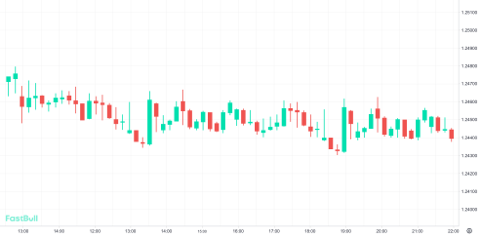
    Share Chart:EURUSD, H1
    Chart
    mukesh jha flag
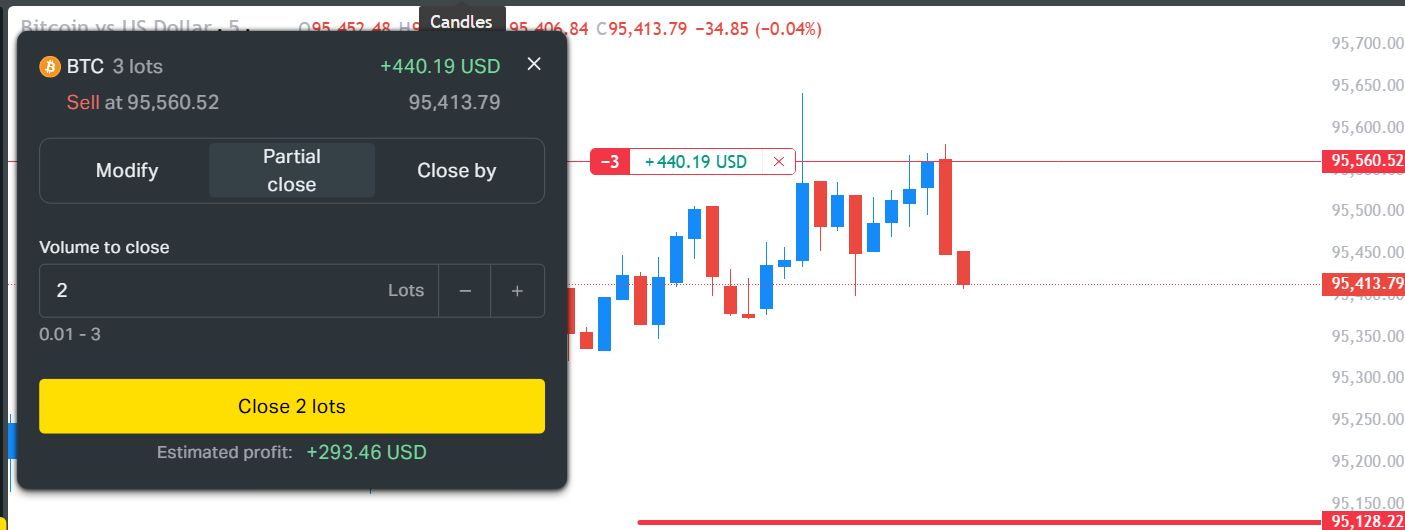
    parital book sell trade
    mukesh jha flag
    mahima flag
    what about contest
    mukesh jha flag
    what about contest
    @mahima my indian bro love you too
    mukesh jha flag
    MUKESH JHA THE DON OG TRADING
    UTSHOB Sut flag
    mukesh jha
    @mukesh jhahello 👋
    Sad Shayar flag
    hell
    Sad Shayar flag
    trading start
    Zaheen Tahir flag
    not I can't reserved verification code in whatsapp.in Pakistan number plz help me
    mukesh jha flag
    AL MY INDIAN BRO CREATE GANG MEANS FASTBULL GROUP CREATE
    Zaheen Tahir flag
    mukesh jha
    @mukesh jhasame issue not otp resevrved
    mukesh jha flag
    YES MANY DAY OTP NOT RECIEVED
    mukesh jha flag
    UTSHOB Sut
    @UTSHOB Sut HELLO MY INDIAN BRO
    OTIENO JUM flag
    hello just reminding yall that euro usd has formed a daily crt pattern indicating bullish momentum from next week,,,look for buys😊
    Type here...
    Add Symbol or Code

      No matching data

      All
      Trump Updates
      Recommend
      Stocks
      Cryptocurrencies
      Central Banks
      Featured News
      • All
      • Russia-Ukraine Conflict
      • Middle East Flashpoint
      • All
      • Russia-Ukraine Conflict
      • Middle East Flashpoint
      Search
      Products

      Charts Free Forever

      Chats Q&A with Experts
      Screeners Economic Calendar Data Tools
      Membership Features
      Data Warehouse Market Trends Institutional Data Policy Rates Macro

      Market Trends

      Market Sentiment Order Book Forex Correlations

      Top Indicators

      Charts Free Forever
      Markets

      News

      News Analysis 24/7 Columns Education
      From Institutions From Analysts
      Topics Columnists

      Latest Views

      Latest Views

      Trending Topics

      Top Columnists

      Latest Update

      Signals

      Copy Rankings Latest Signals Become a signal provider AI Rating
      Contests
      Brokers

      Overview Brokers Assessment Rankings Regulators News Claims
      Broker listing Forex Brokers Comparison Tool Live Spread Comparison Scam
      Q&A Complaint Scam Alert Videos Tips to Detect Scam
      More

      Business
      Events
      Careers About Us Advertising Help Center

      White Label

      Data API

      Web Plug-ins

      Affiliate Program

      Awards Institution Evaluation IB Seminar Salon Event Exhibition
      Vietnam Thailand Singapore Dubai
      Fans Party Investment Sharing Session
      FastBull Summit BrokersView Expo
      Recent Searches
        Top Searches
          Markets
          News
          Analysis
          User
          24/7
          Economic Calendar
          Education
          Data
          • Names
          • Latest
          • Prev

          View All

          No data

          Scan to Download

          Faster Charts, Chat Faster!

          Download App
          English
          • English
          • Español
          • العربية
          • Bahasa Indonesia
          • Bahasa Melayu
          • Tiếng Việt
          • ภาษาไทย
          • Français
          • Italiano
          • Türkçe
          • Русский язык
          • 简中
          • 繁中
          Open Account
          Search
          Products
          Charts Free Forever
          Markets
          News
          Signals

          Copy Rankings Latest Signals Become a signal provider AI Rating
          Contests
          Brokers

          Overview Brokers Assessment Rankings Regulators News Claims
          Broker listing Forex Brokers Comparison Tool Live Spread Comparison Scam
          Q&A Complaint Scam Alert Videos Tips to Detect Scam
          More

          Business
          Events
          Careers About Us Advertising Help Center

          White Label

          Data API

          Web Plug-ins

          Affiliate Program

          Awards Institution Evaluation IB Seminar Salon Event Exhibition
          Vietnam Thailand Singapore Dubai
          Fans Party Investment Sharing Session
          FastBull Summit BrokersView Expo

          Khamenei Blames US for Protest Deaths, Calls Trump 'Criminal'

          Isaac Bennett

          Remarks of Officials

          Middle East Situation

          Political

          Summary:

          Iran's leader blames Trump for thousands dead in protests, while observers point to severe state crackdowns.

          Iran's Supreme Leader Ayatollah Ali Khamenei has labeled U.S. President Donald Trump a "criminal" for supporting recent anti-government protests, directly blaming demonstrators for causing thousands of deaths in the unrest.

          In a state television broadcast on Saturday, Khamenei offered the first official acknowledgment of the scale of casualties from the protests that started on December 28. He stated that the demonstrations resulted in "several thousand" deaths following a severe government crackdown.
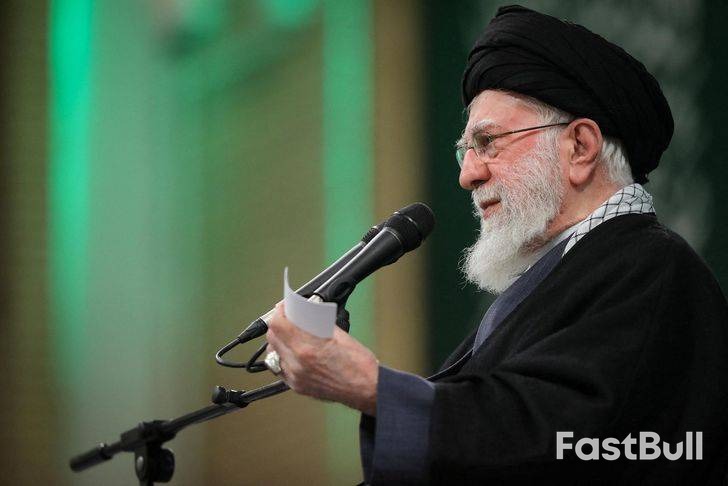
          Iran's Supreme Leader Ayatollah Ali Khamenei delivers a speech addressing the recent nationwide protests.

          Supreme Leader Accuses US of Fueling Unrest

          Khamenei accused the U.S. president of directly inciting the conflict. "In this revolt, the U.S. president made remarks in person, encouraged seditious people to go ahead and said: 'We do support you, we do support you militarily,'" he said, reiterating that Washington seeks to dominate Iran's resources.

          He framed the protesters as "foot soldiers" for the United States, accusing them of destroying mosques and educational centers. "Through hurting people, they killed several thousand of them," Khamenei asserted. "We do consider the U.S. president a criminal, because of casualties and damages, because of accusations against the Iranian nation."

          The Supreme Leader also claimed that rioters were armed with live ammunition imported from foreign countries, though he did not specify which ones. While stating that Iran does not seek war, he warned that "international offenders" would be pursued alongside domestic ones.

          Trump's Softer Tone vs. Khamenei's Hardline Stance

          Khamenei's fiery speech stood in sharp contrast to a more conciliatory tone from President Trump just a day earlier. Trump had stated that "Iran canceled the hanging of over 800 people," adding, "I greatly respect the fact that they canceled." He did not specify how he confirmed this information, but the comment was interpreted as a potential step back from military confrontation.

          This followed earlier messages from Trump to Iranian protesters that "help is on the way" and that his administration would "act accordingly" if the government continued killing demonstrators or carried out executions.

          Assessing the Scale of Iran's Crackdown

          While Khamenei blamed protesters for the death toll, outside observers point to the government's harsh response. According to the U.S.-based Human Rights Activists News Agency, the crackdown left at least 3,090 people dead. This figure, if accurate, would surpass the death toll of any other protest in Iran in decades, echoing the chaos of the 1979 revolution.

          The agency has a track record of accuracy, using a network of activists inside Iran to confirm fatalities. However, the Associated Press has not been able to independently verify the number. Iranian officials, including President Masoud Pezeshkian, have consistently accused the U.S. and Israel of fomenting the unrest.

          Tehran Returns to Uneasy Calm Amid Internet Controls

          In recent days, an uneasy calm has settled over Tehran. Shopping and daily life have returned to a state of outward normality, with no new unrest reported by state media. A call from Iran's exiled Crown Prince Reza Pahlavi for new protests from Saturday to Monday appeared to have been ignored.

          The calm follows a period of intense information control. Authorities implemented a near-total internet blackout on January 8. On Saturday, however, limited services began to reappear. Witnesses reported that text messaging was restored overnight, and users could access local websites via a domestic internet service. Some managed to connect to international sites using a VPN.

          Internet monitoring services Cloudflare and NetBlocks both reported slight increases in connectivity. The partial restoration may be linked to the start of the Iranian work week, as the outage has severely impacted businesses, especially banks needing to process transactions.

          Risk Warnings and Disclaimers
          You understand and acknowledge that there is a high degree of risk involved in trading. Following any strategies or investment methods may lead to potential losses. The content on the site is provided by our contributors and analysts for information purposes only. You are solely responsible for determining whether any trading assets, securities, strategy, or any other product is suitable for investing based on your own investment objectives and financial situation.
          Add to Favorites
          Share

          Iran Strike Looms: Why a US Attack Could Happen This Weekend

          King Ten

          Commodity

          Political

          Remarks of Officials

          Economic

          Middle East Situation

          Energy

          With mass protests shaking Iran, the Trump administration is reportedly considering military action against Tehran for its violent crackdown. Based on a clear pattern from past operations, any potential strike would most likely occur over the weekend to minimize disruption to global markets.

          Recent developments suggest the White House is preparing for a range of kinetic options. U.S. military personnel have been evacuated from bases near Iran, including those in Qatar, Saudi Arabia, the United Arab Emirates, and Turkey. Similar evacuations preceded Operation Midnight Hammer, the 2025 strikes against Iran's nuclear program.

          Protests and Crackdowns Ignite Tensions

          The current crisis stems from widespread protests across Iran against the country's collapsing economy and theocratic government. While demonstrations are not new, the current movement has shown exceptional vigor and resolve.

          The regime's response has been brutal, with reports indicating that as many as 12,000 protestors may have been killed by security forces. Thousands more have been wounded or arrested, drawing global condemnation and prompting President Donald Trump to threaten military intervention.

          Trump's Pattern of Weekend Military Action

          The timing of a potential strike is not random. The Trump administration has historically favored conducting high-profile military operations on Fridays, Saturdays, or Sundays. This strategy aims to prevent immediate panic and volatility in financial markets.

          Past examples of this weekend doctrine include:

          • Operation Kayla Mueller: The raid that killed ISIS leader Abu Bakr al-Baghdadi took place on a Saturday, October 26, 2019.

          • Operation Absolute Resolve: The capture of Venezuelan President Nicolas Maduro occurred on a Saturday, January 3.

          • Operation Midnight Hammer: The strikes against Iran's nuclear facilities happened on a Sunday, June 22, 2025.

          Regional Allies Push for De-escalation

          Despite the preparations, key U.S. allies in the region are urging restraint. Israeli Prime Minister Benjamin Netanyahu has reportedly asked President Trump to hold off on an attack. While Israel and Iran are adversaries, the Israeli government likely wants to avoid a major conflict as it manages threats from its immediate neighbors.

          Similarly, Arab nations hosting U.S. troops are pushing for de-escalation. These countries fear becoming targets of Iranian retaliation, which could result in significant collateral damage on their territory.

          How Would Iran Respond to a US Attack?

          If the U.S. moves forward with strikes, Iran has several potential responses, though its capabilities may be limited.

          The Strait of Hormuz Chokepoint

          Tehran's most powerful option would be to attempt a closure of the Strait of Hormuz using anti-ship missiles, mines, and kamikaze drones. This narrow waterway is arguably the world's most critical maritime chokepoint.

          Approximately 20 million barrels of oil—about 20% of the global supply—pass through the strait daily. A closure would trigger a catastrophic spike in oil prices and could lead to an economic crisis in many nations. The United States has consistently stated it will do whatever is necessary to keep the sea lane open, making any attempt to close it a declaration of war.

          Limited Military and Proxy Attacks

          For a more limited response, Iran could launch missile and drone attacks on nearby U.S. bases in Iraq, Syria, or Jordan. It could also direct its proxy forces across the region to conduct insurgent-style attacks.

          However, Iran's military capacity, particularly its long-range strike functions, was severely weakened by U.S. and Israeli strikes in 2025. While the regime's survival is now at stake, its response to a new attack might be more for show than substance, reflecting its diminished military power.

          To stay updated on all economic events of today, please check out our Economic calendar
          Risk Warnings and Disclaimers
          You understand and acknowledge that there is a high degree of risk involved in trading. Following any strategies or investment methods may lead to potential losses. The content on the site is provided by our contributors and analysts for information purposes only. You are solely responsible for determining whether any trading assets, securities, strategy, or any other product is suitable for investing based on your own investment objectives and financial situation.
          Add to Favorites
          Share

          Philippines & Japan Sign New Defense Pact to Counter China

          Ukadike Micheal

          Political

          The Philippines and Japan have signed a new defense agreement, deepening their security ties as both nations navigate China's growing military presence in the region. This pact is the latest in a series of strategic partnerships Manila is forging to bolster its position in the contested South China Sea.

          Security cooperation between the Philippines and Japan has intensified recently, driven by shared regional concerns. In 2024, the two countries signed a landmark military deal—Japan's first of its kind in Asia—that allows their forces to be deployed on each other's territory for joint exercises.

          What the New Defense Agreement Covers

          The latest agreement, signed in Manila by Philippine Foreign Secretary Theresa Lazaro and Japanese Foreign Minister Toshimitsu Motegi, builds on the 2024 pact. It establishes a framework for the tax-free, reciprocal exchange of essential supplies like ammunition, fuel, and food. This logistical support will apply when their forces participate in joint training or disaster relief operations.

          According to Foreign Minister Motegi, he and Lazaro agreed to "oppose unilateral attempts to change the status quo by force or coercion in the East and South China seas." While not naming China directly, the statement was a clear rebuke of Beijing's actions.

          A Strategic Deterrent Against Beijing

          Experts view the security partnership as a direct move to create a stronger deterrent against China. Chester Cabalza, president of the International Development and Security Cooperation think tank, described the pact as not just significant but "existential." He noted it serves as "a strong deterrence to China's growing military size and ambition" along the first island chain, which includes both Japan and the Philippines.

          Both nations have ongoing territorial disputes with Beijing. Japan contests China's claims over islands in the East China Sea, while Philippine and Chinese vessels have had several tense encounters in the South China Sea.

          China continues to assert its expansive claims over the South China Sea, a critical waterway for global trade, despite a 2016 international tribunal ruling that found no historical basis for its claims.

          "The imminent threat to maintain a status quo of peaceful co-existence in the region brings a shared responsibility for Manila and Tokyo to elevate strategic partnership," Cabalza added.

          Professor Renato De Castro, an international studies expert, identified China's maritime expansion as "the quintessential security threat" for the Philippines. "So, of course, we rely on our efforts to build up our armed forces," he said.

          Manila's Broadening Security Web

          While the Philippines has a long-standing Mutual Defense Treaty with the United States signed in 1951, Manila has been actively diversifying its security relationships.

          The country has accelerated its efforts to build a network of defense partners, including:

          • United Arab Emirates: The Philippines signed a Memorandum of Understanding on Defense Cooperation with the UAE this month, its first such agreement with a Gulf nation.

          • New Zealand and Canada: Military pacts were signed with both countries last year to establish a legal framework for joint drills, though these still require ratification by the Philippine Senate.

          • Germany: A defense cooperation arrangement was signed in May to enhance joint military activities.

          Risk Warnings and Disclaimers
          You understand and acknowledge that there is a high degree of risk involved in trading. Following any strategies or investment methods may lead to potential losses. The content on the site is provided by our contributors and analysts for information purposes only. You are solely responsible for determining whether any trading assets, securities, strategy, or any other product is suitable for investing based on your own investment objectives and financial situation.
          Add to Favorites
          Share

          US Defense Industry Lags China. Can Trump Fix It?

          King Ten

          Remarks of Officials

          Economic

          Russia-Ukraine Conflict

          Political

          The United States military faces a critical problem that money alone may not solve: its industrial engine is stalling. While Donald Trump has a track record of identifying national challenges, from European security gaps to manufacturing decline, his focus has now turned to the weakening state of the US defense sector.

          Recent developments, from Chinese technological leaps to the realities of the Russia-Ukraine war, have starkly revealed deep-seated issues in American military innovation and production capacity. Trump's proposed fixes—including government equity stakes, controls on corporate spending, and a massive budget increase—aim to address the decline. But experts argue that without a fundamental strategic overhaul, the US risks falling further behind.

          A Widening Gap: Drones, Missiles, and Scale

          While the US still produces some of the world's most advanced weapons systems, its competitive edge is eroding in key areas.

          America pioneered unmanned aerial vehicles like the Predator drone, but that technology has since become widespread. The war in Ukraine has shown that cheap, mass-produced drones from countries like Iran are highly effective, neutralizing what was once a core US military advantage in precision weaponry.

          Meanwhile, China and Russia have surged ahead in developing next-generation systems like hypersonic missiles—weapons designed to be too fast and agile for traditional defenses. According to Becca Wasser, a defense analyst at Bloomberg Economics who formerly worked with the Department of Defense, the US has been "bogged down in long procurement and fielding timelines."

          Beyond specific technologies, the US is struggling to compete with China's sheer scale. Stephen Jen, CEO of Eurizon SLJ Capital, notes that Chinese companies are massive and move quickly. This "volume" factor is a critical and often underestimated dimension of the rivalry.

          "If China could produce humanoid robots or autonomous drones and vehicles at 20 cents on the dollar," Jen explains, "it would matter a great deal on the battlefield, even if their fastest attack vehicle is only 80% as fast as the American ones."

          How We Got Here: The "Peace Dividend" Hangover

          Today’s defense industry is a shadow of the competitive ecosystem that helped win the Cold War. A major turning point came in the 1990s with the so-called "peace dividend," when defense spending was drastically cut.

          This era triggered a wave of consolidation, famously spurred by a 1993 Pentagon meeting dubbed the "Last Supper." At this meeting, defense company CEOs were told that the government expected many of them to go out of business. The result was a dramatic loss of competition as more than two dozen major firms merged into the three giants we know today: Boeing Co., Lockheed Martin Corp., and RTX Corp. Countless smaller suppliers also disappeared.

          This consolidation has had lasting consequences. As Defense Secretary Pete Hegseth recently stated, the current structure "makes it difficult, if not impossible, for new creators of technical innovations to win business at our department." He described the outcome as a "risk-averse culture" that holds back American capabilities.

          Trump's Playbook: More Money, More Control

          Trump’s primary proposal is a massive increase in defense spending, targeting an improbable $1.5 trillion budget for 2027—a more than 50% increase that would require congressional approval. However, experts like Wasser argue that simply pouring more money into the existing system is unlikely to be enough. A different kind of industrial base is needed.

          The Trump administration has also floated several more direct interventions:

          • Threats to major firms: Officials have warned they will cut out large companies that fail to accelerate production and innovation.

          • Mandates on capital: Trump has demanded companies cap executive pay and stop stock buybacks and dividends, though such moves would likely face legal challenges.

          A more concrete, and potentially more effective, strategy is a "first of its kind" partnership with L3Harris Technologies Inc. The Pentagon is investing $1 billion in the company's missile unit through a convertible preferred security. Wasser suggests that a government stake could catalyze broader private-sector investment in a capital-intensive industry. However, this approach also has downsides, as it risks the government appearing to pick winners, potentially siphoning private equity away from other vital defense areas.

          A Better Path Forward?

          The administration’s strategy appears to be a push for advances on all fronts. Hegseth listed a wide range of priority areas, from AI and hypersonics to quantum computing and biotechnology. But this broad focus may be a weakness.

          "Historically, US defense innovation has worked best when it was anchored to a clear strategic problem," Wasser says. She emphasizes that "making hard choices" is essential, arguing, "The US can't compete with China one-for-one. Nor should it."

          Critically, the current plan seems to overlook one of the most powerful tools available: America’s traditional allies. Teaming up with partners would directly address the production-scale challenge posed by China.

          In a co-written paper, Wasser and former colleague Philip Sheers concluded that significant industrial reform is non-negotiable. This includes identifying clear production priorities, fostering genuine competition, and deepening industrial ties with overseas partners. Without these changes, they warn, the US risks being unable to win a future great-power conflict.

          To stay updated on all economic events of today, please check out our Economic calendar
          Risk Warnings and Disclaimers
          You understand and acknowledge that there is a high degree of risk involved in trading. Following any strategies or investment methods may lead to potential losses. The content on the site is provided by our contributors and analysts for information purposes only. You are solely responsible for determining whether any trading assets, securities, strategy, or any other product is suitable for investing based on your own investment objectives and financial situation.
          Add to Favorites
          Share

          Trump's 'Great Healthcare Plan' Lacks Detail, Faces Skepticism

          Isaac Bennett

          Remarks of Officials

          Data Interpretation

          Political

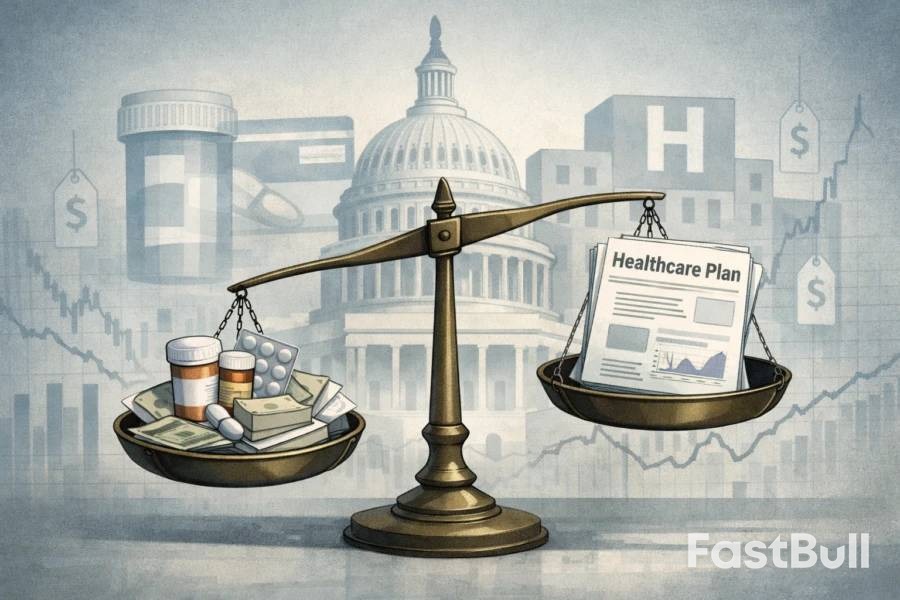
          The Trump administration unveiled its "Great Healthcare Plan" on Thursday, presenting a broad framework aimed at tackling healthcare affordability, drug prices, and insurance transparency. While the White House framed the move as a major reform initiative, policy experts and market analysts quickly pointed to a lack of specific details and significant political obstacles, suggesting it is unlikely to provide meaningful relief to consumers anytime soon.

          The announcement came at a critical time, coinciding with the final day of open enrollment for Affordable Care Act (ACA) plans. It also follows the expiration of enhanced ACA subsidies last year, a change that has driven up insurance premiums and deductibles for millions of Americans.

          A Framework Built on Four Pillars

          According to the White House, the new plan is designed as a legislative framework for Congress to build upon. It centers on four main objectives:

          • Drug Price Reforms: Includes a call for Congress to codify pricing deals the president has made with pharmaceutical companies.

          • Health Insurance Reforms: Proposes funding for health savings accounts.

          • Price Transparency: Pushes for requirements that force insurers and providers to publicly post their prices.

          • Fraud Protections: Aims to implement new safeguards against fraud.

          Dr. Mehmet Oz, the administrator for the Centers for Medicare and Medicaid Services, emphasized that the proposal was a foundational document. "Instead [of] just papering over the problems, we have gotten into this 'Great Healthcare Plan' a framework that we believe will help Congress create legislation that will address the challenges," he told reporters.

          President Trump urged swift action, stating he is "calling on Congress to pass this framework into law without delay." He added that lawmakers "have to do it right now so that we can get immediate relief to the American people." However, when pressed for details on implementation, administration officials consistently described the plan as a "broad framework."

          Analysts See Recycled Ideas and Political Hurdles

          The proposal was met with considerable skepticism from policy experts and market analysts, who noted that many of the ideas were not new and faced a difficult path through Congress.

          "We think it is intended to demonstrate that the White House is doing 'something' about affordability and healthcare prices," wrote Spencer Perlman, director of healthcare research at Veda Partners, in a MarketWatch report. "But we believe the policies either stand little chance of being enacted by the current Congress or will have a minimal impact if enacted."

          This sentiment was widespread. Kim Monk, a healthcare policy analyst at Capital Alpha Partners, described the ideas as "nothing new, nothing unexpected, pretty challenging to implement," adding, "I'm not seeing anything earth-changing."

          Similarly, Raymond James analyst Chris Meekins called the proposal "a retread of previously advocated-for positions" and concluded that "there is no legislative path forward for much of it, in our view."

          The ACA Question: Plan Fails to Address Rising Premiums

          A primary criticism from healthcare policy researchers is that the framework fails to address the most immediate financial pressure on Americans: rising ACA premiums fueled by expiring subsidies.

          Cynthia Cox, a senior vice president at KFF, told NPR that the plan "looks much more like a compilation of Republican ideas" and "doesn't appear to address the rising premium payments that we're seeing."

          The plan's silence on extending the enhanced ACA subsidies has amplified concerns about coverage and costs. Edwin Park, a research professor at Georgetown University's McCourt School of Public Policy, warned in a Guardian report that the framework "clearly opposes extension of the expiring ACA marketplace subsidies." He projected that as a result, "roughly 4 million people will end up uninsured and many millions more will see their marketplace premiums double or increase by even more."

          While bipartisan talks continue in the Senate to potentially revive the subsidies, experts agree that without concrete legislative action, the "Great Healthcare Plan" may remain more of a political statement than a practical solution.

          Risk Warnings and Disclaimers
          You understand and acknowledge that there is a high degree of risk involved in trading. Following any strategies or investment methods may lead to potential losses. The content on the site is provided by our contributors and analysts for information purposes only. You are solely responsible for determining whether any trading assets, securities, strategy, or any other product is suitable for investing based on your own investment objectives and financial situation.
          Add to Favorites
          Share

          Venezuela's New Power Struggle: Rodriguez vs. Cabello

          James Riley

          Political

          Remarks of Officials

          Economic

          Central Bank

          Energy

          Twelve days after U.S. forces seized President Nicolas Maduro, Venezuela is navigating a new and volatile political landscape. Interim President Delcy Rodriguez is moving quickly to consolidate power, but she faces a formidable internal rival: Diosdado Cabello, the nation's hardline interior minister.

          As Rodriguez installs loyalists in key government posts, a high-stakes battle for control is unfolding, pitting her U.S.-backed administration against Cabello's deep-rooted influence over the country's security forces.

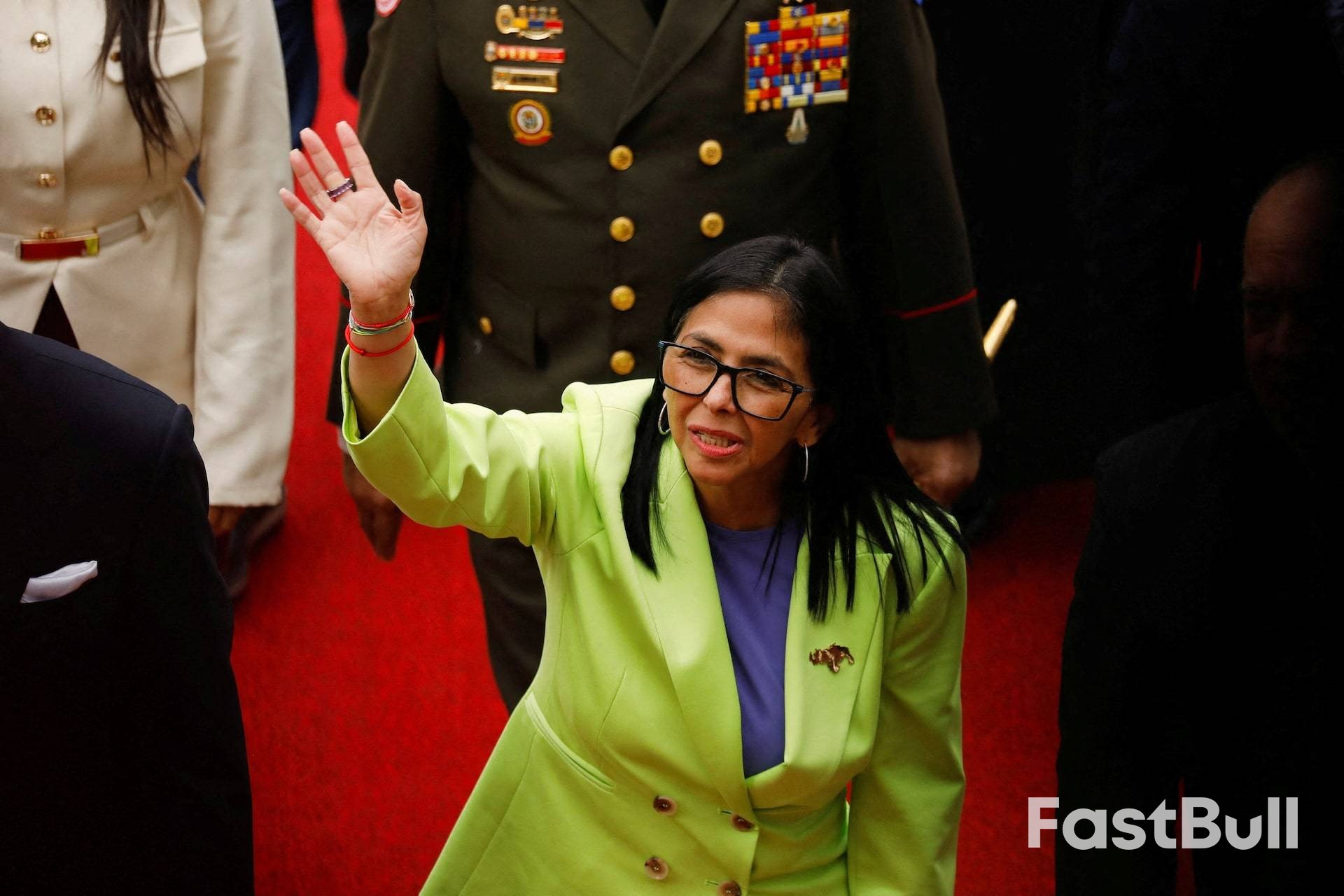
          Interim President Delcy Rodriguez works to solidify her leadership in a volatile political climate following the capture of Nicolas Maduro.

          Rodriguez Moves to Secure Her Position

          Rodriguez, a 56-year-old technocrat who previously served as vice president and oil minister, has begun making strategic appointments to protect her nascent government. She has already named a new central banker and a presidential chief of staff.

          Her most critical move, however, was appointing Major General Gustavo Gonzalez, 65, to lead the DGCIM, Venezuela’s feared military counterintelligence agency. Sources inside the government see this as a direct attempt to counter Cabello, who maintains strong ties to the security apparatus and the notorious "colectivo" motorcycle gangs.

          In her first major speech to parliament, Rodriguez attempted a difficult balancing act. She called for national unity, emphasized her loyalty to Maduro, and simultaneously promised a new chapter of increased oil investment to meet U.S. demands.

          "She is very clear that she doesn't have the capacity to survive without the consent of the Americans," said one source close to the government. "She's already reforming the armed forces, removing people and naming new officials."

          The White House has signaled its support. President Trump recently told Reuters that Rodriguez "has been very good to deal with" and that he expected her to visit Washington. This backing was further underscored when Rodriguez met with CIA Director John Ratcliffe in Caracas.

          The Cabello Factor: A Rival in the Shadows

          While Rodriguez controls many civilian levers of power, including the critical oil industry, Cabello commands a different kind of authority. As head of the ruling PSUV socialist party and a former soldier, he is a powerful figure with a massive public profile, bolstered by a weekly state television show he has hosted for 12 years.

          His first public act after Maduro’s capture was a televised appearance in a flak jacket, surrounded by armed guards, leading a chant of, "To doubt is to betray."

          Complicating matters, U.S. officials were reportedly in contact with Cabello for months before the raid on Maduro and have continued communication since, warning him against targeting the opposition. This is despite Cabello being under indictment in the U.S., with a $25 million reward for his capture.

          While Cabello has publicly appeared conciliatory, arriving at the national address alongside Rodriguez, sources familiar with their relationship insist he remains the single biggest threat to her ability to govern.

          Navigating a Nation on Edge

          The political turmoil has left the country tense and uncertain. Shortly after Rodriguez was sworn in, a burst of anti-aircraft fire near the presidential palace sparked fears of another U.S. attack. The government later claimed the targets were spy drones, though reports suggest it was a miscommunication between police and the presidential guard.

          Across the country, citizens are unsure whether to be hopeful or afraid. In some areas, local socialist party branches have reportedly asked members to spy on neighbors celebrating Maduro's downfall.

          Against this backdrop, Rodriguez faces immense challenges:

          • Legitimacy: She must convince party loyalists she is not a U.S. puppet who betrayed Maduro.

          • Economy: She needs to stabilize an economy where prices for basic goods soared after the U.S. attack.

          • Military Control: She must assert authority over a vast military patronage network, which includes up to 2,000 generals and admirals who control key sectors like food distribution and the state oil company, PDVSA.

          The Battle for State Security

          The appointment of Gustavo Gonzalez to head the DGCIM is central to Rodriguez's strategy, but his effectiveness remains in question. Gonzalez has a long history of working closely with Cabello, particularly during two previous stints as head of the civilian spy agency. Though Rodriguez gave him his most recent post at the state oil company in 2024, his loyalty is being tested.

          According to sources with knowledge of the security services, Cabello’s allies within the DGCIM could easily undermine Gonzalez's authority. One source noted that Gonzalez’s predecessor, General Javier Marcano, struggled to exert real control.

          "The role of boss of repression already has a name… Diosdado," the source explained.

          A key concern is that Cabello could deploy the colectivos to implement an "anarchization" strategy. Originally designed to counter a U.S. intervention, this plan would use intelligence services and armed gangs to plunge Caracas into chaos, making the country ungovernable for Rodriguez.

          He could also disrupt the prisoner releases hailed by President Trump. The process is already moving much slower than families and rights groups have demanded, creating a potential pressure point for Rodriguez's administration. As U.S. Representative Maria Elvira Salazar stated on X, a true transition in Venezuela will require Cabello to eventually "face U.S. justice."

          To stay updated on all economic events of today, please check out our Economic calendar
          Risk Warnings and Disclaimers
          You understand and acknowledge that there is a high degree of risk involved in trading. Following any strategies or investment methods may lead to potential losses. The content on the site is provided by our contributors and analysts for information purposes only. You are solely responsible for determining whether any trading assets, securities, strategy, or any other product is suitable for investing based on your own investment objectives and financial situation.
          Add to Favorites
          Share

          Trump vs. The Fed: Supreme Court to Decide on Central Bank's Fate

          George Anderson

          Economic

          Central Bank

          Political

          The U.S. Supreme Court is set to rule on a landmark case that will test the independence of the Federal Reserve, pitting presidential authority against the stability of the nation's monetary policy. The court is weighing the legality of Donald Trump's attempt to fire Fed Governor Lisa Cook, a decision that could redefine the boundaries of political influence over the U.S. central bank.

          This showdown marks the second case of major economic significance involving Trump to land before the court this term. In November, the justices heard arguments over his global tariffs, expressing skepticism about using a national emergency law to impose widespread import taxes. Rulings in both the tariffs and the Cook case are expected by the end of June.

          While the Supreme Court has often deferred to Trump on emergency matters since his return to office, observers believe the justices may be more hesitant to expand his direct control over the economy.

          Presidential Power vs. Economic Stability

          The core issue is whether the president can remove a Fed governor over policy disagreements, a move that could jeopardize the central bank's independence. This principle is widely seen by economists as essential for preventing runaway inflation.

          "It seems a basic principle of macroeconomics, backed up by the experience of other countries, that political control over the money supply, interest rates and central banking will inevitably lead to inflation," said John Yoo, a law professor at the University of California, Berkeley, and a former Justice Department lawyer. "I think they worry about the effect that removal of central bank independence could have on the economy."

          Legal scholars note that the court has not been this deeply involved in U.S. economic policy since it ruled on President Franklin Roosevelt's New Deal agenda during the Great Depression.

          "This Supreme Court has taken a very expansive approach to executive authority," said Columbia Law School professor Kathryn Judge, "but it is not unbounded." Judge added that the cases on Fed independence and tariffs "will be key in determining the scope of the president's authority to unilaterally determine economic policy."

          The Cases Against Cook and Powell

          The legal battle began in August when Lisa Cook, an appointee of former President Joe Biden, sued Trump after he moved to fire her. Cook is the first Black woman to serve as a Fed governor.

          Trump claims Cook committed mortgage fraud before her 2022 appointment. Cook has denied the allegation, calling it a pretext to remove her because of her stance on monetary policy.

          In a related move, Fed Chair Jerome Powell described a criminal investigation launched against him by Trump's Justice Department as a similar pretext. That investigation focuses on his congressional testimony regarding a Fed building project.

          Critics argue these actions are a concerted effort to pressure the Fed into lowering interest rates ahead of the November midterm elections, where control of Congress is at stake and economic concerns are high among voters.

          "With each passing day—and with each passing attack by the Trump administration—I suspect that the court increasingly sees the value of an independent Fed," said Steve Schwinn, a law professor at the University of Illinois Chicago.

          Reading the Court's Signals

          The Federal Reserve Act of 1913 was designed to insulate the central bank from short-term political pressures. The law states a president can only fire a Fed governor for adequate "cause," a standard not typically met by policy differences.

          A federal judge initially ruled that Trump's claims were likely insufficient to fire Cook, and an appeals court upheld that decision, leading to the Supreme Court appeal.

          Legal analysts believe the justices have already hinted at their view. In a previous case, Trump v. Wilcox, the court allowed Trump to remove officials from federal labor boards. However, in its unsigned opinion, the court specifically distinguished the Federal Reserve.

          "We disagree," the justices wrote, addressing concerns that the ruling would threaten the Fed. "The Federal Reserve is a uniquely structured, quasi-private entity that follows in the distinct historical tradition of the First and Second Banks of the United States."

          Erwin Chemerinsky, dean of the University of California, Berkeley Law School, noted the significance of this statement. "In Trump v. Wilcox, the court discussed the Fed being different even though it had nothing to do with that case," he said, suggesting its protected status is on the justices' minds.

          Further, the court has allowed Cook to remain in her post while the case proceeds, a different approach than it took in other cases involving Trump's removal of officials from other agencies.

          While the Supreme Court has backed Trump on issues like immigration, federal layoffs, and military policy, those disputes did not directly grant the president unilateral control over the U.S. economy, making the Cook case a critical test of his power.

          To stay updated on all economic events of today, please check out our Economic calendar
          Risk Warnings and Disclaimers
          You understand and acknowledge that there is a high degree of risk involved in trading. Following any strategies or investment methods may lead to potential losses. The content on the site is provided by our contributors and analysts for information purposes only. You are solely responsible for determining whether any trading assets, securities, strategy, or any other product is suitable for investing based on your own investment objectives and financial situation.
          Add to Favorites
          Share
          FastBull
          Copyright © 2026 FastBull Ltd

          728 RM B 7/F GEE LOK IND BLDG NO 34 HUNG TO RD KWUN TONG KLN HONG KONG

          TelegramInstagramTwitterfacebooklinkedin
          App Store Google Play Google Play
          Products
          Charts

          Chats

          Q&A with Experts
          Screeners
          Economic Calendar
          Data
          Tools
          Membership
          Features
          Function
          Markets
          Copy Trading
          Latest Signals
          Contests
          News
          Analysis
          24/7
          Columns
          Education
          Company
          Careers
          About Us
          Contact Us
          Advertising
          Help Center
          Feedback
          User Agreement
          Privacy Policy
          Personal Information Protection Statement
          Business

          White Label

          Data API

          Web Plug-ins

          Poster Maker

          Affiliate Program

          Risk Disclosure

          The risk of loss in trading financial instruments such as stocks, FX, commodities, futures, bonds, ETFs and crypto can be substantial. You may sustain a total loss of the funds that you deposit with your broker. Therefore, you should carefully consider whether such trading is suitable for you in light of your circumstances and financial resources.

          No decision to invest should be made without thoroughly conducting due diligence by yourself or consulting with your financial advisors. Our web content might not suit you since we don't know your financial conditions and investment needs. Our financial information might have latency or contain inaccuracy, so you should be fully responsible for any of your trading and investment decisions. The company will not be responsible for your capital loss.

          Without getting permission from the website, you are not allowed to copy the website's graphics, texts, or trademarks. Intellectual property rights in the content or data incorporated into this website belong to its providers and exchange merchants.

          Not Logged In

          Log in to access more features

          FastBull Membership

          Not yet

          Purchase

          Become a signal provider
          Help Center
          Customer Service
          Dark Mode
          Price Up/Down Colors

          Log In

          Sign Up

          Position
          Layout
          Fullscreen
          Default to Chart
          The chart page opens by default when you visit fastbull.com