• Trade
  • Markets
  • Copy
  • Contests
  • News
  • 24/7
  • Calendar
  • Q&A
  • Chats
Trending
Screeners
SYMBOL
LAST
BID
ASK
HIGH
LOW
NET CHG.
%CHG.
SPREAD
SPX
S&P 500 Index
6827.42
6827.42
6827.42
6899.86
6801.80
-73.58
-1.07%
--
DJI
Dow Jones Industrial Average
48458.04
48458.04
48458.04
48886.86
48334.10
-245.98
-0.51%
--
IXIC
NASDAQ Composite Index
23195.16
23195.16
23195.16
23554.89
23094.51
-398.69
-1.69%
--
USDX
US Dollar Index
97.950
98.030
97.950
98.500
97.950
-0.370
-0.38%
--
EURUSD
Euro / US Dollar
1.17394
1.17409
1.17394
1.17496
1.17192
+0.00011
+ 0.01%
--
GBPUSD
Pound Sterling / US Dollar
1.33707
1.33732
1.33707
1.33997
1.33419
-0.00148
-0.11%
--
XAUUSD
Gold / US Dollar
4299.39
4299.39
4299.39
4353.41
4257.10
+20.10
+ 0.47%
--
WTI
Light Sweet Crude Oil
57.233
57.485
57.233
58.011
56.969
-0.408
-0.71%
--

Community Accounts

Signal Accounts
--
Profit Accounts
--
Loss Accounts
--
View More

Become a signal provider

Sell trading signals to earn additional income

View More

Guide to Copy Trading

Get started with ease and confidence

View More

Signal Accounts for Members

All Signal Accounts

Best Return
  • Best Return
  • Best P/L
  • Best MDD
Past 1W
  • Past 1W
  • Past 1M
  • Past 1Y

All Contests

  • All
  • Trump Updates
  • Recommend
  • Stocks
  • Cryptocurrencies
  • Central Banks
  • Featured News
Top News Only
Share

Ukraine Says It Received 114 Prisoners From Belarus

Share

USA Embassy In Lithuania: Maria Kalesnikava Is Not Going To Vilnius

Share

USA Embassy In Lithuania: Other Prisoners Are Being Sent From Belarus To Ukraine

Share

Ukraine President Zelenskiy: Five Ukrainians Released By Belarus In US-Brokered Deal

Share

USA Vilnius Embassy: USA Stands Ready For "Additional Engagement With Belarus That Advances USA Interests"

Share

USA Vilnius Embassy: Belarus, USA, Other Citizens Among The Prisoners Released Into Lithuania

Share

USA Vilnius Embassy: USA Will Continue Diplomatic Efforts To Free The Remaining Political Prisoners In Belarus

Share

USA Vilnius Embassy: Belarus Releases 123 Prisoners Following Meeting Of President Trump's Envoy Coale And Belarus President Lukashenko

Share

USA Vilnius Embassy: Masatoshi Nakanishi, Aliaksandr Syrytsa Are Among The Prisoners Released By Belarus

Share

USA Vilnius Embassy: Maria Kalesnikava And Viktor Babaryka Are Among The Prisoners Released By Belarus

Share

USA Vilnius Embassy: Nobel Peace Prize Laureate Ales Bialiatski Is Among The Prisoners Released By Belarus

Share

Belarusian Presidential Administration Telegram Channel: Lukashenko Has Pardoned 123 Prisoners As Part Of Deal With US

Share

Two Local Syrian Officials: Joint US-Syrian Military Patrol In Central Syria Came Under Fire From Unknown Assailants

Share

Israeli Military Says It Targeted 'Key Hamas Terrorist' In Gaza City

Share

Rwanda's Actions In Eastern Drc Are A Clear Violation Of Washington Accords Signed By President Trump - Secretary Of State Rubio

Share

Israeli Military Issues Evacuation Warning In Southern Lebanon Village Ahead Of Strike - Spokesperson On X

Share

Belarusian State Media Cites US Envoy Coale As Saying He Discussed Ukraine And Venezuela With Lukashenko

Share

Belarusian State Media Cites US Envoy Coale As Saying That US Removes Sanctions On Belarusian Potassium

Share

Thai Prime Minister: No Ceasefire Agreement With Cambodia

Share

US, Ukraine To Discuss Ceasefire In Berlin Ahead Of European Summit

TIME
ACT
FCST
PREV
U.K. Trade Balance Non-EU (SA) (Oct)

A:--

F: --

P: --

U.K. Trade Balance (Oct)

A:--

F: --

P: --

U.K. Services Index MoM

A:--

F: --

P: --

U.K. Construction Output MoM (SA) (Oct)

A:--

F: --

P: --

U.K. Industrial Output YoY (Oct)

A:--

F: --

P: --

U.K. Trade Balance (SA) (Oct)

A:--

F: --

P: --

U.K. Trade Balance EU (SA) (Oct)

A:--

F: --

P: --

U.K. Manufacturing Output YoY (Oct)

A:--

F: --

P: --

U.K. GDP MoM (Oct)

A:--

F: --

P: --

U.K. GDP YoY (SA) (Oct)

A:--

F: --

P: --

U.K. Industrial Output MoM (Oct)

A:--

F: --

P: --

U.K. Construction Output YoY (Oct)

A:--

F: --

P: --

France HICP Final MoM (Nov)

A:--

F: --

P: --

China, Mainland Outstanding Loans Growth YoY (Nov)

A:--

F: --

P: --

China, Mainland M2 Money Supply YoY (Nov)

A:--

F: --

P: --

China, Mainland M0 Money Supply YoY (Nov)

A:--

F: --

P: --

China, Mainland M1 Money Supply YoY (Nov)

A:--

F: --

P: --

India CPI YoY (Nov)

A:--

F: --

P: --

India Deposit Gowth YoY

A:--

F: --

P: --

Brazil Services Growth YoY (Oct)

A:--

F: --

P: --

Mexico Industrial Output YoY (Oct)

A:--

F: --

P: --

Russia Trade Balance (Oct)

A:--

F: --

P: --

Philadelphia Fed President Henry Paulson delivers a speech
Canada Building Permits MoM (SA) (Oct)

A:--

F: --

P: --

Canada Wholesale Sales YoY (Oct)

A:--

F: --

P: --

Canada Wholesale Inventory MoM (Oct)

A:--

F: --

P: --

Canada Wholesale Inventory YoY (Oct)

A:--

F: --

P: --

Canada Wholesale Sales MoM (SA) (Oct)

A:--

F: --

P: --

Germany Current Account (Not SA) (Oct)

A:--

F: --

P: --

U.S. Weekly Total Rig Count

A:--

F: --

P: --

U.S. Weekly Total Oil Rig Count

A:--

F: --

P: --

Japan Tankan Large Non-Manufacturing Diffusion Index (Q4)

--

F: --

P: --

Japan Tankan Small Manufacturing Outlook Index (Q4)

--

F: --

P: --

Japan Tankan Large Non-Manufacturing Outlook Index (Q4)

--

F: --

P: --

Japan Tankan Large Manufacturing Outlook Index (Q4)

--

F: --

P: --

Japan Tankan Small Manufacturing Diffusion Index (Q4)

--

F: --

P: --

Japan Tankan Large Manufacturing Diffusion Index (Q4)

--

F: --

P: --

Japan Tankan Large-Enterprise Capital Expenditure YoY (Q4)

--

F: --

P: --

U.K. Rightmove House Price Index YoY (Dec)

--

F: --

P: --

China, Mainland Industrial Output YoY (YTD) (Nov)

--

F: --

P: --

China, Mainland Urban Area Unemployment Rate (Nov)

--

F: --

P: --

Saudi Arabia CPI YoY (Nov)

--

F: --

P: --

Euro Zone Industrial Output YoY (Oct)

--

F: --

P: --

Euro Zone Industrial Output MoM (Oct)

--

F: --

P: --

Canada Existing Home Sales MoM (Nov)

--

F: --

P: --

Euro Zone Total Reserve Assets (Nov)

--

F: --

P: --

U.K. Inflation Rate Expectations

--

F: --

P: --

Canada National Economic Confidence Index

--

F: --

P: --

Canada New Housing Starts (Nov)

--

F: --

P: --

U.S. NY Fed Manufacturing Employment Index (Dec)

--

F: --

P: --

U.S. NY Fed Manufacturing Index (Dec)

--

F: --

P: --

Canada Core CPI YoY (Nov)

--

F: --

P: --

Canada Manufacturing Unfilled Orders MoM (Oct)

--

F: --

P: --

Canada Manufacturing New Orders MoM (Oct)

--

F: --

P: --

Canada Core CPI MoM (Nov)

--

F: --

P: --

Canada Manufacturing Inventory MoM (Oct)

--

F: --

P: --

Canada CPI YoY (Nov)

--

F: --

P: --

Canada CPI MoM (Nov)

--

F: --

P: --

Canada CPI YoY (SA) (Nov)

--

F: --

P: --

Canada Core CPI MoM (SA) (Nov)

--

F: --

P: --

Q&A with Experts
    • All
    • Chatrooms
    • Groups
    • Friends
    Connecting
    .
    .
    .
    Type here...
    Add Symbol or Code

      No matching data

      All
      Trump Updates
      Recommend
      Stocks
      Cryptocurrencies
      Central Banks
      Featured News
      • All
      • Russia-Ukraine Conflict
      • Middle East Flashpoint
      • All
      • Russia-Ukraine Conflict
      • Middle East Flashpoint
      Search
      Products

      Charts Free Forever

      Chats Q&A with Experts
      Screeners Economic Calendar Data Tools
      Membership Features
      Data Warehouse Market Trends Institutional Data Policy Rates Macro

      Market Trends

      Market Sentiment Order Book Forex Correlations

      Top Indicators

      Charts Free Forever
      Markets

      News

      News Analysis 24/7 Columns Education
      From Institutions From Analysts
      Topics Columnists

      Latest Views

      Latest Views

      Trending Topics

      Top Columnists

      Latest Update

      Signals

      Copy Rankings Latest Signals Become a signal provider AI Rating
      Contests
      Brokers

      Overview Brokers Assessment Rankings Regulators News Claims
      Broker listing Forex Brokers Comparison Tool Live Spread Comparison Scam
      Q&A Complaint Scam Alert Videos Tips to Detect Scam
      More

      Business
      Events
      Careers About Us Advertising Help Center

      White Label

      Data API

      Web Plug-ins

      Affiliate Program

      Awards Institution Evaluation IB Seminar Salon Event Exhibition
      Vietnam Thailand Singapore Dubai
      Fans Party Investment Sharing Session
      FastBull Summit BrokersView Expo
      Recent Searches
        Top Searches
          Markets
          News
          Analysis
          User
          24/7
          Economic Calendar
          Education
          Data
          • Names
          • Latest
          • Prev

          View All

          No data

          Scan to Download

          Faster Charts, Chat Faster!

          Download App
          English
          • English
          • Español
          • العربية
          • Bahasa Indonesia
          • Bahasa Melayu
          • Tiếng Việt
          • ภาษาไทย
          • Français
          • Italiano
          • Türkçe
          • Русский язык
          • 简中
          • 繁中
          Open Account
          Search
          Products
          Charts Free Forever
          Markets
          News
          Signals

          Copy Rankings Latest Signals Become a signal provider AI Rating
          Contests
          Brokers

          Overview Brokers Assessment Rankings Regulators News Claims
          Broker listing Forex Brokers Comparison Tool Live Spread Comparison Scam
          Q&A Complaint Scam Alert Videos Tips to Detect Scam
          More

          Business
          Events
          Careers About Us Advertising Help Center

          White Label

          Data API

          Web Plug-ins

          Affiliate Program

          Awards Institution Evaluation IB Seminar Salon Event Exhibition
          Vietnam Thailand Singapore Dubai
          Fans Party Investment Sharing Session
          FastBull Summit BrokersView Expo

          Japan Needs to Balance Growth, Fiscal Reform - Policy Document

          Thomas

          Economic

          Summary:

          Japan is committed to mobilise all policy options available while putting the economy before fiscal reform, according to a draft of the government's mid-year policy framework reviewed by Reuters on Wednesday.
          Japan is committed to mobilise all policy options available while putting the economy before fiscal reform, according to a draft of the government's mid-year policy framework reviewed by Reuters on Wednesday, signalling its will to keep the fiscal spigot wide open before looming elections.
          The draft framework, which will be presented at Prime Minister Fumio Kishida's top economic advisory panel, provides the basis for medium- to long-term macroeconomic management and will be approved by Kishida's cabinet later this month, along with a separate action plan on his "new capitalism" agenda.
          Kishida, who is seen as a fiscal hawk, also hopes to strike a delicate balance between fiscal stimulus and the unwinding of it, with the framework calling for normalisation from crisis-mode fiscal largesse.
          Still, the framework dropped a specific timeframe on the budget-balancing target for a second year, reflecting a compromise Kishida needed to strike with reflationary forces within his own Liberal Democratic Party (LDP).
          "We have not abandoned the flag of fiscal reform," the framework said, in a tacit reference to Kishida's aim of bringing a primary budget surplus, excluding new bond sales and debt servicing costs, by the fiscal year ending in March 2026.
          The target was originally set to be met in the early 2010s but has pushed back four times.
          Since he took office in October 2021, Kishida has pledged to achieve a virtuous cycle of growth and redistribution under his "new capitalism", while suggesting that previous administrations' stimulus policies created social division and inequality.
          To accelerate the "new capitalism" drive, the new framework calls for a structural increase in wages and the expansion of financial assets, including a decision by the end of 2024 to boost contributions to the defined contribution pension system and the overhaul of asset management firms.
          "We will realise sustainable growth by mobilising budget, taxation and regulatory reforms, aiming to exit deflation and sharp declines in childbirth," it said, pointing to downside risks to the global economy because of a prolonged war in Ukraine, the global trend of monetary tightening and elevated inflation.

          Source: Reuters

          To stay updated on all economic events of today, please check out our Economic calendar
          Risk Warnings and Disclaimers
          You understand and acknowledge that there is a high degree of risk involved in trading. Following any strategies or investment methods may lead to potential losses. The content on the site is provided by our contributors and analysts for information purposes only. You are solely responsible for determining whether any trading assets, securities, strategy, or any other product is suitable for investing based on your own investment objectives and financial situation.
          Comments
          Add to Favorites
          Share

          Wheat Surges Following Dam Breach in Ukraine, Raising Geopolitical Concerns and Threatening Grain Exports

          Warren Takunda

          Traders' Opinions

          Economic

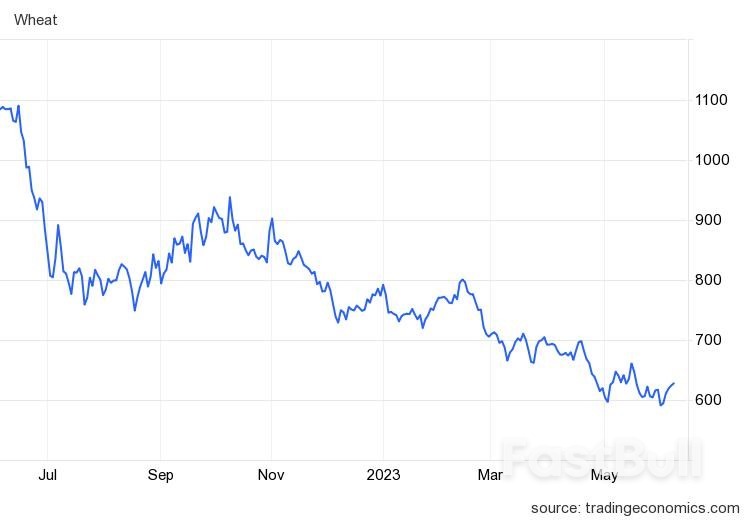
          Wheat futures in the United States experienced a notable surge, reaching $6.4 per bushel, signaling a recovery from the over-two-year low of $5.9 observed on May 30th. This upward trajectory is largely attributed to the devastating breach of a dam in Ukraine, which is expected to have a significant impact on the country's agricultural sector. The explosion at the Kakhovska hydroelectric dam has severed the crucial water supply that sustains agriculture in the southern region of Ukraine.
          Wheat Surges Following Dam Breach in Ukraine, Raising Geopolitical Concerns and Threatening Grain Exports_1The destruction of agricultural infrastructure, coupled with the resultant water shortage, has raised concerns over the geopolitical implications of the incident. The situation further intensifies anxieties regarding the extension of Russia's seaborne grain export deal, which heavily relies on Ukrainian ports. With the disruption caused by the dam breach, the possibility of an extension appears grim, adding an additional layer of uncertainty to the global grain trade.
          Despite these concerns, the surge in wheat prices was tempered by robust output in other regions. Russia, for instance, has witnessed a bumper harvest, leading to an upward revision of foreign sales forecasts to nearly 50 million tonnes. Moscow's recent decision to increase grain export duties has not deterred sellers in the world's top exporter. In fact, they have responded by lowering prices, aiming to manage the current record-high harvest and prevent inventories from reaching unsustainable levels.
          While the impact of the dam breach in Ukraine is expected to be significant, the strength of global wheat production in other key regions has mitigated the extent of the price increase. This, however, does not downplay the potential long-term consequences on the Ukrainian agricultural sector and the geopolitical dynamics surrounding grain exports.
          Market participants will closely monitor the aftermath of the dam breach and its implications for both domestic and international wheat markets. Any disruption in grain supply from Ukraine could result in a ripple effect across the global market, potentially triggering heightened volatility and impacting food security in certain regions.
          As the situation unfolds, market analysts will pay attention to the response from both Ukraine and Russia, as well as the subsequent actions of major players in the wheat market. The resilience of the global wheat supply chain will be put to the test, with potential repercussions for consumers, traders, and investors alike.
          In summary, the breach of the Kakhovska hydroelectric dam in Ukraine has sent shockwaves through the wheat market, propelling prices upward as concerns mount over the disruption of agriculture and the implications for grain exports. The repercussions of this event, combined with the response from key market players, will significantly shape the trajectory of the wheat market in the coming months.
          To stay updated on all economic events of today, please check out our Economic calendar
          Risk Warnings and Disclaimers
          You understand and acknowledge that there is a high degree of risk involved in trading. Following any strategies or investment methods may lead to potential losses. The content on the site is provided by our contributors and analysts for information purposes only. You are solely responsible for determining whether any trading assets, securities, strategy, or any other product is suitable for investing based on your own investment objectives and financial situation.
          Comments
          Add to Favorites
          Share

          Australia Q1 GDP Growth Hits Weakest Pace In 1-1/2 Years as Consumers Struggle

          Alex

          Economic

          Australia's economy grew at the weakest pace in 1-1/2 years last quarter as high prices and rising interest rates sapped consumer spending, while emerging signs pointed to further softness ahead amid elevated borrowing costs and a slowdown in global growth.
          Data from the Australian Bureau of Statistics on Wednesday showed real gross domestic product (GDP) rose 0.2% in the first quarter, easing from 0.5% in the previous quarter and under forecasts of 0.3%.
          Annual growth came in at 2.3%, also missing forecasts for 2.4% expansion.
          The report contained initial signs that domestic price pressures are easing and evidence that households are saving less to meet high costs of livings and rising mortgage rates.
          Domestic price growth slowed to 1.1%, after a 1.4% rise in the December quarter, and household savings as a share of income shrank to 3.7%, the lowest level since 2008, with consumers cutting back on discretionary spending such as household equipment and vehicles.
          Household consumption rose only a meagre 0.2% in the March quarter, contributing 0.1% percentage points to GDP, mostly from spending on essential goods and services.
          Price pressures have prompted the Reserve Bank of Australia (RBA) to raise its cash rate by 400 basis points since last May, taking it to an 11-year high of 4.1% and flagging more tightening may still be required.
          Markets have priced in a 60% chance of another hike in July.
          Compensation of employees (COE), the broadest measure of economy-wide labour costs, increased 2.4% in the first quarter from the December quarter when it rose 2.0%, a result that would worry policymakers.
          RBA Governor Philip Lowe has highlighted that fast increasing unit labour costs are a risk to the central bank's inflation outlook, if productivity failed to pick up from the current flat levels.

          Source: Reuters

          To stay updated on all economic events of today, please check out our Economic calendar
          Risk Warnings and Disclaimers
          You understand and acknowledge that there is a high degree of risk involved in trading. Following any strategies or investment methods may lead to potential losses. The content on the site is provided by our contributors and analysts for information purposes only. You are solely responsible for determining whether any trading assets, securities, strategy, or any other product is suitable for investing based on your own investment objectives and financial situation.
          Comments
          Add to Favorites
          Share

          Global Carbon Markets Face Upheaval as Nations Remake the Rules

          Thomas

          Energy

          The US$2 billion market for carbon offsets is heading for a massive reset, as a growing number of sovereign governments announce their intention to tax, regulate or restrict trade in credits generated within their borders.
          The details vary, but from Indonesia to Kenya to Honduras, the goals are the same: Governments want to retain more of the benefits of emissions-reduction projects, whether as revenue or as credit toward their own national climate goals.
          "If you are a developing country and you have the right kinds of project opportunities, you've got a golden goose," said Mark Lewis, head of climate research at Andurand Capital Management.
          For countries with dense rainforests, mangrove swamps or other natural carbon sinks, carbon credits are increasingly considered alongside valuable minerals and metals like gold, lithium or copper.
          "Commodities markets have created the precedent," said Samuel Gill, president and co-founder of Sylvera, a carbon research and ratings firm. "It is almost inevitable that nations come to see and treat carbon as any other national resource."
          That wake-up call has been prompted in part by a growing awareness that, as of now, governments and local stakeholders might receive just a tiny slice of the revenues made by foreign project developers, said Pablo Fernandez, chief executive of Ecosecurities, a project developer and investor.
          For example, most of the €100 million in proceeds from one of the biggest offset projects, a forest-protection site called Kariba in Zimbabwe, were accrued by the Swiss developer South Pole and its Guernsey partner Carbon Green Investments. In Mexico, BP paid rural villagers a small fraction of the market value of the credits generated on their forest land, according to a 2022 Bloomberg Green investigation.
          "I'm not saying it's the pattern of the market, but we do have some projects that are badly designed and badly executed," Fernandez said. "That leads to these situations."
          At the same time, carbon credits have new value for emerging markets. Under the 1997 Kyoto Protocol, wealthy countries had emissions targets and could buy credits from projects in developing countries to meet them. The 2015 Paris Agreement introduced targets for all, developing countries included, effective from 2020.
          This means governments now view the units not just of a source of revenue, but as a tool to meet their international obligations. "The Paris Agreement acknowledges emissions as sovereign liabilities," said Finn O'Muircheartaigh, director of policy and markets at BeZero Carbon, a research and ratings firm. "Countries are now recognising they also have sovereign assets, which are their ability to reduce carbon or sequester carbon."
          The new sovereign trading market is being set up by the United Nations, with an accounting framework that prevents the same credit from being applied to more than one country's climate goal. That means countries will have to decide if and when credits produced within their borders will be made available for use by others and when they'll be used for national goals.
          Though the details are still being fine-tuned, some countries have already begun to strike deals to ensure supply. More than three quarters of countries say they plan to or are considering using the UN carbon market to meet their targets, known as "nationally determined contributions".
          "Adjusting the amount of supply going to NDCs, rather than offset markets, has big implications," according to BNEF , which predicts the voluntary offset market could reach US$1 trillion by 2037.
          One of those implications will be regulatory change and, at least at the beginning, inconsistency from one country to the next. Last month, Zimbabwe announced its intention to retain 50% of carbon revenues generated there, effective almost immediately. Kenya is debating legislation that would provide local communities a 25% cut. In October, Tanzania introduced new rules governing the revenue split, but developers say they are still waiting for specifics.
          Elsewhere, Papua New Guinea suspended new deals while it worked on regulation. Honduras put a moratorium on the sale of forest-based carbon credits, and Indonesia imposed conditions on the export of carbon credits.
          Meanwhile, Malaysia has said it won't limit sales of offsets abroad. Ghana, often lauded for its regulatory clarity, recently struck a deal to sell credits to Switzerland. Possibly one of the biggest impacts on the market, however, will be China — the largest supplier of offsets — which is readying a revamp of its domestic voluntary market.
          The Paris Agreement was "revolutionary" in the way it empowered every country to set its own targets and manage its own market, Fernandez said. But that is a bumpy and inconsistent process, he added: "Today, we are living with the problem of this."
          Investors say they welcome moves to create clarity, stability and predictability in the carbon market. "Improved regulation — and the greater certainty that comes with it — represents progress," said Ana Haurie, chief executive of Respira International, a carbon finance firm. "By creating certainty around the cost, the market can determine whether it's a price worth paying."
          The emissions trading industry welcomed the new regulatory frameworks that would bring more certainty for investors but warned policymakers not to be overzealous.
          "The new frameworks and the degree of government interventions will determine how attractive individual countries are for investors," said Andrea Bonzanni, the director of international policy at the International Emissions Trading Association. "If we make things too difficult, there will be no international carbon markets."
          Investors will pick projects in countries which offer the best risk-to-reward ratio, according to Benedikt von Butler, portfolio manager at Evolution Environmental Asset Management LP. It's "in a host country's self-interest to minimise political risk to attract more investments, which will also generate revenues for governments," he said.

          Source: Bloomberg

          Risk Warnings and Disclaimers
          You understand and acknowledge that there is a high degree of risk involved in trading. Following any strategies or investment methods may lead to potential losses. The content on the site is provided by our contributors and analysts for information purposes only. You are solely responsible for determining whether any trading assets, securities, strategy, or any other product is suitable for investing based on your own investment objectives and financial situation.
          Comments
          Add to Favorites
          Share

          June 7th Financial News

          FastBull Featured

          Daily News

          [Quick Facts]

          1. The RBA unexpectedly raises its benchmark interest rate by 25bps.
          2. The World Bank projects the world's economy will grow 2.1% in 2023.
          3. Goldman Sachs lowers the probability of a U.S. recession and expects the terminal interest rates at 5.25%-5.5%.
          4. The U.S. SEC asks to freeze the assets of Binance's U.S. subsidiary.
          5. Kakhovka dam in Kherson, Ukraine has been damaged.

          [News Details]

          The RBA unexpectedly raises its benchmark interest rate by 25bps
          The Reserve Bank of Australia unexpectedly raised its benchmark interest rate by 25 basis points to 4.10%, a new high since 2012. The market expected it would keep rates unchanged. In addition, the RBA reiterated the possible need to further tighten monetary policy, depending on the development of inflation and the economy. It showed determination to restore CPI to the target level and will take the necessary measures to do that.
          The World Bank projects the world's economy will grow 2.1% in 2023
          The World Bank raised its forecast for global growth in 2023 as the U.S. and other major economies are more resilient than expected. But the Bank said the drag on the economy from higher interest rates next year will be worse than expected. The real global GDP is set to grow 2.1% this year, the World Bank said in its latest Global Economic Prospects report. That's higher than the 1.7% forecast released in January, but well below the 3.1% growth rate in 2022.
          Goldman Sachs lowers the probability of a U.S. recession and expects the terminal interest rates at 5.25%-5.5%
          Goldman Sachs cut the probability of a U.S. recession in the next 12 months from 35% to 25% and said the Federal Reserve is "very likely" to raise interest rates by 25 basis points in July. Earlier, the pressure on the U.S. banking sector was reduced, and U.S. President Joe Biden signed a bill to suspend the U.S. government's debt ceiling, avoiding a possible default. Goldman Sachs said the new debt ceiling will only lead to "small spending" cuts, which should make the overall fiscal momentum "roughly neutral" over the next two years. The pressure on the banking sector will only reduce this year's real GDP growth by 0.4%. The bank now expects that the Fed's terminal rate will be around 5.25%-5.5%, similar to the expectations of Deutsche Bank, UBS, and other peers.
          The U.S. SEC asks to freeze the assets of Binance's U.S. subsidiary
          The U.S. Securities and Exchange Commission (SEC) filed an emergency motion in federal court in Washington, D.C., on the evening of June 6 ET, asking a judge to freeze the assets of Binance's U.S. subsidiary and require the company to return funds on its U.S. trading platform to customers. The SEC wanted the freeze order to apply only to Binance's two holding companies in the U.S., while other international exchanges that are not regulated by the U.S. are not affected by the order.
          Kakhovka dam in Kherson, Ukraine has been damaged
          Kakhovka dam in Kherson, eastern Ukraine, was damaged on Tuesday, and parts of the area are being flooded. A state of emergency has been declared in the city of Nova Kakhovka due to the dam explosion. Both Russia and Ukraine accused each other of committing the dam destruction, increasing tensions in the region.

          [Focus of the Day]

          UTC+8 09:30 Australia GDP YoY (SA) (Q1)
          UTC+8 10:00 China Trade Balance (May)
          UTC+8 13:45 Switzerland Unemployment Rate (SA) (May)
          UTC+8 14:00 Germany Industrial Output MoM (SA) (Apr)
          UTC+8 14:00 U.K. Halifax House Price Index MoM (SA) (May)
          UTC+8 14:45 France Trade Balance (SA) (Apr)
          UTC+8 15:00 The OECD released its economic outlook report
          UTC+8 20:30 U.S. Trade Balance (Apr)
          UTC+8 22:00 The Bank of Canada announces its interest rate decision
          UTC+8 22:30 U.S. EIA Crude Stocks for the Week Ended June 2
          Risk Warnings and Disclaimers
          You understand and acknowledge that there is a high degree of risk involved in trading. Following any strategies or investment methods may lead to potential losses. The content on the site is provided by our contributors and analysts for information purposes only. You are solely responsible for determining whether any trading assets, securities, strategy, or any other product is suitable for investing based on your own investment objectives and financial situation.
          Comments
          Add to Favorites
          Share

          Russian Budget Deficit Reaches Record High Amidst Economic Slowdown and Military Expenditures

          Warren Takunda

          Traders' Opinions

          Economic

          Russia's federal government has announced a staggering budget deficit of RUB 3.4 trillion in the first five months of 2023, marking a record high for this period. This deficit represents a sharp contrast to the surplus of RUB 1.6 trillion recorded during the corresponding period last year, as reported by the Ministry of Finance. The widening deficit can be attributed to a decline in revenues and a surge in government spending.
          Russian Budget Deficit Reaches Record High Amidst Economic Slowdown and Military Expenditures_1Revenue collections witnessed a significant decline, plummeting by 18.5% to RUB 9.8 trillion compared to the same period in the previous year. The primary factors contributing to this decline are the global economic slowdown and the imposition of sanctions on Russia's energy sector, resulting in reduced income from vital oil and gas industries. These challenges have posed severe hurdles to Russia's financial stability.
          Simultaneously, government expenditures witnessed a substantial increase, soaring by 26.5% to RUB 13.2 trillion. The surge in spending can be attributed to Moscow's ongoing military intervention in Ukraine, which has necessitated significant financial resources. This heightened level of government spending has put immense strain on Russia's fiscal health and highlighted the underlying issues that continue to plague the state's budget.
          The persistent budget deficits and mounting expenditures have forced the Kremlin to adopt certain measures in order to finance its operations. To meet its financial requirements, the Russian government has turned to issuing bonds to raise capital. Additionally, the government has been compelled to dip into its National Welfare Fund, a reserve designed to safeguard against economic uncertainties and emergencies.
          The current economic scenario in Russia underscores the urgent need for the government to address these unsustainable developments. As the budget deficit continues to reach record highs, it is crucial for the Kremlin to reassess its economic policies and explore avenues for revenue diversification beyond the oil and gas sectors. This would help mitigate the adverse effects of global economic fluctuations and reduce the nation's vulnerability to external pressures, such as sanctions.
          Furthermore, the government must also carefully evaluate its expenditure priorities and seek more efficient ways to allocate resources. By ensuring transparency and accountability in financial management, the Russian authorities can work towards regaining fiscal stability and fostering long-term economic growth.
          The impact of Russia's budget deficit extends beyond its borders. As one of the world's major economies, Russia's fiscal health has implications for global markets and investors. The growing deficit and increased borrowing may lead to higher interest rates and inflationary pressures, affecting not only domestic consumers but also international stakeholders.
          In conclusion, the Russian government's announcement of a record-high budget deficit of RUB 3.4 trillion in the first five months of 2023 highlights the challenges facing the country's economy. The decline in revenues due to a global economic slowdown and energy sector sanctions, coupled with soaring government expenditures driven by the military intervention in Ukraine, has strained Russia's fiscal position. Urgent measures are required to address these issues and restore fiscal stability, including diversifying revenue sources and enhancing financial management practices.
          To stay updated on all economic events of today, please check out our Economic calendar
          Risk Warnings and Disclaimers
          You understand and acknowledge that there is a high degree of risk involved in trading. Following any strategies or investment methods may lead to potential losses. The content on the site is provided by our contributors and analysts for information purposes only. You are solely responsible for determining whether any trading assets, securities, strategy, or any other product is suitable for investing based on your own investment objectives and financial situation.
          Comments
          Add to Favorites
          Share

          Higher Interest Rates to Slow Global Growth in 2023, World Bank Says

          Cohen

          Economic

          The world economy is set to grow at a slower pace as continued monetary policy tightening to rein in inflation is expected to crimp development, the World Bank has said.
          Growth has been forecast at 2.1 per cent this year, down from 3.1 per cent last year, before recovering to 2.4 per cent in 2024, the Washington-based lender said in its latest Global Economic Prospects report on Tuesday.
          Tight global financial conditions and subdued external demand are expected to weigh on growth across emerging markets and developing economies.
          This year's growth projections for these economies are "less than half [of] those from a year ago, making them highly vulnerable to additional shocks", the World Bank said.
          In emerging markets and developing economies other than China, growth is set to slow to 2.9 per cent in 2023, from 4.1 per cent last year.
          "The surest way to reduce poverty and spread prosperity is through employment – and slower growth makes job creation a lot harder," said World Bank President Ajay Banga, who assumed charge on Friday.
          "It's important to keep in mind that growth forecasts are not destiny. We have an opportunity to turn the tide but it will take us all working together."
          Last month, the US Federal Reserve bumped up the policy rate for a third consecutive time this year by 25 basis points to curb inflation and restore price stability.
          Higher Interest Rates to Slow Global Growth in 2023, World Bank Says_1The Fed has been aggressively increasing interest rates since March last year to tame consumer prices that hit a 40-year high in 2022.
          However, it has indicated a potential pause in rate increases amid fears of a recession in the world's largest economy.
          The central banks of the UAE, Saudi Arabia, Bahrain, Qatar and Oman all followed suit by raising their benchmark borrowing rates in May.
          Global financial conditions have tightened as a result of policy rate increases and recent bouts of financial instability, according to the World Bank.
          Many banks experienced substantial unrealised losses due to the sharp rise in policy interest rates, it said.
          "Financial markets remain highly sensitive to evolving expectations about the future path of interest rates of major central banks," the report said.
          The latest forecasts indicate that the overlapping shocks of Covid-19, the Ukraine war and the sharp economic slowdown have dealt an enduring setback to development to emerging markets and developing economies, "one that will persist for the foreseeable future", the World Bank said.
          By the end of 2024, economic activity in these economies is expected to be "about 5 per cent below levels projected on the eve of the pandemic".
          "The world economy is in a precarious position," said Indermit Gill, chief economist and senior vice president at the World Bank.
          With fiscal weaknesses having already tipped many poor countries into debt distress, pressure is growing in emerging markets and developing economies due to higher interest rates, he said.
          Growth in the Mena region is expected to slow to 2.2 per cent in 2023, before rebounding to 3.3 per cent in 2024, as inflation and global headwinds subside and oil production rises.
          The 23-member Opec+ alliance of oil producers on Sunday said it had set a new production target of 40.46 million barrels per day for 2024.
          The alliance has extended its output cuts until the end of 2024 as concerns about economic growth weigh on the outlook for fuel demand.
          Saudi Arabia will make an output cut of a million bpd in July, which could be extended if required.
          The group has total production curbs of 3.66 million bpd, or about 3.7 per cent of global demand, in place, including a 2 million bpd reduction agreed on last year and voluntary cuts of 1.66 million bpd announced in April.
          "The growth outlook for oil exporters in 2024 has improved since January, reflecting an assumed rebound in oil production, the expected effects of reform initiatives, and investment drives in Saudi Arabia and the UAE," the World Bank said.
          The Mena region entered 2023 with "solid growth momentum in oil-exporting economies owing to high oil prices – which had helped these economies grow at a decade-high rate in 2022 – and ongoing recoveries in services sectors".
          Higher Interest Rates to Slow Global Growth in 2023, World Bank Says_2Many developing economies are also struggling to cope with weak growth, persistently high inflation and record debt levels, said World Bank deputy chief economist Ayhan Kose.
          "Yet new hazards – such as the possibility of more widespread spillovers from renewed financial stress in advanced economies – could make matters even worse for them," he said.
          "Policymakers in these economies should act promptly to prevent financial contagion and reduce near-term domestic vulnerabilities."
          In advanced economies, growth is set to decelerate from 2.6 per cent in 2022 to 0.7 per cent this year and remain weak in 2024, according to World Bank estimates.
          After growing by 1.1 per cent in 2023, the US economy is set to slow down to 0.8 per cent in 2024, "mainly because of the lingering impact of the sharp rise in interest rates over the past year and a half", the report said.
          In the euro area, growth has been projected at 0.4 per cent in 2023, down from 3.5 per cent in 2022, due to the lagged effect of monetary policy tightening and energy price increases.
          Despite a continued recovery in tourism, global trade growth is also expected to slow this year in view of the continuing rotation of consumption towards services, which tend to be "less trade-intensive", the World Bank said.
          "In 2023, trade will grow at less than a third of its pace in the years before the pandemic," Mr Gill said.
          The World Bank had said in March that global economic growth was expected to slump to a three-decade low by 2030, with the world economy set to reach its "speed limit" – the maximum long-term rate at which it can grow without risking excess inflation.

          Source: The National News

          To stay updated on all economic events of today, please check out our Economic calendar
          Risk Warnings and Disclaimers
          You understand and acknowledge that there is a high degree of risk involved in trading. Following any strategies or investment methods may lead to potential losses. The content on the site is provided by our contributors and analysts for information purposes only. You are solely responsible for determining whether any trading assets, securities, strategy, or any other product is suitable for investing based on your own investment objectives and financial situation.
          Comments
          Add to Favorites
          Share
          FastBull
          Copyright © 2025 FastBull Ltd

          728 RM B 7/F GEE LOK IND BLDG NO 34 HUNG TO RD KWUN TONG KLN HONG KONG

          TelegramInstagramTwitterfacebooklinkedin
          App Store Google Play Google Play
          Products
          Charts

          Chats

          Q&A with Experts
          Screeners
          Economic Calendar
          Data
          Tools
          Membership
          Features
          Function
          Markets
          Copy Trading
          Latest Signals
          Contests
          News
          Analysis
          24/7
          Columns
          Education
          Company
          Careers
          About Us
          Contact Us
          Advertising
          Help Center
          Feedback
          User Agreement
          Privacy Policy
          Business

          White Label

          Data API

          Web Plug-ins

          Poster Maker

          Affiliate Program

          Risk Disclosure

          The risk of loss in trading financial instruments such as stocks, FX, commodities, futures, bonds, ETFs and crypto can be substantial. You may sustain a total loss of the funds that you deposit with your broker. Therefore, you should carefully consider whether such trading is suitable for you in light of your circumstances and financial resources.

          No decision to invest should be made without thoroughly conducting due diligence by yourself or consulting with your financial advisors. Our web content might not suit you since we don't know your financial conditions and investment needs. Our financial information might have latency or contain inaccuracy, so you should be fully responsible for any of your trading and investment decisions. The company will not be responsible for your capital loss.

          Without getting permission from the website, you are not allowed to copy the website's graphics, texts, or trademarks. Intellectual property rights in the content or data incorporated into this website belong to its providers and exchange merchants.

          Not Logged In

          Log in to access more features

          FastBull Membership

          Not yet

          Purchase

          Become a signal provider
          Help Center
          Customer Service
          Dark Mode
          Price Up/Down Colors

          Log In

          Sign Up

          Position
          Layout
          Fullscreen
          Default to Chart
          The chart page opens by default when you visit fastbull.com
