

Markets
News
Analysis
User
24/7
Economic Calendar
Education
Data
- Names
- Latest
- Prev



Signal Accounts for Members
All Signal Accounts
All Contests
 France Trade Balance (SA) (Oct)
A:--
F: --
 Euro Zone Employment YoY (SA) (Q3)
A:--
F: --
 Canada Part-Time Employment (SA) (Nov)
A:--
F: --
P: --
Canada Unemployment Rate (SA) (Nov)A:--
F: --
P: --
Canada Full-time Employment (SA) (Nov)A:--
F: --
P: --
Canada Labor Force Participation Rate (SA) (Nov)A:--
F: --
P: --
Canada Employment (SA) (Nov)A:--
F: --
P: --
 U.S. PCE Price Index MoM (Sept)
A:--
F: --
P: --
U.S. Personal Income MoM (Sept)A:--
F: --
P: --
U.S. Core PCE Price Index MoM (Sept)A:--
F: --
P: --
U.S. PCE Price Index YoY (SA) (Sept)A:--
F: --
P: --
U.S. Core PCE Price Index YoY (Sept)A:--
F: --
P: --
U.S. Personal Outlays MoM (SA) (Sept)A:--
F: --
U.S. 5-10 Year-Ahead Inflation Expectations (Dec)A:--
F: --
P: --
U.S. Real Personal Consumption Expenditures MoM (Sept)A:--
F: --
U.S. Weekly Total Rig CountA:--
F: --
P: --
U.S. Weekly Total Oil Rig CountA:--
F: --
P: --
U.S. Consumer Credit (SA) (Oct)A:--
F: --
 China, Mainland Foreign Exchange Reserves (Nov)
A:--
F: --
P: --
 Japan Trade Balance (Oct)
A:--
F: --
P: --
Japan Nominal GDP Revised QoQ (Q3)A:--
F: --
P: --
China, Mainland Imports YoY (CNH) (Nov)A:--
F: --
P: --
China, Mainland Exports (Nov)A:--
F: --
P: --
China, Mainland Imports (CNH) (Nov)A:--
F: --
P: --
China, Mainland Trade Balance (CNH) (Nov)A:--
F: --
P: --
China, Mainland Exports YoY (USD) (Nov)A:--
F: --
P: --
China, Mainland Imports YoY (USD) (Nov)A:--
F: --
P: --
 Germany Industrial Output MoM (SA) (Oct)
A:--
F: --
Euro Zone Sentix Investor Confidence Index (Dec)A:--
F: --
P: --
Canada National Economic Confidence IndexA:--
F: --
P: --
 U.K. BRC Like-For-Like Retail Sales YoY (Nov)
--
F: --
P: --
U.K. BRC Overall Retail Sales YoY (Nov)--
F: --
P: --
 Australia Overnight (Borrowing) Key Rate
--
F: --
P: --
RBA Rate Statement RBA Press Conference Germany Exports MoM (SA) (Oct)--
F: --
P: --
U.S. NFIB Small Business Optimism Index (SA) (Nov)--
F: --
P: --
 Mexico 12-Month Inflation (CPI) (Nov)
--
F: --
P: --
Mexico Core CPI YoY (Nov)--
F: --
P: --
Mexico PPI YoY (Nov)--
F: --
P: --
U.S. Weekly Redbook Index YoY--
F: --
P: --
U.S. JOLTS Job Openings (SA) (Oct)--
F: --
P: --
China, Mainland M1 Money Supply YoY (Nov)--
F: --
P: --
China, Mainland M0 Money Supply YoY (Nov)--
F: --
P: --
China, Mainland M2 Money Supply YoY (Nov)--
F: --
P: --
U.S. EIA Short-Term Crude Production Forecast For The Year (Dec)--
F: --
P: --
U.S. EIA Natural Gas Production Forecast For The Next Year (Dec)--
F: --
P: --
U.S. EIA Short-Term Crude Production Forecast For The Next Year (Dec)--
F: --
P: --
EIA Monthly Short-Term Energy Outlook U.S. API Weekly Gasoline Stocks--
F: --
P: --
U.S. API Weekly Cushing Crude Oil Stocks--
F: --
P: --
U.S. API Weekly Crude Oil Stocks--
F: --
P: --
U.S. API Weekly Refined Oil Stocks--
F: --
P: --
 South Korea Unemployment Rate (SA) (Nov)
--
F: --
P: --
Japan Reuters Tankan Non-Manufacturers Index (Dec)--
F: --
P: --
Japan Reuters Tankan Manufacturers Index (Dec)--
F: --
P: --
Japan Domestic Enterprise Commodity Price Index MoM (Nov)--
F: --
P: --
Japan Domestic Enterprise Commodity Price Index YoY (Nov)--
F: --
P: --
China, Mainland PPI YoY (Nov)--
F: --
P: --
China, Mainland CPI MoM (Nov)--
F: --
P: --


No matching data

Latest Views
Latest Views
Trending Topics
Top Columnists
Latest Update
White Label
Data API
Web Plug-ins
Affiliate Program
View All
No data
Japan can actively intervene in the currency market to mitigate the negative economic impact of a weak yen, Takuji Aida, a private-sector member of a key government panel, said in a television programme on public broadcaster NHK on Sunday.
Japan can actively intervene in the currency market to mitigate the negative economic impact of a weak yen, Takuji Aida, a private-sector member of a key government panel, said in a television programme on public broadcaster NHK on Sunday.
"Japan has excessive foreign reserves, so it can become active in tapping them to conduct (yen-buying) intervention," said Aida, an adviser to Prime Minister Sanae Takaichi.
"It can therefore be active in mitigating the side effect of a weak yen with intervention."
Aida advocates stimulating the economy by keeping interest rates low and boosting spending even at the cost of ramping up debt issuance.
In an interview with Reuters on October 9, Aida had said the yen's weakness benefits the economy and the hit to households from rising import costs can be offset by aggressive spending.
While a weak yen boosts exports, it has become a headache for Japanese policymakers fretting about the inflationary impact such as pushing up import costs.
The yen is down around 6% since Takaichi was elected leader of her party last month due to market concern that her administration could issue more debt to fund a big spending package, casting doubt on Japan's grip on finances.
As the yen fell to 10-month lows against the dollar, Finance Minister Satsuki Katayama threatened last week to intervene, in a shift away from the administration's initially sanguine approach over the demerits of a weak currency.
Aida, who is chief Japan economist at Credit Agricole, sits on Takaichi's advisory panel which reviews and implements the administration's growth strategy.
Tokenized digital assets, such as stablecoins, and the use of artificial intelligence took center stage at the annual Singapore FinTech Festival held in the city-state, with companies showcasing their latest services while regulators called for rule-making to support their healthy development.
"If we look ahead to the next 10 years, two transformative themes commonly come up. They are AI and tokenisation," said Chia Der Jiun, managing director of the Monetary Authority of Singapore (MAS), in his speech on Nov. 13, the midpoint of the three-day event.
It featured around 600 exhibitors from financial institutions and fintech companies, attracting over 65,000 visitors.
At the booth of Singapore fintech company StraitsX, an orange juice vending machine was set up, allowing users to easily purchase juice with stablecoins -- which hold value linked to a legal tender -- through a payment app. Users scanned the QR code displayed on the vending machine with their smartphone payment app and chose stablecoins such as the dollar-pegged Tether (USDT) or USD Coin (USDC).
This service was launched in September through a partnership between GrabPay, crypto exchange OKX Singapore and StraitsX, and is already available at some vending machines and stores in the country. Stablecoins used for the purchases are converted from dollar equivalents to StraitsX's Singapore dollar-pegged stablecoin, XSGD, with retailers receiving legal tender in Singapore dollars.
From 2024, StraitsX partnered with GrabPay and Ant Group's platform Alipay+, enabling overseas travelers to use stablecoins for QR code payments in Singapore. StraitsX is further expanding its reach, announcing a partnership with Thailand's Kasikornbank on Nov. 4, with future expansions planned for Taiwan and Japan, according to the company.
"We realized that [stablecoin] has an opportunity to help us really bridge the cross-border use cases across Asia-Pacific," Liu Tianwei, CEO and co-founder of StraitsX, told Nikkei in an interview on the sidelines of the event.
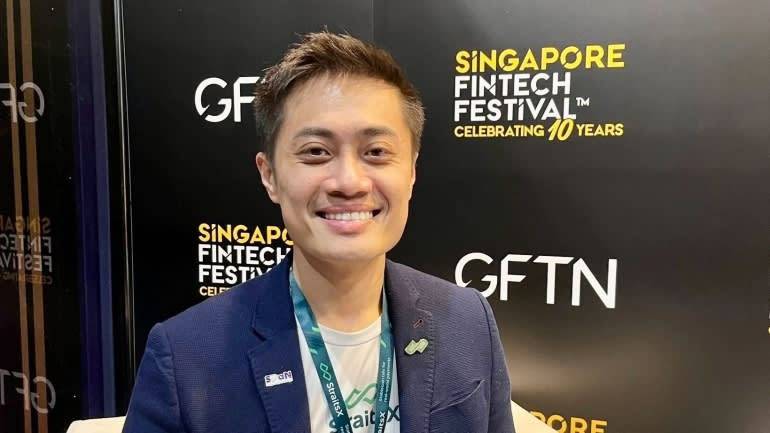 Liu Tianwei, CEO and co-founder of StraitsX, poses during an interview with Nikkei at the Singapore FinTech Festival. (Photo by Fumika Sato)
With the technology, users can use their e-wallets from their home country while traveling abroad. At the same time, cross-border payments and remittances benefit from reduced costs and shorter processing times, according to Liu.
"If you look at it in the past, where there's an overseas acquirer like us that facilitates an Alipay, WeChat Pay or any foreign wallet, typical fees that the merchants have to pay are around 1% to 1.5%," said Liu, adding that settlements would need two to three business days.
With stablecoin, "What it means is they (merchants) pay only 0.5% to 1%, which is like 50% better than what they are doing with the foreign domestic payment," he said. "And they get their settlement on the same day or on the next business day, which is a huge improvement."
Partnerships with apps like Grab and Alipay, which have large user bases, would make it easier to use stablecoins without downloading new apps, thereby driving broader customer adoption. On Nov. 18, StraitsX announced a new partnership with Grab, aimed at developing infrastructure to enable stablecoin payments at GrabPay-affiliated stores across Southeast Asia.
As digital assets become more common, Liu predicts that tokens of real-world assets (RWAs) such as bonds, stocks and mutual funds will increase.
"You're going to see a lot of RWA and financial products that will be denominated in local currency," he said. "They will drive the kind of use cases that will be interesting to a local that already has very strong payment rails."
Chia of the MAS said in his speech that "sound and robust regulation of stablecoins will be critical to underpin their stability," pointing out that regulations are taking shape rapidly across nations. "This is an important start."
In the U.S., the Genius Act stablecoin regulation bill was passed in July. The MAS has also "finalized the features of our stablecoin regulatory regime and will be preparing draft legislation," Chia revealed. "Under our regime, we have given importance to sound reserve backing and redemption reliability."
The other theme, the use of AI, was also a hot topic.
AI use by financial institutions is expanding from improving internal business processes to software development, customer service, market analysis, credit screening and fraud detection. In the future, autonomous AI agents are expected to be used for a series of lending operations and insurance claim processes, from credit screening to approval, according to the event participants.
"If I think about generative AI, that helped a lot of financial institutions to think about moving to this hyper personalized experience for customers," Mark Micallef, managing director of Southeast Asia at Google Cloud, said at the event. He said that many banks are "reimagining customer experience through the lens of that."
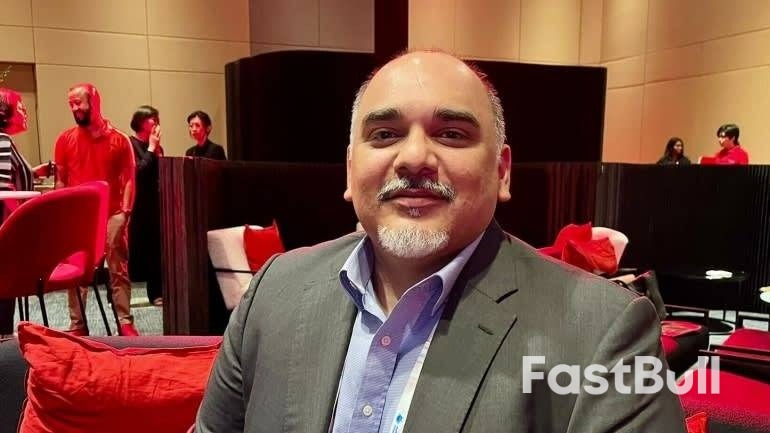 Shayan Hazir, HSBC's chief digital officer for Asia (excluding Hong Kong) and MENAT, poses during an interview. (Photo by Fumika Sato)
HSBC, in collaboration with Google Cloud, released the Digital Frontiers 2030 report at the event, which surveyed 2,436 consumers in six Southeast Asian countries: Indonesia, Malaysia, the Philippines, Singapore, Thailand and Vietnam. The personalized banking service most valued by users was "smart budgeting tools" (53%), followed by "investment advice" (48%) and "spending insights" (43%).
Shayan Hazir, HSBC's chief digital officer for Asia (excluding Hong Kong) and MENAT -- which stands for the Middle East, North Africa and Turkey -- emphasized the need to develop solutions that integrate AI with digital assets, quantum and other emerging technologies.
"Technology operates never in silos," he told Nikkei in an interview, saying that AI, digital assets and quantum together form the new tech stack and work in tandem. "(AI) agents will find it easier to execute on a blockchain, on digital assets, on programmable money, than they would for fiat currency. So I think convergence will happen across all aspects," he said.
Meanwhile, during the event, the MAS published the Guidelines for AI Risk Management, which require financial institutions to identify AI risks and manage the entire process from development to operation, based on the scale and risk of AI use.
"As AI adoption in the financial industry grows, governance and safety are essential," Chia said. "In fact, one of the key factors determining the pace of AI use, and the extent of AI autonomy permitted in work processes, is the robustness of guardrails and controls over the AI life cycle. FIs (financial institutions) have told us that they would like more regulatory clarity."
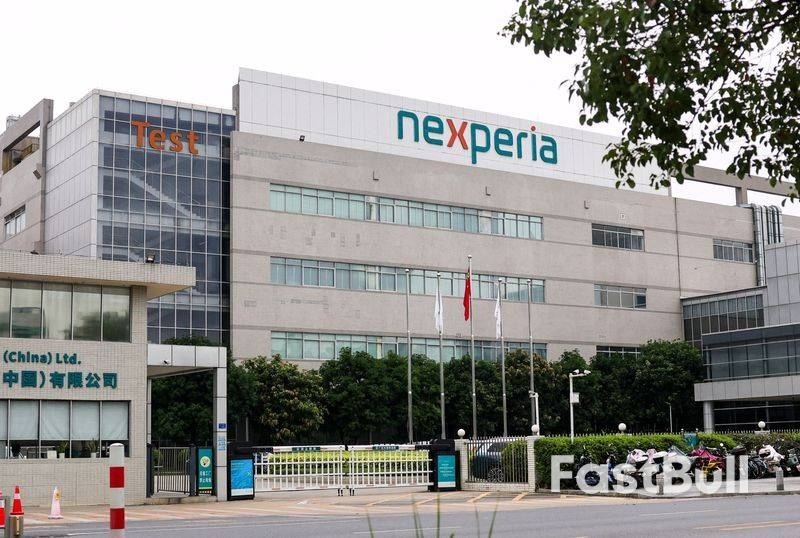
A factory next to a weed-ridden lot in China's industrial south has become a global choke point for automotive chips, upending a sector that just a few years ago swore it wouldn't be caught again by supply-chain disruptions.
Automakers vowed to strengthen supply lines after COVID-19 snarled semiconductor output in 2020 and a Japanese factory fire aggravated the shortage a year later. But the crisis engulfing Dutch chipmaker Nexperia's plant exposed a blind spot: The industry never envisioned low-tech chips would become a lever for China against the West.
"No one prepared for geopolitical disruption, and they're still not prepared," said Ambrose Conroy, CEO of U.S. firm Seraph Consulting, which advises automakers.
The Dutch government took control of Netherlands-based Nexperia in late September, citing concerns its technology could be passed on to Chinese owner Wingtech. Beijing retaliated by halting exports of finished Nexperia chips packaged at the plant in the Pearl River Delta.
The Netherlands last week reversed course from its decision to take control of Nexperia, signalling a potential breakthrough.
From its Dongguan factory, Nexperia ships semiconductors used in everything from car brakes to electric windows. They sell for fractions of a penny each, yet the shortage forced Nissan and Honda to cut production and drove German supplier Bosch to curtail factory working hours.
This account of how the industry scrambled to respond to the unforeseen crisis is based on interviews with a dozen people, including auto executives, suppliers and chip distributors, who described how just-in-time inventory practices and limited supply-chain diversification left automakers vulnerable to geopolitical shock.
The reporting shows how China's dominance reaches beyond cutting-edge technology and rare earths to mundane-yet-critical components and how Beijing wields that power to paralyse global production. Some details, including the size of Bosch's exposure and companies' struggles with requirements to trade in yuan, haven't previously been reported.
While the Dutch government took control of the headquarters in Nijmegen, the operations in China remained under the control of Nexperia's Chinese parent.
"The Dutch thought they had seized Nexperia, but they only took over an office building," said Li Xing, a professor of international relations at the Guangdong Institute for International Strategies, a think tank.
"What this shows is that, even in mid- and low-end segments, they depend on China. If China wants to get a grip on you, it still can. You have no way out."
In a statement, a spokesperson for Wingtech said Nexperia has become an industry leader since being acquired. "The current crisis shows that breaking up international companies harms supply chains and puts key industries at risk," the spokesperson said.
China's commerce ministry didn't respond to requests for comment.
A Nexperia spokesperson said the semiconductor industry's global complexity made it hard to foresee the impact of geopolitics.
Nexperia's chips were seen as so cheap and available that one European automaker didn't normally prepare alternative supplies, said one person at the carmaker. The chips are "very ordinary electronics with low prices," said this person, who like most of those interviewed spoke on condition of anonymity to discuss sensitive information.
The Nexperia episode shows that manufacturers' strategic vulnerability stretches beyond high-tech components, said Alfredo Montufar-Helu, a managing director at Ankura Consulting in Beijing.
Bosch didn't initially have sufficient alternatives ready, despite ordering 200 million euros ($231 million) worth of Nexperia products a year, according to a person with knowledge of the matter.
Bosch declined to comment.
Nexperia resumed sales to some domestic distributors in late October but required payment in yuan, instead of foreign currencies used previously. The currency change was an apparent bid by the Chinese business to operate more independently of Dutch headquarters, Reuters has reported. Ready-to-ship chips piled up at the Dongguan plant because it wasn't able to handle all the yuan transactions, according to two people briefed on the matter.
The situation has since eased, they said.
A Wingtech spokesperson said there hadn't been a chip backlog or systems issues with yuan payment, but didn't elaborate.
China allowed some Nexperia exports to resume this month after U.S. President Donald Trump met with China's Xi Jinping in Seoul. That came just in time for Bosch and suppliers Aumovio, ZF Group and Hella, which were days away from halting some production, according to a person briefed on the matter.
Bosch, Aumovio and ZF declined to comment. A Hella spokesperson said it has maintained supply-chain stability.
When Reuters visited the Dongguan plant on a recent weekday, some blinds were drawn and trucks came and went from a docking area. Dozens of scooters were parked outside.
Austria's Melecs and Apple supplier JABIL have managed to source chips from Nexperia. Both have used Chinese entities, allowing them to settle in yuan, the two people briefed on the matter said.
A Melecs spokesperson declined to comment. JABIL did not respond to multiple requests for comment.
The chip shortage showed automakers hadn't heeded lessons from the previous shock, said Julie Boote, autos analyst at Pelham Smithers Associates in London.
"You would expect them to have several months' worth of supply inventory for chips," she said. "That's what they said after the last crisis."
Nissan Chief Performance Officer Guillaume Cartier said replacing vulnerable supply chains takes time.
"I know what everyone will tell me, 'Ah, but you didn't learn from the past,'" he told Reuters last month. "Yeah, OK. But do you believe you change all your supply in three years?"
The Nexperia shortage forced Nissan to cut production of its top-selling Rogue SUV, Reuters has reported, and poses a continuing risk for this year.
Conroy, the consultant, advises clients to hold extra inventory of critical components in the region where they're needed. That's a costly change for an industry that relies on "just-in-time" inventory management to minimize costs.
Not all carmakers got whiplashed.
Toyota instructs suppliers to stockpile several months' supply of chips as part of the business continuity plan developed after the devastating 2011 Japan earthquake, Reuters has reported.
A Toyota spokesperson said there were risks that could impact vehicle production and they would continue to monitor developments closely.
Another supply speedbump involved how chips are integrated into vehicles. Nexperia semiconductors are widely used in components like power modules, which manage electricity, and are often soldered straight onto the components. That means they can't just be swapped out for another chip, said Nori Chiou, investment director at White Oak Capital Partners.
Any new vehicle component needs to undergo testing that can add months to the process of securing alternative parts, Chiou said. Nexperia's spokesperson said substitution can't be completed "overnight" because parts that seem identical can perform differently in vehicles.
Germany's Hella is considering alternative suppliers for Nexperia's chips but testing and approvals could take up to a year, longer than initially expected, according to one person in the auto-supply industry.
Hella's spokesperson said it was shifting to "already qualified second sources wherever possible" to maintain stable supplies.
Ankura Consulting's Montufar-Helu said preparing for chip choke points will not be easy — or cheap.
"Everyone is going to start talking once again about building resilience, about diversification," he said. "And then they're going to realise how expensive it is."
President Donald Trump's formal designation of Venezuela's Cartel de los Soles as a foreign terrorist organization will go into effect on Nov. 24, escalating tensions between the US and Venezuela.
The US government explicitly accuses the group, whose name translates to Cartel of the Suns, of being led by Venezuelan President Nicolás Maduro himself. The designation comes amid a massive US military buildup and intensified operations in the Caribbean and Pacific targeting alleged drug trafficking organizations.
The decision was published Sunday evening in a federal registry notice dated Nov. 24.
The USS Gerald R. Ford, the world's largest aircraft carrier, arrived in the region in November, sparking fears within the Maduro administration that the US may be preparing to strike targets inside Venezuela. In recent weeks, Washington has already taken direct actions, destroying vessels near Venezuela's coast suspected of drug trafficking.
As the standoff intensified, repercussions followed during the weekend, as several airlines canceled all flights to and from Venezuela in response to a US Federal Aviation Administration advisory urging operators to "exercise caution" due to the spiraling crisis.
Defense Secretary Pete Hegseth said that the FTO designation grants the US government "a whole bunch of new options" to confront narco-terrorist groups.
Cartel de los Soles now joins a list of designated foreign terrorist organizations that includes Islamist groups, as well as powerful drug syndicates like Mexican, Ecuadorian, and Colombian cartels, and Venezuela's notorious Tren de Aragua.
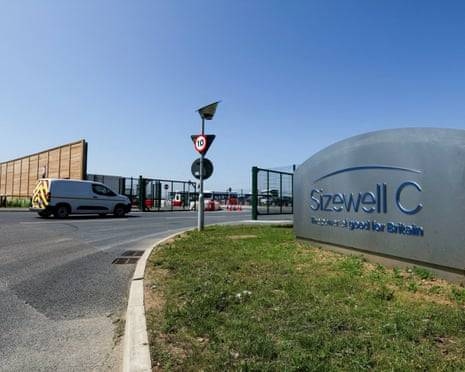
A government taskforce has finalised its plans to speed up and lower the cost of rolling out a new generation of nuclear reactors by streamlining UK regulation.
The nuclear regulatory taskforce was set up by the prime minister, Keir Starmer, in February after the government promised to rip up "archaic rules" and slash regulations to "get Britain building".
It published its interim report in August, which led a coalition of 25 civil society groups to warn of the dangers of cutting nuclear safety regulations. It said the proposals lacked "credibility and rigour".
The taskforce was led by John Fingleton, the former head of the Office of Fair Trading. He said of the final report: "Our solutions are radical, but necessary. By simplifying regulation, we can maintain or enhance safety standards while finally delivering nuclear capacity safely, quickly, and affordably."
The recommendations include restructuring the nuclear industry's regulatory bodies to create a single commission for nuclear regulation, and changing environmental and planning regimes "to enhance nature and deliver projects quicker".
Ed Miliband, the energy secretary, said the new rules would form a crucial part of delivering the changes needed to drive new nuclear "in a safe, affordable way".
The report was welcomed by Tom Greatrex, the chief executive of the Nuclear Industry Association. He said the report represented an "unprecedented opportunity to make nuclear regulation more coherent, transparent and efficient" that could make projects "faster and less expensive to deliver".
"Too often, costly and bureaucratic processes have stood in the way of our energy security, the fight against the climate crisis, and protecting the natural environment, to which nuclear is essential," he added.
Sam Richards, the chief executive of pro-nuclear campaign group Britain Remade, said it could mark "a watershed moment for cutting the cost of new nuclear in Britain".
"The findings of the taskforce lay bare the litany of regulations that make Britain the most expensive place in the world to build nuclear power stations," Richards said.
"At a time when Britain's electricity bills are among the world's highest, our regulatory system forced EDF to spend nearly £280,000 per fish protected. This is indefensible. These types of modifications have added years in construction and billions in costs; costs that ultimately get passed on to consumers in higher bills."
Fingleton added: "This is a once in a generation opportunity. The problems are systemic, rooted in unnecessary complexity, and a mindset that favours process over outcome."
Prime Minister Datuk Seri Anwar Ibrahim has lauded Kenya's strong commitment to poverty alleviation and affordable housing, describing it as "remarkable leadership".
Relating it to Malaysia's own approach in tackling hardcore poverty, Anwar said: "I am, like you, very, very passionate about poverty alleviation, housing for the poor and for the masses."
Speaking at a state banquet hosted by Kenya's President William Samoei Ruto on Sunday night, he said the East African nation's ambitious programme to build more than 150,000 housing units for low-income communities reflected an outstanding model of leadership.
Anwar, who is on a two-day official visit, said he was particularly inspired by Kenya's focus on using power and governance to uplift the poor, adding that such efforts were in line with the spirit of Jomo Kenyatta's struggle to champion the welfare of the masses.
Kenyatta was Kenya's first president and a key leader in the country's independence movement, serving from 1964 until his death in 1978.
Anwar also emphasised that Malaysia and Kenya have no reason not to elevate their bilateral cooperation, especially in trade and investment.
He said Malaysia is ready to share its expertise in the semiconductor and electrical and electronics sectors, while also learning from Kenya's rapid development and strong determination.
He said discussions between both countries would continue on Monday, covering trade, investment and broader economic cooperation during the leaders' bilateral meeting.
Anwar, who is also finance minister, is accompanied by Minister of Investment, Trade and Industry Tengku Datuk Seri Zafrul Aziz, Minister in the Prime Minister's Department (Federal Territories) Datuk Seri Dr Zaliha Mustafa, senior government officials and a business delegation.
Going clockwise, Kenya is bordered by South Sudan to the northwest, Ethiopia to the north, Somalia to the east, the Indian Ocean to the southeast, Tanzania to the southwest, and Lake Victoria and Uganda to the west.
In 2024, Kenya emerged as Malaysia's third-largest trading partner in Africa, with total trade reaching RM5.7 billion, an increase of 1.2% from RM5.51 billion in the previous year.
Anwar is scheduled to depart Nairobi for Malaysia later on Monday, concluding his three-nation tour of Africa.
728 RM B 7/F GEE LOK IND BLDG NO 34 HUNG TO RD KWUN TONG KLN HONG KONG


White Label
Data API
Web Plug-ins
Poster Maker
Affiliate Program
The risk of loss in trading financial instruments such as stocks, FX, commodities, futures, bonds, ETFs and crypto can be substantial. You may sustain a total loss of the funds that you deposit with your broker. Therefore, you should carefully consider whether such trading is suitable for you in light of your circumstances and financial resources.
No decision to invest should be made without thoroughly conducting due diligence by yourself or consulting with your financial advisors. Our web content might not suit you since we don't know your financial conditions and investment needs. Our financial information might have latency or contain inaccuracy, so you should be fully responsible for any of your trading and investment decisions. The company will not be responsible for your capital loss.
Without getting permission from the website, you are not allowed to copy the website's graphics, texts, or trademarks. Intellectual property rights in the content or data incorporated into this website belong to its providers and exchange merchants.
Not Logged In
Log in to access more features

FastBull Membership
Not yet
Purchase


Log In
Sign Up


