• Trade
  • Markets
  • Copy
  • Contests
  • News
  • 24/7
  • Calendar
  • Q&A
  • Chats
Trending
Screeners
SYMBOL
LAST
BID
ASK
HIGH
LOW
NET CHG.
%CHG.
SPREAD
SPX
S&P 500 Index
6870.39
6870.39
6870.39
6895.79
6858.28
+13.27
+ 0.19%
--
DJI
Dow Jones Industrial Average
47954.98
47954.98
47954.98
48133.54
47871.51
+104.05
+ 0.22%
--
IXIC
NASDAQ Composite Index
23578.12
23578.12
23578.12
23680.03
23506.00
+72.99
+ 0.31%
--
USDX
US Dollar Index
98.910
98.990
98.910
98.960
98.730
-0.040
-0.04%
--
EURUSD
Euro / US Dollar
1.16500
1.16507
1.16500
1.16717
1.16341
+0.00074
+ 0.06%
--
GBPUSD
Pound Sterling / US Dollar
1.33211
1.33218
1.33211
1.33462
1.33136
-0.00101
-0.08%
--
XAUUSD
Gold / US Dollar
4204.03
4204.46
4204.03
4218.85
4190.61
+6.12
+ 0.15%
--
WTI
Light Sweet Crude Oil
59.290
59.320
59.290
60.084
59.247
-0.519
-0.87%
--

Community Accounts

Signal Accounts
--
Profit Accounts
--
Loss Accounts
--
View More

Become a signal provider

Sell trading signals to earn additional income

View More

Guide to Copy Trading

Get started with ease and confidence

View More

Signal Accounts for Members

All Signal Accounts

Best Return
  • Best Return
  • Best P/L
  • Best MDD
Past 1W
  • Past 1W
  • Past 1M
  • Past 1Y

All Contests

  • All
  • Trump Updates
  • Recommend
  • Stocks
  • Cryptocurrencies
  • Central Banks
  • Featured News
Top News Only
Share

Ukraine President Zelenskiy: No Accord So Far On Eastern Ukraine In US Talks

Share

NATO: Ukrainian President Zelenskiy Will Meet NATO's Rutte And EU Commission Chief Von Der Leyen And Costa In Brussels On Monday

Share

China Finance Ministry: To Reopen 119 Billion Yuan 10-Year Bonds On Dec 12

Share

Sudan's Paramilitary RSF Say They Controlled Oil-Rich Area Of Heglig In Kordofan

Share

German Government Spokesperson: We See Russia As A Threat To Our Security

Share

Thai Army Chief Of Staff: Thailand Seeking To Cripple Cambodia's Military Capability

Share

German Government Spokesperson: We Reject Criticism Of Europe In New US National Security Strategy

Share

Ivory Coast 2025/26 Cocoa Arrivals Reached 803000 T By December 7 Versus 820000 T A Year Ago - Exporters' Estimate

Share

EU To Delay Proposals For Automotive Sector, Including Co2 Emissions, To Dec 16, Draft EU Commission Document Shows

Share

Kremlin: India Buys Energy Where It Is Profitable To And As Far As We Understand They Will Continue To Do That

Share

Turkey's Main Banking Index Up 2.5%

Share

Turkey's Main BIST-100 Index Up 1.9%

Share

Hungary's Preliminary November Budget Balance Huf -403 Billion

Share

Indian Rupee Down 0.1% At 90.07 Per USA Dollar As Of 3:30 P.M. Ist, Previous Close 89.98

Share

India's Nifty 50 Index Provisionally Ends 0.96% Lower

Share

[JPMorgan: US Stock Rally May Stagnate Following Fed Rate Cut] JPMorgan Strategists Say The Recent Rally In US Stocks May Stall As Investors Take Profits Following The Anticipated Fed Rate Cut. The Market Currently Predicts A 92% Probability Of The Fed Lowering Borrowing Costs On Wednesday. Expectations Of A Rate Cut Have Continued To Rise, Fueled By Positive Signals From Policymakers In Recent Weeks. "Investors May Be More Inclined To Lock In Gains At The End Of The Year Rather Than Increase Directional Exposure," Mislav Matejka's Team Wrote In A Report

Share

Russian Defence Ministry: Russian Forces Take Control Of Novodanylivka In Ukraine's Zaporizhzhia Region

Share

Russian Defence Ministry: Russian Forces Take Control Of Chervone In Ukraine's Donetsk Region

Share

French Finance Ministry: Government Started Process To Block Temporarily Shein Platform

Share

Finance Minister: Indonesia To Impose Coal Export Tax Of Up To 5% Next Year

TIME
ACT
FCST
PREV
France Industrial Output MoM (SA) (Oct)

A:--

F: --

P: --
France Trade Balance (SA) (Oct)

A:--

F: --

P: --
Euro Zone Employment YoY (SA) (Q3)

A:--

F: --

P: --
Canada Part-Time Employment (SA) (Nov)

A:--

F: --

P: --

Canada Unemployment Rate (SA) (Nov)

A:--

F: --

P: --

Canada Full-time Employment (SA) (Nov)

A:--

F: --

P: --

Canada Labor Force Participation Rate (SA) (Nov)

A:--

F: --

P: --

Canada Employment (SA) (Nov)

A:--

F: --

P: --

U.S. PCE Price Index MoM (Sept)

A:--

F: --

P: --

U.S. Personal Income MoM (Sept)

A:--

F: --

P: --

U.S. Core PCE Price Index MoM (Sept)

A:--

F: --

P: --

U.S. PCE Price Index YoY (SA) (Sept)

A:--

F: --

P: --

U.S. Core PCE Price Index YoY (Sept)

A:--

F: --

P: --

U.S. Personal Outlays MoM (SA) (Sept)

A:--

F: --

P: --
U.S. 5-10 Year-Ahead Inflation Expectations (Dec)

A:--

F: --

P: --

U.S. Real Personal Consumption Expenditures MoM (Sept)

A:--

F: --

P: --
U.S. Weekly Total Rig Count

A:--

F: --

P: --

U.S. Weekly Total Oil Rig Count

A:--

F: --

P: --

U.S. Consumer Credit (SA) (Oct)

A:--

F: --

P: --
China, Mainland Foreign Exchange Reserves (Nov)

A:--

F: --

P: --

Japan Trade Balance (Oct)

A:--

F: --

P: --

Japan Nominal GDP Revised QoQ (Q3)

A:--

F: --

P: --

China, Mainland Imports YoY (CNH) (Nov)

A:--

F: --

P: --

China, Mainland Exports (Nov)

A:--

F: --

P: --

China, Mainland Imports (CNH) (Nov)

A:--

F: --

P: --

China, Mainland Trade Balance (CNH) (Nov)

A:--

F: --

P: --

China, Mainland Exports YoY (USD) (Nov)

A:--

F: --

P: --

China, Mainland Imports YoY (USD) (Nov)

A:--

F: --

P: --

Germany Industrial Output MoM (SA) (Oct)

A:--

F: --

P: --
Euro Zone Sentix Investor Confidence Index (Dec)

A:--

F: --

P: --

Canada National Economic Confidence Index

--

F: --

P: --

U.K. BRC Like-For-Like Retail Sales YoY (Nov)

--

F: --

P: --

U.K. BRC Overall Retail Sales YoY (Nov)

--

F: --

P: --

Australia Overnight (Borrowing) Key Rate

--

F: --

P: --

RBA Rate Statement
RBA Press Conference
Germany Exports MoM (SA) (Oct)

--

F: --

P: --

U.S. NFIB Small Business Optimism Index (SA) (Nov)

--

F: --

P: --

Mexico 12-Month Inflation (CPI) (Nov)

--

F: --

P: --

Mexico Core CPI YoY (Nov)

--

F: --

P: --

Mexico PPI YoY (Nov)

--

F: --

P: --

U.S. Weekly Redbook Index YoY

--

F: --

P: --

U.S. JOLTS Job Openings (SA) (Oct)

--

F: --

P: --

China, Mainland M1 Money Supply YoY (Nov)

--

F: --

P: --

China, Mainland M0 Money Supply YoY (Nov)

--

F: --

P: --

China, Mainland M2 Money Supply YoY (Nov)

--

F: --

P: --

U.S. EIA Short-Term Crude Production Forecast For The Year (Dec)

--

F: --

P: --

U.S. EIA Natural Gas Production Forecast For The Next Year (Dec)

--

F: --

P: --

U.S. EIA Short-Term Crude Production Forecast For The Next Year (Dec)

--

F: --

P: --

EIA Monthly Short-Term Energy Outlook
U.S. API Weekly Gasoline Stocks

--

F: --

P: --

U.S. API Weekly Cushing Crude Oil Stocks

--

F: --

P: --

U.S. API Weekly Crude Oil Stocks

--

F: --

P: --

U.S. API Weekly Refined Oil Stocks

--

F: --

P: --

South Korea Unemployment Rate (SA) (Nov)

--

F: --

P: --

Japan Reuters Tankan Non-Manufacturers Index (Dec)

--

F: --

P: --

Japan Reuters Tankan Manufacturers Index (Dec)

--

F: --

P: --

Japan Domestic Enterprise Commodity Price Index MoM (Nov)

--

F: --

P: --

Japan Domestic Enterprise Commodity Price Index YoY (Nov)

--

F: --

P: --

China, Mainland PPI YoY (Nov)

--

F: --

P: --

Q&A with Experts
    • All
    • Chatrooms
    • Groups
    • Friends
    Connecting
    .
    .
    .
    Type here...
    Add Symbol or Code

      No matching data

      All
      Trump Updates
      Recommend
      Stocks
      Cryptocurrencies
      Central Banks
      Featured News
      • All
      • Russia-Ukraine Conflict
      • Middle East Flashpoint
      • All
      • Russia-Ukraine Conflict
      • Middle East Flashpoint
      Search
      Products

      Charts Free Forever

      Chats Q&A with Experts
      Screeners Economic Calendar Data Tools
      Membership Features
      Data Warehouse Market Trends Institutional Data Policy Rates Macro

      Market Trends

      Market Sentiment Order Book Forex Correlations

      Top Indicators

      Charts Free Forever
      Markets

      News

      News Analysis 24/7 Columns Education
      From Institutions From Analysts
      Topics Columnists

      Latest Views

      Latest Views

      Trending Topics

      Top Columnists

      Latest Update

      Signals

      Copy Rankings Latest Signals Become a signal provider AI Rating
      Contests
      Brokers

      Overview Brokers Assessment Rankings Regulators News Claims
      Broker listing Forex Brokers Comparison Tool Live Spread Comparison Scam
      Q&A Complaint Scam Alert Videos Tips to Detect Scam
      More

      Business
      Events
      Careers About Us Advertising Help Center

      White Label

      Data API

      Web Plug-ins

      Affiliate Program

      Awards Institution Evaluation IB Seminar Salon Event Exhibition
      Vietnam Thailand Singapore Dubai
      Fans Party Investment Sharing Session
      FastBull Summit BrokersView Expo
      Recent Searches
        Top Searches
          Markets
          News
          Analysis
          User
          24/7
          Economic Calendar
          Education
          Data
          • Names
          • Latest
          • Prev

          View All

          No data

          Scan to Download

          Faster Charts, Chat Faster!

          Download App
          English
          • English
          • Español
          • العربية
          • Bahasa Indonesia
          • Bahasa Melayu
          • Tiếng Việt
          • ภาษาไทย
          • Français
          • Italiano
          • Türkçe
          • Русский язык
          • 简中
          • 繁中
          Open Account
          Search
          Products
          Charts Free Forever
          Markets
          News
          Signals

          Copy Rankings Latest Signals Become a signal provider AI Rating
          Contests
          Brokers

          Overview Brokers Assessment Rankings Regulators News Claims
          Broker listing Forex Brokers Comparison Tool Live Spread Comparison Scam
          Q&A Complaint Scam Alert Videos Tips to Detect Scam
          More

          Business
          Events
          Careers About Us Advertising Help Center

          White Label

          Data API

          Web Plug-ins

          Affiliate Program

          Awards Institution Evaluation IB Seminar Salon Event Exhibition
          Vietnam Thailand Singapore Dubai
          Fans Party Investment Sharing Session
          FastBull Summit BrokersView Expo

          Is A Bitcoin Supercycle Imminent?

          Thomas

          Cryptocurrency

          Summary:

          Bitcoin Magazine Is a Bitcoin Supercycle Imminent? Bitcoin supercycle potential grows as metrics align with past bull runs. Is a parabolic rally next? This p...

          Bitcoin is surging in 2025, igniting speculation about a historic Bitcoin supercycle. After a volatile start to the year, renewed momentum, recovering sentiment, and bullish metrics have analysts asking: Are we on the cusp of a 2017 Bitcoin bull run repeat? This Bitcoin price analysis explores cycle comparisons, investor behavior, and long-term holder trends to assess the likelihood of an explosive phase in this cryptocurrency market cycle.

          How the 2025 Bitcoin Cycle Compares to Past Bull Runs

          The latest Bitcoin price surge has reset expectations. According to the BTC Growth Since Cycle Low chart, Bitcoin’s trajectory aligns closely with the 2016–2017 and 2020–2021 cycles, despite macro challenges and drawdowns.
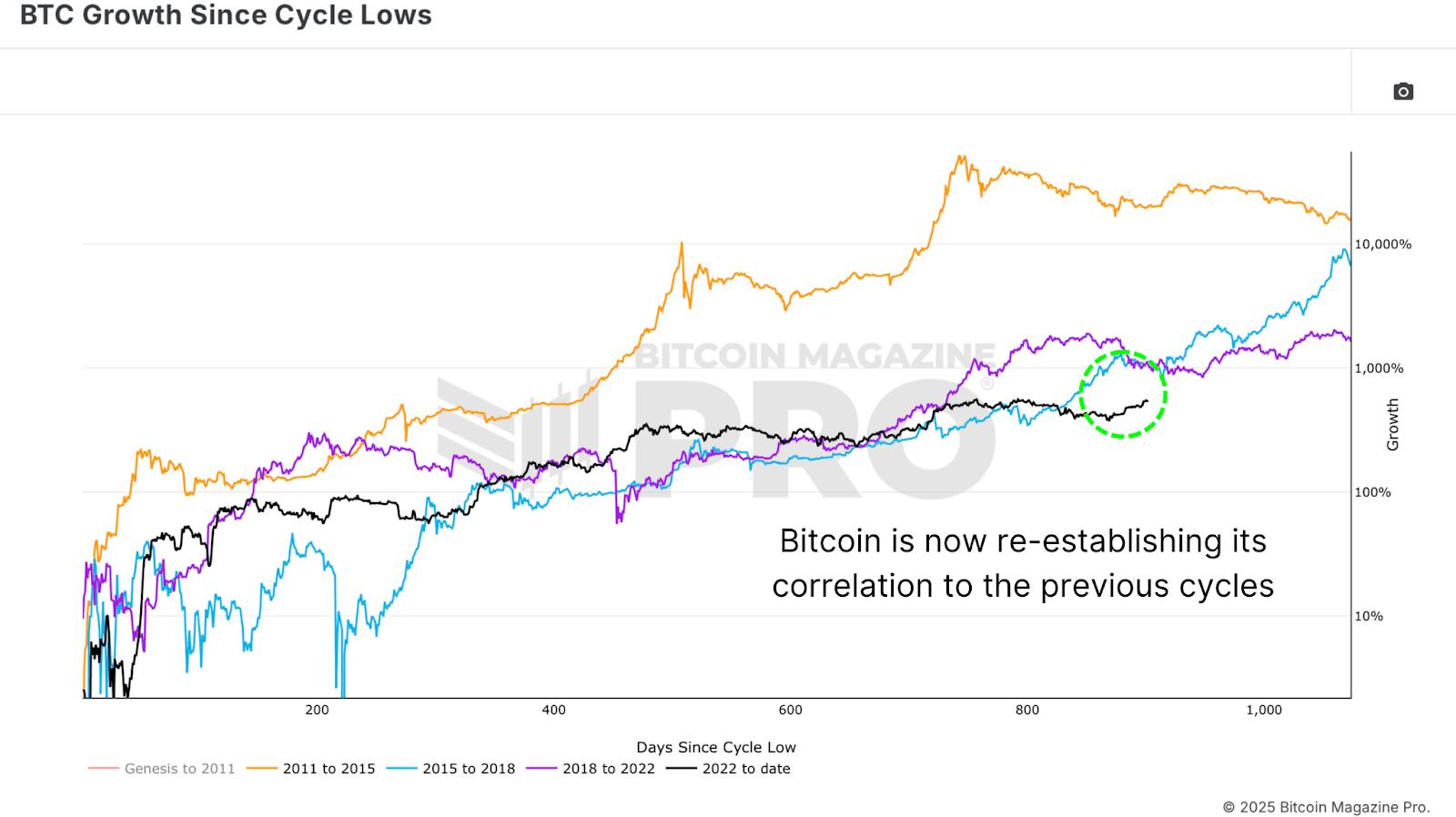
          Figure 1: Bitcoin’s 2025 bullish price action mirrors previous cycles.

          Historically, Bitcoin market cycles peak around 1,100 days from their lows. At approximately 900 days into the current cycle, there may be several hundred days left for potential explosive Bitcoin price growth. But do investor behaviors and market mechanics support a Bitcoin supercycle 2025?

          Bitcoin Investor Behavior: Echoes of the 2017 Bull Run

          To gauge cryptocurrency investor psychology, the 2-Year Rolling MVRV-Z Score provides critical insights. This advanced metric accounts for lost coins, illiquid supply, growing ETF and institutional holdings, and shifting long-term Bitcoin holder behaviors.

          Last year, when Bitcoin price hit ~$73,000, the MVRV-Z Score reached 3.39—a high but not unprecedented level. Retracements followed, mirroring mid-cycle consolidations seen in 2017. Notably, the 2017 cycle featured multiple high-score peaks before its final parabolic Bitcoin rally.
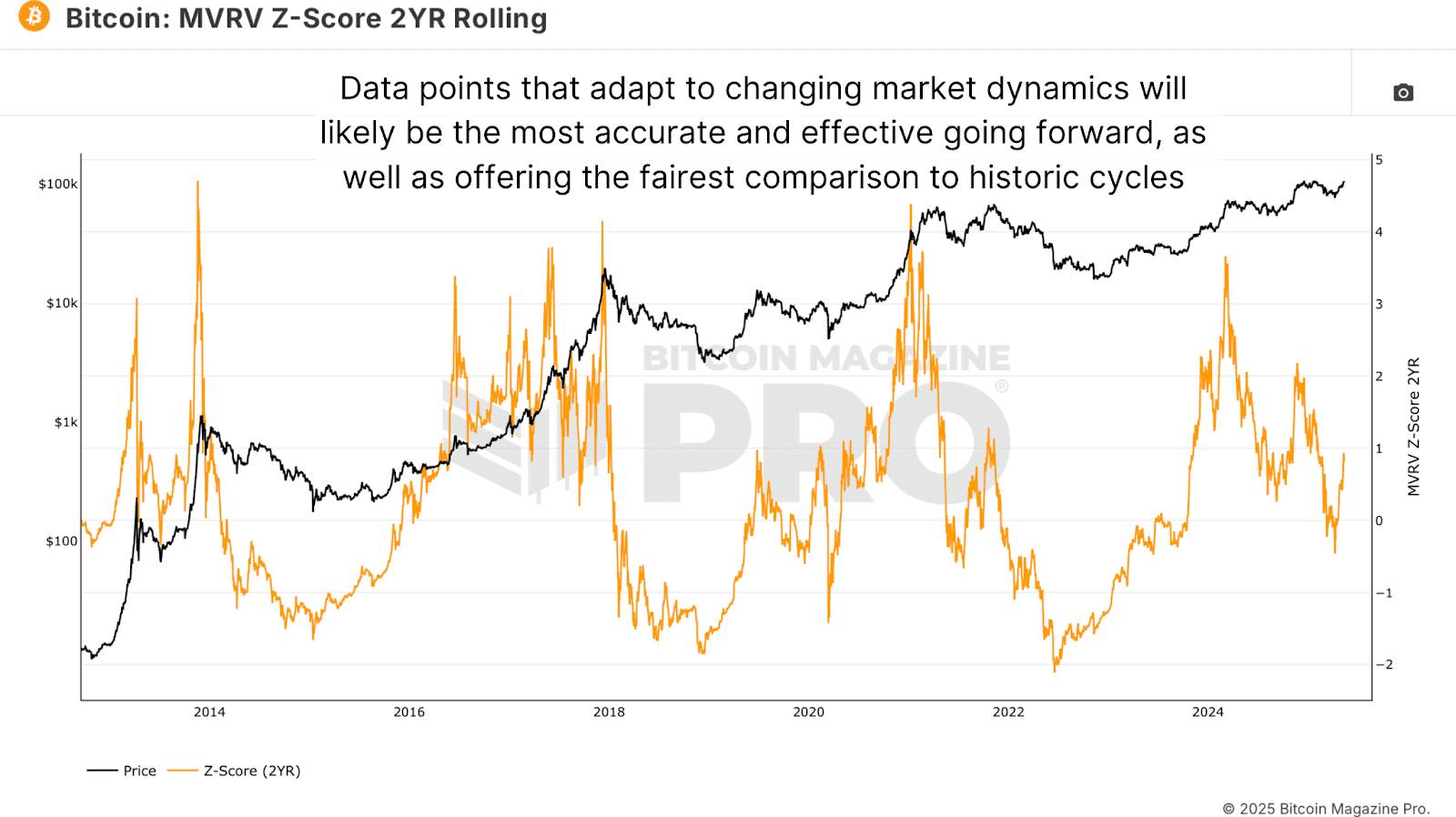
          Figure 2: MVRV-Z Score shows behavioral similarities to the 2017 Bitcoin bull run.

          Using the Bitcoin Magazine Pro API, a cross-cycle Bitcoin analysis reveals a striking 91.5% behavioral correlation with the 2013 double-peak cycle. With two major tops already—one pre-halving ($74k) and one post-halving ($100k+)—a third all-time high could mark Bitcoin’s first-ever triple-peak bull cycle, a potential hallmark of a Bitcoin supercycle.
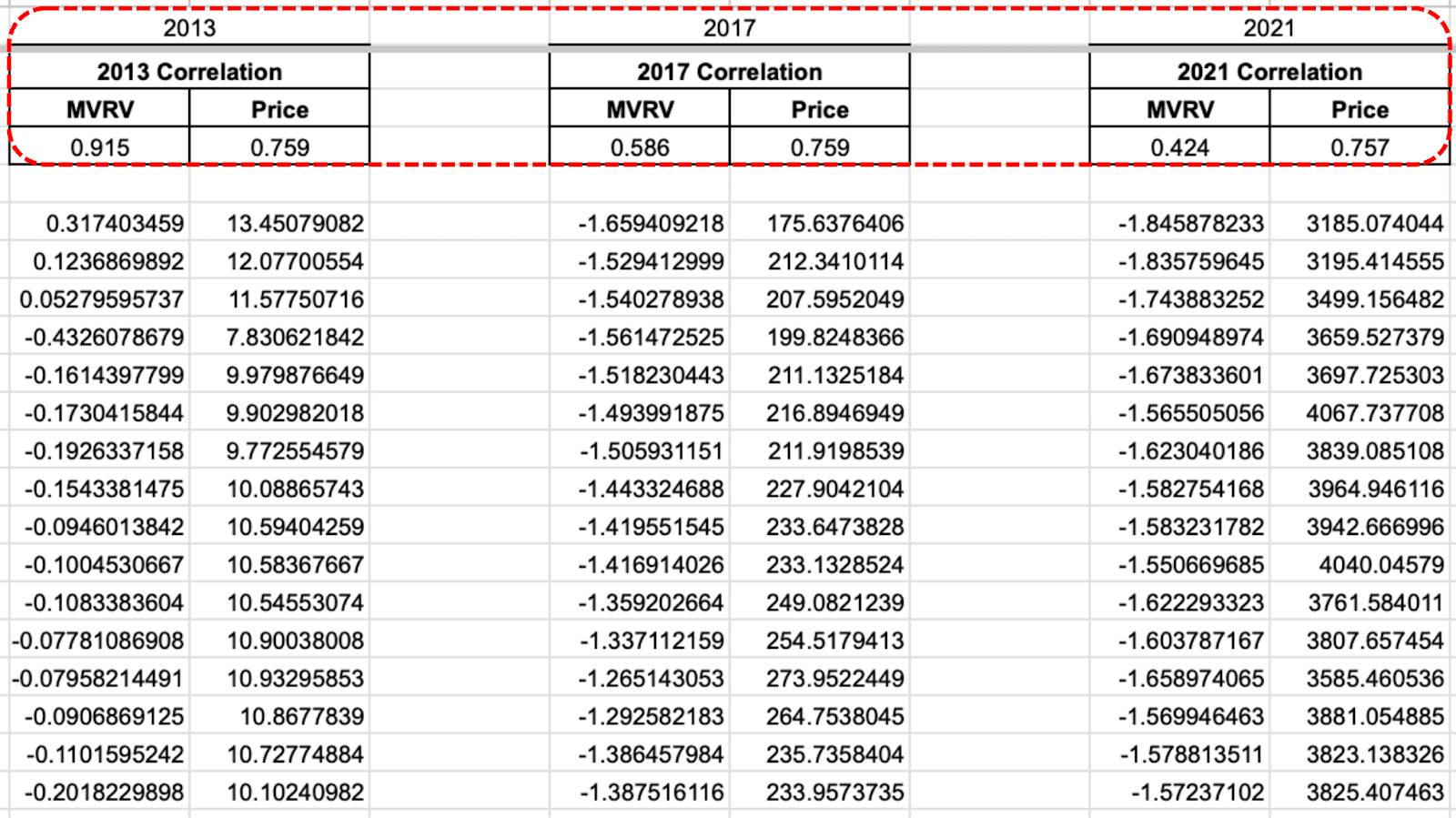
          Figure 3: Cross-cycle behavioral correlations using rolling MVRV-Z scores and price action.

          The 2017 cycle shows a 58.6% behavioral correlation, while 2021’s investor behavior is less similar, though its Bitcoin price action correlates at ~75%.

          Long-Term Bitcoin Holders Signal Strong Confidence

          The 1+ Year HODL Wave shows the percentage of BTC unmoved for a year or more continues to rise, even as prices climb—a rare trend in bull markets that reflects strong long-term holder conviction.
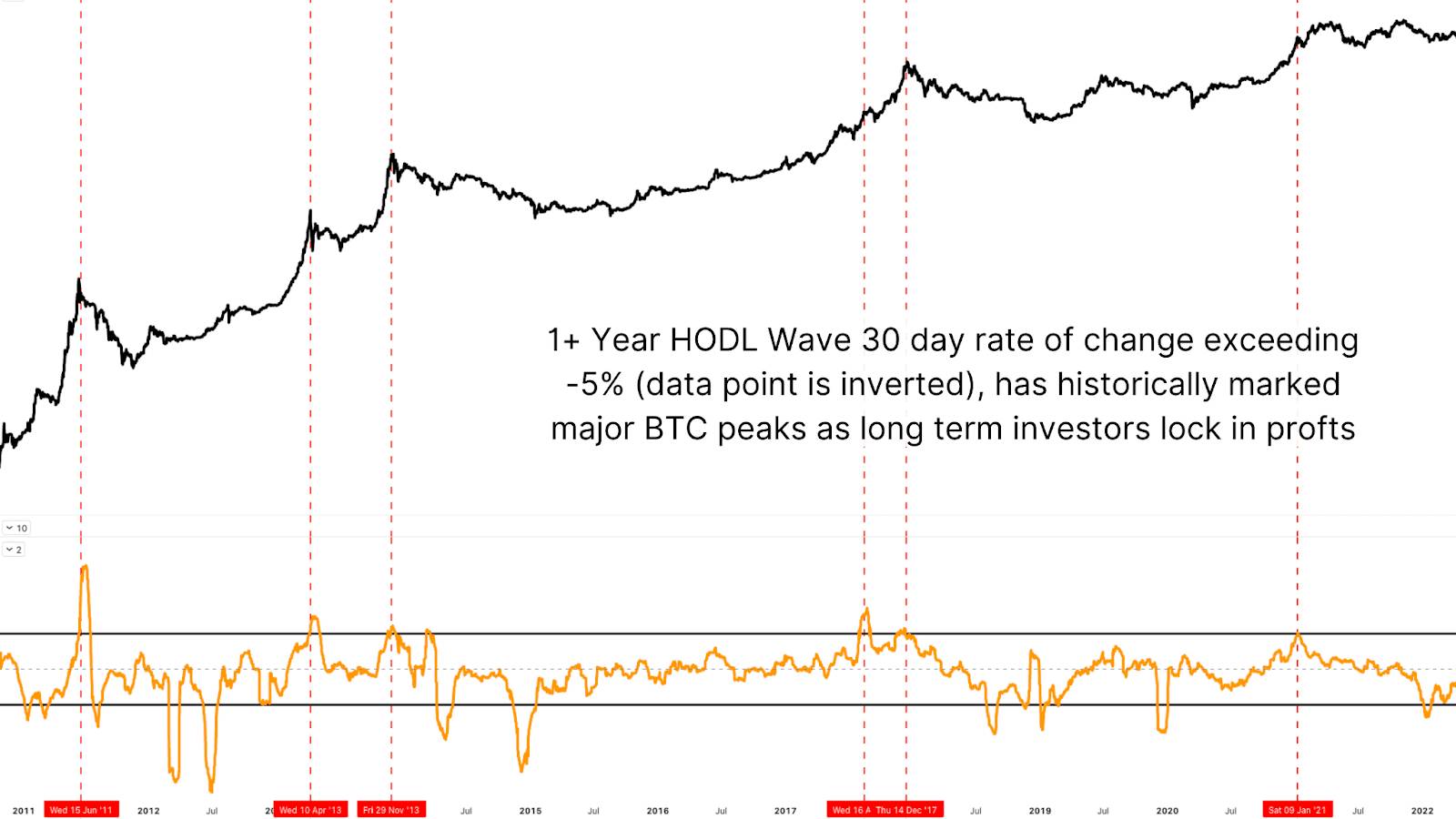
          Figure 4: The rate of change in the 1+ Year HODL Wave suggests confidence in future Bitcoin prices.

          Historically, sharp rises in the HODL wave’s rate of change signal major bottoms, while sharp declines mark tops. Currently, the metric is at a neutral inflection point, far from peak distribution, indicating long-term Bitcoin investors expect significantly higher prices.

          Bitcoin Supercycle or More Consolidation?

          Could Bitcoin replicate 2017’s euphoric parabolic rally? It’s possible, but this cycle may carve a unique path, blending historical patterns with modern cryptocurrency market dynamics.
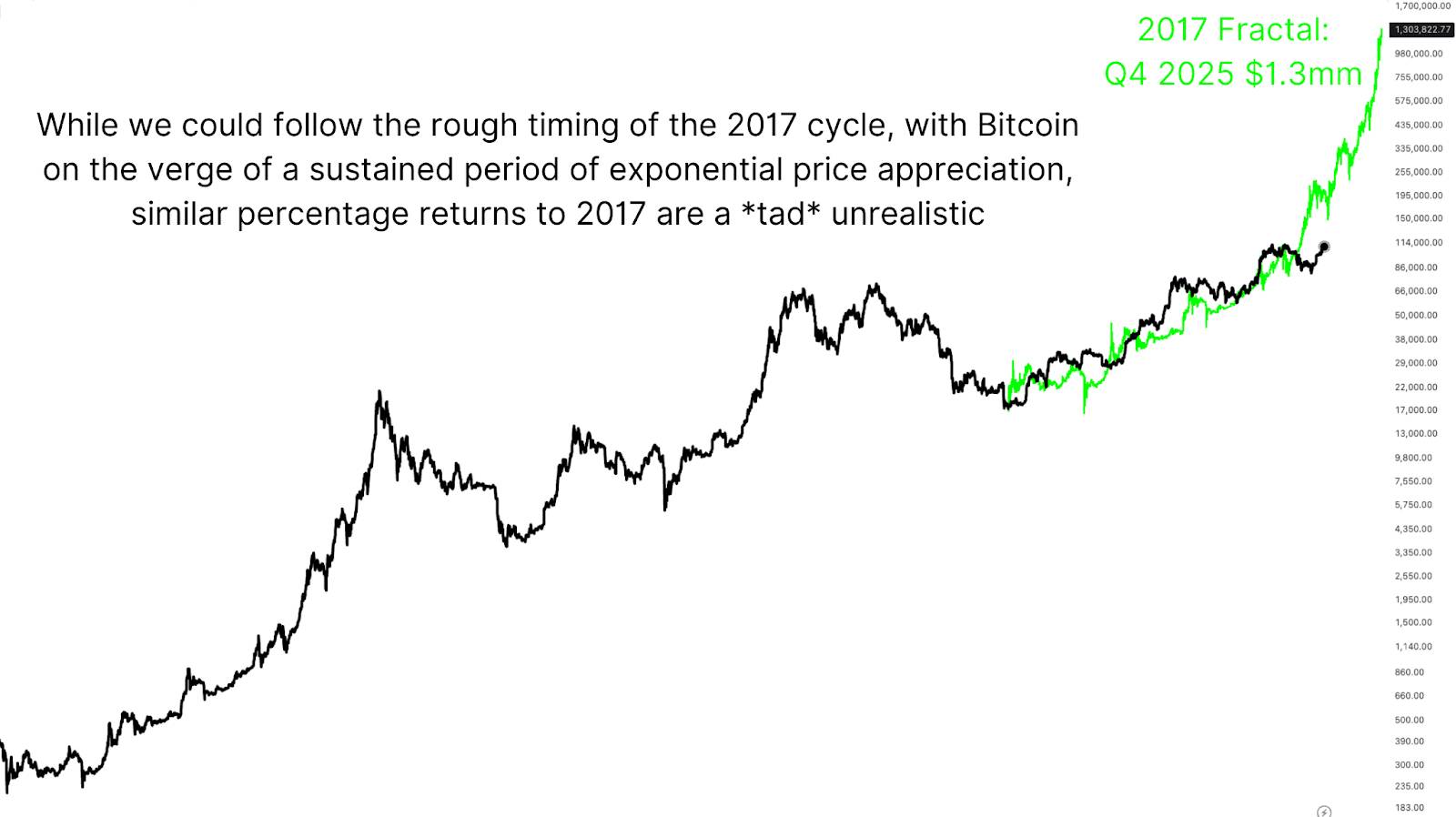
          Figure 5: A repeat of 2017’s exponential Bitcoin price growth may be ambitious.

          We may be approaching a third major peak within this cycle—a first in Bitcoin’s history. Whether this triggers a full Bitcoin supercycle melt-up remains uncertain, but key metrics suggest BTC is far from topping. Supply is tight, long-term holders remain steadfast, and demand is rising, driven by stablecoin growth, institutional Bitcoin investment, and ETF flows.

          Conclusion: Is a $150k Bitcoin Rally in Sight?

          Drawing direct parallels to 2017 or 2013 is tempting, but Bitcoin is no longer a fringe asset. As a maturing, institutionalized market, its behavior evolves, yet the potential for explosive Bitcoin growth persists.

          Historical Bitcoin cycle correlations remain high, investor behavior is healthy, and technical indicators signal room to run. With no major signs of capitulation, profit-taking, or macro exhaustion, the stage is set for sustained Bitcoin price expansion. Whether this delivers a $150k rally or beyond, the 2025 Bitcoin bull run could be one for the history books.

          Source: CoinGecko

          Risk Warnings and Disclaimers
          You understand and acknowledge that there is a high degree of risk involved in trading. Following any strategies or investment methods may lead to potential losses. The content on the site is provided by our contributors and analysts for information purposes only. You are solely responsible for determining whether any trading assets, securities, strategy, or any other product is suitable for investing based on your own investment objectives and financial situation.
          Add to Favorites
          Share

          Carbon Pricing Is Advancing Despite Trump

          Damon

          Economic

          Many fear that America’s withdrawal from the Paris climate agreement will undermine the international consensus to reduce greenhouse-gas emissions. Yet just in the last month, there have been two major steps toward widespread carbon pricing where it is needed most.

          To be sure, carbon pricing is not always the best policy, and not all sectors need to be subjected to schemes that require international consistency. If India electrifies its vehicle fleet more slowly than Europe, European industry suffers no competitive disadvantage. But the situation is different in long-distance shipping and aviation, and in heavy industries such as steel and chemicals, which account for around 25% of global emissions. Here, carbon pricing is key to cost-efficient decarbonization, and must be imposed on an internationally consistent basis.

          Fortunately, the technologies needed to achieve net-zero emissions by mid-century in each sector already exist. For example, methanol or ammonia can be used instead of fuel oil in ship engines, and hydrogen can replace coking coal in iron production. As matters stand, these technologies would impose a significant “green cost premium” at the intermediate product level, but with only a small impact on consumer prices. For example, even if shipping-freight rates doubled, the price of a pair of jeans made in Bangladesh and bought in London would rise less than 1%. If making zero-carbon steel costs 50% more per ton, that would add around 1% to the price of an automobile made from green steel.

          Carbon pricing is essential to overcome the green cost premium, and it could drive cost-efficient decarbonization at a trivial cost to consumers. But in each of these sectors, inherently international products (long-distance shipping) or the international trade in products (steel) make purely domestic approaches untenable. That is why the International Maritime Organization (IMO) agreed on April 11 to impose a carbon levy reaching $380 per metric ton on ship operators whose emissions intensity exceeds a defined threshold.

          The IMO agreement is not perfect. The organization aims to cut global shipping emissions by 20% by 2030, but the new pricing scheme would achieve only an 8% reduction. Still, concluding a new multilateral agreement despite a US boycott of the negotiations is a big step forward. China, India, and Brazil were among the 63 countries in favor.

          Carbon pricing could also drive decarbonization in heavy industry, but if it is imposed in only some countries, production and emissions will simply move to others. Though the ideal solution would be common carbon prices worldwide for these energy-intensive sectors, there is no international rule-making body like the IMO. The second-best solution, then, is for individual countries to impose domestic carbon prices combined with border carbon tariffs.

          The European Union is pursuing this approach. Not only will its emissions-trading scheme likely price carbon around $140 per metric ton by 2030; it is also removing the free allowances that heavy industry previously enjoyed and introducing a border carbon adjustment mechanism (CBAM) to subject imports to the same carbon pricing as domestic production. In principle, this creates strong incentives for decarbonization, while protecting domestic competitiveness.

          But the CBAM has been too weak, and heavy-industry decarbonization projects have been delayed. As a result, in March the European Commission committed to strengthening the regime in three respects: by ensuring a level playing field for exports as well as domestic sales; by widening the product coverage; and by improving the measurement of imports’ carbon intensity.

          The crucial question now is how developing countries will respond. In the past, several governments – in particular China and India – have criticized CBAMs as protectionist. But their arguments are unconvincing. Combining a domestic carbon price with a CBAM does not give domestic producers a competitive advantage. It simply maintains the competitive balance that existed before both were introduced. Moreover, it is the only way that developed countries can truly decarbonize their heavy industry, rather than hypocritically claiming to reduce emissions that have merely moved to other countries. The objective of the policy is not to raise tariff revenue, but to encourage other countries to impose carbon prices at home.

          These arguments are beginning to gain traction in developing countries. China’s own emissions-trading scheme has been extended to heavy-industry sectors, and prices are slowly increasing – though they still hover around $10-15 per metric ton. If carbon prices in China, India, and other developing countries gradually rose to European levels, and if CBAMs were imposed on those outside this low-carbon club, Chinese and Indian companies would also decarbonize. Even better, the impact on local consumer prices would be trivial, and governments would generate revenue.

          In this way, the EU’s approach could unleash a global wave of carbon pricing on heavy industry, matching the IMO’s progress in shipping. Ideally, policies would reflect internationally agreed standards for measuring the carbon intensity of production, and some of the revenues from CBAMs – and from the IMO’s carbon levies – would go toward supporting emissions reduction in lower-income countries. These ideas should be debated at COP30 in Brazil this November, regardless of whether an official US delegation attends.

          Source: Project Syndicate

          To stay updated on all economic events of today, please check out our Economic calendar
          Risk Warnings and Disclaimers
          You understand and acknowledge that there is a high degree of risk involved in trading. Following any strategies or investment methods may lead to potential losses. The content on the site is provided by our contributors and analysts for information purposes only. You are solely responsible for determining whether any trading assets, securities, strategy, or any other product is suitable for investing based on your own investment objectives and financial situation.
          Add to Favorites
          Share

          Wall Street Advances on Trade Hopes, Data Shows Investor Pessimism

          Manuel

          Stocks

          Economic

          Wall Street's main indexes rose on Friday for their fifth straight day, buoyed by the U.S.-China tariff truce earlier in the week even as economic survey data showed a deterioration in consumer sentiment.
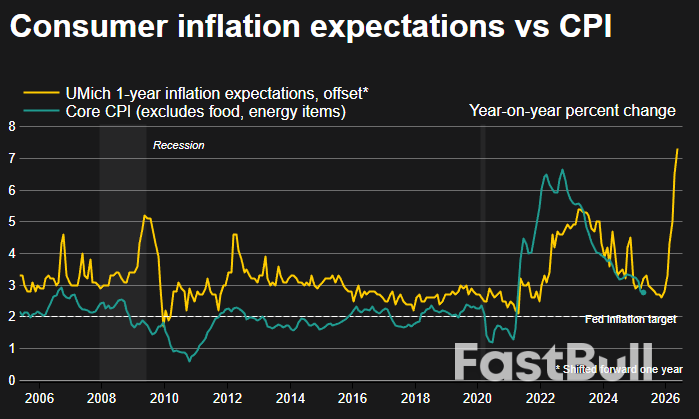
          The S&P 500 steadily added to gains from late morning, while investors took weak data in their stride. The University of Michigan Surveys of Consumers said its Consumer Sentiment Index slumped further in May while one-year inflation expectations surged to 7.3% from 6.5% last month.
          All three main indexes boasted weekly gains after starting out with a steep rally on Monday - after Washington and Beijing agreed to a 90-day pause in their escalating trade war. This was days after the U.S. President and British Prime Minister announced a limited bilateral trade agreement.
          Lindsey Bell, chief market strategist at Clearnomics, New York, said Friday's advance was a "carry on from the de-escalation in the trade conflict."
          With a solid economy combined with pessimistic investors, Bell expects more volatility ahead as tariff headlines come out, and added that "data could change in coming months."
          "I don't think we're out of the woods yet. We're going to have to take it on a day-by-day, week-by-week basis," she said.
          Paul Christopher, head of global investment strategy at Wells Fargo Investment Institute, said the market is "cautiously optimistic" about the softening stance on trade, but waiting to see where the U.S. eventually lands on tariffs.
          "We haven't even begun to see what happens when those tariffs really bite, when firms have to raise their prices to consumers and consumers see fewer goods and less variety on the shelves," said Christopher.
          Investors were also left waiting for clarity on U.S. tax policy as Trump's sweeping tax bill failed to clear a key procedural hurdle as hardline Republicans demanding deeper spending cuts blocked the measure in a rare political setback for the Republican president in Congress.
          The Dow Jones Industrial Average (.DJI) rose 331.99 points, or 0.78%, to 42,654.74, the S&P 500 (.SPX) gained 41.45 points, or 0.70%, to 5,958.38 and the Nasdaq Composite (.IXIC) gained 98.78 points, or 0.52%, to 19,211.10. For the week, the S&P 500 gained about 5.3% while the Nasdaq rose 7.2% and the Dow added 3.4%.Wall Street Advances on Trade Hopes, Data Shows Investor Pessimism_1
          Among the S&P 500's 11 major industry indexes, most advanced with energy (.SPNY) the sole loser, down 0.18%.
          The biggest gainer was healthcare (.SPXHC), which ended up 1.96% for the day after a volatile week.
          One of its biggest index point boosts was from UnitedHealth Group Inc (UNH.N), which regained ground - rising 6.4% on Friday and leading S&P 500 percentage gains - after eight straight days of steep losses.
          Investors were warily expecting strategic changes at the insurer after the Wall Street Journal reported it was under a criminal probe by the Justice Department.
          Among other individual stocks, Applied Materials (AMAT.O) shares slipped 5.3% after the provider of equipment for chip manufacturing missed estimates for second-quarter revenue.
          Charter Communications (CHTR.O) shares rose 1.8% after the cable company said it would buy privately held rival Cox Communications for $21.9 billion.
          Shares in Verizon Communications (VZ.N) rose 1.7% after the Federal Communications Commission said Friday it was approving its $20 billion purchase of fiber-optic internet provider Frontier Communications (FYBR.O) after the largest U.S. telecom company agreed to end its diversity, equity and inclusion programs.
          Advancing issues outnumbered decliners by a 2.72-to-1 ratio on the NYSE where there were 207 new highs and 34 new lows.
          On the Nasdaq, 2792 stocks rose and 1,607 fell as advancing issues outnumbered decliners by a 1.74-to-1 ratio.
          The S&P 500 posted 28 new 52-week highs and no new lows while the Nasdaq Composite recorded 62 new highs and 73 new lows.
          On U.S. exchanges, 17.61 billion shares changed hands on Friday compared with the 17.04 billion average from the last 20 sessions.

          Source: Reuters

          To stay updated on all economic events of today, please check out our Economic calendar
          Risk Warnings and Disclaimers
          You understand and acknowledge that there is a high degree of risk involved in trading. Following any strategies or investment methods may lead to potential losses. The content on the site is provided by our contributors and analysts for information purposes only. You are solely responsible for determining whether any trading assets, securities, strategy, or any other product is suitable for investing based on your own investment objectives and financial situation.
          Add to Favorites
          Share

          Basel Medical Group to add $1B in Bitcoin to treasury amid falling share prices

          Manuel

          Cryptocurrency

          Singapore-based Basel Medical Group (BMGL) announced plans to acquire $1 billion worth of Bitcoin (BTC) to strengthen its balance sheet and accelerate expansion across Asian markets.
          Basel also revealed that the proposed transaction is being negotiated with a consortium of institutional investors and high-net-worth individuals active in the crypto sector.
          Basel CEO Darren Chhoa said the $1 billion acquisition would give the firm “unprecedented capacity” to execute its Asia growth strategy.
          He added that capital infusion would create one of the strongest balance sheets among Asia-focused medical providers, enabling it to pursue mergers and acquisitions and enhance its financial resilience.
          The firm described the initiative as a “landmark transaction” that would represent one of the largest Bitcoin allocations by a healthcare group in the Asia-Pacific region.
          The announcement highlighted an intention to finalize the deal within the current quarter, subject to regulatory approval and standard closing conditions.

          Transaction structure and strategic objectives

          The proposed acquisition will occur through a share-swap arrangement with external investors, rather than a direct cash purchase of Bitcoin from reserves. Basel stated that this model offers enhanced capital efficiency while preserving liquidity for healthcare operations.
          The company’s management sees the diversification into Bitcoin as a hedge against currency volatility and inflation risks in emerging markets, particularly in regions where it seeks to expand.
          BMGL also sees the acquisition as a mechanism to attract strategic partnerships in the healthcare and digital asset sectors.
          Basel’s leadership said it would provide additional details upon the transaction’s completion and remain committed to regulatory compliance in all jurisdictions where it operates.

          Market reaction diverges from Bitcoin trend

          Despite Basel’s framing of the move as a financial strengthening initiative, the company’s stock price declined sharply following the announcement.
          Its shares fell to a low of $2.10 despite climbing 68% earlier in the day to a high of $3.41 from the daily opening price of $2.84. The volatility adds to the massive 57% drawdown observed on May 14.
          Despite the tumultuous price action for the day, the share price mounted a recovery before the trading day ended to close the day down 9.89% to $2.37 as of press time.
          The reaction contrasts with recent market behavior in other firms announcing Bitcoin strategies.
          On March 12, Rumble saw its stock price rise 5% after announcing a Bitcoin acquisition. Japanese firm Metaplanet gained nearly 20% in a single session on July 22 after disclosing a purchase of more than 20 BTC.
          HK Asia Holdings surged 92.98% on Feb. 13 after acquiring 1 BTC for approximately $96,150. Meanwhile, Brazilian fintech Méliuz gained 16.3% on March 6 after detailing its Bitcoin investment framework,
          While Basel’s initial market response diverged from those precedents, the company maintains that the transaction is part of a broader financial restructuring initiative rather than a speculative bet.

          Source: Cryptoslate

          Risk Warnings and Disclaimers
          You understand and acknowledge that there is a high degree of risk involved in trading. Following any strategies or investment methods may lead to potential losses. The content on the site is provided by our contributors and analysts for information purposes only. You are solely responsible for determining whether any trading assets, securities, strategy, or any other product is suitable for investing based on your own investment objectives and financial situation.
          Add to Favorites
          Share

          Instant View: With Moody's Downgrade, U.S. Loses Treasured Aaa Credit Rating

          Manuel

          Economic

          Political

          Moody's on Friday downgraded the credit rating of the United States by a notch to "Aa1" from "Aaa", citing rising debt and interest "that are significantly higher than similarly rated sovereigns".
          U.S. President Donald Trump's sweeping tax bill failed to clear a key procedural hurdle on Friday, as hardline Republicans demanding deeper spending cuts blocked the measure in a rare political setback for the Republican president in Congress.
          As written, the bill would add trillions of dollars to the federal government's $36.2 trillion in debt over the next decade.
          "Successive US administrations and Congress have failed to agree on measures to reverse the trend of large annual fiscal deficits and growing interest costs," Moody's said in a statement.
          U.S. Treasury securities fell and yields rose late Friday after the news.

          COMMENTS:

          STEPHEN MOORE, FORMER SENIOR ECONOMIC ADVISOR TO PRESIDENT DONALD TRUMP AND HERITAGE FOUNDATION ECONOMIST
          “Outrageous. Moody’s has now become a political arm of the Democratic Party. How is extending the Trump tax cut going to reduce the value of the bonds. If a US backed government bond isn’t triple A asset then what is?”
          CHRISTOPHER HODGE, CHIEF US ECONOMIST, NATIXIS, NEW YORK
          "Fiscal profligacy and irresponsible governance - including the perpetual debt ceiling standoffs - aren't new and there will be a day of fiscal reckoning when Congress will have to reign in debt. But the US borrowing capacity is still unrivaled and potential revenue generation is unmatched. No doubt the US has a spending fueled debt problem, but there is little chance - at least in the medium term - that the US won't make good on its obligations. At some point the market will impose discipline that will force cuts but demand at the moment is still ample for US debt."
          TOM DI GALOMA, MANAGING DIRECTOR OF RATES AND TRADING, MISCHLER FINANCIAL, PARK CITY, UTAH
          "Very surprising. This is big, markets were not expecting this at all. I think that is highlighting the problems on the budget talks in Congress, the bill failed to pass today in the House committee."
          SPENCER HAKIMIAN, CEO, TOLOU CAPITAL MANAGEMENT, NEW YORK
          “The downgrade of the US credit rating by Moody’s is a continuation of a long trend of fiscal irresponsibility that will eventually lead to higher borrowing costs for the public and private sector in the United States.”
          “I didn’t even blink, totally not a surprise for me.”
          BRIAN BETHUNE, ECONOMICS PROFESSOR, BOSTON COLLEGE, NEWTON MASSACHUSETTS
          “This sounds similar to what S&P did in 2011. That S&P (downgrade) announcement was not well received by markets, and led to a budget sequester agreement…which led to a reduction in the deficit. Then Trump cut taxes (in his first term) so we backed out of the compromise.”
          “The downgrade is a wake-up call for Republicans. They have got to come up with a credible budget agreement that puts the deficit on a downward trajectory.”
          JAY HATFIELD, CEO, INFRASTRUCTURE CAPITAL ADVISORS, NEW YORK
          "This news comes at a time when the markets are very vulnerable and so we are likely to see a reaction. I expect S&P to be down by nearly 100 points or so but expect it to stabilize later in the week. I suspect that all the tariff related announcement could have had also played a role in the downgrade, even if they don't say so."

          Source: Reuters

          To stay updated on all economic events of today, please check out our Economic calendar
          Risk Warnings and Disclaimers
          You understand and acknowledge that there is a high degree of risk involved in trading. Following any strategies or investment methods may lead to potential losses. The content on the site is provided by our contributors and analysts for information purposes only. You are solely responsible for determining whether any trading assets, securities, strategy, or any other product is suitable for investing based on your own investment objectives and financial situation.
          Add to Favorites
          Share

          US Federal Reserve Aims to Trim Staff by 10% in Coming Years

          Manuel

          Central Bank

          Political

          The Federal Reserve plans to shrink its workforce by about 10% over the coming years, bringing the U.S. central bank in line with President Donald Trump's broader efforts to streamline the federal government, according to a memo that Fed Chairman Jerome Powell sent to staff on Friday.
          In the internal memo, a copy of which was seen by Reuters, Powell said that he has directed Fed leadership to find "incremental" ways to trim operations, with a goal of shrinking the Fed's roughly 24,000 person headcount nationwide by about 10% over "the next couple of years." The memo was first reported by Bloomberg.
          As part of that effort, the Fed plans to offer a voluntary deferred resignation program to board staff in Washington who would be eligible to retire at the end of 2027. The memo made no mention of any involuntary cuts or layoffs.
          "Experience here and elsewhere shows that it is healthy for any organization to periodically take a fresh look at its staffing and resources," Powell wrote in the memo, noting the Fed previously made similar changes in the 1990s when President Bill Clinton sought to reduce the size of the federal government.
          "I believe it is time to do it again, in that same conscientious and deliberate spirit," Powell added.
          In the memo, Powell did not provide many details on how the Fed may revamp efforts, but emphasized any changes would prioritize the Fed's mandates and statutory obligations, and ensure that its work remains "high quality, nonpolitical and mission-focused."
          The new Fed initiative comes as Trump has launched an aggressive effort to downsize and reshape the U.S. government via billionaire adviser Elon Musk's Department of Government Efficiency, or DOGE.
          While the Fed does not have its budget set by Congress and does not report directly to the White House, Powell said the central bank must be a "careful and responsible steward of public resources." Powell gave a nod to the broader Trump-led effort by noting that the Fed often pursues cuts of its own "when there have been government-wide efforts to improve efficiency, like in the 1990s and now."

          Source: Reuters

          Risk Warnings and Disclaimers
          You understand and acknowledge that there is a high degree of risk involved in trading. Following any strategies or investment methods may lead to potential losses. The content on the site is provided by our contributors and analysts for information purposes only. You are solely responsible for determining whether any trading assets, securities, strategy, or any other product is suitable for investing based on your own investment objectives and financial situation.
          Add to Favorites
          Share

          Republicans Reject Trump tax-cut Bill After President Calls for Unity

          Manuel

          Economic

          Political

          U.S. President Donald Trump's sweeping tax bill failed to clear a key procedural hurdle on Friday, as hardline Republicans demanding deeper spending cuts blocked the measure in a rare political setback for the Republican president in Congress.
          The vote in the House Budget Committee came despite Trump's call for Republicans to "UNITE behind" the legislation. "We don't need 'GRANDSTANDERS' in the Republican Party. STOP TALKING, AND GET IT DONE!" he said in a social media post.
          Five of 21 Republicans on the panel voted to block the measure, saying they would continue to withhold support unless Speaker Mike Johnson agreed to further cuts to the Medicaid healthcare program for lower-income Americans and the full repeal of green energy tax cuts implemented by Democrats.
          The budget committee later said that it would reconvene in a rare Sunday night 10 p.m. EDT (0200 GMT Monday) session to reconsider the legislation.
          As written, the bill would add trillions of dollars to the federal government's $36.2 trillion in debt over the next decade.
          "This isn't a grandstand," Representative Ralph Norman, one of the hardline conservatives who have spoken publicly about their opposition to the bill in recent days.
          "We'll compromise somewhere, but just not giving the farm," the South Carolina Republican told reporters.
          The vote is likely a temporary setback for the measure in a Congress that is controlled by Trump's Republicans and so far has not rejected any of his legislative requests.
          Republicans are divided between hardliners who view the package as their best chance to cut spending and more moderate Republicans from competitive districts, who have warned that deeper spending cuts to social safety net programs could jeopardize the 220-213 seat House Republican majority in the 2026 midterm elections.
          House Budget Committee Chairman Jodey Arrington stressed the legislation's importance to voters who elected Trump to the White House and gave the party full control of Congress last November.
          "They want common sense policies. And they want from all of us a commitment to putting America and Americans first. Let's give the people what they voted for," the Texas Republican said.

          'WRITING CHECKS WE CANNOT CASH'

          Republican Representatives Norman, Chip Roy, Andrew Clyde, Josh Brecheen and Lloyd Smucker joined all 16 Democrats on the committee in voting against the measure.
          "We are writing checks we cannot cash and our children are going to pay the price. So, I am a 'no' on this bill unless serious reforms are made," Roy, of Texas, told the committee.
          The lawmakers said they hoped to reach a deal with Johnson to amend the bill over the weekend.
          Roy, Norman, Clyde and Brecheen are members of the ultraconservative House Freedom Caucus, which later said in a social media post: "We are not going anywhere and we will continue to work through the weekend."
          Smucker said his "no" vote, changed from an initial "yes," was a parliamentary maneuver meant to ensure the measure can be taken up again once Johnson has brokered an agreement. Smucker held out hope for another vote on Monday.
          The legislation would extend tax cuts passed during Trump's first term. Congress' bipartisan Joint Tax Committee estimates the tax cuts would cost $3.72 trillion over a decade. Trump has highlighted measures including lifting taxes on tips and overtime that Republicans say would boost working-class Americans, while critics say the bill will offer more benefits to the wealthy.
          Democrats condemned the legislation as a vehicle for giving billionaires tax cuts, while citing a projection from nonpartisan congressional researchers that proposed spending cuts to Medicaid and federally subsidized private health insurance available through the Affordable Care Act could lead to 8.6 million Americans losing health coverage.
          "No other previous bill, no other previous law, no other previous event caused so many millions of Americans to lose their healthcare. Not even the Great Depression," said Representative Brendan Boyle, the committee's top Democrat.
          The Republicans are split between three factions: moderates from Democratic-led states who want to raise a federal deduction for state and local taxes; hardliners demanding that a bigger SALT deduction be offset by deeper cuts to Medicaid and the full repeal of green energy tax credits; and other moderates determined to minimize Medicaid cuts.
          The proposed legislation would impose work requirements on Medicaid beginning in 2029. Hardliners want those to begin immediately and have called for a sharp reduction in federal contributions to Medicaid benefits available to working-class people through the Affordable Care Act - an option vehemently opposed by Republican moderates.

          Source: Reuters

          To stay updated on all economic events of today, please check out our Economic calendar
          Risk Warnings and Disclaimers
          You understand and acknowledge that there is a high degree of risk involved in trading. Following any strategies or investment methods may lead to potential losses. The content on the site is provided by our contributors and analysts for information purposes only. You are solely responsible for determining whether any trading assets, securities, strategy, or any other product is suitable for investing based on your own investment objectives and financial situation.
          Add to Favorites
          Share
          FastBull
          Copyright © 2025 FastBull Ltd

          728 RM B 7/F GEE LOK IND BLDG NO 34 HUNG TO RD KWUN TONG KLN HONG KONG

          TelegramInstagramTwitterfacebooklinkedin
          App Store Google Play Google Play
          Products
          Charts

          Chats

          Q&A with Experts
          Screeners
          Economic Calendar
          Data
          Tools
          Membership
          Features
          Function
          Markets
          Copy Trading
          Latest Signals
          Contests
          News
          Analysis
          24/7
          Columns
          Education
          Company
          Careers
          About Us
          Contact Us
          Advertising
          Help Center
          Feedback
          User Agreement
          Privacy Policy
          Business

          White Label

          Data API

          Web Plug-ins

          Poster Maker

          Affiliate Program

          Risk Disclosure

          The risk of loss in trading financial instruments such as stocks, FX, commodities, futures, bonds, ETFs and crypto can be substantial. You may sustain a total loss of the funds that you deposit with your broker. Therefore, you should carefully consider whether such trading is suitable for you in light of your circumstances and financial resources.

          No decision to invest should be made without thoroughly conducting due diligence by yourself or consulting with your financial advisors. Our web content might not suit you since we don't know your financial conditions and investment needs. Our financial information might have latency or contain inaccuracy, so you should be fully responsible for any of your trading and investment decisions. The company will not be responsible for your capital loss.

          Without getting permission from the website, you are not allowed to copy the website's graphics, texts, or trademarks. Intellectual property rights in the content or data incorporated into this website belong to its providers and exchange merchants.

          Not Logged In

          Log in to access more features

          FastBull Membership

          Not yet

          Purchase

          Become a signal provider
          Help Center
          Customer Service
          Dark Mode
          Price Up/Down Colors

          Log In

          Sign Up

          Position
          Layout
          Fullscreen
          Default to Chart
          The chart page opens by default when you visit fastbull.com