• Trade
  • Markets
  • Copy
  • Contests
  • News
  • 24/7
  • Calendar
  • Q&A
  • Chats
Trending
Screeners
SYMBOL
LAST
BID
ASK
HIGH
LOW
NET CHG.
%CHG.
SPREAD
SPX
S&P 500 Index
6836.37
6836.37
6836.37
6878.28
6827.18
-34.03
-0.50%
--
DJI
Dow Jones Industrial Average
47678.83
47678.83
47678.83
47971.51
47611.93
-276.15
-0.58%
--
IXIC
NASDAQ Composite Index
23504.15
23504.15
23504.15
23698.93
23455.05
-73.97
-0.31%
--
USDX
US Dollar Index
99.020
99.100
99.020
99.160
98.730
+0.070
+ 0.07%
--
EURUSD
Euro / US Dollar
1.16391
1.16398
1.16391
1.16717
1.16162
-0.00035
-0.03%
--
GBPUSD
Pound Sterling / US Dollar
1.33262
1.33272
1.33262
1.33462
1.33053
-0.00050
-0.04%
--
XAUUSD
Gold / US Dollar
4192.74
4193.18
4192.74
4218.85
4175.92
-5.17
-0.12%
--
WTI
Light Sweet Crude Oil
58.632
58.662
58.632
60.084
58.495
-1.177
-1.97%
--

Community Accounts

Signal Accounts
--
Profit Accounts
--
Loss Accounts
--
View More

Become a signal provider

Sell trading signals to earn additional income

View More

Guide to Copy Trading

Get started with ease and confidence

View More

Signal Accounts for Members

All Signal Accounts

Best Return
  • Best Return
  • Best P/L
  • Best MDD
Past 1W
  • Past 1W
  • Past 1M
  • Past 1Y

All Contests

  • All
  • Trump Updates
  • Recommend
  • Stocks
  • Cryptocurrencies
  • Central Banks
  • Featured News
Top News Only
Share

President Trump Is Committed To The Continued Cessation Of Violence And Expects The Governments Of Cambodia And Thailand To Fully Honor Their Commitments To End This Conflict - Senior White House Official

Share

[Water Overflows From Spent Fuel Pool At Japanese Nuclear Facility] According To Japan's Nuclear Waste Management Company, Following A Strong Earthquake Off The Coast Of Aomori Prefecture Late On December 8th, Workers At The Nuclear Waste Treatment Plant In Rokkasho Village, Aomori Prefecture, Discovered "at Least 100 Liters Of Water" On The Ground Around The Spent Fuel Pool During An Inspection. Analysis Suggests This Water "may Have Overflowed Due To The Earthquake's Shaking." However, It Is Reported That The Overflowed Water "remains Inside The Building And Has Not Affected The External Environment."

Share

Trump Says Netflix, Paramount Are Not His Friends As Warner Bros Fight Heats Up

Share

On Monday (December 8), The ICE Dollar Index Rose 0.11% To 99.102 In Late New York Trading, Trading Between 98.794 And 99.227, Following A Significant Rally After The US Stock Market Opened. The Bloomberg Dollar Index Rose 0.12% To 1213.90, Trading Between 1210.34 And 1214.88

Share

Trump: Has Not Spoken To Kushner About Paramount Bid

Share

US President Trump: I Don’t Know Much About Paramount’s Hostile Takeover Bid For Warner Bros. Discovery

Share

Trump: I Want To Do What's Right

Share

Trump On Bids For Warner Bros: I'd Have To See Netflix, Paramount Percentages Of Market

Share

Trump On Vaccines: We Are Looking At A Lot Of Things

Share

Trump: EU Fine On X A “Nasty One”

Share

Trump: I Don't Want To Pay Insurance Companies, They Are Owned By Democrats

Share

Trump: On Healthcare, I Want The Money To Be Paid To The People

Share

US Treasury Secretary Bessenter: We Are Still Working Towards A Trade Agreement With India

Share

US Natural Gas Futures Drop 7% On Less Cold Forecasts, Near-Record Output

Share

[Trump: The US Will Not Experience Deflation] US President Trump Believes That US Inflation Will Decline Slightly Further, But There Will Be No Deflation

Share

Trump: We Will End Up Putting Severe Tariffs On Fertilizer From Canada If We Have To

Share

Bessent: We Are Still Working On India Trade Deal

Share

Brent Crude Futures Settle At $62.49/Bbl, Down $1.26, 1.98 Percent

Share

Trump: Farming Equipment Has Gotten Too Expensive

Share

Trump: We Will Take Off A Lot Of Environment Rules That Affect Tractor Companies

TIME
ACT
FCST
PREV
France Trade Balance (SA) (Oct)

A:--

F: --

P: --
Euro Zone Employment YoY (SA) (Q3)

A:--

F: --

P: --
Canada Part-Time Employment (SA) (Nov)

A:--

F: --

P: --

Canada Unemployment Rate (SA) (Nov)

A:--

F: --

P: --

Canada Full-time Employment (SA) (Nov)

A:--

F: --

P: --

Canada Labor Force Participation Rate (SA) (Nov)

A:--

F: --

P: --

Canada Employment (SA) (Nov)

A:--

F: --

P: --

U.S. PCE Price Index MoM (Sept)

A:--

F: --

P: --

U.S. Personal Income MoM (Sept)

A:--

F: --

P: --

U.S. Core PCE Price Index MoM (Sept)

A:--

F: --

P: --

U.S. PCE Price Index YoY (SA) (Sept)

A:--

F: --

P: --

U.S. Core PCE Price Index YoY (Sept)

A:--

F: --

P: --

U.S. Personal Outlays MoM (SA) (Sept)

A:--

F: --

P: --
U.S. 5-10 Year-Ahead Inflation Expectations (Dec)

A:--

F: --

P: --

U.S. Real Personal Consumption Expenditures MoM (Sept)

A:--

F: --

P: --
U.S. Weekly Total Rig Count

A:--

F: --

P: --

U.S. Weekly Total Oil Rig Count

A:--

F: --

P: --

U.S. Consumer Credit (SA) (Oct)

A:--

F: --

P: --
China, Mainland Foreign Exchange Reserves (Nov)

A:--

F: --

P: --

Japan Trade Balance (Oct)

A:--

F: --

P: --

Japan Nominal GDP Revised QoQ (Q3)

A:--

F: --

P: --

China, Mainland Imports YoY (CNH) (Nov)

A:--

F: --

P: --

China, Mainland Exports (Nov)

A:--

F: --

P: --

China, Mainland Imports (CNH) (Nov)

A:--

F: --

P: --

China, Mainland Trade Balance (CNH) (Nov)

A:--

F: --

P: --

China, Mainland Exports YoY (USD) (Nov)

A:--

F: --

P: --

China, Mainland Imports YoY (USD) (Nov)

A:--

F: --

P: --

Germany Industrial Output MoM (SA) (Oct)

A:--

F: --

P: --
Euro Zone Sentix Investor Confidence Index (Dec)

A:--

F: --

P: --

Canada National Economic Confidence Index

A:--

F: --

P: --

U.K. BRC Like-For-Like Retail Sales YoY (Nov)

--

F: --

P: --

U.K. BRC Overall Retail Sales YoY (Nov)

--

F: --

P: --

Australia Overnight (Borrowing) Key Rate

--

F: --

P: --

RBA Rate Statement
RBA Press Conference
Germany Exports MoM (SA) (Oct)

--

F: --

P: --

U.S. NFIB Small Business Optimism Index (SA) (Nov)

--

F: --

P: --

Mexico 12-Month Inflation (CPI) (Nov)

--

F: --

P: --

Mexico Core CPI YoY (Nov)

--

F: --

P: --

Mexico PPI YoY (Nov)

--

F: --

P: --

U.S. Weekly Redbook Index YoY

--

F: --

P: --

U.S. JOLTS Job Openings (SA) (Oct)

--

F: --

P: --

China, Mainland M1 Money Supply YoY (Nov)

--

F: --

P: --

China, Mainland M0 Money Supply YoY (Nov)

--

F: --

P: --

China, Mainland M2 Money Supply YoY (Nov)

--

F: --

P: --

U.S. EIA Short-Term Crude Production Forecast For The Year (Dec)

--

F: --

P: --

U.S. EIA Natural Gas Production Forecast For The Next Year (Dec)

--

F: --

P: --

U.S. EIA Short-Term Crude Production Forecast For The Next Year (Dec)

--

F: --

P: --

EIA Monthly Short-Term Energy Outlook
U.S. API Weekly Gasoline Stocks

--

F: --

P: --

U.S. API Weekly Cushing Crude Oil Stocks

--

F: --

P: --

U.S. API Weekly Crude Oil Stocks

--

F: --

P: --

U.S. API Weekly Refined Oil Stocks

--

F: --

P: --

South Korea Unemployment Rate (SA) (Nov)

--

F: --

P: --

Japan Reuters Tankan Non-Manufacturers Index (Dec)

--

F: --

P: --

Japan Reuters Tankan Manufacturers Index (Dec)

--

F: --

P: --

Japan Domestic Enterprise Commodity Price Index MoM (Nov)

--

F: --

P: --

Japan Domestic Enterprise Commodity Price Index YoY (Nov)

--

F: --

P: --

China, Mainland PPI YoY (Nov)

--

F: --

P: --

China, Mainland CPI MoM (Nov)

--

F: --

P: --

Italy Industrial Output YoY (SA) (Oct)

--

F: --

P: --

Q&A with Experts
    • All
    • Chatrooms
    • Groups
    • Friends
    Connecting
    .
    .
    .
    Type here...
    Add Symbol or Code

      No matching data

      All
      Trump Updates
      Recommend
      Stocks
      Cryptocurrencies
      Central Banks
      Featured News
      • All
      • Russia-Ukraine Conflict
      • Middle East Flashpoint
      • All
      • Russia-Ukraine Conflict
      • Middle East Flashpoint
      Search
      Products

      Charts Free Forever

      Chats Q&A with Experts
      Screeners Economic Calendar Data Tools
      Membership Features
      Data Warehouse Market Trends Institutional Data Policy Rates Macro

      Market Trends

      Market Sentiment Order Book Forex Correlations

      Top Indicators

      Charts Free Forever
      Markets

      News

      News Analysis 24/7 Columns Education
      From Institutions From Analysts
      Topics Columnists

      Latest Views

      Latest Views

      Trending Topics

      Top Columnists

      Latest Update

      Signals

      Copy Rankings Latest Signals Become a signal provider AI Rating
      Contests
      Brokers

      Overview Brokers Assessment Rankings Regulators News Claims
      Broker listing Forex Brokers Comparison Tool Live Spread Comparison Scam
      Q&A Complaint Scam Alert Videos Tips to Detect Scam
      More

      Business
      Events
      Careers About Us Advertising Help Center

      White Label

      Data API

      Web Plug-ins

      Affiliate Program

      Awards Institution Evaluation IB Seminar Salon Event Exhibition
      Vietnam Thailand Singapore Dubai
      Fans Party Investment Sharing Session
      FastBull Summit BrokersView Expo
      Recent Searches
        Top Searches
          Markets
          News
          Analysis
          User
          24/7
          Economic Calendar
          Education
          Data
          • Names
          • Latest
          • Prev

          View All

          No data

          Scan to Download

          Faster Charts, Chat Faster!

          Download App
          English
          • English
          • Español
          • العربية
          • Bahasa Indonesia
          • Bahasa Melayu
          • Tiếng Việt
          • ภาษาไทย
          • Français
          • Italiano
          • Türkçe
          • Русский язык
          • 简中
          • 繁中
          Open Account
          Search
          Products
          Charts Free Forever
          Markets
          News
          Signals

          Copy Rankings Latest Signals Become a signal provider AI Rating
          Contests
          Brokers

          Overview Brokers Assessment Rankings Regulators News Claims
          Broker listing Forex Brokers Comparison Tool Live Spread Comparison Scam
          Q&A Complaint Scam Alert Videos Tips to Detect Scam
          More

          Business
          Events
          Careers About Us Advertising Help Center

          White Label

          Data API

          Web Plug-ins

          Affiliate Program

          Awards Institution Evaluation IB Seminar Salon Event Exhibition
          Vietnam Thailand Singapore Dubai
          Fans Party Investment Sharing Session
          FastBull Summit BrokersView Expo

          Iraq's Ambition to Match Saudi Oil Output Is Out of Reach

          Devin

          Energy

          Summary:

          Iraq's crude capacity to peak at 6.3 mln bpd - FGE consultancy. Actual output limited to 5.5 mln bpd by 2027 – Rystad Energy. New minister's efforts likely to be too little, too late.

          Iraq's oil output and capacity may peak following growth of around 25% over the next five years, analysts said, falling short of 2027 targets and ending a long-standing ambition to rival the output of top OPEC producer Saudi Arabia.
          Political infighting has cost Iraq the opportunity to invest in growing output more quickly. As the energy transition gathers pace, it means Baghdad may never be able to cash in the hundreds of billions of barrels it has in the ground, even with the efforts of the country's new energy minister to attract investment.
          Since 2016, Iraq's output has stalled at around 4.5 million barrels per day (bpd).
          Before then, capacity grew rapidly as the government opened up the sector in 2009 and international oil companies revamped the country's biggest oilfields.
          Iraq's Ambition to Match Saudi Oil Output Is Out of Reach_1Growth slowed in part because Iraq agreed to cap output under supply policy agreed with the Organization of the Petroleum Exporting Countries (OPEC) and allies, a group known as OPEC+.
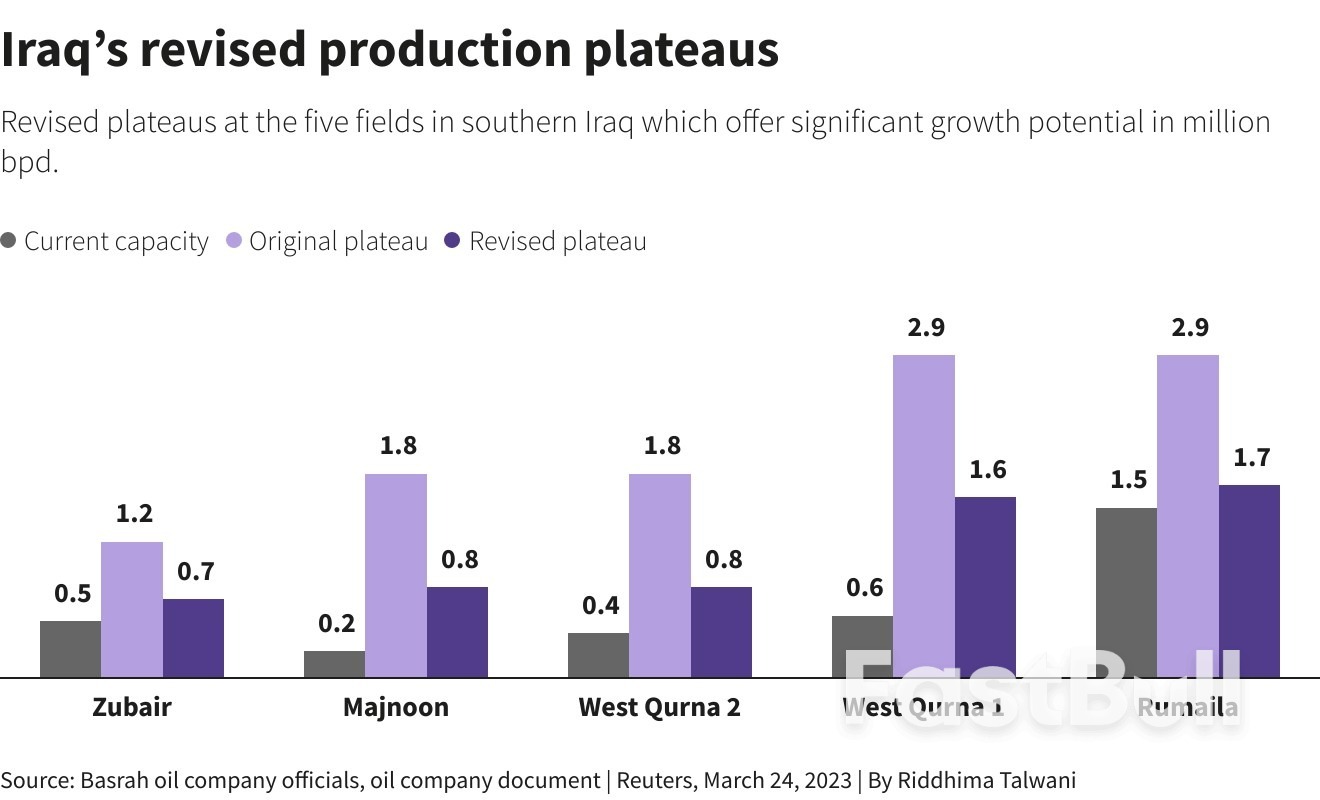
          Iraq's Oil Minister Hayan Abdel-Ghani, who took office in October, plans to update Iraq's oil production strategies to meet local needs while complying with the OPEC+ agreement, oil ministry spokesman Asim Jihad told Reuters.
          It is too early for the new government to talk about any significant increases in Iraq's oil production outside the OPEC+ agreement, Jihad said. Under the agreement, Iraq's production target is 4.43 million bpd until December.
          As a result, Iraq has shifted focus to the refining and gas sectors and lowered capital expenditure in the oil sector, analysts at FGE consultancy and Rystad Energy told Reuters.

          'Hard, if not impossible'

          For the oil sector, the country has repeatedly delayed a target to reach 7-8 million bpd capacity, from the current 5 million bpd. The previous government said last year it hoped to reach the higher levels by 2027.
          Some energy industry consultancies forecast that Iraq may never reach them.
          Capacity would peak and plateau at 6.3 million bpd by 2028 before declining, Iman Nasseri, managing director for the Middle East with FGE consultancy, said. Politics, security and the investment environment were all contributing to prevent Iraq from pushing output higher than that, he said.
          "We think Iraq's current target looks hard, if not impossible to achieve," Nasseri said.
          Rystad Energy expected production to be limited to 5.5 million bpd by 2027 as a result of midstream growth limitations and because projects that are crucial to boosting output are stuck.
          Two decades after the war began, the current targets and the even lower forecasts are far off Iraq's post-war goal to take capacity to 12 million bpd.
          The ambition was scaled back in 2012 after international oil companies operating in Iraq negotiated lower output targets for their fields because of low recovery factors, high natural decline rates and because Iraq was not investing enough in infrastructure, analysts said.
          The major oil companies had also hoped Baghdad would improve the terms of technical service contracts (TSCs). That never happened, and companies such as ExxonMobil Corp and Royal Dutch Shell Plc left.

          Iraq's Ambition to Match Saudi Oil Output Is Out of Reach_2Above-Ground Issues

          Analysts and industry insiders say the problems are above the ground rather than in the geology below, which has significant unexplored capacity, and include repeated changes to government, political infighting and red tape.
          Successive governments failed to sign off on Iraq's fifth licensing round in 2018. Six deals out of eleven oil and gas blocs on offer were eventually signed at the end of February, marking long-awaited reforms to the conditions of operating in the country.
          The beneficiaries were not the international oil companies, but UAE firm Crescent Petroleum and two Chinese companies.
          A source close to the Iraq energy industry who could not be named because they were not authorised to speak to the press said the contracts awarded pay royalties upfront and link revenues to oil prices.
          Abdel-Ghani's decision to sign the deals four months after his appointment may show a new resolve in government to cut deals more attractive to international energy companies, the source said.
          Still other issues remain.
          A large-scale seawater treatment project needed to boost output at the southern oilfields through water injection, has been stalled for over a decade because of haggling over terms.
          French oil major TotalEnergies is the latest to take on the project as part of a $27 billion deal to build four oil, gas and renewable projects over 25 years.
          TotalEnergies CEO Patrick Pouyanne said this month contractual disagreements were unresolved.
          "Iraq is not the easiest place to invest with all risk," Pouyanne said.
          The water project would boost output at the five Iraqi fields by 2 mln bpd of the 2.4 mln bpd growth needed to reach Iraq's 2027 targets, according to Rystad data and Reuters research.
          But completion before 2027 is unlikely, Rystad's vice president of Middle East upstream research Aditya Saraswat said.
          Iraq's oil minister this month revived seven investment opportunities in Iraq's refining sector.
          Even if Abdel-Ghani manages to find companies interested in those projects, Iraq's refining potential only allows 500,000 bpd of crude output growth and this would take time, Saraswat said.
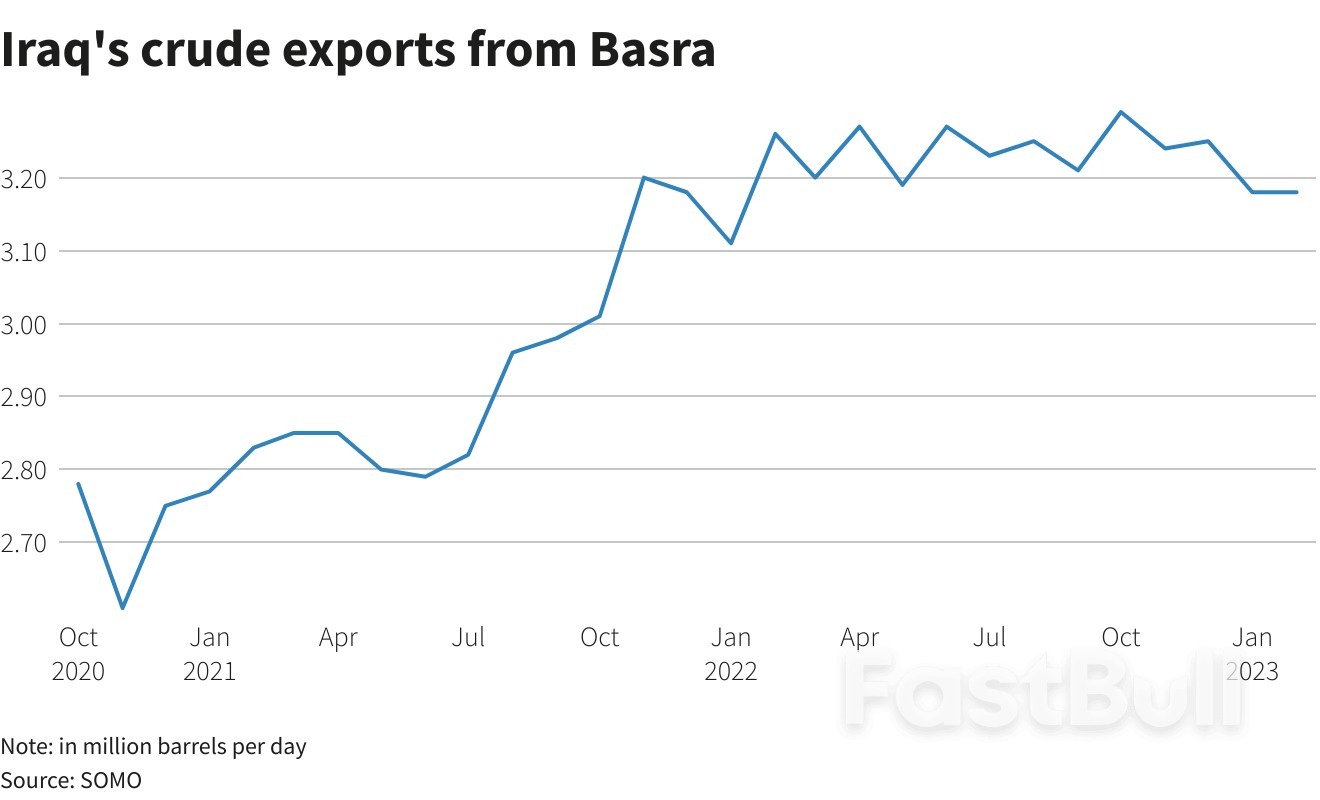
          Meanwhile, Iraq's southern export capacity has stalled at around 3.2-3.3 mln bpd for the last year following delays to infrastructure upgrades at its Gulf ports, data from state-owned marketer SOMO showed.

          Iraq's Ambition to Match Saudi Oil Output Is Out of Reach_3Source: Reuters

          Risk Warnings and Disclaimers
          You understand and acknowledge that there is a high degree of risk involved in trading. Following any strategies or investment methods may lead to potential losses. The content on the site is provided by our contributors and analysts for information purposes only. You are solely responsible for determining whether any trading assets, securities, strategy, or any other product is suitable for investing based on your own investment objectives and financial situation.
          Comments
          Add to Favorites
          Share

          Take Five: And Let There Be Calm

          Owen Li

          Economic

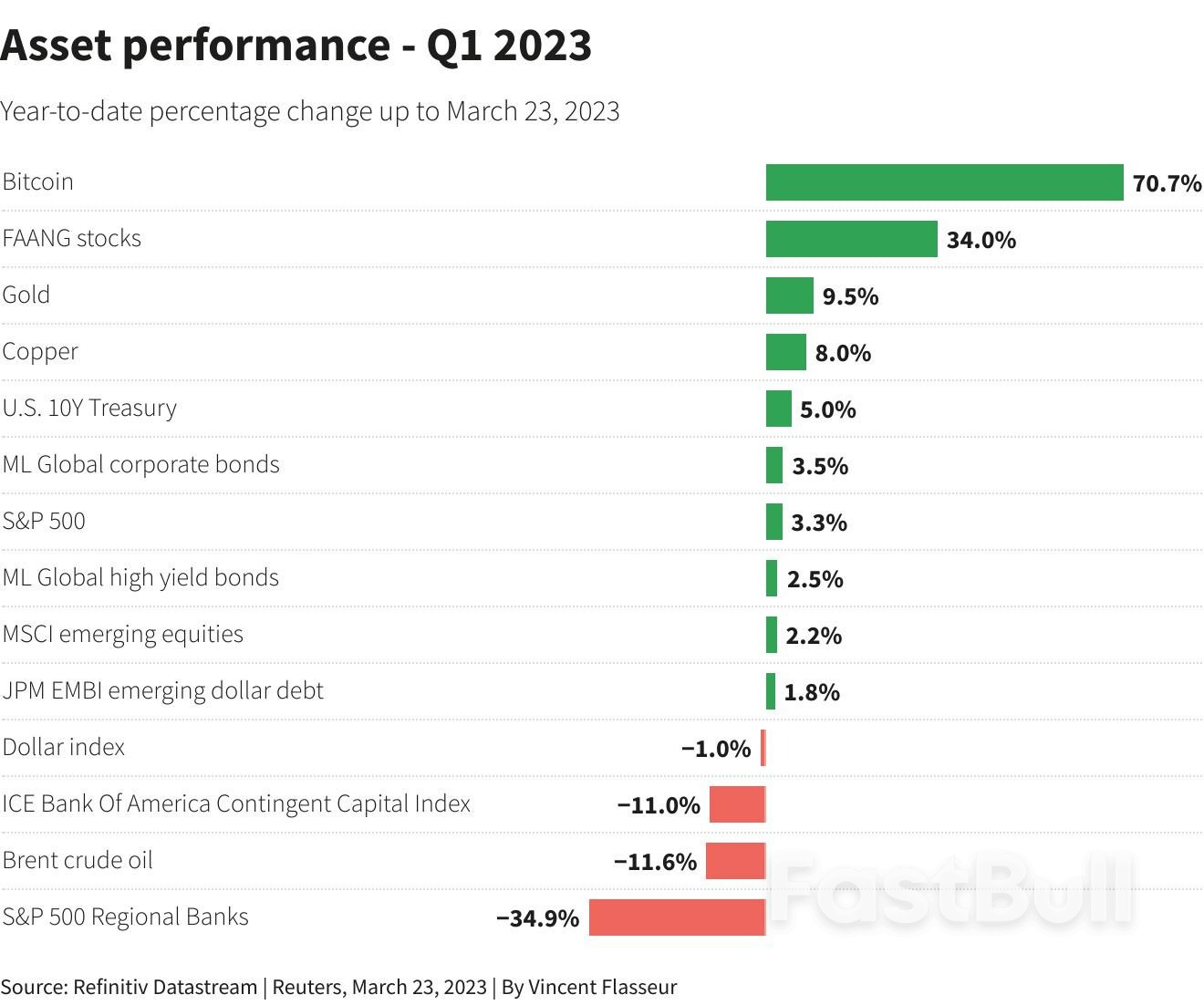
          At an incredible end to the first quarter for financial markets, rattled by bank turmoil, some stability will be much hoped for in coming days.
          But don't bet on it. Regional U.S. banking stocks remain near their lowest levels in two years, Europe is weighing up the fallout from the forced UBS-Credit Suisse tie-up. And data will show how much the market ructions are making recession more likely.
          Here's a look at the week ahead in markets from Kevin Buckland in Tokyo, Lewis Krauskopf in New York and Naomi Rovnick, Amanda Cooper and Dhara Ranasinghe in London.

          1/ A Coco-Nuts Quarter

          What a quarter. January saw the biggest rush into equities for the first month of the year on record as investors loaded up on cheap stocks. With "peak rates" essentially priced in, bond yields at multi-year highs suddenly looked juicy. The threat of inflation looked less severe and growth more robust. Crisis averted!
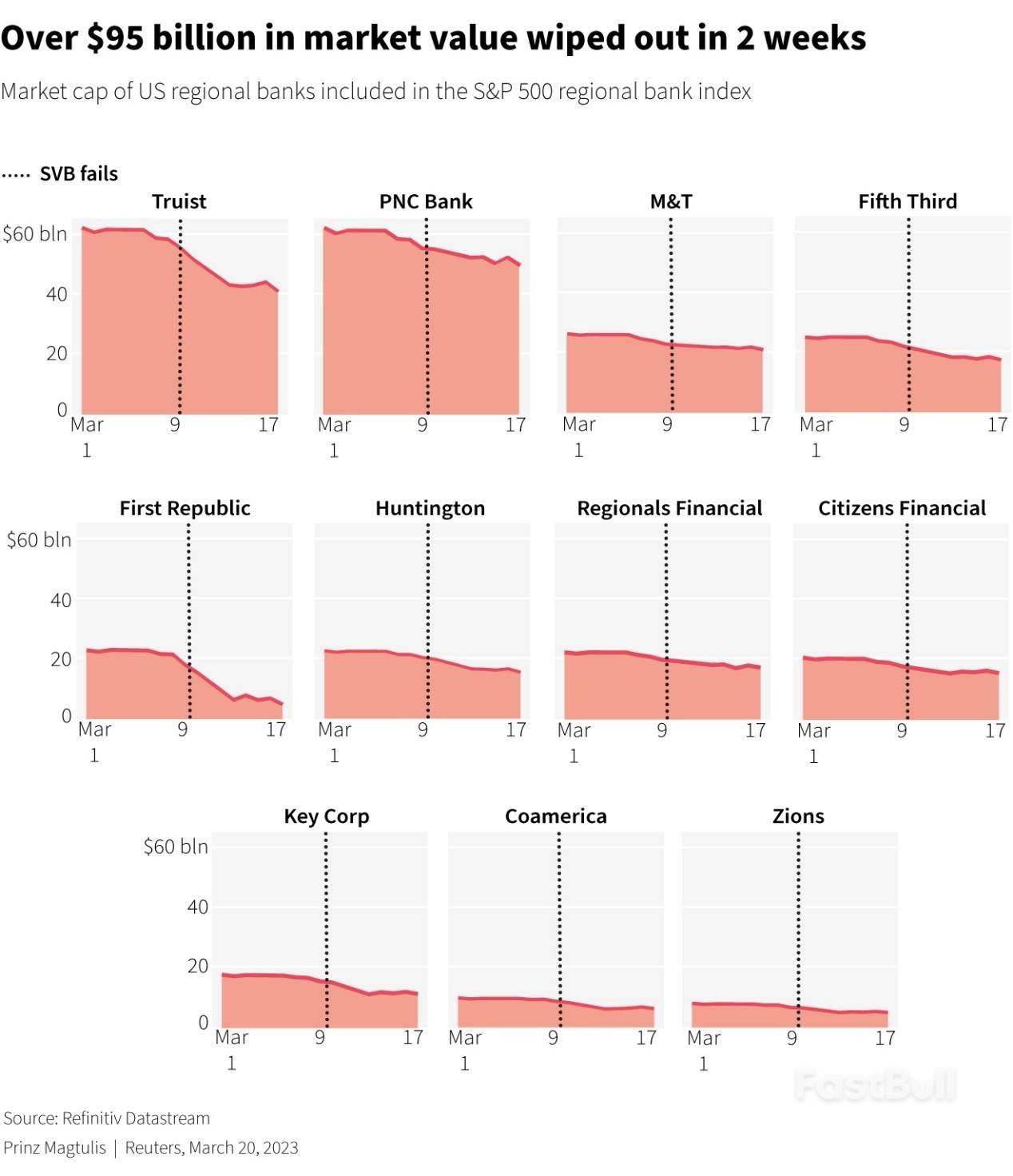
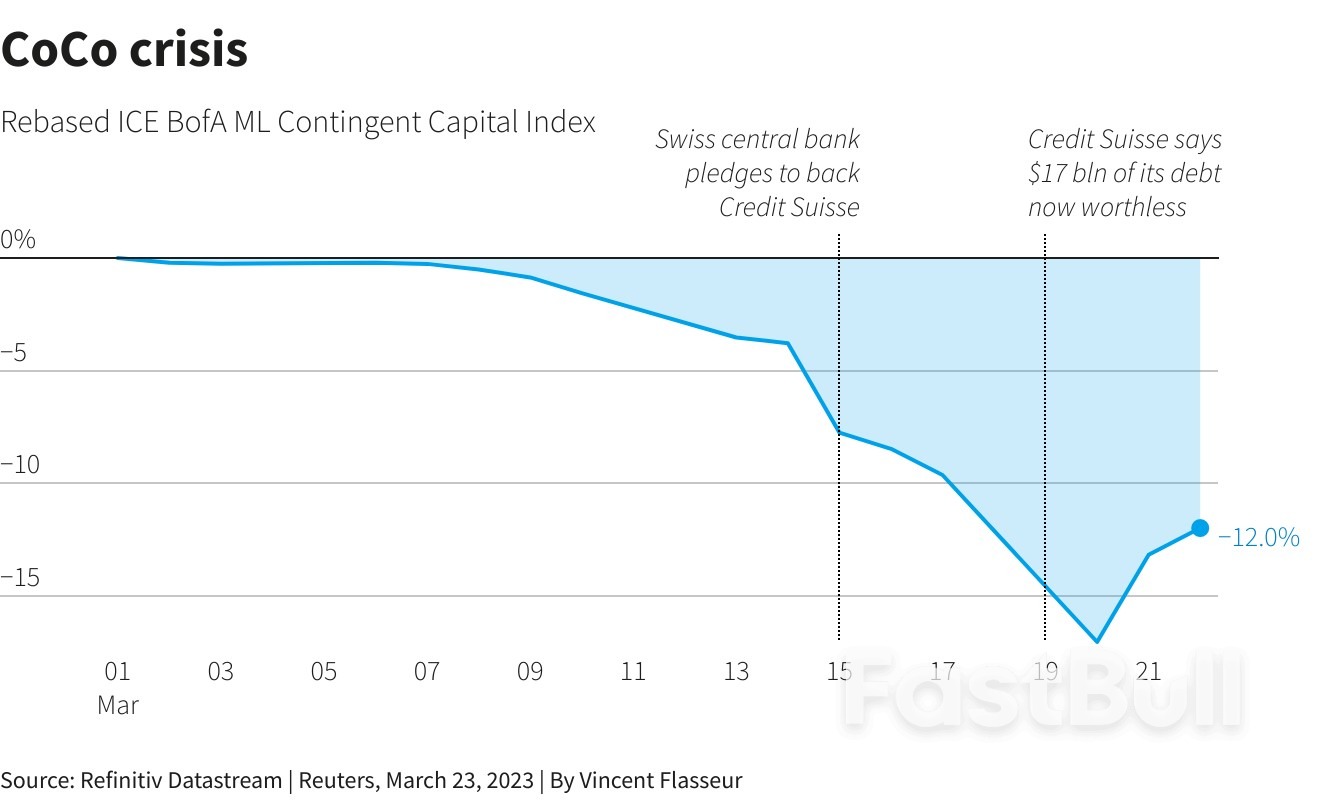
          Fast-forward a few weeks and a slew of crypto-companies have folded, U.S. regional banks stocks have tanked in the wake of Silicon Valley Bank collapse and 167-year old Credit Suisse has imploded - and the writedown of some of its contingent convertible bonds (CoCos) has whipped market volatility into a 2008-style frenzy.
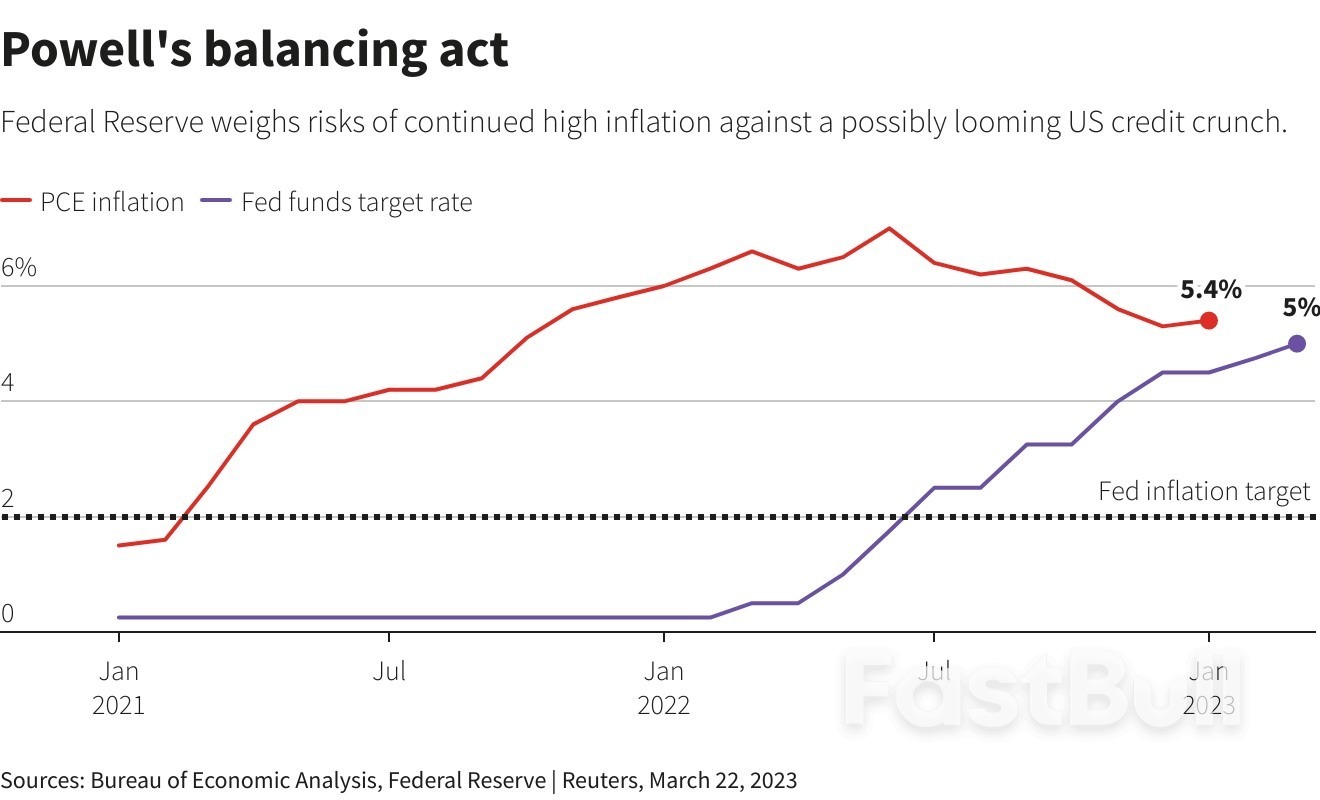
          "Peak rates" is coming faster than many expected, not because inflation has been vanquished, but because central banks are wary of fanning the flames of a credit crunch, right as the banking sector wobbles.

          Take Five: And Let There Be Calm_12/ Don't Bank on It

          The collapse of Silicon Valley Bank, a 90% share price drop over two weeks in beleaguered First Republic Bank and a shotgun marriage between Credit Suisse and UBS to avert a wider crisis: banks have gone on a wild ride.
          The turmoil may not be over yet. Shares of Germany's largest bank Deutsche Bank plunged on Friday while wider indicators of financial market stress were also flashing.
          SNB chief Thomas Jordan reckons the next two weeks will be vital to securing UBS's Credit Suisse takeover. Fed Chair Jerome Powell said banking stress could trigger a credit crunch with "significant" implications for a slowing U.S. economy.
          And even as central banks and governments step in to stem signs of panic, there's a new challenge to grapple with - a social media-driven bank run that can be hard to control once rumour and fear take hold.
          As Citigroup chief executive Jane Fraser puts it, social media is a "complete game-changer" in bank runs.
          Meanwhile, Swiss financial regulator FINMA said it was considering whether to take disciplinary action against Credit Suisse managers.

          Take Five: And Let There Be Calm_23/ Did You Say At1?

          Credit Suisse's forced takeover by UBS involved $17 billion of Additional Tier 1 debt, shock absorbers if a bank's capital levels fall below a threshold, being wiped out.
          Prices of banks' AT1s bonds tumbled following the news. Hong Kong, Singapore, the European Union and Britain stepped into to calm the unease.
          Potential legal action is also possible after Swiss authorities ruled that holders of Credit Suisse AT1 bonds would get nothing in the deal. Shareholders, who usually rank below debt investors when a company becomes insolvent, will receive $3.23 billion.
          Lawyers are assessing whether there is a case against the Swiss authorities. How this plays out in coming days will be watched closely.
          The saga has also rocked the $275 billion AT1 bond market, as investors scrutinise debt prospectuses for clauses that could cast doubt over recovery prospects.

          Take Five: And Let There Be Calm_34/ Data Dive

          U.S. data that will give insight into the health of the consumer and the state of inflation is timely for investors trying to weigh up whether the economy can stave off a downturn.
          The banking crisis has prompted fears that lending will slow, grinding the gears of the economy.
          March's reading of consumer confidence is due on Tuesday. The index unexpectedly fell in February.
          On Friday, the February personal consumption expenditure index will offer another look at inflation. It accelerated in January, feeding fears about a more hawkish Federal Reserve.
          The Fed raised rates by another quarter point on Wednesday, but recast its outlook from a hawkish preoccupation with inflation to a more cautious stance, given market turmoil that has tightened financial conditions.

          Take Five: And Let There Be Calm_45/ Inflation Watch

          Incoming Bank of Japan Governor Kazuo Ueda will be watching latest Tokyo inflation data closely.
          After all, Ueda has the weight of his predecessor's decade of massive stimulus on his shoulders when he takes over in April.
          Expectations are high that he will mastermind a delicate unwinding of yield curve controls and negative interest rates during his tenure, but a key question is when.
          Ueda is in no rush, but pressure is building.
          The release of Tokyo CPI for March on March 31 is likely to show inflation has topped the BOJ's 2% target for a 10th straight month. And wage inflation shows signs of catching up.
          But policymakers say the economic recovery remains fragile. And U.S. and European banks turmoil show how quickly a crisis can surface, giving Ueda even more reason for caution.

          Take Five: And Let There Be Calm_5Source: Reuters

          To stay updated on all economic events of today, please check out our Economic calendar
          Risk Warnings and Disclaimers
          You understand and acknowledge that there is a high degree of risk involved in trading. Following any strategies or investment methods may lead to potential losses. The content on the site is provided by our contributors and analysts for information purposes only. You are solely responsible for determining whether any trading assets, securities, strategy, or any other product is suitable for investing based on your own investment objectives and financial situation.
          Comments
          Add to Favorites
          Share

          Forex Markets Quiet as Focus Turns to Inflation Data This Week

          Cohen

          Forex

          The forex markets have been relatively quiet during today's Asian session, with currency pairs staying within Friday's range. Major stock indexes are also demonstrating mixed performance in a tight range. Inflation data from the Eurozone and the US will be closely monitored this week. Although these figures are crucial in determining the future rate path, reactions to this week's data may be somewhat subdued, given that both ECB and Fed meetings will not reconvene until May.
          Ongoing developments in the banking crisis will continue to be a significant driving factor for all financial markets. As for currencies, Yen has emerged as the biggest winner for the month, seemingly bolstered by risk aversion and falling benchmark treasury yields in other markets. European majors follow closely behind, despite banking sector troubles. Commodity currencies and Dollar have been the weakest performers. It remains to be seen whether Yen could experience further gains before the month's end and which currencies will be most affected.

          Fed's Kashkari warns of recession risks amid banking sector stress

          Fed President Neel Kashkari expressed concerns in a recent CBS "Face the Nation" interview about the recent stress in the banking sector, warning that it could lead to a widespread credit crunch and ultimately push the US into a recession. Kashkari stated, "What's unclear for us is how much of these banking stresses are leading to a widespread credit crunch. Would that slow down the economy? This is something that we're monitoring very, very closely."
          He acknowledged that the situation is still relatively new, saying, "Right now, the stresses are only a couple of weeks old." However, Kashkari pointed out some positive signs, such as a slowdown in deposit outflows and a restoration of confidence among smaller and regional banks. He noted, "There are some concerning signs. The positive sign is deposit outflows seem to have slowed down. Some confidence is being restored among smaller and regional banks."
          Despite these positive developments, Kashkari emphasized the potential risks if capital markets remain closed due to nervous borrowers and lenders, stating, "If those capital markets remain closed because borrowers and lenders remain nervous, then that would tell me, okay, this is probably going to have a bigger impact on the economy."

          ECB's de Guindos on rate hikes: Data-Dependent and cautious amid banking sector uncertainty

          ECB Vice President Luis de Guindos recently shared his thoughts on the central bank's approach to future rate hikes, emphasizing a data-dependent and cautious stance in light of the uncertainties arising from the financial sector problems in the US and Switzerland.
          In an interview, de Guindos stated, "We raised rates by 50 basis points in March and we are open-minded with respect to the future… We are not pre-committing to any action."
          The impact of the US banking system and Credit Suisse events on the Eurozone economy is a pressing concern for the ECB. Over the coming weeks and months, de Guindos noted that the central bank would need to evaluate whether these events would lead to tighter financing conditions.
          The ECB Vice President acknowledged that such events increase uncertainty and may result in tighter credit standards in the Eurozone, potentially affecting the economy with lower growth and inflation. However, de Guindos explained that it is too early to determine the intensity of this factor.
          Regarding the ECB's inflation target, de Guindos emphasized the importance of a timely return to 2% inflation within the two-year projection horizon and highlighted the crucial role of core inflation in achieving this goal.
          He stated, "Headline inflation will decline quite rapidly over the next six to seven months as the base effects play in favor of a rapid reduction in inflation… What we want to see is a steady and clear convergence towards the 2% target. In that respect, core inflation is going to be key. It is very difficult to converge towards the 2% target in a sustainable way without a clear decline in core inflation."

          Inflation Data Takes Center Stage as Central Banks Weigh Next Policy Decisions

          As we head into a week highlighted by inflation data, central banks are gearing up to navigate their policy decisions based on the numbers. Australia's monthly CPI, Eurozone's CPI flash, and US PCE inflation will be under close scrutiny as monetary authorities assess their next moves.
          RBA has suggested the possibility of hitting the pause button in May, but the final call will largely rest on how inflation unfolds. On the other hand, ECB is expected to proceed with tightening in May, but the ultimate peak interest rate will be influenced by the pace at which inflation decelerates.
          Market participants consider Fed current 4.75-5.00% interest rate as the peak already, contrasting with Fed's own projection of 5.1%. Once again, inflation trends will be the deciding factor here.
          Besides inflation, other significant economic indicators to watch this week include US consumer confidence, Japan's industrial production and retail sales, Canada's GDP, Australia's retail sales, and New Zealand's ANZ business confidence.
          Here are some highlights for the week:
          · Monday: Japan corporate service price index; Germany Ifo business climate: Eurozone M3 money supply.
          · Tuesday: Australia retail sales; US goods trade balance, house price index; consumer confidence.
          · Wednesday: Australia CPI; Germany Gfk consumer climate; Swiss Credit Suisse economic expectations; UK mortgage approvals, M4 money supply; US pending home sales.
          · Thursday: New Zealand building permits, ANZ business confidence; Germany CPI flash; ECB monthly bulletin;US Q4 GDP final, jobless claims.
          · Friday: Japan Tokyo CPI, industrial production, retail sales, housing starts; China PMIs; Germany import prices, retail sales; UK Q4 GDP final, current account; Swiss retail sales, KOF economic barometer; France consumer spending; Germany unemployment; Eurozone CPI, unemployment rate; Canada GDP; US personal income and spending with PCE inflation, Chicago PMI.

          Source: ActionForex.Com

          Risk Warnings and Disclaimers
          You understand and acknowledge that there is a high degree of risk involved in trading. Following any strategies or investment methods may lead to potential losses. The content on the site is provided by our contributors and analysts for information purposes only. You are solely responsible for determining whether any trading assets, securities, strategy, or any other product is suitable for investing based on your own investment objectives and financial situation.
          Comments
          Add to Favorites
          Share

          FX Daily: Risk Re-Assessment?

          Samantha Luan

          Forex

          USD: Dollar support comes from Europe

          The dollar regained some ground in the past two trading sessions, largely thanks to developments overseas (in Europe) rather than any material improvement in US-related drivers. This safe-haven demand is mostly related to banking stress on the other side of the Atlantic. As widely discussed last week, the Federal Reserve has likely failed to offer clear enough communication and this leaves rate expectations – and by extension, the dollar – very strictly tied to US financial stress.
          Markets have turned increasingly doubtful that the Fed will be able to tighten policy any further, and have simultaneously speculated on an early start to the easing cycle. Fed funds futures currently price in only a 30% chance of a rate hike in May while fully pricing in a 25bp cut in July, and a total of 80bp of easing by year-end.
          The variables that currently drive that pricing for Fed hikes/cuts are the following: a) developments with US regional banks; b) the stance of the US Treasury on extending deposit insurance; c) Fedspeak. On the first two – interconnected – points, the newsflow may still be rather volatile. The US regional banking crisis has not gone away, with deposits either leaving the banking system altogether or being moved to larger institutions, and there are still multiple banks being highly scrutinised and likely to hit the headlines and market sentiment at any time.
          On the Fedspeak, we heard from Neel Kashkari over the weekend. While being normally one of the most hawkish voices in the FOMC, he sounded quite alarmed about the risks of a credit crunch hitting the economy and generating a deeper economic slump. In a week without much exciting data in the US – consumer confidence and PCE are the only highlights – Fed speakers will be in focus.
          From an FX perspective, the resurgence in banking stress in Europe forces some softening of our bearish dollar view for the moment, at least until we can get more clarity on the stability of the EU banking sector. Still, we continue to see the Fed as mostly carrying downside risks for the greenback, as the lack of clear communication leaves the door open for dovish speculation as the US regional crisis remains unresolved and is keeping the monetary policy outlook in the US in stark contrast (for now) to that of most European central banks. On balance, we see more balanced risks for DXY this week, but volatility may remain elevated, and if anything our preference remains for a higher EUR/USD.

          EUR: Reassessing risks?

          A jump in markets' perceived risk on Deutsche Bank and other European lenders last Friday brought financial stress back to Europe after a prolonged period of tentative calm as markets digested the fallout from the Credit Suisse takeover. Futures today point to a rebound in European equities, possibly suggesting last week's concerns may have been overdone. At the same time, we have learned how market conditions can change extremely rapidly in the current environment, and Friday's turmoil suggests that confidence among European bank bondholders is far from fully restored after the Credit Suisse saga.
          While our general view favours a higher EUR/USD on the back of monetary policy divergence, last Friday brought a warning not to jump to the conclusion that this banking turmoil is turning into a US-only story – and therefore into a straight-line bullish EUR/USD. Still, a move to 1.10 in the coming weeks remains a very tangible possibility. For this week, re-testing 1.0900 would already be a very welcome sign for EUR/USD bulls.
          Today's Ifo reading in Germany is the main highlight of the week until Friday's CPI flash estimates in the eurozone. In the meantime, the focus will be on the many European Central Bank speakers.

          GBP: All eyes on Bailey

          Domestic drivers for the pound are concentrated at the front this week. Today and tomorrow, we'll hear from Bank of England Governor Andrew Bailey, and his words will be weighed very carefully by markets given that the March BoE meeting did not include a press conference. He will speak today at a BoE event and testify tomorrow to the Parliament's Treasury Committee about the Silicon Valley Bank collapse. Markets are already pricing in another hike by the summer, so the bar for a hawkish surprise to lift GBP does seem relatively high. Our economists do not expect any more hikes.
          With virtually nothing to highlight on the data side, GBP may be moved by Bailey's words but should rapidly default to being driven by external factors. Essentially, GBP/USD is a USD story and EUR/GBP is a EUR story. We still think cable can reach 1.2500 this quarter, and that the EUR looks marginally more attractive than GBP, and EUR/GBP should move back to 0.8900.

          CEE: Hawks return to stage

          For the first time since the recent global turmoil, attention returns to the region this week. Two new MPCs are scheduled to hold hearings today in Hungary's parliamentary economic committee. A meeting of the National Bank of Hungary is scheduled for the day after. In line with surveys, we expect rates to remain unchanged and central banks to maintain a hawkish tone, especially with the recent forint sell-off and weaker levels. In addition, Friday marks the end of the non-binding deadline for the approval of the legislative package to unlock some of the EU money. Thus, some headlines on this topic can be expected in the coming days. We expect the government to find an agreement with the European Commission (EC), but the EC's first reactions to Hungary's progress may be negative, bringing uncertainty to local markets.
          The Czech National Bank (CNB) will meet on Wednesday, and we expect unchanged rates and a hawkish tone here as well. As in Hungary, weaker FX and still too high inflation do not allow the CNB to ease up on rhetoric despite dovish expectations priced in by the markets.
          March inflation in Poland will be released on Friday and should show the first slowdown since the February peak. The market expects a drop from 18.4% to 16.1% however we expect a lower number around 15.5% year-on-year.
          No doubt the FX market in the region will again be driven mainly by the global narrative. However, we should see some local stories as well. The main focus will be on the Hungarian forint, which may find it very hard to find its way between the possible dovish worldview of new MPCs, the hawkish NBH and the mixed headlines coming from the EU story. Moreover, the forint maintains the highest beta to global news, which may result in high volatility this week. We remain bullish on the forint and should head back below 380 EUR/HUF, however this week may bring more pain on the way lower. We see a much clearer picture for the Czech koruna, which should be supported by the CNB's hawkish tone. The market is currently pricing in a roughly 130bp rate cut by the end of the year and the CNB meeting should be a catalyst to reassess these expectations. If the global story allows it, we should see the koruna below 23.50 EUR/CZK.

          Source: ING

          Risk Warnings and Disclaimers
          You understand and acknowledge that there is a high degree of risk involved in trading. Following any strategies or investment methods may lead to potential losses. The content on the site is provided by our contributors and analysts for information purposes only. You are solely responsible for determining whether any trading assets, securities, strategy, or any other product is suitable for investing based on your own investment objectives and financial situation.
          Comments
          Add to Favorites
          Share

          Banks Set to Remain in Focus, as European Markets Get Set for a Positive Start

          Samantha Luan

          Forex

          While US markets managed to close higher for the second week in succession, despite concerns about their smaller regional banks, European markets have struggled, and although the DAX and FTSE100 managed to close the week higher, drawing a line under 2 weeks of declines, concerns over the continent's banking sector have weighed on sentiment overall, with a big sell-off on Friday.
          Having started last week in a positive fashion after the news that UBS had stepped in to bail out Credit Suisse sentiment took a turn for the worst in the wake of last week's rate hikes from the Federal Reserve and Bank of England and further hawkish noises from the European Central Bank.
          In particular, the banking sector took another leg lower, with the Euro Stoxx Banks index closing lower for the 3rd week in succession with the likes of Deutsche Bank getting hit particularly hard.
          It's not immediately clear what set off this latest set of jitters, although the cost of insuring banks' AT1 debt has increased since the events of the previous weekend. This increase in costs might have something to do with the recent weakness, as well as perhaps some portfolio lightening when it comes to investor exposure to European banks more broadly.
          The recent rally off the lows of September/October last year has seen these banks put in some strong gains on the back of an improved economic outlook for the European economy as energy prices declined to levels last seen before the Russian invasion of Ukraine.
          The problems at Credit Suisse have undermined that positive narrative and with ECB President Christine Lagarde insisting that there is no trade-off between financial stability and price stability, there are increasing concerns the ECB could be on the cusp of another policy mistake, which could make things worse, a la 2008.
          Having realised way too late that inflation was not transitory and starting to raise rates too late, they appear to be on the cusp of another mistake by tightening too aggressively, in the face of an economic slowdown.
          Lagarde's comments last week that there is no trade-off between financial stability and price stability come across as naïve in the extreme, as there is always a trade-off between the two, and bond markets are pricing that already, with the sharp drop in yields that we've seen in the past few days.
          As we look to start a new week there is no question that investors and markets, in general, are much more concerned about the health of the banks than they were a few weeks ago, with the big question now being what happens next, given that the capacity of central banks to ride to the rescue this time is limited by still high levels of inflation. These concerns about further tightening are set to get another test at the end of this week, with the latest flash CPI numbers for March from Germany and the EU, with a particular focus on core CPI
          Banks are already retrenching when it comes to lending, while consumers squeezed by higher interest rates will be reluctant to take on new borrowing, which is likely to impact on the prospects for the global economy over the next few months.
          As we look ahead to a new week as well as the end of the month and the end of the quarter, what was at one point set to be a positive start to 2023, could well turn out to be anything but, with all of the optimism of January and February, being replaced by concerns over financial and economic stability.
          Today we'll get to see how the recent turmoil of the last few weeks has affected German business confidence for March with the latest IFO survey which could see a slowdown from the pickup we saw in February.
          We also have the latest CBI retail sales numbers for March which could continue to reflect the improvement we've started to see in consumer sentiment since the end of last year.
          EUR/USD – failure last week at 1.0930 area saw the euro slip back as it continues to trade sideways finding support at the 50-day SMA. Could see further weakness in the coming days towards the 1.0620 area.
          GBP/USD – failed above the 1.2300 area last week slipping back from the 1.2343 level. The pound continues to feel vulnerable to slipping back while below the highs for this year at 1.2447. We currently have support at the 1.2170 area, and below that at 1.2020.
          EUR/GBP – ran out of steam at the 0.8865 area last week, but still has trend line resistance at the 0.8900 level. Also have strong trend line support at 0.8720, from the lows last August. Support also at 0.8780.
          USD/JPY – slipped back to the 129.65 area last week, before rebounding strongly. Friday's rebound could see a test of resistance currently at the 131.80 area.

          Source: CMC

          Risk Warnings and Disclaimers
          You understand and acknowledge that there is a high degree of risk involved in trading. Following any strategies or investment methods may lead to potential losses. The content on the site is provided by our contributors and analysts for information purposes only. You are solely responsible for determining whether any trading assets, securities, strategy, or any other product is suitable for investing based on your own investment objectives and financial situation.
          Comments
          Add to Favorites
          Share

          Why America's 'Energy Dominance' Waned in The Middle East

          Owen Li

          Commodity

          Twenty years ago last week, US tanks rolled across the Iraqi border. And nearly to the day, Saudi Arabia and Iran signed a Chinese-mediated deal to restore diplomatic ties. During those two decades, America's unipolar moment faded, it achieved its longed-for "energy dominance", but that dominance is nowhere less apparent than in the Middle East.
          The motivations for the 2003 American invasion have been deeply debated, and varied between proponents and depending on the audience. Unlike Saddam Hussein's earlier seizure of Kuwait, it was not a "war for oil".
          Certainly, Iraq's military and economic power depended on its petroleum, and it had earlier threatened to dominate the hydrocarbon-rich Arabian Gulf with its invasions of revolutionary Iran and then its smaller GCC neighbour. A stable, pro-American Baghdad might indeed help assure the US's dominance over this critical area.
          Various figures in the Bush administration had hopes that a post-invasion Iraq might be detached from OPEC, that they could privatise its petroleum industry, or that a flood of new Iraqi oil might bring down oil prices, which then seemed uncomfortably high at around $30 per barrel.
          Richard Perle, a leading neo-conservative advocate for the war and an influential defence official at the time, said in July 2002: "Iraq is a very wealthy country. Enormous oil reserves. They can finance, largely finance the reconstruction of their own country."
          The White House press secretary, secretary of defence Donald Rumsfeld, deputy secretary of defence Paul Wolfowitz and others made similar comments.
          But the US did not seize Iraqi oil for its own use or determine who should have access to it and who should be denied.
          Indeed, ex-president Donald Trump repeatedly complained that the US should have done so, saying in 2011, "In the old days, when you had a war, to the victors belong the spoils. You go in. You win the war and you take it", and repeating that theme numerous times in 2016, 2018 and, regarding Syrian oil, 2019.
          Instead, the occupation authorities were remarkably lackadaisical about rebuilding the Iraqi petroleum industry, in the middle of an insurgency, a civil war and the takeover of the oil hub Basra by the Mahdi Army militia.
          Two decades of war, sanctions and brain drain had devastated the sector. Outside the semi-autonomous Kurdistan region, Iraqi nationalism won out over American free-market ideology and there was no significant foreign investment. As late as 2010, output was below 2001 levels.
          Why America's 'Energy Dominance' Waned in The Middle East_1That failure contributed to the remarkable global oil price surge up to the middle of 2008, which was supercharged by China's runaway economic growth.
          When the 2008-2009 financial crisis caused prices to crash, the Iraqi government finally offered its major fields to international oil companies in competitive bids. The winners were a fairly balanced mix of Americans, Japanese, Europeans, Malaysians, South Koreans, Russians, Chinese and others.
          Far from plundering Iraq's resources as the western left alleged, these companies ended up with extremely harsh contracts that left them with just one or two dollars per barrel profit and low or negative returns on capital after shouldering long bureaucratic delays, late payments and lack of required infrastructure.
          The last American corporation, ExxonMobil, is in a protracted process of withdrawal; Equinor (then Statoil), Occidental and Shell left the oil sector years ago, though Shell hangs on in gas. Russia's Lukoil has repeatedly threatened to go. Chinese companies secured most of the spare stakes.
          Last month, Baghdad finally signed six exploration and field development contracts that had been in limbo since its 2018 bid round; three went to Sharjah-based Crescent Petroleum and the other three to Chinese firms.
          The Iraqis have grown concerned that China is too dominant in their oil business — Chinese service and engineering companies also play a big role, including operating the giant Majnoon field on the border with Iran, after Shell withdrew.
          Nevertheless, they have not improved their terms enough to entice new entrants and the painful experience of France's TotalEnergies in exhaustive negotiations for an oil, gas, power and water package deal will deter others.
          Iran, now a major gas and electricity provider to Iraq, also plays an important, usually negative, behind-the-scenes role in the energy sector.
          The Kurdistan region's claim to an independent oil sector appeared as a relative success, but it emerged out of the hasty, messy constitutional compromises of 2005.
          On Saturday, Turkey ceased pumping oil from Kurdistan through its territory, in deference to a Paris arbitral tribunal's finding in favour of Baghdad. This is a potentially devastating blow to the generally western-aligned government in Erbil.
          The US ended up playing the role it had hoped Iraq might. Its surge of shale oil production brought down prices sharply from 2014 and gave the Obama administration the confidence to impose stringent sanctions on Iran's oil exports.
          OPEC realised it could not tackle both shale and Russia together. It brought Moscow into the OPEC+ alliance in 2016.
          The US has stepped up as a critical provider of oil and gas to Europe following Vladimir Putin's invasion of Ukraine.
          But Washington's moment of "energy dominance" may have been fleeting, as its shale oil expansion runs out of steam.
          President Biden visited Saudi Arabia in July hoping for more OPEC output to compensate for losses from Russia.
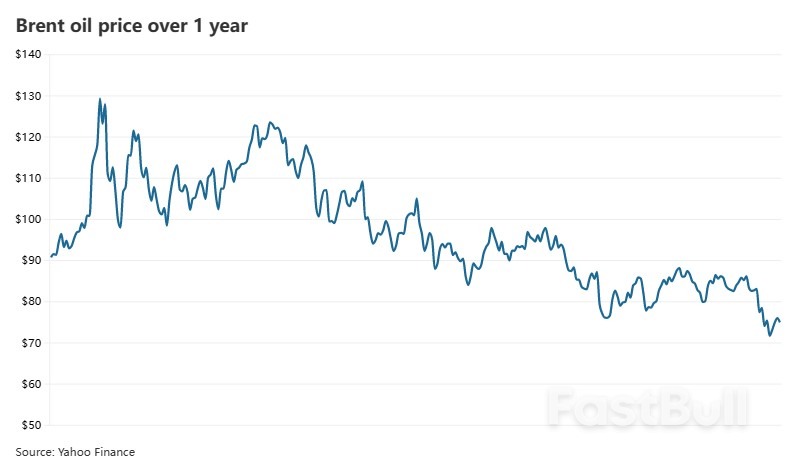
          Instead, the organisation consulted its own interests and cut output in November, apparently wisely given the recent sharp price drops.
          American commentators from right to left welcomed the idea that shale would free the US from dependence on the Middle East.
          But that goes both ways.
          Now the largest importer from, and exporter to Iraq, Iran and Saudi Arabia, is Beijing, not Washington. Then China was able to mediate the restoration of Riyadh-Tehran relations.
          If and when it wants, China will be able to call the shots in Baghdad too.

          Source: The National News

          Risk Warnings and Disclaimers
          You understand and acknowledge that there is a high degree of risk involved in trading. Following any strategies or investment methods may lead to potential losses. The content on the site is provided by our contributors and analysts for information purposes only. You are solely responsible for determining whether any trading assets, securities, strategy, or any other product is suitable for investing based on your own investment objectives and financial situation.
          Comments
          Add to Favorites
          Share

          Europe Turbo Charges Its Critical Minerals Drive

          Devin

          Commodity

          The European Union has unveiled the accelerator in its drive to reduce the bloc's import dependency for critical minerals and metals.
          The Critical Raw Materials Act (CRMA) "will significantly improve" Europe's domestic extraction, processing and recycling capacity for metals such as lithium and rare earths, according to Ursula von der Leyen, president of the European Commission.
          The Act comes with targets for production and for reducing dependency on any single third country. China currently dominates the supply chain for many of the entries on Europe's list of "strategic" metals.
          The EU is also playing catch-up with the United States, which is already investing heavily in critical metals capacity under the aegis of the Defense Production Act and the Inflation Reduction Act.
          Europe may, however, have given itself a competitive edge by moving to streamline project permitting, a tortuous process that often drags on for years before the first shovel hits the ground.
          (Moving) Targets
          The CRMA covers a subset of the EU's critical minerals list, with particular focus on battery metals like lithium, nickel, cobalt and manganese and magnet inputs such as boron and rare earths.
          Copper is on the list as an enabler of all things electric but aluminium and zinc aren't, which is a striking omission given the recent shrinkage of European production capacity.
          Germany's Speira has joined the list of casualties, this month announcing the full closure of its Rheinwerk aluminium smelter due to high energy costs.
          "Today's strategic raw materials list must not be the finished picture," warned Evangelos Mytilineos, president of industry group Eurometaux.
          It probably won't be. The CRMA includes a provision for periodically updating the list to reflect evolving economic importance and supply risks across the critical metals spectrum.
          For those metals on the list the target is for the region to mine 10%, process 40% and recycle 15% of what it consumes annually by 2030. By which time not more than 65% of any strategic metal's consumption will be able to come from a single third country.
          These are ambitious targets given Europe currently sources 97% of its magnesium in China, which also has a complete monopoly on the processing of heavy rare earths and graphite.
          Europe's lithium extraction can in theory meet the 10% target but it hinges on multiple new projects, many of them using innovative technology.
          Recycling lithium-ion batteries is also a technical challenge that has to be resolved at scale to meet the 15% recycling target.
          Permitting
          In terms of maximising domestic mining and processing capacity, Europe is following the United States in instructing all national governments to go back and look at what may have been left behind in tailings ponds and historic mine sites.
          Operators of existing mines and plants should prepare an economic assessment study of what they're losing in "waste" streams. It's a policy that has already significantly closed the U.S. dependency gap for tellurium and scandium.
          However, Europe has overtaken the United States in one key area, aiming to streamline the permitting of "strategic" projects to ensure a maximum time-line of two years for mines and one year for processing plants.
          All such projects should be considered as being "in the public interest" by the relevant national authority when considering environmental impact.
          The U.S. Administration has come under fire for using the Inflation Reduction Act to incentivise domestic mining while simultaneously blocking development of mines on federal land. The green-on-green environmental clashes seem set to continue until there is a long-overdue rewrite of the General Mining Act of 1872.
          Collective Buying and Stockpiles
          Many strategic metals markets are opaque, not easily financially hedged and concentrated on the supply side, according to the CRMA. All of which "increases the negotiating power of sellers and increase prices for buyers".
          It calls for the Commission to set up a system for collective purchasing by interested buyers, a mechanism already trialled in the gas market.
          It also recommends the accumulation of strategic metal stocks to buffer against unexpected supply disruptions. Europe has no strategic metal inventory, unlike the United States, China and South Korea.
          Member states may have their own stockpiles and "as a first step and considering the lack of relevant information", the 27 countries in the bloc should report to the Commission what, if anything, they are holding.
          Given such a humble starting point, it seems unlikely EU strategic metal reserves are going to come any time soon, if they come at all.
          Metallic Arms Race
          The EU accepts it will never be fully self-sufficient in most if any of the metals it's identified as being critical to its industrial and defence sectors.
          The CRMA advocates diversifying supply in favour of "reliable partners" and creating "mutually beneficial partnerships with emerging market and developing economies".
          It represents a further tectonic decoupling of global supply chains.
          What started as a response to China's dominance of critical metals supply has been accelerated by Russia's invasion of Ukraine.
          Russia has historically been a major supplier of aluminium, copper and nickel to Europe's industrial sector to the extent that the EU has to date held back from sanctioning Russian material even as the United States imposes penal import duties.
          But the metals world is clearly starting to split between West and the East.
          It's a messy process, witness the dispute between the EU and the United States over the exclusion of European products from the electric vehicle subsidies introduced in the Inflation Reduction Act.
          That particular hurdle may shortly be cleared, German newspaper Handlesblatt reporting that a draft agreement has been reached.
          It is evidently in neither side's interest to compete with each other in the context of reducing resource ties with China and Russia.
          Assuming future trans-Atlantic harmony can be achieved, something akin to a metallic NATO will start to take ever clearer shape.

          Source: Mining

          Risk Warnings and Disclaimers
          You understand and acknowledge that there is a high degree of risk involved in trading. Following any strategies or investment methods may lead to potential losses. The content on the site is provided by our contributors and analysts for information purposes only. You are solely responsible for determining whether any trading assets, securities, strategy, or any other product is suitable for investing based on your own investment objectives and financial situation.
          Comments
          Add to Favorites
          Share
          FastBull
          Copyright © 2025 FastBull Ltd

          728 RM B 7/F GEE LOK IND BLDG NO 34 HUNG TO RD KWUN TONG KLN HONG KONG

          TelegramInstagramTwitterfacebooklinkedin
          App Store Google Play Google Play
          Products
          Charts

          Chats

          Q&A with Experts
          Screeners
          Economic Calendar
          Data
          Tools
          Membership
          Features
          Function
          Markets
          Copy Trading
          Latest Signals
          Contests
          News
          Analysis
          24/7
          Columns
          Education
          Company
          Careers
          About Us
          Contact Us
          Advertising
          Help Center
          Feedback
          User Agreement
          Privacy Policy
          Business

          White Label

          Data API

          Web Plug-ins

          Poster Maker

          Affiliate Program

          Risk Disclosure

          The risk of loss in trading financial instruments such as stocks, FX, commodities, futures, bonds, ETFs and crypto can be substantial. You may sustain a total loss of the funds that you deposit with your broker. Therefore, you should carefully consider whether such trading is suitable for you in light of your circumstances and financial resources.

          No decision to invest should be made without thoroughly conducting due diligence by yourself or consulting with your financial advisors. Our web content might not suit you since we don't know your financial conditions and investment needs. Our financial information might have latency or contain inaccuracy, so you should be fully responsible for any of your trading and investment decisions. The company will not be responsible for your capital loss.

          Without getting permission from the website, you are not allowed to copy the website's graphics, texts, or trademarks. Intellectual property rights in the content or data incorporated into this website belong to its providers and exchange merchants.

          Not Logged In

          Log in to access more features

          FastBull Membership

          Not yet

          Purchase

          Become a signal provider
          Help Center
          Customer Service
          Dark Mode
          Price Up/Down Colors

          Log In

          Sign Up

          Position
          Layout
          Fullscreen
          Default to Chart
          The chart page opens by default when you visit fastbull.com