Markets
News
Analysis
User
24/7
Economic Calendar
Education
Data
- Names
- Latest
- Prev




Signal Accounts for Members
All Signal Accounts
All Contests


U.S. NY Fed Manufacturing New Orders Index (Jan)A:--
F: --
P: --
U.S. NY Fed Manufacturing Employment Index (Jan)A:--
F: --
P: --
U.S. Export Price Index YoY (Nov)A:--
F: --
P: --
U.S. NY Fed Manufacturing Index (Jan)A:--
F: --
U.S. Initial Jobless Claims 4-Week Avg. (SA)A:--
F: --
U.S. Export Price Index MoM (Nov)A:--
F: --
P: --
Canada Manufacturing Unfilled Orders MoM (Nov)A:--
F: --
P: --
Canada Manufacturing New Orders MoM (Nov)A:--
F: --
P: --
U.S. Philadelphia Fed Manufacturing Employment Index (Jan)A:--
F: --
P: --
Canada Wholesale Sales YoY (Nov)A:--
F: --
P: --
Canada Wholesale Inventory MoM (Nov)A:--
F: --
P: --
U.S. Philadelphia Fed Business Activity Index (SA) (Jan)A:--
F: --
P: --
U.S. EIA Weekly Natural Gas Stocks ChangeA:--
F: --
P: --
Richmond Federal Reserve President Barkin delivered a speech.
U.S. Weekly Treasuries Held by Foreign Central BanksA:--
F: --
P: --
Germany CPI Final MoM (Dec)A:--
F: --
P: --
Germany CPI Final YoY (Dec)A:--
F: --
P: --
Germany HICP Final MoM (Dec)A:--
F: --
P: --
Germany HICP Final YoY (Dec)A:--
F: --
P: --
Brazil PPI MoM (Nov)A:--
F: --
P: --
Canada New Housing Starts (Dec)A:--
F: --
U.S. Capacity Utilization MoM (SA) (Dec)A:--
F: --
U.S. Industrial Output YoY (Dec)A:--
F: --
P: --
U.S. Manufacturing Capacity Utilization (Dec)A:--
F: --
P: --
U.S. Manufacturing Output MoM (SA) (Dec)A:--
F: --
U.S. Industrial Output MoM (SA) (Dec)A:--
F: --
U.S. NAHB Housing Market Index (Jan)A:--
F: --
P: --
Russia CPI YoY (Dec)A:--
F: --
P: --
U.S. Weekly Total Rig CountA:--
F: --
P: --
U.S. Weekly Total Oil Rig CountA:--
F: --
P: --
Japan Core Machinery Orders YoY (Nov)--
F: --
P: --
Japan Core Machinery Orders MoM (Nov)--
F: --
P: --
U.K. Rightmove House Price Index YoY (Jan)--
F: --
P: --
China, Mainland GDP YoY (YTD) (Q4)--
F: --
P: --
China, Mainland Industrial Output YoY (YTD) (Dec)--
F: --
P: --
Japan Industrial Output Final MoM (Nov)--
F: --
P: --
Japan Industrial Output Final YoY (Nov)--
F: --
P: --
Euro Zone Core HICP Final MoM (Dec)--
F: --
P: --
Euro Zone HICP Final MoM (Dec)--
F: --
P: --
Euro Zone HICP Final YoY (Dec)--
F: --
P: --
Euro Zone HICP MoM (Excl. Food & Energy) (Dec)--
F: --
P: --
Euro Zone Core CPI Final YoY (Dec)--
F: --
P: --
Euro Zone Core HICP Final YoY (Dec)--
F: --
P: --
Euro Zone CPI YoY (Excl. Tobacco) (Dec)--
F: --
P: --
Euro Zone Core CPI Final MoM (Dec)--
F: --
P: --
Canada National Economic Confidence Index--
F: --
P: --
Canada CPI MoM (SA) (Dec)--
F: --
P: --
Canada Core CPI MoM (SA) (Dec)--
F: --
P: --
Canada CPI YoY (SA) (Dec)--
F: --
P: --
Canada Trimmed CPI YoY (SA) (Dec)--
F: --
P: --
Canada CPI YoY (Dec)--
F: --
P: --
Canada CPI MoM (Dec)--
F: --
P: --
Canada Core CPI YoY (Dec)--
F: --
P: --
Canada Core CPI MoM (Dec)--
F: --
P: --
South Korea PPI MoM (Dec)--
F: --
P: --
China, Mainland 1-Year Loan Prime Rate (LPR)--
F: --
P: --
China, Mainland 5-Year Loan Prime Rate--
F: --
P: --
Germany PPI YoY (Dec)--
F: --
P: --
Germany PPI MoM (Dec)--
F: --
P: --
U.K. 3-Month ILO Unemployment Rate (Nov)--
F: --
P: --


No matching data
Latest Views
Latest Views
Trending Topics
Top Columnists
Latest Update
White Label
Data API
Web Plug-ins
Affiliate Program
View All

No data
Oil prices are caught between immediate geopolitical risks, particularly Iran, and long-term fundamental pressures of global oversupply.
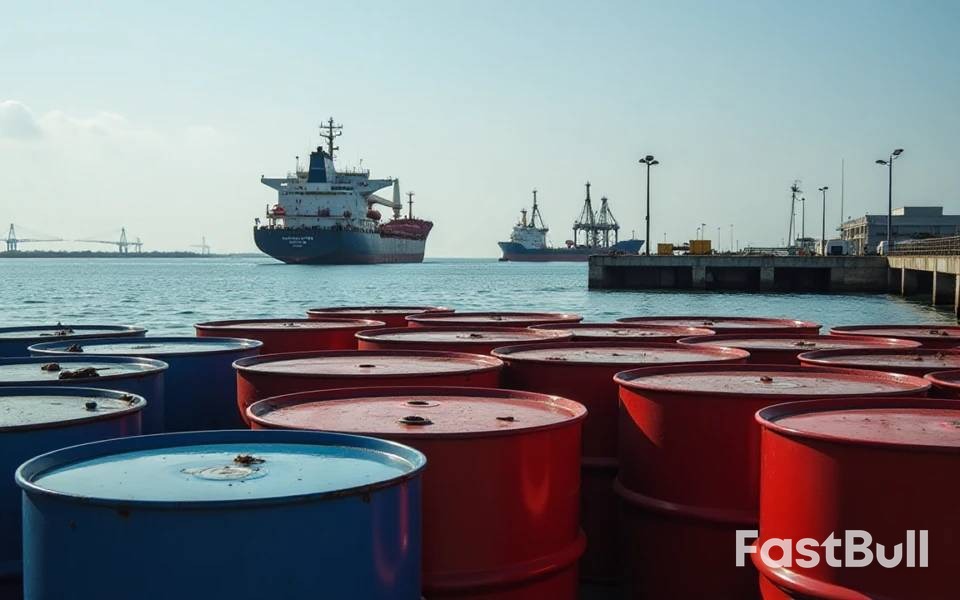
Oil prices are facing growing fundamental pressure as a potential global oversupply emerges, driven by slowing stockpiling in China and the rise of electric vehicles. While these long-term factors point to weakness, immediate supply risks are keeping a risk premium baked into the market.
Analysts at ING Group note that even as tensions surrounding Iran appear to ease, the underlying supply risks have not disappeared, creating a complex outlook for traders.
The oil market is currently reacting to every development out of Iran. Earlier this week, Brent crude oil surged to nearly $67 per barrel, its highest level since early October.
However, prices fell by $3 on Thursday after statements from US President Donald Trump suggested a reduced chance of immediate military intervention. By Friday, oil had recouped some of those losses as uncertainty about Iran and its impact on supply lingered.
The initial price drop was a direct response to the US holding back from immediate action against Iran, despite ongoing domestic protests there. Rising speculation about a potential military response from the Trump administration had previously fueled fears of a disruption not just to Iranian oil, but to supplies across the entire Persian Gulf.
According to Commerzbank AG commodity analyst Barbara Lambrecht, the situation still carries a significant risk of escalation. A key concern is the potential loss of Iranian exports, which reached nearly 1.9 million barrels per day this past fall, according to Bloomberg.
The primary fear is an Iranian blockade of the Strait of Hormuz if tensions flare up. This critical chokepoint handles roughly a quarter of the world's seaborne oil supply.
"Any escalation with Iran will also raise concerns about potential disruption to oil flows through the Strait of Hormuz, a chokepoint where around 20m b/d passes," said Warren Patterson, head of commodities strategy at ING Group.
While the immediate risks have eased, they remain significant enough to keep the market on edge. If a more sustained de-escalation occurs, market focus will likely shift to developments in Venezuela, where sanctioned or blocked oil is expected to gradually re-enter the global market.
Next week, the International Energy Agency's (IEA) monthly report is expected to pull attention back toward the market's underlying fundamentals. This follows a week where new forecasts from the US Energy Information Administration (EIA) and OPEC were largely overshadowed by the Iran crisis.
The EIA and OPEC now have similar forecasts for global oil demand growth, with both providing an initial outlook for 2027. However, the IEA is expected to maintain a more cautious view, likely continuing its prediction of a significant oil market oversupply this year.
"The decisive factor for the oil price is the extent to which this oil flows into the world markets and becomes visible in swelling inventories," Lambrecht noted.
On the fundamental side, China appears to have drawn down its reserves last year to accumulate large stockpiles, absorbing much of the global glut. In contrast, inventory levels in Organization for Economic Cooperation and Development (OECD) countries remain within their typical range.
Lambrecht suggests the fundamental outlook could turn bearish if a larger portion of overproduced oil is directed toward industrialized nations. This could happen if China reduces its stockpiling efforts—a scenario made more likely by the rising adoption of electric vehicles, which curbs the country's overall oil demand.
Patterson of ING believes that the longer the rhetoric around Iran continues without direct US intervention, the more the geopolitical risk premium will fade. This would allow more bearish fundamentals to reassert control over pricing.
Despite ING’s bearish market outlook, the prompt ICE Brent timespread is showing strength, indicating tightness in the spot market. "The spread held up relatively well yesterday despite weakness in the flat price," Patterson said. This tightness is likely due to a decline in Kazakh oil flows from the CPC terminal.
At the time of writing, West Texas Intermediate (WTI) crude was trading at $59.91 per barrel, up 1.2%, while Brent crude was at $64.50 per barrel, also 1.2% higher.
A top European Central Bank official has issued a stark warning, stating that policymakers should not be "naive" and must recognize that Europe is already "at war" with Russia. Martins Kazaks, a member of the ECB's Governing Council, urged central banks to prepare for further escalation of the conflict.
In an interview with the Financial Times, Kazaks argued that while the conflict is not "physically on our ground," Europe is actively engaged through other means. He pointed to cyber attacks and the sabotage of undersea cables in the Baltic Sea as clear evidence of this ongoing confrontation, stressing that the continent must "be resilient to deal with that."
Kazaks outlined the potential economic fallout if a military conflict were to directly involve a euro-area member. Such a scenario could trigger significant "financial stability issues" and raise serious concerns about the sustainability of national debt.
However, he emphasized that these risks are currently "marginal." He also expressed confidence that the European Union has the capacity to address such challenges if they were to arise.
To reduce the risk of a direct military clash, Kazaks proposed a two-part strategy. He advised that Europe should:
1. Support Ukraine to a degree that ensures Moscow "does not win."
2. Bolster its own military forces to create a credible deterrent against further aggression.
These comments come as Kazaks positions himself as a contender to become the next ECB vice president, seeking to replace Luis de Guindos when his term concludes in May.
The selection process involves a decision by euro-area finance ministers, which could be delayed due to an unusually high number of candidates. The chosen nominee will then face a hearing at the European Parliament and be consulted on by the ECB's Governing Council before European Union leaders make the final appointment.
Donald Trump’s threat to levy tariffs on key European allies, including the UK, unless a deal is struck for the US to purchase Greenland has sparked a sharp and unified backlash from his traditional supporters on the British political right.
Leaders from both the Conservative and Reform UK parties have publicly criticized the US president's move, aligning their positions with the UK government led by Prime Minister Keir Starmer.
Senior Conservative figures were swift to denounce the tariff threat. Party leader Kemi Badenoch posted on X that it was "completely wrong to announce tariffs on the UK over Greenland," directly echoing the language used by the Prime Minister.
Jeremy Hunt, a former Conservative foreign secretary, offered a blunter assessment, telling the BBC that the threat is "what happens when Donald Trump thinks you are weak." He described the tactic as "an outrageous way to treat a NATO ally." Hunt argued that the only way for the UK to maintain control of its destiny and prevent such actions is to ensure it can defend itself.
Criticism also came from Reform UK, a party whose leader, Nigel Farage, is known for his close relationship with Trump.
Richard Tice, Reform UK's Deputy Leader, told the BBC that Trump "has got it wrong." While Tice agreed with the underlying objective of securing Greenland for NATO allies, he stated, "the way that he's going about it is totally wrong." He called on Prime Minister Starmer to open negotiations with the United States.
Zia Yusuf, Reform's head of policy, voiced economic concerns in an interview with ITV. "Bigger tariffs on this country will make it even harder for British manufacturers, even harder for British workers," Yusuf said, adding he was "very concerned" about the potential impact.
When asked if Farage should leverage his relationship with Trump to advocate for the UK, Yusuf noted that while he was sure Farage would do so if requested by the government, the responsibility lies elsewhere. "It's not his place to do that. It's up to the prime minister to make that call," Yusuf said.
On Saturday, Trump announced a plan to impose a 10% tariff on eight European nations, including the UK and Denmark, starting February 1. The rate is set to increase to 25% in June.
The move is a response to the nations' plans to conduct NATO military exercises in Greenland, which Trump views as a token gesture. He has publicly stated that bringing Greenland under US control is essential to Western national security, citing perceived threats to the island from Russia and China.
Prime Minister Starmer addressed the issue on Saturday, stating that Greenland's future "is a matter for the Greenlanders and the Danes." He affirmed the UK's position, saying, "Applying tariffs on allies for pursuing the collective security of NATO allies is completely wrong. We will of course be pursuing this directly with the US administration."
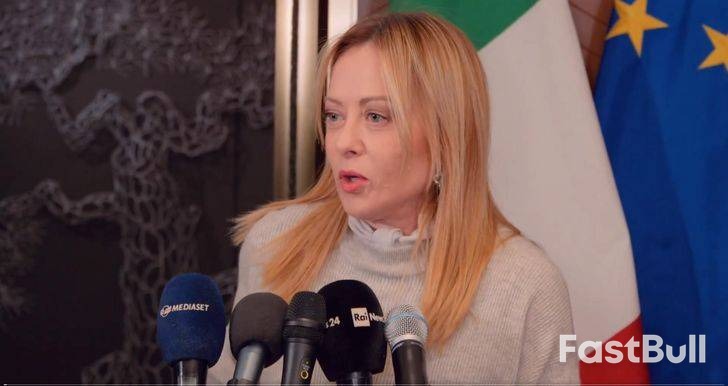
Italian Prime Minister Giorgia Meloni has labeled U.S. President Donald Trump's threat to impose tariffs over his Greenland plan a "mistake," confirming she has personally communicated her concerns to him.
Speaking to journalists during a visit to Seoul on Sunday, Meloni stated, "I believe that imposing new sanctions today would be a mistake." She added, "I spoke to Donald Trump a few hours ago and told him what I think."

Despite her direct opposition to the tariffs, the far-right prime minister, who is considered a Trump ally in Europe, attempted to de-escalate the conflict. She suggested to reporters that "there has been a problem of understanding and communication" between the United States and Europe regarding the autonomous Danish territory.
Meloni noted that from the American perspective, the signals coming from Europe were unclear. "It seems to me that the risk is that the initiatives of some European countries were interpreted as anti-American, which was clearly not the intention," she explained, without specifying which initiatives she was referring to.
Meloni argued that NATO is the appropriate venue for resolving the growing crisis. She reported speaking with the NATO secretary general, who confirmed the alliance is beginning to work on the matter.
"NATO is the place where we must try to organise together deterrents against interference that may be hostile in a territory that is clearly strategic," she said. "I believe that the fact that NATO has begun to work on this is a good initiative."
The dispute centers on Trump's moves related to Greenland, which he claims is essential for U.S. national security. In response to European objections, Trump has threatened to impose tariffs of up to 25% on all goods imported into the U.S. from several key nations:
• Denmark
• Norway
• Sweden
• France
• Germany
• The United Kingdom
• The Netherlands
• Finland
The Netherlands' foreign minister has labeled U.S. President Donald Trump's threat to impose new tariffs on European allies as "blackmail." The move is designed to pressure several nations into facilitating the sale of Greenland to the United States.

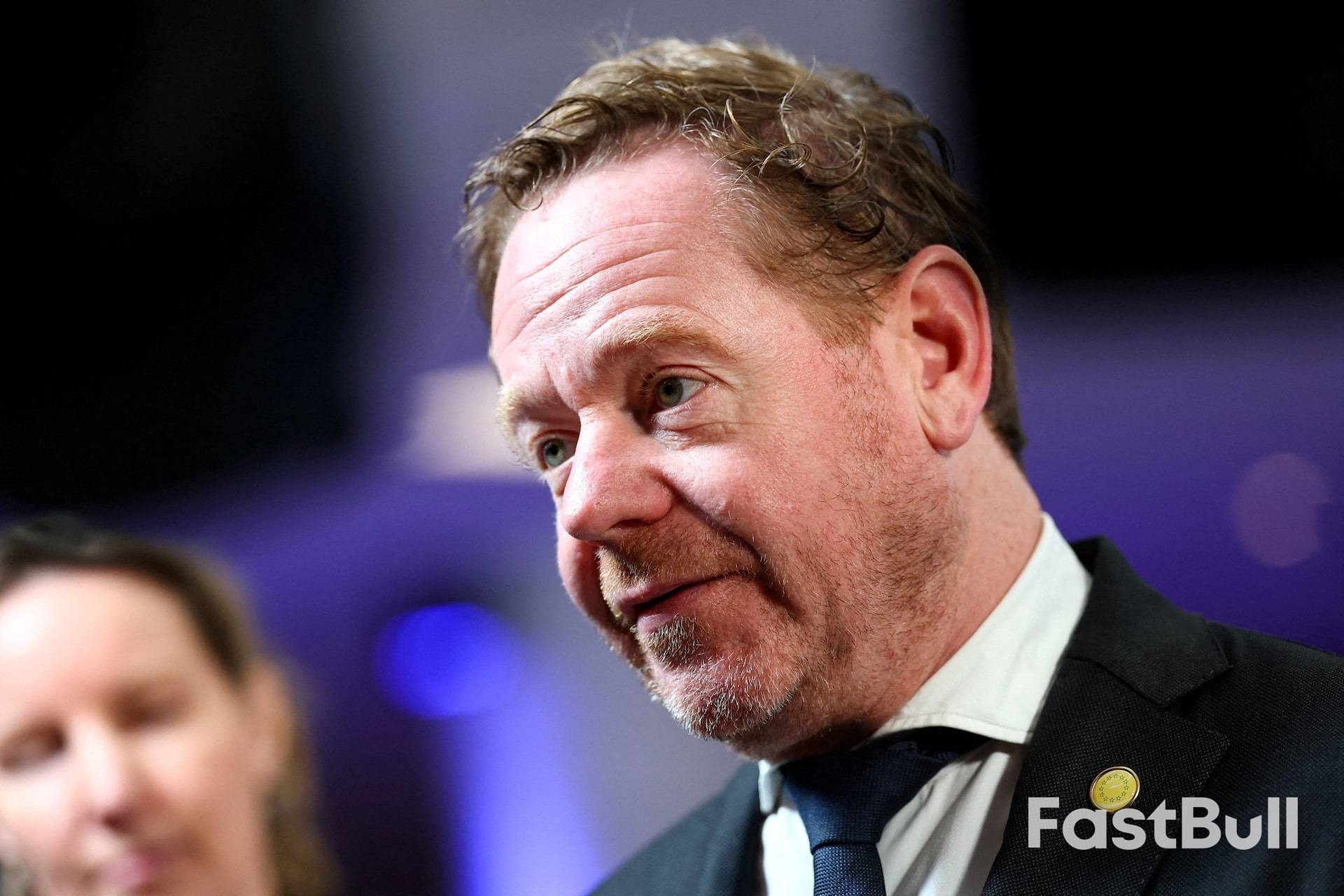
"It's blackmail what he's doing," Foreign Minister David van Weel said during an interview on Dutch television. "And it's not necessary. It doesn't help the alliance (NATO) and it also doesn't help Greenland."
In a post on Truth Social, President Trump announced that additional 10% import tariffs would take effect on February 1. The tariffs target goods from eight European countries that have committed personnel to a NATO exercise on Greenland:
• Denmark
• Norway
• Sweden
• France
• Germany
• The Netherlands
• Finland
• Great Britain
Van Weel argued that connecting trade policy to the Greenland issue was inappropriate. He explained that the NATO mission was intended to demonstrate Europe's commitment to defending the island, not as a bargaining chip for its sale.
President Trump has insisted on achieving full U.S. ownership of Greenland, which is an autonomous territory of Denmark. He cites the island's strategic location and mineral deposits as vital to American security.
However, leaders in both Denmark and Greenland have firmly stated that the island is not for sale and does not wish to become part of the United States.
In response to the escalating trade tensions, ambassadors from the 27 European Union member states are set to convene for an emergency meeting on Sunday. The primary agenda will be to formulate a unified response to Trump's tariff threat.
South Korea's government has announced it will not stand by as the United States imposes a 25% tariff on imported artificial intelligence chips, vowing to negotiate directly with Washington to protect its semiconductor industry.
A presidential spokesperson confirmed on Sunday that Seoul will push for favorable terms to shield its globally significant chipmakers, Samsung Electronics and SK Hynix. While Donald Trump’s new tariff proclamation may not immediately affect these memory chip giants, the South Korean government is taking proactive steps to mitigate any future impact.
Officials reminded reporters of a joint fact sheet published last year, in which the U.S. agreed that South Korea would not receive worse tariff treatment than other chip-producing nations. This agreement is now facing a critical test.
The first wave of tariffs primarily targets high-end AI chips, not the memory chips that form the core of South Korea's semiconductor exports.
Trade Minister Yeo Han-koo stated on Saturday that the initial measures focus on advanced processors made by companies like Nvidia and AMD. "The impact is expected to be limited," he noted, as the memory chips typically exported by South Korea are not included in this phase.
However, Yeo cautioned against complacency. "It is not yet time to be reassured," he said, emphasizing the uncertainty surrounding the future scope of the tariffs. He affirmed that the government would continue collaborating with local companies to secure the best possible outcome.
The new U.S. tariff policy, signed by Trump on Wednesday, is officially justified on national security grounds. It applies a 25% duty on specific AI chips, including Nvidia's H200 and AMD's MI325X.
The White House described the scope as "narrow," listing several exemptions. The tariffs will not apply to chips imported for:
• U.S. data centers
• Public sector applications
• Consumer electronics
• Startups
• Civil industrial uses not involving data centers
Despite these exemptions, the policy signals a clear long-term strategy: pressuring foreign companies to increase domestic production in the United States. The official fact sheet explicitly leaves the door open for wider tariffs on more chip types and related products.
U.S. Commerce Secretary Howard Lutnick delivered a stark warning, suggesting that South Korean and Taiwanese chipmakers that do not invest in American manufacturing could face tariffs as high as 100%. "If you want to sell in America, you should build in America," Lutnick declared at a groundbreaking event for Micron's new plant in New York.
The new rules follow a nine-month investigation conducted under Section 232 of the Trade Expansion Act of 1962, which targeted advanced chips meeting specific performance thresholds.
France is preparing to request that the European Union deploy its most powerful economic defense mechanism after U.S. President Donald Trump announced new tariffs tied to his demand to purchase Greenland.
President Emmanuel Macron, who has already branded the tariff threat "unacceptable," will formally ask the EU to activate its anti-coercion instrument (ACI), according to a person familiar with the decision.
The move comes in response to a U.S. plan to impose a 10% tariff on goods from eight European countries, including France, starting February 1. In a social media post, President Trump threatened to raise the levy to 25% in June unless a "Deal is reached for the Complete and Total purchase of Greenland."
In response to the announcement, EU national ambassadors are set to meet on Sunday to determine the bloc's next steps.
The ACI is the European Union's most formidable retaliatory trade tool. While it has never been used, the instrument was designed primarily as a deterrent to counter coercive economic actions from other countries. It specifically targets situations where trade is used to pressure the policy choices of the EU or its member states.
If triggered, the EU could enact a range of countermeasures, including:
• Imposing retaliatory tariffs on U.S. goods.
• Introducing new taxes on tech companies.
• Placing targeted curbs on U.S. investment in the EU.
• Restricting access to certain segments of the EU market.
• Barring firms from bidding for public contracts in Europe.
According to the person familiar with President Macron's thinking, Trump's tariff plan directly challenges the validity of the trade deal reached between the EU and the U.S. last year.
That agreement has been partially implemented but still requires final approval from parliament. With the new tensions over Greenland, that approval process is now likely to be halted.
White Label
Data API
Web Plug-ins
Poster Maker
Affiliate Program
The risk of loss in trading financial instruments such as stocks, FX, commodities, futures, bonds, ETFs and crypto can be substantial. You may sustain a total loss of the funds that you deposit with your broker. Therefore, you should carefully consider whether such trading is suitable for you in light of your circumstances and financial resources.
No decision to invest should be made without thoroughly conducting due diligence by yourself or consulting with your financial advisors. Our web content might not suit you since we don't know your financial conditions and investment needs. Our financial information might have latency or contain inaccuracy, so you should be fully responsible for any of your trading and investment decisions. The company will not be responsible for your capital loss.
Without getting permission from the website, you are not allowed to copy the website's graphics, texts, or trademarks. Intellectual property rights in the content or data incorporated into this website belong to its providers and exchange merchants.
Not Logged In
Log in to access more features

FastBull Membership
Not yet
Purchase
Log In
Sign Up