• Trade
  • Markets
  • Copy
  • Contests
  • News
  • 24/7
  • Calendar
  • Q&A
  • Chats
Trending
Screeners
SYMBOL
LAST
BID
ASK
HIGH
LOW
NET CHG.
%CHG.
SPREAD
SPX
S&P 500 Index
6827.42
6827.42
6827.42
6899.86
6801.80
-73.58
-1.07%
--
DJI
Dow Jones Industrial Average
48458.04
48458.04
48458.04
48886.86
48334.10
-245.98
-0.51%
--
IXIC
NASDAQ Composite Index
23195.16
23195.16
23195.16
23554.89
23094.51
-398.69
-1.69%
--
USDX
US Dollar Index
97.910
97.990
97.910
98.070
97.890
-0.040
-0.04%
--
EURUSD
Euro / US Dollar
1.17401
1.17408
1.17401
1.17447
1.17262
+0.00007
+ 0.01%
--
GBPUSD
Pound Sterling / US Dollar
1.33809
1.33819
1.33809
1.33856
1.33546
+0.00102
+ 0.08%
--
XAUUSD
Gold / US Dollar
4345.22
4345.65
4345.22
4350.16
4294.68
+45.83
+ 1.07%
--
WTI
Light Sweet Crude Oil
57.352
57.382
57.352
57.601
57.194
+0.119
+ 0.21%
--

Community Accounts

Signal Accounts
--
Profit Accounts
--
Loss Accounts
--
View More

Become a signal provider

Sell trading signals to earn additional income

View More

Guide to Copy Trading

Get started with ease and confidence

View More

Signal Accounts for Members

All Signal Accounts

Best Return
  • Best Return
  • Best P/L
  • Best MDD
Past 1W
  • Past 1W
  • Past 1M
  • Past 1Y

All Contests

  • All
  • Trump Updates
  • Recommend
  • Stocks
  • Cryptocurrencies
  • Central Banks
  • Featured News
Top News Only
Share

EU Official: Witkoff And Kushner Begin Briefing EU Foreign Ministers On Gaza Via Videoconference

Share

Russian Defence Ministry Says Russian Forces Capture Pishchane In Ukraine's Dnipropetrovsk Region

Share

Cronos Group Up 4%, Sndl Up 1.4%

Share

London Metal Exchange: Intends To Publish A Consultation On The Proposed Changes To Our Rules In Response To The Regime Early In2026

Share

London Metal Exchange: Announces Publication Of Update Describing How The London Metal Exchange Plans To Implement The Fca Policy Statement 25/1 On Commodity Reform

Share

USA - Listed Shares Of Gold Miners Rise Premarket After Gold Rises About 1%

Share

The Council Of The European Union: In Light Of The Situation In Venezuela, The Council Decided Today To Extend The Existing Restrictions For Another Year, Until 10 January 2027

Share

Ivory Coast 2025/26 Cocoa Arrivals Reached 894000 T By December 14 Versus 895000 T Year Ago - Exporters' Estimate

Share

Ishares MSCI Chile ETF Up 3.9% Premarket After Jose Antonio Kast Wins Chile's Presidential Election On Sunday

Share

Spain's Debt-To-GDP Ratio Falls To 103.2% In Third Quarter 2025

Share

China's Central Bank: Authorises DBS Bank As Yuan Clearing Bank In Singapore

Share

Bank Of Korea - South Korea Central Bank, Nps Agree To Extend Currency Swap Agreement For Another Year

Share

Poland's CPI At 0.1% Month-On-Month In November Versus 0.1% Released Earlier

Share

London Metal Exchange (LME): Copper Inventories Decreased By 25 Tons, Aluminum Inventories Decreased By 50 Tons, Nickel Inventories Increased By 360 Tons, Zinc Inventories Increased By 2,550 Tons, Lead Inventories Increased By 17,725 Tons, And Tin Inventories Increased By 125 Tons

Share

Polish Inflation At 2.5% Year-On-Year In November

Share

Poland's January-October Import Up 5.4% To 309.3 Billion Euros

Share

Poland's January-October Trade Balance At -5.1 Billion Euros

Share

Poland's January-October Export Up 2.8% To 304.3 Billion Euros

Share

Ceasefire Negotiations Between Ukraine And US Representatives In Berlin To Continue Monday Morning - German Source Familiar With The Schedule

Share

Spain's IBEX Hits Fresh Record High, Up Over 1%

TIME
ACT
FCST
PREV
France HICP Final MoM (Nov)

A:--

F: --

P: --

China, Mainland Outstanding Loans Growth YoY (Nov)

A:--

F: --

P: --

China, Mainland M2 Money Supply YoY (Nov)

A:--

F: --

P: --

China, Mainland M0 Money Supply YoY (Nov)

A:--

F: --

P: --

China, Mainland M1 Money Supply YoY (Nov)

A:--

F: --

P: --

India CPI YoY (Nov)

A:--

F: --

P: --

India Deposit Gowth YoY

A:--

F: --

P: --

Brazil Services Growth YoY (Oct)

A:--

F: --

P: --

Mexico Industrial Output YoY (Oct)

A:--

F: --

P: --

Russia Trade Balance (Oct)

A:--

F: --

P: --

Philadelphia Fed President Henry Paulson delivers a speech
Canada Building Permits MoM (SA) (Oct)

A:--

F: --

P: --

Canada Wholesale Sales YoY (Oct)

A:--

F: --

P: --

Canada Wholesale Inventory MoM (Oct)

A:--

F: --

P: --

Canada Wholesale Inventory YoY (Oct)

A:--

F: --

P: --

Canada Wholesale Sales MoM (SA) (Oct)

A:--

F: --

P: --

Germany Current Account (Not SA) (Oct)

A:--

F: --

P: --

U.S. Weekly Total Rig Count

A:--

F: --

P: --

U.S. Weekly Total Oil Rig Count

A:--

F: --

P: --

Japan Tankan Small Manufacturing Outlook Index (Q4)

A:--

F: --

P: --

Japan Tankan Large Non-Manufacturing Diffusion Index (Q4)

A:--

F: --

P: --

Japan Tankan Large Non-Manufacturing Outlook Index (Q4)

A:--

F: --

P: --

Japan Tankan Large Manufacturing Outlook Index (Q4)

A:--

F: --

P: --

Japan Tankan Small Manufacturing Diffusion Index (Q4)

A:--

F: --

P: --

Japan Tankan Large Manufacturing Diffusion Index (Q4)

A:--

F: --

P: --

Japan Tankan Large-Enterprise Capital Expenditure YoY (Q4)

A:--

F: --

P: --

U.K. Rightmove House Price Index YoY (Dec)

A:--

F: --

P: --

China, Mainland Industrial Output YoY (YTD) (Nov)

A:--

F: --

P: --

China, Mainland Urban Area Unemployment Rate (Nov)

A:--

F: --

P: --

Saudi Arabia CPI YoY (Nov)

A:--

F: --

P: --

Euro Zone Industrial Output YoY (Oct)

--

F: --

P: --

Euro Zone Industrial Output MoM (Oct)

--

F: --

P: --

Canada Existing Home Sales MoM (Nov)

--

F: --

P: --

Euro Zone Total Reserve Assets (Nov)

--

F: --

P: --

U.K. Inflation Rate Expectations

--

F: --

P: --

Canada National Economic Confidence Index

--

F: --

P: --

Canada New Housing Starts (Nov)

--

F: --

P: --

U.S. NY Fed Manufacturing Employment Index (Dec)

--

F: --

P: --

U.S. NY Fed Manufacturing Index (Dec)

--

F: --

P: --

Canada Core CPI YoY (Nov)

--

F: --

P: --

Canada Manufacturing Unfilled Orders MoM (Oct)

--

F: --

P: --

U.S. NY Fed Manufacturing Prices Received Index (Dec)

--

F: --

P: --

U.S. NY Fed Manufacturing New Orders Index (Dec)

--

F: --

P: --

Canada Manufacturing New Orders MoM (Oct)

--

F: --

P: --

Canada Core CPI MoM (Nov)

--

F: --

P: --

Canada Trimmed CPI YoY (SA) (Nov)

--

F: --

P: --

Canada Manufacturing Inventory MoM (Oct)

--

F: --

P: --

Canada CPI YoY (Nov)

--

F: --

P: --

Canada CPI MoM (Nov)

--

F: --

P: --

Canada CPI YoY (SA) (Nov)

--

F: --

P: --

Canada Core CPI MoM (SA) (Nov)

--

F: --

P: --

Canada CPI MoM (SA) (Nov)

--

F: --

P: --

Federal Reserve Board Governor Milan delivered a speech
U.S. NAHB Housing Market Index (Dec)

--

F: --

P: --

Australia Composite PMI Prelim (Dec)

--

F: --

P: --

Australia Services PMI Prelim (Dec)

--

F: --

P: --

Australia Manufacturing PMI Prelim (Dec)

--

F: --

P: --

Japan Manufacturing PMI Prelim (SA) (Dec)

--

F: --

P: --

U.K. Unemployment Claimant Count (Nov)

--

F: --

P: --

U.K. Unemployment Rate (Nov)

--

F: --

P: --

U.K. 3-Month ILO Unemployment Rate (Oct)

--

F: --

P: --

Q&A with Experts
    • All
    • Chatrooms
    • Groups
    • Friends
    Connecting
    .
    .
    .
    Type here...
    Add Symbol or Code

      No matching data

      All
      Trump Updates
      Recommend
      Stocks
      Cryptocurrencies
      Central Banks
      Featured News
      • All
      • Russia-Ukraine Conflict
      • Middle East Flashpoint
      • All
      • Russia-Ukraine Conflict
      • Middle East Flashpoint
      Search
      Products

      Charts Free Forever

      Chats Q&A with Experts
      Screeners Economic Calendar Data Tools
      Membership Features
      Data Warehouse Market Trends Institutional Data Policy Rates Macro

      Market Trends

      Market Sentiment Order Book Forex Correlations

      Top Indicators

      Charts Free Forever
      Markets

      News

      News Analysis 24/7 Columns Education
      From Institutions From Analysts
      Topics Columnists

      Latest Views

      Latest Views

      Trending Topics

      Top Columnists

      Latest Update

      Signals

      Copy Rankings Latest Signals Become a signal provider AI Rating
      Contests
      Brokers

      Overview Brokers Assessment Rankings Regulators News Claims
      Broker listing Forex Brokers Comparison Tool Live Spread Comparison Scam
      Q&A Complaint Scam Alert Videos Tips to Detect Scam
      More

      Business
      Events
      Careers About Us Advertising Help Center

      White Label

      Data API

      Web Plug-ins

      Affiliate Program

      Awards Institution Evaluation IB Seminar Salon Event Exhibition
      Vietnam Thailand Singapore Dubai
      Fans Party Investment Sharing Session
      FastBull Summit BrokersView Expo
      Recent Searches
        Top Searches
          Markets
          News
          Analysis
          User
          24/7
          Economic Calendar
          Education
          Data
          • Names
          • Latest
          • Prev

          View All

          No data

          Scan to Download

          Faster Charts, Chat Faster!

          Download App
          English
          • English
          • Español
          • العربية
          • Bahasa Indonesia
          • Bahasa Melayu
          • Tiếng Việt
          • ภาษาไทย
          • Français
          • Italiano
          • Türkçe
          • Русский язык
          • 简中
          • 繁中
          Open Account
          Search
          Products
          Charts Free Forever
          Markets
          News
          Signals

          Copy Rankings Latest Signals Become a signal provider AI Rating
          Contests
          Brokers

          Overview Brokers Assessment Rankings Regulators News Claims
          Broker listing Forex Brokers Comparison Tool Live Spread Comparison Scam
          Q&A Complaint Scam Alert Videos Tips to Detect Scam
          More

          Business
          Events
          Careers About Us Advertising Help Center

          White Label

          Data API

          Web Plug-ins

          Affiliate Program

          Awards Institution Evaluation IB Seminar Salon Event Exhibition
          Vietnam Thailand Singapore Dubai
          Fans Party Investment Sharing Session
          FastBull Summit BrokersView Expo

          Investment Banking Faultlines Trigger European Job Shake-Up

          Devin
          Summary:

          A dearth of deals, banking sector ructions and most recently the aftershocks of the demise of Credit Suisse have rapidly redrawn the European financial services industry jobs map this year.

          A dearth of deals, banking sector ructions and most recently the aftershocks of the demise of Credit Suisse have rapidly redrawn the European financial services industry jobs map this year.
          One example is banks in the region opportunistically targeting high-flyers affected by the impending takeover of Switzerland's second largest bank by its domestic rival UBS, headhunters say.
          And on the other side of the equation, recruitment firms report receiving more resumes from finance staff concerned about being ousted by such new hires.
          "Europe is lifting hiring freezes and, in some cases, finding that exceptional talent, once untouchable, is now recruitable," Jeanne Branthover, New York-based Managing Partner and Head of Financial Services Practice at DHR Global, told Reuters.
          "This is causing firms in Europe to re-evaluate their own people to determine if they measure up to the new standard of remarkable talent that has suddenly become available," she said.
          Applications for financial services roles globally rose by 67% in the first quarter of 2023 against the same period last year, according to eFinancialCareers.
          Recent high-profile moves include veteran Credit Suisse dealmaker William Mansfield, head of M&A in EMEA, who is joining Deutsche Bank, while his ex-colleague Cathal Deasy, took a role as co-head of investment banking at Barclays.
          Such moves come as an extended lull in activity, including in initial public offerings (IPOs) and mergers, is dimming the outlook for revenue this year. Meanwhile, thousands of the UBS and Credit Suisse workforce await clarity over their futures. Media reports suggest UBS could axe up to 30% of roles across its enlarged operations. UBS declined to comment.
          Samantha Pusey, head of bids and marketing at recruitment consultancy The Curve Group, said firms were carrying out skills gap analyses, identifying personnel needed to chase growth and pinpointing where current staff fall short relative to others now potentially up for grabs.
          "What we're seeing is people at the Senior Director and Vice President level who probably weren't open to new opportunities are now entering and flooding the market," Pusey said.
          Smaller financial firms are also expected to benefit from the rise in jobseekers, with some priced out of the hiring market in recent years by competitors with bigger pockets, said Darren Burns, Operations Director at Morgan McKinley.
          "Over the last two years, substantial hiring needs against a skills shortage across the finance sector saw large firms paying over the odds for talented individuals, resulting in offers for salaries 20-30% higher than before," he said.
          "Those smaller or less prestigious firms are now in a position to compete and will scoop up strong talent."
          Curbing Costs
          The jobs shake-out is expected to put pressure on salary and bonus growth over the medium term but for now, ambitious banks will likely pay up for big-name hires, cutting back-office or non-client facing roles to find the cash, the sources said.
          Data on Tuesday showed business and finance sector workers saw the largest average growth in regular pay across Britain in the first quarter of the year, enjoying 8.8% compared with an average 7% for other private sector workers.
          Bonus pools at the likes of Barclays and HSBC shrank in 2022 as a plunge in dealmaking activity slashed advisory fees but BNPP opted to hike its payouts by 14%, increasing the number of staff earning more than 1 million euros in 2022 by 26% to 369.
          Britain has already said it will scrap a cap on bank bonuses under plans to attract global financial sector talent.
          While they scout for top talent, several banks are also trimming their numbers in some business areas to curb costs.
          Morgan Stanley is among those weighing cuts in the second quarter, while France's BNP Paribas is also shedding roles through voluntary redundancies and internal mobility.
          Deutsche Bank is eyeing 800 cuts to its 87,000 workforces under plans to reduce costs by an additional 500 million euros.
          Worries about possible contagion triggered by the frailty of the U.S. regional banking system have also put some bank staff on a quest for more secure employment, sources say.
          Duncan Finlayson, managing director of the FinTech & Financial Services practice at Raines International, said some wanted meetings with chief financial officers to better understand the financial health of prospective employers.
          "Without a doubt some of the more established financial services platforms are under more heavy scrutiny," he said.

          Source: Reuters

          Risk Warnings and Disclaimers
          You understand and acknowledge that there is a high degree of risk involved in trading. Following any strategies or investment methods may lead to potential losses. The content on the site is provided by our contributors and analysts for information purposes only. You are solely responsible for determining whether any trading assets, securities, strategy, or any other product is suitable for investing based on your own investment objectives and financial situation.
          Comments
          Add to Favorites
          Share

          Hawkish Bias to Remain as Inflation Risks Abate

          Damon

          Central Bank

          The near-term path for interest rates was in the spotlight this week. For Australia, it was chiefly through the lens of the labour market; in the U.S., the rhetoric of policymakers was the focus.
          The May RBA meeting minutes provided a fairly mixed assessment of what was labelled a 'finely balanced' decision between a pause and the eventual outcome of a 25bp rate hike. It was interesting to note renewed concern around the medium-term path for inflation, specifically the upside risks – persistent services inflation, strong population growth (as evinced by ongoing strength in permanent and long-term net arrivals) and pressure on rents. Also noted was that, having inflation return to the top of the target range by mid-2025 leaves "little room for upside surprises… given that inflation would have been above the target for around four years by that time".
          The data that followed the minutes however eased expectations of further increases in interest rates, at least for the near-term.
          The 0.8% gain in the wage price index over the three month to March raised the annual rate of wage inflation to 3.7%, a level which can still be viewed as relatively comfortable for the RBA. The underlying detail was also constructive, particularly the trend moderation in private sector wages growth (from 1.2% in September to 0.9% in December and 0.8% in March) as well as the fact that the proportion of those getting a wage rise under individual bargaining arrangements in March – which represents the majority of wages growth – was no larger than it was last year.
          Meanwhile, the April labour force survey provided the largest surprise in the week, with employment declining by 4.3k and the unemployment rate rising from 3.5% to 3.7% (3.54% to 3.66% at two decimal points). The unique seasonality issues around the timing of Easter holidays and the survey reference period makes it difficult to interpret the underlying trend clearly. Nevertheless, this still represents a shift in tone following robust strength through February and March.
          Taken together, these updates are likely to ease the Board's immediate concerns around upside risks to inflation. Note, the chief risk for policy is centred on the August Board meeting when the next quarter of CPI data will be assessed. We continue to believe the cash rate is sufficiently restrictive to ensure inflation's return to target, allowing the RBA to remain on hold over 2023 and cut in 2024. But momentum in price and labour data requires continued careful assessment.
          Highlighting the impact of recent policy announcements, Westpac-MI Consumer Sentiment fell 7.9% to 79.0, a deeply pessimistic level. While the RBA's surprise rate hike in May certainly played a role, the Budget also had an adverse effect, with sentiment amongst post-Budget respondents 7.4% lower than those sampled prior. The detail was more positive though, with the difference between self-assessed 'budget losers' and 'budget winners' favourable versus history, perhaps suggesting that households believe the Government's measures will deliver some relief on the cost-of-living.
          This week in New Zealand, there have been two key releases, our Economics team's latest Quarterly Economic Overview and the Government's 2023 Budget. The Overview updates on our New Zealand team's latest expectations for the economy and the RBNZ, the take-home being that New Zealand's economy is now expected to avoid recession thanks to resurgent population growth. Tight supply and the increase in demand to come as a result of migration will require the RBNZ to increase rates a little further to a peak of 6.0% at September, with rates then on hold until mid-2024.
          This week's U.S. data was of limited significance. Total advance retail sales surprised to the downside, rising 0.4% in April against an expectation of 0.8%; however, part of the March decline was revised away, from -1.0% to -0.7%, leaving the two-month movement in line with expectations. Control group retail sales meanwhile surprised to the upside, gaining 0.7%; but this beat was partly offset by a negative revision to March, to a decline of -0.4%. Overall, nominal retail sales growth remains positive but modest. April's housing data was meanwhile decidedly mixed, starts up 2.2% after a 4.5% decline in March as permits fell another 1.5% following a 3.0% decline in March. Constructively, the NAHB housing index provided evidence of a stabilisation in home builder confidence at weak levels, the index rising from 45 to 50 in May.
          The focus for market participants was instead on a slew of comments from FOMC members. Each speaker brought their own perspective and degree of hawkishness, but their collective intent was clear: to keep financial conditions contractionary while upside inflation risks linger. In our view, the FOMC does not need to hike again to get inflation back near target over the coming year; but it does need to hold policy at a restrictive setting for the remainder of 2023. If the leading indicators for shelter prove correct, then annualised inflation will be back around 2.0% by December as slack builds in the labour market. From then on, the focus of the FOMC will pivot to the weak state of activity and downward skew of risks. From December 2023 to December 2024, 225bps of rate cuts are expected.
          Also of note this week was China's activity data for April. As was the case last week, the market was looking for weakness and found it in disappointing industrial production and fixed asset investment, respectively 3.6% and 4.7% year-to-date versus 2022. A degree of disappointment is unsurprising for investment in early-2023, with private investment yet to fire and the pipeline for housing construction only beginning to build, residential sales having risen 11.8% year-to-date against 2022. However, the strength of exports to Asia; China's continued structural development; and the capacity of Chinese consumers, retail sales up 8.5% year-to-date, give us confidence that GDP growth can print above 6.0% in 2023 and hold between 5.0% and 6.0% in 2024 and 2025. At a time of weakness for the developed-world, this would be an exceptional result.

          Source: ActionForex.Com

          Risk Warnings and Disclaimers
          You understand and acknowledge that there is a high degree of risk involved in trading. Following any strategies or investment methods may lead to potential losses. The content on the site is provided by our contributors and analysts for information purposes only. You are solely responsible for determining whether any trading assets, securities, strategy, or any other product is suitable for investing based on your own investment objectives and financial situation.
          Comments
          Add to Favorites
          Share

          Germany's Producer Inflation Eases for Seventh Consecutive Month, but Pressures Persist

          Warren Takunda

          Traders' Opinions

          Economic

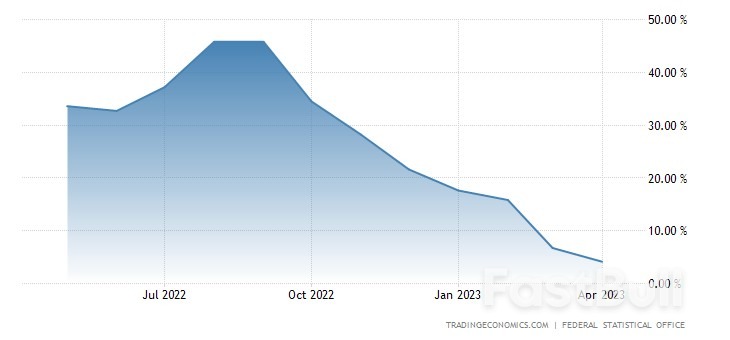
          Germany's Producer Inflation Eases for Seventh Consecutive Month, but Pressures Persist_1Germany's annual producer inflation witnessed a further easing trend for the seventh consecutive month, reaching a 25-month low of 4.1% in April 2023. Although slightly higher than the anticipated 4%, this decline provides some relief in terms of cost pressures. Notably, the upward pressure on inflation stemmed from capital goods, particularly machinery and vehicles, as well as non-durable goods like food. Additionally, substantial cost increases were observed in durable goods and intermediate goods. While energy prices showed a slowdown, excluding energy, producer prices recorded a 4.8% increase from the previous year. This article delves into the details of Germany's producer inflation, highlighting key sectors contributing to the overall inflationary pressures.
          Easing Inflationary Trends
          April's figure of 4.1% marks a significant moderation in Germany's producer inflation, highlighting a consistent downward trajectory. This development suggests that the recent measures taken to curb inflationary pressures are yielding positive results. However, despite the decline, inflation remains above the desired levels, necessitating ongoing attention and vigilance from policymakers and industry stakeholders.
          Capital Goods and Non-Durable Goods
          The main contributors to the upward pressure on producer prices were capital goods and non-durable goods. Capital goods, including machinery and vehicles, witnessed notable inflation rates of 6.8%, 8.6%, and 5.6%, respectively. These increases can be attributed to various factors such as rising raw material costs, supply chain disruptions, and increased global demand for these products. On the other hand, non-durable goods, especially food, experienced a significant inflation rate of 13.6%. This surge in food prices could be linked to various factors such as weather-related disruptions, increased transportation costs, and changes in consumer demand patterns.
          Durable Goods and Intermediate Goods
          Durable goods, encompassing furniture and domestic appliances, registered an inflation rate of 8.8%. This rise can be attributed to factors like higher input costs, including raw materials and labor expenses. Additionally, intermediate goods, such as glass, ceramics, processed stones, cement, wood chips, and household & sanitary goods, experienced a collective inflation rate of 0.2%. Within this category, particular attention should be given to the significant inflation observed in glass, ceramics, and processed stones (20.3%), cement (42.5%), wood chips (13.8%), and household & sanitary goods (21.9%). These price hikes may be driven by factors such as increased demand, supply chain disruptions, and rising raw material costs.
          Energy Prices and Excluding Energy Inflation
          While energy prices saw a slowdown in April, with a growth rate of 2.8% compared to the previous month's 6.8%, they still contributed to overall inflationary pressures. Notably, natural gas prices experienced a sharp increase of 10.8%, while electricity costs decreased by 2.9%. Excluding energy, producer prices increased by 4.8% year-on-year, underscoring the persisting inflationary pressures in other sectors of the economy.
          Monthly Increase in Producer Prices
          On a monthly basis, producer prices grew by 0.3% in April, marking the first month of increase since September of the previous year. This slight uptick suggests that some sectors may be experiencing a recovery from the previous decline. However, it is important to monitor whether this trend is sustained in the coming months or represents a temporary fluctuation.
          Germany's producer inflation eased for the seventh consecutive month, reaching a 25-month low in April 2023. While this decline is a positive development, inflationary pressures persist in various sectors of the economy. Capital goods, non-durable goods, durable goods, and intermediate goods have all contributed to the overall inflation rate. Additionally, energy prices showed a slowdown, but excluding energy, producer prices recorded a significant increase. Policymakers and industry stakeholders should continue to monitor these inflationary trends closely and take appropriate measures to ensure stability and sustainable economic growth in Germany.
          To stay updated on all economic events of today, please check out our Economic calendar
          Risk Warnings and Disclaimers
          You understand and acknowledge that there is a high degree of risk involved in trading. Following any strategies or investment methods may lead to potential losses. The content on the site is provided by our contributors and analysts for information purposes only. You are solely responsible for determining whether any trading assets, securities, strategy, or any other product is suitable for investing based on your own investment objectives and financial situation.
          Comments
          Add to Favorites
          Share

          Investors See Trouble Ahead after Europe's Stellar First Quarter

          Devin

          Stocks

          Big European companies have delivered significantly stronger than expected first-quarter results, defying a challenging economic backdrop that includes surging inflation and rising interest rates.
          But European stocks are down from a 14-month high in April, as investors worry about the health of the global economy, falling customer demand and pressures building on profit margins.
          About half of the STOXX 600 companies have reported first-quarter results and two thirds of them exceeded estimates, a stronger performance than in most quarters when about half of companies typically beat earnings estimates.
          "It's still the case, that a resilient consumer, supported by excess savings and a strong labour market continues to absorb higher prices and support corporate profitability," wrote Bernstein strategists Mark Diver and Sarah McCarthy.
          While banks had to be rescued in the United States and in Switzerland, first-quarter results from the euro zone's biggest bank BNP Paribas, British lender Barclays and Germany's biggest bank Deutsche Bank all beat forecasts.
          Consumer group Nestle and the maker of Dove soap and Ben & Jerry's ice cream Unilever reported stronger than expected results as price increases offset lower volumes.
          Europe's largest listed company LVMH produced stellar sales as China rebounded sharply after COVID restrictions ended.
          Earnings at STOXX 600 companies are currently expected to grow 7.3% in the first quarter, a big turnaround from a 2.5% decline expected only four weeks ago, based on Refinitiv I/B/E/S data.
          But the pan-European stock index is around 7% below a record peak hit in January 2022, before the Ukraine invasion.
          It is trading about 1% lower since the start of the earnings season when it hit its highest since February 2022 following a spurt supported by China's post-COVID reopening and declining energy prices. The current declines are broadly in line with global markets.
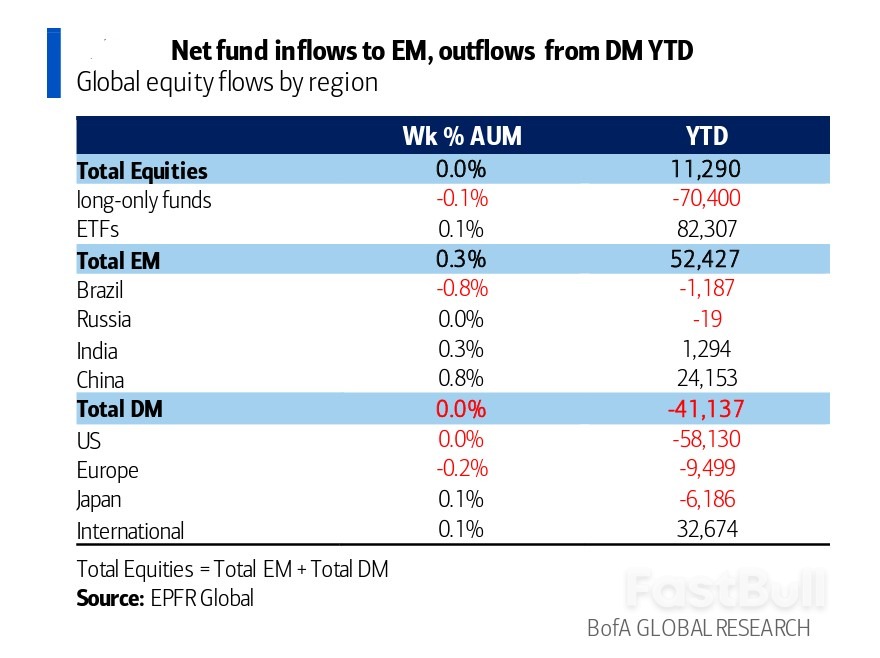
          Investors See Trouble Ahead after Europe's Stellar First Quarter_1BofA said European equities have seen nine straight weeks of outflows.
          Investors See Trouble Ahead after Europe's Stellar First Quarter_2'Clouds on the horizon'
          Last week, JP Morgan downgraded euro zone stocks to "underweight" highlighting that they had already gained 30% against the U.S. since their lows touched in September.
          "(Strong earnings season) was not enough to bring global markets to make new highs probably due to the clouds that are still present on the horizon," said Luca Finà, head of equity at Generali Insurance Asset Management, mentioning rising cost of capital and default risks of the U.S. debt ceiling.
          The robust corporate margins on show in the first quarter are seen coming under pressure later in the year.
          Based on Refinitiv I/B/E/S estimates, STOXX 600 companies are expected to report net profit margins of 11.4% in the first quarter, up from 10.2% in the last quarter of 2022.
          But margins are seen declining to 10.5% in the third quarter, according to Refinitiv estimates.
          "(If) Q1 sets an example for 2023, sales growth could remain resilient, but margins will have a hard time improving in this context of higher (interest) rates," said Florian Ielpo, head of macro at multi asset group Lombard Odier Asset Management.
          "Higher rates mean higher funding costs and lower CAPEX at the moment, and eventually it will mean a lower demand, declining sales and a lower pricing power as the consumer end will come under pressure," he said.
          New data from China shows inflation has flatlined and imports have declined, clouding the outlook for the global economy.
          Analysts also flagged those consumers across Europe, who have so far coped with the cost-of-living squeeze better than many expected, could eventually run out of savings.
          Cyclicals delivered the bulk of the EPS beats, led by industrials and consumer discretionary, Barclays said.
          The European Commission said on Monday it expects euro-zone inflation, currently at 7%, to remain stubbornly high this year, with economic growth forecast at 1.1% this year and 1.6% in 2024.
          Europe's largest technology company ASML Holding NV beat earnings forecasts but noted some signs of caution among customers.
          Telecoms group Vodafone plans to cut 11,000 jobs over three years after it warned that a poor performance in its biggest market Germany would hit cash flow.
          But there has not been a wave of companies revising earnings forecasts down, providing a cushion for European equities.
          "Guidance has been less positive in Q1 but there has been no material rise in percentage of firms guiding lower," Barclays said.

          Source: Yahoo

          Risk Warnings and Disclaimers
          You understand and acknowledge that there is a high degree of risk involved in trading. Following any strategies or investment methods may lead to potential losses. The content on the site is provided by our contributors and analysts for information purposes only. You are solely responsible for determining whether any trading assets, securities, strategy, or any other product is suitable for investing based on your own investment objectives and financial situation.
          Comments
          Add to Favorites
          Share

          Upbeat Global Sentiment Fuels Optimism as European Markets Prepare for Higher Open

          Warren Takunda

          Stocks

          The European equity markets are poised for a positive start on Friday, buoyed by an optimistic global sentiment. Investors are increasingly hopeful that the US government will soon reach a deal to raise the debt ceiling and avert a potential default. Additionally, attention is focused on the Group of Seven (G7) summit in Japan, where prominent economies are set to engage in discussions concerning international trade and security. As investors digest the latest data indicating a slowdown in producer inflation in Germany, premarket indicators point towards a promising start, with DAX, Stoxx 600, and FTSE 100 futures all showing gains of around 0.3%.
          Upbeat Global Sentiment Fuels Optimism as European Markets Prepare for Higher Open_1Optimism Amid Debt Ceiling Talks
          The positive outlook in European equity markets stems from the growing belief that the US government will successfully negotiate an agreement to raise the debt ceiling. Investors are relieved at the prospect of averting a potential default, which would have significant global ramifications. A successful resolution to the debt ceiling issue would alleviate market concerns and restore confidence among investors.
          G7 Summit: Trade and Security in Focus
          The ongoing G7 summit, taking place in Japan, has attracted considerable attention from market participants. Major economies such as Canada, France, Germany, Italy, Japan, the UK, and the US are gathering to discuss crucial issues related to international trade and security. The outcomes of these discussions have the potential to impact global markets, particularly in terms of trade policies and geopolitical stability. Investors will closely monitor any announcements or developments that emerge from the summit.
          Producer Inflation in Germany
          Investors have also been analyzing the recently released data indicating a slowdown in producer inflation in Germany. The figures reveal that April marked a 25-month low for producer inflation, which can have implications for consumer prices and the overall state of the German economy. While this data may contribute to short-term market fluctuations, it is important to assess it within the broader context of other economic indicators.Upbeat Global Sentiment Fuels Optimism as European Markets Prepare for Higher Open_2
          Premarket Indicators Point to Positive Start
          As European markets brace for the opening bell, premarket indicators suggest a positive start. DAX, Stoxx 600, and FTSE 100 futures all reflect gains of approximately 0.3%, signaling an optimistic market sentiment. However, it's essential to keep in mind that premarket indicators are not always indicative of the market's actual performance throughout the day. Therefore, investors should remain cautious and consider a range of factors that may influence market dynamics.
          Risk Warnings and Disclaimers
          You understand and acknowledge that there is a high degree of risk involved in trading. Following any strategies or investment methods may lead to potential losses. The content on the site is provided by our contributors and analysts for information purposes only. You are solely responsible for determining whether any trading assets, securities, strategy, or any other product is suitable for investing based on your own investment objectives and financial situation.
          Comments
          Add to Favorites
          Share

          Yen's Mild Recovery Overshadowed by Risk-On Sentiment; Euro, Swiss Franc Trail Closely in Underperformance

          Samantha Luan

          Forex

          Japanese yen made a modest recovery today, bolstered by yet another month of robust consumer inflation data. However, this uptick in the currency was held back by strong risk-on sentiment prevalent in Japan, with Nikkei surging to a 33-year high. BoJ's continued commitment to its ultra-loose monetary policy also put a damper on Yen's rise, securing its position as the weakest performer for the week – and by a significant margin at that.
          With the week drawing to a close, Euro and Swiss franc are trailing closely behind the Yen as underperformers, followed by Sterling. New Zealand Dollar stands as the week's strongest, receiving a slight boost from promising trade data released today. Canadian dollar, buoyed by earlier in the week's CPI data, anticipates the next move from retail sales figures due later today. Dollar maintains a firm stance, albeit lagging behind Kiwi and Loonie.
          From a technical standpoint, EUR/CAD pair has seen its fall from 1.5111 intensify this week. Given bearish divergence in D MACD, the decline could be viewed as a correction to the overall uptrend from 1.2867. As long as 1.4746 resistance level holds, deeper fall towards 1.4236 cluster support (38.2% retracement of 1.2867 to 1.5111 at 1.4254) is expected. Notably, strong support could emerge here to trigger a rebound, at least on the initial attempt.
          Yen's Mild Recovery Overshadowed by Risk-On Sentiment; Euro, Swiss Franc Trail Closely in Underperformance_1In Asia, Nikkei rose 0.77% to 30808.35. Japan 10-year JGB yield rose 0.0177 to 0.403. Hong Kong HSI is currently down -1.28%. China Shanghai SSE is down -0.47%. Singapore Strait Times is up 0.55%. Overnight, DOW rose 0.34%. S&P 500 rose 0.94%. NASDAQ rose 1.51%. 10-year yield rose 0.067 to 3.648.

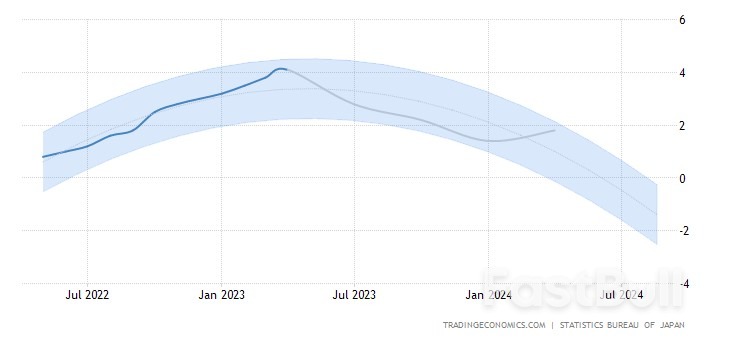
          Japan CPI core rose back to 3.5% in April, core-core hit 42-yr high

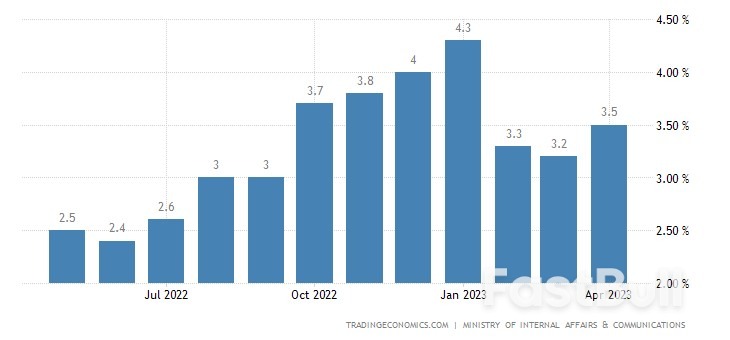
          April saw Japanese consumer prices accelerating, with CPI accelerated from 3.2% yoy to 3.5% yoy. That put a halt to the slowdown of headline inflation from 4.3% in January.
          Even more significantly, core CPI (which excludes fresh food) rose from 3.1% yoy to 3.4%. This metric has been above BoJ's 2% target for an uninterrupted 13 months, signifying persistent inflationary pressure.
          In the realm of core-core CPI, which excludes both fresh food and energy, the increase is even starker, rising from 3.8% yoy to 4.1%. This figure is the highest it has been since September 1981, marking a nearly 42-year peak.
          Looking at some details, services inflation increased from 1.5% yoy to 1.7%, the highest in 28 years since 1995 (excluding the impact of sales tax hikes). Durable goods prices soared 9.8% yoy, and food prices accelerated from 8.2% yoy to 9.0%, hitting the highest level in almost 47 years since 1976. Energy prices, however, bucked the trend with a yoy decrease of -4.4% yoy.
          Despite these inflationary pressures, there is no clear indication that BoJ is preparing to exit its ultra-loose monetary policy. The bank projected CPI to average 1.8% and core CPI at 2.5% for the current fiscal year, but given the current data, it is likely that these projections will be revised upward in the next release.

          New Zealand exports rise 10% yoy with China leading, EU tops 12% imports growth

          New Zealand's trade balance in April reported a surplus of NZD 427m, defying expected deficit of NZD -1310m. Both imports and exports experienced significant year-on-year growth, with exports rising 10% yoy (NZD 641m) to NZD 6.8B and imports increasing 12% yoy (NZD 683m) to NZD 6.4B.
          In the export sector, notable growth was observed in shipments to China, Australia, and the US. Specifically, total exports to China rose by NZD 259m (16% yoy), to Australia by NZD 67m (10% yoy), and to the U.S. by NZD 109m (17% yoy). However, exports experienced a slight downturn to the EU, falling by NZD -2.2m (-0.4% yoy), and a more substantial drop to Japan, decreasing by NZD -53m (-12% yoy).
          On the import side, the European Union led the surge with total imports up by NZD 108m (13% yoy). Imports from the U.S. also experienced growth, with an increase of NZD 46m (7.6% yoy). Conversely, imports from China, Australia, and South Korea all fell, with decreases of NZD -29m (-2.4% yoy), NZD -37m (-5.1% yoy), and NZD -28m (-8.3% yoy) respectively.

          Looking ahead

          ECB will publish monthly economic bulletin today. Canada will release retail sales.

          USD/JPY Daily Outlook

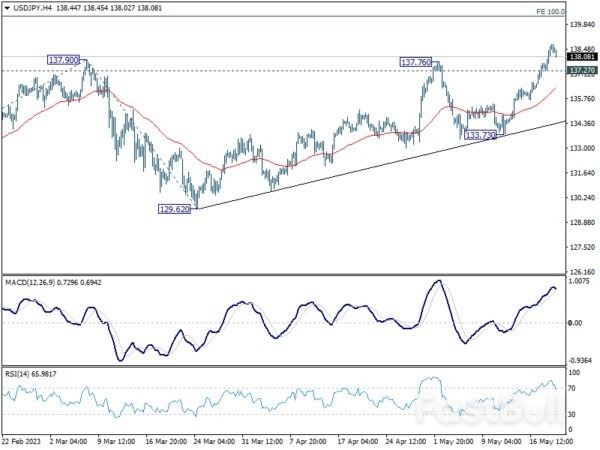
          Intraday bias in USD/JPY remains on the upside for now, despite current slight retreat. Current rise is part of the whole rally from 127.20. Next target is 100% projection of 127.20 to 137.90 from 129.62 at 140.32. Break there will target 142.48 fibonacci level. On the downside, below 137.27 minor support will turn intraday bias neutral first.Yen's Mild Recovery Overshadowed by Risk-On Sentiment; Euro, Swiss Franc Trail Closely in Underperformance_2
          In the bigger picture, price actions from 151.93 high are currently seen as a corrective pattern to the long term up trend. The first leg should have completed at 127.20. Rebound from there is seen as the second leg. Sustained break of 38.2% retracement of 151.93 to 127.20 at 136.34 will bring stronger rise to 61.8% retracement at 142.48. Meanwhile, break of 129.62 will argue that the third leg is starting through 127.20 low.Yen's Mild Recovery Overshadowed by Risk-On Sentiment; Euro, Swiss Franc Trail Closely in Underperformance_3

          Source: ActionForex.com

          Risk Warnings and Disclaimers
          You understand and acknowledge that there is a high degree of risk involved in trading. Following any strategies or investment methods may lead to potential losses. The content on the site is provided by our contributors and analysts for information purposes only. You are solely responsible for determining whether any trading assets, securities, strategy, or any other product is suitable for investing based on your own investment objectives and financial situation.
          Comments
          Add to Favorites
          Share

          Japan's Inflation Rate Climbs, Fueling Concerns of Sustained Price Pressures

          Warren Takunda

          Traders' Opinions

          Japan's inflation rate surged to 3.5% in April 2023, rebounding from a six-month low recorded in March. The rise was primarily driven by soaring food prices, marking the sharpest increase since August 1976. Additionally, several other sectors experienced accelerated costs, while core inflation reached a three-month high of 3.4%. These developments are raising concerns about sustained price pressures and their implications for Japan's economy.Japan's Inflation Rate Climbs, Fueling Concerns of Sustained Price Pressures_1
          Food Prices Reach Historic Highs
          In April, Japan witnessed an alarming surge in food prices, with an annual increase of 8.4%. This notable rise, the highest since 1976, has been attributed to the rapid depreciation of the yen. Every component of the food category contributed to the upward cost pressures, including fresh vegetables, fruits, alcoholic beverages, dairy products, and cooked food. These price hikes have persisted for 20 consecutive months, posing significant challenges to Japanese consumers.
          Japan's Inflation Rate Climbs, Fueling Concerns of Sustained Price Pressures_2Broad-Based Cost Acceleration
          Beyond the food sector, several other areas experienced heightened inflationary pressures. Transportation costs rose to 1.8% in April, up from 1.6% in March, indicating increased expenses for commuting and travel. The clothing sector witnessed a similar trend, with prices increasing by 3.8%, compared to 3.6% the previous month. Furniture, household utensils, medical care, and education also experienced cost acceleration, further contributing to inflationary pressures in the country.
          Core Inflation Remains Above Target
          Japan's core inflation, which excludes fresh food but includes fuel costs, rose to 3.4% in April 2023, surpassing the central bank's 2% target for the thirteenth consecutive month. This persistent overshooting challenges the Bank of Japan's belief that inflation will decelerate and return to its target level in the near future. The central bank, led by Governor Kazuo Ueda, has maintained its ultra-easy monetary policy and made no adjustments to its yield curve control in response to these developments. Ueda emphasized the need for more evidence of sustainable inflation driven by robust demand rather than temporary supply pressures.Japan's Inflation Rate Climbs, Fueling Concerns of Sustained Price Pressures_3
          Concerns for the Economy
          The rising inflation rate in Japan raises concerns about its impact on the country's economy. Sustained price pressures can erode purchasing power, reduce consumer spending, and hinder economic growth. Moreover, if inflation persists and leads to higher production costs, businesses may face challenges in maintaining profitability, potentially impacting investments and employment levels.
          Policy Implications
          The Bank of Japan faces a delicate balancing act in managing the inflationary environment. While higher inflation can be an indicator of a growing economy, it also poses risks if left unchecked. The central bank's commitment to its current policy settings indicates a cautious approach, with a desire to ensure the sustainability of inflationary trends before considering any policy adjustments.
          Risk Warnings and Disclaimers
          You understand and acknowledge that there is a high degree of risk involved in trading. Following any strategies or investment methods may lead to potential losses. The content on the site is provided by our contributors and analysts for information purposes only. You are solely responsible for determining whether any trading assets, securities, strategy, or any other product is suitable for investing based on your own investment objectives and financial situation.
          Comments
          Add to Favorites
          Share
          FastBull
          Copyright © 2025 FastBull Ltd

          728 RM B 7/F GEE LOK IND BLDG NO 34 HUNG TO RD KWUN TONG KLN HONG KONG

          TelegramInstagramTwitterfacebooklinkedin
          App Store Google Play Google Play
          Products
          Charts

          Chats

          Q&A with Experts
          Screeners
          Economic Calendar
          Data
          Tools
          Membership
          Features
          Function
          Markets
          Copy Trading
          Latest Signals
          Contests
          News
          Analysis
          24/7
          Columns
          Education
          Company
          Careers
          About Us
          Contact Us
          Advertising
          Help Center
          Feedback
          User Agreement
          Privacy Policy
          Business

          White Label

          Data API

          Web Plug-ins

          Poster Maker

          Affiliate Program

          Risk Disclosure

          The risk of loss in trading financial instruments such as stocks, FX, commodities, futures, bonds, ETFs and crypto can be substantial. You may sustain a total loss of the funds that you deposit with your broker. Therefore, you should carefully consider whether such trading is suitable for you in light of your circumstances and financial resources.

          No decision to invest should be made without thoroughly conducting due diligence by yourself or consulting with your financial advisors. Our web content might not suit you since we don't know your financial conditions and investment needs. Our financial information might have latency or contain inaccuracy, so you should be fully responsible for any of your trading and investment decisions. The company will not be responsible for your capital loss.

          Without getting permission from the website, you are not allowed to copy the website's graphics, texts, or trademarks. Intellectual property rights in the content or data incorporated into this website belong to its providers and exchange merchants.

          Not Logged In

          Log in to access more features

          FastBull Membership

          Not yet

          Purchase

          Become a signal provider
          Help Center
          Customer Service
          Dark Mode
          Price Up/Down Colors

          Log In

          Sign Up

          Position
          Layout
          Fullscreen
          Default to Chart
          The chart page opens by default when you visit fastbull.com