• Trade
  • Markets
  • Copy
  • Contests
  • News
  • 24/7
  • Calendar
  • Q&A
  • Chats
Trending
Screeners
SYMBOL
LAST
BID
ASK
HIGH
LOW
NET CHG.
%CHG.
SPREAD
SPX
S&P 500 Index
6827.42
6827.42
6827.42
6899.86
6801.80
-73.58
-1.07%
--
DJI
Dow Jones Industrial Average
48458.04
48458.04
48458.04
48886.86
48334.10
-245.98
-0.51%
--
IXIC
NASDAQ Composite Index
23195.16
23195.16
23195.16
23554.89
23094.51
-398.69
-1.69%
--
USDX
US Dollar Index
97.950
98.030
97.950
98.500
97.950
-0.370
-0.38%
--
EURUSD
Euro / US Dollar
1.17394
1.17409
1.17394
1.17496
1.17192
+0.00011
+ 0.01%
--
GBPUSD
Pound Sterling / US Dollar
1.33707
1.33732
1.33707
1.33997
1.33419
-0.00148
-0.11%
--
XAUUSD
Gold / US Dollar
4299.39
4299.39
4299.39
4353.41
4257.10
+20.10
+ 0.47%
--
WTI
Light Sweet Crude Oil
57.233
57.485
57.233
58.011
56.969
-0.408
-0.71%
--

Community Accounts

Signal Accounts
--
Profit Accounts
--
Loss Accounts
--
View More

Become a signal provider

Sell trading signals to earn additional income

View More

Guide to Copy Trading

Get started with ease and confidence

View More

Signal Accounts for Members

All Signal Accounts

Best Return
  • Best Return
  • Best P/L
  • Best MDD
Past 1W
  • Past 1W
  • Past 1M
  • Past 1Y

All Contests

  • All
  • Trump Updates
  • Recommend
  • Stocks
  • Cryptocurrencies
  • Central Banks
  • Featured News
Top News Only
Share

USA Embassy In Lithuania: Maria Kalesnikava Is Not Going To Vilnius

Share

USA Embassy In Lithuania: Other Prisoners Are Being Sent From Belarus To Ukraine

Share

Ukraine President Zelenskiy: Five Ukrainians Released By Belarus In US-Brokered Deal

Share

USA Vilnius Embassy: USA Stands Ready For "Additional Engagement With Belarus That Advances USA Interests"

Share

USA Vilnius Embassy: Belarus, USA, Other Citizens Among The Prisoners Released Into Lithuania

Share

USA Vilnius Embassy: USA Will Continue Diplomatic Efforts To Free The Remaining Political Prisoners In Belarus

Share

USA Vilnius Embassy: Belarus Releases 123 Prisoners Following Meeting Of President Trump's Envoy Coale And Belarus President Lukashenko

Share

USA Vilnius Embassy: Masatoshi Nakanishi, Aliaksandr Syrytsa Are Among The Prisoners Released By Belarus

Share

USA Vilnius Embassy: Maria Kalesnikava And Viktor Babaryka Are Among The Prisoners Released By Belarus

Share

USA Vilnius Embassy: Nobel Peace Prize Laureate Ales Bialiatski Is Among The Prisoners Released By Belarus

Share

Belarusian Presidential Administration Telegram Channel: Lukashenko Has Pardoned 123 Prisoners As Part Of Deal With US

Share

Two Local Syrian Officials: Joint US-Syrian Military Patrol In Central Syria Came Under Fire From Unknown Assailants

Share

Israeli Military Says It Targeted 'Key Hamas Terrorist' In Gaza City

Share

Rwanda's Actions In Eastern Drc Are A Clear Violation Of Washington Accords Signed By President Trump - Secretary Of State Rubio

Share

Israeli Military Issues Evacuation Warning In Southern Lebanon Village Ahead Of Strike - Spokesperson On X

Share

Belarusian State Media Cites US Envoy Coale As Saying He Discussed Ukraine And Venezuela With Lukashenko

Share

Belarusian State Media Cites US Envoy Coale As Saying That US Removes Sanctions On Belarusian Potassium

Share

Thai Prime Minister: No Ceasefire Agreement With Cambodia

Share

US, Ukraine To Discuss Ceasefire In Berlin Ahead Of European Summit

Share

Incoming Czech Prime Minister Babis: Czech Republic Will Not Take On Guarantees For Ukraine Financing, European Commission Must Find Alternatives

TIME
ACT
FCST
PREV
U.K. Trade Balance Non-EU (SA) (Oct)

A:--

F: --

P: --

U.K. Trade Balance (Oct)

A:--

F: --

P: --

U.K. Services Index MoM

A:--

F: --

P: --

U.K. Construction Output MoM (SA) (Oct)

A:--

F: --

P: --

U.K. Industrial Output YoY (Oct)

A:--

F: --

P: --

U.K. Trade Balance (SA) (Oct)

A:--

F: --

P: --

U.K. Trade Balance EU (SA) (Oct)

A:--

F: --

P: --

U.K. Manufacturing Output YoY (Oct)

A:--

F: --

P: --

U.K. GDP MoM (Oct)

A:--

F: --

P: --

U.K. GDP YoY (SA) (Oct)

A:--

F: --

P: --

U.K. Industrial Output MoM (Oct)

A:--

F: --

P: --

U.K. Construction Output YoY (Oct)

A:--

F: --

P: --

France HICP Final MoM (Nov)

A:--

F: --

P: --

China, Mainland Outstanding Loans Growth YoY (Nov)

A:--

F: --

P: --

China, Mainland M2 Money Supply YoY (Nov)

A:--

F: --

P: --

China, Mainland M0 Money Supply YoY (Nov)

A:--

F: --

P: --

China, Mainland M1 Money Supply YoY (Nov)

A:--

F: --

P: --

India CPI YoY (Nov)

A:--

F: --

P: --

India Deposit Gowth YoY

A:--

F: --

P: --

Brazil Services Growth YoY (Oct)

A:--

F: --

P: --

Mexico Industrial Output YoY (Oct)

A:--

F: --

P: --

Russia Trade Balance (Oct)

A:--

F: --

P: --

Philadelphia Fed President Henry Paulson delivers a speech
Canada Building Permits MoM (SA) (Oct)

A:--

F: --

P: --

Canada Wholesale Sales YoY (Oct)

A:--

F: --

P: --

Canada Wholesale Inventory MoM (Oct)

A:--

F: --

P: --

Canada Wholesale Inventory YoY (Oct)

A:--

F: --

P: --

Canada Wholesale Sales MoM (SA) (Oct)

A:--

F: --

P: --

Germany Current Account (Not SA) (Oct)

A:--

F: --

P: --

U.S. Weekly Total Rig Count

A:--

F: --

P: --

U.S. Weekly Total Oil Rig Count

A:--

F: --

P: --

Japan Tankan Large Non-Manufacturing Diffusion Index (Q4)

--

F: --

P: --

Japan Tankan Small Manufacturing Outlook Index (Q4)

--

F: --

P: --

Japan Tankan Large Non-Manufacturing Outlook Index (Q4)

--

F: --

P: --

Japan Tankan Large Manufacturing Outlook Index (Q4)

--

F: --

P: --

Japan Tankan Small Manufacturing Diffusion Index (Q4)

--

F: --

P: --

Japan Tankan Large Manufacturing Diffusion Index (Q4)

--

F: --

P: --

Japan Tankan Large-Enterprise Capital Expenditure YoY (Q4)

--

F: --

P: --

U.K. Rightmove House Price Index YoY (Dec)

--

F: --

P: --

China, Mainland Industrial Output YoY (YTD) (Nov)

--

F: --

P: --

China, Mainland Urban Area Unemployment Rate (Nov)

--

F: --

P: --

Saudi Arabia CPI YoY (Nov)

--

F: --

P: --

Euro Zone Industrial Output YoY (Oct)

--

F: --

P: --

Euro Zone Industrial Output MoM (Oct)

--

F: --

P: --

Canada Existing Home Sales MoM (Nov)

--

F: --

P: --

Euro Zone Total Reserve Assets (Nov)

--

F: --

P: --

U.K. Inflation Rate Expectations

--

F: --

P: --

Canada National Economic Confidence Index

--

F: --

P: --

Canada New Housing Starts (Nov)

--

F: --

P: --

U.S. NY Fed Manufacturing Employment Index (Dec)

--

F: --

P: --

U.S. NY Fed Manufacturing Index (Dec)

--

F: --

P: --

Canada Core CPI YoY (Nov)

--

F: --

P: --

Canada Manufacturing Unfilled Orders MoM (Oct)

--

F: --

P: --

Canada Manufacturing New Orders MoM (Oct)

--

F: --

P: --

Canada Core CPI MoM (Nov)

--

F: --

P: --

Canada Manufacturing Inventory MoM (Oct)

--

F: --

P: --

Canada CPI YoY (Nov)

--

F: --

P: --

Canada CPI MoM (Nov)

--

F: --

P: --

Canada CPI YoY (SA) (Nov)

--

F: --

P: --

Canada Core CPI MoM (SA) (Nov)

--

F: --

P: --

Q&A with Experts
    • All
    • Chatrooms
    • Groups
    • Friends
    Connecting
    .
    .
    .
    Type here...
    Add Symbol or Code

      No matching data

      All
      Trump Updates
      Recommend
      Stocks
      Cryptocurrencies
      Central Banks
      Featured News
      • All
      • Russia-Ukraine Conflict
      • Middle East Flashpoint
      • All
      • Russia-Ukraine Conflict
      • Middle East Flashpoint
      Search
      Products

      Charts Free Forever

      Chats Q&A with Experts
      Screeners Economic Calendar Data Tools
      Membership Features
      Data Warehouse Market Trends Institutional Data Policy Rates Macro

      Market Trends

      Market Sentiment Order Book Forex Correlations

      Top Indicators

      Charts Free Forever
      Markets

      News

      News Analysis 24/7 Columns Education
      From Institutions From Analysts
      Topics Columnists

      Latest Views

      Latest Views

      Trending Topics

      Top Columnists

      Latest Update

      Signals

      Copy Rankings Latest Signals Become a signal provider AI Rating
      Contests
      Brokers

      Overview Brokers Assessment Rankings Regulators News Claims
      Broker listing Forex Brokers Comparison Tool Live Spread Comparison Scam
      Q&A Complaint Scam Alert Videos Tips to Detect Scam
      More

      Business
      Events
      Careers About Us Advertising Help Center

      White Label

      Data API

      Web Plug-ins

      Affiliate Program

      Awards Institution Evaluation IB Seminar Salon Event Exhibition
      Vietnam Thailand Singapore Dubai
      Fans Party Investment Sharing Session
      FastBull Summit BrokersView Expo
      Recent Searches
        Top Searches
          Markets
          News
          Analysis
          User
          24/7
          Economic Calendar
          Education
          Data
          • Names
          • Latest
          • Prev

          View All

          No data

          Scan to Download

          Faster Charts, Chat Faster!

          Download App
          English
          • English
          • Español
          • العربية
          • Bahasa Indonesia
          • Bahasa Melayu
          • Tiếng Việt
          • ภาษาไทย
          • Français
          • Italiano
          • Türkçe
          • Русский язык
          • 简中
          • 繁中
          Open Account
          Search
          Products
          Charts Free Forever
          Markets
          News
          Signals

          Copy Rankings Latest Signals Become a signal provider AI Rating
          Contests
          Brokers

          Overview Brokers Assessment Rankings Regulators News Claims
          Broker listing Forex Brokers Comparison Tool Live Spread Comparison Scam
          Q&A Complaint Scam Alert Videos Tips to Detect Scam
          More

          Business
          Events
          Careers About Us Advertising Help Center

          White Label

          Data API

          Web Plug-ins

          Affiliate Program

          Awards Institution Evaluation IB Seminar Salon Event Exhibition
          Vietnam Thailand Singapore Dubai
          Fans Party Investment Sharing Session
          FastBull Summit BrokersView Expo

          Inflation-Wary US Rate Options Market Cautiously Prices for 2024 Fed Hike

          Warren Takunda

          Economic

          Central Bank

          Stocks

          Summary:

          SOFR futures market suggests there is a higher chance of Fed raising interest rates this year and next year due to inflation and strong labor market. However, the market still expects the Fed to cut rates by 30 basis points in 2024.

          Options on Secured Overnight Financing Rate (SOFR) futures are showing a higher probability that the Federal Reserve could hike interest rates a quarter percentage point this year and next as U.S. inflation and the labor market remain resilient.
          Bond investors look to SOFR futures, among other indicators, to gauge expectations on Fed policy rates. Options, on the other hand, are widely used to hedge against expected moves, with "vol" or volatility a key input in the price.
          SOFR, currently at 5.31% , measures the cost of borrowing cash overnight in money markets collateralized by U.S. Treasuries. It is the benchmark rate used to price dollar-denominated derivatives and loans.
          Odds for a rise in SOFR are low, though not insignificant. Few market participants actually expect the Fed to hike again. It could well be that the Fed cuts rates just once this year or not at all, and hold them higher for longer.
          Analysts said it would take a full-blown re-acceleration in inflation for the Fed to tighten again. That is not the baseline scenario for most economists.
          Inflation remains stubborn despite slowing late last year after 15 months of aggressive rate hikes that the Fed halted in July. Data on Thursday showed that core U.S. personal consumption expenditures inflation rose 3.7% in the first quarter, after growing 2% in the fourth.
          Friday's monthly report on PCE inflation for March showed 0.3% growth, the same as February, while over 12 months inflation rose 2.7%, worse than February's 2.5% and further from the Fed's 2% target.
          "If you look purely at the data and you did not have the rhetoric coming from central banks, we would be pricing in hikes, not cuts," said Akshay Singal, head of short-term interest rate trading at Citi.
          "And the fact that central bankers have been of the view that they've done enough is being challenged quite aggressively now."
          The option-implied probability for SOFR to rise 25 basis points to 5.56% by December has risen to 29%, Barclays estimates showed, from about 26% in early April.
          The prospect of a no-cut scenario for 2024 is 31%, up from 20% a month ago, BNP Paribas data showed. Chances of the first 25-bp hike in 2025 are at 22%. Volume though is typically thin the further out the curve so that number can change.
          Gennadiy Goldberg, head of U.S. rates strategy at TD Securities, said the increase in pricing reflects the uncertainty investors face in an environment of strong growth and persistent inflation.
          "The longer we stay at higher rates and the economy stays strong and inflation sticky, the more investors will question whether the Fed is doing enough," he added.

          MARKET BIASED TOWARD CUTS

          Even so, SOFR futures have priced in about 30 basis points in easing for 2024 .
          "There's a very high threshold to price a shift in Fed policy," said Bruno Braizinha, rates strategist at BofA Securities. "U.S. data needs to improve by a lot for the market to abandon rate cuts and transition to pricing hikes."
          The rise in implied volatility in interest rate swaps, a corner in the fixed income space investors use to hedge interest rate risk, has accompanied the increase in rate-hike odds with rising uncertainty over Fed outcomes.
          Rate swaps measure the cost of exchanging fixed-rate cash flows for floating-rate ones, or vice versa.
          Implied vol is a gauge of how much the option market believes rate swaps will move in either direction over a given time frame. The higher the vol, the greater the perceived instability over a given period.
          Volatility on shorter-dated swaptions such as one-year at-the-money options on one-year swap rates, that part of the curve in which Fed policy is being priced, rose to a price of 28.62 bps on Thursday , the highest since April 17.
          So-called receiver swaptions, a type of option that pays off when interest rates fall, are still in demand. In a receiver swaption, the holder of the option chooses to pay a fixed interest rate in exchange for receiving a floating rate.
          But the price for those receivers have cheapened a bit on shorter maturities, suggesting that demand may be easing as rate cuts are factored out.
          "The baseline case for now is no-landing," BofA's Braizinha said, referring to a scenario where the U.S. economy avoids recession. And that, he said, does not necessarily warrant a rate hike.Inflation-Wary US Rate Options Market Cautiously Prices for 2024 Fed Hike_1

          Source: Reuters

          To stay updated on all economic events of today, please check out our Economic calendar
          Risk Warnings and Disclaimers
          You understand and acknowledge that there is a high degree of risk involved in trading. Following any strategies or investment methods may lead to potential losses. The content on the site is provided by our contributors and analysts for information purposes only. You are solely responsible for determining whether any trading assets, securities, strategy, or any other product is suitable for investing based on your own investment objectives and financial situation.
          Add to Favorites
          Share

          Indian Economy Remains In Bright Spot:Ministry Of Finance

          Alex

          Economic

          In contrast to the global scenario, the Indian economy continues to exhibit strong economic performance with broad-based growth across sectors, the Ministry of Finance asserted.
          "The optimism regarding growth prospects is also reflected in consumer and investor perceptions," according to the Monthly Economic Review report of the Department of Economic Affairs under the Finance Ministry.
          Many international organisations assert India's pivotal role in determining the growth path of Asia in the coming years, the review report said.
          Reserve Bank of India also, in its latest Monetary Policy Committee meeting, noted the strong growth momentum in the economy and projected real GDP growth for 2024-25 at 7 per cent, driven by a pickup in rural demand and sustained momentum in the manufacturing sector.
          The International Monetary Fund in its latest report forecasted India's growth at a high of 6.8 per cent in 2024-25 and 6.5 per cent in 2025- 26, based on its assessment of continuing strength in domestic demand and a rising working-age population.
          "As per the latest consumer confidence survey, households' sentiments on the general economic situation and employment prospects recorded notable improvements for both the current period as well as the upcoming year," said the monthly review report of the finance ministry.
          It further added that the manufacturing sector is also expected to maintain its momentum on the back of sustained profitability and pick-up in rural demand. On inflation, it said the government's efforts in managing retail inflation in 2023-24 have been highly successful.
          Inflation measured by the Consumer Price Index declined from 6.7 per cent in 2022-23 to 5.4 per cent in 2023-24, which is within the upper tolerance level of the inflation-targeting framework. 2023-24 ended with an inflation rate of 4.85 per cent in March 2024, which is the lowest inflation rate recorded in the last 10 months.
          However, inflation continues to remain the main concern for the Reserve Bank of India's monetary policy committee members before it goes ahead and loosens its stance on key interest rates.
          In the minutes of the latest monetary policy meeting released recently, there have been several mentions of uncertainties around inflation. Going ahead, food price uncertainties would continue to weigh on the inflation outlook, according to the minutes.
          Retail inflation in India is in RBI's two-six per cent comfort level but is above the ideal 4 per cent scenario. Inflation has been a concern for many countries, including advanced economies, but India has largely managed to steer its inflation trajectory quite well. Looking ahead, the RBI monetary policy committee sees food price uncertainties weighing on the inflation outlook.
          "While a record Rabi crop will help in moderating cereal prices, the increasing occurrence of weather shocks poses an upside risk to food prices. Geopolitical tensions and their effect on oil prices add to this risk. However, Kharif crop prospects look bright at this early stage with the IMD's prediction of an above-normal monsoon this year," the finance ministry's monthly review said.

          Source:zeebiz

          To stay updated on all economic events of today, please check out our Economic calendar
          Risk Warnings and Disclaimers
          You understand and acknowledge that there is a high degree of risk involved in trading. Following any strategies or investment methods may lead to potential losses. The content on the site is provided by our contributors and analysts for information purposes only. You are solely responsible for determining whether any trading assets, securities, strategy, or any other product is suitable for investing based on your own investment objectives and financial situation.
          Add to Favorites
          Share

          US Pushes For Gaza Truce,Hostage Release As Blinken Visits

          Samantha Luan

          Economic

          US Secretary of State Antony Blinken will step up efforts to secure a truce in Gaza during meetings in the Middle East starting Monday, in what could be a final chance to persuade Israel to call off an attack on Rafah.
          The White House said Sunday that Israel has agreed to hear out its concerns. Israel has “assured us that they won’t go into Rafah until we’ve had a chance to really share our perspectives and our concerns with them,” John Kirby, spokesman for the White House’s National Security Council, told ABC News. “So we’ll see where that goes.”
          Palestinian President Mahmoud Abbas urged US President Joe Biden to intervene, telling a special edition of the World Economic Forum in Riyadh that the US “is the only country capable” of stopping an Israel invasion of Rafah.
          Biden and Israeli Prime Minister Benjamin Netanyahu reviewed the talks on a hostage release and a Gaza cease-fire during a call on Sunday, according to a White House statement. Biden also “reiterated his clear position” on Rafah.
          “If there’s a deal, we will suspend the operation” in Rafah, Israeli Foreign Minister Israel Katz told Channel 12 on Saturday, even as the Israeli military continued to make preparations for an offensive.
          A Hamas official said its delegation plans to respond to the latest Israeli truce plan on Monday, Agence France-Presse reported, offering another glimmer of hope as the Gaza conflict grinds toward the seven-month mark.
          Egypt is stepping up efforts at mediation to secure an agreement between Israel and Hamas leading to a cease-fire in exchange for the release of hostages, but the two sides remain far apart.
          Blinken is traveling to Saudi Arabia to meet with regional counterparts and then to Jordan and Israel through Wednesday, according to the State Department. It’s his seventh Middle East trip since Hamas attacked Israel on Oct. 7.
          An Israeli assault on Rafah, a safe haven for roughly half the Gaza Strip’s population who’ve fled almost seven months of fighting, would prolong the conflict and threaten Biden’s hopes of getting Arab states to help with postwar rebuilding. It would also stymie a US push to secure a historic accord to establish relations between Israel and Saudi Arabia.
          The US has urged Israel against a large-scale offensive in Rafah, which Israeli officials say is needed to crush the final stronghold of 5,000 to 8,000 fighters and key leaders from the Palestinian militant group. The small city on the coastal strip’s border with Egypt had a prewar population of about 280,000 and is now crammed with more than a million refugees. There are fears of major civilian casualties if Israeli troops storm it. Israel has promised to move the civilians out, an uncertain process that could take weeks.
          Israel has been waging a military campaign in Gaza to wipe out Hamas, which is designated as a terrorist organization by the US, the European Union and others, since it swept across the border and attacked Israeli communities and military bases on Oct. 7.
          Hamas fighters killed 1,200 people and abducted 250 others in that assault, of whom more than 130 remain in Gaza, some dead. The Israeli bombardment and ground offensive has destroyed much of Gaza, killing more than 34,000 Palestinians, according to health officials in the Hamas-run territory, who don’t distinguish between civilian and military casualties.
          Pressure is mounting on Netanyahu to make more effort to reach a truce with Hamas. Thousands of people took to the streets of Tel Aviv and other cities Saturday, some demanding the government step down to make way for early elections, after the group released videos of several hostages alive.
          Negotiations with Hamas remain deadlocked on the group’s insistence for an Israeli commitment to eventually pull out all its troops and end the war. Israel has also refused demands to allow displaced Gazans to return to their homes in the north without any restrictions.
          In a sign of progress, Israel may be willing to compromise on the number of hostages freed in return for allowing Palestinian prisoners out of jail in an initial phase of any deal, Israeli media reported. Hamas had said it can’t free 40 women, elderly or sick captives as demanded in return for a six-week cease-fire, because it doesn’t have enough hostages in that category. Egypt has suggested a three-week truce in exchange for freeing 20 hostages, the Wall Street Journal reported on Sunday, citing Egyptian officials.
          Under a previous proposal, a second phase would free men and soldiers under 50, followed by a third phase for the release of the bodies of hostages that should lead to a permanent end to the war, according to US officials.
          Axios cited two senior Israeli officials who weren’t identified as saying that Israel is ready to give “one last chance” for the negotiations before moving forward with a ground invasion of Rafah.
          Netanyahu’s room for maneuver is limited because he heads the most right-wing government in Israel’s history. His firebrand coalition allies, including Finance Minister Bezalel Smotrich and National Security Minister Itamar Ben-Gvir, oppose a hostage deal right now, which could bring his administration down. They both warned in posts on X Sunday not to risk his government’s existence.
          Qatar, which has also been mediating, warned that neither side is showing sufficient flexibility. “We have expressed frustration regarding the level of commitment of both parties,” Qatari Foreign Ministry spokesman Majed Al Ansari told Israel’s Kan state channel in an interview aired on Saturday.
          The US State Department said last week it was of “dire importance” for a hostage deal to be done “immediately,” and blamed Hamas for holding it up.
          Netanyahu, meanwhile, has frustrated a US bid to work with Arab allies - including Saudi Arabia, the UAE, Jordan and Egypt - to secure Gaza’s future after hostilities end, by refusing their demand to endorse the goal of an independent Palestinian state.
          Israel has also resisted the idea of giving the Palestinian Authority that rules in the West Bank responsibility for Gaza, raising the prospect of open-ended Israeli occupation.

          Source:Bloomberg

          To stay updated on all economic events of today, please check out our Economic calendar
          Risk Warnings and Disclaimers
          You understand and acknowledge that there is a high degree of risk involved in trading. Following any strategies or investment methods may lead to potential losses. The content on the site is provided by our contributors and analysts for information purposes only. You are solely responsible for determining whether any trading assets, securities, strategy, or any other product is suitable for investing based on your own investment objectives and financial situation.
          Add to Favorites
          Share

          There’s A Hard-Right Tidal Wave About to Hit Europe – And It Will Only Make the Economic Crisis Worse

          Samantha Luan

          Economic

          By the time of the European parliament elections in June, this year’s rightward ebb in European politics will have turned into a tidal wave. Ultra-nationalist demagogues and populist-nationalists are now leading the polls in Italy, the Netherlands, France, Austria, Hungary and Slovakia, and running second in Germany and Sweden.
          There are two hard-right groupings in the European parliament – Identity and Democracy and European Conservatives and Reformists. Between them, they could secure as much as 25% of the June vote. But even more ominously, in almost every part of Europe including Britain, these factions are forcing the hand of the traditional centre-right parties – which, one by one, are capitulating to ever more extreme anti-immigration, anti-trade and anti-environment positions.
          The rightward shift is, of course, a western and not just European phenomenon, with Trump 2.0 advocating a far more aggressive protectionist and nationalist agenda than Trump 1.0. But Europe stands out from the US in one important respect. While the US economy roars forward – even if the average American voter does not feel the full benefits – Europe, and especially its industrial engine-room, Germany, continues to suffer from near-zero growth and stagnation in terms of living standards.
          And having lived through a decade of consistently low growth, the continent is now divided between an optimistic but declining minority, who still hold to the expectation that a rising tide lifts all boats, and the growing and more pessimistic majority who now see life as a zero-sum game.
          The latter is a mindset that, recognising the economic pie is not growing, leads people to an erroneous conclusion: “I will only do well if someone else does badly.” Once embraced, this adversarial view is hard to shake.
          The supporting evidence is clear: in the largest western European countries, many people are pessimistic about their prospects, believing that their generation will do worse than their parents. Only 26% of French people and just 33% of Italians think they will do better in future, according to a seven-nation poll by Focaldata. In the Netherlands and Germany, as many are pessimistic as optimistic. While Ireland and Sweden top the league for optimism, only 46% and 40% respectively feel they will fare better, with 39% and 35% taking the opposite view. In no country are a majority of people optimistic about their future.
          The pollsters also tested the classic zero-sum proposition that you can only get rich at the expense of others. In every major European country, the results are dramatic: 59% of British respondents believe they can only enhance their personal wealth if others do badly, and just 17% disregarded this notion. Similarly, in Germany and the Netherlands, 60% and 58% respectively hold this view, compared with only 16% and 15% who rejected it. In almost all countries, more than 50% displayed a zero-sum mentality.
          There are good reasons why these trends are becoming entrenched. A low-growth economy creates a doom loop as pessimism begets a blame culture – and the more we blame others, the more pessimistic we become. Once people convince themselves that the state of their economy is so weak that they can only improve their lot at someone else’s expense, they vote for parties that specialise in targeting those they think are holding them back – immigrants, foreigners and minorities. These parties offer nothing in terms of economic policies to generate long-term growth. The result is that zero-sum politics exacerbates the downward economic trends, and this, in turn, intensifies and widens the appeal of zero-sum thinking.
          The problem Europe now faces is that the very measures it must adopt to escape this doom loop – new investment in technology, clean energy and medical advances – are being rendered impossible by its policy of fiscal retrenchment. The European growth and stability pact rules out member states having deficits above 3%, and perhaps as importantly, makes no distinction between public spending on consumption and spending on investment.
          Added to that, Germany has a debt brake enshrined in its constitution which limits the government’s structural deficit to 0.35% of GDP. This casts a shadow over the whole of Europe, with the German people facing severe cuts in public spending – cuts that will torpedo any chance of repairing the country’s beleaguered infrastructure and frustrating its transition from heavy engineering to IT and AI-based industries.
          While China can subsidise to the point of undercutting Europe on electric cars, batteries and other new technologies, and Bidenomics is running huge deficits that are stimulating the economy, Europe is stuck in a fiscal bind. The European recovery and resilience facility ends for good in 2026, with no replacement. The stability and growth pact, which has restrictive conditions that were suspended during the Covid crisis, resumes its tough regime next year. France and 11 other European countries are already in trouble, unable to invest more because they are already running allegedly unsustainable deficits.
          So, at the very time that investment needs to increase, it is likely to fall. And the European election results are unlikely to make things any better. Essential green investment will fall down the agenda as anti-environmentalist parties gain an upper hand. Protectionism will become the order of the day with trade wars, which hit Europe harder than anywhere else. Unless something gives, a low-growth Europe will remain stuck in its rut – and the populist xenophobes will triumph.
          The nationalist timebomb is ticking. Across the continent, Europeans need a plan for better jobs through economic and environmental transformation. When the Polish trade union Solidarity was first formed, its anti-Soviet slogan was “No solidarity without freedom”. But soon many realised that free-for-all neoliberal economics would mean rising inequality and low living standards for the mass of people, and so a new slogan soon rang out: “There is no solidarity in freedom.” If progressives want to prevent an election campaign dominated by anti-immigrant propaganda, they will have to stand up to protectionism and xenophobia by showing the benefits of cooperation.

          Source: The Guardian

          To stay updated on all economic events of today, please check out our Economic calendar
          Risk Warnings and Disclaimers
          You understand and acknowledge that there is a high degree of risk involved in trading. Following any strategies or investment methods may lead to potential losses. The content on the site is provided by our contributors and analysts for information purposes only. You are solely responsible for determining whether any trading assets, securities, strategy, or any other product is suitable for investing based on your own investment objectives and financial situation.
          Add to Favorites
          Share

          Pivoting India’s Growth Strategy

          Cohen

          Economic

          India’s general election is just kicking off, but it is unlikely to change the country’s political equilibrium. One of the factors favouring a continuation of this equilibrium is the development of a robust, albeit restricted, sense of national pride. There is evidence that many Indians view the country as a rising global power, and the country’s leadership that is not averse to making that claim. Along with geopolitics, a strong recent growth record is a contributing factor to this sense of rising status, although India will need decades of rapid economic growth just to reach where China is today.
          The current government has been unabashedly pro-business, and pursued an industrial policy that subsidises some businesses, seeking to accelerate their growth. The growth of firms can allow them to take advantage of economies of scale, and of learning-by-doing, though the latter mechanism is not guaranteed, especially if there is no competitive pressure on the subsidised firms. In the case of the East Asian “miracle” economies, this pressure came from competing in export markets, and one policy that helped them pursue this “export-led” growth was keeping their exchange rates undervalued.
          A new analysis by California economist Paul Bergin and Korean economists Woo Jin Choi and Ju H Pyun offers some insights into the mechanism that could have driven sustained high economic growth. Their data consists of 45 advanced and developing economies over the period from 1985-2007, so their conclusions are not based on the 1960s East Asian miracle. The analysis suggests that capital controls and the accumulation of foreign exchange reserves, policies that are associated with undervalued exchange rates, led to a dual effect on the dynamics of business firms. These policies helped existing firms to grow, and also shifted business activity from countries that were not pursuing such policies. These dynamics were the basis for sustained growth, through larger productivity gains.
          In the current global economy, shifting production, or what the authors of the study call “firm delocation”, is associated with reconfiguring global production networks, so the process now is likely to be different from what it was three or five decades ago. In India’s case, a global political rebalancing — moving away from reliance on China — gives it an opening beyond what pure economic factors might determine. This opening may include foreign direct investment (FDI), which has been increasing in India over the past few years, both through liberalised Indian policy and because India is viewed as a more attractive investment destination.
          FDI brings know-how with it, and it is difficult to see how India generates the firm dynamics it needs without it. But foreign capital can put upward pressure on the exchange rate. Measuring “real” exchange rate levels, which take account of differences in inflation between countries, is a tricky exercise, but it does appear that India’s real exchange rate has risen since the start of its growth boom of the early 2000s. There was a brief reversal during the US Federal Reserve’s tapering of its expansionary monetary policy in 2013, but the real exchange rate has otherwise remained higher than in the 1990s and early 2000s.
          If policy ideas are to be drawn from the Bergin-Cho-Pyun study, then there might be a case for India’s central bank, the RBI, to allow the exchange rate to depreciate, possibly by neutralising some foreign exchange inflows. This can also be a tricky direction for policy, since it can fuel domestic inflation, but there could be a case for domestic restructuring to reduce market frictions and provide at least a one-off countereffect to bring down prices. In particular, India’s agricultural sector is extremely inefficient, and this inefficiency reflects in food prices and food price inflation, which is where political pitfalls are the greatest. In 2020, the government had broadly the right idea for tackling this issue, but botched the design, sequencing, and proposed implementation of agricultural reforms.
          To recap the elements of a possible growth strategy for India, industrial dynamics have to be accelerated, especially through greater participation in global production networks. This will lead to productivity gains and sustained growth. Enabling this process means keeping the exchange rate lower, to enhance the global competitiveness of Indian firms. But the inflationary consequences of this have political ramifications, particularly in the food sector. Agricultural market reforms which are based on some kind of inclusive approach and political consensus can provide a one-time counter to inflationary impacts. The previous reform effort was particularly opposed by farmers who were not being directly affected — but their anxiety was indicative of a broken national food procurement policy. Changing that has to be part of the reforms.
          Providing subsidies to industrial firms can help India get its manufacturing sector going, but it can also be fiscally costly and have limited impact. If the Bergin-Choi-Pyun study has relevance for India’s current situation, a change in macroeconomic policies to foster greater export competitiveness and thereby accelerate and broaden the dynamics of industrial growth could be warranted. Intelligent reforms in the agricultural sector and food procurement policies could make this macroeconomic policy realignment more politically feasible. None of this would be easy, but sustained economic growth is harder to achieve than short-term boosts in national pride.

          Source: Financial Express

          To stay updated on all economic events of today, please check out our Economic calendar
          Risk Warnings and Disclaimers
          You understand and acknowledge that there is a high degree of risk involved in trading. Following any strategies or investment methods may lead to potential losses. The content on the site is provided by our contributors and analysts for information purposes only. You are solely responsible for determining whether any trading assets, securities, strategy, or any other product is suitable for investing based on your own investment objectives and financial situation.
          Add to Favorites
          Share

          Thailand's Central Bank Will Act Independently And Not Cave To 'political' Pressure,Governor Says

          Cohen

          Economic

          Central Bank

          Political pressure won’t force the hand of Thailand’s central bank in making its interest rate decisions independently, the country’s central bank chief told CNBC on Monday.
          “The proof is in the pudding,” Bank of Thailand Governor Sethaput Suthiwartnarueput told CNBC’s “Street Signs Asia.”
          Despite the “clamoring” for rate cuts, the BOT didn’t act on it “if we weren’t operating independently,” he added.
          “I think that the governance framework for that is quite clear ... the decisions that have been made indicate that they are taken on the basis of [what] we feel is the most appropriate for the economy, rather than considerations about trying to ease political or other pressures.”
          The BOT kept the key interest rate steady at 2.50% in its latest policy meeting in April. But the central bank has been facing intense pressure from the government to lower rates, including from the country’s Prime Minister Srettha Thavisin, Reuters reported.
          Lower borrowing costs tend to stimulate economic growth as it encourages businesses to invest and consumers to spend.
          In the minutes for the April meeting, the monetary policy committee “expressed concern over elevated household debt and recognized the importance of debt deleveraging.”
          “The high level of debt outstanding could hinder long term economic growth, especially if debt does not contribute to future income or wealth accumulation,” it said.

          Balancing act

          Sethaput acknowledged that it has been a “tough balancing act” for the central bank as it tries to manage weak economic recovery and monetary policy.
          “If you look at the reasons that have caused the growth to be sluggish, it doesn’t have so much to do with things that are sensitive to interest rates,” he said.
          The BOT chief said the current rate was “supportive of the recovery,” and is consistent with trying to get “an orderly deleveraging — getting that balancing act between not raising the debt burdens for households too much, but at the same time, not encouraging people to take on too much new debt.”
          The Thai economy is projected to expand by 2.6% in 2024 and 3.0% in 2025, according to the BOT’s latest minutes, with continued support from private consumption and tourism.
          While inflation pressures were subdued in the recent months, “we see inflation again, gradually picking up and entering back into our target range — which is 1% to 3%,” by the end of the year, noted Sethaput.
          Structural headwinds make the outlook for the economy uncertain, the governor added, with the need to raise productivity as the country faces demographic challenges with a “shrinking labor force.”
          There needs to be a “bigger focus on public investment, rather than on short-term stimulus type measures,” he said.
          “I think, very importantly, a bigger emphasis upon deregulation,” including the “ease of doing business type considerations,” Sethaput noted.

          Source:CNBC

          To stay updated on all economic events of today, please check out our Economic calendar
          Risk Warnings and Disclaimers
          You understand and acknowledge that there is a high degree of risk involved in trading. Following any strategies or investment methods may lead to potential losses. The content on the site is provided by our contributors and analysts for information purposes only. You are solely responsible for determining whether any trading assets, securities, strategy, or any other product is suitable for investing based on your own investment objectives and financial situation.
          Add to Favorites
          Share

          Worst Month Since 2022 Bear Market? 5 Things to Know in Bitcoin This Week

          Warren Takunda

          Economic

          Commodity

          Bitcoin heads into the April monthly close on an uncertain footing as BTC price action falls to ten-day lows.
          The largest cryptocurrency continues to tread water beneath significant resistance levels after a week of sustained selling during Wall Street trading hours.
          Macro and geopolitical instability have added to what has become a potent mixture for Bitcoin bulls to grapple with this month — can they turn things around?
          The April candle close has just days left to avoid becoming Bitcoin’s worst month of 2024 so far.
          The immediate landscape remains problematic — seller interest between spot price and new all-time highs is considerable, and while price discovery is only around $12,000 away, such levels seem firmly out of reach.
          Market observers are thus looking the other way — to key areas of support should downside pressure keep piling on.
          Optimists argue that BTC/USD is merely ranging, meanwhile, and that time will produce a bull market continuation of the sort enjoyed in Q1.
          Its comeback may be helped by a dose of deja vu this week — less than four months after the United States, Hong Kong is set to launch its own spot Bitcoin exchange-traded funds (ETFs).
          Cointelegraph takes a look at these key topics and more in the weekly rundown of all things BTC price-related.

          Bitcoin risks worst month since November 2022

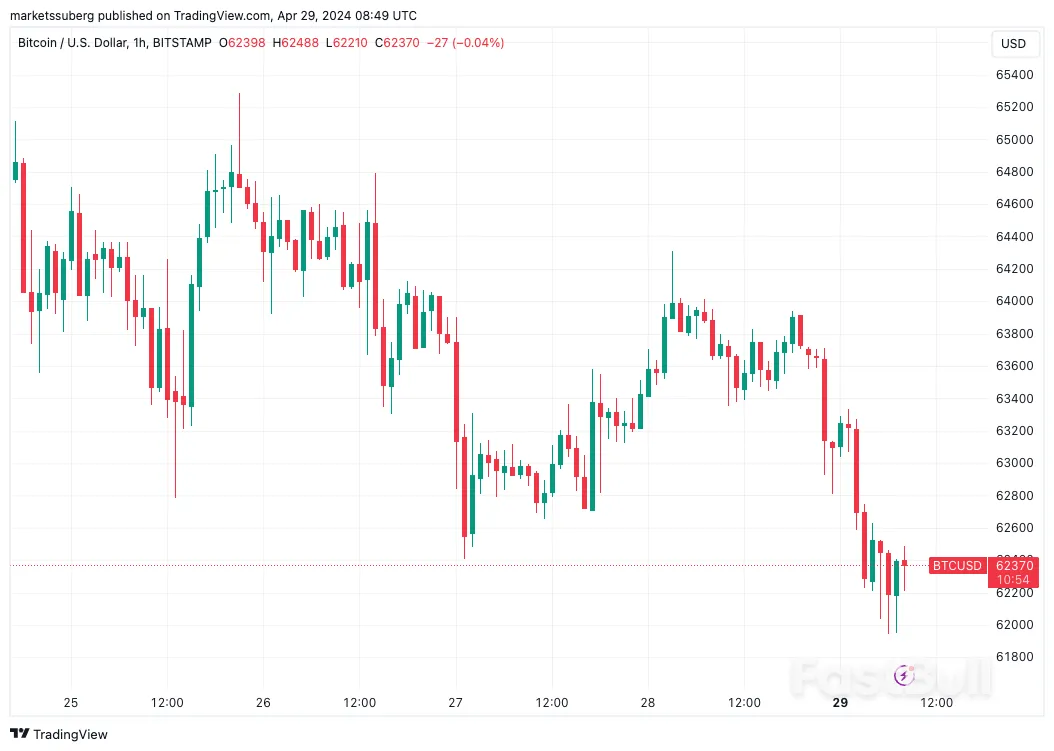
          The weekly close provided little respite for battered Bitcoin traders as BTC/USD continued dropping into the Asia session.Worst Month Since 2022 Bear Market? 5 Things to Know in Bitcoin This Week _1

          BTC/USD 1-hour chart.

          Hitting lows of $61,943 on Bitstamp, per data from Cointelegraph Markets Pro and TradingView, the pair thus saw its lowest levels since April 19.
          The week prior, relief bounces toward $65,000 had repeatedly encountered selling pressure around the Wall Street open which commentators including popular trader Skew attributed to U.S. automated trading algorithms.
          “I do see the potential for longer crab between $67K - $58K till proper flow supported breakout,” he continued in fresh analysis on X (formerly Twitter) on April 29.
          Bears have so far failed to keep the market below $60,000 for long. Even at current levels around $62,000, however, April is on track to deliver more than 12% losses.
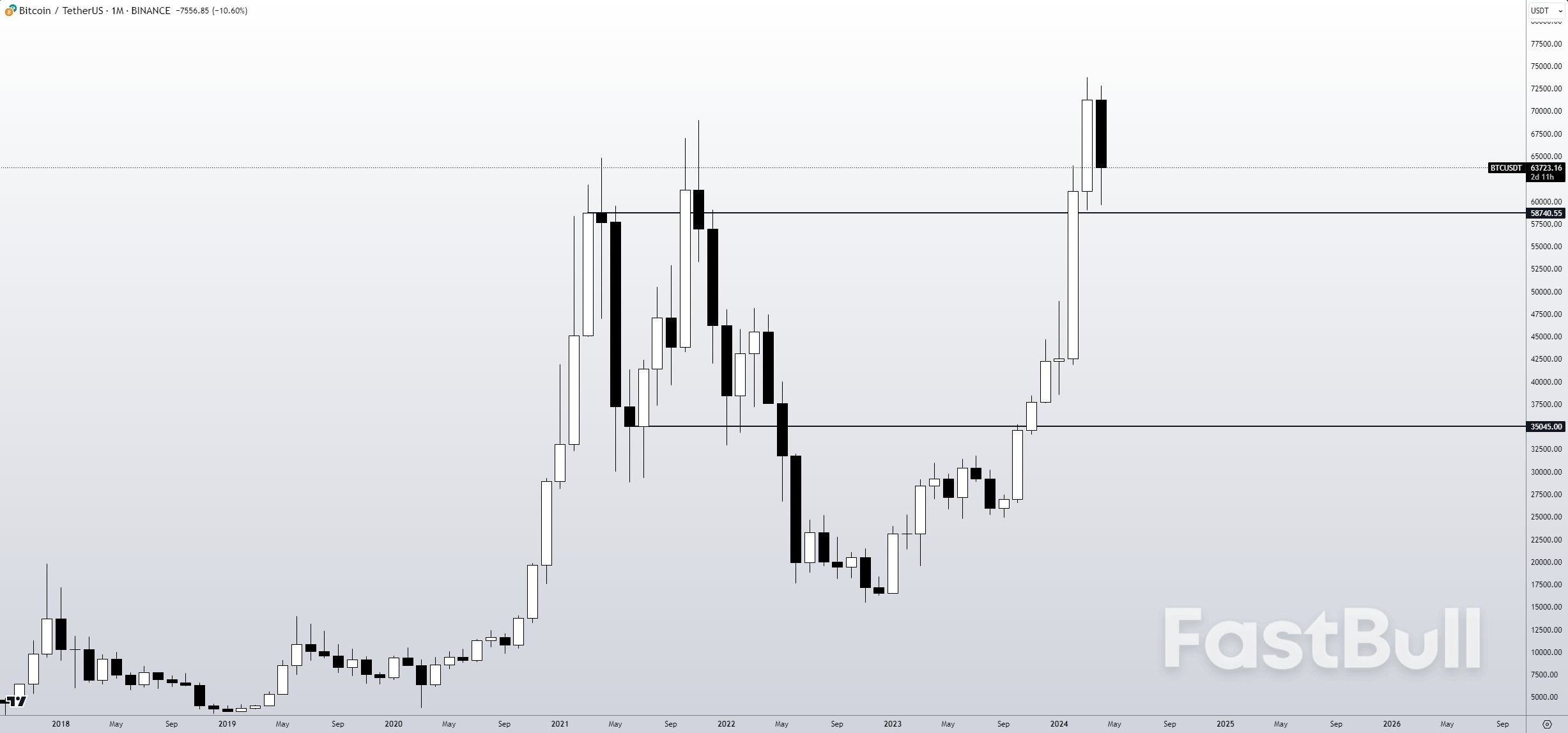
          Data from monitoring resource CoinGlass confirms that this would make it Bitcoin’s worst-performing month since November 2022 — the height of the latest bear market.Worst Month Since 2022 Bear Market? 5 Things to Know in Bitcoin This Week _2

          BTC/USD monthly returns (screenshot). Source: CoinGlass

          Skew continued that wherever it ends up, the monthly close would form a key new BTC price focus in its own right.
          “1M close is in 2days roughly, following that close monthly & weekly open will act as very pivotal levels,” he wrote, describing one-month timeframes as “not bad at all” and reiterating the significance of $58,000 as support.Worst Month Since 2022 Bear Market? 5 Things to Know in Bitcoin This Week _3

          BTC/USD chart. Source: Skew/X

          Dramatic yen volatility greets FOMC week

          Significant macroeconomic events keep coming this week with the next interest rates decision by the U.S. Federal Reserve.
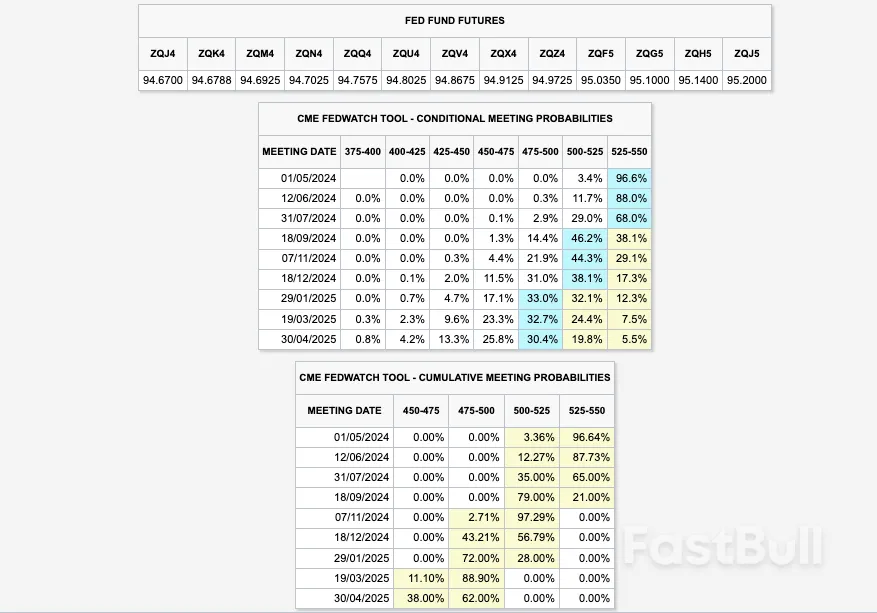
          While markets expect no surprises from the latest meeting of the Federal Open Market Committee (FOMC), recent macro data prints have concerned risk-asset bulls. Lower rates may come much later than anticipated at the start of the year, they fear, as shown in estimates from CME Group’s FedWatch Tool.Worst Month Since 2022 Bear Market? 5 Things to Know in Bitcoin This Week _4

          Fed funds probabilities (screenshot). Source: CME Group

          “We have a massive week ahead of us,” trading resource The Kobeissi Letter summarized in its weekly macro outlook thread on X.
          “After a month full of hot inflation data, we will finally get the Fed's updated views.”
          It is not just FOMC; headlining the week’s macro events is accompanying commentary from Fed Chair Jerome Powell on May 1, followed by jobless claims and unemployment data on May 2 and May 3, respectively.
          For Bitcoin and risk assets, however, all may not be so bad — unless views turn to favor a significant worsening of economic circumstances.
          “Worst case scenario would be consecutively bad spells for risk assets & potentially leads to bets of economy somehow breaking apart,” Skew explained about the outlook.
          “Probably see sweep of $50K - $46K area. Don't see that happening till there's HTF close below $58K & narrative for a breakdown.

          Worst Month Since 2022 Bear Market? 5 Things to Know in Bitcoin This Week _5”USD/JPY 4-hour chart.

          Some signs of stress are clearly apparent this week. The U.S. witnessed a fresh regional bank failure, while in Japan, the yen hit its lowest levels against the dollar since 1990 in flash volatility, passing 160 before rebounding.

          Hong Kong Bitcoin ETFs due for launch

          Sticking in Asia, the coming week marks a seminal moment in Bitcoin institutional adoption.
          Like the U.S. in January, Hong Kong is about to open the doors to spot Bitcoin ETFs — and anticipation of copycat interest and price impact is already building.
          Citing a 2022 report from crypto exchange Huobi, Willy Woo, creator of on-chain statistics platform Woobull, underscored what could be serious demand for spot ETF products.
          “The Asian market in user count is BIGGER than the US and European markets combined,” part of an X post noted.
          In a preliminary report on the upcoming release, blockchain research and advisory group House of Chimera put potential inflows at $25 billion, citing estimates from crypto financial services platform Matrixport.
          “The substantial capital potential might lead to increased liquidity and possibly stabilize Bitcoin prices,” it wrote on X.
          “It also sets a precedent for other Asian markets, potentially influencing further regulatory adjustments in favor of crypto.”
          House of Chimera noted that investor participation from mainland China — which would represent a key turnaround in a country which has repeatedly attempted to quash crypto activity — could end up “restricted” due to regulatory hurdles.
          “While the introduction of Bitcoin ETFs in Hong Kong is a landmark development, its success and impact on the broader market will depend heavily on regulatory environments, investor sentiment, and macroeconomic factors influencing cryptocurrency valuations,” it concluded.

          Key BTC price support lines ready for retest

          As Bitcoin lingers close to significant support levels — among them, $60,000 and $58,000 — one trendline in particular is beginning to stand out as a line in the sand.
          As Cointelegraph reported, the aggregate cost basis of Bitcoin’s short-term holders (STHs) is now of interest to analysts.
          This investor cohort corresponds to entities holding a portion of BTC for a maximum of 155 days, essentially making up the speculative end of the investor spectrum.
          STH realized price, currently at just under $59,800, now forms a key level to watch. Throughout the recovery from 2022 bear market lows, it has acted as support, with only a brief period in September last year breaking the paradigm.
          “Will it hold as support this time?” Philip Swift, creator of on-chain data platform Look Into Bitcoin, queried.Worst Month Since 2022 Bear Market? 5 Things to Know in Bitcoin This Week _6

          Bitcoin STH realized price chart. Source: Philip Swift/X

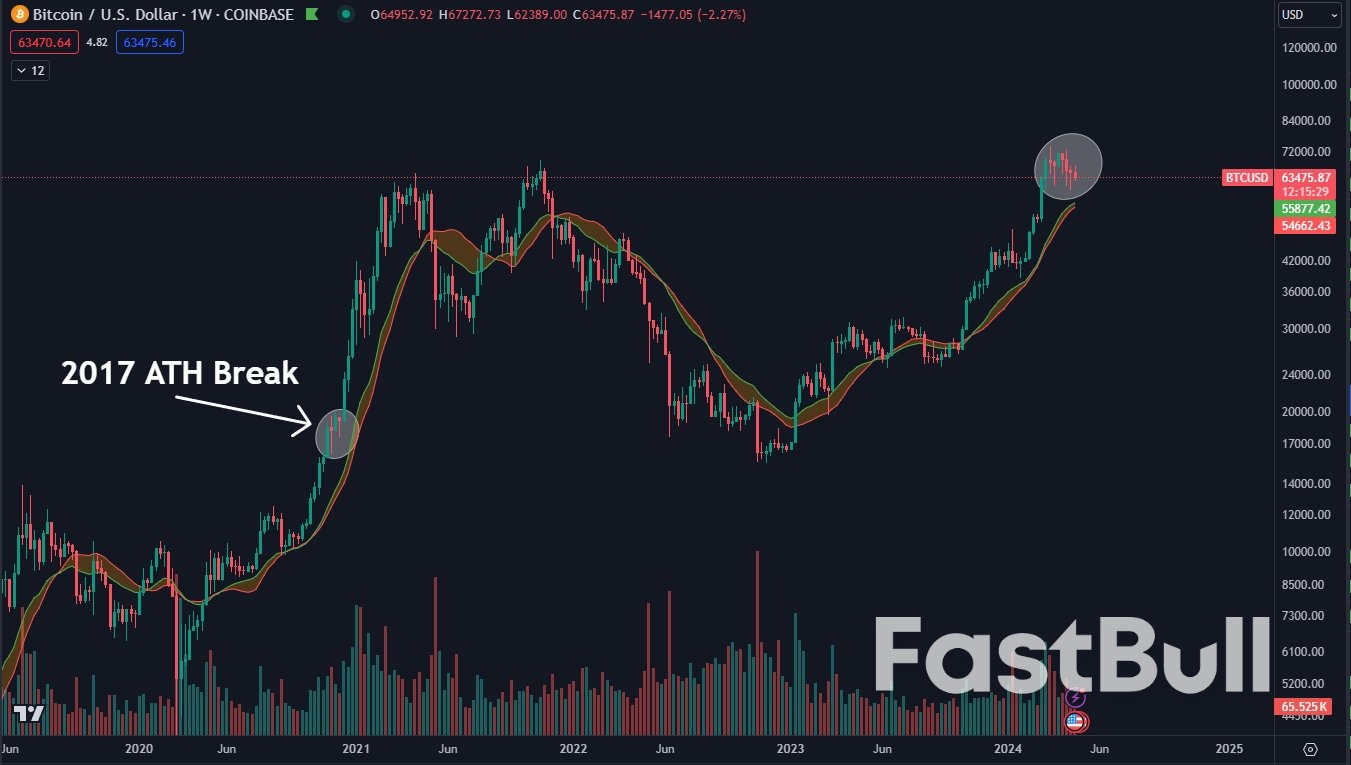
          Two mid-term exponential moving averages, or EMAs, which form what is known as the “bull market support band,” are meanwhile also lining up to act as damage control in the event of a deeper retracement.
          “As we keep consolidating, the bull market support band is catching up to price,” popular trader Daan Crypto Trades wrote in his latest post on the topic.
          “This should offer good support if we were to touch it. Back in 2021 when we broke the 2017 all time high, we ended up not needing it but took off before the band could catch up.”BTC/USD chart with bull market support band.

          Worst Month Since 2022 Bear Market? 5 Things to Know in Bitcoin This Week _7 Source: Daan Crypto Trades/X

          Retail investors circle back to Bitcoin

          In a potential sign of encouragement despite lackluster BTC price action, smaller retail investor interest is returning.
          As noted by Checkmate, the pseudonymous lead on-chain analyst at on-chain data platform Glassnode, wallets with less than 100 BTC are busy increasing exposure.
          He referred to data from his own resource, Checkonchain, which showed 30-day rolling wallet balances flipping positive on April 8 for the first time since mid-January.
          “The Bitcoin retail holders, who are apparently degenerates who will sell on the first sign of a correction... ...appear to be stacking sats once again,” he concluded.
          “Shrimp (<1 $BTC) are accumulating 12.2k $BTC per month as it stands.”Worst Month Since 2022 Bear Market? 5 Things to Know in Bitcoin This Week _8

          Bitcoin retail holder rolling balance change. Source: Checkonchain

          Source: Cointelegraph

          To stay updated on all economic events of today, please check out our Economic calendar
          Risk Warnings and Disclaimers
          You understand and acknowledge that there is a high degree of risk involved in trading. Following any strategies or investment methods may lead to potential losses. The content on the site is provided by our contributors and analysts for information purposes only. You are solely responsible for determining whether any trading assets, securities, strategy, or any other product is suitable for investing based on your own investment objectives and financial situation.
          Add to Favorites
          Share
          FastBull
          Copyright © 2025 FastBull Ltd

          728 RM B 7/F GEE LOK IND BLDG NO 34 HUNG TO RD KWUN TONG KLN HONG KONG

          TelegramInstagramTwitterfacebooklinkedin
          App Store Google Play Google Play
          Products
          Charts

          Chats

          Q&A with Experts
          Screeners
          Economic Calendar
          Data
          Tools
          Membership
          Features
          Function
          Markets
          Copy Trading
          Latest Signals
          Contests
          News
          Analysis
          24/7
          Columns
          Education
          Company
          Careers
          About Us
          Contact Us
          Advertising
          Help Center
          Feedback
          User Agreement
          Privacy Policy
          Business

          White Label

          Data API

          Web Plug-ins

          Poster Maker

          Affiliate Program

          Risk Disclosure

          The risk of loss in trading financial instruments such as stocks, FX, commodities, futures, bonds, ETFs and crypto can be substantial. You may sustain a total loss of the funds that you deposit with your broker. Therefore, you should carefully consider whether such trading is suitable for you in light of your circumstances and financial resources.

          No decision to invest should be made without thoroughly conducting due diligence by yourself or consulting with your financial advisors. Our web content might not suit you since we don't know your financial conditions and investment needs. Our financial information might have latency or contain inaccuracy, so you should be fully responsible for any of your trading and investment decisions. The company will not be responsible for your capital loss.

          Without getting permission from the website, you are not allowed to copy the website's graphics, texts, or trademarks. Intellectual property rights in the content or data incorporated into this website belong to its providers and exchange merchants.

          Not Logged In

          Log in to access more features

          FastBull Membership

          Not yet

          Purchase

          Become a signal provider
          Help Center
          Customer Service
          Dark Mode
          Price Up/Down Colors

          Log In

          Sign Up

          Position
          Layout
          Fullscreen
          Default to Chart
          The chart page opens by default when you visit fastbull.com