Markets
News
Analysis
User
24/7
Economic Calendar
Education
Data
- Names
- Latest
- Prev




Signal Accounts for Members
All Signal Accounts
All Contests


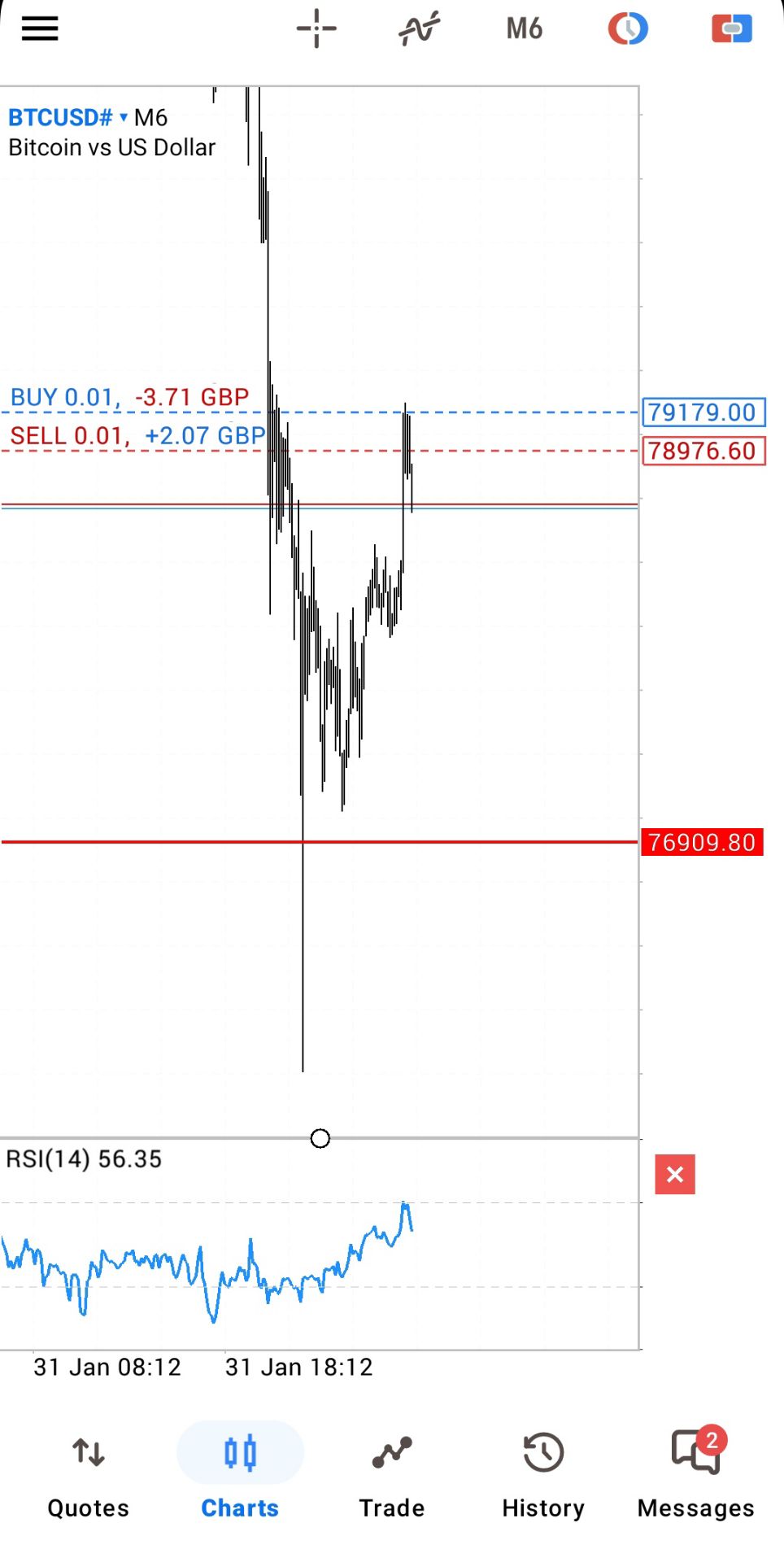
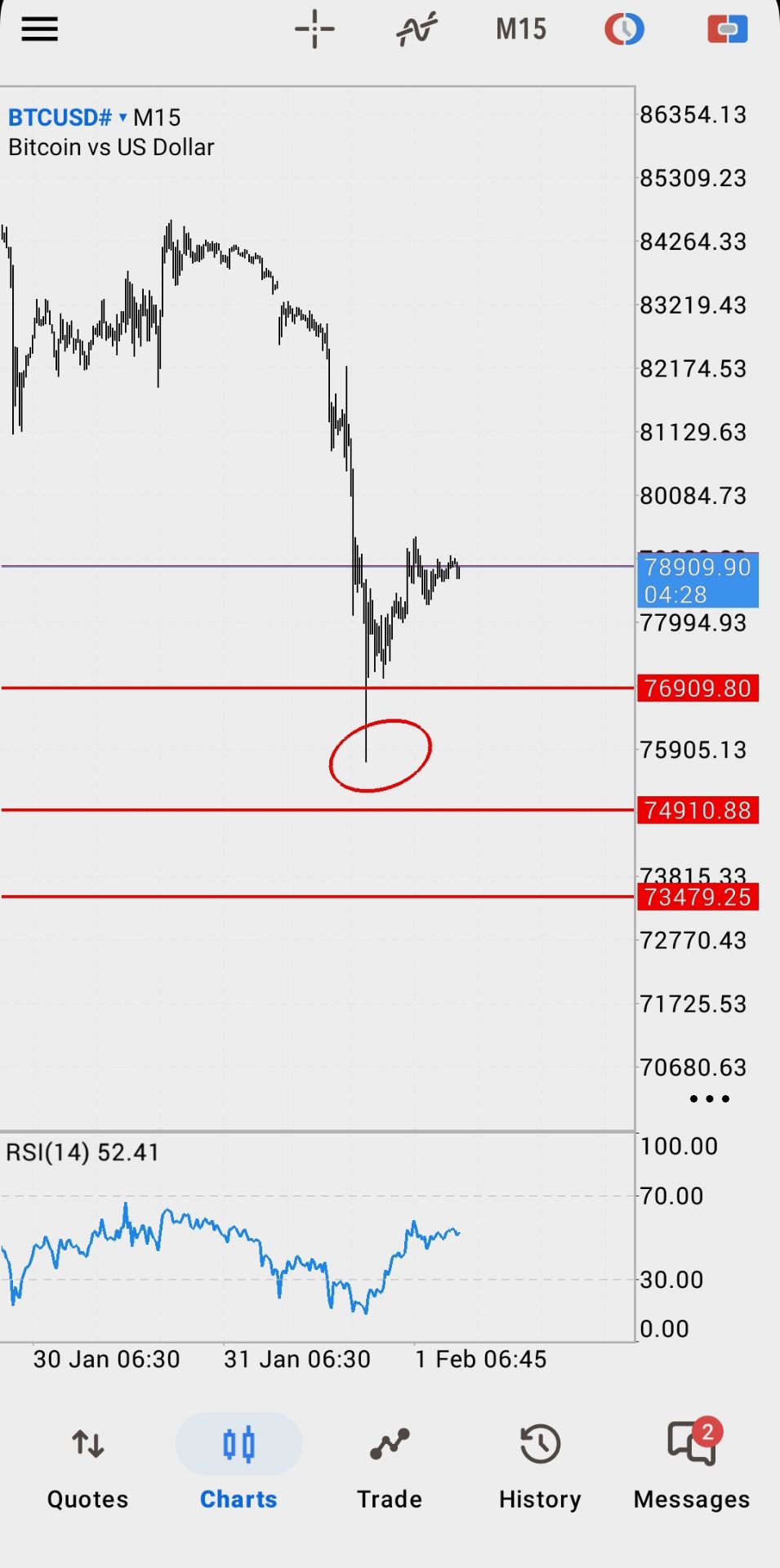
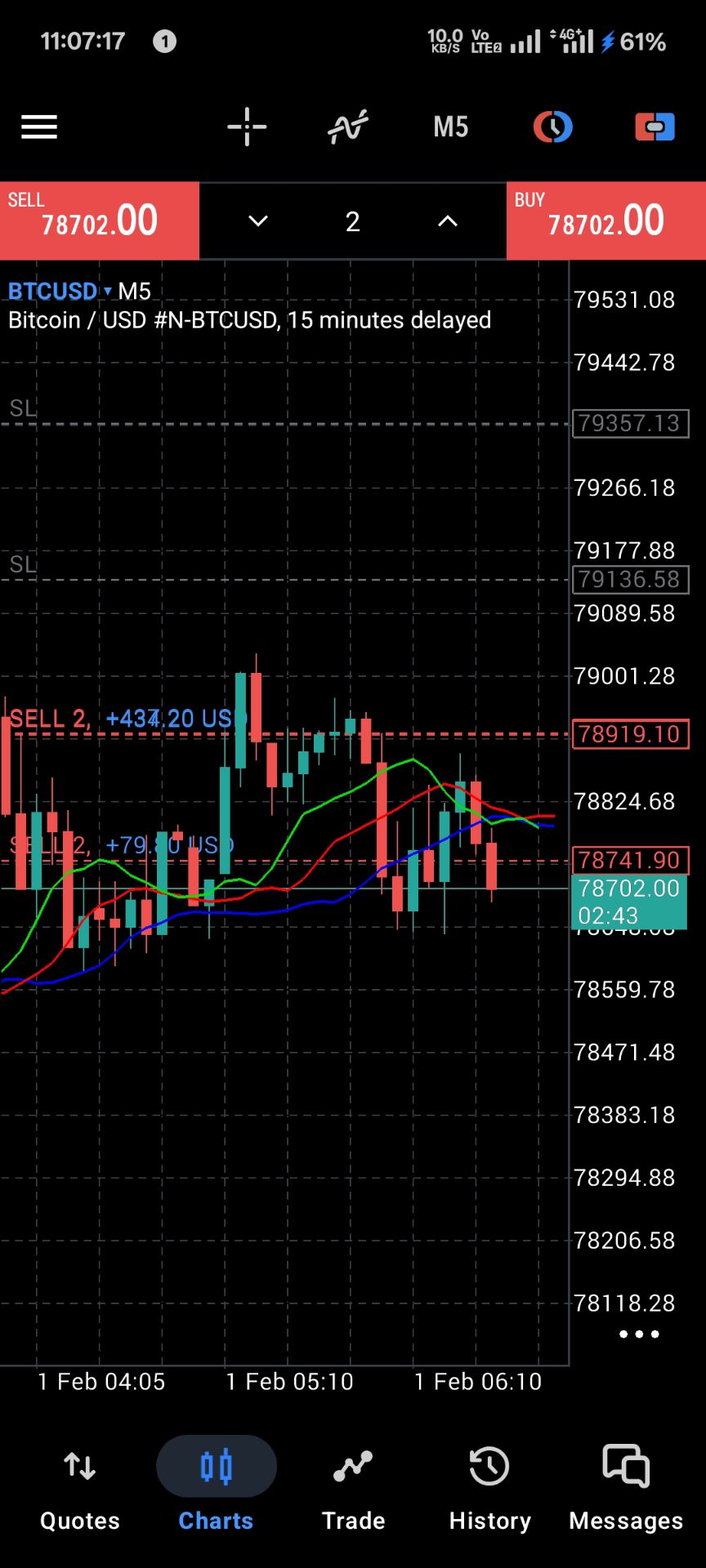
[Bitcoin Briefly Drops Below $78,000] February 1st, According To Htx Market Data, Bitcoin Briefly Dropped Below $78,000, And Is Now Trading At $78,184, With A 24-Hour Decrease Of 6.52%
India Budget: Targets 3.16 Trillion Rupees Dividend From Reserve Bank Of India, Financial Institutions
India Budget: Government To Switch Bonds Worth 2.5 Trillion Rupees For Fy26 (Adds Dropped Words)

U.K. M4 Money Supply (SA) (Dec)A:--
F: --
Italy Unemployment Rate (SA) (Dec)A:--
F: --
P: --
Euro Zone Unemployment Rate (Dec)A:--
F: --
P: --
Euro Zone GDP Prelim QoQ (SA) (Q4)A:--
F: --
P: --
Euro Zone GDP Prelim YoY (SA) (Q4)A:--
F: --
P: --
Italy PPI YoY (Dec)A:--
F: --
P: --
Mexico GDP Prelim YoY (Q4)A:--
F: --
P: --
Brazil Unemployment Rate (Dec)A:--
F: --
P: --
South Africa Trade Balance (Dec)A:--
F: --
P: --
India Deposit Gowth YoYA:--
F: --
P: --
Germany CPI Prelim YoY (Jan)A:--
F: --
P: --
Germany CPI Prelim MoM (Jan)A:--
F: --
P: --
Germany HICP Prelim YoY (Jan)A:--
F: --
P: --
Germany HICP Prelim MoM (Jan)A:--
F: --
P: --
U.S. Core PPI YoY (Dec)A:--
F: --
U.S. Core PPI MoM (SA) (Dec)A:--
F: --
P: --
U.S. PPI YoY (Dec)A:--
F: --
P: --
U.S. PPI MoM (SA) (Dec)A:--
F: --
P: --
Canada GDP MoM (SA) (Nov)A:--
F: --
P: --
Canada GDP YoY (Nov)A:--
F: --
P: --
U.S. PPI MoM Final (Excl. Food, Energy and Trade) (SA) (Dec)A:--
F: --
P: --
U.S. PPI YoY (Excl. Food, Energy & Trade) (Dec)A:--
F: --
P: --
U.S. Chicago PMI (Jan)A:--
F: --
Canada Federal Government Budget Balance (Nov)A:--
F: --
P: --
U.S. Weekly Total Oil Rig CountA:--
F: --
P: --
U.S. Weekly Total Rig CountA:--
F: --
P: --
China, Mainland NBS Manufacturing PMI (Jan)A:--
F: --
P: --
China, Mainland NBS Non-manufacturing PMI (Jan)A:--
F: --
P: --
China, Mainland Composite PMI (Jan)A:--
F: --
P: --
South Korea Trade Balance Prelim (Jan)A:--
F: --
Japan Manufacturing PMI Final (Jan)--
F: --
P: --
South Korea IHS Markit Manufacturing PMI (SA) (Jan)--
F: --
P: --
Indonesia IHS Markit Manufacturing PMI (Jan)--
F: --
P: --
China, Mainland Caixin Manufacturing PMI (SA) (Jan)--
F: --
P: --
Indonesia Trade Balance (Dec)--
F: --
P: --
Indonesia Inflation Rate YoY (Jan)--
F: --
P: --
Indonesia Core Inflation YoY (Jan)--
F: --
P: --
India HSBC Manufacturing PMI Final (Jan)--
F: --
P: --
Australia Commodity Price YoY (Jan)--
F: --
P: --
Russia IHS Markit Manufacturing PMI (Jan)--
F: --
P: --
Turkey Manufacturing PMI (Jan)--
F: --
P: --
U.K. Nationwide House Price Index MoM (Jan)--
F: --
P: --
U.K. Nationwide House Price Index YoY (Jan)--
F: --
P: --
Germany Actual Retail Sales MoM (Dec)--
F: --
Italy Manufacturing PMI (SA) (Jan)--
F: --
P: --
South Africa Manufacturing PMI (Jan)--
F: --
P: --
Euro Zone Manufacturing PMI Final (Jan)--
F: --
P: --
U.K. Manufacturing PMI Final (Jan)--
F: --
P: --
Brazil IHS Markit Manufacturing PMI (Jan)--
F: --
P: --
Canada National Economic Confidence Index--
F: --
P: --
Canada Manufacturing PMI (SA) (Jan)--
F: --
P: --
U.S. IHS Markit Manufacturing PMI Final (Jan)--
F: --
P: --
U.S. ISM Output Index (Jan)--
F: --
P: --
U.S. ISM Inventories Index (Jan)--
F: --
P: --
U.S. ISM Manufacturing Employment Index (Jan)--
F: --
P: --
U.S. ISM Manufacturing New Orders Index (Jan)--
F: --
P: --
U.S. ISM Manufacturing PMI (Jan)--
F: --
P: --
South Korea CPI YoY (Jan)--
F: --
P: --
Japan Monetary Base YoY (SA) (Jan)--
F: --
P: --
Australia Building Permits MoM (SA) (Dec)--
F: --
P: --


No matching data
Latest Views
Latest Views
Trending Topics
Top Columnists
Latest Update
White Label
Data API
Web Plug-ins
Affiliate Program
View All

No data
India's impending budget aims to shield its economy from global headwinds, balancing growth stimulus with fiscal constraints.
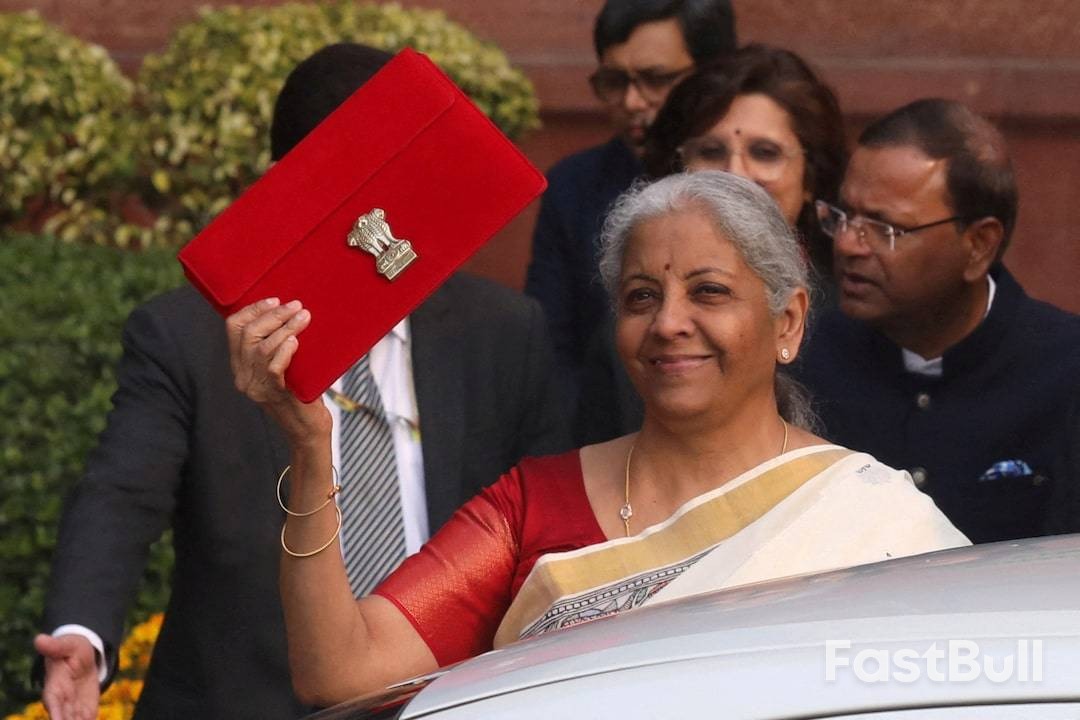
Prime Minister Narendra Modi's government is set to release its annual budget, a critical policy statement designed to shield India's economy from rising global uncertainties, including steep U.S. tariffs and geopolitical tensions.
Finance Minister Nirmala Sitharaman, who will present the budget for the next fiscal year, faces the difficult task of stimulating growth while managing tight finances. Her ability to increase spending is limited, as recent tax cuts are expected to reduce government revenue by 1.5 trillion rupees ($16 billion) this fiscal year. India's current deficit target stands at 4.4% of GDP for the 12 months ending in March.
Prime Minister Modi has emphasized a strategic shift toward sustainable, long-term solutions to build global trust and predictability. He has framed the next 25 years as a crucial period for transforming India into a developed economy through "next-generation reforms."
This forward-looking approach is supported by the government's recent economic survey, which forecasts GDP growth between 6.8% and 7.2% for the fiscal year beginning in April.

To boost private investment and domestic demand, New Delhi has already implemented several key reforms and is expected to announce more in the upcoming budget.
Recent initiatives include:
• Cuts to both consumption and income taxes.
• A comprehensive overhaul of national labor laws.
• Measures to open up the tightly controlled nuclear power sector.
The government also plans a third major push to expand manufacturing as a share of the economy, following two previous attempts. Additionally, the budget is expected to include measures to ease investment rules in the domestic defense manufacturing sector.
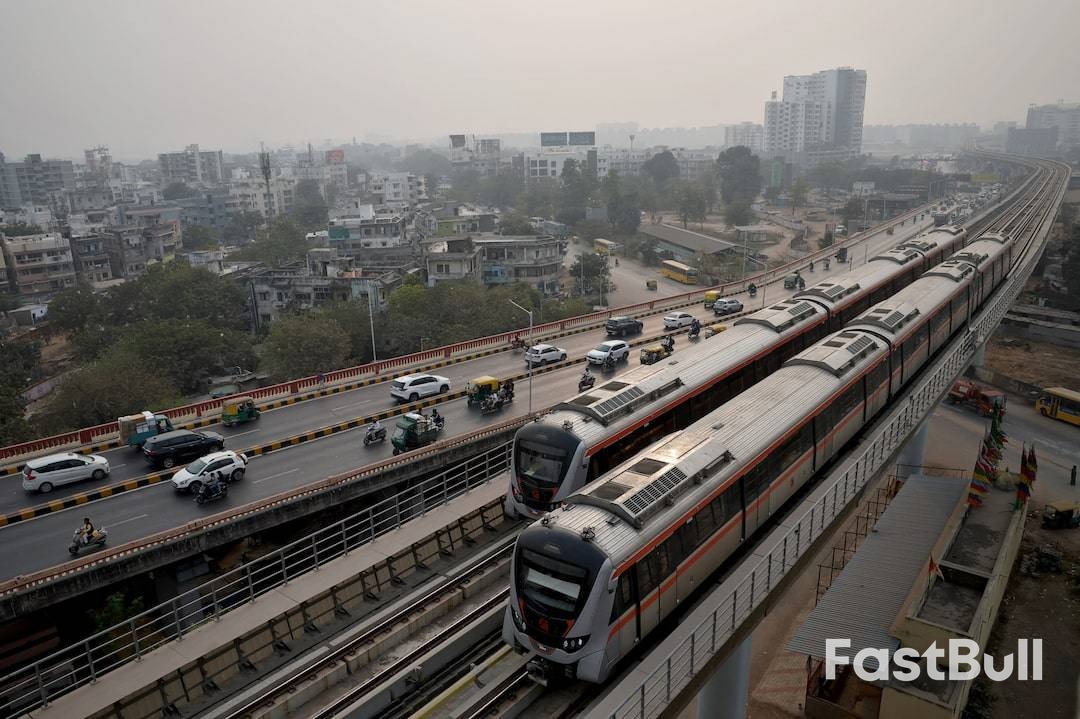
The budget will also address significant financial and international challenges. Gross government borrowing is projected to rise to between 16 trillion and 16.8 trillion rupees for the next fiscal year, up from 14.6 trillion rupees this year.
On the trade front, India is actively pursuing deals to mitigate external pressures. A landmark trade agreement with the European Union is a key part of this strategy, intended to offset the economic impact of the 50% tariffs imposed by U.S. President Donald Trump on certain Indian goods.
($1 = 91.6710 Indian rupees)
Ukrainian President Volodymyr Zelensky announced Saturday that his negotiators are waiting for guidance from the United States before proceeding with further meetings aimed at ending the war with Russia.
In his evening address, Zelensky indicated that a second round of negotiations, which had been scheduled for Sunday in Abu Dhabi, has likely been postponed. Despite the delay, he affirmed Ukraine's commitment to the process.
"Ukraine is ready to work in all working formats," Zelensky stated. "It is important that there are results and that the meetings take place. We are counting on meetings next week and are preparing for them."
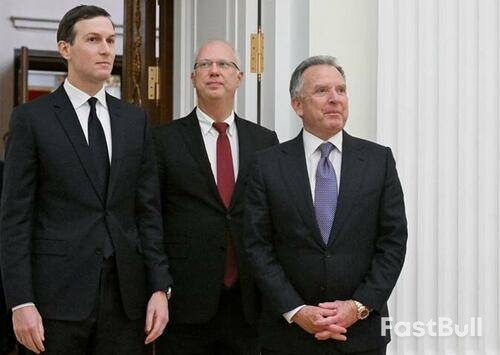
While the trilateral talks appear to be on hold, there has been direct contact between American and Russian officials. On Saturday, U.S. envoy Steve Witkoff confirmed he held "productive and constructive" talks in Florida with his Russian counterpart, Kirill Dmitriev.
This meeting followed the first in-person negotiations between Ukrainian and Russian teams, which took place in Abu Dhabi last Friday and Saturday. Those discussions were centered on a peace plan being advanced by U.S. President Donald Trump, and the parties had initially agreed to reconvene on Sunday.
The potential for a schedule change was first hinted at by President Zelensky on Thursday. He suggested that the date and location of future talks might need to be adjusted due to rising tensions between Washington and Tehran.
According to officials in Kyiv, the United States believes both sides are close to reaching an agreement. However, a fundamental obstacle remains unresolved. The primary sticking point continues to be the difficult issue of territorial control in any post-war settlement, a compromise on which has so far proven elusive.
Russian presidential envoy Kirill Dmitriev arrived in Miami this weekend for another round of discussions with an American delegation, signaling that high-level diplomatic channels remain open. The talks began Saturday morning, following Dmitriev's social media post simply stating, "Back in Miami."
This meeting follows negotiations held on January 23-24 in Abu Dhabi between the United States, Ukraine, and Russia. While those discussions reportedly yielded "progress" on military issues, with Ukrainian President Volodymyr Zelensky calling them constructive, the tangible outcomes remain unclear.

Despite expressions of limited optimism, there has been no significant advancement toward peace on the core issues that define the conflict. Key "red lines" for both Moscow and Kyiv are preventing any real breakthroughs.
Territorial concessions, for example, remain a major sticking point. Moscow has not softened its stance, while Ukraine and its Western allies have not altered their position on the matter.
According to Axios, the trilateral talks that began in the United Arab Emirates are expected to continue. The meetings in Abu Dhabi also featured a bilateral format between Ukraine and Russia, conducted without U.S. participation. While the simple act of having representatives from both warring nations at the same table can be seen as a form of progress, it hasn't yet translated into a de-escalation of the conflict.
While diplomacy inches forward, analysis from The Washington Post suggests that technological developments could reshape the war's trajectory. David Ignatius's column notes that President Donald Trump "sometimes talks as if he agrees with Vladimir Putin that Russian victory... is inevitable." However, conversations with senior Ukrainian officials in Kyiv painted a different picture.
Ignatius reports that Ukraine is preparing to deploy a new generation of domestically produced, AI-powered air-defense interceptors. This technology could potentially allow the country to sustain its defense indefinitely. The column posits that if Ukraine can effectively protect its civilians and infrastructure, it might challenge Putin's belief that he can win a war of attrition. An unbreakable air defense network could force Putin to reconsider his calculations and make concessions he currently views as unnecessary.
For now, the grinding war of attrition seems set to continue. The pattern of diplomatic talks producing headlines about "progress" without resolving fundamental disagreements could persist through 2026.
An outstanding question is the political future of President Zelensky. President Trump has previously pressured Kyiv to hold elections, though that public pressure has recently subsided. The stability of Ukraine's leadership remains a critical variable in the long-term outlook of the conflict.
Hungarian Prime Minister Viktor Orban has rejected predictions that his government would need to implement austerity measures if it wins the upcoming April election. Speaking at a campaign rally, Orban insisted his Fidesz party would maintain its key spending policies, directly contradicting economists who see fiscal tightening as inevitable.
Orban, who has been in power since 2010, is facing a significant challenge from a centre-right rival and is contending with the weakest economic period of his leadership. The Hungarian economy has been nearly stagnant since Russia's 2022 invasion of Ukraine triggered widespread inflation across central Europe.
Many economists argue that significant pre-election spending will force the next government to cut back, regardless of who wins on April 12.
Orban dismissed this view outright. "That's a flat-out lie," he told supporters, directly addressing the economists' consensus. "The state of the Hungarian economy does not require any kind of austerity."
Instead of sharp cuts, Orban proposed that Hungary's budget deficit, which has consistently overshot government targets, should be reduced "calmly, slowly and gradually" as the economy improves. "We need no austerity and nothing should be taken away from the people," he declared.
This defiant stance comes after Orban's government raised its budget deficit targets late last year to 5% for both 2025 and the election year of 2026. The move was designed to accommodate increased pre-election spending.
The decision had consequences, contributing to Fitch Ratings' move to cut its outlook on Hungary's sovereign debt to negative.
To bolster support, Fidesz has launched several costly initiatives ahead of the election, including:
• A 100 billion forint ($310 million) program to support the restaurant industry.
• A 50 billion forint ($160 million) measure to reduce household heating bills.
Orban also pledged that flagship policies, such as a 3% subsidized mortgage rate and a plan to exempt mothers of two from income tax, would remain in place if he is re-elected.
Recent economic data underscores the challenges facing the nation. Figures released on Friday confirmed that Hungary's economy is stuck in its third consecutive year of near-stagnation.
The country's performance is currently lagging behind its regional peers, including Poland and the Czech Republic. In response to the weak figures, some analysts have already begun lowering their growth forecasts for Hungary for 2026.
($1 = 321.48 forints)
Major investment firms are sounding the alarm: Donald Trump's potential pick for Federal Reserve Chair, Kevin Warsh, has a policy history that could directly conflict with the president's goal of cheaper borrowing. This sets up a fundamental tension between Warsh’s preference for shrinking the central bank's massive bond portfolio and Trump's repeated calls for lower long-term interest rates.
The Treasury market is already reacting. Following the news of Warsh's potential appointment on Friday, the gap between 30-year and two-year government bond rates widened to 1.35 percentage points. This yield curve steepening, which pushed the spread to its widest point since 2021, shows investors are taking Warsh's past commentary seriously.
This market move is a direct response to Warsh's well-known criticism of the Fed's large-scale bond purchases, both during the 2008 financial crisis when he was a Fed governor and again after the 2020 pandemic.
"You have an anti-balance sheet expansion guy against a backdrop of wanting lower interest rates. It's a tension point," explained Greg Peters, co-chief investment officer at PGIM Fixed Income. "That's what the market is focused on. That's why the curve is steepening out."
Warsh's Long-Held Critique of the Fed's Portfolio
During his tenure at the Fed from 2006 to 2011 and in the years since, Warsh has been a vocal critic of the central bank's policy of bond buying, which expanded its balance sheet to nearly $9 trillion at its peak. He argues that maintaining such a large portfolio distorts investment prices and could entrench higher inflation over the long term.
In a widely noted speech in April, Warsh highlighted the Fed's dominant role in government debt markets. "The Fed has been the most important buyer of US Treasury debt, and other liabilities backed by the US government, since 2008," he said, adding that this is "a proxy for the Fed's growing imprimatur on the economy."
Not a Permanent Hawk: The Case for Rate Cuts
Despite his stance on the balance sheet, Warsh is not viewed as being permanently hawkish. Billionaire investor Stanley Druckenmiller, a long-time advisor to Warsh, told the Financial Times on Friday that his protégé does not hold a rigid position. "I've seen him go both ways" on monetary policy, Druckenmiller noted.
This view is shared by some market watchers who believe Warsh could still advocate for cutting the Fed’s main short-term interest rate. They argue that productivity gains from artificial intelligence could allow the economy to grow quickly without triggering significant inflation, creating room for rate cuts.
The core challenge lies in navigating these competing priorities. Earlier this week, Fed officials signaled a pause on rate cuts, citing solid economic growth and a steady job market after the 0.75 percentage point reduction last year. Yet, markets are still pricing in two quarter-point cuts starting this summer, indicating that Warsh's potential nomination hasn't altered the near-term outlook for traders.
Bill Campbell, a portfolio manager at DoubleLine, highlighted the difficulty of the situation. "Until you get fiscal under control and inflation under control, you are not going to be able to aggressively reduce interest rates and shrink the [Fed's] balance sheet," he said, adding, "I believe Kevin Warsh fully understands this."
The Fed already stopped its balance sheet reduction program late last year over concerns about draining cash from overnight lending markets. This move had eased worries about who would absorb the growing supply of government debt.
However, using balance sheet reduction as a justification for rate cuts presents another problem. Mark Dowding, who runs active fixed income at RBC BlueBay Asset Management, noted the disconnect. "The issue is if you justify rate cuts by cutting the balance sheet, this does nothing to help lower long-term rates and improve mortgage affordability, which is what Trump wants," he said.
Ultimately, Warsh's confirmation would create significant uncertainty over how he would balance his own stated policy preferences with the clear political objectives of the administration.
China is shifting its economic strategy, turning to the services sector as a new engine for growth as the nation grapples with weak household confidence, a persistent property slump, and slowing exports.

The State Council recently unveiled a comprehensive plan to boost services consumption, signaling a pivot away from traditional stimulus measures that have proven less effective in compelling consumers to spend. The new policy framework targets a wide range of experience-based industries, including tourism, elderly care, and live events.
According to a cabinet notice, the government's work plan aims to "accelerate the cultivation of new growth drivers in service consumption" and "improve and expand the supply of services."
This initiative represents a deliberate move to tap into new areas of domestic demand. Key focus areas include:
• Tourism: Promoting self-drive travel, expanding visa-free entry, adding tax-refund points, and upgrading infrastructure like train stations and scenic rail routes.
• High-End Leisure: Advancing high-quality yacht consumption by overhauling safety regulations and building public docks and berths.
• Live Events: Increasing the supply of high-quality sports events and encouraging the introduction of top international competitions.
This shift comes as households show reluctance to purchase big-ticket items, even with subsidies for cars and appliances, pushing Beijing to explore new ways to unlock consumer spending.
The policy pivot is a direct response to persistent headwinds in the domestic economy. In 2025, retail sales grew by 3.7%, lagging behind the 5.9% growth in industrial output and the overall economic expansion of 5%.
Deflationary pressures remain a major concern. Consumer inflation was flat last year, while producer prices fell for the third consecutive year, squeezing corporate profits and weighing on wage growth.
Early data from China Beige Book indicated a sharp slowdown in services consumption in January, with travel, hospitality, and restaurant chains all reporting widespread weakness. Furthermore, concerns are growing that the export boom that previously supported the economy may be difficult to sustain.
Despite the challenging economic backdrop, policymakers see an opportunity in evolving consumer preferences. A quarterly survey by the People's Bank of China for the fourth quarter of 2025 revealed a notable trend: the share of respondents planning to increase spending on social and entertainment activities hit an eight-year high. In contrast, interest in major purchases remained significantly below pre-pandemic levels.
This shift toward experiential spending is gaining traction. "Emotional satisfaction is playing a bigger role in retail spending, with a growing focus on buying for self-expression and experiences rather than for materialistic possessions or brand prestige," noted analysts at S&P Global.
To support this strategic shift, the State Council's plan includes dedicated financial measures. Banks will be encouraged to increase credit lines for service-sector firms, and qualified companies in culture, tourism, education, and sports will be permitted to raise capital through bond issuance.
Developing the service sector aligns with China's long-term policy objectives. Services consumption per capita reached 46.1% last year, a figure that still trails many advanced economies, indicating significant potential for growth.
Moreover, the service industry is more labor-intensive than manufacturing and stands as China's largest source of employment. This is a critical consideration for policymakers trying to address high youth unemployment. According to the 2020 census, the tertiary sector accounted for over 48% of jobseekers aged 16 to 24.
While the government's focus on services is clear, some economists caution that this approach alone may not be a silver bullet. The success of the plan hinges on tackling deeper structural problems, particularly those related to household income and social welfare.
"Boosting consumption requires restoring consumer confidence to free up high saving rates," said Ludovic Subran, chief investment officer at Allianz, in a CNBC report. He added that a true rebalancing toward domestic demand requires "giving jobs, time and income to consumers."
Logan Wright, a partner at Rhodium Group, argued for strengthening the social safety net. "If the government were to invest more in social services, households would feel safer and be more likely to spend more liberally," he said.
Final consumption expenditure in China accounted for 56.6% of GDP in 2024. While this is an increase from 49.4% in 2010, it remains well below levels in the United States, the UK, and Japan. Economists suggest it will take years for growth in services consumption to fully offset the decline in the property market, meaning weak domestic demand could continue to weigh on the economy in the near term.
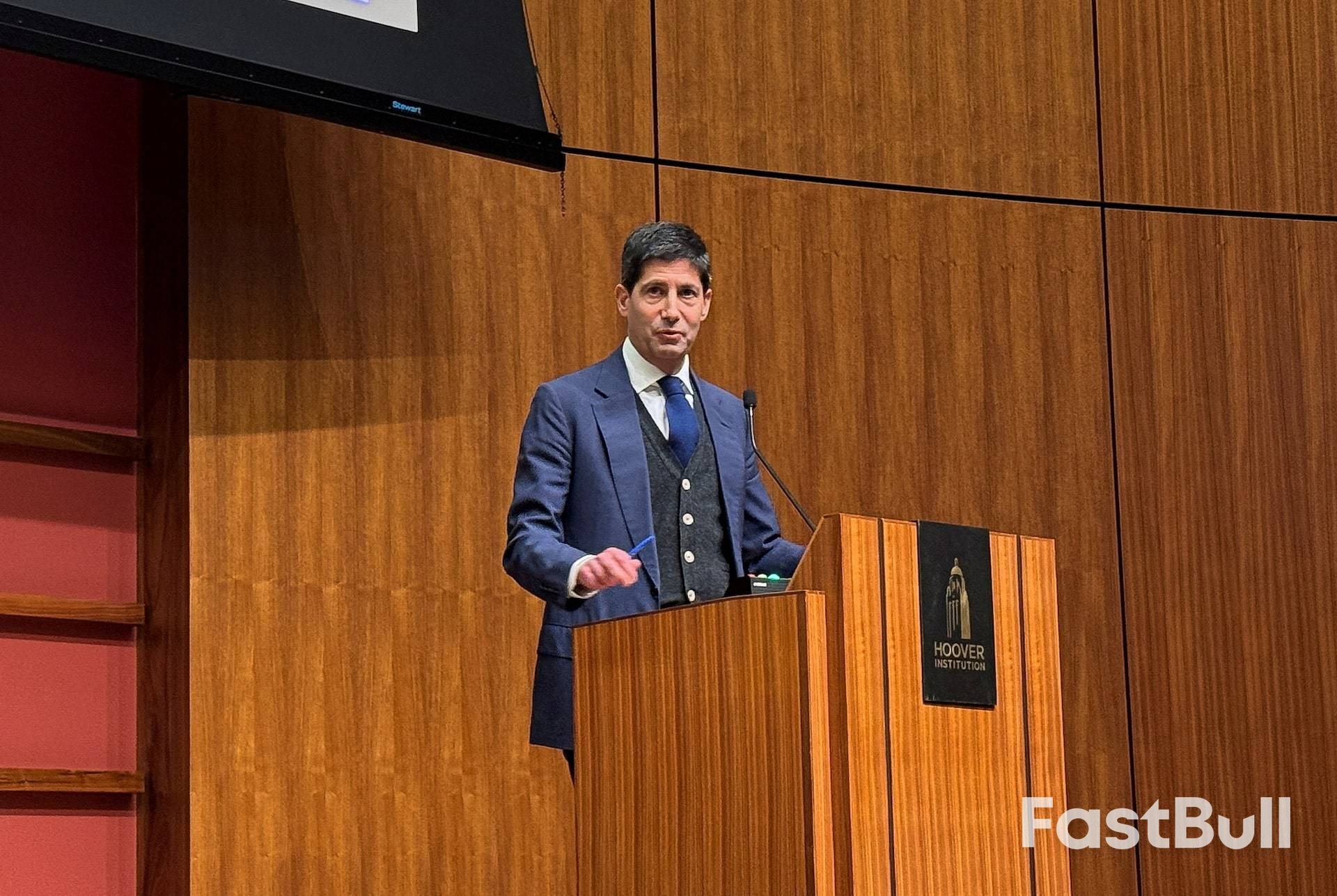
President Donald Trump has nominated former Federal Reserve Governor Kevin Warsh to run the central bank, a choice that raises immediate questions about the future of U.S. monetary policy. With deep ties to both the president and Wall Street, Warsh has spent years as a vocal critic of the Fed. Now, he faces the immense challenge of turning his reformist ideas into reality.

The market is watching to see how quickly he will cut interest rates and how aggressively he will pursue the "regime change" he has long advocated for at the institution he is set to lead.
Warsh’s first major test will be navigating the gap between the White House's demands and economic reality. President Trump has publicly called for aggressive interest rate cuts, potentially down to crisis-level lows of around 1%.
This puts Warsh in a difficult position. During his previous tenure as a Fed governor from 2006 to 2011, he was known as an inflation hawk. Such a steep rate cut may be a step too far for him, and he will face pushback from his 18 policymaking colleagues and the underlying economic data.
So far, financial markets aren't expecting a dramatic shift. Following Trump's announcement, rate futures continued to price in just two quarter-point cuts in 2026, which would bring the rate down from its current range of 3.50% to 3.75%.
For years, Warsh has criticized the Federal Reserve from the outside, publishing op-eds and delivering speeches that called for fundamental reform. Now, he must convert that rhetoric into actionable policy, a task that is easier said than done.
Implementing his vision will require navigating a complex political landscape. Any significant changes must win approval from:
• The Fed's Board of Governors
• President Trump and Treasury Secretary Scott Bessent
• The U.S. Congress, if changes to the Federal Reserve Act are needed
"He's been an outspoken critic of the Fed's balance sheet and groupthink," noted Heather Long, chief economist for Navy Federal Credit Union. "More clarity is needed on how far he intends to go." She added that Warsh is a "pragmatist who won't want to lose market trust by making cuts that aren't warranted" and that his history of inflation concerns suggests he "won't allow the economy to overheat."
Still, Warsh's confrontational style is well-known. In a July interview on Fox News, he spoke of the need for "breaking some heads" at the Fed—a comment that now applies to the very people who will become his colleagues.
Tackling "Institutional Drift"
At the heart of Warsh's critique is the Fed's "institutional drift." Over the past two decades, especially during the financial crisis and the pandemic, the central bank's power expanded significantly. It now operates as a complex hybrid, wielding monetary policy powers while also holding regulatory authority typically found in the executive branch.
This unique structure has created confusion, even puzzling Supreme Court justices about the Fed's exact place within the federal government. This legal ambiguity has real-world consequences, such as in the court case concerning whether President Trump could fire Governor Lisa Cook.
Some of Warsh's desired changes could be managed internally. Under Chair Jerome Powell and the Trump administration, the Fed has already withdrawn from a global climate change consortium and scaled back its diversity, equity, and inclusion initiatives. As chair, Warsh could further control the Fed's messaging by reducing the number of public speeches by other governors and the 12 reserve bank presidents.
Reforming Fed Models and Guidance
Warsh has also set his sights on the Fed's internal processes. Analysts at TD Securities noted that he "appears to be predisposed to make more fundamental changes...particularly in the way the committee approaches forward guidance, relying too much on near-term forecasting and increased data-dependence."
This criticism could lead to an early showdown. At his final press conference, current Chair Jerome Powell issued a direct challenge to his successor: "If it's a question of using better models, bring them on. Where are they? We'll take them."
Perhaps the biggest target of Warsh's criticism has been the Fed's massive balance sheet. He opposed some of the "quantitative easing" programs while he was a governor, even resigning partly in protest despite publicly voting with then-Chair Ben Bernanke.
However, he may find his hands tied on this issue as well. The balance sheet is no longer just a crisis tool; it is now deeply integrated into how the Fed controls interest rates, provides liquidity to the banking system, and supplies dollars to the global economy.
Unless that fundamental mechanism changes, there is a limit to how much the balance sheet can shrink. As outgoing Atlanta Fed President Raphael Bostic recently stated on CNBC, its current size "is about right," adding that "when the economy grows the balance sheet needs to grow with it."
White Label
Data API
Web Plug-ins
Poster Maker
Affiliate Program
The risk of loss in trading financial instruments such as stocks, FX, commodities, futures, bonds, ETFs and crypto can be substantial. You may sustain a total loss of the funds that you deposit with your broker. Therefore, you should carefully consider whether such trading is suitable for you in light of your circumstances and financial resources.
No decision to invest should be made without thoroughly conducting due diligence by yourself or consulting with your financial advisors. Our web content might not suit you since we don't know your financial conditions and investment needs. Our financial information might have latency or contain inaccuracy, so you should be fully responsible for any of your trading and investment decisions. The company will not be responsible for your capital loss.
Without getting permission from the website, you are not allowed to copy the website's graphics, texts, or trademarks. Intellectual property rights in the content or data incorporated into this website belong to its providers and exchange merchants.
Not Logged In
Log in to access more features
Log In
Sign Up