• Trade
  • Markets
  • Copy
  • Contests
  • News
  • 24/7
  • Calendar
  • Q&A
  • Chats
Trending
Screeners
SYMBOL
LAST
BID
ASK
HIGH
LOW
NET CHG.
%CHG.
SPREAD
SPX
S&P 500 Index
6827.42
6827.42
6827.42
6899.86
6801.80
-73.58
-1.07%
--
DJI
Dow Jones Industrial Average
48458.04
48458.04
48458.04
48886.86
48334.10
-245.98
-0.51%
--
IXIC
NASDAQ Composite Index
23195.16
23195.16
23195.16
23554.89
23094.51
-398.69
-1.69%
--
USDX
US Dollar Index
97.950
98.030
97.950
98.500
97.950
-0.370
-0.38%
--
EURUSD
Euro / US Dollar
1.17394
1.17409
1.17394
1.17496
1.17192
+0.00011
+ 0.01%
--
GBPUSD
Pound Sterling / US Dollar
1.33707
1.33732
1.33707
1.33997
1.33419
-0.00148
-0.11%
--
XAUUSD
Gold / US Dollar
4299.39
4299.39
4299.39
4353.41
4257.10
+20.10
+ 0.47%
--
WTI
Light Sweet Crude Oil
57.233
57.485
57.233
58.011
56.969
-0.408
-0.71%
--

Community Accounts

Signal Accounts
--
Profit Accounts
--
Loss Accounts
--
View More

Become a signal provider

Sell trading signals to earn additional income

View More

Guide to Copy Trading

Get started with ease and confidence

View More

Signal Accounts for Members

All Signal Accounts

Best Return
  • Best Return
  • Best P/L
  • Best MDD
Past 1W
  • Past 1W
  • Past 1M
  • Past 1Y

All Contests

  • All
  • Trump Updates
  • Recommend
  • Stocks
  • Cryptocurrencies
  • Central Banks
  • Featured News
Top News Only
Share

Thai Leader Anutin: Landmine Blast That Killed Thai Soldiers 'Not A Roadside Accident'

Share

Thai Leader Anutin: Thailand To Continue Military Action Until 'We Feel No More Harm'

Share

Cambodian Prime Minister Hun Manet Says He Had Phone Calls With Trump And Malaysian Leader Anwar About Ceasefire

Share

Cambodia's Hun Manet Says USA, Malaysia Should Verify 'Which Side Fired First' In Latest Conflict

Share

Cambodia's Hun Manet: Cambodia Maintains Its Stance In Seeking Peaceful Resolution Of Disputes

Share

Nasdaq Companies: Allergan, Ferrovia, Insmed, Monolithic Power Systems, Seagate Technology, And Western Digital Will Be Added To The NASDAQ 100 Index. Biogen, CdW, GlobalFoundries, Lululemon, ON Semiconductor, And Tradedesk Will Be Removed From The NASDAQ 100 Index

Share

Witkoff Headed To Berlin This Weekend To Meet With Zelenskiy, European Leaders -Wsj Reporter On X

Share

Russia Attacks Two Ukrainian Ports, Damaging Three Turkish-Owned Vessels

Share

[Historic Flooding Occurs In At Least Four Rivers In Washington State Due To Days Of Torrential Rains] Multiple Areas In Washington State Have Been Hit By Severe Flooding Due To Days Of Torrential Rains, With At Least Four Rivers Experiencing Historic Flooding. Reporters Learned On The 12th That The Floods Caused By The Torrential Rains In Washington State Have Destroyed Homes And Closed Several Highways. Experts Warn That Even More Severe Flooding May Occur In The Future. A State Of Emergency Has Been Declared In Washington State

Share

Trump Says Proposed Free Economic Zone In Donbas Would Work

Share

Trump: I Think My Voice Should Be Heard

Share

Trump Says Will Be Choosing New Fed Chair In Near Future

Share

Trump Says Proposed Free Economic Zone In Donbas Complex But Would Work

Share

Trump Says Land Strikes In Venezuela Will Start Happening

Share

US President Trump: Thailand And Cambodia Are In A Good Situation

Share

State Media: North Korean Leader Kim Hails Troops Returning From Russia Mission

Share

The 10-year Treasury Yield Rose About 5 Basis Points During The "Fed Rate Cut Week," And The 2/10-year Yield Spread Widened By About 9 Basis Points. On Friday (December 12), In Late New York Trading, The Yield On The Benchmark 10-year US Treasury Note Rose 2.75 Basis Points To 4.1841%, A Cumulative Increase Of 4.90 Basis Points For The Week, Trading Within A Range Of 4.1002%-4.2074%. It Rose Steadily From Monday To Wednesday (before The Fed Announced Its Rate Cut And Treasury Bill Purchase Program), Subsequently Exhibiting A V-shaped Recovery. The 2-year Treasury Yield Fell 1.82 Basis Points To 3.5222%, A Cumulative Decrease Of 3.81 Basis Points For The Week, Trading Within A Range Of 3.6253%-3.4989%

Share

Trump: Lots Of Progress Being Made On Russia-Ukraine

Share

NOPA November US Soybean Crush Estimated At 220.285 Million Bushels

Share

SPDR Gold Trust Reports Holdings Up 0.22%, Or 2.28 Tonnes, To 1053.11 Tonnes By Dec 12

TIME
ACT
FCST
PREV
U.K. Trade Balance Non-EU (SA) (Oct)

A:--

F: --

P: --

U.K. Trade Balance (Oct)

A:--

F: --

P: --

U.K. Services Index MoM

A:--

F: --

P: --

U.K. Construction Output MoM (SA) (Oct)

A:--

F: --

P: --

U.K. Industrial Output YoY (Oct)

A:--

F: --

P: --

U.K. Trade Balance (SA) (Oct)

A:--

F: --

P: --

U.K. Trade Balance EU (SA) (Oct)

A:--

F: --

P: --

U.K. Manufacturing Output YoY (Oct)

A:--

F: --

P: --

U.K. GDP MoM (Oct)

A:--

F: --

P: --

U.K. GDP YoY (SA) (Oct)

A:--

F: --

P: --

U.K. Industrial Output MoM (Oct)

A:--

F: --

P: --

U.K. Construction Output YoY (Oct)

A:--

F: --

P: --

France HICP Final MoM (Nov)

A:--

F: --

P: --

China, Mainland Outstanding Loans Growth YoY (Nov)

A:--

F: --

P: --

China, Mainland M2 Money Supply YoY (Nov)

A:--

F: --

P: --

China, Mainland M0 Money Supply YoY (Nov)

A:--

F: --

P: --

China, Mainland M1 Money Supply YoY (Nov)

A:--

F: --

P: --

India CPI YoY (Nov)

A:--

F: --

P: --

India Deposit Gowth YoY

A:--

F: --

P: --

Brazil Services Growth YoY (Oct)

A:--

F: --

P: --

Mexico Industrial Output YoY (Oct)

A:--

F: --

P: --

Russia Trade Balance (Oct)

A:--

F: --

P: --

Philadelphia Fed President Henry Paulson delivers a speech
Canada Building Permits MoM (SA) (Oct)

A:--

F: --

P: --

Canada Wholesale Sales YoY (Oct)

A:--

F: --

P: --

Canada Wholesale Inventory MoM (Oct)

A:--

F: --

P: --

Canada Wholesale Inventory YoY (Oct)

A:--

F: --

P: --

Canada Wholesale Sales MoM (SA) (Oct)

A:--

F: --

P: --

Germany Current Account (Not SA) (Oct)

A:--

F: --

P: --

U.S. Weekly Total Rig Count

A:--

F: --

P: --

U.S. Weekly Total Oil Rig Count

A:--

F: --

P: --

Japan Tankan Large Non-Manufacturing Diffusion Index (Q4)

--

F: --

P: --

Japan Tankan Small Manufacturing Outlook Index (Q4)

--

F: --

P: --

Japan Tankan Large Non-Manufacturing Outlook Index (Q4)

--

F: --

P: --

Japan Tankan Large Manufacturing Outlook Index (Q4)

--

F: --

P: --

Japan Tankan Small Manufacturing Diffusion Index (Q4)

--

F: --

P: --

Japan Tankan Large Manufacturing Diffusion Index (Q4)

--

F: --

P: --

Japan Tankan Large-Enterprise Capital Expenditure YoY (Q4)

--

F: --

P: --

U.K. Rightmove House Price Index YoY (Dec)

--

F: --

P: --

China, Mainland Industrial Output YoY (YTD) (Nov)

--

F: --

P: --

China, Mainland Urban Area Unemployment Rate (Nov)

--

F: --

P: --

Saudi Arabia CPI YoY (Nov)

--

F: --

P: --

Euro Zone Industrial Output YoY (Oct)

--

F: --

P: --

Euro Zone Industrial Output MoM (Oct)

--

F: --

P: --

Canada Existing Home Sales MoM (Nov)

--

F: --

P: --

Euro Zone Total Reserve Assets (Nov)

--

F: --

P: --

U.K. Inflation Rate Expectations

--

F: --

P: --

Canada National Economic Confidence Index

--

F: --

P: --

Canada New Housing Starts (Nov)

--

F: --

P: --

U.S. NY Fed Manufacturing Employment Index (Dec)

--

F: --

P: --

U.S. NY Fed Manufacturing Index (Dec)

--

F: --

P: --

Canada Core CPI YoY (Nov)

--

F: --

P: --

Canada Manufacturing Unfilled Orders MoM (Oct)

--

F: --

P: --

Canada Manufacturing New Orders MoM (Oct)

--

F: --

P: --

Canada Core CPI MoM (Nov)

--

F: --

P: --

Canada Manufacturing Inventory MoM (Oct)

--

F: --

P: --

Canada CPI YoY (Nov)

--

F: --

P: --

Canada CPI MoM (Nov)

--

F: --

P: --

Canada CPI YoY (SA) (Nov)

--

F: --

P: --

Canada Core CPI MoM (SA) (Nov)

--

F: --

P: --

Q&A with Experts
    • All
    • Chatrooms
    • Groups
    • Friends
    Connecting
    .
    .
    .
    Type here...
    Add Symbol or Code

      No matching data

      All
      Trump Updates
      Recommend
      Stocks
      Cryptocurrencies
      Central Banks
      Featured News
      • All
      • Russia-Ukraine Conflict
      • Middle East Flashpoint
      • All
      • Russia-Ukraine Conflict
      • Middle East Flashpoint
      Search
      Products

      Charts Free Forever

      Chats Q&A with Experts
      Screeners Economic Calendar Data Tools
      Membership Features
      Data Warehouse Market Trends Institutional Data Policy Rates Macro

      Market Trends

      Market Sentiment Order Book Forex Correlations

      Top Indicators

      Charts Free Forever
      Markets

      News

      News Analysis 24/7 Columns Education
      From Institutions From Analysts
      Topics Columnists

      Latest Views

      Latest Views

      Trending Topics

      Top Columnists

      Latest Update

      Signals

      Copy Rankings Latest Signals Become a signal provider AI Rating
      Contests
      Brokers

      Overview Brokers Assessment Rankings Regulators News Claims
      Broker listing Forex Brokers Comparison Tool Live Spread Comparison Scam
      Q&A Complaint Scam Alert Videos Tips to Detect Scam
      More

      Business
      Events
      Careers About Us Advertising Help Center

      White Label

      Data API

      Web Plug-ins

      Affiliate Program

      Awards Institution Evaluation IB Seminar Salon Event Exhibition
      Vietnam Thailand Singapore Dubai
      Fans Party Investment Sharing Session
      FastBull Summit BrokersView Expo
      Recent Searches
        Top Searches
          Markets
          News
          Analysis
          User
          24/7
          Economic Calendar
          Education
          Data
          • Names
          • Latest
          • Prev

          View All

          No data

          Scan to Download

          Faster Charts, Chat Faster!

          Download App
          English
          • English
          • Español
          • العربية
          • Bahasa Indonesia
          • Bahasa Melayu
          • Tiếng Việt
          • ภาษาไทย
          • Français
          • Italiano
          • Türkçe
          • Русский язык
          • 简中
          • 繁中
          Open Account
          Search
          Products
          Charts Free Forever
          Markets
          News
          Signals

          Copy Rankings Latest Signals Become a signal provider AI Rating
          Contests
          Brokers

          Overview Brokers Assessment Rankings Regulators News Claims
          Broker listing Forex Brokers Comparison Tool Live Spread Comparison Scam
          Q&A Complaint Scam Alert Videos Tips to Detect Scam
          More

          Business
          Events
          Careers About Us Advertising Help Center

          White Label

          Data API

          Web Plug-ins

          Affiliate Program

          Awards Institution Evaluation IB Seminar Salon Event Exhibition
          Vietnam Thailand Singapore Dubai
          Fans Party Investment Sharing Session
          FastBull Summit BrokersView Expo

          India Says it Attacked Nine Sites in Pakistan, Pakistani Kashmir

          Manuel

          Political

          Commodity

          Summary:

          After the explosions, power was blacked out in Muzaffarabad, the capital of Pakistani Kashmir, witnesses said. It was not immediately clear what the explosions were.

          Multiple loud explosions were heard in several places in Pakistan and Pakistani Kashmir on Wednesday as India said it had attacked "terrorist infrastructure" in nine sites and Pakistan vowed to respond to the attacks.
          After the explosions, power was blacked out in Muzaffarabad, the capital of Pakistani Kashmir, witnesses said. It was not immediately clear what the explosions were.
          "A little while ago, the Indian armed forces launched ‘OPERATION SINDOOR’, hitting terrorist infrastructure in Pakistan and Pakistan-occupied Jammu and Kashmir from where terrorist attacks against India have been planned and directed," the Indian government said in a statement.
          "Our actions have been focused, measured and non-escalatory in nature. No Pakistani military facilities have been targeted. India has demonstrated considerable restraint in selection of targets and method of execution," it said.
          A spokesman for Pakistan's military told broadcaster ARY that India had attacked Pakistan with missiles in three places and that Pakistan would respond.
          The development comes amid heightened tensions between the nuclear-armed neighbours in the aftermath of an attack on Hindu tourists in Indian Kashmir last month.
          India blamed Pakistan for the violence in which 26 men were killed and vowed to respond. Pakistan denied that it had anything to do with the killings and said that it had intelligence that India was planning to attack.

          Source: Reuters

          Risk Warnings and Disclaimers
          You understand and acknowledge that there is a high degree of risk involved in trading. Following any strategies or investment methods may lead to potential losses. The content on the site is provided by our contributors and analysts for information purposes only. You are solely responsible for determining whether any trading assets, securities, strategy, or any other product is suitable for investing based on your own investment objectives and financial situation.
          Add to Favorites
          Share

          Carney Stresses Canada Will Never be for Sale in First Meeting With Trump

          Manuel

          Political

          Canadian Prime Minister Mark Carney visited the White House on Tuesday for his first talks with Donald Trump and bluntly told the U.S. president that Canada would never be for sale.
          Carney won the April 28 election on a promise to stand up to Trump, who has imposed tariffs on some Canadian products and often muses about annexing the country.
          Although Carney has repeatedly called these actions a betrayal, the two leaders showed little animosity during an opening session at the Oval Office where both men praised each other in front of reporters.
          Trump said the two sides would not be discussing Canada becoming part of the United States, but said it would be "a wonderful marriage."
          Carney put down the annexation idea firmly.
          "It's not for sale, it won't be for sale - ever," he said.
          "Never say never, never say never," Trump said.
          Trump, whose tariff policy has rattled world markets, had said he and Carney would discuss "tough points," an allusion to the president's belief that the United States can do without Canadian products, a point that he made at length during the Oval Office conversation.
          The meeting never appeared at risk of degenerating into the acrimonious exchanges that marked the Oval Office visit of Ukrainian President Volodymyr Zelenskiy in February. That encounter has served as a warning for other world leaders about the delicate dance they face in negotiating with Trump.
          "This is not going to be like we had another little blowup with somebody else," Trump said.
          "Regardless of anything, we're going to be friends with Canada. Canada is a very special place to me," he said, adding that the United States would always protect Canada.
          Carney's Liberal Party promised voters it would create a new bilateral economic and security relationship with Washington and diversify an economy heavily dependent on exports to the U.S.
          Ahead of the visit, Carney played down expectations of a breakthrough in the talks. Indeed, when Trump was asked if Carney could say anything to persuade him to lift tariffs, he replied, "No."
          Greg MacEachern, principal at lobby group KAN Strategies and a former adviser to the Liberal government in the early 2000s, gave Carney high marks for his handling of Trump.
          “I think Prime Minister Carney did what he needed to do, which was push back in a respectful Canadian way where he could without elevating the temperature and risking a rant that other world leaders have had to endure," he said.
          A senior Canadian government official said Carney's private lunch with Trump after the Oval Office meeting was constructive. Carney told Trump the tariffs did not make sense, but not in a confrontational way, the official said.

          TRADE DEAL IN FOCUS

          Carney's comments about a new economic relationship had cast into doubt the future of the U.S.-Mexico-Canada Agreement, which Trump signed during his first White House term but has distanced himself from. It is due to be reviewed in 2026.
          Carney steered clear of suggesting a major revamp, saying only that some things about the pact needed to be changed, while Trump described the agreement as fine and great for all countries.
          Trump had famously bad relations with Justin Trudeau, Carney's predecessor, and during the meeting criticized him and former Foreign Minister Chrystia Freeland for how they negotiated the USMCA.
          In a Truth Social Post just before the leaders met, Trump reiterated complaints about the trading relationship.
          "We don't need their cars, we don't need their energy, we don't need their lumber, we don't need anything they have, other than their friendship," Trump wrote.
          During the meeting, Trump reiterated complaints about what he called the huge U.S. deficit with Canada. Canada's merchandise trade surplus was C$102.3 billion ($74.25 billion) in 2024, due mostly to American imports of Canadian oil.
          Carney, a 60-year-old ex-central banker with no previous political experience, was elected Liberal leader in March to replace Trudeau.
          Canada is the U.S.' second-largest individual trading partner after Mexico, and the largest export market for U.S. goods. More than $760 billion in goods flowed between the two countries last year.
          Ahead of the meeting, the U.S. Commerce Department reported on Tuesday Canada's goods trade surplus with the U.S. narrowed to a five-month low in March, the month when Trump's hefty tariffs on imported steel and aluminum took effect. Canadian exports to the U.S. plunged by $3.7 billion, the second-largest drop on record.
          Trump in March imposed a 25% tariff on all steel and aluminum imports and then slapped another 25% tariff on cars and parts that did not comply with a North American free trade agreement.
          On Sunday, Trump said he would put a 100% tariff on all movies produced outside the U.S., without giving details, in a potential blow to Canada's film industry.

          Source: Reuters

          Risk Warnings and Disclaimers
          You understand and acknowledge that there is a high degree of risk involved in trading. Following any strategies or investment methods may lead to potential losses. The content on the site is provided by our contributors and analysts for information purposes only. You are solely responsible for determining whether any trading assets, securities, strategy, or any other product is suitable for investing based on your own investment objectives and financial situation.
          Add to Favorites
          Share

          Why Is The Oil Price Rising?

          Thomas

          Economic

          Commodity

          Responding to the query, Varga told Rigzone, “after Houthi rebels launched an attack on Israel’s Ben-Gurion airport, Israeli planes struck Houthi targets in Yemen leading to a jump in geopolitical risk premium, hence the rally”.

          In a video posted on the Associated Press website on May 5, Yahya Saree, who the video describes as the “Houthi military spokesman”, states, “the Yemeni Armed Forces announce that they will work to impose a comprehensive aerial blockade on the Israeli enemy by repeatedly targeting airports, foremost among them Lod airport, named by Israel as Ben-Gurion airport”. The video included subtitles. Saree describes himself on his X page as the “spokesperson of the Yemeni Armed Forces”.

          In a statement posted on its X page on May 6, Israel Defense Forces (IDF) said IDF fighter jets “struck and dismantled” Houthi infrastructure at the “main airport in Sana’a”. The IDF added in the statement that “several central power plants were struck in, and surrounding, the Sana’a area”.

          A statement posted on the IDF’s X page on May 5 announced that IAF fighter jets struck Houthi targets along the Yemen coastline.

          In her response to Rigzone’s question, Babin said, “crude is up today largely because the market was very short heading into the OPEC meeting - not just on flat price, but particularly through put spreads”.

          “While the 400,000 barrel per day increase from OPEC was widely expected, some participants were positioning for a more aggressive signal - specifically, guidance toward a full unwind of the 2.2 million barrel per day cut by October, which didn’t materialize,” Babin added.

          “The relatively muted outcome triggered a fair amount of short covering, especially as the market had been leaning into the idea that this meeting could push WTI below $55 and establish a new, lower range,” Babin went on to state.

          Babin told Rigzone that, “also supporting prices today is speculation that China may announce additional stimulus on Wednesday, following the unusual move by the government to schedule a press conference - raising hopes for further policy support”.

          Babin went on to add that “commentary from U.S. producers may also be helping”.

          “Lower capex and commentary that U.S. shale may be peaking (FANG) [Diamondback Energy] - this obviously does not impact supply immediately but maybe providing more confidence there is a floor in crude as U.S. production slows,” Babin added.

          Rigzone has contacted OPEC, the State Council of the People's Republic of China, the American Petroleum Institute (API), and Diamondback Energy for comment on Babin’s statement. At the time of writing, none of the above have responded to Rigzone.
          Source: Rigzone

          To stay updated on all economic events of today, please check out our Economic calendar
          Risk Warnings and Disclaimers
          You understand and acknowledge that there is a high degree of risk involved in trading. Following any strategies or investment methods may lead to potential losses. The content on the site is provided by our contributors and analysts for information purposes only. You are solely responsible for determining whether any trading assets, securities, strategy, or any other product is suitable for investing based on your own investment objectives and financial situation.
          Add to Favorites
          Share

          Is the Fed late?

          Adam

          Central Bank

          Economic

          One thing you have to give Donald Trump credit for is his talent for giving his opponents nicknames that stick. Fed Chair Jerome Powell is no exception. He is now known as "Too Late" Jerome Powell, following a post on Truth Social on April 17 in which the US president threatened to fire him.
          Donald Trump is so virulent towards the Fed chief because he wants the Fed to lower interest rates in order to reduce mortgage and credit card rates for Americans and thus stimulate growth.
          He reiterated this call on Sunday in an interview broadcast on NBC: "(Powell) should lower them. And at some point, he will. He prefers not to because he's not a fan of mine." He added: "You know, he doesn't like me because I think he's real uptight."

          The specter of transitory inflation

          Behind this verbal jousting lies an eternal debate for investors: is the Fed behind the curve? The question is always whether the Fed is pivoting at the right time, raising rates when inflation returns or lowering them when an economic slowdown arrives. This question of timing is always key. Allowing inflation to get too far ahead risks having to raise interest rates sharply, thereby stifling growth. On the other hand, waiting too long to cut rates risks acting too late, when recession is already upon us.
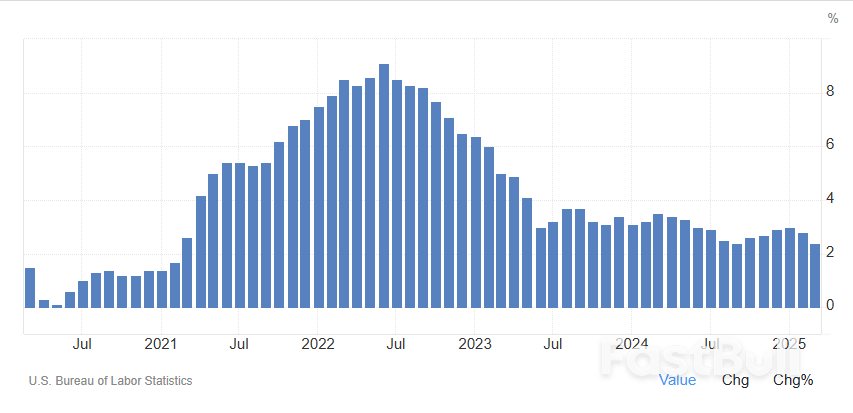
          However, the Fed's recent track record tends to support Donald Trump's arguments. In the spring of 2021, the global economic recovery following the Covid pandemic put pressure on supply chains and energy prices. These supply constraints are leading to price increases. However, the Fed believes that this will not be sustainable as supply returns to normal. At the time, the Fed spoke of transitory inflation. We know what happened next: price pressures spread throughout the economy, particularly due to tensions in the labor market, and the Fed had to abandon this narrative and begin a cycle of rate hikes starting in July 2022.
          The conclusion that everyone now draws from this sequence – and it is always easier to say so now – is that the Fed waited too long and allowed inflation to get out of hand, failing to see that it was not just a supply shock, but also a demand shock (stimulated by several massive stimulus packages from Donald Trump and then Joe Biden). The Fed was therefore behind the curve, and this resulted in inflation soaring to over 9% in the summer of 2022.
          Is the Fed late?_1
          This sequence of events may now legitimize Donald Trump's criticism of Jerome Powell. Last week in Michigan, speaking to supporters gathered for his 100-day anniversary, he even declared, "I know a lot more than he does about interest rates."

          Waiting remains the best solution

          But if we leave personal considerations aside and get to the heart of the matter, the Fed is currently in a delicate position. The expression used by our Anglo-Saxon friends is "between a rock and a hard place."
          On the one hand, fears of recession are very much present. JPMorgan, for example, has raised its probability of recession in the US to 60%, while surveys (of both households and businesses) show that confidence has deteriorated sharply, reaching levels not seen since 2008.
          On the other hand, tariffs will lead to price increases. It remains to be seen how large these price increases will be and whether they will spread. The challenge now for the Fed is to keep inflation expectations sufficiently anchored. In concrete terms, this means remaining sufficiently firm and committed to achieving its inflation target so that price increases do not reignite an inflationary spiral.
          This is why the Fed is very cautious about cutting interest rates, despite legitimate fears of an economic slowdown. This situation was summed up well by Richard Clarida, Fed Vice Chair between 2018 and 2022: "This is not going to be a cycle where the Fed makes preemptive cuts in anticipation of a slowdown. It will have to be reflected in tangible data, particularly in the labor market."
          This is exactly the position Jerome Powell has taken in recent weeks. Last month, at the Economic Club of Chicago, he said that the Fed needed "more clarity before considering any adjustments." In other words, more data clearly indicating that a slowdown is underway. However, for the time being, the hard data remains resilient. This was evident in Friday's employment report.
          And we will probably have to wait several more months before it deteriorates. That is why the market is expecting status quo this week, and why the next rate cut is now expected in July, according to the CME's FedWatch tool.

          source : marketscreener

          To stay updated on all economic events of today, please check out our Economic calendar
          Risk Warnings and Disclaimers
          You understand and acknowledge that there is a high degree of risk involved in trading. Following any strategies or investment methods may lead to potential losses. The content on the site is provided by our contributors and analysts for information purposes only. You are solely responsible for determining whether any trading assets, securities, strategy, or any other product is suitable for investing based on your own investment objectives and financial situation.
          Add to Favorites
          Share

          Pockets of US Credit Markets Flash Warnings Despite Upbeat Tone, Says BlackRock

          Manuel

          Bond

          Stocks

          Pockets of the U.S. corporate debt market are flashing warning signs that a cooling economy is squeezing the most fragile borrowers, a BlackRock executive said, despite broader market hopes that the turbulence from tariffs has subsided.
          Credit spreads - the premium investors demand to hold corporate debt rather than safer U.S. government bonds - spiked last month after President Donald Trump announced tariffs that sparked market volatility and fears of a sharp economic slowdown. But spreads have tightened in recent weeks, as the U.S. administration signaled a softer stance on tariffs and raised the possibility of imminent trade deals.
          Still, some signs of the financial health of CCC-rated companies - the market's riskiest borrowers - have deteriorated to the point that their earnings are not high enough to allow them to service their debt, said Amanda Lynam, head of macro credit research within the Portfolio Management Group at BlackRock, the world's largest asset management firm.
          "There are pockets that we are watching very carefully," she told Reuters in an interview. "There are companies that have less of a financial cushion, and you have to tread more carefully, because if and when we see a downshift in economic activity, they could be more vulnerable."
          Lynam spoke to Reuters late on Monday on the sidelines of the Milken Institute Global Conference taking place this week in Beverly Hills, where Wall Street executives and company chiefs struck a better-than-feared tone on the U.S. economic outlook.
          High-yield credit spreads widened to 461 basis points last month after Trump's imposition of steep tariffs - their widest since early 2023, when turmoil in the regional banking sector rocked U.S. markets. They have since retreated and were last at 360 basis points, according to the ICE BofA US High Yield Index.
          The retreat was partly due to renewed market optimism on the U.S. economy and its ability to withstand policy uncertainty, said Lynam. Also, several investors had long been waiting for corporate debt valuations to drop as an opportunity to add exposure more cheaply, she said.
          "There's a lot of money on the sidelines and a lot of investors share, I think, a common view that fundamentals are pretty good, and want to wait for a decent entry point. When you have those periods of widening, (spreads) snap back quickly because that money is getting deployed," she said.
          Still, valuations in credit markets could be impacted by a "more challenging growth and inflation backdrop," she said, with Trump's trade policies seen as key in determining the economic outlook. "What this all boils down to is growth," said Lynam.
          Separately, Purnima Puri, a governing partner at HPS Investment Partners, a credit investment firm, said on Tuesday the recent retrenchment in credit spreads was unlikely to last.
          BlackRock announced late last year that it planned to buy HPS for about $12 billion.
          "When we're looking at the market and tariffs and trade and inflation and then growth ... we don't think that the spread retrenchment is sustainable," she said on stage at the Milken event on Tuesday.

          Source: Reuters

          Risk Warnings and Disclaimers
          You understand and acknowledge that there is a high degree of risk involved in trading. Following any strategies or investment methods may lead to potential losses. The content on the site is provided by our contributors and analysts for information purposes only. You are solely responsible for determining whether any trading assets, securities, strategy, or any other product is suitable for investing based on your own investment objectives and financial situation.
          Add to Favorites
          Share

          Trump And His Tariffs Weigh On Fed’s Rate Decision

          Thomas

          Central Bank

          Economic

          When the Federal Reserve last met to decide on interest rates, back in mid-March, Chair Jerome Powell played down concerns about US growth and the inflationary threat from anticipated tariffs, even hinting that any effect on prices could be transitory.

          In the six weeks since that meeting, it’s fair to say a lot has happened.

          President Donald Trump on April 2 declared “Liberation Day” by imposing the biggest tariffs in a century on imported goods. Financial markets went into a tailspin, and businesses big and small complained about the turmoil the move would cause to their operations. Trump eventually pressed pause on a chunk of his planned tariffs but pressed ahead with levies on sectors such as autos and steel, a 10% rate on most countries and a whopping 145% on most goods coming from China.

          But the fallout continues. This week alone Ford Motor Co. suspended its full-year financial guidance and said Trump’s auto tariffs will take a toll on profit. Mattel Inc. withdrew its forecast for a return to sales growth in 2025, citing the effect Trump’s tariffs will have on its Barbie dolls, Hot Wheels cars and other toys.

          How all of this ultimately affects the economy remains an intense debate. The White House says the shock-and-awe tariffs are forcing billions of dollars in corporate investment in the US that will create new jobs. The stock market rout turned into a historic rally as the S&P has unwound a wild selloff.

          Which is why executives and investors are leaning on observers in the middle, who strive to stay above the political fracas, for guidance on where all of this is going. One of those observers is Powell, who on Wednesday will decide—with his policy board after a two-day meeting—on whether to lower interest rates.

          Investors are betting rates won’t be cut, at least for now, given the economy continues to hold up (April’s jobs data suggest ongoing labor market strength) and inflation remains above the Fed’s 2% target.

          Which means listeners to Powell’s news conference will want to hear not just his views on how businesses and households are handling the impact of tariffs right now but also, and more crucially, his thoughts on how they will be doing in the months ahead. The Fed in March lowered its growth projections for the economy, and Powell may be asked if another downgrade is coming.

          There’s an extra political edge here too. The Fed chair has come under intense criticism from Trump, who has accused him of being too slow—“Mr. Too Late”—to cut interest rates and said Powell’s termination from office can’t come soon enough (even as he says he won’t fire him).

          Against that backdrop, Powell won’t want to drag the Fed into the white heat of the political row over tariffs.

          But neither will he get a pass from investors if he sticks to a line that it’s too soon to gauge how much pain the tariffs will inflict. Powell drew criticism for missing the buildup of inflation post-pandemic. He won’t want to be accused of misreading the tariff effect either.

          Related: One Ship, $417 Million in New Tariffs: The Cost of Trump’s Trade War

          Bliss Bednar’s 2023 Volkswagen Atlas was running just fine. Sure, it wasn’t the fanciest car she’d ever owned, but with home renovations to plan and rising construction costs already threatening her remodeling budget, the retired teacher in central Texas planned to stick with the three-row SUV for the foreseeable future.

          Then President Donald Trump outlined 25% tariffs on auto imports, and she joined the millions of Americans racing to dealerships to snap up new models before the higher levies drive up prices by thousands of dollars.

          “I was a little reluctant, because there was nothing wrong with the car I had,” says Bednar, 58. After offloading the VW, she purchased a 2025 BMW X3 for about $65,000 with a $20,000 down payment, leaving her with a $500 monthly bill. It’s affordable for now, but she worries she’ll feel squeezed if everyday prices continue to rise. “I was afraid of tariffs, and I was afraid prices were going to skyrocket. Then I was like, ‘Maybe I jumped on this too soon,’ ” she says.

          Because of Trump’s tariffs, which went into effect on April 3 for finished cars and trucks but will take time to trickle down to the models on dealers’ lots, financial planners across the US say they’ve received an onslaught of inquiries from clients trying to purchase new vehicles. The president’s directives signed last week are meant to soften the car-tariff blow, in part by preventing multiple levies from piling on top of each other, but those buyers who raced to lock down vehicles are still on the hook for years of payments. For financially stable buyers, getting out ahead of price hikes can be a “prudent decision,” says Michael Girard, senior director for asset-backed securities in North America for Fitch Ratings Inc. But the high cost of new cars combined with the urgency to buy before tariffs hit could be a recipe for remorse should the economy slip into recession.

          Claire Ballentine and Keith Naughton write about the potential for a financial hangover: Pre-Tariff Car Buying Frenzy Leaves Americans With a Big Debt Problem

          Caroline Biddle thought she was doing the right thing when she opened up to her employer about her need for fertility treatment. Then she got her next paycheck and saw her salary had been docked for every time she had attended an appointment. Even more shocking, Biddle thought, her employer—a high school near Birmingham, England—wasn’t breaking any rules.

          The law in the UK, like in most places, doesn’t afford any protection to people who take time out of work for in vitro fertilization, a process that can involve dozens of unpredictable appointments for scans, blood tests and procedures, alongside self-administered hormone injections that commonly cause mood swings, brain fog and intense fatigue.

          The performing arts teacher remembers returning to work two days after a treatment, even though it was still painful to walk, because she couldn’t afford any more unpaid leave. Within a year, she’d quit her job and moved to a more supportive school, but after she finally had a child, she decided not to return to teaching. “I just remember feeling really devalued,” Biddle says. “I became really jaded with my whole career.”

          Few would dispute that women drop out of the workforce or downgrade to less strenuous roles after having children. Less well known is that for many, the process starts long before a child’s birth.

          Fertility treatment is specifically difficult on women’s responsibilities because there’s little flexibility as to when certain procedures take place. Natasha Doff writes about what that costs women: Why Juggling IVF With Work Can Be a Career Killer

          Source: Bloomberg Europe

          To stay updated on all economic events of today, please check out our Economic calendar
          Risk Warnings and Disclaimers
          You understand and acknowledge that there is a high degree of risk involved in trading. Following any strategies or investment methods may lead to potential losses. The content on the site is provided by our contributors and analysts for information purposes only. You are solely responsible for determining whether any trading assets, securities, strategy, or any other product is suitable for investing based on your own investment objectives and financial situation.
          Add to Favorites
          Share

          Bessent Says US Could Announce Some Trade Deals as Soon as 'This Week'

          Manuel

          Economic

          China–U.S. Trade War

          Treasury Secretary Scott Bessent told House lawmakers Tuesday that the Trump administration could announce trade deals with some of America's largest trading partners as soon as "this week," but he noted that negotiations have not started with China.
          “I would think that perhaps as early as this week, we will be announcing trade deals with some of our largest trading partners,” Bessent told a panel at the House Appropriations Subcommittee on Financial Services and Government.
          The secretary said the US was in talks with 17 trading partners out of the 18 the US considers "very important."
          "China, we have not engaged in negotiations with as of yet," he said.
          He said he would be surprised if the US hasn’t completed more than 80% or 90% of trade deals with its major trading partners by the end of the year and “maybe much sooner.”
          Bessent says many trading partners have approached the US with good offers and he expects “substantial reduction” in the tariffs and nontariff barriers, as well as changes to currency manipulation and the subsidies of both labor and capital investment.
          Across town at the White House, when asked about Bessent’s comments, President Trump said of China that “they want to meet."
          “They want to negotiate and they want to have a meeting,” the president said, but noted that he has not met with China.
          Trump also said of India and tariffs, "They have agreed to drop it to nothing."
          One Democratic congressman, Mark Pocan, took Bessent to task on tariffs Tuesday, repeatedly asking Bessent who pays for the president’s tariffs.
          “The tariffs are on again, off again, some on again, some off again, somewhat chaotic," Pocan said.
          "I believe your term is like crazy Ivan style; I compare them to how a monkey throws dung. You're not exactly sure where they're gonna land, and that's the concern I have as a small business owner,” he said.
          The secretary added during his appearance on Capitol Hill that he does not believe that the US is in recession now, noting that first quarter GDP, which contracted for the first time in three years, will be revised upward.
          “Nothing in the data shows we’re in a recession," he said, and noted a jobs report from last Friday that "surprised to the upside."
          When it comes to the so-called X date, or the date when the US will run out of cash to pay its bills, Bessent warned that the US is on “the warning track, which means we aren’t far away.”
          He said he will be able to give a more precise date when the Treasury is finished tallying incoming tax payments that came in for the April 15 tax filing deadline.
          Bessent stressed that "the US will never default. We will raise the debt ceiling and Treasury will not use gimmicks. We'll make sure the debt ceiling is raised.”

          Source: Yahoo Finance

          To stay updated on all economic events of today, please check out our Economic calendar
          Risk Warnings and Disclaimers
          You understand and acknowledge that there is a high degree of risk involved in trading. Following any strategies or investment methods may lead to potential losses. The content on the site is provided by our contributors and analysts for information purposes only. You are solely responsible for determining whether any trading assets, securities, strategy, or any other product is suitable for investing based on your own investment objectives and financial situation.
          Add to Favorites
          Share
          FastBull
          Copyright © 2025 FastBull Ltd

          728 RM B 7/F GEE LOK IND BLDG NO 34 HUNG TO RD KWUN TONG KLN HONG KONG

          TelegramInstagramTwitterfacebooklinkedin
          App Store Google Play Google Play
          Products
          Charts

          Chats

          Q&A with Experts
          Screeners
          Economic Calendar
          Data
          Tools
          Membership
          Features
          Function
          Markets
          Copy Trading
          Latest Signals
          Contests
          News
          Analysis
          24/7
          Columns
          Education
          Company
          Careers
          About Us
          Contact Us
          Advertising
          Help Center
          Feedback
          User Agreement
          Privacy Policy
          Business

          White Label

          Data API

          Web Plug-ins

          Poster Maker

          Affiliate Program

          Risk Disclosure

          The risk of loss in trading financial instruments such as stocks, FX, commodities, futures, bonds, ETFs and crypto can be substantial. You may sustain a total loss of the funds that you deposit with your broker. Therefore, you should carefully consider whether such trading is suitable for you in light of your circumstances and financial resources.

          No decision to invest should be made without thoroughly conducting due diligence by yourself or consulting with your financial advisors. Our web content might not suit you since we don't know your financial conditions and investment needs. Our financial information might have latency or contain inaccuracy, so you should be fully responsible for any of your trading and investment decisions. The company will not be responsible for your capital loss.

          Without getting permission from the website, you are not allowed to copy the website's graphics, texts, or trademarks. Intellectual property rights in the content or data incorporated into this website belong to its providers and exchange merchants.

          Not Logged In

          Log in to access more features

          FastBull Membership

          Not yet

          Purchase

          Become a signal provider
          Help Center
          Customer Service
          Dark Mode
          Price Up/Down Colors

          Log In

          Sign Up

          Position
          Layout
          Fullscreen
          Default to Chart
          The chart page opens by default when you visit fastbull.com
