

Markets
News
Analysis
User
24/7
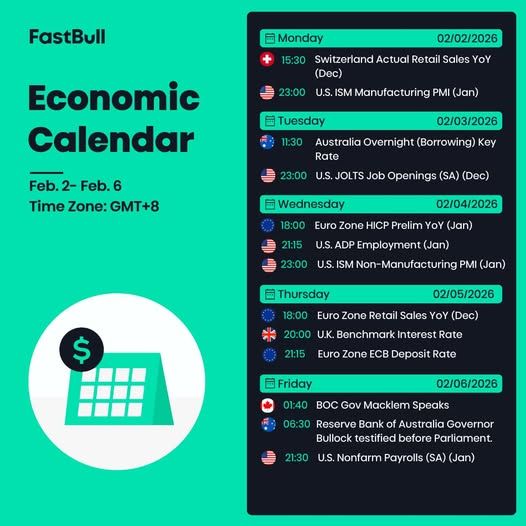
Economic Calendar
Education
Data
- Names
- Latest
- Prev



Signal Accounts for Members
All Signal Accounts
All Contests
Sweden Finance Minister: The Plan This Year And In The Years To Come Is To Protect And Strengthen Finances
Hsi Down 611 Pts, Hsti Down 191 Pts, Baba Down Over 3%, Bj Ent Water Hit New Highs, Market Turnover Rises
Hungary's Seasonally-Adjusted PMI Falls To 49.3 In January From Revised 54 In December -Publisher
OPEC Secretariat Receives Updated Compensation Plans From Iraq, The United Arab Emirates, Kazakhstan, And Oman
Stats Office - Swiss December Retail Sales +2.9% Year-On-Year Versus Revised +1.7% In Previous Month
Iran's Foreign Ministry Spokesperson Baghaei Says Tehran Is Examining Details Of Various Diplomatic Processes, Hopes For Results In Coming Days
FAA Head Says Concerned Other Countries Aren't Putting Enough Resources Into Certifying USA Aircraft
 U.S. Core PPI YoY (Dec)
A:--
F: --
U.S. Core PPI MoM (SA) (Dec)A:--
F: --
P: --
U.S. PPI YoY (Dec)A:--
F: --
P: --
U.S. PPI MoM (SA) (Dec)A:--
F: --
P: --
 Canada GDP MoM (SA) (Nov)
A:--
F: --
P: --
Canada GDP YoY (Nov)A:--
F: --
P: --
U.S. PPI MoM Final (Excl. Food, Energy and Trade) (SA) (Dec)A:--
F: --
P: --
U.S. PPI YoY (Excl. Food, Energy & Trade) (Dec)A:--
F: --
P: --
U.S. Chicago PMI (Jan)A:--
F: --
Canada Federal Government Budget Balance (Nov)A:--
F: --
P: --
U.S. Weekly Total Oil Rig CountA:--
F: --
P: --
U.S. Weekly Total Rig CountA:--
F: --
P: --
 China, Mainland NBS Manufacturing PMI (Jan)
A:--
F: --
P: --
China, Mainland NBS Non-manufacturing PMI (Jan)A:--
F: --
P: --
China, Mainland Composite PMI (Jan)A:--
F: --
P: --
 South Korea Trade Balance Prelim (Jan)
A:--
F: --
 Japan Manufacturing PMI Final (Jan)
A:--
F: --
P: --
South Korea IHS Markit Manufacturing PMI (SA) (Jan)A:--
F: --
P: --
 Indonesia IHS Markit Manufacturing PMI (Jan)
A:--
F: --
P: --
China, Mainland Caixin Manufacturing PMI (SA) (Jan)A:--
F: --
P: --
Indonesia Trade Balance (Dec)A:--
F: --
P: --
Indonesia Inflation Rate YoY (Jan)A:--
F: --
P: --
Indonesia Core Inflation YoY (Jan)A:--
F: --
P: --
 India HSBC Manufacturing PMI Final (Jan)
A:--
F: --
P: --
 Australia Commodity Price YoY (Jan)
A:--
F: --
P: --
 Russia IHS Markit Manufacturing PMI (Jan)
A:--
F: --
P: --
 Turkey Manufacturing PMI (Jan)
A:--
F: --
P: --
 U.K. Nationwide House Price Index MoM (Jan)
A:--
F: --
P: --
U.K. Nationwide House Price Index YoY (Jan)A:--
F: --
P: --
 Germany Actual Retail Sales MoM (Dec)
A:--
F: --
 Italy Manufacturing PMI (SA) (Jan)
--
F: --
P: --
 South Africa Manufacturing PMI (Jan)
--
F: --
P: --
 Euro Zone Manufacturing PMI Final (Jan)
--
F: --
P: --
U.K. Manufacturing PMI Final (Jan)--
F: --
P: --
 Brazil IHS Markit Manufacturing PMI (Jan)
--
F: --
P: --
Canada National Economic Confidence Index--
F: --
P: --
Canada Manufacturing PMI (SA) (Jan)--
F: --
P: --
U.S. IHS Markit Manufacturing PMI Final (Jan)--
F: --
P: --
U.S. ISM Output Index (Jan)--
F: --
P: --
U.S. ISM Inventories Index (Jan)--
F: --
P: --
U.S. ISM Manufacturing Employment Index (Jan)--
F: --
P: --
U.S. ISM Manufacturing New Orders Index (Jan)--
F: --
P: --
U.S. ISM Manufacturing PMI (Jan)--
F: --
P: --
South Korea CPI YoY (Jan)--
F: --
P: --
Japan Monetary Base YoY (SA) (Jan)--
F: --
P: --
Australia Building Approval Total YoY (Dec)--
F: --
P: --
Australia Building Permits MoM (SA) (Dec)--
F: --
P: --
Australia Building Permits YoY (SA) (Dec)--
F: --
P: --
Australia Private Building Permits MoM (SA) (Dec)--
F: --
P: --
Australia Overnight (Borrowing) Key Rate--
F: --
P: --
RBA Rate Statement Japan 10-Year Note Auction Yield--
F: --
P: --
 Saudi Arabia IHS Markit Composite PMI (Jan)
--
F: --
P: --
RBA Press Conference Turkey PPI YoY (Jan)--
F: --
P: --
Turkey CPI YoY (Jan)--
F: --
P: --
Turkey CPI YoY (Excl. Energy, Food, Beverage, Tobacco & Gold) (Jan)--
F: --
P: --
Turkey Trade Balance (Jan)--
F: --
P: --
U.S. Weekly Redbook Index YoY--
F: --
P: --
U.S. JOLTS Job Openings (SA) (Dec)--
F: --
P: --
 Mexico Manufacturing PMI (Jan)
--
F: --
P: --



















No matching data

Latest Views
Latest Views
Trending Topics
Top Columnists
Latest Update
White Label
Data API
Web Plug-ins
Affiliate Program
View All
No data
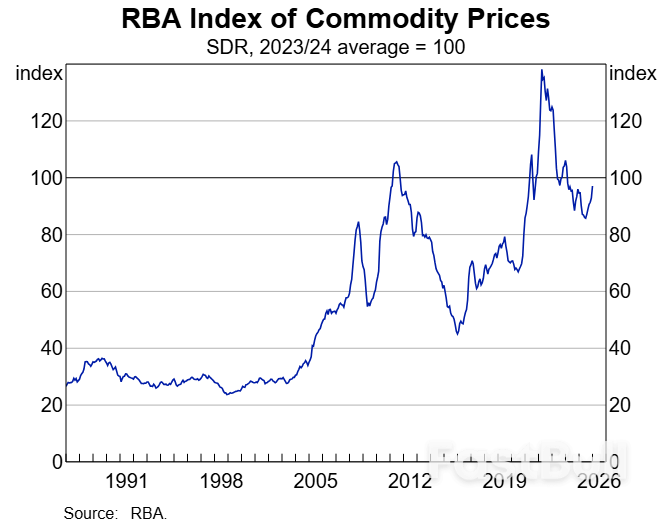
Preliminary estimates for January indicate that the index increased by 4.6 per cent (on a monthlyaverage basis) in SDR terms, after increasing by 1.7 per cent in December.
Preliminary estimates for January indicate that the index increased by 4.6 per cent (on a monthlyaverage basis) in SDR terms, after increasing by 1.7 per cent in December. The non-rural, ruraland base metals subindices all increased in the month. In Australian dollar terms, the indexincreased by 2.6 per cent in January.
Over the past year, the index has increased by 2.6 per cent in SDR terms. Decreases in the pricesof iron ore, oil, and coking coal have been more than offset by increases in gold, lithium andrural commodity prices. The index has decreased by 0.9 per cent in Australian dollar terms.
Consistent with previous releases, preliminary estimates for iron ore, coking coal, and LNGexport prices are being used for the most recent months, based on market information. Using spotprices for the bulk commodities index, the index increased by 5.4 per cent in January in SDRterms, to be 5.3 per cent higher over the past year.
For further details regarding the construction of the index, please refer to'Changes to the RBA Index of Commodity Prices: 2013'in the March 2013 issue of the Bulletin and 'Weights for the Index of Commodity Prices' (April 2025).
Details are in the attached table and graph.

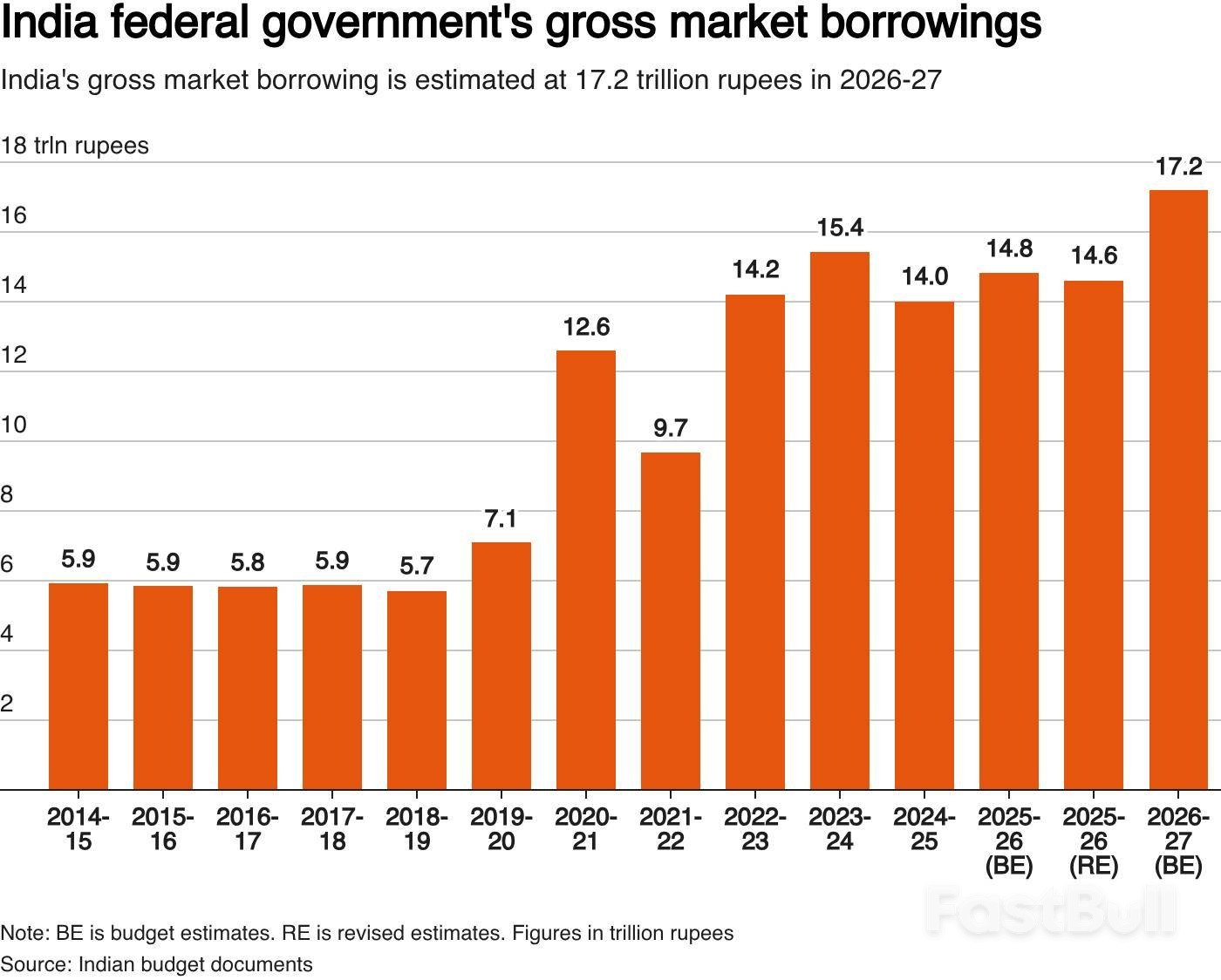
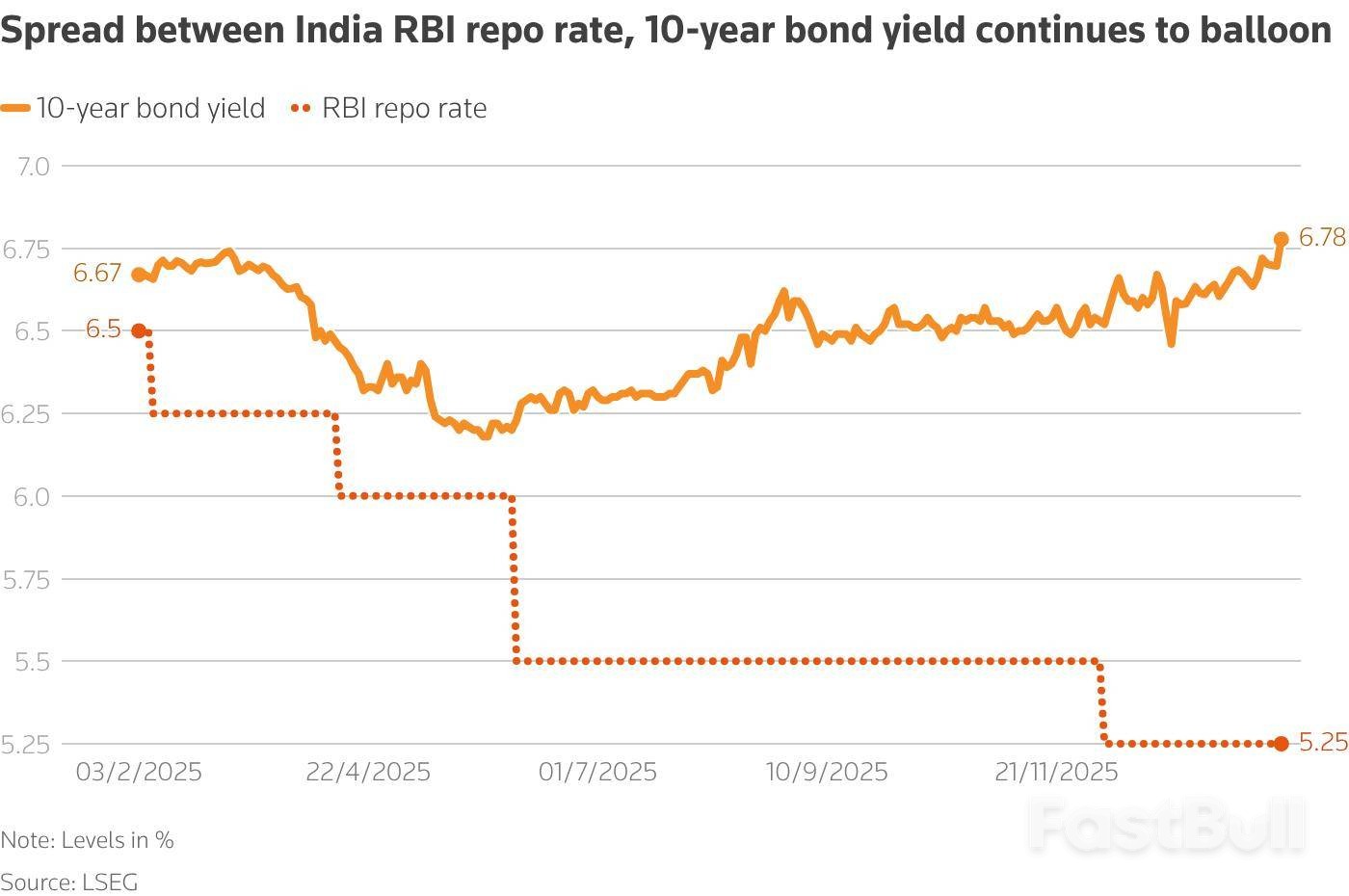
Indian government bonds sold off sharply following the federal budget, with the 10-year benchmark yield hitting its highest level in nearly a year. The market slump was driven by the government's announcement of a record-high borrowing program, which has weakened already fragile investor sentiment.
The government plans to borrow a gross 17.2 trillion rupees ($187.5 billion) in the next fiscal year, which runs from April through March. This news immediately pushed bond prices down and yields up.
The yield on the benchmark 6.48% 2035 bond jumped 8 basis points to 6.78% on Monday, a peak not seen since last March. This move comes as the market grapples with a lack of investor appetite and recent losses on trading portfolios.
Even before the budget announcement, the market showed signs of stress. The 10-year benchmark yield had already risen by around 20 basis points between December and January, despite a 25 basis point policy rate cut and significant debt purchases by the central bank.
The 10-year government bond yield is a crucial economic indicator because it serves as a benchmark for borrowing costs across the country. When this yield rises, it creates several challenges:
• Higher Costs for Companies and States: Both corporate and state-level borrowing becomes more expensive, as their loan rates are priced relative to government bonds.
• Increased Government Debt Burden: The government itself must pay more to finance its operations, straining public finances.
• Complicates Central Bank Policy: The Reserve Bank of India (RBI) has been cutting policy rates to support economic growth. Rising market yields work against these efforts, making monetary policy less effective.
Market analysts are now expressing caution and looking to the central bank for support.
"We remain cautious on bonds, (and) despite the recent cheapening, we do not advocate long positions here and think the 10-year can push closer to 7% near term," said Nathan Sribalasundaram, Asia rates strategist at Nomura. He noted that while the RBI remains the "marginal buyer," the central bank has a low bar for announcing further bond purchases through Open Market Operations (OMOs).
Dhiraj Nim, an economist at ANZ, shared a similar view on the RBI's role. "With macro factors likely to dampen the private sector's bond demand, the RBI is expected to use open market operations to boost liquidity and manage borrowing costs simultaneously," he said.
With the market under pressure, all eyes are on the Reserve Bank of India's monetary policy decision this Friday. While another rate change is not expected, traders and investors are anxiously awaiting any announcements about liquidity injections or new bond-buying programs designed to stabilize the market.
Copper prices continued their sharp decline from a record high, leaving traders to debate whether bullish Chinese investors will step back in after several days of chaotic trading rocked global metals markets.
The intense volatility has some seasoned market observers stepping back, citing heightened risks and a disconnect between financial speculation and softening physical demand. Yet, conversations among traders in China suggest a strong appetite to buy the dip, with analysts unwilling to rule out another major swing higher.
On the London Metal Exchange (LME), the industrial metal sank by as much as 4.2% to $12,600 per ton. This followed a dramatic week where prices first soared to a record above $14,500 last Thursday before crashing below $13,000 in intraday trading on Friday. Other metals, including aluminum, tin, nickel, and silver, also posted steep declines.
The extreme moves capped a strong period for copper, which saw futures gain over 40% in 2025 amid mine disruptions, speculation on demand from the energy transition, and the potential for new U.S. import tariffs.
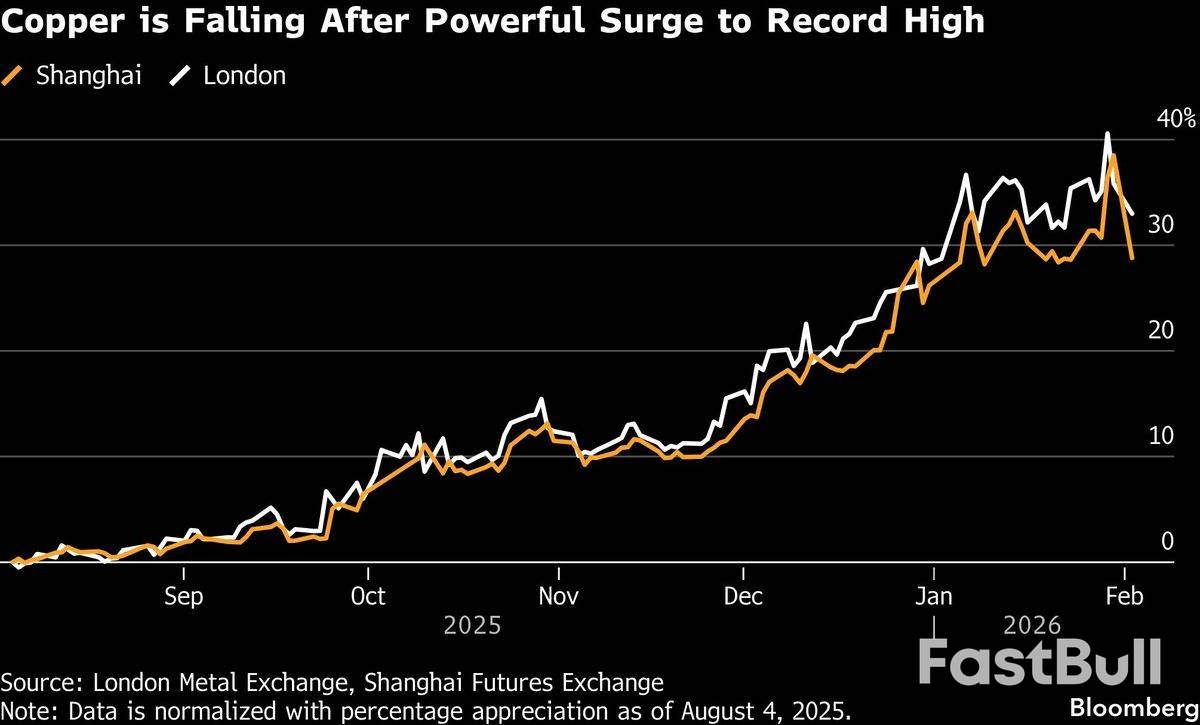
The recent rally in both base and precious metals was initially driven by a surge of interest from investors in China, where funds have been rotating into commodities amid doubts about the U.S. dollar and a shift away from currencies and sovereign bonds.
However, Friday's selloff was sparked by news that U.S. President Donald Trump named Kevin Warsh, known as a tough inflation fighter, to head the Federal Reserve.
Despite the turbulence, January was the busiest month ever for metals trading on the Shanghai Futures Exchange (SHFE), with copper volumes hitting a record during Friday's downturn.
"Some funds are exiting ahead of the Lunar New Year to avoid risk amid such high volatility," noted Gao Yin, an analyst at Shuohe Asset Management Co. "But the medium- to long-term logic behind this round of rally remains intact. There is a unanimous, bullish consensus among Chinese investors."
The frenzy in financial markets contrasts sharply with softening physical demand. Traders familiar with the industry report that buying from fabricators has been muted, even with the price drop. Many industrial users are also winding down operations ahead of the Lunar New Year holiday.
This disconnect was further highlighted by data showing China's factory activity unexpectedly stalled in December. Copper bulls appear to be looking past weak immediate consumption, focusing instead on broader macro trends like easier global monetary policy, a softer dollar, and increased fiscal spending in developed economies.
Some analysts believe the current pullback is a strategic entry point.
"The near-term correction will provide a good window to buy," wrote Li Yaoyao, an analyst at Xinhu Futures Co., in a note. The firm suggested copper is entering a "supercycle" of sustained high prices and could trade between 100,000 yuan ($14,385) and 150,000 yuan per ton in Shanghai this year.
As of the latest trading, copper on the SHFE was down 3.4% at 100,110 yuan a ton. In London, LME copper fell 4.2% to $12,601.50 a ton at 12:05 p.m. Singapore time, after closing 3.4% lower on Friday. Other industrial metals also declined, with aluminum losing 2.8% and tin falling by more than 8%. Iron ore in Singapore dipped 0.3% to $103.35 a ton.
728 RM B 7/F GEE LOK IND BLDG NO 34 HUNG TO RD KWUN TONG KLN HONG KONG


White Label
Data API
Web Plug-ins
Poster Maker
Affiliate Program
The risk of loss in trading financial instruments such as stocks, FX, commodities, futures, bonds, ETFs and crypto can be substantial. You may sustain a total loss of the funds that you deposit with your broker. Therefore, you should carefully consider whether such trading is suitable for you in light of your circumstances and financial resources.
No decision to invest should be made without thoroughly conducting due diligence by yourself or consulting with your financial advisors. Our web content might not suit you since we don't know your financial conditions and investment needs. Our financial information might have latency or contain inaccuracy, so you should be fully responsible for any of your trading and investment decisions. The company will not be responsible for your capital loss.
Without getting permission from the website, you are not allowed to copy the website's graphics, texts, or trademarks. Intellectual property rights in the content or data incorporated into this website belong to its providers and exchange merchants.
Not Logged In
Log in to access more features


Log In
Sign Up


