Markets
News
Analysis
User
24/7
Economic Calendar
Education
Data
- Names
- Latest
- Prev



Signal Accounts for Members
All Signal Accounts
All Contests


U.S. Core CPI (SA) (Dec)A:--
F: --
P: --
U.S. Core CPI YoY (Not SA) (Dec)A:--
F: --
P: --
U.S. Weekly Redbook Index YoYA:--
F: --
P: --
U.S. New Home Sales Annualized MoM (Oct)A:--
F: --
U.S. Annual Total New Home Sales (Oct)A:--
F: --
U.S. Cleveland Fed CPI MoM (SA) (Dec)A:--
F: --
P: --
U.S. Cleveland Fed CPI MoM (Dec)A:--
F: --
P: --
China, Mainland Exports (Dec)--
F: --
P: --
China, Mainland Imports YoY (CNH) (Dec)--
F: --
P: --
China, Mainland Imports (CNH) (Dec)--
F: --
P: --
China, Mainland Trade Balance (CNH) (Dec)--
F: --
P: --
China, Mainland Imports YoY (USD) (Dec)--
F: --
P: --
China, Mainland Exports YoY (USD) (Dec)--
F: --
P: --
China, Mainland M0 Money Supply YoY (Dec)--
F: --
P: --
China, Mainland M1 Money Supply YoY (Dec)--
F: --
P: --
China, Mainland M2 Money Supply YoY (Dec)--
F: --
P: --
U.S. EIA Natural Gas Production Forecast For The Next Year (Jan)A:--
F: --
P: --
U.S. EIA Short-Term Crude Production Forecast For The Next Year (Jan)A:--
F: --
P: --
U.S. EIA Short-Term Crude Production Forecast For The Year (Jan)A:--
F: --
P: --
EIA Monthly Short-Term Energy Outlook
U.S. 30-Year Bond Auction Avg. YieldA:--
F: --
P: --
Argentina 12-Month CPI (Dec)A:--
F: --
P: --
U.S. Budget Balance (Dec)A:--
F: --
P: --
Argentina CPI MoM (Dec)A:--
F: --
P: --
Argentina National CPI YoY (Dec)A:--
F: --
P: --
Richmond Federal Reserve President Barkin delivered a speech.
U.S. API Weekly Cushing Crude Oil StocksA:--
F: --
P: --
U.S. API Weekly Crude Oil StocksA:--
F: --
P: --
U.S. API Weekly Refined Oil StocksA:--
F: --
P: --
U.S. API Weekly Gasoline StocksA:--
F: --
P: --
South Korea Unemployment Rate (SA) (Dec)--
F: --
P: --
Japan Reuters Tankan Non-Manufacturers Index (Jan)--
F: --
P: --
Japan Reuters Tankan Manufacturers Index (Jan)--
F: --
P: --
China, Mainland Exports YoY (CNH) (Dec)--
F: --
P: --
China, Mainland Trade Balance (USD) (Dec)--
F: --
P: --
China, Mainland Outstanding Loans Growth YoY (Dec)--
F: --
P: --
U.K. 10-Year Note Auction Yield--
F: --
P: --
Canada Leading Index MoM (Dec)--
F: --
P: --
U.S. MBA Mortgage Application Activity Index WoW--
F: --
P: --
U.S. Core PPI YoY (Nov)--
F: --
P: --
U.S. PPI MoM (SA) (Nov)--
F: --
P: --
U.S. PPI YoY (Nov)--
F: --
P: --
U.S. Current Account (Q3)--
F: --
P: --
U.S. Retail Sales YoY (Nov)--
F: --
P: --
U.S. Retail Sales (Nov)--
F: --
P: --
U.S. Core Retail Sales MoM (Nov)--
F: --
P: --
U.S. PPI YoY (Excl. Food, Energy & Trade) (Nov)--
F: --
P: --
U.S. PPI MoM Final (Excl. Food, Energy and Trade) (SA) (Nov)--
F: --
P: --
U.S. Core Retail Sales (Nov)--
F: --
P: --
U.S. Retail Sales MoM (Excl. Automobile) (SA) (Nov)--
F: --
P: --
U.S. Retail Sales MoM (Nov)--
F: --
P: --
U.S. Retail Sales MoM (Excl. Gas Stations & Vehicle Dealers) (SA) (Nov)--
F: --
P: --
U.S. Core PPI MoM (SA) (Nov)--
F: --
P: --
Philadelphia Fed President Henry Paulson delivers a speech
U.S. Commercial Inventory MoM (Oct)--
F: --
P: --
U.S. Existing Home Sales Annualized Total (Dec)--
F: --
P: --
U.S. Existing Home Sales Annualized MoM (Dec)--
F: --
P: --
U.S. EIA Weekly Cushing, Oklahoma Crude Oil Stocks Change--
F: --
P: --
U.S. EIA Weekly Crude Stocks Change--
F: --
P: --
U.S. EIA Weekly Gasoline Stocks Change--
F: --
P: --
U.S. EIA Weekly Crude Demand Projected by Production--
F: --
P: --


No matching data
Latest Views
Latest Views
Trending Topics
Top Columnists
Latest Update
White Label
Data API
Web Plug-ins
Affiliate Program
View All

No data
While further interest rate easing later in the year would be positive for non-yielding gold, a stronger greenback weighed on the yellow metal as it’s priced in the US currency.
Rachel Reeves' fiscal rules are "among the loosest the UK has had in its history" and fail to control borrowing effectively compared to other advanced economies, according to the former head of the government's spending watchdog.
Richard Hughes, who resigned as chair of the Office for Budget Responsibility (OBR) in November, argued that the self-imposed rules do not constrain growth because they permit the government to run a "quite a big structural deficit."
In his first public appearance since stepping down, Hughes told a House of Lords committee that the UK is now much slower at correcting its finances after a major shock.
"The rules we have mean that righting the fiscal ship after a shock happens much more slowly at the moment in the UK compared to what other rules might have required had they remained in place or compared to other jurisdictions," he said.
Hughes' comments underscore a critical challenge for the UK economy. Despite Reeves acknowledging that 10% of government spending goes toward debt interest, the national debt is still rising. Currently at 95.6% of GDP, or £2.9 trillion, UK debt has reached levels not seen since 1963 and is projected to climb to 97% of GDP by 2029.
The criticism from Hughes follows a chaotic budget process last November. Reeves raised taxes by £26 billion, a move designed to more than double her buffer against her fiscal rules to £21.7 billion and reassure markets.
Hughes explained that Reeves' fiscal framework is not strong enough to stabilize the public finances. He pointed to a specific mandate that taxes must cover day-to-day spending by 2029-30, a rule he claims allows borrowing of as much as 3% of GDP annually.
Crucially, he noted, this target never actually needs to be met. Once 2029-30 becomes the third year of the forecast, the target date simply rolls forward each year.
"We are still piling up debt several years on from a shock," Hughes stated, referencing the impacts of Covid and the energy crisis. "We aim to get borrowing to 2.5% of GDP by the end of the decade. That's a level the average advanced economy reached two years ago. Other countries have been much faster at rebuilding fiscal resilience."
He added, "I don't see much evidence of the government being constrained in its ability to support the economy."
Hughes also pushed back against claims that the OBR has become too powerful and that its forecasts are overriding elected officials—an argument made by figures including former Bank of England governor Andy Haldane.
He insisted the problem is not the OBR's analysis but the "record low level of headroom" against the rules used by both Reeves and her Conservative predecessor, Jeremy Hunt.
"Having a combination of relatively loose rules and also setting aside relatively small amounts of headroom is one of the reasons why fiscal outcomes have drifted," Hughes argued.
He concluded that the true economic limitation is the debt itself, not the watchdog that measures it. "Fiscal policy in this country is constrained because we've got debt approaching 100% of GDP and a deficit of almost 5% of GDP. Not because of the OBR forecast... we are borrowing more than almost any other advanced economy at the moment."
A major trade agreement between the Trump administration and Taiwan is in the final stages of negotiation, potentially reshaping semiconductor supply chains and U.S. trade policy in Asia. The deal centers on a U.S. tariff reduction in exchange for a massive expansion of chip manufacturing on American soil.

Under the proposed terms, the United States would lower tariffs on Taiwanese exports from 20% to 15%. This would bring Taiwan's tariff level in line with regional competitors like Japan and South Korea, marking a significant win for the Trump administration's trade agenda.
In return, Taiwan Semiconductor Manufacturing Co. (TSMC), the world's leading chipmaker, is expected to commit to a substantial increase in its U.S. presence. This quid pro quo was a key expectation for U.S. officials, including Commerce Secretary Howard Lutnick, who pushed for significant new investment promises from Taiwan.
Taipei's Office of Trade Negotiations confirmed on Tuesday that both sides have reached a "broad consensus." Discussions are now underway to schedule a final meeting before the agreement is sent to the legislature for review.
The centerpiece of Taiwan's commitment is a plan for TSMC to dramatically scale up its operations in Arizona. The company would agree to build five new chip fabrication plants (fabs) and two advanced packaging facilities in the state.
This expansion would roughly double TSMC's manufacturing footprint in Arizona. The new investment is projected to exceed $100 billion, considering a single fab costs around $20 billion to build in the U.S. These commitments are in addition to TSMC's existing plans for up to $165 billion in U.S. investment. According to reports, the new facilities are scheduled for completion sometime in the 2030s.
The agreement carries significant geopolitical weight. A deal with Taipei risks provoking a strong reaction from China, which considers the self-governing island its own territory—a claim Taiwan's government rejects.
Aware of the delicate timing, officials in Taipei are reportedly pushing to finalize the pact before a planned meeting between President Trump and Chinese leader Xi Jinping. The U.S. president is expected to visit China in April, adding a sense of urgency to the trade talks.
Despite the progress, the entire agreement could be complicated or delayed by a pending U.S. Supreme Court decision. A ruling on the legality of Trump's tariffs is expected as soon as Wednesday, and an unfavorable outcome could render the current negotiations moot.
President Donald Trump recently outlined a bold plan for Venezuela: its interim government would supply the U.S. with up to 50 million barrels of oil, and America’s largest energy companies would move in to overhaul the nation's crumbling oil infrastructure. The goal, he said, was for these firms to "start making money for the country" again.
While this might sound like a golden opportunity, for the US oil majors, it looks more like a poisoned chalice. Venezuela sits on the world's largest crude reserves—more than Saudi Arabia and Iran combined—but accessing that wealth is fraught with technical, financial, and political dangers that even the biggest players are reluctant to face.

The primary obstacle is political risk. Venezuela’s history of nationalization casts a long shadow over any potential investment. In the 1990s, former President Hugo Chavez nationalized the oil industry. By 2007, he had forced out giants like Exxon and ConocoPhillips after they refused to hand a majority stake in their projects to the state-run oil company, PDVSA.
The financial wounds from that era have not healed. ConocoPhillips is still owed approximately $10 billion. Today, only Chevron is authorized to operate in Venezuela and export crude to the United States.
Industry leaders are deeply skeptical. At a recent meeting with Trump, Exxon CEO Darren Woods was blunt: "We've had our assets seized there twice, and so you can imagine to re-enter a third time would require some pretty significant changes."
According to a Reuters analysis, oil companies will hesitate to make major commitments until Caracas establishes a new government that can earn the trust of international investors and banks. Trump has offered security guarantees, but not capital, for new projects—a promise that may not be enough to overcome decades of instability.
On paper, Venezuela’s oil wealth is staggering. As a founding member of OPEC, it holds an estimated 303 billion barrels of proven reserves, representing about 17% of the world's total and dwarfing the United States' 55 billion barrels.
Most of these reserves are concentrated in the Orinoco Belt, a massive territory in eastern Venezuela. However, PDVSA, which controls most operations, has been crippled by aging infrastructure, underinvestment, mismanagement, and sanctions. As a result, a country that once exported 3.5 million barrels per day now struggles to produce around 1 million.
The $100 Billion Price Tag for a Revival
Revitalizing Venezuela’s oil production would require an enormous capital injection. Francisco Monaldi, director of Latin American energy policy at Rice University's Baker Institute, estimates that returning to the peak production levels of the 1970s would demand an annual investment of $10 billion for the next ten years—a total of $100 billion.
Even more modest goals are costly. According to consulting firm Rystad Energy:
• Merely maintaining current production levels would cost $53 billion over the next 15 years.
• Raising production above 1.4 million barrels per day would require an additional $120 billion by 2040.
Beyond the political and financial hurdles lies a fundamental technical challenge: Venezuela’s oil is extra-heavy crude. It is dense and highly viscous, making it far more difficult and expensive to extract than conventional light crude. Production requires advanced techniques like steam injection and blending with lighter oils to make it marketable.
This extra-heavy crude also sells at a discount due to its high density and sulfur content. While U.S. Gulf Coast refineries are equipped to process it, the economics are questionable, especially at low oil prices.
Consultancy Wood Mackenzie estimates that breakeven costs for key grades in the Orinoco Belt average more than $80 a barrel. With global oil prices hovering around $60 a barrel, Venezuelan production is simply uneconomical. For comparison, heavy oil from Canada has an average breakeven cost of around $55 a barrel.
Are the Reserves Overstated?
There is also growing doubt about the true size of Venezuela's commercially viable reserves. The country’s "proven reserves" are self-reported and were declared the world's largest by OPEC in 2011, a year when oil traded above $100 per barrel.
Proven reserves are defined as oil that has a 90% probability of being recovered with existing technology while remaining commercially viable. Since Orinoco oil is expensive to produce and refine, its viability is critically dependent on high prices.
Rystad Energy offers a more conservative estimate, suggesting Venezuela's realistic reserves are closer to 60 billion barrels. Unless prices spike significantly, much of the country's claimed oil wealth may remain theoretical.
For US oil companies, the bottom line is clear. Returning to Venezuela would require oil prices to rise by at least $20 a barrel just to break even. Even then, they would need ironclad guarantees that their multibillion-dollar investments won't be seized again.
With political risk at an all-time high and questionable economic returns, the Trump administration's vision of an American-led revival of Venezuela's oil industry appears disconnected from reality. As one analyst summarized, the world likely doesn't need more high-cost, dirty oil. The dream of a Venezuelan crude deluge will probably remain just that—a dream.
U.S. Treasury Secretary Scott Bessent convened a meeting with key international partners on Monday, urging them to build more resilient supply chains for critical minerals.
According to a statement from the Treasury Department, the Washington meeting focused on developing solutions to secure and diversify sources of these materials, with a special emphasis on rare earth elements.

A U.S. official indicated Sunday that a primary goal of the talks was for Bessent to encourage allied nations to step up efforts to reduce their reliance on China for critical minerals. The push comes as Beijing has implemented strict export controls on rare earths.
The Treasury Department noted Bessent's optimism that nations will adopt a strategy of "prudent derisking over decoupling." He stressed that partners understand the urgent need to address current vulnerabilities in the critical minerals supply chain.
The meeting brought together a significant group of nations and blocs. Representatives attended from:
• Australia
• Canada
• The European Union
• France
• Germany
• India
• Italy
• Japan
• Mexico
• South Korea
• The United Kingdom
Collectively, these participants account for 60% of the global demand for critical minerals.
China holds a dominant position in the global critical minerals supply chain. Data from the International Energy Agency shows that China refines between 47% and 87% of the world's copper, lithium, cobalt, graphite, and rare earths.
These materials are essential components in a wide range of modern technologies, including defense systems, semiconductors, renewable energy hardware, batteries, and industrial refining processes.
Adding to recent tensions, China last week banned exports of certain dual-use items with military applications to Japan, a category that includes some critical minerals.


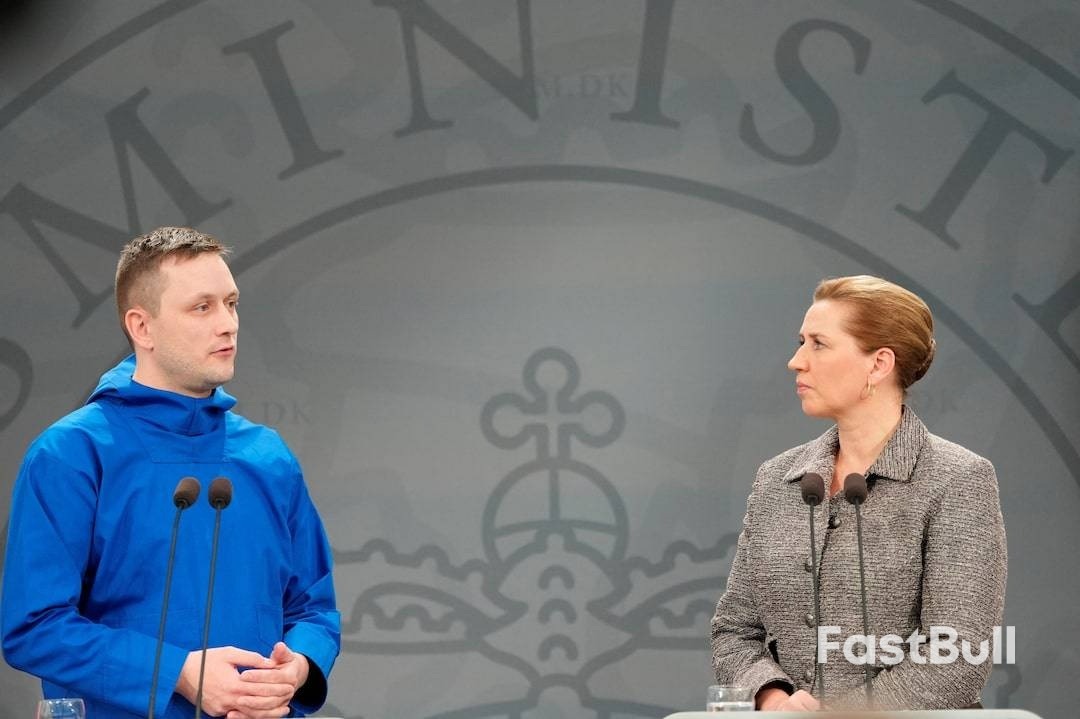
COPENHAGEN, Jan 13 (Reuters) - Greenland's prime minister said on Tuesday his nation would rather remain part of Denmark than become a territory of the United States, amid President Donald Trump's push to take control of the sprawling Arctic island.
The Danish and Greenlandic foreign ministers will meet U.S. Vice President JD Vance and Secretary of State Marco Rubio on Wednesday after Trump recently stepped up threats to take over Greenland, an autonomous territory of the Kingdom of Denmark.
But Greenland is not for sale and does not want to join the U.S., the island's Prime Minister Jens-Frederik Nielsen told a joint press conference in Copenhagen with Danish Prime Minister Mette Frederiksen.
"We face a geopolitical crisis, and if we have to choose between the U.S. and Denmark here and now then we choose Denmark," Nielsen said. "We stand united in the Kingdom of Denmark."
People in Greenland do not want to become Americans, and are feeling betrayed and bewildered by the rhetoric used about their island, cabinet minister Naaja Nathanielsen told reporters in London.
"I think we should be able to have a say ourselves in the future of our lives. For others, this might be a piece of land, but for us, it's home," said Nathanielsen, whose portfolio includes business, energy and minerals.
While Denmark has ruled Greenland for centuries, the territory has gradually been moving towards independence since 1979, a goal shared by all political parties elected to the island's parliament.
But Nathanielsen said there was no rush towards claiming independence. "We are an American ally, but we do not see ourselves as becoming Americans. We are quite happy with being part of the Kingdom of Denmark," she said.
Trump has said Greenland is vital to U.S. security and the United States must own it to prevent Russia or China occupying the strategically located and minerals-rich territory in the future.
White House officials have been discussing various plans to bring Greenland under U.S. control, including potential use of the U.S. military and lump-sum payments to Greenlanders as part of a bid to convince them to secede from Denmark.
Danish Foreign Minister Lars Lokke Rasmussen and his Greenlandic counterpart, Vivian Motzfeldt, had requested a meeting with Rubio after Trump's threats.
"U.S. Vice President JD Vance also wanted to participate in the meeting, and he will host the meeting, which will therefore be held at the White House," Rasmussen told reporters in Copenhagen earlier on Tuesday.
"Our reason for seeking the meeting we have now been given was to move this whole discussion... into a meeting room where we can look each other in the eye and talk about these things."
Denmark's prime minister said it was difficult to stand up to the U.S., a fellow NATO member and the country's most important ally for many decades. "But much suggests that the hardest part is now ahead of us," Frederiksen told reporters.
Trump first floated the idea of a U.S. takeover of Greenland in 2019 during his first term in office, although he faces opposition in Washington, including from within his own party.
Danish Defence Minister Troels Lund Poulsen said he would join a meeting with NATO Secretary General Mark Rutte in Brussels on Monday next week to discuss Arctic security, along with Greenland's Motzfeldt.
Denmark planned a larger military presence in Greenland, with other NATO countries participating in exercises and training in 2026, the defence minister said.
White Label
Data API
Web Plug-ins
Poster Maker
Affiliate Program
The risk of loss in trading financial instruments such as stocks, FX, commodities, futures, bonds, ETFs and crypto can be substantial. You may sustain a total loss of the funds that you deposit with your broker. Therefore, you should carefully consider whether such trading is suitable for you in light of your circumstances and financial resources.
No decision to invest should be made without thoroughly conducting due diligence by yourself or consulting with your financial advisors. Our web content might not suit you since we don't know your financial conditions and investment needs. Our financial information might have latency or contain inaccuracy, so you should be fully responsible for any of your trading and investment decisions. The company will not be responsible for your capital loss.
Without getting permission from the website, you are not allowed to copy the website's graphics, texts, or trademarks. Intellectual property rights in the content or data incorporated into this website belong to its providers and exchange merchants.
Not Logged In
Log in to access more features

FastBull Membership
Not yet
Purchase
Log In
Sign Up