• Trade
  • Markets
  • Copy
  • Contests
  • News
  • 24/7
  • Calendar
  • Q&A
  • Chats
Trending
Screeners
SYMBOL
LAST
BID
ASK
HIGH
LOW
NET CHG.
%CHG.
SPREAD
SPX
S&P 500 Index
6827.42
6827.42
6827.42
6899.86
6801.80
-73.58
-1.07%
--
DJI
Dow Jones Industrial Average
48458.04
48458.04
48458.04
48886.86
48334.10
-245.98
-0.51%
--
IXIC
NASDAQ Composite Index
23195.16
23195.16
23195.16
23554.89
23094.51
-398.69
-1.69%
--
USDX
US Dollar Index
97.950
98.030
97.950
98.500
97.950
-0.370
-0.38%
--
EURUSD
Euro / US Dollar
1.17394
1.17409
1.17394
1.17496
1.17192
+0.00011
+ 0.01%
--
GBPUSD
Pound Sterling / US Dollar
1.33707
1.33732
1.33707
1.33997
1.33419
-0.00148
-0.11%
--
XAUUSD
Gold / US Dollar
4299.39
4299.39
4299.39
4353.41
4257.10
+20.10
+ 0.47%
--
WTI
Light Sweet Crude Oil
57.233
57.485
57.233
58.011
56.969
-0.408
-0.71%
--

Community Accounts

Signal Accounts
--
Profit Accounts
--
Loss Accounts
--
View More

Become a signal provider

Sell trading signals to earn additional income

View More

Guide to Copy Trading

Get started with ease and confidence

View More

Signal Accounts for Members

All Signal Accounts

Best Return
  • Best Return
  • Best P/L
  • Best MDD
Past 1W
  • Past 1W
  • Past 1M
  • Past 1Y

All Contests

  • All
  • Trump Updates
  • Recommend
  • Stocks
  • Cryptocurrencies
  • Central Banks
  • Featured News
Top News Only
Share

Thai Leader Anutin: Landmine Blast That Killed Thai Soldiers 'Not A Roadside Accident'

Share

Thai Leader Anutin: Thailand To Continue Military Action Until 'We Feel No More Harm'

Share

Cambodian Prime Minister Hun Manet Says He Had Phone Calls With Trump And Malaysian Leader Anwar About Ceasefire

Share

Cambodia's Hun Manet Says USA, Malaysia Should Verify 'Which Side Fired First' In Latest Conflict

Share

Cambodia's Hun Manet: Cambodia Maintains Its Stance In Seeking Peaceful Resolution Of Disputes

Share

Nasdaq Companies: Allergan, Ferrovia, Insmed, Monolithic Power Systems, Seagate Technology, And Western Digital Will Be Added To The NASDAQ 100 Index. Biogen, CdW, GlobalFoundries, Lululemon, ON Semiconductor, And Tradedesk Will Be Removed From The NASDAQ 100 Index

Share

Witkoff Headed To Berlin This Weekend To Meet With Zelenskiy, European Leaders -Wsj Reporter On X

Share

Russia Attacks Two Ukrainian Ports, Damaging Three Turkish-Owned Vessels

Share

[Historic Flooding Occurs In At Least Four Rivers In Washington State Due To Days Of Torrential Rains] Multiple Areas In Washington State Have Been Hit By Severe Flooding Due To Days Of Torrential Rains, With At Least Four Rivers Experiencing Historic Flooding. Reporters Learned On The 12th That The Floods Caused By The Torrential Rains In Washington State Have Destroyed Homes And Closed Several Highways. Experts Warn That Even More Severe Flooding May Occur In The Future. A State Of Emergency Has Been Declared In Washington State

Share

Trump Says Proposed Free Economic Zone In Donbas Would Work

Share

Trump: I Think My Voice Should Be Heard

Share

Trump Says Will Be Choosing New Fed Chair In Near Future

Share

Trump Says Proposed Free Economic Zone In Donbas Complex But Would Work

Share

Trump Says Land Strikes In Venezuela Will Start Happening

Share

US President Trump: Thailand And Cambodia Are In A Good Situation

Share

State Media: North Korean Leader Kim Hails Troops Returning From Russia Mission

Share

The 10-year Treasury Yield Rose About 5 Basis Points During The "Fed Rate Cut Week," And The 2/10-year Yield Spread Widened By About 9 Basis Points. On Friday (December 12), In Late New York Trading, The Yield On The Benchmark 10-year US Treasury Note Rose 2.75 Basis Points To 4.1841%, A Cumulative Increase Of 4.90 Basis Points For The Week, Trading Within A Range Of 4.1002%-4.2074%. It Rose Steadily From Monday To Wednesday (before The Fed Announced Its Rate Cut And Treasury Bill Purchase Program), Subsequently Exhibiting A V-shaped Recovery. The 2-year Treasury Yield Fell 1.82 Basis Points To 3.5222%, A Cumulative Decrease Of 3.81 Basis Points For The Week, Trading Within A Range Of 3.6253%-3.4989%

Share

Trump: Lots Of Progress Being Made On Russia-Ukraine

Share

NOPA November US Soybean Crush Estimated At 220.285 Million Bushels

Share

SPDR Gold Trust Reports Holdings Up 0.22%, Or 2.28 Tonnes, To 1053.11 Tonnes By Dec 12

TIME
ACT
FCST
PREV
U.K. Trade Balance Non-EU (SA) (Oct)

A:--

F: --

P: --

U.K. Trade Balance (Oct)

A:--

F: --

P: --

U.K. Services Index MoM

A:--

F: --

P: --

U.K. Construction Output MoM (SA) (Oct)

A:--

F: --

P: --

U.K. Industrial Output YoY (Oct)

A:--

F: --

P: --

U.K. Trade Balance (SA) (Oct)

A:--

F: --

P: --

U.K. Trade Balance EU (SA) (Oct)

A:--

F: --

P: --

U.K. Manufacturing Output YoY (Oct)

A:--

F: --

P: --

U.K. GDP MoM (Oct)

A:--

F: --

P: --

U.K. GDP YoY (SA) (Oct)

A:--

F: --

P: --

U.K. Industrial Output MoM (Oct)

A:--

F: --

P: --

U.K. Construction Output YoY (Oct)

A:--

F: --

P: --

France HICP Final MoM (Nov)

A:--

F: --

P: --

China, Mainland Outstanding Loans Growth YoY (Nov)

A:--

F: --

P: --

China, Mainland M2 Money Supply YoY (Nov)

A:--

F: --

P: --

China, Mainland M0 Money Supply YoY (Nov)

A:--

F: --

P: --

China, Mainland M1 Money Supply YoY (Nov)

A:--

F: --

P: --

India CPI YoY (Nov)

A:--

F: --

P: --

India Deposit Gowth YoY

A:--

F: --

P: --

Brazil Services Growth YoY (Oct)

A:--

F: --

P: --

Mexico Industrial Output YoY (Oct)

A:--

F: --

P: --

Russia Trade Balance (Oct)

A:--

F: --

P: --

Philadelphia Fed President Henry Paulson delivers a speech
Canada Building Permits MoM (SA) (Oct)

A:--

F: --

P: --

Canada Wholesale Sales YoY (Oct)

A:--

F: --

P: --

Canada Wholesale Inventory MoM (Oct)

A:--

F: --

P: --

Canada Wholesale Inventory YoY (Oct)

A:--

F: --

P: --

Canada Wholesale Sales MoM (SA) (Oct)

A:--

F: --

P: --

Germany Current Account (Not SA) (Oct)

A:--

F: --

P: --

U.S. Weekly Total Rig Count

A:--

F: --

P: --

U.S. Weekly Total Oil Rig Count

A:--

F: --

P: --

Japan Tankan Large Non-Manufacturing Diffusion Index (Q4)

--

F: --

P: --

Japan Tankan Small Manufacturing Outlook Index (Q4)

--

F: --

P: --

Japan Tankan Large Non-Manufacturing Outlook Index (Q4)

--

F: --

P: --

Japan Tankan Large Manufacturing Outlook Index (Q4)

--

F: --

P: --

Japan Tankan Small Manufacturing Diffusion Index (Q4)

--

F: --

P: --

Japan Tankan Large Manufacturing Diffusion Index (Q4)

--

F: --

P: --

Japan Tankan Large-Enterprise Capital Expenditure YoY (Q4)

--

F: --

P: --

U.K. Rightmove House Price Index YoY (Dec)

--

F: --

P: --

China, Mainland Industrial Output YoY (YTD) (Nov)

--

F: --

P: --

China, Mainland Urban Area Unemployment Rate (Nov)

--

F: --

P: --

Saudi Arabia CPI YoY (Nov)

--

F: --

P: --

Euro Zone Industrial Output YoY (Oct)

--

F: --

P: --

Euro Zone Industrial Output MoM (Oct)

--

F: --

P: --

Canada Existing Home Sales MoM (Nov)

--

F: --

P: --

Euro Zone Total Reserve Assets (Nov)

--

F: --

P: --

U.K. Inflation Rate Expectations

--

F: --

P: --

Canada National Economic Confidence Index

--

F: --

P: --

Canada New Housing Starts (Nov)

--

F: --

P: --

U.S. NY Fed Manufacturing Employment Index (Dec)

--

F: --

P: --

U.S. NY Fed Manufacturing Index (Dec)

--

F: --

P: --

Canada Core CPI YoY (Nov)

--

F: --

P: --

Canada Manufacturing Unfilled Orders MoM (Oct)

--

F: --

P: --

Canada Manufacturing New Orders MoM (Oct)

--

F: --

P: --

Canada Core CPI MoM (Nov)

--

F: --

P: --

Canada Manufacturing Inventory MoM (Oct)

--

F: --

P: --

Canada CPI YoY (Nov)

--

F: --

P: --

Canada CPI MoM (Nov)

--

F: --

P: --

Canada CPI YoY (SA) (Nov)

--

F: --

P: --

Canada Core CPI MoM (SA) (Nov)

--

F: --

P: --

Q&A with Experts
    • All
    • Chatrooms
    • Groups
    • Friends
    Connecting
    .
    .
    .
    Type here...
    Add Symbol or Code

      No matching data

      All
      Trump Updates
      Recommend
      Stocks
      Cryptocurrencies
      Central Banks
      Featured News
      • All
      • Russia-Ukraine Conflict
      • Middle East Flashpoint
      • All
      • Russia-Ukraine Conflict
      • Middle East Flashpoint
      Search
      Products

      Charts Free Forever

      Chats Q&A with Experts
      Screeners Economic Calendar Data Tools
      Membership Features
      Data Warehouse Market Trends Institutional Data Policy Rates Macro

      Market Trends

      Market Sentiment Order Book Forex Correlations

      Top Indicators

      Charts Free Forever
      Markets

      News

      News Analysis 24/7 Columns Education
      From Institutions From Analysts
      Topics Columnists

      Latest Views

      Latest Views

      Trending Topics

      Top Columnists

      Latest Update

      Signals

      Copy Rankings Latest Signals Become a signal provider AI Rating
      Contests
      Brokers

      Overview Brokers Assessment Rankings Regulators News Claims
      Broker listing Forex Brokers Comparison Tool Live Spread Comparison Scam
      Q&A Complaint Scam Alert Videos Tips to Detect Scam
      More

      Business
      Events
      Careers About Us Advertising Help Center

      White Label

      Data API

      Web Plug-ins

      Affiliate Program

      Awards Institution Evaluation IB Seminar Salon Event Exhibition
      Vietnam Thailand Singapore Dubai
      Fans Party Investment Sharing Session
      FastBull Summit BrokersView Expo
      Recent Searches
        Top Searches
          Markets
          News
          Analysis
          User
          24/7
          Economic Calendar
          Education
          Data
          • Names
          • Latest
          • Prev

          View All

          No data

          Scan to Download

          Faster Charts, Chat Faster!

          Download App
          English
          • English
          • Español
          • العربية
          • Bahasa Indonesia
          • Bahasa Melayu
          • Tiếng Việt
          • ภาษาไทย
          • Français
          • Italiano
          • Türkçe
          • Русский язык
          • 简中
          • 繁中
          Open Account
          Search
          Products
          Charts Free Forever
          Markets
          News
          Signals

          Copy Rankings Latest Signals Become a signal provider AI Rating
          Contests
          Brokers

          Overview Brokers Assessment Rankings Regulators News Claims
          Broker listing Forex Brokers Comparison Tool Live Spread Comparison Scam
          Q&A Complaint Scam Alert Videos Tips to Detect Scam
          More

          Business
          Events
          Careers About Us Advertising Help Center

          White Label

          Data API

          Web Plug-ins

          Affiliate Program

          Awards Institution Evaluation IB Seminar Salon Event Exhibition
          Vietnam Thailand Singapore Dubai
          Fans Party Investment Sharing Session
          FastBull Summit BrokersView Expo

          Gold Drops After Strong Jobs Number Makes Early Fed Cut Unlikely

          Manuel

          Central Bank

          Commodity

          Summary:

          The needle for the Fed to move was employment and that gives Fed Chair Powell the room for a ‘wait and see approach’.
          Gold dropped after strong US jobs data took the pressure off the Federal Reserve to lower interest rates at the end of this month.
          Gold fell as much as 1.4% after trading in a narrow range for most of the day. Payroll numbers came in above analyst expectations, while the unemployment rate was lower than forecast. The dollar rose along with Treasury yields, as traders pared the already slim odds of a cut at the Fed’s July meeting. Higher rates typically weigh on gold, which doesn’t bear interest.
          “The big question was the unemployment rate,” said Gregory Faranello, head of US rates trading and strategy for AmeriVet Securities. “The door for July is over and the Fed will take the summer off. The needle for the Fed to move was employment and that gives Fed Chair Powell the room for a ‘wait and see approach’.”
          Gold is still up by more than a quarter this year, trading about $170 short of a record set in April. The precious metal has been bolstered by demand for havens as investors grapple with heightened geopolitical and trade tensions. The rally has also been supported by robust central-bank purchases, as well as inflows into bullion-backed exchange-traded funds.
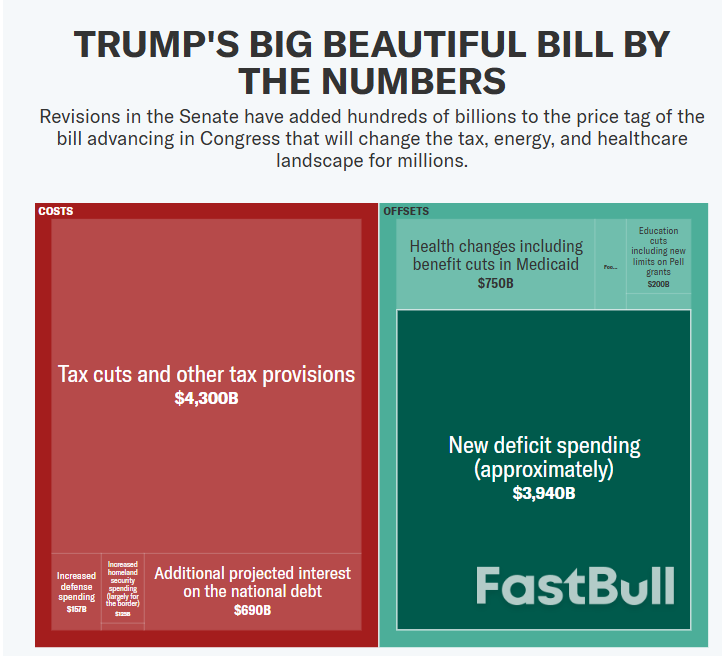
          Meanwhile, there are lingering concerns about the US deficit, after President Donald Trump secured a sweeping shift in US domestic policy as the House passed a $3.4 trillion fiscal package.
          Investors also continued to monitor progress in US trade negotiations, after Trump said he reached a deal with Vietnam. As his July 9 deadline for higher tariffs approaches, there are signs investors are becoming increasingly less worried by the president’s unpredictable stance on levies given the economy appears resilient for now.
          Spot gold fell 0.9% to $3,326.55 an ounce as of 4:24 p.m. in New York. The Bloomberg Dollar Spot Index edged up 0.2%%. Silver rose, while palladium and platinum fell.

          Source: Bloomberg

          Risk Warnings and Disclaimers
          You understand and acknowledge that there is a high degree of risk involved in trading. Following any strategies or investment methods may lead to potential losses. The content on the site is provided by our contributors and analysts for information purposes only. You are solely responsible for determining whether any trading assets, securities, strategy, or any other product is suitable for investing based on your own investment objectives and financial situation.
          Add to Favorites
          Share

          RBNZ to Hold Rates at 3.25% on July 9 but Cut Once More This Year

          Manuel

          Economic

          Forex

          The Reserve Bank of New Zealand will leave interest rates unchanged on July 9, a majority of economists polled by Reuters expected, with the median forecast showing just one more 25 basis point cut this year compared with two in a May survey.
          After one of the most aggressive tightening cycles in its history to tame inflation, the central bank has lowered rates by 225 basis points since August.
          That supported an economy that emerged from recession last year. It grew by 0.8% in the January-March quarter, giving policymakers time to consider the next rate cut.
          Although inflation eased to 2.5% in the first quarter, within the RBNZ's 1%–3% target range, uncertainty around medium-term price pressures has increased.
          With second-quarter inflation data due on July 21, the central bank is expected to hold off on further easing for now.
          A majority of economists, 19 of 27, in a June 30-July 3 Reuters poll expected the RBNZ to hold its official cash rate at 3.25% on July 9. Eight expected a 25 basis point cut.
          All major New Zealand banks - ANZ, ASB, BNZ, Kiwibank and Westpac - forecast no change in rates.
          Another 25 basis point cut is due by end-September, according to 16 of 22 economists, with half expecting it at the August meeting.
          "The data that has come out since the May monetary policy statement has been pretty mixed," said Wesley Tanuvasa, economist at ASB.
          "So pause now, see the inflation expectation data. From there, that can help them navigate whether August is a cut or not. Right now, we've priced in a cut for August," he said.
          While there is no majority on where rates will end the year, the median forecast shows 3.00% compared with 2.75% in the May poll.
          Inflation is expected to average 2.8% this quarter and stay within the RBNZ's target range through at least the end of 2026, according to the poll. It is forecast to average 2.5% in 2025 and 2.1% in 2026.
          New Zealand's economy is expected to grow 1.0% this year and 2.4% in 2026, down from 1.2% and 2.5%, respectively, in an April survey, the poll showed.

          Source: Reuters

          To stay updated on all economic events of today, please check out our Economic calendar
          Risk Warnings and Disclaimers
          You understand and acknowledge that there is a high degree of risk involved in trading. Following any strategies or investment methods may lead to potential losses. The content on the site is provided by our contributors and analysts for information purposes only. You are solely responsible for determining whether any trading assets, securities, strategy, or any other product is suitable for investing based on your own investment objectives and financial situation.
          Add to Favorites
          Share

          Who Won and Lost in Trump´s Tax Bill

          Manuel

          Economic

          Political

          Business investors and wealthy Americans are among the biggest winners in President Donald Trump’s tax bill. Those hit the hardest by the sweeping package include elite universities, who face new levies, and immigrants.
          Here’s who won and who lost in the legislative centerpiece of the president’s domestic agenda:

          Winners

          Multimillionaires
          The rich gain the ability to pass more wealth on to their heirs and dodge a tax increase. The bill includes $4.5 trillion worth of tax cuts, according to a Saturday estimate from the Joint Committee on Taxation.
          The estate tax exemption rises to $15 million for individuals — totaling $30 million for married couples — and then adjust with inflation. The 2017 Trump income tax rate cuts also become permanent, with benefits skewing toward the wealthy.
          Residents of High-Tax States
          The limit on the state and local tax deduction rises to $40,000 annually for a five-year period. The write-off phases out for taxpayers who make more than $500,000 per year. After the five-year period, the limit snaps back to the current $10,000 limit imposed in the 2017 tax law.
          Small Business Owners
          The 2017 law that allowed pass-through business to deduct up to 20% of their qualified business income from their taxable income is permanently extended beginning in the tax year 2026. The deduction is available to owners of sole proprietorships, LLCs and partnerships.
          Private Equity
          The carried interest tax break benefiting private equity, venture capital and real estate partnerships is maintained, despite the president’s push to eliminate it. Private equity also won an expanded interest expensing tax break.
          Domestic Car Dealers
          Up to $10,000 a year in loan interest for US-made cars becomes tax deductible through 2028, a boon to auto dealers looking to close sales. But the break phases out slowly for individuals with more than $100,000 in income and couples with more than $200,000.
          Manufacturers
          The bill revives several favorable tax rules for businesses, including bonus depreciation for the cost of production upgrades and a research and development tax break, winning the endorsement of the National Association of Manufacturers. The final legislation makes permanent those breaks, which were temporary in an earlier version of the bill that passed the House in May.
          Fossil Fuel Producers
          Industries like coal, oil and natural gas win tax breaks and new requirements to open up more federal land for drilling, while breaks for competing clean energy technologies are phased out.
          Elderly and Tipped Workers
          In a nod to some of Trump’s populist campaign promises, taxpayers 65 and older get a larger standard deduction, while tips and overtime pay are exempted from income taxes. The provisions include limits to shrink their cost and expire after 2028.
          Parents
          The maximum child tax credit increases by an additional $200 from $2,000 starting in tax year 2025 and is permanently indexed to inflation. Parents could open up new “Trump accounts” for their babies seeded with $1,000 from the government for children born from 2025 through 2028.
          Telecommunications
          The bill auctions off a massive amount of radio spectrum for use in wireless broadband, a potential boon for services like SpaceX’s Starlink and 5G and future 6G mobile networks.
          Corporations
          Other tax increases that had been considered that would have hit big business, such as an increase in the stock buyback tax or a limit on the state and local deduction for corporations, were mostly rejected.
          Defense Contractors
          The package boosts defense spending by $150 billion, with much of the funding going to new weapons systems made by major contractors.
          Space
          The bill provides nearly $10 billion to fund projects including efforts to reach the Moon and Mars and eventually decommission the international space station.

          Losers

          Low-Income Americans
          Some of the costs for the tax bill are defrayed through cuts to Medicaid health coverage and food stamps, both of which benefit low-income Americans. On average, the legislation will cost the bottom 20% of taxpayers $560 a year, according to a Yale Budget Lab analysis.
          The measure creates new work requirements for Medicaid recipients, unless they are elderly, disabled or have children under 14 years old. Medicaid beneficiaries who gained eligibility through the Affordable Care Act will have to pay a share of costs through charges like co-pays.
          Food assistance for low-income Americans is cut by expanding existing work requirements for federal food stamps to cover beneficiaries up to 65 years old. Beginning in 2028, states also are required to pay a portion of food benefit costs, which are now fully paid by the federal government.
          Renewable Energy
          Clean energy industries are hit by the Republican plan, which rolls back many provisions of former President Joe Biden’s landmark climate law.
          A tax credit for solar panels and wind systems is quickly phased out, though the legislation takes more time to eliminate other clean electricity production and investment credits.
          Tax credits for energy efficiency home improvements and residential installation of solar or other clean energy upgrades are eliminated at the end of the year.
          Technology Companies
          The Senate squelched a controversial effort in the bill to prevent US states from regulating artificial intelligence, delivering a win for tech industry critics and a blow to the likes of Microsoft Corp. and Meta Platforms Inc., as well as venture capital firms like Andreessen Horowitz.
          Trump administration officials and GOP allies in Silicon Valley had pushed the measure saying it would prevent a patchwork of cumbersome state-by-state regulations.
          Electric Vehicle Makers
          Tesla Inc., General Motors Co. and other electric vehicle makers are hit by elimination of a consumer tax credit of up to $7,500 for the purchase of electric vehicles.
          Elite Universities
          Add tax bills to the escalating battle the Trump administration is waging against elite universities such as Harvard and Columbia.
          The current 1.4% tax on net investment income of private college and university endowments ratchets up for better-funded institutions. The new tiered tax rate structure climbs as high as 8% for colleges with the most endowment income per student.
          Immigrants
          Several provisions raise taxes on immigrants. That includes a new 1% tax on transfers of money to foreign countries, known as remittances. Many immigrants in the US send money to relatives in their countries of origin.
          The proposal also restricts some immigrants’ access to tax credits for health coverage premiums. The change prevents many immigrants granted asylum or temporary protected status from accessing those credits.
          Gamblers
          Gamblers would only be able to deduct 90% of their losses against their winnings, leading to a situation where they could still owe income tax if they break even over a year or lose money overall.

          Source: Bloomberg

          To stay updated on all economic events of today, please check out our Economic calendar
          Risk Warnings and Disclaimers
          You understand and acknowledge that there is a high degree of risk involved in trading. Following any strategies or investment methods may lead to potential losses. The content on the site is provided by our contributors and analysts for information purposes only. You are solely responsible for determining whether any trading assets, securities, strategy, or any other product is suitable for investing based on your own investment objectives and financial situation.
          Add to Favorites
          Share

          Senator Lummis Presents Bill to Insert Crypto tax Definitions to Shield Micro-Payments, Validation Rewards

          Manuel

          Cryptocurrency

          Political

          Senator Cynthia Lummis filed a bill on July 3 that rewrites multiple sections of the Internal Revenue Code to govern how crypto users calculate, defer, and report taxable income.
          The measure inserts statutory definitions for “digital asset” and “actively traded digital asset,” classifying any cryptographically recorded unit of value as property unless it merely mirrors a traditional financial instrument.
          A new §139J excludes gains or losses when tokens pay for goods or services, so long as each transaction and any attendant loss stay under $300 and a taxpayer’s annual gains from such activity do not top $5,000.
          Treasury will index the dollar caps for inflation after 2026 and may deny the break if a sale’s principal purpose is loss harvesting. Taxpayers must keep dedicated books, wallets, or accounts to segregate eligible activity, and the exclusion sunsets after the 2035 tax year.
          Lummis said the package “cuts through the bureaucratic red tape” and “ensures Americans can participate in the digital economy without inadvertent tax violations.”
          She described the bill as fully paid for and asked stakeholders to submit comments. According to reports, the bill was first considered as an amendment to the “One Big Beautiful Bill.”

          Market-facing rules

          Section 1058’s securities-lending safe harbor expands to “specified assets,” a category that now includes actively traded tokens. This allows holders to loan crypto without triggering recognition events and keeps substitute payments in the lender’s tax character.
          A rewritten §1091 applies wash-sale loss disallowance to digital assets and related derivatives but excludes payment stablecoins and dealer inventory. It also grants Treasury authority to police abusive basis adjustments.
          Dealers and traders in actively traded tokens may elect mark-to-market treatment under a new §475(g), which brings annual fair-value accounting to crypto inventories without prior IRS approval, and limits the election to publicly quoted assets.

          Mining, staking, and charitable giving

          Under the proposal’s text, income from block validation is no longer included in gross income on receipt. Miners and stakers instead recognize ordinary income only when they sell reward tokens, and sourcing follows the taxpayer’s residence.
          The bill also allows private foundations to accept appreciated, actively traded tokens with the same favorable deduction that applies to publicly traded stock, broadening charitable planning options for token holders.
          Most operating provisions, including the mining deferral, wash-sale expansion, and mark-to-market election, are set to expire after 2035 to align with congressional budget-scoring rules.

          Source: Cryptoslate

          Risk Warnings and Disclaimers
          You understand and acknowledge that there is a high degree of risk involved in trading. Following any strategies or investment methods may lead to potential losses. The content on the site is provided by our contributors and analysts for information purposes only. You are solely responsible for determining whether any trading assets, securities, strategy, or any other product is suitable for investing based on your own investment objectives and financial situation.
          Add to Favorites
          Share

          House nears Final Vote on Trump's 'Big, Beautiful Bill' as Opponents Flip

          Manuel

          Economic

          Political

          The House of Representatives is barreling toward a final vote on President Trump's "big, beautiful bill," with Republicans increasingly likely to send a massive piece of legislation that will be felt across the economy for years to come to the president's desk.
          Approval is far from assured, but White House and Republican leaders inched closer to victory Thursday morning after a pressure campaign and yet another all-night session on Capitol Hill appeared to satisfy Republican holdouts concerned about things like the multitrillion-dollar price tag and healthcare cuts.
          The vote timing is uncertain after Democratic Minority Leader Hakeem Jeffries held the House floor for what C-SPAN confirmed was a new length record in a speech that lambasted the bill on varied fronts — including at one point calling it a "crime scene."
          Yet a vote is expected within hours, and House Speaker Mike Johnson projected confidence earlier in the morning as legislators on his side of the aisle race to give the president a signature political victory and approve the bill before his self-imposed July 4 deadline.
          "We have the votes," Johnson told reporters at about 3 a.m. ET, adding later during the Jeffries speech that "President Trump is waiting with his pen."
          Johnson secured a key procedural victory early Thursday morning when the House voted 219-213 at about 3:30 a.m. to begin formal debate on the measure. Only one Republican — Rep. Brian Fitzpatrick of Pennsylvania — voted no.House nears Final Vote on Trump's 'Big, Beautiful Bill' as Opponents Flip_1
          What appears to have moved many of these recalcitrant lawmakers into the yes column was not any changes to the bill itself — today's vote is set to include zero changes to the 870-page bill that passed the Senate earlier this week — but with promises of things like executive actions to address their concerns.
          As for Trump, the final vote couldn't come soon enough. The president posted at about midnight, "What are the Republicans waiting for???"

          Major changes — and a giant price tag

          The early morning back-and-forth was just the latest twist in days of negotiations over a reconciliation package that is set to reshape large swathes of the US economy, especially in areas of taxes, energy, and healthcare.
          The package also includes a $5 trillion debt ceiling increase and is projected to unleash new borrowing that will lead the US national debt to surpass $40 trillion in the coming years.
          Economists have likewise noted the final price tag, which could lead to $4 trillion in new debt over the coming decade, and critiqued an accounting gimmick Republicans employed to hide much of that red ink.
          It's a bill also set to be felt in American pocketbooks with provisions like no taxes on some tips, cuts to student loans and the Pell Grant program, an increase in state tax deductions, and a range of other provisions, even so-called MAGA accounts for young children.
          The process proved exceptionally contentious in recent days, largely over the healthcare portion of the bill, which appears set to extract hundreds of billions in government savings but cause millions to lose their coverage.
          Clean energy was another key last-minute flash point, with Tesla (TSLA) CEO Elon Musk perhaps the loudest voice in opposition.
          That portion of the bill saw provisions added and subtracted in rapid succession during the Senate debate, sending solar stocks gyrating. It ended with a final product that didn't include at least one of the harshest ideas, but is nevertheless set to have the US government move away from any significant role in renewable energy in the years ahead.
          A first step will be felt quickly with a plan to eliminate electric vehicle credits on Sept. 30 of this year.

          A growing focus on selling the bill

          Democrats, for their part, promised to make the bill a political albatross for Republicans even before it passed and have signaled plans to talk nonstop about the package between now and next year's midterm election.
          "Don't ever lecture us about fiscal responsibility: Not now, not ever," Jeffries said in his Thursday morning speech.
          Particular focus is expected to be on the healthcare provisions that, according to an accounting from the Congressional Budget Office that came in over the weekend, could cause 11.8 million additional Americans to become uninsured by 2034.
          A series of polls has also shown declines in the overall public support for the bill as the focus on healthcare has intensified. Even a recent Fox News national poll found a 21-point gap between those who say they are opposed (59%) and those who say they are in favor (38%).

          Source: Yahoo Finance

          To stay updated on all economic events of today, please check out our Economic calendar
          Risk Warnings and Disclaimers
          You understand and acknowledge that there is a high degree of risk involved in trading. Following any strategies or investment methods may lead to potential losses. The content on the site is provided by our contributors and analysts for information purposes only. You are solely responsible for determining whether any trading assets, securities, strategy, or any other product is suitable for investing based on your own investment objectives and financial situation.
          Add to Favorites
          Share

          OPEC+ Discussing 411,000-Barrel Hike For August, Delegates Say

          Kevin Du

          Economic

          Commodity

          OPEC+ is discussing another 411,000 barrel-a-day production increase for August ahead of the group’s video-conference this weekend, according to delegates who asked not to be identified.

          Saudi Arabia and its partners have previously approved hikes of the same size for May, June and July as they speed up the revival of halted output in order to reclaim global market share.

          Source: Bloomberg Europe

          To stay updated on all economic events of today, please check out our Economic calendar
          Risk Warnings and Disclaimers
          You understand and acknowledge that there is a high degree of risk involved in trading. Following any strategies or investment methods may lead to potential losses. The content on the site is provided by our contributors and analysts for information purposes only. You are solely responsible for determining whether any trading assets, securities, strategy, or any other product is suitable for investing based on your own investment objectives and financial situation.
          Add to Favorites
          Share

          The Job Market Is Humming? Surely This Isn’t As Good As It Gets

          Devin

          Economic

          US joblessness remains extraordinarily low, and that’s worth celebrating this Fourth of July. A Bureau of Labor Statistics report on Thursday showed that the unemployment rate slipped to 4.1% in June from 4.2% a month earlier, a number that economists have long considered just about as good as it gets. That’s led investors to cut the likelihood that the Federal Reserve will move to lower policy rates in the coming months.

          I’m glad that the labor market is holding up, but this economy still needs a bit of the central bank’s medicine to keep on truckin’ — and it needs it sooner rather than later.

          Consider the latest numbers. The so-called establishment survey data showed that the economy added 147,000 jobs in June, but 73,000 of them came from the government (mostly state and local). Among the 74,000 private sector jobs added, most of the growth was in the health care and social assistance category. A job is a job, but that mix isn’t indicative of an economy that’s firing on all cylinders.

          The other issue is the step-down in the unemployment rate, which seemed to stem from people leaving the labor force — not usually a good thing. As a quick reminder, the BLS only considers you unemployed if you were available to work and have actively looked for work in the past four weeks. Otherwise, you’re considered “not in the labor force,” a category that includes so-called “discouraged” workers (who want a job but have stopped actively hunting because they don’t believe there are any available to them) and the “marginally attached” (who stopped looking for other reasons). The numbers of such people are trending upward, as are ratios of labor underutilization such as the U-4 metric, which measures the numbers of unemployed plus discouraged workers. (The denominator of this ratio is the sum of the labor force and discouraged workers.)

          All in all, this looks like a labor market that’s stuck, lacking the churn and growth opportunities that we expect from the US economy. It’s not collapsing, and that’s wonderful news given the many uncertainties around, but it feels extraordinarily frustrating to some.

          Who are all these discouraged and marginally attached workers? First, young recent graduates are notoriously having a hard time finding work. Some observers blame over-hiring during the pandemic years, while others think that artificial intelligence is already allowing companies to do more with less, at least at the margin. Whatever the cause, it’s hard to deny that Generation Z faces unique obstacles when finding its footing in this labor market — a fact that could have long-term ramifications for the economy. If they finish school, start their job search and then stop looking (at least for a while), then they’re probably in the statistical bucket of discouraged workers.

          Another hypothesis is related to the recent trend in immigration policy and rhetoric. The Trump administration’s workforce raids and deportation pledges appear to be having a chilling effect both on would-be new immigrants and those who are already here. That includes both the undocumented population and people who had been living in the US under Temporary Protected Status and similar programs that President Donald Trump has sought to change. Legal status isn’t a factor when considering whether someone is “in the labor force” or not, but the threat of immigration raids could conceivably cause an undocumented worker to stay away from work and become a discouraged worker. The confusing policy environment may also be prompting employers to hire fewer immigrants, a related source of potential discouragement.

          Of those two hypotheses, the real explanation could be a bit of both. Even more generally, hiring rates are simply bad: Irrespective of age and birthplace, it’s just hard to find a job these days.

          To be clear, the past several years have been filled with labor market reports that felt something like this: The headline numbers were pretty good, yet pundits found some under-the-radar wrinkle that allegedly augured a near-term turn for the worse. I’d agree that we shouldn’t look a gift horse in the mouth. An unemployment rate of 4.1% is fantastic! But the economy is still missing something, and I’m hoping that monetary policy will help deliver it later this year (provided the inflation data cooperate). The incredible US labor market is supposed to give us fireworks on the Fourth of July. It’s supposed to be dynamic and ever-changing, and it’s certainly not supposed to feel this discouraging to so many people.

          Source: Bloomberg Europe

          To stay updated on all economic events of today, please check out our Economic calendar
          Risk Warnings and Disclaimers
          You understand and acknowledge that there is a high degree of risk involved in trading. Following any strategies or investment methods may lead to potential losses. The content on the site is provided by our contributors and analysts for information purposes only. You are solely responsible for determining whether any trading assets, securities, strategy, or any other product is suitable for investing based on your own investment objectives and financial situation.
          Add to Favorites
          Share
          FastBull
          Copyright © 2025 FastBull Ltd

          728 RM B 7/F GEE LOK IND BLDG NO 34 HUNG TO RD KWUN TONG KLN HONG KONG

          TelegramInstagramTwitterfacebooklinkedin
          App Store Google Play Google Play
          Products
          Charts

          Chats

          Q&A with Experts
          Screeners
          Economic Calendar
          Data
          Tools
          Membership
          Features
          Function
          Markets
          Copy Trading
          Latest Signals
          Contests
          News
          Analysis
          24/7
          Columns
          Education
          Company
          Careers
          About Us
          Contact Us
          Advertising
          Help Center
          Feedback
          User Agreement
          Privacy Policy
          Business

          White Label

          Data API

          Web Plug-ins

          Poster Maker

          Affiliate Program

          Risk Disclosure

          The risk of loss in trading financial instruments such as stocks, FX, commodities, futures, bonds, ETFs and crypto can be substantial. You may sustain a total loss of the funds that you deposit with your broker. Therefore, you should carefully consider whether such trading is suitable for you in light of your circumstances and financial resources.

          No decision to invest should be made without thoroughly conducting due diligence by yourself or consulting with your financial advisors. Our web content might not suit you since we don't know your financial conditions and investment needs. Our financial information might have latency or contain inaccuracy, so you should be fully responsible for any of your trading and investment decisions. The company will not be responsible for your capital loss.

          Without getting permission from the website, you are not allowed to copy the website's graphics, texts, or trademarks. Intellectual property rights in the content or data incorporated into this website belong to its providers and exchange merchants.

          Not Logged In

          Log in to access more features

          FastBull Membership

          Not yet

          Purchase

          Become a signal provider
          Help Center
          Customer Service
          Dark Mode
          Price Up/Down Colors

          Log In

          Sign Up

          Position
          Layout
          Fullscreen
          Default to Chart
          The chart page opens by default when you visit fastbull.com
