Markets
News
Analysis
User
24/7
Economic Calendar
Education
Data
- Names
- Latest
- Prev



Signal Accounts for Members
All Signal Accounts
All Contests


[Hong Kong And Macao Affairs Office: Panama Embarrassing Itself And Reaping The Consequences] An Article From The Hong Kong And Macao Affairs Office Of The State Council Stated That The Panamanian Supreme Court Recently Ruled On The Grounds Of So-called "unconstitutionality" That The Renewal Of The Panama Canal Port Concession Agreement For A Hong Kong Company Was Invalid. This Ruling Disregards Facts, Breaches Faith, And Seriously Damages The Legitimate Rights And Interests Of Hong Kong Companies. It Is Therefore Rightfully Opposed By The Chinese Government And The Hong Kong SAR Government, And Has Been Strongly Condemned By All Sectors Of Hong Kong Society
New Zealand-Run Global Dairy Trade Price Index Rises 6.7%, With An Average Selling Price Of $ 3830/Tonne - Auction
The US AI Software Pioneer Index Closed Down 5.22% At 101.34 Points. US Stocks Fell Sharply In Early Trading And Continued To Fluctuate At Low Levels After 23:00 Beijing Time
USA Treasury Issues License Authorizing Supply Of USA Diluents To Venezuela, Administration Official Tells Reuters
Rubio Discussed Formalizing Bilateral Cooperation On Critical Minerals Exploration, Mining, And Processing With Indian External Affairs Minister - State Department
US President Trump: Millions Of Barrels Of Venezuelan Oil Seized Are Being Shipped To Houston, Texas
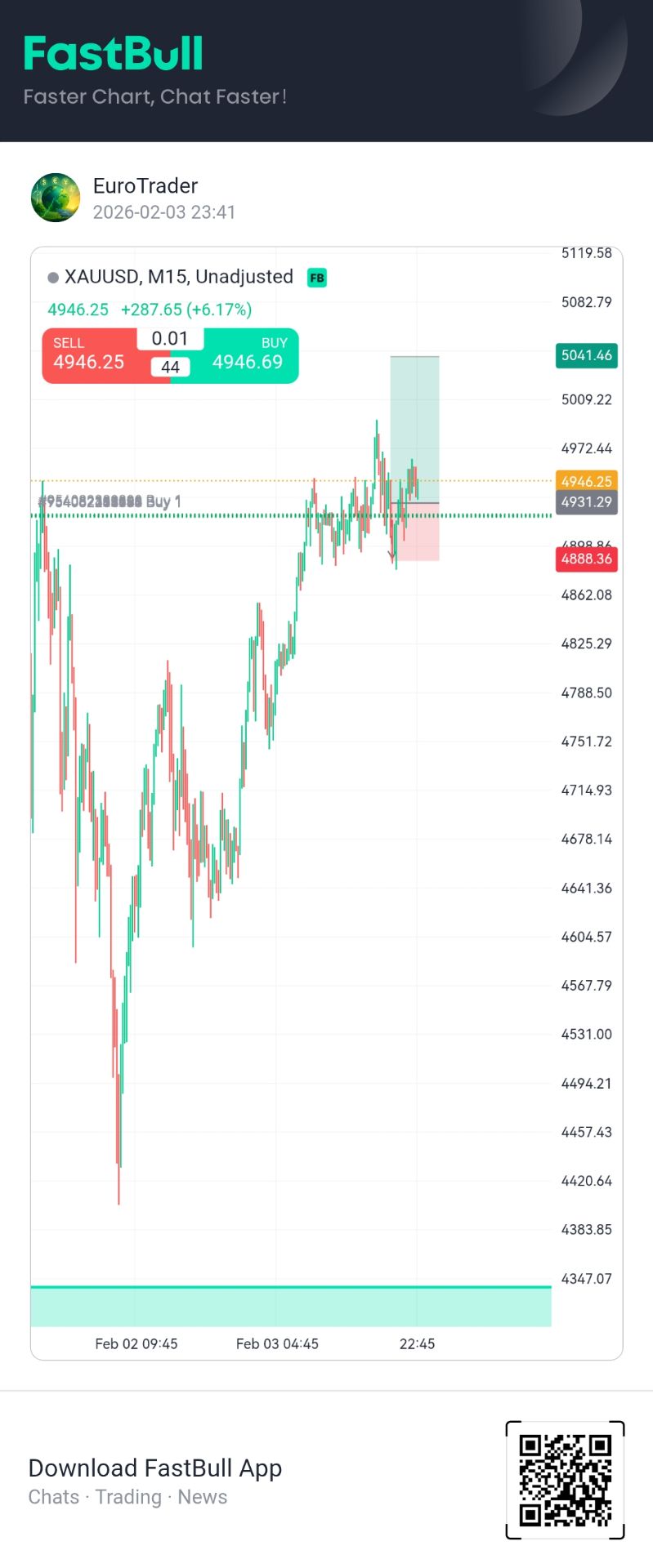
(US Stocks) The Philadelphia Gold And Silver Index Closed Up 4.63% At 398.43 Points. (Global Session) The NYSE Arca Gold Miners Index Rose 4.29% To 2815.40 Points. (US Stocks) The Materials Index Closed Up 4.04%, And The Metals & Mining Index Closed Up 5.35%
On Tuesday (February 3), In Late New York Trading, Spot Silver Rose 7.36% To $85.0929 Per Ounce, Reaching A Daily High Of $89.1655 At 21:46 Beijing Time. Comex Silver Futures Rose 11.05% To $85.505 Per Ounce, Reaching A Daily High Of $89.100 At 21:46. Comex Copper Futures Rose 4.47% To $6.0960 Per Pound, Experiencing A Significant Upward Surge At 14:00 – After A Period Of Low-level Consolidation, They Subsequently Traded In A High-level Range. Spot Platinum Rose 4.08%, And Spot Palladium Rose 1.82%

U.S. IHS Markit Manufacturing PMI Final (Jan)A:--
F: --
P: --
U.S. ISM Output Index (Jan)A:--
F: --
P: --
U.S. ISM Inventories Index (Jan)A:--
F: --
P: --
U.S. ISM Manufacturing Employment Index (Jan)A:--
F: --
P: --
U.S. ISM Manufacturing New Orders Index (Jan)A:--
F: --
P: --
U.S. ISM Manufacturing PMI (Jan)A:--
F: --
P: --
US President Trump delivered a speech
South Korea CPI YoY (Jan)A:--
F: --
P: --
Japan Monetary Base YoY (SA) (Jan)A:--
F: --
P: --
Australia Building Approval Total YoY (Dec)A:--
F: --
Australia Building Permits MoM (SA) (Dec)A:--
F: --
Australia Building Permits YoY (SA) (Dec)A:--
F: --
P: --
Australia Private Building Permits MoM (SA) (Dec)A:--
F: --
Australia Overnight (Borrowing) Key RateA:--
F: --
P: --
RBA Rate Statement
Japan 10-Year Note Auction YieldA:--
F: --
P: --
The U.S. House of Representatives voted on a short-term spending bill to end the partial government shutdown.
Saudi Arabia IHS Markit Composite PMI (Jan)A:--
F: --
P: --
RBA Press Conference
Turkey PPI YoY (Jan)A:--
F: --
P: --
Turkey CPI YoY (Jan)A:--
F: --
P: --
Turkey CPI YoY (Excl. Energy, Food, Beverage, Tobacco & Gold) (Jan)A:--
F: --
P: --
U.K. 10-Year Note Auction YieldA:--
F: --
P: --
Richmond Federal Reserve President Barkin delivered a speech.
U.S. Weekly Redbook Index YoYA:--
F: --
P: --
Mexico Manufacturing PMI (Jan)A:--
F: --
P: --
U.S. API Weekly Refined Oil StocksA:--
F: --
P: --
U.S. API Weekly Gasoline StocksA:--
F: --
P: --
U.S. API Weekly Cushing Crude Oil StocksA:--
F: --
P: --
U.S. API Weekly Crude Oil StocksA:--
F: --
P: --
Japan IHS Markit Services PMI (Jan)--
F: --
P: --
Japan IHS Markit Composite PMI (Jan)--
F: --
P: --
China, Mainland Caixin Services PMI (Jan)--
F: --
P: --
China, Mainland Caixin Composite PMI (Jan)--
F: --
P: --
India HSBC Services PMI Final (Jan)--
F: --
P: --
India IHS Markit Composite PMI (Jan)--
F: --
P: --
Russia IHS Markit Services PMI (Jan)--
F: --
P: --
South Africa IHS Markit Composite PMI (SA) (Jan)--
F: --
P: --
Italy Services PMI (SA) (Jan)--
F: --
P: --
Italy Composite PMI (Jan)--
F: --
P: --
Germany Composite PMI Final (SA) (Jan)--
F: --
P: --
Euro Zone Composite PMI Final (Jan)--
F: --
P: --
Euro Zone Services PMI Final (Jan)--
F: --
P: --
U.K. Composite PMI Final (Jan)--
F: --
P: --
U.K. Total Reserve Assets (Jan)--
F: --
P: --
U.K. Services PMI Final (Jan)--
F: --
P: --
U.K. Official Reserves Changes (Jan)--
F: --
P: --
Euro Zone Core CPI Prelim YoY (Jan)--
F: --
P: --
Euro Zone Core HICP Prelim YoY (Jan)--
F: --
P: --
Euro Zone PPI MoM (Dec)--
F: --
P: --
Euro Zone HICP Prelim YoY (Jan)--
F: --
P: --
Euro Zone Core HICP Prelim MoM (Jan)--
F: --
P: --
Italy HICP Prelim YoY (Jan)--
F: --
P: --
Euro Zone Core CPI Prelim MoM (Jan)--
F: --
P: --
Euro Zone PPI YoY (Dec)--
F: --
P: --
U.S. MBA Mortgage Application Activity Index WoW--
F: --
P: --
Brazil IHS Markit Composite PMI (Jan)--
F: --
P: --
Brazil IHS Markit Services PMI (Jan)--
F: --
P: --
U.S. ADP Employment (Jan)--
F: --
P: --
The U.S. Treasury Department released its quarterly refinancing statement.
U.S. IHS Markit Services PMI Final (Jan)--
F: --
P: --


No matching data
View All

No data
Global equities hit record highs as a rebound in gold, silver, and copper revived risk appetite, with strong tech-led gains in Japan, Europe, and the United States despite elevated volatility.
Colombian President Gustavo Petro is scheduled to meet with US President Donald Trump at the White House on Tuesday, setting the stage for a critical discussion between two leaders with a history of public friction. The meeting follows a US operation last month that captured Venezuela’s president, an action that drew sharp criticism from Petro and escalated tensions.
The relationship between Petro and Trump has been notably contentious. Petro has openly challenged US actions in the Caribbean, while Trump has repeatedly threatened Colombia over the flow of cocaine into the United States.

Officials in the Trump administration have stated that the talks will focus on counternarcotics efforts and security cooperation. The meeting comes as Colombia has recently taken steps that align with US interests.
On Tuesday, Colombia extradited a drug lord to the US, resuming a practice that had been stalled for months amid government negotiations with armed drug trafficking groups. Furthermore, Colombia agreed last Friday to begin accepting US deportation flights.
Despite the recent animosity, Trump appeared to soften his tone on Monday, suggesting that Petro is now more willing to cooperate with Washington on drug control.
"Somehow after the Venezuelan raid, he became very nice," Trump told reporters. "He changed his attitude very much... We're gonna have a good meeting."
Both Trump and Petro are known for their unpredictable leadership styles and use of bombastic rhetoric. The invitation for Petro to visit Washington came directly after the US operation that ousted Venezuelan leader Nicolas Maduro, a move the Colombian president heavily condemned.

At the time, Trump referred to Petro as a "sick man who likes making cocaine and selling it to the United States." When a reporter asked in January if the US would consider a similar operation in Colombia, Trump responded, "It sounds good to me."
Nevertheless, Petro accepted the invitation to the White House following a phone call that both leaders described in positive terms.
Petro, a leftist leader elected in 2022, has frequently clashed with Trump since the US president returned to office last year. Amid their ongoing feud, the Trump administration imposed sanctions on Petro and members of his family, citing his failure to curb cocaine trafficking. These sanctions had to be waived to permit Petro's travel to Washington this week.
The upcoming meeting carries significant weight, as Colombia has traditionally been the United States' most steadfast ally in Latin America and a central partner in its foreign counternarcotics strategy.
USDINR - daily
USDINR - 1 hourThe U.S. government is preparing to issue a general license that would permit companies to resume pumping oil in Venezuela. This marks a critical step in the Trump administration's plan to ease sanctions and rebuild the nation's struggling energy sector.
Sources familiar with the plan indicate the Treasury Department could release the new license as early as this week. While the Treasury has not officially commented, the White House has signaled its intent.
"The President's team is working around the clock to ensure oil companies are able to make investments in Venezuela's oil infrastructure. Stay tuned!" said Taylor Rogers, a White House spokeswoman.
This policy shift is designed to attract U.S.-linked companies to help rebuild production in Venezuela, a nation with some of the world's largest oil reserves. The move follows a U.S. military operation in Caracas that resulted in the capture of former President Nicolás Maduro.
The upcoming license for production builds on previous measures aimed at restarting Venezuela's oil trade. Last week, the U.S. issued a separate general license authorizing companies to buy and sell Venezuelan crude. That license covered downstream activities like loading, exporting, and refining oil, provided the operations were handled by an "established US entity."
Before that, the administration had granted individual approvals to trading giants Trafigura Group and Vitol Group to restart Venezuelan oil sales. These moves helped clear a bottleneck caused by a partial U.S. naval blockade that had stifled exports and filled the country's storage tanks to capacity.
With exports flowing again, Venezuela's heavy sour crude is re-entering the global market. The primary destination is now shifting from Chinese buyers, who had absorbed discounted supply under previous sanctions, back to U.S. refiners, which were historically the top market for Venezuelan oil.
Following the capture of Maduro by U.S. forces on January 3, the Trump administration has backed his former vice president, Delcy Rodríguez. A core part of its stabilization plan involves asserting control over Venezuela's dilapidated oil industry.
A central pillar of this strategy is a new payment system. Companies with U.S. connections operating in Venezuela are now required to deposit payments into a U.S.-controlled bank account in Qatar. The Trump administration then releases these funds to Venezuela's Central Bank, which in turn auctions the dollars to private local operators.
Despite these new frameworks, companies without an existing presence in Venezuela remain cautious. According to sources, concerns about political risk and the long-term stability of the current government are holding back new investment.
Still, the Rodríguez government is taking steps to improve the business climate, running parallel to the U.S. initiatives. These measures include:
• Improving fiscal terms for oil companies.
• Releasing political prisoners.
• Separately, the U.S. has reopened Venezuelan airspace to commercial flights.


Silver continues to search for a bottom after last Friday's wipeout. Although prices are stabilizing, caution remains warranted in this volatile market.
The silver market rallied slightly during early Tuesday trading as the $80 level — and the 50‑day exponential moving average — provided support. Traders see short‑term dips as buying opportunities as the metal tries to grind back toward the $100 mark. However, analysts caution that a slow and steady advance would be healthier than the impulsive behaviour seen previously.

There remains a distinct possibility that silver could fall below $70 and retest $50, a level that served as a ceiling for decades. The market broke out above $50 without retesting it, so some traders are watching for a pullback to that region.
Last Friday's dramatic candlestick has left the market scarred, and confidence may take time to rebuild. Wide stop losses and smaller position sizes are advised to manage risk: the last thing you want is to be caught in another large move and see your account evaporate. Despite the uncertainty, the recent stabilization represents a promising start to a potential recovery.
The Canadian government is weighing the return of federal subsidies for electric vehicles as it prepares to launch a new national automotive strategy. According to sources familiar with the matter, the administration of Prime Minister Mark Carney is working to balance its climate objectives with a rapidly changing global trade landscape.
The potential revival follows the suspension of Canada's original EV incentive program, known as iZEV, over a year ago. The initiative, which provided buyers with up to $5,000 toward the purchase of eligible zero-emission vehicles, was halted after its funding was depleted by a surge in consumer demand.
The upcoming national strategy is expected to provide clarity on several key issues facing the sector. A senior Canadian official indicated the plan will address not only consumer rebates but also the status of the recently paused federal EV sales mandate. Furthermore, it will tackle crucial topics like infrastructure requirements and how to manage recent interest from foreign investors.
This policy shift comes on the heels of a high-profile visit to Beijing, where Prime Minister Carney negotiated new automotive trade terms. During the summit, Canada agreed to lower tariffs on as many as 49,000 Chinese electric vehicles imported annually.
In return for this concession, Beijing committed to reducing or removing its trade barriers on a range of Canadian agricultural exports. The senior official emphasized that the new auto strategy would provide much-needed direction for a sector already facing "extreme pressure" from evolving global trade dynamics.
Cabinet members have not disclosed the potential financial scale of any renewed rebate program. The finalized national automotive strategy is reportedly scheduled for a public release later this month.
The risk of loss in trading financial instruments such as stocks, FX, commodities, futures, bonds, ETFs and crypto can be substantial. You may sustain a total loss of the funds that you deposit with your broker. Therefore, you should carefully consider whether such trading is suitable for you in light of your circumstances and financial resources.
No decision to invest should be made without thoroughly conducting due diligence by yourself or consulting with your financial advisors. Our web content might not suit you since we don't know your financial conditions and investment needs. Our financial information might have latency or contain inaccuracy, so you should be fully responsible for any of your trading and investment decisions. The company will not be responsible for your capital loss.
Without getting permission from the website, you are not allowed to copy the website's graphics, texts, or trademarks. Intellectual property rights in the content or data incorporated into this website belong to its providers and exchange merchants.
Not Logged In
Log in to access more features
Log In
Sign Up