• Trade
  • Markets
  • Copy
  • Contests
  • News
  • 24/7
  • Calendar
  • Q&A
  • Chats
Screeners
SYMBOL
LAST
ASK
BID
HIGH
LOW
NET CHG.
%CHG.
SPREAD
SPX
S&P 500 Index
6978.59
6978.59
6978.59
6988.81
6958.82
+28.36
+ 0.41%
--
DJI
Dow Jones Industrial Average
49003.40
49003.40
49003.40
49157.80
48862.52
-408.99
-0.83%
--
IXIC
NASDAQ Composite Index
23817.11
23817.11
23817.11
23865.26
23694.38
+215.76
+ 0.91%
--
USDX
US Dollar Index
95.890
95.970
95.890
96.020
95.660
+0.350
+ 0.37%
--
EURUSD
Euro / US Dollar
1.19927
1.19935
1.19927
1.20439
1.19746
-0.00465
-0.39%
--
GBPUSD
Pound Sterling / US Dollar
1.37996
1.38005
1.37996
1.38466
1.37885
-0.00473
-0.34%
--
XAUUSD
Gold / US Dollar
5292.83
5293.24
5292.83
5299.53
5157.13
+114.25
+ 2.21%
--
WTI
Light Sweet Crude Oil
62.306
62.336
62.306
62.842
62.192
-0.131
-0.21%
--

Community Accounts

Signal Accounts
--
Profit Accounts
--
Loss Accounts
--
View More

Become a signal provider

Sell trading signals to earn additional income

View More

Guide to Copy Trading

Get started with ease and confidence

View More

Signal Accounts for Members

All Signal Accounts

Best Return
  • Best Return
  • Best P/L
  • Best MDD
Past 1W
  • Past 1W
  • Past 1M
  • Past 1Y

All Contests

  • All
  • Trump Updates
  • Recommend
  • Stocks
  • Cryptocurrencies
  • Central Banks
  • Featured News
Top News Only
Share

South Korea Presidential Adviser: Discussions With USA Expected To Start In Feb On Selecting Projects For $350 Billion Investment Package

Share

South Korea Presidential Adviser: Trump's Message To Hike Tariffs Against South Korea Reflects Frustration With Slow Pace Of Parliament's Review Of Trade Deal

Share

Greenland's Prime Minister: We Are Under Pressure, Our People Are Afraid

Share

France's CAC 40 Down 0.5%, Spain's IBEX Down 0.25%

Share

Britain's FTSE 100 Up 0.01%, Germany's DAX Down 0.05%

Share

Europe's STOXX 600 Down 0.19%

Share

India's Nifty 50 Index Pares Some Of The Gains, Last Up 0.25%

Share

New York Gold Futures Surged 4.00% Intraday, Currently Trading At $5286.10 Per Ounce

Share

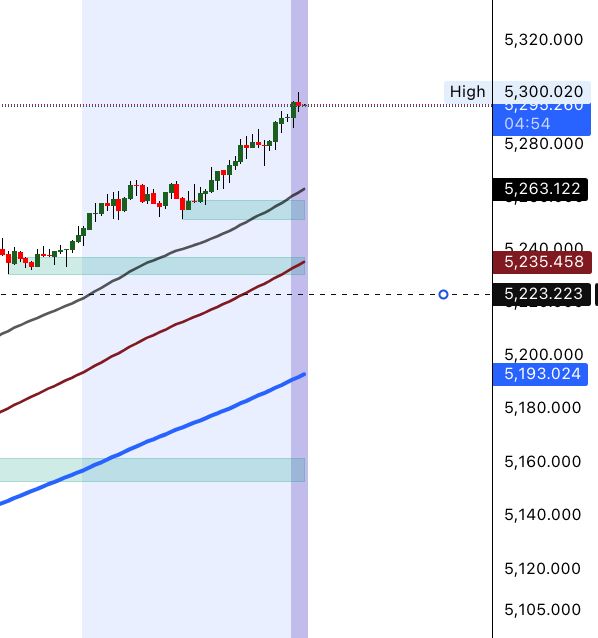
Spot Gold Rose Above $5,290 Per Ounce, Up 2.14% On The Day

Share

Indonesian Chief Economy Minister: We Are Monitoring Stock Index Movement, Will Meet With Financial Regulator To Discuss The MSCI Matter

Share

Ukraine: Russian Air Attack Kills Two In Kyiv Region

Share

'Dollar Smile' Theory Developer: New Cycle Of USD Depreciation May Have Begun

Share

South Korea Won Strengthens Past 1420 Per Dollar For First Time Since Oct 30, 2025

Share

Spot Gold Surged $100.03 During The Day, Breaking Through $5,280 Per Ounce, A Gain Of 1.93%

Share

Turkish Stocks Have Become One Of The Main Holdings Of A Top-performing Fund At BlackRock. A Year Ago, The Fund Had Almost No Allocation To The Turkish Market, But Now Believes The Market Is At A Potential Turning Point

Share

The Draft Joint Statement Indicates That The EU And Vietnam Intend To Reach An Agreement On Closer Cooperation On “trustworthy” Communications Infrastructure

Share

The Draft Joint Statement Indicates That The EU Is Considering Transferring Security Technology To Hanoi And Seeking Infrastructure Investment

Share

EU, Vietnam Set To Agree On Deeper Cooperation On Critical Minerals, Semiconductors - Draft Joint Statement

Share

Amsterdam Index Futures Up 1.4% After Asml Q4 Bookings Beat Expectations

Share

Franchise Brands: Anticipate That Confidence May Finally Return To German Market In H2 2026 As A Result Of Expected Infrastructure Spending

TIME
ACT
FCST
PREV
U.S. 2-Year Note Auction Avg. Yield

A:--

F: --

P: --

U.K. BRC Shop Price Index YoY (Jan)

A:--

F: --

P: --

China, Mainland Industrial Profit YoY (YTD) (Dec)

A:--

F: --

P: --

Germany 2-Year Schatz Auction Avg. Yield

A:--

F: --

P: --

Mexico Trade Balance (Dec)

A:--

F: --

P: --

U.S. Weekly Redbook Index YoY

A:--

F: --

P: --

U.S. S&P/CS 20-City Home Price Index YoY (Not SA) (Nov)

A:--

F: --

P: --

U.S. S&P/CS 20-City Home Price Index MoM (SA) (Nov)

A:--

F: --

P: --
U.S. FHFA House Price Index MoM (Nov)

A:--

F: --

P: --

U.S. FHFA House Price Index (Nov)

A:--

F: --

P: --

U.S. FHFA House Price Index YoY (Nov)

A:--

F: --

P: --
U.S. S&P/CS 10-City Home Price Index YoY (Nov)

A:--

F: --

P: --

U.S. S&P/CS 10-City Home Price Index MoM (Not SA) (Nov)

A:--

F: --

P: --

U.S. S&P/CS 20-City Home Price Index (Not SA) (Nov)

A:--

F: --

P: --

U.S. S&P/CS 20-City Home Price Index MoM (Not SA) (Nov)

A:--

F: --

P: --

U.S. Richmond Fed Manufacturing Composite Index (Jan)

A:--

F: --

P: --

U.S. Conference Board Present Situation Index (Jan)

A:--

F: --

P: --

U.S. Conference Board Consumer Expectations Index (Jan)

A:--

F: --

P: --

U.S. Richmond Fed Manufacturing Shipments Index (Jan)

A:--

F: --

P: --

U.S. Richmond Fed Services Revenue Index (Jan)

A:--

F: --

P: --

U.S. Conference Board Consumer Confidence Index (Jan)

A:--

F: --

P: --
U.S. 5-Year Note Auction Avg. Yield

A:--

F: --

P: --

U.S. API Weekly Refined Oil Stocks

A:--

F: --

P: --

U.S. API Weekly Crude Oil Stocks

A:--

F: --

P: --

U.S. API Weekly Gasoline Stocks

A:--

F: --

P: --

U.S. API Weekly Cushing Crude Oil Stocks

A:--

F: --

P: --

Australia RBA Trimmed Mean CPI YoY (Q4)

A:--

F: --

P: --

Australia CPI YoY (Q4)

A:--

F: --

P: --

Australia CPI QoQ (Q4)

A:--

F: --

P: --

Germany GfK Consumer Confidence Index (SA) (Feb)

A:--

F: --

P: --

Germany 10-Year Bund Auction Avg. Yield

--

F: --

P: --

India Industrial Production Index YoY (Dec)

--

F: --

P: --

India Manufacturing Output MoM (Dec)

--

F: --

P: --

U.S. MBA Mortgage Application Activity Index WoW

--

F: --

P: --

Canada Overnight Target Rate

--

F: --

P: --

BOC Monetary Policy Report
U.S. EIA Weekly Crude Stocks Change

--

F: --

P: --

U.S. EIA Weekly Cushing, Oklahoma Crude Oil Stocks Change

--

F: --

P: --

U.S. EIA Weekly Crude Demand Projected by Production

--

F: --

P: --

U.S. EIA Weekly Crude Oil Imports Changes

--

F: --

P: --

U.S. EIA Weekly Heating Oil Stock Changes

--

F: --

P: --

U.S. EIA Weekly Gasoline Stocks Change

--

F: --

P: --

BOC Press Conference
Russia PPI MoM (Dec)

--

F: --

P: --

Russia PPI YoY (Dec)

--

F: --

P: --

U.S. Target Federal Funds Rate Lower Limit (Overnight Reverse Repo Rate)

--

F: --

P: --

U.S. Interest Rate On Reserve Balances

--

F: --

P: --

U.S. Federal Funds Rate Target

--

F: --

P: --

U.S. Target Federal Funds Rate Upper Limit (Excess Reserves Ratio)

--

F: --

P: --

FOMC Statement
FOMC Press Conference
Brazil Selic Interest Rate

--

F: --

P: --

Australia Import Price Index YoY (Q4)

--

F: --

P: --

Japan Household Consumer Confidence Index (Jan)

--

F: --

P: --

Turkey Economic Sentiment Indicator (Jan)

--

F: --

P: --

Euro Zone M3 Money Supply (SA) (Dec)

--

F: --

P: --

Euro Zone Private Sector Credit YoY (Dec)

--

F: --

P: --

Euro Zone M3 Money Supply YoY (Dec)

--

F: --

P: --

Euro Zone 3-Month M3 Money Supply YoY (Dec)

--

F: --

P: --

South Africa PPI YoY (Dec)

--

F: --

P: --

Q&A with Experts
    • All
    • Chatrooms
    • Groups
    • Friends
    Khawatir_ flag
    @TIPU SULTAN Khan! Do you only trade gold and bitcoin?
    @Sarkar flag
    ryandika
    what's the next news on gold?
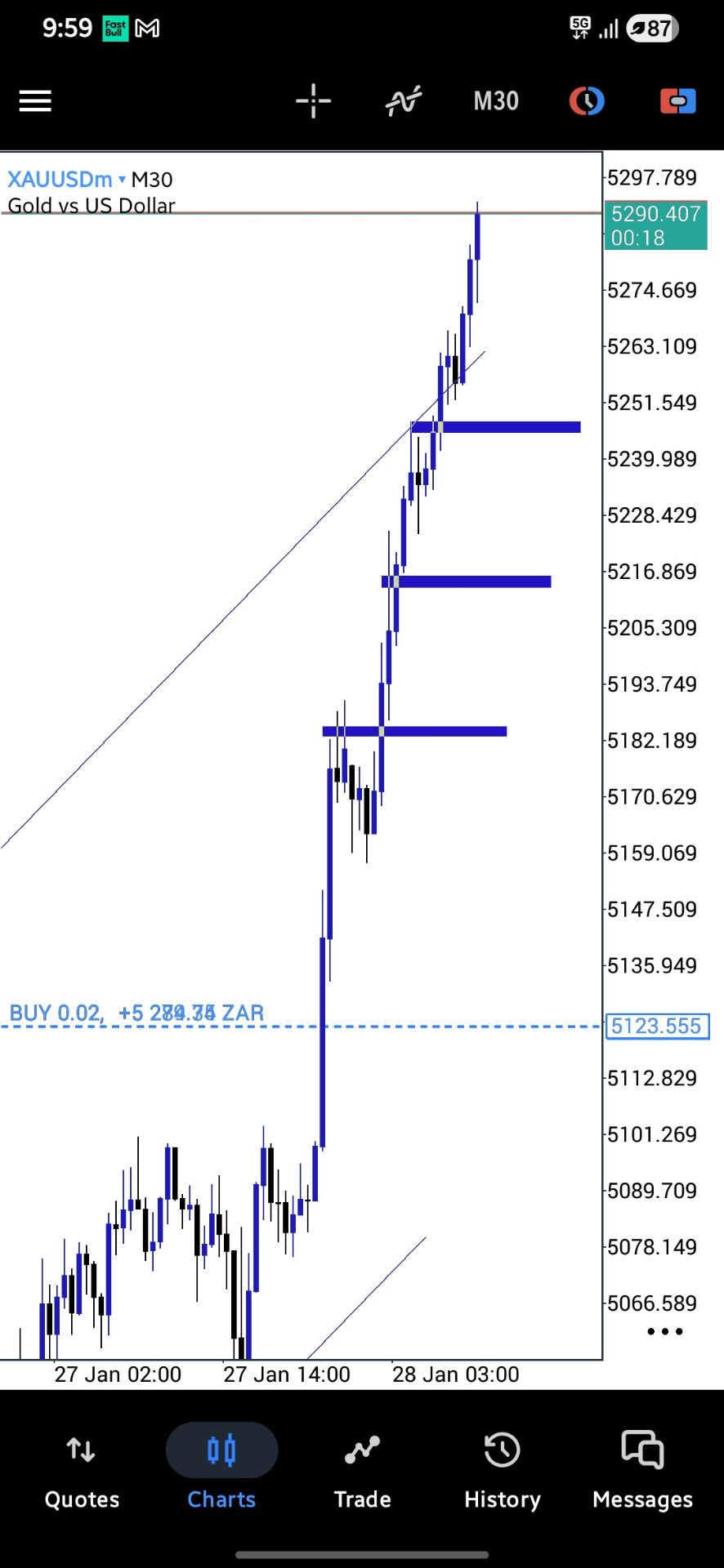
    @ryandika📈 (#XAUUSD) BUY NOW 5295 TAKE PROFIT 5300 TAKE PROFIT 5305
    SlowBear ⛅ flag
    SlowBear ⛅
    @ndu Gold tapped into the realm of 3000 in peace and we say thanks to the stars - but so is the London market opening!
    ryandika flag
    gold market is very killer
    EuroTrader flag
    Khawatir_
    @Khawatir_Lockheed martin is one defense stock to actually pay attention to
    ANDY flag
    SlowBear ⛅
    @SlowBear ⛅Is London Market open yet?
    @Sarkar flag
    ANDY
    @ANDYHave you taken a trade?
    EuroTrader flag
    ndu
    powel suggested that gold will reach 6000 ounce🤷
    @nduWhen did Powell make this prediction cause i never knew he makes predictions about assets except inflation and employment
    SlowBear ⛅ flag
    ANDY
    @ANDYYes the London market fully opened like 12min ago broher
    ndu flag
    SlowBear ⛅
    @SlowBear ⛅okay
    SlowBear ⛅ flag
    ryandika
    gold market is very killer
    @ryandika The killer of all sellers that is what Gold market is today and it has been for the past 6months
    SlowBear ⛅ flag
    ndu
    @nduLol, he said okay!
    EuroTrader flag
    ndu
    @nduAll those that bought gold on a breakout are really smiling to the bank
    ANDY flag
    @Sarkar
    @@SarkarI've already tp at 5295
    ndu flag
    EuroTrader
    @EuroTraderno my bad its not him😁
    ndu flag
    i wad reading this
    ndu flag
    SlowBear ⛅ flag
    ndu
    @ndu they want to roast my guy real quickly 😁😁
    EuroTrader flag
    ndu
    @nduOkay cause that would have been deemed insider trading . imagine Trump saying NASDAQ would hit 30k
    ndu flag
    SlowBear ⛅
    @SlowBear ⛅🤣🤣🤣🤣🤣
    Type here...
    Add Symbol or Code

      No matching data

      All
      Trump Updates
      Recommend
      Stocks
      Cryptocurrencies
      Central Banks
      Featured News
      • All
      • Russia-Ukraine Conflict
      • Middle East Flashpoint
      • All
      • Russia-Ukraine Conflict
      • Middle East Flashpoint
      Search
      Products

      Charts Free Forever

      Chats Q&A with Experts
      Screeners Economic Calendar Data Tools
      Membership Features
      Data Warehouse Market Trends Institutional Data Policy Rates Macro

      Market Trends

      Market Sentiment Order Book Forex Correlations

      Top Indicators

      Charts Free Forever
      Markets

      News

      News Analysis 24/7 Columns Education
      From Institutions From Analysts
      Topics Columnists

      Latest Views

      Latest Views

      Trending Topics

      Top Columnists

      Latest Update

      Signals

      Copy Rankings Latest Signals Become a signal provider AI Rating
      Contests
      Brokers

      Overview Brokers Assessment Rankings Regulators News Claims
      Broker listing Forex Brokers Comparison Tool Live Spread Comparison Scam
      Q&A Complaint Scam Alert Videos Tips to Detect Scam
      More

      Business
      Events
      Careers About Us Advertising Help Center

      White Label

      Data API

      Web Plug-ins

      Affiliate Program

      Awards Institution Evaluation IB Seminar Salon Event Exhibition
      Vietnam Thailand Singapore Dubai
      Fans Party Investment Sharing Session
      FastBull Summit BrokersView Expo
      Recent Searches
        Top Searches
          Markets
          News
          Analysis
          User
          24/7
          Economic Calendar
          Education
          Data
          • Names
          • Latest
          • Prev

          View All

          No data

          Scan to Download

          Faster Charts, Chat Faster!

          Download App
          English
          • English
          • Español
          • العربية
          • Bahasa Indonesia
          • Bahasa Melayu
          • Tiếng Việt
          • ภาษาไทย
          • Français
          • Italiano
          • Türkçe
          • Русский язык
          • 简中
          • 繁中
          Open Account
          Search
          Products
          Charts Free Forever
          Markets
          News
          Signals

          Copy Rankings Latest Signals Become a signal provider AI Rating
          Contests
          Brokers

          Overview Brokers Assessment Rankings Regulators News Claims
          Broker listing Forex Brokers Comparison Tool Live Spread Comparison Scam
          Q&A Complaint Scam Alert Videos Tips to Detect Scam
          More

          Business
          Events
          Careers About Us Advertising Help Center

          White Label

          Data API

          Web Plug-ins

          Affiliate Program

          Awards Institution Evaluation IB Seminar Salon Event Exhibition
          Vietnam Thailand Singapore Dubai
          Fans Party Investment Sharing Session
          FastBull Summit BrokersView Expo

          Germany Is Competing With Poland To Lead Russia’s Containment

          Andrew Korybko

          Political

          Summary:

          Germany's secret war preparations have been exposed, aiming to reshape the European military landscape. Poland is deeply concerned, and US-Russia relations may face further uncertainty. A potential power struggle is unfolding.

          The Wall Street Journal detailed “Germany’s Secret Plan for War With Russia” late last year, which boils down to rapidly remilitarizing and modernizing transport infrastructure across the country in order to more effectively function as a nationwide staging ground in any such future conflict. Former Chancellor Olaf Scholz set the ball rolling with his de facto manifesto that was published by Foreign Affairs in December 2022, but it’s his successor Friedrich Merz who’s now actively implementing it.
          The modernization of transport infrastructure, which aims to slash to just 3-5 days the estimated 45 days that it currently takes to move troops and equipment from Europe’s Atlantic ports to the Russian border, aligns with the spirit of the “military Schengen”. This arrangement was agreed to between Germany, Poland, and the Netherlands in early 2024 and could soon see Belgium and France joining too. Lithuania could potentially do so as well so that Germany can more easily access its new base there from Poland.
          While framed as a means of “deterring” Russia, which has no intention of attacking Europe as Putin recently confirmed and is willing to formalize this fact too, it actually exacerbates their security dilemma by heightening Russia’s threat perception of NATO and attendant fears of Operation Barbarossa 2.0. This contextualizes Deputy Foreign Minister Alexander Grushko’s recent claim that the EU is preparing for war with Russia and Belarusian President Alexander Lukashenko’s similar claim around the same time.
          Be that as it may, the German-Polish zero-sum rivalry could obstruct these aforesaid preparations due to Poland’s concerns about safeguarding its sovereignty vis-à-vis Germany, which it regards as a significant non-military threat due to its control over the EU and plans to federalize the bloc under its leadership. After all, “The EU’s Planned Transformation Into A Military Union Is A Federalist Power Play” as is the proposal for the EU to spend $400 billion more on Ukraine, both ideas of which are backed by Berlin.
          In fact, it was assessed in November 2023 that “NATO’s Proposed ‘Military Schengen’ Is A Thinly Disguised German Power Play Over Poland”, but this can be managed if Poland’s new conservative-nationalist president prevents the liberal-globalist government from selling their country out. To that end, Poland must keep Germany’s military presence to a minimum, with them only serving as a tripwire for ensuring that Germany doesn’t obstruct the flow of US military aid to Poland in the event of a crisis.
          Germany and Poland are competing with one another for leading Russia’s containment in Central & Eastern Europe after the Ukrainian Conflict ends, which the first aims to do through the “Fortress Europe” plan while the second foresees this being achieved via the “Three Seas Initiative”. The only difference of relevance is that Germany wants to subordinate Poland as its junior partner for this task while Poland wants to become Germany’s equal therein and possibly even its senior partner one day.
          The US supports Poland’s vision since its implementation would lead to more purchases of American arms, as opposed to Germany’s envisaged ramping up of domestic production and European purchases, as well as the creation of a geopolitical wedge for keeping Germany and Russia apart. Regardless of whoever comes out on top in this rivalry to contain Russia, the US still wins since they’re both NATO members, but a NATO-Russian Non-Aggression Pact should follow in any case for managing tensions.
          Risk Warnings and Disclaimers
          You understand and acknowledge that there is a high degree of risk involved in trading. Following any strategies or investment methods may lead to potential losses. The content on the site is provided by our contributors and analysts for information purposes only. You are solely responsible for determining whether any trading assets, securities, strategy, or any other product is suitable for investing based on your own investment objectives and financial situation.
          Add to Favorites
          Share

          Central Banks Continue Gold Buying Spree in Late 2025

          Golden Gleam

          Economic

          Daily News

          Remarks of Officials

          Commodity

          Central Bank

          Political

          Data Interpretation

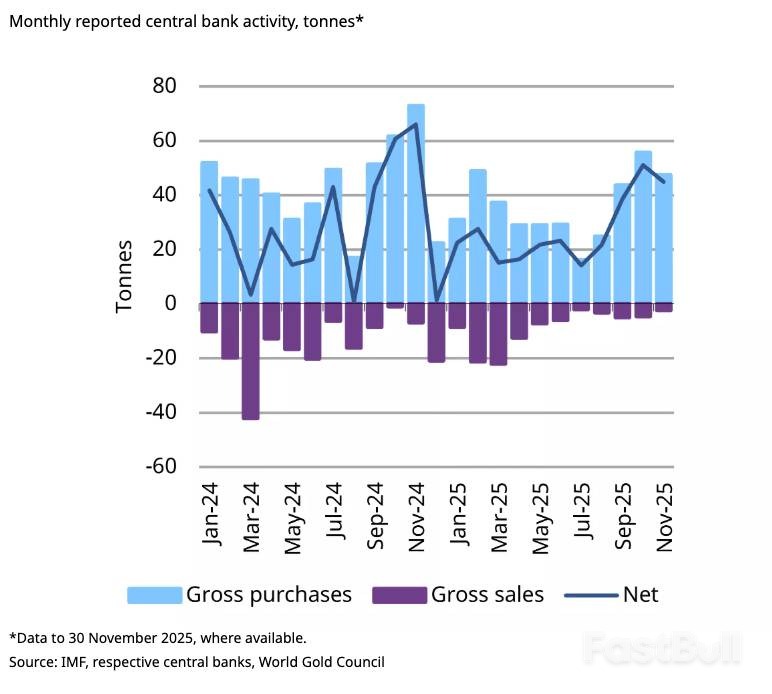
          Global central banks extended their gold purchasing streak into November, building on significant momentum that began in September and accelerated through October.

          Official data shows central banks collectively added another 45 tonnes of gold to their reserves in November. While this was a slight decrease from the 53 tonnes acquired the previous month, it reflects a sustained and elevated level of buying compared to earlier in 2025.

          Figure 1: Monthly central bank data reveals a consistent trend of net gold purchasing throughout 2024 and 2025, with recent activity building on a strong third quarter.

          This activity follows a strong third quarter, during which officially reported net purchases hit 220 tonnes. This figure marked a 28% increase from the second quarter and was 6% above the five-year third-quarter average.

          According to the World Gold Council, the recent demand demonstrates that central banks are continuing to "add gold strategically, despite facing higher prices."

          Poland and Brazil Lead the Pack

          For the second consecutive month, Poland was the most significant buyer, adding another 12 tonnes to its reserves. This purchase brought the country's total gold holdings to 543 tonnes, accounting for 28% of its total reserves. The National Bank of Poland has previously stated its intention to increase its gold allocation to 30% of total reserve assets.

          Adam Glapiński, Governor of the National Bank of Poland, has described gold as "the only safe investment for state reserves" amid global turmoil. He emphasized that gold is not tied to any single national economy, serves as a safe haven, and maintains its long-term value. "It is a symbol of stability that enhances our credibility," Glapiński noted. To date, Poland is the top central bank gold purchaser, having increased its reserves by 95 tonnes.

          Brazil also continued its buying for the third straight month, adding 11 tonnes in November. Over the past three months, the country has increased its gold holdings by 43 tonnes, bringing its official total to 172 tonnes, or about 6% of its reserves.

          China's Official Numbers vs. Hidden Reserves

          The People's Bank of China reported another purchase in November, adding one tonne and marking its 13th consecutive month of increasing its official reserves. Over this period, China has officially added 401 tonnes, bringing its stated holdings to over 2,300 tonnes, which represents around 7% of its total reserves.

          However, there is widespread analysis suggesting China's actual holdings are substantially larger than its public disclosures. Research from Jan Nieuwenhuijs indicates the People's Bank of China may hold over 5,000 tonnes of monetary gold—more than double the officially admitted figure. This discrepancy has started to gain attention in mainstream financial reporting.

          Other Notable Buyers Bolster the Trend

          Several other central banks contributed to the net increase in global gold reserves:

          • Uzbekistan: The central bank added 10 tonnes in November, following a 9-tonne purchase in October. This follows a period of selling in September, a common pattern for banks that source gold from domestic production.

          • Kazakhstan: The National Bank of Kazakhstan was also a buyer, expanding its reserves by 8 tonnes.

          • Czech Republic: The Czech National Bank continued its steady accumulation, adding 2 tonnes for its 33rd straight month of purchases. It now holds 71 tonnes and aims to reach 100 tonnes by 2028.

          • Other Buyers: The National Bank of the Kyrgyz Republic added 2 tonnes, while the Bank of Indonesia increased its holdings by 1 tonne.

          Additionally, the Bank of Tanzania reported purchasing 15 tonnes of refined gold in the first year of its Domestic Gold Purchase Program, aimed at strengthening its foreign reserves. The only notable sellers in November were Jordan and Qatar.

          The Big Picture: A Strategic Shift to Gold

          While the pace of gold buying slowed slightly in 2025, the strong performance in the latter part of the year underscores a persistent strategic trend. The World Gold Council remains bullish, highlighting its 2025 survey where 95% of central bank respondents expect global gold reserves to rise over the next year.

          This trend is part of a larger pattern. In 2024, central banks increased their gold holdings by a net 1,044.6 tonnes, the 15th consecutive year of expansion. This was the third-largest increase on record, just shy of the totals in 2023 and the all-time high of 1,136 tonnes set in 2022. For context, the average annual increase between 2010 and 2021 was just 473 tonnes.

          Analysts at the World Gold Council have called central bank purchasing "surprisingly resilient" and expect the buying spree to continue. A key driver identified is diversification, specifically "a reduction of U.S. assets." This move is widely seen as a component of de-dollarization, as nations seek to reduce their reliance on the U.S. dollar amid geopolitical uncertainty.

          To stay updated on all economic events of today, please check out our Economic calendar
          Risk Warnings and Disclaimers
          You understand and acknowledge that there is a high degree of risk involved in trading. Following any strategies or investment methods may lead to potential losses. The content on the site is provided by our contributors and analysts for information purposes only. You are solely responsible for determining whether any trading assets, securities, strategy, or any other product is suitable for investing based on your own investment objectives and financial situation.
          Add to Favorites
          Share

          US Split on Venezuela Strike as Entanglement Fears Grow

          Isaac Bennett

          Remarks of Officials

          Data Interpretation

          Political

          A Nation Sharply Divided on Military Action

          While President Donald Trump has lauded the recent U.S. military operation in Venezuela as "amazing," new polling data reveals a deeply divided American public. A Reuters/Ipsos poll published Monday shows that U.S. opinion is almost perfectly split on the decision to oust the country's president.

          The survey, conducted on January 4 and 5 among more than 1,200 adults, found that:

          • 33% of respondents approved of the U.S. military action.

          • 34% disapproved of the action.

          • 32% remained unsure.

          This split sentiment marks a notable change from attitudes prior to the operation. Earlier polls showed clear opposition to intervention. A Quinnipiac University poll in December found 63% of Americans were against military action, while a November CBS News/YouGov survey reported that figure at 70%.

          Partisan Views Drive the Division

          The split in public opinion runs sharply along party lines. The Reuters/Ipsos data shows a near mirror-image reaction between the two major parties:

          • Nearly two-thirds of Republicans backed the Trump administration's operation.

          • An equal number of Democrats opposed it.

          This partisan gap extends to expectations for Venezuela's future. Republicans expressed general optimism that the ousting of Nicolás Maduro would improve the country's stability, quality of life, and election fairness. Democrats, in contrast, were far more skeptical of any positive outcomes.

          Widespread Fear of a Quagmire

          Despite the partisan divide on the operation itself, there is a broad, cross-party consensus on one key point: the fear of getting stuck in Venezuela. A significant majority of Americans are wary of deep or prolonged U.S. involvement.

          "They don't want to get too involved. They don't want U.S. troops in Venezuela," said Alec Tyson, a senior vice president at Ipsos Public Affairs. He described the situation as a "narrow path here for the administration," where the public may hope for positive outcomes but remains cautious about the commitment.

          This concern is reflected in the numbers:

          • Nearly three-quarters of all respondents worried the U.S. would become "too involved."

          • This sentiment was shared by 90% of Democrats and over half of Republicans.

          "It's clear that the public wants limited—and I really emphasize limited—engagement there," Tyson added.

          Other Polls Confirm Public Unease

          The Reuters/Ipsos findings align with other recent surveys. A Washington Post poll also found Americans almost evenly divided, with 40% approving of the attack and 42% disapproving.

          The Post's survey further highlighted American reluctance to deepen the commitment. When asked about the U.S. taking control of Venezuela—an idea previously suggested by Trump—only about one-quarter of respondents supported the action, while 45% opposed it.

          Perhaps the most definitive finding came on the question of sovereignty. An overwhelming majority of Americans—94%—believe the Venezuelan people should be the ones to determine their country's future leadership.

          Risk Warnings and Disclaimers
          You understand and acknowledge that there is a high degree of risk involved in trading. Following any strategies or investment methods may lead to potential losses. The content on the site is provided by our contributors and analysts for information purposes only. You are solely responsible for determining whether any trading assets, securities, strategy, or any other product is suitable for investing based on your own investment objectives and financial situation.
          Add to Favorites
          Share

          Trump Eyes Greenland: Is Military Action an Option?

          James Riley

          Remarks of Officials

          Political

          The White House confirmed on Tuesday that President Donald Trump is considering a range of options, including military action, to gain control of Greenland. The administration views the acquisition of the mineral-rich Arctic island as a critical national security objective.

          White House Press Secretary Karoline Leavitt stated that the move is aimed at countering Russian and Chinese influence in the Arctic. "The president and his team are discussing a range of options to pursue this important foreign policy goal," Leavitt said. "Utilizing the US military is always an option at the commander in chief's disposal."

          This renewed focus on Greenland comes after the US military's seizure of Venezuelan President Nicolas Maduro. Trump has repeatedly argued that controlling Greenland is a strategic necessity for the United States, which already operates the Pituffik Space Base in the island's northwest.

          Political Pushback in Washington

          Despite the White House's assertive stance, the idea of military action has met resistance from US lawmakers on both sides of the aisle.

          Secretary of State Marco Rubio informed legislators that Trump's preferred method was to purchase Greenland from Denmark and that discussions did not signal an imminent invasion.

          Republican House Speaker Mike Johnson told Politico he did not believe military action in Greenland was "appropriate." Similarly, Democratic Senator Ruben Gallego pledged to block any attempt to invade the territory.

          However, White House Deputy Chief of Staff Stephen Miller maintained a hardline position in a Monday interview, insisting that Greenland should be part of the US. "Nobody is going to fight the US militarily over the future of Greenland," Miller said, while also questioning the legitimacy of Denmark's territorial claim.

          Greenland and Denmark Reject US Overture

          Greenlandic and Danish officials have firmly rebuffed the idea of a US takeover, calling for immediate talks with Washington to resolve what they term "misunderstandings."

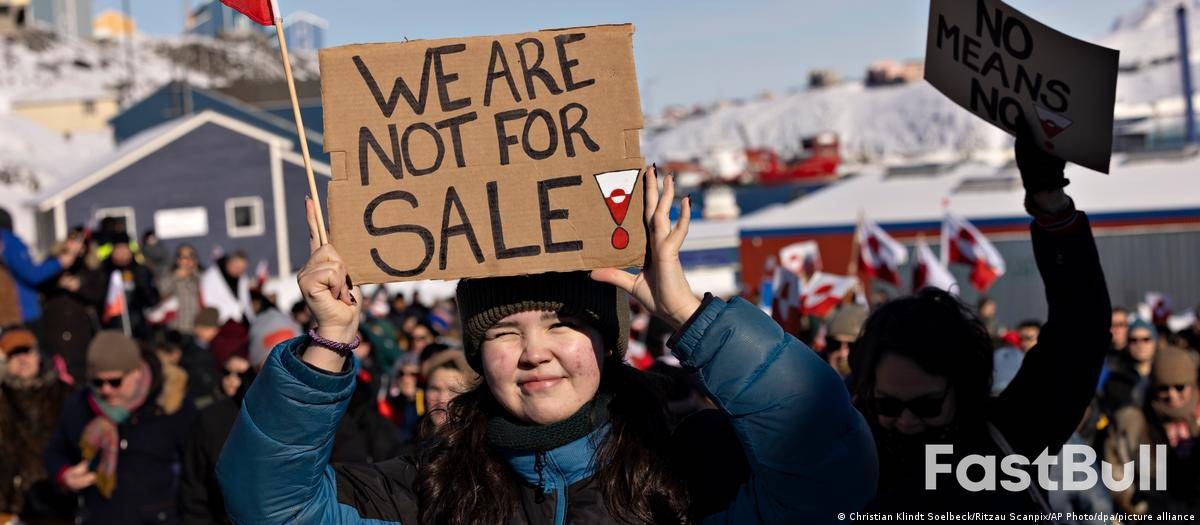
          Figure 1: Protesters in Greenland rally against the prospect of a US takeover, asserting the island's sovereignty.

          Greenland's Prime Minister Jens-Frederik Nielsen reiterated Tuesday that the island is not for sale and that its future can only be decided by its own people. Greenland, a former Danish colony, has been a self-governing territory within the Kingdom of Denmark since 1953 and holds the right to pursue independence.

          Danish Prime Minister Mette Frederiksen issued a stark warning on Monday, stating that a US takeover of Greenland would mean the end of the NATO military alliance.

          In a show of support, several European nations—including Britain, France, Germany, Italy, Poland, and Spain—joined Denmark in issuing a joint statement of solidarity with Greenland.

          Risk Warnings and Disclaimers
          You understand and acknowledge that there is a high degree of risk involved in trading. Following any strategies or investment methods may lead to potential losses. The content on the site is provided by our contributors and analysts for information purposes only. You are solely responsible for determining whether any trading assets, securities, strategy, or any other product is suitable for investing based on your own investment objectives and financial situation.
          Add to Favorites
          Share

          China's 2026 Plan: Taking the Digital Yuan Global

          Alexander

          Economic

          Cryptocurrency

          Forex

          Remarks of Officials

          Central Bank

          Bond

          China's central bank has laid out its 2026 roadmap, placing the digital yuan—also known as the e-CNY—at the heart of its strategy to expand the nation's financial influence. Following a policy conference from January 5-6, 2026, the People's Bank of China (PBOC), led by Governor Pan Gongsheng, signaled a decisive shift from domestic testing to promoting the e-CNY for cross-border transactions.

          The key priorities for the year ahead include:

          • Expanding the international use of the digital yuan.

          • Strengthening infrastructure for global yuan payments and settlement.

          • Leveraging currency swap agreements to reduce dependence on the U.S. dollar.

          • Continuing the development of the e-CNY while maintaining strict supervision of private cryptocurrencies.

          From Domestic Trials to Cross-Border Expansion

          After years of pilot programs that began in 2020, the PBOC is officially moving to internationalize its digital currency. The central bank stated it will "steadily advance the development of the digital RMB" and accelerate the creation of infrastructure to support cross-border yuan transactions.

          This strategic push is already moving past the theoretical stage. A recent transaction involving Laos was reported as the first cross-border use of the digital yuan, indicating that international applications are becoming a reality. The 2026 agenda confirms a clear transition from domestic experiments in retail and transport toward broader integration into the global financial system.

          To support this goal, the PBOC will encourage wider adoption of the yuan for trade and investment settlement and push financial institutions to enhance their cross-border RMB services. The bank is also working with foreign monetary authorities to establish the technical and regulatory standards needed for seamless international e-CNY transactions.

          Reducing Dollar Reliance and Boosting the Yuan

          A core objective behind the e-CNY's global push is to reduce reliance on the U.S. dollar in international trade. The PBOC plans to expand the use of bilateral currency swap arrangements, which allow countries to settle trade directly in their local currencies and promote the yuan's circulation.

          Other initiatives designed to boost the yuan's global appeal include:

          • Opening Bond Markets: China will continue to welcome foreign entities to issue "panda bonds"—yuan-denominated bonds sold within China—to deepen its domestic capital markets.

          • Integrating Payment Systems: The bank aims to build international links between fast payment systems and promote cross-border cooperation on QR-code payments.

          Broader Monetary Policy and Economic Support

          Alongside its digital currency ambitions, the PBOC reaffirmed its plan to maintain a moderately loose monetary policy in 2026. The bank will flexibly use tools like reserve requirement ratio cuts and interest rate adjustments to ensure sufficient liquidity in the financial system.

          The conference also highlighted the need to improve financial support for the real economy, targeting five key areas:

          • Technology finance

          • Green finance

          • Inclusive finance

          • Pension finance

          • Digital economy finance

          In 2025 alone, over 700 entities reportedly issued more than 1.5 trillion yuan in science and technology innovation bonds. Further reforms are also planned for market access programs like Bond Connect and Swap Connect, which give international investors entry into China's onshore bond and derivatives markets via Hong Kong.

          Regulating Digital Assets and Strengthening Global Influence

          While championing its state-backed digital currency, the PBOC reiterated its hardline stance on private digital assets. The bank pledged to strengthen supervision of virtual cryptocurrencies, continue its crackdown on illegal activities, and implement tighter anti-money laundering controls.

          At the same time, China is positioning itself for a larger role in global finance. The PBOC announced its support for the development of the International Monetary Fund Shanghai Center, a move that underscores its ambition to increase its influence within the international financial architecture.

          To stay updated on all economic events of today, please check out our Economic calendar
          Risk Warnings and Disclaimers
          You understand and acknowledge that there is a high degree of risk involved in trading. Following any strategies or investment methods may lead to potential losses. The content on the site is provided by our contributors and analysts for information purposes only. You are solely responsible for determining whether any trading assets, securities, strategy, or any other product is suitable for investing based on your own investment objectives and financial situation.
          Add to Favorites
          Share

          Oil Prices Slide as U.S. Secures Venezuelan Crude Deal, Market Eyes Oversupply Risks

          Gerik

          Economic

          Commodity

          Crude Prices Decline on U.S.–Venezuela Supply Agreement

          Oil markets opened Wednesday with renewed downward pressure after President Donald Trump revealed that Venezuela would transfer between 30 million and 50 million barrels of crude oil to the United States. West Texas Intermediate (WTI) fell by 1.37% to $56.35 per barrel, while Brent dropped 1% to $60.09. This decline extends a more than $1 slide in the prior session, as traders recalibrate supply forecasts in light of new geopolitical developments.
          Trump’s social media statement emphasized that the oil would be sold at market prices and that revenues would be used under his control to benefit both the Venezuelan and American people. The framing implies a longer-term increase in accessible supply, which directly impacts market sentiment and exacerbates expectations of oversupply in early 2026.

          Market Perception Shifts Toward Supply Expansion

          The immediate market reaction reflects investor concerns that Washington's approach prioritizes boosting oil availability rather than constraining it. As Tina Teng of Moomoo ANZ noted, this adds to the global oversupply narrative. The deal with Caracas may divert shipments previously headed to China, and while operational control remains with Chevron the only firm authorized to ship Venezuelan oil under current sanctions the quantities involved are significant. Chevron has been transporting 100,000 to 150,000 barrels per day (bpd), and the potential $1.9 billion value of the agreement represents a sizable injection into global flows.
          Analysts from Haitong Futures argue that despite geopolitical headlines dominating early 2026, the underlying physical market has been showing weakness. Middle Eastern crude grades have continued to decline in price, suggesting a lack of buying enthusiasm and a potential regional surplus that further weakens the global pricing structure.

          Inventory Data Fuels Mixed Sentiment

          Contrary to fears of oversupply, data from the American Petroleum Institute (API) indicated a 2.77 million barrel drop in U.S. crude inventories last week. This offers a short-term counterbalance, though fuel stocks reportedly increased. While API data suggests tighter domestic supply, analysts polled by Reuters expect official government figures to show a modest build of 500,000 barrels for the week ending January 2. If confirmed, the discrepancy could indicate volatility in reporting and uncertainty in near-term inventory direction.
          Adding to the bearish tone, Morgan Stanley projected a potential oil market surplus of up to 3 million bpd in the first half of 2026. This estimate is based on stagnant demand growth in 2025 and rising output from both OPEC and non-OPEC producers. The timing of the Venezuelan deal, coming just as global production ramps up, compounds concerns that supply will consistently outpace demand for at least the next two quarters.
          The U.S.–Venezuela oil arrangement has introduced a new supply-side variable at a time when the market is already grappling with demand stagnation and elevated inventory levels. While geopolitical developments have drawn attention, it is the underlying fundamentals namely weak demand growth and rising non-OPEC output that now dominate price direction. Unless there is a material shift in consumption trends or a pullback in production, crude markets may remain vulnerable to further downside in the near term.

          Source: Reuters

          To stay updated on all economic events of today, please check out our Economic calendar
          Risk Warnings and Disclaimers
          You understand and acknowledge that there is a high degree of risk involved in trading. Following any strategies or investment methods may lead to potential losses. The content on the site is provided by our contributors and analysts for information purposes only. You are solely responsible for determining whether any trading assets, securities, strategy, or any other product is suitable for investing based on your own investment objectives and financial situation.
          Add to Favorites
          Share

          Japan’s Services Sector Loses Momentum in December Amid Cost Pressures and Tepid Demand

          Gerik

          Economic

          Service Sector Expansion Slows Despite Positive Export Shift

          Japan’s service industry lost steam in December, as shown by the S&P Global Japan Services PMI, which fell to 51.6 from November’s 53.2. While still indicating expansion, this was the lowest reading since May and came in below the flash estimate of 52.5. The data marks the ninth consecutive month of growth but signals a cooling trend in momentum. The composite PMI, which includes both services and manufacturing, also slipped to 51.1 from 52.0, confirming a broader deceleration in private-sector activity.
          A closer look reveals that while foreign demand for Japanese services returned to expansion for the first time since June, overall new order growth weakened. This suggests a shift in the source of demand rather than a broad-based improvement, highlighting a correlation between domestic economic fatigue and slower service sector activity.

          Rising Input Costs Threaten Profit Margins

          One of the most pressing challenges noted in the report is the sharp increase in input costs. December saw the fastest rise in input prices since May, driven by surging expenses for raw materials, labor, fuel, and construction. The causal effect of these cost pressures is evident in firms’ decisions to raise output charges, albeit cautiously, as they attempt to preserve margins without losing market competitiveness.
          S&P Global's Annabel Fiddes noted the difficult balancing act businesses face between passing on costs and maintaining sales. While inflationary pressures have not yet reversed growth, they are eroding operating efficiency and heightening uncertainty.

          Hiring Accelerates Despite Slowing Growth

          Paradoxically, the survey showed a strong uptick in hiring, with staff levels rising at the fastest pace in more than two and a half years. This increase is linked to firms filling long-standing vacancies and expectations of future demand growth, particularly in transportation and IT-related services. This illustrates a forward-looking optimism among businesses despite the current softness in domestic orders.
          Despite slower growth in December, sentiment among service providers remained upbeat. Companies pointed to new product rollouts, planned store openings, and improving demand conditions in select sectors as reasons for optimism. This suggests a disconnect between current conditions and future expectations — a situation that often precedes cyclical rebounds, assuming cost pressures stabilize.
          December’s PMI data paints a mixed picture for Japan’s service sector. While growth remains intact, the pace has clearly slowed under the weight of rising costs and faltering domestic demand. Foreign demand recovery offers some relief, but it is not yet strong enough to offset internal weaknesses. The divergence between rising employment and slowing orders highlights a transitional phase, where optimism persists, but underlying fragilities could limit upside potential unless inflationary pressures are brought under control.

          Source: Reuters

          To stay updated on all economic events of today, please check out our Economic calendar
          Risk Warnings and Disclaimers
          You understand and acknowledge that there is a high degree of risk involved in trading. Following any strategies or investment methods may lead to potential losses. The content on the site is provided by our contributors and analysts for information purposes only. You are solely responsible for determining whether any trading assets, securities, strategy, or any other product is suitable for investing based on your own investment objectives and financial situation.
          Add to Favorites
          Share
          FastBull
          Copyright © 2026 FastBull Ltd

          728 RM B 7/F GEE LOK IND BLDG NO 34 HUNG TO RD KWUN TONG KLN HONG KONG

          TelegramInstagramTwitterfacebooklinkedin
          App Store Google Play Google Play
          Products
          Charts

          Chats

          Q&A with Experts
          Screeners
          Economic Calendar
          Data
          Tools
          Membership
          Features
          Function
          Markets
          Copy Trading
          Latest Signals
          Contests
          News
          Analysis
          24/7
          Columns
          Education
          Company
          Careers
          About Us
          Contact Us
          Advertising
          Help Center
          Feedback
          User Agreement
          Privacy Policy
          Personal Information Protection Statement
          Business

          White Label

          Data API

          Web Plug-ins

          Poster Maker

          Affiliate Program

          Risk Disclosure

          The risk of loss in trading financial instruments such as stocks, FX, commodities, futures, bonds, ETFs and crypto can be substantial. You may sustain a total loss of the funds that you deposit with your broker. Therefore, you should carefully consider whether such trading is suitable for you in light of your circumstances and financial resources.

          No decision to invest should be made without thoroughly conducting due diligence by yourself or consulting with your financial advisors. Our web content might not suit you since we don't know your financial conditions and investment needs. Our financial information might have latency or contain inaccuracy, so you should be fully responsible for any of your trading and investment decisions. The company will not be responsible for your capital loss.

          Without getting permission from the website, you are not allowed to copy the website's graphics, texts, or trademarks. Intellectual property rights in the content or data incorporated into this website belong to its providers and exchange merchants.

          Not Logged In

          Log in to access more features

          Connect Broker
          Become a signal provider
          Help Center
          Customer Service
          Dark Mode
          Price Up/Down Colors

          Log In

          Sign Up
          Position
          Layout
          Fullscreen
          Default to Chart
          The chart page opens by default when you visit fastbull.com