Markets
News
Analysis
User
24/7
Economic Calendar
Education
Data
- Names
- Latest
- Prev



Signal Accounts for Members
All Signal Accounts
All Contests


U.S. Average Hourly Wage MoM (SA) (Dec)A:--
F: --
U.S. Average Weekly Working Hours (SA) (Dec)A:--
F: --
P: --
U.S. New Housing Starts Annualized MoM (SA) (Oct)A:--
F: --
U.S. Total Building Permits (SA) (Oct)A:--
F: --
P: --
U.S. Building Permits MoM (SA) (Oct)A:--
F: --
P: --
U.S. Annual New Housing Starts (SA) (Oct)A:--
F: --
U.S. U6 Unemployment Rate (SA) (Dec)A:--
F: --
P: --
U.S. Manufacturing Employment (SA) (Dec)A:--
F: --
U.S. Labor Force Participation Rate (SA) (Dec)A:--
F: --
P: --
U.S. Private Nonfarm Payrolls (SA) (Dec)A:--
F: --
U.S. Unemployment Rate (SA) (Dec)A:--
F: --
U.S. Nonfarm Payrolls (SA) (Dec)A:--
F: --
U.S. Average Hourly Wage YoY (Dec)A:--
F: --
Canada Part-Time Employment (SA) (Dec)A:--
F: --
P: --
Canada Unemployment Rate (SA) (Dec)A:--
F: --
P: --
Canada Labor Force Participation Rate (SA) (Dec)A:--
F: --
P: --
U.S. Government Employment (Dec)A:--
F: --
P: --
U.S. UMich Consumer Expectations Index Prelim (Jan)A:--
F: --
P: --
U.S. UMich Consumer Sentiment Index Prelim (Jan)A:--
F: --
P: --
U.S. UMich Current Economic Conditions Index Prelim (Jan)A:--
F: --
P: --
U.S. UMich 1-Year-Ahead Inflation Expectations Prelim (Jan)A:--
F: --
P: --
U.S. UMich 5-Year-Ahead Inflation Expectations Prelim YoY (Jan)A:--
F: --
P: --
U.S. 5-10 Year-Ahead Inflation Expectations (Jan)A:--
F: --
P: --
U.S. Weekly Total Oil Rig CountA:--
F: --
P: --
U.S. Weekly Total Rig CountA:--
F: --
P: --
China, Mainland M0 Money Supply YoY (Dec)--
F: --
P: --
China, Mainland M1 Money Supply YoY (Dec)--
F: --
P: --
China, Mainland M2 Money Supply YoY (Dec)--
F: --
P: --
Indonesia Retail Sales YoY (Nov)A:--
F: --
P: --
Euro Zone Sentix Investor Confidence Index (Jan)A:--
F: --
P: --
India CPI YoY (Dec)--
F: --
P: --
Germany Current Account (Not SA) (Nov)--
F: --
P: --
Canada National Economic Confidence Index--
F: --
P: --
U.S. Conference Board Employment Trends Index (SA) (Dec)--
F: --
P: --
Russia CPI YoY (Dec)--
F: --
P: --
Richmond Federal Reserve President Barkin delivered a speech.
U.S. 3-Year Note Auction Yield--
F: --
P: --
U.S. 10-Year Note Auction Avg. Yield--
F: --
P: --
New York Federal Reserve President Williams delivered a speech.
Japan Trade Balance (Customs Data) (SA) (Nov)--
F: --
P: --
Japan Trade Balance (Nov)--
F: --
P: --
U.K. BRC Overall Retail Sales YoY (Dec)--
F: --
P: --
U.K. BRC Like-For-Like Retail Sales YoY (Dec)--
F: --
P: --
Turkey Retail Sales YoY (Nov)--
F: --
P: --
U.S. NFIB Small Business Optimism Index (SA) (Dec)--
F: --
P: --
Brazil Services Growth YoY (Nov)--
F: --
P: --
Canada Building Permits MoM (SA) (Nov)--
F: --
P: --
U.S. CPI MoM (SA) (Dec)--
F: --
P: --
U.S. CPI YoY (Not SA) (Dec)--
F: --
P: --
U.S. Real Income MoM (SA) (Dec)--
F: --
P: --
U.S. CPI MoM (Not SA) (Dec)--
F: --
P: --
U.S. Core CPI (SA) (Dec)--
F: --
P: --
U.S. Core CPI YoY (Not SA) (Dec)--
F: --
P: --
U.S. Core CPI MoM (SA) (Dec)--
F: --
P: --
U.S. Weekly Redbook Index YoY--
F: --
P: --
U.S. New Home Sales Annualized MoM (Oct)--
F: --
P: --
U.S. Annual Total New Home Sales (Oct)--
F: --
P: --
U.S. Cleveland Fed CPI MoM (SA) (Dec)--
F: --
P: --
China, Mainland Imports YoY (CNH) (Dec)--
F: --
P: --
China, Mainland Trade Balance (CNH) (Dec)--
F: --
P: --
China, Mainland Imports YoY (USD) (Dec)--
F: --
P: --


No matching data
Latest Views
Latest Views
Trending Topics
Top Columnists
Latest Update
White Label
Data API
Web Plug-ins
Affiliate Program
View All

No data
Jerome Powell revealed he is facing a federal criminal investigation over his testimony on the Fed’s $2.5 billion renovation project. He asserts the probe is politically motivated...
In a move that dramatically escalates the conflict between the White House and the Federal Reserve, the U.S. Department of Justice has launched a criminal investigation into Fed Chair Jerome H. Powell. The news, first reported by The New York Times and later confirmed by Powell, sent shockwaves through financial markets, causing S&P 500 futures to drop 0.6% and Nasdaq futures to fall 0.8% Sunday night.
The investigation centers on whether Powell misled Congress during his testimony last June about renovations at the Federal Reserve's historic headquarters in Washington, D.C.
According to officials familiar with the matter, the U.S. Attorney's office for the District of Columbia is heading the criminal inquiry. The investigation, which involves reviewing Powell's public statements and the central bank's spending records, was reportedly approved in November by Jeanine Pirro, a prominent ally of President Trump who was appointed to lead the office last year.
On Friday, the Justice Department served the Federal Reserve with grand jury subpoenas, signaling a serious threat of a potential criminal indictment against the nation's top central banker.
In an unprecedented video statement, Powell directly addressed the investigation, framing it not as a legal matter but as an attempt to undermine the Federal Reserve's independence. He argued that the scrutiny of his testimony and the building renovations were merely pretexts.
Powell's core message was that the true motive behind the investigation is political intimidation. He stated that the threat of criminal charges is a direct consequence of the Federal Reserve setting interest rates based on economic analysis rather than presidential preferences.
Key points from his statement include:
• A Pretext for Pressure: Powell asserted, "This new threat is not about my testimony... Those are pretexts."
• Defending Fed Independence: He framed the issue as a fundamental choice: "This is about whether the Fed will be able to continue to set interest rates based on evidence and economic conditions—or whether instead monetary policy will be directed by political pressure or intimidation."
• Commitment to Mandate: He reiterated his non-partisan approach, having served under both Republican and Democratic administrations, and vowed to continue performing his duties with integrity and a focus on price stability and maximum employment.
When asked about the investigation in a brief interview with NBC News, President Trump claimed to have no knowledge of the DOJ's actions. "I don't know anything about it," he said, before adding, "but he's certainly not very good at the Fed, and he's not very good at building buildings."
The move drew a swift and sharp rebuke from within the Republican party. Senator Thom Tillis of North Carolina, a member of the Senate Banking Committee, issued a strong statement condemning the investigation.
"If there were any remaining doubt whether advisers within the Trump Administration are actively pushing to end the independence of the Federal Reserve, there should now be none," Tillis declared. He also raised concerns about the Justice Department's own credibility.
In a significant move, Tillis pledged to oppose the confirmation of any future nominee to the Federal Reserve Board of Governors, including the next Chair, until "this legal matter is fully resolved."
Chinese battery shares fell after Beijing unveiled a plan to reduce export tax rebates, while South Korean materials companies advanced.
Contemporary Amperex Technology Co. led the drop with a decline of as much as 4.8% in onshore trading Monday, among the worst performers on the MSCI China Index. Its smaller peers including Eve Energy Co. and Gotion High-Tech Co. also slid more than 4% at one point.
China announced a rejig of its value-added tax rebates on hundreds of export products starting from April, with discounts on 22 battery-related goods to be cut to 6% from 9%. A complete removal is planned from 2027.
"The decline in Chinese battery stocks today appears to be a knee-jerk reaction," said Gary Tan, portfolio manager at Allspring Global Investments LLC. "Investors view it as an early signal of tighter oversight on overseas battery shipments, a key demand driver last year."
The measure comes as Beijing takes voluntary moves to rein in the exports of some goods, including battery-related items, as trade tensions with partners such as the European Union remain intense despite a tariff truce with the US. This could also add pressure to the battery sector when China is already urging the industry to curb excessive capacity expansion and avoid cutthroat competition.
Lithium, meanwhile, extended its recent rally on Monday, aided by expectations of a potential rush of battery-related exports ahead of the April policy changes. The most-active lithium carbonate futures rose by the 9% limit on the Guangzhou Futures Exchange to 156,060 yuan ($22,372) a ton. Share of producers including Tianqi Lithium Corp. and Ganfeng Lithium Group Co. surged as much as 6% in Shenzhen.
"The latest policy should open a potential front-loading export window during the year," analysts at Citigroup Inc. wrote in a note.
Some observers pointed to limited impact of the tax changes to CATL, the world's biggest electric vehicle battery maker, given the company's stronger pricing power and scale advantages. The policy may potentially be more challenging to tier-two manufacturers.
"Smaller players have historically leveraged the higher VAT refund to implement aggressive low-pricing strategies to win ESS orders," analysts at Morgan Stanley wrote in a note, referring to energy storage systems. The lower rate will leave them exposed to margin compression and competitive pressure, they added.
Meanwhile, shares of South Korean battery-materials makers rose as Beijing's policy move narrowed the cost advantage of the Chinese companies. Ecopro BM Co. and POSCO Future M Co. each gained more than 6% on Monday.
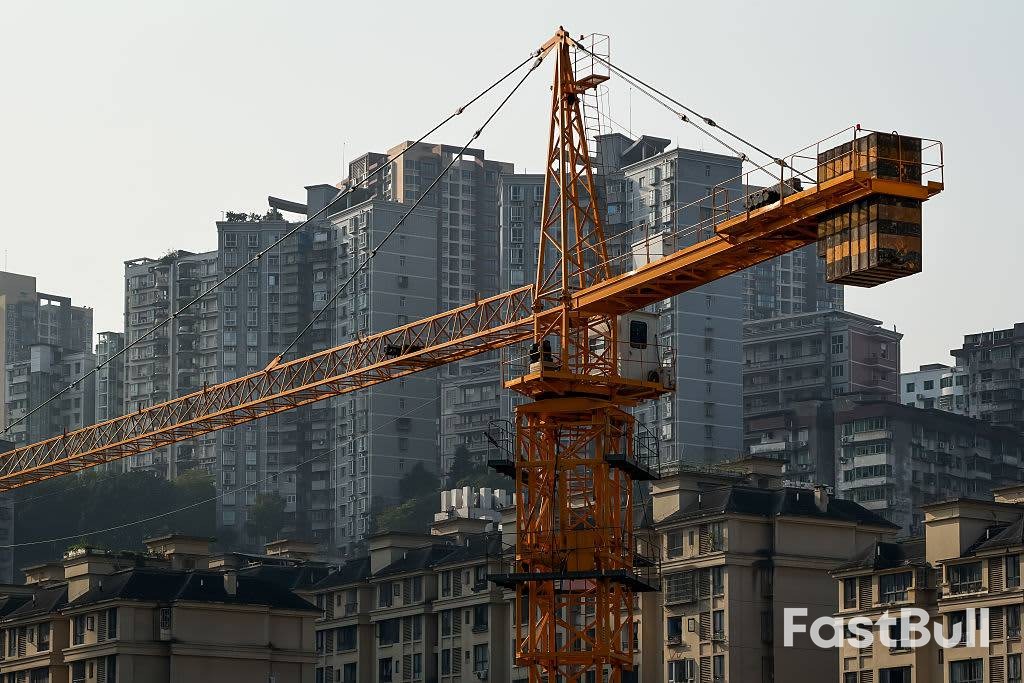
China's strategic pivot to high-tech industries is failing to compensate for its deep-rooted property crisis, leaving the economy increasingly vulnerable to global trade disputes, according to a new report from research firm Rhodium Group.
The analysis highlights a fundamental imbalance in the country's economic strategy. While Beijing is channeling state investment and favorable policies into advanced technologies like artificial intelligence, robotics, and electric cars, the growth from these sectors is being swamped by the decline in real estate.

According to the Rhodium Group report, which analyzed official Chinese data, the math is stark. From 2023 to 2025, new industries contributed just 0.8 percentage points to economic output. Over the same period, the property sector and other traditional industries saw a combined decline of 6 percentage points.
This gap presents a serious challenge to Beijing's goal of achieving annual GDP growth around 5%. Logan Wright, a partner at Rhodium and co-author of the report, was direct in his assessment. "China's growth strategy isn't going to work," he told CNBC. "They're not going to achieve their targeted rates of GDP growth based on the policies they have outlined so far."
To sustain a 5% growth pace, Rhodium estimates that new industries would need to expand their investment sevenfold over the next five years. This translates to a staggering 2.8 trillion yuan in additional investment needed this year alone—a 120% increase over 2025 levels. Analysts believe that while some sectors like AI might see a boost, others are unlikely to maintain such explosive growth.
"Electric vehicles have likely already reached their fastest rates of growth, and output in the industry may be slowing in the years ahead," the report noted.
While Beijing prioritizes tech development, its response to the multi-year real estate slump has been less aggressive. The property sector once accounted for over a quarter of China's economy, but its decline continues to deepen. According to the China Real Estate Information Corp., new home sales by floor area last year dropped to levels not seen since 2009.
Global investment firm KKR echoed these concerns in its macro outlook, estimating that property weakness will shave 1.2 percentage points off China's GDP growth this year. Even with a projected 2.6 percentage point contribution from digital technologies, KKR’s forecast puts overall growth at 4.6%, below the government's likely target.
"Despite a potential 5% growth target for 2026, headwinds from real estate and a weak job market cast doubt on achievability," the KKR report stated. While the property drag might halve in 2027, the firm sees limited upside from digital industries or consumer demand to fill the gap.
This intense focus on technology comes with significant economic side effects that extend beyond GDP figures.
A Looming Jobs Deficit
The new high-tech sectors, while offering higher wages, employ far fewer people than the traditional industries they are meant to replace. The Rhodium analysis pointed out this critical jobs mismatch.
Furthermore, increased factory automation could have a devastating impact. KKR projects that automation, combined with China’s already dominant 30% share of global manufacturing, could eliminate up to 100 million jobs over the next decade. This level of displacement would surpass the entire workforce of most developed nations.
These pressures compound an already difficult employment situation. China's urban unemployment rate hovered above 5% for much of last year, with youth unemployment running approximately three times higher.
Growing Reliance on Exports
With domestic demand and investment unable to absorb the country's industrial output, China is set to become increasingly reliant on selling its goods abroad.
"Beijing will become even more dependent upon gaining market share in export markets," the Rhodium report concluded. "China will remain even more reliant upon exports in the future, leaving the economy vulnerable to new trade restrictions."
This trend is already sparking international backlash. As a wave of lower-priced Chinese goods, particularly electric vehicles, flows into global markets, trading partners are pushing back. The European Union and Mexico have already joined the United States in raising tariffs on imports from China, signaling growing friction ahead.
White Label
Data API
Web Plug-ins
Poster Maker
Affiliate Program
The risk of loss in trading financial instruments such as stocks, FX, commodities, futures, bonds, ETFs and crypto can be substantial. You may sustain a total loss of the funds that you deposit with your broker. Therefore, you should carefully consider whether such trading is suitable for you in light of your circumstances and financial resources.
No decision to invest should be made without thoroughly conducting due diligence by yourself or consulting with your financial advisors. Our web content might not suit you since we don't know your financial conditions and investment needs. Our financial information might have latency or contain inaccuracy, so you should be fully responsible for any of your trading and investment decisions. The company will not be responsible for your capital loss.
Without getting permission from the website, you are not allowed to copy the website's graphics, texts, or trademarks. Intellectual property rights in the content or data incorporated into this website belong to its providers and exchange merchants.
Not Logged In
Log in to access more features

FastBull Membership
Not yet
Purchase
Log In
Sign Up