Markets
News
Analysis
User
24/7
Economic Calendar
Education
Data
- Names
- Latest
- Prev


Signal Accounts for Members
All Signal Accounts
All Contests


U.S. Dallas Fed New Orders Index (Jan)A:--
F: --
P: --
U.S. 2-Year Note Auction Avg. YieldA:--
F: --
P: --
U.K. BRC Shop Price Index YoY (Jan)A:--
F: --
P: --
China, Mainland Industrial Profit YoY (YTD) (Dec)A:--
F: --
P: --
Germany 2-Year Schatz Auction Avg. YieldA:--
F: --
P: --
Mexico Trade Balance (Dec)A:--
F: --
P: --
U.S. Weekly Redbook Index YoYA:--
F: --
P: --
U.S. S&P/CS 20-City Home Price Index YoY (Not SA) (Nov)A:--
F: --
P: --
U.S. S&P/CS 20-City Home Price Index MoM (SA) (Nov)A:--
F: --
U.S. FHFA House Price Index MoM (Nov)A:--
F: --
P: --
U.S. FHFA House Price Index (Nov)A:--
F: --
P: --
U.S. FHFA House Price Index YoY (Nov)A:--
F: --
U.S. S&P/CS 10-City Home Price Index YoY (Nov)A:--
F: --
P: --
U.S. S&P/CS 10-City Home Price Index MoM (Not SA) (Nov)A:--
F: --
P: --
U.S. S&P/CS 20-City Home Price Index (Not SA) (Nov)A:--
F: --
P: --
U.S. S&P/CS 20-City Home Price Index MoM (Not SA) (Nov)A:--
F: --
P: --
U.S. Richmond Fed Manufacturing Composite Index (Jan)A:--
F: --
P: --
U.S. Conference Board Present Situation Index (Jan)A:--
F: --
P: --
U.S. Conference Board Consumer Expectations Index (Jan)A:--
F: --
P: --
U.S. Richmond Fed Manufacturing Shipments Index (Jan)A:--
F: --
P: --
U.S. Richmond Fed Services Revenue Index (Jan)A:--
F: --
P: --
U.S. Conference Board Consumer Confidence Index (Jan)A:--
F: --
U.S. 5-Year Note Auction Avg. YieldA:--
F: --
P: --
U.S. API Weekly Refined Oil StocksA:--
F: --
P: --
U.S. API Weekly Crude Oil StocksA:--
F: --
P: --
U.S. API Weekly Gasoline StocksA:--
F: --
P: --
U.S. API Weekly Cushing Crude Oil StocksA:--
F: --
P: --
Australia RBA Trimmed Mean CPI YoY (Q4)A:--
F: --
P: --
Australia CPI YoY (Q4)A:--
F: --
P: --
Australia CPI QoQ (Q4)A:--
F: --
P: --
Germany GfK Consumer Confidence Index (SA) (Feb)--
F: --
P: --
Germany 10-Year Bund Auction Avg. Yield--
F: --
P: --
India Industrial Production Index YoY (Dec)--
F: --
P: --
India Manufacturing Output MoM (Dec)--
F: --
P: --
U.S. MBA Mortgage Application Activity Index WoW--
F: --
P: --
Canada Overnight Target Rate--
F: --
P: --
BOC Monetary Policy Report
U.S. EIA Weekly Crude Stocks Change--
F: --
P: --
U.S. EIA Weekly Cushing, Oklahoma Crude Oil Stocks Change--
F: --
P: --
U.S. EIA Weekly Crude Demand Projected by Production--
F: --
P: --
U.S. EIA Weekly Crude Oil Imports Changes--
F: --
P: --
U.S. EIA Weekly Heating Oil Stock Changes--
F: --
P: --
U.S. EIA Weekly Gasoline Stocks Change--
F: --
P: --
BOC Press Conference
Russia PPI MoM (Dec)--
F: --
P: --
Russia PPI YoY (Dec)--
F: --
P: --
U.S. Target Federal Funds Rate Lower Limit (Overnight Reverse Repo Rate)--
F: --
P: --
U.S. Interest Rate On Reserve Balances--
F: --
P: --
U.S. Federal Funds Rate Target--
F: --
P: --
U.S. Target Federal Funds Rate Upper Limit (Excess Reserves Ratio)--
F: --
P: --
FOMC Statement
FOMC Press Conference
Brazil Selic Interest Rate--
F: --
P: --
Australia Import Price Index YoY (Q4)--
F: --
P: --
Japan Household Consumer Confidence Index (Jan)--
F: --
P: --
Turkey Economic Sentiment Indicator (Jan)--
F: --
P: --
Euro Zone M3 Money Supply (SA) (Dec)--
F: --
P: --
Euro Zone Private Sector Credit YoY (Dec)--
F: --
P: --
Euro Zone M3 Money Supply YoY (Dec)--
F: --
P: --
Euro Zone 3-Month M3 Money Supply YoY (Dec)--
F: --
P: --
South Africa PPI YoY (Dec)--
F: --
P: --


No matching data
Latest Views
Latest Views
Trending Topics
Top Columnists
Latest Update
White Label
Data API
Web Plug-ins
Affiliate Program
View All

No data
Is short-term gold trading an art of intuition or a rigorous science? In this episode, we sit down with Lewis, lead writer at Forexify and a specialist in algorithmic strategy portfolios. As a top prize winner at the Taiwan Futures Exchange, Lewis breaks down his winning roadmap for this 18-day sprint.

The Trump administration is escalating its retreat from global climate cooperation, announcing plans to withdraw the United States from 66 international organizations, including the primary UN and scientific bodies dedicated to climate action.
This move targets the Intergovernmental Panel on Climate Change (IPCC) and the UN Framework Convention on Climate Change (UNFCCC), a decision expected to weaken America's influence on global emissions policy and diminish the international standing of these institutions.
The withdrawal aligns with the administration's domestic agenda of removing regulations on pollution and fossil fuels. It follows the January 2025 decision to begin the year-long process of exiting the 2015 Paris Agreement, mirroring a similar action taken during Trump's first term.
Secretary of State Marco Rubio said the administration is leaving organizations considered "redundant in their scope, mismanaged, unnecessary, wasteful, poorly run" and those promoting agendas contrary to US interests.
This policy is part of a broader effort to reverse measures tackling what President Trump has called a "hoax" and "the greatest con job." During his second term, the administration has already:
• Scrapped clean energy and electric vehicle funding programs from the Biden era.
• Halted renewable energy projects.
• Frozen or canceled research grants.
• Limited public access to some climate-related data.
Advocates for the withdrawal argue it frees the U.S. from policies aimed at eliminating fossil fuels, which they claim drive up energy costs. "His action is a clear signal that our country won't be part of global efforts to tell people how to live their lives and how to produce and use energy," said Daren Bakst, director of the Competitive Enterprise Institute's Center for Energy and Environment.
Critics warn that the decision will have far-reaching negative consequences. "The move to retreat from the effort to reduce pollution and climate disasters will hurt the American people and businesses," said Amanda Leland, executive director of the Environmental Defense Fund. "It will turn over leadership to other countries, and the US will get no say in these critical decisions."
By leaving the UNFCCC, the U.S. formally exits the institution that coordinates global emissions targets and the annual COP climate summits. The absence of U.S. officials was already noted at last year's talks in Brazil.
Li Shuo, director of the China Climate Hub at the Asia Society Policy Institute, called the U.S. withdrawal "the most serious challenge to international climate efforts since the adoption of the Paris Agreement," adding, "For China, the move means one less competitor in the clean technology race."
Rejoining a Complex Legal Question
Exiting the UNFCCC could make it significantly harder for a future administration to re-engage in global climate diplomacy. When President Biden re-entered the Paris Agreement in 2021, he did so immediately upon taking office.
Conservatives argue that once the U.S. leaves the UNFCCC, any attempt to rejoin would require a new Senate vote with a two-thirds supermajority. However, some legal experts believe a future president could simply re-accede to the convention without Senate approval.
The departure from the IPCC is seen as a major blow to climate science. Established in 1998 by the UN and the World Meteorological Organization, the IPCC is the world's leading authority on humanity's role in climate change and has historically relied on U.S. funding and scientific expertise.
"In leaving the IPCC, the US will no longer be able to help guide the scientific assessments that governments around the world rely on," noted Delta Merner of the Union of Concerned Scientists, though she added that individual American scientists might still contribute.
U.S. participation in the next major IPCC assessment, scheduled for 2029, was already uncertain due to mass firings at federal climate agencies and restrictions on experts attending preparatory meetings.
"The implications are substantial," said Benjamin Horton, dean at City University of Hong Kong. "The US has traditionally contributed expertise, leadership in assessment chapters, and critical Earth-system monitoring data. I am unsure how the IPCC can continue without the US."
The Saudi-led coalition in Yemen said Aidarous al-Zubaidi, the head of a group of southern separatists backed by the United Arab Emirates, fled Yemen by boat before boarding an aircraft to Mogadishu that landed at a military airport in Abu Dhabi.
The drama escalates a row between Saudi Arabia and the United Arab Emirates, the most powerful countries in the oil-rich Gulf. Zubaidi had failed to show up in Riyadh for crisis talks over turmoil in southern Yemen on Wednesday.
The Saudi claim that the UAE helped him escape raises the stakes in a crisis that erupted last month when the separatists swept through southern Yemen and reached the border with Saudi Arabia.
The fast-moving developments caused a rift between Saudi Arabia and the United Arab Emirates, fracturing a coalition headed by Yemen's internationally recognised government which is battling the Iran-backed Houthis.
In a statement on Thursday, the coalition said Zubaidi and others accompanying him on the plane to Mogadishu from Somaliland were under the supervision of UAE officers and waited an hour before flying to a military airport in Abu Dhabi.
The coalition did not clearly say if Zubaidi was still aboard en route to Abu Dhabi.
If his presence in the UAE capital is confirmed, it could anger the Saudis, who pressured the UAE to rein in the separatists after their advance through south Yemen.
There was no immediate comment from the UAE or the Southern Transitional Council that Zubaidi heads.
The plane from Mogadishu turned off its identification system over the Gulf of Oman, before turning it back on 10 minutes prior to arrival at (Al Reef) military airport in Abu Dhabi, the coalition said.
The coalition statement also mentioned by name the UAE officer whose help Zubaidi had sought.
A day earlier, the coalition said Zubaidi had failed to board the flight to Riyadh for talks and his fate was unclear, clouding efforts to contain last month's military escalation.
After al-Zubaidi's unexplained absence from the Riyadh talks, his group said he was overseeing military and security operations in the southern port city of Aden.
The aircraft was of a type similar to those frequently used in conflict zones on the routes of countries such as Ethiopia, Libya and Somalia, the coalition added.
Saudi Arabia and the UAE first intervened in Yemen after the Houthis seized the Yemeni capital of Sanaa in 2014.
The UAE joined the Saudi-backed coalition the following year in support of the internationally recognised government.
The STC was set up in 2017 with UAE backing and eventually joined the government coalition, which controls southern and eastern Yemen.
The value of the Philippine central bank's gold holdings surged almost 70% last year to a record high as the metal jumped.
Gold holdings rose to an all-time high of $18.6 billion at end-2025, according to central bank data released late Wednesday. They accounted for about 17% of its foreign-exchange reserves - a ratio officials had said exceed the ideal.
The rise in the central bank's gold holdings reflects the surge in the metal, which jumped more than 60% last year. Bangko Sentral ng Pilipinas does not report the volume of its gold holdings.
Ideally, the precious metal should be anywhere between 8%-12% of the total reserves, Monetary Board member Benjamin Diokno said in October.
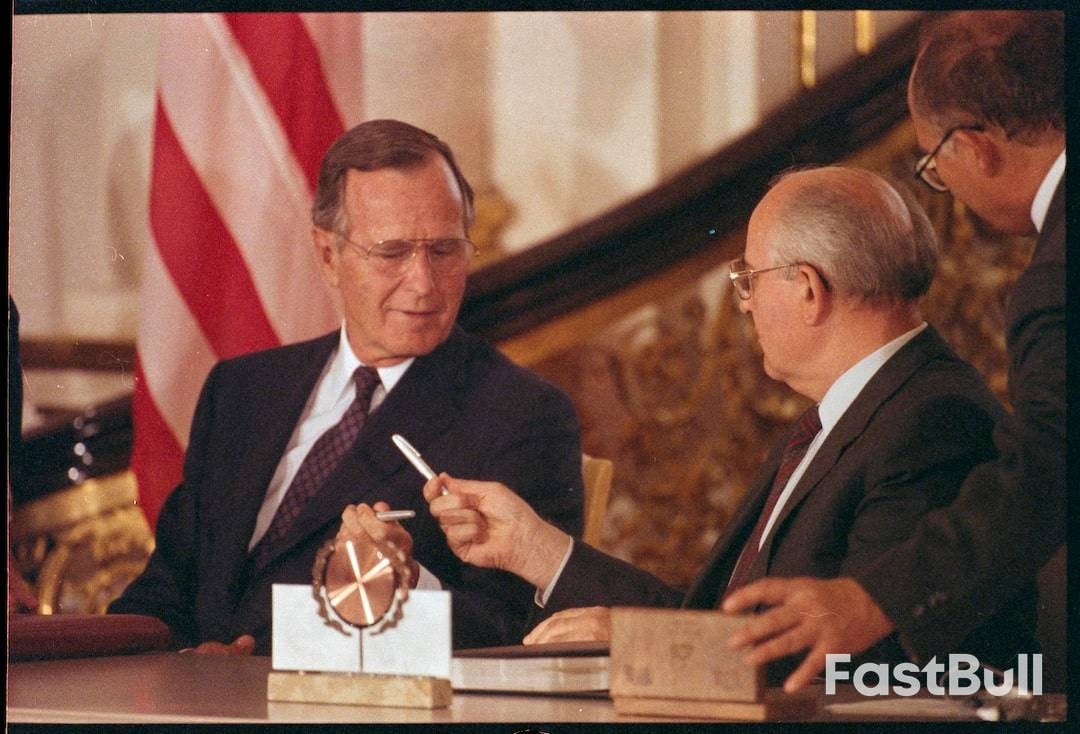
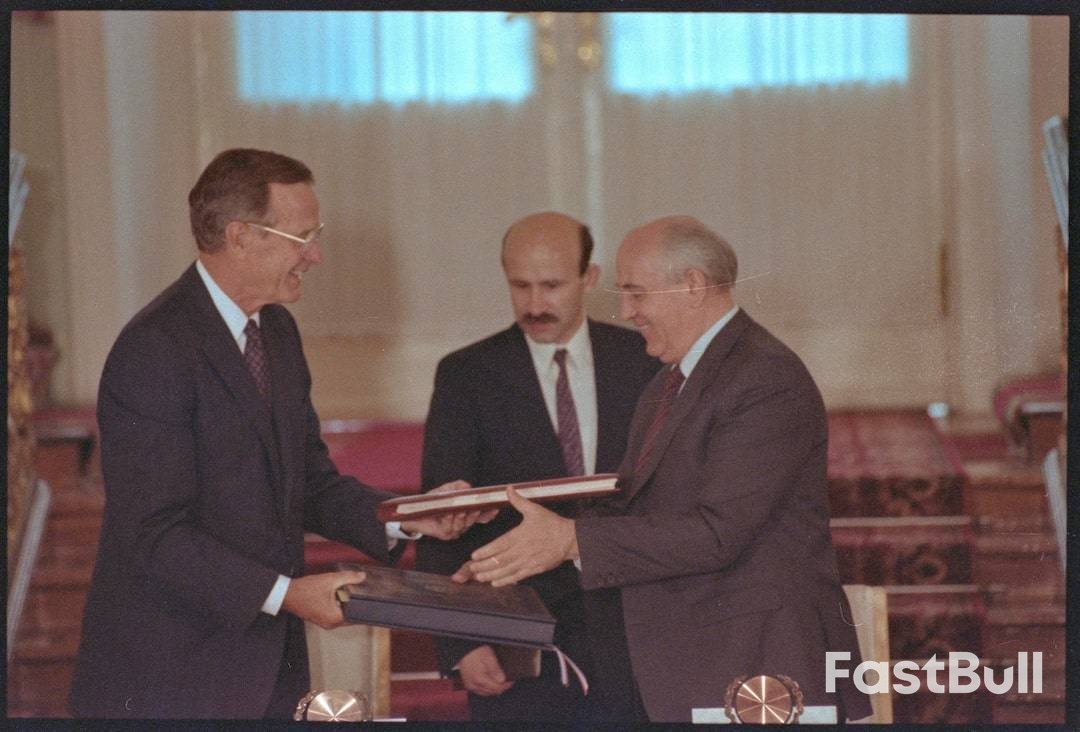
The last major nuclear arms control treaty between the United States and Russia is set to expire on February 5, pushing the world into a new era of strategic uncertainty. For decades, even during the Cold War, Washington and Moscow consistently negotiated agreements to limit their nuclear arsenals, creating a stable and predictable framework.
Now, with the New START treaty weeks from its end date, no successor agreement is in sight. Talks have been sidelined as both nations focus on the war in Ukraine, leaving the future of global arms control in question.

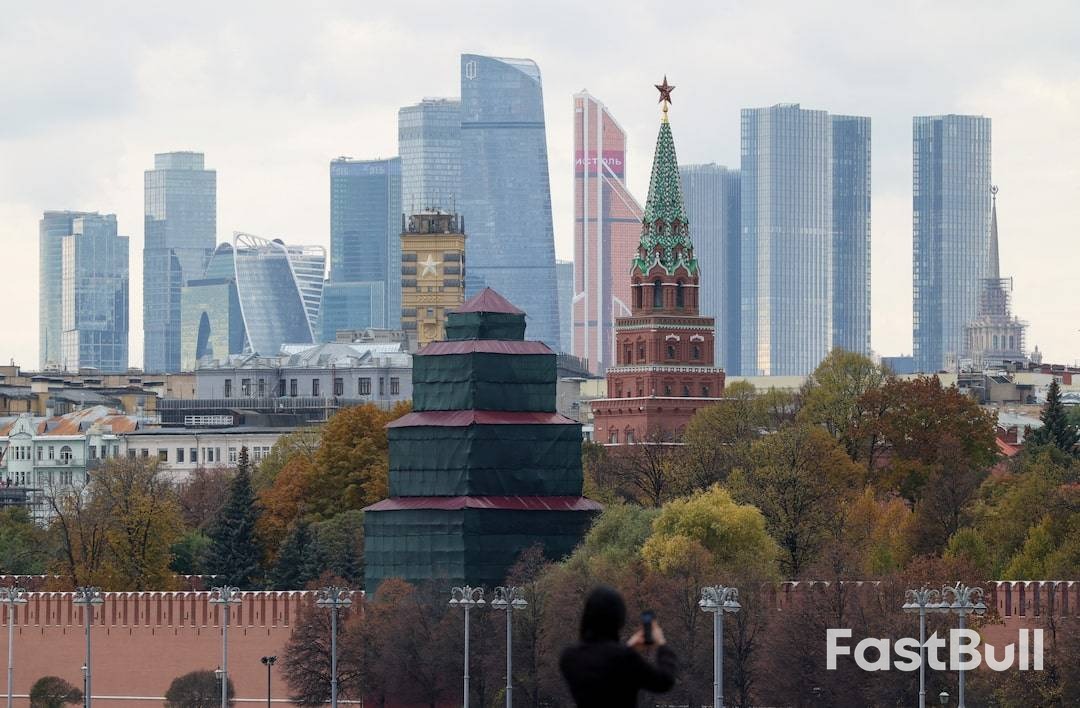
In September, Russian President Vladimir Putin proposed a straightforward one-year extension of the New START limits. This would keep the number of deployed nuclear warheads capped at 1,550 for each side. However, U.S. President Donald Trump has not yet issued a formal response, and security analysts are divided on the proposal.
Accepting the offer has clear benefits. It would buy valuable time to negotiate a more comprehensive follow-up treaty and signal a mutual desire to preserve a foundation for arms control.
However, there are significant drawbacks. An extension would allow Russia to continue developing advanced weapons systems that fall outside the scope of New START, such as the Burevestnik cruise missile and the Poseidon torpedo. Furthermore, former U.S. defence planner Greg Weaver noted that Russia has refused mutual inspections since 2023, making it impossible for Washington to verify Moscow's compliance with the treaty's terms.

A major concern for Washington is how an extension would be perceived by China. According to Weaver, agreeing to Putin's proposal would signal to Beijing that the U.S. will not expand its strategic nuclear forces, even as China rapidly grows its own arsenal. This could undermine any future effort to bring China to the negotiating table.
The numbers highlight the shifting landscape:
• Russia and the U.S. hold the vast majority of the world's nuclear warheads, with estimated total inventories of 5,459 and 5,177, respectively, accounting for nearly 87% of the global total.
• China is quickly expanding its program, with an estimated 600 warheads currently. The Pentagon projects this number will exceed 1,000 by 2030.
While Trump has expressed a desire for "denuclearisation" talks involving both Russia and China, Beijing has rejected the idea as "unreasonable and unrealistic," citing the massive disparity in arsenal size. Adding another layer of complexity, Russia insists that the nuclear forces of NATO members Britain and France be included in any future negotiations—a condition both countries reject.
Given the complex geopolitical environment, forging a new multilateral nuclear treaty is "almost a dead end," according to Nikolai Sokov, a former Soviet and Russian arms negotiator. He believes such an effort would "take forever."
Sokov, now a senior fellow at the Vienna Center for Disarmament and Non-Proliferation, suggests two alternative paths. One would be for Russia and the U.S. to negotiate a direct successor to New START that includes flexible warhead limits to account for China's military buildup.
However, a faster and more practical approach would be to focus on immediate risk reduction. Currently, only Russia and the U.S. maintain a 24/7 crisis hotline. "No European capital, not even the NATO headquarters, can actually communicate with Moscow. There is no dedicated line," Sokov explained.
He argues that establishing confidence-building measures and practical tools to prevent an accidental nuclear exchange should be the top priority. "If parties at the same time also begin negotiations on arms control, that would be great," he said. "But you need to understand that the next treaty will be very, very complex... It will take time. So the number one priority is risk reduction and confidence building."

White Label
Data API
Web Plug-ins
Poster Maker
Affiliate Program
The risk of loss in trading financial instruments such as stocks, FX, commodities, futures, bonds, ETFs and crypto can be substantial. You may sustain a total loss of the funds that you deposit with your broker. Therefore, you should carefully consider whether such trading is suitable for you in light of your circumstances and financial resources.
No decision to invest should be made without thoroughly conducting due diligence by yourself or consulting with your financial advisors. Our web content might not suit you since we don't know your financial conditions and investment needs. Our financial information might have latency or contain inaccuracy, so you should be fully responsible for any of your trading and investment decisions. The company will not be responsible for your capital loss.
Without getting permission from the website, you are not allowed to copy the website's graphics, texts, or trademarks. Intellectual property rights in the content or data incorporated into this website belong to its providers and exchange merchants.
Not Logged In
Log in to access more features
Log In
Sign Up