
Markets
News
Analysis
User
24/7
Economic Calendar
Education
Data
- Names
- Latest
- Prev


Signal Accounts for Members
All Signal Accounts
All Contests


RBA Rate Statement
RBA Press Conference
Germany Exports MoM (SA) (Oct)A:--
F: --
P: --
U.S. NFIB Small Business Optimism Index (SA) (Nov)A:--
F: --
P: --
Mexico 12-Month Inflation (CPI) (Nov)A:--
F: --
P: --
Mexico Core CPI YoY (Nov)A:--
F: --
P: --
Mexico PPI YoY (Nov)A:--
F: --
P: --
U.S. Weekly Redbook Index YoYA:--
F: --
P: --
U.S. JOLTS Job Openings (SA) (Oct)A:--
F: --
P: --
China, Mainland M1 Money Supply YoY (Nov)--
F: --
P: --
China, Mainland M0 Money Supply YoY (Nov)--
F: --
P: --
China, Mainland M2 Money Supply YoY (Nov)--
F: --
P: --
U.S. EIA Short-Term Crude Production Forecast For The Year (Dec)A:--
F: --
P: --
U.S. EIA Natural Gas Production Forecast For The Next Year (Dec)A:--
F: --
P: --
U.S. EIA Short-Term Crude Production Forecast For The Next Year (Dec)A:--
F: --
P: --
EIA Monthly Short-Term Energy Outlook
U.S. 10-Year Note Auction Avg. YieldA:--
F: --
P: --
U.S. API Weekly Gasoline StocksA:--
F: --
P: --
U.S. API Weekly Cushing Crude Oil StocksA:--
F: --
P: --
U.S. API Weekly Crude Oil StocksA:--
F: --
P: --
U.S. API Weekly Refined Oil StocksA:--
F: --
P: --
South Korea Unemployment Rate (SA) (Nov)A:--
F: --
P: --
Japan Reuters Tankan Non-Manufacturers Index (Dec)A:--
F: --
P: --
Japan Reuters Tankan Manufacturers Index (Dec)A:--
F: --
P: --
Japan PPI MoM (Nov)A:--
F: --
P: --
Japan Domestic Enterprise Commodity Price Index MoM (Nov)A:--
F: --
P: --
Japan Domestic Enterprise Commodity Price Index YoY (Nov)A:--
F: --
P: --
China, Mainland CPI YoY (Nov)A:--
F: --
P: --
China, Mainland PPI YoY (Nov)A:--
F: --
P: --
China, Mainland CPI MoM (Nov)A:--
F: --
P: --
Indonesia Retail Sales YoY (Oct)A:--
F: --
P: --
Italy Industrial Output YoY (SA) (Oct)--
F: --
P: --
Italy 12-Month BOT Auction Avg. Yield--
F: --
P: --
BOE Gov Bailey Speaks
ECB President Lagarde Speaks
South Africa Retail Sales YoY (Oct)--
F: --
P: --
Brazil IPCA Inflation Index YoY (Nov)--
F: --
P: --
Brazil CPI YoY (Nov)--
F: --
P: --
U.S. MBA Mortgage Application Activity Index WoW--
F: --
P: --
U.S. Labor Cost Index QoQ (Q3)--
F: --
P: --
Canada Overnight Target Rate--
F: --
P: --
BOC Monetary Policy Report
U.S. EIA Weekly Gasoline Stocks Change--
F: --
P: --
U.S. EIA Weekly Crude Demand Projected by Production--
F: --
P: --
U.S. EIA Weekly Cushing, Oklahoma Crude Oil Stocks Change--
F: --
P: --
U.S. EIA Weekly Crude Stocks Change--
F: --
P: --
U.S. EIA Weekly Crude Oil Imports Changes--
F: --
P: --
U.S. EIA Weekly Heating Oil Stock Changes--
F: --
P: --
U.S. Federal Funds Rate Projections-Longer Run (Q4)--
F: --
P: --
U.S. Federal Funds Rate Projections-1st Year (Q4)--
F: --
P: --
U.S. Federal Funds Rate Projections-2nd Year (Q4)--
F: --
P: --
U.S. Target Federal Funds Rate Lower Limit (Overnight Reverse Repo Rate)--
F: --
P: --
U.S. Budget Balance (Nov)--
F: --
P: --
U.S. Target Federal Funds Rate Upper Limit (Excess Reserves Ratio)--
F: --
P: --
U.S. Interest Rate On Reserve Balances--
F: --
P: --
U.S. Federal Funds Rate Projections-Current (Q4)--
F: --
P: --
U.S. Federal Funds Rate Target--
F: --
P: --
U.S. Federal Funds Rate Projections-3rd Year (Q4)--
F: --
P: --
FOMC Statement
FOMC Press Conference
Brazil Selic Interest Rate--
F: --
P: --


No matching data
Latest Views
Latest Views
Trending Topics
Top Columnists
Latest Update
White Label
Data API
Web Plug-ins
Affiliate Program
View All

No data
Oil prices are under further downward pressure this week, with ICE Brent falling below $62/bbl, settling at its lowest level since late October. The oil market is moving deeper into the expected oil glut.
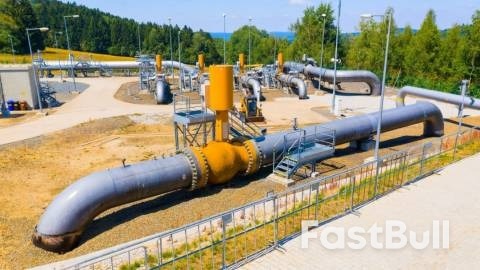
Oil prices are under further downward pressure this week, with ICE Brent falling below $62/bbl, settling at its lowest level since late October. The oil market is moving deeper into the expected oil glut. Expect additional price pressure as we move into 2026, as discussed in our recently published outlook. However, Russian oil supply remains a risk. While Russian seaborne export volumes are holding up well, these barrels are struggling to find buyers. So, we are seeing increasing volumes of Russian oil at sea. Obviously, this is not sustainable. We need to see steeper discounts on Urals to attract buyers and/or Russian buyers, ensuring they are not dealing with sanctioned entities. If these fail, we will likely have to see Russian oil output starting to fall. Our base case remains that Russia will find ways to work around the latest US sanctions. Russia has demonstrated an ability to keep oil flowing since 2022 despite sanctions, embargoes and drone attacks.
American Petroleum Institute numbers yesterday were supportive for crude, but bearish for refined products. US crude oil inventories fell by 4.8m barrels over the last week, much more than the roughly 1.3m barrels decline the market expected. Refined products saw large stock builds. Gasoline and distillate inventories rose by 7m barrels and 1m barrels, respectively. If confirmed by the Energy Information Administration (EIA) later today, this would be the largest gasoline build since late December 2024.
The EIA published its latest Short Term Energy Outlook yesterday, estimating that US crude oil production will reach a record high of 13.61m b/d in 2025. This is up slightly from a previous estimate of 13.59m b/d. Yet, the EIA expects oil production to come under pressure next year, given the low price environment and the slowdown in drilling activity. The agency forecasts output to fall to 13.53m b/d in 2026, down from a previous 13.58m b/d.
European gas prices appear to have found a floor, bouncing higher yesterday; the Tittle Transfer Facility (TTF) settled 2.3% higher. The European gas market has been under significant pressure, amid aggressive selling by speculators. This is despite EU gas storage recently falling below 72%, compared with the 5-year average of 82% for this time of year. The weakness in TTF should lead to slower LNG flows into Europe, with JKM's premium to TTF widening in recent weeks. Meanwhile, the broader weakness in Europe has seen gas prices trading down towards the long-run marginal cost for US LNG producers. If these price levels persist, they will likely raise more questions about the viability of pre-final investment decision export projects.
Silver prices rallied above $60/z -- a fresh record high -- in Tuesday's afternoon trading. This was fuelled by expectations that the Federal Reserve would cut interest rates this week and concerns over tightening supply. Historically, silver has outperformed gold during easing cycles, as lower real yields tend to lift both investor allocation and industrial activity. Silver prices are up around 110% so far this year, outpacing gold. Silver is supported by fears that the metal could be targeted in future US tariffs after being added to the Geological Survey's list of critical minerals last month. Mined silver production is down around 3% this year, with output constrained by declining ore grades and limited new project development.
Looking ahead to 2026, we expect silver prices to remain well supported by resilient industrial demand, constrained supply growth, and a more favourable macroeconomic environment.
In its latest monthly WASDE report, the USDA decreased its estimates for US corn inventories for 2025/26 to 2.03b bushels compared to earlier estimates of 2.2b bushels. This was lower than the 2.15b bushels the market expected. Higher revisions primarily drove this to export estimates. For the global market, the USDA lowered its 2025/26 corn ending stocks estimate by 2.2mt to 279.2mt due to lower production. The USDA kept its 2025/26 domestic soybean ending stocks estimates unchanged at 290m bushels, while global ending stocks were marginally higher, from 122mt to 122.4mt. Finally, the agency kept its US wheat ending stocks estimates for 2025/26 unchanged at 901m bushels. Changes to the global wheat balance were more bearish, with the USDA raising its global ending stock estimates by 271.4mt to 274.9mt due to stronger output from several producers.
Silver prices hit a record high over $60 an ounce in early trade on Wednesday, as the white metal largely outperformed gold amid signs of tightening supplies and more attractive valuations.
Expectations that the U.S. Federal Reserve will cut interest rates later in the day also buoyed metal prices.
Spot silver rose to a record high of $60.9125 an ounce, while silver futures for March hit a peak of $61.430/oz.
Silver is trading up over 100% so far in 2025, having largely outpaced gold on expectations of tighter supplies in the coming months. The metal was also designated as a critical mineral by the U.S. government, strengthening its appeal.
Silver's relatively lower prices, especially in comparison to gold, also spurred buying of the white metal, especially as a run-up in gold made bullion appear more expensive. Silver is widely considered as a safe haven alternative to gold.
Gold prices were also upbeat on Wednesday, aided by a softer dollar as investors priced in a 25 basis point cut by the Fed in its last meeting for the year. Lower rates increase the appeal of non-yielding assets such as gold and silver.
Chinese consumer inflation picked up slightly in November but still remained weak amid little economic relief, while pressure on the industrial sector saw producer inflation fall for a 38th consecutive month.
Consumer price index inflation rose 0.7% year-on-year in November, government data showed on Wednesday. The print was in line with expectations and accelerated from a 0.2% rise seen in the past month.
CPI inflation, however, still shrank 0.1% month-on-month, missing expectations for a 0.3% increase.
The mildly higher annual reading was driven by some holiday and shopping event-linked spending through November, with the "Singles day" event having taken place in the first two weeks of the month. A lower basis for comparison from last year also boosted November's reading.
Consumer sentiment took some support from Beijing's pledges to dole out more fiscal stimulus, with the recent Politburo meeting of the Communist Party reiterating this message.
But Chinese consumers still remained largely on edge over a cooling economy, especially as fears of a real estate crisis reemerged during November.
Chinese factory gate inflation continued to weaken, signaling little relief for local manufacturers. Producer price index inflation shrank 2.2% in November, more than expectations for a 2.0% drop. The print also marked a 38th consecutive month on contraction for PPI inflation.
Chinese factories were battered by weak local demand, high production levels in recent years, while trade tariff-related headwinds eroded export demand in 2025.
Bank of Japan Gov. Kazuo Ueda said on Tuesday that he is seeing "strong enough momentum" in the country's price-wage trends, which will help weather shocks to inflation.
He made the comments during "The Global Boardroom," an annual event hosted by the Financial Times. Ueda was speaking in a recorded keynote interview with the FT's chief economics commentator, Martin Wolf, during which they discussed inflation, interest rates and artificial intelligence.
When asked if Japan could sink into a deflationary environment again, Ueda said higher wages as a result of a tight labor market would support prices.
He said that while a potential slowdown in AI spending globally could be bad news for economies, "we think there's strong enough momentum in domestic price-wage dynamics" to prevent "such a negative shock from creating a large fall in the rate of inflation."
He added: "There's this significantly tight labor market domestically, which will continue to put upward pressure on wages."
Wage momentum is a key indicator Ueda has been watching this year. The governor has repeatedly said he would consider wage-hike momentum in the coming year before adjusting monetary policy.
The BOJ is gearing up to hold its last monetary policy meeting of the year, scheduled for Dec. 18 and 19.
The bond markets have increasingly priced in a December interest rate rise after Ueda cited the wage-price trend earlier this month for any decision on interest rates. Investors have pushed up long-term Japanese government bond yields. Yet, despite such speculation, the yen has remained weak against the U.S. dollar.
While Ueda refrained from talking about the yen and Japan's fiscal policy, he said that underlying inflation -- which is just below the BOJ's 2% target -- will continue to rise.
"We have been keeping policy easy," he said, adding that "because we are foreseeing a convergence to 2% of this underlying component, we've been adjusting the degree of easing slowly."
Japanese households are struggling with rising prices, especially for food. Headline inflation has exceeded the BOJ's 2% target for 43 straight months but the bank considers the rise to be led by extraordinary and volatile factors.
"We think this food price inflation is temporary, so it's going to come down fairly significantly in terms of the rate of change in prices in the first half of next year," Ueda said.
He also does not see overall inflation accelerating, even taking into account upcoming fiscal stimuli that the government is expected to implement. "At the moment, we are not seeing a tendency for aggregate demand or underlying inflation to accelerate," he said.
There is a caveat, though. "This may change if, for example, food price inflation or exchange rate weakness lasts longer than we are thinking," he added.
The BOJ chief also spoke about the U.S. and Japan weathering the impacts of U.S. President Donald Trump's tariffs, saying that American companies and Japanese automakers "swallowed the burden" without passing on the higher costs of doing business to consumers.
On the question of Japan's economic growth potential, Ueda touched on the country's declining population and said that government policies on foreign labor will have an impact.
"Apart from this, much will depend on what we will be able to do with regard to things like AI adoption and ensuring whether or not we will be able to raise productivity" to offset the labor shortage, he said.
President Donald Trump said people were "starting to learn" the benefits of his tariff regime as he sought to convince voters his administration was moving to address affordability concerns, taking to the road in hopes of countering a mounting political vulnerability.
Trump, who is resuming domestic political travel after months without holding a rally, allowed that he "got a lot of heat" over his sweeping levies on foreign imports, with political opponents seizing on the program to argue tariffs have increased consumer prices and inflation.
But on Tuesday evening, he argued that the tariffs had enabled him to provide aid to farmers and forced manufacturers to build plants and data centers in the US.
"It's amazing," Trump said of tariffs at a campaign-style rally in Mount Pocono, Pennsylvania. "It's the smart people understand it. Other people are starting to learn, but the smart people really understand it."
The president and his aides have acknowledged the need to sharpen their economic messaging, a tacit acknowledgment of how voter sentiment on the economy has become a challenge for the president. He told supporters that his chief of staff, Susie Wiles, had told him in recent days he needed to "start campaigning" again in order to prevail in the midterms.
Those new pressures were highlighted in elections last month in which Republicans suffered a number of high-profile defeats and cost of living issues figured prominently. Trump returned to power by seizing on public discontent over high prices and lack of job growth but now risks running into the same economic headwinds that vexed his predecessor, Joe Biden.
Consumer sentiment, while somewhat improved, remains near the lowest on record, data from the University of Michigan show, and people's views of their personal finances are the dimmest since 2009. Unemployment has ticked higher, and US companies shed payrolls in November by the most since early 2023, according to data from ADP Research.
Earlier: Trump Resumes Domestic Travel Hoping to Calm Inflation Worry
Trump and allies have moved to assuage those concerns in recent weeks, drafting new agricultural exemptions to his tariff agenda, providing aid for farmers and investigating the meatpacking industry. Trump has also sought to roll back fuel efficiency standards to lower the price of cars and reduce prescription drug costs.
Yet those efforts have failed to break through with voters with the president also juggling other priorities including a sweeping immigration crackdown, a push to bring an end to Russia's war in Ukraine, and pet projects such as building a new White House ballroom.
Trump has expressed anger when asked about affordability issues, accusing Democrats and the media of a "hoax" since inflation grew at a higher rate under Biden.
"That's our message: they gave you high prices, they give you the highest inflation in history, and we're bringing those prices down rapidly," Trump said in Mount Pocono.
Aides insist Trump's economic agenda has helped blunt the effects of high prices of everyday essentials, and his advisers have publicly pleaded with voters to be more patient, maintaining that their policies are working. US job openings picked up in October to the highest level in five months.
Still, Republicans face questions about rising health care costs for millions of Americans who receive subsidies under the Affordable Care Act that are set to expire at year's end. Trump has also continued to threaten new tariffs that risk exacerbating price growth.
It's also unclear if Trump's attacks on Democratic lawmakers will resonate in the same way now that his party controls the government. The president nevertheless rehashed familiar attacks against Biden over his age, while slamming Minnesota Democrats over a burgeoning fraud scandal.
The independence of central banks is essential for monetary stability, Bank of Italy Governor Fabio Panetta said on Tuesday, amid a spat between the Italian government and the European Central Bank over the country's gold reserves.
The ECB urged Rome on Monday to reconsider a proposed amendment to its 2026 budget law that would state that the Bank of Italy's gold reserves belong to "the Italian people," warning the move could jeopardise the central bank's independence.
Without mentioning specifically the issue of the gold reserves, Panetta said in a speech that monetary stability rests on "the authority of the State and the credibility of an independent central bank."
Italian Economy Minister Giancarlo Giorgetti intends to send a letter to ECB head Christine Lagarde to clarify that Rome has no plans to undermine the independence of the Bank of Italy, sources familiar with the matter told Reuters on Tuesday.
In his speech in Dublin at an event organised by Ireland's central bank, Panetta said the transformation of the international monetary system, with accelerating digitalisation and growing multipolarity, carried a number of risks.
"When structural forces move inch by inch, while technology advances in leaps and bounds, the outcome is not just linear change or fresh opportunities; it may also turn turbulent," he said.
Panetta expressed concern about the increasing use of stablecoins in cross-border payments, saying their circulation was opaque and they suffered from operational vulnerabilities.
"During the transition to a digital monetary order, their growing use could add a layer of volatility – or even instability – to an already uncertain international environment," he said.
Managing these risks will require clear rules, credible public anchors and sustained international cooperation, Panetta added.
The Bank of Italy chief also noted "the weakening of some of the dollar's traditional pillars," while China's yuan and the euro both have the potential to become more global currencies but are not currently in a position to match the greenback.
"Multipolarity could increase diversification, spreading the burden of global liquidity provision and reducing global dependence on the US policy cycle. But it could also amplify volatility and contagion risks," he warned.
Canadian travel provider Transat AT Inc. reached a tentative agreement with the Air Line Pilots Association, preventing a disruptive strike one day before it could have started.
The Montreal-based company, which operates the airline Air Transat, said in a statement Tuesday on its website that operations would return to normal. The labor deal will be submitted to more than 750 pilots for a ratification vote in the coming days, after "more than 11 months of intensive negotiations," according to ALPA.
"Our pilots have been frustrated flying under a decade-old, outdated collective agreement," Bradley Small, chair of Air Transat's ALPA master executive council, said in a statement. "We believe this new agreement meets the needs of today's profession, consistent with collective agreements other ALPA-represented pilot groups are signing with their employers."
The parties did not share details of the arrangement. Air Transat had canceled some flights to wind down operations before the possible walkout. Canceled flights will not be reinstated, according to the airline's frequently asked questions page.
White Label
Data API
Web Plug-ins
Poster Maker
Affiliate Program
The risk of loss in trading financial instruments such as stocks, FX, commodities, futures, bonds, ETFs and crypto can be substantial. You may sustain a total loss of the funds that you deposit with your broker. Therefore, you should carefully consider whether such trading is suitable for you in light of your circumstances and financial resources.
No decision to invest should be made without thoroughly conducting due diligence by yourself or consulting with your financial advisors. Our web content might not suit you since we don't know your financial conditions and investment needs. Our financial information might have latency or contain inaccuracy, so you should be fully responsible for any of your trading and investment decisions. The company will not be responsible for your capital loss.
Without getting permission from the website, you are not allowed to copy the website's graphics, texts, or trademarks. Intellectual property rights in the content or data incorporated into this website belong to its providers and exchange merchants.
Not Logged In
Log in to access more features

FastBull Membership
Not yet
Purchase
Log In
Sign Up