

Markets
News
Analysis
User
24/7
Economic Calendar
Education
Data
- Names
- Latest
- Prev



Signal Accounts for Members
All Signal Accounts
All Contests
[Airline ETFs Rise Over 2.6%, Leading US Sector ETFs; S&P Technology Sector Falls Over 1.8%] On Thursday (January 29), The Global Airline ETF Rose 2.64%, Regional Bank ETFs And Banking ETFs Rose Up To 1.84%, The Energy ETF Rose 0.92%, The Semiconductor ETF Rose 0.21%, The Internet Stock Index ETF And Consumer Discretionary ETF Fell Up To 0.48%, The Technology Sector ETF Fell 1.58%, And The Global Technology Stock Index ETF Fell 1.76%. Among The 11 Sectors Of The S&P 500, The Information Technology/technology Sector Fell 1.86%, The Consumer Discretionary Sector Fell 0.64%, The Energy Sector Rose 1.08%, The Real Estate Sector Rose 1.42%, And The Telecommunications Sector Rose 2.92%
On Thursday (January 29), Spot Silver Fell 0.61% To $116.0075 Per Ounce In Late New York Trading, Trading Between $121.6540 And $106.8954. Comex Silver Futures Rose 2.87% To $116.790 Per Ounce. Comex Copper Futures Rose 0.78% To $6.2855 Per Pound, Having Reached $6.5830 At 22:31 Beijing Time. Spot Platinum Fell 2.65%, And Spot Palladium Fell 2.34%
On Thursday (January 29), Spot Gold Rose 0.43% To $5,394.00 Per Ounce In Late New York Trading. At 14:23 Beijing Time, It Reached $5,595.47, Continuing To Set New Historical Highs. A Short-term Plunge Began At 23:00, Hitting A Daily Low Of $5,459.31 At 23:36. Comex Gold Futures Rose 1.97% To $5,408.30 Per Ounce, Having Reached $5,586.20 At 14:22
Stryker: Foreign Exchange Is Expected Slightly Positive Impact On Sales & Adj Net Eps Should Rates Hold Near Year-To-Date Levels For 2026
Bank Of Canada: Canada Government Will Participate In All Fixed-Rate Cmb Syndications Proposed For 2026
Toronto Stock Index .GSPTSE Unofficially Closes Down 159.94 Points, Or 0.48 Percent, At 33016.13
The S&P 500 Initially Closed Down 0.1%, With The Technology Sector Down 2%, Consumer Discretionary Down 0.6%, Energy Up 1.1%, And Telecoms Up 3%. The NASDAQ 100 Initially Closed Down 0.5%, With Atlassian, Microsoft, And Strategy Technology Among The Worst Performers, All Down Approximately 10%. Synopsys Fell 6%, Cadence Fell 5.7%, ASML Rose 2%, And Meta Rose 10.8%. Salesforce Initially Closed Down 6.3%, Boeing Fell 3%, And Microsoft Led The Decline Among Dow Jones Components. JPMorgan Chase Rose 1.6%, Honeywell Rose 4.9%, And IBM Rose Approximately 5%
The Nasdaq Golden Dragon China Index Closed Up 0.3% Initially. Among Popular Chinese Concept Stocks, NIO Closed Up 3.8%, Yum China Rose 1%, Tencent, New Oriental, Li Auto, Xiaomi, And Meituan Rose By More Than 0.9%, Alibaba Fell 0.7%, NetEase Fell 1.3%, WeRide Fell 4.5%, And Pony.ai Fell 7.9%. In The ETF Market, Ashr Rose 0.9%, Kweb Rose 0.5%, And Cqqq Fell 1.5%
ANZ - Roy Morgan New Zealand Consumer Confidence Index 107.2 In January From 101.5 Previous Month
USA Treasury: Thailand Added To Monitoring List Of Trading Partners Whose Currency Practices 'Merit Close Attention' Due To Its Growing Current Account Surplus And Trade Surplus With USA
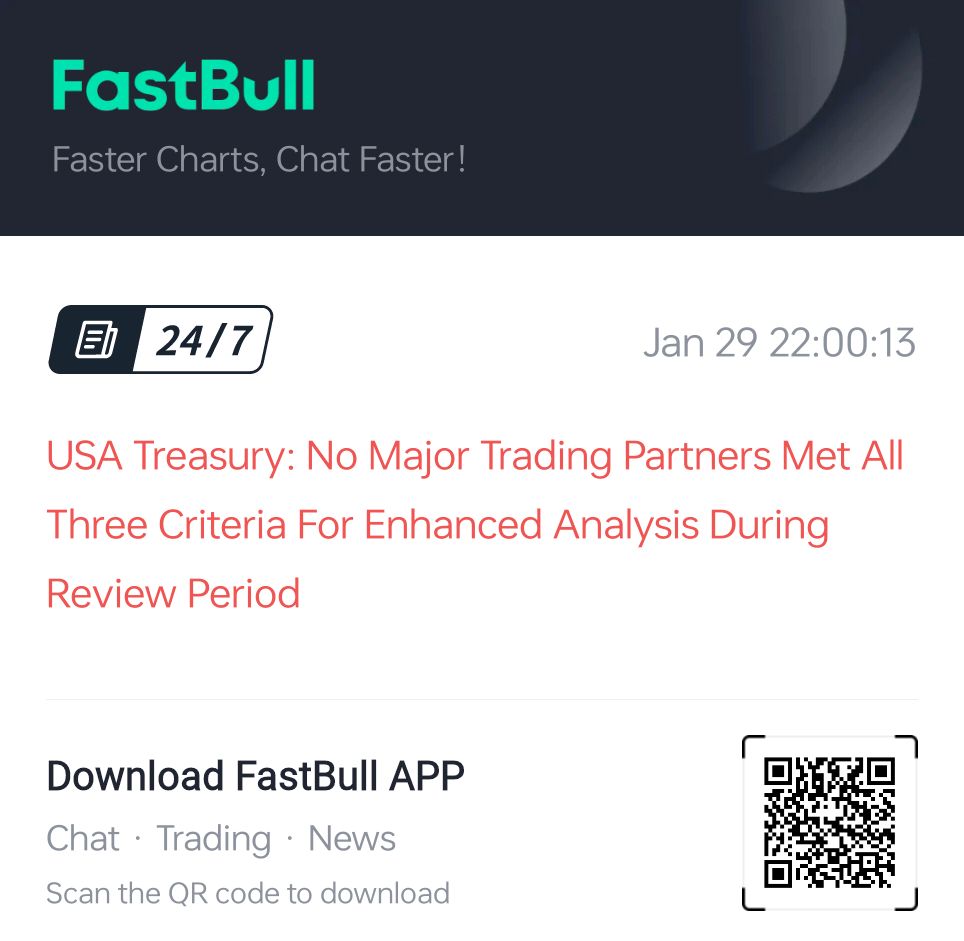
USA Treasury: No Major Trading Partners Met All Three Criteria For Enhanced Analysis During Review Period
USA Treasury: Now Monitoring More Broadly Whether Countries That Smooth Exchange Rate Movements Do So To Resist Depreciation Pressures
USA Treasury Official Says New Criteria Not Aimed At Any Specific Country On Monitoring List But Will Aid Future Analysis During A Period Of Relative Dollar Depreciation
USA Treasury: Monitoring Trading Partners' Use Of Capital Controls, Macroprudential Measures, Government Investment Vehicles To Influence Foreign Exchange Markets
On Thursday (January 29), The Bloomberg Electric Vehicle Price Return Index Fell 1.76% To 3646.11 Points In Late Trading. The Index Was Down Throughout The Day, Trading Around 3680 Points For More Than Half The Time, And Its Decline Accelerated After 10:00 PM Beijing Time
 South Africa PPI YoY (Dec)
A:--
F: --
P: --
 Euro Zone Consumer Confidence Index Final (Jan)
A:--
F: --
P: --
Euro Zone Selling Price Expectations (Jan)A:--
F: --
P: --
Euro Zone Industrial Climate Index (Jan)A:--
F: --
Euro Zone Services Sentiment Index (Jan)A:--
F: --
Euro Zone Economic Sentiment Indicator (Jan)A:--
F: --
Euro Zone Consumer Inflation Expectations (Jan)A:--
F: --
P: --
 Italy 5-Year BTP Bond Auction Avg. Yield
A:--
F: --
P: --
Italy 10-Year BTP Bond Auction Avg. YieldA:--
F: --
P: --
 France Unemployment Class-A (Dec)
A:--
F: --
P: --
South Africa Repo Rate (Jan)A:--
F: --
P: --
 Canada Average Weekly Earnings YoY (Nov)
A:--
F: --
 U.S. Nonfarm Unit Labor Cost Final (Q3)
A:--
F: --
P: --
U.S. Initial Jobless Claims 4-Week Avg. (SA)A:--
F: --
U.S. Weekly Continued Jobless Claims (SA)A:--
F: --
U.S. Trade Balance (Nov)A:--
F: --
U.S. Weekly Initial Jobless Claims (SA)A:--
F: --
Canada Trade Balance (SA) (Nov)A:--
F: --
U.S. Exports (Nov)A:--
F: --
P: --
Canada Imports (SA) (Nov)A:--
F: --
Canada Exports (SA) (Nov)A:--
F: --
U.S. Unit Labor Cost Revised MoM (SA) (Q3)A:--
F: --
U.S. Factory Orders MoM (Excl. Defense) (Nov)A:--
F: --
P: --
U.S. Factory Orders MoM (Nov)A:--
F: --
U.S. Wholesale Sales MoM (SA) (Nov)A:--
F: --
P: --
U.S. Factory Orders MoM (Excl. Transport) (Nov)A:--
F: --
U.S. Non-Defense Capital Durable Goods Orders Revised MoM (Excl. Aircraft) (SA) (Nov)A:--
F: --
U.S. EIA Weekly Natural Gas Stocks ChangeA:--
F: --
P: --
 Brazil CAGED Net Payroll Jobs (Dec)
A:--
F: --
P: --
U.S. Weekly Treasuries Held by Foreign Central BanksA:--
F: --
P: --
 South Korea Services Output MoM (Dec)
--
F: --
P: --
South Korea Industrial Output MoM (SA) (Dec)--
F: --
P: --
South Korea Retail Sales MoM (Dec)--
F: --
P: --
 Japan Tokyo CPI YoY (Excl. Food & Energy) (Jan)
--
F: --
P: --
Japan Tokyo CPI MoM (Excl. Food & Energy) (Jan)--
F: --
P: --
Japan Unemployment Rate (Dec)--
F: --
P: --
Japan Tokyo CPI YoY (Jan)--
F: --
P: --
Japan Jobs to Applicants Ratio (Dec)--
F: --
P: --
Japan Tokyo CPI MoM (Jan)--
F: --
P: --
Japan Tokyo Core CPI YoY (Jan)--
F: --
P: --
Japan Retail Sales YoY (Dec)--
F: --
Japan Industrial Inventory MoM (Dec)--
F: --
P: --
Japan Retail Sales (Dec)--
F: --
P: --
Japan Retail Sales MoM (SA) (Dec)--
F: --
Japan Large-Scale Retail Sales YoY (Dec)--
F: --
P: --
Japan Industrial Output Prelim MoM (Dec)--
F: --
P: --
Japan Industrial Output Prelim YoY (Dec)--
F: --
P: --
 Australia PPI YoY (Q4)
--
F: --
P: --
Australia PPI QoQ (Q4)--
F: --
P: --
Japan Construction Orders YoY (Dec)--
F: --
P: --
Japan New Housing Starts YoY (Dec)--
F: --
P: --
France GDP Prelim YoY (SA) (Q4)--
F: --
P: --
 Turkey Trade Balance (Dec)
--
F: --
P: --
France PPI MoM (Dec)--
F: --
P: --
 Germany Unemployment Rate (SA) (Jan)
--
F: --
P: --
Germany GDP Prelim YoY (Not SA) (Q4)--
F: --
P: --
Germany GDP Prelim QoQ (SA) (Q4)--
F: --
P: --
Germany GDP Prelim YoY (Working-day Adjusted) (Q4)--
F: --
P: --
Italy GDP Prelim YoY (SA) (Q4)--
F: --
P: --
 U.K. Mortgage Approvals (Dec)
--
F: --
P: --















No matching data

Latest Views
Latest Views
Trending Topics
Top Columnists
Latest Update
White Label
Data API
Web Plug-ins
Affiliate Program
View All
No data
The crypto industry has said a crypto market structure bill is crucial to the future of the industry in the U.S. and provides legal certainty for companies to operate.
The UK's approach to regulating stablecoins is now under review as the House of Lords Financial Services Regulation Committee initiates a formal inquiry. The committee is seeking public and expert input on the proposed regulatory frameworks drafted by the Bank of England (BoE) and the Financial Conduct Authority (FCA).
Baroness Noakes, the committee's chair, stated the goal is to determine if these proposals are "measured and proportionate" responses to the evolving stablecoin market. The inquiry will also explore the potential impact of stablecoins on traditional financial services like banking and payments, weighing the opportunities against the risks of their increasing adoption in the UK.
Industry participants, experts, and the public have until March 11 to provide written submissions. The committee is also set to hear oral evidence in a public session this Wednesday.
This parliamentary inquiry coincides with ongoing efforts by UK authorities to establish clear oversight for digital assets. The Bank of England has made developing a framework for "systemic stablecoins" a priority, aiming to finalize its approach by the end of the year.
Sasha Mills, the BoE's Executive Director for Financial Market Infrastructure, highlighted that these initiatives are crucial for shaping the future of digital finance in the UK. The central bank's proposed regime for systemic stablecoins includes several key features:
• Central Bank Access: Issuers of systemic stablecoins could hold a deposit account directly with the Bank of England.
• Liquidity Support: A potential liquidity facility would act as a backstop for stablecoin issuers.
• Backing Requirements: Stablecoins would need to be backed by a specific asset mix: 60% in short-term UK government bonds and 40% in Bank of England deposits.
• Holding Limits: To manage risk, temporary holding limits are proposed at £20,000 for individuals and £10 million for businesses.
The BoE defines "systemic stablecoins" as fiat-pegged tokens, particularly those denominated in pound sterling, that are widely used for retail or corporate payments within the UK and could pose a risk to financial stability.
Currently, popular stablecoins like USDC and USDT, which are primarily used for crypto trading, are not classified as regulated payment instruments in the UK. However, this is expected to change under the new regime, with full implementation targeted for October 2027.
The UK's regulatory efforts are developing against a backdrop of starkly different international approaches to stablecoins.
The US Approach: Legislating Guardrails
In the United States, the GENIUS Act, signed in 2025, provides a clear regulatory path. The law mandates that stablecoins must be backed one-for-one by US dollars or equivalent high-quality liquid assets, such as short-term Treasury bills. Issuers are also subject to US banking and anti-money-laundering regulations. Regulators are expected to release detailed implementation rules under the CLARITY Act by mid-2026.
China's Stance: A Complete Prohibition
In contrast, mainland China maintains a strict ban on all cryptocurrency-related activities. In December, Chinese authorities reiterated that any business involving virtual currencies, including stablecoins, is considered an illegal financial operation. The government views them as a risk to monetary sovereignty, citing concerns about money laundering and uncontrolled cross-border capital flows. Instead of allowing private stablecoins, China is focusing its financial innovation efforts on its central bank digital currency, the digital yuan (e-CNY).
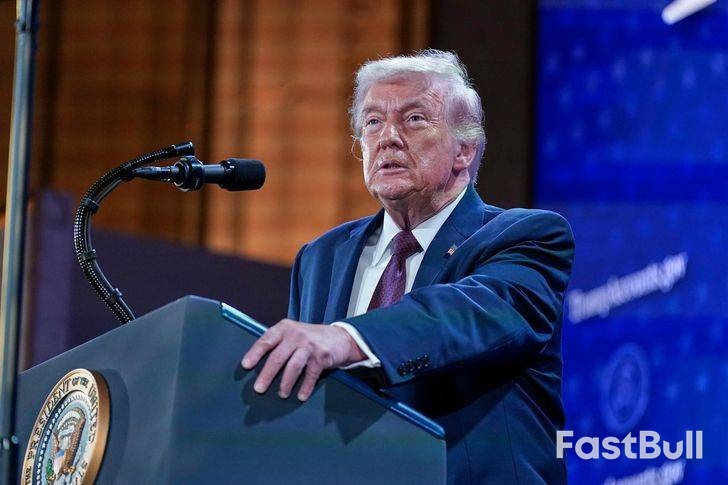
President Donald Trump announced on Thursday that the U.S. will reopen all commercial airspace over Venezuela, clearing the way for American citizens to travel to the country. The president said he informed Venezuela's acting President Delcy Rodríguez of the decision.
Trump stated he directed Transportation Secretary Sean Duffy and military officials to implement the change by the end of the day. "American citizens will be very shortly able to go to Venezuela, and they'll be safe there," he added.
As of the announcement, the Venezuelan government had not issued a public comment.
This move follows earlier signals that the U.S. is exploring a restoration of relations with the South American nation. Earlier this week, the Trump administration notified Congress of its first steps toward possibly reopening the U.S. Embassy in Venezuela, which was shuttered after diplomatic relations collapsed in 2019. The move comes after a U.S. military raid that ousted then-President Nicolás Maduro.
In letters to 10 congressional committees, the State Department detailed its plan to send a growing number of temporary staff to perform "select" diplomatic functions. "We are writing to notify the committee of the Department of State's intent to implement a phased approach to potentially resume Embassy Caracas operations," the department stated.
Despite the president's announcement encouraging travel, the State Department's official advisory for Venezuela remains at its highest level: "Do not travel." The department has not yet responded to inquiries about whether this warning will be updated.
The current advisory cautions that Americans face a high risk of wrongful detention, torture, kidnapping, and other dangers. When diplomatic ties broke down in 2019, the State Department strongly warned U.S. citizens against traveling to Venezuela.
The decision to reopen the airspace reverses a policy implemented in November. As part of a pressure campaign against the Maduro government, Trump declared that the airspace "above and surrounding" Venezuela was to be considered "closed in its entirety."
Following that declaration, the U.S. Federal Aviation Administration (FAA) issued a warning to pilots about heightened military activity in the region. In response, international airlines began canceling their flights to Venezuela.
Responding quickly to the news, American Airlines announced on Thursday its intent to reinstate nonstop service from the U.S. to Venezuela in the coming months. The carrier was the last U.S. airline flying to the country before it suspended service in March 2019.
"We have a more than 30-year history connecting Venezolanos to the U.S., and we are ready to renew that incredible relationship," said Nat Pieper, American's chief commercial officer. "By restarting service to Venezuela, American will offer customers the opportunity to reunite with families and create new business and commerce with the United States."
The airline stated that it will share more details about its return to service as it works with federal authorities to complete security assessments and obtain the necessary permissions.
Venezuela is advancing a revised oil reform bill designed to slash fiscal burdens on energy companies, a strategic move aimed at attracting private capital back to its crippled oil industry. A new draft, set for discussion and a potential final vote this week, grants officials significant flexibility to adjust taxes and royalties.
The government's proposal comes as it navigates intense pressure from Washington and seeks to reopen its energy sector to foreign oil firms.
The draft legislation introduces major changes to how Venezuela taxes oil production, moving away from a rigid system to a more adaptive framework.
Key fiscal adjustments in the bill include:
• A New Hydrocarbons Tax: The existing extraction tax would be replaced by an "integral" hydrocarbons tax of up to 15% on gross production, with no deductions permitted.
• Flexible Royalty Rates: Royalties would be capped at 30% but are no longer fixed by law. This change empowers the Oil Ministry to modify the rates based on a project's specific economic conditions, capital intensity, and development phase.
• Potential Income Tax Cuts: The bill proposes allowing the ministry to lower the hydrocarbons income tax rate to ensure projects remain profitable. However, some legal experts note this could conflict with constitutional limits on tax authority.
Venezuela's Oil Ministry did not immediately respond to requests for comment on the bill's details.
Beyond fiscal incentives, the revised bill aims to ease legal and commercial restrictions that have previously deterred investors.
The new draft removes language that had confined dispute resolution to "independent" arbitration, potentially opening the door for more widely accepted arbitration mechanisms outside Venezuela.
Furthermore, the legislation would permit private companies to sell their share of crude oil output at market prices, provided their sales plans receive ministry approval.
The reform effort is being championed by acting President Delcy Rodríguez but faces criticism from multiple sides. Some of her political allies in Venezuela view the plan as a betrayal of nationalist principles. Meanwhile, international legal experts argue that earlier drafts failed to provide sufficient safeguards for investors.
The entire initiative is unfolding under the shadow of US sanctions. The Trump administration continues to impose oil sanctions on Venezuela, creating a high-risk environment for international firms.
Currently, Chevron Corp. is the only company with a US connection that holds a license from the Treasury Department to produce oil in the country. Many other companies are waiting for authorization to either resume their previous work or launch new upstream operations.
A first draft of the bill was approved on January 22, with a second and final vote potentially occurring as soon as Thursday.
Bitcoin experienced a sharp drop during the U.S. trading session, falling below the $84,300 mark. The downturn mirrored a broader sell-off in precious metals, with both silver and gold declining by 8% to 12%. Against this backdrop of market volatility, key statements from President Trump and Treasury Secretary Bessent offered a glimpse into the economic strategies shaping the financial landscape.
President Trump unveiled several significant economic developments, focusing on energy, domestic industry, and monetary policy.
Venezuelan Oil and U.S. Industry
A major announcement involved U.S. oil companies expanding into Venezuela, a move Trump stated would generate wealth for both nations. He also noted that diplomatic dialogues successfully prevented the closure of Venezuelan airspace.
On the domestic front, Trump highlighted the strong performance of American automotive giants Ford and GM. He also celebrated a milestone in industrial output, stating that the U.S. now produces more steel than Japan. While hinting at the possibility of future tariff increases, he emphasized that the U.S. is approaching such measures with caution.
Pressure on the Federal Reserve
Trump voiced a clear desire for lower interest rates, calling for cuts of two or three percentage points. He added that an announcement for a new Federal Reserve chair is expected soon.
This comes as the Fed maintains its pause on rate reductions for the second consecutive time, following a halt in cuts during the final quarter of last year. With no changes anticipated in upcoming meetings, market watchers are also noting that current Fed Chair Powell’s term concludes by June.
Treasury Secretary Bessent provided an optimistic counterpoint, forecasting a positive economic trajectory. He pointed to a downward trend in inflation indicators and projected that 2026 will be a pivotal year.
Bessent argued that the expected rise in Venezuelan oil production will directly benefit American consumers by lowering gasoline prices, providing a boost to the economy. He assured that the revenue from these oil sales would be directed to Venezuelan citizens.
While affirming the Federal Reserve's independence, Bessent stressed the importance of accountability in managing economic strategies. He also confirmed that the IRS has contingency plans ready in the event of any government shutdowns.
As these high-level discussions unfolded, the sharp decline in Bitcoin's price began to slow, suggesting a potential for temporary stability in a turbulent market. The intersection of cryptocurrency volatility and major U.S. economic policy shifts continues to define the key challenges and opportunities facing investors today.
Israeli Prime Minister Benjamin Netanyahu has estimated his country could withstand over 700 missile strikes from Iran. But this confidence belies a critical reality: Iran commands the largest ballistic missile stockpile in the Middle East, an arsenal that far exceeds that number and includes weapons for which there are no proven defenses.
As the United States maintains a significant naval presence off the Iranian coast, the prospect of a direct confrontation looms. While Netanyahu's tough stance may resonate publicly, it overlooks the true scale of the threat facing Israel and U.S. bases across the region.
Iran's missile arsenal is not just large; it is sophisticated and diverse. Many of its ballistic missiles have ranges exceeding 1,000 kilometers, allowing them to strike deep into Israeli territory directly from Iranian soil. This capability is enhanced by a growing inventory of advanced weaponry.
The arsenal includes:
• Hypersonic Weapons: These missiles fly at extreme speeds and on unpredictable trajectories, making them nearly impossible for current defense systems to intercept.
• Maneuverable Ballistic Missiles: Systems like the Kheibar Shekan and Fattah-1 are medium-range ballistic missiles (MRBMs) designed to evade regional air defenses on their way to a target.
This combination of sheer volume and technological sophistication presents a formidable challenge to any defensive network.
Israel protects itself with a multi-layered air defense network developed over decades, incorporating U.S.-supplied systems. This includes the well-known Iron Dome, David's Sling, and the Patriot/Arrow systems.
During the recent 12-Day War, Israeli officials acknowledged an interception rate of 80-90%. However, this success rate comes with critical caveats. First, no system is perfect, meaning a percentage of incoming threats will always get through.
More importantly, Israel’s air defense network is not fully replenished following the last conflict. This vulnerability, combined with Iran's capacity to launch a massive, coordinated attack involving missile salvos, drone swarms, and hypersonic weapons, means Israel's defenses could be overwhelmed. A successful saturation attack could shut down the Israeli economy and inflict lasting damage at a moment of critical national vulnerability.
Following the 12-Day War, Iran's Defense Minister, Brig. Gen. Aziz Nassirzadeh, issued a clear warning. He claimed that the missiles used in that conflict were older models and that Iran had since developed systems with "far greater capabilities."
Nassirzadeh emphasized that if Israel were to launch another attack, Tehran would not hesitate to unleash its newer, more advanced missiles. This rhetoric is backed by action. Reports indicate Iran has ramped up missile production since last June, upgrading guidance and lethality based on lessons learned from the recent conflict.
This is a deliberate strategy. Tehran is signaling to both Jerusalem and Washington that any future military action against Iran will trigger massive retaliation, carrying risks far greater than in previous encounters. The message is that Iran believes its arsenal is now numerous and capable enough to saturate the region's air defenses.
The strategic landscape is further complicated by the stance of neighboring Arab countries. While wary of Tehran, these nations are also concerned about Israeli military actions. They have reportedly informed the U.S. and Israel that they will neither permit their territory to be used for strikes against Iran nor participate in defending Israel from an Iranian counter-attack.
This political reality means an Israeli-American conflict with Iran would not be a short, surgical campaign. Instead, it would become a systemic stress test of Israel's national resilience and America's waning regional power. Tehran is signaling its preparedness to absorb damage while inflicting devastation on an unprecedented scale.
If Washington and Jerusalem continue to believe that precision strikes and layered defenses alone can neutralize a missile superpower, they risk a profound miscalculation. Such an assumption could lead them into a war where the costs far exceed any promised gains.
728 RM B 7/F GEE LOK IND BLDG NO 34 HUNG TO RD KWUN TONG KLN HONG KONG


White Label
Data API
Web Plug-ins
Poster Maker
Affiliate Program
The risk of loss in trading financial instruments such as stocks, FX, commodities, futures, bonds, ETFs and crypto can be substantial. You may sustain a total loss of the funds that you deposit with your broker. Therefore, you should carefully consider whether such trading is suitable for you in light of your circumstances and financial resources.
No decision to invest should be made without thoroughly conducting due diligence by yourself or consulting with your financial advisors. Our web content might not suit you since we don't know your financial conditions and investment needs. Our financial information might have latency or contain inaccuracy, so you should be fully responsible for any of your trading and investment decisions. The company will not be responsible for your capital loss.
Without getting permission from the website, you are not allowed to copy the website's graphics, texts, or trademarks. Intellectual property rights in the content or data incorporated into this website belong to its providers and exchange merchants.
Not Logged In
Log in to access more features


Log In
Sign Up


