• Trade
  • Markets
  • Copy
  • Contests
  • News
  • 24/7
  • Calendar
  • Q&A
  • Chats
Trending
Screeners
SYMBOL
LAST
BID
ASK
HIGH
LOW
NET CHG.
%CHG.
SPREAD
SPX
S&P 500 Index
6827.42
6827.42
6827.42
6899.86
6801.80
-73.58
-1.07%
--
DJI
Dow Jones Industrial Average
48458.04
48458.04
48458.04
48886.86
48334.10
-245.98
-0.51%
--
IXIC
NASDAQ Composite Index
23195.16
23195.16
23195.16
23554.89
23094.51
-398.69
-1.69%
--
USDX
US Dollar Index
97.950
98.030
97.950
98.500
97.950
-0.370
-0.38%
--
EURUSD
Euro / US Dollar
1.17394
1.17409
1.17394
1.17496
1.17192
+0.00011
+ 0.01%
--
GBPUSD
Pound Sterling / US Dollar
1.33707
1.33732
1.33707
1.33997
1.33419
-0.00148
-0.11%
--
XAUUSD
Gold / US Dollar
4299.39
4299.39
4299.39
4353.41
4257.10
+20.10
+ 0.47%
--
WTI
Light Sweet Crude Oil
57.233
57.485
57.233
58.011
56.969
-0.408
-0.71%
--

Community Accounts

Signal Accounts
--
Profit Accounts
--
Loss Accounts
--
View More

Become a signal provider

Sell trading signals to earn additional income

View More

Guide to Copy Trading

Get started with ease and confidence

View More

Signal Accounts for Members

All Signal Accounts

Best Return
  • Best Return
  • Best P/L
  • Best MDD
Past 1W
  • Past 1W
  • Past 1M
  • Past 1Y

All Contests

  • All
  • Trump Updates
  • Recommend
  • Stocks
  • Cryptocurrencies
  • Central Banks
  • Featured News
Top News Only
Share

Iranian Media Says 18 Crew Members Of Foreign Tanker Seized In Gulf Of Oman Over Carrying 'Smuggled Fuel' Detained

Share

Regional Governor: Two Killed In Ukrainian Drone Strike On Russia's Saratov

Share

Chinese Foreign Ministry - China Foreign Minister Met With United Arab Emirates Counterpart On Dec 12

Share

China's Central Financial And Economic Affairs Commission Deputy Director: Will Expand Export And Increase Import In 2026

Share

Thai Leader Anutin: Landmine Blast That Killed Thai Soldiers 'Not A Roadside Accident'

Share

Thai Leader Anutin: Thailand To Continue Military Action Until 'We Feel No More Harm'

Share

Cambodian Prime Minister Hun Manet Says He Had Phone Calls With Trump And Malaysian Leader Anwar About Ceasefire

Share

Cambodia's Hun Manet Says USA, Malaysia Should Verify 'Which Side Fired First' In Latest Conflict

Share

Cambodia's Hun Manet: Cambodia Maintains Its Stance In Seeking Peaceful Resolution Of Disputes

Share

Nasdaq Companies: Allergan, Ferrovia, Insmed, Monolithic Power Systems, Seagate Technology, And Western Digital Will Be Added To The NASDAQ 100 Index. Biogen, CdW, GlobalFoundries, Lululemon, ON Semiconductor, And Tradedesk Will Be Removed From The NASDAQ 100 Index

Share

Witkoff Headed To Berlin This Weekend To Meet With Zelenskiy, European Leaders -Wsj Reporter On X

Share

Russia Attacks Two Ukrainian Ports, Damaging Three Turkish-Owned Vessels

Share

[Historic Flooding Occurs In At Least Four Rivers In Washington State Due To Days Of Torrential Rains] Multiple Areas In Washington State Have Been Hit By Severe Flooding Due To Days Of Torrential Rains, With At Least Four Rivers Experiencing Historic Flooding. Reporters Learned On The 12th That The Floods Caused By The Torrential Rains In Washington State Have Destroyed Homes And Closed Several Highways. Experts Warn That Even More Severe Flooding May Occur In The Future. A State Of Emergency Has Been Declared In Washington State

Share

Trump Says Proposed Free Economic Zone In Donbas Would Work

Share

Trump: I Think My Voice Should Be Heard

Share

Trump Says Will Be Choosing New Fed Chair In Near Future

Share

Trump Says Proposed Free Economic Zone In Donbas Complex But Would Work

Share

Trump Says Land Strikes In Venezuela Will Start Happening

Share

US President Trump: Thailand And Cambodia Are In A Good Situation

Share

State Media: North Korean Leader Kim Hails Troops Returning From Russia Mission

TIME
ACT
FCST
PREV
U.K. Trade Balance Non-EU (SA) (Oct)

A:--

F: --

P: --

U.K. Trade Balance (Oct)

A:--

F: --

P: --

U.K. Services Index MoM

A:--

F: --

P: --

U.K. Construction Output MoM (SA) (Oct)

A:--

F: --

P: --

U.K. Industrial Output YoY (Oct)

A:--

F: --

P: --

U.K. Trade Balance (SA) (Oct)

A:--

F: --

P: --

U.K. Trade Balance EU (SA) (Oct)

A:--

F: --

P: --

U.K. Manufacturing Output YoY (Oct)

A:--

F: --

P: --

U.K. GDP MoM (Oct)

A:--

F: --

P: --

U.K. GDP YoY (SA) (Oct)

A:--

F: --

P: --

U.K. Industrial Output MoM (Oct)

A:--

F: --

P: --

U.K. Construction Output YoY (Oct)

A:--

F: --

P: --

France HICP Final MoM (Nov)

A:--

F: --

P: --

China, Mainland Outstanding Loans Growth YoY (Nov)

A:--

F: --

P: --

China, Mainland M2 Money Supply YoY (Nov)

A:--

F: --

P: --

China, Mainland M0 Money Supply YoY (Nov)

A:--

F: --

P: --

China, Mainland M1 Money Supply YoY (Nov)

A:--

F: --

P: --

India CPI YoY (Nov)

A:--

F: --

P: --

India Deposit Gowth YoY

A:--

F: --

P: --

Brazil Services Growth YoY (Oct)

A:--

F: --

P: --

Mexico Industrial Output YoY (Oct)

A:--

F: --

P: --

Russia Trade Balance (Oct)

A:--

F: --

P: --

Philadelphia Fed President Henry Paulson delivers a speech
Canada Building Permits MoM (SA) (Oct)

A:--

F: --

P: --

Canada Wholesale Sales YoY (Oct)

A:--

F: --

P: --

Canada Wholesale Inventory MoM (Oct)

A:--

F: --

P: --

Canada Wholesale Inventory YoY (Oct)

A:--

F: --

P: --

Canada Wholesale Sales MoM (SA) (Oct)

A:--

F: --

P: --

Germany Current Account (Not SA) (Oct)

A:--

F: --

P: --

U.S. Weekly Total Rig Count

A:--

F: --

P: --

U.S. Weekly Total Oil Rig Count

A:--

F: --

P: --

Japan Tankan Large Non-Manufacturing Diffusion Index (Q4)

--

F: --

P: --

Japan Tankan Small Manufacturing Outlook Index (Q4)

--

F: --

P: --

Japan Tankan Large Non-Manufacturing Outlook Index (Q4)

--

F: --

P: --

Japan Tankan Large Manufacturing Outlook Index (Q4)

--

F: --

P: --

Japan Tankan Small Manufacturing Diffusion Index (Q4)

--

F: --

P: --

Japan Tankan Large Manufacturing Diffusion Index (Q4)

--

F: --

P: --

Japan Tankan Large-Enterprise Capital Expenditure YoY (Q4)

--

F: --

P: --

U.K. Rightmove House Price Index YoY (Dec)

--

F: --

P: --

China, Mainland Industrial Output YoY (YTD) (Nov)

--

F: --

P: --

China, Mainland Urban Area Unemployment Rate (Nov)

--

F: --

P: --

Saudi Arabia CPI YoY (Nov)

--

F: --

P: --

Euro Zone Industrial Output YoY (Oct)

--

F: --

P: --

Euro Zone Industrial Output MoM (Oct)

--

F: --

P: --

Canada Existing Home Sales MoM (Nov)

--

F: --

P: --

Euro Zone Total Reserve Assets (Nov)

--

F: --

P: --

U.K. Inflation Rate Expectations

--

F: --

P: --

Canada National Economic Confidence Index

--

F: --

P: --

Canada New Housing Starts (Nov)

--

F: --

P: --

U.S. NY Fed Manufacturing Employment Index (Dec)

--

F: --

P: --

U.S. NY Fed Manufacturing Index (Dec)

--

F: --

P: --

Canada Core CPI YoY (Nov)

--

F: --

P: --

Canada Manufacturing Unfilled Orders MoM (Oct)

--

F: --

P: --

Canada Manufacturing New Orders MoM (Oct)

--

F: --

P: --

Canada Core CPI MoM (Nov)

--

F: --

P: --

Canada Manufacturing Inventory MoM (Oct)

--

F: --

P: --

Canada CPI YoY (Nov)

--

F: --

P: --

Canada CPI MoM (Nov)

--

F: --

P: --

Canada CPI YoY (SA) (Nov)

--

F: --

P: --

Canada Core CPI MoM (SA) (Nov)

--

F: --

P: --

Q&A with Experts
    • All
    • Chatrooms
    • Groups
    • Friends
    Connecting
    .
    .
    .
    Type here...
    Add Symbol or Code

      No matching data

      All
      Trump Updates
      Recommend
      Stocks
      Cryptocurrencies
      Central Banks
      Featured News
      • All
      • Russia-Ukraine Conflict
      • Middle East Flashpoint
      • All
      • Russia-Ukraine Conflict
      • Middle East Flashpoint
      Search
      Products

      Charts Free Forever

      Chats Q&A with Experts
      Screeners Economic Calendar Data Tools
      Membership Features
      Data Warehouse Market Trends Institutional Data Policy Rates Macro

      Market Trends

      Market Sentiment Order Book Forex Correlations

      Top Indicators

      Charts Free Forever
      Markets

      News

      News Analysis 24/7 Columns Education
      From Institutions From Analysts
      Topics Columnists

      Latest Views

      Latest Views

      Trending Topics

      Top Columnists

      Latest Update

      Signals

      Copy Rankings Latest Signals Become a signal provider AI Rating
      Contests
      Brokers

      Overview Brokers Assessment Rankings Regulators News Claims
      Broker listing Forex Brokers Comparison Tool Live Spread Comparison Scam
      Q&A Complaint Scam Alert Videos Tips to Detect Scam
      More

      Business
      Events
      Careers About Us Advertising Help Center

      White Label

      Data API

      Web Plug-ins

      Affiliate Program

      Awards Institution Evaluation IB Seminar Salon Event Exhibition
      Vietnam Thailand Singapore Dubai
      Fans Party Investment Sharing Session
      FastBull Summit BrokersView Expo
      Recent Searches
        Top Searches
          Markets
          News
          Analysis
          User
          24/7
          Economic Calendar
          Education
          Data
          • Names
          • Latest
          • Prev

          View All

          No data

          Scan to Download

          Faster Charts, Chat Faster!

          Download App
          English
          • English
          • Español
          • العربية
          • Bahasa Indonesia
          • Bahasa Melayu
          • Tiếng Việt
          • ภาษาไทย
          • Français
          • Italiano
          • Türkçe
          • Русский язык
          • 简中
          • 繁中
          Open Account
          Search
          Products
          Charts Free Forever
          Markets
          News
          Signals

          Copy Rankings Latest Signals Become a signal provider AI Rating
          Contests
          Brokers

          Overview Brokers Assessment Rankings Regulators News Claims
          Broker listing Forex Brokers Comparison Tool Live Spread Comparison Scam
          Q&A Complaint Scam Alert Videos Tips to Detect Scam
          More

          Business
          Events
          Careers About Us Advertising Help Center

          White Label

          Data API

          Web Plug-ins

          Affiliate Program

          Awards Institution Evaluation IB Seminar Salon Event Exhibition
          Vietnam Thailand Singapore Dubai
          Fans Party Investment Sharing Session
          FastBull Summit BrokersView Expo

          Crisis over? Don't Bank on It

          Samantha Luan
          Summary:

          A look at the day ahead in Asian markets from Jamie McGeever.
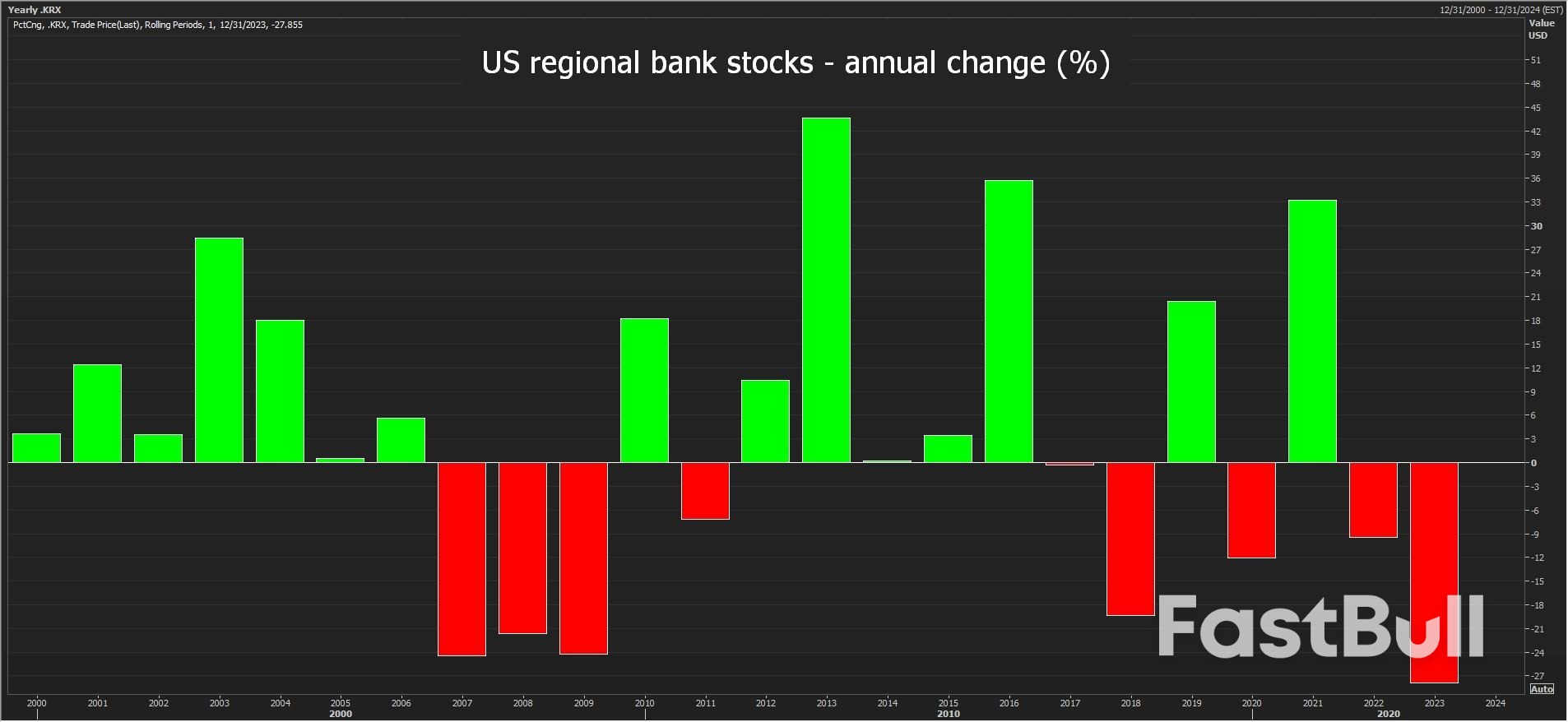
          Maybe the U.S. banking turmoil of March 2023 wasn't boxed up, tied with a bow, and neatly shelved for posterity after all.
          Shares in regional U.S. banks got clobbered on Tuesday - PacWest BanCorp lost a quarter of its market cap - setting a gloomy and defensive tone for Asian markets on Wednesday ahead of the Federal Reserve's latest interest rate decision.
          The U.S. regional banking index tanked 5.5% on Tuesday, its biggest fall since the depths of the crisis in mid-March. The index is at a two and a half year low and has lost a third of its value in the last two months.
          Crisis over? Don't Bank on It_1Not coincidentally, renewed fears over the U.S. banking system following JP Morgan's recent takeover of failed First Republic Bank also dovetailed with unexpectedly weak U.S. jobs data and increasing alarm over the U.S. debt ceiling standoff.
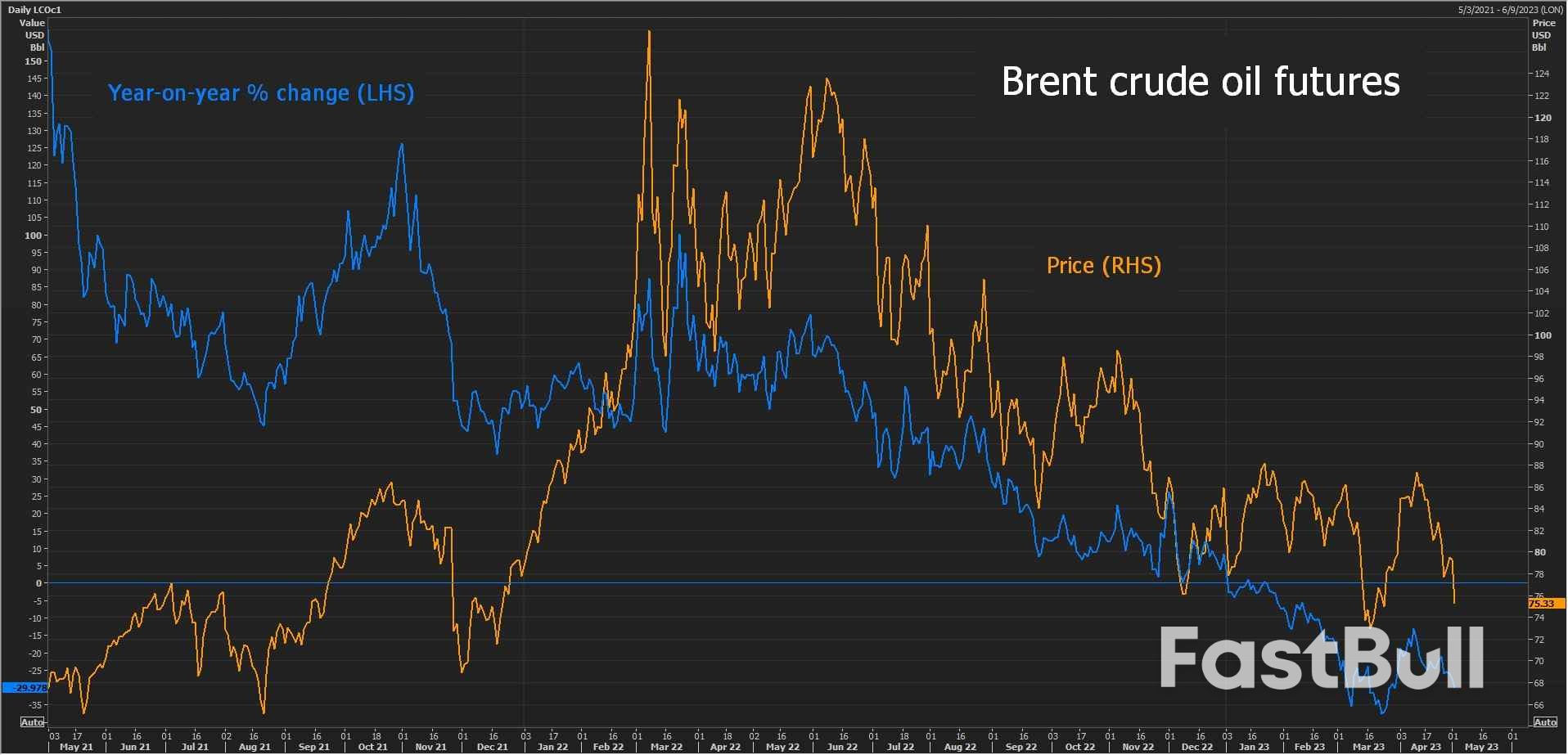
          In addition, global jitters intensified on Tuesday - the Reserve Bank of Australia's shock rate hike, a downbeat bank lending survey from the European Central Bank, and a 5% slump in oil prices painted a gloomy picture for the world economy.
          Brent crude oil is now down almost 30% year-on-year - a huge disinflationary impulse for the world economy.
          Crisis over? Don't Bank on It_2This may play into Malaysian policymakers' thinking as they prepare to deliver their latest interest rate decision on Wednesday. Twenty one of 25 economists polled by Reuters expect the key interest rate to be kept on hold at 2.75% for a third consecutive meeting, with the other four predicting a quarter point hike.
          Not only that, Bank Negara Malaysia is expected to keep rates on hold for the rest of this year and all of next, according to the Reuters poll.
          Crisis over? Don't Bank on It_3As the RBA reminded everyone on Tuesday, however, policymakers still retain the ability to surprise. Surely the Fed won't throw a curve ball later on Wednesday, will it?
          Markets are pricing in a 15% chance of no move, a small but not negligible chance, and an 85% probability the Fed will deliver one final 25 basis point hike.
          But that's what Asian markets will be waking up to on Thursday. Before that on Wednesday they have the Malaysian rate decision, services PMI data from Australia and India, and South Korean FX reserves to offer local direction.
          Here are three key developments that could provide more direction to markets on Wednesday:
          - Malaysia interest rate decision
          - India, Australia services PMIs (April)
          - U.S. Fed interest rate decision

          Source: Reuters

          Risk Warnings and Disclaimers
          You understand and acknowledge that there is a high degree of risk involved in trading. Following any strategies or investment methods may lead to potential losses. The content on the site is provided by our contributors and analysts for information purposes only. You are solely responsible for determining whether any trading assets, securities, strategy, or any other product is suitable for investing based on your own investment objectives and financial situation.
          Comments
          Add to Favorites
          Share

          Standard Chartered Most Gender-Balanced Commercial Bank

          Justin

          Central Bank

          Economic

          Topping this year’s OMFIF Gender Balance Index ratings is Standard Chartered, climbing 26 places from last year as the most balanced commercial bank. Jerry Zhang, chief executive officer, China, spoke with Clive Horwood, OMFIF’s managing editor and deputy chief executive officer, about how and why the bank is a place where women can thrive.
          Clive Horwood: Why has Standard Chartered been more successful than its global peers in promoting women to important senior roles?
          Jerry Zhang: For women to thrive, you need the right environment. We have a very strong culture at Standard Chartered. I have worked here for almost 30 years and one of the reasons I have chosen to stay is that, at each and every stage of my career, there is something interesting to grow into. There’s no glass ceiling here for women. Just over 70% of our workforce in China is made up of women, and 50% of our senior management in the country. So perhaps on the balance side, we need to do more for men!
          CH: What tools or policies do Standard Chartered use to promote the role of women?
          JZ: We have a number of intervention tools. We have our own initiatives such as our global women’s network and our Women in Business Leadership Forum. We have strong connections with a number of external associations. And we also invite our C-suite female clients to share their views with our own staff.
          CH: What role does mentorship play at Standard Chartered?
          JZ: A very important one. I am lucky to work for our Asia CEO Ben Hung, who is a tremendous mentor. Our senior leaders – including CEO Bill Winters – are always there to share ideas and find ways to help me. Earlier in my career, I was lucky to benefit from the support and experience of other female leaders, such as our former CEO for China, Katherine Tsang and our former Regional Head of Financial Institutions, Margaret Lee. These were women running important profit and loss businesses, who were both teachers and inspirations.
          CH: What’s the most valuable piece of advice you can share?
          JZ: There are a couple of pieces. First, don’t set limits on your own ambitions and aspirations. If you think you can only do so much, then you limit yourself. Be confident in your own ability and the sky is the limit. Second, make sure you get your support system in place and work out how you can best take care of your family and your job. You need a stable background at home to help you focus on work. And don’t be apologetic when it is time to do so.
          CH: Do you believe that a diverse business is a better business?
          JZ: Men and women are different animals. Each has their own respective set of strengths. You need your team to have complementary skills and more diversity makes for a better team.
          CH: China is seen in much of the world as a country where men still dominate, whether in politics or business. Is this perception wrong? Does it make it harder for a woman?
          JZ: Some aspects of Chinese society – as in many other countries – still have a male-led hierarchy. But I have found that, for the vast majority of my clients, they only care about the quality of the work and advice we give them. But we can’t ignore the fact that for centuries, men had a dominant role, and some women continue to see their careers through the lens of how men view them. I remember one member of my team, who was extremely successful and talented, but who left the bank because her husband demanded she stay at home. When her husband’s business ran into difficulty, I suggested she come back. She did, and she continues to have a great career.
          CH: Is there more that Standard Chartered could have done to keep her in the first instance?
          JZ: Perhaps. Today we have a sabbatical programme which is available to our highest achievers. It shows our commitment to, and investment in, those individuals. We also have much more ability to work remotely, especially since Covid-19, although we find that many of our colleagues want to be in-person with their teams as often as possible.
          CH: Investment banking, in particular, is a highly competitive industry in which work can be all-consuming. Does that rule out part-time work, which can be a useful way to keep women in the workplace?
          JZ: It is a competitive environment. In senior roles, we are completely occupied. My team expects me to give 100% at all times, and I expect the same of them. But just as important is that they feel they can achieve 100% of what is expected of them. And that requires the right working environment, which we try our best to create.
          CH: Have you ever felt being a woman has held your career back?
          JZ: In this bank, no. My bosses have always been supportive and understanding, creating the right environment for me to be successful in work and supported at home. It’s also about mindset. I want to achieve more in my career. There is no glass ceiling here – just look at the number of women in senior positions. Of course, there are questions I ask myself. Am I of the right calibre to step up to the next level? Do I have enough experience internationally? Have I worked in a broad enough range of business lines? But this is nothing to do with gender.

          Source:Clive Horwood

          To stay updated on all economic events of today, please check out our Economic calendar
          Risk Warnings and Disclaimers
          You understand and acknowledge that there is a high degree of risk involved in trading. Following any strategies or investment methods may lead to potential losses. The content on the site is provided by our contributors and analysts for information purposes only. You are solely responsible for determining whether any trading assets, securities, strategy, or any other product is suitable for investing based on your own investment objectives and financial situation.
          Comments
          Add to Favorites
          Share

          Eurozone Inflation Surprisingly Increased in April

          Justin

          Central Bank

          Economic

          Stay up to date with all of ING’s latest economic and financial analysis.

          Eurozone inflation surprised to the upside and came in at 7.0% year-on-year in April, from 6.90% YoY in March. Core inflation dropped marginally to 5.6%, from 5.7% in March. The unexpected increase is the result of a bounce back in energy price inflation, after the strong negative base effect in March, and slightly higher service price inflation. As with GDP growth last week, inflation divergence across the monetary union is high, reflecting different government energy price caps, subsidies and pass-throughs from wholesale to retail energy prices. In April, headline inflation ranged from 2.7% YoY in Luxembourg to 15% YoY in Latvia.

          In April, headline inflation ranged from 2.7% YoY in Luxembourg to 15% YoY in Latvia.

          Looking ahead, inflation developments in the eurozone will be determined by two rather opposing forces: on the one hand, negative base effects on energy and food prices as well as dropping selling price expectations in industry argue for a further drop in headline inflation. On the other hand, still high selling price expectations in services as well as wage increases are likely to fuel underlying inflationary pressures. As a consequence, we expect headline inflation to continue falling, while core inflation will remain sticky. As ECB Executive Board member Isabel Schnabel said recently: “I would not overemphasise the peak [in core inflation] as such, because what really matters is that inflation is returning to our two percent target over the medium term. We need to see a sustained decline in core inflation that gives us confidence that our measures are starting to work”.

          Today's data strengthen our call of a 25bp rate hike on Thursday

          Over the last year, inflation in the eurozone, which started as a supply-side issue, has become a demand-side issue. This is a clear invitation for the ECB to continue hiking interest rates. While there is very little a central bank can do to lower oil prices or to stop a war, there's a lot a central bank can do to stop too much money chasing too few goods: bring down demand. And this is exactly what the ECB will continue doing on Thursday. Even if headline inflation has come down and will come down further, this is not yet the moment of relief. The ECB doesn’t want to repeat the previous mistake of underestimating inflation and will therefore be willing to go too far, even if this eventually turns out to be a policy mistake.
          The only open question is whether the ECB will go for 25bp or 50bp. Out in the open, only Austrian central bank governor Robert Holzmann has been advocating 50bp. The other hawks, like Isabel Schnabel, recently left the option of 50bp open but didn’t officially subscribe to it. Sticky inflation data clearly stresses the need to continue hiking but with last week’s weaker-than-expected GDP growth report and today’s weak loan growth and loan demand data, the case for slowing down the pace and size of rate hikes has become stronger. We stick to our call of a 25bp rate hike on Thursday.

          Source:ING

          To stay updated on all economic events of today, please check out our Economic calendar
          Risk Warnings and Disclaimers
          You understand and acknowledge that there is a high degree of risk involved in trading. Following any strategies or investment methods may lead to potential losses. The content on the site is provided by our contributors and analysts for information purposes only. You are solely responsible for determining whether any trading assets, securities, strategy, or any other product is suitable for investing based on your own investment objectives and financial situation.
          Comments
          Add to Favorites
          Share

          How the EU's Carbon Border Tax Will Affect the Global Metals Trade

          Devin

          Commodity

          What is CBAM?
          The CBAM is set to complement the EU's Emission Trading System (ETS), in order to help hit the bloc's 'Fit for 55' target of reducing carbon emissions by 55% by 2030 compared to 1990 levels and eventually achieving net zero by 2050.
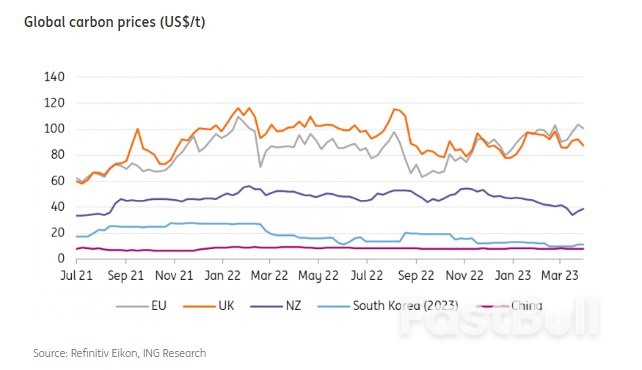
          The ETS has been in place since 2005 and works on a cap-and-trade principle. A cap is placed on the amount of emissions that can be emitted by operators who fall under the ETS, and this cap is reduced over time. These operators either buy or receive allowances and can trade the allowances with each other. The price of carbon allowances on the ETS has seen significant strength in recent years following regulatory changes to the system (the market was trading sub-€10/t in early 2018 but has traded as high as €100/t in 2023). The EU ETS covers 40% of the bloc's emissions.
          Under the latest CBAM agreement – the first of its kind globally – goods imported into the EU will also face a levy at the border based on their emissions footprint. This will be phased in from 2026 until 2034.
          While it may appear that CBAM is aimed at driving decarbonisation among key trade partners, it is in fact a tool to make the EU's ETS more robust and effective.
          The European Commission currently provides free allowances under the ETS to industries where there is a high risk of carbon leakage. Carbon leakage is where carbon-intensive production is moved to countries where there are less stringent climate policies in place, therefore resulting in no reduction in emissions. In fact, the risk is for higher emissions.
          The Commission wants to start reducing the amount of free allowances given to these industries in order to push them to decarbonise. However, in order to mitigate the risk of carbon leakage when doing so, the EU will charge a carbon tax on imports based on their carbon footprint.
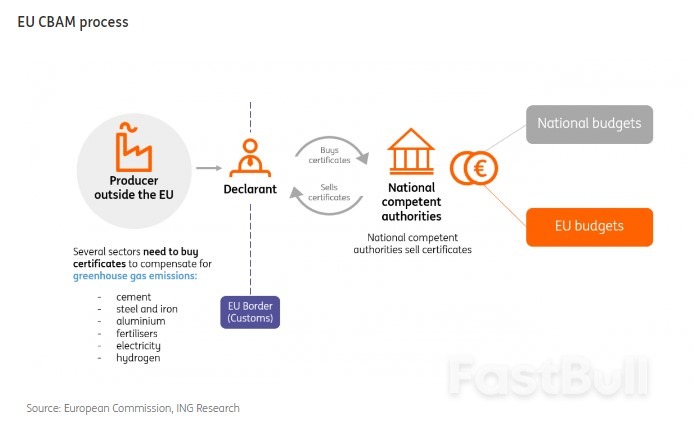
          CBAM would initially apply to imports whose production is carbon intensive and at the most significant risk of carbon leakage, including cement, iron and steel, aluminium, fertilisers, electricity and hydrogen. CBAM is mostly limited to basic materials and their key intermediates with the broadest value chain coverage in the steel sector, covering both raw materials and downstream fabricated products.
          The European Commission estimates that CBAM will help reduce CO2 emissions in the sectors it covers by 1% in the EU and 0.4% in the rest of the world by 2030. It also predicts that the CBAM will decrease carbon leakage in the five sectors by 29% by 2030.How the EU's Carbon Border Tax Will Affect the Global Metals Trade_1
          How the EU's Carbon Border Tax Will Affect the Global Metals Trade_2How will it work?
          The CBAM will initially apply to six carbon-intensive industries: cement, iron and steel, aluminium, fertilisers, electricity and hydrogen. These are the industries where there is a larger risk of carbon leakage. Eventually, the aim is for all imports to be covered by the carbon tax.
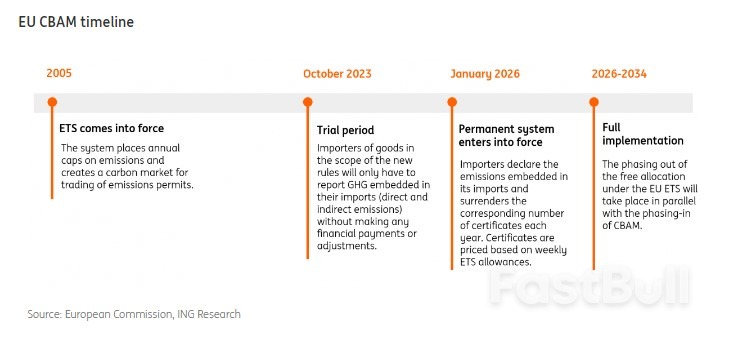
          For the selected industries, a trial period will begin in October 2023. During the trial period, importers of goods will only have to report greenhouse gas emissions (GHG) embedded in their imports (direct and indirect emissions), without making any financial payments or adjustments. Although according to the draft regulation, indirect emissions will not be calculated for iron and steel, aluminium and hydrogen. However, over time it is safe to assume indirect emissions will also be included for these sectors.
          Direct emissions are those emissions created during the production process over which the producer has direct control. Indirect emissions refer to emissions from generating electricity that is consumed in a production process.
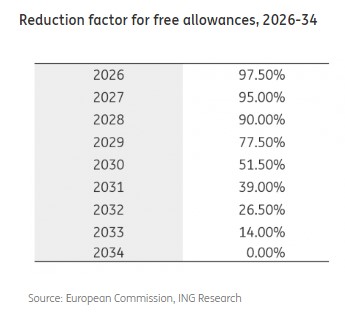
          CBAM will come into force from 1 January 2026 and importers will need to declare each year the quantity of goods imported into the EU in the preceding year and their embedded GHG. They will then surrender the corresponding number of CBAM certificates. The price of the certificates will be calculated depending on the weekly average auction price of EU ETS allowances expressed in EUR per tonne of CO2 emitted. The phasing-out of free allocation under the EU ETS will take place in parallel with the phasing-in of CBAM in the period 2026-34.
          Some suppliers may be unable to provide the necessary emissions data to EU importers, and at the standard required by the EU. In these instances, default emission data will be used, which could very well be more punitive. This is obviously a risk to some countries/suppliers who simply do not have this level of data.
          CBAM will not apply to Iceland, Liechtenstein, Norway and Switzerland given they already participate in the EU ETS or their domestic ETS is linked to it, as is the case for Switzerland. Additionally, goods imported from countries that have a carbon price can offset the amount paid under CBAM by an amount equivalent to their domestic carbon price.How the EU's Carbon Border Tax Will Affect the Global Metals Trade_3
          How the EU's Carbon Border Tax Will Affect the Global Metals Trade_4How have trade partners reacted to CBAM?
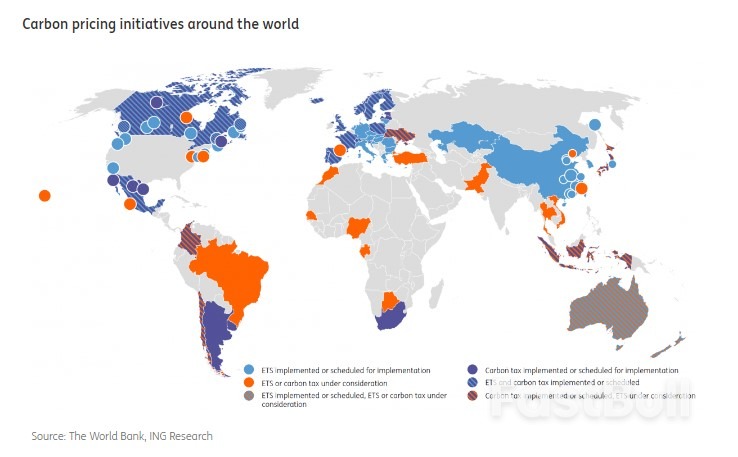
          Although CBAM will not be implemented for several years, its proposal has already sparked a backlash from a number of the EU's trading partners criticising the bloc of green protectionism. The United States, China, India, Brazil, South Africa and several others have expressed concerns that the new rules will further complicate trade and raise export costs for non-EU manufacturers.
          There is a possibility that the EU's trading partners might choose to retaliate and impose barriers on EU imports in response. They could also challenge the EU's policy at the World Trade Organisation (WTO). China has already asked the EU to justify its incoming carbon border tax at the WTO, a move that suggests it may challenge the law at the trade courts. China's Ministry of Commerce released a paper last month saying the government and enterprises should plan how to respond to the incoming changes as early as possible.
          The pushback from a number of key trading partners comes despite a number of these countries having a carbon tax of their own in some form or the other. Some 40 countries and more than 20 cities, states and provinces around the world already use carbon pricing mechanisms, with more planning to implement them in the future, according to the World Bank. In aggregate, these carbon pricing schemes now in place cover about half their emissions, which translates to about 13% of annual global GHG.
          The issue is that the bulk of these carbon mechanisms around the world falls short of the EU's ETS. This is either in terms of coverage and/or simply the level at which carbon is priced. EU carbon allowances trade at a significant premium to most carbon prices around the world. For example, China's ETS, which covers only power generators for now, is trading at around US$8/t versus the EU market trading in the region of US$100/t. The difference will need to be made up for imports into the EU. The only country which has a comparable carbon price to the EU is the UK. In fact, over 2022, the UK ETS traded at a premium to the EU. However, for now, goods imported from the UK will still be subject to CBAM. Although clearly it would make sense to link these, as seen with Switzerland. The UK government has launched a consultation on whether to introduce a UK CBAM as part of its net zero strategy while discussions are also taking place with the EU on whether to link the bloc's carbon pricing systems to the UK's.
          Ideally, there should be a standard carbon price across the world, yet carbon pricing schemes vary hugely in their severity and scope. A harmonisation in carbon taxes globally is much easier said than done.How the EU's Carbon Border Tax Will Affect the Global Metals Trade_5
          How the EU's Carbon Border Tax Will Affect the Global Metals Trade_6The impact of CBAM
          The first and most obvious impact of the implementation of CBAM is that European consumers will face higher prices. This is not only because imports will be more expensive, but also because the allocation of free allowances to a number of these domestic sectors will be gradually reduced as the CBAM is phased in, which will drive costs higher for EU producers. However, given the phase-out period for free allowances will run from 2026 to 2034, the impact will be felt gradually. Reporting obligations related to CBAM will also push up costs, which will likely also be passed on to consumers.
          Carbon leakage is still a risk with CBAM. How much of a risk will really depend on how far downstream CBAM will apply. The draft regulation has tried to address this. So, for example, CBAM will go relatively far down in the steel value chain, covering even screws, bolts and nuts.
          Trade flows will also likely be affected. This will be felt both with imports and exports. For exports, the eventual removal of free allowances will have an impact on the export competitiveness of European downstream sectors. A way to minimise this would be to offer a rebate equivalent to the carbon price on export volumes, which would remove the disadvantage for European exporters. However, this is unlikely, given it wouldn't exactly fit in with the EU's decarbonisation goals.
          For imports, there will also be large shifts. Although the degree of impact will really depend on how carbon-intensive some of these third-country producers are and whether these countries have a meaningful carbon price already in place to drive the decarbonisation of domestic industries in the coming years. Suppliers who have a carbon intensity similar to that of EU suppliers will likely not be significantly impacted in terms of competitiveness. Low-emission producers are likely to increase their share of exports to the EU, given the lower CBAM burden they would face, whilst higher carbon emitters will likely look for markets where their high emission intensity will not be penalised.
          What does CBAM mean for aluminium flows?
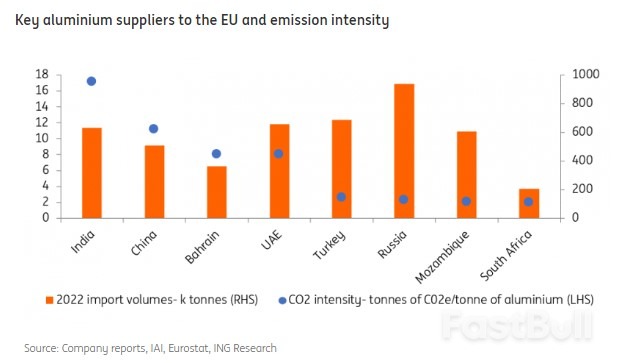
          For aluminium, Norway and Iceland were the largest and third-largest suppliers of aluminium to the EU in 2022. Goods from these countries will not be subject to CBAM and aluminium flows are likely to remain largely unaffected. However, other key suppliers include Russia, Turkey, China, the UAE and India. Of these five suppliers, India and China have the highest emission intensity by some distance.
          What really drives differences between direct emissions from aluminium smelters is whether they source their power from the grid or have a captive power plant. For those with captive power, their direct emissions are significantly larger. The feedstock used in captive power will also be important. The carbon footprint of aluminium imports mostly comes from the electricity used in the electro-intensive smelting process. Currently, the primary fuel for many captive power plants is coal. In China, for example, 88% of Chinese primary aluminium production is based on coal-fired electricity generation, while the remaining 12% is based on hydropower.
          China has its own domestic ETS market, but it only covers power generators for now covering around four billion tonnes of CO2 and trades at a significant discount to the EU ETS. Therefore, the additional cost to move this product to the EU will be significant. As things stand, it would be difficult not to see Chinese aluminium flows to the EU falling. The import cost of Chinese aluminium products into the EU could increase by around 17% as a result of CBAM. However, we will need to see how China's ETS develops, as over time one would expect prices to strengthen and to also include heavy industry, which would help decarbonise the Chinese aluminium industry, and as a result reduce the CBAM burden. In addition, a trend which has become very clear in China is the moving of smelters to the Southern provinces, and with this, a move away from captive coal-fired power to hydropower, as Beijing has set a goal of achieving carbon neutrality by 2060. By 2027, 29% of China's aluminium output will be powered by green energy. If this trend continues, it will bring down the average carbon intensity for Chinese aluminium producers, increasing their competitiveness in the EU under CBAM.
          The outlook for Indian flows is a bit more worrisome. India does not have a carbon tax or ETS, although there is a coal tax. However, this by definition is not a carbon tax, so it is unlikely to be used as a partial offset for the CBAM. Emission intensity from Indian aluminium producers is not only the highest among suppliers to the EU, but the highest globally. These high emissions are driven by coal captive power plants. The additional cost per tonne of Indian aluminium going into the EU will be significant, and without robust decarbonisation efforts it is difficult not to see these flows being impacted. The import cost of Indian aluminium products into the EU could increase by more than 40% due to CBAM.
          Russian aluminium has a relatively low carbon footprint, despite Russia not having a carbon tax. Therefore, CBAM is likely to have a limited impact on these flows. We estimate an additional cost in the region of 6%. The bigger risk to Russian aluminium flows to the EU is the self-sanctioning that we are seeing as a result of Russia's invasion of Ukraine.
          As for Turkey, emission intensity is not much higher than the EU. In addition, it appears as though Turkey is moving toward implementing its own ETS, which if effective would drive further decarbonisation of the industry. Turkey has only one smelter in the country, however, it has a large semi-fabricated and finished products manufacturing base, which imports largely primary aluminium and exports semi and finished products.
          The UAE is also a fairly large supplier to the EU, and like China and India, the smelters in the country use captive power. However, instead of using coal, natural gas is the feedstock. This does mean emission intensity is significantly lower than in India and China. However, given the use of captive power, direct emissions are still higher than those seen in the EU – although the UAE is starting to increase the use of renewable power in its aluminium industry.
          How the EU's Carbon Border Tax Will Affect the Global Metals Trade_7What does CBAM mean for iron and steel flows?
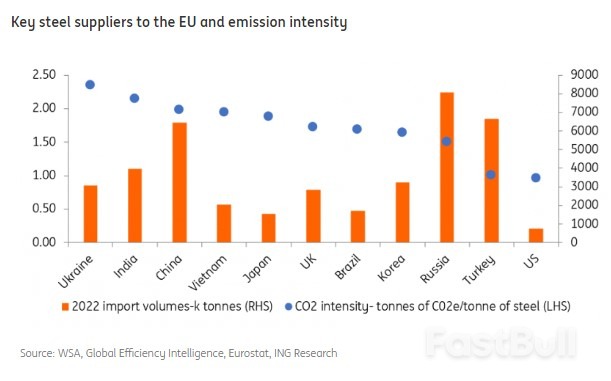
          While the iron and steel sector is an overall larger emitter of emissions than the aluminium sector, emission intensity is much lower than that of the aluminium industry, with a global average of 1.91 tonnes CO2e/ per tonne of steel. There are a number of factors which affect this, but the most important comes down to the production process used. Direct emissions from the basic oxygen furnace (BOF) process are significantly higher than that seen from electric arc furnaces (EAF), which use scrap as feedstock. Global emission intensity via the BOF process, which makes up around 71% of global production, averages 2.23 tonnes of CO2 per tonne of crude steel output, whilst emission intensity via the EAF route (29% of global output) averages 0.67.
          In the EU, just under 60% of the bloc's total steel is produced via the BOF process, while around 40% is produced via the EAF production route.
          The variance between emission intensity in the steel sector is much narrower than seen in the aluminium industry. This also suggests that trade flows are also likely to be less affected. Looking at the largest suppliers of steel products to the EU, CBAM could increase import costs in the region of 8%. Although obviously, this will depend on where carbon prices are trading.
          In 2022, Russia was the largest supplier of steel products to the EU. These flows are predominantly semi-finished steel products, as well as pig iron. Russian steel has an emission intensity in the region of 1.5 tonnes of CO2 per tonne of steel, which is below the global average and suggests that CBAM should not impact flows significantly. However, the bigger impact on Russian steel is the EU's eighth sanction package against Russia, which includes semi-finished steel products.
          Steel flows from the second-largest supplier to the EU – Turkey – should manage with CBAM. Turkey has a large amount of EAF capacity meaning that emission intensity is well below the global average as well as the EU average.
          China was the third-largest supplier of steel products to the EU in 2022. The emission intensity of the Chinese steel sector is also the third-highest among the largest suppliers to the EU. As previously mentioned, China has launched a domestic ETS, which will eventually cover the steel sector, and assuming an effective ETS price, should help to decarbonise the domestic industry. The government in recent years has already taken steps to try to decarbonise the sector. And with China's scrap ratio still well below the global average, there is the potential to increase this further in the years ahead, which would drive emission intensity lower.
          Indian steel has the second-highest emission intensity amongst the largest suppliers of steel products to the EU, with only Ukraine ahead of it. With an intensity above both the global average and the EU average, we could very well see these Indian steel flows coming under pressure. There are some Indian domestic producers which have targets to cut emission intensity to levels more comparable to the current global average by the end of this decade.
          It is not just steel and downstream steel products that will be subject to CBAM. Upstream sectors will also be affected with iron ore falling under CBAM. However, the emission intensity of iron ore is marginal and so this should have little impact on flows. In addition, the EU is highly dependent on iron ore imports, further supporting the idea of minimal impact on trade flows. How the EU's Carbon Border Tax Will Affect the Global Metals Trade_8
          Next steps
          Recently, the European Parliament and the Council reached an agreement of a provisional and conditional nature on the CBAM. The agreement needs to be confirmed by ambassadors of the EU member states, and by the European Parliament, and adopted by both institutions before its final.
          Under the provisional agreement, CBAM will begin to operate from October 2023 in its transitional phase.

          Source: ING

          Risk Warnings and Disclaimers
          You understand and acknowledge that there is a high degree of risk involved in trading. Following any strategies or investment methods may lead to potential losses. The content on the site is provided by our contributors and analysts for information purposes only. You are solely responsible for determining whether any trading assets, securities, strategy, or any other product is suitable for investing based on your own investment objectives and financial situation.
          Comments
          Add to Favorites
          Share

          China's Manufacturing Wobble May Drive Coal Use Even Higher

          Samantha Luan

          Commodity

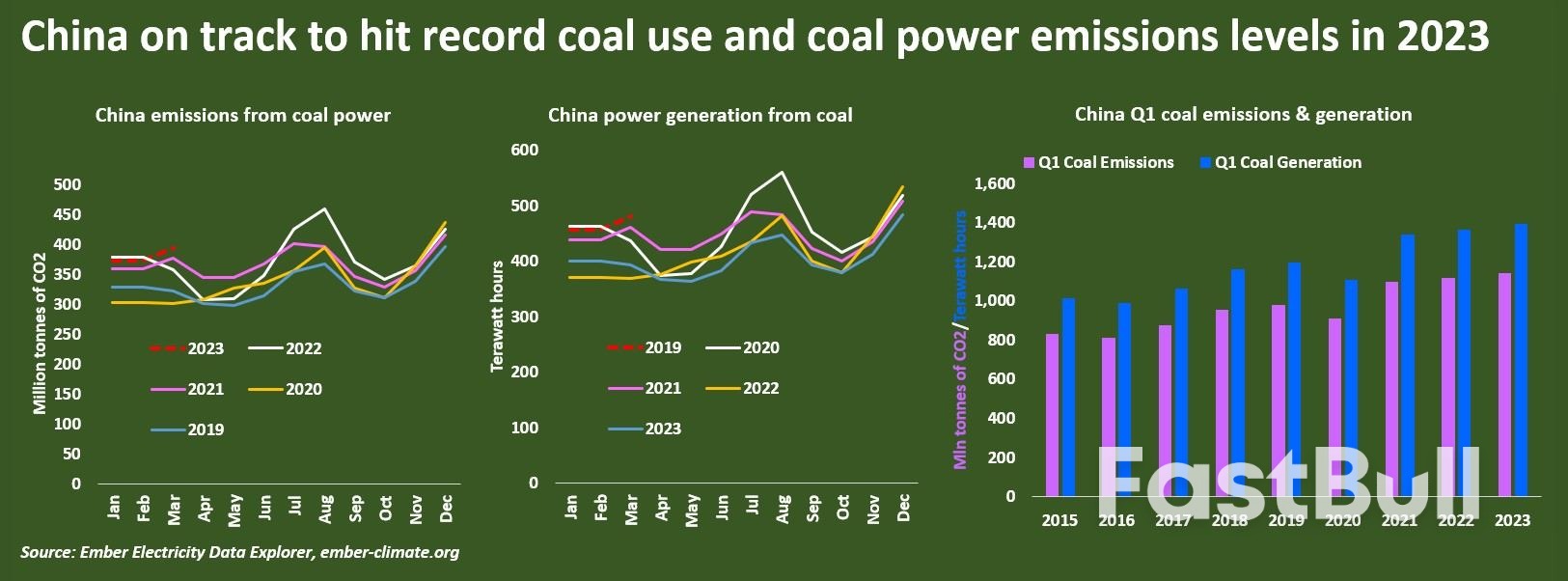
          China is already on track to emit the most coal-fired power emissions in history in 2023, but may now push coal use up another gear after the manufacturing sector unexpectedly contracted in April following a strong start to the year.
          The softer manufacturing data is expected to trigger fresh stimulus measures designed to spur increased industrial output, as well as steps to help the country's ailing property sector, which will lead to greater energy use throughout the world's largest manufacturer, exporter and polluter.
          In turn, power producers are expected to increase use of high-polluting but cheap coal as the main source of power generation, as the tentative nature of the economic recovery means that authorities will be keen to ensure that power costs are as low as possible for businesses and industries.
          Stimulated Recovery
          Beijing has already taken several steps to restore China's economy to a growth path in 2023, following a COVID-19-hit 2022 that curtailed industrial activity and goods production.
          The stimulus measures included financial support for export-oriented manufacturers and the easing of movement restrictions so that workers and goods could move more freely, and seemed to have had the desired effect by generating strong growth over the opening three months.
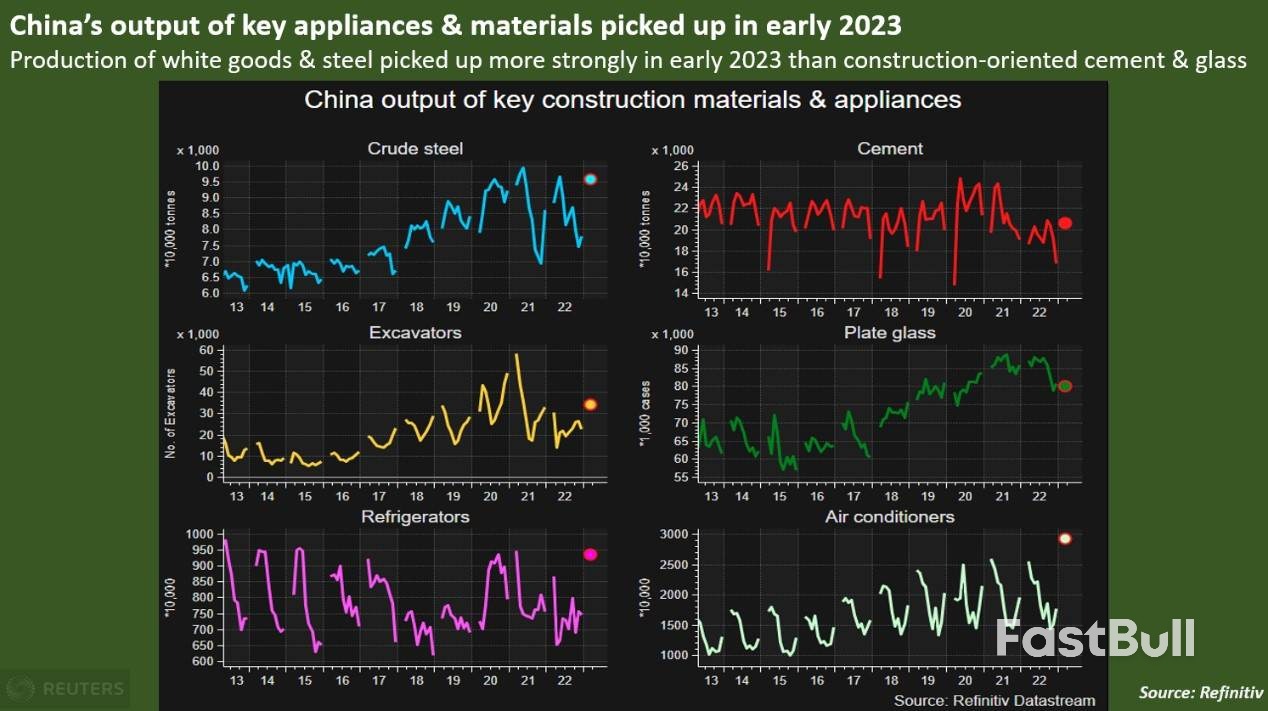
          Output of a slew of key appliances including refrigerators and air conditioners, and industrial materials such as crude steel, also increased sharply since late 2022 as the revival measures took root.
          China's Manufacturing Wobble May Drive Coal Use Even Higher_1However, there are signs that momentum slowed in April after an official measure of manufacturing activity receded into contraction territory due to a patchy global consumer marketplace that could not economically absorb the flood of goods and materials emerging from China's re-invigorated plants.
          To combat any further slowdown, Beijing unveiled fresh supportive measures last week, including plans to boost auto exports through cheaper financing, and is expected to drive fresh investment into the country's property sector, which has historically been a key pillar of the Chinese economy.
          The combination of new incentives for large manufacturers alongside anticipated support for the construction and property markets will result in greater total power consumption in China over the coming months, and in turn even higher emissions.
          Powering Up
          Total electricity generation in China hit a new record in the opening quarter of 2,180 terawatt hours (TWh), according to data from think tank Ember.
          That is 5.2% more than over the same period in 2022, and was fuelled in part by a 12% rise in generation from clean sources.
          However, the single largest source of electricity was coal, which generated a record 1,393 TWh or 64% of the total during the opening quarter.
          China's Manufacturing Wobble May Drive Coal Use Even Higher_2Emissions from that record coal generation total also hit a new high, topping 1.14 billion tonnes, Ember data shows.
          Coal Import Binge
          China's utilities imported record volumes of thermal coal to power that economic recovery, with total imports from January through April jumping by 85% from the same period in 2022 to 97 million tonnes, according to ship-tracking data by Kpler.
          Further increases in China's coal imports are likely as the peak demand period for air conditioning kicks in over the summer.
          For cost-conscious power producers, the wide price spread between thermal coal and natural gas will also be supportive for coal imports, even if cleaner-burning natural gas can also be used for power generation.
          In Guangdong province, home to one of China's largest manufacturing hubs, natural gas prices are currently trading around 5,500-5,700 yuan per tonne, according to data from Refinitiv.
          That's more than 2,000 yuan per tonne less than where gas prices were trading in late 2022, and marks the lowest gas costs in that region in more than a year.
          China's Manufacturing Wobble May Drive Coal Use Even Higher_3However, gas prices remain more than four times the cost of coal in the domestic market, making it unattractive for power generation firms who are under pressure to keep energy costs as low as possible.
          Those same firms are likely to face pressure to deliver more power and electricity in the coming months, especially if Beijing successfully boosts activity in China's mammoth property sector and generates more demand for energy-intensive construction-related products such as cement and plate glass.
          Power producers are also likely to prioritise low-cost generation to keep electricity prices in check for manufacturers, who are major consumers of China's own materials supply chain before exporting finished and semi-finished products to global buyers.
          Over time, stronger global consumer demand may give China's power producers scope to switch out dirty coal for more costly but cleaner gas, which would help drive China's power emissions lower even as industrial output climbs.
          But with the all-important manufacturing base currently under duress, low-cost coal remains firmly in the driver's seat of China's mammoth energy system, and will continue to push the country's emissions totals to new heights despite global efforts to cap pollution elsewhere.

          Source: ETEnergyworld

          Risk Warnings and Disclaimers
          You understand and acknowledge that there is a high degree of risk involved in trading. Following any strategies or investment methods may lead to potential losses. The content on the site is provided by our contributors and analysts for information purposes only. You are solely responsible for determining whether any trading assets, securities, strategy, or any other product is suitable for investing based on your own investment objectives and financial situation.
          Comments
          Add to Favorites
          Share

          Asia's LNG Imports Slip as Soft China, Japan Outweigh Stronger India

          Thomas

          Commodity

          Asia's imports of liquefied natural gas (LNG) fell in April as major buyers China and Japan trimmed purchases, offsetting small gains among South Asian countries.
          The total volume of the super-chilled fuel imported was 20.86 million tonnes in April, down from March's 22.23 million and 22.19 million in February, according to data compiled by commodity analysts Kpler.
          At the same time that volumes were slipping in Asia, Europe was buying more LNG, with imports rising for a third straight month in April, reaching 12.50 million tonnes, the most since December.
          Europe's LNG demand has shifted structurally higher as pipeline supplies from Russia were curtailed in the wake of Moscow's invasion of Ukraine in February last year.
          However, the healthy state of European gas inventories does raise the possibility that LNG imports will steady or drop somewhat in coming months as utilities pare purchases for stock-building.
          Conversely, Asia's LNG purchases may increase as price-sensitive buyers such as India and Pakistan ramp up imports amid a declining spot price.
          The price of spot LNG for delivery to north Asia dropped to $11.05 per million British thermal units (mmBtu) in the week to April 28, the lowest since June 2021.
          The spot price has now slid 71% since its northern winter peak of $38 per mmBtu in mid-December, and is down 84% from its record high of $70.50, reached in late August as European utilities scrambled to source enough gas to cover the winter demand peak.
          Even though the spot price has dropped considerably from its peaks, it's worth noting that it is at the upper end of the $1.80 to $11.60 per mmBtu range that persisted from the start of 2015 to December 2020.
          This means that while the price is now low enough to tempt buyers that had withdrawn from the market during last year's surge, it's still at a level that wouldn't be considered a bargain.
          Nonetheless, Indian utilities are coming back into the market, with Kpler estimating April imports of 1.98 million tonnes, up from 1.84 million in March and the most since May last year.
          Pakistan imported 650,000 tonnes in April, up from 570,000 in March and the highest monthly total since the 660,000 in January.
          Imports by Bangladesh were assessed at 490,000 tonnes in April, up from 450,000 in March, with these past two months being the strongest since June 2022.
          Japan, China Dip
          The higher demand from South Asia wasn't enough to offset declining purchases by Japan, which last year reclaimed its title as the world's biggest LNG buyer from China.
          Japan's April imports were assessed at 5.16 million tonnes, down from 5.57 million in March, and the weakest month since October last year.
          However, it's worth noting that Japan's LNG imports typically follow a seasonal pattern, rising for winter and summer and tailing off in the shoulder seasons between these demand peaks.
          China's LNG imports have yet to show any meaningful recovery, despite signs of stronger energy demand in the world's second largest economy.
          April imports were 5.23 million tonnes, down from March's 5.48 million, but up from 4.99 million in February.
          It's also worth noting that China's April performance was an increase from the April last year, when 4.61 million tonnes were imported.
          The lower spot price may well encourage higher imports of LNG by China, although in the past volumes have only picked up significantly when the spot price dips below $10 per mmBtu, as this allows LNG to be competitive in China's domestic markets.
          Similar to China, it will probably take even lower spot prices to meaningfully boost imports by India and other South Asian nations.

          Source: Investing.com

          Risk Warnings and Disclaimers
          You understand and acknowledge that there is a high degree of risk involved in trading. Following any strategies or investment methods may lead to potential losses. The content on the site is provided by our contributors and analysts for information purposes only. You are solely responsible for determining whether any trading assets, securities, strategy, or any other product is suitable for investing based on your own investment objectives and financial situation.
          Comments
          Add to Favorites
          Share

          ECB Cheat Sheet: Difficult to Pull Away from the Fed

          Devin

          Central Bank

          ECB Cheat Sheet: Difficult to Pull Away from the Fed_1No clear mispricing at the front-end of the EUR curve…
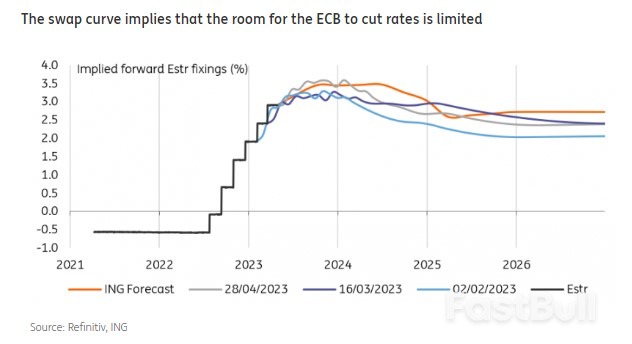
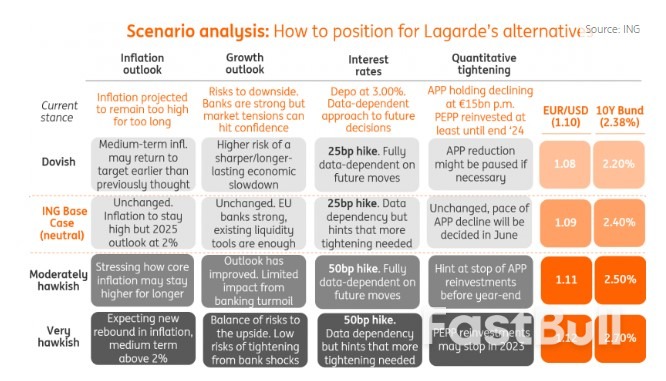
          Assuming the upcoming inflation data and Bank Lending Survey (BLS) don't give more ammunition to the hawks, the 25bp 'compromise hike' shifts the focus to how long the current hiking cycle will go on. We think one more hike after this week's, but markets are open to a further additional hike, presumably in July. From there, the curve implies pressure on the ECB to reverse these hikes will build pretty much immediately, likely due to Federal Reserve rate cut expectations. This is where the greatest difference with our own view lies. The end of the Fed's own hiking cycle and the rise in EUR/USD (see next section) certainly lessens the pressure on the ECB to keep hiking past the summer, but core inflation won't allow it to cut until at least the second half of 2024.
          The above doesn't translate into a clear signal for EUR rates with forwards slightly above our forecast in the near term and slightly below next year. Instead, what should increasingly drive the level of long-end interest rates is expectations about how far the ECB will cut rates in the next cycle. Barring a severe recession, our view – and the market's – is that this cutting cycle will prove a shallow one, with the deposit rate stabilising at 2.5%. As usual this is, in effect, an average of two scenarios, one where the ECB cuts rates aggressively, and one where inflation prevents it from cutting altogether.

          ECB Cheat Sheet: Difficult to Pull Away from the Fed_2… but pay attention to the downside risk at longer tenors

          Given growing recession fears in the US, and doubts about the banking system's ability to provide credit to the economy, we think the downside scenario warrants more attention. In a world where the ECB were to cut interest rates all the way down to zero by end-2025, even followed by a slow hiking cycle afterwards, we would see 5Y and 10Y swap rates bottom between 1.5% and 2% in the second half of 2024. This compares to a trough of around 2.5% and 3% in our base case.
          Of course, the above is an extreme scenario but it illustrates the downside risk to European rates in the coming months as the Fed ends its hiking cycle, and shifts to easing. The crucial question is to what extent European rates can decouple from their US counterparts. Our view is that the ECB will keep rates at their peak for around a year before cutting them, but this won't prevent forwards from pricing more and more aggressive rate cuts, the way the US curve has done in anticipation of rate cuts starting in 2023.
          Note that the above estimate differs from its historical relationship. In our view, only in the most dire economic scenario would swap rates return to the sub-1.5% area as markets have durably shifted higher their estimate of the long-term neutral interest rates. This means that, in the same way that the higher the peak, the more subsequent cuts the curve implies so the deeper the bottom in the future cutting cycle, the more hikes the market will imply.

          ECB Cheat Sheet: Difficult to Pull Away from the Fed_3FX: Moderate downside risks for EUR/USD

          From an FX perspective, we need to assess the impact on EUR/USD given the combination of both the Fed (Wednesday) and the ECB (Thursday) policy announcements. If our baseline scenario for both central banks proves right, we would see the Fed hike by 25bp and say that rate increases "may yet be appropriate" (here is our full FOMC preview), and the ECB follow with the same rate increase, stick to data dependency but hint at more tightening.
          Rate expectations indicate that markets are convinced this will be the peak of the Fed's tightening cycle and price in around 50bp of cuts by year-end, while the ECB is expected to hike by another 50bp after this week's increase and keep rates at the peak at least into year-end. This means that the bar for a hawkish surprise by the ECB is significantly higher, and we suspect President Christine Lagarde and her colleagues would probably struggle to exceed hawkish expectations.
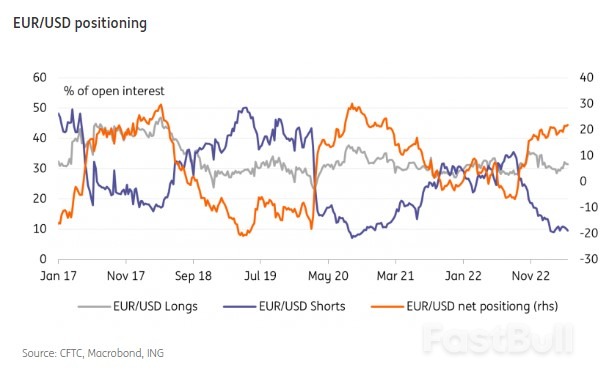
          Incidentally, EUR/USD positioning has been quite stretched on the long side lately, which points to some short-term upside resistance for the pair. EUR/USD net long positions were worth 22% of open interest, which is significantly above its recent average and standard deviation, and close to the five-year highs (27% of open interest).
          ECB Cheat Sheet: Difficult to Pull Away from the Fed_4On balance, we see room for EUR/USD to pull back to the 1.0900 mark as a result of the combined effect of the FOMC and the ECB impact. The stretched positioning and very hawkish expectations on ECB tightening suggests the balance of risks for the euro ahead of the ECB is slightly tilted to the downside.

          Source: ING

          Risk Warnings and Disclaimers
          You understand and acknowledge that there is a high degree of risk involved in trading. Following any strategies or investment methods may lead to potential losses. The content on the site is provided by our contributors and analysts for information purposes only. You are solely responsible for determining whether any trading assets, securities, strategy, or any other product is suitable for investing based on your own investment objectives and financial situation.
          Comments
          Add to Favorites
          Share
          FastBull
          Copyright © 2025 FastBull Ltd

          728 RM B 7/F GEE LOK IND BLDG NO 34 HUNG TO RD KWUN TONG KLN HONG KONG

          TelegramInstagramTwitterfacebooklinkedin
          App Store Google Play Google Play
          Products
          Charts

          Chats

          Q&A with Experts
          Screeners
          Economic Calendar
          Data
          Tools
          Membership
          Features
          Function
          Markets
          Copy Trading
          Latest Signals
          Contests
          News
          Analysis
          24/7
          Columns
          Education
          Company
          Careers
          About Us
          Contact Us
          Advertising
          Help Center
          Feedback
          User Agreement
          Privacy Policy
          Business

          White Label

          Data API

          Web Plug-ins

          Poster Maker

          Affiliate Program

          Risk Disclosure

          The risk of loss in trading financial instruments such as stocks, FX, commodities, futures, bonds, ETFs and crypto can be substantial. You may sustain a total loss of the funds that you deposit with your broker. Therefore, you should carefully consider whether such trading is suitable for you in light of your circumstances and financial resources.

          No decision to invest should be made without thoroughly conducting due diligence by yourself or consulting with your financial advisors. Our web content might not suit you since we don't know your financial conditions and investment needs. Our financial information might have latency or contain inaccuracy, so you should be fully responsible for any of your trading and investment decisions. The company will not be responsible for your capital loss.

          Without getting permission from the website, you are not allowed to copy the website's graphics, texts, or trademarks. Intellectual property rights in the content or data incorporated into this website belong to its providers and exchange merchants.

          Not Logged In

          Log in to access more features

          FastBull Membership

          Not yet

          Purchase

          Become a signal provider
          Help Center
          Customer Service
          Dark Mode
          Price Up/Down Colors

          Log In

          Sign Up

          Position
          Layout
          Fullscreen
          Default to Chart
          The chart page opens by default when you visit fastbull.com