Markets
News
Analysis
User
24/7
Economic Calendar
Education
Data
- Names
- Latest
- Prev




Signal Accounts for Members
All Signal Accounts
All Contests


U.S. NY Fed Manufacturing Prices Received Index (Jan)A:--
F: --
P: --
U.S. NY Fed Manufacturing New Orders Index (Jan)A:--
F: --
P: --
U.S. NY Fed Manufacturing Employment Index (Jan)A:--
F: --
P: --
U.S. Export Price Index YoY (Nov)A:--
F: --
P: --
U.S. NY Fed Manufacturing Index (Jan)A:--
F: --
U.S. Initial Jobless Claims 4-Week Avg. (SA)A:--
F: --
U.S. Export Price Index MoM (Nov)A:--
F: --
P: --
Canada Manufacturing Unfilled Orders MoM (Nov)A:--
F: --
P: --
Canada Manufacturing New Orders MoM (Nov)A:--
F: --
P: --
U.S. Philadelphia Fed Manufacturing Employment Index (Jan)A:--
F: --
P: --
Canada Wholesale Sales YoY (Nov)A:--
F: --
P: --
Canada Wholesale Inventory MoM (Nov)A:--
F: --
P: --
U.S. Philadelphia Fed Business Activity Index (SA) (Jan)A:--
F: --
P: --
U.S. EIA Weekly Natural Gas Stocks ChangeA:--
F: --
P: --
Richmond Federal Reserve President Barkin delivered a speech.
U.S. Weekly Treasuries Held by Foreign Central BanksA:--
F: --
P: --
Germany CPI Final MoM (Dec)A:--
F: --
P: --
Germany CPI Final YoY (Dec)A:--
F: --
P: --
Germany HICP Final MoM (Dec)A:--
F: --
P: --
Germany HICP Final YoY (Dec)A:--
F: --
P: --
Brazil PPI MoM (Nov)A:--
F: --
P: --
Canada New Housing Starts (Dec)A:--
F: --
U.S. Capacity Utilization MoM (SA) (Dec)A:--
F: --
U.S. Industrial Output YoY (Dec)A:--
F: --
P: --
U.S. Manufacturing Capacity Utilization (Dec)A:--
F: --
P: --
U.S. Manufacturing Output MoM (SA) (Dec)A:--
F: --
U.S. Industrial Output MoM (SA) (Dec)A:--
F: --
U.S. NAHB Housing Market Index (Jan)A:--
F: --
P: --
Russia CPI YoY (Dec)A:--
F: --
P: --
U.S. Weekly Total Rig CountA:--
F: --
P: --
U.S. Weekly Total Oil Rig CountA:--
F: --
P: --
Japan Core Machinery Orders YoY (Nov)--
F: --
P: --
Japan Core Machinery Orders MoM (Nov)--
F: --
P: --
U.K. Rightmove House Price Index YoY (Jan)--
F: --
P: --
China, Mainland GDP YoY (YTD) (Q4)--
F: --
P: --
China, Mainland Industrial Output YoY (YTD) (Dec)--
F: --
P: --
Japan Industrial Output Final MoM (Nov)--
F: --
P: --
Japan Industrial Output Final YoY (Nov)--
F: --
P: --
Euro Zone Core HICP Final MoM (Dec)--
F: --
P: --
Euro Zone HICP Final MoM (Dec)--
F: --
P: --
Euro Zone HICP Final YoY (Dec)--
F: --
P: --
Euro Zone HICP MoM (Excl. Food & Energy) (Dec)--
F: --
P: --
Euro Zone Core CPI Final YoY (Dec)--
F: --
P: --
Euro Zone Core HICP Final YoY (Dec)--
F: --
P: --
Euro Zone CPI YoY (Excl. Tobacco) (Dec)--
F: --
P: --
Euro Zone Core CPI Final MoM (Dec)--
F: --
P: --
Canada National Economic Confidence Index--
F: --
P: --
Canada CPI MoM (SA) (Dec)--
F: --
P: --
Canada Core CPI MoM (SA) (Dec)--
F: --
P: --
Canada CPI YoY (SA) (Dec)--
F: --
P: --
Canada Trimmed CPI YoY (SA) (Dec)--
F: --
P: --
Canada CPI YoY (Dec)--
F: --
P: --
Canada CPI MoM (Dec)--
F: --
P: --
Canada Core CPI YoY (Dec)--
F: --
P: --
Canada Core CPI MoM (Dec)--
F: --
P: --
South Korea PPI MoM (Dec)--
F: --
P: --
China, Mainland 1-Year Loan Prime Rate (LPR)--
F: --
P: --
China, Mainland 5-Year Loan Prime Rate--
F: --
P: --
Germany PPI YoY (Dec)--
F: --
P: --
Germany PPI MoM (Dec)--
F: --
P: --


No matching data
Latest Views
Latest Views
Trending Topics
Top Columnists
Latest Update
White Label
Data API
Web Plug-ins
Affiliate Program
View All

No data
China's 2025 export-led growth masks deep structural weaknesses, signaling a projected slowdown and pressing Beijing for more stimulus amid rising trade tensions.
China's economic growth is projected to slow to 4.5% in 2026 and hold that pace through 2027, according to a Reuters poll of 73 economists. This forecast increases pressure on policymakers to deliver more stimulus as they confront deep structural issues to secure the nation's long-term economic health.
For 2025, gross domestic product (GDP) is expected to have expanded by 4.9%, meeting the government's target of around 5%. This performance was supported by strong exports and existing policy measures, demonstrating remarkable resilience amid global challenges.
However, the economy's reliance on external demand highlights significant underlying vulnerabilities, including weak domestic spending, a prolonged property slump, and persistent deflationary pressures.
China's economic strength in 2025 was largely driven by its export sector, which benefited from smaller-than-expected U.S. tariff hikes and a successful push to diversify markets. This allowed policymakers to keep stimulus measures modest.
The country reported a record trade surplus of nearly $1.2 trillion in 2025, fueled by booming exports to non-U.S. markets. This strategy helped producers build global scale to counter sustained pressure from the Trump administration.
Despite this external success, recent data points to a slowdown. Growth in the fourth quarter of 2025 likely cooled to 4.4% year-over-year, down from 4.8% in the third quarter, marking the weakest pace in three years. On a quarterly basis, the economy is forecast to have grown 1.0% in the fourth quarter, a slight dip from 1.1% in the previous quarter.
The economic outlook for 2026 is clouded by the prospect of rising global trade protectionism and unpredictable U.S. trade policies. President Donald Trump has threatened to impose a 25% tariff on countries that trade with Iran, adding another layer of uncertainty.
"External demand was the biggest positive surprise in 2025," noted Larry Hu, chief China economist at Macquarie. "Should exports disappoint in 2026, it would trigger additional domestic stimulus from Beijing to defend its growth target."
Hu added that the scale of any new stimulus will largely be determined by the severity of an export slowdown.
Economists warn that deep structural imbalances pose a significant risk to China's long-term growth and its ambitions in high-tech industries. The country's economic model remains heavily skewed toward investment over consumption.
Key structural challenges include:
• Low Household Consumption: Chinese household consumption accounts for roughly 40% of the economy, about 20 percentage points below the global average.
• High Investment: Conversely, investment is approximately 20 percentage points higher than the global average.
• Unsustainable Gap: This imbalance is seen as increasingly unsustainable and a drag on broader industrial activity.
Chinese leaders have vowed to "significantly" increase household consumption's share of the economy over the next five years. Many policy advisers believe the target should be to lift this ratio to 45% by 2030. However, efforts to rebalance have been complicated by rising debt levels and external pressures.
At a key economic meeting in December, Chinese leaders pledged to maintain a "proactive" fiscal policy to support economic growth, which analysts expect will be targeted at around 5% for the year.
The People's Bank of China (PBOC) has signaled its readiness to provide monetary support. The central bank has pledged to cut the reserve requirement ratio (RRR) and interest rates in 2026 to ensure ample liquidity.
Analysts polled by Reuters expect the PBOC to cut its key policy rate—the seven-day reverse repo rate—by 10 basis points in the first quarter. Meanwhile, consumer price inflation is forecast to rise to 0.7% this year and pick up further to 1.0% in 2027, after remaining flat in 2025.
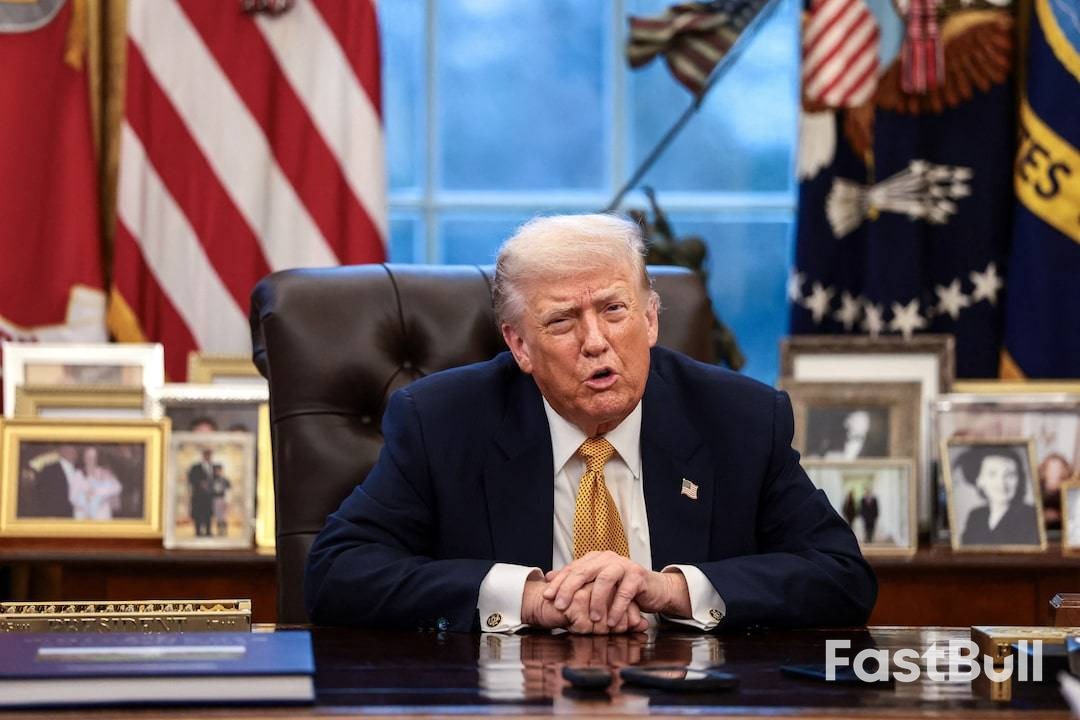
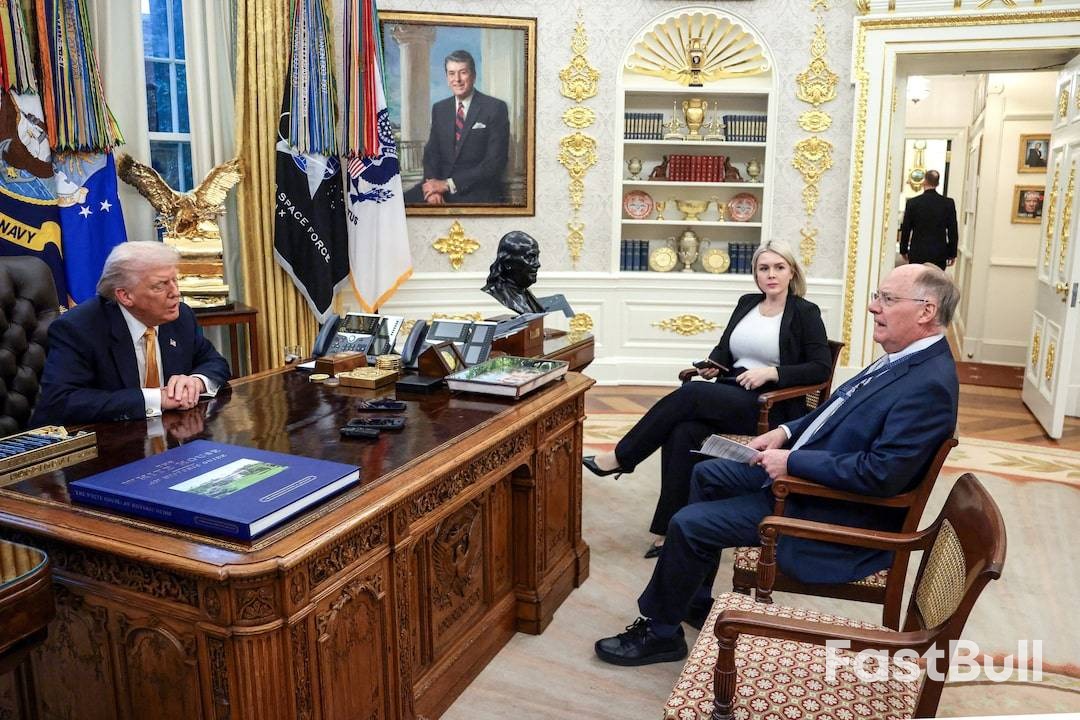
In an exclusive Oval Office interview on Wednesday, President Donald Trump offered his perspective on several critical global and domestic issues. He questioned the viability of Iranian opposition figure Reza Pahlavi, placed blame on Ukrainian President Volodymyr Zelenskiy for the ongoing war with Russia, and dismissed Republican criticism of a Justice Department probe into Federal Reserve Chairman Jerome Powell.

While Trump has previously signaled support for protesters in Iran, where demonstrations against clerical rule have been met with a deadly crackdown, he expressed reservations about backing Reza Pahlavi, the son of the shah ousted in 1979.
"He seems very nice, but I don't know how he'd play within his own country," Trump stated. "I don't know whether or not his country would accept his leadership, and certainly if they would, that would be fine with me."
These comments expand on Trump's earlier reluctance to meet with Pahlavi. The U.S.-based Pahlavi, 65, is a prominent voice for the protests but faces a fragmented opposition movement composed of rival ideological factions with little organized presence inside Iran.
When asked about the stability of Iran's government, Trump acknowledged the possibility of its collapse but noted that "any regime can fail." He added, "Whether or not it falls or not, it's going to be an interesting period of time."
Regarding the four-year war in Ukraine, Trump identified Ukrainian President Volodymyr Zelenskiy as the primary impediment to a peace deal. Despite his campaign promise to end the conflict in a day, the president has struggled to broker a resolution.
Trump claimed that Russian President Vladimir Putin is "ready to make a deal." When asked what was holding up negotiations, Trump's response was direct: "Zelenskiy."
"We have to get President Zelenskiy to go along with it," he added.
On the domestic front, Trump brushed off concerns from Senate Republicans about a Justice Department investigation into Fed Chairman Jerome Powell. Critics worry the probe interferes with the central bank's independence, but Trump was unmoved by vows from lawmakers to block his Fed nominees in protest.
"I don't care. There's nothing to say. They should be loyal," Trump said of his party's lawmakers.
He also rejected criticism from JPMorgan CEO Jamie Dimon, who warned that meddling with the Fed could lead to a spike in inflation. "I don't care what he says," Trump stated.

The president also discussed his administration's recent actions in Venezuela. He is scheduled to meet with Venezuelan opposition leader Maria Corina Machado on Thursday, their first meeting since Trump directed the arrest of President Nicolas Maduro. "She's a very nice woman," Trump said of Machado, who won the Nobel Peace Prize last year.
He also praised Delcy Rodriguez, Venezuela's acting president, calling their conversation earlier on Wednesday "fascinating" and noting "she's been very good to deal with."
Looking ahead, Trump acknowledged the historical difficulty of midterm elections for the party in power but remained committed to the November races. "When you win the presidency, you don't win the midterms," he said. "But we're going to try very hard to win the midterms."
Throughout the 30-minute interview, Trump emphasized the strength of the U.S. economy, a message he plans to carry to the World Economic Forum in Davos, Switzerland. He intends to stress "how great our economy is, how strong our job numbers are, how good we're doing." While in Davos, he is scheduled to hold bilateral meetings with the leaders of Switzerland, Poland, and Egypt.
Global banking giants are sharply divided on the Federal Reserve's next move on interest rates. While ANZ Bank anticipates a swift return to a rate-cutting cycle, J.P. Morgan argues that the central bank’s easing phase is already over.
According to Brian Martin, Head of G3 Economic Research at ANZ Bank, the Fed's current pause on rate cuts will be short-lived. Even if rates remain unchanged at the January meeting, Martin expects a pivot back to easing soon after.
ANZ projects that the Federal Open Market Committee (FOMC) could lower the federal funds target range to 3.00%–3.25% by mid-year. This forecast is built on two anticipated 25 basis point cuts, one in March and another in June.
The bank's outlook is based on the view that US inflation will gradually moderate through 2026, driven by three key factors:
• The diminishing impact of tariffs on prices.
• A slowdown in the pace of wage growth.
• A cooling trend in housing inflation.
In a starkly different projection, J.P. Morgan’s chief US economist, Michael Feroli, believes the Fed has already completed its rate cuts.
Feroli’s team expects the central bank to maintain a stable policy throughout 2026. In a note to clients, he outlined that the next policy adjustment is more likely to be a rate hike in 2027.
This forecast follows a series of interest rate cuts in the fall and winter of 2025, which brought mortgage rates to their lowest levels in over a year.

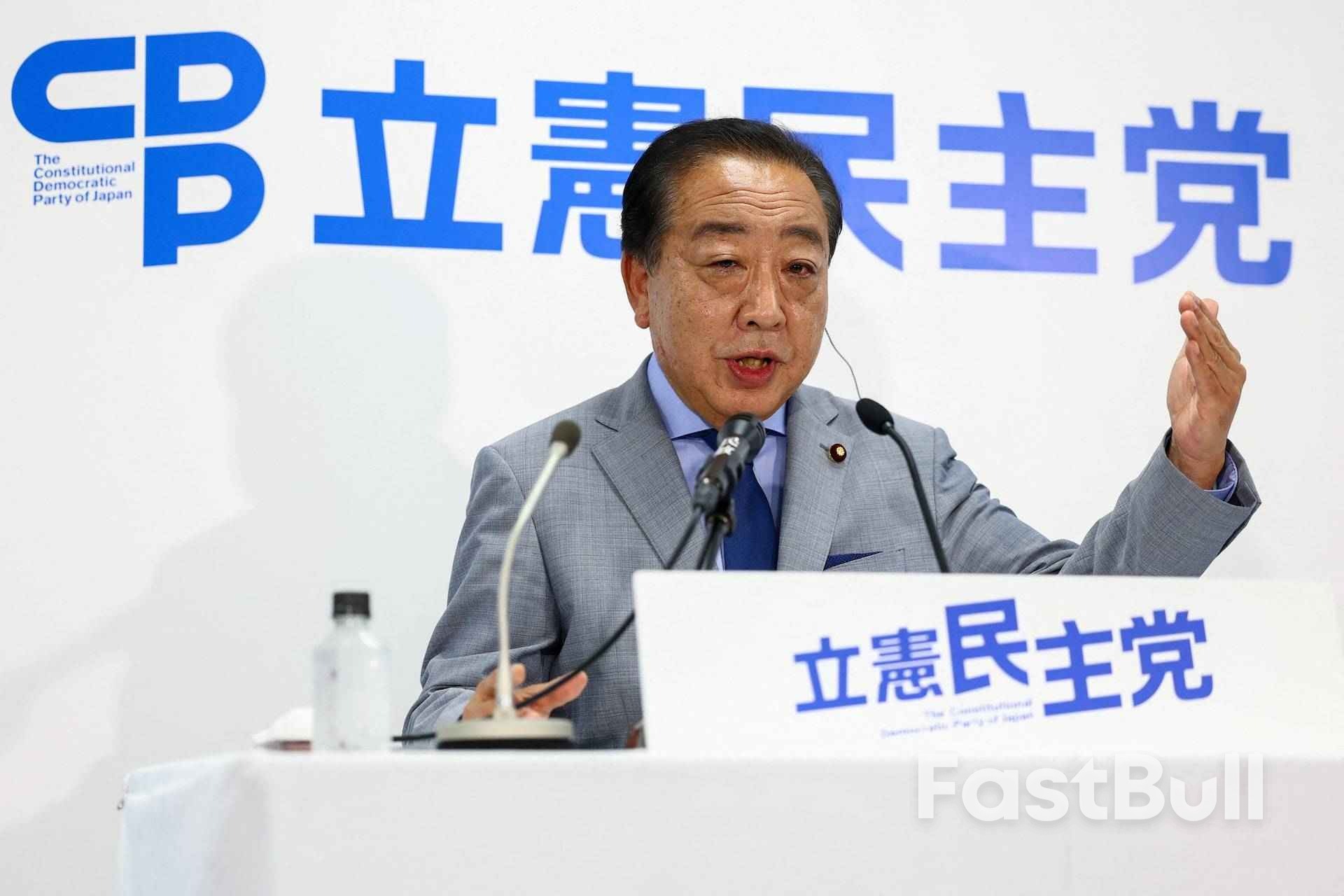
Japan's main opposition Constitutional Democratic Party of Japan and Komeito have agreed to establish a new political party, their leaders said on Thursday, in an attempt to present a united front against ruling parties that they see as too right-leaning.
The announcement came a day after Prime Minister Sanae Takaichi conveyed her plans to dissolve parliament next week and call a snap election to ruling party executives. If realised, the general election could be held as early as Feb. 8.
"The Takaichi administration was formed after last year's leadership race, and policies have generally leaned to the right," CDP leader Yoshihiko Noda told reporters. "This is an opportunity to place the centrist camp right at the heart of politics."
Komeito ended its 26-year partnership with Takaichi's Liberal Democratic Party (LDP) last October over what it viewed as the LDP's failure to respond to a political funding scandal.
The LDP subsequently formed a coalition government with the right-leaning Japan Innovation Party, known as Ishin, paving the way for Takaichi to become the country's first female prime minister.
Komeito chief Tetsuo Saito said the new party would initially be led jointly by Noda and himself.
White Label
Data API
Web Plug-ins
Poster Maker
Affiliate Program
The risk of loss in trading financial instruments such as stocks, FX, commodities, futures, bonds, ETFs and crypto can be substantial. You may sustain a total loss of the funds that you deposit with your broker. Therefore, you should carefully consider whether such trading is suitable for you in light of your circumstances and financial resources.
No decision to invest should be made without thoroughly conducting due diligence by yourself or consulting with your financial advisors. Our web content might not suit you since we don't know your financial conditions and investment needs. Our financial information might have latency or contain inaccuracy, so you should be fully responsible for any of your trading and investment decisions. The company will not be responsible for your capital loss.
Without getting permission from the website, you are not allowed to copy the website's graphics, texts, or trademarks. Intellectual property rights in the content or data incorporated into this website belong to its providers and exchange merchants.
Not Logged In
Log in to access more features

FastBull Membership
Not yet
Purchase
Log In
Sign Up