Markets
News
Analysis
User
24/7
Economic Calendar
Education
Data
- Names
- Latest
- Prev


Signal Accounts for Members
All Signal Accounts
All Contests


France Trade Balance (SA) (Oct)A:--
F: --
Euro Zone Employment YoY (SA) (Q3)A:--
F: --
Canada Part-Time Employment (SA) (Nov)A:--
F: --
P: --
Canada Unemployment Rate (SA) (Nov)A:--
F: --
P: --
Canada Full-time Employment (SA) (Nov)A:--
F: --
P: --
Canada Labor Force Participation Rate (SA) (Nov)A:--
F: --
P: --
Canada Employment (SA) (Nov)A:--
F: --
P: --
U.S. PCE Price Index MoM (Sept)A:--
F: --
P: --
U.S. Personal Income MoM (Sept)A:--
F: --
P: --
U.S. Core PCE Price Index MoM (Sept)A:--
F: --
P: --
U.S. PCE Price Index YoY (SA) (Sept)A:--
F: --
P: --
U.S. Core PCE Price Index YoY (Sept)A:--
F: --
P: --
U.S. Personal Outlays MoM (SA) (Sept)A:--
F: --
U.S. 5-10 Year-Ahead Inflation Expectations (Dec)A:--
F: --
P: --
U.S. Real Personal Consumption Expenditures MoM (Sept)A:--
F: --
U.S. Weekly Total Rig CountA:--
F: --
P: --
U.S. Weekly Total Oil Rig CountA:--
F: --
P: --
U.S. Consumer Credit (SA) (Oct)A:--
F: --
China, Mainland Foreign Exchange Reserves (Nov)A:--
F: --
P: --
Japan Trade Balance (Oct)A:--
F: --
P: --
Japan Nominal GDP Revised QoQ (Q3)A:--
F: --
P: --
China, Mainland Imports YoY (CNH) (Nov)A:--
F: --
P: --
China, Mainland Exports (Nov)A:--
F: --
P: --
China, Mainland Imports (CNH) (Nov)A:--
F: --
P: --
China, Mainland Trade Balance (CNH) (Nov)A:--
F: --
P: --
China, Mainland Exports YoY (USD) (Nov)A:--
F: --
P: --
China, Mainland Imports YoY (USD) (Nov)A:--
F: --
P: --
Germany Industrial Output MoM (SA) (Oct)A:--
F: --
Euro Zone Sentix Investor Confidence Index (Dec)A:--
F: --
P: --
Canada National Economic Confidence IndexA:--
F: --
P: --
U.K. BRC Like-For-Like Retail Sales YoY (Nov)--
F: --
P: --
U.K. BRC Overall Retail Sales YoY (Nov)--
F: --
P: --
Australia Overnight (Borrowing) Key Rate--
F: --
P: --
RBA Rate Statement
RBA Press Conference
Germany Exports MoM (SA) (Oct)--
F: --
P: --
U.S. NFIB Small Business Optimism Index (SA) (Nov)--
F: --
P: --
Mexico 12-Month Inflation (CPI) (Nov)--
F: --
P: --
Mexico Core CPI YoY (Nov)--
F: --
P: --
Mexico PPI YoY (Nov)--
F: --
P: --
U.S. Weekly Redbook Index YoY--
F: --
P: --
U.S. JOLTS Job Openings (SA) (Oct)--
F: --
P: --
China, Mainland M1 Money Supply YoY (Nov)--
F: --
P: --
China, Mainland M0 Money Supply YoY (Nov)--
F: --
P: --
China, Mainland M2 Money Supply YoY (Nov)--
F: --
P: --
U.S. EIA Short-Term Crude Production Forecast For The Year (Dec)--
F: --
P: --
U.S. EIA Natural Gas Production Forecast For The Next Year (Dec)--
F: --
P: --
U.S. EIA Short-Term Crude Production Forecast For The Next Year (Dec)--
F: --
P: --
EIA Monthly Short-Term Energy Outlook
U.S. API Weekly Gasoline Stocks--
F: --
P: --
U.S. API Weekly Cushing Crude Oil Stocks--
F: --
P: --
U.S. API Weekly Crude Oil Stocks--
F: --
P: --
U.S. API Weekly Refined Oil Stocks--
F: --
P: --
South Korea Unemployment Rate (SA) (Nov)--
F: --
P: --
Japan Reuters Tankan Non-Manufacturers Index (Dec)--
F: --
P: --
Japan Reuters Tankan Manufacturers Index (Dec)--
F: --
P: --
Japan Domestic Enterprise Commodity Price Index MoM (Nov)--
F: --
P: --
Japan Domestic Enterprise Commodity Price Index YoY (Nov)--
F: --
P: --
China, Mainland PPI YoY (Nov)--
F: --
P: --
China, Mainland CPI MoM (Nov)--
F: --
P: --


No matching data
Latest Views
Latest Views
Trending Topics
Top Columnists
Latest Update
White Label
Data API
Web Plug-ins
Affiliate Program
View All

No data
A leading Asia-focused fund manager is shifting investment from South Korea and Taiwan to China’s AI sector, citing more attractive valuations and untapped growth potential in Chinese AI infrastructure....
The relentless crypto bloodbath appears to have finally stalled, and signs suggest the market may have already posted a definitive bottom.
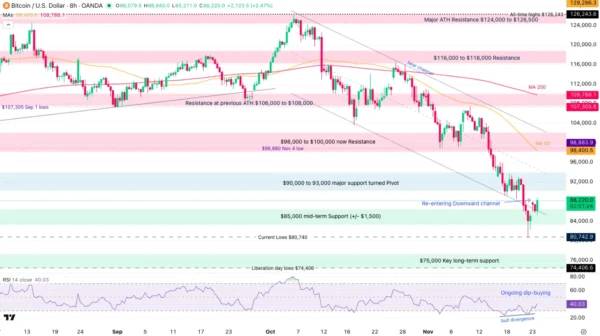
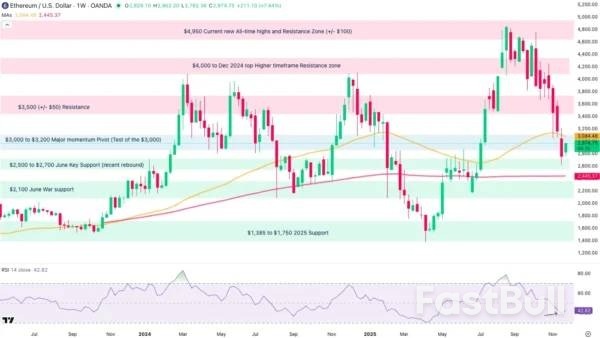
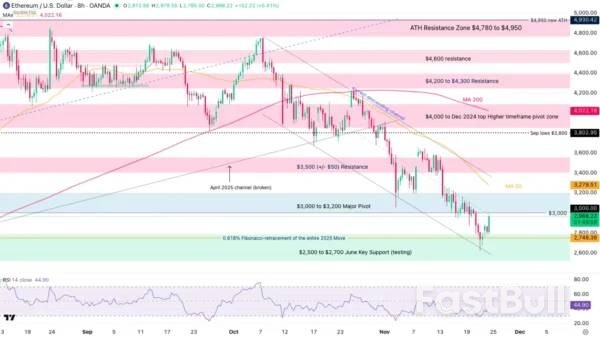
Bearish acceleration had driven prices to stark troughs, with Bitcoin grazing the $80,000 level and altcoins suffering even steeper declines. XRP plunged below $2.00, Ethereum tested levels near $2,800, and Solana dropped to trade near $125.
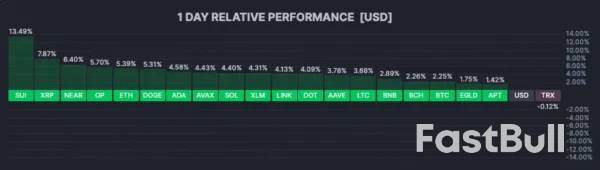
However, as key technical areas and Fibonacci retracements triggered interest from both opportunistic investors and algorithms, dip-buying has brought the Crypto Market higher to start the week. Bitcoin is now testing the $88,000 level, while Ethereum is climbing back towards the $3,000 psychological level.

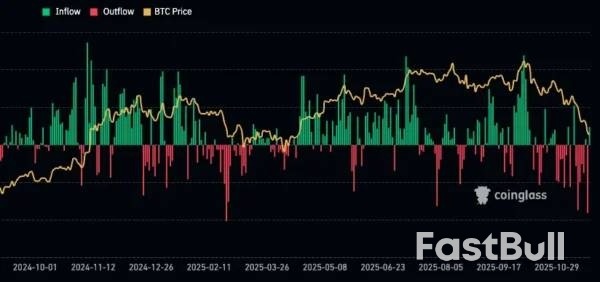
Crucially, institutional flows are signaling a shift. Bitcoin and Ethereum ETFs are seeing their first renewed inflows after a painful 6-week streak of net outflows that reflected general deleveraging across digital assets.
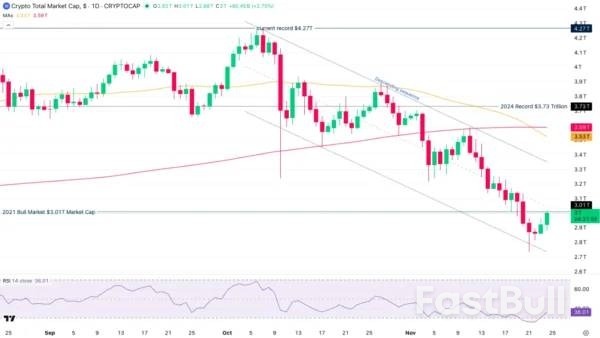
The Total Market Cap, which posted lows around $2.74T just last Friday, is also staging a recovery.
Buoyed by a broadly more positive mood in markets—fueled by a dovish repricing for the Fed's December meeting, strong beats on Nvidia earnings, and potential trade reopening talks with China—the total valuation is once again breaking back above the pivotal $3T mark.
This level will be extremely important to hold as it equates to the 2021 Bull Market peak.


Bitcoin Weekly Chart

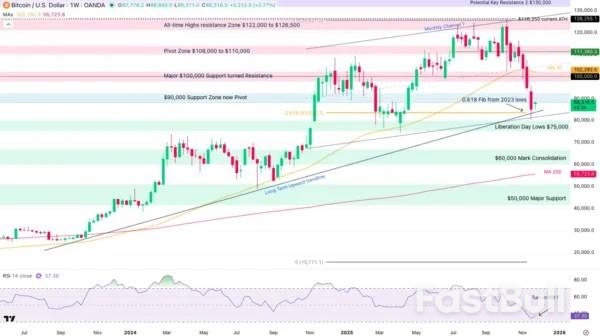
A ruthless 37% descent for the pioneer Crypto has taken a break as multiple confluences of Technical Supports are coming through.
The 61.8% retracement of the entire move from the 2023 ($15,500!) lows has brought some interest, as this Fibonacci level tends to generate traction among Traders and Investors.
This also comes at an imperfect touch of the 2023 trendline, which presents one of the most important technical support on the long-run.
Breaking this line will let the $75,000 Liberation Day as an emergency lifeline but after that, there isn't much before the $60,000 Monthly Support.

A Bullish divergence on the 8H Timeframe also helped the shorter-timeframe buyers to step in quite aggressively.
A precedingly downside-broken Bear Channel pointed to extreme fear which wasn't followed by momentum accumulation, which tends to create Bullish divergences on the RSI.
These are strong setups for mean-reversion, however not much says for how long things will rebound.
Therefore, keep an eye on the Channel lows for Short-term support (if it breaks, more bearish).On the other hand, holding the Channel after a fakeout could lead to a $102,000 higher bound test.
Levels of interest for BTC trading:
Support Levels:
Resistance Levels:

The $2,700 Level mentioned in our very recent ETH analysis was used as a trampoline for Buyers.
The next test will be to break and hold above $3,000, which also corresponds with the mid-lane of the Channel. Above this, breakout odds greatly increase.

Levels of interest for ETH trading:
Support Levels:
Resistance Levels:
Venezuela is tapping Chevron Corp. for supplies of a key feedstock after a US warship blocked the path of a Russian vessel near the country's coast, threatening to roil deliveries of the much-needed material.
The oil major can only load crude oil after it delivers a cargo of diluent naphtha — used to help oil flow in pipelines — to Venezuela, according to a person with knowledge of the situation.
The Chevron-booked ship Nave Neutrino, which was scheduled to load a parcel of crude oil at the Venezuelan government-controlled terminal of Jose, left the coast empty after two days, said two people, asking not to be named because the information is private. The vessel instead sailed to the US Virgin Islands, where it is loading naphtha for Venezuela. After discharging at Jose, it will be able to load crude, one of the people said.
Chevron, which regularly buys naphtha for its projects in Venezuela, didn't immediately return a message seeking comment. The Houston-based company has said in the past that its operations in the Latin American country comply with US laws and regulations.
The last-minute change came after the Russian vessel Seahorse, on its way to back to Venezuela from Cuba, hit the brakes when the US destroyer USS Stockdale crossed its path. The Seahorse made its way to the Venezuelan coast after the warship moved away, according to ship movements tracked by Bloomberg.
The rerouting of the Nave Neutrino underscores the challenges Venezuela has faced since the US beefed up its military presence in the region as part of a campaign to force leader Nicolas Maduro from office. Oil production, already severely constrained, now faces a new setback as dark-fleet ships reconsider approaching Venezuela's ports.
Supplies of naphtha are tight in Venezuela after an explosion at a oil facility that helps separate the material, according to a person with knowledge of the situation. The oil ministry did not immediately respond to a request for comment.

The oil market received a boost from a broader risk-on move, with equities rallying and the market pricing in a higher probability of the US Federal Reserve cutting interest rates on 10 December. As a result, ICE Brent settled almost 1.3% higher on the day. However, the market continues to pay close attention to how peace talks to end the war in Ukraine develop. Reports suggest that there have been significant changes to the proposed peace plan, with the US and Ukraine essentially drafting a new one. The more contentious points, such as those related to territory, will need to be ironed out by President Trump and President Zelensky. Obviously, Russia must agree on any deal. For oil markets, a deal could remove significant supply risk, leaving participants to focus on bearish supply fundamentals through 2026.
European gas prices came under further pressure yesterday, with the Title Transfer Facility (TTF) trading below EUR30/MWh to its lowest level since May 2024. Ukrainian peace talks weighed on prices somewhat, while weather forecasts for December suggest milder-than-usual temperatures after a recent cold spell. The colder weather in recent days has led to gas storage in the EU falling more rapidly. It's now 79% full, down from a 5-year average of 89%. The large investment fund gross short in the market still leaves plenty of positioning risk, particularly as we move deeper into winter. For now, funds seem to believe that the supply outlook is comfortable, with growing LNG supply.
A majority Chinese-owned Indonesian nickel plant, QMB New Energy Materials, is cutting back production for at least two weeks because its tailings site is nearly full, according to Bloomberg. Indonesia accounts for around 60% of global nickel production. Its rapid expansion, driven by Chinese investment, is drawing increased local scrutiny. Much of this scrutiny comes from Indonesia's expanding High-Pressure Acid Leaching (HPAL) segment. The combination of intensive acid use, high waste volumes and complex tailings storage raised environmental concerns. This could influence future project approvals and add uncertainty to Indonesia's supply trajectory. Indonesia's nickel strategy relies heavily on the HPAL method, which converts vast reserves of low-grade laterite ore into battery-grade nickel—a critical material for the electric vehicle supply chain.
Nickel is the worst-performing metal on the LME this year. Prices are down more than 4% year-to-date, and the global market is heading for another year of surplus in 2026. However, supply risks do exist, as Indonesia moves to tighten control over its mining sector.
London cocoa came under further pressure yesterday, with the front-month contract falling below GBP3,700/t at one stage, and trading to its lowest level since January 2024. The weather in West Africa has been largely supportive for the crop recently. Meanwhile, robust cocoa arrivals at ports in the Ivory Coast signalled an improving supply outlook. Recent official numbers suggest that Ivorian bean arrivals at ports have topped 100,000 tons for three straight weeks. They are now near last year's pace after a slow start to the season that began in October.
According to the Brazilian Coffee Exporters Council (Cecafé), Brazilian coffee exporters might take at least six months to make up for the volumes they were unable to ship to the US amid steep tariffs imposed by the Trump administration. There are suggestions that Brazil has withheld about 1m bags from the US market since a 40% surcharge took effect in August. Between August and October, exports to the US dropped 51.5% to 983.97k bags. Last Friday, the White House announced it would lift the 40% tariff on Brazilian coffee.
The job market is weak enough to warrant another quarter-point rate cut in December, though action beyond that depends on an upcoming flood of data delayed by the government shutdown, Fed Governor Christopher Waller said on Monday.
Since the last Fed meeting, "most of the private sector and anecdotal data that we've gotten is that nothing has really changed. The labor market is soft. It's continuing to weaken," with inflation expected to ease, Waller said on Fox Business' Mornings with Maria.
While that makes a December cut appropriate, "January could be a little trickier, because we're going to get a flood of data that's released. If it is kind of consistent with what we've seen, then you can make the case for January. But if it suddenly shows a rebound in inflation or jobs or the economy's taking off, then it might give concern" about more cuts, Waller said.
Fed officials are divided over whether to cut rates again at the December meeting, though recent comments from top policymakers - including New York Fed President John Williams on Friday - have shifted market expectations strongly in favor of another quarter-point reduction at their December 9-10 meeting. According to CME Group's FedWatch tool, the futures-market-implied probability of a quarter point reduction to a range of 3.50% to 3.75% is now about 83%, roughly double what it had been a week ago.
The Fed will remain information-constrained at that session, with government statistical agencies still digging through the backlog of work from the 43-day shutdown that ended November 14. The Bureau of Labor Statistics already has said it will not release a jobs or consumer inflation report for October, while the reports for November will not become public until after the Fed meets.
In the absence of those keystone data releases, officials are relying more heavily on information from private providers and on their own contacts in businesses and households around the country. Much of that information is compiled into a compendium known as the Beige Book that is released two weeks prior to each Fed meeting, with the next version due out on Wednesday.
"The labor market is still weak and ... we're getting no evidence telling me it's rebounding," Waller said. He downplayed the recently released September jobs report, showing the economy added a more-than-expected 119,000 jobs that month, as likely to be revised lower. The September report also showed the unemployment rate rose to 4.4% from 4.3% the month before.
One other policymaker joined Waller in voicing that concern on Monday. San Francisco Fed President Mary Daly, who had been on the fence over whether to support a third consecutive rate cut next month, told the Wall Street Journal she now backs a reduction.
"On the labor market, I don't feel as confident we can get ahead of it," she said in an interview Monday. "It's vulnerable enough now that the risk is it'll have a nonlinear change."
Daly, who does not have a vote on policy this year but like all Fed policymakers has a voice at the debate during meetings, now views an inflation surge as a lower risk.
By the time of the next meeting on January 27-28, however, Waller, Daly and their colleagues should be able to better gauge which of two views of the economy are starting to materialize - the one where inflation stays persistent with a risk of moving higher, a possibility that has led several regional reserve bank presidents to oppose further rate cuts, or the one where job growth remains weak and the unemployment rate increases, the outcome Waller finds most concerning.
Fed officials at the upcoming meeting will issue new economic projections that could reset expectations for any rate reductions next year. Policymakers were divided on the outlook in September, with the median official seeing only one further rate hike in 2026. Investors currently anticipate two to three cuts next year, according to data from the CME Group's FedWatch.
By the next meeting, the Fed should have in hand official estimates for jobs, the unemployment rate, and inflation through December.
"You may see a more of a meeting-by-meeting approach once you get to January," Waller said. "But I still don't think the labor market is going to turn around in the next six to eight weeks."
White Label
Data API
Web Plug-ins
Poster Maker
Affiliate Program
The risk of loss in trading financial instruments such as stocks, FX, commodities, futures, bonds, ETFs and crypto can be substantial. You may sustain a total loss of the funds that you deposit with your broker. Therefore, you should carefully consider whether such trading is suitable for you in light of your circumstances and financial resources.
No decision to invest should be made without thoroughly conducting due diligence by yourself or consulting with your financial advisors. Our web content might not suit you since we don't know your financial conditions and investment needs. Our financial information might have latency or contain inaccuracy, so you should be fully responsible for any of your trading and investment decisions. The company will not be responsible for your capital loss.
Without getting permission from the website, you are not allowed to copy the website's graphics, texts, or trademarks. Intellectual property rights in the content or data incorporated into this website belong to its providers and exchange merchants.
Not Logged In
Log in to access more features

FastBull Membership
Not yet
Purchase
Log In
Sign Up