Markets
News
Analysis
User
24/7
Economic Calendar
Education
Data
- Names
- Latest
- Prev



Signal Accounts for Members
All Signal Accounts
All Contests


MSCI's Nordic Countries Index Rose 0.3%, Marking Its Third Consecutive Day Of Gains, Closing At 394.43 Points. Among The Ten Sectors, The Nordic Industrials Sector Saw The Largest Increase. Boliden Ab Closed Up 5.3%, Leading The Pack Among Nordic Stocks
[Italian Banking Sector Hits Record Closing High] Germany's DAX 30 Index Closed Down 0.02% At 24,793.06 Points. France's Stock Index Closed Down 0.13%, Italy's Stock Index Closed Up 0.80% With The Banking Index Up 1.24%, And The UK Stock Index Closed Down 0.39%
[Bitcoin Falls Below $77,000, 24-Hour Decline Of 2.8%] February 4Th, According To Htx Market Data, Bitcoin Fell Below $77,000, Now Trading At $76,900, A 24-Hour Decrease Of 2.8%
Spot Gold Surged $302.83 During The Day, Currently Trading At $4,963.79 Per Ounce, A Gain Of 6.50%
Denmark's Forex Reserves 673.9 Billion DKK At End-January Versus 651.1 Billion At End-December
Fitch: Forecasts UK's Inflation Outlook To Be More Benign This Year And For Bank Of England To Respond With Three Rate Cuts In 2026

U.K. Manufacturing PMI Final (Jan)A:--
F: --
P: --
Turkey Trade Balance (Jan)A:--
F: --
P: --
Brazil IHS Markit Manufacturing PMI (Jan)A:--
F: --
P: --
Canada National Economic Confidence IndexA:--
F: --
P: --
Canada Manufacturing PMI (SA) (Jan)A:--
F: --
P: --
U.S. IHS Markit Manufacturing PMI Final (Jan)A:--
F: --
P: --
U.S. ISM Output Index (Jan)A:--
F: --
P: --
U.S. ISM Inventories Index (Jan)A:--
F: --
P: --
U.S. ISM Manufacturing Employment Index (Jan)A:--
F: --
P: --
U.S. ISM Manufacturing New Orders Index (Jan)A:--
F: --
P: --
U.S. ISM Manufacturing PMI (Jan)A:--
F: --
P: --
US President Trump delivered a speech
South Korea CPI YoY (Jan)A:--
F: --
P: --
Japan Monetary Base YoY (SA) (Jan)A:--
F: --
P: --
Australia Building Approval Total YoY (Dec)A:--
F: --
Australia Building Permits MoM (SA) (Dec)A:--
F: --
Australia Building Permits YoY (SA) (Dec)A:--
F: --
P: --
Australia Private Building Permits MoM (SA) (Dec)A:--
F: --
Australia Overnight (Borrowing) Key RateA:--
F: --
P: --
RBA Rate Statement
Japan 10-Year Note Auction YieldA:--
F: --
P: --
The U.S. House of Representatives voted on a short-term spending bill to end the partial government shutdown.
Saudi Arabia IHS Markit Composite PMI (Jan)A:--
F: --
P: --
RBA Press Conference
Turkey PPI YoY (Jan)A:--
F: --
P: --
Turkey CPI YoY (Jan)A:--
F: --
P: --
Turkey CPI YoY (Excl. Energy, Food, Beverage, Tobacco & Gold) (Jan)A:--
F: --
P: --
U.K. 10-Year Note Auction YieldA:--
F: --
P: --
Richmond Federal Reserve President Barkin delivered a speech.
U.S. Weekly Redbook Index YoYA:--
F: --
P: --
Mexico Manufacturing PMI (Jan)A:--
F: --
P: --
U.S. API Weekly Refined Oil Stocks--
F: --
P: --
U.S. API Weekly Gasoline Stocks--
F: --
P: --
U.S. API Weekly Cushing Crude Oil Stocks--
F: --
P: --
U.S. API Weekly Crude Oil Stocks--
F: --
P: --
Japan IHS Markit Services PMI (Jan)--
F: --
P: --
Japan IHS Markit Composite PMI (Jan)--
F: --
P: --
China, Mainland Caixin Services PMI (Jan)--
F: --
P: --
China, Mainland Caixin Composite PMI (Jan)--
F: --
P: --
India HSBC Services PMI Final (Jan)--
F: --
P: --
India IHS Markit Composite PMI (Jan)--
F: --
P: --
Russia IHS Markit Services PMI (Jan)--
F: --
P: --
South Africa IHS Markit Composite PMI (SA) (Jan)--
F: --
P: --
Italy Services PMI (SA) (Jan)--
F: --
P: --
Italy Composite PMI (Jan)--
F: --
P: --
Germany Composite PMI Final (SA) (Jan)--
F: --
P: --
Euro Zone Composite PMI Final (Jan)--
F: --
P: --
Euro Zone Services PMI Final (Jan)--
F: --
P: --
U.K. Composite PMI Final (Jan)--
F: --
P: --
U.K. Total Reserve Assets (Jan)--
F: --
P: --
U.K. Services PMI Final (Jan)--
F: --
P: --
U.K. Official Reserves Changes (Jan)--
F: --
P: --
Euro Zone Core CPI Prelim YoY (Jan)--
F: --
P: --
Euro Zone Core HICP Prelim YoY (Jan)--
F: --
P: --
Euro Zone PPI MoM (Dec)--
F: --
P: --
Euro Zone HICP Prelim YoY (Jan)--
F: --
P: --
Euro Zone Core HICP Prelim MoM (Jan)--
F: --
P: --
Italy HICP Prelim YoY (Jan)--
F: --
P: --
Euro Zone Core CPI Prelim MoM (Jan)--
F: --
P: --
Euro Zone PPI YoY (Dec)--
F: --
P: --
U.S. MBA Mortgage Application Activity Index WoW--
F: --
P: --


No matching data
View All

No data
China's new agricultural policy focuses on diversification, self-sufficiency, and tech innovation amidst global tensions.
China has released its annual "No 1 document," a key policy blueprint outlining the government's top priorities for rural and agricultural development. The plan focuses on stabilizing grain and oilseed production, diversifying agricultural imports, and providing greater support to farmers.
This strategy comes as Beijing contends with a complex mix of trade friction with major food exporters like the US and Canada, a domestic economic slowdown, and mounting climate challenges. While China achieved record grain output last year, its heavy reliance on imports has prompted an accelerated push toward self-sufficiency through investments in machinery and seed technology.
A central theme of the new policy is the push to diversify supply chains. The document mentions "diversification" three times, a notable increase from just once in 2025, signaling a strategic pivot. The goals are to expand oilseed supplies, develop a more varied food system, and broaden the sources of agricultural imports.
According to Even Rogers Pay, director at the Beijing-based consultancy Trivium China, this emphasis shows that policymakers view diversification as crucial for making the country's food system more secure. "(It's) a strategy to make China's food system... more resilient when shocks like natural disasters or trade wars occur," Pay noted. This approach could reduce dependence on traditional exporters and boost trade with nations in the Global South.
The policy on soybeans clearly illustrates this new focus. The directive has shifted from consolidating gains in planting area in 2025 to a new mandate of "consolidating and enhancing production capacity."
Pay suggests this change indicates a greater emphasis on improving crop yield and quality rather than simply expanding the land used for cultivation. This move is part of a broader effort to reduce reliance on US soybeans, which are primarily used for animal feed in China's massive pork industry. Since the first trade war, Beijing has actively boosted domestic production to bolster food security. As a result, the US market share for soybeans in China dropped from 41% in 2016 to just 15% in 2025.
The document also outlines ambitious plans to modernize the agricultural sector through technological innovation. Key initiatives include:
• Strengthening agricultural research platforms.
• Supporting leading agri-tech companies.
• Advancing industrialized biotech cultivation.
• Integrating artificial intelligence (AI) with farming practices.
• Cultivating a new generation of specialized agricultural talent.
Beyond technology, the plan aims to build internationally competitive agricultural enterprises, support key exports, and crack down on the smuggling of agricultural products while actively participating in global food governance.
The policy blueprint also addresses challenges within the domestic meat industry, which has recently struggled with oversupply and low prices that have squeezed producer profits. The government intends to strengthen the management of pork production, a staple in the country.
Additionally, the plan calls for targeted support for the beef and dairy sectors and includes measures to promote dairy consumption. The government has already implemented policies to stabilize the industry, such as introducing a quota system for beef imports and placing tariffs on certain EU dairy products.
The U.S. House of Representatives is preparing for a tense vote on Tuesday to end the latest government shutdown, as a spending deal faces unexpected resistance from both Democrats and hardline conservatives.
While the funding package sailed through the Senate with bipartisan support and has President Donald Trump's endorsement, its passage in the House is far from certain.
The legislation is designed to fund several key government functions through October. If passed, the bill would allocate funds for:
• Defense
• Healthcare and Labor
• Education
• Housing and other agencies
Crucially, it also includes a temporary funding extension for the Department of Homeland Security. This measure is intended to give lawmakers more time to negotiate potential changes to the nation's immigration enforcement policies. After clearing the House, the bill would head to President Trump's desk to be signed into law.
The bill's path is complicated by an unusual alignment of opposition, with both sides of the aisle threatening to block it for different reasons.
Democrats Push for Immigration Restraints
Democrats are demanding new controls on President Trump's aggressive immigration enforcement strategies. Their position has hardened following an incident last month in Minneapolis where federal agents killed two U.S. citizens.
House Democratic Leader Hakeem Jeffries confirmed his party plans to vote "no" on an initial procedural vote Tuesday morning. However, he left the door open for some members to support the final package if it manages to clear that first hurdle.
Conservatives Demand Voter ID Rules
On the other side, a group of hardline Republicans is threatening to derail the legislation unless it incorporates new voting requirements. Their demands include provisions that would require proof of U.S. citizenship for voter registration and photo IDs for casting a ballot.
House Speaker Mike Johnson dismissed the proposal, stating that such measures do not belong in a spending bill. "Republicans are serious about governing. We'll demonstrate that," he said.
The political math for House Republicans is tight. With a slim 218-214 majority, they can only afford to lose a single Republican vote if Democrats remain united in their opposition.
President Trump weighed in on Monday, urging lawmakers not to amend the bill. He warned that any changes could risk prolonging the partial government shutdown that officially began on Saturday.
A swift resolution is needed to prevent widespread disruption to government services and the broader economy. The memory of the most recent government shutdown, which lasted a record 43 days in October and November, looms large.
That shutdown resulted in furloughs for hundreds of thousands of federal workers and is estimated to have cost the U.S. economy around $11 billion.
The Federal Reserve's recent interest rate cuts are a strategic "insurance" policy designed to protect the U.S. job market, according to Richmond Fed President Tom Barkin. Speaking on Tuesday, Barkin framed the moves as a way to support employment while the central bank navigates the "last mile" of its battle to bring inflation back to its 2% target.
Since the fall of 2024, the Fed has approved 1.75 percentage points in rate cuts. Barkin explained these actions have "taken out some insurance to support the labor market as we work to complete the last mile to bring inflation back to target."
He noted that while the unemployment rate remains low by historical standards, inflation is still about a percentage point above the Fed’s goal but is expected to fall in the coming months.
"So far so good," Barkin said, but he emphasized the need for the central bank to finish the task of returning inflation to 2% after a nearly five-year miss.
Barkin expressed serious concern about the persistence of high prices. "Inflation...still remains above our target. That's been the case since 2021," he stated in prepared remarks for a South Carolina education group. "I take this sustained miss seriously."
He argued that current price levels have a direct impact on future expectations, stating, "Today's inflation numbers, regardless of the 'why,' significantly influence tomorrow's inflation."
Although Barkin is not a voting member on monetary policy this year, his comments align with the Fed's current pause on further cuts. The central bank is awaiting more data confirming an expected decline in inflation, all while navigating a leadership transition following the nomination of former Governor Kevin Warsh to succeed Jerome Powell as Chair.
Looking ahead, Barkin projected that the U.S. economy will remain resilient in 2026. He anticipates "significant stimulus" from upcoming deregulation and tax reductions, which he believes will keep economic activity strong.
Business and consumer confidence also appears solid. "It's hard to imagine consumers and businesses moving to the sidelines," Barkin said. He added that corporate contacts confirm this sentiment, telling him that "demand is fine" and that "most firms I speak to still aren't doing layoffs at scale."
A recent jump in productivity is providing another key support for the economy. Barkin noted that this trend helps ease inflationary pressures directly.
When productivity is high, "businesses can bear higher input costs without facing as much pressure to increase prices," he explained. This allows companies to absorb rising costs rather than passing them on to consumers.
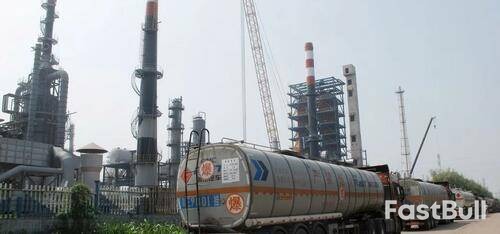
China's independent "teapot" refiners are strategically shifting their crude oil purchases, turning to discounted Iranian supplies to fill a major void left by the sudden disruption of Venezuelan oil exports. This pivot by the world’s largest crude importer follows a dramatic halt in shipments from the South American nation.

Venezuelan oil shipments to China effectively ceased after a series of events drastically altered the country's political and industrial landscape. The disruption began when US President Donald Trump imposed a blockade in December on Venezuelan oil tankers attempting to leave the country.
The situation reportedly escalated on January 3rd, when U.S. forces bombed the capital city of Caracas, abducted Venezuelan President Nicholas Maduro, and took control of the nation's oil sector. Washington subsequently announced it was placing Venezuela’s oil revenues into accounts in Qatar, to be controlled by the White House.
In the face of this uncertainty, the state-owned firm PetroChina has halted all its oil purchases from Caracas. While the White House has permitted global trading firms Vitol and Trafigura to sell up to 50 million barrels of Venezuelan oil, the direct flow to key Chinese buyers has been severed.
In response to the supply vacuum, Beijing's independent refiners have ramped up their purchases of Iranian heavy crude. According to sources familiar with the matter, this oil is being sourced from bonded storage tanks within China and from ships, all at steep discounts.
Further Chinese purchases of Iranian Heavy and Pars crude grades are expected to continue through February and March. The primary driver is economic: with few willing buyers due to U.S. sanctions, Iran is offering its Heavy crude at a discount of about $12 per barrel.
This pricing makes Iranian oil highly competitive. For comparison, Russian Urals crude also trades at a significant discount of $11 to $12 per barrel due to sanctions. Meanwhile, the Venezuelan crude being offered by Vitol with Washington's permission carries a much smaller discount of roughly $5 per barrel.
Before the disruption, China's imports from Venezuela were substantial, averaging 394,000 barrels per day (bpd) and accounting for around 4% of Beijing's total seaborne crude imports.
The geopolitical chessboard for energy continues to change. President Trump recently announced that India will begin purchasing Venezuelan oil, a move intended to help replace its Russian supplies amid U.S. tariff threats. This comes after New Delhi had previously stopped buying oil from Caracas last year after the Trump administration imposed a 25% tariff on countries doing so.
Ultimately, aggressive U.S. sanctions targeting Russia, Venezuela, and Iran have forced major energy consumers like China and India to constantly adapt their procurement strategies in a volatile global market.
The United Arab Emirates has issued a direct call for the United States and Iran to de-escalate their standoff ahead of renewed talks this week, stressing that the Middle East cannot withstand another war. The appeal comes as both sides prepare for negotiations in Turkey over Iran's nuclear program.
U.S. President Donald Trump has signaled that "bad things" could happen if a deal isn't reached, especially with U.S. warships positioned near Iran.
The UAE, a major regional power and a key U.S. ally, has made its position clear. "I think that the region has gone through various calamitous confrontations," said Anwar Gargash, an adviser to the UAE president, at the World Governments Summit in Dubai. "I don't think we need another one."
Gargash urged for direct negotiations between Washington and Tehran to resolve outstanding issues and suggested that rebuilding this relationship could help Iran's economy, which has been damaged by U.S. sanctions.
Talks are scheduled for Friday in Istanbul, where U.S. Special Envoy Steve Witkoff will meet with Iranian Foreign Minister Abbas Araqchi. The primary goal is to revive diplomacy and ease fears of a new regional conflict.
According to a regional diplomat, representatives from other key countries, including Saudi Arabia and Egypt, will also participate. An official, speaking anonymously, confirmed that invitations at the foreign minister level were extended to a group of regional powers:
• Pakistan
• Saudi Arabia
• Qatar
• Egypt
• Oman
• United Arab Emirates
The priority for the meeting is to avoid conflict and de-escalate the current tensions between the U.S. and Iran.
The diplomatic push follows a recent U.S. naval buildup near Iran and a violent crackdown on anti-government protests within the country last month. While President Trump has held back from direct intervention, he has dispatched a naval flotilla to the coast and demanded nuclear concessions.
This standoff follows a U.S. strike on Iranian nuclear targets in June, which came after a 12-day Israeli bombing campaign. Since then, Iran has maintained that it has halted its uranium enrichment activities, which it claims are for peaceful purposes.
However, recent satellite images from Planet Labs of two targeted sites, Isfahan and Natanz, appear to show new roofing on two buildings that were previously destroyed. The imagery did not show other signs of rebuilding.
Sources within Iran suggest its leadership is increasingly concerned that a U.S. strike could destabilize its hold on power. Six current and former officials indicated that a foreign attack could drive an already angry public back into the streets.
Four officials briefed on high-level meetings reported that Supreme Leader Ayatollah Ali Khamenei was told that public anger following last month's crackdown—the deadliest since the 1979 Islamic Revolution—has eroded the government's ability to rule by fear.
Last week, Iranian sources revealed that President Trump had laid out three core conditions for resuming talks:
1. Zero enrichment of uranium in Iran.
2. Limits on Tehran's ballistic missile program.
3. An end to its support for regional proxies.
Iran has consistently rejected these demands as violations of its sovereignty. However, two Iranian officials noted that the country's clerical rulers view the ballistic missile program as a greater obstacle to a deal than uranium enrichment.
One official elaborated on Iran's position: "Diplomacy is ongoing. For talks to resume, Iran says there should not be preconditions and that it is ready to show flexibility on uranium enrichment, including handing over 400 kg of highly enriched uranium (HEU), accepting zero enrichment under a consortium arrangement as a solution."
Tehran's negotiating position comes as its regional influence has been weakened by Israeli attacks on its proxies—including Hamas, Hezbollah, the Houthis, and militias in Iraq—and the ousting of its ally, former Syrian President Bashar al-Assad.
The risk of loss in trading financial instruments such as stocks, FX, commodities, futures, bonds, ETFs and crypto can be substantial. You may sustain a total loss of the funds that you deposit with your broker. Therefore, you should carefully consider whether such trading is suitable for you in light of your circumstances and financial resources.
No decision to invest should be made without thoroughly conducting due diligence by yourself or consulting with your financial advisors. Our web content might not suit you since we don't know your financial conditions and investment needs. Our financial information might have latency or contain inaccuracy, so you should be fully responsible for any of your trading and investment decisions. The company will not be responsible for your capital loss.
Without getting permission from the website, you are not allowed to copy the website's graphics, texts, or trademarks. Intellectual property rights in the content or data incorporated into this website belong to its providers and exchange merchants.
Not Logged In
Log in to access more features
Log In
Sign Up