Markets
News
Analysis
User
24/7
Economic Calendar
Education
Data
- Names
- Latest
- Prev


Signal Accounts for Members
All Signal Accounts
All Contests


U.K. Trade Balance Non-EU (SA) (Oct)A:--
F: --
P: --
U.K. Trade Balance (Oct)A:--
F: --
P: --
U.K. Services Index MoMA:--
F: --
P: --
U.K. Construction Output MoM (SA) (Oct)A:--
F: --
P: --
U.K. Industrial Output YoY (Oct)A:--
F: --
P: --
U.K. Trade Balance (SA) (Oct)A:--
F: --
P: --
U.K. Trade Balance EU (SA) (Oct)A:--
F: --
P: --
U.K. Manufacturing Output YoY (Oct)A:--
F: --
P: --
U.K. GDP MoM (Oct)A:--
F: --
P: --
U.K. GDP YoY (SA) (Oct)A:--
F: --
P: --
U.K. Industrial Output MoM (Oct)A:--
F: --
P: --
U.K. Construction Output YoY (Oct)A:--
F: --
P: --
France HICP Final MoM (Nov)A:--
F: --
P: --
China, Mainland Outstanding Loans Growth YoY (Nov)A:--
F: --
P: --
China, Mainland M2 Money Supply YoY (Nov)A:--
F: --
P: --
China, Mainland M0 Money Supply YoY (Nov)A:--
F: --
P: --
China, Mainland M1 Money Supply YoY (Nov)A:--
F: --
P: --
India CPI YoY (Nov)A:--
F: --
P: --
India Deposit Gowth YoYA:--
F: --
P: --
Brazil Services Growth YoY (Oct)A:--
F: --
P: --
Mexico Industrial Output YoY (Oct)A:--
F: --
P: --
Russia Trade Balance (Oct)A:--
F: --
P: --
Philadelphia Fed President Henry Paulson delivers a speech
Canada Building Permits MoM (SA) (Oct)A:--
F: --
P: --
Canada Wholesale Sales YoY (Oct)A:--
F: --
P: --
Canada Wholesale Inventory MoM (Oct)A:--
F: --
P: --
Canada Wholesale Inventory YoY (Oct)A:--
F: --
P: --
Canada Wholesale Sales MoM (SA) (Oct)A:--
F: --
P: --
Germany Current Account (Not SA) (Oct)A:--
F: --
P: --
U.S. Weekly Total Rig CountA:--
F: --
P: --
U.S. Weekly Total Oil Rig CountA:--
F: --
P: --
Japan Tankan Large Non-Manufacturing Diffusion Index (Q4)--
F: --
P: --
Japan Tankan Small Manufacturing Outlook Index (Q4)--
F: --
P: --
Japan Tankan Large Non-Manufacturing Outlook Index (Q4)--
F: --
P: --
Japan Tankan Large Manufacturing Outlook Index (Q4)--
F: --
P: --
Japan Tankan Small Manufacturing Diffusion Index (Q4)--
F: --
P: --
Japan Tankan Large Manufacturing Diffusion Index (Q4)--
F: --
P: --
Japan Tankan Large-Enterprise Capital Expenditure YoY (Q4)--
F: --
P: --
U.K. Rightmove House Price Index YoY (Dec)--
F: --
P: --
China, Mainland Industrial Output YoY (YTD) (Nov)--
F: --
P: --
China, Mainland Urban Area Unemployment Rate (Nov)--
F: --
P: --
Saudi Arabia CPI YoY (Nov)--
F: --
P: --
Euro Zone Industrial Output YoY (Oct)--
F: --
P: --
Euro Zone Industrial Output MoM (Oct)--
F: --
P: --
Canada Existing Home Sales MoM (Nov)--
F: --
P: --
Euro Zone Total Reserve Assets (Nov)--
F: --
P: --
U.K. Inflation Rate Expectations--
F: --
P: --
Canada National Economic Confidence Index--
F: --
P: --
Canada New Housing Starts (Nov)--
F: --
P: --
U.S. NY Fed Manufacturing Employment Index (Dec)--
F: --
P: --
U.S. NY Fed Manufacturing Index (Dec)--
F: --
P: --
Canada Core CPI YoY (Nov)--
F: --
P: --
Canada Manufacturing Unfilled Orders MoM (Oct)--
F: --
P: --
Canada Manufacturing New Orders MoM (Oct)--
F: --
P: --
Canada Core CPI MoM (Nov)--
F: --
P: --
Canada Manufacturing Inventory MoM (Oct)--
F: --
P: --
Canada CPI YoY (Nov)--
F: --
P: --
Canada CPI MoM (Nov)--
F: --
P: --
Canada CPI YoY (SA) (Nov)--
F: --
P: --
Canada Core CPI MoM (SA) (Nov)--
F: --
P: --


No matching data
Latest Views
Latest Views
Trending Topics
Top Columnists
Latest Update
White Label
Data API
Web Plug-ins
Affiliate Program
View All

No data
In response to U.S. restrictions on Nvidia AI chips, China is subsidizing energy costs for major domestic data centers by up to 50%, aiming to accelerate the development of homegrown AI capabilities through infrastructure support....
South Korea's consumer inflation quickened in October as a weaker won lifted energy and food costs, reinforcing the case for the central bank to extend the pause in its monetary easing cycle as it seeks to cool a housing market rally.
Consumer prices advanced 2.4% from a year earlier, accelerating from a 2.1% gain in September, the Ministry of Data and Statistics said Tuesday. The pace, which exceeded the median forecast of 2.2% in a Bloomberg survey of economists, was the fastest since July 2024, when prices jumped by 2.6%.
Core inflation, which strips out volatile food and energy items, picked up to a 2.2% clip from 2% in September, the data showed. Both headline and core gauges are now hovering above the Bank of Korea's 2% target.
The latest inflation reading comes at a delicate time for the BOK, which has held its key rate steady for the past three meetings. While price pressures have eased in recent months, concerns over asset bubbles and financial stability risks linked to household debt have kept policymakers from resuming the rate-cutting cycle that began in October last year.
That limits the central bank's options as it gauges the potential impact from 15% US tariffs on South Korean goods. The BOK estimates the measures will shave 0.45 percentage point off growth this year and 0.6 point in 2026.
The uptick in October inflation was largely driven by a nearly 1.9% slide in the won against the dollar last month, pushing up import prices for energy and food. The currency fell to its weakest level since March. The won is the second-weakest performing Asian currency versus the dollar since Oct. 1.
Fuel costs also climbed after the government partially rolled back fuel tax subsidies in October, adding to upward pressure on gasoline prices. Meanwhile, apartment prices in Seoul extended their streak of gains for a 39th straight week as of Oct. 27, according to the Korea Real Estate Board.
Food and non-alcoholic beverage prices climbed 3.5% in October from a year earlier, while housing and utilities costs rose 1.2%. Prices for food and lodging gained 3.2% and transportation costs also increased 3.4%.
Economists are divided over whether the BOK will lower rates at its final policy meeting of the year on Nov. 27 as policymakers weigh whether housing prices in the capital region have stabilized.
The inflation data come on the heels of stronger-than-expected growth for the third quarter, supported by resilient exports and domestic spending. Gross Domestic Product expanded 1.2% from the previous quarter, beating the estimate of 1% growth.
Private consumption rose 1.3%, fueled by two rounds of cash handouts under the government's extra budget of more than $20 billion, with spending on both goods and services increasing, the central bank said last week.

Starbucks said Monday it is forming a joint venture with Chinese investment firm Boyu Capital to operate Starbucks stores in China.
Under the agreement, Boyu will pay $4 billion to acquire a 60% interest in Starbucks' retail operations in China. Starbucks will retain a 40% interest in the joint venture and will own and license the Starbucks brand.
Starbucks entered China almost 30 years ago, and has been credited with growing coffee culture in the country. China is Starbucks' second-largest market outside the U.S., with 8,000 locations.
But in recent years, the Seattle coffee giant has struggled in China with cheap, fast-growing Chinese startups like Luckin Coffee.
As a result, Starbucks has been looking for a partner to help it grow its business in China, particularly in smaller cities. In July, Starbucks Chairman and CEO Brian Niccol said the company was evaluating around 20 offers for a stake in the company.
China is taking a measured approach to fixing its steel industry, improving the outlook for high-end companies but steering clear of ordering the cuts needed to decisively shrink supply.
The readout of China's upcoming five-year plan was heavy on pledges to boost consumption and innovation in the economy. The government's anti-involution campaign — targeting the overcapacity and ruinous competition that's been a feature of the steel sector among others — drew perhaps less emphasis than expected.
Instead, Beijing seems to have committed to a more gradual tightening of the screws on steelmakers that would play out over years rather than months. The industry ministry in October proposed tougher capacity rules, so that eliminating existing operations would have to more than offset plans to add new facilities, at a ratio of 1.5 to 1. Swaps that involve upgrades to plants would get better terms. Some key hubs wouldn't be allowed to add any capacity at all.
Putting limits on expansion, rather than forcing underperforming operations to shutter, won't help most of the mills struggling with China's prolonged property crash. But promoting value-added steel over commoditized items like construction rebar suggests firms that are able to specialize will benefit.
"The future of the industry is looking brighter for the top echelon of producers," said Tomas Gutierrez, an analyst at Kallanish Commodities Ltd. "They could be supported in boosting quality and innovation, in line with China's broader trend to support the upscaling of productive capacity in the wider economy."
China could still announce numerical targets on output or capacity when policymakers gather at the annual National People's Congress in March. Indeed, the punchy rhetoric at the last meeting sparked speculation that Beijing would demand outright cuts to address the overproduction crippling the industry.
That didn't happen, leaving mills to adjust output based on demand — not great, at least domestically — and margins — surprisingly good due to lower raw material costs. The upshot of the tussle is that annual production has a pretty good chance of sinking below 1 billion tons for the first time in six years.
Whatever the intentions for supply, it's demand that's likely to be more influential in shaping the industry's fortunes. The government's five-year plan does mention a batch of major construction projects that could help.
Otherwise, steel exports have been a notable bright spot for Chinese mills, but it's not clear whether that can last as the world tilts increasingly toward protectionism. Goldman Sachs Group Inc. forecasts an 8% decline next year, albeit to the second-highest net volume on record, according to a recent note from the bank.
Moreover, a rising proportion of the steel sold overseas doesn't qualify as the high-end, finished product favored by the government, suggesting room for improvement when it comes to upgrading the industry.
"If you look at what China's been exporting this year, the growth has come from semi-finished steel like billets," said Macquarie Group Ltd. analyst Florence Sun.
Wheat futures in Chicago jumped as China seeks its first US shipments of the grain in more than a year, following orders for soybeans last week as part of a trade truce between the two nations.
Investors' oil supply worries are fewer, with the threat of disruption fading after US President Donald Trump opted not to confront China on its Russian crude purchases, according to Bloomberg Intelligence. China's coal price should drop next year on tepid demand, BI said.
The European Central Bank must be alert to upside inflation risks and resist the temptation to fine-tune policy, according to Governing Council member Peter Kazimir.
The Slovak official pointed to supply-chain uncertainty, energy costs, and surprisingly strong underlying price pressures and earnings gauges in arguing that officials "must recognize the presence of lingering upside risks."
"The mosaic of data contains elements that should serve as a reminder of why letting one's guard down wouldn't be advisable at this stage," Kazimir said in an op-ed on the Slovak central bank's website. Still, he reiterated the ECB's mantra that policy is in a "good position to face the challenges of the current turbulent environment."
The ECB held interest rates at 2% last week after the economy largely performed in line with expectations. President Christine Lagarde said inflation is close to the 2% target — even as risks warrant close monitoring.
They relate primarily to the trade outlook for the 20-nation euro zone. While a deal with the US has alleviated some uncertainty, firms remain vulnerable — and the latest tussle between Washington and Beijing has highlighted how quickly things can change.
It's against that backdrop that Kazimir cautions against too much activism — even as near-term projections show price pressures falling short of the ECB's goal.
"We should not try to over-engineer our policy and fine-tune inflation dynamics to perfection with small moves," he said. "In trying to be overly precise, the central bank could itself become a source of volatility rather than the pillar of stability our economy needs."
In advocating a steady-hands approach, Kazimir joins officials including Latvia's Martins Kazaks, who warned last week against "jumpy" responses to data as they arrive. "The steadiness of our policy decisions is an advantage," he said.
Kazimir argued that the ECB will "remain vigilant" to both upside and downside inflation risks, and is prepared to respond if needed.
"'Data-dependent' means keeping all options open," he said. "It means our next move — when it comes — could, in principle, be in either direction, depending on the signals we receive."
Peru broke off diplomatic relations with Mexico on Monday in the latest chapter of a years-long dispute stemming from Mexican support for left-wing politicians accused of plotting a 2022 coup in the South American nation.
The announcement was made by the top diplomat to Peru's new conservative President Jose Jerí, who accused Mexican officials of meddling in its affairs by offering asylum protections to former Prime Minister Betssy Chávez. She served under ousted leftist ex-President Pedro Castillo.
"The Peruvian government has decided to break diplomatic relations with Mexico," Foreign Minister Hugo de Zela told reporters. He described the decision by Mexican officials to allow Chávez to stay in Mexico's diplomatic compound in Lima as an "unfriendly act" and castigated Mexico's current and former presidents for intervening in Peru's internal affairs.
Mexico's foreign ministry didn't immediately respond to a request for comment.
Previously held in pre-trial detention, Chávez faces criminal charges over her role in Castillo's alleged coup attempt. At the time, Castillo sought to dissolve Congress in an apparent bid to stop a vote to remove him from power. Lawmakers ousted him anyway.
Chávez missed her most recent court appearances, fueling speculation she had fled to an embassy.
Mexico's former President Andrés Manuel López Obrador loudly opposed the ouster of his fellow leftist Castillo, casting it as a coup by right-wing lawmakers in Peru. López Obrador granted Castillo and his family asylum, although Castillo was arrested before he could get to Mexico's embassy.
Castillo's conservative successor responded by expelling Mexico's ambassador in protest. In 2023, Peru escalated by recalling its ambassador in Mexico City. Peru's latest move to fully break off relations marks a fresh escalation.
Much like her predecessor, Mexico's current President Claudia Sheinbaum has staunchly backed Castillo, arguing he did not attempt a coup but was instead the victim of one.
Beyond the diplomatic moves and counter-moves, political asylum is an increasingly sore subject in Peru. In recent years, Castillo's wife Lilia Paredes was granted asylum and safe passage to Mexico despite Peru's protests. Similarly, the wife of ex-President Ollanta Humala, former First Lady Nadine Heredia, was granted asylum in Brazil after she was sentenced to prison for laundering campaign funds from a Brazilian construction company.
In both cases, Peru's prior administration recognized the rights of other countries to grant asylum to its nationals and allowed them to leave the country.
On Monday, De Zela did not say whether Jerí's government would recognize asylum for Chávez.

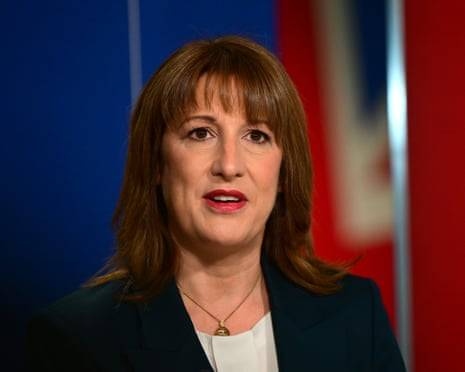
Rachel Reeves will lay the groundwork for a tax-raising budget that could break Labour's election promise on income tax, in a major speech in which she will be "candid" about the tough choices ahead.
The chancellor will give the speech as the markets open on Tuesday, when she will promise to make fair choices at this month's budget but decline to repeat her manifesto pledge of no rise in income tax, VAT or national insurance.
Keir Starmer told MPs on Monday night it would be a "Labour budget built on Labour values" and promised it would protect the NHS, reduce debt and ease the cost of living.
The prime minister gave MPs a hint at how the government would frame its potential manifesto breach – saying it was "becoming clearer that the long-term impact of Tory austerity, their botched Brexit deal and the pandemic on Britain's productivity is worse than even we feared".
Starmer told the grim-faced crowd of MPs, many sceptical of the potential manifesto breach, that there would be "tough but fair decisions" – saying the choice of the Conservatives and Reform would be "to return us to austerity".
MPs in the meeting repeatedly grilled Starmer on whether the budget would lift the two child benefit cap, in what one described as "coordinated" pressure on the prime minister.
While nobody raised concerns over a manifesto breach explicitly, at least one MP spoke about the necessity that the public "know what we stand for". However, the absence of any direct confrontation over the manifesto may give Starmer and Reeves some confidence that they are not facing a major backlash from within the parliamentary Labour party.
Senior strategists are understood to be heavily invested in pitch-rolling the major changes before the budget, believing the key success of last year's statement was that markets were not surprised by the changes to investment rules or the national insurance rise for employers, which although controversial were well trailed.
Though the fiscal landscape ahead of the budget is hard, the economic picture is said by some insiders to be less gloomy than predicted.
While they accept the Office for Budget Responsibility's productivity downgrade has created a headache, they point out that a fall in debt financing costs and more people coming into the jobs market may help limit the damage. Interest rate cuts and stronger-than-expected retail sales could also help.
"It's a tough backdrop but we're going to be honest with people about the choices," one ally of the chancellor said. "And there are some reasons for economic optimism."
But the budget will still mean hard decisions, as Reeves seeks to potentially double her fiscal headroom, as well as find billions to scrap or ease the two-child benefits limit and protect capital spending in the NHS.
There will be a focus on easing the cost of living in the budget, with Reeves understood to be considering cutting VAT on domestic energy bills and some green levies.
The chancellor has been urged by an influential thinktank to raise income tax by 2p but to cut national insurance by the same amount, raising £6bn mostly from the added burden on those who do not pay NI – such as pensioners and landlords.
The move may allow the chancellor to argue that her budget will protect the incomes of working people – those paid with a monthly payslip.
The Resolution Foundation said that higher-than-expected pay could offset almost all the fiscal damage from the productivity downgrade and also reduce borrowing – predicting the gap would be £4bn, far smaller than expected.
Its former chief executive Torsten Bell, now a government minister, is a key figure who sits on the budget board of senior ministers and advisers in No 10 and No 11.
The thinktank also suggests further tax rises, including extending the freeze on income tax threshold, raising dividend tax and closing capital gains tax loopholes to raise a total of £26bn.
Reeves is also said to be considering an increased tax on higher earners – and has spoken about how those with the broadest shoulders should bear the burden. Reports have suggested that could target people with incomes over £46,000.
However, sources have told the Guardian that they believe the chancellor is convinced that raising the higher income tax threshold alone would not raise nearly enough.
At a speech in Downing Street, Reeves will promise to address the speculation about her budget, though she is not expected to make any specific policy announcements.
At last week's prime minister's questions, Starmer did not repeat his manifesto promises on tax, saying only that he would "lay out our plans" during the budget.
In a clear signal that Reeves intends to give herself more headroom and end the cycle of budget black holes, she will promise to "make the choices necessary to deliver strong foundations for our economy – for this year, and years to come.
"It will be a budget led by this government's values, of fairness and opportunity and focused squarely on the priorities of the British people – protecting our NHS, reducing our national debt and improving the cost of living."
The chancellor will say that there has been "a lot of speculation about the choices I will make … these are important choices that will shape our economy for years to come.
"But it is important that people understand the circumstances we are facing, the principles guiding my choices – and why I believe they will be the right choices for the country."
Inside No 10, senior figures believe the biggest risk at the budget is the reaction of Labour MPs to a manifesto breach, given how MPs forced U-turns on winter fuel payments and welfare cuts.
"If we are going down this road we need to be absolutely clear where it leads us; we must have a plan that means ordinary people feel better off as a result, that we can deliver tangibly better public services or ease the cost of living," one minister said.
Another government source said: "I fear that the communication around this will be that we need to take this action for economic stability or because of the economic situation. That will completely kill us. We need to show people we are delivering direct benefit to them as a result of their taxes going up."
Another minister said: "Already we are hearing too much about bond markets and paying the debt down. We should care about those things quietly, and speak more loudly about what this money is paying for that our voters care about."
One minister, a close ally of Starmer, said the prime minister had been clear with his team that he believed they were already in effect in a general election campaign, and they had to start making far more tangible offers and progress to the public on cost of living, tackling illegal migration and improving public services.
White Label
Data API
Web Plug-ins
Poster Maker
Affiliate Program
The risk of loss in trading financial instruments such as stocks, FX, commodities, futures, bonds, ETFs and crypto can be substantial. You may sustain a total loss of the funds that you deposit with your broker. Therefore, you should carefully consider whether such trading is suitable for you in light of your circumstances and financial resources.
No decision to invest should be made without thoroughly conducting due diligence by yourself or consulting with your financial advisors. Our web content might not suit you since we don't know your financial conditions and investment needs. Our financial information might have latency or contain inaccuracy, so you should be fully responsible for any of your trading and investment decisions. The company will not be responsible for your capital loss.
Without getting permission from the website, you are not allowed to copy the website's graphics, texts, or trademarks. Intellectual property rights in the content or data incorporated into this website belong to its providers and exchange merchants.
Not Logged In
Log in to access more features

FastBull Membership
Not yet
Purchase
Log In
Sign Up