Markets
News
Analysis
User
24/7
Economic Calendar
Education
Data
- Names
- Latest
- Prev


For several years – especially since the United States banned ZTE and Huawei in 2018 and 2019, respectively – U.S. export controls on cutting-edge technologies have been framed as a measure to safeguard national security.
For several years – especially since the United States banned ZTE and Huawei in 2018 and 2019, respectively – U.S. export controls on cutting-edge technologies have been framed as a measure to safeguard national security. On the same grounds, the Biden administration banned the sale of certain U.S.-made chips to China in 2022 and 2023. To circumvent such restrictions, Nvidia developed the H20 chip, a downgraded form of its H-100 Graphic Processing Unit (GPU), and AMD developed the MI308, both to serve the Chinese markets.
Nvidia’s CEO Jensen Huang has often vocally opposed the restrictive export controls targeting China, claiming the policy is counterproductive for the United States’ economic and strategic interests. Through active lobbying during the current Trump administration, which is following a more inward-looking approach, Nvidia managed to get an official permit for H20 sales to China – albeit for a fee.In a highly unusual settlement, Nvidia and AMD will hand over 15 percent of their revenue from H20 and MI308 chip sales to China directly to the U.S. government. This arrangement is not a standard export tariff, nor a conventional tax. It is a direct revenue-sharing deal between the government and the two companies, targeted at a single foreign market, i.e., China.
According to estimates by Bernstein Research, by the end of 2025, Nvidia will have sold over 1.5 million H20 chips in China, generating about $23 billion in revenue, and AMD is projected to record $800 million in China chip sales. That means the deal could deliver more than $2 billion directly to the U.S. Treasury.Unlike in China, where the provision of “golden shares” (a shareholding arrangement enabling the Chinese government to buy a certain percentage of shares in private enterprises) highlights the intimate relationship between the Chinese state and its private corporations, such policy moves in the United States are extremely rare. However, the Trump administration in July followed a similar approach when it approved the takeover of U.S. Steel by Japan’s Nippon Steel.
While the Nippon Steel deal aimed at securing critical industries from falling under foreign control, it also indicated a growing trend of state capitalism in the United States. Now the revenue-sharing agreement with AMD and Nvidia exemplifies a larger pattern where companies are falling into quid-pro-quo arrangements to prevent the imposition of tariffs and preserve their own market position, while pledging to bring jobs, revenues, and market concentration to the United States. However, the deal also risks replacing principle-driven trade policy with ad hoc bargaining, leaving both allies and adversaries uncertain about U.S. red lines.For U.S. chipmakers, it’s better to earn some revenue from China than none. While the deal gives direct access to the lucrative China market, it also directly eats into Nvidia’s and AMD’s profits. This will create ripples in the broader market ecosystem, wherein corporate planning, profit margins, and investor confidence could all be affected.
Major U.S. companies with considerable market share in China will be watching closely. If the government is willing to impose a revenue-sharing requirement for chip sales, might it do the same for other strategic sectors? This could prompt firms to rethink their China strategies, diversify supply chains, or intensify lobbying to either pursue or avoid similar arrangements. The message to shareholders becomes clearer after this move: geopolitical risk is no longer an abstract factor; instead, it directly shapes revenue streams.
One possible explanation behind the decision is the “engage to constrain” strategy: selling downgraded chips keeps China reliant on U.S. technology, thereby maintaining a degree of influence over its AI development. The H20 and MI308 chips, being less powerful than flagship models, are intended to fall below the threshold of national security risk.This could prove to be a pitfall for two reasons. First, Washington has previously failed to accurately gauge Chinese firms’ ability to refurbish outdated hardware and optimize it for higher-grade applications. This means that even downgraded chips can accelerate China’s AI capabilities, including in areas with military applications.
Second, the free flow of H20 chips is unlikely to halt China’s renewed drive toward indigenous chip development. In fact, the renewed synergies between governments and private chipmakers in China are likely to take advantage of this policy relaxation to prepare themselves for any future restrictions. Thus the new policy, which resolves to protect domestic interests, will again fuel Beijing’s determination to achieve chip independence and undermine U.S. strategic objectives in the long term.
By reversing the ban and taking a revenue share, Washington risks sending a conflicting message: that security concerns can be waived in exchange for commercial concessions. The shift from safeguarding national security to commodifying strategic concerns poses several questions. If sensitive technology can be sold for a price, how credible will future restrictions appear to allies, adversaries, and U.S. companies alike?
More broadly, U.S. allies involved in semiconductor supply chains – Japan, South Korea, Taiwan, and the Netherlands – may see this as a signal to adopt similarly transactional policies, fragmenting the global trade environment. During the Biden administration, these allies were part of the broader export control regime. If this model is perceived as putting a price tag on national security, it could weaken the legitimacy of future export controls, embolden adversaries to test U.S. resolve, and encourage allies to question U.S. consistency.The United States now walks a fine line. Whether this is a masterstroke of transactional diplomacy or a short-sighted policy gamble will depend on whether Washington can secure broader strategic gains without undermining its own credibility.

728 RM B 7/F GEE LOK IND BLDG NO 34 HUNG TO RD KWUN TONG KLN HONG KONG


The risk of loss in trading financial instruments such as stocks, FX, commodities, futures, bonds, ETFs and crypto can be substantial. You may sustain a total loss of the funds that you deposit with your broker. Therefore, you should carefully consider whether such trading is suitable for you in light of your circumstances and financial resources.
No decision to invest should be made without thoroughly conducting due diligence by yourself or consulting with your financial advisors. Our web content might not suit you since we don't know your financial conditions and investment needs. Our financial information might have latency or contain inaccuracy, so you should be fully responsible for any of your trading and investment decisions. The company will not be responsible for your capital loss.
Without getting permission from the website, you are not allowed to copy the website's graphics, texts, or trademarks. Intellectual property rights in the content or data incorporated into this website belong to its providers and exchange merchants.
Not Logged In
Log in to access more features

FastBull Membership
Not yet
Purchase


Log In
Sign Up




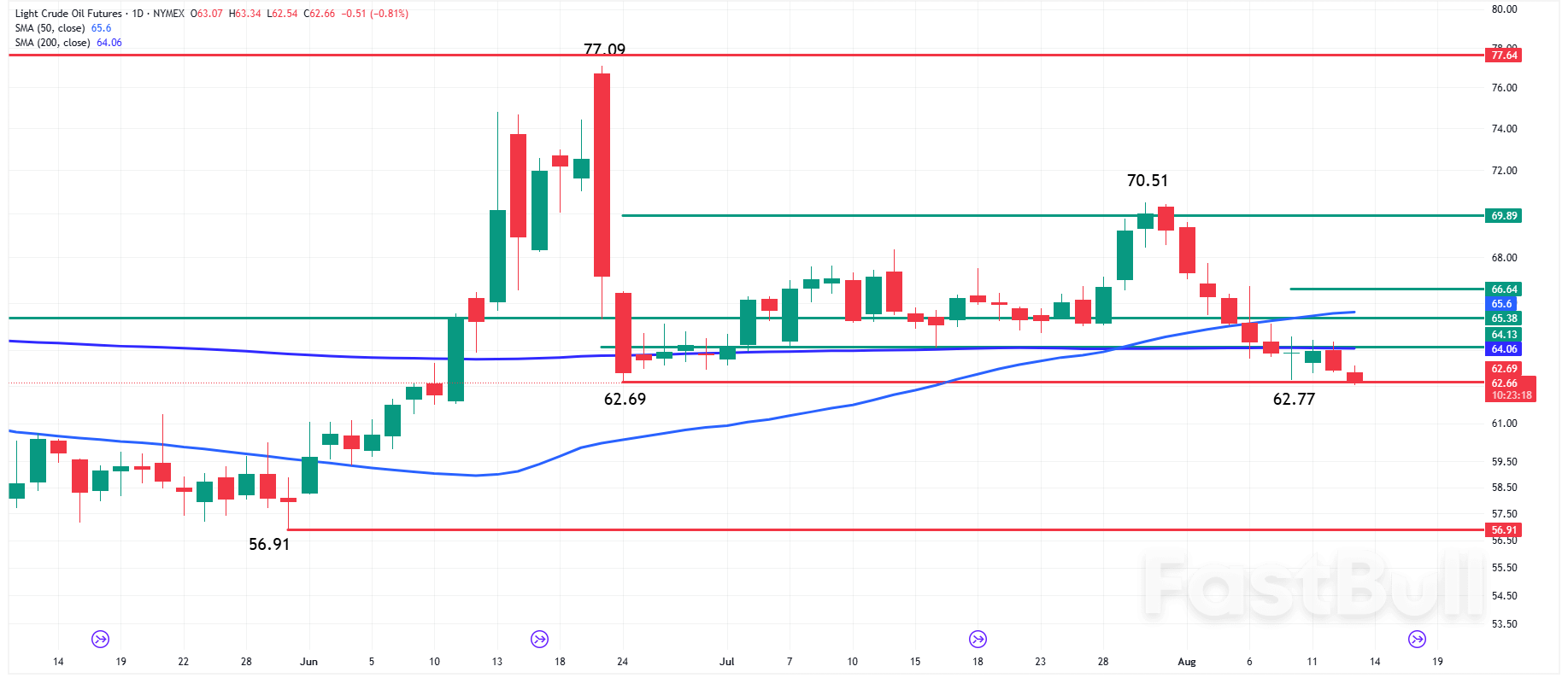 Daily Light Crude Oil Futures