Markets
News
Analysis
User
24/7
Economic Calendar
Education
Data
- Names
- Latest
- Prev




Signal Accounts for Members
All Signal Accounts
All Contests


Indonesia Lending Facility Rate (Jan)A:--
F: --
P: --
South Africa Core CPI YoY (Dec)A:--
F: --
P: --
South Africa CPI YoY (Dec)A:--
F: --
P: --
IEA Oil Market Report
U.K. CBI Industrial Output Expectations (Jan)A:--
F: --
U.K. CBI Industrial Prices Expectations (Jan)A:--
F: --
P: --
South Africa Retail Sales YoY (Nov)A:--
F: --
P: --
U.K. CBI Industrial Trends - Orders (Jan)A:--
F: --
P: --
Mexico Retail Sales MoM (Nov)A:--
F: --
P: --
U.S. MBA Mortgage Application Activity Index WoWA:--
F: --
P: --
Canada Industrial Product Price Index YoY (Dec)A:--
F: --
Canada Industrial Product Price Index MoM (Dec)A:--
F: --
U.S. Weekly Redbook Index YoYA:--
F: --
P: --
U.S. Pending Home Sales Index YoY (Dec)A:--
F: --
P: --
U.S. Pending Home Sales Index MoM (SA) (Dec)A:--
F: --
P: --
U.S. Construction Spending MoM (Oct)A:--
F: --
U.S. Pending Home Sales Index (Dec)A:--
F: --
P: --
U.S. API Weekly Refined Oil StocksA:--
F: --
P: --
U.S. API Weekly Gasoline StocksA:--
F: --
P: --
U.S. API Weekly Cushing Crude Oil Stocks--
F: --
P: --
U.S. API Weekly Crude Oil StocksA:--
F: --
P: --
South Korea GDP Prelim YoY (SA) (Q4)A:--
F: --
P: --
South Korea GDP Prelim QoQ (SA) (Q4)A:--
F: --
P: --
Japan Imports YoY (Dec)A:--
F: --
P: --
Japan Exports YoY (Dec)A:--
F: --
P: --
Japan Goods Trade Balance (SA) (Dec)A:--
F: --
P: --
Japan Trade Balance (Not SA) (Dec)A:--
F: --
Australia Employment (Dec)A:--
F: --
Australia Labor Force Participation Rate (SA) (Dec)A:--
F: --
P: --
Australia Unemployment Rate (SA) (Dec)A:--
F: --
P: --
Australia Full-time Employment (SA) (Dec)A:--
F: --
P: --
Turkey Consumer Confidence Index (Jan)--
F: --
P: --
Turkey Capacity Utilization (Jan)--
F: --
P: --
Turkey Late Liquidity Window Rate (LON) (Jan)--
F: --
P: --
Turkey Overnight Lending Rate (O/N) (Jan)--
F: --
P: --
Turkey 1-Week Repo Rate--
F: --
P: --
U.K. CBI Distributive Trades (Jan)--
F: --
P: --
U.K. CBI Retail Sales Expectations Index (Jan)--
F: --
P: --
U.S. Weekly Continued Jobless Claims (SA)--
F: --
P: --
U.S. Initial Jobless Claims 4-Week Avg. (SA)--
F: --
P: --
U.S. Real Personal Consumption Expenditures Final QoQ (Q3)--
F: --
P: --
Canada New Housing Price Index MoM (Dec)--
F: --
P: --
U.S. Weekly Initial Jobless Claims (SA)--
F: --
P: --
U.S. Real GDP Annualized QoQ Final (Q3)--
F: --
P: --
U.S. PCE Price Index Final QoQ (AR) (Q3)--
F: --
P: --
U.S. PCE Price Index MoM (Nov)--
F: --
P: --
U.S. PCE Price Index YoY (SA) (Nov)--
F: --
P: --
U.S. Real Personal Consumption Expenditures MoM (Nov)--
F: --
P: --
U.S. Personal Income MoM (Nov)--
F: --
P: --
U.S. Core PCE Price Index MoM (Nov)--
F: --
P: --
U.S. Personal Outlays MoM (SA) (Nov)--
F: --
P: --
U.S. Dallas Fed PCE Price Index YoY (Nov)--
F: --
P: --
U.S. Core PCE Price Index YoY (Nov)--
F: --
P: --
U.S. EIA Weekly Natural Gas Stocks Change--
F: --
P: --
U.S. Kansas Fed Manufacturing Composite Index (Jan)--
F: --
P: --
U.S. Kansas Fed Manufacturing Production Index (Jan)--
F: --
P: --
U.S. EIA Weekly Crude Stocks Change--
F: --
P: --
U.S. EIA Weekly Crude Demand Projected by Production--
F: --
P: --


No matching data
Latest Views
Latest Views
Trending Topics
Top Columnists
Latest Update
White Label
Data API
Web Plug-ins
Affiliate Program
View All

No data
Facing a weak won and stubborn inflation, the Bank of Korea is poised to hold rates, with all eyes on 2026 policy guidance.
The Bank of Korea (BoK) is widely expected to keep its benchmark interest rate unchanged at its first monetary policy meeting of 2026 on January 15. This decision follows a similar hold in November 2025 and will be closely watched as the first major central bank announcement in Asia for the new year, potentially setting a precedent for regional policy.
According to analysis from Bank of America, the central bank faces a complex economic picture that argues against any immediate policy shifts.
A key factor influencing the BoK's cautious stance is the persistent weakness in the Korean won (KRW). Since the bank's last meeting, both the Ministry of Economy and Finance (MoEF) and the National Pension Service (NPS) have had to intervene in the market to support the currency and slow its depreciation.
This ongoing pressure on the won makes it difficult for the central bank to consider loosening monetary policy, as lower interest rates could further weigh on the currency.
Adding to the case for a rate hold, recent inflation data has remained stubbornly above the Bank of Korea's target. Headline Consumer Price Index (CPI) readings for both November and December 2025 exceeded the desired range, giving policymakers a clear reason to maintain their current restrictive stance.
While the decision to hold rates is largely anticipated, market participants will be scrutinizing the BoK's accompanying statement for any clues about its future intentions. Bank of America highlights that this forward guidance will be the most critical element of the January 15 meeting, offering the first real glimpse into the central bank's policy direction for the year ahead.
The Lebanese army has announced the completion of a plan to demilitarize southern Lebanon, a region where the Iran-backed group Hezbollah has long maintained extensive military infrastructure aimed at Israel.
In a statement on Thursday, the military said it had successfully demobilized the area between the Litani River and the Israeli border. This move marks the first phase of a broader national strategy to disarm all militias and represents a rare assertion of state authority in a region historically dominated by Hezbollah.
The development could significantly lower tensions with neighboring Israel and prevent a renewal of the conflict that devastated the area. So far, neither Israel nor Hezbollah has officially commented on the army's announcement.
This disarmament effort follows a US- and French-backed ceasefire agreed to in late 2024, which ended months of intense warfare between Israel and Hezbollah. That conflict, which itself escalated from nearly a year of skirmishes, resulted in thousands of deaths, primarily in Lebanon.
A core condition of the truce was the complete disarmament of Hezbollah, starting with its forces south of the Litani River and eventually extending throughout the rest of the country.
However, the peace has been shaky. Israel has conducted regular missile and rocket strikes into Lebanese territory in recent months, raising fears the ceasefire could collapse. Israeli officials justify these actions as necessary to prevent Hezbollah from rebuilding its arsenal.
The Lebanese military now claims operational control over all territory south of the Litani, with the exception of areas currently occupied by Israeli forces. The army confirmed it is still working to clear unexploded ordnance and destroy the extensive network of tunnels previously used by Hezbollah fighters.
This task is complicated by ongoing hostilities. According to the United Nations, which maintains a peacekeeping force in southern Lebanon, near-daily Israeli strikes on Hezbollah personnel and sites have continued since late 2025, killing dozens.
Lebanon's army argues that these Israeli attacks, along with the occupation of about five outposts inside Lebanon, have actively hindered its ability to fully disarm Hezbollah. The disarmament plan, initiated in September under a government directive, has faced pressure from the United States to accelerate its timeline.
Hezbollah, which also functions as a major political party with strong support among Lebanon's Shiite Muslim population, has maintained a powerful military presence in the south since Israel's withdrawal in 2000. For years, it operated largely independent of the Lebanese state and was considered one of the world's most formidable militias.
The group's position was significantly weakened by the 2024 war, which killed many of its commanders and destroyed a large portion of its weapons. A further setback occurred just over a year ago with the toppling of Syrian President Bashar al-Assad, a key ally who facilitated the transfer of Iranian weaponry to Hezbollah through Syria.
Despite these developments, the Lebanese army remains under-resourced and has historically been cautious about confronting Hezbollah directly, raising questions about the long-term sustainability of the new security arrangement.
Bank of America is standing by its bullish forecast for the euro, projecting significant gains against most major currencies by the end of 2026. In a new research note, the bank reaffirmed its long-term positive outlook, though it advises investors to expect a slow start.
The bank’s analysis sets specific price targets for key currency pairs, anticipating a broad rally for the euro. The exceptions to this bullish view are the British pound and Scandinavian currencies.
BofA's forecasts for the end of 2026 include:
• EUR/USD: 1.22
• EUR/JPY: 189
• EUR/GBP: 0.84
While the long-term picture is bright, BofA analysts expressed caution for the immediate future. They note that the bulk of the U.S. dollar's expected weakness is likely to materialize after the first quarter of 2026.
Several positive catalysts that could drive the euro higher are expected to develop gradually or emerge later in the year. These factors include lower U.S. interest rates, Chinese stimulus efforts, currency hedging activities, and the effects of German fiscal policy.
BofA's optimism is supported by its expectations for Europe's economy and monetary policy. The bank sees a lower threshold for positive European economic surprises compared to mid-2025, which underpins its overall positive outlook for 2026.
On the policy front, BofA economists expect the European Central Bank (ECB) to implement an interest rate cut in March. Looking further out, they believe two ECB rate cuts over the next 18 months are more probable than a single rate increase.
European defense stocks surged to a new record high on Thursday following a call from U.S. President Donald Trump for a sharp increase in military spending. The news sent shares of top arms manufacturers climbing across the continent, with the broader aerospace and defense companies index rising 3% to an all-time peak.
Major players in the sector saw significant gains. In Germany, Rheinmetall shares climbed over 2%, while its domestic peer Renk added 1.8%. Italy's Leonardo advanced by 3.7%, and BAE Systems in the UK rose by 6.5%.
The market rally was triggered by President Trump's demand on Wednesday for U.S. defense expenditures to increase by more than 50%, reaching $1.5 trillion by 2027. In a social media post, Trump stated this target was the result of "long and difficult negotiations with Senators, Congressmen, Secretaries, and other Political Representatives."
However, uncertainty remains over whether the proposal will secure legislative approval. For the year 2026, Congress has already allocated $901 billion for defense, a figure significantly lower than the trajectory suggested by the president's new target.
To cover the additional costs, Trump said revenue would be generated from his administration's sweeping tariffs. This claim has been met with skepticism; according to Reuters, estimates from a nonpartisan think tank suggest these levies would only cover about half of the proposed spending increase.
Trump's announcement comes in the wake of heightened geopolitical activity. The U.S. recently conducted an attack on Venezuela that resulted in the capture of the country's leader, Nicolas Maduro. The White House has since suggested the potential for using the American military in other global regions, and U.S. troops have also been deployed in some domestic cities.
In a separate but related move on Wednesday, President Trump announced he would prohibit defense contractors from issuing dividends or conducting stock buybacks until they accelerate their weapons production.
China has implemented an export ban on dual-use items to Japan, a move that initially sparked fears of a broader supply chain disruption, particularly for rare earths crucial to the automotive sector. However, Beijing has clarified that the restrictions are narrowly focused on military applications and will not affect civilian industries.
According to China's commerce ministry, the new export controls are strictly aimed at preventing goods from being used to enhance Japan's military capabilities.
"Civilian users will not be affected," commerce ministry spokesperson He Yadong stated, emphasizing that China remains committed to stable global production and supply chains.
The restrictions prohibit exports to Japan intended for military use or any purpose that could contribute to its military strength. He Yadong asserted that the measure was a "legitimate, justified, and lawful" step to curb Japan's "re-militarisation and nuclear ambitions."
The trade restriction follows a period of deteriorating diplomatic ties between the two nations. The situation escalated after Japanese Prime Minister Sanae Takaichi suggested in November that a Chinese attack on Taiwan could provoke a military response from Japan if it threatened the country's survival. Beijing labeled the remark "provocative."
In response to the ban, Japan's foreign ministry lodged a strong protest and demanded that China withdraw the measures.
The move also comes as Japan's cabinet approved a record spending package that includes a 3.8% increase in its annual military budget, raising it to ¥9 trillion (US$58 billion).
Dual-use items are goods, software, or technologies with both civilian and military applications. This category includes high-performance rare earth magnets, which are essential components in electric vehicles (EVs) and conventional car parts like side mirrors, speakers, and oil pumps.
China maintains an export control list of approximately 1,100 dual-use items that require a license for overseas shipment. This list includes at least seven categories of medium and heavy rare earths.
While the commerce ministry spokesperson confirmed the ban's military focus, he did not specify which items are affected or comment on state media reports that China might tighten rare-earth export licenses to Japan more broadly.
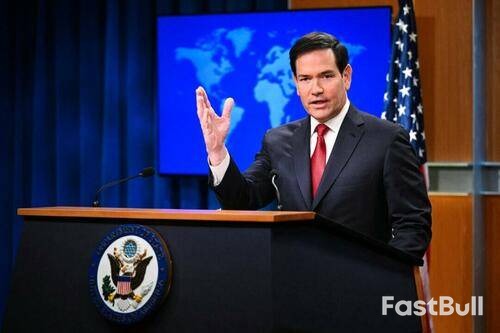
The Trump administration announced on January 7 that the United States is withdrawing from 66 international organizations, conventions, and treaties deemed contrary to the nation's interests.

The list of entities, released in a presidential memorandum, includes 31 bodies tied to the United Nations and 35 that are not. The move follows a February 2025 executive order signed by President Donald Trump, which directed the State Department to review international intergovernmental organizations that "no longer serve American interests."
In a statement, Secretary of State Marco Rubio explained the administration's reasoning, characterizing the targeted institutions as poorly managed and counterproductive.
"The Trump Administration has found these institutions to be redundant in their scope, mismanaged, unnecessary, wasteful, poorly run, captured by the interests of actors advancing their own agendas contrary to our own, or a threat to our nation's sovereignty, freedoms, and general prosperity," Rubio stated.
He emphasized a shift in U.S. policy regarding funding for these groups.
"President [Donald] Trump is clear: It is no longer acceptable to be sending these institutions the blood, sweat, and treasure of the American people, with little to nothing to show for it," Rubio added. "The days of billions of dollars in taxpayer money flowing to foreign interests at the expense of our people are over."
Rubio further argued that many organizations are "often dominated by progressive ideology and detached from national interests." He cited "DEI mandates," "'gender equity' campaigns," and "climate orthodoxy" as elements of a "globalist project" that the administration opposes.
"These organizations actively seek to constrain American sovereignty," he said, linking their work to elite networks that the administration has already started dismantling.
The withdrawals span a wide range of diplomatic, economic, and environmental bodies.
UN-Affiliated Departures
The UN-related entities from which the U.S. is withdrawing include:
• Department of Economic and Social Affairs
• International Law Commission
• International Trade Centre
• Peacebuilding Commission
• Peacebuilding Fund
• U.N. Democracy Fund
• U.N. Energy
• U.N. Entity for Gender Equality and the Empowerment of Women (UN Women)
• U.N. University
Non-UN and Hybrid Groups
Organizations not affiliated with the United Nations are also on the list, such as the 24/7 Carbon-Free Energy Compact and the Commission for Environmental Cooperation. The memorandum also identified over two dozen "hybrid threats," citing the Forum of European National Highway Research Laboratories and the Global Community Engagement and Resilience Fund as examples.
This action follows the Trump administration's withdrawal from the UN Human Rights Council less than a year prior. On February 4, 2025—the same day the review of international organizations was ordered—President Trump signed an executive order to exit the council.
At the time, Trump stated the council "has not fulfilled its purpose and continues to be used as a protective body for countries committing horrific human rights violations." The White House expanded on this, citing the inclusion of China and Iran on the council despite their human rights records and an alleged bias against Israel.
White Label
Data API
Web Plug-ins
Poster Maker
Affiliate Program
The risk of loss in trading financial instruments such as stocks, FX, commodities, futures, bonds, ETFs and crypto can be substantial. You may sustain a total loss of the funds that you deposit with your broker. Therefore, you should carefully consider whether such trading is suitable for you in light of your circumstances and financial resources.
No decision to invest should be made without thoroughly conducting due diligence by yourself or consulting with your financial advisors. Our web content might not suit you since we don't know your financial conditions and investment needs. Our financial information might have latency or contain inaccuracy, so you should be fully responsible for any of your trading and investment decisions. The company will not be responsible for your capital loss.
Without getting permission from the website, you are not allowed to copy the website's graphics, texts, or trademarks. Intellectual property rights in the content or data incorporated into this website belong to its providers and exchange merchants.
Not Logged In
Log in to access more features

FastBull Membership
Not yet
Purchase
Log In
Sign Up