Markets
News
Analysis
User
24/7
Economic Calendar
Education
Data
- Names
- Latest
- Prev


Signal Accounts for Members
All Signal Accounts
All Contests


U.K. Trade Balance Non-EU (SA) (Oct)A:--
F: --
P: --
U.K. Trade Balance (Oct)A:--
F: --
P: --
U.K. Services Index MoMA:--
F: --
P: --
U.K. Construction Output MoM (SA) (Oct)A:--
F: --
P: --
U.K. Industrial Output YoY (Oct)A:--
F: --
P: --
U.K. Trade Balance (SA) (Oct)A:--
F: --
P: --
U.K. Trade Balance EU (SA) (Oct)A:--
F: --
P: --
U.K. Manufacturing Output YoY (Oct)A:--
F: --
P: --
U.K. GDP MoM (Oct)A:--
F: --
P: --
U.K. GDP YoY (SA) (Oct)A:--
F: --
P: --
U.K. Industrial Output MoM (Oct)A:--
F: --
P: --
U.K. Construction Output YoY (Oct)A:--
F: --
P: --
France HICP Final MoM (Nov)A:--
F: --
P: --
China, Mainland Outstanding Loans Growth YoY (Nov)A:--
F: --
P: --
China, Mainland M2 Money Supply YoY (Nov)A:--
F: --
P: --
China, Mainland M0 Money Supply YoY (Nov)A:--
F: --
P: --
China, Mainland M1 Money Supply YoY (Nov)A:--
F: --
P: --
India CPI YoY (Nov)A:--
F: --
P: --
India Deposit Gowth YoYA:--
F: --
P: --
Brazil Services Growth YoY (Oct)A:--
F: --
P: --
Mexico Industrial Output YoY (Oct)A:--
F: --
P: --
Russia Trade Balance (Oct)A:--
F: --
P: --
Philadelphia Fed President Henry Paulson delivers a speech
Canada Building Permits MoM (SA) (Oct)A:--
F: --
P: --
Canada Wholesale Sales YoY (Oct)A:--
F: --
P: --
Canada Wholesale Inventory MoM (Oct)A:--
F: --
P: --
Canada Wholesale Inventory YoY (Oct)A:--
F: --
P: --
Canada Wholesale Sales MoM (SA) (Oct)A:--
F: --
P: --
Germany Current Account (Not SA) (Oct)A:--
F: --
P: --
U.S. Weekly Total Rig CountA:--
F: --
P: --
U.S. Weekly Total Oil Rig CountA:--
F: --
P: --
Japan Tankan Large Non-Manufacturing Diffusion Index (Q4)--
F: --
P: --
Japan Tankan Small Manufacturing Outlook Index (Q4)--
F: --
P: --
Japan Tankan Large Non-Manufacturing Outlook Index (Q4)--
F: --
P: --
Japan Tankan Large Manufacturing Outlook Index (Q4)--
F: --
P: --
Japan Tankan Small Manufacturing Diffusion Index (Q4)--
F: --
P: --
Japan Tankan Large Manufacturing Diffusion Index (Q4)--
F: --
P: --
Japan Tankan Large-Enterprise Capital Expenditure YoY (Q4)--
F: --
P: --
U.K. Rightmove House Price Index YoY (Dec)--
F: --
P: --
China, Mainland Industrial Output YoY (YTD) (Nov)--
F: --
P: --
China, Mainland Urban Area Unemployment Rate (Nov)--
F: --
P: --
Saudi Arabia CPI YoY (Nov)--
F: --
P: --
Euro Zone Industrial Output YoY (Oct)--
F: --
P: --
Euro Zone Industrial Output MoM (Oct)--
F: --
P: --
Canada Existing Home Sales MoM (Nov)--
F: --
P: --
Euro Zone Total Reserve Assets (Nov)--
F: --
P: --
U.K. Inflation Rate Expectations--
F: --
P: --
Canada National Economic Confidence Index--
F: --
P: --
Canada New Housing Starts (Nov)--
F: --
P: --
U.S. NY Fed Manufacturing Employment Index (Dec)--
F: --
P: --
U.S. NY Fed Manufacturing Index (Dec)--
F: --
P: --
Canada Core CPI YoY (Nov)--
F: --
P: --
Canada Manufacturing Unfilled Orders MoM (Oct)--
F: --
P: --
Canada Manufacturing New Orders MoM (Oct)--
F: --
P: --
Canada Core CPI MoM (Nov)--
F: --
P: --
Canada Manufacturing Inventory MoM (Oct)--
F: --
P: --
Canada CPI YoY (Nov)--
F: --
P: --
Canada CPI MoM (Nov)--
F: --
P: --
Canada CPI YoY (SA) (Nov)--
F: --
P: --
Canada Core CPI MoM (SA) (Nov)--
F: --
P: --


No matching data
Latest Views
Latest Views
Trending Topics
Top Columnists
Latest Update
White Label
Data API
Web Plug-ins
Affiliate Program
View All

No data
The Bank of England's committee decided to keep their main interest rate (Bank Rate) at 4%, which is what most people expected. However, the vote was close (5 members for keeping it, 4 members wanted to cut it by a small amount), showing that more people on the committee are leaning towards lowering rates.
They believe that the worst of inflation is over and prices are starting to slow down. This slowdown is due to their current high rates, slower wage increases, and weaker price growth in services. They also noted that a slow economy and a less tight job market are helping to push inflation down.
The committee now thinks the risks of missing their 2% inflation target are more balanced; they are less worried about high inflation sticking around and more worried about the economy being too weak. Still, they emphasized they need to see more proof that this trend will continue.
Future rate cuts will happen gradually and will depend entirely on the new economic data that comes in.
Optimism that the Bank of England (BoE) might cut interest rates this year is rising, causing UK 10-year bond yields to drop significantly since mid-October. Just a month ago, the market doubted the BoE would cut rates again soon. Now, the view is changing because inflation, currently at 3.8%, appears to have peaked.
Even though the full drop won't happen until next year, encouraging signs are appearing: food price inflation is easing more quickly than expected, and service sector inflation is slowing down. This is being helped by private sector wage growth also falling, which is on track to end the year below 4% after starting much higher.
This confidence is also boosted by expectations that the upcoming Autumn Budget will be viewed positively by the financial markets.
UK Chancellor Rachel Reeves welcomed today's BoE cut to inflation forecast.
According to the BoE "Progress on disinflation indicates bank rate likely to continue a gradual downward path: "gradual and careful approach" to further withdrawal of monetary policy restraint".
On the subject of inflation, Governor Bailey stated "It is encouraging that the inflation peak in September was 0.2 percentage points below our August forecast". All in all signs appear positive on the Inflation front.
There is another inflation print due out on November 19, which could have a major impact on pricing of a BoE rate cut in December, before attention turns to Chancellor Rachel Reeves' budget.
The UK budget will become the main area of focus as the month progresses. Fiscal sustainability remains key and will likely determine the impact the budget speech has on the GBP.
If Chancellor Reeves adopts more fiscal tightening the implications could lead to further weakness for the GBP. A budget which delivers tax hikes but pushes up 2026 inflation could potentially boost the GBP while a budget that under-delivers on fiscal sustainability could prompt a severe sell-off in the GBP.
Chancellor Reeves really has an unenviable task ahead of her with markets paying close attention.
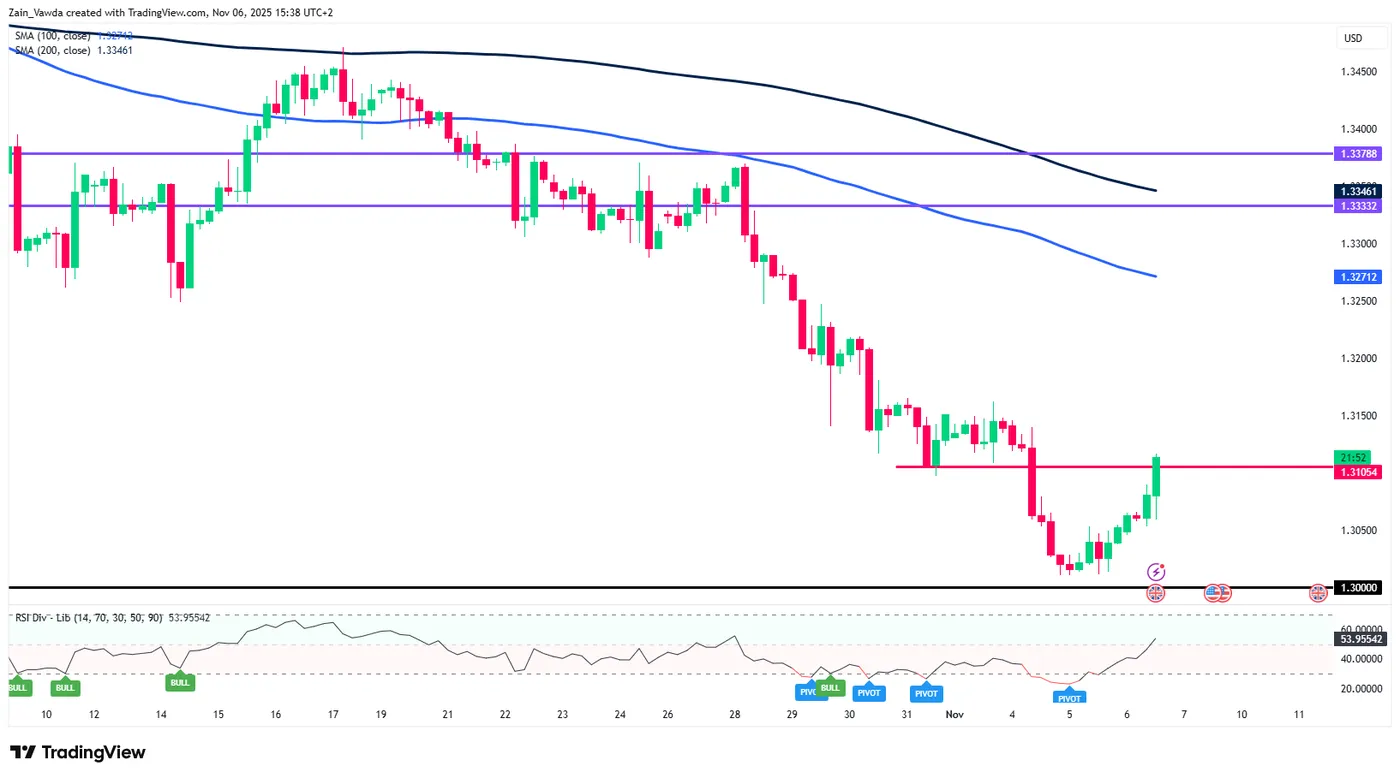
Markets saw the GBP weaken in the aftermath of today's rate decision with a 30-40 pip selloff in GBP/USD.
However, cable has since reversed this and pushed higher to trade around the 1.3100 handle at the time of writing.
A break above the 1.3100 handle and four-hour candle close could embolden bulls and push GBPUSD toward the 1.3250 handle and the 100-day MA which rests around the 1.3270.
If cable fails to find acceptance above 1.3100 handle, a retest of the crucial 1.3000 level may be in the offing.
GBP/USD Four-Hour Chart, November 6, 2025
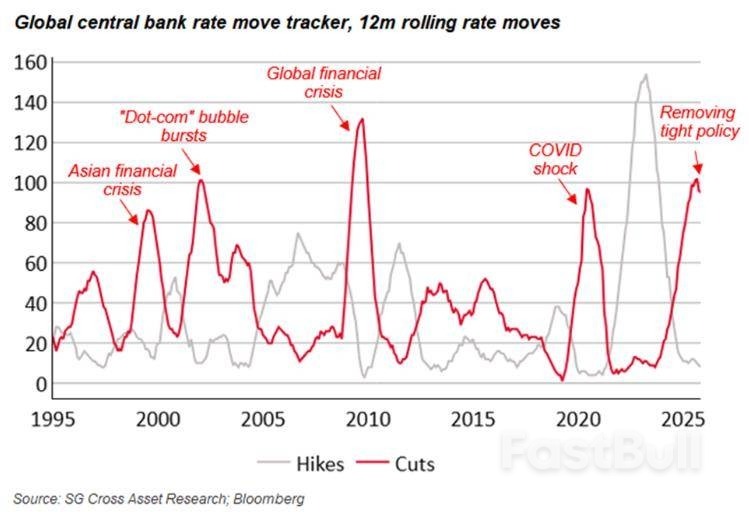
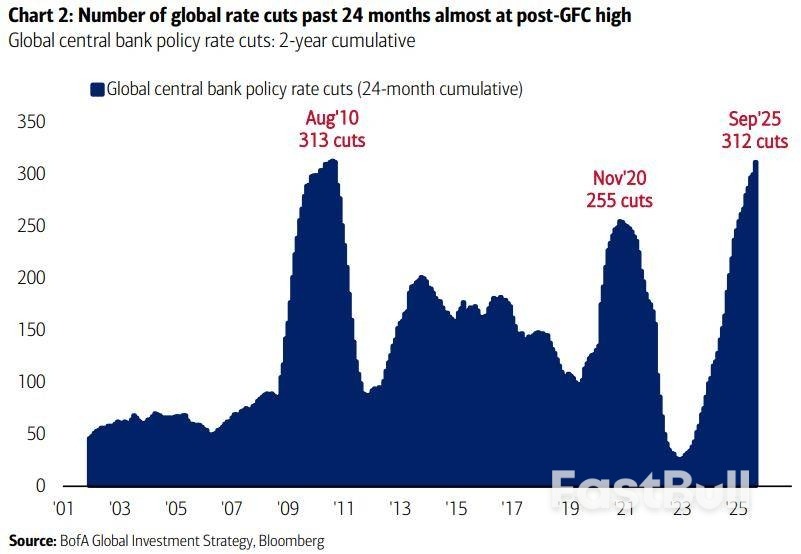
The global interest-rate cutting cycle has likely peaked. The question now is when, or if, today's high-flying markets will start to feel the pinch.
Remarkably, there have been more rate cuts around the world in the last two years than during the 2007-09 Global Financial Crisis, according to Bank of America. Although that's the number of cuts and not the magnitude of easing, it reflects the scale of the historic inflation-fighting rate hikes in 2022-23.
But the cycle now appears to have turned. This doesn't mean global easing has stopped. Central banks – most notably the U.S. Federal Reserve – are still expected to cut further. Rather, the number of cumulative cuts will decline moving forward.
On the face of it, the end of super-easy monetary policy should mean less accommodative financial conditions ahead.
But, perhaps counterintuitively, history suggests otherwise. Peaks in the last three major global easing cycles were followed by a broadening of the earnings cycle and solid equity market gains.
Are we about to see this again? Maybe, but given the frothy valuations in many of today's markets, it's not a given this time around.

The peak of the easing cycle could be a bullish signal for Wall Street, say analysts at Societe Generale, who argue that it is a sign that earnings growth is going to broaden out and accelerate.
Manish Kabra, head of U.S. equity strategy at SocGen, says the cycle peak is a "powerful signal" to diversify into other areas of the market like small caps and less levered stocks. He notes that reducing equity exposure would typically come later when investors start pricing in the start of the hiking cycle.
"When the easing cycle peaks, it's traditionally a sign of market conviction that earnings growth is going to accelerate," Manish says, pointing to previous "peaks" in August 2020 and September 2009 - which were both followed by strong equity performance.
Of course, there's a big difference between now and these episodes, namely today's stock prices and valuations. Wall Street was only beginning to emerge from historic crashes in September 2009 and August 2020, whereas now it has never been higher.
This might suggest that a more defensive risk profile may be warranted today.
Kabra downplays talk of bubbles, however. S&P 500 earnings growth this year is running at around 12%, but if you exclude 'AI boom' stocks, that falls to only 4%.

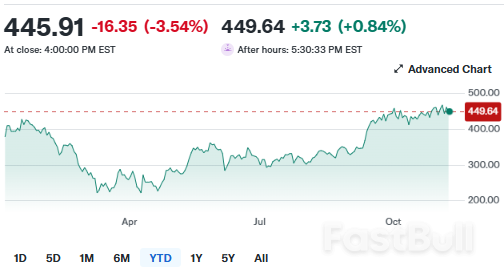
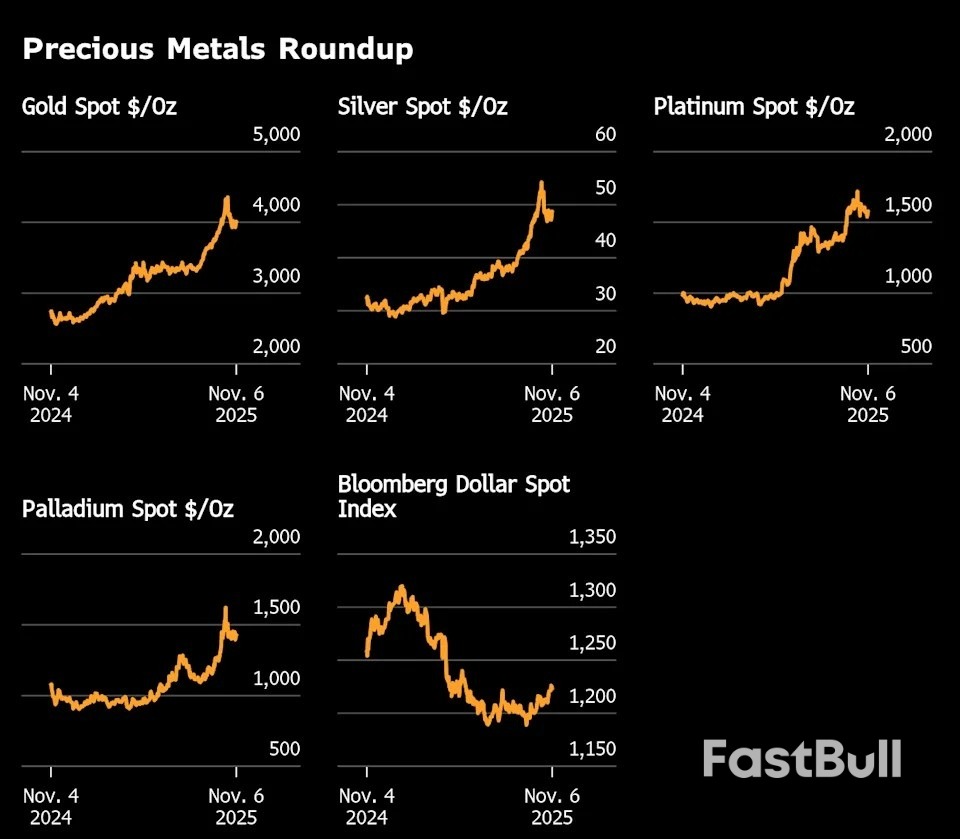
Almost every major asset class has risen this year, apart from oil, the dollar and some long-dated bonds. Even unloved and much-maligned U.S. Treasuries have gotten a bounce.
But globally, these rallies have had many different drivers. In equities, the AI boom has been rocket fuel for Wall Street, bets on a defense spending splurge have boosted European stocks, and the prospect of significant fiscal easing has lifted stock prices in Japan and China.
However, the unifying force that has lifted all these boats, according to Standard Chartered, is liquidity. And plenty of it.
Eric Robertsen, the bank's global head of research and chief strategist, says the broad rally from the April lows, impacting stocks, bonds, commodities and cryptocurrencies, can be deemed a 'financial conditions trade'. How else can nearly every asset class rise together in a world of extreme economic and geopolitical uncertainty?
Of course, 'liquidity' is not solely or even primarily a function of monetary policy. Bank reserves, the availability of and demand for private sector credit, and general risk appetite are key factors that contribute to the rather amorphous concept that is 'liquidity'.
But if interest rate changes can be viewed as a loose proxy for liquidity or at least a directional signal, then we are at an inflection point.
Robertsen posits that the "abundant" liquidity from well over 150 rate cuts in the last 12 months has more than offset investors' concerns over growth. Their risk appetite may be put to the test if the liquidity taps are being turned off, even if only gradually.
"Can markets thrive at this altitude without additional oxygen?," Robertsen asks.
We may be about to find out.
Key points:
The number of Americans filing new applications for unemployment benefits increased marginally last week, Haver Analytics estimated on Thursday, pointing to stable labor market conditions in October despite a surge in announced layoffs.
Initial claims for state unemployment benefits rose to a seasonally adjusted 229,140 for the week ended November 1 from 219,520 in the prior week, Haver Analytics calculated. The figure matched estimates from Citigroup, JPMorgan and Nationwide.
The shutdown of the federal government, now the longest on record, has halted the collection, processing and publishing of official economic data.
Claims data was unavailable for New Mexico and assumptions were made in line with what the Labor Department would normally do when data is not available. The claims data could assuage fears stoked by private reports earlier on Thursday showing job losses in October and a surge in announced layoffs amid cost-cutting and adoption of artificial intelligence by businesses.
"The claims data stand in stark contrast to this morning's sharply negative Challenger job cuts news and show the labor market isn't falling off a cliff," said Oren Klachkin, financial market economist at Nationwide. "It's encouraging to see the labor market remaining stable, albeit soft, in the opening month of the fourth quarter."
With the government shutdown, the Labor Department's closely watched employment report will not be published for an unprecedented two straight months on Friday. But states have continued to collect weekly unemployment claims data, submitting it to the Labor Department.
Haver Analytics and Wall Street economists are taking the data and applying seasonal adjustment factors the government published earlier to make the weekly claims estimates.
Economists have cautioned against placing too much emphasis on some of the private-sector surveys, noting the limited scope of coverage and history. A Bank of America Institute analysis of internal deposit data on Thursday suggested "no further deceleration" for now in the pace of job growth that "has taken place since the summer."
The labor market has slowed considerably from early this year, with economists blaming economic uncertainty, tariffs on imports and AI for the low demand for workers. A sharp reduction in labor supply because of raids on undocumented immigrants is also hurting hiring, most evident in small-business surveys.
A survey from the National Federation of Independent Business on Thursday showed the share of small businesses reporting labor quality as their single most important problem jumped to a four-year high in October.
Stable labor market conditions could allow the Federal Reserve to keep interest rates unchanged next month. The U.S. central bank last week cut its benchmark overnight interest rate by another 25 basis points to the 3.75%-4.00% range, and Fed Chair Jerome Powell said "a further reduction in the policy rate at the December meeting is not a foregone conclusion."
The number of people receiving unemployment benefits after an initial week of aid, a proxy for hiring, increased to a seasonally adjusted 1.962 million during the week ending October 25, from 1.955 million, JPMorgan estimated. That was broadly in line with the calculations from Citigroup and Haver Analytics.
"This likely reflects hiring remaining slow and implies downside risk for employment data in October," said Gisela Young, an economist at Citigroup.
Earlier, the Chicago Fed estimated the unemployment rate climbed to 4.36% in October - a four-year high of 4.4% on the rounded basis typically reported by the Bureau of Labor Statistics - from 4.35% in September.
Federal Reserve Bank of St. Louis President Alberto Musalem said on Thursday the U.S. central bank has been right to cut interest rates to help the job market.
The cuts have been "appropriate" but "we have to be very careful to continue to lean against above-target inflation, while continuing to provide some insurance" to the employment sector, he said at a gathering of the Fixed Income Analysts Society in New York.
"Monetary policy is somewhere between modestly restrictive and neutral, and it's getting close to neutral in terms of financial conditions," Musalem said.
His assessment that financial conditions are helping the economy is based on a broad-based read on markets and credit availability, Musalem said. These conditions "are rather supportive of economic activity and rather supportive of the labor market as a ... byproduct of that," he added.
In late October, the Fed lowered its interest rate target by a quarter percentage point, to between 3.75% and 4%, after easing by the same amount in September. Fed officials believe inflation is too high but have lowered the cost of short-term credit to help support a job market that has cooled.
Musalem said U.S. trade tariffs have been drivers of inflation but their impact has been blunted as companies held off passing costs to consumers. He expects the impact will start to dissipate in the second half of next year, allowing inflation to restart its retreat back to the 2% target.
Musalem said his outlook is based on tariffs remaining in place. The legality of President Donald Trump's sweeping levies is being considered by the U.S. Supreme Court.

Japan and the United States will jointly study developing rare earth mining in the waters around Minamitori Island in the Pacific, Japanese Prime Minister Sanae Takaichi said on Thursday.
Co-development of rare earth minerals was a key topic in her meeting with US President Donald Trump last week, Takaichi told a parliamentary session.
During Trump's visit to Tokyo, the two countries signed a framework agreement for securing rare earth supplies to counter China's dominance in the materials that are used in everything from cars to fighter jets.
There is an abundance of mud that potentially holds rare earths around Minamitori Island, some 1,900 km (1,180 miles) southeast of Tokyo, Takaichi said.
Japan plans to test the feasibility of raising rare earth mud from a depth of 6,000 metres in January, according to Takaichi.
"We will consider specific ways to promote cooperation between Japan and the United States on rare earth development … around Minamitori Island," Takaichi said.
The Japanese government is pushing ahead with a national project to develop domestic rare earth production as part of broad efforts to strengthen maritime and economic security.
Surveys have confirmed the presence of rich rare earth mud at depths of 5,000 to 6,000 metres within Japan's exclusive economic zone near Minamitori Island, according to an executive with the government-backed project.
If the initial tests are successful, the project aims to launch trial operations of a system capable of recovering 350 metric tons of mud per day from January 2027.
China dominates global rare earth extraction, although the US and Myanmar control 12% and 8% respectively, according to the Eurasia Group.


White Label
Data API
Web Plug-ins
Poster Maker
Affiliate Program
The risk of loss in trading financial instruments such as stocks, FX, commodities, futures, bonds, ETFs and crypto can be substantial. You may sustain a total loss of the funds that you deposit with your broker. Therefore, you should carefully consider whether such trading is suitable for you in light of your circumstances and financial resources.
No decision to invest should be made without thoroughly conducting due diligence by yourself or consulting with your financial advisors. Our web content might not suit you since we don't know your financial conditions and investment needs. Our financial information might have latency or contain inaccuracy, so you should be fully responsible for any of your trading and investment decisions. The company will not be responsible for your capital loss.
Without getting permission from the website, you are not allowed to copy the website's graphics, texts, or trademarks. Intellectual property rights in the content or data incorporated into this website belong to its providers and exchange merchants.
Not Logged In
Log in to access more features

FastBull Membership
Not yet
Purchase
Log In
Sign Up