Markets
News
Analysis
User
24/7
Economic Calendar
Education
Data
- Names
- Latest
- Prev


Signal Accounts for Members
All Signal Accounts
All Contests


France 10-Year OAT Auction Avg. YieldA:--
F: --
P: --
Euro Zone Retail Sales MoM (Oct)A:--
F: --
P: --
Euro Zone Retail Sales YoY (Oct)A:--
F: --
P: --
Brazil GDP YoY (Q3)A:--
F: --
P: --
U.S. Challenger Job Cuts (Nov)A:--
F: --
P: --
U.S. Challenger Job Cuts MoM (Nov)A:--
F: --
P: --
U.S. Challenger Job Cuts YoY (Nov)A:--
F: --
P: --
U.S. Initial Jobless Claims 4-Week Avg. (SA)A:--
F: --
P: --
U.S. Weekly Initial Jobless Claims (SA)A:--
F: --
P: --
U.S. Weekly Continued Jobless Claims (SA)A:--
F: --
P: --
Canada Ivey PMI (SA) (Nov)A:--
F: --
P: --
Canada Ivey PMI (Not SA) (Nov)A:--
F: --
P: --
U.S. Non-Defense Capital Durable Goods Orders Revised MoM (Excl. Aircraft) (SA) (Sept)A:--
F: --
U.S. Factory Orders MoM (Excl. Transport) (Sept)A:--
F: --
P: --
U.S. Factory Orders MoM (Sept)A:--
F: --
P: --
U.S. Factory Orders MoM (Excl. Defense) (Sept)A:--
F: --
P: --
U.S. EIA Weekly Natural Gas Stocks ChangeA:--
F: --
P: --
Saudi Arabia Crude Oil ProductionA:--
F: --
P: --
U.S. Weekly Treasuries Held by Foreign Central BanksA:--
F: --
P: --
Japan Foreign Exchange Reserves (Nov)A:--
F: --
P: --
India Repo RateA:--
F: --
P: --
India Benchmark Interest RateA:--
F: --
P: --
India Reverse Repo RateA:--
F: --
P: --
India Cash Reserve RatioA:--
F: --
P: --
Japan Leading Indicators Prelim (Oct)A:--
F: --
P: --
U.K. Halifax House Price Index YoY (SA) (Nov)A:--
F: --
P: --
U.K. Halifax House Price Index MoM (SA) (Nov)A:--
F: --
P: --
France Current Account (Not SA) (Oct)A:--
F: --
P: --
France Trade Balance (SA) (Oct)A:--
F: --
P: --
France Industrial Output MoM (SA) (Oct)A:--
F: --
P: --
Italy Retail Sales MoM (SA) (Oct)--
F: --
P: --
Euro Zone Employment YoY (SA) (Q3)--
F: --
P: --
Euro Zone GDP Final YoY (Q3)--
F: --
P: --
Euro Zone GDP Final QoQ (Q3)--
F: --
P: --
Euro Zone Employment Final QoQ (SA) (Q3)--
F: --
P: --
Euro Zone Employment Final (SA) (Q3)--
F: --
Brazil PPI MoM (Oct)--
F: --
P: --
Mexico Consumer Confidence Index (Nov)--
F: --
P: --
Canada Unemployment Rate (SA) (Nov)--
F: --
P: --
Canada Labor Force Participation Rate (SA) (Nov)--
F: --
P: --
Canada Employment (SA) (Nov)--
F: --
P: --
Canada Part-Time Employment (SA) (Nov)--
F: --
P: --
Canada Full-time Employment (SA) (Nov)--
F: --
P: --
U.S. Personal Income MoM (Sept)--
F: --
P: --
U.S. Dallas Fed PCE Price Index YoY (Sept)--
F: --
P: --
U.S. PCE Price Index YoY (SA) (Sept)--
F: --
P: --
U.S. PCE Price Index MoM (Sept)--
F: --
P: --
U.S. Personal Outlays MoM (SA) (Sept)--
F: --
P: --
U.S. Core PCE Price Index MoM (Sept)--
F: --
P: --
U.S. UMich 5-Year-Ahead Inflation Expectations Prelim YoY (Dec)--
F: --
P: --
U.S. Core PCE Price Index YoY (Sept)--
F: --
P: --
U.S. Real Personal Consumption Expenditures MoM (Sept)--
F: --
P: --
U.S. 5-10 Year-Ahead Inflation Expectations (Dec)--
F: --
P: --
U.S. UMich Current Economic Conditions Index Prelim (Dec)--
F: --
P: --
U.S. UMich Consumer Sentiment Index Prelim (Dec)--
F: --
P: --
U.S. UMich 1-Year-Ahead Inflation Expectations Prelim (Dec)--
F: --
P: --
U.S. UMich Consumer Expectations Index Prelim (Dec)--
F: --
P: --
U.S. Weekly Total Rig Count--
F: --
P: --


No matching data
Latest Views
Latest Views
Trending Topics
Top Columnists
Latest Update
White Label
Data API
Web Plug-ins
Affiliate Program
View All

No data
Find the best copy trading platform in 2025 with real ROI data, fees, pros and cons, and verified trader reviews to help you choose a safer, high-performing option.
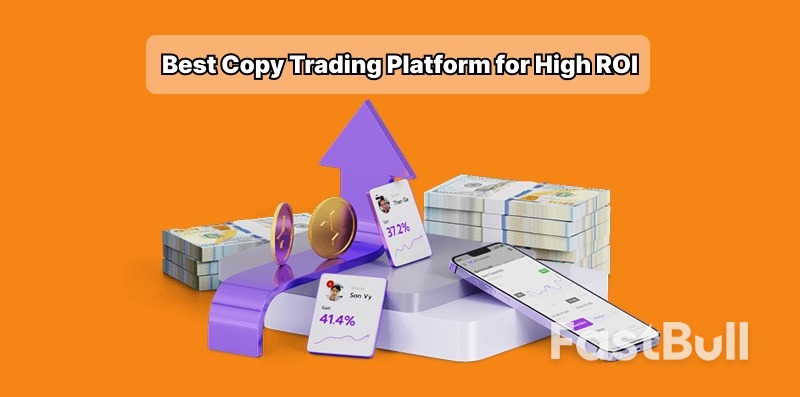
Choosing the best copy trading platform in 2025 requires more than checking popularity or advertised returns. Traders need real ROI data, transparent fees, and proof that strategies actually work in different market conditions. This guide reviews top platforms through verified performance records, user feedback, and risk controls to help you make confident, informed decisions.
To identify the best copy trading platform, we used a multi-factor evaluation system rather than relying on surface-level popularity. Our core metrics included:
This balanced framework ensures platforms ranked highly are strong not only in performance but also in sustainability and safety.
Our scoring combines quantifiable performance data with real user insights. Key data sources include:
By combining data-driven analysis with trader experience, we built a transparent and credible ranking system suitable for traders seeking the best copy trading platforms 2025.
Many platforms are popular due to marketing, not performance. ROI matters because it reflects how a strategy performs under real market pressure. While popularity signals user interest, real ROI, drawdown patterns, and fee efficiency reveal whether a platform can actually help users succeed. This is what separates reliable best copy trading platforms from those driven only by hype.
We analyzed platform performance across multiple market conditions to find the best copy trading platform options. Key evaluation windows included:
This approach reveals which platforms truly perform across cycles, not only during favorable trends.
#2 eToro — With a long operational history, diversified assets, and strong regulation, eToro provides balanced returns and reliable execution, appealing to users who prefer a broad range of strategy providers.
#1 FastBull — FastBull is positioned as a stability-focused copy trading platform offering clear performance data, verified trader statistics, and consistent strategy behavior across different market cycles. Its emphasis on transparency and risk awareness makes it one of the most suitable choices for traders seeking predictable, long-term ROI rather than short-term speculation.
#3 ZuluTrade — Known for detailed trader analytics and customizable risk levels, ZuluTrade helps users identify strategies that match their stability preferences.
#4 Bybit Copy Trading — A strong choice for traders focused on crypto volatility, offering strategies with higher upside but greater short-term risk.
#5 BingX — Community-driven signals and frequent high-volatility strategies make it appealing for users seeking more dynamic short-term opportunities.
#6 AvaSocial — Regulated and beginner-friendly, offering consistent medium-risk strategies suitable for gradual ROI growth.
#7 FXTM Invest — Well-suited for Forex-focused users who want professional-level risk control and stable medium-term returns.
| Platform | 12-Month ROI* | Fees | Min. Deposit | Regulation |
|---|---|---|---|---|
| eToro | 8–15% | Variable spreads | $200 | FCA, ASIC, CySEC |
| FastBull | 12–22% | Low trading costs | $50 | Multiple global partners |
| ZuluTrade | 10–18% | Performance-based | $100 | HCMC |
| Bybit | 15–30% | Low maker/taker | $10 | Crypto platform |
| BingX | 12–25% | Copy trading fee | $10 | Local registrations |
| AvaSocial | 6–12% | Standard broker fees | $100 | FCA, ASIC |
| FXTM Invest | 7–14% | Low spreads | $10 | FSC, CySEC |
ROI ranges based on historical strategy provider data; results vary by trader selection.
Fees play a major role in determining whether a platform can truly help users achieve stable returns. Even the best copy trading platform can deliver lower real-world results when fees reduce net gains. The main fee categories include:
Low or transparent fees benefit traders who copy frequently, while high-fee structures typically reduce long-term ROI. This is especially important for users comparing the best copy trading platforms 2025.
Different platforms approach copy trading through various models, which leads to trade-offs users should understand before choosing. Below is a simplified comparison:
| Platform Type | Core Pros | Key Cons |
|---|---|---|
| Multi-Asset Platforms | Good diversification; broad trader selection | Risk levels vary widely; harder to filter |
| Crypto-Focused Platforms | High volatility opportunities; rapid growth potential | Higher drawdowns; market swings impact ROI |
| Regulated Broker Platforms | Better protection; strong transparency | Fewer aggressive strategies for high-risk users |
| Community-Driven Copy Trading Apps | Large number of strategies; social discovery | Quality inconsistent; performance may be short-lived |
This comparison helps traders understand how each platform’s design affects risk, ROI, and long-term usability.
Real-world results reveal far more than marketing pages or advertised win rates. Across multiple platforms, we observed several common patterns:
Platforms with better execution engines and clearer trader analytics often deliver results closer to advertised performance, making them more reliable choices among the best copy trading platforms.
Every platform excels with a different audience. Matching user profiles to platform strengths helps maximize returns:
This segmentation helps traders find the best copy trading platform for their specific style rather than relying on generic rankings.
ROI is driven by more than trader skill alone. High-performing platforms tend to share several attributes:
Platforms missing these components rarely compete with the best copy trading platforms 2025.
The quality of signal providers directly shapes user ROI. Strong providers exhibit:
Platforms offering detailed provider analytics help users avoid strategies with unstable returns. This is crucial for anyone seeking the best crypto copy trading platform or multi-asset alternatives.
Even strong strategies lose effectiveness without good execution infrastructure. The most common hidden ROI killers include:
Platforms with optimized trade routing and fast execution engines outperform competitors and deliver more reliable results.
Platforms that offer transparency allow traders to make informed decisions. Features that significantly improve ROI sustainability include:
These elements help users avoid blind copying and support long-term performance, which is essential when selecting the best copy trading platforms.
Some platforms advertise unrealistic ROI numbers such as 200% monthly returns or guaranteed profits. These claims typically come from non-licensed operators or platforms with no audited performance history. Traders should be cautious of:
Any platform promoting guaranteed success should be excluded when evaluating the best copy trading platforms.
Fees that are not clearly disclosed can significantly reduce your net ROI. Hidden charges often appear as:
Transparent brokers and copy trading platforms clearly outline how each fee affects long-term performance.
Execution issues are among the biggest profit killers. Even on a good strategy, users may lose ROI due to:
Reliable options among the best copy trading platforms 2025 provide live performance data instead of polished marketing charts.
Regulation is essential when evaluating safety. Red flags include:
Platforms with weak oversight are riskier, even if they appear inside rankings of best crypto copy trading platforms 2025.
Always perform basic checks before depositing:
This safety checklist helps traders avoid scams and choose platforms with better long-term stability.
Beginners benefit from platforms with simple interfaces, transparent fees, and verified trader profiles. Platforms offering risk scores, educational tools, and clear ROI histories help new users learn while reducing avoidable mistakes.
Day traders need fast execution, low slippage, and active strategy providers. Suitable platforms offer:
These features help day traders capture intraday movements more effectively.
Long-term investors focus on consistent ROI and low drawdown rather than short-term spikes. Ideal platforms provide:
This group may prefer multi-asset choices over purely best crypto copy trading platform options.
Smaller accounts require low minimum deposits and minimal copying fees. Platforms suitable for under $500 often include:
These features help new traders participate without unnecessary financial pressure.
The best choice depends on your risk tolerance, preferred assets, and experience level. Consider:
By matching your style to the platform’s strengths, you greatly increase your chances of consistent success across the best copy trading platforms.
There is no single “most successful” platform because results vary by trader selection, asset type, and risk tolerance. Platforms with transparent trader analytics, verified performance history, and strong regulation tend to offer more consistent results. Choosing the best copy trading platform depends on your personal goals and preferred risk level.
Copy trading can be profitable, but results depend on the strategies you follow, market conditions, and execution quality. High-ROI traders also come with higher drawdowns, while stable traders offer slower but steadier gains. Using risk controls and evaluating long-term ROI increases the chances of sustained profitability.
Yes. Copy trading is allowed in the UK as long as the platform operates under FCA regulation or partners with FCA-supervised brokers. UK traders should ensure that the platform offers verified performance data, clear fee disclosures, and transparent risk warnings before copying a strategy.
The best copy trading platform in 2025 is one that balances real ROI, transparent trader data, reliable execution, and strong regulation. By reviewing long-term performance, checking risk levels, and aligning platform features with your trading style, you can choose a safer and more effective option for consistent results and long-term growth.
Citigroup Inc.'s Daniel Lebetkin has helped steer almost all of the $18 billion in international bond sales from Africa this year. From Nigeria to Kenya, he's watched investors snap up debt at a blistering pace. One thing hasn't changed: African nations pay more to borrow.
"It's certainly unfortunate," says Lebetkin. "There's just a structural difference in yields."
It's a view shared widely among policymakers and investors, who point out that even as global interest rates fall and Africa's markets mature, the region's borrowing costs are still the highest in the world. Some argue it's justified, given the track record of default in places like Ghana and Zambia, and the region's turbulent politics and corruption scandals. Plus, African countries tend to be small and relatively new borrowers.
To others, however, like South African Finance Minister Enoch Godongwana, that's not the full story. He sees a bias against the continent that spans from the rating agencies to the international organizations to the investors. And the proof is that "countries with the same fiscal metrics get a better rating than Africans."
Africa Finance Corp., a development bank, has dubbed it a "prejudice premium," estimating that the continent spends as much as $75 billion a year in additional borrowing costs. That extra charge is becoming more important as interest in emerging markets heats up again. This year is shaping up to be the busiest for African debt sales since at least 2021.
Pinning down what the bond premium is, and whether other factors are at play, is difficult because so much depends on things that are hard to quantify. A July study by the International Monetary Fund found that sub-Saharan African nations pay about half a percentage point more in the bond market than similarly rated countries, and that it tends to increase during times of stress. But they also said the premium vanishes once issues like governance and budget transparency are taken into account.
For a back of the envelope comparison, take two countries that sold 12-year bonds just last month: Kenya and Bahrain. Kenya is classified by the IMF as being at high risk of debt distress, while Bahrain has close ties to its oil-rich neighbors like Saudi Arabia. Kenya, rated one step below than Bahrain by S&P Global Ratings, paid 9.2% on its bonds. Bahrain sold at 6.625%.
Ghana is a case where it makes sense that investors demand a higher yield, given its default in 2022, said Andrew Matheny, the Africa economist for Goldman Sachs Group Inc. Even so, the 2029 bonds trade just above 6%, which suggests investors believe in President John Mahama's plan to restore confidence in the country's finances.
"The fact that is happening, a mere three years after a sovereign default is in itself, in fact, somewhat surprising," he said. "I don't think there's a lot of evidence that sub-Saharan Africa is being treated unfairly in the market.
As a whole, borrowing costs in Africa have fallen sharply in recent years, helped by policy action like Nigeria's decision to unify its exchange rate and interest-rate cuts in the US and Europe. Recent eurobond sales for Nigeria and Kenya were five times subscribed, a sign of strong investor demand that allowed them to lower their borrowing costs. Nigeria paid 8.625% for 10-year debt this month, compared with 10.375% in December.
The average extra yield investors demand to hold dollar bonds of African nations instead of Treasuries now stands at about 3.7 percentage points, the lowest since 2018, based on data from JPMorgan indexes. It's still higher than Latin America at 3.2 percentage points, emerging Europe at 2.2 percentage points, and emerging Asia at just 0.8 percentage points.
According to an analysis last year by Moody's Ratings, the higher yields can't be fully explained by the risk of non-payment. Their data showed that among countries with similar ratings, African sovereign bonds tend to have the same default risk as other nations. Borrowing costs in Africa reflect "other considerations," the researchers wrote, without elaborating on those reasons.
"We don't have as much data in Africa," Isaah Mhlanga, chief economist at FirstRand Ltd., Africa's biggest lender by value, said in an interview in Johannesburg. "My speculation is that when investors don't have that data, they add a little premium."
But the lack of data is also correlated to a lack of resources allocated to data collection in Africa relative to other regions, he said, including by the ratings companies. He questioned whether other countries, including the US and UK, were penalized as much or as immediately for deterioration in "quality of institutions."
African countries also tend to get downgraded faster at times of global turmoil, according to a white paper published in September by Gemcorp Capital LLP, a major private lender. It cited "what is seen by some as an inherent rating bias against the region or even a perception deficit" that hits sub-Saharan Africa disproportionately when global economic conditions deteriorate.
The paper cited data showing that 62.5% of rated African countries were downgraded by the big three ratings companies during the Covid-19 pandemic, compared with a global average of about 32%.
Another hurdle is that African borrowers are a tiny part of the investment universe, accounting for less than 10% of all dollar-denominated bonds sold by emerging markets this year. If debt analysts are less familiar with a country, they may be less likely to make a buy recommendation, said Lauren van Biljon, a senior portfolio manager at Allspring Global Investments.
"It's often down to the fact that these are issuers with only a few securities eligible for indices," she said.
To Reza Baqir, who heads the sovereign advisory practice at Alvarez & Marsal, African countries need to join together to persuade the institutions and investors that lend dollars, and argue their case with data, instead of rhetoric. In his experience, African nations often pay a full percentage point more than similarly rated countries on five-year bonds, and face a tougher time unlocking cash from the private sector or official creditors.
"These are soft biases that are difficult to measure and quantify," said Baqir, a former central-bank governor of Pakistan. "But there is a big role for African sovereigns themselves to play which can be effective."
Over at Citigroup, Lebetkin says he's constantly telling clients they need to do more to speak with investors and provide regular data. His team at the bank has a physical presence in 16 countries in Africa.
"We spend a lot of time on the ground on the continent," he said. "It's very important to go and see people where they are, in their offices, and not everyone does that. Also, given that we do all of these transactions, we think we have the best intel, which we think gives us credibility with issuers and investors alike.
China is ramping up green hydrogen capacity after Beijing signaled its continued support for a sector that has struggled, despite its central role in decarbonizing emissions-heavy industries.
A unit of China Coal Energy Co. on Friday received approval from Inner Mongolia's regulator to build a 5.2 billion yuan ($730 million) project to produce about 90,000 tons of green hydrogen a year, according to local media. Last month, officials in Hebei broke ground on a 1,000-kilometer pipeline, costing 13.5 billion yuan, that will send over 1.5 million tons a year of the fuel from the clean energy hub of Zhangjiakou to the steelmaking city of Tangshan.
The developments are arriving as Chinese interest surges in the technology, which uses electricity from renewables to deliver hydrogen from water. The success of the sector is viewed as critical to cleaning up industries like steel and chemicals. But it's struggled to gain footing in much of the world because of stubbornly high costs, with energy majors such as BP Plc withdrawing from multibillion-dollar projects in Australia and elsewhere.
China's government has remained supportive, though. It has backed the tech with several pilot projects this year, and last month opened the sector to carbon credits to help with funding. Beijing has also singled out hydrogen energy as one of the sectors it plans to support in its next five-year plan covering 2026-2030.
Chinese energy firms have responded by launching more than 500 hydrogen projects in 2025 alone, totaling 221 billion yuan in investment and utilizing nearly 18 gigawatts of power, according to a report this month from industry publication Qingnenghui.
Demand is still lagging the acceleration in investment, however. From the 44,000 tons of hydrogen production brought online last year, output only rose by 11,000 tons, indicating that many projects are operating at only a fraction of their full capacity, according to BloombergNEF.
Still, BNEF expects green hydrogen capacity in China to reach 1.2 million tons by 2030, up from 125,000 tons at the end of 2024, driven by demand for green fuels and power for the oil refining and coal-to-chemicals industries.
Chinese investors hunting for the next artificial intelligence winners are looking beyond high-flying chipmakers to the utilities and metal producers that form the industry's physical backbone.
Investors are piling into the stocks of China's lithium battery makers and their suppliers. The nation's clean-energy capacity is seen as a clear edge over the US in building up artificial-intelligence capability.
China's team at the COP30 summit said trade rules and restrictions, including US President Donald Trump's tariffs and measures adopted by the EU, are undermining global efforts to limit warming and weakening climate ambition.
White Label
Data API
Web Plug-ins
Poster Maker
Affiliate Program
The risk of loss in trading financial instruments such as stocks, FX, commodities, futures, bonds, ETFs and crypto can be substantial. You may sustain a total loss of the funds that you deposit with your broker. Therefore, you should carefully consider whether such trading is suitable for you in light of your circumstances and financial resources.
No decision to invest should be made without thoroughly conducting due diligence by yourself or consulting with your financial advisors. Our web content might not suit you since we don't know your financial conditions and investment needs. Our financial information might have latency or contain inaccuracy, so you should be fully responsible for any of your trading and investment decisions. The company will not be responsible for your capital loss.
Without getting permission from the website, you are not allowed to copy the website's graphics, texts, or trademarks. Intellectual property rights in the content or data incorporated into this website belong to its providers and exchange merchants.
Not Logged In
Log in to access more features

FastBull Membership
Not yet
Purchase
Log In
Sign Up