

Markets
News
Analysis
User
24/7
Economic Calendar
Education
Data
- Names
- Latest
- Prev



Signal Accounts for Members
All Signal Accounts
All Contests
 U.K. 3-Month RICS House Price Balance (Nov)
A:--
F: --
P: --
 Australia Employment (Nov)
A:--
F: --
Australia Full-time Employment (SA) (Nov)A:--
F: --
P: --
Australia Unemployment Rate (SA) (Nov)A:--
F: --
P: --
Australia Labor Force Participation Rate (SA) (Nov)A:--
F: --
P: --
 Turkey Retail Sales YoY (Oct)
A:--
F: --
P: --
 South Africa Mining Output YoY (Oct)
A:--
F: --
P: --
South Africa Gold Production YoY (Oct)A:--
F: --
P: --
 Italy Quarterly Unemployment Rate (SA) (Q3)
A:--
F: --
P: --
 IEA Oil Market Report Turkey 1-Week Repo Rate
A:--
F: --
P: --
South Africa Refinitiv/Ipsos Primary Consumer Sentiment Index (PCSI) (Dec)A:--
F: --
P: --
Turkey Overnight Lending Rate (O/N) (Dec)A:--
F: --
P: --
Turkey Late Liquidity Window Rate (LON) (Dec)A:--
F: --
P: --
U.K. Refinitiv/Ipsos Primary Consumer Sentiment Index (PCSI) (Dec)A:--
F: --
P: --
 Brazil Retail Sales MoM (Oct)
A:--
F: --
P: --
 U.S. Weekly Continued Jobless Claims (SA)
A:--
F: --
U.S. Exports (Sept)A:--
F: --
P: --
U.S. Trade Balance (Sept)A:--
F: --
U.S. Weekly Initial Jobless Claims (SA)A:--
F: --
 Canada Imports (SA) (Sept)
A:--
F: --
U.S. Initial Jobless Claims 4-Week Avg. (SA)A:--
F: --
P: --
Canada Trade Balance (SA) (Sept)A:--
F: --
Canada Exports (SA) (Sept)A:--
F: --
U.S. Wholesale Sales MoM (SA) (Sept)A:--
F: --
U.S. EIA Weekly Natural Gas Stocks ChangeA:--
F: --
P: --
 China, Mainland M1 Money Supply YoY (Nov)
--
F: --
P: --
China, Mainland M0 Money Supply YoY (Nov)--
F: --
P: --
China, Mainland M2 Money Supply YoY (Nov)--
F: --
P: --
U.S. 30-Year Bond Auction Avg. YieldA:--
F: --
P: --
 Argentina CPI MoM (Nov)
--
F: --
P: --
Argentina National CPI YoY (Nov)--
F: --
P: --
Argentina 12-Month CPI (Nov)--
F: --
P: --
U.S. Weekly Treasuries Held by Foreign Central Banks--
F: --
P: --
 Japan Industrial Output Final MoM (Oct)
--
F: --
P: --
Japan Industrial Output Final YoY (Oct)--
F: --
P: --
U.K. Services Index MoM (SA) (Oct)--
F: --
P: --
U.K. Services Index YoY (Oct)--
F: --
P: --
 Germany HICP Final YoY (Nov)
--
F: --
P: --
Germany HICP Final MoM (Nov)--
F: --
P: --
U.K. Trade Balance Non-EU (SA) (Oct)--
F: --
P: --
U.K. Trade Balance (Oct)--
F: --
P: --
U.K. Services Index MoM--
F: --
P: --
U.K. Construction Output MoM (SA) (Oct)--
F: --
P: --
U.K. Industrial Output YoY (Oct)--
F: --
P: --
U.K. Trade Balance (SA) (Oct)--
F: --
P: --
U.K. Trade Balance EU (SA) (Oct)--
F: --
P: --
U.K. Manufacturing Output YoY (Oct)--
F: --
P: --
U.K. GDP MoM (Oct)--
F: --
P: --
U.K. GDP YoY (SA) (Oct)--
F: --
P: --
U.K. Industrial Output MoM (Oct)--
F: --
P: --
U.K. Manufacturing Output MoM (Oct)--
F: --
P: --
U.K. Monthly GDP 3M/3M Change (Oct)--
F: --
P: --
Germany CPI Final MoM (Nov)--
F: --
P: --
Germany CPI Final YoY (Nov)--
F: --
P: --
U.K. Construction Output YoY (Oct)--
F: --
P: --
France HICP Final MoM (Nov)--
F: --
P: --
China, Mainland Outstanding Loans Growth YoY (Nov)--
F: --
P: --
U.K. Inflation Rate Expectations--
F: --
P: --
 India CPI YoY (Nov)
--
F: --
P: --


No matching data

Latest Views
Latest Views
Trending Topics
Top Columnists
Latest Update
White Label
Data API
Web Plug-ins
Affiliate Program
View All
No data
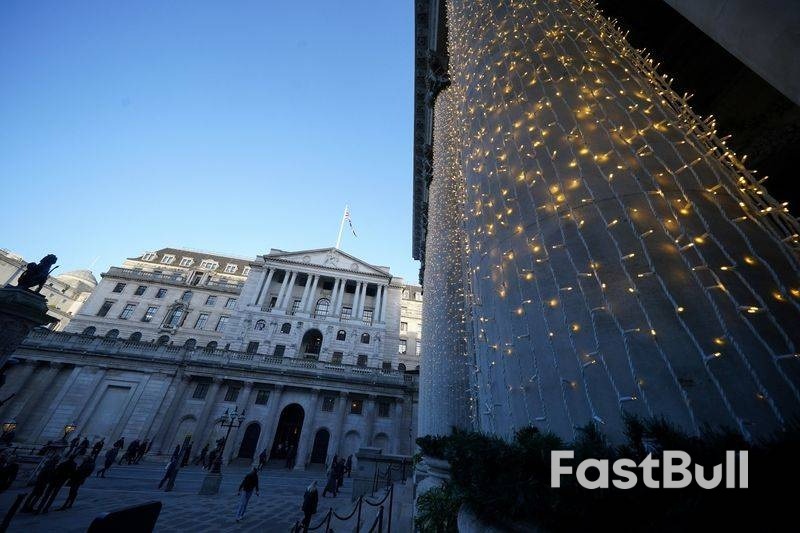
The Bank of England will cut interest rates by a quarter point to 3.75% on December 18, according to all economists polled by Reuters, with evidence showing still-elevated inflation drifting downwards convincing most that a tightly split policy committee will flip towards easing.
The Bank of England will cut interest rates by a quarter point to 3.75% on December 18, according to all economists polled by Reuters, with evidence showing still-elevated inflation drifting downwards convincing most that a tightly split policy committee will flip towards easing.
Governor Andrew Bailey was among those voting on the nine-member Monetary Policy Committee in November to keep Bank Rate unchanged at 4.0%, but hinted that positive news on inflation moving closer to the 2% target might change his mind.
British inflation fell in October for the first time since May, to 3.6% from 3.8%, in line with the central bank's expectations, and November data due next week could show a further drift downwards.
That, alongside a tax-raising budget from British finance minister Rachel Reeves since the last meeting and news of a slight rise in unemployment, will probably be enough to convince at least a slim majority of five MPC members to vote for a cut to 3.75% on December 18.
All 64 economists in a Reuters poll taken December 5-11 expected that outcome, up from a near-80% majority last month. A decision to change rates outside of the quarterly forecasting schedule would be the MPC's first since June 2023.
Around two-thirds of economists polled expected a follow-up cut in Bank Rate to 3.50% by end-March.
"A December cut looks pretty much nailed on. There's a fair debate about the final cut to 3.5%, when and whether that happens. For us it's a base case," said James Rossiter, head of global macro strategy at TD Securities.
"That said, if the economy and the labour market continue to soften rapidly and inflation eases away a bit next year, then I can start to see a scenario... where the Bank of England has to cut closer to 3%," Rossiter said.
There is no majority among economists for any further cuts, even though the median forecast shows Bank Rate bottoming at 3.25% in the third quarter of 2026.
A BoE rate cut on December 18 would follow the U.S. Federal Reserve's decision on Wednesday to cut its federal funds rate by a quarter point.
Economists at HSBC recently changed their December forecast to a cut, in part because of strong expectations built into financial markets that the BoE has done nothing to dislodge.
"While the BoE isn't averse to surprising the market in general, in our view the last thing the sterling rate market needs right now is the BoE adding to a sense of confusion. Governor Bailey will be aware of this," noted Simon Wells, chief European economist at HSBC.
Inflation was expected to slow to 3.1% next quarter and 2.4% in the second quarter of 2026, roughly similar to the previous poll.
Economic growth was forecast to average 1.4% this year and 1.1% next, unchanged from last month's poll.
A separate Reuters poll of 19 property market experts also published on Thursday showed the average British home price was expected to rise 2.0% this year and 3.8% in 2026, less than the respective 2.6% and 3.1% median forecasts in a survey three months ago.
Asked to identify the biggest barriers to homeownership for first-time buyers, 13 of 14 housing market experts chose difficulty in saving up for a deposit.
Ray Boulger, of mortgage broker John Charcol, said "there is still scope for mortgage rates to fall a bit further," based on expectations for further cuts in Bank Rate.
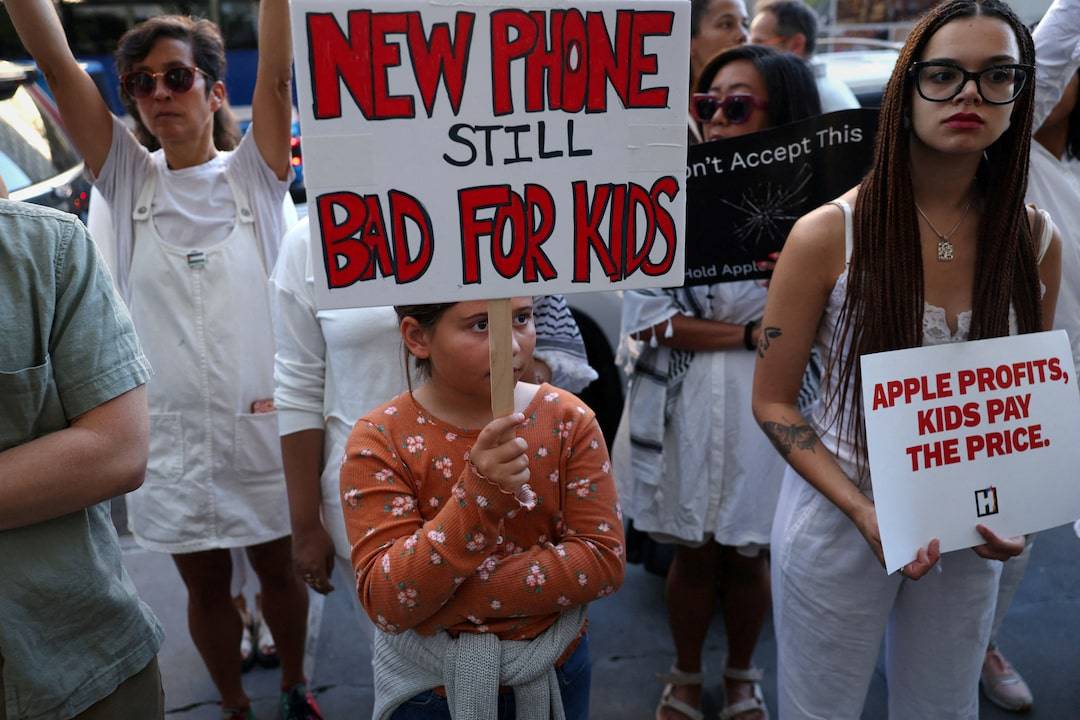

Apple CEO Tim Cook met U.S. House members on Wednesday to push back against federal legislation that could require the iPhone maker to authenticate users' ages and possibly collect sensitive data on children, lobbying instead to put the onus on parents to decide whether to tell app stores about a child's age.
The bill, called the App Store Accountability Act, is aimed at making sure that minors are not using harmful content online.
Texas has already signed a similar bill into law, requiring parental consent to download apps or make in-app purchases for users aged below 18. Utah was the first U.S. state to pass a similar law earlier this year and Australia introduced a nationwide social media ban on under-16s this week.
While the notion of age limits for online content has broad U.S. public support, legislative efforts have kicked off a behind-the-scenes brawl between Apple and Google and tech rivals such as Meta Platforms. Apple and Google, which own the largest app stores in the world, say verifying the age of minors could entail mass collection of children's birth certificates and other sensitive documents, while Facebook and Instagram owner Meta has argued that requiring app stores to check ages is the only effective way to enforce limits.
Apple, which has long resisted government interference in data privacy matters, has expressed concerns that the federal U.S. legislation would require it to collect identifying information about virtually every Apple user, including children. Cook met House Energy and Commerce Committee members on Capitol Hill on Wednesday to discuss the concerns, Apple said.
"Not all legislative proposals are equally protective of privacy or focused on holding all players in the ecosystem accountable," Apple's global head of privacy, Hilary Ware, said in a letter to the committee last week. "Some well-intended proposals for age verification at the app marketplace level ... would require the collection of sensitive information about anyone who wants to download an app, even if it's an app that simply provides weather updates or sports scores."
A Pew Research poll in 2023 found that 81% of Americans support requiring parental consent for children to create social media accounts and 71% support age verification before using social media.
Applications for US unemployment benefits rose last week by the most since the onset of the pandemic, after a big drop during the Thanksgiving holiday week.
Initial claims increased by 44,000 to 236,000 in the week ended Dec. 6, according to Labor Department data released Thursday. That was the biggest jump since March 2020 and followed the lowest level of applications in more than three years in the previous week. The figure exceeded all but one estimate in a Bloomberg survey of economists.
Weekly initial claims tend to be choppy around the holidays and will likely continue to fluctuate through the end of the year, but Thursday's figures are toward the higher end of readings seen in 2025. Companies like PepsiCo Inc. and HP Inc. have laid out plans to reduce headcount in recent weeks, and nationwide layoffs in October were the highest since early 2023.
The four-week moving average of new applications, a metric that helps smooth out volatility, ticked up to 216,750 last week.
Concerns about the labor market have weighed on consumer sentiment in recent months. A majority of respondents in a preliminary December survey by the University of Michigan expect unemployment to rise in the coming year.
Federal Reserve officials lowered interest rates for a third straight meeting Wednesday to support what Chair Jerome Powell called a "gradually cooling" labor market. While officials didn't project higher unemployment next year compared to their September forecasts, Powell said the job market faces "significant" downside risks.
Continuing claims, a proxy for the number of people receiving benefits, dropped to 1.84 million in the week ended Nov. 29, which included Thanksgiving.
Australia's hopes for rate cuts in 2026 have dimmed after RBA Governor Michele Bullock signaled they're no longer on the table – and that a rate hike is now a real possibility. With inflation proving stickier than expected and price pressures broadening on everything from housing to everyday essentials, markets are beginning to reprice the path for interest rates.
Here is a lightly edited transcript of the conversation:
Rebecca Jones: This week we were told by RBA Governor Michele Bullock that rate cuts were pretty much off the table and now it looks like we could instead have a rate hike by June. I don't know about you, but that wasn't exactly the festive surprise I was hoping for this week. To take us through the reasons why, and what the coming year holds for the Australian economy, I'm joined by Bloomberg's APAC economy reporter Swati Pandey from our Sydney newsroom. Swati, welcome back to the podcast.
Swati Pandey: Thank you Bec. Delighted to be here.
Jones: Swati, it was widely expected that the RBA would keep interest rates on hold at this week's meeting, which was of course the last one for 2025. That is exactly what happened. But what everyone was waiting to hear was, are we going to get another rate cut? You were at the press conference on Tuesday. What did we hear instead?
Pandey: Yes, you're right Bec, expectation was that the Reserve Bank would leave interest rates unchanged for the third straight meeting at 3.6% and there was not a lot of clarity around what the governor's press conference would bring. So it was quite surprising to a lot of people when she gave a very clear signal that other interest rate cuts are off the table. And given where the economy is tracking, given where inflation was and the upside risks to both, it looks like forget about an interest rate cut—in fact, it's an interest rate hike that we will be staring at for 2026.
Jones: And so when you heard that at the presser, you've got your phone in your hand, you start messaging your contacts. What did they tell you?
Pandey: So as soon as—that was the very first question in fact—that Governor Bullock was asked, whether they considered a cut or whether they considered a hike, and she said they did not explicitly consider a cut but they discussed the circumstances under which interest rates could go up. And then I followed that up by asking what those circumstances were that they discussed, if she could provide some more color. Following that, I started messaging some economists just trying to understand how they were reading the comments because you know when the press conference is on, everybody's watching it. By everybody I mean people who are interested in this, right? So from economists to traders, people overseas as well. And I think half of our newsroom watches it as well. And so a lot of these people kind of commented. So there's a kind of like a big bit of back and forth in messaging that also helps in understanding how people are viewing it from outside as well. And also helps shape the story, shapes the thought and the thinking that goes into writing the story after the press conference.
Jones: So the group chat went crazy because I can imagine— looking at the first part of Tuesday's event, it's the written statement from the RBA and that was pretty short, pretty sort of formulaic. But then the real surprise sort of came at the press conference. Was it a surprise to the economists that you talked to? What did they have to say?
Pandey: Yes, it did come as a surprise to people that Michele Bullock was that clear in signaling that interest rate cuts were off the table and in fact preparing the groundwork for a hike. And in fact, one of the economists I spoke with during the press conference said that the governor was laying the markers for a full pivot towards a tightening bias. There is a kind of view that it's a conditional tightening bias right now. So what that means is if we have a bad inflation report in January and the RBA has to raise interest rates in February, nobody is going to say that, oh my gosh, this came as a shock, this came as a surprise, the RBA is not communicating, this just came out of nowhere. So that criticism is unlikely to happen because like the economist from Westpac, Pat Bustamante, that I spoke with, he said that the governor was laying the markers for a full pivot to a tightening bias, right? And that was the inference a lot of people in the market and economists drew as well from her remarks. So the onus, as Su-Lin Ong from RBC told me, is on data and if inflation continues to surprise on the upside, the RBA will not hesitate to raise interest rates from here.
Jones: I wanna pick up on something that you've just mentioned and that is inflation, because I think that's where the story gets messy. Swati, we've all noticed price pressures picking up over the last couple of months. When did things get so pricey? What is actually driving inflation?
Pandey: Yeah, so the past maybe three months of inflation reports have surprised on the upside. And in fact the very latest report had broad-based price pressures. So by that I mean everything from housing costs, clothing and footwear, education and culture, eating out, buying food and groceries—everything showed a big jump in price increases. And obviously the biggest driver has been housing costs, which includes the construction cost of a new property, new development. But it also includes things like electricity. As we know, Treasurer Chalmers this week announced the end of the electricity rebate that had helped to put some downward pressure on prices, and those rebates are now going away. So we are going to get a sticker shock in the fourth quarter inflation report and maybe in the first quarter inflation report as well. The good thing is that the RBA knew that would happen.
So when they released their forecasts in November, they had already priced that in. So the RBA is expecting inflationary pressures to remain high through at least the middle of next year. If inflation is higher than their already lofty expectations, that is when we see the risk of interest rate hikes happening. If inflation is tracking around their lofty expectations, the RBA will just probably want to keep interest rates on hold. So if there's an upside shock, that is when interest rate hikes become a real possibility.
Jones: And Swati, there's a view out there that the RBA is completely done easing. And of course by easing I mean cutting interest rates. There is also running along the same track another very live debate that suggests that if inflation stays sticky—that means keeps on going up, right?—Governor Bullock may in fact have to pivot and tighten, that is raise interest rates to try and bring inflation down. And then there is another track, which is people who believe that one or two cuts are still plausible in 2026. What does the data suggest is most likely at this point in time?
Pandey: That is a very complicated question only because the answer to that is not easy. So we are in an economy where productivity growth is very low and what that has done is it has brought down our potential rate of growth. So when during the mining boom Australia's economy, let's say, was growing at 4%, it was able to grow at that pace without really sparking inflationary pressures, right? Now, if the economy grows at let's say 2.5%, there is fear that it may spark inflationary pressures only because the potential for it to grow without sparking inflation has reduced because of lower productivity growth. And that is where this discrepancy arises between how economists are looking at this.
Some economists are saying that the supply constraints that we have seen in our economy—which have led to higher housing construction costs, for example, it's very hard to find tradies and likewise— I mean the economy has not been able to supply enough to meet the demand that there is. Some economists believe that this supply-demand conundrum will be resolved eventually or soon enough. Those who believe that feel that the RBA will not end up raising interest rates. Either the way it'll resolve is that demand will come down, the labour market would slow. We are already seeing signs of slowness in the labour market. We are hearing about companies laying off employees, unfortunately. We are seeing more increase in the unemployment rate. So some economists believe that that would be enough to cool demand.
Others believe that inflation will remain a concern—housing costs will be sticky or elevated and people will continue to spend on eating out, going to concerts and stuff like that. So these are the people who believe that the RBA may then have to increase interest rates next year. And then there are some people who feel that things are going to kind of wobble along, which would suggest that the current interest rate setting—where interest rate is at 3.6%—is fine. So you don't touch it, you don't do anything, just keep watching data.
Economists, the median in our Bloomberg survey, are expecting no change at all in fact. So they're expecting interest rates will remain at 3.6% through 2026. There are only a handful of economists who are predicting an interest rate hike and only a handful who are predicting a cut. So the majority is still sitting on no change.
Jones: It is such a complicated recipe to get right. And as you described, three very distinct schools of thought around what's going to happen next year. Swati, I want to talk to you a little bit now about a topic that makes Australians collectively inhale—you can guess—it's housing. Mortgage stress is rising, APRA is tightening lending standards and yet prices are still marching higher. We're sort of getting to the tail end of the so-called spring selling season right now. Swati, how big a risk is the housing market heading into next year?
Pandey: One of the biggest problems with Australia's housing market is the lack of supply and we are not seeing that being resolved very quickly. In fact, it takes forever to build a house in Australia and you would know that when you're trying to get renovations done—it's very hard to find tradies and then even when you find them, it's very hard for them to stick with their timelines. Either it's difficult to get the right supply, it's difficult to get the right people, but whatever it is, it takes longer and that is what the country is facing in general. We are much behind our timelines to build enough housing to meet the growing demand of our people.
As long as that remains the case, housing prices are going to be elevated or rise. In fact, in some markets like Sydney, for example, affordability constraints mean that house price growth is not as rapid as it is in some other places like Adelaide or Brisbane or even Perth. Perth in fact is seeing a big boom in housing prices and there's big demand as well in Western Australia. So yes, it is a concern for people who want to buy a house, but it is also a concern for the Reserve Bank because housing costs are a big part of the inflation basket. If we are not able to bring that cost down, it would keep inflation sticky, which means elevated.
Jones: Let's zoom out a little bit now. The Federal Reserve in the US cut rates this week and that was widely expected. Swati, how does Australia's trajectory compare with the US right now?
Pandey: So in the past, Australia and most countries used to follow what the Fed would do, but that's not the case anymore. For example, the RBA started cutting rates much later than the Fed in this current cycle. Australia has only cut by 75 basis points. The Fed has cut by more. The RBA left interest rates unchanged this week for the third straight meeting and the Fed has cut for the third straight time. So they are completely diverging. The Fed is still cutting and the RBA is on hold but is signaling that the next move will not be a cut but a hike. They don't want to act too quick, too fast, which is why the bar to raise interest rates next year is very high as well. A key thing to watch out for is the inflation report for the December quarter, which will come out at the end of January. That is actually going to be really critical in deciding what the RBA does in February and the year ahead.
Jones: So there might be a few economists recalled back a little early from their summer holidays here in Australia. So Swati, let me get this straight. We've got inflation that won't go quietly, an RBA that may not be finished moving, a housing market that is continuing to defy both gravity and policy, plus a Fed that's cutting where we stay put. It's a really complex picture, isn't it? But very fascinating as we head towards 2026. I want to finally ask you about something completely different and that is AI and how that relates to Australia's economic prosperity. There is a view that 2026 could be the year that AI starts to show up in the real economy—in earnings, in efficiencies, in growth. We saw just last week how heavily the government is supporting the OpenAI–NextDC link-up. Is AI genuinely a bright spot for Australia or is the hype still running ahead of reality?
Pandey: Look, Michele Bullock was asked this question at the press conference on Tuesday and her response was that the data centres are being fitted—they're not being constructed here. So you are importing the required machinery from overseas and then you're getting them fitted here. You obviously need people to set them up, but then how many people would you employ in data centres, right? Is it a very labour-intensive industry? Maybe not. So for now, with the investments that we are seeing, it is a good thing and AI investments are expected to lead to greater productivity benefits as well. So from that point, it's good too.
One thing that Governor Bullock did not address, and I think it's something to watch out for, is the renewable energy transition, which may happen finally for Australia as a result of this, because data centres are extremely energy intensive and they are very water intensive as well. Australia has been trying forever to do this transition from basically coal to renewable—so whether it's solar or wind. If we start seeing these data centre investments spur huge demand for energy, then that will probably lead to that renewable transition that we have all been waiting for and that is going to have a huge impact for the economy and even in terms of productivity. So that is something that I would say we should watch out for and something to end the podcast on a positive note as well.
728 RM B 7/F GEE LOK IND BLDG NO 34 HUNG TO RD KWUN TONG KLN HONG KONG


White Label
Data API
Web Plug-ins
Poster Maker
Affiliate Program
The risk of loss in trading financial instruments such as stocks, FX, commodities, futures, bonds, ETFs and crypto can be substantial. You may sustain a total loss of the funds that you deposit with your broker. Therefore, you should carefully consider whether such trading is suitable for you in light of your circumstances and financial resources.
No decision to invest should be made without thoroughly conducting due diligence by yourself or consulting with your financial advisors. Our web content might not suit you since we don't know your financial conditions and investment needs. Our financial information might have latency or contain inaccuracy, so you should be fully responsible for any of your trading and investment decisions. The company will not be responsible for your capital loss.
Without getting permission from the website, you are not allowed to copy the website's graphics, texts, or trademarks. Intellectual property rights in the content or data incorporated into this website belong to its providers and exchange merchants.
Not Logged In
Log in to access more features

FastBull Membership
Not yet
Purchase


Log In
Sign Up


