

Markets
News
Analysis
User
24/7
Economic Calendar
Education
Data
- Names
- Latest
- Prev



Signal Accounts for Members
All Signal Accounts
All Contests
 BOJ Press Conference
 Turkey Consumer Confidence Index (Dec)
A:--
F: --
P: --
 U.K. Retail Sales YoY (SA) (Nov)
A:--
F: --
U.K. Core Retail Sales YoY (SA) (Nov)A:--
F: --
 Germany PPI YoY (Nov)
A:--
F: --
P: --
Germany PPI MoM (Nov)A:--
F: --
P: --
Germany GfK Consumer Confidence Index (SA) (Jan)A:--
F: --
U.K. Retail Sales MoM (SA) (Nov)A:--
F: --
P: --
 France PPI MoM (Nov)
A:--
F: --
P: --
 Euro Zone Current Account (Not SA) (Oct)
A:--
F: --
P: --
Euro Zone Current Account (SA) (Oct)A:--
F: --
P: --
 Russia Key Rate
A:--
F: --
P: --
U.K. CBI Distributive Trades (Dec)A:--
F: --
P: --
U.K. CBI Retail Sales Expectations Index (Dec)A:--
F: --
P: --
 Brazil Current Account (Nov)
A:--
F: --
P: --
 Canada Retail Sales MoM (SA) (Oct)
A:--
F: --
Canada New Housing Price Index MoM (Nov)A:--
F: --
P: --
Canada Core Retail Sales MoM (SA) (Oct)A:--
F: --
 U.S. Existing Home Sales Annualized MoM (Nov)
A:--
F: --
U.S. UMich Consumer Sentiment Index Final (Dec)A:--
F: --
P: --
U.S. Conference Board Employment Trends Index (SA) (Nov)A:--
F: --
Euro Zone Consumer Confidence Index Prelim (Dec)A:--
F: --
P: --
U.S. UMich 1-Year-Ahead Inflation Expectations Final (Dec)A:--
F: --
P: --
U.S. UMich Consumer Expectations Index Final (Dec)A:--
F: --
P: --
U.S. UMich Current Economic Conditions Index Final (Dec)A:--
F: --
P: --
U.S. Existing Home Sales Annualized Total (Nov)A:--
F: --
U.S. Weekly Total Rig CountA:--
F: --
P: --
U.S. Weekly Total Oil Rig CountA:--
F: --
P: --
 China, Mainland 5-Year Loan Prime Rate
A:--
F: --
P: --
China, Mainland 1-Year Loan Prime Rate (LPR)A:--
F: --
P: --
U.K. Current Account (Q3)--
F: --
P: --
U.K. GDP Final YoY (Q3)--
F: --
P: --
U.K. GDP Final QoQ (Q3)--
F: --
P: --
 Italy PPI YoY (Nov)
--
F: --
P: --
 Mexico Economic Activity Index YoY (Oct)
--
F: --
P: --
Canada National Economic Confidence Index--
F: --
P: --
Canada Industrial Product Price Index YoY (Nov)--
F: --
P: --
U.S. Chicago Fed National Activity Index (Nov)--
F: --
P: --
Canada Industrial Product Price Index MoM (Nov)--
F: --
P: --
U.S. Dallas Fed PCE Price Index YoY (Oct)--
F: --
P: --
 RBA Monetary Policy Meeting Minutes Euro Zone Total Reserve Assets (Nov)
--
F: --
P: --
Mexico Trade Balance (Nov)--
F: --
P: --
Canada GDP YoY (Oct)--
F: --
P: --
Canada GDP MoM (SA) (Oct)--
F: --
P: --
U.S. Core PCE Price Index Prelim YoY (Q3)--
F: --
P: --
U.S. PCE Price Index Prelim YoY (Q3)--
F: --
P: --
U.S. Annualized Real GDP Prelim (Q3)--
F: --
P: --
U.S. Non-Defense Capital Durable Goods Orders MoM (Excl. Aircraft) (Oct)--
F: --
P: --
U.S. PCE Price Index Prelim QoQ (SA) (Q3)--
F: --
P: --
U.S. Core PCE Price Index Annualized QoQ Prelim (SA) (Q3)--
F: --
P: --
U.S. GDP Deflator Prelim QoQ (SA) (Q3)--
F: --
P: --
U.S. Durable Goods Orders MoM (Excl. Defense) (SA) (Oct)--
F: --
P: --
U.S. Durable Goods Orders MoM (Excl.Transport) (Oct)--
F: --
P: --
U.S. Real Personal Consumption Expenditures Prelim QoQ (Q3)--
F: --
P: --
U.S. Real GDP Annualized QoQ Prelim (SA) (Q3)--
F: --
P: --
U.S. Durable Goods Orders MoM (Oct)--
F: --
P: --
U.S. Weekly Redbook Index YoY--
F: --
P: --
U.S. Industrial Output YoY (Nov)--
F: --
P: --
U.S. Industrial Output MoM (SA) (Nov)--
F: --
P: --
U.S. Capacity Utilization MoM (SA) (Nov)--
F: --
P: --


No matching data

Latest Views
Latest Views
Trending Topics
Top Columnists
Latest Update
White Label
Data API
Web Plug-ins
Affiliate Program
View All
No data
Australia will require natural gas exporters to reserve as much as a quarter of new production for domestic use, as the major supplier seeks to tackle high prices and a forecast shortfall on its more populated east coast.
Australia will require natural gas exporters to reserve as much as a quarter of new production for domestic use, as the major supplier seeks to tackle high prices and a forecast shortfall on its more populated east coast.
The policy, which is set to commence in 2027, will affect supply contracts signed from Monday and won't affect any existing agreements, Energy Minister Chris Bowen said Monday in Canberra. The final percentage to be reserved will be between 15% and 25% and finalized after a consultation next year, he said.
"From today any new contracts will be covered by the regime," Bowen said. "Gas is important to calibrate and support renewables."
Australia is the world's third-largest shipper of liquefied natural gas, but its 10 export terminals are all located in western or northern areas. Meanwhile, demand for the fossil fuel on the more populated east coast is expected to exceed supply from 2028, the Australian Energy Market Operator forecasts.
Western Australia, which has some of the biggest LNG plants but no pipeline links to the rest of the country, already requires producers to reserve as much as 15% of output for local use.
India's Adani Group will be "aggressive" in building out artificial intelligence data centers as well as the energy infrastructure that will run them, potentially setting up nuclear power plants, the youngest son of Asia's second-richest man said.
"Data centers is very, very big. What we had assumed we would do in 2030, we have already crossed, and the amount of demand that's coming in keeps rising," Jeet Adani told Nikkei Asia, adding that a mix of low costs and shifts in energy regulations gave India a "natural advantage" when it comes to building out AI data centers.
The group, which is building such infrastructure in India for tech giants such as Google, sees itself as "one of the biggest investors" in the Indian nuclear energy space, said Adani, who oversees the digital and airports divisions. A law opening up the closely controlled sector to private companies was passed by the country's parliament last week.
Adani is among the four family members -- brother Karan and cousins Pranav and Sagar -- who are expected to take over the sprawling media-to-ports conglomerate when his 63-year-old father Gautam retires.
Adani was speaking ahead of the start of operations at Mumbai's newly constructed airport. He said the group is looking to invest about 1 trillion rupees ($11 billion) over the next five years into the unit to support a series of new airports and upgrades to existing facilities.
The group's wider infrastructure gambit includes an investment of up to $5 billion into building out Google's AI data center projects in India. In October, Google said it was going to invest $15 billion to build such facilities in India over the next five years.
The Adani Group is looking to eventually build AI data centers larger than 1 gigawatt in capacity across the country, including in cities like Vizag, Navi Mumbai, Noida and Hyderabad, Adani said.
The company will only focus on providing the infrastructure and other facilities for the data centers.
"We're not in the neo-cloud business," Adani said. "Let's say Google is getting in their TPUs (tensor processing units) in Vizag. We won't invest in the said TPUs."
On the energy side, Adani said the group is ready to use its vast renewables capacity to support the power-hungry data centers. Subsidiary Adani Green Energy is already the country's largest renewable energy company, with expansive solar and wind power generation capabilities.
"We have the ability to give as much renewable electricity as any of the hyperscalers would want," Adani said. "We have the ability to develop [infrastructure] fast, and develop [them] modularly."
However, Adani said a foray into nuclear energy would be closely tied to the demand for power from the data centers.
"Nuclear [energy] is something that we have been very, very actively looking at," Adani said. "I think it was tabooed for too long."
The company will look to build and own the power plants, but would outsource the reactors, he added.
India's parliament passed the Sustainable Harnessing and Advancement of Nuclear Energy for Transforming India (SHANTI) bill on Friday, which will replace current laws on atomic power and increase privatization of the sector by allowing Indian companies to build, own or operate nuclear plants and reactors, among other things.
The new law is aimed at helping expand India's nuclear power generation from the current 8 GW to 100 GW by 2047. Currently, only 3% of India's electricity comes from nuclear power.
The Adani Group's data center moves parallel investments by India's biggest conglomerates including Reliance Industries and the Tata Group, which are also set to build out AI data centers in collaboration with the likes of Canada's Brookfield and U.S.-based TPG.
India has 1.4 GW of data center capacity under construction and another 5 GW in the planning stage, with current operational capacity at 1.4 GW, according to a report from Macquarie Research.
"If India plays its cards right, it can easily convince the hyperscalers to build 10 GW of data center capacity in the next five years," Adani said. "I see [demand for] 50 GW of renewable electricity coming just from the data centers."

South Korea's Samsung Biologics (207940.KS), said on Monday it is acquiring its first U.S. drug production facility from GSK (GSK.L),for $280 million to respond to long-term U.S. market demand.
The company's U.S. unit, Samsung Biologics America, is acquiring a 100% stake in Human Genome Sciences Inc of Rockville, Maryland, the South Korean contract drug manufacturer said in a statement.
Samsung Biologics plans additional investments to expand the site's capacity, currently a combined 60,000 liters of drug substance capacity, and to upgrade technology, it said.
It added that the acquisition value may change when the deal closes, likely around the end of the first quarter of 2026.
South Korea's Celltrion (068270.KS), opens new tab is also planning to produce drugs in the United States, where the Trump administration has threatened to levy tariffs on pharmaceuticals.
Under a deal with the United States, tariffs on U.S. imports of South Korean pharmaceuticals will be no greater than 15%, while generic drugs will be tariff-free.
Samsung Biologics shares were down 0.4% on Monday, lagging the wider market's (.KS11), opens new tab 2% gain.
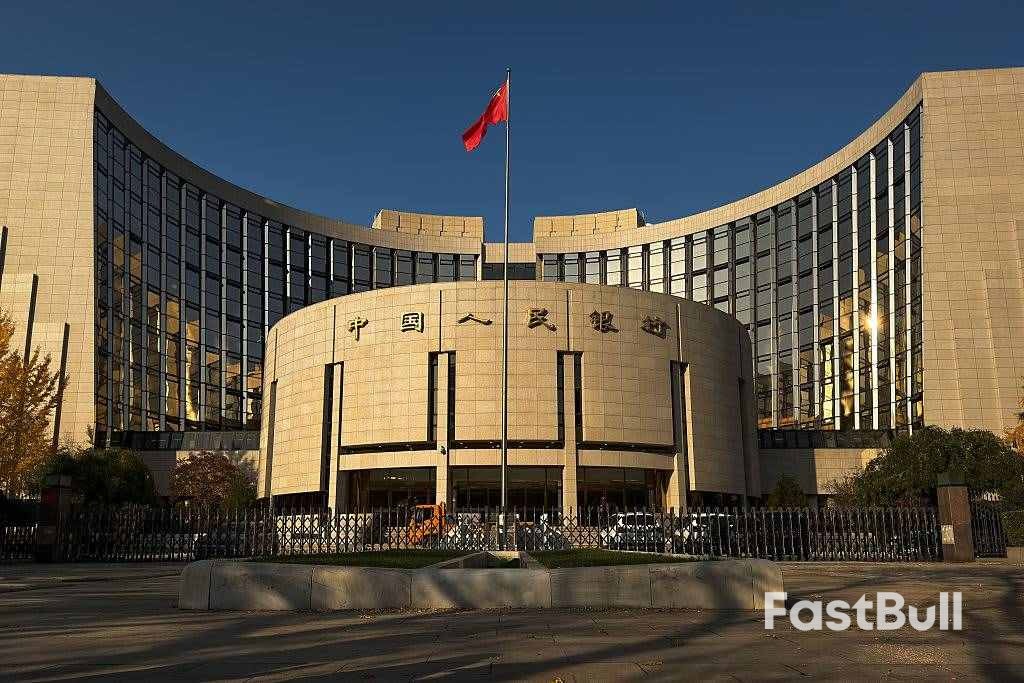
China's central bank kept its loan prime rates steady on Monday, even as the world's second largest economy has seen weak economic data and an extended slump in its property sector.
The People's Bank of China kept its 1-year and 5-year loan prime rates unchanged at 3% and 3.5% respectively, holding them for a seventh straight meeting, in line with a Reuters survey.
The 1-year rate acts as a benchmark for new loans, while the 5-year helps peg mortgage rates.
The PBOC's decision comes amid downbeat economic data from China in November, including lower-than-expected retail sales and industrial output.
Retail sales rose 1.3% last month from a year earlier, sharply missing Reuters' median forecast for a 2.8% growth, and slowing from 2.9% rise in the prior month.
Industrial production also missed expectations, climbing 4.8% in November from a year earlier compared with estimates for a 5% jump, and marking its weakest growth since August 2024.
China continues to reel from a protracted slump in its real estate sector. Investment in fixed assets, which includes property, contracted 2.6% over the January through November period compared with a year earlier, sharper than the 2.3% drop estimated by economists.
Prices of new homes also also continued to decline in November, showing persistent weakness in China's property sector.
New home prices fell 1.2% in tier-1 cities including Beijing, Guangzhou and Shenzhen while resale home prices dropped 5.8% from a year earlier.
Earlier this month, China's finance ministry said it planned to issue ultra-long-term special government bonds next year to fund construction of key projects and new infrastructure projects.
The country has been contending with deflationary pressures, and policymakers have vowed to "vigorously support the implementation of special actions to boost consumption."
An interim trade deal with the Washington that saw a suspension of prohibitive levels of tariffs on Chinese exports, however, could boost shipments to the U.S. and help the country realize its "around 5%" economic growth target for 2025.
China left benchmark lending rates unchanged for the seventh consecutive month in December on Monday, matching market expectations.
The one-year loan prime rate (LPR) was kept at 3.00%, while the five-year LPR was unchanged at 3.50%.
In a Reuters survey of 25 market participants conducted last week, all participants predicted no change to either of the two rates.
Most new and outstanding loans in China are based on the one-year LPR, while the five-year rate influences the pricing of mortgages.
Reporting by Shanghai Newsroom; Editing by Christopher Cushing
728 RM B 7/F GEE LOK IND BLDG NO 34 HUNG TO RD KWUN TONG KLN HONG KONG


White Label
Data API
Web Plug-ins
Poster Maker
Affiliate Program
The risk of loss in trading financial instruments such as stocks, FX, commodities, futures, bonds, ETFs and crypto can be substantial. You may sustain a total loss of the funds that you deposit with your broker. Therefore, you should carefully consider whether such trading is suitable for you in light of your circumstances and financial resources.
No decision to invest should be made without thoroughly conducting due diligence by yourself or consulting with your financial advisors. Our web content might not suit you since we don't know your financial conditions and investment needs. Our financial information might have latency or contain inaccuracy, so you should be fully responsible for any of your trading and investment decisions. The company will not be responsible for your capital loss.
Without getting permission from the website, you are not allowed to copy the website's graphics, texts, or trademarks. Intellectual property rights in the content or data incorporated into this website belong to its providers and exchange merchants.
Not Logged In
Log in to access more features

FastBull Membership
Not yet
Purchase


Log In
Sign Up


