Markets
News
Analysis
User
24/7
Economic Calendar
Education
Data
- Names
- Latest
- Prev


Signal Accounts for Members
All Signal Accounts
All Contests


Japan Tankan Small Manufacturing Outlook Index (Q4)A:--
F: --
P: --
Japan Tankan Large Non-Manufacturing Outlook Index (Q4)A:--
F: --
P: --
Japan Tankan Large Manufacturing Outlook Index (Q4)A:--
F: --
P: --
Japan Tankan Small Manufacturing Diffusion Index (Q4)A:--
F: --
P: --
Japan Tankan Large Manufacturing Diffusion Index (Q4)A:--
F: --
P: --
Japan Tankan Large-Enterprise Capital Expenditure YoY (Q4)A:--
F: --
P: --
U.K. Rightmove House Price Index YoY (Dec)A:--
F: --
P: --
China, Mainland Industrial Output YoY (YTD) (Nov)A:--
F: --
P: --
China, Mainland Urban Area Unemployment Rate (Nov)A:--
F: --
P: --
Saudi Arabia CPI YoY (Nov)A:--
F: --
P: --
Euro Zone Industrial Output YoY (Oct)A:--
F: --
P: --
Euro Zone Industrial Output MoM (Oct)A:--
F: --
P: --
Canada Existing Home Sales MoM (Nov)A:--
F: --
P: --
Canada National Economic Confidence IndexA:--
F: --
P: --
Canada New Housing Starts (Nov)A:--
F: --
U.S. NY Fed Manufacturing Employment Index (Dec)A:--
F: --
P: --
U.S. NY Fed Manufacturing Index (Dec)A:--
F: --
P: --
Canada Core CPI YoY (Nov)A:--
F: --
P: --
Canada Manufacturing Unfilled Orders MoM (Oct)A:--
F: --
P: --
U.S. NY Fed Manufacturing Prices Received Index (Dec)A:--
F: --
P: --
U.S. NY Fed Manufacturing New Orders Index (Dec)A:--
F: --
P: --
Canada Manufacturing New Orders MoM (Oct)A:--
F: --
P: --
Canada Core CPI MoM (Nov)A:--
F: --
P: --
Canada Trimmed CPI YoY (SA) (Nov)A:--
F: --
P: --
Canada Manufacturing Inventory MoM (Oct)A:--
F: --
P: --
Canada CPI YoY (Nov)A:--
F: --
P: --
Canada CPI MoM (Nov)A:--
F: --
P: --
Canada CPI YoY (SA) (Nov)A:--
F: --
P: --
Canada Core CPI MoM (SA) (Nov)A:--
F: --
P: --
Canada CPI MoM (SA) (Nov)A:--
F: --
P: --
Federal Reserve Board Governor Milan delivered a speech
U.S. NAHB Housing Market Index (Dec)--
F: --
P: --
Australia Composite PMI Prelim (Dec)--
F: --
P: --
Australia Services PMI Prelim (Dec)--
F: --
P: --
Australia Manufacturing PMI Prelim (Dec)--
F: --
P: --
Japan Manufacturing PMI Prelim (SA) (Dec)--
F: --
P: --
U.K. 3-Month ILO Employment Change (Oct)--
F: --
P: --
U.K. Unemployment Claimant Count (Nov)--
F: --
P: --
U.K. Unemployment Rate (Nov)--
F: --
P: --
U.K. 3-Month ILO Unemployment Rate (Oct)--
F: --
P: --
U.K. Average Weekly Earnings (3-Month Average, Including Bonuses) YoY (Oct)--
F: --
P: --
U.K. Average Weekly Earnings (3-Month Average, Excluding Bonuses) YoY (Oct)--
F: --
P: --
France Services PMI Prelim (Dec)--
F: --
P: --
France Composite PMI Prelim (SA) (Dec)--
F: --
P: --
France Manufacturing PMI Prelim (Dec)--
F: --
P: --
Germany Services PMI Prelim (SA) (Dec)--
F: --
P: --
Germany Manufacturing PMI Prelim (SA) (Dec)--
F: --
P: --
Germany Composite PMI Prelim (SA) (Dec)--
F: --
P: --
Euro Zone Composite PMI Prelim (SA) (Dec)--
F: --
P: --
Euro Zone Services PMI Prelim (SA) (Dec)--
F: --
P: --
Euro Zone Manufacturing PMI Prelim (SA) (Dec)--
F: --
P: --
U.K. Services PMI Prelim (Dec)--
F: --
P: --
U.K. Manufacturing PMI Prelim (Dec)--
F: --
P: --
U.K. Composite PMI Prelim (Dec)--
F: --
P: --
Euro Zone ZEW Economic Sentiment Index (Dec)--
F: --
P: --
Germany ZEW Current Conditions Index (Dec)--
F: --
P: --
Germany ZEW Economic Sentiment Index (Dec)--
F: --
P: --
Euro Zone Trade Balance (Not SA) (Oct)--
F: --
P: --
Euro Zone ZEW Current Conditions Index (Dec)--
F: --
P: --
Euro Zone Trade Balance (SA) (Oct)--
F: --
P: --
U.S. Retail Sales MoM (Excl. Automobile) (SA) (Oct)--
F: --
P: --


No matching data
Latest Views
Latest Views
Trending Topics
Top Columnists
Latest Update
White Label
Data API
Web Plug-ins
Affiliate Program
View All

No data
China is considering allowing the use of yuan-backed stablecoins for the first time, in what would be a sharp reversal of its stance on digital assets, as Beijing seeks to expand the currency
China is considering allowing the use of yuan-backed stablecoins for the first time, in what would be a sharp reversal of its stance on digital assets, as Beijing seeks to expand the currency’s role in global trade, according to a Reuters report.
The State Council, China’s cabinet, is set to review a roadmap later this month that could approve stablecoin use as part of broader efforts to boost yuan internationalisation, the sources said. The plan includes usage targets, regulatory responsibilities, and risk-control guidelines.
Senior leaders are expected to convene for a study session on stablecoins and yuan adoption before the end of August, one source said. The meeting would outline boundaries for stablecoin development and provide political backing for future regulatory steps.
China banned cryptocurrency trading and mining in 2021 over concerns about financial stability, even as it pushed forward with the rollout of the digital yuan. Allowing yuan-linked stablecoins would mark a dramatic change in policy and comes as stablecoins tied to the U.S. dollar gain traction globally.
The global stablecoin market is valued at about $247 billion, but Standard Chartered projects it could reach $2 trillion by 2028. The sector is dominated by dollar-backed tokens, which account for over 99% of global supply, according to the Bank for International Settlements.
Beijing views stablecoins as a potential tool for promoting the yuan abroad, particularly as Chinese exporters increasingly rely on dollar-pegged stablecoins to settle cross-border trades, the people said.
China’s share of global payment flows fell to 2.88% in June, its lowest in two years, compared to the dollar’s 47% share, SWIFT data shows. While Beijing has long sought greater use of the yuan, its strict capital controls remain a barrier to deeper international adoption.
Elsewhere in Asia, South Korea and Japan are preparing to allow domestic stablecoin offerings, while in the U.S., President Donald Trump has backed dollar-pegged stablecoins and directed regulators to establish a legal framework.
China’s plan would assign implementation to regulators including the People’s Bank of China (PBOC), sources said. Hong Kong and Shanghai are expected to play key roles in local rollouts, with Hong Kong’s new stablecoin ordinance already in effect from Aug. 1.
A PBOC adviser recently told local media that an offshore yuan stablecoin in Hong Kong was “a possibility.” Shanghai, meanwhile, is setting up an international hub for the digital yuan.
Beijing is expected to present the stablecoin roadmap in coming weeks and may raise the issue at the Shanghai Cooperation Organisation (SCO) Summit in Tianjin on Aug. 31–Sep. 1, sources said.
On August 18, 2025, Bitcoin took a wild ride, dropping 5% from ~$120,000 to $114,000–$115,000 in just 24 hours. This Bitcoin Price Crash 2025 Whale Moves Macro Fears erased gains from its $123,182 all-time high earlier this month, leaving investors scrambling. What’s behind this sudden dip? A mix of quiet crypto whales, macroeconomic storm clouds, and a bearish shift in market sentiment is shaking the crypto market. Let’s unpack the chaos with on-chain data, expert insights, and X buzz to see what’s next for Bitcoin.
Ready to trade this Bitcoin dip? Sign up on Bybit and grab up to $30,000 in deposit bonuses to navigate the crypto storm!
Crypto whales, big players holding thousands of BTC, can move markets with a single transaction. On August 17, on-chain data lit up as dormant wallets from Bitcoin’s early days stirred, shifting funds from legacy P2PK addresses to secure SegWit wallets. Analysts link this to fears of quantum computing vulnerabilities, not outright selling. Still, these moves sparked panic, with traders fearing liquidations.
The bigger issue? Whales have gone quiet on buying. Unlike July’s rally, when whales scooped up $11.2 billion in BTC, the past 24 hours showed zero major purchases. Instead, ~1,800 BTC flowed to exchanges, hinting at profit-taking or repositioning. One whale cashed out $15.4 million near the $120,000 resistance, a historical ceiling. However, a $53 million BTC outflow to cold storage suggests some are holding tight, potentially capping the downside at $114,000–$115,000. Without aggressive buying, this whale silence fueled the Bitcoin Price Crash 2025 Whale Moves Macro Fears.
Bitcoin’s price is now tightly linked to risk assets like the S&P 500 and Nasdaq (70–90% correlation). The latest dip aligns with macro turbulence rattling markets:
August’s historical weakness (median -8.3% returns) makes this 5% drop feel like a seasonal pullback, amplified by macro headwinds.
Market sentiment has turned cautious, with traders and institutions stepping back:
This bearish tilt has deepened the Bitcoin Price Crash 2025 Whale Moves Macro Fears, with investors awaiting a catalyst.
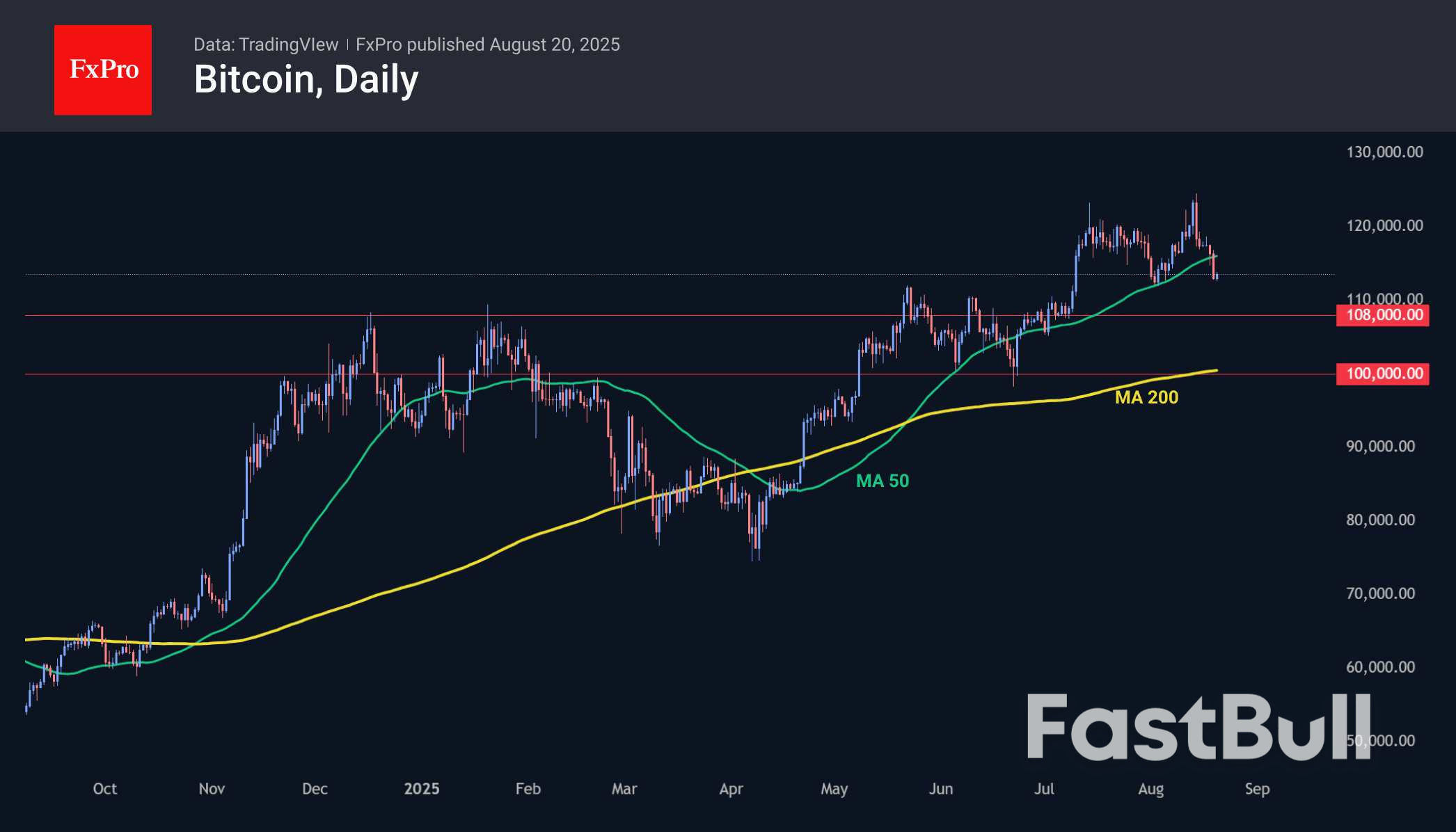
This 5% drop fits Bitcoin’s post-halving pattern (April 2025), where dips often precede rallies. Support at $112,000–$114,000 (CME futures gap) is holding, with resistance at $117,000–$120,000. If macro fears ease, via Fed clarity or tariff resolutions, a rebound to $120,000+ is possible, backed by BlackRock’s 580,430 BTC holdings.
But risks remain. Ongoing ETF outflows, quiet whales, and economic uncertainty could push Bitcoin to $108,000–$110,000. Analysts like Rekt Capital warn that failing to reclaim $124,500 may cap upside, though long-term targets hit $135,000–$150,000 by year-end. X posts suggest a bounce if RSI hits oversold, but negative MACD urges caution.
Facing the Bitcoin Price Crash 2025 Whale Moves Macro Fears? Here’s your game plan:
Check our Cryptocurrency Investment Guides for more crypto investment strategies.
The Bitcoin Price Crash 2025 Whale Moves Macro Fears, a 5% drop to $114,000, $115,000, stems from quiet whales, macro pressures like Trump’s tariffs and inflation, and bearish market sentiment. While not a full-blown crash, it shows Bitcoin’s sensitivity to global risks. With support at $112,000 and potential catalysts like Fed clarity, this could be a dip to buy. Stay sharp, check CoinDesk for updates and join the conversation on Twitter or Telegram!


European leaders are discussing a security guarantee for Ukraine that would commit Kyiv’s allies to decide within 24 hours whether to provide military support to the country if it’s again attacked by Russia.
A proposal that amounts to a NATO-like collective defense clause, but doesn’t come with actual membership in the alliance, is being pushed by Italian Prime Minister Giorgia Meloni. It’s among an array of options being fleshed out as European leaders leverage momentum after President Donald Trump agreed to back security guarantees for the war-battered nation.
The Italian plan recognizes that NATO membership for Ukraine is off the table, but would offer a mechanism for collective assistance as the next best option, according to people familiar with the deliberations.
While the “NATO-light” option would fall well short of the military alliance’s collective defense pledge in Article 5 of the NATO charter, it would commit nations that have signed bilateral agreements with Ukraine to confer quickly on a response in case of attack, the people said, asking not to be named.
The options would then include providing Kyiv with rapid and sustained defense support, economic assistance, bolstering the Ukrainian military as well as imposing sanctions on Russia, the people said. They declined to be named discussing private deliberations. It wasn’t immediately clear whether the plan would entail individual European countries sending troops to Ukraine.
A meeting between Trump, Ukrainian President Volodymyr Zelenskiy and European leaders at the White House Monday produced a firmer commitment by the US to security guarantees – a relief to Europe after Trump appeared to tack toward Moscow following a summit in Alaska with Russia’s Vladimir Putin. At the same time, Trump ruled out sending soldiers to Ukraine, but said the US might provide air support.
European officials set to work to draw up guarantees, including a plan to send French and British troops to Ukraine as part of a potential peace agreement.
It’s unclear how the Meloni proposal figures into the discussion. One option for the mechanism pitched by her government would take a bilateral agreement between Rome and Kyiv that was signed in 2024 and contains mutual security arrangements as a blueprint, the people said. The discussions are in flux and subject to change, the people cautioned.
The Italian government didn’t respond to a request for comment.
Defense Minister Guido Crosetto told Italian newspaper Repubblica on Wednesday that Meloni’s idea “is that NATO — as a defensive alliance — could ensure the protection of a foreign country like Ukraine. Alternatively, individual nations could commit to doing so. The best mechanism will be chosen eventually. Certainly, with NATO, a superior deterrent would be guaranteed.”
The Italian leader was first in proposing Ukraine should be given the same security guarantees of NATO without actual membership, a combination that left some allied diplomats puzzled. In March, she said this would be a more durable solution than placing troops on the ground.
Article 5, the cornerstone of the alliance, mandates mutual protection in the event of an attack on any member of the Atlantic pact. Russia has staunchly opposed Ukraine’s NATO accession and said it is part of the reasons it initiated a full-scale invasion in 2022.
Meloni — who’s helmed Italy’s fourth-longest serving government and is a long-time ally of Zelenskiy — has engaged in a months-long balancing act in a bid to keep Trump on side while maintaining support for Kyiv, proposing herself as a “bridge-builder” between the two shores of the Atlantic.
Though Meloni and her camp were initially privately dismayed by Trump’s seismic moves in foreign policy, Bloomberg has reported, the relationship has eased significantly in recent months.
“She’s served there for a long period of time relative to others, they don’t last very long, you’ve lasted a long time, you’re gonna be there a long time,” Trump said as he introduced remarks from Meloni in Washington on Monday, calling her “a great leader and an inspiration.”
“Something is changing, something has changed, thanks to you, thanks also to the stalling in the battlefield, which was achieved with the bravery of the Ukrainians and with the unity that we all provided to Ukraine,” Meloni said.
“I’m happy that we will begin from a proposal, which is, let’s say, the Article 5 model, which was Italian at the beginning. We’re always ready to bring our proposals for peace, for dialog — it’s something we have to build together,” she said.
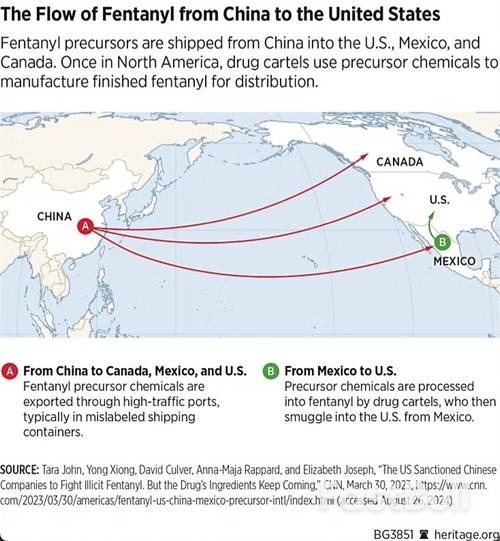
More details are emerging about President Trump's latest show of force in Latin America aimed at narco-terrorist cartels fueling America's drug crisis, which claims 100,000 lives a year. According to Reuters, three Aegis destroyers, surveillance aircraft, and an attack submarine are being deployed to international waters off Venezuela.
Sources close to the media outlet say 4,000 sailors and Marines will support the large force projection mission that includes three U.S. Aegis guided-missile destroyers (USS Gravely, USS Jason Dunham, and USS Sampson), along with P-8 surveillance planes, other warships, and at least one attack submarine.
The operation will run for several months and focus on enhancing hemispheric defense to dismantle narco-terrorist cartels' command and control nodes that funnel drugs into the U.S. Also, this force projection is a signal to Beijing to limit Chinese activity in the region, particularly around critical infrastructure and trade chokepoints. The Trump administration has put Mexico's Sinaloa Cartel and Venezuela's Tren de Aragua on notice, classifying them as foreign terrorist organizations. The broader understanding is that this is all a part of hemispheric defense.
Source: Heritage FoundationThe deployment also signals to Venezuelan President Nicolas Maduro's government that Washington is not playing around. Maduro told the nation on Monday that his country will "defend our seas, our skies and our lands." He hinted at what he called "the outlandish, bizarre threat of a declining empire."
On Tuesday, Mao Ning, a spokeswoman for the Chinese Foreign Ministry, said combating drugs is a shared responsibility around the world: "But we hope that major countries should play the role responsibly, maintain regional peace and stability, and properly handle the issue together with relevant countries."
White Label
Data API
Web Plug-ins
Poster Maker
Affiliate Program
The risk of loss in trading financial instruments such as stocks, FX, commodities, futures, bonds, ETFs and crypto can be substantial. You may sustain a total loss of the funds that you deposit with your broker. Therefore, you should carefully consider whether such trading is suitable for you in light of your circumstances and financial resources.
No decision to invest should be made without thoroughly conducting due diligence by yourself or consulting with your financial advisors. Our web content might not suit you since we don't know your financial conditions and investment needs. Our financial information might have latency or contain inaccuracy, so you should be fully responsible for any of your trading and investment decisions. The company will not be responsible for your capital loss.
Without getting permission from the website, you are not allowed to copy the website's graphics, texts, or trademarks. Intellectual property rights in the content or data incorporated into this website belong to its providers and exchange merchants.
Not Logged In
Log in to access more features

FastBull Membership
Not yet
Purchase
Log In
Sign Up